




Abstract
Aim:
To investigate the temperature changes occurring in the pulp chamber during the polymerization of bulk-fill resin materials cured with different light sources by using a pulpal microcirculation simulation device in vitro.
Materials and Methods:
Class I cavities of width 2 × 3 mm were prepared on 120 permanent noncarious teeth. All samples were adjusted to maintain 2 mm dentin thickness within the pulp chamber and the cavity base. Venus Bulk Fill, Tetric Evo Ceram Bulk Fill, Filtek Bulk Fill, and Filtek Z250 were used as restorative materials. Materials were polymerized with Valo Light Emitting Diode (LED), Elipar S10, and Elipar Deepcure-S devices. A j-type thermocouple with microcirculation assemblies was used for measuring the temperature increments inside the pulp chamber during the polymerization of bulk-fill composite resins. The obtained data were recorded.
Results:
Statistically significant difference was found between the light sources and the temperature changes occurring during the polymerization (P <.05). The difference in temperature increases was found to be significant (P <.05) between restorative materials. The highest temperature rise values were obtained from Venus Bulk Fill.
Conclusion:
All light devices used in the study caused an increase in temperature in the pulp chamber in all groups. For all resin materials used, it was observed that the temperature values arising during the polymerization via used light sources did not exceed 5.5°C, which is the critical value for pulp.
Introduction
The basic function of restorative dentistry is to repair tooth decay and other defects while maintaining tissue continuity and integrity and achieving good esthetic outcomes.1,2 The gold standard approach for satisfactory outcomes in the practice and curing of restoration material during restoration with light-cured composite resins is the placement of resin material into the cavity using a layering technique while limiting the maximum individual layer thickness to 2 mm. 3 However, particularly in the restoration of deep cavities, the placement of restoration material in layers of 2 mm thickness into the cavity is time-consuming and also brings about the disadvantages of air bubbles between the layers and the risk of contamination. The manufacturers have, therefore, introduced a new type of composite material called “bulk fill,” allowing a one-step placement of the material up to a depth of 4 mm to 5 mm. Favorable characteristics, such as low shrinkage stress and the associated good edge conformity of these resin materials, satisfactory radiopacity, the resistance of these materials against masticatory forces in the posterior part of the arch, and the polishability of resin composites in terms of achieving good esthetic outcomes, are factors for which the physicians favor these materials. 4
The pulp tissue consists of highly vascularized living connective tissue and forms the core of the tooth. Restorative procedures performed close to the pulp chamber may endanger the vitality of the pulp. For this reason, the temperature increases that may occur during such restorative procedures and the effects of this heat on the pulp attract the attention of researchers. 5 Cavity preparation, tooth bleaching, laser applications, and light polymerization of restorative materials can be shown as examples of procedures that may cause a temperature increase in dental tissues. 6 The restorative materials used can cause a temperature increase in two ways. The first is the heat increase caused by the light device during the light polymerization of the restorative material, and the second is the exothermic reaction during the polymerization. In addition, the location of the light device, the intensity of the light, the irradiation time, the dentin thickness between the pulp and the restoration, and the structural properties of the restorative materials are the other factors that can affect the temperature increase. 7
In their clinical studies, Zach and Cohen 8 stated that an increase of 5.5°C in the temperature of the pulp for only 10 s may cause histological changes such as an expansion of the dentin fluid in the dentinal tubules, vascular injuries, and tissue necrosis.
The exothermic reaction rates of composite resins that polymerize with visible light can cause heating that can damage the pulp, and the resulting heat increases with the increasing power of the light source. 9 Al-Qudah et al. 7 argue that the pulpal effect resultant from the heat generated from the exothermic reaction of the composite is more effective than the light source. According to Lloyd et al., 10 the most important source of heat generation is not the composite materials, but the light sources.
In the polymerization of resin-based materials, LED light sources with high light intensity are mostly preferred because of their advantages, such as long life, practical use, and short application time.11,12 These light sources have different modes of operation, developed to meet current needs. For example, in the fast polymerization (turbo) mode that has high light power, the aims are short application time and time savings. The purpose of using the slow-start polymerization (soft-start) mode is to reduce the shrinkage via the polymerization onset with low light intensity. 13 Rapid polymerization with high-intensity light is likely to cause thermal damage to the pulp tissue, especially in deep cavities.
The objective of this study is to examine the temperature changes in the pulp chamber caused by three different LED light sources and the different polymerization modes used in the polymerization of bulk-fill resin composites in deep cavities. The null hypotheses of the study are the following: (a) bulk-fill resins polymerized with different light sources and modes do not cause different temperature increases in the pulp chamber and (b) there is no difference between the bulk-fill resins polymerized with different light sources and modes and the conventional composite in terms of the temperature increase they create in the pulp chamber.
Materials and Methods
This study was approved by the Research Ethics Committee of Cumhuriyet University, under report no. 2017-10/25.
Sample Size Calculation and Experimental Groups
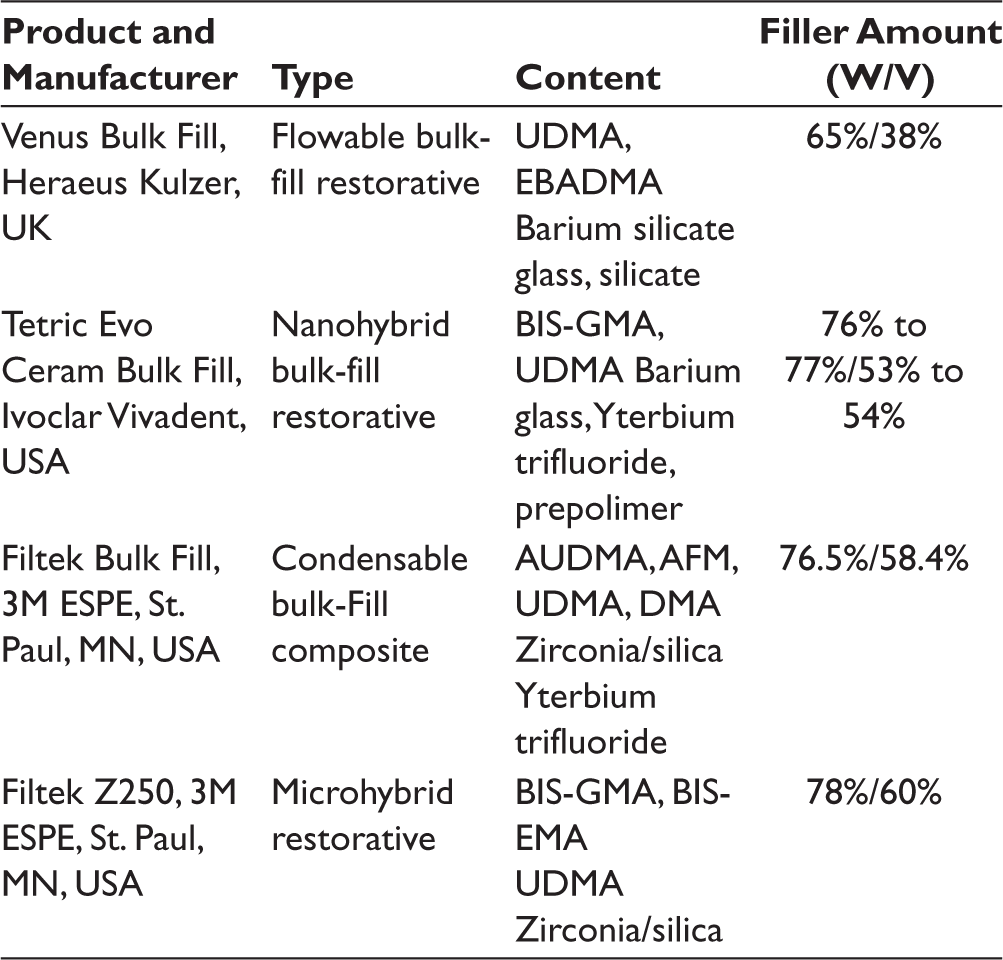
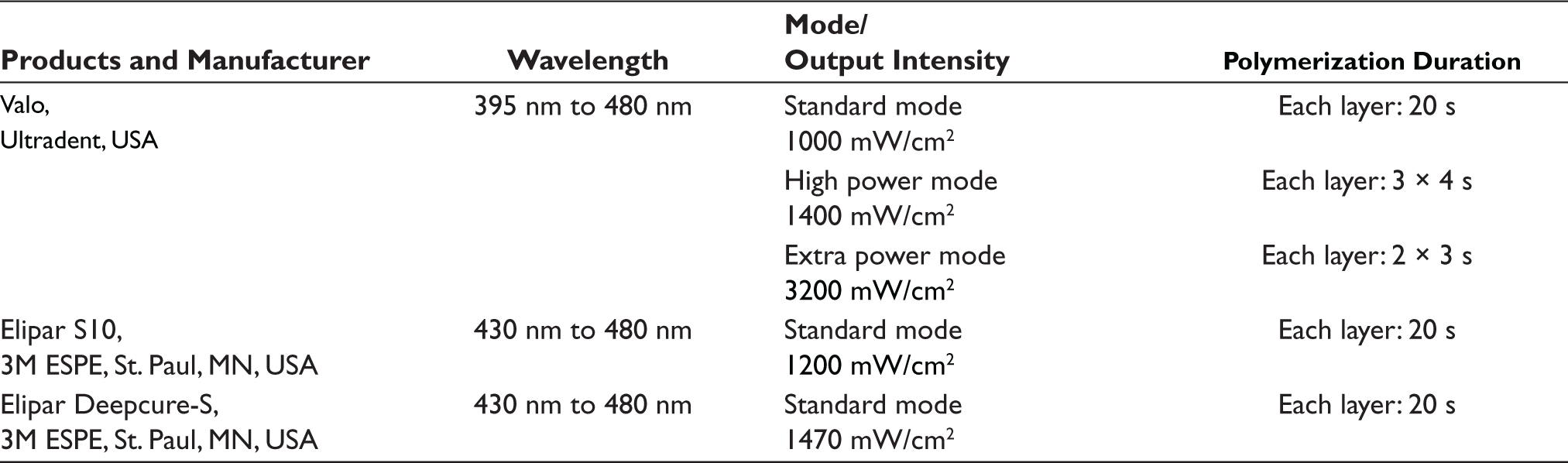
The sample size calculation was done at power at 80%, α at 5%, β at 20%, and the sample size was determined to be six teeth in each subgroup, and a total of 120 extracted third molars were used in the study. Tables 1 and 2 show the restorative materials and light devices used in this study.
Materials and Their Compositions Used in This Study
Light Curing Units and Their Properties Used in This Study
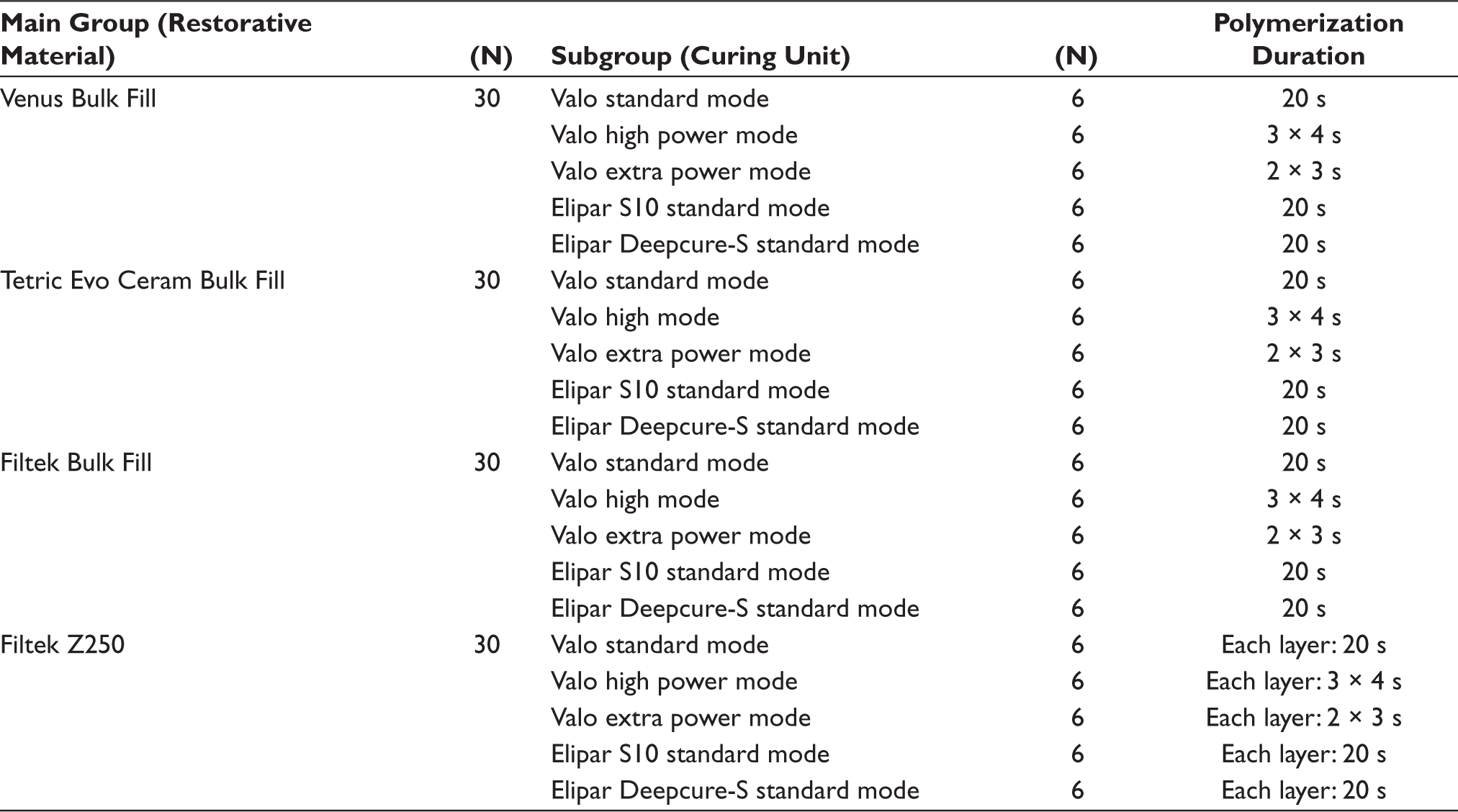
The 120 (N) molar teeth collected in the study were randomly divided into four main groups according to the restorative materials to be used (N1 = 30). Afterward, the teeth in the groups created were divided into five subgroups according to the light source mode used (n = 6). The groups formed in the study are presented in Table 3.
Study Group Design
Cavity Preparation
The study was carried out on 120 extracted sound human third molars. The extracted teeth were kept in distilled water to maintain a constant body temperature of about 37°C and to prevent desiccation of the tooth. The roots of the teeth were removed 2 mm below the cervical region by cutting with a low-speed diamond saw. The pulp residues in the pulp chamber were removed with the help of an excavator and the pulp chamber was cleaned by irrigating with 5.25% NaOCl and distilled water. Flat occlusal surfaces were obtained by cutting the cusps of the teeth with a low-speed diamond saw to obtain standardized restorations. Class I cavities with a width of 2 × 3 mm and a depth of 4 mm were prepared on the obtained teeth with diamond burs. The dentin thickness between the cavity floor and the pulp chamber was prepared to be equal in all prepared teeth, and it was prepared as 2 mm by measuring with a caliper. The remaining dentin thickness was measured by two different researchers to ensure standardization. Teeth with a thickness of 2 ± 0.05 mm were included in the study.
Pulpal Microcirculation Model
The pulpal microcirculation model, which was prepared by Savas et al. 14 was preferred for this study (Figure 1). It was used with a slight modification in the working system.
The Pulpal Microcirculation Model Designed by Savas et al. 14
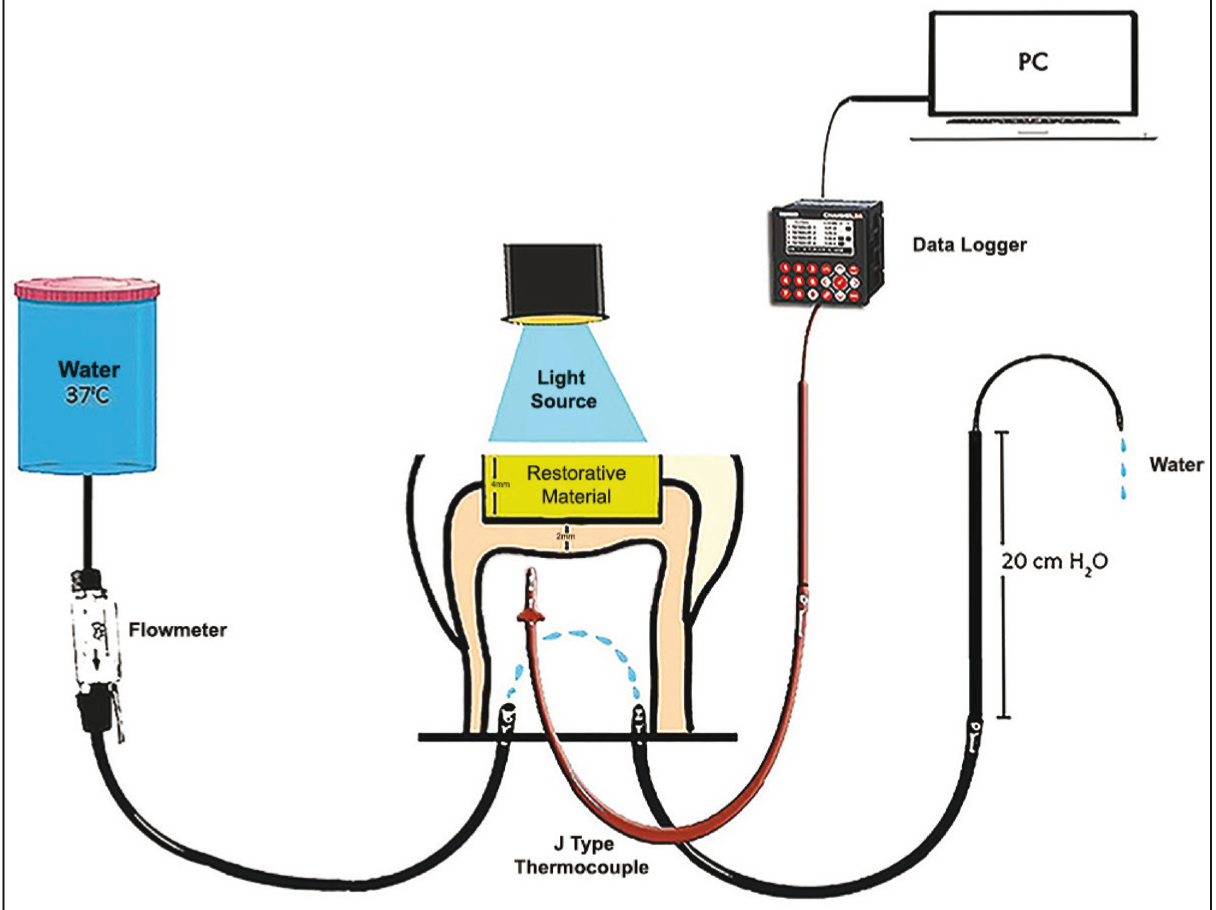
An acrylic plate with three artificial holes on it was used for attaching teeth and the pulpal microcirculation system. J-type thermocouple wire (Elimko, Turkey) was used in the first hole for measuring the pulp chamber heat. Two small tubes were placed in the second and third holes for fluid entry and drainage.
The prepared teeth were fixed to the acrylic plate with the help of a flowable composite. The liquid flow rate of the created system was adjusted to be 1 mL/min and it was fixed to continue at this rate by an infusion flowmeter (Gemed Medical Co., İstanbul, Turkey). The temperature of the liquid circulating in the system was kept constant at 37°C to simulate the blood circulation and distilled water was used as a liquid. The thermocouple wire of the data logger (EMKOPID Quadro, Turkey) was placed in the pulp chamber and the amount of heat increase released during the light-curing of the restorations was recorded. Temperature measurements of all groups were completed with this procedure.
Composite resins (Venus Bulk Fill, UK, Tetric Evo Ceram Bulk Fill, USA, and Filtek Bulk Fill, USA) in the experimental groups were applied to the cavities prepared simultaneously. For each subgroup (n = 6) constructed for the experimental groups, polymerization was carried out with the light sources: Valo Standard mode (20 s, 1000 mW/cm2, ≈20 J/cm2), Valo High Power mode (3 × 4 s, 1400 mW/cm2, ≈17 J/cm2), Valo Extra Power mode (2 × 3 s, 3200 mW/cm2, ≈19 J/cm2), Elipar S10 (20 s, 1200 mW/cm2, ≈24 J/cm2), and Elipar Deepcure-S (20 s, 1470 mW/cm2, ≈29 J/cm2).
In the control group, Filtek Z250 composite material was packed to the cavities in the form of two layers. With the light sources, Valo Standard mode (each layer 20 s), Valo High Power mode (each layer 3 × 4 s), Valo Extra Power mode (each layer 2 × 3 s), Elipar S10 (each layer 20 s), and Elipar Deepcure-S (each layer 20 s), six samples for each of them were polymerized.
Three different bulk-fill composites and one nano-hybrid composite were placed in the cavities and light-cured according to the recommendations of the manufacturers. The initial heat value (37°C) in the pulp chamber before the polymerization and the maximum temperature increase during the polymerization were measured and the difference between these two values (Δt) was recorded. Mylar strips were used to standardize the distance between the samples and the light source. Calibration of the output power of the light source was achieved for every third sample using a digital radiometer.
Statistical Analysis
All statistical analyses were performed by using IBM SPSS Statistics (version 25.0; IBM Corporation) and to evaluate the influence of two variables (curing light, composite resin) a two-way analysis of variance with post-hoc Bonferroni correction was carried out and Tukey tests were used when the parametric test assumptions were fulfilled according to the Kolmogorov–Smirnov test. Statistical significance was set at P < .05.
Results
Findings on Temperature Changes During the Polymerization of Composite Materials with Different Light Sources
The mean maximum temperature values and standard deviations of the test groups in the study are shown in Table 4.
Temperature Change (Δt) Values Observed During the Polymerization of Composite Materials with Different Light Sources
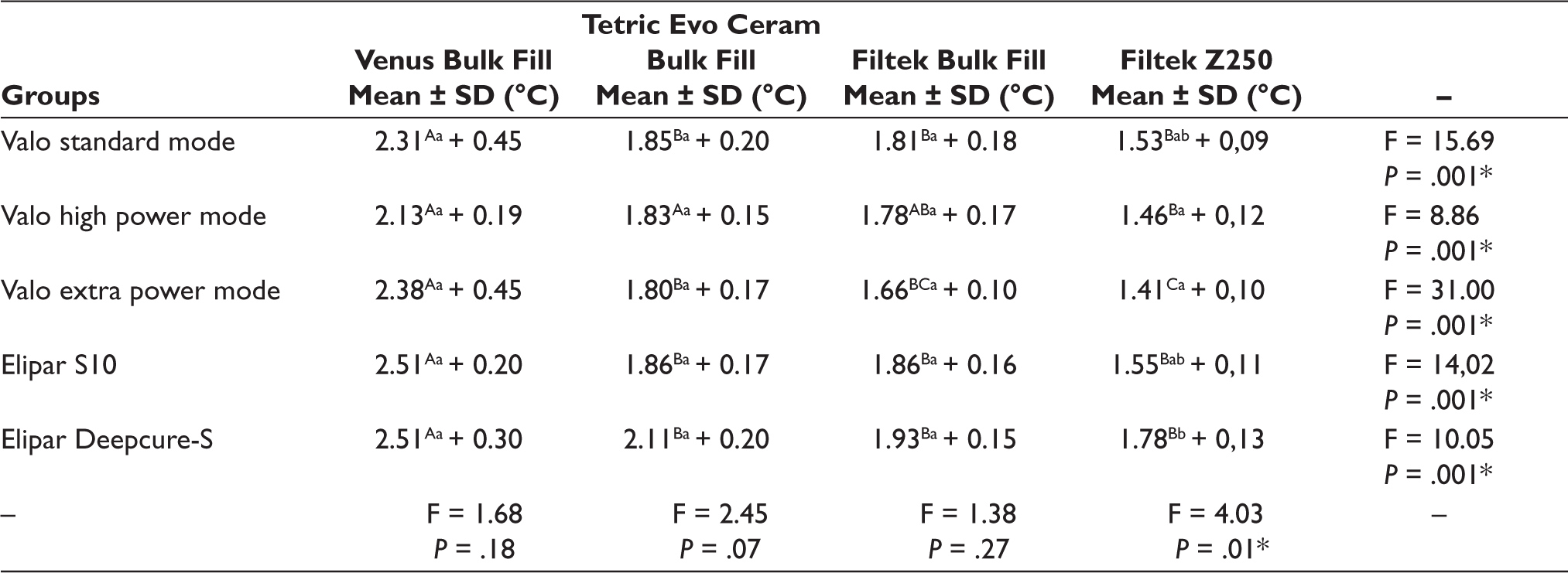
According to the results of the two-way analysis of variance, it was found that the difference between the temperature increase values during the polymerization of the Venus Bulk Fill group was statistically insignificant (P >.05) when three different light sources were used in five different modes. The lowest temperature increments occurred with the high power mode of the Valo light source and the highest temperature difference was observed in Elipar S10 and Elipar DeepCure-S groups (Table 4).
When the temperature increase values arising during the polymerization of Tetric Evo Ceram Bulk Fill and Filtek Bulk Fill groups were examined, it was observed that the difference between the temperature changes caused by the light sources was statistically insignificant (P >.05). While the lowest temperature increase value occurred in the groups where the Extra Power mode of the Valo light source was used and the highest temperature increase values were obtained in Elipar Deepcure-S groups (Table 4).
Whereas, in the control group (Filtek Z250), it was observed that the difference between the temperature increase values caused by the light sources was statistically significant (P <.05). When the measurements were compared in pairs, Valo High Power mode and Elipar Deepcure-S light source, and Valo Extra Power mode and Elipar Deepcure-S were found to be statistically significant (P <.05), while the difference between other groups was found to be insignificant (P >.05; Table 4). Extra Power mode of the Valo light-source groups showed the lowest temperature increment values and the highest temperature increase value was obtained in the Elipar Deepcure-S group.
Findings on Temperature Changes During the Polymerization of Different Restorative Composite Materials via Light Sources
While the temperature difference measurements for different restorative materials were compared for the Valo Standard mode group, the temperature increase in the polymerization of Venus Bulk Fill was significantly higher than the other restorative materials (P <.05). Temperature increase between Tetric Evo Ceram, Filtek Bulk Fill, and the control group (Filtek Z250) was found to be statistically insignificant (P >.05; Table 4).
When the temperature difference measurements for different restorative materials were compared for the Valo High Power mode group, the difference between the temperature increase values was found to be statistically significant (P <.05; Table 4). While the temperature increase obtained for the Tetric Evo Ceram and Venus Bulk Fill groups was significantly higher than the control group (Filtek Z250; P <.05), the difference between the Filtek Z250 and Filtek Bulk Fill groups was found to be statistically insignificant (P >.05; Table 4).
Comparing the temperature difference measurements for different restorative materials in the Valo Extra Power mode group, the Venus Bulk Fill group showed a statistically significant higher temperature increase compared to the other restorative materials (P <.05). While Venus Bulk Fill and Tetric Evo Ceram groups displayed statistically significant values of high temperature increase compared to the control group (Filtek Z250; P <.05), the difference between Tetric Evo Ceram and Filtek Bulk Fill groups was statistically insignificant (P >.05; Table 4).
When the temperature difference measurements for different restorative materials were compared for Elipar Deepcure-S and Elipar S10 groups, the temperature increase in the polymerization of Venus Bulk Fill was found to be significantly higher than other restorative materials (P <.05), and the difference between Tetric Evo Ceram, Filtek Bulk Fill, and control groups (Filtek Z250) was found to be statistically insignificant (P >.05; Table 4).
While the Venus Bulk Fill group showed the highest temperature increase values for all subgroups during the polymerization of the restorative materials with light sources, the control group (Filtek Z250) displayed the lowest temperature increase values (Table 4).
Comparison of Temperature Difference Measurements with Respect to Restorative Materials Independent of Light Sources
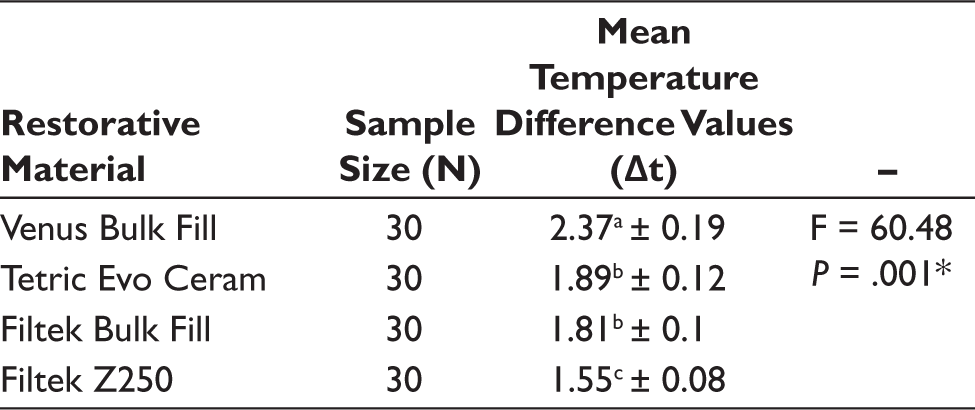
While the temperature difference measurements with respect to the restorative materials are compared independent of the light sources used, the Venus Bulk Fill group showed statistically significant values of higher temperature increase compared to the other restorative materials (P <.05) and the control group (Filtek Z250) displayed statistically significant lower temperature increase values compared to the other restorative materials (P <.05). The difference between the Tetric Evo Ceram group and the Filtek Bulk Fill group was found to be statistically insignificant (P >.05; Table 5).
Comparison of Temperature Difference Measurements with Respect to Restorative Materials
Discussion
Pulp tissue has a structure that is affected by physical, chemical, biological, and thermal stimuli. Temperature increases in the pulp chamber during dental procedures can negatively affect the vitality of the pulp. 8 Zach and Cohen 8 found that a 5.5°C increase in pulp temperature caused histological changes in the pulp and 15% of the pulp of the teeth were necrotic, while they concluded that the increase in pulp temperature of 11°C and 16°C, respectively, gave rise to irreversible changes in the pulps of 60% and 100% of the teeth. In addition, they observed histological evidence of varying degrees of pulpitis in animal pulps, even in the slightest temperature increase in the pulp tissue.
In case of any temperature increase in the pulp tissue, the most important factor that performs temperature regulation is pulp microcirculation. 15 Studies of temperature increase in the dentin-pulp complex reveal the cooling effect of pulpal microcirculation.15,16 Savaş et al. 14 reported that pulpal microcirculation plays an important role in the elimination of thermal damage to the pulp tissue and that pulpal microcirculation will dissipate heat energy.
Studies have shown that the dentin thickness to the pulp chamber during cavity preparation is an important factor in the insulation of the heat released during restorative procedures. And they observed that if this thickness is less than 1 mm, there may be burn lesions in the pulp. 17 Takahashi et al. 18 argued that the remaining dentin thickness may be more important in the transmission of heat to the pulp than the type of material placed in the tooth and its thermal dissipation. The remaining dentin thickness in clinical practice varies. In this study, 2 mm dentin thickness was left for standardizing the residual dentin tissue thickness, and temperature increase values were obtained by opening 2 × 3 mm cavities on the occlusal surface of the teeth. The setting of dentin thickness as 2 mm in this study may explain the low temperature increase in all test groups.
In various studies evaluating the temperature rises in the pulp chamber, it is seen that the temperature rise values are measured by calorimeters, differential thermal analysis, thermocouples, and infrared cameras. 19 And in these studies, researchers stated that it may be appropriate to use thermocouples because they record the temperature change values sensitively.20,21 In the light of these studies and the applicability of this study, it was decided to use a thermocouple for temperature rise measurement.
With the development of light sources, many factors have emerged that affect the temperature increase in the pulp chamber. Some researchers have stated that devices with a narrower light spectrum will cause less temperature increase, 22 whereas the others have reported that light intensity has a significant effect on pulp temperature. 23
There are studies showing that LED light sources used in the polymerization of resin materials cause different temperature increases in surrounding tissues because of the increases in power.11,20
Plasma arc light sources were suggested in order to reduce the polymerization time of composite resins and increase their polymerization efficiency. With plasma arc light sources, fast polymerization occurs via shortening of polymerization durations. 24 In this study, the Extra Power mode of Valo LED light source with a power of 3200 mW/cm2 was used. This mode can be included in the plasma arc (PAC) light device group because it offers the opportunity to apply high light output power in a short time.
According to Loney and Price, even if different polymerization modes are used, changes in the total energy produced by light sources are an important factor in achieving different results for temperature increase. 17 In line with this literature information, in this study, Elipar S10 (1200 mW/cm2), Elipar Deepcure-S (1470 mW/cm2), Valo LED (standard mode 1000 mW/cm2, high power mode 1400 mW/cm2, and extra power mode 3200 mW/cm2) light sources with different powers were used.
The first hypothesis of the study was partially rejected. While Tetric Evo Ceram and Filtek Bulk Fill showed similar temperature increases in the pulp chamber for all different light sources and modes used, Venus Bulk Fill showed statistically significant higher temperature increases (P <.05; Table 4). The second hypothesis of the study was also partially rejected. The temperature differences between Filtek Z250, which is a conventional composite, and Venus Bulk Fill for all different light devices and modes used were statistically significant (P <.05; Table 4).
When we evaluated the results of our study in terms of temperature change difference of restorative materials, the Venus Bulk Fill composite displayed the highest temperature difference in all subgroups (P <.05; Table 4).
Bulk-fill composites generally have lower filler ratios compared to conventional resins, but have larger filler sizes and consequently increase the translucency and ease of light penetration, therefore providing a deeper polymerization, while at the same time increasing the temperature during polymerization. There are studies in the literature suggesting that the presence of filler particles in resin materials decreases heat transmission. 25 Venus Bulk Fill is a restorative material with the lowest amount of filler in volume and weight and the highest content of organic matrix, which does not contain a special photoinitiator, among the resin materials used in the study. Therefore, this can explain the fact that this restorative material is showing more temperature increase during the polymerization with all light sources. This situation caused higher temperatures during polymerization because of the low inorganic filler content and high organic-matrix content of flowable composite material. 26
In our study, Filtek Z250 composite material gave the lowest temperature change values during its polymerization with all light sources, although it was applied in the form of 2 mm layers (P <.05; Table 4). This situation can be attributed to the fact that the filler content of Filtek Z250 has the highest filler ratio among the composites we have used and that it contains zirconia/silica as an inorganic content.
New methacrylate monomers were added to the structure of the Filtek Bulk Fill composite in order to provide polymerization at 5 mm. Aromatic urethane dimethacrylate (AUDMA) which has a high molecular weight reduces the number of reactive groups in the resin, while an additional methacrylate defined as AFM aims to further reduce the stress during polymerization. These new monomer types used to reduce shrinkage stress in the Filtek Bulk Fill composite may have caused the higher temperature difference as compared to Filtek Z250. 27 Similarly, in our study, Filtek Bulk Fill gave higher temperature difference values as compared to Filtek Z250 (Table 4). In parallel with this study, Yasa et al. 28 evaluated the intrapulpal temperature increase of bulk-fill restorations and found that the temperature increase in the Filtek Z250 group was lower than that of the Filtek Bulk fill group and the SDR group, which is another flowable bulk-fill restorative material. The total amount of temperature increase created by these restorative materials was found to be higher than in this study. This can be explained as the amount of dentin thickness was 0.5 mm in their study. Whereas, in this study, the amount of dentin thickness was determined as 2 mm.
In our study, Tetric Evo Ceram, the only condensable bulk-fill composite containing Ivocerin as a photoinitiator, displayed similar results in terms of temperature increase during polymerization for all light sources and modes, as compared to Filtek Bulk Fill restorative material which is another condensable composite, and the results showed that the differences in temperature increase between were statistically insignificant (P >.05; Table 4). The similar temperature difference values of both composite materials can be attributed to their similar content of filler particles.
When the light sources used in the study were compared with each other, the highest temperature change value was achieved with Elipar Deepcure-S for all composite groups, while Valo Extra Power mode displayed the lowest temperature increase value for all groups except the Venus Bulk Fill group, although it has the highest light power (Table 4). It can be said that the reason for this situation is that the amount of temperature difference observed during polymerization is influenced by the light intensity produced by the light sources as well as the duration of application. Because this duration is the most significant factor that determines the amount of energy absorbed during polymerization.
According to Loney and Price, even if different polymerization modes are used, changes in the total energy created by light sources are an important factor in achieving different results for temperature increase. 17
In point of fact, when Elipar Deepcure-S was applied for 20 s at 1470 mW/cm2 output power, 1470 × 20 ≈ 29 J/cm2 total energy was released, while the Valo light source was applied for a total of 6 s with the output power of 3200 mW/cm2 in Extra Power mode, and 3200 × 6 ≈ 19 J/cm2 was released. This situation can be shown as the reason for both the low temperature increase value of Valo Extra Power mode and the high temperature increase values of the Elipar Deepcure-S light device.
The reason for the pulpal temperature increase values created by the Elipar S10 light device, which is the other light source that we used in the study, not displaying a statistically significant difference as compared to Elipar Deepcure-S (P >.059) can be attributed to the time it was applied being 20 s and the resulting total energy being 1200 × 20 = 24 J/cm2 which is similar to Elipar Deepcure-S.
Similarly, Yazici et al. 29 stated in their study that although PAC light sources have twice the light intensity as compared with QTH and LED, the heat they produce is comparable to these sources. It is thought that the light application duration is effective in the emergence of this result. PAC light sources can be applied from 3 s to 12 s. Yazici et al. 29 reached this conclusion by applying the PAC light source for 3 s in their studies. However, the longer polymerization time is characterized by a higher temperature increase, especially for PAC light sources. 23 Similarly, in our study, lower temperature differences were obtained when high light power was applied for a short time in the Extra Power mode of the Valo light source.
Whether temperature rises in the pulp can cause damage has never been systematically investigated in clinical trials and large sample groups. Biological consequences and clinical symptoms of thermal insults to the pulp include post-operative hypersensitivity, reversible and irreversible pulpitis, and internal resorption. Patient- and tooth-specific factors influence these consequences, such as pain threshold levels, age of the patient, predamage of the pulp because of caries, mechanical or cutting trauma, periodontitis, cavity depth, etc.
Because of the scarcity of findings in the literature research, this study could be compared with the limited studies in the literature. Further studies are needed to evaluate the temperature increase in the pulp chamber caused by bulk-fill restorations in more detail. However, we believe that our study will act as a step for further studies on this subject.
Within the limits of this study, the heat increase that will occur in the pulp chamber by the heat released during the polymerization of bulk-fill restorative materials with different light devices has been examined. However, the temperature increase during the polymerization of adhesive resins was not investigated. In order to understand the total temperature increase in the pulp chamber, future studies including the temperature increase in the polymerization of adhesives are needed.
Conclusion
In this study, it was concluded that the application of LED light sources with low light power for a longer time during the polymerization of composite resins causes a high temperature increase. For this reason, in order to keep the temperature increase in the pulpal tissues at a minimum level during the restoration of cavities, polymerizing the restoration material for a shorter time with high power mode can be considered as an alternative to polymerization.
In line with the data obtained from this study, it has been determined that the composition of the restorative materials will affect the temperature increase values that are observed during polymerization. It was observed that the temperature increase that occurred during the polymerization of all restorative materials used in our study was between 1.3°C to 2.9°C. However, this increase did not exceed 5.5ºC, which is considered a critical value for pulp tissue. For this reason, it can be said that Venus Bulk Fill, Tetric Evo Ceram, Filtek Bulk Fill, and Filtek Z250 restorative materials and all light sources used in the study can be safely used in dentistry in terms of temperature increase during restorative procedures.
Footnotes
Authors’ Contribution
Alper Kaptan (AK) planned the study. Eda Yıldız Mollaoğlu (EYM) made the experimental setup, carried out tests and collected the data. AK made the statistical analyses and done the writing of manuscript.
Data Availability Statement
The authors confirm that the data supporting the findings of this study are available within the article its supplementary material. Raw data that support the findings of this study are available from the corresponding author, upon reasonable request.
Declaration of Conflicting Interests
The authors declared no potential conflicts of interest with respect to the research, authorship, and/or publication of this article.
Disclosure Statement
The authors do not have any financial interest in the companies whose materials are included in this article.
Ethical Approval Consent
This study was approved by the Research Ethics Committee of Cumhuriyet University, under report no. 2017-10/25.
Funding
This research was funded by the Scientific Research Project Fund of Sivas Cumhuriyet University under the grant number DIS‐206.