




Abstract
Purpose:
The study aimed at evaluating the effect of wet and dry polishing systems on the resin composites’ surface roughness and color change.
Materials and Methods:
In the study, samples were prepared using nanoceramic (Ceram.x one) and nanohybrid (GrandioSO) resin composites. Two different finishing and polishing systems were used in the polishing of resin composites. Resin composite surfaces were finished and polished under wet and dry conditions. The initial surface roughness values (Ra) of the samples were measured using a profilometer, whereas the color changes were measured using a spectrophotometer. Then, the colors of the samples kept in coffee were measured on the 7th and 30th days. Surface roughness and color change values (ΔE00) were measured and statistically analyzed using the one-way analysis of variance (ANOVA) test (P < .05).
Results:
Wet or dry use of polishing systems did not show a statistically significant difference between the surface roughness values of the resin composite (P < .05). Wet and dry use of polishing systems showed similar color changes on the composite resins (P < .05). Diamond-containing spirals on composite resins showed statistically less color change than aluminum-oxide-containing discs (P < .05). Wet or dry use of polishing systems did not reduce the color change of the composite resins below the acceptability threshold (AT).
Conclusion:
Wet or dry use of polishing systems on composite resins did not affect surface roughness and color change. The use of diamond-containing polishing spirals that cause less color change can increase clinical success.
Introduction
The use of composite resins in different particle sizes developed with the use of nanotechnology in the restoration of teeth has become widespread. 1 It is stated that new-generation composite resins containing nanofillers provide a more effective color match with dental tissues as a result of their chameleon effect properties.2, 3
The clinical success of teeth restored with composite resins is affected by the surface roughness and color stability of the material. 4 Diamond or carbide burs, polishing discs, rubber spirals containing diamonds, silicon carbide brushes, and polishing pastes are used in the polishing processes of resin composites. Finishing and polishing systems used in one or more steps differ in type. 5 It is stated that the roughness values of above 0.2 µm after the use of polishing systems compose a retention area for the adhesion of the bacterial plaque.6, 7
The color stability of the materials used in the restoration of teeth plays an important role in the clinical success of the restorations. Water absorption, diet, degree of polymerization, and restoration surface roughness are effective on the color change of composite resins.8, 9 It is stated that the composition of the material as well as the particle properties and polishing processes have a direct effect on the color sensitivity of the restoration to external factors. 10 It has been reported that different beverages (coffee, tea, cola, and red wine) consumed with the daily diet cause different degrees of coloration on the surfaces of resin containing restorative materials.11, 12
The International Commission on Illumination (CIE) has stated that instrumental techniques, such as spectrophotometers, colorimeters, or digital cameras, can be used to evaluate color changes in dental materials. 13 The extent of the color difference that can be detected visually by the human eye is stated as the perceptibility threshold (PT), and the extent of the color difference that constitutes the acceptability is stated as the AT.14, 15 The PT value of 50:50% in dental materials is expressed as ΔE00:0.8, and the AT value of 50:50% is expressed as ΔE00:1.8. 15
There is inadequate information about the surface quality of the polishing systems of composite resins, which are widely used in the restoration of teeth when applied dry or wet. 16 The current study aimed at measuring the surface roughness and color changes of composite resin after the use of wet and dry polishing procedures. The null hypothesis was that wet and dry use of polishing procedures would not affect the surface roughness and color changes of composite resins. The null hypothesis of our study was that wet and dry use of polishing procedures would not affect the surface roughness and color changes of composite resins.
Materials and Methods
Setting and Design
The following two commercially available composite resins were selected in the current study: Ceram.x one (Dentsply Sirona, Germany) and GrandioSO (Voco, Germany); regarding the polishing and finishing systems, the following two types were used: diamond-containing two-step spirals (Clearfil Twist Dia, Kuraray, Japan) and aluminum-oxide-containing multistep discs (Sof-Lex, 3M ESPE, USA). The detailed description of the materials is presented in Table 1, according to the manufacturers’ instructions.
Detailed Description of the Composite Resin and Finishing and Polishing Systems used in the Study as Obtained from the Manufacturer
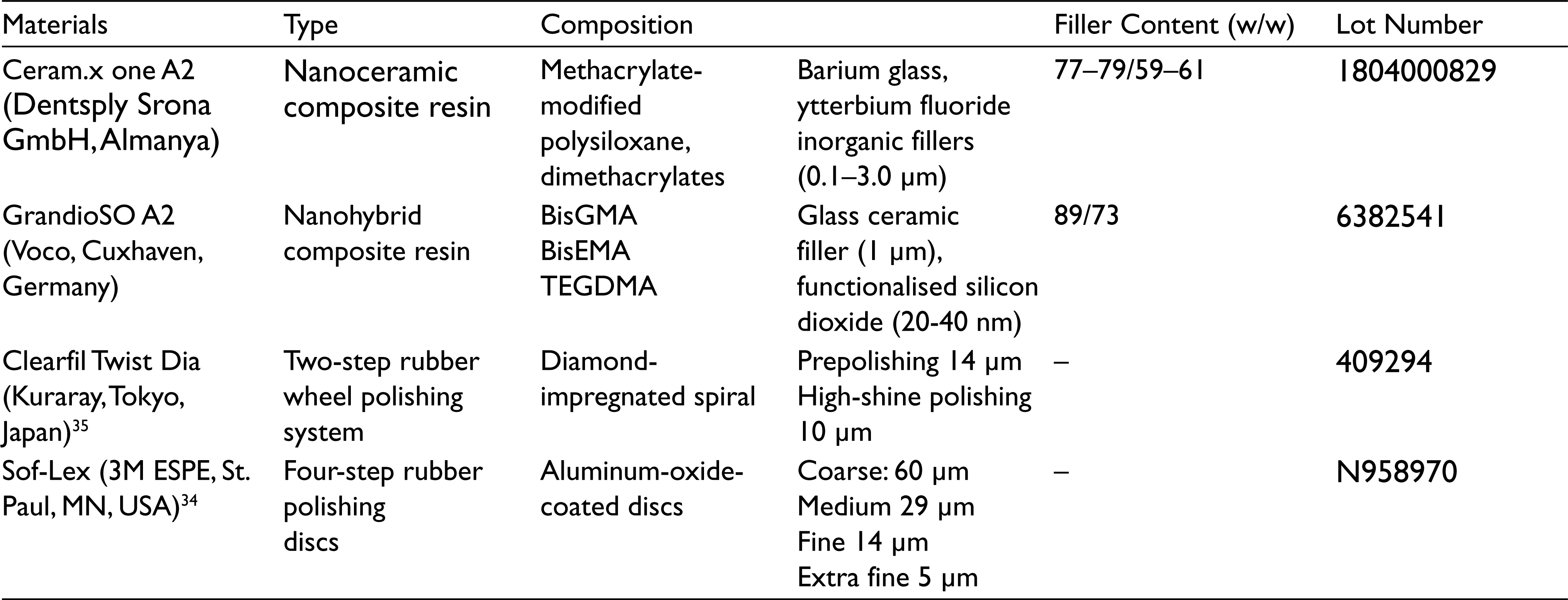
The sample size was determined using the G Power analysis program (G Power 3.1, Düsseldorf) at 80% power and a 0.05 error level. A total of 40 samples were prepared for each composite resin planned in the study. The samples were divided into five subgroups, with eight samples in each group (n = 8).
Preparation of Samples
Samples of 8 mm in diameter and 2 mm in height were prepared using a silicone mold from the planned composite resins. A silicone mold was used to prepare the samples. After the composite resins were placed into the cavity on the silicone mold with a mouth spatula, a 1-mm glass coverslip was placed on the mylar strip. Composite samples were polymerized for 20 s at 1000 mW/cm² power with the tip of an LED light device (DTE LUX E, Germany) touching the glass coverslip.
The finishing and polishing systems were used dry and wet on the composite resins. The finishing and polishing system was not used in the control group (mylar strip). The two-step finishing and polishing systems, prepolishing and high-shine polishing, were used, respectively, for 20 s. The multistep polishing systems (coarse, medium, fine, and extrafine discs) were used, respectively, for 15 s. The finishing and polishing of the samples prepared from composite resins were done at 10,000 rpm. After finishing and polishing, the samples were washed with plenty of water.
Surface Roughness and Color Change
All samples that were washed with plenty of water after finishing and polishing were kept in an incubator (FN 500, Nüve, Turkey) in distilled water at 37°C for 24 h. Then, the initial colors (L*, a*, and b* values) of the samples were measured with a spectrophotometer (Vita Easyshade V; VITA, Germany) under D65 conditions. Ra values were measured with a contact profilometer device (Perthometer M2; Marh GmbH, Germany). Measurements of color and Ra values were made from the middle point of the samples.
Ra values of the composite samples were measured at the baseline and after coloring (30th day). In measuring the Ra values of the samples at the baseline and 30th day, the measuring length of the contact profilometer was 1.75 mm, the cutoff value was 0.25, and the probe tip speed was 0.1 mm/s. The mean Ra (μm) was calculated by making three measurements from the surface of each sample.
Coffee was used to color the composite samples. The samples were kept in coffee (Nescafe Classic, Turkey) at 37°C for 30 days. Color measurements of the samples on the 7th and 30th days were made with a spectrophotometer device, and L*, a*, and b* values were recorded. The coffee solution was prepared using 2 g of coffee powder and 200 mL of water. The coffee solution was added to the samples at 37°C. The coffee solution added to the samples was changed every 24 h. The CIEDE2000 (ΔE00) 17 formula was used to calculate color changes in composite samples based on L*, a*, and b* parameters.
Scanning Electron Microscopy (SEM) Analysis
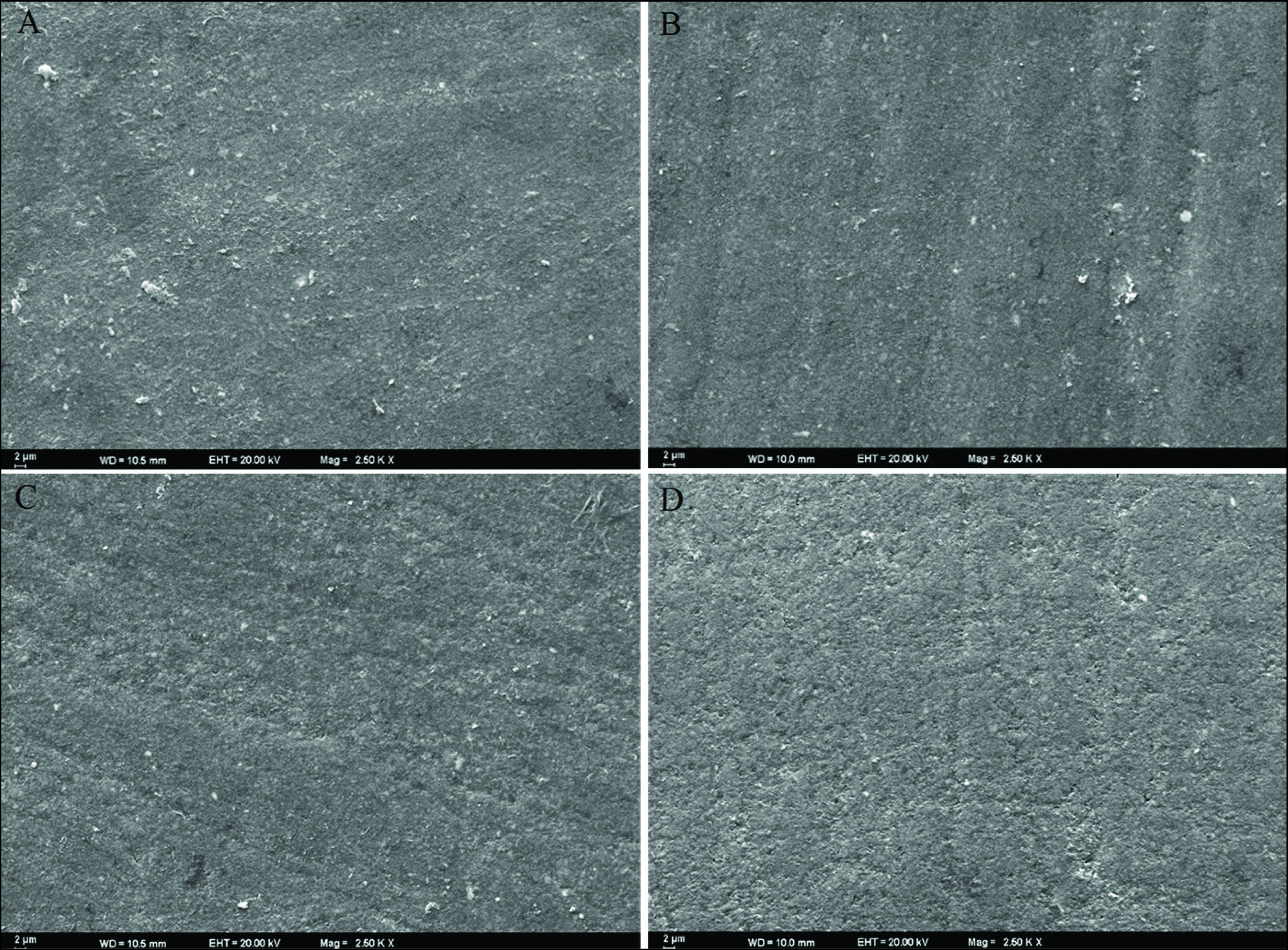
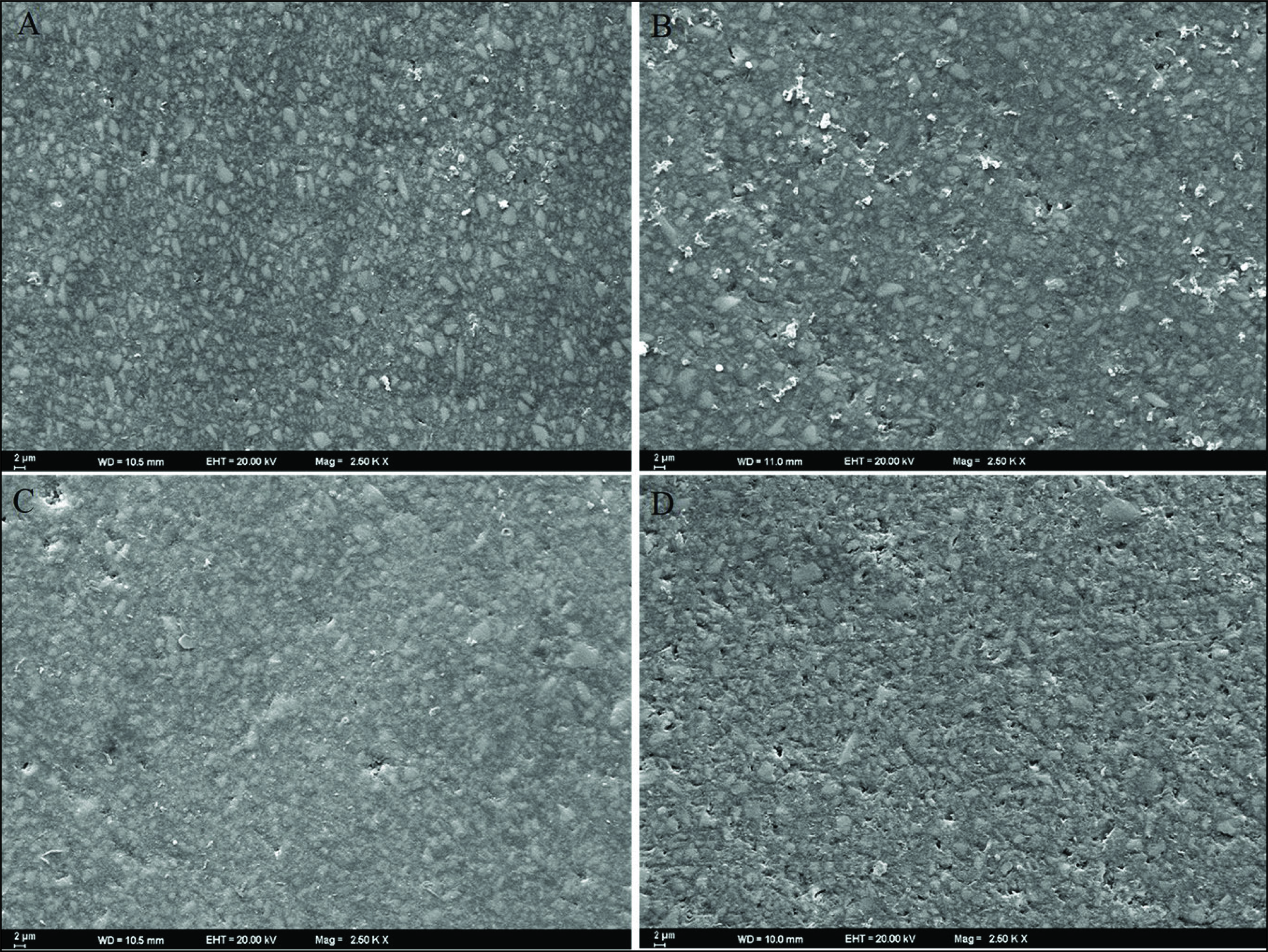
The detailed surface properties of the composite samples, which were kept in coffee for 30 days, were examined with a scanning electron microscope device (ZEISS EVO 40, Germany) at 2500 magnifications. The surface of two samples from each group was evaluated.
Statistical Analysis
Statistical analysis of the color and surface roughness data was performed using the SPSS 22.0 program (SPSS Inc., Chicago, IL, USA). The roughness and color change values of the composite resins were analyzed using one-way analysis of variance (ANOVA) and the Tukey test (P < .05).
Results
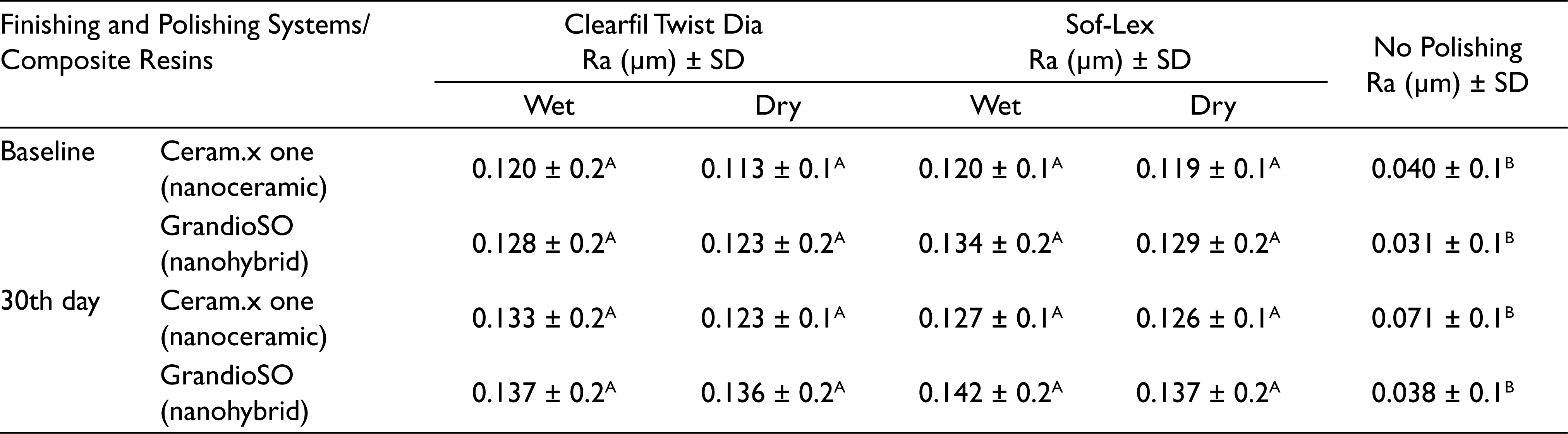
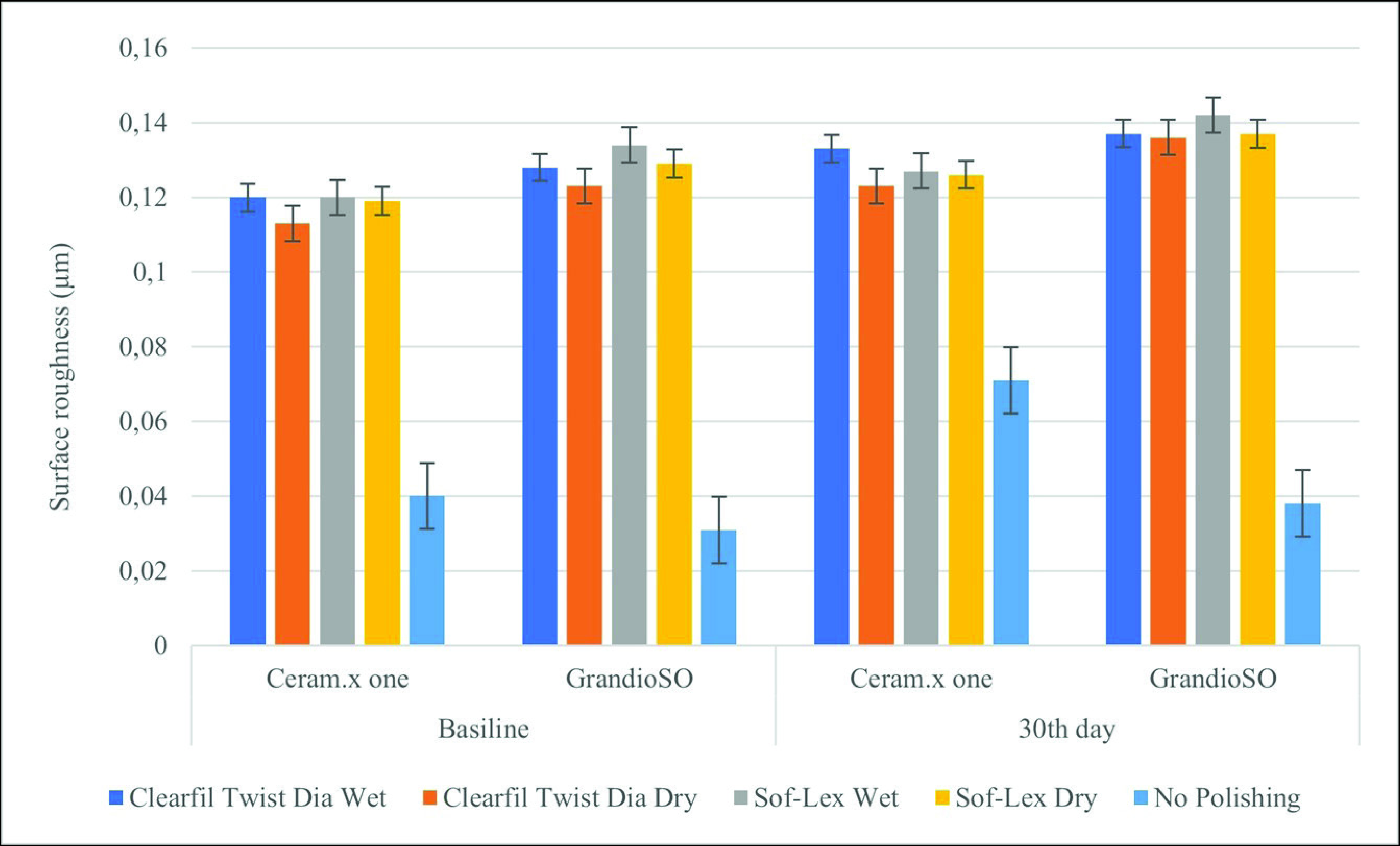
In this study, the initial Ra of the resin composites of the polishing systems we used as wet and dry did not create statistically significant differences (P < .05). The polishing systems showed roughness values between 0.113 μm and 0.120 μm on nanoceramic (Ceram.x one) and nanohybrid (GrandioSO) composites (Table 2, Figure 1). The lowest roughness values were observed on the surface of the composite samples that were not finished and polished (nanoceramic: 0.040 μm; nanohybrid: 0.031 μm). There was no statistically significant difference between the roughness values of the composite samples after they were kept in the coffee.
Surface Roughness Values (µm) of Composites which are Formed by Different Finishing and Polishing Processes
Surface Roughness Values (Ra) of Dry and Wet Finishing and Polishing Systems on Composite Resins
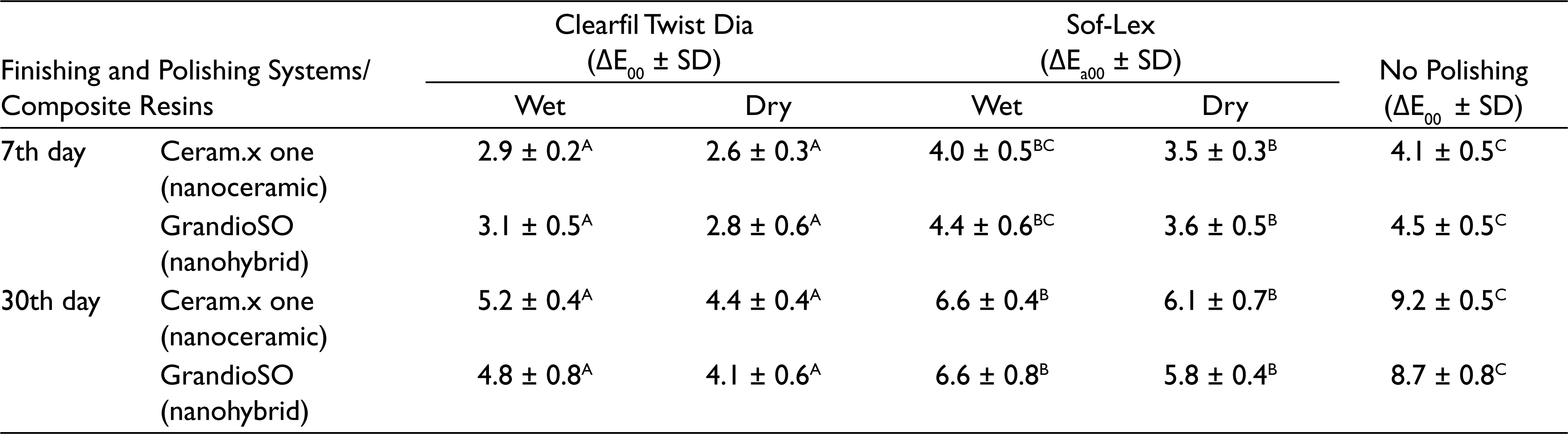
Using the polishing systems dry or wet did not cause a statistically significant difference in the color change values of the composite resins on the 7th and 30th days (P > .05). The diamond-containing finishing and polishing systems used wet produced the lowest color change (nanoceramic ΔE00:4.4; nanohybrid ΔE00:4.1) in the composite samples, which were kept in coffee for 30 days, whereas the dry-used aluminum oxide disc systems showed the highest color change (nanoceramic ΔE00:6.6; nanohybrid ΔE00:6.6).
Diamond-containing finishing and polishing systems on nanoceramic (Ceram.x one) and nanohybrid (GrandioSO) composites showed statistically less color changes than aluminum-oxide-containing finishing and polishing systems (P < .05). It was observed that the color change values of the composite resins (control) that were not polished were statistically the highest (P < .05; Table 3).
Examination of Color Change Values (∆E00) on the 7th and 30th Days after Different Finishing and Polishing Systems of Composites
In the SEM analysis of the composite samples, the finishing and polishing systems used dry or wet showed similar surface properties. However, the nanoceramic composite had a smoother surface than the nanohybrid composite (Figures 2 and 3).
Nanoceramic Composite (Ceram.x. one) SEM Analysis at 2500 Magnification; Diamond Particle Finishing and Polishing System Dry (A) and Wet (B); Aluminum Oxide Finishing and Polishing System Dry (C) and Wet (D)
Nanohybrid Composite (GrandioSO) SEM Analysis at 2500 Magnification; Diamond Particle Finishing and Polishing System Dry (A) and Wet (B); Aluminum Oxide Finishing and Polishing System Dry (C) and Wet (D)
Discussion
Although the mechanical and physical properties of composite resins have been improved today, the surface roughness that occurs after finishing and polishing directly affects the clinical success of the restoration. The low surface roughness increases the clinical success of resin composites, whereas the rough surfaces create a retention area for bacterial plaques and cause the restoration to be colored. 18 Based on the findings of this study, the null hypothesis was accepted as the wet and dry use of finishing and polishing procedures did not affect the surface roughness and color change of the composite resin.
Surface roughness can vary depending on the composition, particle type, and size of the materials used in the finishing and polishing processes of composite resins. In the literature, it has been reported that aluminum-oxide-containing polishing systems outperform diamond- containing systems.19, 20
Flury et al. 21 stated that the aluminum-oxide-containing multistep (Sof-Lex ST) polishing system creates less surface roughness than the diamond-particle-containing two-step finishing and polishing system (Vita Polishing Set Clinical). Kemaloğlu et al. 22 in their study on the nanohybrid composite resin (Tetric N-Ceram) stated that two-step (diamond-containing) finishing and polishing systems, such as PoGo, Sof-Lex Spiral Wheels, and Clearfil Twist Dia, can create similar surface roughness to multistep systems (aluminum oxide), such as Super-Snap. Wheeler et al. 23 examined the effect of finishing and polishing systems on the surface roughness of composite resins and stated that diamond-containing two-step finishing and polishing systems (Diatech Shapeguard and Komet Spiral) created the lowest surface roughness.
Our results are in agreement with the study of Kemaloğlu et al., 22 in which the diamond-containing two-step polishing system demonstrated roughness results similar to the aluminum-oxide-containing multistep polishing system on composite resins.
Bayraktar et al. 24 in their study on the surface roughness of three different composite resins (Photo Posterior, Filtek Ultimate, and Aelite LS Posterior) after finishing and polishing systems stated that dry and wet polishing applications create similar surface roughness. Nasoohi et al. 25 stated in their study that the surface roughness of all composite samples after dry finishing and polishing was higher than those that were wet finished and polished. In the present study, dry and wet use of polishing systems did not create a difference between the roughness values of resin composites as in the study of Bayraktar et al. 24
Differences in particle shape and particle amount of composite resins affect the surface roughness of the material. 26 Reducing the amount of filler causes more water to be absorbed by the material. Camilotti et al. 27 stated that the surface roughness of composite resins in different beverages (juice, cola, and water) increased over time because of the dissolution in the structure. In our study, it was observed that the surface roughness of composite resins kept in coffee increased over time. Wet or dry use of the polishing systems did not affect the increase in surface roughness of the composite resins.
Although there is not yet an accepted threshold value in the evaluation of surface roughness, it is stated that surface roughness of above 0.2 μm directly affects bacterial adhesion. 6 In our study, wet or dry use of finishing and polishing systems reduces the surface roughness below 0.2 μm. In addition, the final surface roughness of the composites measured after coloring remains below this value.
Despite the effective polishing of resin containing restorative materials, the color change that occurs shows the esthetic inadequacy of the material and causes patient dissatisfaction. It has been reported that color changes in composite resins are related to internal and external factors, and surface roughness has a direct effect on external discoloration. 28
In recent years, the spectrophotometer has been widely used for measuring tooth color. 29 Clinical spectrophotometer devices, which are reported in the literature to provide more objective values, 30 was used in the single-point measurement mode for color measurement of the samples in our study.
CIELAB is calculated with the formula ΔEab using the color change values L*, a*, and b* in the materials. In 2001, a new formula, CIEDE2000 (ΔE00) updated by CIE, was introduced. 17 Gómez-Polo et al. 31 stated that the CIEDE2000 formula is more sensitive than the CIELAB formula in measuring color changes. Therefore, the CIEDE2000 formula was preferred in our study.
Although it is stated that color changes may differ depending on the duration of immersion of dental materials in beverages, it is stated that red wine, coffee, and tea create the highest color change. 12 In the present study, a coffee solution was preferred for coloring the samples.
It has been stated in the literature that the used finishing and polishing systems have a significant effect on the color stability of the tested esthetic restorative materials. 32 Türkün and Türkün 33 compared the color differences by immersing the composite resins in different beverages after the finishing and polishing systems (Sof-Lex, Enhance, and PoGo) and found that there was less coloration in the composites where the Enhance system and polish pastes were applied together. Aydin et al. 34 examined the effects of finishing and polishing systems on the color change of composite resins and stated that the lowest color change was seen in the diamond-containing finishing and polishing system (Clearfil Twist Dia). Korkut et al. 35 stated that spiral polishing systems (Clearfil Twist Dia and Sof-Lex Spiral) containing diamond particles are more advantageous and effective in color change of composite resins than other polishing materials. Our results are in line with literature studies where the diamond-containing polishing system showed the least color change on composite resins.
In the literature, it has been reported that irrigation during the application of polishing systems affects the surface roughness, microhardness, and color change of composite resins. 36 It has also been reported that as a result of the heat increase produced during dry finishing and polishing application, the filler/matrix bond may be disrupted and may cause the separation of the filler particles from the matrix. 37 In this study, contrary to the literature, no separation was seen in the filling/matrix of the composite resins as seen in the SEM images.
PT and AT, which are important factors for evaluating the color stability of dental materials, are indicated in the literature as 50:50% PT ΔE00:0.8 and 50:50% AT ΔE00:1.8, respectively. 38 In our study, composite resins kept in coffee for 30 days after wet or dry polishing showed a color change over the AT value.
This study has some limitations. The study is an in vitro study in which restorative material is exposed to beverages from both sides. In the clinical situation, the composite resin is attached to a tooth structure and only its outer surface is exposed to beverages. In addition, a single beverage was preferred for coloring the composite samples. However, many factors in the oral environment can affect surface roughness and color change.
It is considered that clinical studies on the effects of wet or dry polishing application on the color change of composite resins will contribute to the literature in future.
Conclusion
When the polishing systems were used wet or dry, they created similar surface roughness and color change on the surface of the composite resins. Although the polishing systems containing diamond or aluminum oxide on composite resins showed similar surface roughness, aluminum-oxide-containing discs showed more color change.
Footnotes
Declaration of Conflicting Interests
The authors declared no potential conflicts of interest with respect to the research, authorship, and/or publication of this article.
Funding
The authors received no financial support for the research, authorship, and/or publication of this article.