




Abstract
Aim:
The purpose of this study is to determine how fluoride varnish materials applied to polyacid modified composite resins (PMCR) affect roughness at various temperatures.
Materials and Methods:
In total, 100 PMCR discs were manufactured for this in vitro study, and the hundred samples were randomly split into five groups of twenty samples each. The samples in four groups had their surfaces coated with fluoride varnish at varying temperatures (4ºC, 23ºC, 39ºC, and 55ºC), while the samples in the control group did not get this treatment. A heating device is used for fluoride varnish. A profilometer was used to measure the samples’ surface roughness values after application. The Kruskal–Wallis and Shapiro–Wilk tests were used for statistical analysis.
Results:
After comparing five groups with twenty samples apiece, it was found that 23ºC had the greatest average roughness value. For the fluoride varnish material cooked at various temperatures, there was no discernible statistical variation in the roughness values.
Conclusion:
The study’s results indicate that all groups’ surface roughness values following the application of fluoride varnish at varying temperatures were found to be clinically acceptable.
Introduction
The goal of preventative dentistry is to use topical fluoride applications to stop dental cavities from developing. 1 It is critical to restore cavitated teeth using the right materials in addition to stopping caries from forming in teeth. 2 In pediatric dentistry, restorative materials such as composite resins, glass ionomer cements, and polyacid-modified composite resins (PMCR) have been introduced for this purpose. 3 Today, PMCR materials are often preferred for the treatment of primary teeth. 4
Preserving the surface characteristics of the restorations is crucial for the clinical efficacy of restorative materials. 5 Rough surfaces can cause discoloration, plaque accumulation, gingival irritation, carious lesions, and abrasions on the surface of the restorative material. 6 In general, microbes find it more difficult to attach to surfaces that are smoother in texture. 7 Topical fluoride applications include fluoride gels, fluoride solutions, and fluoride varnishes. Although studies have demonstrated the efficacy of fluoride gels and varnishes in the prevention of caries, fluoride varnishes are relatively more commonly used due to their ease of application and reduced risk of swallowing. 8 The literature contains reports of in vitro investigations that looked into how topical fluoride treatments affected the roughness, color stability, and microhardness of restorative materials.9–11 There are studies in which topically applied fluoride gels caused roughness by modifying the surface of restorative materials depending on their content and pH levels.12, 13 However, no such study has been reported in relation to fluoride varnish.
The long-term success of fluoride varnish application depends on the preservation of the surface properties of the restorative materials. The aim of this study is to evaluate the effect of fluoride varnish heated at different temperatures on roughness when applied to PMCR.
The study’s null hypothesis states that there will be no change in PMCR materials’ surface roughness when fluoride varnish is applied at various temperatures.
Materials and Methods
Setting and Design
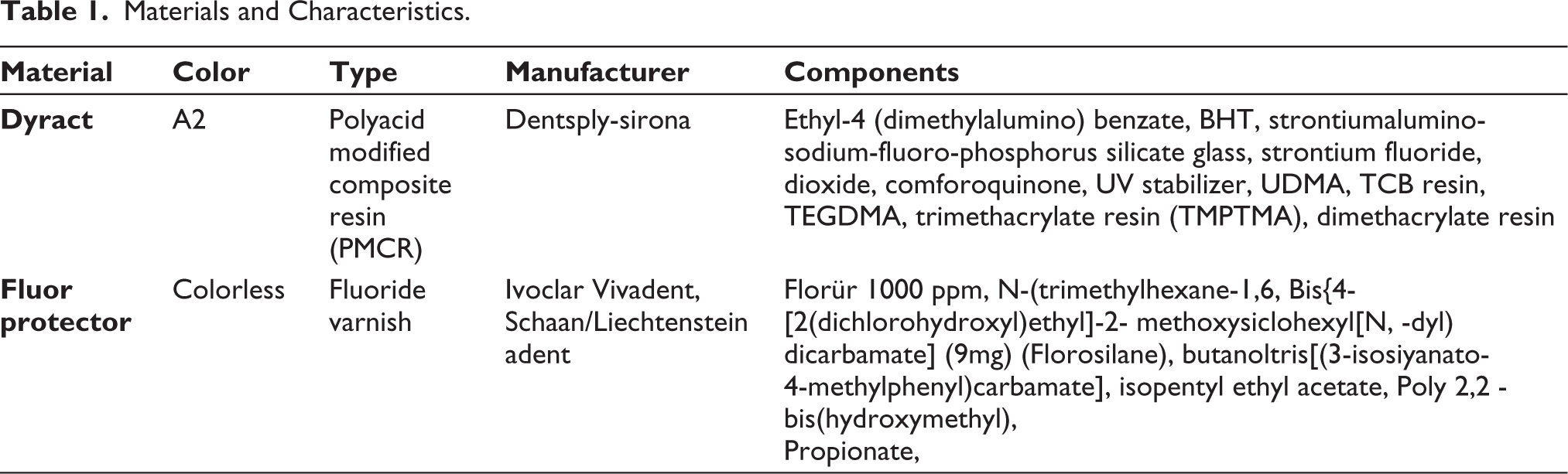
The study used PMCR material (Dyract Extra, Dentsply, Germany) and neutral fluoride varnish (Fluoride Protector, Ivoclar Vivadent, Schaan/Liechtenstein) in standard silicone molds for fluoride application (Table 1).
Materials and Characteristics.
Sampling Criteria
Based on the data from the Tavangar et al. study, the number of samples to be used in the present study was determined to have 95% test power (1 – β), 95% confidence (1 – α), f = 0.677 effect size, and at least 10 samples in each of the subgroups with statistical power analysis calculated using the G*Power program. As a result, a minimum of 20 samples per group was considered necessary.
Grouping and Allocations Methods
The PMCR material was placed in silicone molds that were 10 mm in diameter and 2 mm thick in order to create 100 samples. Next, the samples were put in perpendicular contact with a portable LED light source (Elipar S10, 3M ESPE, St. Paul, USA). The LED light was used to polymerize the samples for a duration of 20 seconds. Coarse, medium, fine, and superfine discs (KERR, Switzerland) were used to polish the samples in that order. Following polishing, the samples were incubated for 24 hours at 370C in distilled water to finish the polymerization process.
Methodology
The study divided the fluoride varnish materials used on PMCR surfaces into four groups based on different temperature values. This study employed four different temperature settings. One of the settings was room temperature, another was the temperature of the refrigerator where the materials were stored, and the remaining two temperatures were achieved by heating the dental materials. The use of multiple temperature settings allowed for a more comprehensive analysis of the materials. The first group’s fluoride varnish material was refrigerated for 48 hours to reach a temperature of 4ºC. It was then applied to the PMCR surfaces and left to dry for 5 minutes. Following a 48-hour period at room temperature (23ºC), the fluoride varnish was applied to the PMCR surfaces in the second group. Five minutes were given for it to dry. As per the manufacturer’s instructions, the third group’s composite heating device (Micerium, S.p.a., Avegno GE, Italy) was heated to 39ºC. After that, the fluoride varnish material was heated for a duration of 20 minutes. After applying material, the PMCR surfaces were left to dry. Using a composite heating equipment, the fluoride varnish material for the fourth group was heated to 55ºC before being applied to the PMCR surfaces. The fluoride varnish material for the fourth group was heated to 55ºC using a composite heating device and then applied to the PMCR surfaces. The heating device was set to the desired temperature and the material was kept in it for 20 minutes prior to application. After application, all samples were immersed in distilled water for 24 hours.
Observational Parameters
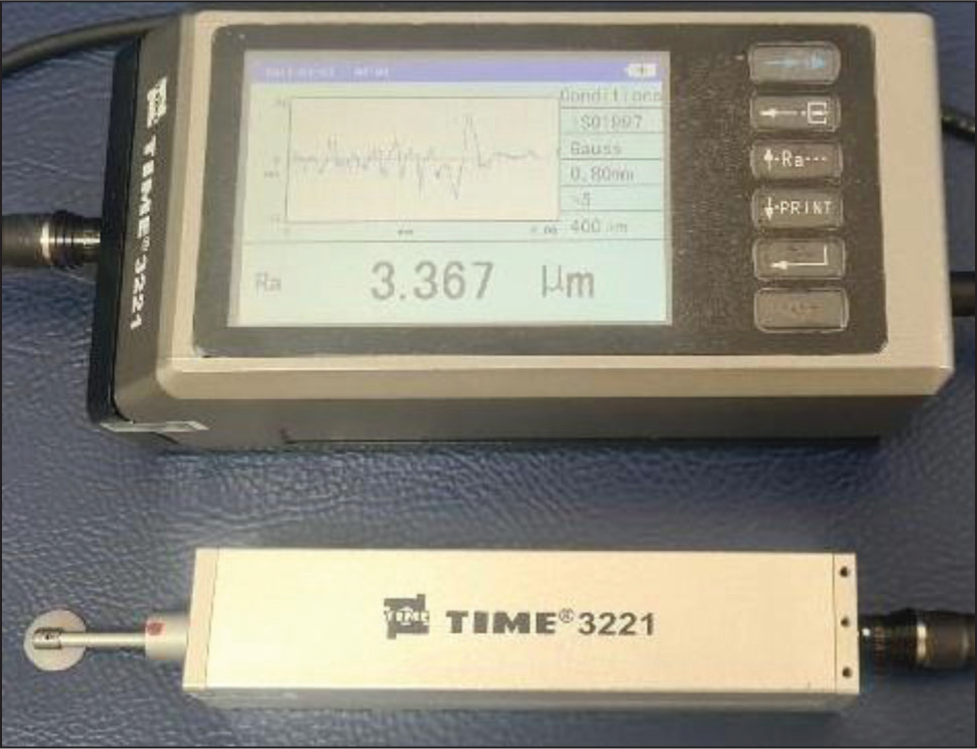
All samples had their surface roughness values determined using a profilometer (Perthometer M2, Maher, Gottingen, Germany). The surface cutting length was 0.80 mm, the surface scanning length was 5.50 mm, the resolution of the profilometer device was 0.01 mm, and the reader tip speed was 1 mm/sec. The roughness average (Ra) value of each sample was measured from three different angles at the same distance and under the same pressure. The averages of the three measurements were then recorded and compared among the groups (Figure 1).
Measuring Roughness with a Profilometer.
Statistical Analysis
SPSS V23 from IBM. Shapiro–Wilk test was utilized to evaluate conformance with the normal distribution. To compare mean values of three or more independent groups that did not have a normal distribution, the Kruskal–Wallis test was used.
Results
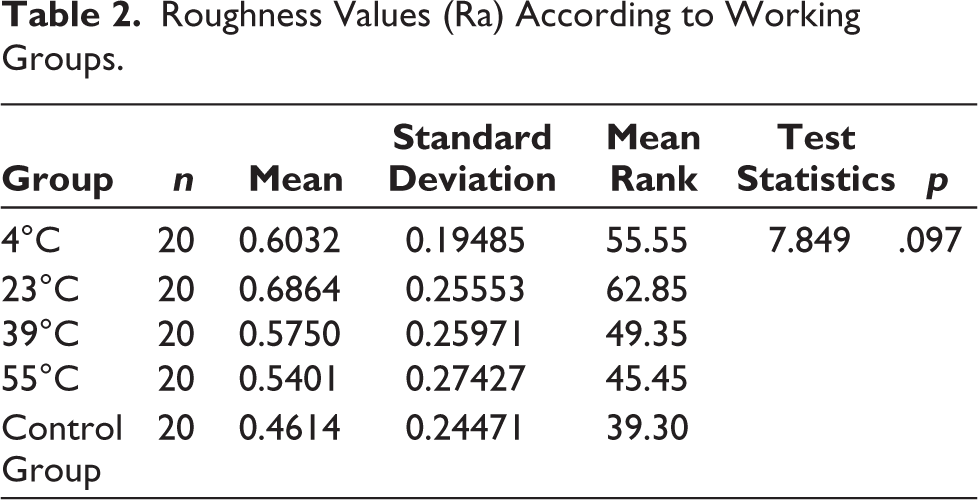
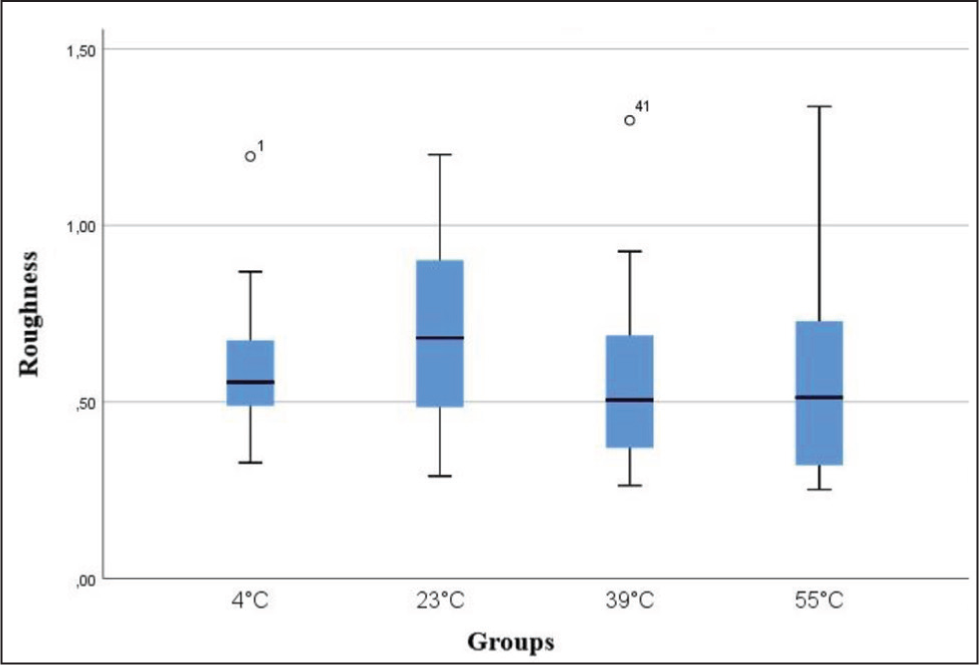
The study evaluated 100 samples divided into 5 groups, each containing 20 samples, with one group serving as the control. Table 2 presents the average roughness value for each group. The 23ºC group had the highest roughness value mean of 0.6864. The statistical analyses compared the surface roughness values of the control group and the fluoride varnish groups at temperatures of 4ºC, 23ºC, 39ºC, and 55ºC. The data revealed that there was no statistically significant variation in roughness values between the groups (Ra) (p > .05) (Table 2; Figure 2).
Roughness Values (Ra) According to Working Groups.
Box Plot of Roughness Values (Ra) According to Working Groups.
Discussion
The study assessed how applying fluoride varnish affected PMCR materials’ surface roughness at various temperatures. The fluoride varnish material that was heated did not exhibit any statistically significant differences in its roughness values, according to the findings. Therefore, the null hypothesis was accepted. Topical fluoride applications are classified as individual or professional applications. Topical fluoride applications include fluoride solutions, fluoride gels, fluoride varnishes, iontophoresis, and intraoral release devices. 8 The study assessed how applying fluoride varnish affected PMCR materials’ surface roughness at various temperatures. The fluoride varnish material that was heated did not exhibit any statistically significant differences in its roughness values, according to the findings. 14 Fluoride varnishes, on the other hand, provide longer contact of fluoride on the tooth surface and overcome the limitations of agents such as fluoride gels or mouthwashes. 15 The mechanical, chemical, and physical characteristics of dental restorative materials can be impacted by modifications in oral circumstances.16, 17 Surface roughness; structural properties of materials and their obtaining It is defined as irregularities in the surface structure depending on the methods. 18 Surface roughness is a critical factor that can impact the success, durability, and quality of restorative materials. The surface of the restorative material may deteriorate as a result of high surface roughness.16,17 Although most studies on material roughness in the literature have concentrated on fluoride gels,11,19 a few have investigated the roughness values of fluoride varnish materials in restorative materials. 20 The literature study did not contain any studies examining the effects of fluoride varnish materials on roughness when applied to PMCR materials by heating them at different temperatures.
Heating can alter the properties of restorative materials. 21 In a study on posterior composites, Pala found that preheating and different polishing systems had no effect on surface roughness when heat was applied before polymerization. 22 Similarly, Elkaffass et al. reported that preheating did not affect composite surface roughness. 23 Oskoee et al. found an increase in the roughness values of micro hybrid-based composite resins that were preheated, which contradicts these studies. 24 Thus, the goal of this study is to assess how heating the fluoride varnish material affects its roughness. Bacterial uptake of restorative materials is directly correlated with their surface roughness. Starting at a crucial mean surface roughness value of 0.2 µm, bacterial colonization starts to rise. This can lead to dental caries, gingival irritations, and periodontal problems due to surface interactions and microorganism activities. 25 In this study, it was observed that the fluoride varnish material exceeded the critical roughness value (0.2 µm) on the restoration surfaces when heated at 23ºC, 39ºC, and 55ºC (except 4ºC). In contrast to the control group, none of the experimental groups’ surface roughness values showed a statistically significant difference. This result suggests that different temperature values do not alter the structure of fluoride varnish.
The effects of applying Duraflor and Cavity Shield fluoride varnishes on the roughness of various restorative materials were investigated by Salama et al. They found that the sticky layer formed on the surface by Duraflor varnish caused an increase in the roughness of restorative materials. 20 In addition, Sanjukta Deb et al. reported that heating restorative materials before polymerization increased their fluidity. 26 The fluoride varnish used in the present study is defined as a low-viscosity agent with optimal fluidity. 27 The increase in material fluidity can cause changes in roughness values, 28 but in the present study, roughness did not significantly differ between the temperature groups. This may be due to different material properties. 29 The effects of various topical fluoride treatments on the surface roughness of restorative materials were investigated by Avsar et al. The roughness values of restorative materials showed a statistically significant difference between the APF gel-treated group and the control group. The authors attributed this difference to the hydrofluoric acid and phosphoric acid contained in the APF gel, which affected the roughness of the restorative materials. 30 No statistically significant difference was found between the fluoride varnish material applications at 4ºC, 23ºC, 39ºC, and 55ºC and the control group in terms of roughness values. This shows that, although having varying contents, the fluoride varnish substance employed in this investigation had no discernible impact on roughness.
Daronch et al. found that the temperature of a composite, heated to 60°C with a preheating device before polymerization, decreased by 50% 2 minutes after removal from the device. 31 In the present study, the manufacturer recommended a drying time of 5 minutes after applying the fluoride varnish material to the surface, which is longer than the 2 minutes previously mentioned. It is not possible to determine why there was no difference between applications applied at different temperatures, even if the fluoride varnish material in the current investigation achieved the appropriate physiological temperature levels. This is because roughness was not affected by the loss of heat after application.
This study compared numerical values obtained with the profilometer to evaluate the effect of roughness. Visual evaluation using SEM analysis was not performed, which may be a limitation of the study. This study should be supported by further research involving a larger sample size to better understand the applications that can enhance the effectiveness of the materials.
Conclusion
In this investigation, it was found that when heated to 23°C, 39°C, and 55°C (with the exception of 4°C), the fluoride varnish material on the repair surfaces exceeded the essential roughness value (0.2 µm). Roughness values on the surfaces of PMCR materials after application of fluoride varnish at different temperatures were found to be clinically acceptable in all groups. It is believed that the application of fluoride varnishes at different temperatures for prophylactic purposes in clinical settings will not cause any roughness changes on the surface of the restoration.
Authors’ Contribution
The study methodology was designed by all authors. Conceptuali-zation, data curation, formal analysis, investigation, and validation were made by E. Hazar Bodrumlu. Funding resources, visualization, writing original draft, and software management were handled by N. Çevik. Project administration, and supervision, writing, reviewing, and editing were done by E. Hazar Bodrumlu and N. Çevik. The final article was approved by all the authors.
Footnotes
Declaration of Conflicting Interests
The authors declared no potential conflicts of interest with respect to the research, authorship, and/or publication of this article.
Ethical Approval
Not applicable
Funding
The authors received no financial support for the research, authorship, and/or publication of this article.
Informed Consent
Not applicable