




Abstract
Aim:
To evaluate the overall job satisfaction among periodontists, highlighting the significance of intrinsic and extrinsic factors and their satisfaction level with patients, facilities, and workplace when working in the Kingdom of Saudi Arabia.
Materials and Methods:
An interview-type questionnaire-based cross-sectional study was formulated and consisted of total 38 questions in 8 domains. Contact details of registered periodontists were taken and a weblink containing details of the questionnaire using the tool SurveyMonkey was sent to periodontist from the office of Saudi Dental Society. A single investigator was done to minimize bias evaluated with all the responses. Statistical Package for the Social Sciences software version 21 (SPSS Inc., Chicago, IL, USA) was used for tabulation of descriptive analysis. Standard deviation, percentages and means were calculated.
Results:
Out of the total 75 emails sent to the periodontists, 65 (86%) responses were received. 63 (96.9%) of the respondents were Saudi nationals, whereas the rest 2 (3.1%) were non‑Saudis. 40 (61.5%) respondents were males, whereas 25 (38.5%) were females. Majority of the respondents were dentists 43 (66.2%). 32.3% reported better professional growth as the main reason for choosing periodontal profession. However, a vast majority of the respondents, 56.9% stated that working as a periodontist was their first choice. 49.3% of the respondents affirmed that they were pleased with the working environment as it was conductive and professional. Approximately, 73.9% of the periodontist were of the view that they had good relations with their patients.
Conclusion:
Job satisfaction among periodontists working in the Kingdom of Saudi Arabia was adequate as majority of them displayed a positive attitude toward working environment, their profession, peers, and intrinsic and extrinsic factors related to periodontal profession.
Clinical Significance:
Job satisfaction plays a vital role in delivering standard quality health care. Dissatisfaction in job may lead to stress, anxiety, and/or depression leading to compromised health care facilities and patient satisfaction.
Introduction
A variety of occupational factors including income, untrained staff, difficult bosses, and poor facilities influence dentist’s quality of life (QoL) and wellbeing. 1 Many studies have already addressed that harmful consequences to dentists at work provoke physical and mental disorder, which results in burnout syndrome.1,2 This is the reason dentistry is classified as one of the hazardous professions; low job satisfaction among dentist has an enorous effect on their performance, objectives, and professional growth. 3
It is of utmost importance to study job satisfaction as it has an inevitable influence both physically and mentally. 4 Factors influencing job satisfaction may range from social recognition, availability of equipment, continuous professional development opportunities, self-realization, and satisfaction of patients.5,6 Job satisfaction among dentists and health care professionals may guarantee loyalty and ensure commitment which in the long run lead to better care services and organizational excellence. 6
Already, studies have been done to measure job satisfaction among dentists.5,7 The evidence available regarding job satisfaction among periodontists is limited. A recent study by Reyes et al claimed that Spanish periodontists have high incidence of depression, and burnout symptoms along with poor job satisfaction. 3 Similarly, a study by Humphris et al indicated that restorative dentists display least job satisfaction. 8 Moreover, a study by Alqahtani et al proclaimed that orthodontists working in the Kingdom of Saudi Arabia (KSA) have overall good satisfaction with their jobs. 6
Therefore, the aim of the present study was to evaluate the overall job satisfaction among periodontists, highlighting the significance of intrinsic and extrinsic factors and their satisfaction level with patients, facilities, and workplaces when working in the KSA. The data gathered can give a glimpse of the QoL of periodontists working in KSA and may help in refining their performances.
Materials and Methods
The presented cross-sectional study was conducted from April 2019 to July 2019. A literature review was performed to validate the present cross-sectional survey, which revealed that there were no available data on assessment of job satisfaction amongst dental practitioners particularly periodontists. An interview-type questionnaire was formulated which consisted of total 38 questions in 8 domains. The research team of statistician along with authors reviewed the content of each question to make sure that the survey reflected appropriate phrasing and understanding.
A total sample size of 50 periodontists was well thought of, but because dropouts and invalid responses were anticipated a sample size of 75 periodontists was considered acceptable. Contact details of registered periodontists were taken and a weblink containing details of the questionnaire using SurveyMonkey was sent to periodontist from the office of Saudi Dental Society. Respondents meeting the following inclusion criteria were subsequently included: (a) must be practicing periodontists, (b) must be working in KSA, and (c) must be registered with Saudi Dental Society. The exclusion criteria defined to filter out the subjects were: (a) must not be working as periodontists and (b) must not be registered with Saudi Dental Society.
The eight domains of the cross-sectional survey consisted of questions related to sociodemographic characteristics, academic, professional qualifications, motivation behind the choice of periodontist as a specialty, satisfaction as a periodontist, satisfaction with the workplace environment facilities and staff, and their satisfaction with their relationship with patients. The responses were measured using a 5-point Likert scale coded as 1 for strongly disagree; 2, disagree; 3, fair; 4, agree; and 5, strongly agree. This questionnaire-based observational study was ethical approved (Ref no. 521/19). All the procedures have been performed as per the ethical guidelines laid down by Declaration of Helsinki (2013).
Statistical Analysis
Out of the total 75 emails sent to the periodontists, 65 (86%) responses were received. 96.9% (63) of the respondents were Saudi nationals, whereas 3.1% (2) were non-Saudis. A single investigator evaluated all the responses to minimize bias. Statistical Package for the Social Sciences software version 21 was used for tabulation of descriptive analysis. Standard deviation, percentages, and means were calculated.
Results
The results of 65 respondents revealed highly significant differences among responses to different questions (P < .05).
Sociodemographic Characteristics, Academic, and Professional Qualifications
Demographic factors showed that 96.9% (63) of the respondents were Saudi nationals, whereas 3.1% (2) were non-Saudis. Gender analysis specified that 40 respondents (61.5%) were males, whereas 25 (38.5%) were females. Regarding age, 40 respondents (61.5%) had age between 31 and 40 years (Table 1).
Sociodemographic Characteristics of Respondents
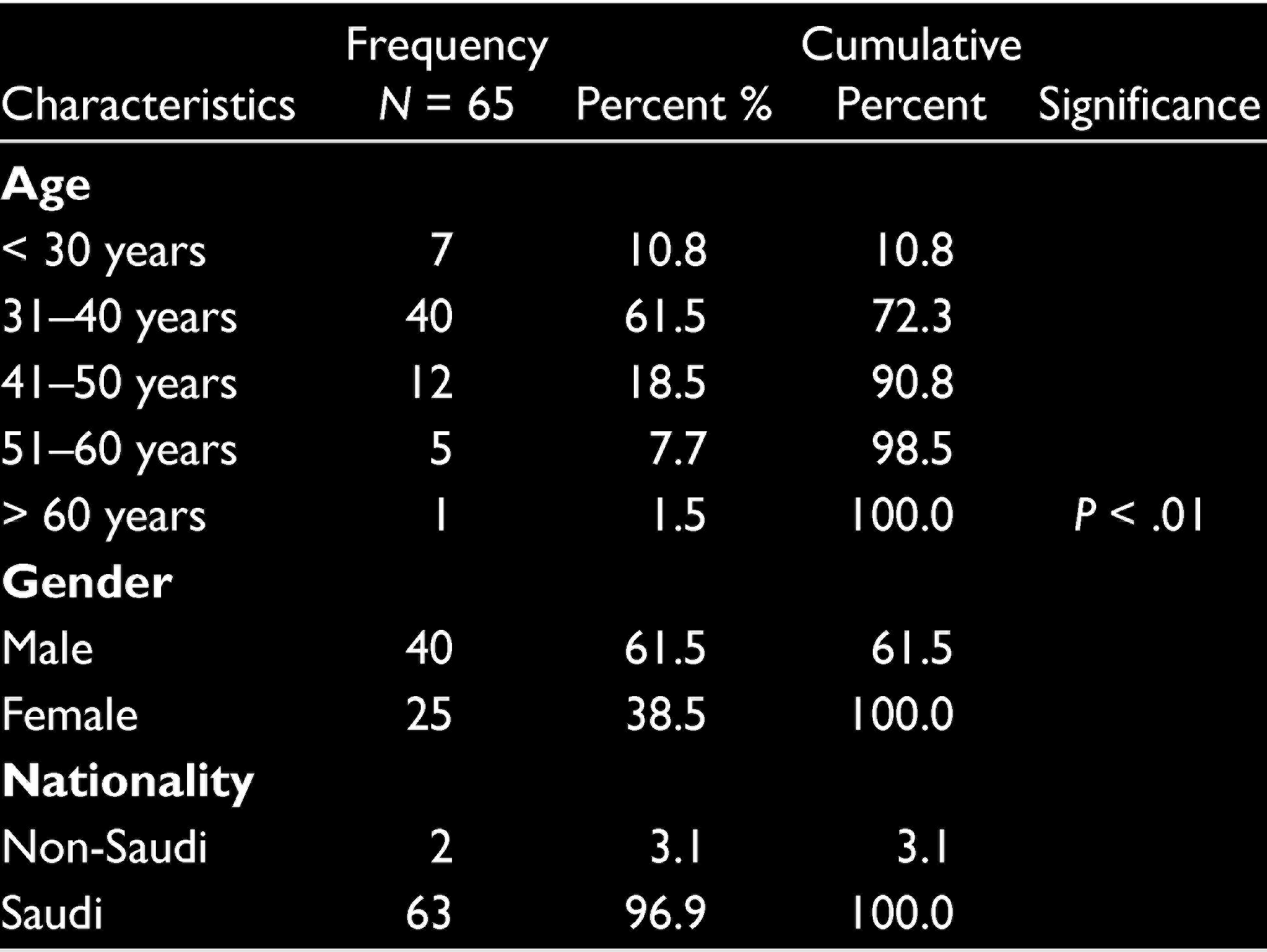
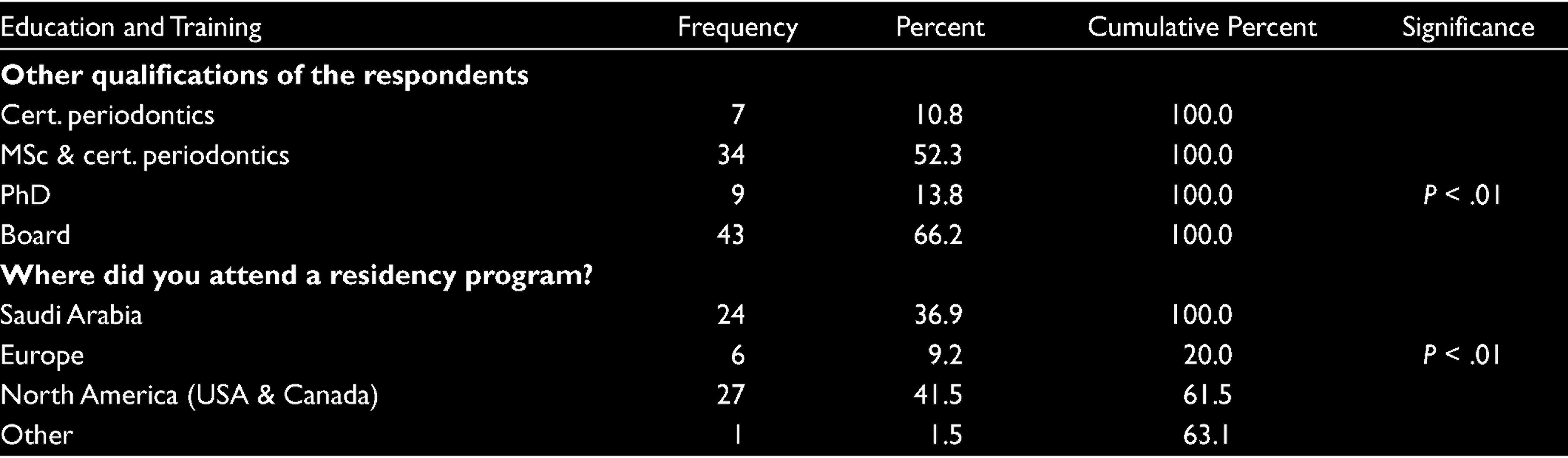
Table 2 highlights the academic qualifications of the respondents. 43 (66.2%) dentists had Saudi board qualification from the Saudi Commission of Health Specialties. Whereas 34 (52.3%) had a masters and a certificate in periodontics, and approximately 9 (13.8%) subjects had a doctorate degree. Amongst, the total respondents, 24 (36.9%) completed their residency program within the KSA, whereas 27 (41.5%) accomplished their residency program in the USA and Canada.
Academic Qualifications and Training of Respondents
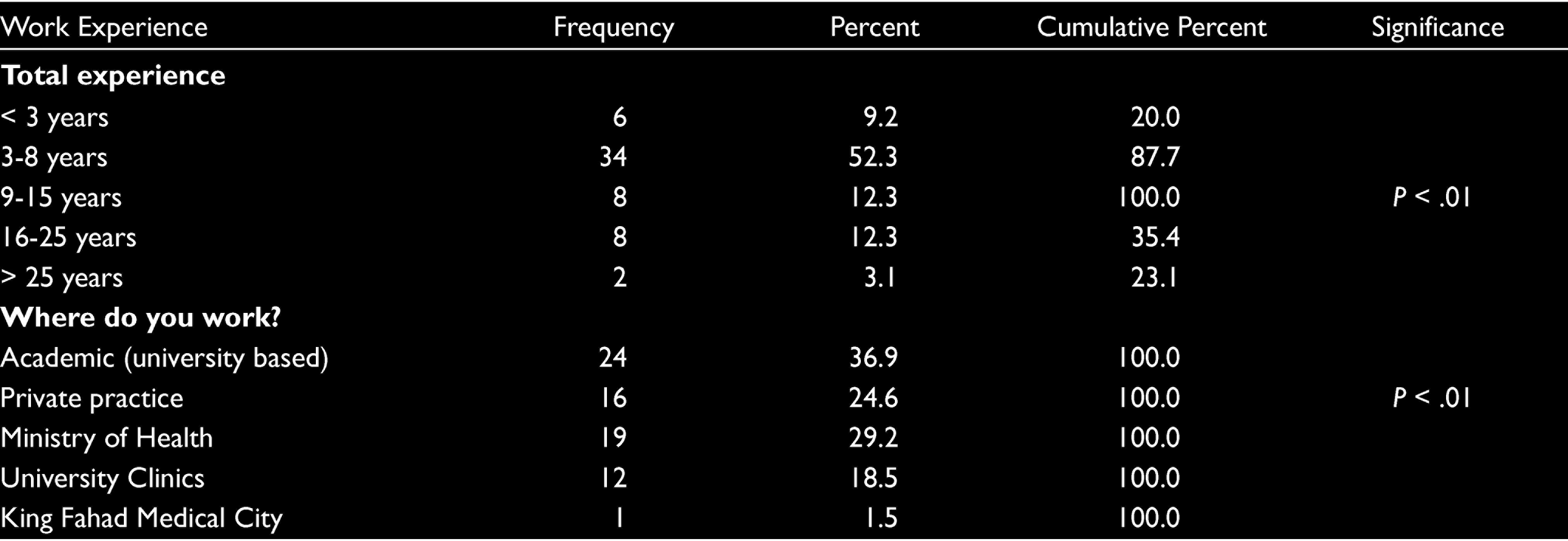
Details regarding the length of work experience and the place of work are provided in Table 3. A majority (52.3%) of the participants had 3-8 years of professional experience. A group of 8 dentists had 9-15 years and the other group of 8 had 16–25 years of professional experience. It is evident that amongst the total 65 respondents, 24 (36.9%) participants were engaged in university-based practice, followed by 19 respondents (29.2%) hired by the Ministry of Health and 16 (24.6%) were employed in private practice.
Respondents Work Experience and Related Information
Motivation Behind the Choice of Periodontists as a Specialty
Majority of the dentists (32.3%) reported “professional growth” as the main reason for choosing periodontist as their profession. This was followed by “challenging profession,” “financial gains,” “prestigious specialty,” and “family influence” (Table 4).
Respondents Motivation for Choosing Periodontics

Respondents’ Satisfaction as a Periodontist
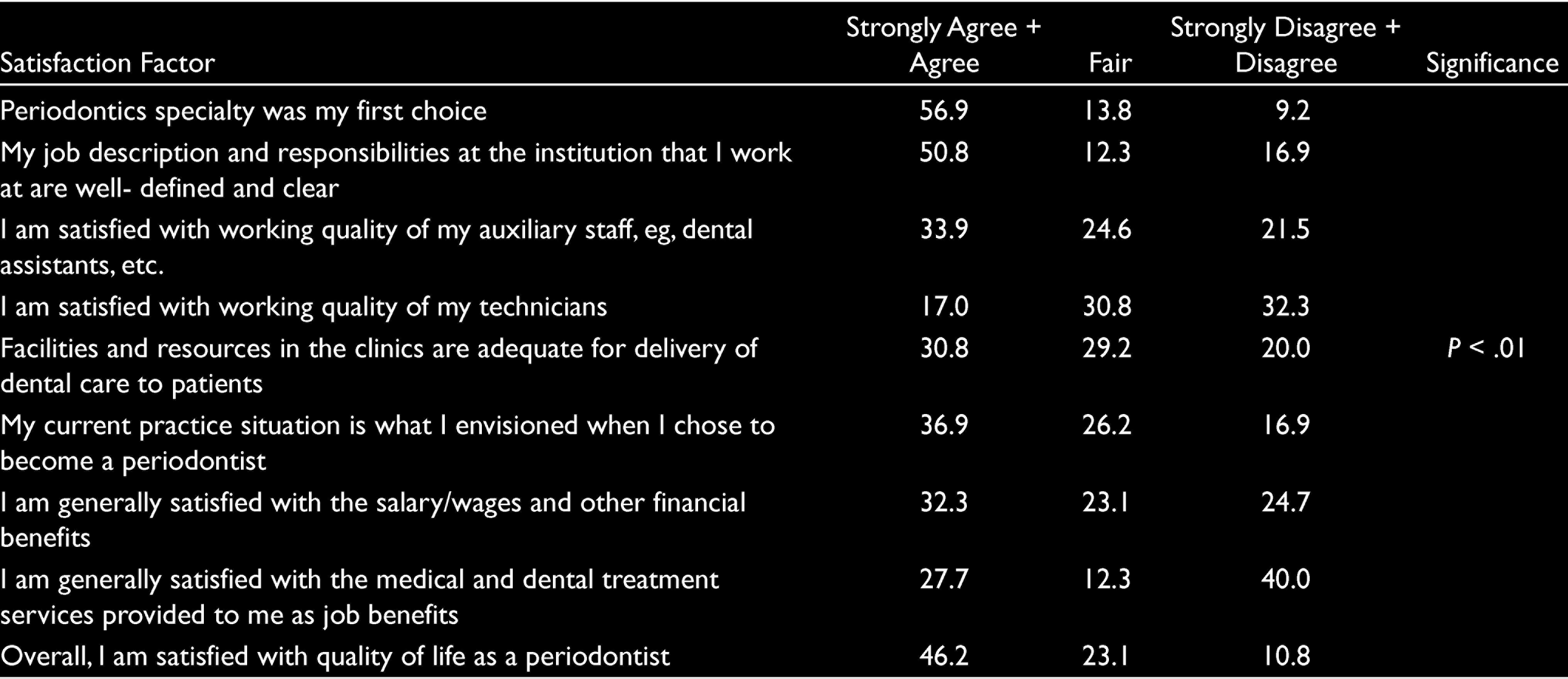
Table 5 reveals that a vast majority of the respondents, 56.9%, stated that working as a periodontist was their first choice. This was followed by their satisfaction with the work quality of auxiliary staff and dental assistants (33.9%). In addition, 32.3% of the participants were not pleased with the working quality of the technicians. Moreover, 36.9% of the dentists were satisfied with their current job as a periodontist. 30.8% of the participants were gratified with the adequacy of the resources and facilities provided to them for the delivery of periodontal treatment to their patients. 24.7% of the respondents were not satisfied with the income, and 40% of dentists were not content with the medical and dental treatment services provided to them as job benefits.
Satisfaction Factors Related to Periodontal Profession
Respondent Satisfaction With the Workplace Environment
Regarding the satisfaction of the respondents about practice and workplace environment, 39.9% of the participants stated that their responsibilities are well defined. 49.3% of the respondents affirmed that they were pleased with the working environment as it was conducive and professional. Likewise, 64.6% of the participants agreed that their professional senior colleagues were kind and they enjoyed working as a team. Moreover, 44.6% of the participants stated that their organization supports professional development for improvement of their efficiency and quality of work (Table 6). Finally, 30.8% of the respondents were satisfied with practice management and care delivery system (Table 7).
Respondents Satisfaction With the Workplace Environment
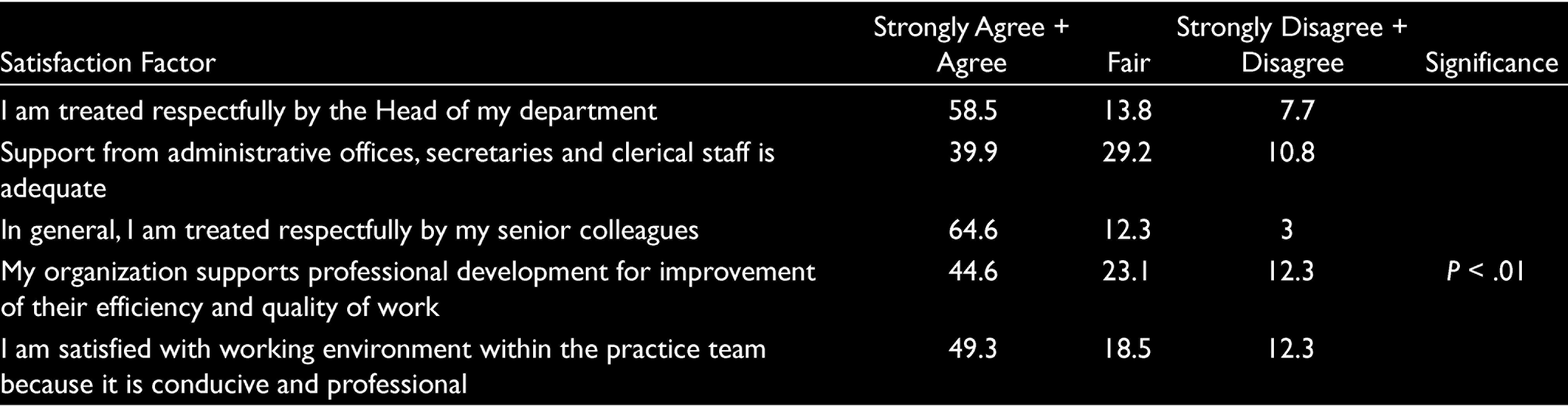
Respondents Satisfaction With Staff and Facilities

Respondents’ Satisfaction in the Relationship With Their Patients
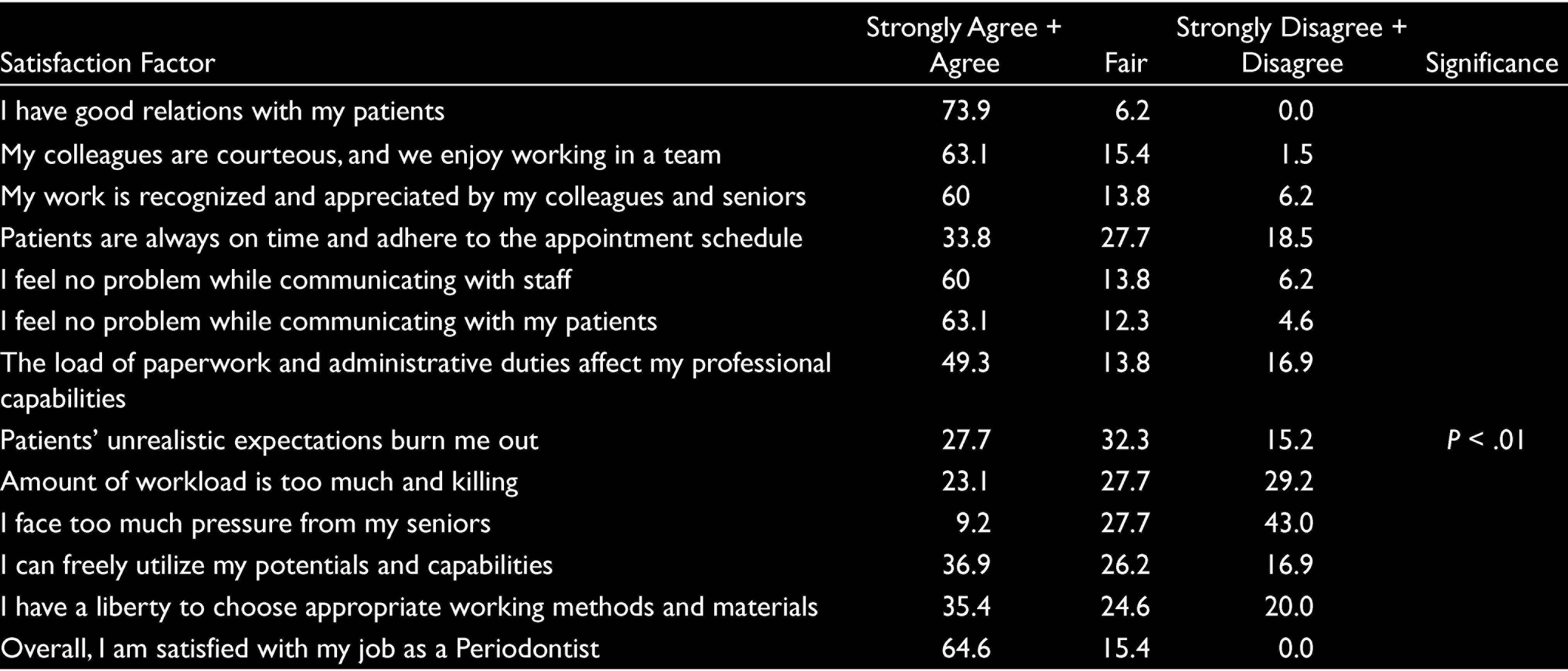
Analysis of the results presented in Table 8 indicated that 73.9% of the periodontists were of the view that they had good relations with their patients. Although 23.1% stated that the workload was too much for them. Moreover, 33.8% of the respondents agreed that their patients were never on time and did not adhere to the appointment schedule. Likewise, 64.6% of the respondents agreed that overall they are satisfied with their job as a periodontist. By contrast, a significant percentage (27.7%) of their patients had unrealistic expectations regarding the outcome of orthodontic treatment.
Respondents Satisfaction About Their Relationship With Patients
Discussion
This study aimed at assessing the various factors influencing job satisfaction of periodontists working in the KSA. The questionnaire used in the study measured various dimensions, ie, sociodemographic characteristics, academic and professional qualifications, and satisfaction with workplace environment facilities, staff, and patients. The sample consisted of 65 periodontists, of which 40 respondents (61.5%) were males and 25 (38.5%) females. The overall, response rate was 86%. However, a recent study by Alkahtani et al revealed a low response rate in orthodontists, when inquiring about job satisfaction. 6 A better response rate in the present study can be attributed to the follow-up reminders sent at different intervals through emails, and the short duration of study type.
In previous studies, periodontists in Spanish population have shown high incidence of depression, burnout, and poor job satisfaction. 3 Therefore, it is critical to assess the job satisfaction in a population of Saudi periodontists. The present survey consisted of 8 domains with 38 item questions. A cross-sectional type study design was used as it was easy, simple, and cheap to undergo; it may also aid in generating a hypothesis for a more complex investigation and reduce the chances of loss to follow up. 9 Moreover, SurveyMonkey was employed to produce more accurate, less bias, and convenient results compared to a manual survey. 10 When asked about qualifications, a majority of the respondents completed their residency programs in periodontics from the KSA and qualified through the Saudi Board. This finding was in concurrence with the results of Dlaigan et al, indicating Saudi dentists were motivated, eager, and enthusiastic in obtaining lifelong education. 11 Moreover, a similar study by Ireland et al 12 inferred that more than 90% of Saudis preferred Saudi board and qualification followed by a master’s program.
When respondents were questioned about the place of work, 34 (26.9%) were employed by an academic university and only 19 (29.2%) were working at the Ministry of Health Clinics. The following trend was also observed in a study by Halawany et al: 13 a possible explanation to this finding is that university-based jobs are more secure and stable with fixed income on retirement. Moreover, because males are the bread-earners in Arabic society, they prefer nonclinical duties to excel their careers. Furthermore, 52.3% (34) of the respondents opted for periodontics specialty as they believed it was challenging. These results indicate a positive strong and mature mindset of the periodontists working in the country. However, these results were not in harmony with other studies by Al-Hamlan et al 14 and Bruner et al. 15
Nearly 65% of the respondents were overall satisfied with their job as a periodontist. Professional activity gives rise to the feeling of satisfaction, therefore, enhancing the success and progress of an organization and dental practice. Almost 57% of the respondents claimed that to become a periodontist was their prime choice. In the society, being a dentist is linked with better financial, social, and vocational factors. Moreover, dentists who chose their career by choice, and not by chance, are more stress free, enjoy work, and experience better professional growth. 16 Most sources of stress and depression arise in a dentist’s life when they come in engagement with strong bosses and administrative staff. 17 In the present study 58.5% agreed to the fact that their superiors treated them respectfully. This act energizes an oral health team and their empathy with the increases in the number of institutions. This indirectly provides better health and care services to the patients. 18
The present study presented outcomes showing adequate job satisfaction (two-thirds of population), outcomes for periodontist in the KSA, and the causes of dissatisfaction including low income or inadequate benefits attached. Based on these findings, management programs should incorporate adequate modifications in future policies in dental hospitals and institutes. This study included a small sample size of periodontists from the region of Riyadh, Saudi Arabia, which may not represent a balanced cohort of specialists in the KSA. However, the outcomes may have been different if a wider population size was included and a comparison among different specialties of dentistry was done. Therefore, further studies comparing the job satisfaction of dental specialists with a more representative sample size and improved study designs are recommended to validate the outcomes of the present study.
Conclusion
Within the limitations of the study, job satisfaction among periodontists working in the KSA was adequate. Further studies should be performed to confirm the results of the present study.
Footnotes
Declaration of Conflicting Interests
The authors declared no potential conflicts of interest with respect to the research, authorship, and/or publication of this article.
Funding
The authors would like to thank the College of Dentistry Research Center and Deanship of Scientific Research at King Saud University, Saudi Arabia, for funding this research project (#FR 0507).