




Abstract
Objective:
To compare the bond strength of monolithic CAD-CAM materials to resin cement using different surface treatment methods.
Materials and Methods:
Lithium disilicate glass ceramic (IPS e-max CAD), zirconia-reinforced lithium silicate ceramic (Vita Suprinity), resin nanoceramic (Lava Ultimate), and hybrid ceramic (Vita Enamic) were used. Five groups of CAD-CAM blocks were treated as follows: control (C), HF etching (HF), HF etching + silanization (HF + S), sandblasting (SB), and sandblasting + silanization (SB + S). After surface treatments, SEM analyses were conducted. Specimens were cemented with self-adhesive resin cement (Theracem) and stored in distilled water at 37°C for 24 h. Shear bond strength (SBS) was measured, and failure types were categorized. Results were analyzed using two-way ANOVA and the post-hoc Tukey test.
Results:
Statistical analysis revealed significant differences between SBS values obtained for different surface treatments and CAD-CAM block types (P < .001). Among the CAD-CAM materials, the highest SBS was reported in the HF + S group for Vita Enamic. Although IPS e.max CAD, Vita Suprinity, and Vita Enamic showed higher bond strength when treated with HF + S, Lava Ultimate has the highest bond strength value when treated with SB + S.
Conclusions:
The bond strength of CAD-CAM materials was influenced by surface treatment. Additionally, silanization significantly improved the bond strength of all materials except Lava Ultimate.
Introduction
Computer-aided design and computer-aided manufacturing (CAD-CAM) technologies allow dentists to prepare, design, and fabricate ceramic restorations in a single patient visit, thus eliminating conventional impression taking, provisional restorations, and laboratory procedures. Compared with conventional restorations, they have superior mechanical properties and result in less discoloration, while offering greater wear resistance. 1
Numerous studies have been conducted aiming to improve mechanical and esthetic properties of CAD-CAM blocks, as well as develop new materials. Ceramic and composite resins are 2 main groups of CAD-CAM restorative materials. 2 Although composite restorations cause less wear on opposing dentition, ceramic restorations have superior esthetic appearance, despite brittleness and tendency to fracture. 3
Most CAD-CAM blocks presently used for the fabrication of indirect restorations are made of glass ceramics, feldspar ceramic, lithium disilicate glass ceramic (IPS e.max CAD), and zirconium-reinforced lithium silicate glass ceramics (Vita Suprinity). 3 Although possessing superior optical properties, 4 they are prone to fracture. 5 To overcome this and other disadvantages of glass ceramics, hybrid ceramics, and nanoceramics have been developed. 3
Vita Enamic is one of the recently developed hybrid ceramics that comprises of a feldspar ceramic network (86 wt%) that is fully integrated with a polymer network (14 wt%). This polymer-infiltrated ceramic network has enhanced flexibility and fracture resistance compared with conventional ceramics, while retaining their beneficial characteristics, as well as those of composites. 6 Another recently developed CAD-CAM material is resin nanoceramic (RNC) that consists of 80 wt% zirconia-silica nanoceramic particles embedded in a resin matrix (20 wt%). Lava Ultimate is an example of such material that benefits from superior fracture resistance and high wear potential. 7
Although temporary cement is removed prior to bonding the indirect restoration, it has been shown that its complete elimination from the dentin surface is difficult. Watanabe noted that residual temporary cement particles can still be detected microscopically and can thus potentially compromise bond strength. This issue is overcome by single-visit CAD-CAM restorations, which also have higher bond strength than conventional restorations, as they are luted to newly prepared dentin without using any temporary cements and provisional restorations. 8
The longevity of adhesive restorations depends on the bond between ceramic and resin cement. To enhance bond strength, surface treatments are usually recommended. Chemical and micromechanical retention is achieved through HF acid etching, sandblasting with aluminum oxide particles, and application of silane coupling agents. 9 Hydrofluoric acid creates retentive surface for micromechanical bonding by dissolving the glassy phase. In addition, silane coupling agents increase surface wettability, whereby silanization covalent bonds form between silica in ceramic and methacrylate groups of resin cements. 10 Furthermore, as sandblasting creates rough surface, the surface area available for adhesion between resin cement and ceramic increases. As CAD-CAM materials have different microstructures, it is important to adopt the most optimal surface treatment method for a particular material. For example, whereas HF acid etching is effective on glass ceramics, sandblasting is preferable for resin nanoceramics. 11
Resin cements are typically used for adhesive cementation of all-ceramic restoration. 12 As this process involved etching, priming, and bonding, procedures that are technique sensitive, self-adhesive resin cements have been recently introduced. 13 These cements do not require any dentin pretreatment and are simple to use. As the characteristics of novel self-adhesive cements are insufficiently studied, and those of Theracem (Bisco)—which contains MDP and releases calcium and fluoride—have never been explored, this is the topic of the present investigation.
The present study is conducted to evaluate the effect of different surface treatments on the shear bond strength (SBS) of CAD-CAM materials to novel self-adhesive cement. The null hypothesis of this study was that various surface treatments would not affect the bond between CAD-CAM materials and resin cement.
Materials and Methods
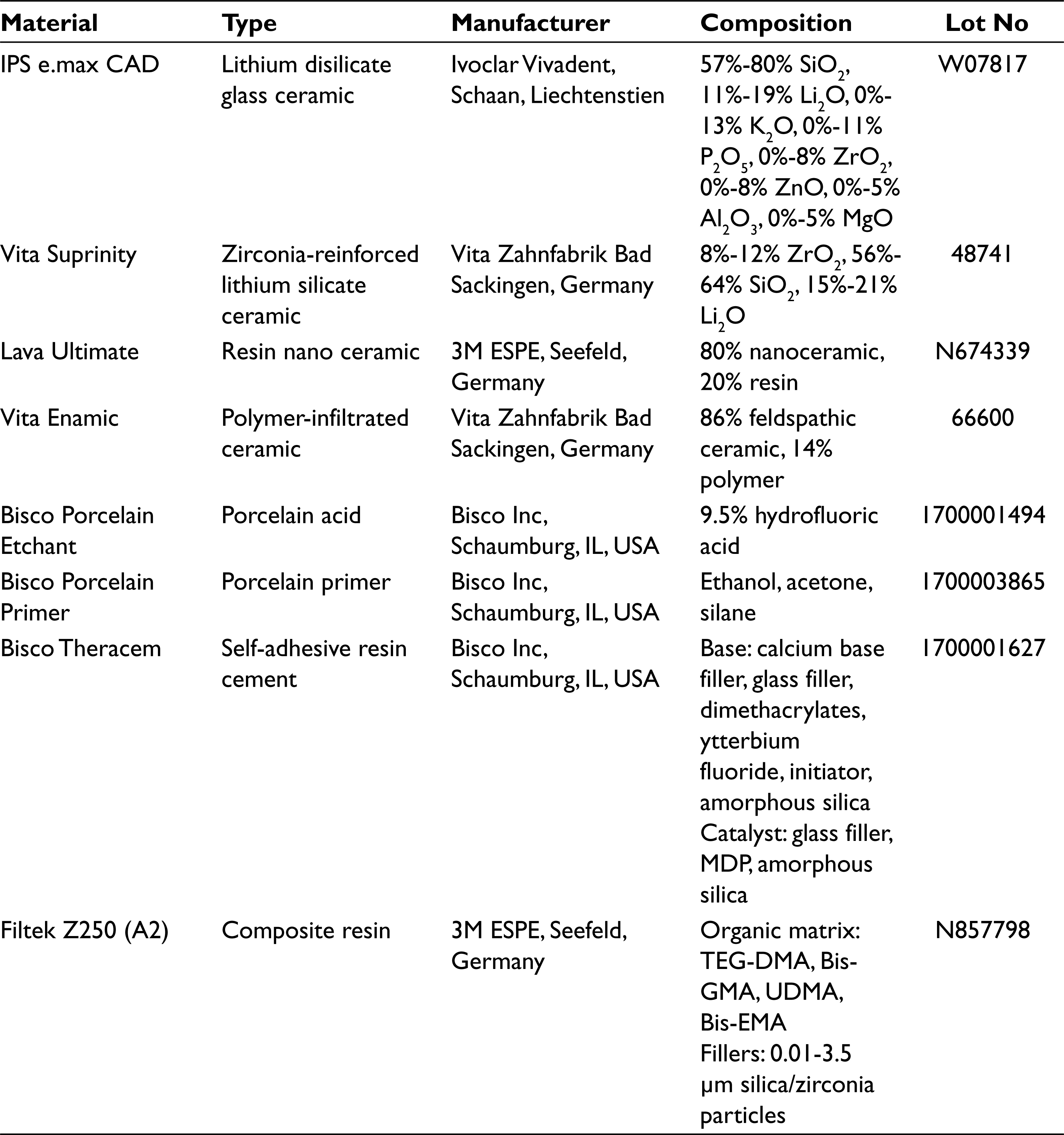
IPS e.max CAD, Vita Suprinity, Lava Ultimate, and Vita Enamic CAD-CAM materials were examined in this study. The type, manufacturer, and composition of the materials used in this study are presented in Table 1.
Materials Used in This Study
Each CAD-CAM block was cut into 2.5-mm slices using a low-speed cutting saw under water cooling (Isomet 1000, Buehler Ltd). All specimens were polished by using 600-grit silicon carbide (SiC) paper in a polishing machine (Phoenix Beta, Buehler) under continuous water cooling to standardize the roughness of specimens 6 and ultrasonically cleaned in distilled water for 3 min. Precrystallized blocks (IPS e.max CAD, Vita Suprinity) were crystallized in a porcelain furnace (840oC, Programat P300; Ivoclar Vivadent, Schaan, Liechtenstien). Then, specimens (N = 200) were divided into 5 groups (n = 10) denoted as C, HF, HF + S, SB, and SB + S—according to the surface treatment performed:
Group C: As this was a control group, the specimens were subjected to grinding only.
Group HF: The specimens were etched with 9.5% HF acid (Bisco) for 20 s/ 60 s for glass ceramics/resin ceramics in accordance with the manufacturers’ instructions, then were ultrasonically cleaned and air dried.
Group HF + S: In line with the HF group, the specimens were etched with 9.5% HF acid (Bisco) for 20 s/60 s for glass ceramics/resin ceramics and were ultrasonically cleaned and air dried. Additionally, silane coupling agent (Bisco Porcelain Primer) was applied on the surface of the specimen with a brush and was allowed to dwell for 1 min.
Group SB: The specimens in this group were subjected to sandblasting (50-µm aluminum oxide, Mega Strahlkorund, Megadental GmbH) under pressure of a 2 bar, for 10 s at a distance of 10 mm, after which they were ultrasonically cleaned and air dried.
Group SB + S: The specimens assigned to this group were also subjected to sandblasting (as described above), after which a silane coupling agent was applied on the surface of the specimen with a brush and was allowed to dwell for 1 min.
A polyethylene adhesive tape with a circular hole of 4 mm diameter was placed in the center of each specimen to define the bonding area. Composite resin cylinder (5 mm diameter, 3 mm height; Filtek Z250, 3M ESPE) was built using plastic mold and then bonded to treated surfaces with self-adhesive resin cement by applying fixed force (50 N). The excess cement was removed, and the remaining material was polymerized using a LED light-curing unit (Woodpecker, LED B) for 30 s. The specimens were stored in distilled water at 37°C for 24 h.
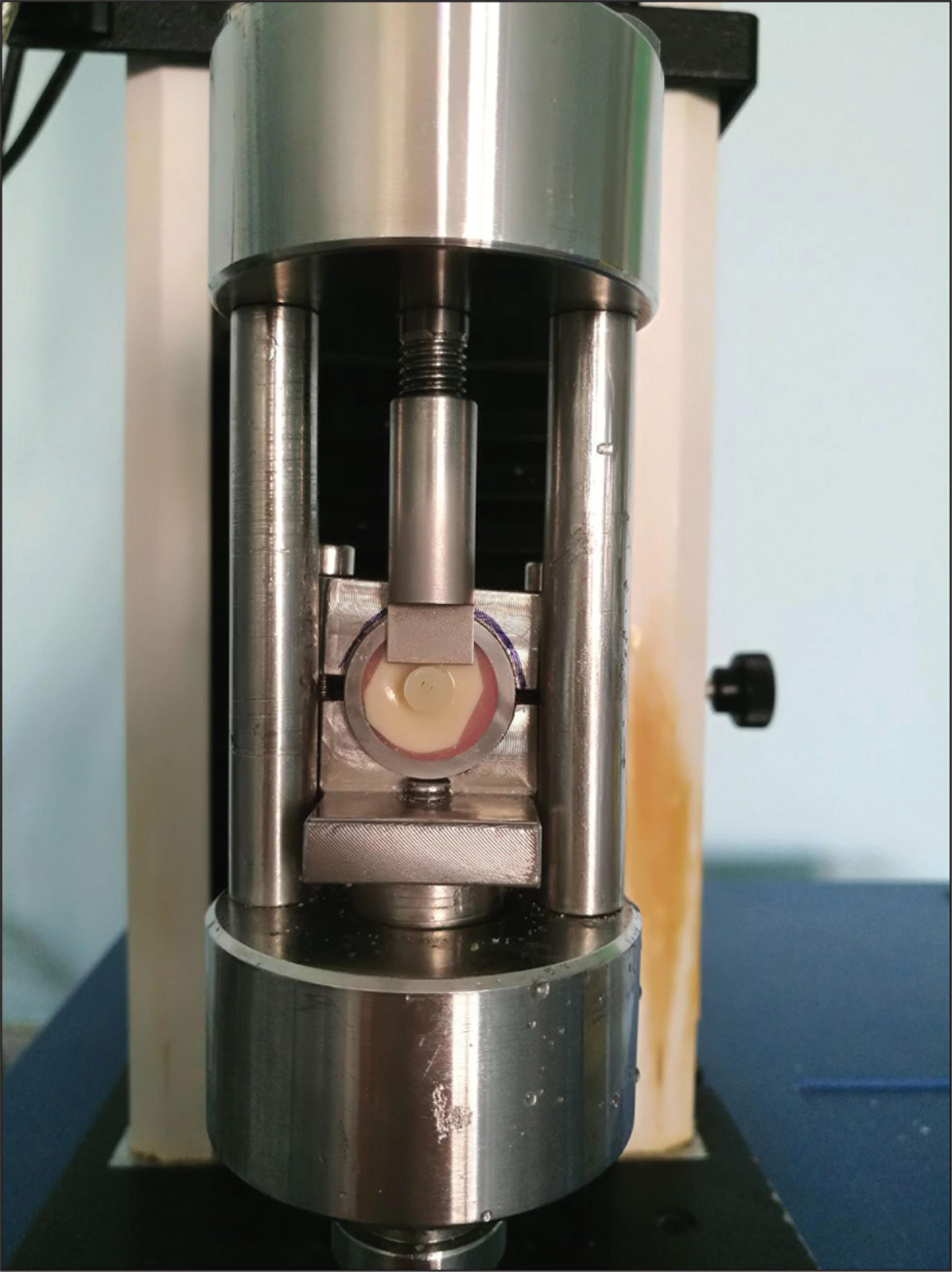
The ceramic plates (14 × 12 × 2.5 mm) embedded in acrylic resin molds were placed into the universal testing machine (Instron 3345, Instron Corp) and were subjected to a shear load at a 0.5 mm/min crosshead with a blunt knife-edged shearing rod (Figure 1). SBS values were calculated by dividing the maximum load at failure (N) with the bonding area (mm2), and the resulting pressure was recorded in MPa.
Shear Bond Testing
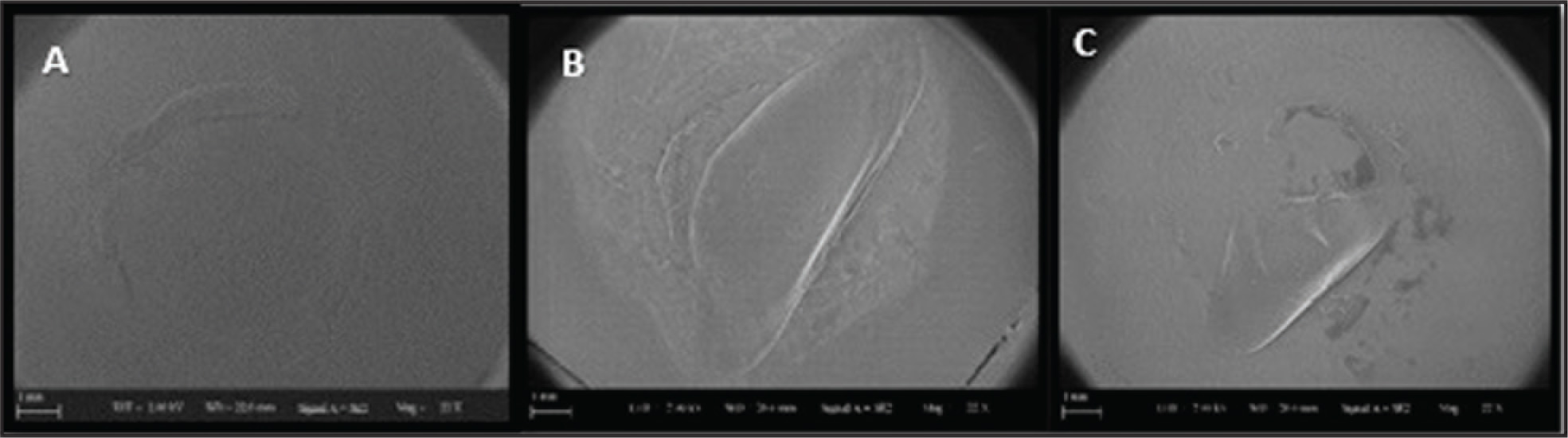
Surface-treated specimens were mounted on metallic stubs, sputtered with a gold layer (Quorum SC 7620 Sputter Coater) and then examined under SEM (Zeiss Evo LS 10) at 1000× magnification to observe the features of treated surfaces. Additionally, failure modes were analyzed using SEM at 22× magnification and were classified as adhesive failure between resin cement and ceramic, cohesive failure within ceramic or mixed failure.
The bond strength data were analyzed using SPSS v23 (SPSS Inc). Normality of data distribution was confirmed by the Kolmogorov-Smirnov test. Thus, two-way ANOVA, with one within-subject factor (surface treatments) and one between-subjects factor (CAD-CAM blocks), was used to analyze the effects of independent factors and the interaction. One-way ANOVA was performed whereby surface treatment was considered a factor in the comparison among different CAD-CAM materials, as well as for different CAD-CAM materials as a factor potentially affecting each surface treatment. The Tukey HSD test was selected for post-hoc pairwise comparisons. For all analyses, a P < .05 was considered statistically significant.
Results
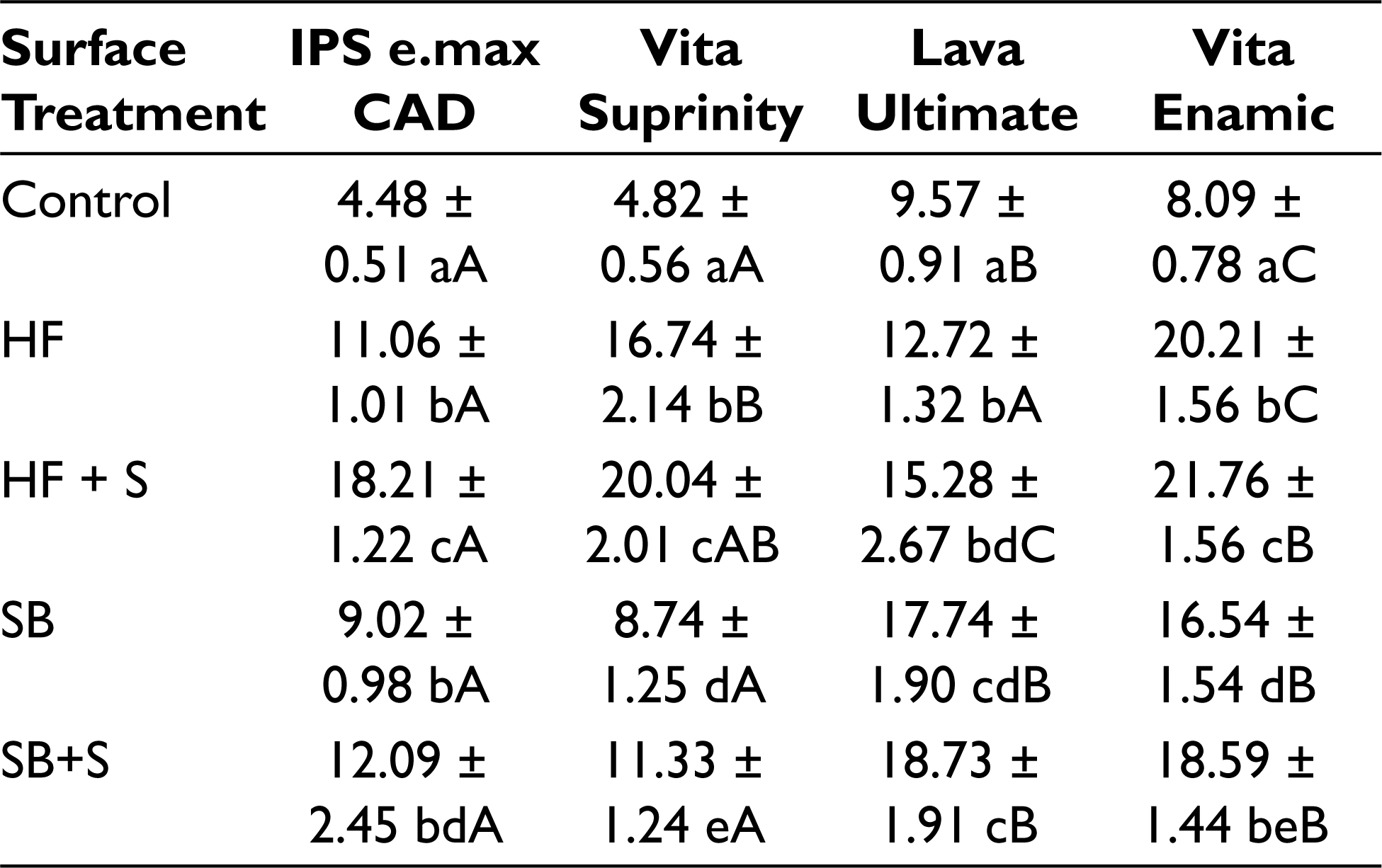
Two-way ANOVA test revealed that the bond strength was significantly affected by the surface treatment and type of CAD-CAM material (P < .001).
Table 2 displays the mean SBS values and standard deviation for all groups. Among all CAD-CAM materials examined as a part of this investigation, Vita Enamic had the highest shear bond value when HF + S was applied (21.76 ± 1.56). Moreover, IPS e.max CAD (18.21 ± 1.22 MPa), Vita Suprinity (20.04 ± 2.01 MPa), and Vita Enamic (21.76 ± 1.56 MPa) resulted in the highest SBS in group HF + S. The highest SBS for Lava Ultimate (18.73 ± 1.91 MPa) was obtained in group SB + S. HF acid etching and sandblasting followed by silanization significantly improved bond strength in all CAD-CAM materials except Lava Ultimate.
Meana and Standard Deviation of the SBS Values (MPa)
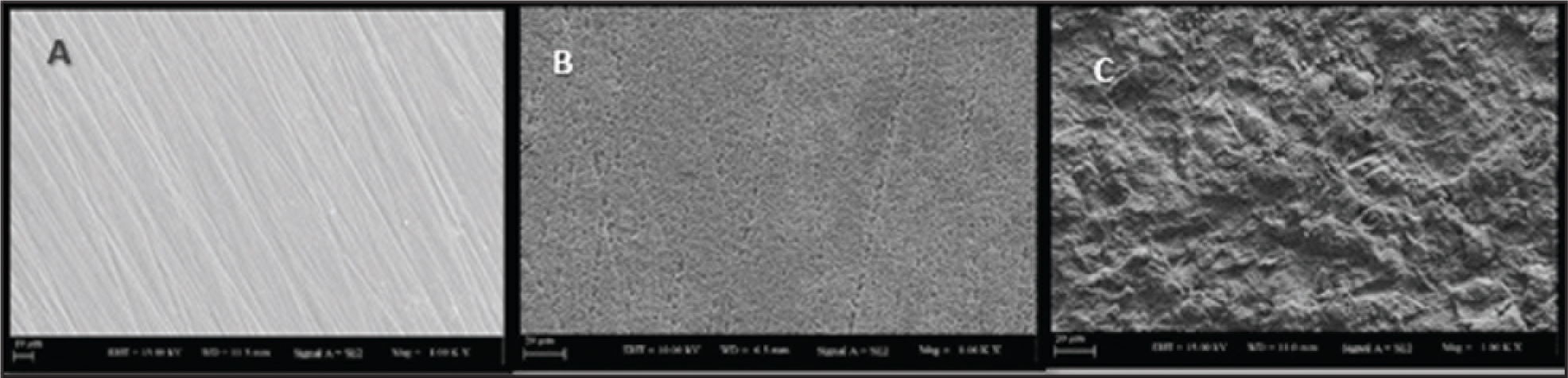
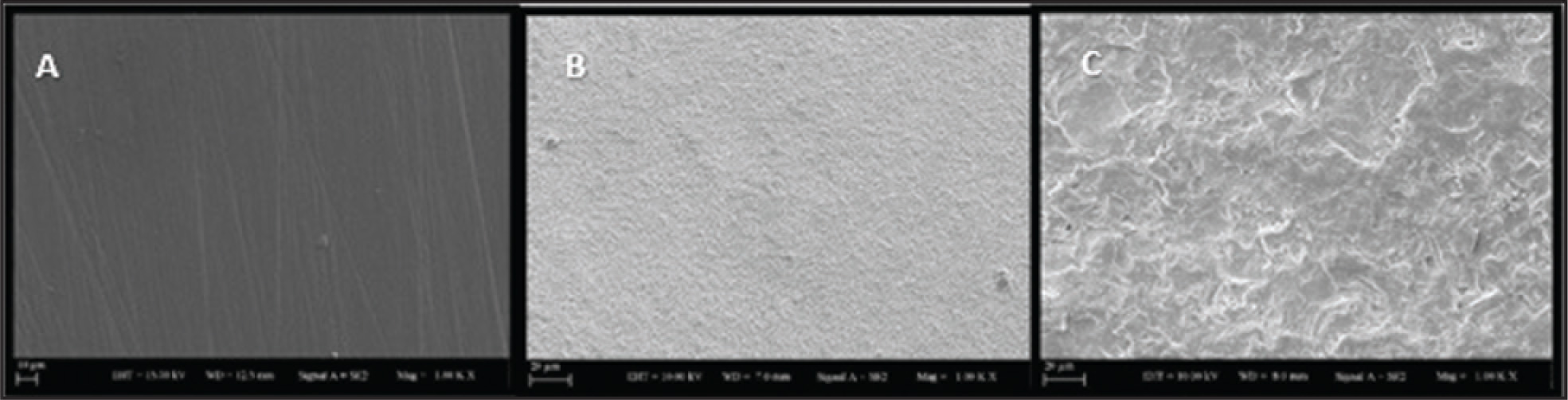
SEM images of treated CAD-CAM materials are presented in Figures 2 to 5. Untreated surfaces of IPS e.max CAD exhibited homogeneous, smooth surface topography. When HF acid is performed, it dissolves the glassy phase of IPS e.max CAD, resulting in a uniformly microrough and porous surface. Additionally, sandblasting produced coarse surface irregularities (Figure 2).
SEM Images of IPS e.max CAD Specimens After Surface Treatments (×1000) (A) Control, (B) HF Acid Etching, and (C) Sandblasting
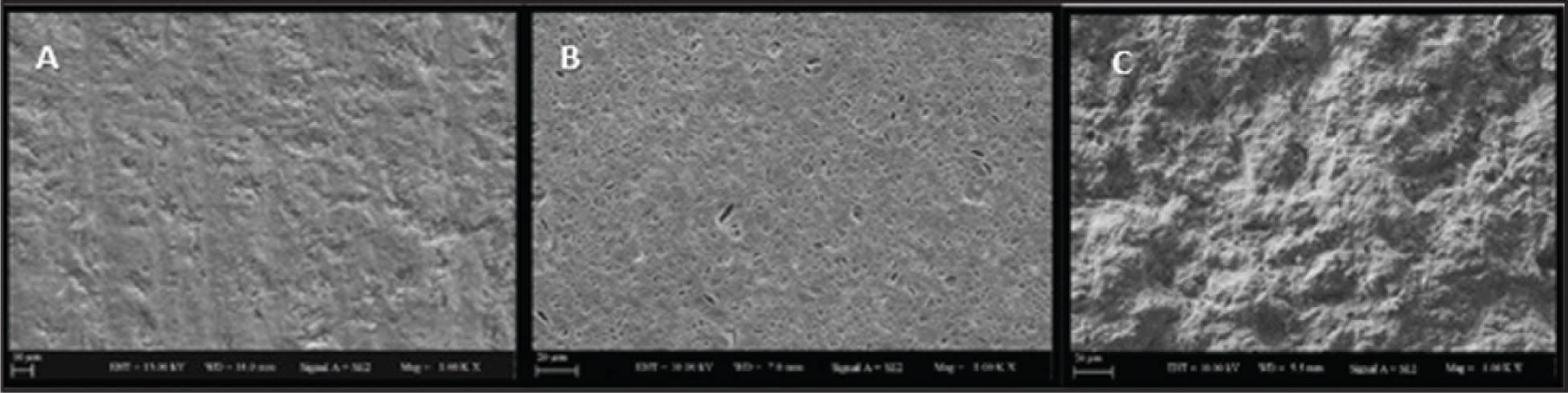
Vita Suprinity demonstrated a glassy phase rich in lithium disilicate crystals, similar to those observed in IPS e.max CAD, as well as characteristic dispersed zirconia fillers. HF etching produced microrough and porous surfaces, while sandblasting caused abrasion of the glassy matrix (Figure 3).
SEM Images of Vita Suprinity Specimens After Surface Treatments (×1000) (A) Control, (B) HF Acid Etching, and (C) Sandblasting
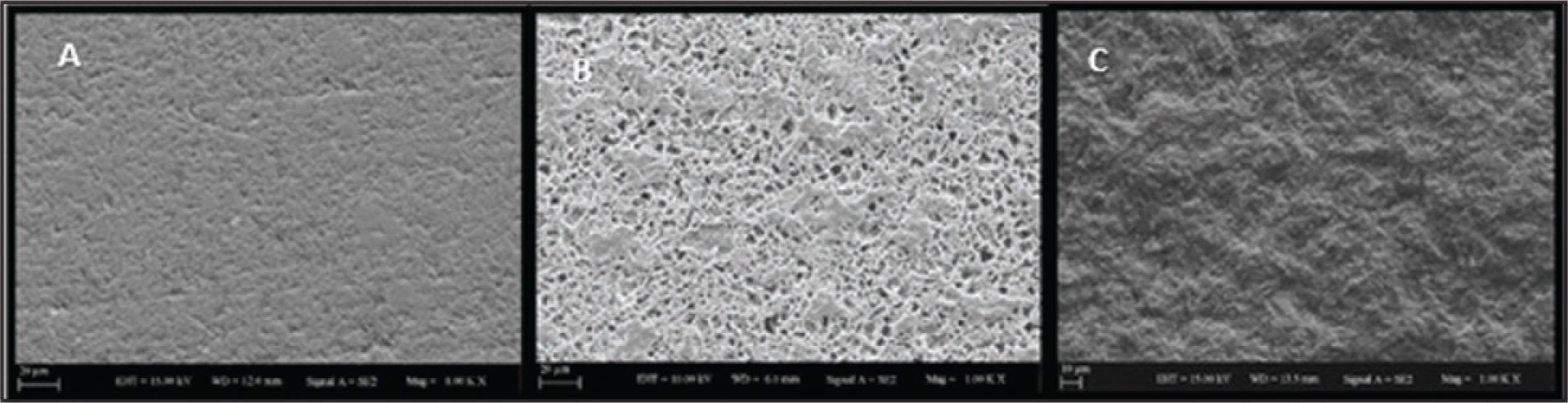
The SEM images of the Vita Enamic untreated surface (the control group sample) revealed 2 continuous interpenetrating networks, comprising of the polymer (dark gray areas) and the ceramic (light gray areas) with micropores. However, untreated Lava Ultimate had a more homogeneous surface with tiny micropores (Figure 4). 6
SEM Images of Lava Ultimate Specimens After Surface Treatments (×1000) (A) Control, (B) HF Acid Etching, and (C) Sandblasting
The surfaces of Lava Ultimate and Vita Enamic blocks treated by sandblasting showed elevated and depressed micro-size areas with crevices and pits caused by sandblast particles. HF acid etching dissolves the polymer and the glassy phase of Vita Enamic. Consequently, etched Vita Enamic showed distinctive irregularities, forming microretentive roughness and randomly distributed gaps and micropores, which were not observed in SEM images of Vita Enamic samples. In addition, Lava Ultimate images revealed tiny micropores and less dissolution of the glassy phase than was noted in Vita Enamic, because Lava Ultimate is resistant to HF acid etching (Figure 5). Because silane coupling agents only enhanced chemical bonding and did not change surface morphology, SEM images of HF + S and SB + S did not include.
SEM Images of Vita Enamic Specimens After Surface Treatments (×1000) (A) Control, (B) HF Acid Etching, and (C) Sandblasting
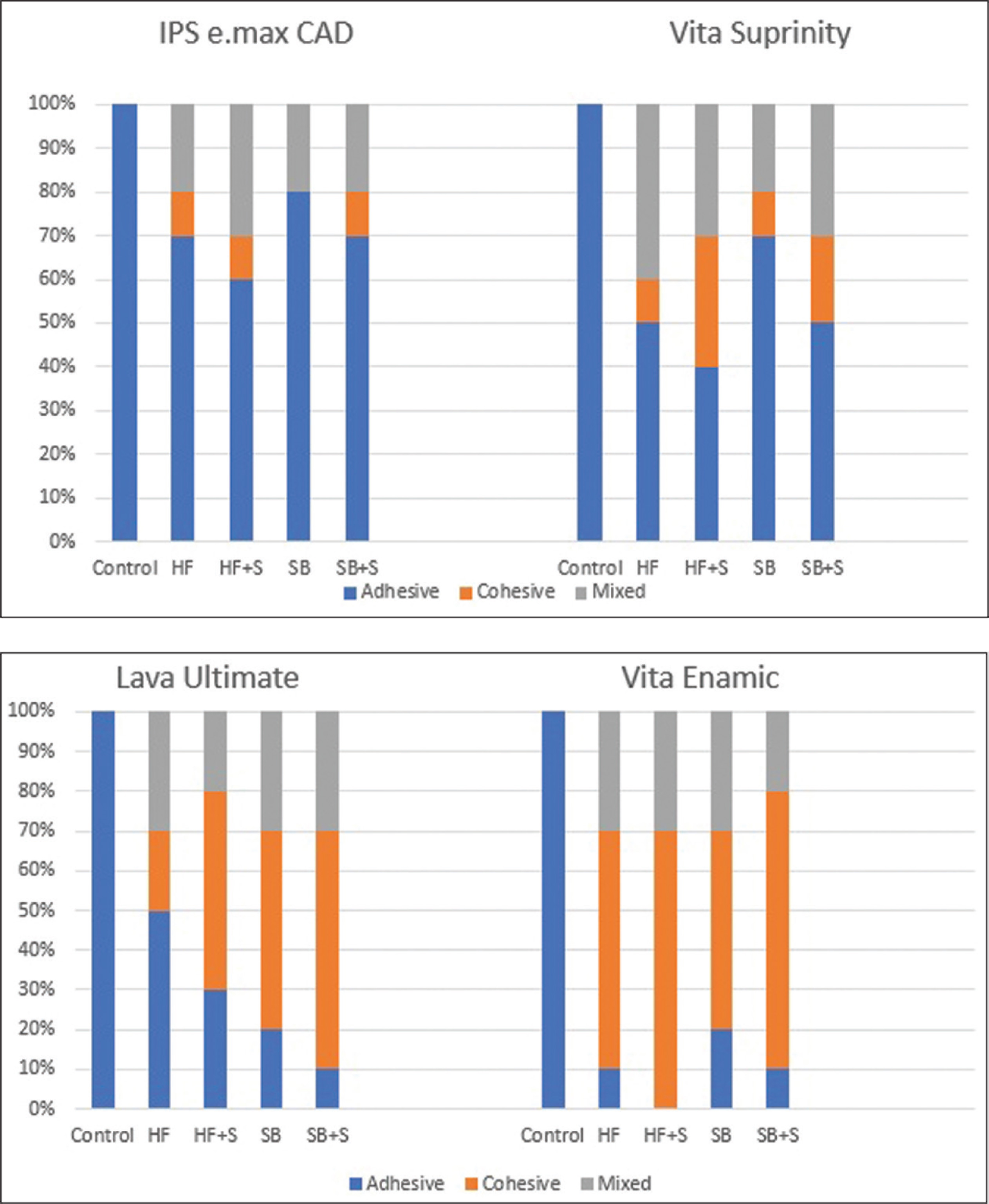
Regardless of the type of CAD-CAM material used, predominantly adhesive failures were observed in the control group. In all surface treatment groups, adhesive failure predominated for IPS e.max CAD and Vita Suprinity blocks (Figure 6A), whereas cohesive failure predominated for Lava Ultimate and Vita Enamic (Figure 6B). Figure 7 illustrates adhesive, cohesive, and mixed failure types, respectively.
Proportions of Failure Modes by Surface Treatment: (A) IPS e.max CAD and Vita Suprinity Blocks and (B) Lava Ultimate and Vita Enamic
SEM Images of Different Failure Types on CAD-CAM Materials: (A) Adhesive Failure, (B) Cohesive Failure, and (C) Mixed Failure
Discussion
In this work, the influence of different surface treatments on the bond strength to 4 CAD-CAM materials was evaluated. Based on the obtained results, the null hypothesis was rejected.
Many authors have evaluated the bond strength between novel CAD-CAM materials and different resin cements, applying various surface treatments. Yet, there is no consensus on the combination that yields the best results.
Adhesion between all-ceramic restorations and resin cements is achieved by micromechanical and chemical retention. The surface area is increased by roughening the inner surfaces of all-ceramic restorations, as this allows the ceramic surface to be wetted by resin cements. Various techniques—such as acid etching, sandblasting, silanization after acid etching, and sandblasting—have been developed to enhance the bond between resin cement and ceramics. HF etching increases the surface area by creating micropores into which resin cement can penetrate to provide durable micromechanical interlocking. 14 In the current study, 20 s and 60 s of 9.5% HF acid etching for glass ceramics (IPS e.max CAD, Vita Suprinity) and resin ceramics (Lava Ultimate, Vita Enamic), respectively, was employed, in line with the manufacturer’s recommendations.
Sandblasting enhances bond strength, while increasing wettability and surface area. However, it may not be the best surface treatment, as it may cause microcracks in the ceramic surface, which may lead to premature failures. 15 Kim et al reported that excessive pressure may induce stress concentration, as the formation of sharp areas decreases the material surface wettability. A 2 bar pressure was applied using alumina particles in this study. The effect of alumina particle size on bond strength has been extensively investigated. The findings yielded by extant studies indicate that grain size exceeding 50 μm induces micromorphological changes in the ceramic surface and adversely affects adhesion between ceramic and resin cement. 16 In the present study, 50-μm alumina particles were used to roughen the inner surface of ceramics.
Silane is a bifunctional monomer containing a silanol group that reacts with ceramic surfaces, as well as a methacrylate group that copolymerizes with the organic matrix of composites. 17 To examine the effect of silane treatment on bonding performance, the SBS of resin cement to sandblasted CAD-CAM materials with and without prior silanization was measured. Elsaka stated that silane application after HF etching improved the adhesion of resin cement to the CAD-CAM material. 6 Moreover, Peumans et al reported that surface treatments followed by silane increased the bond strength of CAD-CAM blocks. 18 The present results showed that silane treatment significantly increased the bond strength of all CAD-CAM materials. However, its effect was not statistically significant for Lava Ultimate due to its polymer content.
Frankenberger et al stated that silane application after HF acid etching yields the best results for IPS e.max CAD, Celtra Duo, and Vita Enamic. 19 In the current study, the highest SBS was also noted for IPS e.max CAD and Vita Enamic, as well as Vita Suprinity, in the HF + S group.
Elsaka 6 reported that, for Lava Ultimate, SBS values in group HF + S exceeded those pertaining to the SB + S group. These results could be attributed to the use of 110-μm Al2O3 particles in the study. Increasing grain size of aluminum oxide may decrease bond strength due to damage induced in the ceramic surface. In contrast, Frankenberger et al reported that the SB + S group yielded the highest bond strength values for Lava Ultimate, which is in line with the results obtained in the present study. Additionally, HF acid etching is not suggested for Lava Ultimate by the manufacturer, possibly due to the zirconia nanomer filler in the resin nanoceramic. It is speculated that sandblasting increases bond strength due to the Lava Ultimate microstructure.
The difference between the bond strength results obtained here and those reported in extant studies could be attributed to microstructural differences of the examined CAD-CAM ceramics. For example, Aboushelib and Sleem reported that Celtra Duo had higher bond strength values than IPS e.max CAD. 20 Similar findings were observed in our study; Vita Suprinity (which has the same content as Celtra Duo) had a higher bonding strength than IPS e.max CAD in both the HF and HF + S groups. To improve mechanical properties of lithium disilicate ceramics, they are reinforced with zirconia fillers that act as crack stoppers. The presence of zirconia requires the use of phosphate monomer in order to establish a chemical bond with resin adhesive, which may require application of a bifunctional primer designed to bond to silica and zirconia phases. Additionally, Vita Suprinity contains smaller, as well as more homogeneous and denser lithium disilicate crystals, in comparison with IPS e.max CAD. It is also known that HF acid treatment increases the bond strength values more than sandblasting in glass ceramics does, as HF acid creates more homogeneous roughness.
The results showed that the bond strength of Vita Enamic was higher than that of the other CAD-CAM blocks. This finding can be explained by the structure of composite materials, in which the inorganic filler particles are embedded in a polymer matrix without interconnections. Vita Enamic has a ceramic interpenetrating network structure and low elastic modulus. 3 Nagas et al also stated that Vita Enamic ceramics demonstrated higher bond strengths when compared with Lava Ultimate (resin nanoceramic). The enhanced bond strength of Vita Enamic could be attributed to its higher filler content (86% by mass) when compared with Lava Ultimate (80% by mass). Because Lava Ultimate is resistant to HF acid etching, sandblasting is a preferable surface treatment. When sandblasting was performed, nonuniform roughness was observed. 21 In this study, Lava Ultimate showed lower bond strength when compared with Vita Enamic. Additionally, it is found that there is no statistically significant difference between Vita Suprinity and Vita Enamic due to their similar silica content.
Adhesive resin cements and self-adhesive resin cements are the material of choice for bonding of all-ceramic restorations. The new self-adhesive, dual-polymerizing resin cements were designed to simplify the cementation procedures. In addition, self-adhesive resin cements are based on resin cements with glass ionomer cement characteristics, which shows low pH at the beginning of the setting and a higher degree of conversion when light activated. These materials do not require any pretreatment of dentin and have proved to be more useful and less technique sensitive. 22 The current paper demonstrated that MDP-containing resin cement was shown to play an important role in ensuring higher bond strength of Vita Suprinity blocks than was measured for IPS e.max CAD blocks, because Vita Suprinity contains zirconia particles.
Clinically, cohesive failure of the CAD-CAM materials or luting cement indicates strong bonding. Therefore, cohesive and mixed failures are preferable to adhesive failure, which is related to low bond strength values. The failure mode may also be affected by material type. In this work, a greater number of adhesive failures was recorded for the CAD-CAM materials with a higher flexural strength. This may be due to stress concentration at the boundary of high (ceramic) and low elastic modulus (resin cement) materials during tensile loading, resulting in more failures at this interface. 23
The analysis results revealed a strong association between the failure mode and the type of surface treatment, as well as CAD-CAM material type. More cohesive failures were observed in Lava Ultimate and Vita Enamic in comparison with IPS e.max CAD and Vita Suprinity groups, where most of the failures were of adhesive type. These findings can be attributed to the difference between the glass ceramics microstructure and that of nanoceramics. Adhesive failures can be explained by the presence of long lithium disilicate crystals that result in greater flexural strength relative to that measured for glass ceramics. Moreover, failure analysis performed by Peumans et al 18 revealed adhesive failure in IPS e.max CAD and Celtra Duo, along with cohesive failure in Vita Enamic. Additionally, Ustun et al 24 reported that Lava Ultimate and Vita Enamic tend to experience cohesive failure. Hu et al 25 reported that Vita Suprinity showed adhesive failure and Vita Enamic showed cohesive failure in HF + S groups. 25
Although various methods can be used to measure bond strength, shear, microshear, tensile, and microtensile tests are the most predominant. The shear bond test method was employed in this study because it does not require complex specimen preparation associated with a microtensile test. However, the microtensile test allows uniform stress distribution during loading according to the shear test. According to Blatz et al, 14 the resulting fracture pattern may yield cohesive failure due to nonhomogeneous stress distribution in the shear bond test.
In several studies, thermal aging was applied to evaluate long-term failures. In the current study, immediate bond strengths were measured to evaluate premature failure. Immediate bond strength and bond strength after thermal aging should be investigated to compare short-term and long-term durability.
Conclusions
Among all the CAD-CAM materials tested in this work, Vita Enamic had the highest SBS.
Silanization after HF acid etching and sandblasting significantly improves the bond strength to all CAD-CAM materials except Lava Ultimate.
Although HF + S is the most effective method for IPS e.max CAD, Vita Suprinity, and Vita Enamic, SB + S produces the highest shear bond values for Lava Ultimate.
Footnotes
Declaration of Conflicting Interests
The authors declared no potential conflicts of interest with respect to the research, authorship, and/or publication of this article.
Funding
The authors disclosed receipt of the following financial support for the research, authorship, and/or publication of this article: This work was supported by Scientific Research Projects, Istanbul University. Project Number: 23285.