




Abstract
Aim and objectives:
To compare the effectiveness of the stain removing property of the whitening toothpastes (silica [Colgate Visible White], silica, papain and bromelain [Whitospark], and silica and calcium carbonate [Snowdent] containing toothpastes) on extrinsic dental stains and to assess the lasting of tooth whitening effect produced by the whitening toothpastes.
Materials and methods:
It is a randomized, concurrent parallel arm, non-invasive, controlled trial designed to compare the effectiveness of the whitening toothpastes on reducing extrinsic dental stains. Parametric t-test was used.
Results:
A statistically significant difference can be seen between Groups A and B, Groups B and C, and Groups B and D. Maximum mean and percentage reduction was found in Group B at the end of the second month in stain extent and intensity. A statistically significant difference was seen between subgroups B1 and B2. Maximum mean and percentage reduction was found in subgroup B1 at the end of the fourth month in stain extent and intensity.
Conclusion:
Silica, papain, and bromelain containing toothpastes (Whitospark) show effectiveness on reducing extrinsic dental stains.
Introduction
A smile has a great impact in the beauty-conscious society, and when it is diminished by any dental disease, it often results in loss of self-esteem and damage to physical and mental health.1,2 Tooth discoloration produces profound embarrassment and more psychological distress than which can only be imagined. This can affect the general health and ability of an individual to participate fully in society, fulfilling roles as family members, friends, co-workers, and other roles requiring interaction with others.3,4 Tooth color is determined by intrinsic and extrinsic coloration.5,6 Intrinsic tooth color is related to the light scattering and adsorption properties of the enamel and dentin. Extrinsic stains are caused by the adsorption of materials contained in cigarettes and dietary intake of tannin-rich foods (e.g., tea, coffee, soft drinks, etc.).7-9
Use of toothpastes are recommended due to their positive chemical effects and delivery of several therapeutic agents. The cleansing effect of toothpastes depends mainly on their abrasive agents. 10 Abrasivity, fluoride release rate, compatibility of the released fluoride with other ingredients of toothpastes, and cleaning ability are among the most important criteria for toothpastes, and the presence of an optimal concentration of each ingredient in toothpastes makes it ideal.11,12 Recent studies have introduced many natural enzymes such as papain and bromelain as an alternative component for conventional abrasive agents. These 1 proteolytic enzymes are used in the whitening toothpastes which are available in the market nowadays. 6 These proteolytic enzymes disrupt or remove the protein portion of the pellicle/plaque layer that forms on the surface of the teeth overtime, thus removing the stains that are bound to these proteins.7,13
Studies related to the commercially available whitening toothpastes are less, and as a clinician, we may confront a piquant situation when the patient asks about the performance of these whitening toothpastes. Hence, the research has been planned and conducted to find out the effect of the stain removing property of the whitening toothpastes (silica [Colgate Visible White], silica, papain and bromelain [Whitospark], and silica and calcium carbonate [Snowdent] containing toothpastes) on extrinsic dental stains and to assess the lasting of tooth whitening effect produced by the whitening toothpastes.
Materials and Methods
The present study is a randomized, concurrent parallel arm, controlled trial designed to compare the effect of the whitening toothpastes on extrinsic dental stains. The ethical clearance was obtained from the institutional review board, Best Dental Science College, Madurai (Ref:UT:BDSC: IRB-EC 2016). Informed consent was obtained from all the study subjects. The study population included 18–55 years age of rural population of Madurai district during the months of July 2016–November 2016.
Subjects with good general health, dentate,8,14,15 and/or at least 20–24 teeth suffer from visible extrinsic stain on the labial surfaces of U/L anteriors (incisors) with Lobene1,16,17 stain index > 1 6 . Subjects with generalized malocclusion who underwent professional tooth whitening within last six months, smoking, intrinsic stains, using iron tonics, and antibiotic therapy for atleast 3 months prior were excluded. 18 Intra examiner calibration was done prior to the study. Sample size of 144 was calculated with confidence interval of 95%, power of 95%, and considering 10% attrition using the formula n = 2 x{z (1 – α/2) + z(1 – β)}2/Δ 2 .
Four villages were selected randomly in Madurai district. Based on the eligibility criteria, 36 participants were selected randomly from each village. The baseline data were collected in each village on the basis of visual assessment of the Lobene stain index.16,17 Each village was considered as a block. Randomly, one toothpaste group was allocated to a village by a person who was not involved in the study. The toothpastes used were—Group A: silica containing toothpastes [Colgate Visible White], Group B: silica, papain, and bromelain containing toothpastes [Whitospark], Group C: silica and calcium carbonate containing toothpastes [Snowdent], and Group D: conventional toothpastes [Colgate]). All the participants were to use toothpastes. At the end of the first and second months’ data of Groups A, B, C, and D was collected by using the Lobene stain index. Group D participants were excluded from the study at the end of the second month. Groups A, B, and C (n = 36 in each group) were divided into subgroups A1, B1, and C1 (n = 18) and A2, B2, and C2 (n = 18). Subgroups A1, B1, and C1 participants were asked to continue interventional toothpastes and subgroups A2, B2, and C2 participants were asked to quit the interventional toothpastes and were provided with the conventional toothpastes; this was done to check the stain retention. At the end of the third and fourth months, the Lobene stain index was again recorded.
Data analysis was done using the SPSS version 22 software. The measure of central tendency, dispersion, t-test, chi-square test, and p values were calculated. p value less than 0.05 denotes significant reduction.
Results
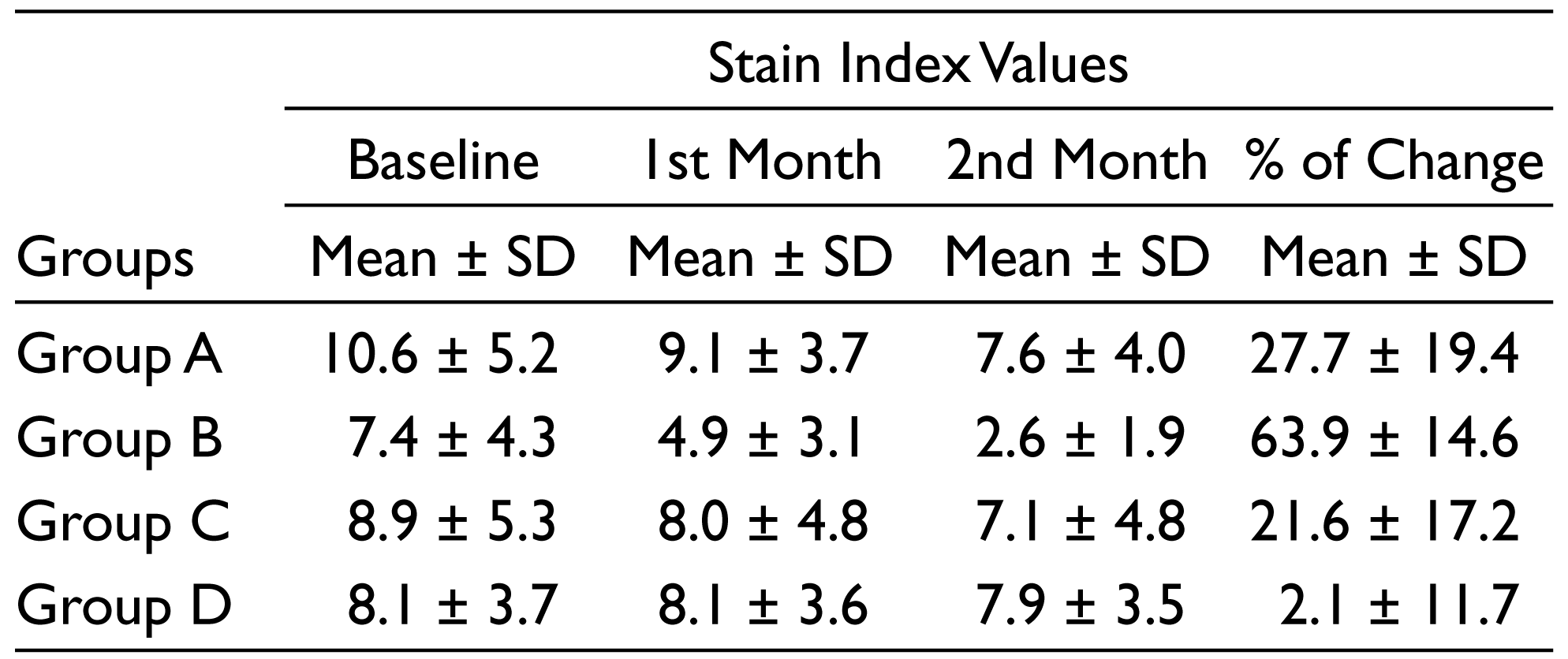
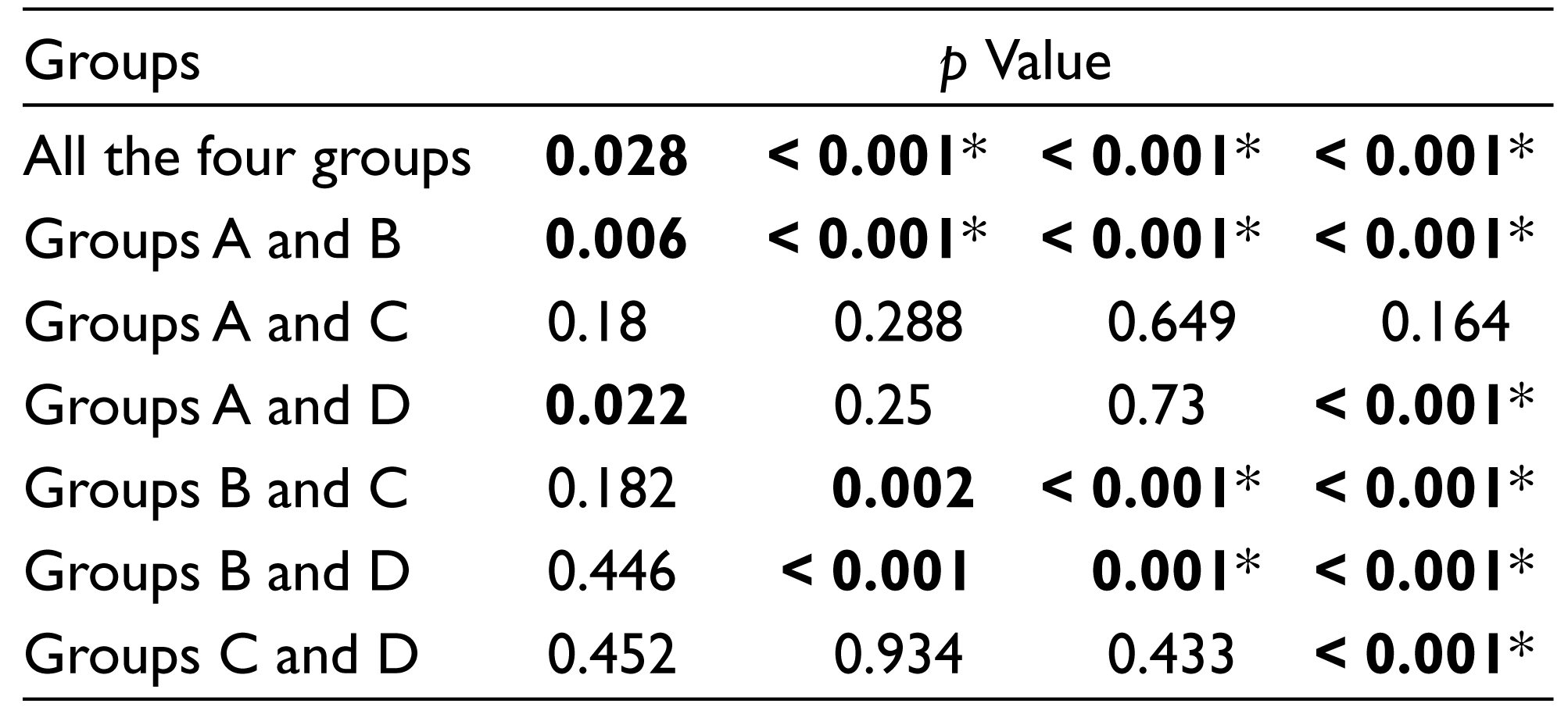
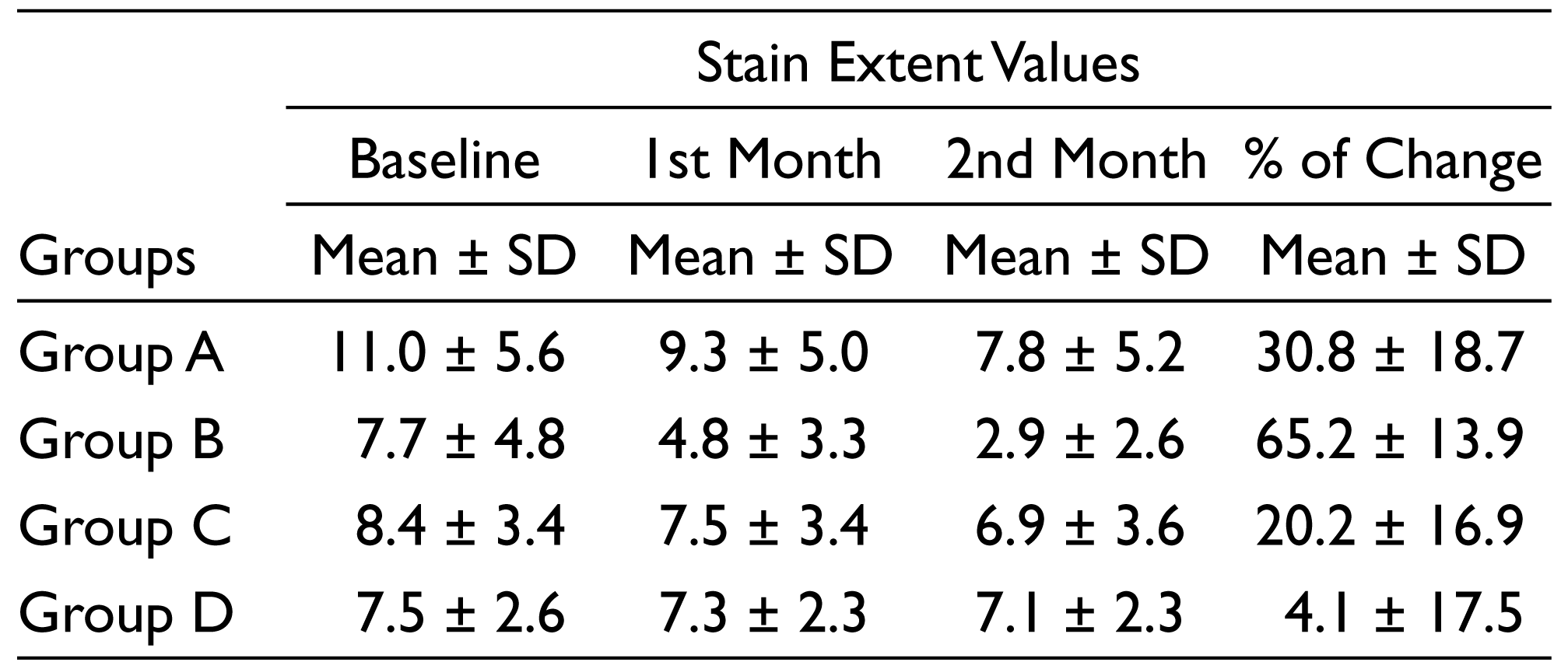
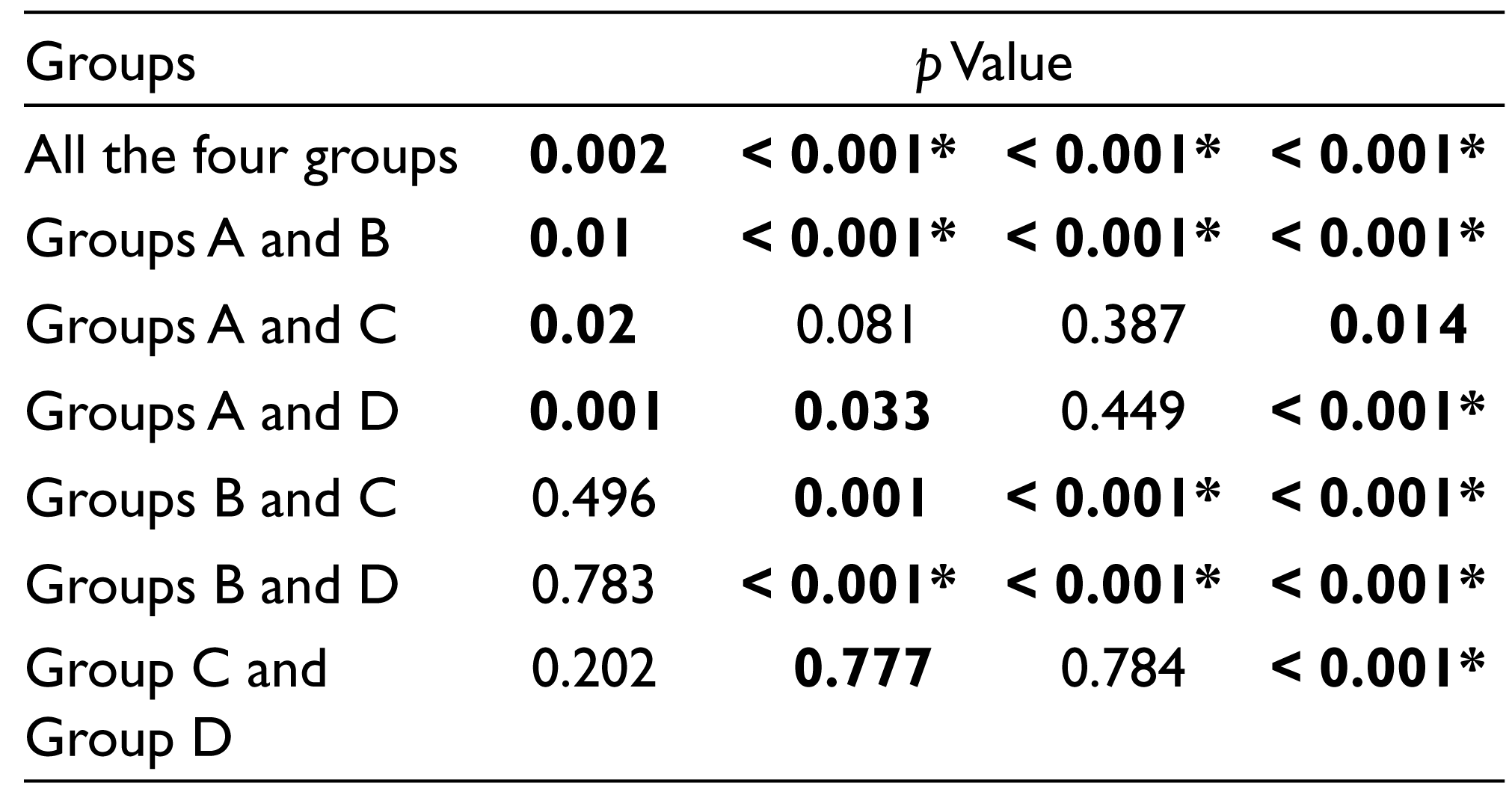
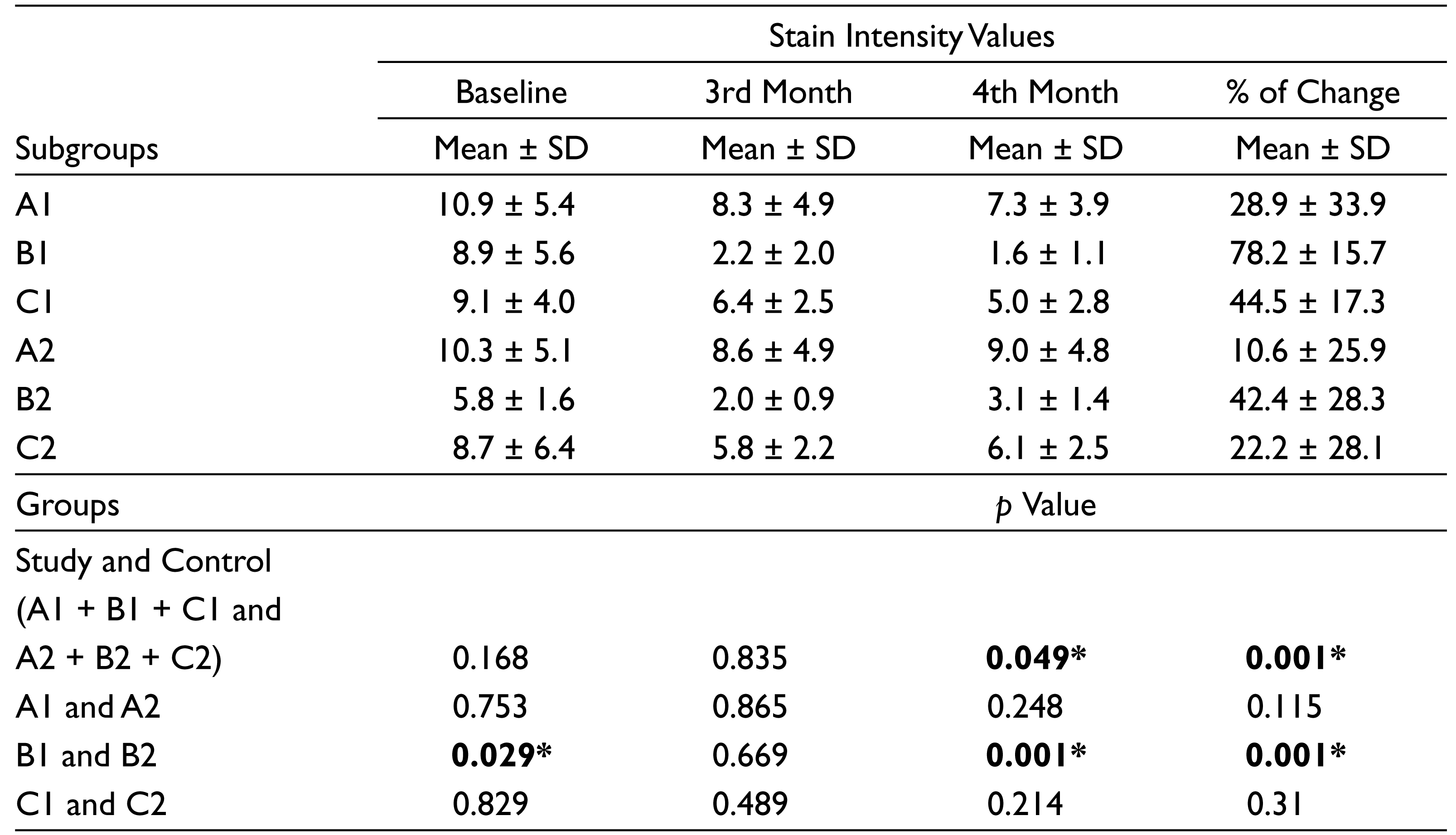
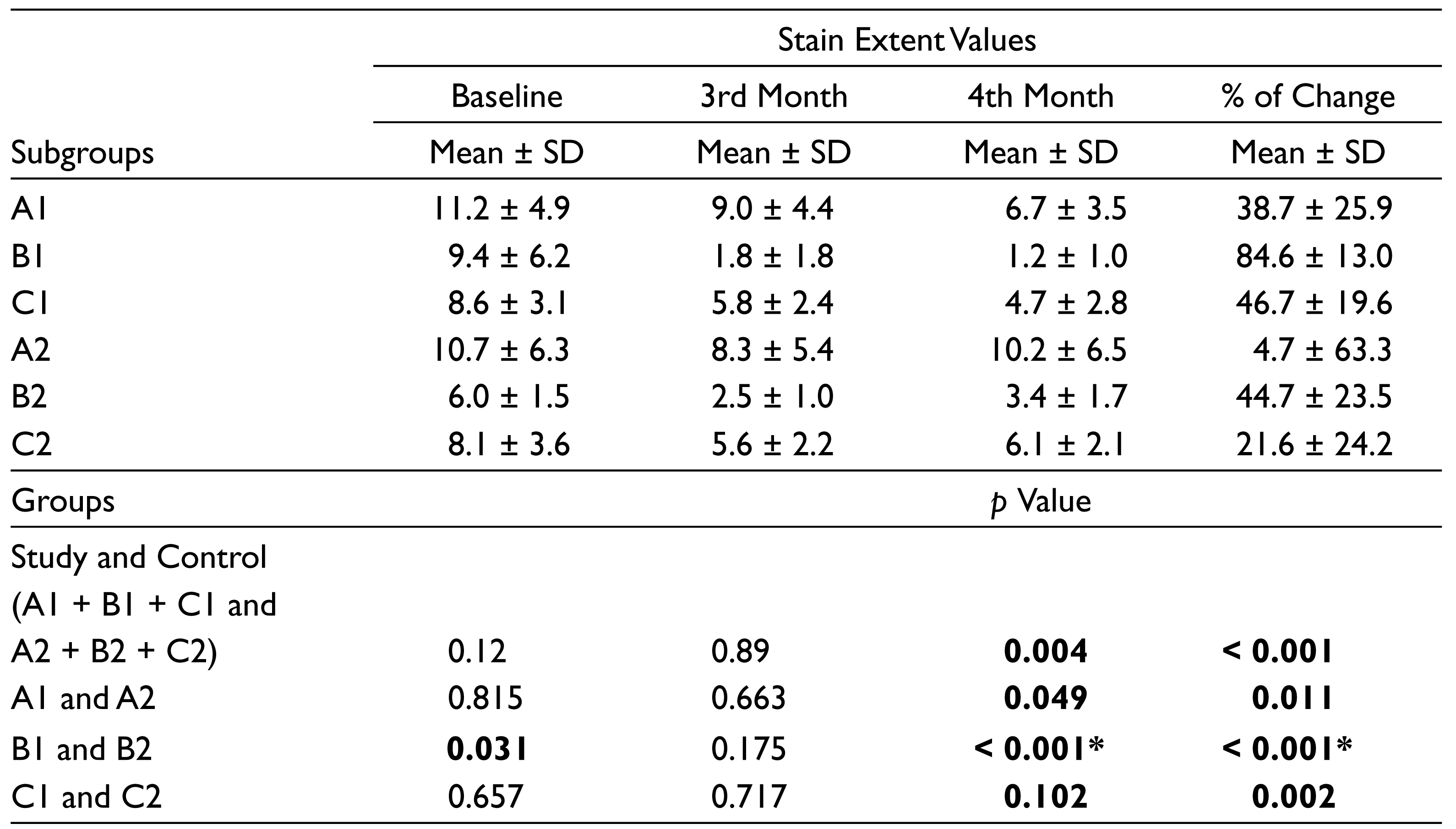
Tables 1a and 1b show that there is a maximum mean and percentage reduction of stain intensity and stain extent in Group B from the baseline at the end of the first and second months, respectively. Tables 1b and 2b show that there is a statistical difference seen in the stain intensity and extent between Groups A and B, Groups B and C, and Groups B and D. Tables 3 and 4 show that there is a maximum mean and percentage reduction of stain intensity and extent in the study subgroup B1 and control subgroup B2. There is a statistical difference seen between subgroups B1 and B2 at the end of third and fourth months.
Changes in Stain Intensity in the First Two Months
Comparison of Stain Intensity Between First and Second Months
Discussion
The abrasive component of toothpastes contributes to the physical removal of stains, plaque, and food debris. 19 In order to optimize the removal and control of extrinsic stain, special abrasives can be added to toothpastes. These improved stain removal/prevention products are termed as the whitening toothpastes. 20 Higher abrasive level of whitening toothpastes leads to their whitening effect. However, the abrasivity of toothpastes has to be moderated to prevent removal of the underlying hard dental tissue.21-23
Tables 1a, 1b, 2a, and 2b show changes in stain intensity and extent in the first two months. When comparing between the groups—(Group A [Colgate Visible White] and Group B [Whitospark]), (Group B [Whitospark] and Group C [Snowdent]), and (Group B [Whitospark] and Group D [conventional toothpaste])—there was a statistically significant difference. There is a maximum stain intensity and extent mean reduction seen in Group B Whitospark (silica, papain, and bromelain containing toothpastes) at the end of the second month. The reason may be due to the presence of proteolytic enzymes (papain and bromelain) which disrupt or the removal of protein portion of the pellicle/plaque layer that forms on the surface of teeth overtime, thus removing the stains that are bound to these proteins. The present study results are in line with the study conducted by Chakravarthy and Acharya 13 who concluded that Glodent (papain and bromelain containing toothpaste) is effective in removing dental stains.
Changes in Stain Extent in the First Two Months
Comparison of Stain Extent between First and Second Months
Tables 3 and 4 show changes in the Lobene stain index in the subgroups (A1, B1, C1, A2, B2, and C2) at the end of the third and fourth months. At the end of the fourth month, there is no statistically significant difference seen between (A1 [Colgate Visible White] and A2 [conventional toothpaste]) and (C1 [Snowdent] and C2 [conventional toothpaste]), which means that the whitening effect is the same in (A1 [Colgate Visible White] and A2 [conventional toothpaste]) as in (C1 [Snowdent] and C2 [conventional toothpaste]). This indicates that the whitening effect is retained in A2 and C2 (conventional toothpaste) even after the subjects are switched over to the conventional toothpastes. When B1 and B2 are compared, there is a statistically significant difference; it means that the whitening effect is more with B1 (Whitospark) than B2 (conventional toothpaste), which indicates that even though there is retention in B2 (conventional toothpaste), the effect of B1 (Whitospark) exceeded as it is used for longer duration. Only non-smoker participants were included in this study.
Comparison of Stain Intensity between Study Subgroups and Control Subgroups in the Third and Fourth Months
Comparison of Stain Extent between Study Subgroups and Control Subgroups in the Third and Fourth Months
Conclusion
Whitospark (silica, papain, and bromelain containing whitening toothpastes) shows effect in removal of extrinsic dental stains. Long term use of this whitening toothpaste shows the stain removing property.
Footnotes
Acknowledgements
The author (Dr Shobana G.) would like to thank her research guide Dr R. Muthu Karuppaiah, MDS, Department of Public Health Dentistry, Best Dental Science College and Hospital, Madurai, for their constant support in conducting this research.
Declaration of Conflicting Interests
The authors declared no potential conflicts of interest with respect to the research, authorship, and/or publication of this article.
Funding
The authors received no financial support for the research, authorship, and/or publication of this article.