



Abstract
This study aims to examine the relationship among promotion, job security and work engagement on employee retention in the pharmaceutical industry of Bangladesh. Drawing on the social exchange theory, the research examines how work engagement mediates the relationships among promotion, job security and employee retention. Data were collected using a quantitative survey questionnaire approach from 309 medical representatives, which was analysed using PLS-SEM. The study results revealed that promotion and job security have a significant relationship with work engagement and work engagement has a significant relationship with employee retention. Hence, this study emphasizes that clear policies to promote and discuss job security may lead to work engagement, which is associated with employee retention. Practical implications highlight human resource management and how they should support sufficient promotion opportunities, guarantee job security and implement active work programmes to boost employee loyalty. This study concludes that specific HR practices influence employee retention through work engagement, highlighting their value in strengthening organizational performance. Although based on a single industry, the findings provide a foundation for broader investigation. Future research should test these relationships across diverse contexts to enhance generalizability.
Introduction
It is a well-established fact that employees make a significant contribution to the competitive advantage of organizations. Hence, different kinds of policies and procedures are performed by organizations to keep experienced employees over an extended period (Ghani et al., 2022). Consequently, employee retention has become a significant contributor to success for companies globally, leading to minimized needless expenditures along with enhanced employee motivation and productivity (Aman-Ullah et al., 2020). In the same way, the retention of employees is important for the stability, growth and success of the pharmaceutical industry in lower-middle income countries like Bangladesh (Rahman et al., 2022). The demand for pharmaceutical products at the global level and high competition in the industry make it unique in terms of challenging the retention of talented and highly proficient employees. In fact, 31% of employees leave a job in 6 months or less, according to a BambooHR survey (Financial Express, 2023). Bangladesh’s pharmaceutical industry has been facing high turnover intention rates among its employees in recent years. One cannot be blind to the adverse ramifications of this concern.
As of now, there are 257 licensed pharmaceutical factories in Bangladesh (DGDA, 2022; Karim et al., 2023). Out of these, 150 factories are working like they used to. Presently, 90% of the total domestic pharmaceutical market is for domestic manufacturers and 10% for multinational companies. The contribution of this industry to the GDP of Bangladesh is significant (1.0%) (Manik et al., 2023). Bangladesh has already reached a target of 98% of the country’s total requirement and, so far, has exported pharmaceutical products to 157 countries, including the European Union, Africa, Latin America and the United States (BAPI, 2025; Ministry of Finance, Government of the People’s Republic of Bangladesh, 2022). Employee retention is defined as the organization and its ability to retain employees for a certain period of time (Asif & Gul, 2021). It entails the various practices and strategies employed by companies to achieve long-term management that engages skilled and experienced workers (Venkat et al., 2023). The above is a very brief introduction to the study of employee retention, which is an important part of human resource management and has always been a hot topic of researchers and scholars (Cherif, 2020; Hom & Kiazad, 2024; Xiayan et al., 2025). A number of studies have shown that HR practices are one of the important factors that affect employee retention in organizations.
Promotion, job security and job engagement have critical implications in HR practices as well. Promotion, in an organizational context, means the advancement of an employee through a higher position with more responsibilities and higher salary (Ray, 2024). Internal mobility is the transfer and promotion of employees, which affects individuals, work units and organizations. Promotions are often determined by an individual’s ability, experience and contribution to the business (Kordsmeyer et al., 2022). Moreover, job security connotes the employees’ belief in the sustenance of their work (Firdaus et al., 2023). This is a measure of how confident employees are about retaining their jobs in the time ahead, provided that there are no unexpected events taking place like a recession, restructuring of the organization or an issue with employment (Haiqing et al., 2022; Qin et al., 2021). In line, job security is a critical issue for employees, and it considerably affects employee well-being, organizational commitment and job satisfaction (Gupta et al., 2024; Soomro, 2022; Taduvana, 2016). Increased job security was associated with lower odds of serious psychological distress and anxiety among working adults (Wang et al., 2024). On the other hand, work engagement is the positive effect, fulfilment and mental vigour felt by workers when being totally attached to their work (Zammitti et al., 2022). When employees are engaged, they are enthusiastic about their work and highly loyal, and generally have a higher level of job needs. Passion, involvement and commitment to one’s work are inseparable; they are correlated as job engagement (Jasiu & Derbis, 2023). Several studies have justified that the emphasis was placed on pivotal HR practices affecting employee retention (Akther & Tariq, 2020; Papa et al., 2020; Sepahvand et al., 2021). Although numerous studies have been conducted in this area, there is still a lack of extensive research examining the relationship between promotion and job security in employee retention through work engagement in the pharmaceutical industry of Bangladesh. So, this study attempts to address some of these gaps through three research questions: (a) Do promotions and job security affect work engagement? (b) What is the impact of job engagement on employee retention? (c) Does any mediation exist between promotion, job security and employee retention? The objectives are to study the impact of promotion, job security and work engagement on employee retention in the pharmaceutical industry of Bangladesh. Moreover, this study seeks to fill the gap with scant empirical evidence on the influence of promotion opportunities and job stability on the retention of employees in the context of the pharmaceutical sector in Bangladesh.
The results assist organizations to formulate the right strategies to boost employee engagement and enhance employee retention and productivity. This is why it is essential to carry out research on significant influences of promotion, job security and medical representatives’ participation in care in Bangladesh.
Literature Review
Theoretical Background
The social exchange theory is commonly used to explain the employer–employee relationship in the literature on employee turnover and retention (Coyle-Shapiro & Conway, 2005; Gopalan et al., 2020). With regard to consumer research, SET is knowledgeable about relationship marketing, collaborative consumption, gifting behaviour, brand experience and tourism (Mishra & Mund, 2024). During its application to the hospitality industry, SET was also applied to investigate e-trust in hotel websites, and it was found that perceived security, privacy, usefulness, perceived ease of use and compatibility affect trust and the intention to book afterward (Nasrolahi Vosta & Jalilvand, 2023). As noted by SET, effective employee development programmes can increase employee engagement and retention, to the benefit of both employees and managers (Bilderback & Miller, 2023).
SET (Blau, 1964) posits that people enter social relationships through cost-benefit analysis and reciprocity. SET also proposes that a person who feels they receive a certain benefit from someone will feel an obligation to repay or compensate through the person’s positive behaviours, attitudes, efforts and devotion. In the workplace, employees evaluate their employment based on what they receive (in terms of job security, opportunities for development, credit for work) with what they give (including effort, loyalty). Liu et al. (2021) argue that social exchange is a long-term exchange based on favours and a diffuse obligation to reciprocate. The employers and employees have a reciprocal arrangement in which the interests are balanced. There were also significant relationships between promotional opportunities and employee retention (Bibi et al., 2017). Based on the upcoming research of Aman-Ullah et al. (2022) and Lahbar et al. (2024), SET can be considered as an effective context to analyse and predict employee retention and job security. Therefore, it is important to understand SET as its principles can help increase employee engagement and retention strategies (Alnajim, 2021). Based on SET, the current study proposes that work engagement mediates the significant relationship between promotions and job security and employee retention.
Hypotheses Development
Relationship Between Promotion and Work Engagement
The principle of SET (Thibaut & Kelly, 1959) states that social behaviour is the result of an exchange process in which a person or group provides a resource (price) to another person or group and receives other resources (prices) in return. Based on SET, it goes beyond an economic transaction and is a mutual relationship between both parties and involves social interactions. The process of promoting employees to another institution is very beneficial to the level of performance (Rabuana & Yanuar, 2023). This is seen as a means to foster employee loyalty and commitment to the organization (Beltrán-Martín et al., 2023). A promotion is proof of the legitimacy of employee performance (Islam & Jantan, 2023). If someone is promoted, it is to be assumed that they are doing a good job. The employee’s voice fully mediates the relationship between psychological safety and work engagement (Ge, 2020). According to Kakkar and Vohra (2021), consistency in performance management systems primarily enhances employees’ work engagement through a focus on promotion and has a significant positive effect on their performance. Over and above what is accounted for by regulatory focus, both promotion and prevention are positively related to work engagement, but prevention accounts for more variance (Dai et al., 2021). García-Merino and Alcover (2023) also note that promotions involve a raise in status, salary, title, responsibilities and benefits of the employee, which lead to increased work efficiency.
Moreover, employee promotion is perceived as a vital aspect that plays a significant role in enhancing employee performance and devotion (Ilwani & Younis, 2023). According to Paul and Turner (2020), workers can be considerably more motivated and engaged at work if they are undergoing a promotion. However, when one perceives fairness in promotion, the failure of promotion has negative effects on work engagement through lowered self-efficacy (Zhu et al., 2020). The most critical factor for employees at an organizational level seems to be the opportunity for employees to advance. The truth is that no employee wants to be stuck there for eternity. Instead, the goal is to step up to the next level. Indeed, employees feel a strong emotional connection to their companies when they understand their workplace has a streamlined trajectory to higher levels. Also, several studies were performed to examine the connection between employee promotions and work engagement (Alamri, 2023). So, the study proposes the following hypothesis:
H1: Promotion has a significant relationship with work engagement.
Relationship Between Job Security and Work Engagement
The SET and reciprocity theory assume that people offer services with the anticipation of receiving a positive return (Blau, 1964). SET is the study of relationships and interpersonal exchanges between individuals (Cropanzano & Mitchell, 2005). It is crucial to have job security for many work-related outcomes. Different recent research studies have found a positive relationship between job stability and employee performance (Nemțeanu et al., 2022; Saeed et al., 2023). The security of a career role does not only help boost organizational commitment but, more importantly, creates high degrees of endeavour, work energy and involvement with the workplace (Baridam, 2024). A number of important investigations have focused on the ways job security can boost an employee’s professional success. Several recent studies have investigated how job security relates to work engagement across a wide range of sectors. Similarly, Wardani et al. (2023) reported that job insecurity and grit positively predicted work engagement in the hospitality industry during the COVID-19 pandemic. On the contrary, Aninda and Hatta (2024) found a very weak linear relationship between job insecurity and the work engagement of bank employees. According to Natalia and Prameswari (2024), this research pointed out that lower job insecurity was correlated with work engagement among retail workers at the peak of the pandemic. Additionally, Kundi et al. (2021) stated that the disposition of employees towards work and the organization as a whole is a function of how high their emotional and informational roles are, something that is possible only if there is job security. Consequently, a meta-analysis established by Hur (2022) also robustly showed a significant association between job security and multiple of its outcomes at work. Employees’ job security is the most important factor which helps the employees get attached to the organization. Job insecurity affects employees’ level of work engagement regardless of their hierarchical position within their company. The following hypothesis is proposed based on the study:
H2: Job security has a significant relationship with work engagement.
Relationship Between Work Engagement and Employee Retention
Based on general perceptions of managerial support and maintenance, basic SET (Blau, 1964), reciprocity theory suggest that the attitudes and behaviours of people are driven. According to this research study, employee engagement and retention levels are extremely critical to any organization, as they influence employee behaviour. An interesting study addressed some antecedents of engagement, such as workplace well-being, employee development and retention (Sypniewska et al., 2023). This is evident from the positive relationship between employee engagement and employee retention in different sectors (Ashraf & Siddiqui, 2020; Dhandayuthapani & Shalini, 2024; Shibiti, 2020). Memon et al. (2021) found that the satisfaction level of HRM practices, in particular training and performance appraisals, triggers work engagement that has a negative impact on turnover intentions. Likewise, Almerri (2023) showed that a good organizational culture promotes employee engagement while resulting in higher retention rates. Wei et al. (2023) related to nurses who identified that work engagement positively correlates with job satisfaction and quality of care, whereas it has a negative relationship with intent to leave. Another study suggests that work engagement is positively associated with employee retention, as it found that a 1 standard deviation increase in nurse engagement was associated with a 16% increase in retention (Moscelli et al., 2024). The results of this study analysis identified that work engagement and employee retention are positively related. Hence, it can be contended that employee retention and engagement have a critical bearing on the success of an organization. In such cases, this study proposes that organizations play a positive role in determining employee engagement, which, in turn, relates to the employees’ intention to stay. The following hypothesis is proposed based on the study:
H3: Work engagement has an effect on employee retention.
Mediation Effects of Work Engagement
Blau (1964) clearly stated that social exchange relationships are built on dimensions of personal commitment, gratitude and trust. This theory contends that when employees perceive personal benefit out of an organization, they are more likely to respond in kind, for example, by being retained as an employee. A careful analysis of this research study highlights the fact that the levels of employee engagement and retention are crucial constructs of an organization because both are highly interlinked and factor into the attitude of the employees. Work engagement, defined as a positive motivational state marked by vigour, dedication and absorption, is essential for employee satisfaction and organizational success (Bakker et al., 2023). Employee engagement mediates the relationship between work motivation, job satisfaction and employee performance (Riyanto et al., 2021). In higher education, work engagement intervenes between decent work conditions and innovative work behaviour of faculty members (Hassan et al., 2024). In a study conducted on bank employees, it was found that while job engagement had no mediating effect on the intention to leave and job satisfaction of bank employees, employee loyalty was shown to partially mediate the relationship between the two (Zanabazar et al., 2024). Furthermore, work engagement boosts company performance and job stress, while perceived organizational support has no major effect on them (Anggraini & Berlianti, 2024). Work engagement is a crucial mediator of a variety of workplace relationships. Fernando and Nishanthi (2021) in their study found that the relationship between total reward perceptions and employee retention was partially mediated by work engagement. It thus implies that organizations can enhance employee retention by increasing engagement levels of employees when they feel they have full rewards in show and an opportunity for promotion. In the mining and IT industry, it mediates between job security and turnover intention (Gupta et al., 2024; Joubert et al., 2023). In the current research, work engagement was found to act as a mediator between promotion, job security and employee retention. The research is focused on healthcare employees who are working in the medical field in Bangladesh and highlights work engagement as it mediates the relationship between employee promotion, employee job security and employee retention. Drawing on evidence, the present study proposes the following hypotheses:
H4: Work engagement mediates the relationship between promotion and employee retention. H5: Work engagement mediates the relationship between job security and employee retention.
Research Framework
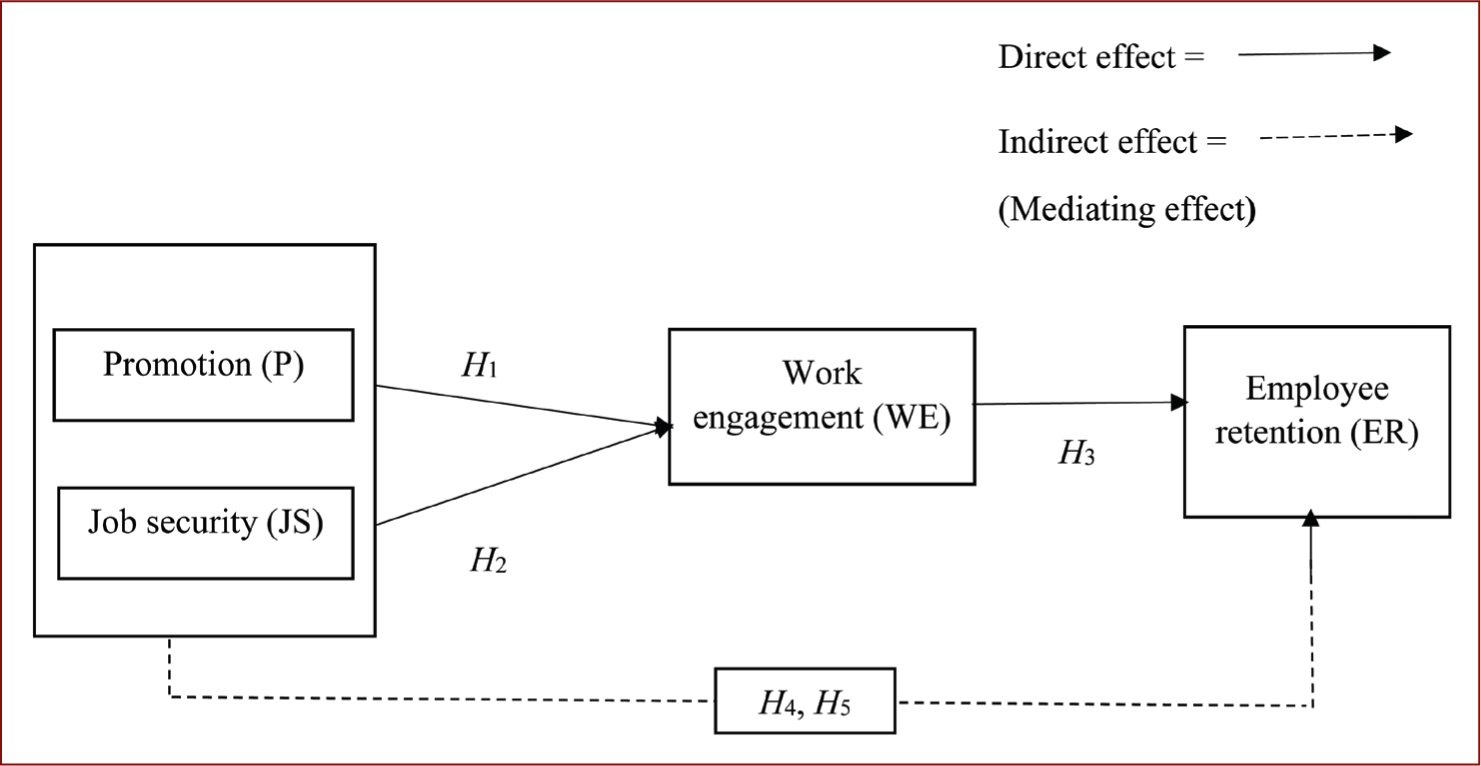
Drawing on prior literature, this study proposes a framework examining the relationships between job security, promotion, work engagement, and employee retention. The conceptual research framework guiding the study is presented in Figure 1.
Conceptual Model.
Research Methodology
This study used a quantitative method and developed and tested a survey questionnaire to collect crucial primary data for investigating the factors affecting employee retention in Bangladesh’s pharmaceutical sector. The study employed a purposive sampling technique to identify and select respondents who possessed the specific characteristics required to address the research objectives. This sampling was appropriate because medical representatives (MRs) operate under structured field schedules and vary in accessibility, making probability-based techniques impractical. This method ensured that only individuals with relevant professional experience and direct exposure to job security conditions, promotional structures and work engagement practices were included. A well-defined sampling frame was constructed using two authoritative sources: (a) official pharmaceutical company websites containing updated information on field operations and (b) the directory of licensed pharmaceutical manufacturers published by the Directorate General of Drug Administration (DGDA) under the Ministry of Health and Family Welfare. These sources provided a comprehensive and credible listing of companies employing MRs at Dhaka in Bangladesh. Respondents were selected based on clear inclusion criteria: at least 1 year of field experience, active involvement in doctor visits and product detailing and full-time employment within Dhaka-based pharmaceutical firms. Interns, trainees, contractual staff and those with less experience were excluded. The responses of MRs are essential because they operate in one of the most performance-driven and retention-sensitive segments of the pharmaceutical industry. The gathered data were analysed using partial least squares structural equation modelling (PLS-SEM) (version 4.1), and demographic information was extracted using SPSS version 30. Questionnaires were distributed to 450 selected MRs, of which 309 valid responses were received, resulting in a response rate of 68.67%. Respondents indicated their level of agreement or disagreement with study items on a 5-point Likert scale (5 = strongly agree, 4 = agree, 3 = neutral, 2 = disagree, 1 = strongly disagree).
Measures
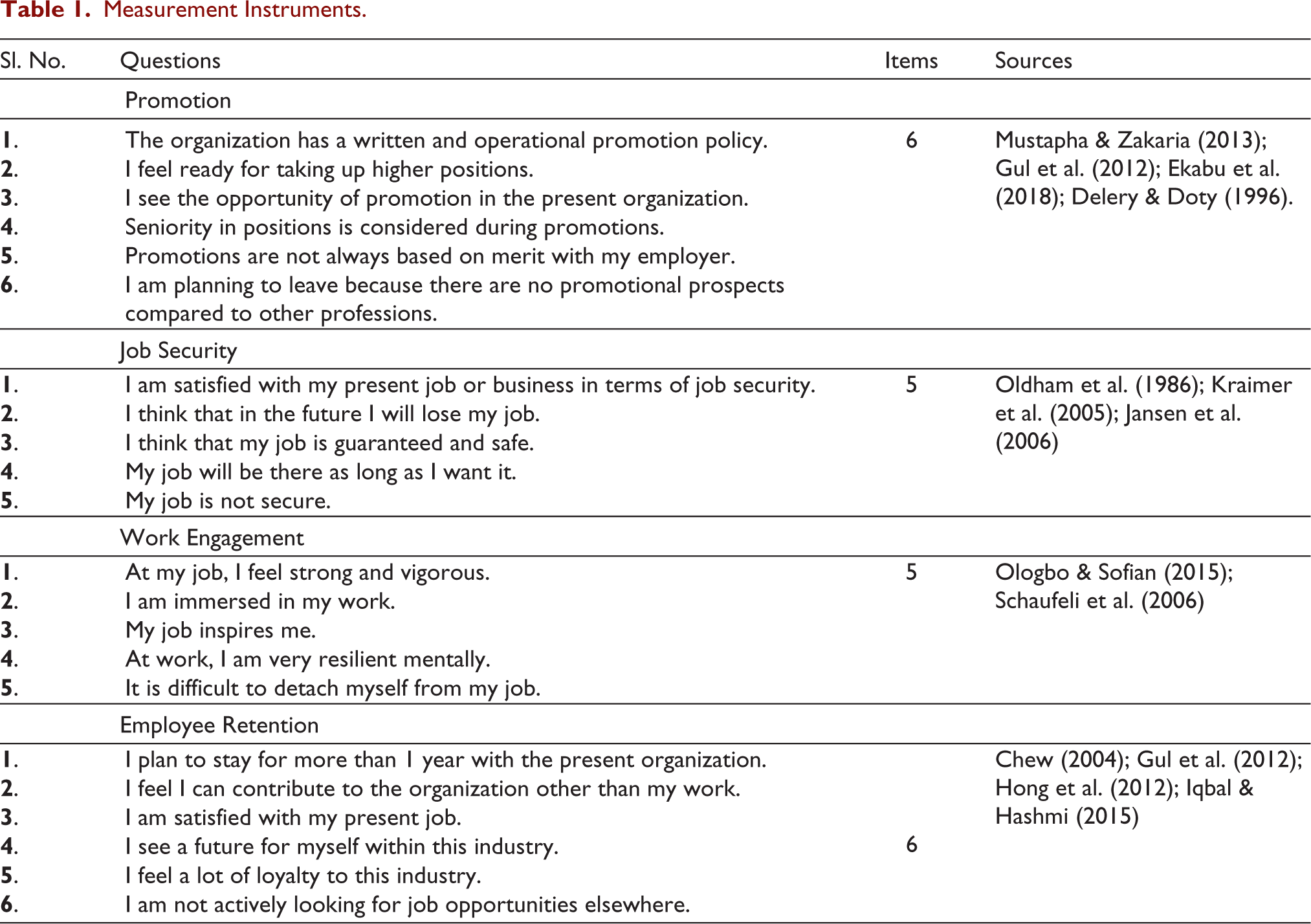
In the current study, the measurement items were adapted from existing literature and tested scales of employees’ retention, promotion, job security and work engagement. The strategy of inclusion and exclusion was adapted to make minor changes in words and sentence structure. The details of the scale of study variables are given in Table 1.
Measurement Instruments.
Demographic Profile
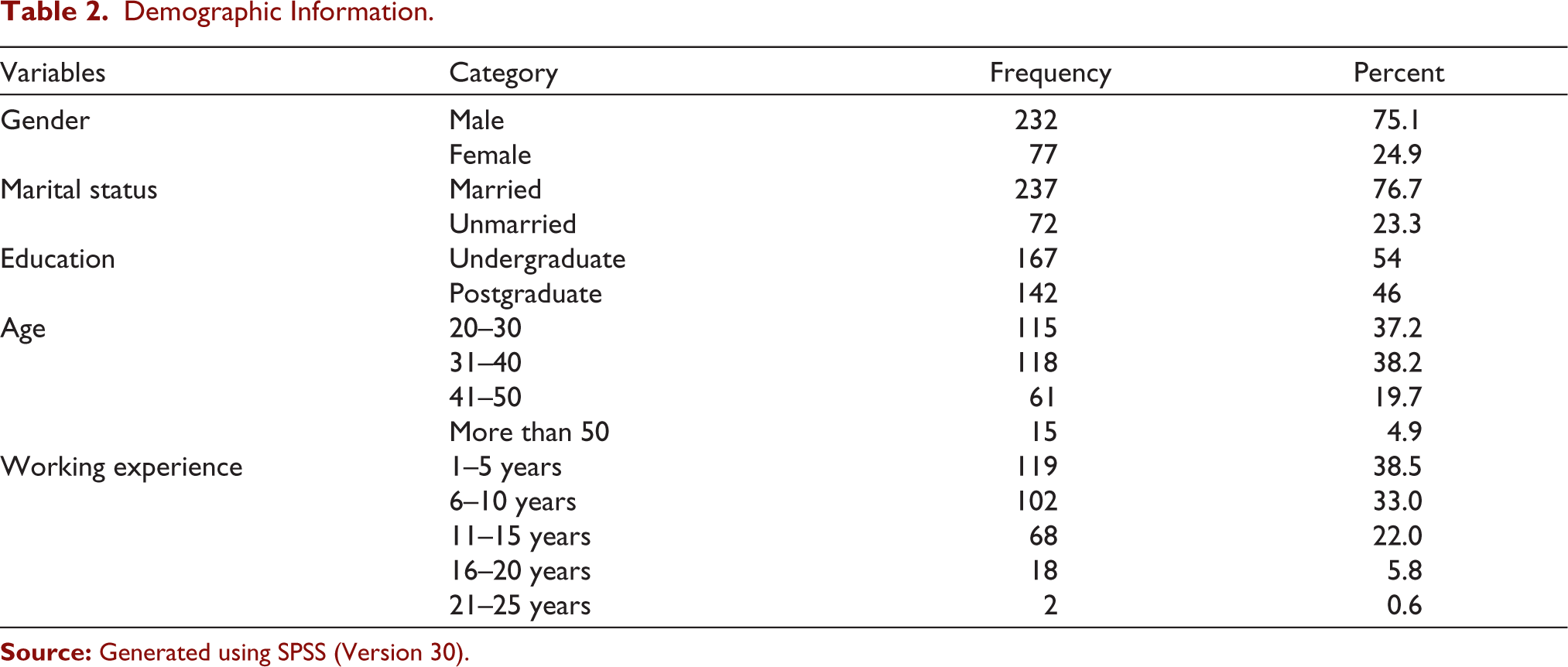
Examining the demographic composition of the study sample, 75.1% were males, and the remaining 24.9% were females. Furthermore, 54% held undergraduate degrees, while the remaining 46% were postgraduate employees. Age-wise, participants were distributed across the groups as follows: 20–30 years (37.2%), 31–40 years (38.2%), 41–50 years (19.7%) and >50 years (4.9%). Regarding their tenure with organizations, 38.5% had worked for less than 5 years, 33% for less than 10 years and 22% for more than 10 years. The demographic characteristics of the respondents, including Gender, Marital Status, Education, Age, Working Experience, are summarized in Table 2.
Demographic Information.
Results
Descriptive statistics and correlation analyses were performed using SPSS (Version 30). Subsequently, SmartPLS (Version 4.1) was utilized to conduct partial least squares structural equation modeling (PLS-SEM) for assessing the validity and reliability of the measurement instrument, as well as for testing the hypothesized relationships within the research model. PLS-SEM is a robust analytical approach that aims to minimize unexplained variance while maximizing the explained variance of endogenous constructs (Hair et al., 2021; Wu et al., 2020). The evaluation of the PLS-SEM results followed a two-step procedure, comprising the assessment of the measurement model and the structural model (Ali et al., 2018).
Descriptive Statistics and Correlations
Table 3 shows the mean, standard deviation and model correlation between the variables. As can be seen in Table 3, promotion and job security are positively related to work engagement (r = 0.724, p < .01; r = 0.698, p < .01), and work engagement is positively correlated with employee retention (r = 0.145, p < .01).
Descriptive Statistics and Correlations of Latent Constructs.

Measurement Model
The measurement model is assessed to confirm the validity (i.e., discriminant validity and convergent validity) and reliability (i.e., indicator reliability and internal consistency reliability) of the model’s indicators in relation to the constructs (Ali et al., 2018; Govender & Rootman-le Grange, 2015). As indicated in Table 4, the indicator loadings for all constructs were greater than the minimum threshold level of 0.60 (Chin et al., 1997) except for P5, JS3 and WE1, which is suggestive of the reliability of the indicators.
Results of the Measurement Model.
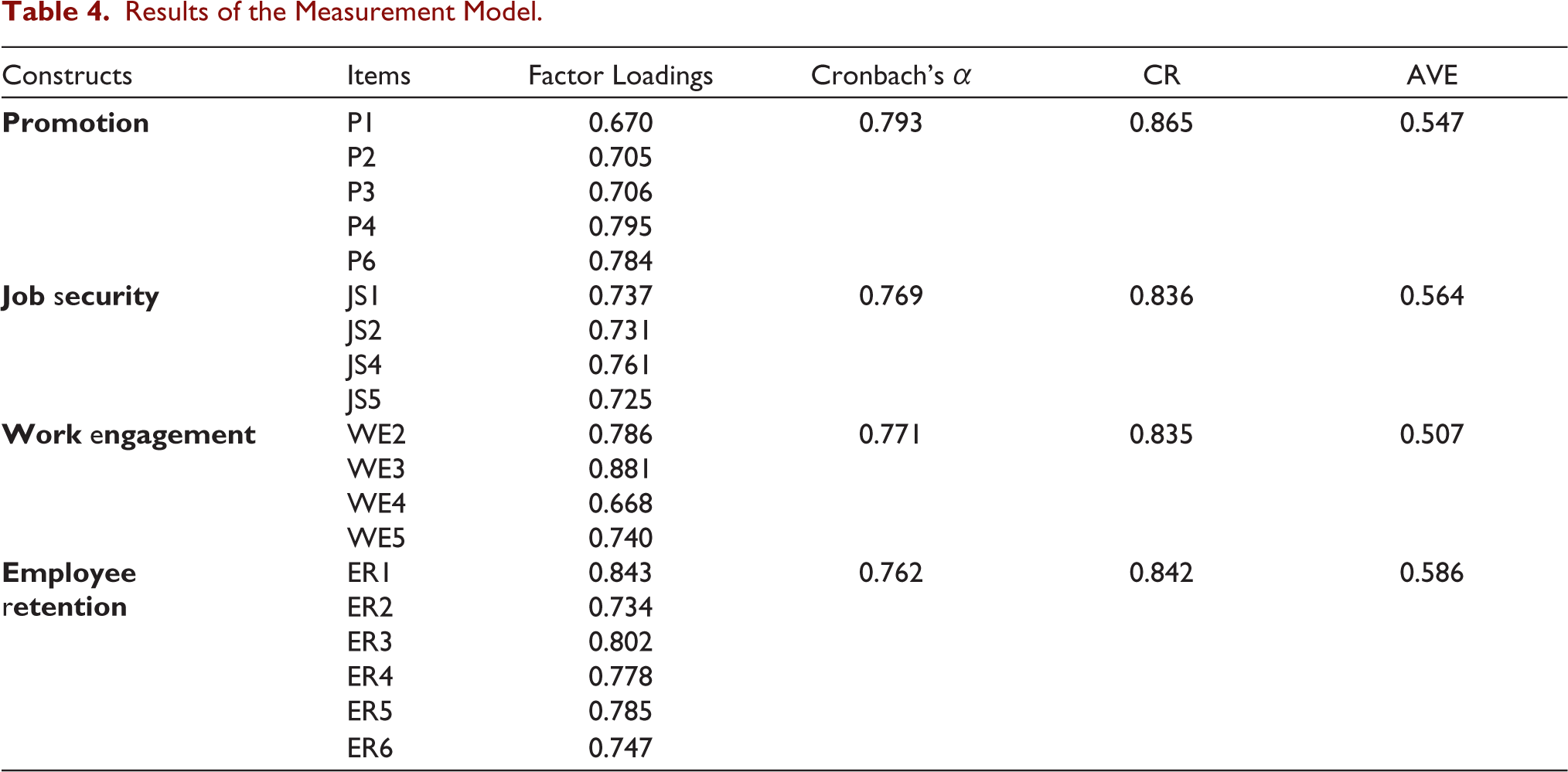
In this study, the research model was tested, and the study used various statistical methods, including factor loading, Cronbach’s α, composite reliability (CR), average reliability extracted (AVE) and R2, to create items. Table 4 indicates that four items for each construct are valid for the initial data collection, which can be seen from the data-loading factors. The loading values of all the items range from 0.668 to 0.881, indicating that they are all good for use. Cronbach’s α values for the research constructs ranged from 0.762 to 0.793 and exceeded 70%. All reliability values were distributed between 0.835 and 0.865, and all reached above 70%; the average variance extracted (AVE) was between 0.507 and 0.586, and all reached above 50%. According to several statistical calculations described by Hair et al. (2017) and Alzoubi et al. (2020), statistical standards are needed for the validity and reliability of the measured values of each research question and established research model. It turned out to be good.
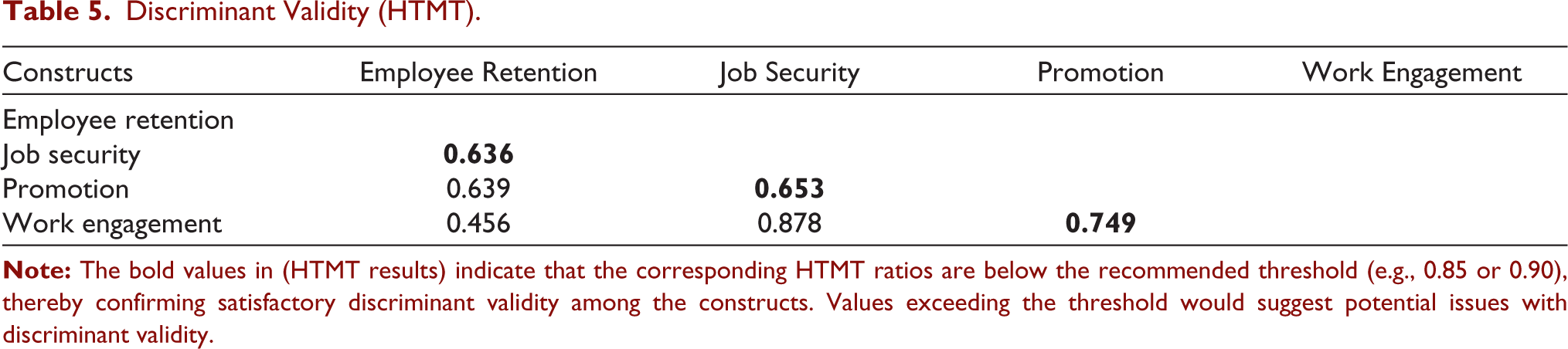
HTMT is the most popularly used threshold. The values for cut-off are HTMT < 0.85 or < 0.90, reflecting strong discriminant validity (Henseler et al., 2015). The results presented in Table 5 indicate that each value of the HTMT ratio is lower than both of the cut-off values of 0.85 and 0.90, showing the good discriminant validity of the data set and the instrument utilized. Thus, it is ensured through HTMT values that the constructs are sufficiently dissimilar in this study and the criterion of discriminant validity is met. This is positive for the robustness of the theoretical framework and strengthens the justification that net benefits of each construct bring uniqueness to the model (Hair et al., 2021). HTMT is an innovative technique that may help improve the methodological rigour of the research and therefore facilitate the trustworthiness of their results.
Discriminant Validity (HTMT).
Assessment of Structural Model
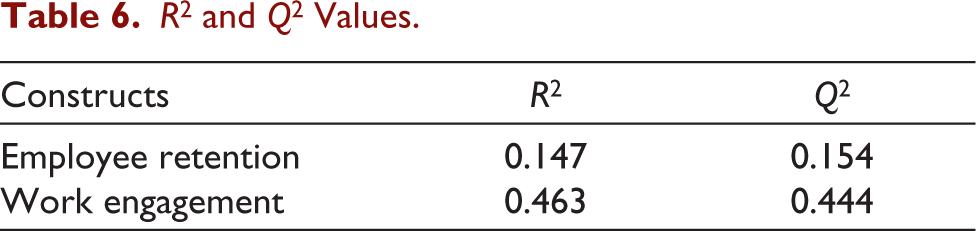
The hypotheses were tested, and the coefficient of determination (R2), effect size (f 2) and predictive validity (Q2) were evaluated based on the analysis of the structural model. So, the theoretical testing in this study initially tests the standardized path coefficient (β), which was calculated using the PLS algorithm built in SmartPLS (version 4.1). Second, the p value, t-value and confidence interval of each path coefficient were analysed using the bootstrap method integrated into SmartPLS (version 4.1) and the bootstrap model of 10,000 (Ringle et al., 2020) and are presented in Tables 6 and 7.
R2 and Q2 Values.
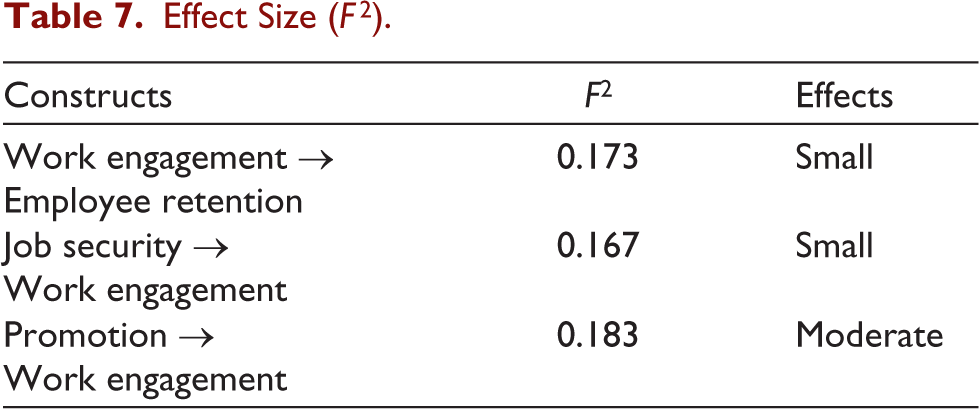
Effect Size (F 2).
The variance explained by R2 for the endogenous variables was reported as its measure. R2 represents the proportion of variance in the endogenous variable explained by all predictors (Hair et al., 2017). Falk and Miller (1992) considered 0.10 to represent a low value, and Chin (1998) suggested the values of 0.19, 0.33 and 0.67 to represent a small, medium and large difference, respectively. R2 for all predictors of work engagement and retention are shown in Table 6 and demonstrated a difference of 46.3% and 14.7%, respectively. The findings of the research reveal that the variation of endogenous variables is moderate and lesser. Finally, this study also provided the Stone–Geisser index (Q2), suggesting predictive validity (out-of-sample) with a value above 0 after the apprehension procedure (Ali et al., 2018). The model had two Q2 values greater than 0 in the study, indicating the model is relevant.
Beyond F2 estimates, effect sizes provide a relevant background when assessing a research sample (Hair et al., 2017). The effect size is expressed regarding the influence of all independent factors on the dependent factor. Cohen (1988) proposed a small effect size (0.02 < small < 0.14), a medium effect size (0.15 < medium < 0.34) and a large effect size (0.35 < large). Work engagement (0.173) has a low impact on employee retention, job security (0.167) has a low impact on work engagement and promotion (0.183) has a medium impact on work engagement (Table 7).
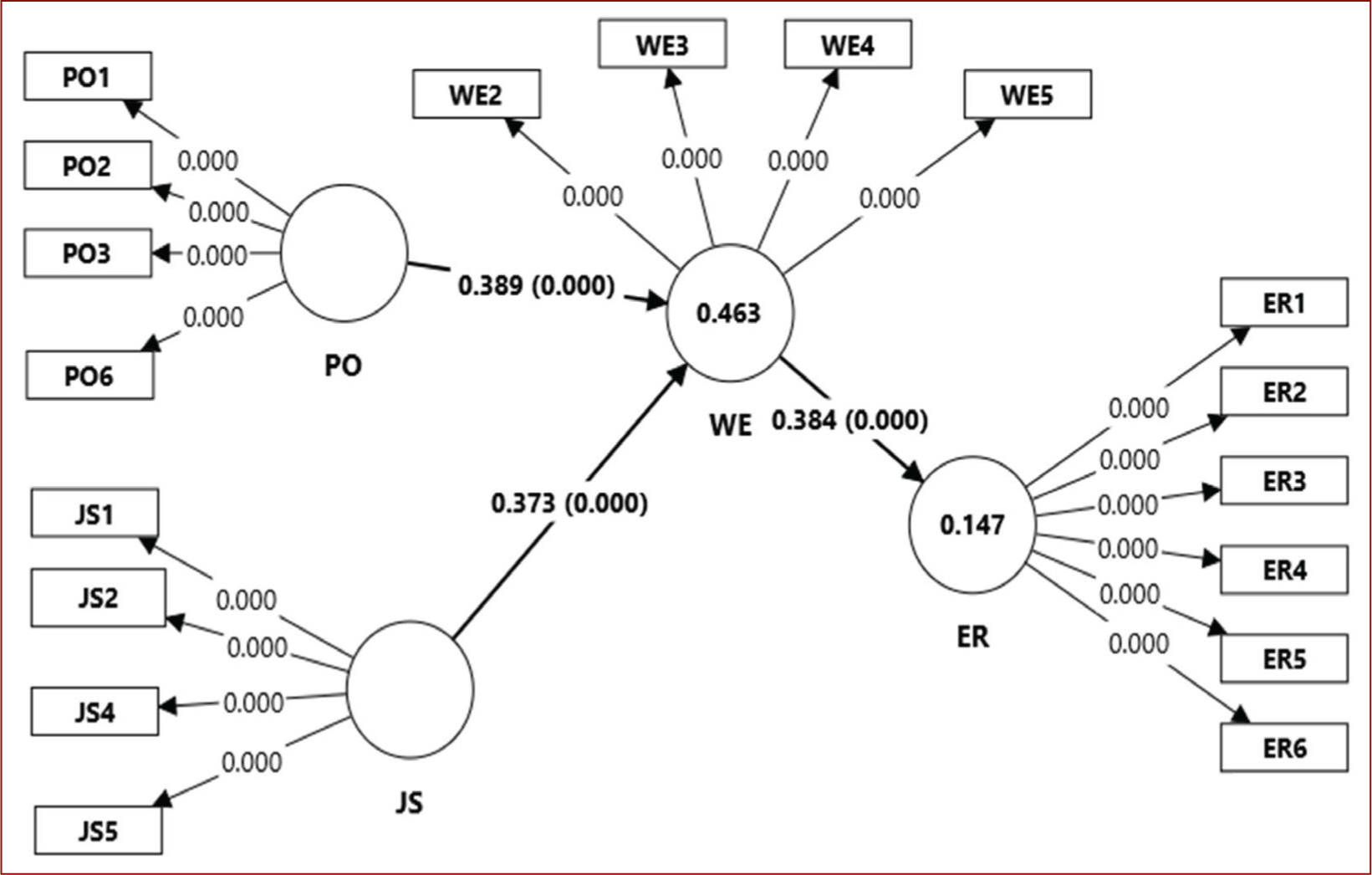
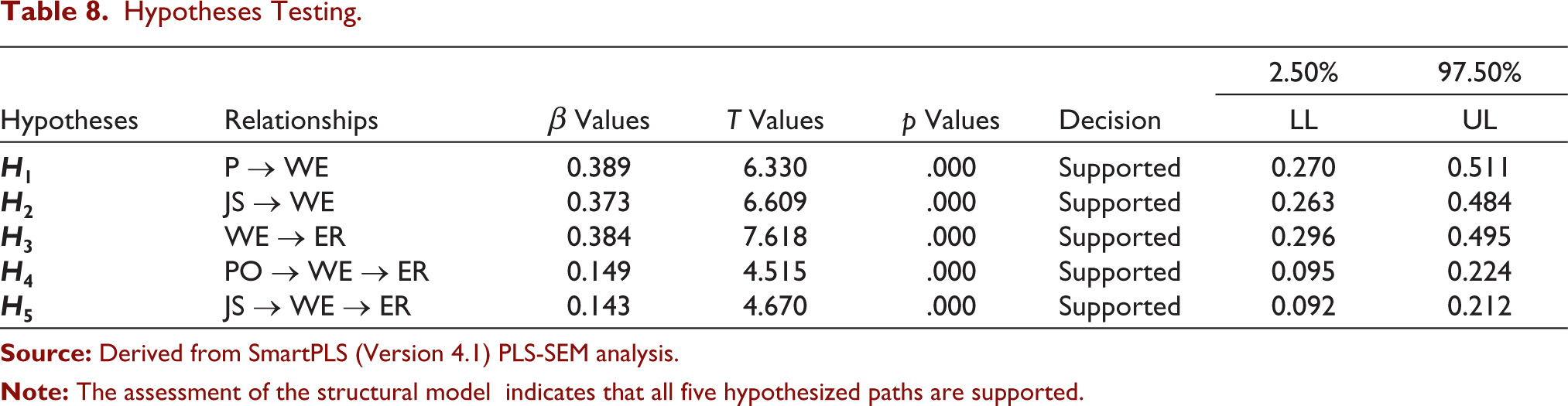
The structural model results (Figure 2) support all five hypotheses. Promotion significantly increases work engagement (H1: β = 0.389, t = 6.330, p < .001), and job security also positively influences work engagement (H2: β = 0.373, t = 6.609, p < .001). Work engagement, in turn, has a strong positive effect on employee retention (H3: β = 0.384, t = 7.618, p < .001). The mediation analyses further reveal that work engagement significantly mediates the relationships between promotion and employee retention (H4: β = 0.149, t = 4.515, p < .001) and between job security and employee retention (H5: β = 0.143, t = 4.670, p < .001) (Table 8).
Structural Model.
Hypotheses Testing.
Discussion
This research provides key insights into the mediating role of work engagement in the influence of job security and promotion on employee retention, with a demonstration in the pharmaceutical sector of Bangladesh. Findings indicate that employees feel greater job engagement, and perceived job security and opportunity are positively related to promotion, indicating the necessity for effective promotion policies and job security to retain sincere employees and help with their motivation. The results are aligned with the evidence on the significance of promotion, job security and job engagement in developing employees according to the current literature (Boštjančič & Petrovčič, 2019; Karatepe et al., 2020; Rabuana & Yanuar, 2023). Moreover, this study discovered a positive correlation between work engagement and employee retention, in line with SET as well as reciprocity rules. These findings are in line with the recent findings of Kundu and Lata (2017), Al-Hajri (2020) and Caesens et al. (2016). Employees who are engaged, or interested and committed, are also more likely to intend to stay in the organization, showing the critical role that job engagement plays as a predictor of employee retention (Bakker & Leiter, 2010; Rai et al., 2019). Thus, organizations need to adopt and implement strategies that can provide a positive and stimulating working atmosphere in order to enhance employee retention. However, mediation analyses prove to be a powerful approach as they show how exactly job management mediates relationships. Studies, however, have shown that increasing job stability and promotions raise employee engagement, which leads to employee retention. Hence, it is crucial to encourage performance as one aspect of the chain connecting HR practices to employee retention, which offers organizations a strategic mechanism to enhance more than merely retaining talent (Karatepe et al., 2016; Sergio & Rylova, 2018).
Conclusion
This article sheds light on the prediction of employee retention at the organizational level. According to the theoretical propositions of SET, this study finds that job points of view (job security, promotion) significantly influence the enhancement of work engagement and employee retention. According to this study, work engagement is an intervention mechanism for promoting employee retention in the pharmaceutical industry in Bangladesh. All hypothesized relationships were supported in the empirical study. Grasping these principles and acting on them can lead to an inter-worker relationship, which is highly motivated with a more superior drive to outperform itself, guaranteeing its long-standing success in the industry. The significance of these employees provides the organization with a competitive advantage because employee retentions are the key to the success and performance of an organization (Balakrishnan, 2014).
Implications
Theoretical Implications
This study proposes a model in which promotion and job security function as key organizational resources that stimulate employees’ positive reciprocation through higher work engagement, which subsequently enhances employee retention. The study’s results support this mechanism by revealing that promotion and job security have a significant relationship with work engagement, confirming that both factors function as meaningful socio-emotional resources within the exchange process. Additionally, the findings show that work engagement has a significant relationship with employee retention, validating its role as the mediating pathway through which organizational practices influence retention outcomes. Finally, the study contributes theoretically by contextualizing SET within the pharmaceutical industry of Bangladesh, a setting underexplored in employee-retention research. The evidence illustrates that the dynamics of social exchange are shaped by local industry conditions, economic pressures and employment norms. Thus, the study expands the cross-cultural applicability of SET and highlights the theory’s relevance in explaining employee-retention mechanisms in lower-middle income countries.
Practical Implications
From a practical point of view, companies in the pharmaceutical sector in Bangladesh should focus on job security and promotion to increase recruitment and retention, according to research findings. This indicates that promotion and job security are important. The results revealed the importance of job security and promotion in relation to employee retention, both direct and indirect, with job engagement as a mediator. Research shows that companies can increase engagement by focusing on creating a positive work environment, encouraging open communication and rewarding employees. In addition, the results suggest that the management of pharmaceutical companies should pay more attention to job security and promotion so that employees do not leave due to job dissatisfaction.
Limitations and Future Study
There are various limitations of this study. To begin with, there is a possibility of common method bias when using self-reported data. Second, the sample size is relatively small and limits the extrapolation of the results due to convenience sampling. Third, a cross-sectional design does not allow us to interpret observed relationships in a causal manner.
Based on the findings of the study, the next line of research should focus on evaluating job satisfaction, well-being, job performance and employee morale as mediating factors in order to clarify the processes that are driving the results obtained by the research. Further, gender, tenure, autonomy, workload, organizational politics and leadership style should be researched as a mediator or moderator since they might pre-condition the experience and reaction of employees to the workplace conditions revealed in this study. It is also recommended that future research studies examine career outcomes, such as promotion, job security and participation in the career, especially in the medical field since it may carry a big influence on employee attitudes and behaviours. Lastly, the generalizability of the findings to different organizational settings (for-profit, non-profit, governmental, non-governmental) and the use of a larger and diversified sample would add more strength and external validity to the results.
Footnotes
Declaration of Conflicting Interests
The authors declared no potential conflicts of interest with respect to the research, authorship and/or publication of this article.
Funding
The authors received no financial support for the research, authorship and/or publication of this article.