




Abstract
The novel COVID-19 pandemic has left the global economy in shambles and is negatively affecting India’s economy across industries. In order to tide over the crisis, companies need to take swift and effective decisions. The present case study focuses upon Bengaluru-based online meat and seafood company Licious that is functioning contrary to the dire state of fast-moving consumer goods (FMCG) and e-commerce companies which have shrunk during the nationwide lockdown. To battle the crisis that ails the meat industry, Vivek Gupta, Founder of Licious, took swift decisions and communicated effectively that helped him to build and renew trust with his stakeholders. This case specially focuses upon the various crisis communication strategies adopted by Gupta to create an effective engagement and experience with his stakeholders.
The world is now talking about gloves and sanitisation; we have been doing that from day one. We haven’t had to worry about the quality, food safety, cleanliness of the supply chain etc.
—Abhay Hanjura, Founder, Licious (Kashyaap, 2020)
Millions of people in India were crowded around their television sets on 19 March 2020 at 8 p.m. to listen to Prime Minister Narendra Modi address the nation about the urgency and importance of social distancing norms in their collective war against the COVID-19 pandemic. In order to achieve this, he declared a 1-day long ‘junta curfew’ (people’s curfew). This was the onset of a huge crisis which would unfold in phases in India as it had done globally. As a corollary to the Prime Minister’s caution, despondency and fear soon followed in its wake which was evident from the market sentiments.
Millions of people lost their jobs which invariably led to lower spending even among those who were employed, and as a result, businesses soon started to feel the impact of the slowing economy. The e-commerce sector lost around US$400 million worth of sales in just a single week starting with the ‘junta curfew’ (Variyar, 2020). The sector is still staggering back to normalcy with online shopping volumes further dipping in April 2021 when a new phase of lockdown was ushered (Awasthi, 2021).
In these bleak circumstances, Licious, a seafood and meat e-commerce brand, faced even more serious challenges than other e-commerce players in the lockdown as meat is a perishable product that stays fresh for 24–36 hours. With stringent lockdown measures in place, transportation of goods from the warehouses was halted, and the police (stationed in all parts of the country) restricted the movement of the delivery personnel from making deliveries. Moreover, the lockdown restrictions also created immense problems with regard to sourcing the meat. The case highlights Licious’ efforts to overcome a myriad of such problems by communicating effectively with its various stakeholders in the COVID-19 crisis that many failed to do. Pandemic and economic crises have proven to have ‘brought decision-makers to a critical crossroad, where they had to rethink their habits, strategies and the way forward’ (Rana, 2021, p. 309). The case describes the importance of communicating effectively in a crisis which, if done correctly, can win over stakeholders, build a positive image in the market and can make a company come out stronger than before. Licious crisis’ communication strategies helped it to etch an identity for itself that displayed virtues of quick thinking and speedy implementation of plans, empathy and care for its stakeholders, market understanding and resilience in the face of an emergency and dissemination of correct information.
Background
The Government of India had confirmed its first case of coronavirus disease on 30 January 2020 when a university student from Wuhan had returned to the southern state of Kerala. On 24 March 2020, the Prime Minister once again addressed the nation and announced a nationwide lockdown for a period of 3 weeks from the following day. This lockdown was the largest in the world as it restricted the movement of approximately 1.3 billion people. In addition, the lockdown was the first in the series of five-phased lockdowns that the nation witnessed to curb the spread of coronavirus in India. The lockdown extended until 31 May 2020 with the fifth phase ushering in more relaxation from 1 June 2020. But in 2021, from March onwards, the situation worsened even more, and state-wise lockdown was imposed.
COVID-19 is presently being compared with pandemics, such as cholera (which has come in seven waves in the past two centuries), the Black Death (1347–1351), and the Spanish Flu (1918), each pandemic finding a space in the sentence as per its severity and the number of lives claimed. Each of the previously mentioned pandemics has achieved notoriety of mythic proportions and has been chronicled by historians. As of 17 September 2021, COVID-19 has spread to six continents and claimed approximately 4,654,548 lives.
Crisis Communication
Crisis communication and risk communication are two terms that are resorted to when foreseeing and attempting to control disasters affecting public health. Risk communication is a terminology used by health professionals (Covello, 1992; Sandman, 2002), whereas the term ‘crisis communication’ is used in organizational settings (Barton, 2001). Crisis communication attempts ‘to prevent or lessen the negative outcomes of a crisis and thereby protect the organization, stakeholders, and/or industry from damage’ (Coombs, 1999, p. 4). Fearn-Banks (2010) iterated that ‘crisis communication is verbal, visual, and/or written interaction between the organization and its stakeholders (often through the media) prior to, during and after a negative occurrence’ (p. 287). The case would trace Licious’s journey vis-a-vis its effectiveness to control the COVID-19 pandemic impact and outcomes for its stakeholders through the Centers for Disease Control and Prevention (CDC), the USA, working model of crisis and emergency risk communication that has been developed by Reynolds and Seeger (2005) as mentioned in the following.
About Licious
Founded in 2015, Licious is a farm-to-fork e-commerce business that provides end-to-end services which include procuring fresh meat to processing, storage and delivery of the meat to its customers. It also owns the back-end supply chain, including cold storage (Griggs, 2019). The Mayfield Capital-backed gourmet meat start-up provides its consumers fresh and processed meat and fish, meat-based and fish-based pickles, soups and spreads, through online sales. By November 2019, Licious had witnessed a 300% rise in revenues, and six-fold growth in daily orders that reflected its sound growth trajectory (Raghav, 2019). Licious’ main mantra is to exploit the growing consumption of meat, fish and seafood in India for the time-starved young urban consumers to its favour. According to an analysis of the national health data by IndiaSpend and FactChecker, 70% of Indian women and 80% men consume non-vegetarian food (Yadavar, 2018). Licious’ owners Abhay Hanjura and Vivek Gupta knew from the very beginning that the Indian market had abundant availability of meat, but the way it was delivered to the consumers was unappetizing and unhealthy which generated a lack of trust in meat consumers. To get more insights, Hanjura and Gupta interacted with many different people that included both consumers and vendors and found a significant lack of safety and hygiene in the ways meat was usually produced, processed and delivered (Mukherjee, 2018). In addition, they also discovered that there was also a lack of awareness among consumers of what is considered fresh meat. Hanjura adds ‘meat in India has a very strong negative perspective. There are three things that are shared in black polythene (black connotes bad in India) bags in India–sanitary napkins, condoms, and meat’ (Kashyaap, 2020).
The founders of Licious wanted to change the prevalent mind-set of the Indian consumers who believe that meat chopped in front of them is the best kind of meat. In addition, the meat sector is still largely dominated by local integrators who sell up to 90% of the meat live to butcher markets (Mukherjee, 2018). Armed with such insights, the duo wanted to create a brand that answered such issues. As a result, they started focusing on building a consumer brand rather than just an online marketplace. Gupta quipped, ‘there is ordinary meat and then there is Licious meat’ (Mukherjee, 2018). According to him, meat, such as flour, butter and milk, is a highly commodified item, but he initiated to create a brand around this category. The company started building its brand by first investing heavily in technology (cold-chain, ageing neutralization of pH balance, testing labs, cold-powered processing plants and natural tenderization, before the meat can go for butchering), providing its customers an experience that is significantly different from the meat market. In addition, what sets Licious apart from other meat retailers or e-tailers is that it leverages technology to keep track of every step of the process. With the help of algorithms, it keeps a record of everything. Licious, together with its employees, has been able to grow by leaps and bounds every year and monetize through its customer loyalty and advocacy. Licious has a strong customer base of more than 300,000 customers across India, serving over 17,000 orders daily until March 2020 across seven cities while competing with Easymeat, Zapprfresh, FreshToHome and even grocery giant Bigbasket.
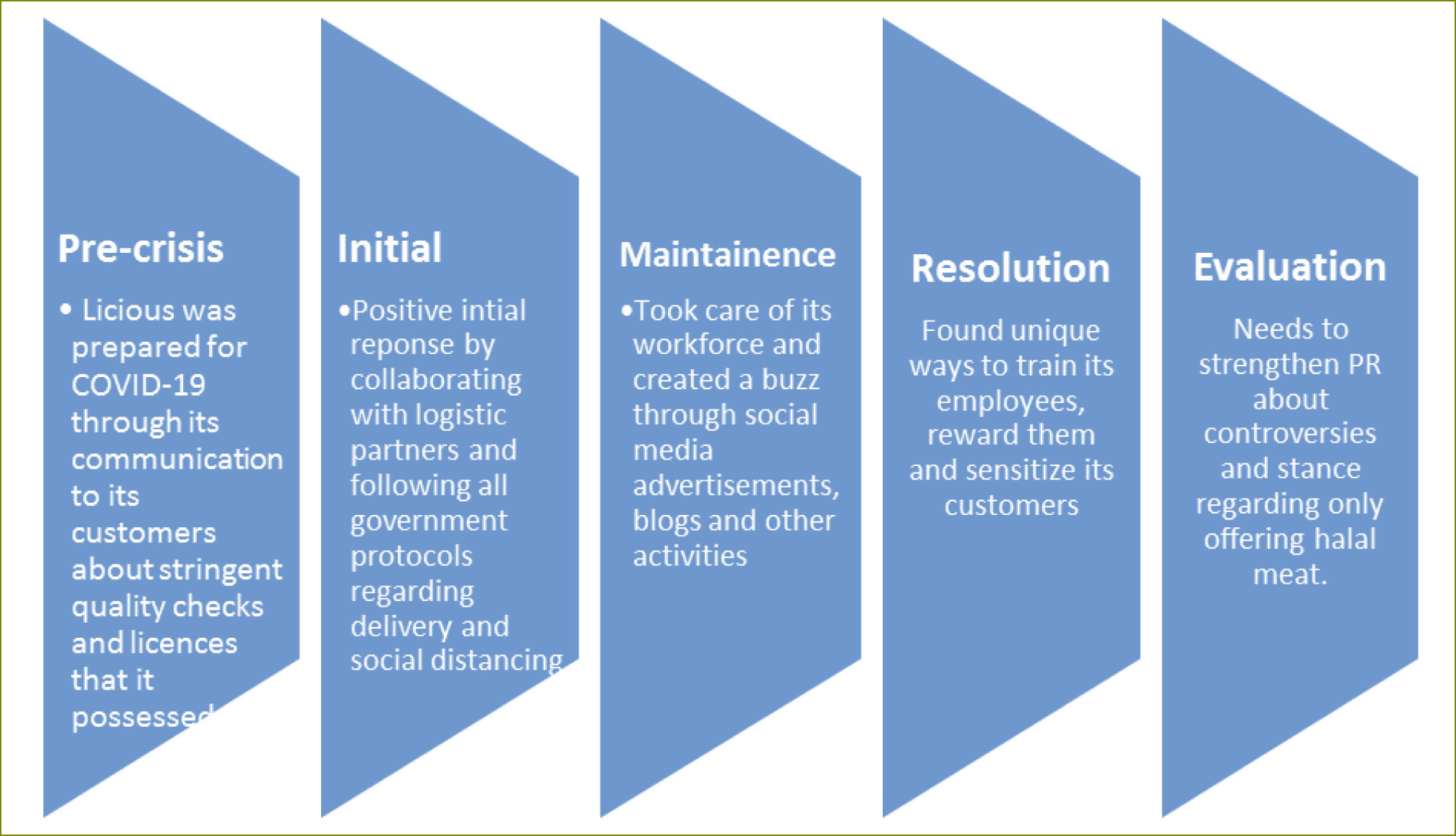
But behind the brilliant sales figures of Licious, even under the lockdown, were a series of challenges and pressing issues that it had to tackle quickly and manage effectively in order to survive the blow of COVID-19 crisis in India. The case would systematically delineate how it dealt with all the challenges vis-a-vis the Crisis and Emergency Risk Communication (CERC) model and what future action can it take to further mitigate the impact of COVID-19 (as shown in Figure 1).
Pre-crisis
Licious was getting well prepared to tackle the pandemic even before COVID-19 hit the Indian subcontinent. On 31-January-2020, it came up with a blog post ‘Coronavirus—what you need to know’ (Licious, 2021). The blog very beautifully blended the information about coronavirus and why was it safe to order meat from Licious. It highlighted that as a Food Safety System Certification 22000 (FSSC 22000) certified brand, Licious implements 150 plus quality checks and stringent processes like procuring only processed carcasses from hygienic facilities that hold valid Food Safety and Standards Authority of India (FSSAI) license. As a general practice and to ensure good hygienic standards, Licious vaccinates workers in production sites routinely every 6 months and arranges frequent health checks for them. As a part of its communication strategy, the company started touting some of its customers as heroes. Through a social media property called ‘Facehunt’, Licious invites feedback and recipes from its consumers. Faces of some of these consumers are put on the packaging of their products to forge solid links with its consumers. Licious keeps a repository of 100 such faces. There have been instances when Licious directly communicated with few of its customers to clarify any misconceptions and apprehensions of its clientele. In addition, all their campaigns are based on either family values or freshness of its products (Licious, 2020).
Initial COVID-19 Response
The initial lockdown phase brought both procurement and delivery to a standstill. The COVID-19 restrictions on mobility have impacted trade in services, ‘mainly services that require proximity between the supplier and consumer’ (Veeramani & Anam, 2021, p. 315). The e-commerce sector in India lost US$400 million worth of sales in the first week of the lockdown as operations were heavily disrupted forcing several platforms, like Flipkart and BigBasket, to temporarily suspend services. The fear of COVID-19 contamination made many employees quit their jobs. Licious lost almost 50% of its workforce. The company faced issues in restarting its operations when vendor plants lost their staff during the pandemic. In the northern India, where supply chains for the company were most impacted, Licous started airlifting their products (primary raw and fresh category). Companies in India largely depend on the might of internal migrant workers who were hugely affected due to the COVID-19 pandemic. The uncertainty and fear, loss of employment and income forced millions of migrant workers in India to go back to their hometowns, thus leaving their erstwhile employers in a lurch. Licious, on the other hand, caught media attention and praise by booking a hotel for 600 employees to keep them in a safe place. The employees were not only kept separately in a hotel, but the whole hotel with the employees was quarantined every day. It was ensured that the employees follow a very stringent process of going from hotel to the office facility and back and absolutely nowhere else. Second, the workers in processing plants were divided into shifts and where one particular set of workers never got to meet the other set of workers (Barefoot Consultancy, 2020). Licious also switched from depending on its in-house delivery fleet to an alternative delivery model, ‘to continue fulfilling business orders, we tied-up with third-party logistics providers like Yulu and Shadowfax’, said Vivek Gupta (Tanwar, 2020). This period also saw Licious making customers aware of their extra care of safety and hygiene protocols that they follow. The employees were taught to follow a stringent process (Bora, 2020). Licious wrote another blog for its customers entitled ‘Covid-19 Update: Why Nothing has Changed for Licious’ (Licious, 2020) In the blog, they mentioned that ‘quality is a way of life here at Licious, and Coronavirus or not, that’s what Licious has stood for right from the beginning’. Through various touchpoints, Licious worked on its crisis communication strategy and put the minds of its customers at ease. While e-commerce was limping back to normalcy in the lockdown, Licious again made headlines in the newspaper for arranging movement pass for its delivery workers so that they could deliver without any hassle or without attracting censure from the policemen guarding movement of the people. ‘That day, it felt like my time to get thrashed had come’, said Singh, 30, a delivery worker for Licious, but the police readily allowed him to pass through after he flashed his pass to them. On the other hand, many companies failed to arrange such prerequisites in the lockdown and drew from the policemen. Just because they were able to successfully communicate to its customers their rigorous hygiene and health standards, Licious experienced deliveries go up to two times with a 30% increase in average order value from customers. ‘Across Bengaluru, Hyderabad, Delhi-NCR, Chandigarh, Mumbai, Pune and Chennai, we have witnessed a 300% surge in demand during the lockdown period’, Gupta said (Bora, 2020).
Maintenance of the Crisis
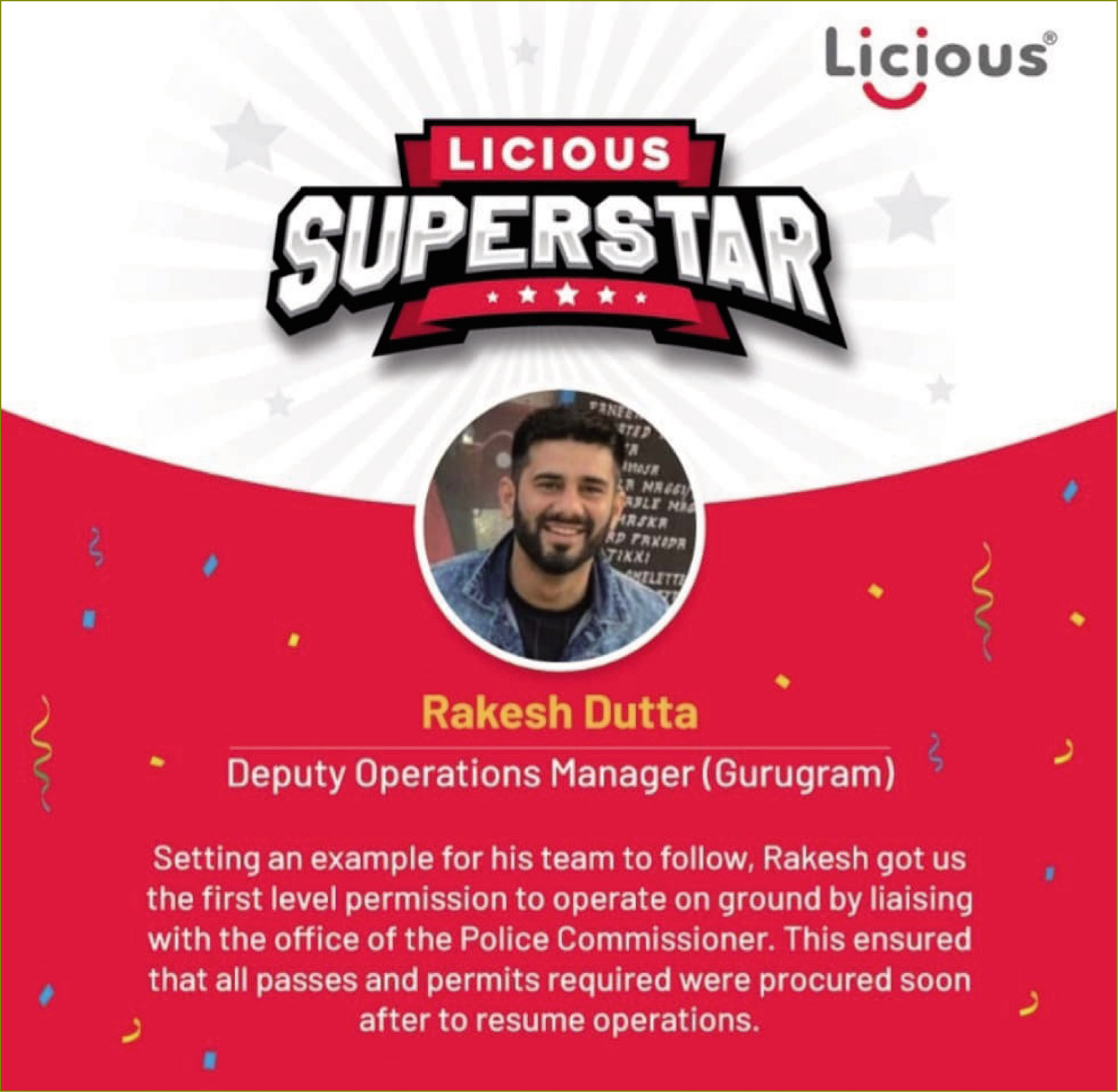
‘During lockdown we lost almost 50% of our workforce and today we are back with 1.5 times our capacity. We have 800 people in our system now’, Gupta said, during a webinar organized by the TiE Delhi-NCR in association with Fireside Ventures. Over a period of 20 days in the lockdown, Licious hired 300 employees which ran in stark contrast to the ongoing slump in the job market. During the lockdown, Licious also launched a new advertisement campaign called ‘Ghar Baithe Baat Badal Do’ on 18 April 2020 which captured the proclivity of Indians to turn into self-proclaimed chefs during the lockdown. Meghna Apparao, Chief Business Officer, Licious, said ‘with lives undergoing a transformation, the only constant in this “new normal” is a home cooked, comforting meal that brings families together. This film is an attempt at capturing all those endearing moments keeping up our spirits in the safety of our homes—the adorable kitchen bloopers, the joy of crafting a new recipe, the excitement of a cooking class over a video call and much more. But most of all, this film is a portrayal of the changing times and the transformation that is quietly seeping into our lives’. Conceptualized by Ogilvy, the campaign struck a chord with the people who were actually indulging in the activity of preparing food at home which was one of the only activities that gave people a sense of normalcy in the lockdown. The LinkedIn account of Licious is called ‘Licious-Born to Meat’ which captures the stories about the founders, senior executives, other employees and customers. The LinkedIn page is a testimony to their commitment to providing hygienic meat to its customers and a good work environment to its employees. It showcases ‘Licious Superstar’—the employees who went out of their way to secure permissions from corporations for delivery, ensured strict hub hygiene protocols and even enabled vendors to reopen their plants and restart the production of packaging boxes (refer Figure 2). The LinkedIn page of Licious even empathizes with its employees by posting a collage of pictures that depicts employees working from home and spending time with family during the lockdown, thus understanding the importance and effectiveness of working from home. On Glassdoor, it has received 4.2 rating out of 5 for its workculture (Glassdoor, n.d.).
Resolution
As the coronavirus is not directly linked to meat (and the precise origin of it is still being debated), therefore, it is imperative that companies who are in the meat business share the correct knowledge among all its stakeholders be it consumers or employees. Post lockdown Licious started educating the general public on the nuances of social distancing through their Instagram profile (Licious, n.d.b).
The delivery boys who worked during the lockdown were acknowledged as ‘Delivery Superstars’ who had risen to the occasion and fulfilled their duties with a smile. Customers were asked to click pictures of the delivery boys and post as a gesture to honour their selfless service. Throughout the lockdown, Licious was very agile in examining the bottlenecks and providing solutions. Vivek Gupta told the The Economic Times as follows:
As a young company, we pride ourselves in our agility and that’s what allowed us to make a few quick amends in our delivery model to suit the situation. Other than moving to the slotted delivery models and forging quick partnerships, we also initiated consolidated delivery to large apartment complexes. This reduced the pressure on the delivery system while allowing us to serve a much larger number of consumers. Our decision to hire hotels to house all employees working in the processing plants during the lockdown, adhering to stringent safety measures, has strengthened our sense of team spirit. In fact, most of our new recruits have come through references from our current employees. (ETBrandEquity, 2020)
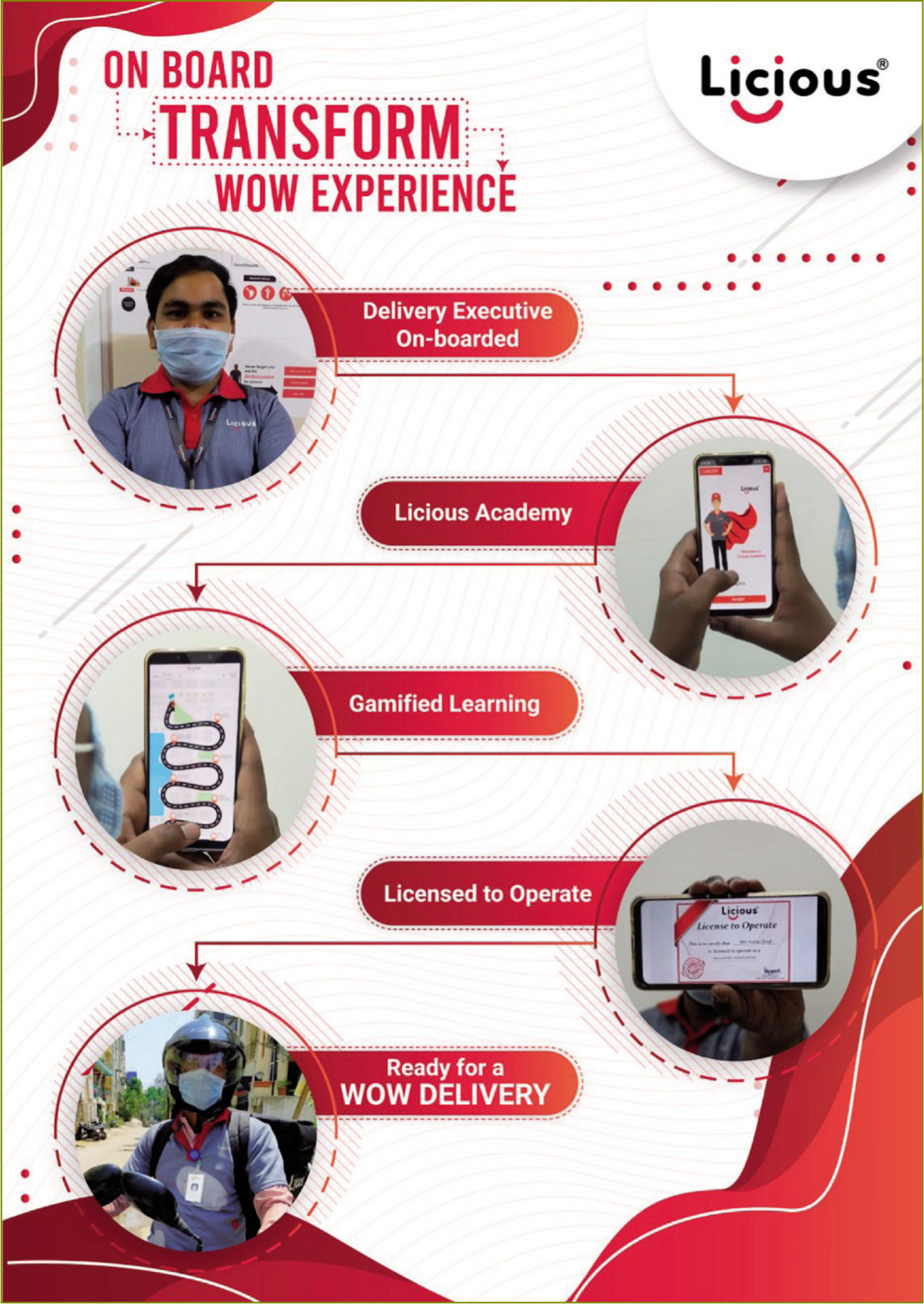
Licious tried to overhaul its practices and processes. It discovered unique ways to train its employees to take on the challenge of powering through the global pandemic. To transform its meat ecosystem, they started another initiative that they called ‘On board Transform Wow Experience’ (refer Figure 3). Right from introducing ‘Licious Academy’, a revolutionary way to transform the delivery fleet, the company made the boys qualify exams through gamification. Later, they were certified to become ‘WOW delivery boys’.
Evaluation
In early March 2020, leading Indian newspapers and news channels reported that the poultry industry in the country was hit hard as rumours of coronavirus with birds, especially chicken, were doing the rounds in various social media platforms. The price of a chicken fell from ₹80 to ₹20, and the jobs of 20 million people employed in the industry were on the line (Bora, 2020). Companies, like Licious and FreshToHome, though did not feel much heat compared to local vendors, once the customers evolved to understand that coronavirus is an airborne virus. In one of the interviews in November 2019 Abhay Hanjura said, ‘We might grow at a relatively slow pace, but it doesn’t matter much. Our focus is to build a food brand out of India, one that is loved and consumed globally’ (Kashyaap, 2020). Licious is one of the biggest business disruptions in the consumer food industry in India. The brand over the last 4 years of its existence has been able to set the gold standard in meat among the suppliers, industry peers and consumers alike, just not only by streamlining the meat delivery ecosystem with stringiest processes but also by establishing a higher order emotional connect with the consumers.
Although, with so much going in its favour since the launch of the brand and especially during the nationwide lockdown, there are certain domains that still need significant improvement. On mouthshut.com which calls itself ‘India’s largest review platform’, Licious has received a paltry 1.7 rating out of 5 by its customers, and only 20% of them recommend Licious (Mouthshut.com, n.d.). The rating and recommendations are a result of 1,498 votes. Another website, wereview.in, gave Licious 2 ratings out of 5 by taking into consideration the ratings from 27 respondents (Teamwereview, 2016). However, the editor of the website gave Licious a generous 4.5 rating out of 5. Licious has also faced its fair share of criticism and customers’ backlash for only supplying halal meat. Halal is Arabic for permissible. Halal food is that which adheres to Islamic law as defined in the Koran. An angry customer wrote an e-mail to Licious for seeking clarification from Licious for only supplying halal meat as its business policy in April 2020. Halal guidelines mandate that only Muslims are employed for butchering and processing the meat which discriminates on religious lines and does not provide equal employment rights to people of all religions. The mail expressed the customer’s sentiments as he wrote:
Are you serving in gulf countries or India? Why halal certified? Only Muslims are buying from your portal? I have stopped ordering on your portal as you are halal certified. To be halal compliant don’t know how many jamatis you have on your payroll. Be secular and Stop being part of this halal economy.
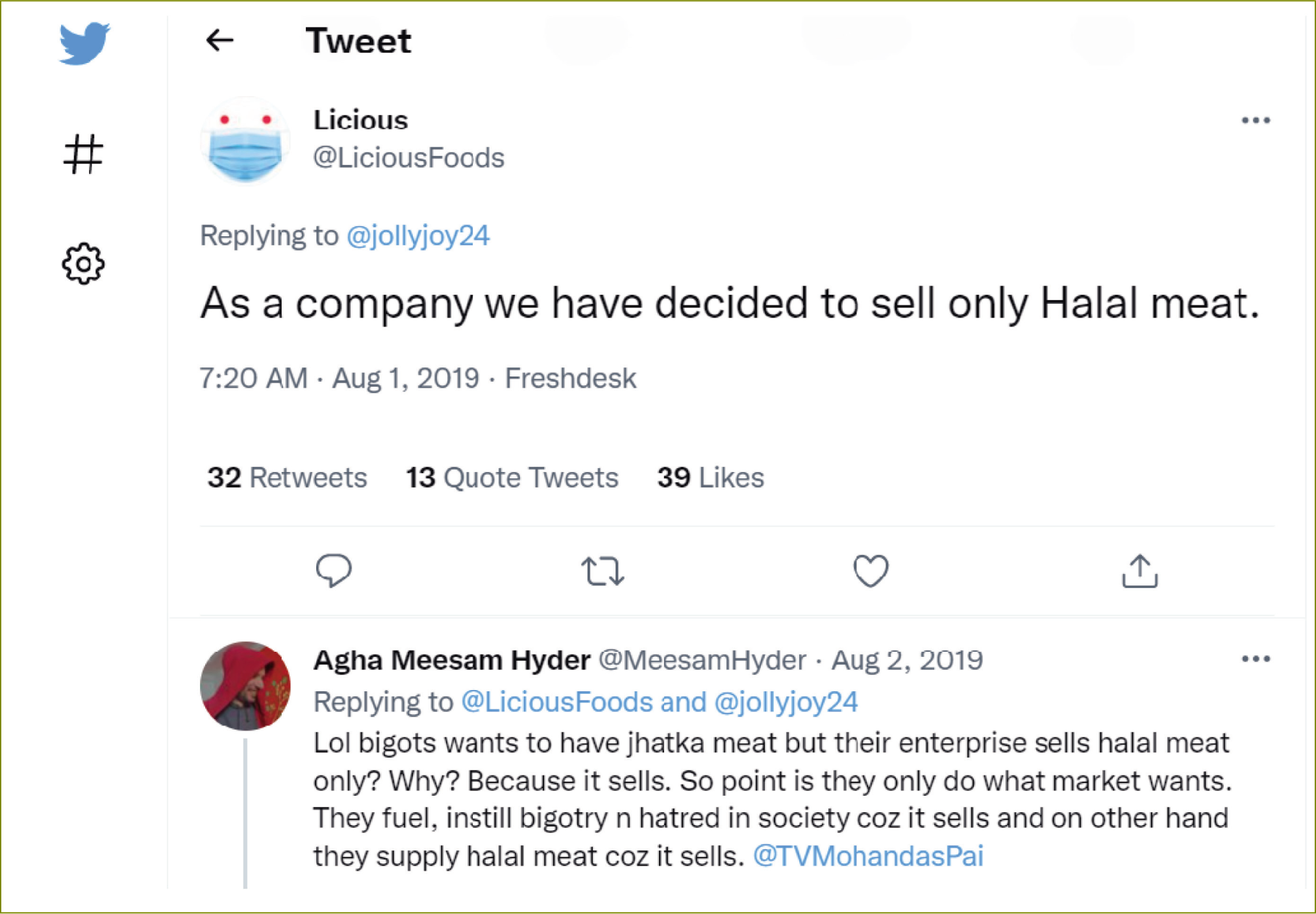
Licious responded back on Sunday, 26 April 2020 through an e-mail addressing to the customer after many meat consumers took to it Twitter to demand answers from the company about their policy. Licious wrote back saying that ‘we have decided to slaughter all our meat in halal way’, thereby maintaining the same stance on their business policy (Licious, 2019, see Figure 4). This is not a singular incident. In July 2019, one Hyderabad-based Hindu customer had wanted to know their meat was butchered in the Halal way or not to which the customer care representative had categorically mentioned that all their meat was cut the halal way (Katyayani, 2020). Thus, such a practice of only serving halal meat to all the meat-consuming Indian population by Licious polarizes people on religious grounds and turns their product offerings into a controversial topic which Licious would want to avoid.
Conclusion
Licious actively contributed to all the five parameters provided by the CERC model for crisis communication. Its strategy to contain the impact of the pandemic during the nationwide lockdown worked well for the company and its employees. It communicated effectively with all its stakeholders to keep their spirits buoyant during the crisis. The case delineates the importance of crisis communication in containing the crisis for an organization and how this aspect can be leveraged as a strength. During all the five phases of the CERC model, namely, pre-crisis, initial response, maintenance, resolution and evaluation, Licious engaged in a number of activities and took sound decisions to power through the COVID-19 crisis. Only, post crisis, Licious needs to look into a few of its problems that existed before the pandemic which it did not tackle successfully. The case has highlighted that although Licious’s crisis communication ability could be commended, its communication during other times need to be worked upon as it leaves behind a considerable gap and scope that requires attention.
Footnotes
Declaration of Conflicting Interests
The authors declared the following potential conflicts of interest with respect to the research, authorship and/or publication of this article: This case was first presented in ICMC 2020 Conference, Greater Noida, India, and has been published in conference proceedings. But, it has been reworked, and an additional teaching note has been written to suit the case centre’s requirements.
Funding
The authors received no financial support for the research, authorship and/or publication of this article.