




Abstract
The article presents the case study of ‘Bombay Mothers and Children Welfare Society’, a non-governmental organisation (NGO), working for the welfare of the people primarily in the area of health, education and vocational training, in both, urban and rural areas of Maharashtra (India). Following a qualitative approach, the article aims to understand the challenges encountered by the organisation due to uncertainties induced by the COVID-19 pandemic situation in India and its responses. The study shows that innovative business strategy and participatory-public-philanthropy-person (PPPP) model of sustenance helped the organisation to transform it into a ‘sustainable organisation’. Several long-term measures undertaken with its focus on innovation, stakeholders’ engagement for strategic decisions, community participation, collaboration, and business-like behaviour enabled the organisation to deal with the uncertainties in ‘normal times’. The legacy of good work done by the organisation helped it to gain the trust of all the stakeholders involved. During the COVID-19 crisis, the organisation undertook several short-term measures immediately to respond to the situation and received unconditional support from the staff and also from the community. The outcome was organisation and community resilience, which helped them to deal with the uncertainties in normal times as well as emergency/crisis situation. This article developed a framework for the NGO to deal with uncertainties for achieving their mission during a crisis situation like COVID-19. A combination of long-term and short-term measures, and its focus on innovative business strategy and PPPP model of sustenance, is the clear reflection of the entrepreneurial approach adopted for community development and decisions made by the leader of the NGO played critical role. Thus, the study suggests to follow ‘judgement-based approach towards entrepreneurship’ for understanding NGOs’ actions in crisis situation. The findings provide learnings for NGOs, interested in creating sustainable social organisation, and help them to prepare better to deal with uncertainties during a crisis situation.
Keywords
Introduction
Non-governmental organisations (NGOs) are a primary institutional structure for delivering aid (Kuruppu & Lodhia, 2019) and widely considered to be more successful in reaching the poor and in poverty alleviation (Rajasekhar, 2000). National, ‘home-grown’ NGOs, which can also be ‘local’ community-based NGOs, are important partners in understanding local contexts (Kuruppu & Lodhia, 2019). In India, NGOs became popular, especially after the 1970s, partly because of the limited success of the earlier government policies (Rajasekhar, 2000). The perspective of NGOs widened from charity and welfare to development and to sustainable development and empowerment, which has been influenced by the donor agencies and the Indian government (Rajasekhar, 2000). NGOs are important civil actors in societies’ emergency and disaster responses, such as public health crises, environmental disasters, humanitarian crises or international financial crises. Thus, no discussion of poverty, equality or development today is complete without considering the role of NGOs (Li et al., 2021; Michael, 2002). NGOs played vital roles in societal responses to the COVID-19 crisis too (Li et al., 2021). The coronavirus (COVID-19) has exposed the world to uncertainties that have not been experienced before. More than 190 countries, more than 10 million people, one have been infected and for the past six months, country-after-country has been inflicted by the COVID-19 pandemic at different levels, each imposing massive costs and unfathomable uncertainties. The COVID-19 did not respect any boundary conditions (Etemad, 2020). It impacted every individual and organisations all over the world.
In fact, uncertainty is a fundamental condition of everyday life, and NGOs are not the exception. NGOs face several uncertainties due to internal and external factors in ‘normal times’. The global economic and political contexts are changing. There are evidences that NGOs in lower-middle-income countries and emerging economies are facing sustainability challenges due to changing aid patterns for development (Arhin et al., 2018). Several traditional donors are gradually withdrawing their supports to NGOs, and giving new priorities and emphasise on achieving value for money. This changing context of aid architecture has created uncertainty for the NGOs, the subset of civil society organisations (CSOs). As a result, the topic of civil society sustainability has gained traction over the past few years. However, how different organisations are responding to and strategically repositioning themselves to remain sustainable is very limited and continue to deserve further attention (Arhin et al., 2018). In particular, an understanding of how organisations are responding to uncertainties induced by the crisis situation like COVID-19 pandemic to remain sustainable is extremely limited. This is important to study because a crisis poses additional challenges for the organisation. Thus, the present article aims to bridge this gap by presenting the case study of Bombay Mothers and Children Welfare Society (BMCWS), Mumbai, an NGO working in urban and rural areas of Maharashtra in India.
Conceptual Understanding
NGO
NGOs are the subset of the broader non-profit sector (Werker & Ahmed, 2008) and CSOs (Arhin et al., 2018). However, the definition of NGO is contested. The frequent use of terms, such as ‘third sector’, ‘non-profit’, ‘charity’, ‘voluntary’ and ‘civil society organisations’ further complicates a clear definition (Arhin et al., 2018). There are different types of NGOs. NGOs can be, broadly, classified into four major categories: (a) operational or grassroot NGOs, (b) support NGOs, (c) network NGOs and (d) funding NGOs (Rajasekhar, 2000). For the purpose of the study, the organisation registered as a charitable trust working for the community development at the grassroot level is considered as an ‘NGO’.
Uncertainty
The concept of ‘uncertainty’ has been of interest for the researchers, particularly in areas concerned with decision-making and knowledge (Wakeham, 2015). The concept of ‘uncertainty’ has been used in economics, psychology, sociology, anthropology, management (McMullen & Shepherd, 2006; Wakeham, 2015). In a broader sense, uncertainty refers to an epistemic state at the limits of knowledge (Wakeham, 2015). It is concerned with ‘what is known or believed without certainty’. It is also concerned with ‘what is not known’. There are subjective and objective dimensions to uncertainty (Tannert et al., 2007). First, there are the subjective dimensions of uncertainty. An individual may experience uncertainty with regard to his or her own knowledge about some particular topic. There are questions of not only how the experience of uncertainty drives or influences behaviour but also how social context shapes the perception and experience of this cognitive and emotional uncertainty. Second, there are the objective dimensions of uncertainty, which presume a world out there that is knowable only to a degree. Uncertainty, in this sense, is not necessarily something felt, but rather a feature of living in a complex world. Within the social sciences, researchers have emphasised different aspects of uncertainty, depending on their field and their research subject. For the purpose of this study, following Rasmussen, and Sahay (2021), we have conceptualised ‘uncertainty’ as a concept, which concerns ‘a situation of inadequate’ rather than ‘absent information’, because there is always some degree of contextual information around the setting where the phenomenon is unfolding and being studied.
Sustainability of NGOs
Just like the concept of NGO, there is no agreed definition of ‘what sustainability means in practice?’. Many scholars see ‘sustainability’ largely in terms of availability of funds, it is more than just availability of funds and goes beyond survivability (Arhin et al., 2015). Literature emphasised on the holistic and multidimensional nature of NGOs’ sustainability (Arhin et al., 2018). Following Hailey and Salway (2016, p. 581), Arhin et al. (2018, p. 351) define ‘sustainable NGO’ as an organisation ‘that can continue to fulfil its mission over time and in so doing meets the needs of its key stakeholders—particularly its beneficiaries and supporters’. Sustainability is as an ongoing process rather than an end in itself. This is a multidimensional construct, comprising mainly four dimensions: (a) financial (the continuous availability of financial resources), (b) operational (capacity, technical resources and administrative structures to operate programmes), (c) identity (the long-term existence of organisations themselves) and (d) in relation to interventions (the continuity of results, impact of specific projects after its completion or funding ends) (Arhin et al., 2015).
Changing Global Context, Uncertainty and Challenges of NGOs
There is no doubt that NGOs play a critical role in the social development of the country. However, due to changing global social, economic, political contexts, NGOs are facing several challenges. These changes are happening within the countries also. These changing contexts are creating several challenges for the NGOs. In other words, there is nothing like ‘normal times’, as the changing context create uncertain situation for the NGOs, and present multiple challenges to deal with.
Decline in Public Giving and Philanthropy and Change in Mindset of New Generation Givers
It is assumed that the public giving and philanthropy will continue to grow, but not at the same pace as the growth in the number of CSOs internationally. Further, a new generation of individual givers see their donations not as ‘philanthropy’ but as ‘investment’, with the inherent expectations that go with such a shift in thinking (Hailey & Salway, 2016). In addition, there is growing interest in developing alternative enterprise-based models that reduce dependence on official aid. This trend and shift in donors’ mindset present challenges that NGOs need to address.
Lack of Community Participation
The literature has emphasised the importance of community participation for the successful development activities of the NGOs (Islam et al., 2013). However, it has been observed that many NGOs emphasise the global knowledge in their development interventions because of its high productivity and funding opportunity. In these cases, the NGOs’ interventions partially failed to secure participation of the local people in their development activities. In other words, NGOs’ interventions for community participations are distorted due to globalisation. For example, NGOs in developing countries such as Bangladesh are mostly depended on foreign donations and used global frameworks in development activities, which might not consider the local needs and local voices (Islam et al., 2013).
Changing Global Context of Aid Landscape and Sustainability of NGOs
As part of the changing aid architecture globally, donors are changing their funding modalities. They have a high preference channelling their support through international non-governmental organisations (INGOs) rather than local NGOs. In addition, the level of aid is constantly decreasing. The changing context of giving aid is producing an uncertain context for many NGOs as well as some opportunities (Arhin et al., 2018). Hailey and Salway (2016) observed that the issue of sustainability is becoming more important for civil society, as NGOs are facing a range of political, regulatory, organisational and financial challenges and emphasised the need of finding alternative routes to sustainability.
Few studies explored the NGOs’ strategies to attain financial sustainability. For example, in the context of Ghana, Arhin et al. (2018) showed six main strategies and efforts made by NGOs to overcome the challenges of financial sustainability in the context of the changing aid architecture. There were (a) eggs-in-multiple baskets strategy; (b) cost-cutting strategy; (c) strength-in numbers strategy; (d) security-under-partnership; (e) credibility-building strategy; and (f) visibility-enhancing. The study gives important knowledge about NGOs’ strategies for attaining financial sustainability in uncertain context of aid availability but has limited application in understanding how NGOs cope up with the uncertainties induced by the emergency or crisis situation. The study also ignored the other dimensions of sustainable NGOs and focussed only on financial sustainability.
Multi-fold Challenges of NGOs During Crisis/Emergency
Uncertainty defines our time, and it could be related to climate change, the threat of war, disease outbreaks, stock markets or political settlements (Rasmussen & Sahay, 2021). NGOs are important civil actors during emergency and disaster situations (Li et al., 2021). In addition to the existing changing aid architecture, emergency and crisis situation further adds to the create uncertainties for the organisations, which leads to additional challenges for the NGOs. For example, during the COVID-19 response, lockdown measures to control transmissibility of the infection, led to economic and social hardships in many countries, as people could not engage in their livelihood-generating tasks. These gaps between design visions and how the actual product functions on the ground in situated contexts can be understood as reflecting a form of uncertainty (Rasmussen & Sahay, 2021). Dedicated to their social mission, many NGOs across the globe responded to the COVID-19 pandemic crisis, but they worked under extreme stress and faced multiple challenges. ‘Since the start of the COVID-19 pandemic, they’ve been working to provide emergency relief, keep staff and constituents safe, and stabilize their financial health—all while staying on mission under extraordinary stress’ (Waldron et al., 2022, p. 1). It is important to understand how uncertainty is co-constituted with social, institutional and political orders, which requires research approaches focused on context and local practices (Rasmussen & Sahay, 2021). Their challenges, stress and also coping strategies during COVID-19 pandemic are critical to understand, but unfortunately, there is a limited knowledge available on these aspects.
Recognising this gap in the literature, the present article aims to understand the challenges faced by the NGO and also its coping strategies to deal with the challenges due the uncertainties during COVID-19 pandemic.
Research Context and Research Question
NGOs were also not exception in India, when there was a greater need of those NGOs. Most faced problems and closed down, but some somehow coped and survived, and few presented exemplary example. These cases need to be analysed in detail. Thus, the present article discusses and analyses the case of BMCWS, a NGO, working in Mumbai and rural areas of Maharashtra, India for its uniqueness. This organisation not only survived and sustained COVID-19 pandemic successfully, without stopping its existing social initiatives, but also contributed more to help the people during that crisis situation. It becomes important to share these learnings with the world, to help them to prepare better to deal with the uncertainties in crisis situation. Thus, the article aims to understand, ‘How did Bombay Mothers and Children Welfare Society (BMCWS), an NGO, deal with the uncertainties and challenges caused by the COVID-19 pandemic?’. These learnings will help other organisations, in particular, the NGOs, to prepare better to deal with uncertainties in order to create sustainable change during similar crisis situation like COVID-19 pandemic.
Research Methodology
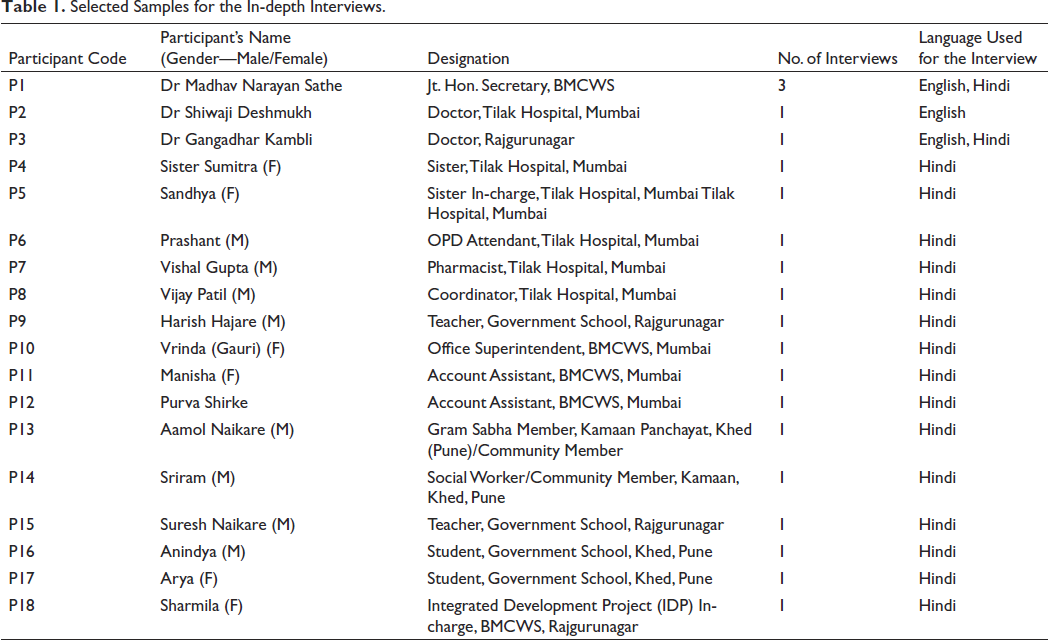
Considering the subjective nature of the research question, the qualitative methodology has been adopted in the study. According to Yin (2003, p. 13), ‘A case study is an empirical inquiry that investigates a contemporary phenomenon in depth and within its real-life context, especially when the boundaries between phenomenon and context are not clearly evident’ and it is best suited for ‘how’ and ‘why’ questions. Thus, the case-study research design has been followed. Further, reason for using single case study is, the case being ‘unusual’ is emphasised (Ebneyamini & Moghadam, 2018). During the COVID-19 crisis, when the lockdown was imposed worldwide, many organisations, especially NGOs, were severely impacted and struggled to survive. During the same crisis, however, few organisations set the unusual successful example of sustenance and the value creation for the stakeholders. BMCWS, a public charitable trust, is one of them. Thus, BMCWS has been selected as ‘case’ for conducting the single case study. In the next section, case description is presented for providing the contextual information about the case, BMCWS. The qualitative data is collected, primarily, through in-depth interviews in English and/Hindi language, using interview checklists from different stakeholders involved—Jt. Hon. Secretary of the organisation, employees (doctors, nurses), teachers engaged in government schools for teaching tribal children, community workers, tribal students and other community members. The length of the interviews varied from 30 to 55 min. All the interviews were tape recorded with their consent. Later, the interviews recorded in Hindi were translated into English language for the analysis. The selected samples for the interviews are presented in Table 1. The data are also collected through observation by visiting hospitals in Mumbai and Rajgurunagar, and schools in the rural areas of Rajgurunagar. The research ethics have been followed throughout the study. In addition, secondary sources of information, such as websites, internal reports, existing published articles on the same case and so on, are also collected to supplement the primary data. All the interviews are transcribed and analysed using coding method to identify emerging themes and sub-themes. At the final level of analysis, the article attempts to develop a framework for the NGO to deal with uncertainties for achieving their mission during crisis situation like COVID-19.
Selected Samples for the In-depth Interviews.
The Case Description: BMCWS, Mumbai, India
The Bombay Mothers and Children Welfare Society, a social organisation, was founded by Dr Bapusaheb Mhaskar in 1919 in Mumbai (Maharashtra). It is registered under the Societies Registration Act, 1860 and the Bombay Public Trust Act, 1950. It primarily operates in the areas of health and education, vocational training in the urban and rural areas in and around Mumbai and Pune in Maharashtra state, India (
The main sectors of operation are as follows.
Health Low-cost Hospitals (Urban and Rural Areas)
BMCWS runs three low-cost ultramodern hospitals: one in Mumbai and two in rural areas of Maharashtra. First, Dr Tilak Hospital Worli, Mumbai is 40-bed hospital, catering to low and lower middle-class population. Second, Rajgurunagar Rural Hospital is a 20-bed hospital, catering to low and lower middle-class rural population. Facilities include Computerised Pathology, and modern ophthalmic care. Third, Bhilawadi (Sangli) Rural Hospital is also a low-cost medical care in a small village. Antenatal and post-natal care in remote villages saves time and money for these farm workers. Compassionate and affordable medical care is USP of the organisation.
Child Care Modern Creches in Mumbai
Education
The BMCWS has installed e-learning systems in 344 Zila Parishad schools. It also conducts MS CIT and MS Office courses for the rural youth. They have a mobile van going around villages teaching computers. It also provides nurse/dai training course for girls. They have given educational support to 18 deserving students and distribute school kits. Many students have benefitted by our nutritional support and bicycle distribution.
Cancer Patient Convalescent Homes
Many emote parts of India do not have cancer diagnostic and treatment centres. Tata Memorial Hospital and its reputation drag one and all from every corner of India to Mumbai. Mumbai welcomes them all, but harsh realities of city soon prevail and sadden them a great deal. Difficult survival adds a lot to the high cost of treatment. Unable to meet the cost of staying, many lands on footpaths and many leave with the treatment incomplete and embrace the eventuality in despair. Bombay Mothers and children welfare society tries to support them by providing clean and hygienic accommodation at Dr Mhaskar and Dr Tilak hospital. Facility is open to all and existing for 35 years.
Comprehensive Low Cost and Sustainable Rural Development Program in 91 Villages
Low cost, comprehensive, innovative, modular and scalable programme initiated in 2008 in 64 villages has spread to 91 villages now. This covers a population of 500,000. This is inclusive of 42 tribal villages. This works under five heads: health, hygiene, education, vocational training, and meaningful environment.
Dr Sathe (P1) mentioned,
‘We have nine units under the umbrella with 120 workers. 3 hospitals, 2 cancer patients’ convalescent homes, 3 crèches and a rural development program in 92 villages.’
Results/Findings
The first nationwide lockdown in India was announced on the evening of 24 March 2020 for 21 days initially. However, it continued for a long time. The movement of people and economic activities in the country was severely restricted during the lockdown period. It severally impacted the people and the organisations. The BMCWS was not an exception. The organisation was committed to provide their services during this crisis; it faced many challenges due to COVID-19 crisis. The data analysis shows the interesting findings in regard to dealing with uncertainties induced by COVID-19 crisis situation. It shows that several measures have been taken in the beginning itself, and organisation continued with these long-term measures, and other measures were taken, especially during the COVID-19 pandemic crisis and nationwide lockdown. Thus, the findings of the study are divided into three broader themes.
Challenges Faced During COVID-19 Pandemic Crisis Situation
‘Fear of Collapse’ for the Organisation
The first and foremost thing was, ‘Fear of collapse’. Dr Sathe (P1) mentioned,
March 2020 came with a shock of 440 volts to entire world. Small Charitable trust felt it like 1000 volts. COVID arrived and everything was shut down in 24 hrs. Only hospitals were allowed to function, rest all centres were shut down. Great shock as we survive on very small corpus. Fear of collapse gripped instantly. Will I be able to give salary to my workers? They are fully dependant on that for survival as they do not have reserves. How will we sustain the overall as organisation?
Lack of Confidence Among Staff Due to COVID
Hospital staff were scared initially. No one was very willing to work. Staff were not accepted back to their homes and societies after finishing their duties. Dr Sathe (P1) said,
Resignations of field staff due to fear and family pressures was big issue. We were not prepared for work from home as necessary infra was not available with staff, and attendance was not possible due to lockdown. We had to be innovative to generate confidence amongst workers. Most of surrounding hospitals were shut. We continued our services dutifully.
Increased Operation Cost During Pandemic
Dr Sathe (P1) said,
Disruption of all normal activities, despite grossly reduced income, we had to continue the medical facilities during pandemic as a social organization. We were mandated to be more active during such health calamities. Awareness about COVID was the need for underprivileged. Financial problems were paramount as we had decided to pay full salary to everyone on 1st of every month.
The operational cost increased significantly during COVID crisis due to multiple reasons. He said,
PP suits, disposable material only raised the patient cost substantially. We could not raise the charges as money was a constraint for everyone. Artificial shortages increase the cost of material further. Workers were staying in hospital only. The cost had to be borne by hospitals. We must do their RT-PCR test. Negative report was their entry pass to home. Each test cost was ₹ 2,600 in early days.
Fear Among Doctors
The fear of COVID grabbed doctors also. Dr Sathe (P1) mentioned,
The doctor working in Rajgurunagar hospital ran away at midnight. Hospital without doctor was not possible. No hospital in Rajgurunagar was working. All the hospitals were taken over under the Pandemic Act. So, the patient flow increased in our hospital. We requested the Government officials to stop doctor from running away, but our systems and integrity of individuals are never strong.
Callous Behaviour of Ungratefulness During Crisis Situation
Despite strong commitment and best effort of the organisation to deliver the services, there were occasions, when the organisation encountered unpleasant behaviour from its target population. Dr Sathe (P1) said,
Looking after locked cancer patients’ welfare was a big problem till, they could leave to their destination. False complaints and allegation of extortion by far east state patients to their governments was an unexpected issue. This was mainly to get free treatment by creating a pressure in absolute wrong manner. These all patients are provided exclusive facilities with great compassion. We provided food and other need without any gratis.it was very sad occasion for organization. Callous behavior of ungratefulness was hurting. Despite running best creche facility in Mumbai for years none of beneficiaries ever enquired or offered help. Only 6 parents paid fee. Our beneficiaries are middle class educated. We requested 25% fees, but none replied. This attitude will compel us to keep in mind while future fee structuring.
Despite facing these challenges, the organisation with its strategic orientation dealt with uncertainties and survived the COVID-19 crisis.
Challenges Faced by the Target Stakeholders
The COVID-19 pandemic contributed additional problems for the target stakeholders. However, it was realised that middle-class working families suffered less as compared to rural and tribal communities, as they had to work from home. Dr Sathe (P1) elaborated,
We were not able to do justice though our hospitals, where open patients were scared to get out and had to rely on teleconsultations, as most of them do not have data enough for video. Rural kids suffered most as education came to stand still. Online was not possible due to unavailability of smartphones and absent internet. Feel bad for them. Rural communities pushed in financial constraint much more than city people. Tribals were miserable.
Due to poor socio-economic background of most of the villagers, and poor infrastructure development, they faced more challenges.
Long-term Measures and Structural Changes
The study shows that the BMCWS initiated lots of structural changes within the organisation with its long-term orientation of creating sustainable organisation, especially when Dr Madhav Sathe (P1) acquired the leadership position in the organisation.
Focus on Creating ‘Sustainable Organisation’ for Achieving the Social Vision
In the very beginning, when Dr Madhav Narayan Sathe joined the charitable organisation as Secretary, he strongly realised the need of creating sustainable organisation to achieve its organisational vision. He (P1) said,
For me, “sustainable social organization” means two things: first, sustainability of the social projects, and second, it should be financially sustainable through self-generated income. Starting projects and then showcasing sustainable projects attract more funding.
He further elaborated, ‘We were sustainable with all functioning unit. Consciously we had morphed the charity into sustainable social enterprise. We struggled many years initially, but last few years were simply great. Little surplus generated allowed us to develop our Rural development program in an innovative way.’
This is evident in almost all the projects of BMCWS.
Shifting Focus from ‘Not-for-profit’ to ‘Not-for-loss’ in Charitable Organisation
After joining BMCWS, Dr Sathe changed the normal way of any charitable organisation’s functioning. He replaced the concept of ‘not-for-profit’ with his newly introduced principle ‘not-for-loss’, in the charitable organisations towards attainting the goal of creating sustainable social organisation for achieving the organisational vision. Following the principle of ‘not-for-loss’. The BMCWS has taken up several strategic philanthropic project initiatives in the urban and rural areas of Maharashtra. He initiated Creches and established these as great earning centres for the organisation. He believes that charitable organisations should do away completely with the tag of not-for-profit.
Purva Shirke (P12) also mentioned, ‘Donation is never spent on salaries of the staff. For salaries, the organization is self-sufficient. We generate income for that.’
The organisation generates its own income through the various initiatives to financially sustain the organisation.
Focus Not on ‘Donation’, But on ‘Impact Investment’ and ‘Impact Dividend’
The BMCWS is a charitable organisation, where the primary source of fund is donations. However, Dr Sathe (P1) shifted the focus of the organisation from ‘donation’ to ‘impact investment’ while raising funds. He initiated the concept of ‘impact dividend’. He said,
Once you show to the donors that how their donation has been utilized to create sustainable social impact, and distribute ‘social divided’, the impact investors get a full satisfaction, and feel-good factor generated in their minds helps to keep them involved again and again. We collect 15–20% contribution from villages this helps us to make more work than committed. We received Impact investment for 100 schools solar project; we will get 15% funds from villagers and can do 16 more schools. These extra schools, is a social dividend. We present a certificate to the impact investors. This is a transparent method to generate confidence in investors mind about utilisation of funds.
This innovative approach of building strong trust with the donors is unique to the organisation.
Collaborative Approach with the Government
The organisation believes in the collaborative approach towards addressing the social issues. Thus, it developed strong collaboration with the government to address the social issues. Its education intervention in the tribal schools of Rajgurunager is the clear example of this collaboration. The educational classes are conducted by the government teachers in the government schools’ premises, but the all the innovations of e-learning contents are developed by the organisation. These are functional with the help of solar power installed by the organisation, in the absence of electricity in the rural areas. The students are taking interest in their education. ‘By adopting innovative methods for problem-solving, these initiatives bridge the gaps in the government-led programs’ (Reji & Sathe, 2021, p. 283).
Focus on Team Members’ Growth and Career Development
The BMCWS does not believe in always hiring highly educated talents from the big branded institutions, rather it focuses on recruiting passionate people from the local and regional areas, and training them, especially for the mid- and lower cadre staff. They believe in organisation vision. Once they get trained and experience, they are promoted to higher grade in the organisation. Many staff recruited at the lower level grade like drivers are now promoted to the higher level, and taking responsibilities of the entire computer system network of the organisation after getting trained. One of the drivers in the rural area of Rajgurunagar is now also taking responsibility of mobile van also for computer training. Several of them progressed in their career being the part of the same organisation. One of them, Prashant (P6), 24 years old, currently working as an OPD Attendant at BMCWS, mentioned,
I came from a village of Kolhapur district of Maharashtra and joined the organization as a security guard in the year 2015. But currently I am working as OPD Attendant in the organization. I was promoted as OPD attendant last year in 2022. After joining the organization, I got lots of learning opportunities. I learnt many things in these years, like how to talk to the patient, how to guide them, what facilities we can provide them etc. Last year, after the promotion, I got the position of OPD attendant. I never imagined that it could happen, means progress from security guard to OPD attendant. Apart from OPD, I also take care of the cancer patients, who are staying here. They come to Mumbai from different parts of the country for their treatment. I am very happy. I am always ready to learn new things. Everyday, we get to learn some or the other thing here. I will not move anywhere from here. I know, I can grow further in my career here.
Similarly, Vijay Patil (P8) joined the organisation as a security guard, and now, he is working as a coordinator after all his learning and promotions.
Prashant (P6) mentioned, ‘During normal days also, if we need leave on urgent basis for personal emergencies, the organization immediately gives us leave. They always take care of us.’
Vishal Gupta (P7), pharmacist, also said, ‘Here, if we commit mistake sometimes, our seniors make us understand. They never scold us. For any emergency, we just have to inform our seniors, they give us leave. We find family-like environment here. They always support us.’
Most of the employees have been working since years with the organisation. They are so satisfied while working there that they never thought of moving out of the organisation. Sister Sumitra (P4) has been working there since year 1995, even before her marriage. Vrinda (Gauri) (P10), 40 years old currently, also joined the organisation in the year 2008, 14 years ago, as an Account Assistant, and was getting ₹ 3,500 monthly salary. Today, she is Office Superintendent and earns ₹ 30,000 salary per month. She said,
Sathe Sir contributed a lot in our personal development. He constantly used to give us new responsibility on our soldiers, and we learnt constantly. Sir always tells us that there is nothing that we cannot do. Nothing is impossible. He supported us a lot, that’s why we have grown. Many MBA students come here. We have done only BCom, but we have to make them understand. We have got lot of experience here. I never want to leave this organization. When I joined this organization, I had a small baby, I used to keep my baby in organization’s creche itself. During my difficult time, this organization gave me immense support. Today, I can decide to move out, but will never do that. I get satisfaction here. Here, I get to learn new thing every day. If we encounter any problem, Sir guides us to solve that problem. We learn to solve every problem logically under his guidance. We belong to middle-class families. So, we need to work for our finances. We cannot devote time for social work separately. We get satisfaction while working here, because we get everything here—monthly salary, satisfaction of working for the social cause and also learning opportunities under the guidance of Sir.
Nurturing local talents and helping them to learn, grow and progress in their careers, and providing support in their difficult times, helped the organisation significantly to get satisfied, loyal and committed employees. They are always willing to help the organisation.
Close Engagement with the Stakeholders Before Taking Strategic Decisions
Dr Sathe always makes sure to involve all the concerned stakeholders in the discussion before taking any strategic decision, whether it is related to initiating any organisation’s policy or the social project initiative. He always discusses the problem with the stakeholders first to find its solution with their participation. Purva Shirke (P12) working since as Account Assistant in the organisation, said, ‘Sathe Sir always encourages us to participate in the discussion. He needs everyone. He listens to all and then take any decision.’
In fact, some of the initiatives were started because of the insights shared by their highly motivated stakeholders like government teachers. The teachers understand the importance of the e-learning platform for the students. The organization used teachers to convince Gram Sabha. The teachers became the agents to convince villagers for the developmental initiatives. Once villagers are convinced, Gram Sabha takes decisions and gives permission for the new initiatives. Then, the government cannot deny. The stakeholders take ownership and happily extend their support for the success of the social projects. This is evident in all their social initiatives. For example, educational initiatives in the tribal schools, community development projects in Rajgurunagar and so on. In this way, they are focusing on the sustainability of the organisation and its social initiatives. Mr Suresh Naikare (P15) is one of the motivated teachers, who took initiative in many of the projects, like learning Hydroponic Agriculture for giving training to the villagers.
Trust and Rapport Building, and Community Participation for the Sustainable Projects
All the social projects are contributory and sustainable with the help of community participation. Donation is never used for the survival in the organisation. It is always used for initiating new social projects, and its continuity or sustenance is ensured by the participation of the community. In all the projects of rural development, community members contribute certain preconcentrate, that is, 15–20%, on a regular basis for its sustenance. The highly motivated teachers carry the breakfast for the students to the schools. The teachers, the villagers—the entire community takes the responsibilities and accountability of managing these projects on their own. There are four pillars of their success—(a) teachers, (b) Asha workers, (c) Aanganwadi workers and Sarpanch. Aamol Naikare (P13), who is a Gram Sabha member as well as community member in Kamaan Panchayat (Khed), Pune, mentioned about the organisation’s work,
We get little fund from the government, which is not enough for three schools. BMCWS provides bags, books, breakfast for the students. The work of this organization is very good. Since, 2020 this organization has been working in Kamaan. Once they start working, you don’t need to see anything. The organization conducted blood camp. 75 people donated blood. Ambulances come once a week on regular basis. The patients from the villages go there and collect medicines free of cost. In case of hospital admission, ambulance takes care of the patients to take them to the hospital and admit them. The organization has given many things—playground for the school students, toys, solar panel for schools, e-learning platform, sports facilities etc. for the students.
Another community member, who is also a social worker at Kamman, Khed, Sriram (P14), said,
Earlier the students used to drop out after 4th class, because from 5th class onwards they had to travel 4–5 kilometres to reach the school. But, due to introduction of e-learning, students started taking interest in the education now. They are motivated to pursue their education further. Nowadays, students continue their education after 4th class also. Many of the students pursued higher education. In fact, few girls completed nursing from Pune, and now some of them are employed in the same organization, and few are working in the government hospitals. Now parents also realize the importance of education and take interest in their children’s education.
With its work, the organisation was successful in establishing strong trust and rapport with the villagers and other stakeholders, and they are always ready to support the organisation and contribute from their side to maintain and sustain the projects.
Innovative and New Experiments for Improving the Lives of the Village Community Members
The constant thinking of Dr Madhav Sathe to improve the lives of the people in rural areas, led him to do multiple experiments. Starting from digitalisation of the entire syllabus for the government school students in rural areas to involvement of school teachers in teaching music to these students—all the examples of his experiments. Recently, the organisation distributed musical instruments to the teachers, who will use these for teaching music to the students of the government schools in Rajgurunagar. The idea is to expose the children to multiple areas and give them the opportunity to explore their real interest. Also, to mitigate the agricultural risk, the organisation distributed five fruit trees to each of the families below poverty line in Rajguraunagar. These trees are planted in their backyard. Approximately 6,000 trees are planted in last 5–6 years. These people are mostly agricultural labourer. If there is a drought situation, they will have fruits to sell for their livelihood. Dr Sathe (P1) said, ‘Insurance is provided in advance to mitigate the risk.’
Recently, the organisation started giving training to these teachers on hydroponic agriculture. The idea behind this initiative is that these trained teachers will further share the knowledge with the villagers. Once the villagers start practising it, it will help them to increase their nutrient in their daily diets. The experiments are not limited. With the idea of helping and mentoring the nascent entrepreneurs in Rajgurunagar, Dr Sathe also made the organisation to become ‘rural incubator’ in true sense. He provided space and opportunities to many young entrepreneurs, who wanted to work on their ideas to improve the quality of life in the rural areas. Some worked on creating livelihood opportunities for rural women, some on solar power, some on designing of the school building and the playground with the waste materials and so on. In this way, on one hand, entrepreneurs got mentorship support and opportunities and, on the other hand, their innovations contributed to address many problems of the rural areas.
Short-term Measures During COVID-19 Pandemic Crisis Situation
The findings show that the organisation recognised the current crisis situation and despite challenges acted immediately to respond to the crisis situation. Following measures had been taken by the BMCWS during the COVID-19 pandemic crisis:
Strategic Decisions to Run Both the Hospitals in Full Swing During Pandemic (How It Helped to Sustain)
Recognising its role in a crisis situation like COVID-19, the BMCWS took strategic decision to run both the hospitals in full swing during the pandemic. This was the demand of the time. Since lockdown was there, other projects were closed. The entire focus of the organisation sifted to provide health care services to the people during this crisis. Both the hospitals were non-COVID centres. Dr Sathe mentioned, ‘Continued our hospitals as non-COVID canters helped us to tide over crisis.’
Dr Shiwaji Deshmukh (P2) said, ‘We never stopped during COVID. Although the challenges increased. The number of patients had increased significantly, because ours was non-COVID hospital, but we managed with the help and support of our dedicated staff.’
When the doctor of Rajgurunagar ran away, Dr Sathe convinced another doctor working as RMO in Mumbai to take the responsibility of Rajgurunagar hospital. He (P1) mentioned,
Dr Gangadhar Kambli was working in Mumbai as night RMO since many years. He was a strong-willed person with high integrity and strong character. I requested him to go to Rajgurunagar. He agreed instantly. With our appointment letter in hand, he drove on his two-wheeler next day and started working instantly. He went on to work relentlessly for next 2 years without taking any leave.
Taking Care of Team Members/Staff During Crisis and Pandemic Situation
The organisation realised immediately that taking care of its team members/staff during this crisis situation, is the utmost priority for the organisation. Otherwise running three hospitals is not going to be possible. The organisation provided them support in multiple ways. For example, the satisfied staff in the hospitals also realised their responsibilities in this crisis situation. They took risk to come to the hospital. The organisation provided them personal protective equipment and also made proper arrangement for their stay and food within the hospital premises to avoid any infection to their family members, if they will go home. After 15 days of the stay in the hospital, and after their RTPCR test clearance, they went their home back. By this time, next team of staff were ready to take on their responsibilities to operate the hospital and stayed in the hospital premise for next 15 days. In this way, rotation wise the staff provided their services to run the hospital in full swing. Dr Sathe (P1) mentioned,
In city, we made arrangements for staff to stay in hospital in batches. This was mandatory as they were not allowed back home without RTPCR test. So, after 10 days we got them tested and sent home and new batch took over. Bit expensive for organization but was necessary.
Recalling the support provided by the organisation to the staff during lockdown and COVID-19 pandemic, Prashant (P6) mentioned,
There was a time during COVID, when 14 employees were quarantined here in the hospital. Then, organization took care of us. They provided everything. They arranged our stay and food also. During COVID, started working shift wise in batches, and organization arranged our stay and food here. After the completion of our shift of 10 days, the organization also arranged COVID testing facility for us before going home, so that our family members should stay safe.
Dr Sathe (P1) continued,
We could pay all present workers full salary on 1st of every month thru entire pandemic. Considering the increasing living cost, we raised their salary by Rs 1000/pm from July 2021. We could pay bonus in 2021. Workers poured their heart out, whenever and wherever possible. We mutually complimented and respected each other…. Being fully aware about surrounding situation and compassionate thinking on both service providers and beneficiaries, kept us floating.
Innovation in Education Project to Continue During Pandemic
Since the schools were closed due to lockdown, the children in rural areas were suffering. Their parents could not afford to buy mobiles or the laptops. Movement of the people was also restricted. Thus, teachers could not visit the schools for teaching them. In that situation, the BMCSW provided one tablet to the groups of five students each. Simultaneously, college students from the same community were mobilised to teach these children on tablet, as their colleges were also closed. Anindya (P16) and Arya (P17) happily shared their experiences of learning through tablet during the COVID situation.
Changing the Role of the Community Workers During Pandemic
Since there was the lockdown, the community workers, like computer teacher of mobile van, were not able to do their projects. Thus, all these workers involved themselves in helping the community members during pandemic. They provided support to elderly people, created awareness about COVID-19, sanitation, distributed sanitisation kits in the villages and so on. Dr Sathe (P1) said, ‘Workers were fearless to visit villages during COVID. So much of dedication toward the work….’
Collaboration with Government and Extending Support to the Government (Role Reversal)
During the COVID-19 pandemic, the BMCWS extended its support to the government hospitals to fight with the COVID crisis. Since there was lockdown in the country, the organisation gave its ambulance to the government to operate during pandemic. The organisation also provided place to the government for the COVID vaccination. In addition, thermometers, pulse oximeters to the Asha Workers working in the areas of Rajgurunagar, so that they can identify the COVID cases.
Unconditional Support from Highly Motivated Stakeholders During Pandemic
The findings show that the organisation got full support from all its stakeholders—hospital staff, community workers, RMP and so on during the pandemic. Their support helped the organisation to manage the crisis situation like COVID. Talking about their support, Dr Madhav Sathe (P1) mentioned, ‘Staff supported wholeheartedly. That was possible due to nurtured relationship over years. Few turned positive and were treated fully and were supported with better nutrition during quarantine. 15 days special recovery leave was granted to them. Commitment of rural staff was extraordinary.’
Talking about his work during COVID, Prasant (P6), who is currently working as OPD attendant at Tilak Hospital, Mumbai, mentioned,
During COVID, initially lock-down was announced for 21 days. Everyone was stuck at their own place. Workers stopped coming to the hospital during the lockdown. I was here only. I stay here itself; 24 hrs. Patients were coming for the delivery in emergency, and cancer patients were also staying here during that time. All of us were facing difficulties. We were not able to go out. Cancer patient needed fresh vegetables. So, I used my contact to get fresh vegetables for them. Vegetable sellers used to provide in bulk for all the patients, and I used to divide the vegetables and deliver as per the requirement of the patients in their respective rooms. One of the Trusts also arranged groceries for 21 days for the patients and their attendants. Whatever food items were required, I arranged all through different sources, and managed. The cancer patients did not face any problem related to food during the lockdown. They were also facing travelling problem. Taxi drivers were not willing to come. So, I used my contact to arrange taxi for them to go to Tata Memorial Hospital. Also, for delivery patients, COVID testing was mandatory, but it used to take 48 hrs to get the test report. We had followed that. However, in one case, woman delivered baby in emergency and her report came positive after she delivered the baby, and it was positive. Then, all of us, total 14 people-doctor, nurses and other staff were guaranteed. There were problems, but we managed.
Dr Sathe (P1) added, ‘One doctor working with us as night RMO for 18 years agreed to move to rural hospital at just one request. He is working nonstop since last April. This was very satisfying and reiterated our successful and soft handling of labor relationship.’
Increased Donation During Pandemic
The BMCWS tried its best to raise the funds from difference sources due to increase demand of the needs during the crisis situation. Their operational cost also increased significantly during the crisis situation due to additional expenditure due to COVID. To the organisation’s surprise, the donation increased 30% during the pandemic. Not only, their existing satisfied donors increased their donation during the crisis to support the cause, but many new donors also contributed to the fund. Dr Sathe (P1) mentioned,
We did not raise the hospital charges as the situation was not conducive. We did not have to dilute our corpus at all. Rural development program continued with little changes. Donations were pouring in and we kept on doing projects. It was difficult to get workers and material but we managed.
Purva Shirke (P12), Account Assistant also said,
During COVID, our Creche was closed, and no of Cancer patients also reduced. So, it reduced our income, but it did not affect our salaries. On the other hand, donations increased significantly during COVID. Our both the hospitals—Tilaknagar and Rajgurunagar were non-COVID hospitals. The number of patients increased significantly there during COVID, so our income was increased. We never spend donations on staff’s salaries. Always it has been used for the cause, it has come for. The increased income from the hospitals helped us to pay salaries of the employees during COVID.
Field visits received much more social impact investment support from impact investors, and the organisation carried out much more development work during this phase.
Organisation Resilience and Community Resilience: The Outcome
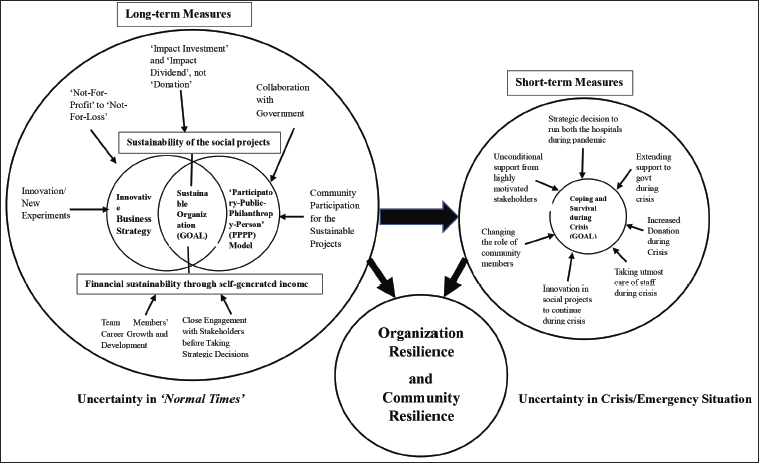
The findings show that the organisation was well aware of the changing the economic-political context and recognised the importance of generating own income also, for continuing its social welfare work. It shows that the organisation faces several challenges during ‘normal times’ as well due to this changing context. To face with the uncertainties in normal times, it focused on achieving the goal of ‘sustainable organisation’, which included the dimensions of financial sustainability as well as the sustainability of the social projects. BMCWS has achieved the goal of creating sustainable organisation by undertaking various long-term measures. The study also shows that the uncertainties induced by the emergency situation of COVID-19 crisis created multiple additional challenges for the organisation. Being committed to work for the society, the organisation understood its responsibility to respond immediately and appropriately to this situation. Thus, it initiated multiple initiatives in short term to help the community and society at large, with the support of all its motivated stakeholders. The good work done in the past helped the organisation to establish strong trust and faith with all its stakeholders. The short-term measures helped not only to organisation but also to the community members to cope up and survive during COVID-19 crisis. At last, the study shows that a combination of long-term and short measures actually contributed to build organisation resilience as well as the community resilience and which prepare them to face the uncertainties during normal and even during crisis situation also.
Based on the findings of the case study, a theoretical framework of NGO’s dealing with uncertainty has been developed (refer Figure 1).
Theoretical framework of NGO’s dealing with uncertainty.
Discussion and Conclusion
This article explored the challenges faced by BMCWS, an NGO, based in India, and its coping strategies to deal with the uncertainties during COVID-19 pandemic. The study shows the organisation’s strong commitment to its social cause since its inception. However, after some initial legal turbulences of the organisation, when Dr Madhav Sathe joined the leadership position, the organisation brought several structural changes to achieve its social mission in the challenging socio-economic scenario in India and globally as well. Thus, the organisation undertook several ‘long-term measures’ to achieve its goal of creating ‘sustainable organisation’. These included: shifting focus from ‘not-for-profit’ to ‘not-for-loss’ in charitable organisation; focus not on ‘donation’, but on ‘impact investment’ and ‘impact dividend’; collaborative approach with the government; focus on team members’ growth and career development; close engagement with the stakeholders before taking strategic decisions; community participation for the sustainable projects; and new experiments for the improving the lives of the village community members. These long-term measures clearly reflect behavioural change within the NGO, that is, adoption of innovative business strategies, stakeholders’ engagement, collaboration and community participation, for its sustenance. With its innovative business-like behaviour, despite being a charitable trust, BMCWS was transformed into a sustainable organisation. The findings strongly support the literature (Arhin et al., 2015, 2018) that the sustainability of NGO is not only about availability of funds, it also about the sustainability of other dimensions such as operational, identity and related to intervention). In addition, the study provided significant knowledge about ‘how to do it?’ and ‘how to create sustainable NGO?’. The organisation was successfully in creating highly motivated staff and community members, who share the organisation’s vision and take accountability and responsibility. They are always willing to extend their support to the organisation. The donors are happy and satisfied and ready to extend additional support in the uncertain times. The study found that long-term measures are used to achieve the goal of building sustainable organisation in context of changing global socio-economic and political situation, and also contributed to its preparedness for dealing with any uncertainty during the crisis situation like COVID-19.
The COVID-19 pandemic created several new challenges for the BMCWS, due to uncertain situation in the country. Both, internal and the external environment of the organisation affected all the stakeholders—Dr Sathe, doctors, community members, other staff and so on. All of them faced stress. As suggested by Tannert et al. (2007), both dimensions of uncertainty were evident during the pandemic. The objective dimension of uncertainty, present in the internal and external environment, affected subjective dimension of uncertainly, which further induced stress among them. However, the reason of stress varies from stakeholder to stakeholder. The specific challenges faced by the organisation during COVID-19 pandemic were ‘Fear of collapse’ for the organisation, lack of confidence among staff due to COVID, increased operation cost during pandemic, fear among doctors, callous behaviour of ungratefulness during crisis situation and challenges faced by the target stakeholders. To deal with these COVID-19 pandemic crisis, specific challenges and its commitment to the social cause, the BMCWS, took several short-term measures, which included: strategic decisions to run both the hospitals in full swing during the pandemic, taking care of team members/staff during crisis and pandemic situation, innovation in education project to continue during pandemic, changing the role of the community workers during pandemic, collaboration with government and extending support to the government (role reversal), unconditional support from highly motivated stakeholders during pandemic, and increased donation. The study shows that short-term measures helped the organisation and also the community, primarily for coping and survival during the COVID-19 pandemic. However, it was evident from the study that coping and survival during COVID-19 pandemic could be possible, without having the effects of its long-term measures since inception. Due to its long-term measures, the organisation already had built trust among all its stakeholders, and that worked in favour of the organisation during the crisis. Only then, short-term measures helped the organisation to cope and deal with the uncertainties during the crisis.
A combination of long-term and short-term measures, with its focus on ‘innovative business strategy
The theoretical framework developed based on the case study has significant implication for the NGOs working for the community development on grassroot level. NGOs can adopt innovative business strategy and PPPP model to be able to face uncertainty in the context of the global transformation from a long-term perspective and also during emergency. It will help NGOs to be more resilient to cope with contextual risks, shocks and uncertainties. Organisation resilience includes both, planning to manage the unexpected as well as adapting and reacting to changing circumstances (Abraham et al., 2020). They mentioned leadership and culture (strong, aware and empathetic leadership combined with staff that are empowered, trust each other and are well looked after), network (effective external partnerships, well-managed internal resources and the ability to leverage knowledge across the organisation) and change readiness (a unity of purpose and a proactive posture combined with the regular testing of plans to counter vulnerabilities), as main characteristics of a resilient organisation, and the study found all these elements in this case study. The learning from the case study may help NGOs in the scenario planning process, as non-profits area required to respond to the crisis in short term, while preparing for the long term (Waldron et al., 2022). NGOs can enhance their resilience to the crisis situation, while at the same time, they can contribute to community resilience just like BMCWs did. ‘Resilient community’ is concerned, it is defined as ‘one that anticipates problems, opportunities, and potentials for surprises; reduces vulnerabilities related to development paths, socioeconomic conditions, and sensitivities to possible threats; responds effectively, fairly, and legitimately in the event of an emergency; and recovers rapidly, better, safer, and fairer’ (Wilbanks cited in Morrow, 2008, p. 1). The findings will help both, NGOs and the communities, to be prepared better to face any emergency situation, so that they can survive and thrive through the crisis situation.
The study reveals the importance of adopting innovative and entrepreneurial thinking, decision-making and judgement of the leader of the NGO. It shows the importance of leadership, innovation, stakeholder engagement and community participation, during ‘normal’ times, particularly during ‘crisis situation’. The study found the importance of judgement and decisions taken by the leader of NGO. Knight (cited in Klein, 2020) used the term ‘judgement’ to describe the act of decision-making under uncertainty. It means taking forward-looking actions without the aid of a formal model or decision rule, a ‘judgement-based approach’ to entrepreneurship. However, this is a single case study and has its own limitations. We suggest to explore this dimension in NGOs under crisis situation. Thus, we suggest many more studies on leaders’ thinking, planning, decision-making, and acting in times of crisis in NGOs? It will help us to think about how do they deal with uncertainty more generally, as also suggested by Klein (2020) in context of entrepreneurial ventures. Such studies conducted in context of NGOs’ would contribute immensely to build organisation and community resilience, and further, to prepare them better to face with uncertainties during normal as well as the crisis situation.
Sustainable social organization model had a test of efficacy and sustainability. We sustained well and even progressed well. More energetic and compliant staff now. Still Creches are not doing well. Cancer patient homes are full. We are getting back to our best, targets are set goals are achieved. Learning from pandemic were plenty. — Dr Madhav Sathe
Footnotes
Declaration of Conflicting Interests
The author declared no potential conflicts of interest with respect to the research, authorship and/or publication of this article.
Funding
The author received no financial support for the research, authorship and/or publication of this article.