




Abstract
Introduction
External awards are an important part of the promotion and tenure process within academic institutions.1,2 Such awards recognize the contributions or accomplishments of an individual within the greater community and are important for the development of one's academic profile and career advancement. Major awards that recognize lifetime achievements or significant contributions to society or a field as a whole are particularly notable given that they are limited in number, have highly competitive applicant pools, and are associated with prestige and legacy.
Previous studies have demonstrated that awards and research grants are unequally distributed among scientists, with disproportionate recognition bestowed upon scientists on the basis of their current renown. The efforts of well-known scientists thus receive further visibility, while the contributions of lesser-known scientists remain less visible. 2 Ultimately, those that have already received recognition continue to be rewarded, furthering their reputations. 3 Studies have also shown that subconscious, gender-based assumptions in the evaluation of individuals and their work in a traditionally male-dominated field lead to more positive evaluations of men than women.4,5 This phenomenon is also present among scientific award committees and within various medical subspecialties.1,4,6
Similarly, major discrepancies exist in the proportion of male and female awardees in the field of plastic and reconstructive surgery. A 2017 investigation found that only one of the last 60 recipients of the American Society of Plastic Surgeons (ASPS) Honorary Citation Award was a woman, and that no woman has ever been awarded the American Association of Plastic Surgeons (AAPS) Honorary Award. 6
In recent years, there has been an epidemiological shift within the field of plastic surgery, with a growing number of female trainees in plastic surgery residency programs. 7 Female membership in the American Society for Plastic Surgery (ASPS) is at an all-time high, with 82% of members identifying as male and 18% identifying as female in 2020, compared to 98% of members identifying as male and 2% of members identifying as female in 1970 (Table 1) and female plastic surgeons are increasingly leading extramurally funded research.8,9
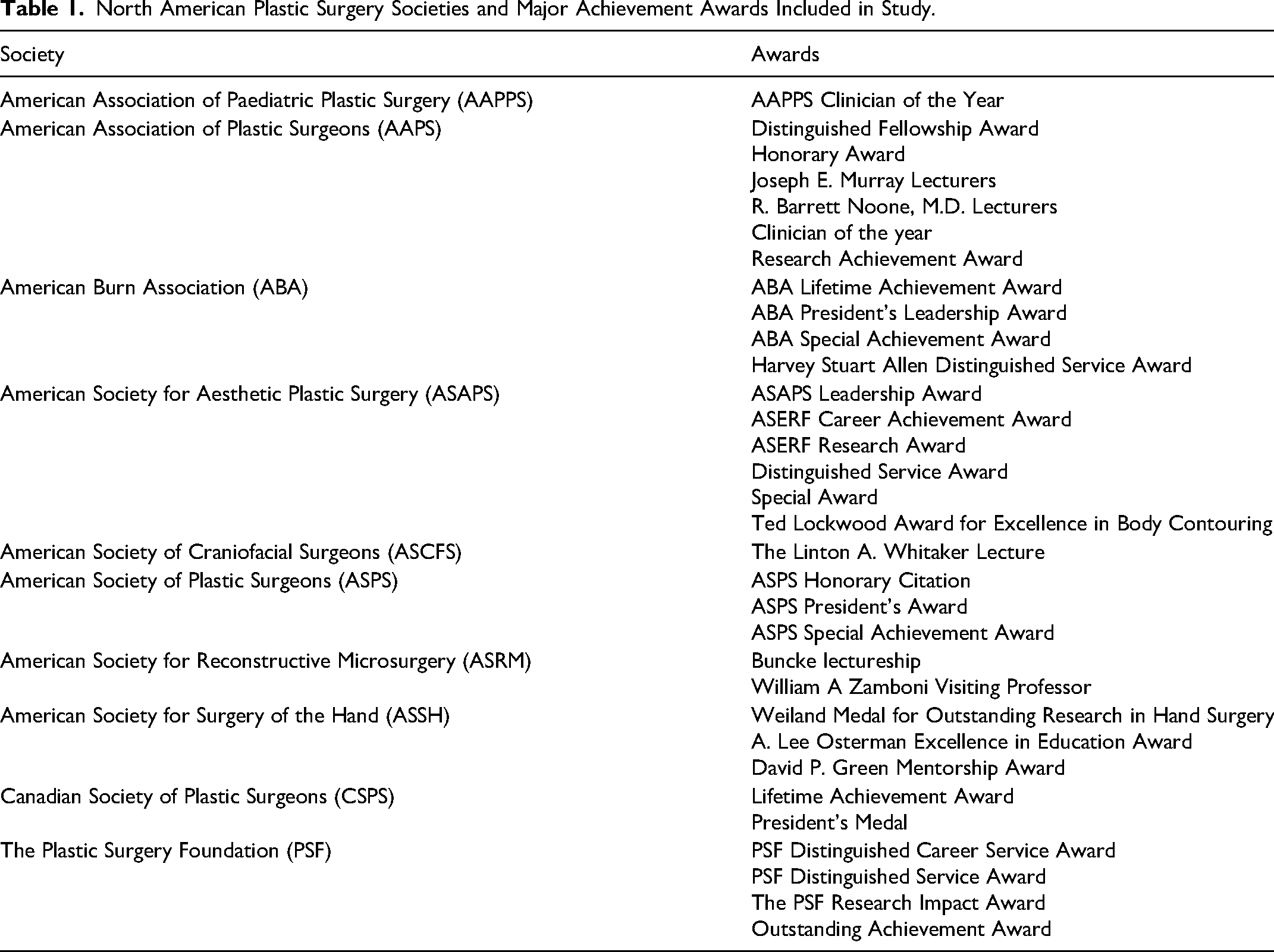
North American Plastic Surgery Societies and Major Achievement Awards Included in Study.
The primary objective of this study was to more closely examine gender representation of major plastic surgery awards given by North American plastic surgery societies over the last 50 years.
Methods
This study was approved by the [details omitted for anonymized peer review]. We analyzed recipients of major awards bestowed by ten American and Canadian plastic surgery societies: American Society of Plastic Surgeons (ASPS), the Plastic Surgery Foundation (PSF), the American Association of Plastic Surgeons (AAPS), the American Society for Reconstructive Microsurgery (ASRM), the American Society of Aesthetic Plastic Surgery (ASAPS), the American Society of Craniofacial Surgeons (ASCFS), the American Society for Surgery of the Hand (ASSH), the American Association of Paediatric Plastic Surgery (AAPPS), the American Burn Association (ABA), and the Canadian Society of Plastic Surgeons (CSPS).
For the purposes of this study, a major award was defined as one of the following: (1) a lifetime achievement award, (2) an award bestowed upon individuals for significant clinical or research contribution to the field, or (3) an equivalent major award for significant achievements or recognitions. Research grant funding, awards for conference presentations or competitions, and traveling fellowship awards were excluded. Only awards given to attending-level surgeons were included. The full list of awards included is found in Table 1.
Demographic data including name, gender, medical school, and residency program attended, graduation year, and the number of major awards received by all major award recipients from 1970 to 2020 were extracted from publicly available websites and published newsletters. Gender was categorized in a binary fashion based on their associated online gender identity as determined by use of pronouns. Important to note, the authors of this current investigation recognize gender as a non-binary concept. As this study will be evaluating gender representation within plastic surgery from a binary concept, we recognize there is a proportion of non-binary identifying plastic surgeons whose achievements are not represented. Their contributions to the field are important and are beyond the scope of this current study and merits further investigation in the future. When data about an awardee for a particular year was not available online, direct email contact was made with the society. The primary outcome measure was the total number of plastic surgery awards given to faculty identifying as female versus those identifying as male over the past 50 years. Demographic data of past presidents of the aforementioned ten American and Canadian plastic surgery societies were also recorded for epidemiological comparison.
Non-parametric comparisons of medians with Mann–Whitney U test and the chi-squared test were used for statistical analysis, with an alpha value of p < 0.05.
Results
Female Versus Male Awardees
Thirty-three distinct major awards bestowed by ten plastic surgery societies were identified (Table 1). Between 1970 and 2020, there were a total of 635 award recipients, of which 7.4% (n = 47) were female (Table 2; Figure 1). The awards were given to a total of 405 unique individuals, of which 7.4% (n = 30) were female. Of the 122 individuals that have received multiple major awards, 7.4% (n = 9) were female. The majority (n = 33/47, 70.2%) of female awardees received their awards in the last 10 years (Figure 2). Between 1970 and 1980, women accounted for 7.5% of award recipients compared to 11.6% between 2010 and 2020 (Figure 3). However, this was not a statistically significant increase in proportion (p > 0.05).
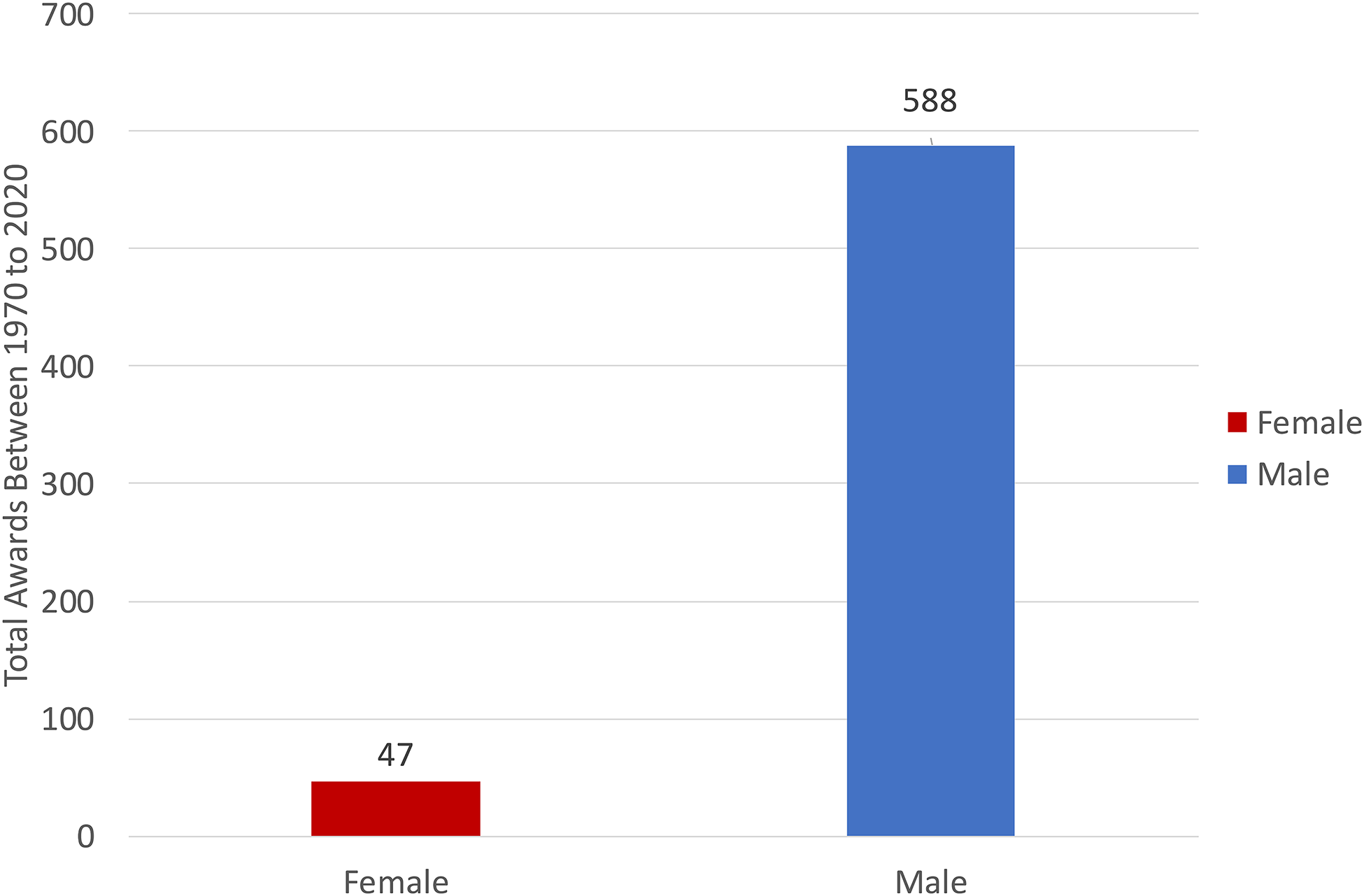
Total number of major achievement awards presented by North American plastic surgery societies between 1970 and 2020.
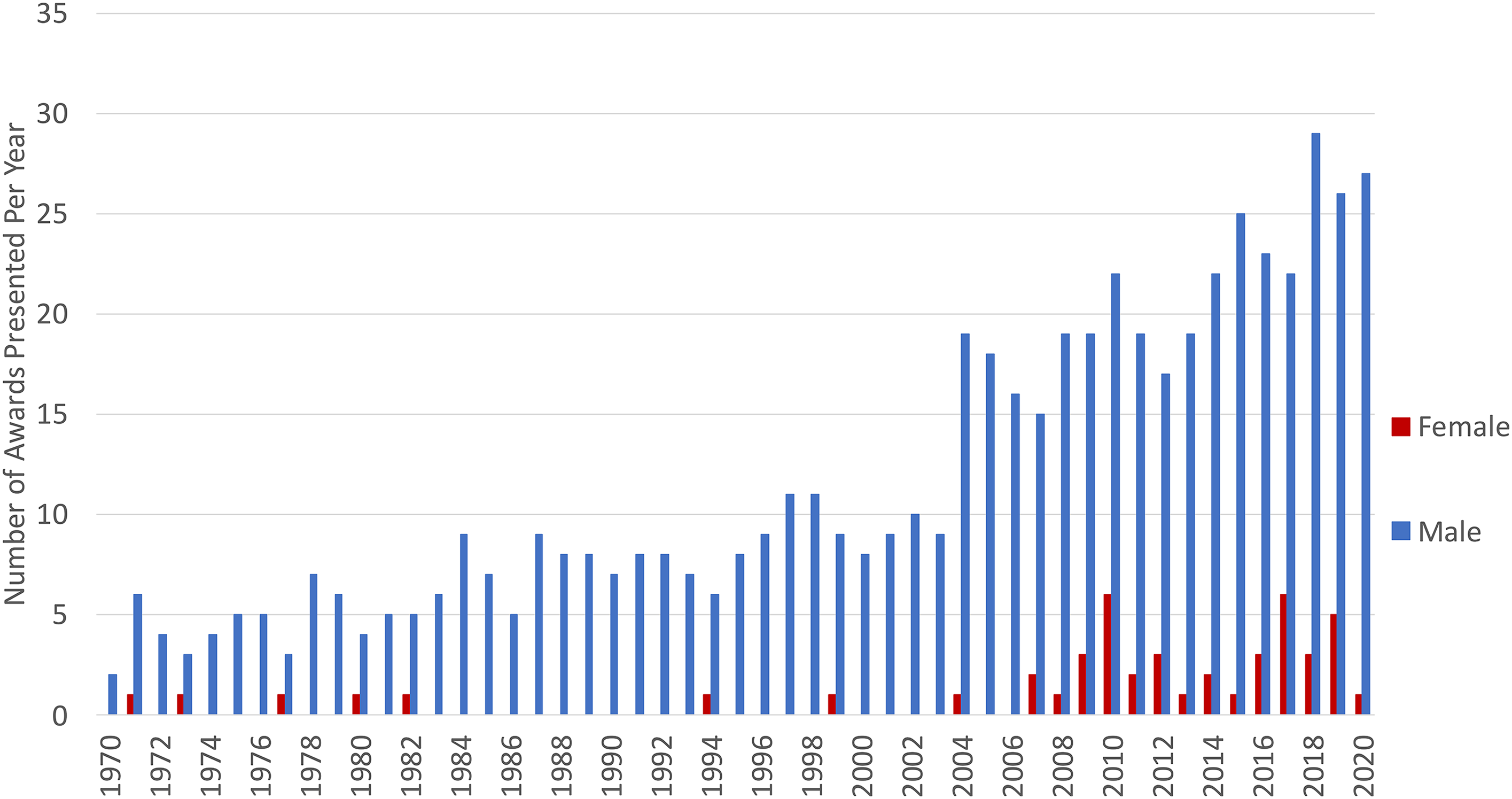
Gender representation in major awards presented by all plastic surgery societies from 1970 to 2020.
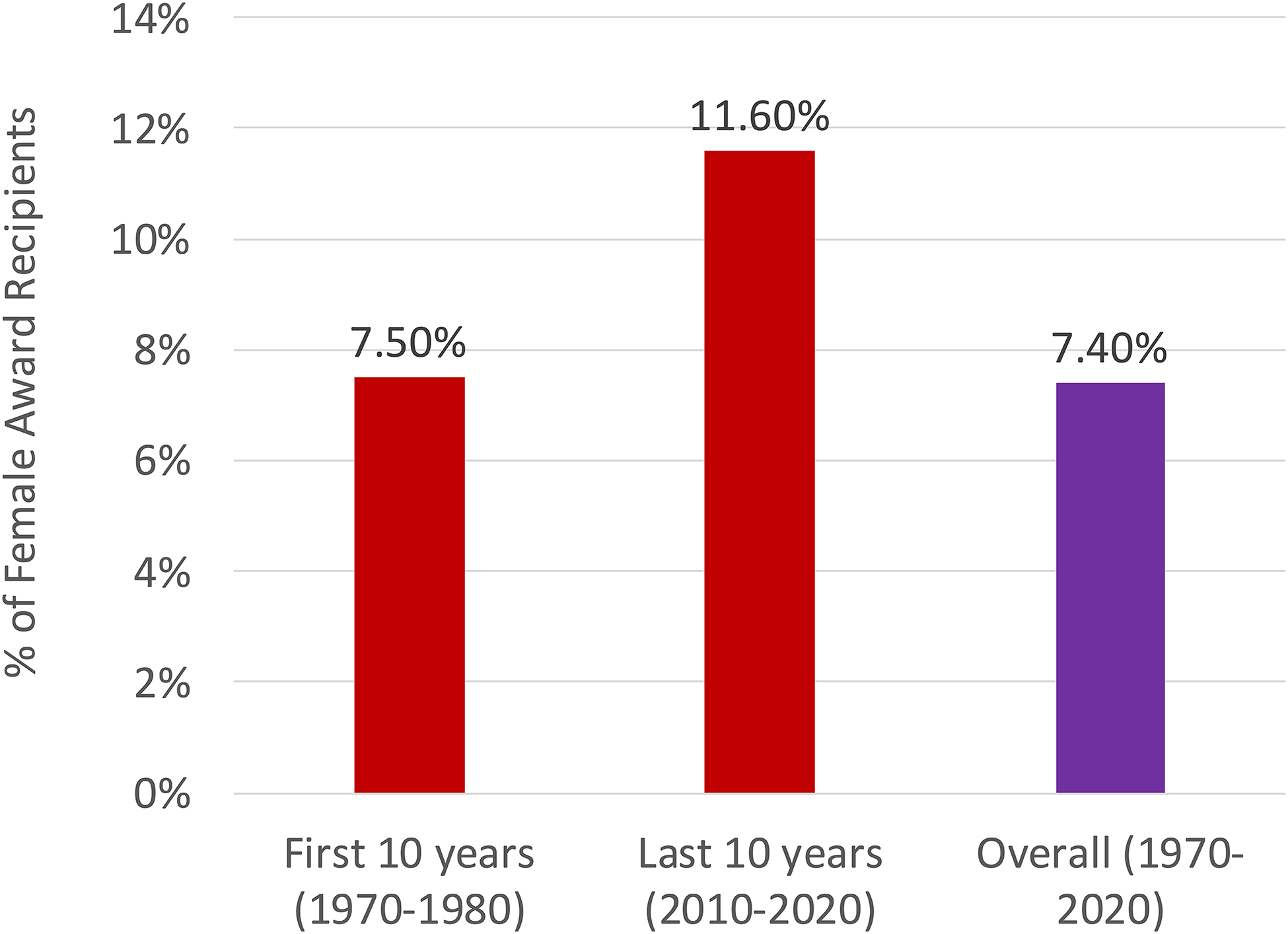
Trends in proportion of female award recipients between first 10 years to the last 10 years.
Breakdown of Major Achievement Awards Given by North American Plastic Surgery Societies Between 1970 and 2020.
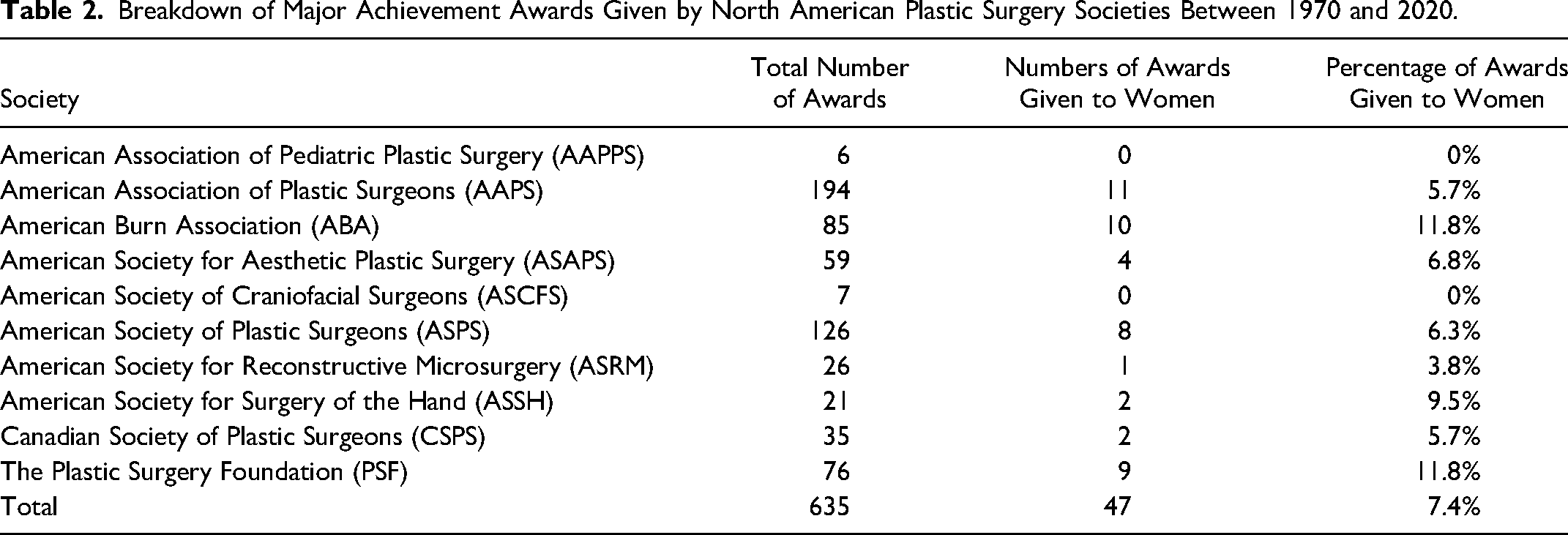
The PSF (11.8%, n = 9) and the ABA (11.8%, n = 10) gave the highest number of awards to women. All other societies awarded less than 10% of total available awards to women (Table 2). Similar to plastic surgery societies in the United States, the Canadian Society of Plastic Surgeons (CSPS) also awarded less than 10% of total awards to women, with only two female winners (5.7%) over the past 50 years.
Men who won multiple major awards averaged 2.8 awards over their career, while women who won multiple major awards averaged 3.0 awards (p > 0.05). The average number of years between the first major award and the second major award was 7.2 ± 6.2 years for men and 4.3 ± 3.8 years for women (p > 0.05).
Female Awardee Training Backgrounds
Of the 30 female awardees, 36.7% of awardees were not plastic surgeons (n = 11). Instead, they were occupational therapists, senators, journalists, or administrators within these plastic surgery societies. In comparison, only 2.4% of male awardees were not plastic surgeons (n = 9; p < 0.0001).
Female Presidents of Plastic Surgery Societies
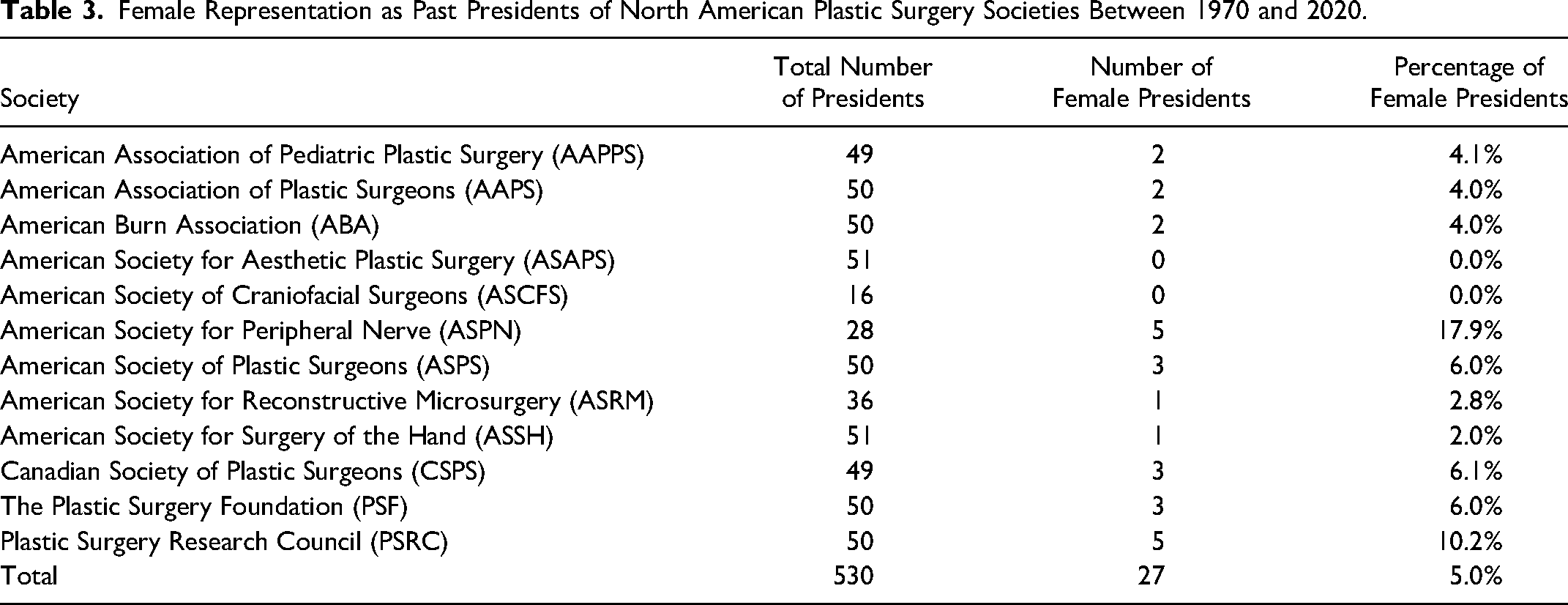
Between 1970 and 2020, 5% of plastic surgery society presidents were female (n = 27/530) (Table 3). The number of female presidents has increased over time (Figure 2). Half of the female plastic surgeons that received major awards (n = 11, 52%) have served as president of one of the plastic surgery societies, and one-third of the female awardees (n = 6, 30%) served as president for 2 or more societies. The Plastic Surgery Research Council had the highest proportion of female presidents (n = 5/50, 10%).
Female Representation as Past Presidents of North American Plastic Surgery Societies Between 1970 and 2020.
Discussion
The major findings from this study can be summarized as follows: (1) Females comprise 7.4% of recipients of major plastic surgery society awards; (2) the majority of female awardees received their major plastic surgery society award in the last 10 years; (3) the proportion of female major award recipients increased from 7.5% in 1970–1980 to 11.6% in 2010–2020. However, this increase was not statistically significant.
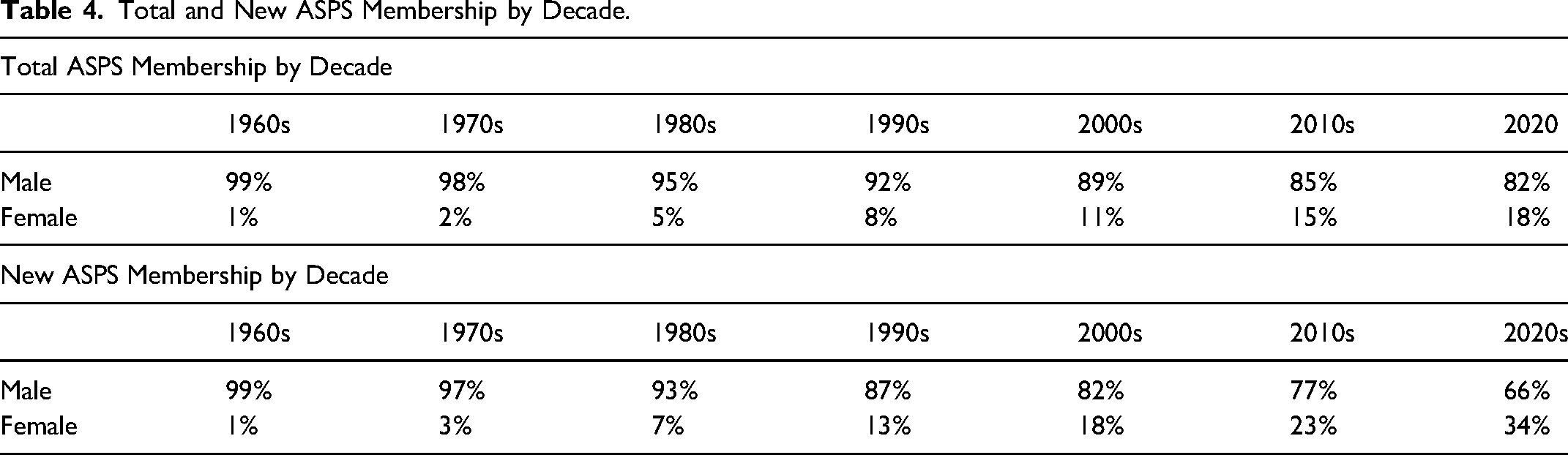
The number of women in plastic surgery has grown exponentially over the past 50 years. From its founding in 1931 until the 1970s, the American Society of Plastic Surgeons (ASPS) counted only three female members: Alma Dea Morani in 1943, Meredith Payne in 1960, and Dorthea Weybright in 1965. Female representation in ASPS has since grown from 5% of total membership in the 1980s, to 18% in 2020 (Table 4 and 5). Females also comprise 23% of new members and almost two-thirds of new ASPS resident members are females (Email communication with ASPS). Women currently make up 43% of the integrated plastic surgery trainees in the United States; a 2-fold increase from the prior decade (Table 5). 10
Total and New ASPS Membership by Decade.
ASPS Resident Membership 2015–2022.

It is important to note that recent cross-sectional studies in the plastic surgery literature have revealed significant under-representation of females in a multitude of academic arenas; including residency enrolment, peer-reviewed publications, journal editorial boards, divisional or departmental leadership, and invited lectureships at national meetings.10–16 Various reasons have been attributed to this female underrepresentation, ranging from a lack of mentorship and sponsorship, implicit or explicit sexism, outdated maternity leave policies, inflexible schedules for breastfeeding or pumping, and a greater burden of childcare or home-care responsibilities.17,18 Even medical student teaching evaluations demonstrate unconscious gender biases, with female faculty receiving significantly lower ratings than male faculty in all clinical rotations, regardless if the medical student rater was male or female.2,19 These factors contribute to the increasingly recognized concept of a “glass ceiling” or “leaky pipeline” that prevents women from realizing their full career potential in the fields of science, technology, engineering, and medicine. Thus, simply increasing the number of females within a specialty does not adequately ensure that they have the tools and support to succeed, particularly in competitive academic settings.
In addition to the above arenas, female underrepresentation has also been noted in awards given out by specialty organizations.1,6 In 2017, Silver et al. examined female recipients across a range of clinical specialties and confirmed an overwhelming minority or complete absence of female awardees in societies for anesthesia, dermatology, neurology, orthopedic surgery, head and neck surgery, neurosurgery, and plastic surgery. For example, despite women comprising 38% of departmental faculty in neurology and 32% of departmental faculty in head and neck surgery, zero females received awards from their major societal organizations. 6 In a plea to support advancement and retention of the female medical workforce, the authors emphasized the importance of further research on diversity and inclusion in medical societies with respect to professional achievement and career development.
The findings of Silver et al. prompted a more detailed investigation into award recipients within the field of plastic surgery. Our findings confirm that females comprise only 7.4% of major award recipients, with most awards being issued in the past 10 years. Despite growing female membership in the plastic surgery community, this study along with several others corroborate the fact that there is female underrepresentation in numerous academic metrics that cannot be attributed entirely to fewer numbers of women. While 11.6% of female awardees between 2010–2020 appears similar to the 2020 ASPS female membership of 18%, it is notable that the ASPS has seen a steady rise in female membership each decade from 8%, 11%, 15%, to 18% for 1990s, 2000s, 2010s, and 2020, respectively. In contrast, the proportion of female award winners over these corresponding years did not increase at the same rate as the membership (Figure 2), with 2.3% of winners in 1990s, 4.7% of winners in 2000s, and 11.6% between 2010–2020. It remains to be seen if the proportion of female membership and society awardees gradually converge in the years to come or if there continues to be a large discrepancy.
Furthermore, the process of academic career advancement inevitably causes underrepresentation in one arena to negatively impact representation in other arenas. 12 For example, fewer opportunities to disseminate impactful research through peer-reviewed publications or invited lectureships can delay recognition of one's academic reputation. Opportunities for departmental or societal leadership are also held back, and in turn, major societal achievement awards. On the other hand, if females are recognized by their peers and colleagues for their academic expertise and achieve visibility as leaders of plastic surgery departments or societies, they appear to be more likely to be externally recognized with major achievement awards. For instance, our study found that half of female plastic surgeons who received major awards had also served as president of one of the plastic surgery societies (Table 3).
There has been a significant increase in the number of female plastic surgery residents in recent years. As the current cohort of residents graduate and embark on their careers, we hope that there will be a continued evolution of the specialty's demographic landscape, including in academic institutions. With ongoing diversity and equity initiatives, growing visibility of female plastic surgeons in leadership positions, greater same-sex mentorship opportunities, and improved occupational policies for work-life balance, we are optimistic that female plastic surgery trainees and attending faculty will have the support and resources they need to pursue their goals and to receive the recognition they deserve for their contributions in the form of major society awards.17,19,20 The LIMITLESS leaders mentorship program by the ASPS is one such example, with the purpose of providing mentorship for female members at various of their career development. 21
Limitations of this study include its cross-sectional study design with data collected from current and archived plastic surgery societies’ websites, which may be out of date or contain incomplete information. We only included major awards and not trainee awards or research awards. Moreover, our study did not assess the role of other demographic factors on academic awards, such as ethnicity, sexual orientation, geographic location, and research publications and impact. Gender was categorized in a binary fashion in this current investigation based on the online published use of gender pronouns. Thus, the preferred pronouns of individuals were assumed based on these previously published sources. In this current study, we did not characterize or analyze specific practice locations of each plastic surgeon, such as academic or community centers, thus we cannot determine the association between the surgeon's gender and the type of surgical practice on the likelihood of receiving an award. Moreover, study focused only on plastic surgery award recipients in North America. Future studies might seek to investigate whether the increase in female trainees over the years corresponds to a rise in downstream female awardees, as individuals progress further along in their respective careers. Additionally, future investigations into the efficacy of specific equity, diversity, and inclusion factors and programs aimed at addressing female underrepresentation among plastic surgeons are needed to guide residency training programs in better supporting female trainees.
Conclusion
To our knowledge, this is the first study to widely examine female representation among recipients of major recognition plastic surgery society awards. Our findings indicate that female plastic surgeons remain underrepresented in major plastic surgery society awards, with less than 10% of major awards conferred to females. Over the past 50 years, there has been a gradual increase in the female awardee representation, reflecting the epidemiological shift within plastic surgery society memberships, attending physicians, and the proportion of female trainees in residency. For women to continue to succeed in plastic surgery, the surgical community and academic institutions alike must work to promote greater equity and engagement of women and ensure that their important contributions are recognized alongside those of their male colleagues.
Footnotes
Author Contributions
TN, KZ, UC, and JD contributed to the design of the study. TN, KZ, and UC data collection and analysis. TN, UC, and KZ wrote the manuscript. UC, KZ, SS, LS, and JD provided revisions to the content of the manuscript. JD was the principal investigator of the study and provided resource access.
Disclosure
This study was previously presented at the Canadian Society of Plastic Surgeons (CSPS) 75th annual meeting in June 2022, Quebec City, Canada. The authors have no conflicts of interest to share.
Declaration of Conflicting Interests
The author(s) declared no potential conflicts of interest with respect to the research, authorship, and/or publication of this article.
Funding
The author(s) received no financial support for the research, authorship, and/or publication of this article
Research Ethics
This study was approved by the University of Toronto Research Ethics Board (Protocol # 40530).
