




Abstract
Introduction
As visibility of transgender populations increase, awareness of their unique challenges is becoming increasingly important. According to the Diagnostic and Statistical Manual of Mental Disorders (DSM-V), gender dysphoria prevalence is 0.005% to 0.014% of those assigned male at birth and 0.002% to 0.003% of those assigned female at birth. 1 Currently, gender reassignment is considered the most effective treatment for transgender and nonconforming patients who suffer from gender dysphoria, which includes psychosocial interventions, hormonal therapy, and gender-affirming surgeries. 2 In 2020, of the 6,878,486 reconstructive procedures performed by board-certified plastic surgeons, 16,353 of these were gendr-affirming procedures. 3 These procedures include penectomy, vaginoplasty, clitoroplasty, labiaplasty, orchidectomy, facial feminization/masculinization surgery, tracheal cartilage reduction, breast reduction or augmentation, metoidioplasty, urethroplasty, hysterectomy with bilateral salpingo-oophorectomy, vaginectomy, phalloplasty, and scrotoplasty, among others.2,4 These procedures present unique reconstructive challenges, and as such, it is imperative that reconstructive surgeons are aware and abreast of the contemporary surgical challenges and techniques that are specific to this reconstructive patient population.
Bibliometric studies are used by academic physicians to determine the impact of certain publications in their respective fields.5,6 Bibliometric analysis refers to the quantitative statistical evaluation of literature that can be used to assess the impact of researchers, institutions, and countries on the development of certain fields according to the number of and frequency of citations of publications. 7 There have been many citation analyses published in the field of reconstructive surgery.8,9,10 These studies serve as reference tools that provide insight into the characteristics of the most-cited works and key publications that have helped shape the field of interest, as highly cited works can provide important information about the current understanding of a topic.11,12 The aim of this study was to identify and conduct a qualitative and quantitative analysis of the 50 most-cited articles in gender-affirming surgery to help researchers gain a better understanding of the existing prominent literature and make better use of present resources. A bibliometric analysis will help to determine past and current understanding of gender-affirming surgery, and identify areas for further research and technical improvements in clinical practice. As such, findings of the present bibliometric analysis could be used to advocate for the health rights and coverage for transgender and gender minority patients. 6
Methods
Database
This cross-sectional study was performed by querying the Scopus (Elsevier, the Netherlands) abstract and citations database using previously described methods.5,11 Scopus is the largest abstract and citation database of peer-reviewed literature and covers more than 41,000 source titles. All journals covered in Scopus are reviewed each year to ensure that the high-quality standards are maintained. 13 Queries using Boolean searches that resulted in the greatest number of English-language articles were conducted in April 2020 (Figure 1). The Boolean phrases used were [surgery AND (“gender affirming” OR “gender reassignment” OR “transgender” OR “transsexual” OR “sex reassignment” OR “sex affirmation” OR “gender affirmation”)]. No restrictions were placed on the searches relating to publication date, journal of publication, or country of origin.
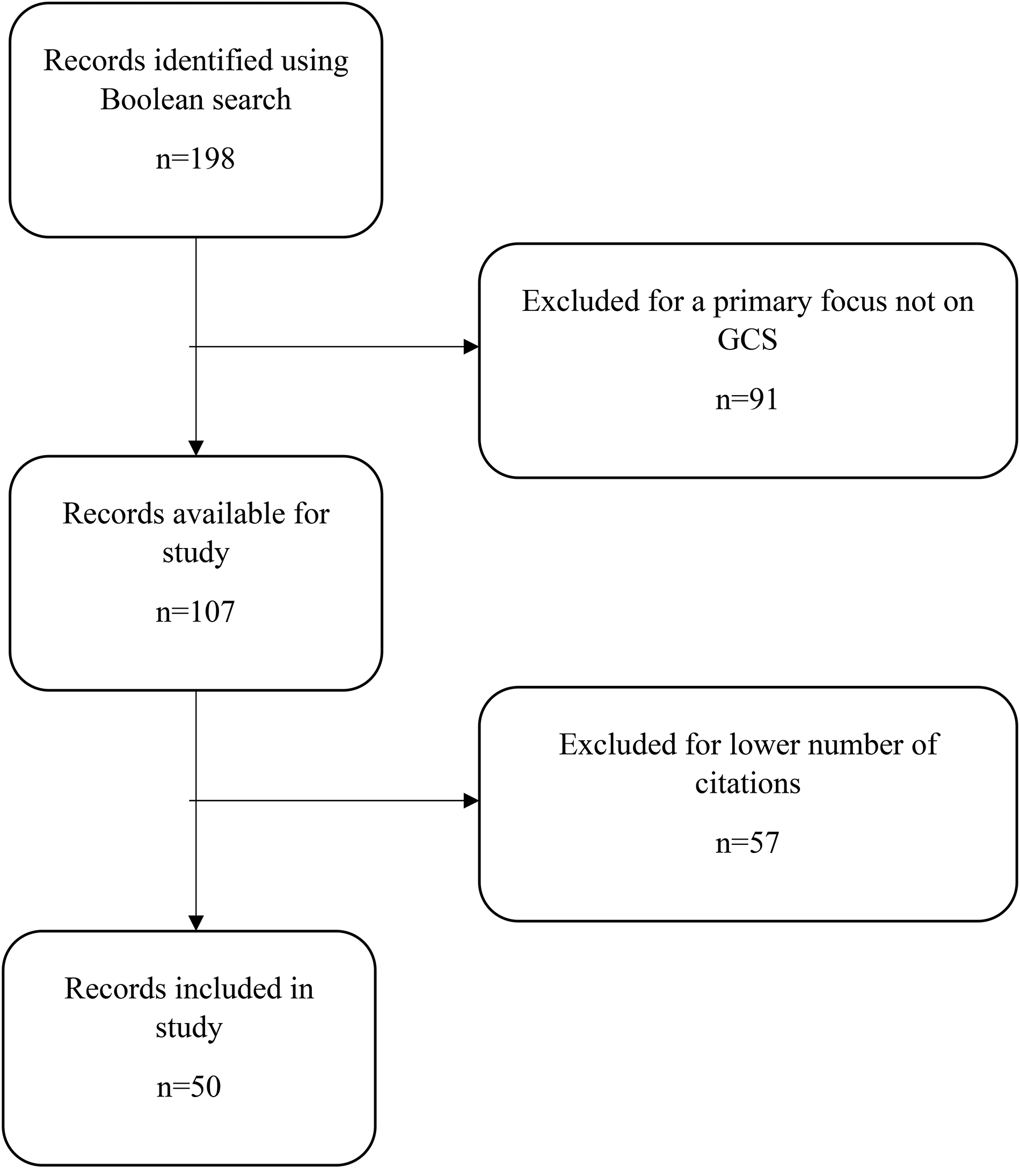
Record selection strategy
All publications were presented in descending order according to the number of citations. Titles and abstracts of these publications were then reviewed independently by the authors to identify the studies that exclusively pertained to gender-affirming surgery. Any disagreements were resolved by discussion. Articles were excluded if the primary focus was not gender-affirming surgery, even if this topic was tangentially discussed. If this content could not be accurately determined by the title or abstract, the full article was obtained for further screening. Publications discussing information on the surgical and functional considerations of gender-affirming surgery outcomes, indications, techniques, procedural descriptions, and complications were included for study, including studies discussing the psychosocial outcomes and patient satisfaction following these surgeries.
Bibliometric Analysis
Data pertaining to authors, year of publication, journal, country of origin, and institutional affiliation were exported from Scopus to Microsoft Excel for tabulation and descriptive statistics. Notably, Scopus counts the number of publications for each country based on author affiliation regardless of the position of the author in the author list. Consequently, there may be an overlap in the number of publications assigned for each country. From these exported documents, the 50 most-cited publications were identified and the abstracts were reviewed independently by the authors for the type of study (eg randomized controlled trial, nonrandomized controlled trial, cohort study, case–control study, case series, case report, review article, and descriptive article), content pertaining to surgical topics, and level of evidence for clinical studies, based on the American Society of Plastic Surgeons (ASPS) guidelines. 14 Citation density, defined as the number of citations per year, was also reported for each of the 50 most-cited articles presented.
The author keywords were visualized using the VOSviewer program which is available for free download. 15 Keywords were included for visualization based on a minimum of 5 occurrences in the 50 abstracts. The size of each keyword node corresponds to the frequency of occurrence in the 50 abstracts, where larger nodes indicate higher frequency of occurrence. Keyword occurrences were tabulated using a binary method where the absence or presence of a keyword was counted. To exclude general terms, VOSviewer assigns a relevance score to these keywords as outlined in the technical manual. 16 VOSviewer can map keywords in a variety of ways. In this study, keyword mapping was performed using the average citation score to identify how the most frequent keywords changed as the number of citations increased. Keyword mapping was also performed using average citation year score to identify how the most frequent keywords changed over time.
Ethical Consideration
No Institutional Review Board (IRB) approval was required due to the absence of human subjects and the public availability of the data.
Results
Citation Analysis
The initial Boolean search on Scopus yielded 2296 full-length, English-language articles. The 50 most-cited publications relating to gender-affirming surgery are listed in Table 1. The 50 most-cited gender-affirming surgery articles were published between 1968 and 2016, with 31 published in 2000 or later. The number of citations per publication ranged from 54 to 200, with an average of 88.0 citations per article. The study by Cohen-Kettenis et al. from 1997 had the most total citations (200), followed by the Smith et al. study from 2005 with 191 total citations.17,18 These 50 publications have been cited a total of 4402 times altogether, averaging 91.7 total citations per year. The greatest number of articles (6) was published in the year 2005, followed by 4 articles in 2011 (Figure 2). Correspondingly, the greatest number of citations (722) was recorded in 2005. The 2011 study by Cuypere et al. had the highest citation density of 21.1 citations per year, followed by the 2015 study by Horbach et al. with 20 citations per year.19,20
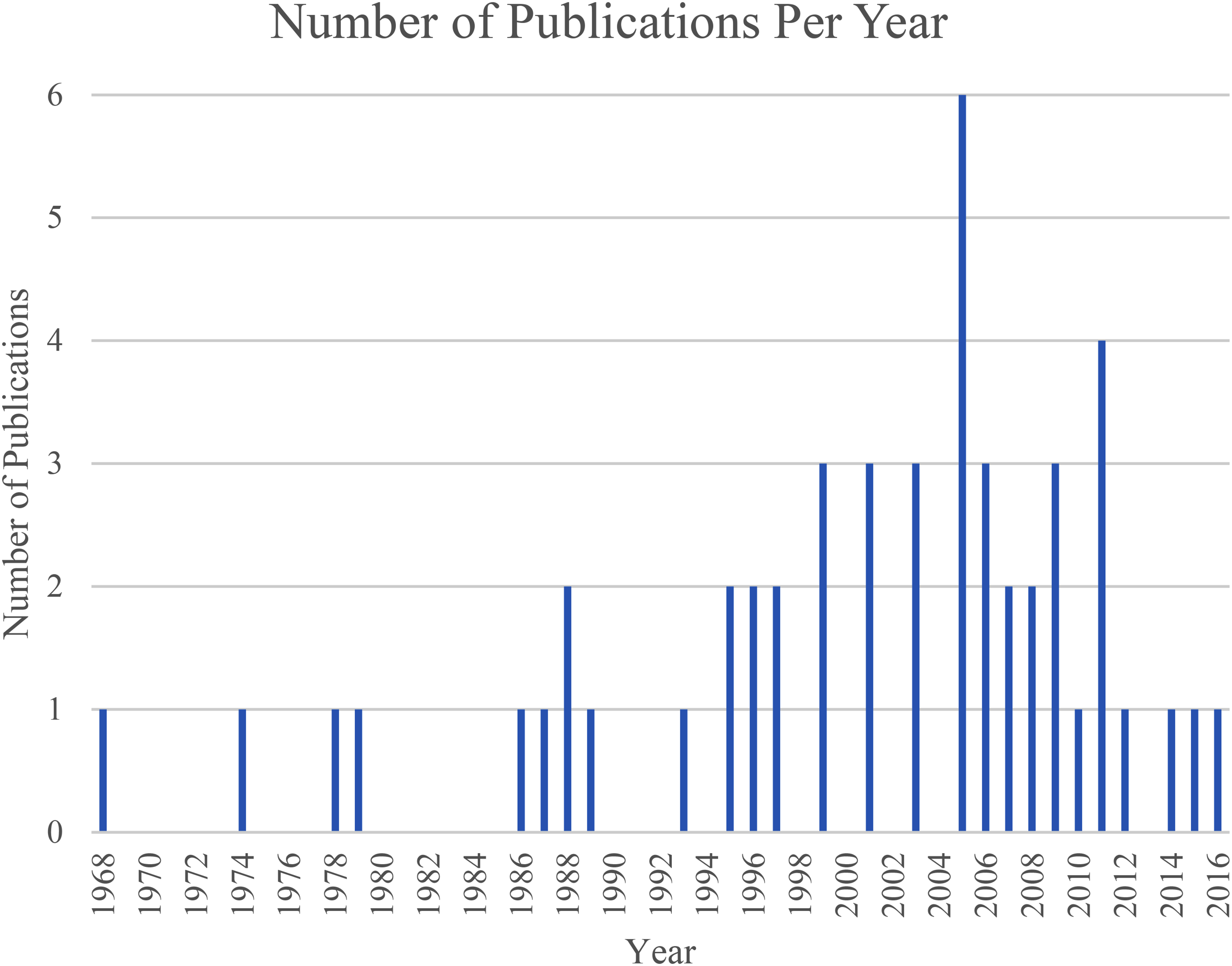
Total number of publications per year.
The 50 Most-Cited Transgender Surgery Articles.
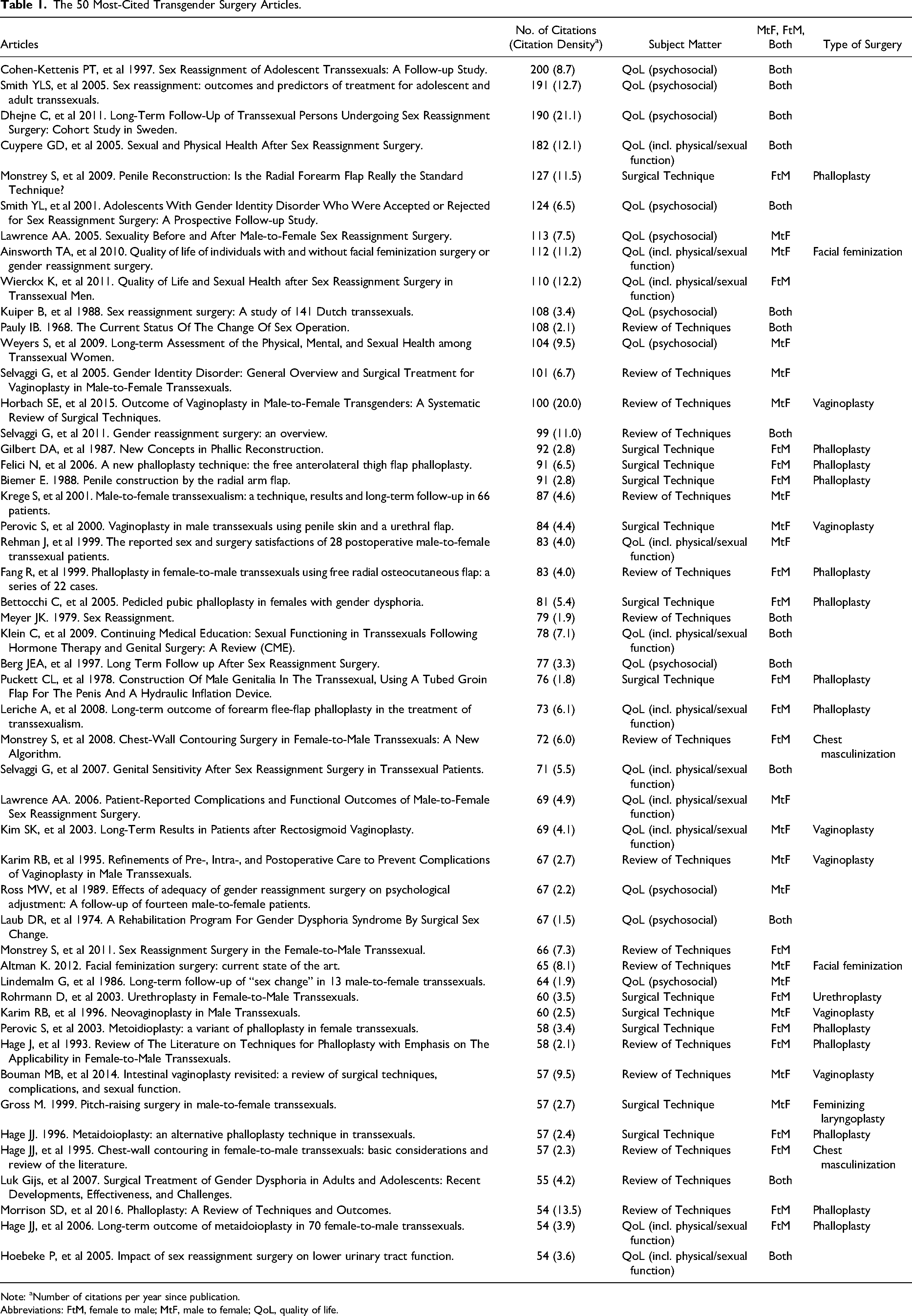
Note: aNumber of citations per year since publication.
Abbreviations: FtM, female to male; MtF, male to female; QoL, quality of life.
Content
Of the 50 publications, 22 were quality of life (QoL) studies, 11 of which focused on psychosocial impacts of gender-affirming surgery, and 11 included considerations of postsurgical sexual and physical functioning (Table 1). The remainder of the publications focused on specific surgical techniques (12) or a review of techniques (16). The phalloplasty technique was the subject of 13 of the articles herein. Female-to-male (FtM) patients were the focus of 18 articles, male-to-female (MtF) patients were the focus of 17 articles, and 15 articles focused on both of these patient populations.
Authorship and Publication
A total of 170 authors were represented in the 50 most-cited articles, averaging 3.4 authors per document and 25.9 citations per author. De Cuypere and Monstrey of Belgium were the most active with 8 publications each in this 50 most-cited list (Table 2). Of the 5 most active authors, all were affiliated with the University Hospital Ghent, in Ghent, Belgium. The articles originated from 15 different countries (Figure 3). The Netherlands contributed the most (13), followed by the United States (10) and Belgium (9).
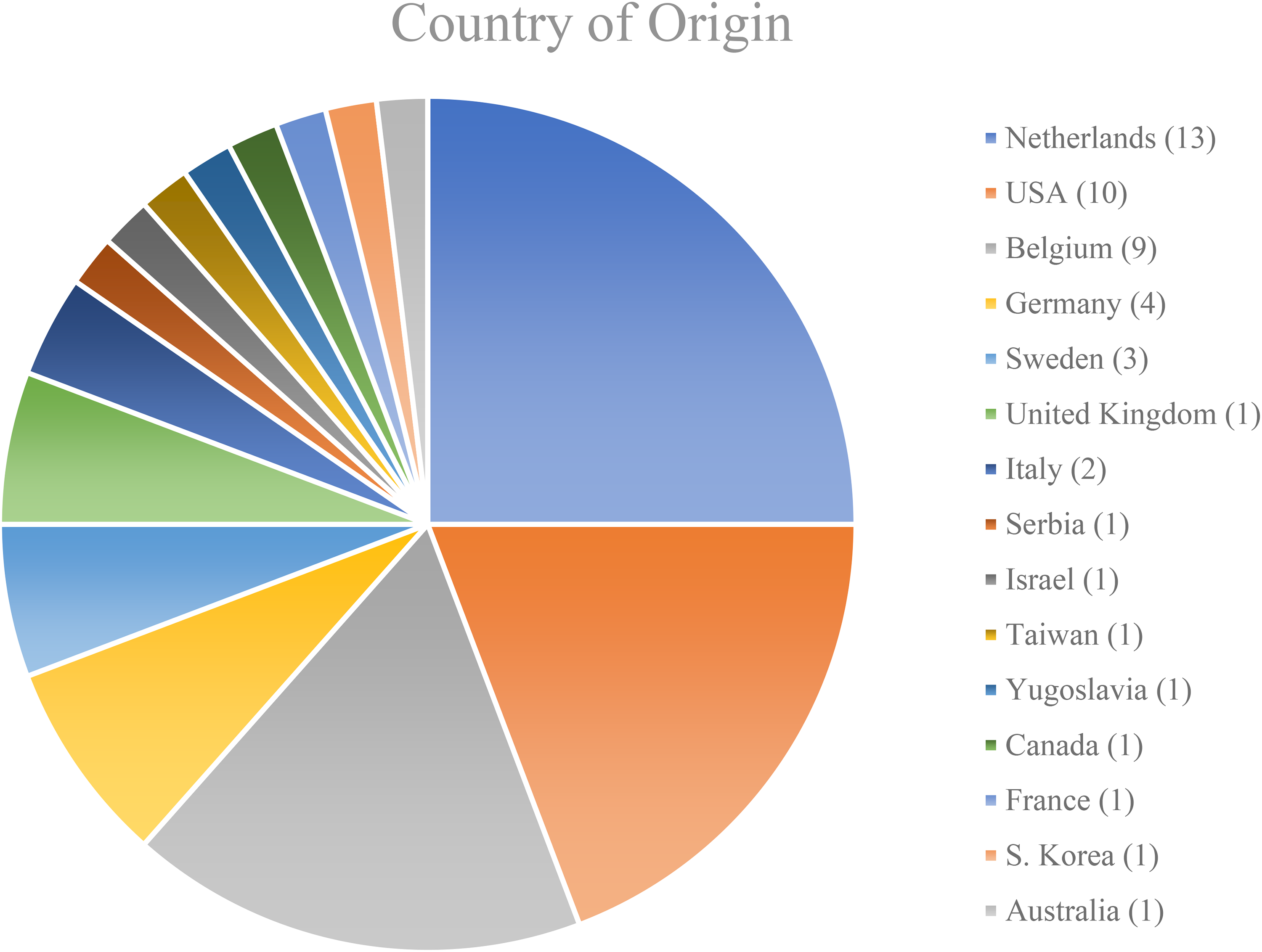
Total number of publications by country of origin.
The Top 5 Authors of the Most-Cited Publications.

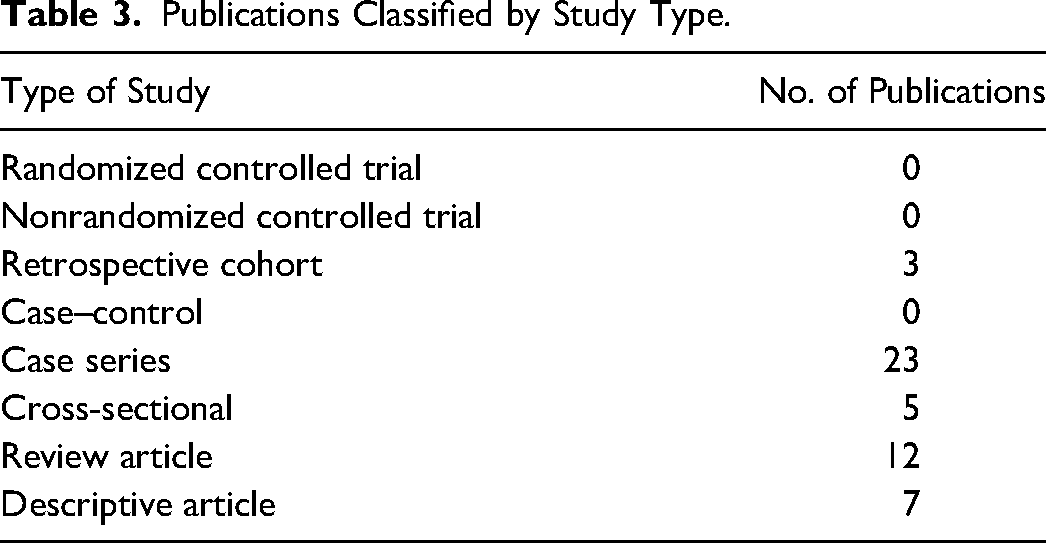
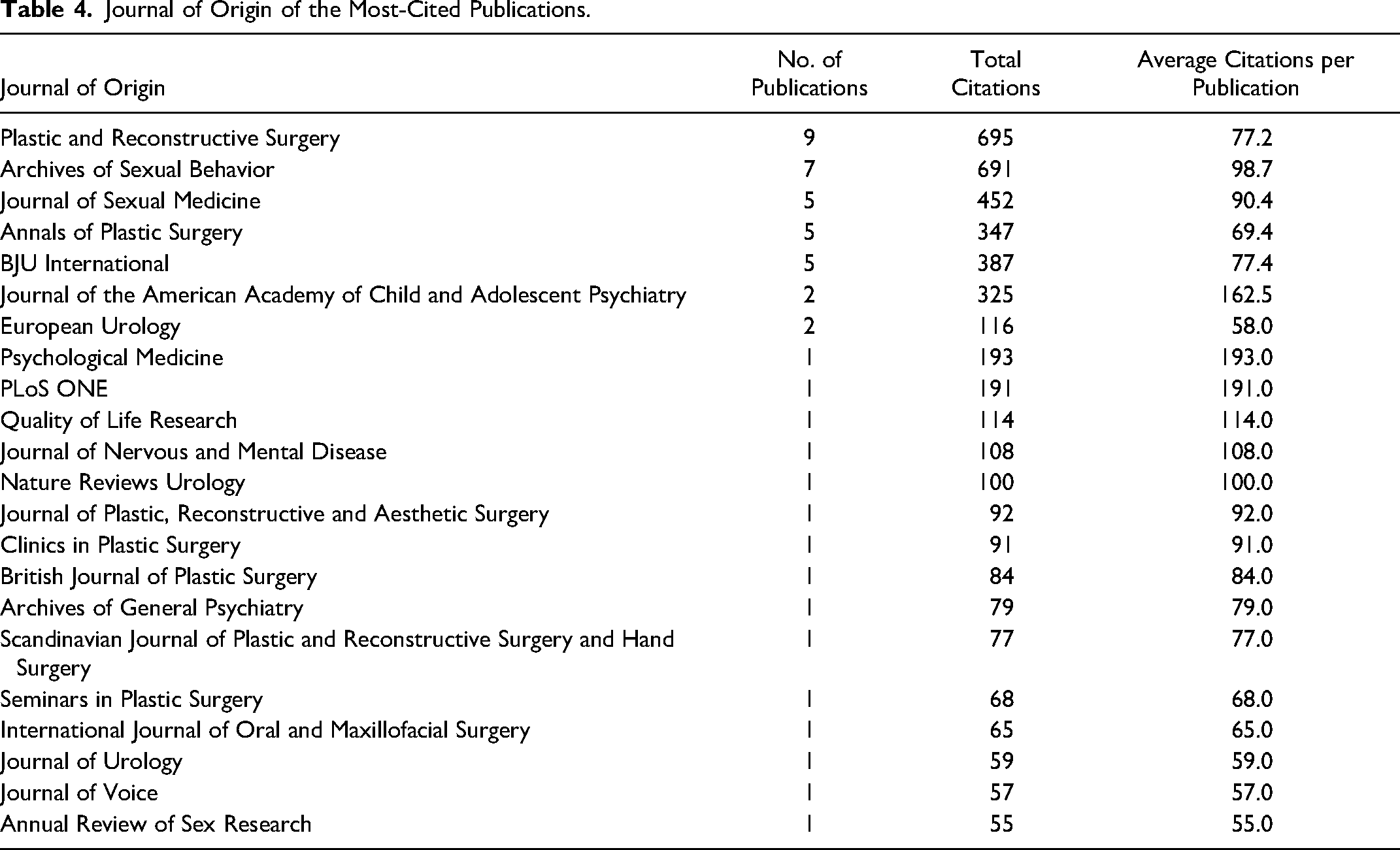
Evaluation of study type revealed that case series was the most prevalent study type, comprising 23 of the 50 most-cited articles (Table 3). These were followed by review articles (12), where experts reviewed new or existing methods for performing various gender-affirming surgeries. Correlating with study design, Level IV studies were most prevalent, with 26 publications. There were 23 Level V studies, 3 Level III studies, and no Level I or Level II studies in this list. The most frequently occurring keywords grouped by average citation number are shown in Figure 4. The most frequently occurring keyword within the 50 abstracts is “technique” with 21 occurrences. The next most frequent keywords each occurred 15 times: “flap”, “complication”, and “treatment”. There were 22 total journals represented in the 50 most-cited articles (Table 4). Plastic and Reconstructive Surgery was the most active, publishing 9 of the 50 articles and 695 total citations. Archives of Sexual Behavior had the second most, with 7 of the 50 publications and 691 total citations.
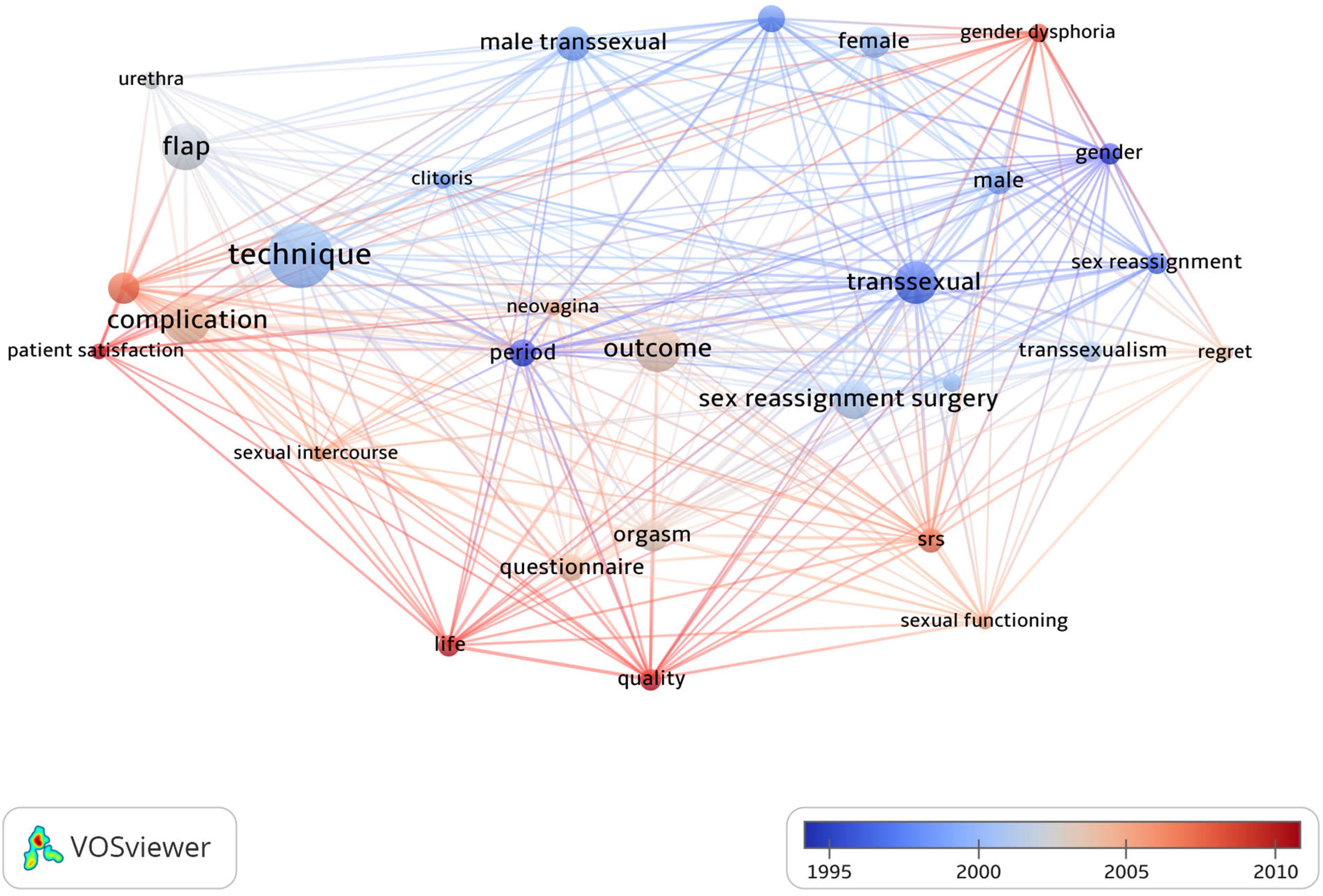
Keyword mapping by average publication date.
Publications Classified by Study Type.
Journal of Origin of the Most-Cited Publications.
Trends
The oldest article included in this list was authored by Pauly in 1968 in the Journal of Nervous and Mental Disease. It characterized male transsexualism as a “preference for the feminine role” based on “conviction” and, upon review of 121 sex reassignment surgeries, determined that social and emotional success was enhanced when vaginoplasty resulted in a functional vagina. 21 Keyword analysis was conducted and presented in a network visualization map. The most frequently occurring keywords grouped by publication year are shown in Figure 4. The oldest keywords were “transsexual”, “sex reassignment”, and “gender”. The most recent article included was published in 2016 in Plastic and Reconstructive Surgery by Morrison, et al. It critically appraised the literature on phalloplasty, stating that some FtM “transsexuals” may desire this procedure as part of their transition. 22 Keywords such as “phalloplasty”, “patient satisfaction”, and “gender dysphoria” were the most recently used author keywords.
Discussion
The present study revealed that the level of evidence for the 50 most-cited articles is most frequently Levels IV (26) or V (23), thus illustrating the challenge of performing high-level surgical studies in transgender patients, as creating a control group or cohort of nonsurgically treated patients can present an ethical dilemma. 23 It is unclear, however, if a higher level of evidence studies exist but have rather not been cited as frequently as the ones herein presented. Silvestre et al. reported that the Plastic Surgery In-Service Training exam consisted largely of questions supported by a low level of evidence, and may present biases in training. 24 Future studies should be designed as Levels I, II, and/or III where possible. Then, as these stronger levels of evidence are cited more frequently, the clinical canon for gender-affirming surgery will include more concrete causative relationships.
The journal of publication and country of origin are influential in determining the number of times an article is cited. Plastic and Reconstructive Surgery and Archives of Sexual Behavior were the most productive journals represented in this study. As a publication focused on sexology and clinical psychology, Archives of Sexual Behavior published a large number of these functional and surgical outcomes articles. Until the release of the DSM-V in 2013, transsexualism and/or gender identity disorder were mental diagnoses. 25 It follows that articles relating to the care of transgender patients were represented largely in psychological journals. As society has progressed, it has seen greater visibility and acceptance of transgender patients, increased quality and availability of gender-affirming care, and better recording of transgender identities by medical records.26,27 As acceptance and recognition of transgender patients grows within medical and surgical spaces, research should be more fittingly disseminated.
The date of publication is also influential in determining how many times an article gets cited. Citation density corrects for this advantage by assessing the number of citations per year since publication. Previous studies have indicated that time provides a considerable advantage in terms of the total number of citations, given the fact that the articles have been available for longer.28,29 However, the present study showed that 31 of the 50 articles listed were published in the year 2000 or later, while the time span was from 1968 to 2016. And, the articles with the 10 highest citation densities were from the years 2005 to 2016 (Table 1). There has been an increase in visibility over time of transgender patients and their unique surgical needs.26,27 It follows that as the visibility of this patient population continues to increase, more data and research will accrue.
The current study showed that global contribution to the most-cited gender-affirming surgery research was limited to Europe, North America, Asia, and Australia, with the vast majority of research coming from Europe, following the rapid increase in visibility and identification of transgender individuals in Europe.30,31 This may be due in part to perceived differences in the freedoms of sexual expression in Europe and the Americas in comparison to Africa and parts of Asia. 6 Over time, the keywords have changed as well (Figure 4). Words like “transsexual” and “sex reassignment” are among the most frequently occurring keywords and have been utilized in the most recently published article from this list. Today, these terms are largely outdated and do not reflect the lexicon of transgender medicine. 25 Interestingly, while the phrase “gender affirming” has been recently adopted as medically inclusive language, none of the 50 most-cited articles included these keywords. 32 Academic surgeons and health care providers must be cognizant of the evolving terminology and endeavor to utilize inclusive language so that research work remains accessible, and the medical community continues to become more hospitable to transgender patients.
There are limitations that exist within citation analysis studies. One such limitation is the difficulty in assessing the potential bias of authors who cite articles from the journal in which they are targeting for publication. In addition, this study, as with the methods previously described, did not account for self-cited articles, which may benefit high-volume authors.33,34 Textbooks, lectures, and academic presentations were not included in this analysis. Additionally, utilization of a database comes with inherent limitations. The Scopus database has its own classification system of publications, which is not available to users. This may have led to the potential omission of influential articles. Citation analysis may also be a victim to the “snowball effect”, which posits the possibility that authors may be likely to cite a study that has been previously cited in publications, regardless of the quality of the study. 35
Conclusion
The majority of the most-cited articles in gender-affirming surgery are case series and review articles. There is an opportunity here for more widely performed, higher-level articles to help guide clinical practice. The literature continues to expand, as the majority of articles were published in the year 2000 or later. The authors must be mindful of the terminology, as some keywords may be anachronistic. This study may serve as a reference to researchers and academic surgeons who seek to understand the general landscape of reconstructive gender-affirming surgery in the literature. As the medical community continues to prioritize inclusive comprehensive care, the topics covered in these 50 most-cited articles may expect significant developments and higher level of study in the coming years.36,37,38
This paper was previously presented as a poster at the ASPS Plastic Surgery Meeting in Atlanta, GA, USA in October 2021. It has not been published elsewhere.
Footnotes
Author’s Contribution
Olachi O. Oleru: Study conception and design, data analysis, drafting, and critical revisions Christine H. Rohde: Study design, analysis, drafting, and critical revisions
Declaration of Conflicting Interests
The author(s) declared no potential conflicts of interest with respect to the research, authorship, and/or publication of this article.
Funding
The author(s) received no financial support for the research, authorship, and/or publication of this article.
Ethics Approval
IRB approval is not required for this study as no patient or human data was accessed. All methods and procedures are in accordance with Helsinki guidelines.
