




Abstract
Background:
Stunting in children has adverse consequences such as a decrease in cognition, language, and academic performance. Most of the children in Indonesia were diagnosed with stunting. The aim of this study was to measure factors affecting behavior in fulfilling nutritional needs among children under the age of 5 years with stunting.
Design and method:
This study used a cross-sectional design. Data were collected from mothers who had children under the age of 5 years (6–48 months) in Talang village, Pamekasan Regency, Madura using a self-report questionnaire. The total sample in this study was 120, selected using a random sampling technique. The independent variables were maternal characteristics, culture, family support, and mother’s knowledge, while the dependent variable was the behavior in fulfilling nutritional needs among children. We used a self-report questionnaire to measure variables. Logistic regression was used to analyze factors affecting the behavior of fulfilling nutrition interventions. We used a statistical significance p < 0.05.
Results:
Culture, family support, and knowledge were factors that affecting behavior of fulfilling nutritional needs among children under the age of 5 years with stunting, 0.279 (OR = 0.279, 95% CI: 0.084-0.920, p = 0.036); (OR = 2.435, 95% CI: 1.270-4.667, p = 0.007; OR = 4.860, 95% CI: 1.548-15.261, p = 0.724), respectively.
Conclusion:
Behavioral in Fulfilling nutritional needs determines the health status of children. Therefore, the awareness of parents, knowledge, and multisectoral is needed to prevent stunting among children.
Introduction
Stunting is poor nutrition among children and presented using height-for-age is more than two standard deviations below the WHO Child Growth Standards median. 1 Stunting in children has adverse consequences such as a decrease in cognition, language, and academic performance. Furthermore, children with stunting have an increased risk of serious chronic diseases related to nutrition.2–4
The data showed, that 149.2 million children in 2020 were diagnosed with stunting, and more than half are from Asia. 5 Indonesia is a country with high levels of stunting, data from Basic health research showed that there were 30.8% of children under 5 years of age with stunting. 6 Stunting in Indonesia is higher than in other ASEAN countries. 7 It was showed that close to 3 in 10 children in Indonesia were stunted. 8 East Java is one of the provinces in Indonesia that has a high number of stunting, especially on Madura Island. In addition, the number has increased since 2013. 9
Factors that influence the nutritional status of children were direct factors and indirect factors. 10 Direct factors consist of nutrient intake and infectious diseases, while indirect factors include culture, family support, and knowledge.11,12 Culture has an effect on the nutritional status of children, 13 such as people who lived in coastal areas. They have different socio-cultural conditions from other areas, especially how they feed their children. Also, their geographic condition had an effect on access to food, hygiene, as well as access to water, and sanitation.14,15 The family also plays an important role, such as in food selection and food preparation. 16 Different parenting styles will influence the nutritional status of children. 17 Knowledge is an important step in decreasing stunting, especially in educating mothers. Educated mothers have good knowledge regarding the causes and risks of stunting.18,19
This study addresses to measure factors that affect behavior in fulfilling nutritional needs among children underthe age of 5-year-old with stunting, especially culture, family support, and mother’s knowledge.
Methods
Research design
The aim of this study was to measure factors affecting behavior in fulfilling nutritional needs among children under the age of 5 years with stunting. This study used a cross-sectional design. The independent variables were maternal characteristics, cultural, family support, and mother’s knowledge, while the dependent variable is the behavior in fulfilling nutritional needs among children.
Participants
Data were collected from mothers who had children under the age of 5 years (6–48 months) in Talang village, Pamekasan Regency, Madura. The total sample in this study was 120, selected using a random sampling technique.
Data collection
Data were collected using a self-report questionnaire. We collected the data after obtaining permission from the National Unity and Political Agency of Pamekasan City in 2021. Respondents who agreed to join this study signed the informed consent. Afterward, the questionnaires were delivered to participants.
Instruments
We used self-report questionnaire to measure the variables. Culture had eight items, with yes and no answer. The total score less than 8 was interpreted by absent and total score more than 9 was present. Family supports had eight items with yes and no answer. Total score between 1–6 was poor, 7–12 was moderate, and 13–16 was good. Mother’s knowledge had six items with yes or no answer. Score between 1 and 7 was poor knowledge, and more than 7 was good. Behavior in fulfilling nutritional needs had seven items, with yes or no answer. Total score between 1–6 was good and 7–14 was poor. All of these questionnaires were developed from health promotion model.20,21
Data analyzed
All data were entered in SPSS version 23. A descriptive analysis was used to measure the distribution and percentage of variables. Logistic regression was used to analyze factors affecting the behavior of in fulfilling nutrition interventions. Furthermore, we used statistical significance (p < 0.05).
Ethical clearance
This research has received approval from the ethics committee of Universitas Muhammadiyah of Surabaya number 21/KEPK/2021.
Results
Table 1 showed the characteristic of respondents. Most of the respondents were housewife (52.3%), around 39.1 % of participants had junior high school degrees, and only 4.1% of respondents have university degrees.
Characteristic of respondents.
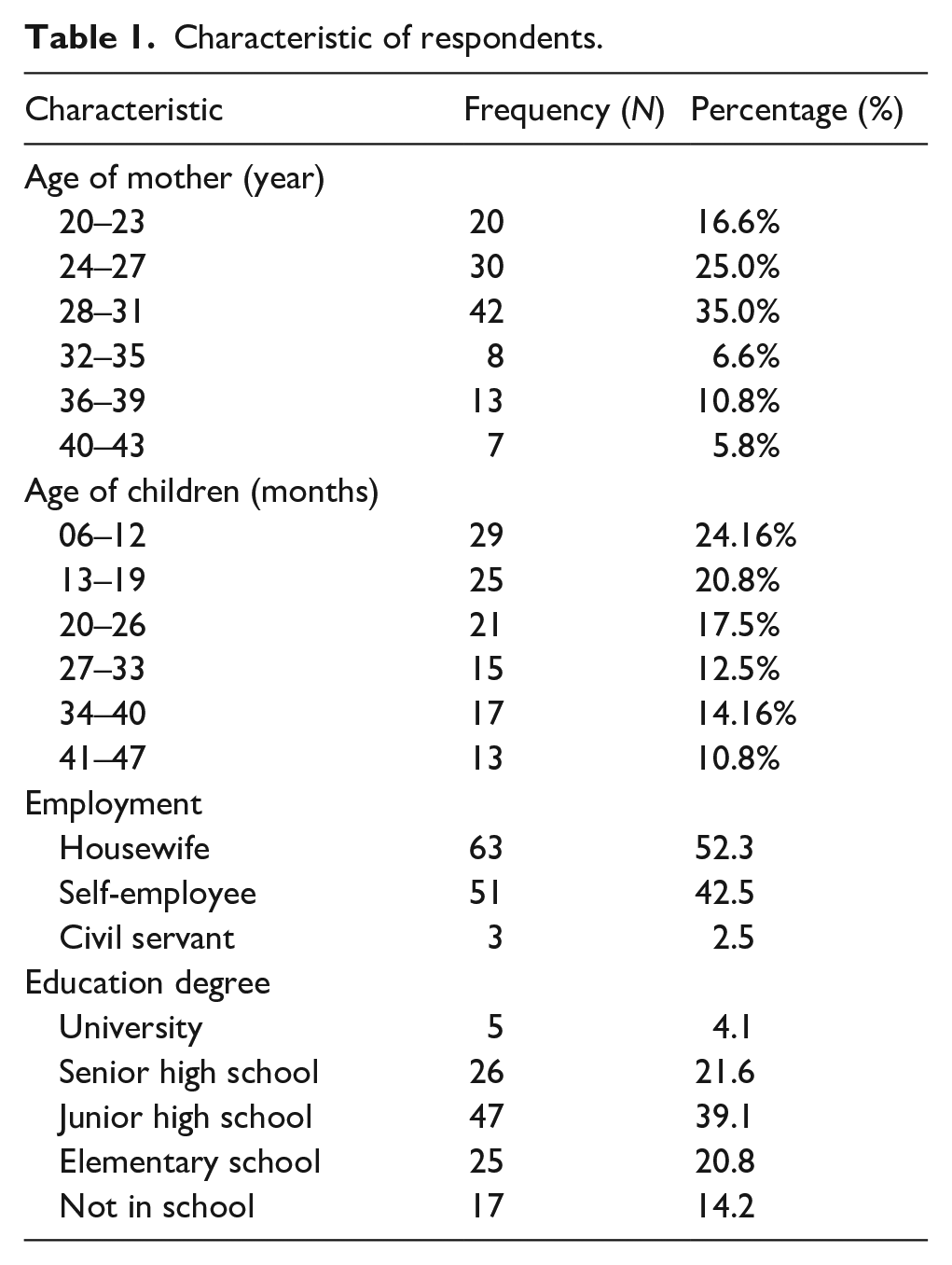
Table 2 showed the frequency distribution of culture, family support, knowledge, that fulfilling nutritional needs among family who have children with stunting. There were 54.2% with low fulfilling nutritional needs has specific culture. There were 40.8 % of participants who had low family support tend to have low in fulfilling nutritional needs among their children. There were 55% of participants who had poor knowledge tend to have low in fulfilling nutritional needs.
Frequency distribution of culture, family support, knowledge, that fulfilling nutritional needs.

Table 3 showed that culture, family support and mother’s knowledge were factors that affecting behavior of fulfilling nutritional needs among children under the age of 5 years with stunting, 0.279 (OR = 0.279, 95% CI: 0.084-0.920, p = 0.036); (OR = 2.435, 95% CI: 1.270-4.667, p = 0.007); (OR = 4.860, 95% CI: 1.548-15.261, p = 0.724), respectively. Based on the data above, families who have good family support have a risk of 2.435 in fulfilling good nutritional needs, good knowledge has a chance of implementing in fulfilling good nutritional needs of 4.860, and culture has an opportunity to provide less nutrition intervention 0.276 times than those who are not influenced by culture.
Factors affecting behavior in fulfilling nutritional needs among children under the age of 5 years with stunting.

Discussion
Stunting is the public health issue in Indonesia as well as in other developing countries. Our study showed that culture, family support, and knowledge were factors that affecting in fulfilling nutritional needs among children under the age of 5 years with stunting. Our study revealed that culture, poor family support, and poor knowledge tend to be low in fulfilling of nutritional needs among children with stunting. This study is in line with the previous study which mentioned that culture is related to beliefs and norms, social support, and caregiver and it has an effect on behavior in fulfilling nutrition among children, 22 this study also mentioned that culture is related to knowledge and it also had an effect on behavior in fulfilling nutrition among children. 22 Another study mentioned that family support, especially instrumental and emotional support from the father was related to stunting Indonesia. 23
The culture of the local community will greatly affect behavior in fulfilling nutrition among children with stunting. In this study, most of the respondents mostly only follow the orders of the parents or the existing culture of the family. This study is in line with previous studies which mentioned that parenting and family nutritional climate can predict food parenting practices and contribute to BMI scores in children.24–26 Culture is a society’s habits related to daily behavior. 27 It is necessary to increase programs that are focused on behavioral changes that have positive values in fulfilling nutritional needs among children with stunting. Government policies is needed when behavior was fail. 28
Our study revealed that family support is factor that affecting in fulfilling nutritional needs among children under the age of 5 years with stunting. Fulfilling nutritional needs among children is needed the family support29–31 especially related to exclusive breastfeeding. 32 Family support is defined as assistance from the closest people such as husbands and parents. In Indonesia, paternalistic family have rule, that was mother has responsible for taking care of the baby. 33 So, it is necessary to empower women or counseling regarding appropriate nutrition for their children, and it must be supported by the family.
Knowledge is factor that influence in fulfilling nutritional needs among children under the age of 5 years with stunting. Knowledge about nutrition was supported by adequate education. 34 Mothers who have adequate knowledge about nutrition can choose and feed their children better, especially related to breastfeeding. 35 Adequate maternal education will support the readiness of mothers in caring for children. 36 It must be supported by the family’s ability to meet daily needs as well as household income. 37
Based on the results of the study culture, family support, and knowledge in fulfilling nutritional needs for children under the age of 5-year-old with stunting. Fulfilling nutritional needs determines the health status of children. Therefore, the awareness of parents who have children under the age of 5-year-old with stunning is needed to improve their knowledge, and family support as well as multisectoral. The limitation of this study was considered, this study is a cross-sectional study, therefore the association between variables must be interpreted carefully. Further research is needed regarding longitudinal study and nutrition interventions for children with stunting is needed that go in hand with local policies as well as regional culture.
Conclusion
There were influence of culture, family support, and mother’s knowledge on behavior in fulfilling nutritional needs for children under the age of 5-year-old with stunting especially in coastal areas. Mother’s behavior in fulfilling nutrition needs to be supported by regional policies with a multi-disciplinary approach so that the incidence of nutritional disorders can be minimized.
Footnotes
Acknowledgements
We would like to thank all the respondents, Kedaireka Kementerian Pendidikan, Kebudayaan, Riset, dan Teknologi. Republik Indonesia, and, Universitas Muhammadiyah Surabaya, for their support of this study.
Declaration of conflicting interests
The author(s) declared no potential conflicts of interest with respect to the research, authorship, and/or publication of this article.
Funding
The author(s) disclosed receipt of the following financial support for the research, authorship, and/or publication of this article: The authors received financial support from Kedaireka Kementerian Pendidikan, Kebudayaan, Riset, dan Teknologi. Republik Indonesia for the research, authorship, and/or publication of this article.
Ethical approval
This research has received approval from the ethics committee of Universitas Muhammadiyah of Surabaya number 21/KEPK/2021.
Significance of public health
Stunting is the consequences of malnutrition and it has negative effect on neurocognitive development among children. Therefore, stunting is public health issue, because it was related to mortality and morbidity. Indonesia is country with high prevalence of stunting. Knowing well factors related to stunting among children under 5-year-old age is needed for developing strategy to prevent stunting.
