



Abstract
Used as a method of university reform, new public management (NPM) involves an ideology of managerialism that conflicts with collegiality and causes ‘hybridisation’. In management organisations, when organisational goals are not shared at the individual level, this adjustment mechanism shifts to the organisational level. This study aimed to examine whether there are coordination mechanisms at the organisational level in universities by focussing on those in Japan, particularly private universities that require autonomous management. Multi-level analysis results revealed that although there is hybridisation associated with increased managerial pressure, there are no organisational-level mechanisms to reduce conflict. In conclusion, the authors point out the difficulty of organising private universities based on managerialism and suggests that university reform in Japan may be ‘hollowing out’ in the public sector as well. Further, the study emphasises the importance of undertaking a comparative study of governance arrangements in China’s private universities in the future.
Introduction
Hybridisation of university
In the global trend of university reform, the focus of university administration has shifted from democracy and legitimacy to the pursuit of efficient goals and financial value based on new public management (NPM) (Sporn, 2007). As a policy instrument, NPM aims to emphasise the reduction of central government powers and the devolution of powers to local institutions (Enders et al., 2008). Its objective is to promote organisational change in public sectors and reduce state expenditure (Sporn, 2007) as well as aid the transition from bureaucratic to entrepreneurial organisations (Bleiklie & Svein, 2008). As described above, there are various perspectives on NPM, and the concept is not clear (Maassen, 2008). However, underpinning NPM is an ideology of managerialism that considers the public sector as something to be ‘managed’ and seeks to fulfil its responsibilities to its customers, (i.e. consumers and taxpayers) through rationalised and standardised procedures (Ekman et al., 2018, p. 301).
The emergence of managerialism has led to hybridisation of traditional collegial-based value norms (Amaral, 2008), but when individual-level goals are not aligned in organisations, conflict resolution shifts to organisational-level solutions of ‘bargaining’ and ‘politics’ (Bess & Dee, 2014; March & Simon, 1993). For private universities, which do not receive financial protection from the government, coordination of conflicts between the university board and the faculty is an important issue. Especially, Confucian states where, unlike in Western countries, the popularisation of higher education mainly depends on the expansion of private universities (Marginson, 2011), this issue has important significance for the states and not just for individual universities. However, the processes of higher education transformation in Confucian countries are not identical. As will be discussed below, Japan has undergone a remarkable change from decentralisation to centralisation and is more susceptible to hybridisation. The purpose of this study is to clarify whether conflict adjustment mechanisms for goal integration can function in university similar to how they work in management organisations, targeting private universities in Japan.
Aspects of conflict in western countries
In Western countries, which are model for universities in Japan, the conflicts caused by managerialism are not only within universities but also between governments and universities. Marginson (2008, p. 279), referring to the problem of NPM between governments and institutions through a comparison of the concepts of freedom in Sen and Hayek, argues that although Hayekists focus on ‘freedom as control’, they discard the perspective of ‘freedom as power’ in institutions. Ekman et al. (2018, p. 318), in a case study in Sweden, argue that the image of academic leadership between government and universities has become ‘black-boxing’, and Hansen et al. (2019) stated that strengthening of managerialism in Nordic countries has raised issues regarding the measurement of academic performance and that the intensity of managerialism varies across countries. On the other hand, strengthening of managerialism at the organisational level reinforces the market orientation of universities, and this change promotes a centralisation of leadership at the top level and a shift toward professional management of administration (Sporn, 2007). Boer (2002) highlights the weakening of communication between top management and faculties in the Netherlands, whereas Sapir and Oliver (2017, p. 722) argue that in loosely coupled forms of university organisation, managerialism remains a ‘symbolic experiment’ that lacks reality. The conflicts caused by managerialism also manifest ‘cultural clashes’ between faculty and staff (Swenk, 1999), and Kuo (2009) points out the need to understand the cultural diversity that arises due to the unique nature of the organisation as an academic community.
Since the 1990s, new higher education systems that include the contradictions of managerialism have spread worldwide and penetrated deeply into Asian countries (Sporn, 2007); this has also had a strong impact on Japan, which is the focus of this study.
University reforms in Japan
In Japan, university reform based on neoliberalism was evident in the third report of the Ad Hoc Council on Education, published in 1987, during the Nakasone administration. However, in 2004, the incorporation of national universities had the greatest impact on university reform. Private universities, unlike national universities, which are subject to tighter control by government, have been encouraged to reform by direct market pressures (Yamada, 2018). Private universities are the main pillars of higher education in Japan, accounting for 77.4% (615) of the total 795 universities (MEXT, 2020a). Many private universities are family run (Breaden & Goodman, 2020), and their governance structure is ambiguous. However, the 2004 amendment to the Private School Act made it clear that private universities were governed by school corporations. On the other hand, among the rapidly declining population of 18-year-olds and the ageing population, many of whom are facing a financial crisis, almost 50% of them were below their enrolment capacity in the 2008–2009 academic year (MEXT, 2020b). Kitagawa and Yonezawa (2017) pointed out that external pressures, such as tighter fiscal guidance and social factors, have generated isomorphism along with increased competition among public and private institutions and that it is necessary to clarify how governance within institutions is transforming. Huang et al. (2020), through their empirical analysis of the transformation of university governance between 1992 and 2017, found that although national universities had become more centralised under government regulation, private universities had become more decentralised, and there were differences in university governance among institutions. However, private universities are not beyond the reach of government regulation based on the ideology of managerialism either, and further amendments to the School Education Law designed to weaken the Faculty Council and strengthen the centralised system have enhanced government control over private universities (Yamada, 2018). In accordance with this situation, in order to realise ‘incisive and bold reforms’ (Governance Committee of the University Management Association, 2018, p. 3–4), private universities have responded by enacting the ‘governance code’, a detailed set of guidelines for management principles. Furthermore, the overemphasis on ‘corporate governance’ in private universities has neutralised the ‘board of trustees rule’ or ‘one-man management’ based on the norm in ‘family-run universities’ (Breaden & Goodman, 2020, p. 222). As in Western countries, the current situation of hybridisation needs to be examined, but there is no previous research in Japan that has focused on the typological level of informal organisation that generates the conflict. There is also no previous research that has focused on the level of conflict between organisation and individuals.
The characteristics of the higher education sector and the current state of university reform in Japan, focussing on private universities has the following benefits. The first advantage is the intensity of conflicts based on external pressures. The pressures of market changes are making it more difficult for private universities to operate in a stable and sustainable manner. The second advantage is that the problem of hybridisation can be expected to manifest more clearly in private universities. Public universities, which are required to respond to the demands of government and local authorities on a range of indicators, need a more cooperative relationship between the university board and the faculty to find compromises, rather than tensions based on authority. In contrast, private universities, which depend on students’ tuition fees, have more freedom in management. However, it is difficult to find a compromise between them. For these reasons, this study will focus on private universities.
Research focus
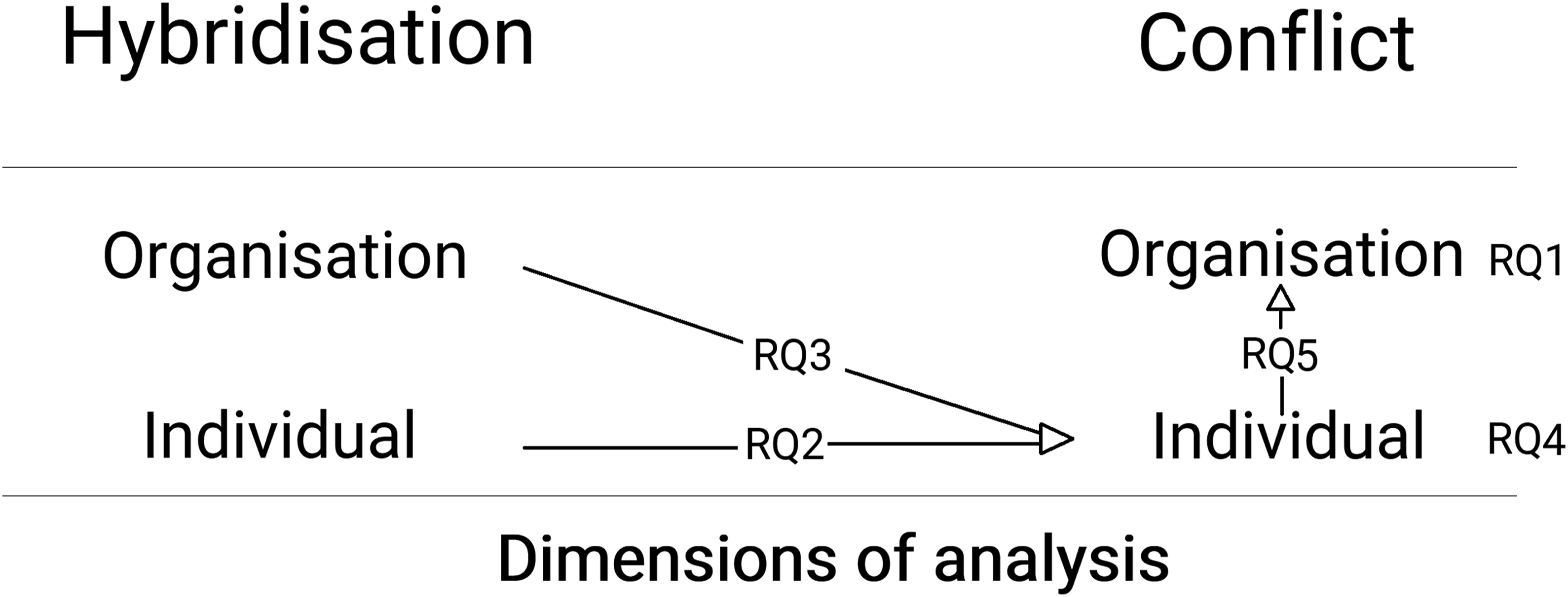
The aim of this study was to examine whether there are coordination mechanisms at the organisational level in universities by focussing on those in Japan, particularly private universities that require autonomous management, and to clarify whether conflict adjustment mechanisms for goal integration can function in university similar to how they work in management organisations. To this end, five research questions were formulated based on March and Simon’s (1993) theory of ‘intergroup conflict within organisation’. March and Simon (1993, p. 140–141) point out that the causes of intergroup conflict can be summarised in three conditions, including ‘a difference in goals’ (DiG), ‘a difference in perceptions of realty’ (DiP), and ‘a positive felt need for joint decision-making’ (JDM). Only the JDM has the potential for goal integration, leading to bargaining and politics at organisational level (ibid, p. 150). The following research questions are designed to verify whether the same conditions can be explained in private universities. The conceptual figure of the research questions is shown in Figure 1. RQ1: If the degree of conflict at the individual level, which is the premise of intergroup conflict, differs among members, does the degree of conflict at the university level differ among universities? RQ 2: If DiG affects conflicts at the individual level, does managerialism at the individual level increase conflict at the same level, and does collegiality at the individual level reduce conflict at the same level? RQ 3: As in RQ 2, does managerialism at the organisational level increase individual-level conflict, and does collegiality at the organisational level reduce individual-level conflict? RQ 4: If DiP affects conflicts at the individual level, does higher (lower) selectivity of universities lead to lower (higher) conflicts at the individual level? Does the expertise of the researcher also influence conflict at the individual level? RQ 5: If interdependence between the university board and the faculty member is weak, and both sides do not feel JDM (ibid. p.142), can intergroup conflict be explained only by DiG and DiP? Analytical framework for research questions.
Materials and methods
Analytical framework
We conducted a multi-level analysis to verify the research questions, focussing on two points. The first was to focus on conflicts at the individual level and examine the mechanism of conflict adjustment based on fixed effects (RQ2, 3 and 4). The second was to focus on the random effects at the organisational level and identify the factors that determined the differences in conflicts at the university level (RQ1, 5). For the multi-level analysis, free software R Core Team (2016) and the Lmer function of the Lmer Test package (Kuznetsova et al., 2017) were used.
Definition of variables.
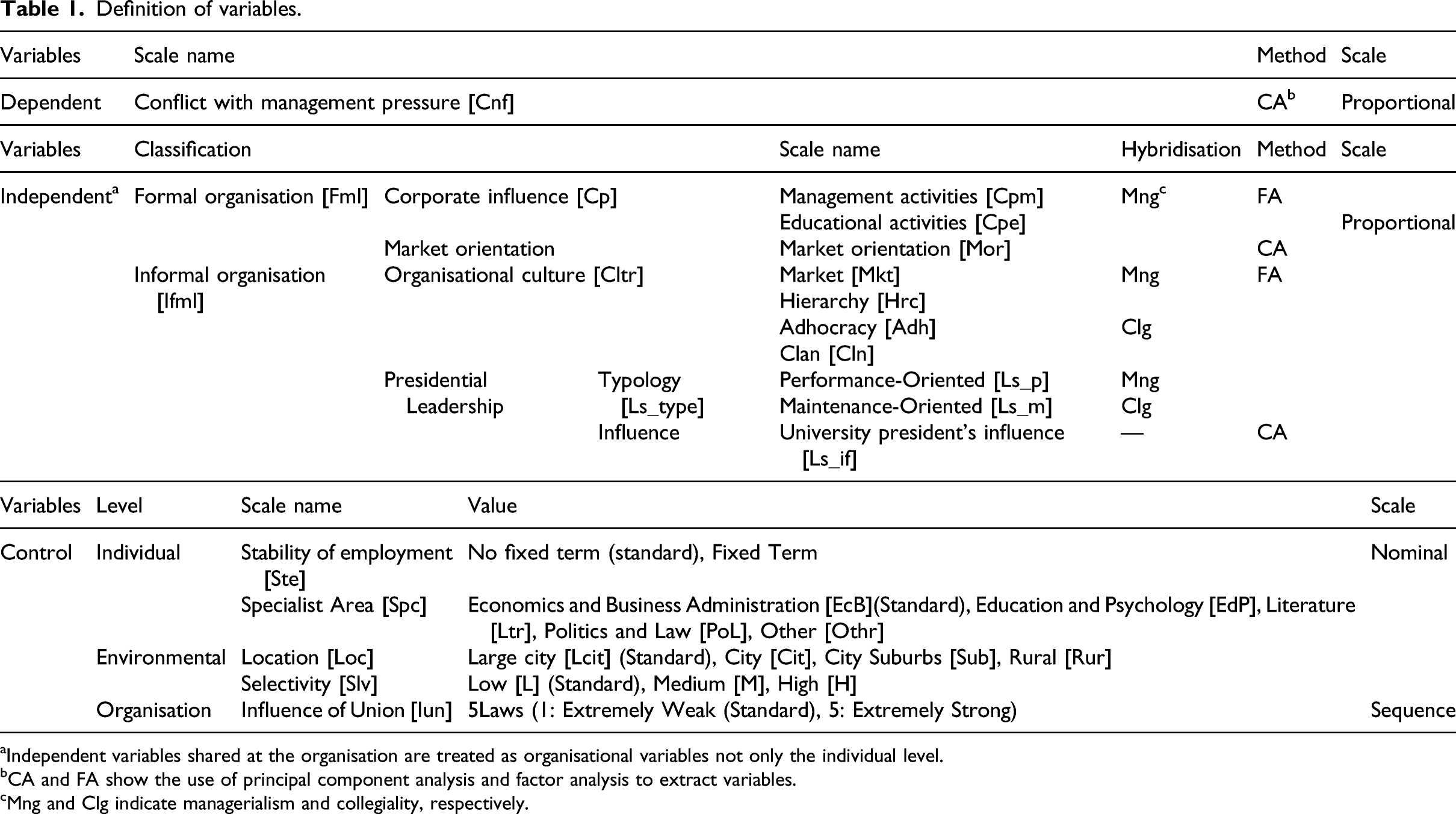
aIndependent variables shared at the organisation are treated as organisational variables not only the individual level.
bCA and FA show the use of principal component analysis and factor analysis to extract variables.
cMng and Clg indicate managerialism and collegiality, respectively.
Regarding informal organisations, Figure 2 is a conceptual diagram of the Competing Values Framework (CVF), which includes four types of organisational culture. Leadership is categorised based on the ‘Performance-Maintenance (PM) theory’ advocated by Misumi Jyuji (Kuwata & Tao, 1998, p. 233). This theory divides leadership into the two dimensions of performance and maintenance of human relationships, and it is difficult for the same person to fulfil two functions, which are seen as orthogonal axes (ibid.). Leadership and organisational culture are ‘two sides of the same coin’ (Schein, 2004, p. 10), and we set these variables as informal organisations which were not based on the authority. Competing Values Framework. Source: Cameron and Quinn (2006, p. 35).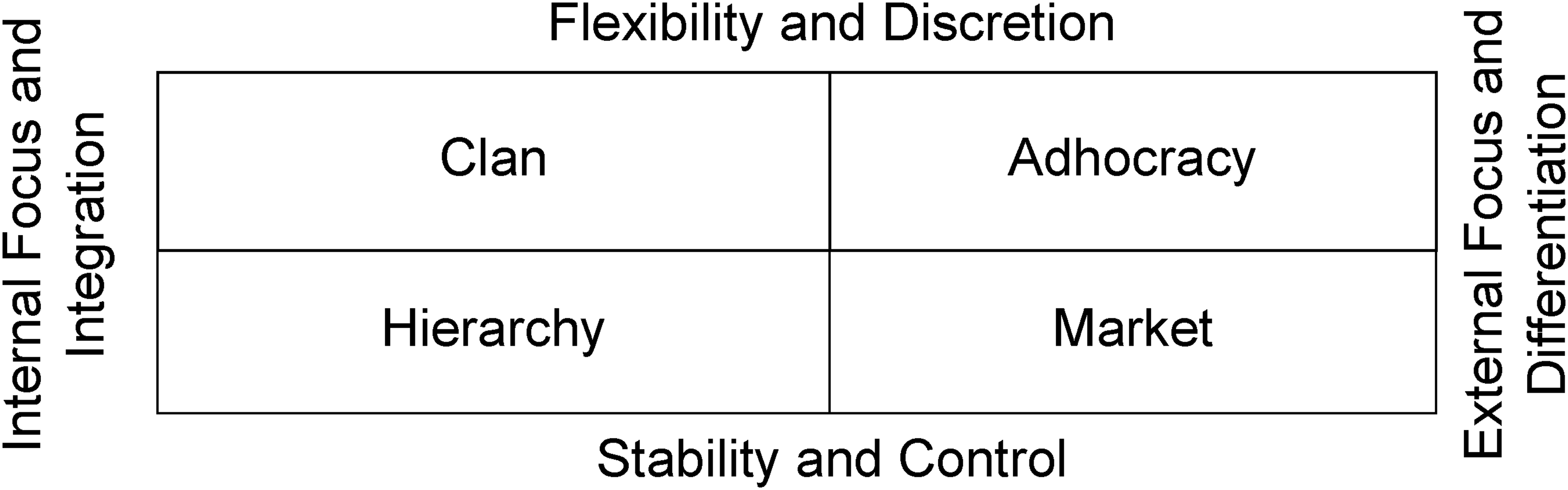
The strength of the presidential leadership was set as a variable not only on the basis of type but also on potential for influence. Moreover, in addition, as control variables, we set faculty expertise and employment stability at the individual level, and prestige and location at the environmental level. For prestige, we used selectivity as a proxy variable and set the data for each faculty based on the university’s deviation ranking. Finally, we set the strength of the union’s influence in each university, consisting of academic and non-academic staff who were the counter forces of the university board.
As mentioned above, this study used variables based on respondents’ subjectivity as dependent and explanatory variables, which gave two advantages in developing the research questions. Firstly, combining these variables with multi-level analysis allows us to identify the relationship between the dependent and the explanatory variables in two dimensions. Secondly, the typology of informal organisations using theoretical measures is useful in identifying the hybridisation of invisible informal organisations. However, objective indicators were not used for formal organisation. In order to overcome this limitation, the organisational characteristics were evaluated, but this is a limitation of the study.
Data
As mentioned above, this study conducted a multi-level analysis of private universities in Japan. The study covered approximately 110,000 (MEXT, 2020c) faculty members, which is a considerable number. In micro-level analysis, the cost of surveying is an unavoidable issue; for example, the GSS survey, an American sociological survey, assumes that the respondents were sampled by simple random sampling and sets the survey probability at 1 in 100,000 (Bohrnstedt & Knoke, 1988, p. 90). This study faced the same challenge. In order to collect as much data as possible, while maintaining the simple randomness of the sample and the characteristics of a private university, two policies were adopted. The first was to use a web-based survey using Google Forms to save on the costs of the whole process, from sample listing to data registration. The second policy was to limit the survey to humanities departments at private universities. Private universities in Japan are mainly humanities departments; the members in science, technology and medicine are only 12.5% of the total number at these universities (MEXT, 2020c and Japan Association of Private Universities General Incorporated Association, 2020), and we judged that there were no serious problems in understanding the overall conflict adjustment mechanism of private universities. In addition, humanities departments are diverse, and even if science, technology and medicine are excluded, it is possible to compare the professional conflicts in the above research question. For these reasons, we decided to include only humanities faculties in this questionnaire. In order to collect data based on the above two policies, we referred to each university’s integrative website of department information about selectivity ‘Daigaku Hensachi.biz: http://xn--swqwdp22azlcvue.biz/’ and collected department information from 327 universities with 1546 faculties in the academic fields of law, literature and economics and business administration. Furthermore, based on the data of the faculties, 4830 e-mail addresses were collected from 178 different universities. Based on this data, the questionnaire survey commenced in March 2020, and continued for 16 days. Results were analysed from universities that had provided at least three responses. Out of 147 universities (where at least three people received the survey), only 36 universities met the criteria (at least three people provided a response); thus, the response rate from the universities was 24.5%. The final number of respondents was 181, and the average number of respondents from each university was 5.03.
Questionnaire
The exception of the two controlled variables was related to the environment (location and selectivity), and all the data used were based on the responses of the questionnaire respondents. The dependent variable, Conflict, was assessed using a five-point scale on five items, including dissatisfaction with management attitude, pressure to enforce university management policies and fill capacity, reorganisation based on management indicators, and emphasis on profitability rather than educational content. The Corporate Influence of the formal organisation was assessed as the balance of power between the university board and the faculty in relation to teaching and management activities, with a lower limit of 0 and an upper limit of 100 for seven activities, which included the university’s medium- to long-term management policy, admission and diploma policy, curricula, facilities development, budget allocation and faculty personnel. In terms of market orientation, we used a five-point scale to evaluate the university’s performance in 10 areas, including its proactivity in educational reform, reflection of educational and research achievements in salaries, activating the alumni organisation, strengthening of the president’s discretion and foresight in implementing policies. Regarding the organisational culture of informal organisations, a total of 12 questions corresponding to the four types of organisational culture were asked in three categories based on the CVF scale: overall characteristics, interests of the university executive and common interests of the faculty. Adhocracy is based on creativity and innovation, Clan is based on a sense of belonging and morale, Market is based on competition with rival universities and Hierarchy is based on efficient management. The leadership questions were based on PM theory and included items related to performance-oriented leadership, such as demanding the achievement of key goals, presenting a specific vision and long-term goals and actively differentiating the university from others, as well as items related to maintenance of human relationships. Examples of these included emphasising the welfare of faculty and staff, working with critical people, and persuading groups with different opinions. A total of 10 items were assessed using a five-point scale. The question items on the control variables are shown in Table 1.
Results
Summary of statistics
Descriptive statistics for variables and correlation coefficients (individual level) (n = 181).
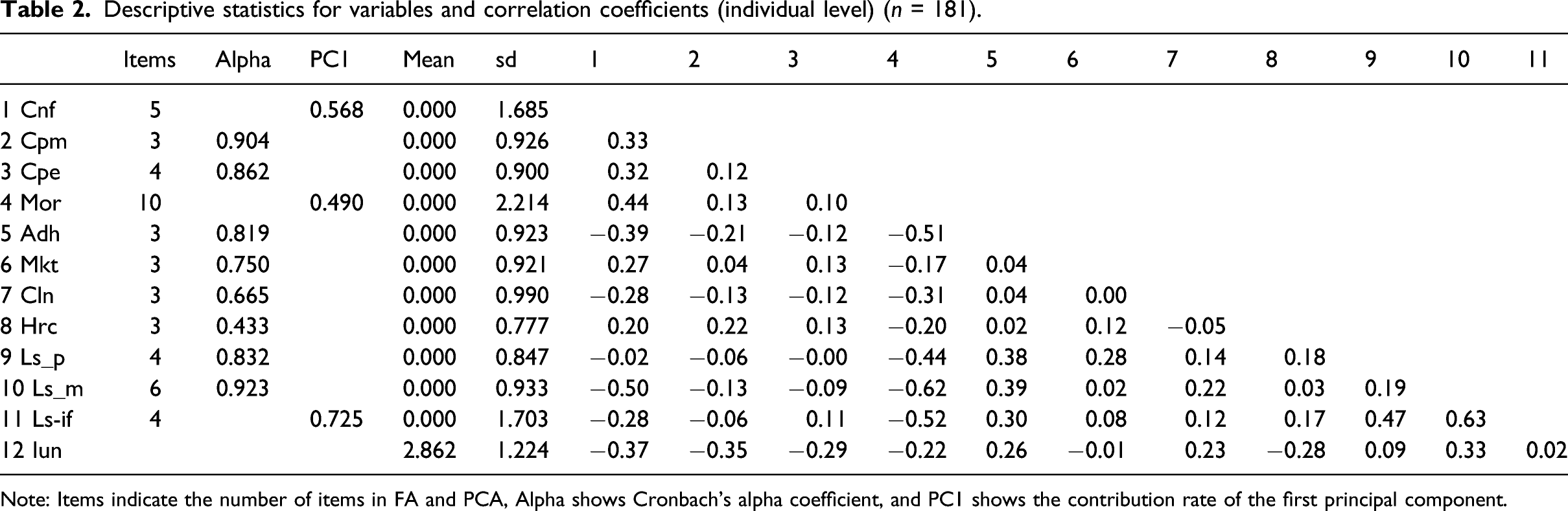
Note: Items indicate the number of items in FA and PCA, Alpha shows Cronbach’s alpha coefficient, and PC1 shows the contribution rate of the first principal component.
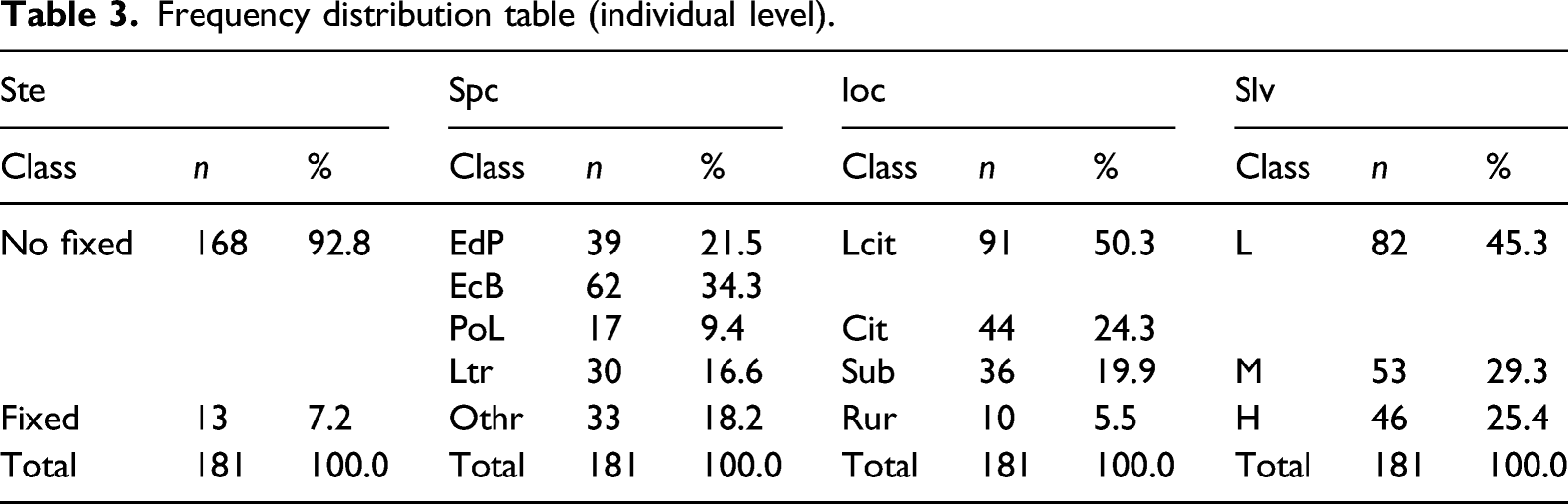
Frequency distribution table (individual level).
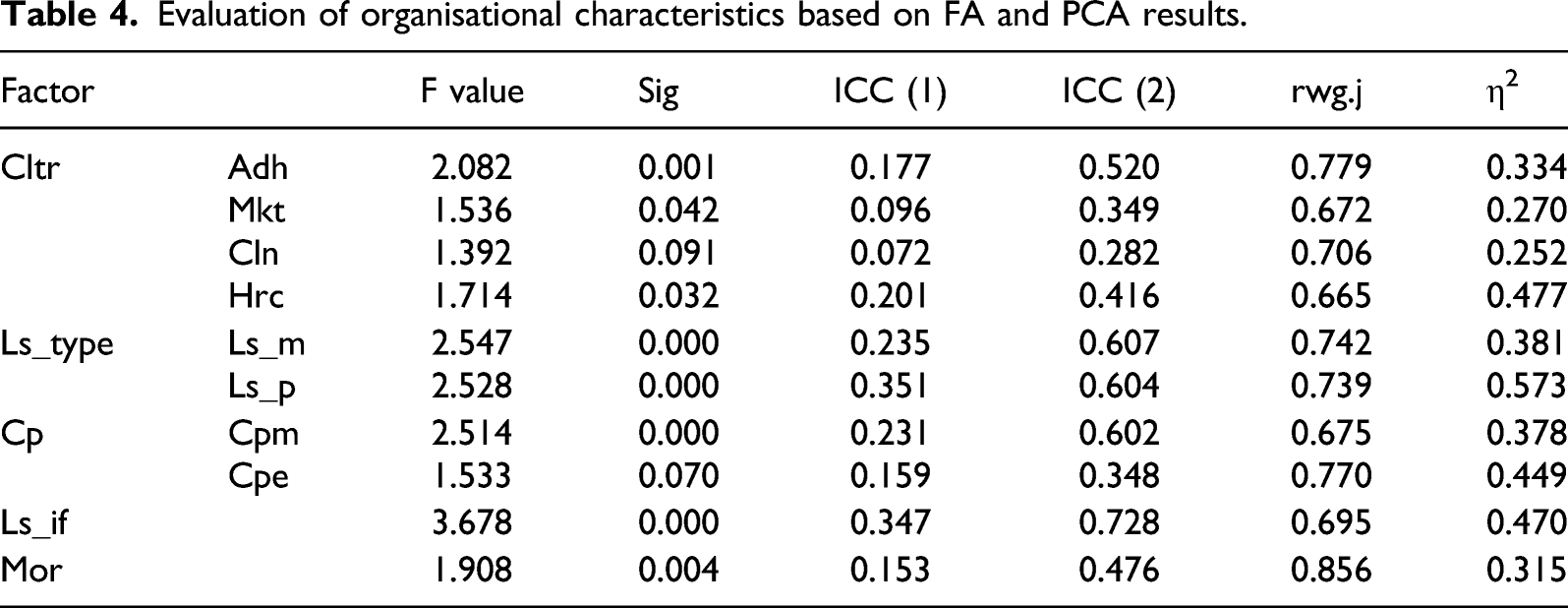
Evaluation of organisational characteristics based on FA and PCA results.
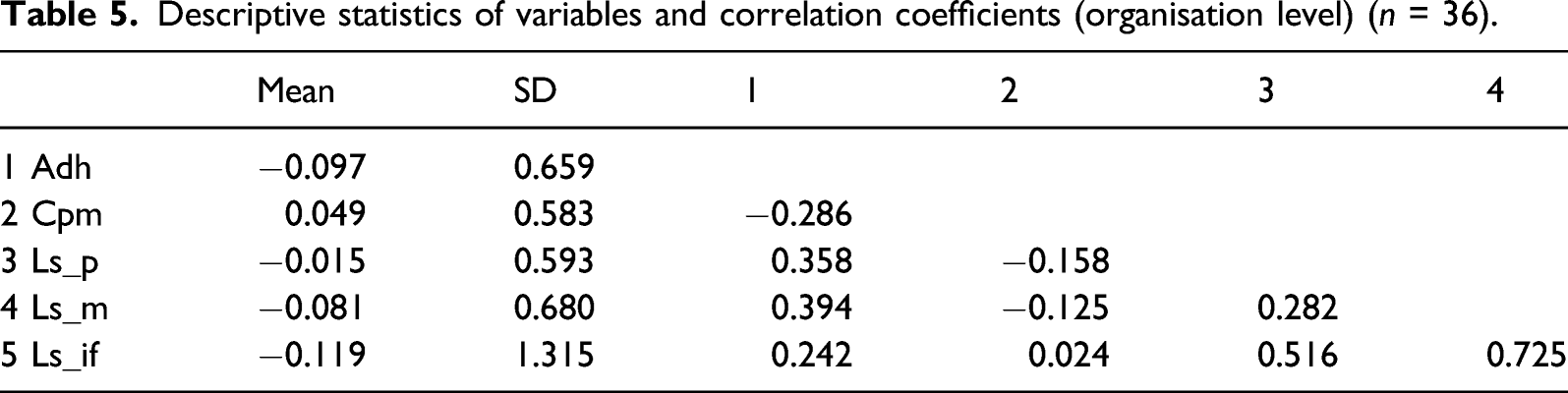
Descriptive statistics of variables and correlation coefficients (organisation level) (n = 36).
Results of the multi-level analysis
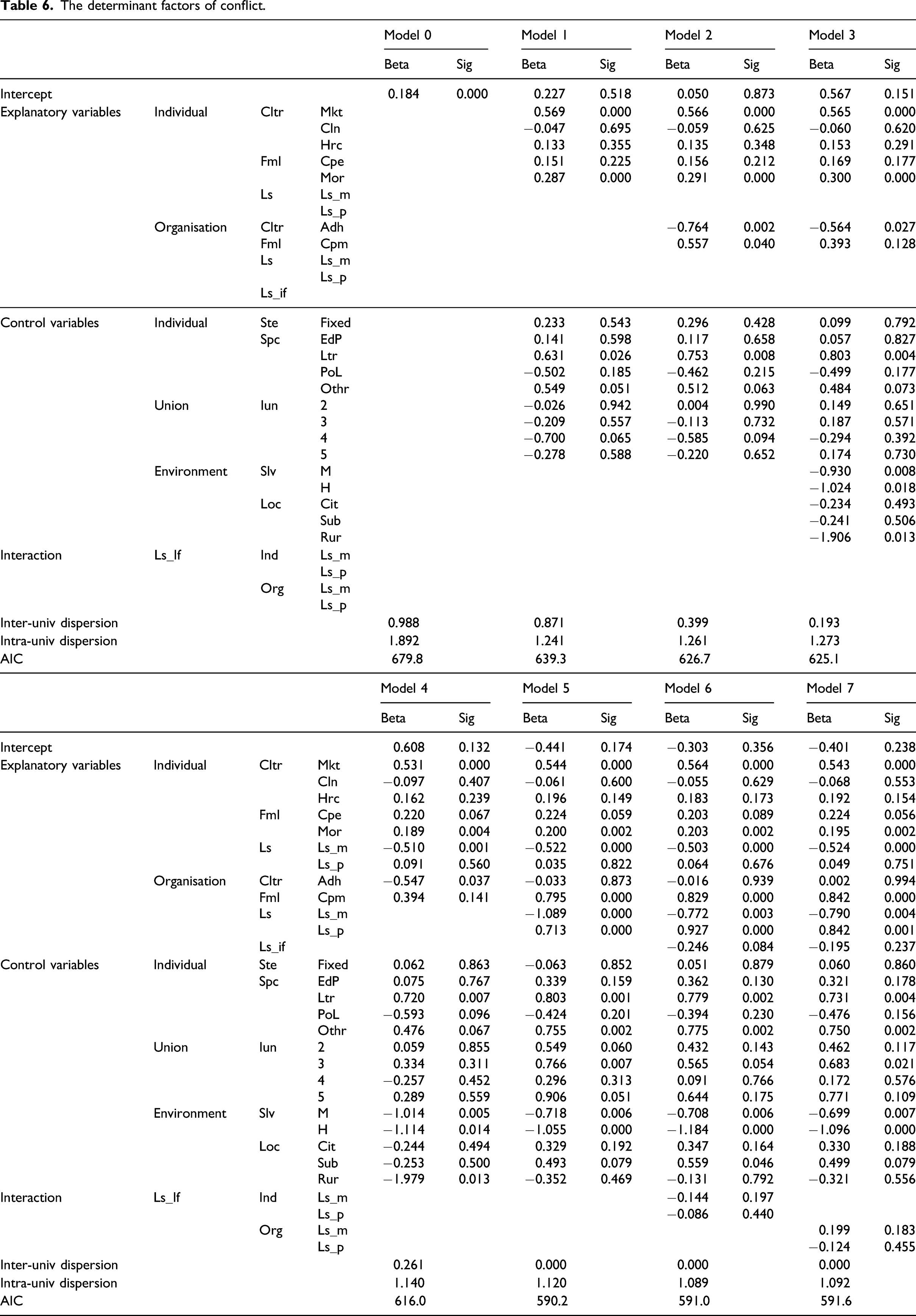
The determinant factors of conflict.
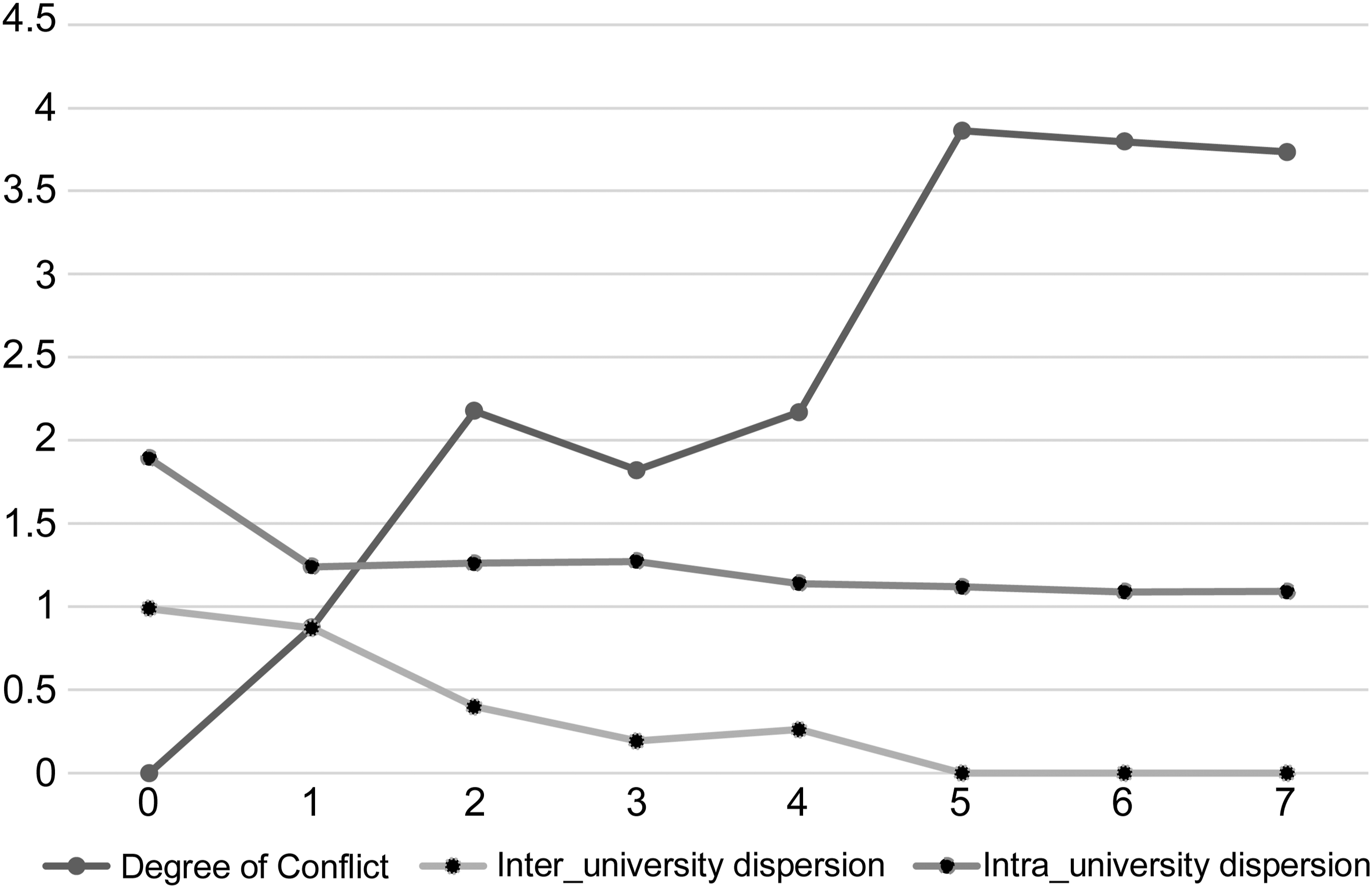
Changing conflicts between models.
Firstly, research question 1 on the variance of organisational-level conflicts between universities was showed by Model 0. Of the total intra- and inter-organisational variance, about 34% was made up of inter-university variance.
Research question 2, which examines the impact of perceived hybridisation on conflict at the individual level, focuses on Models 1 and 4. Model 1, in which organisational culture and formal organisation are input, shows a strong conflict toward market orientation in both formal (Mor) and informal (Mkt) organisations (p < .0001 for both variables), but centralisation to educational activities (Cpe) and hierarchy culture (Hrc) do not affect conflict. In Model 4, presidential leadership was input. Although there is a conflict-reducing effect of maintenance-oriented leadership (p = .001), the effect of performance-achieving leadership is not statistically significant. In Figure 3, it can be seen that the individual conflict level has increased sharply and the variation of conflict among the members has decreased, but it has not changed much in the subsequent models. This indicates that the external pressure of economic environment deterioration has a significant impact on the individual level conflict of faculty members, as shown in the previous studies.
Research question 3, which examines the effect of hybridisation at the organisational level, focuses on Models 2 and 5. While adhocracy (Adh), which is supportive of autonomous research activities, reduces conflict (p = .002), centralisation in management activities (Cpm) reinforces conflict (p = .0399). The degree of conflict in Figure 3 shows a significant increase in conflict between the collegial and managerialism models. Furthermore, in Model 5, where leadership at the organisational level is introduced, there is a different significant effect between the types that was not seen at the individual level (Ls_p p = .00014, Ls_m p < .0001). The degree of conflict in Figure 3 also increases further, showing the largest change between the models. In light of the above, we can say that Research question 3 is confirmed.
We confirm Research question 4, which refers to the influence of control variables. In Model 3, in which selectivity was used as an environmental condition, there is a consistent tendency for conflict to increase as the level of difficulty decreases. It should be noted that the inter-university variance also decreases between Models 2 and 3 by perception of selectivity. In addition, for the speciality, which was input as a control variable at the individual level, conflicts of literature (Ltr) were confirmed to be significantly higher than those of the standard economics and business administration fields. As with other control variables, the status of employment at the individual level and the location at the environmental level were also put in, but none of these were significant. Regarding the influence of the union, the beta value shows a partial tendency for the conflict to be more intense the higher the voice, but this was not statistically significant.
Finally, Model 5 has the highest explanatory power of all the models, and it is noteworthy that the inter-university variation in Figure 3 disappears in this model. In other words, all the inter-university variation in conflict is explained in this model. This fact indicates that the organisational-level conflict adjustment mechanisms for goal integration, such as bargaining and politics, which are applied in the business organisation but not in this model, do not exist in the university organisation, and Research question 5 is revealed. Furthermore, this result means that individual conflicts will remain if maintenance-oriented leadership does not work. Models 6 and 7, which examined the interaction between the influence of presidential leadership at the organisational level and presidential leadership types at the individual and organisational levels, respectively, were not significant in either case.
Discussion and conclusion
In this study, we examined whether Japanese private universities could be transformed into management organisations by managerialism, using March and Simon’s (1993) theory of intergroup conflict as a guide. There are three main findings. First, for individual-level conflicts, hybridised formal and informal organisations generate DiG. Second, for individual-level conflicts, individual perceptions of selectivity and professionalism generate DiP. However, DiG and DiP do not lead to bargaining and politics to reconcile conflicts at the organisational level; only JDM can facilitate goal integration between groups within organisation. However, the conflicts at the organisational level in university organisations were dominated by DiG and DiP, and the conflicts brought about by JDM were not observed in the private university sector as a whole. This brings us to the third fact: it was concluded that there is no conflict coordination mechanism to promote goal integration at the organisational level in university organisations. Heller (2021) points out that universities adopt managerialism uncritically, but there is no evidence that this approach is beneficial. The above results also show that it is difficult to expect organisational change toward autonomous managerial capabilities by strengthening managerialism.
The academic contribution of this study is two points. First, the results show that the hybridisation in Western countries that we have shown from previous studies is also occurring in Japan. Second is the theoretical justification of intergroup conflicts. Although the existence of DiG and DiP was demonstrated and JDM was not observed, the results seem to justify the theory of intergroup conflict, given the inherent low interdependence between the executive and the university. As the practical contribution, this study revealed that no alternative to faculty self-governance, such as shared governance, has been found in Japanese private universities.
Thus, we make practical suggestions. The above results suggest that university reform in Japan may be ‘hollowing out’; this includes public universities where the business environment is more stable than at private universities.
The limitations of the study are that the sample size of private universities was not sufficient due to resource constraints, and that science, engineering and medical faculties were not included. Additionally, in Japan, collaboration is more important than professionalism, and staff members who play a role in this collaboration were not the subject of this study. In terms of leadership, the study only focused on the president, not the chancellor or middle-level leaders.
For further research, among the Confucian states, it is particularly important to conduct a comparative study with private universities in China, wherein institutional governance arrangements are more affected by the market force. As existing studies show, in 1999 there were only 37 private universities in China (Umakoshi, 2004, p. 41), but by 2018 this had increased twenty-fold to 746, with a full-time student population of 6.28 million (Liu, 2020, p. 275). Our study pointed out the absence of a mechanism to coordinate conflicts at the organisational level in Japanese private universities. However, Liu (2020, p. 288), through a case study of the governance of a private university in China, has shown that communication between the council chair and the president is an important factor in the development of the university and the fulfilment of its mission. From a practical point of view, it would be of great importance to explore the similarity and difference in the conflict coordination mechanisms of the two countries.
Footnotes

Declaration of conflicting interests
The author(s) declared no potential conflicts of interest with respect to the research, authorship, and/or publication of this article.
Funding
The author(s) disclosed receipt of the following financial support for the research, authorship, and/or publication of this article: This study was supported by the JSPS KAKENHI (Grant Number 17H00075).