



Abstract
The COVID-19 pandemic outbreak has forced online teaching and learning to be the primary instruction format in higher education globally. One of the worrying concerns about online learning is whether this method is effective, specifically when compared to face-to-face classes. This descriptive quantitative study investigates how students in higher education institutions in Hong Kong evaluated their online learning experiences during the pandemic, including the factors influencing their digital learning experiences. By analysing the survey responses from 1,227 university students in Hong Kong, this study found that most of the respondents felt dissatisfied with their online learning experiences and effectiveness. Meanwhile, this study confirms that respondents’ household income level and information technology literacy affected their online learning effectiveness. Moreover, this study highlights the significant contributions of the community of inquiry, which places social presence on the promotion of a whole person development that could not be achieved when relying mainly on online learning. Findings encourage university leaders and instructors to search for multiple course delivery modes to nurture students to become caring leaders with the 21st century skills and knowledge set.
Introduction
Amongst the three traditional functions of higher education institutions—scientific research, talent training and social service, students’ competence cultivation attracts additional attention because competence cultivation is related not only to the personal development of students but also to the national human resource and economic development. In embracing such functions, higher education has been treated as the primary way of cultivating students’ hard and soft skills and nurturing them as future leaders through a sound pedagogical design and specific teaching and learning activities. In addition to the 21st-century skills, the development of the Fourth Industrial Revolution featured by the exponential technologies, such as artificial intelligence, automatics, bioengineering and more, has brought many challenges to higher education teaching and learning. This event has allowed universities to greatly prepare students with the skills and competences to be adaptive to the fast-changing job market and the society in general (Xiong, 2019).
However, the entire world was shaken by the sudden coronavirus disease 2019 (COVID-19) outbreak in the late 2019, which has significantly disrupted the discourse and practices of student competency cultivation. The COVID-19 pandemic has adversely affected not only the global economy but also the different development aspects, including the education sector at all levels with closures of educational institutions (Altbach & de Wit, 2020; Seker et al., 2020; Yap, 2020). The wide spread of the COVID-19 has undoubtedly changed the education landscape worldwide. In addition, the pandemic has not only interfered with student mobility, specifically international students (Marginson, 2020; Mok, 2020), but it has also hindered student development and learning experience because of the sudden transfer of conventional face-to-face classes to online learning regardless of instructors and students’ readiness. Students reported that they are commonly affected negatively by stress and mental well-being across university campuses globally (Cao et al., 2020; Wang et al., 2020). Different from the traditional online learning elements, such as the Massive Open Online Courses and learning management systems (e.g., Moodle or Canvas), this ‘rush-to’ transfer has brought the new phenomenon called “emergency online learning”, which has created many confusions to instructors, students and higher education administrators (Chung et al., 2020; Korkmaz & Toraman, 2020; Xiong et al., 2020). These confusions also highlight the demand for timely empirical and theoretical research to provide suggestions for conquering the challenges in emergency online learning.
Although many studies have discussed the (in)equality issues in online learning during the pandemic (e.g., Altbach & de Wit, 2020; de Wit & Altbach, 2020; Mok, 2020; Saeed, 2020), additional attention should be paid to the quality of online learning during the pandemic. Most importantly, this article is expedient in the COVID-19 crisis context to critically examine how online learning and teaching effectively cultivate students’ competence for the job market and personal life fulfilment. More specifically, this article attempts to address the following questions: Can the current emergency online learning effectively equip students with the needed competencies for the future job market? How far could the current emergency online learning prepare students to adapt to the changing landscape of higher education, society and personal life?
As Hong Kong is aspiring to become Asia’s world city, university students enjoy a high-level of accessibility to the Internet and information and communication technologies. However, it is worth exploring in the pandemic whether high Internet accessibility can guarantee quality online learning experiences and attainments, and ultimately the successful cultivation of competencies and skills. The Hong Kong government and higher education institutions are exploring how to ensure quality attainments for university students’ online learning, especially against the pandemic context. For instance, the Bureau of Education has supported education institutions of all levels through different fundings and resources in implementing online learning (Hong Kong Legislative Council, 2020).
In short, this study aims to explore Hong Kong higher education students’ online learning experiences and its effectiveness during the pandemic with particular reference to examine students’ competence cultivation. In addition, this study addresses the following two specific research questions by analysing the data collected from the online survey distributed to 1,227 students in higher education institutions in Hong Kong.
How do Hong Kong higher education students evaluate their online learning experiences during the COVID-19 pandemic? What factors influence Hong Kong higher education students’ online learning experiences during the COVID-19 pandemic?
Based on the analysis of the survey responses, the following discussion will focus on how online learning would sufficiently equip students with the required competencies and emerging new skills for the future job market and contribute to the wider society. Correspondingly, this study hopes to provide empirical data and insights for higher education policymakers and institution administrators to cope with the challenges to online teaching and learning. More importantly, this study aims to promote the innovative pedagogy design and implementation of effective online teaching and learning.
Literature review
The literature review section first regards the cultivation of whole person development in higher education through online learning, with a particular focus on 21st century skills. The most recent studies on the impact of the COVID-19 pandemic on students’ online learning experiences and competence cultivation are also reviewed.
Cultivation of whole person development through online learning
Challenges brought by the COVID-19 pandemic have impacted students beyond the class spectrum. The pandemic has caused the temporary closure of educational institutions and suspension of conventional face-to-face classes and significantly challenged the teaching and learning practices, including hindering the whole person development of students particularly in Asia (Pham & Nguyen, 2020; Suhaili, 2020; Wan, 2020). Hoover (1974) conceptualised whole person development through the integration of three domains, namely, feeling, behaviour and cognitive. Hoover (1974) also noted that these three domains must grow simultaneously for students to wholly develop. Previously, education focused on the cognitive development of a person. Better grades, higher rankings, and exceptional academic test scores were the major indicators for a wholly developed person. However, the emergence of whole person development prompted scholars to delve into the cultivation of a person in other domains which was expected and needed for a long time (Shirley et al., 2020).
In the last four decades, the concept of well-being and whole person development has been debated, specifically in higher education. Wills-Herrera et al. (2009) argued that the interaction amongst individual, social and culture and how these multidimensional variables interact with each other affect an individual’s development. In higher education, many researchers primarily focused on student well-being (e.g., Burns et al., 2020; Cooke et al., 2006; Salami, 2010). To highlight a few, Zhai and Du (2020), and Elmer et al. (2020) focused on the issue of student well-being in the dynamic of mental health. However, the unprecedented challenges from COVID-19 faced by students worldwide may cause poor mental health, which eventually will result in deplorable overall well-being (Zhai & Du, 2020). This phenomenon can be associated with the lack of interaction amongst individuals, society and culture, thereby causing mental disturbances to international students who could not go home when studying abroad (Amoah & Mok, 2020; Elmer et al., 2020; Sahu, 2020). Besides, the change from face-to-face pedagogy to online learning has challenged instructors and students’ ability to adapt. This has also raised concerns on its effectiveness in the long run, should this pedagogy last longer than expected.
In addition, the shift of developmental focus from the 20th to the 21st century poses challenges to the dynamics of whole person development. For example, urbanisation has widened the gap between different economic groups within countries that leads to inequality (Carneiro and Draxler, 2008). Moreover, the lack of resources and inadequacy of funding contribute further to inequality (Medvedeva, 2015). These challenges are further magnified by the COVID-19 pandemic that no one expected. As the previously deemed traditionally ‘rough’ and ‘manual’ skills are no longer required as one of the consequences of the burgeoning concept of whole person development in the 21st century, everyone in the education sector, including the students, suffers from unintended and inevitable consequences. The transition of most countries into the knowledge-based economy requires a different approach to whole person development. Hence, individuals are required to have a different set of skills to innovate and solve complex problems. Therefore, whole person development becomes a priority for most firms and educational institutions. However, the heavy reliance on academic results to measure a person’s development becomes a disadvantage to students who excel in other skills, such as critical and creative thinking, and collaboration. Therefore, Podger et al. (2010) combined three domains—cognitive, feeling, and behaviour—to measure whole person development and cultivate whole person learners.
Furthermore, Seligman (2011, 2018) developed the PERMA well-being model to measure well-being and, subsequently, whole person development. This model includes five different measurable elements—positive emotion, engagement, relationship, meaning and accomplishment. The integration of these five elements will result in a wholly developed individual. Drawing upon Seligman’s PERMA well-being model, Butler and Kern (2016) developed PERMA-profiler to measure these five elements. However, arguably, these five elements will all ‘flourish’ equally given the different circumstances and challenges that different individuals have. For example, individuals in Malaysia focus on different aspects compared with those in the United States due to the diverse culture and perception of societies (Khaw & Kern, 2015).
Several studies have explained whole person development from different perspectives. For example, in China, educators’ challenges on core competence and holistic development include insufficient resources in core competence-related subjects and a lack of understanding of the educational objectives (Zhao, 2020). Furthermore, the focus of cognitive development leads to a global competition in the field of education, which drives education policymakers worldwide to provide additional emphasis on achievement in ‘big’ tests, such as the Program for International Student Assessment and the Trends in International Mathematics and Science Study. As a result, whole person development in other domains is not addressed well (Shirley, 2020). However, as the world faces the COVID-19 pandemic, whole person development relies heavily on online learning, as conventional face-to-face teaching is temporarily disrupted. Recent research has revealed the sole dependence on online learning as a replacement of conventional face-to-face learning posits challenges in teaching pedagogy and subsequently affects whole-person development (Rohman et al., 2020). The main question is: How effective is online learning in regard to whole person development?
More recently, Bahasoan et al. (2020) and Fauzi and Khusuma (2020) argued that online learning is only effective when a number of conditions, including instructors and students readiness as well as the means of online learning, are met. As compared to conventional face-to-face classroom, Adnan and Anwar (2020) argued that online learning did not motivate students to learn as students need face-to-face interaction with their instructors. The lack of closed interaction between instructors and students as well as between students themselves can subsequently hinder whole person development (Robinson & Kakela, 2006; Swan, 2002). On the other hand, online learning that temporarily replaces conventional learning has enabled learning and whole person development to continue, despite some social distancing measures that are implemented in many countries (Baber, 2021).
Online learning and the development of the 21st century skills
Development trajectories and modernisation in the 21st century have signalled changes in technology and production that require different skills. The decline in routine and manual labour forces and the increase of complex labour forces that need expert thinking prompt the education sector to cultivate elements of whole person development (Levy & Murnane, 2004). Although scholars have vastly debated this topic over the last decade, various interpretations of the 21st century skills exist. Ananiadou and Claro (2009) framed the 21st century skills into three dimensions—information, communication and ethics and social impact. As computers can do routine and manual labour works, additional emphasis is provided to skills related to the three dimensions that computers cannot do. These competencies include collaboration and interaction skills by which a group of people work together to accomplish one goal by sharing expertise (Karoly & Panis, 2004). Collaboration demands different skills and competencies to function effectively (Dede, 2009). However, the COVID-19 pandemic has challenged the way people collaborate, especially in places where heavier and stricter restrictions are in place. Despite the growing numbers of emerging innovative mediums of collaboration such as Zoom and Skype, it is still evident that adopting these mediums as a primary mode for teaching and learning is still a challenge.
In addition, to manoeuvre job markets in the 21st century, students must master the arts of critical thinking and complex problem solving as the future of labour forces depends highly on these skills (Karoly & Panis, 2004). Technology advancement results in repetitive manual and cognitive skills becoming less essential than before as jobs related to these skills can be completed by computers (Karoly & Panis, 2004). Employers in the 21st century require workers to have a higher level of cognitive abilities, such as solving complex problems independently (Costello, 2017). Hence, educational institutions worldwide emphasise more on the 21st century skills to add additional value to students’ employability. In particular, heated debates unfold on the value of liberal arts education in nurturing caring leaders with a global vision that further highlights the importance of whole person development. Instead of imparting hard knowledge, many commentators argued on the importance of all-rounded education, preparing university students to become adaptive, and offering them broad learning with knowledge across global boundaries and borderlands. It is university education that nurtures the students to appreciate the power of the minds and facilitates students to think deeply and work collaboratively across cultural boundaries and differences (Jung et al., 2016; Mok, 2020; Schneider, 2016).
Indeed, 21st century skills are not entirely new (Rotherham & Willingham, 2010; Silva, 2009). However, the advancement of technology and the rapid development of the knowledge-based economy increase the magnitude of skills requirement that will drive the future of labour forces. As more and more jobs can be programmed, Dede (2009) argued that adapting and making appropriate changes in the education system are necessary. Silva (2009) further concluded that the development of 21st century skills is predicted to shape the future labour force. Therefore, employers require a different set of skills for prospective employees. This phenomenon would pose additional challenges to educators worldwide to ‘produce’ human capital that can ‘survive’ in the 21st century world. Furthermore, the COVID-19 pandemic posits a different challenge to the development of 21st century skills, especially in higher education. With social distancing measures that are implemented in most countries, and the sudden dependence on online learning to replace the conventional face-to-face pedagogy, both instructors and students are facing difficulties to adapt.
Dakhi et al. (2020) argued that online learning is relevant in higher education to cultivate 21st century skills among students. They argued that students get familiarised with the learning environment that utilise technology. Despite many scholars have argued that online learning hindered interaction, Dakhi et al. (2020) noted that the integration of technology in online learning enables for a more flexible interaction between instructors and students, and between students themselves. In addition, Zurita et al. (2015) elucidated the effectiveness of online learning in facilitating learning and developing 21st century skills.
Developing student competence via online learning
Amidst the already growing challenges of the COVID-19 in the development of student competence, the impacts of the COVID-19 pandemic are further magnified on students’ mental and physical wellbeing (Burns et al., 2020). The shift from the conventional face-to-face classroom to online learning has challenged students’ ability to transition under the COVID-19 circumstances. Although online learning has been employed in some higher education institutions in the last decade, its usage has intensified during the pandemic (Gupta, 2020). Thus, massive efforts have been made to ensure a smooth transition to online learning. However, as previously mentioned, educators and students worldwide are still facing challenges to adapt to the new environment (König et al., 2020; Le & Yee, 2020).
As a response to the COVID-19 pandemic, most educational institutions worldwide have quickly transitioned from conventional learning to online learning through various resources, including radio and television education, online instructional resources, and instructional packages (Reimers et al., 2020). However, given the current circumstances, developing a competent student remains a challenge during the pandemic as educators have limited resources (Di Pietro et al., 2020; Sokal et al., 2020). Moreover, the number of students without access to digital devices and the Internet is higher than those who have (Reimers et al., 2020). Therefore, governments globally have made great efforts in providing access to education during the pandemic.
The shift to online learning has also consequently created a digital learning environment for educators and students. For students who have access to digital devices and Internet infrastructure, the rise of digital learning platforms provides an easy way out during the pandemic. This fortunate group of students can continue learning regardless of the growing challenges brought about by COVID-19. Numerous efforts, such as the Information Technology Grant in Hong Kong and additional funding for educational institutions in the United Kingdom, have been taken to provide equitable and equal access to learning during the pandemic. However, those who unfortunately cannot have access to technology may be left behind. The issue of digital competence—or digital literacy—may hinder the cultivation of student competence. Sá and Serpa (2020) argued that promoting digital competence in the pandemic has been a challenge, specifically for students who have a lower level of skills and lack access to the Internet and digital devices. Ensuring student whole person development, including being digitally competent, will allow students to be employed as this is vital in the 21st century.
However, many studies have raised the issue of assessment whilst transitioning into the world of online learning in developing student competence (e.g., Jankowski, 2020; Jimenez, 2020; Kinzie, 2020). It is widely acknowledged, of course, that the shift to online learning has opened the door for improvement in the assessment as many different methods have been innovated during the pandemic. All assessments carried out during the pandemic should emphasise what matters most, that is, the learning outcomes, whilst acknowledging the current scenario and giving students the experience, they need to maximise their potentials and develop wholly as a person (Kinzie, 2020). More sociologically significant, “excessive reliance on remote teaching and learning (would lead) to an impoverished model, with students missing out on the wider benefits of global learning, including cultural gains” when face-to-face teaching and learning and human interactions in classrooms and beyond are no longer part of university education (Bush, 2020, p. 13). The present study was conceived against emergency online teaching due to the sudden arrival of the COVID-19 to examine students’ voices and evaluations of their learning experiences.
Research design
Data collection
Making reference to several existing related studies and survey instruments on online learning, the survey questionnaire was designed to collect university students’ online learning experiences during the COVID-19 pandemic, including their general satisfaction, online learning effectiveness, challenges and students’ expectations for the class format after the pandemic. The respondents were also asked to conduct a self-evaluation on their information technology (IT) proficiency level and household income level.
To test the survey instrument, the questionnaire was piloted within the authors’ affiliated institution. After further revisions based on the pilot study, survey questionnaires were distributed via the Qualtrics online survey system to students in Hong Kong higher education institutions for data collection. The research team obtained ethical approval from their affiliated institution before distributing the survey questionnaires and collecting data.
The research team applied the snowball sampling method in conducting the survey to the participants. The research team first hired research assistants from their affiliated institution with compensation if they can reach a certain number of valid responses. Their referees were also encouraged to share the survey links within their social circles. From May 7 to 12, 2020, the research team received a total of 1,227 valid responses. Respondents were from eight public universities and other higher education institutions in Hong Kong. 1
Respondents’ demographic information
In terms of respondents’ demographic information, 67.7% of them were female, whereas 32.3% were male. Regarding respondents’ study level, this research covered the entire Hong Kong higher education spectrum from associate to doctoral programmes. However, most respondents (70.8%) were pursuing their bachelor’s degrees, and the second major respondent group was studying various associate programs (18.6%). Less than 10% of respondents were from the postgraduate programs.
Figure 1 presents the household income level of respondents. Of them, 47.7% were from middle-income families, whereas the other 47.7% were from low-income families. Only 4.6% of the respondents were from high-income families.
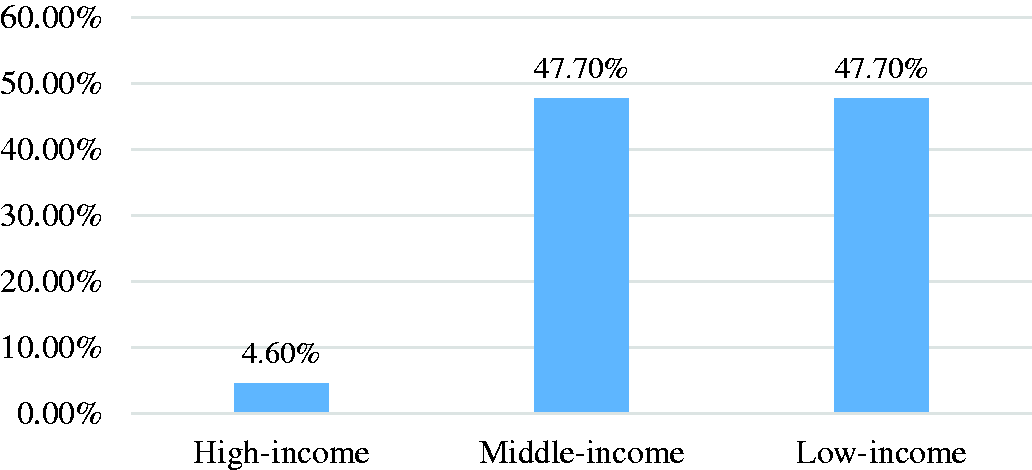
Respondents’ self-evaluation on their household income level.
The majority of the respondents (62.4%) had experienced online learning before the COVID-10 pandemic, whereas 37.6% had never experienced online learning. In terms of respondents’ IT proficiency level (Figure 2), the majority (47.7%) agreed that they had general proficiency, whereas 37.08% indicated a good level of IT proficiency. The remaining 16.06% of respondents showed less confidence in their IT proficiency.

Respondents’ self-evaluation on their IT proficiency level.
Data analysis
To address the research questions on the online learning effectiveness and influencing factors of Hong Kong higher education students, the authors selected the following four specific relevant survey questions and investigated their responses.
Please rate your overall satisfaction with online learning. Compared with the face-to-face classes, how do you view the learning effectiveness of online classes? To what extent will the following factors impact your online learning effectiveness? What challenges have you encountered in online learning during the pandemic?
The first survey question investigated how respondents evaluated their online learning satisfaction, which we believe will influence their online learning effectiveness. The second question directly asked respondents to rate their learning effectiveness compared with face-to-face classes. The third question examined how respondents evaluated the impact of various factors on their online learning effectiveness. Finally, responses to the last question on online learning challenges could provide insights into the influencing factors to respondents’ online learning effectiveness.
As mentioned above, survey respondents were also asked to self-report their household income level and IT proficiency level. Therefore, these two factors were applied to explore whether they influence respondents’ online learning effectiveness during the pandemic to analyse the first two survey questions. The analyses involved descriptive statistics including frequencies and percentages ploted as histograms. Pearson Chi-square tests were conducted to assess the differences in proportions between some of variables (e.g. IT literacy and satisfaction with online learning).
Results
This section demonstrates data analysis results of the following four aspects: the respondents’ overall satisfaction of online learning experiences, the effectiveness comparison between online learning and face-to-face classes, the factors influencing online learning effectiveness, and the challenges to online learning.
Overall satisfaction with online learning experiences
Figure 3 presents the distribution of overall satisfaction of online learning experiences amongst respondents. Generally, only 26.89% of respondents felt satisfied with their online learning experiences during the pandemic. Moreover, less than half of the respondents (43.60%) felt neither satisfied nor dissatisfied, and one-third (29.50%) felt dissatisfied. The low satisfaction rate presents an alarming signal to Hong Kong higher education institutions about the effectiveness of emergency online learning.

Respondents’ overall satisfaction with their online learning experiences.
When we evaluated the differences amongst respondents with different IT proficiency levels, we found that the respondents with higher IT proficiency levels felt more satisfied with their overall online learning experiences (Figure 4). Prominently, the majority of respondents (71.07%) indicating a poor-level IT proficiency felt dissatisfied with their online learning experiences. In comparison, nearly half of the respondents (48.13%) with good IT skills felt satisfied with their experiences in the online classes during the pandemic. A Chi-Square analysis found significant differences in proportion between IT literacy and satisfaction with online learning experience (x2 = 321.258, p < 0.001).

Respondents’ IT proficiency level and their overall satisfaction with online learning experiences.
Regarding the household income level, we found that respondents from wealthier families were more satisfied with their online learning experiences during the COVID-19 pandemic (Figure 5). Specifically, those in the high-income families had a slightly higher prevalence of feeling satisfied with their online learning experiences (38.60%) compared to those in middle- (28.03%) and low-income families (24.62%). Moreover, those in the low-income families had a slightly higher prevalence of feeling dissatisfied with their online learning experiences (33.16%) than those in the middle- (27.01%) and high-income families (17.54%). Chi-Square test showed a significant difference in the proportions between household income and online learning satisfaction (x2 = 11.470, p < 0.05).
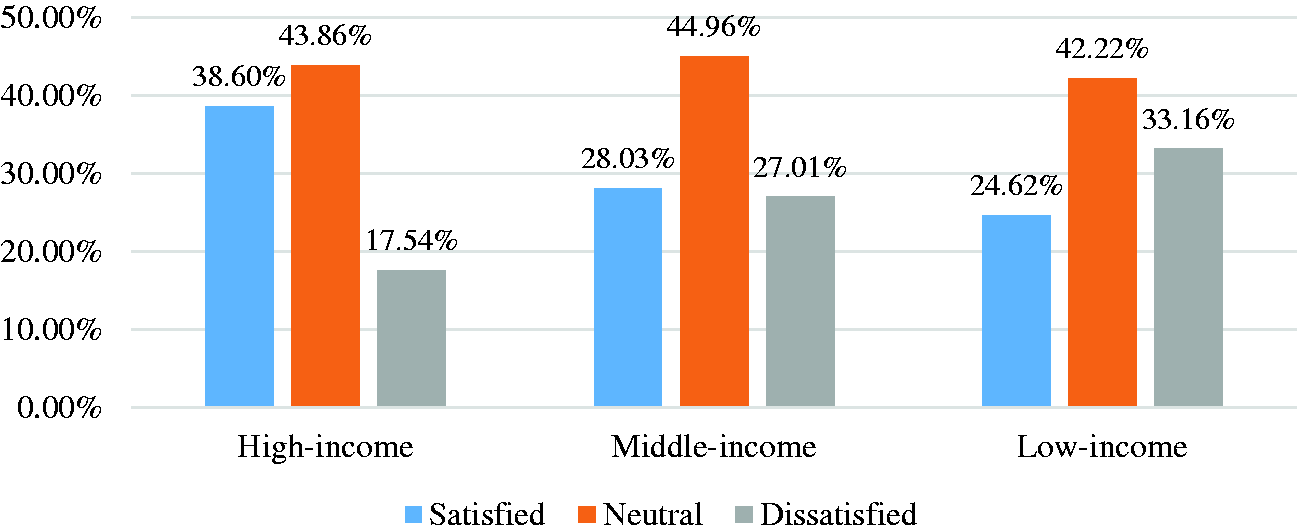
Respondents’ household income level and their overall satisfaction with online learning experiences.
Effectiveness comparison of online learning and face-to-face class
When we asked the respondents to compare the effectiveness of online learning during the pandemic and face-to-face class prior to the pandemic, as depicted in Figure 6, the majority (62.75%) indicated that online learning was worse than face-to-face classes. This very negative attitude to online learning effectiveness also resonated with respondents’ low satisfaction rate.
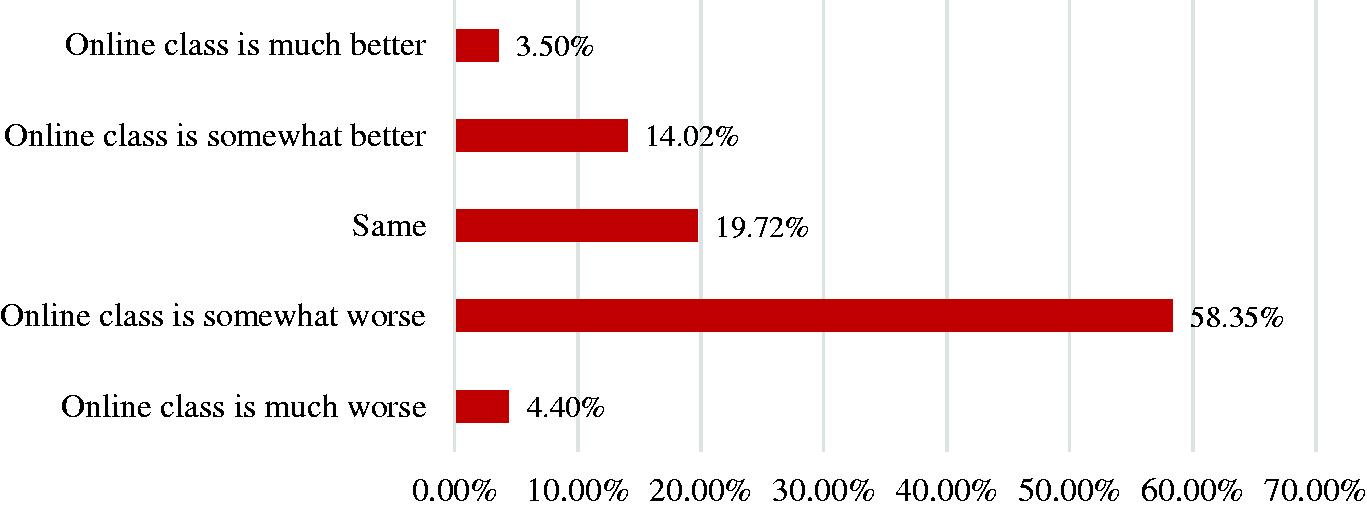
Respondents’ Effectiveness Comparison of Online Learning and Face-to-Face Class.
Despite the overall negative attitude to online learning effectiveness, we identified the variations amongst respondents with different IT proficiency levels (Figure 7). Specifically, within each group, more respondents (29.23%) with a good-level IT literacy thought that the online class was better than face-to-face classes when compared to those with a general-level (12.37%) and the poor-level (5.58%) literacy. In addition, respondents with good IT literacy had a smaller group (48.79%), arguing that online learning effectiveness is worse than the general-level (65.68%) and the poor-level (86.80%). The Chi-Square test presented a significant difference in the proportions between IT literacy and online learning effectiveness (x2 = 110.869, p < 0.01).

Respondents’ IT proficiency levels and their effectiveness comparison between online learning and face-to-face classes.
For respondents’ household income level and their online learning effectiveness compared to face-to-face classes, the Chi-Square test found no significant difference in the proportions between household income and online learning effectiveness (x2 = 8.456, p > 0.05).
Influencing factors to online learning effectiveness
In the third survey question that we analysed in this study, we asked the respondents to evaluate the impact of the following factors on their online learning effectiveness (Figure 8). Based on the percentage of respondents’ choice on ‘strong impact’, the order of the influencing factors is ‘stability of Internet connection’ (59.68%), ‘in-class interaction’ (49.55%), ‘after-consultancy with instructors’ (46.33%), ‘availability of class recordings’ (35.38%) and ‘appropriate use of class materials’ (30.31%).

Respondents’ evaluation of influencing factors to online learning effectiveness.
Although the Internet connection impacted respondents’ online learning effectiveness, technically, the second and third influencing factors highlight the significance of faculty–student interactions in student learning. The lack of effective personal interactions is the traditional criticism point to online learning as highlighted in this study. Moreover, Figure 8 shows that the percentage of respondents (49.55%) who thought ‘in-class interactions had a strong impact on online learning effective’ was larger than that of respondents (17.47%) who did not think in-class interaction was crucial.
Challenges to online learning in the pandemic
Figure 9 presents challenges that the respondents faced during online learning regardless of their household income level, prior online learning experience, and IT proficiency. The main challenges to online learning were the lack of self-discipline, poor learning atmosphere, and eye fatigue caused by staring at the screen for a long time. The majority of the respondents (59.98%) had a higher prevalence of reporting the lack of self-discipline as a significant challenge for online learning during the COVID-19 pandemic. Of the respondents, 56% reported a poor learning atmosphere as one of the challenges they faced during online learning. Notably, 44.58% of the respondents had a higher prevalence of reporting poor quality of learning as one of the challenges in online learning during the COVID-19 pandemic.

Challenges faced by respondents in their online learning.
When comparing the challenges with the influencing factors, the challenge item ‘lack of interactions’ is surprisingly low because the ‘in-class interactions’ had been rated as the second influencing factor to online learning effectiveness following the stability of the Internet connection. This low rating is due to the majority (more than 85%) of respondents being at the undergraduate and associate levels, and most of the courses being lecture-oriented. In this sense, most respondents were familiar with the teaching format without frequent interactions.
In addition, 54.77% of the respondents had a higher prevalence of reporting eye fatigue due to staring at the screen for a long time as a top 3 challenge. This finding highlights the significance of students’ physical wellbeing during online learning. As higher education administrators, faculty members, and researchers are discussing the enhancement of students’ online learning effectiveness, notably, students’ physical and mental health cannot be ignored, specifically in the current pandemic situation, in which most students are isolated at home.
Discussion
Emergency online learning and community of inquiry for student learning
The above survey results demonstrated that the respondents were not entirely satisfied with online learning effectiveness, particularly as compared to conventional face-to-face classes. In the context of cultivating student competence through online learning, the survey results indicated an alarming signal that simply by replicating conventional face-to-face classes to the online format is not a wise move. This is especially so if we want to cultivate student competences that used to be the target of conventional face-to-face classes, such as communicative and collaborative skills. However, the emergency online learning pedagogy also brings the new required skills for future studies, such as communicative skills in the online environment. Furthermore, cyber psychological competency is increasingly crucial for students’ online learning experiences and effectiveness as it will be very relevant to students’ well-being in online learning.
How online learning could enhance student competency building is still subject to further educational research. However, scholars who believe online learning could enhance student competency would argue that “[online learning] has increased competency among children and made them more proficient in Word Docs, PPTs and Excel sheets. As students’ learning is put to test by assignments, teachers are encouraging them to submit their piece of work in different formats as per the requirement of the subject” (Upadhyaya, 2020, p. 1). Nonetheless, no one can deny the importance of having personal interaction in classes despite the fact that digital learning could offer alternative learning experiences. Indeed, previous research has suggested that online learning can enhance student engagement and analytical skills (Al-Omari & Salameh, 2012; Saini et al., 2014). However, conventional learning through face-to-face instruction is found to be more effective in enhancing students’ communication and interpersonal skills. In addition, face-to-face interactions in conventional classes could offer immediate feedback from peers and instructors, which would also promote learning motivation (Stack, 2015). Our analysis presented above has evidently indicated the limitations of offering online learning alone as most of the respondents would prefer some form of onsite face-to-face learning. The reason is that studying only through digital channels has discouraged engaged learners, as revealed by the present survey.
In addition, it is undeniable that online learning presents a number of challenges, both to instructors and students. For example, online learning hinders normal interaction that can foster collaboration. Nonetheless, it is the instructors’ duty to promote interaction through many different pedagogical practices (Liang & Chen, 2012). However, some studies conducted prior to COVID-19 pandemic, such as that of Nguyen (2015) and Neuhauser (2002), have argued that online learning is an effective and efficient method of delivering knowledge. In addition, a study conducted by Beaudoin et al. (2009) to higher education students in the United States, Mexico, Israel and Japan found that students were generally satisfied with the online learning experience. Being flexible, online learning enhances students learning outcomes, especially for students in higher education (Beaudoin et al., 2009; Nguyen, 2015).
In critical reflections on the knowledge-building environment for effective learning, especially during the COVID-19 pandemic, Hong (2020) argued that effective learning conducive to knowledge building depends on the active participation of learners. The acquisition of knowledge cannot be fully achieved only through the transmissive approach but through the participatory model with a strong collaborative process for knowledge creation (Scardamalia & Bereiter, 2003, 2016). The emergency online learning adopted by universities across the globe resulted from the present COVID-19 pandemic crisis, which could be adopted as a temporary means for teaching and learning strategies. Our above survey clearly shows that the respondents did not consider online learning to facilitate high student participation. If we are serious about co-developing knowledge and care for developing a close learning community, then we cannot rely primarily on the digital learning platform without facilitating conventional face-to-face interactions amongst students and their instructors. Educators who are keen on learners’ interests would take the knowledge building environment very seriously. They would much prefer an idea-centred pedagogy to a concept-centred one because the former emphasises coaching students as engaged learners, whereas the latter focuses on teacher-centred teaching and learning (Hong, 2020). Previous research has shown that adopting online learning alone would fail to productively create a community of inquiry because such a community consists of social presence, cognitive presence and teaching presence (Garrison et al., 2000). Without active interactions with peers and instructors, the learning motivation would decline, which would inevitably affect learning performance and outcomes (Garrison et al., 2000; Vaughan & Garrison, 2019).
As Hong Kong universities adopt the outcome-based approach to inform teaching and learning (Mok & Xiong, 2021, forthcoming), offering purely online learning may not fully achieve the planned learning outcomes, thereby subsequently limiting the full potential of knowledge co-construction between instructors and learners. As observed in this light, whether universities or higher education institutions could develop a learning environment conducive to promote students’ interactions with others and facilitate them to respond to the cultural norms and societal expectations and attitudes requires university leaders and teachers’ attention. Analysing the effectiveness of online learning on whole person development, we must realise that positive student learning should not be confined to instructors’ teaching. According to the research related to the community of inquiry, teaching presence and cognitive presence constitute two major components of the community. However, social presence also plays a significant role in offering a learning environment through which students can experience affective expression, open communication and group cohesion with appropriate social interactions with peers and instructors (Garrison et al., 2000). Garrison (2011) argued that social presence measures the collaboration, connection and integration of students and their peers during the course activities. Developing students’ abilities to relate, communicate to their peers, and form productive social and working relationships are essential parts of student learning (Law et al., 2019). Student engagement in the community of inquiry would enable course instructors and peers to provide prompt feedback in a timely manner, cultivating students with confidence through interactions appropriate for learning, which would also bring a positive impact on the cognitive presence (Almasi & Chang, 2020). In short, the creation of a community of inquiry with a productive knowledge building environment would definitely help nurture students to become engaged learners, bringing with a positive impact on their learning motivation and performance (Kim & Gurvitch, 2020; Law et al., 2019; Law & Breznik, 2017).
Online learning and student well-being
Our above survey also indicated that students find studying online challenged their learning habits, specifically highlighting their difficulty to maintain self-discipline when studying alone through online platforms. In addition, participating in an online learning for a prolonged period causes many of the respondents to face eye fatigue problems. Similar research related to the COVID-19 pandemic and online learning also have shown that student well-being is adversely affected by growing anxiety and stress. Sahu (2020), for instance, listed different challenges confronting university students and academic staff. The sudden COVID-19 pandemic outbreak has resulted in stress, anxiety and pressure amongst students and instructors. The mental health of university students is getting worse, particularly when they do not find sufficient social support because they have been locked down in their hostels without productive interactions with their peers and instructors physically (Wang et al., 2020). Other studies also reported different kinds of difficulties experienced by students simply because of the lack of face-to-face interactions. When instructors are forced to go on emergency online learning and teaching without sufficient preparation, students only find that the online learning experiences are not fully satisfying, specifically when they experience disruption during online classes because of inadequate educational and institutional support (Fauzi & Khusuma, 2020; Xie & Yang, 2020).
Previous studies regarding psychological stress are more related to international students who feel alone and anxious when studying overseas (Saravann et al., 2017). The present COVID-19 pandemic has indeed created similar psychological stress and anxiety for students (not only university students but also school kids) who are being locked down at homes or hostels without the ‘normal interactions’ with their peers and instructors (Sahu, 2020; Wang et al., 2020). Our present study and the first author’s recent research concerning international wellbeing across 26 countries and regions conducted in April 2020 revealed that university student well-being is adversely affected by the COVID-19 pandemic (Amoah & Mok, 2020; Zhai & Du, 2020). These findings are consistent with Cao et al. (2020), showing strong evidence of college students’ growing anxiety during the COVID-19 crisis. Given the severe mental health impact brought by the COVID-19 pandemic to university students, the government and the university need to create a more mentally healthy and peer-friendly learning environment to support student learning.
Policy implications and conclusion
Our above survey findings have evidently demonstrated the dissatisfaction of emergency online learning reported by students in Hong Kong higher education institutions. Amoah and Mok (2020) found that students may have been confused with diverse sources of information related to the COVID-19 pandemic. Insufficient information regarding COVID-19 would have created another source of anxiety, specifically when most students rely on the social media for COVID-19 information because a likelihood of ‘infodemic’—inaccurate and sometimes exaggerated health information—from such sources exists (Amoah & Mok, 2020). Evidently, the pandemic has inevitably made some impacts on the physical and psychological well-being not only of international/non-local students but also of local students studying in Hong Kong universities, as indicated in the present study. To address the students’ well-being matters in the context of the COVID-19 pandemic, universities should do more to help students obtain accurate health information and learn about local social and healthcare support systems, and to improve psychological support for students dealing with this pandemic and future health-related problems.
In conclusion, addressing the constraints of emergency online learning, the university management and the teaching profession in Hong Kong must find a mixed-mode of delivery for enhancing teaching and learning. Our present study has evidently suggested the limitations of emergency online learning, and we have no choice but to search for multiple methods to merge online and onsite teaching and learning, together with other forms of learning activities to enrich students’ learning experience and promote student mental well-being. In careful planning for learning and teaching in higher education in the post-COVID-19 crisis, universities are prompted to creatively merge online and face-to-face teaching and learning. Educators must adopt different forms of learning activities integrated with technology and humanist approaches appropriate to fostering a community of inquiry and maximising student learning while nurturing them to master the 21st century skills necessary to become caring leaders with a global vision.
Finally, the research team clearly understands the limitation of this study. The snowball sampling approach might bring about the biased distribution of respondents regarding their demographic backgrounds, such as household income levels.
Footnotes
Declaration of conflicting interests
The author(s) declared no potential conflicts of interest with respect to the research, authorship, and/or publication of this article.
Funding
The author(s) received no financial support for the research, authorship, and/or publication of this article.