



Abstract
With the expansion of higher education in China, gender equity has been largely improved at the entrance to undergraduate education. Yet, whether male and female students developed equally during college is still under debate. Using data from a Chinese national college student survey in 2021, this study explores gender differences in learning behaviors and outcomes of college students and examines whether they are influenced differently by educational environmental factors. Employing multiple regression models, we find that though female students outperformed males on active learning behaviors and academic scores, they were less active in higher-order learning behaviors, resource-intensive high-impact educational practice, and student-faculty interactions and reported lower educational gains than their male counterparts. Environmental and educational factors, including institute type, gender composition, academic challenges, and student support, influence the gender gaps in different ways. Overall, most female college students behave under the gender expectations of society and are less responsive to educational factors than their male counterparts. Collectively, these findings underscore the need for heightened awareness of gender gaps in the learning process in different learning environments and advocate for a more tailored collegiate environment that optimally supports female students’ educational pursuits.
Keywords
Introduction
Gender gaps in higher education remain a focal point for both educational researchers and policymakers. With the broader expansion of higher education, women have gained increased access to colleges and universities, frequently outpacing male students in terms of enrollment (Ilie & Rose, 2016; Luo et al., 2021). Yet, research also show that upon concluding their studies at Higher Education Institutions (HEIs), many women face hurdles and are still in a disadvantaged place in the job market (Andrews & Ridenhour, 2006; Wei, 2020). While labor market dynamics and societal conventions contribute to these challenges, whether female students can obtain equal academic experiences and outcomes as compared to males within HEIs is equally significant. To truly support female students, HEIs must offer comprehensive guidance, mentoring, and empowerment throughout their education, which requires a profound grasp of the distinct learning paths of each gender and an exploration of how the university environment might influence these trajectories. This prompts essential inquiries: First, do gender-based variations in learning experiences and learning outcomes manifest within the HEIs’ educational framework? Second, in what ways do specific elements of the HEIs' environment contribute to shaping the gender divide in learning?
While gender equality is a worldwide emphasis aligned with the United Nation’s Sustainable Development Goal 4 (SDG 4), the case of China remains its uniqueness and typicality. On one hand, the “Chinese learner” maintains some distinctive learning paradigms rooted in cultural traditions (Gao et al., 2022), with the lingering influence of Confucianism continuing to disadvantage females (Luo et al., 2021). On the other hand, the series of women policies promulgated after the 1950s, and the one-child policy since the 1970s have significantly improved women’s status in China (Liu, 2017), granting girls equal schooling rights as boys. They now outperform boys in school and have greater access to higher education. Although gender gaps in higher education have narrowed (Luo et al., 2021), the intricate relationship between the college environment and gender-based learning differences warrants deeper examination. Utilizing data from the China College Student Survey (CCSS) 2021, this research seeks to delve into the gender-specific differences in both learning processes and outcomes. Moreover, it also endeavors to highlight the institutional elements that might be instrumental in shaping these gender disparities.
Literature review
Much research has delved into gender differences in learning experiences and outcomes. These studies, both from the Western and Chinese contexts, have often yielded inconsistent results, painting a complex picture of the subject.
The discussion on the gender gap often centers on academic performance, a key measure of educational outcomes. Research from Western contexts, such as Andrews and Ridenhour (2006), Ganzert (2012), and Cantillo and Garcia (2014), suggests that male students typically excel in course assignments and examinations, particularly in male-dominated fields. Conversely, studies from China show that female students often surpass their male counterparts regarding grades (Edwards, 2008; Wang, 2002). However, some studies from both the West and China argue that there is no significant gender difference in academic grades (Fogarty & Goldwater, 2010; Sun et al., 2012; Wen, 2005), adding to the complexity of this issue. The varying research findings suggest that regional and national contexts in higher education may influence the gender gap in academic performance.
Another blurred aspect in the discussion is learning engagement in the higher education process, which refers to students’ behavioral, emotional, and cognitive effort devoted to study (Fredricks et al., 2004). Studies show notable gender differences in learning habits such as attendance and time use (Li, 2020; Sun et al., 2012; Woodfield et al., 2006; Zusman, 2005; etc.), academic procrastination (Pang & Han, 2009), interactions with school peers and faculty (Li & Wang, 2020; Ma et al., 2017; etc.), dedication to academic pursuits (Fogarty & Goldwater, 2010), extracurricular participation (Luo et al., 2021) and overall institutional involvement (Sax, 2009). Studies typically show fluctuating engagement levels, with both genders sometimes leading. Female students often demonstrate strong work ethics, efficient use of resources, and effective time management (Marrs & Sigler, 2012), while males were found to be more vigorous and active in interactions with faculty and peers (Cui, 2012; Luo et al., 2021). However, there are also findings arguing males often report higher engagement, while females report lower, challenging the simplicity of such comparisons (Ni & Wu, 2011; Zhang, Bian, & Xu, 2008; Zhao et al., 2005).
In explaining why students perform and achieve differently in college, institutional environment stands out as a pivotal factor that shapes student engagement and overall learning outcomes for all genders. Factors like the institution’s prestige, inherent characteristics, gender distribution, and the balance between academic rigors and available support play pivotal roles in this context (Freedman et al., 2023; Kuh, 2001; Sandler et al., 1996). These factors may also exhibit biases towards one gender. For instance, Pascarella (1984) posited that female students’ educational aspiration was inhibited in universities with conventional or conformist environments where gender roles and behaviors were more likely to be constrained by societal norms.
In summary, studies from Western and Chinese contexts show mixed evidence of gender differences among college students. Although the role of the college environment in shaping student experiences has been acknowledged, the ways different genders access and benefit from institutional offerings still need to be explored. This study seeks to address this gap by investigating how institutional factors in Chinese higher education influence gender disparities in learning engagements and outcomes.
Theoretical perspectives and hypotheses
College impact theories provide a framework for our study to explore gender gaps in student learning experiences. These theories, as represented by the Input-Environment-Ouput (I-E-O) Model by Astin (1984), suggest that student learning outcomes such as academic achievement and personal growth (the Output) are the products of the interaction between individual background and attributes (the Input) and institutional factors (the Environment). Specifically, these theories emphasize on the crucial impact of academic challenge and social support provided by faculty, staff, and peer students in and outside class on student learning engagement and development outcomes during college (Kuh, 2001; Pascarella, 2006; Pascarella & Terenzini, 1991; Tinto, 1975, 2012). This study aims to examine the gender differences in learning engagement and outcomes, as well as the heterogeneous impacts of environmental factors across genders.
Marxist Feminism, as explained by Sheivari (2014), provides a theoretical lens to understand gender differences in learning behaviors across educational settings. Friedrich Engels (1986), in “The Origin of the Family, Private Property, and the State”, traces the roots of gender disparities to sociohistorical contexts rather than purely biological factors. Although biological differences influence certain labor divisions, it is crucial to note that the emergence of class systems in agrarian societies marked the beginning of women’s subordination and unequal resource distribution between genders (Mann, 2012). This shift established distinct social statuses for men and women, laying the foundation for traditional gender roles (Armstrong, 2020). Men were socially shaped as assertive, independent, and resilient, whereas women were seen as nurturing, compliant, and tender, emphasizing interpersonal relationships (Eagly & Wood, 2012). These roles, perpetuated by societal norms, gradually became internalized, reinforcing Simone de Beauvoir’s observation in “The Second Sex” (2009: 301): “One is not born a woman, but rather becomes one.”
Through the lens of Marxist Feminism and college impact theories, this study proposes four hypotheses regarding how institutional structures in HEIs, such as the overall resources availability and the cultural climates, affect the gender gaps in learning performance, and how internalized gender roles influence students’ responses to academic challenges and institutional support.
In Double World-Class (DWC) HEIs, gender gaps in learning are narrower.
First, we examine whether the resource availability plays a role in narrowing down the gender gap disfavor female students based on Marxist feminism’s emphasis on material resources which suggests that inequality can be reduced in resource-abundant societies (Gimenez, 2000). Considering the Chinese context, the distribution of educational resources varies across different types of HEIs. The “Double World-Class Initiative (DWC)”, initiated in 2017, aims to enhance both the stature and global competitiveness of Chinese universities by allocating more resources to institutions under this initiative. It is a highly selective elite university project recruiting only 147 out of 2820 regular HEIs by 2022, all of which are public-funded HEIs. HEIs in the DWC project receive funding not only from the Ministry of Education, but also from local government. By contrast, other public HEIs rely largely on endorsement from the local government. In addition, DWC HEIs have better academic reputation and stronger faculty than local ones. Therefore, being a DWC HEI can be considered as an index of the overall resource abundance in the environment shown in the first hypothesis. Luo et al. (2018) also found that elite universities in China provide enriched opportunities to students and mitigate educational inequalities among social classes. It worth examining whether there are fewer gender disparities in elite universities.
Even gender composition in the educational environment reduces gender gaps in learning.
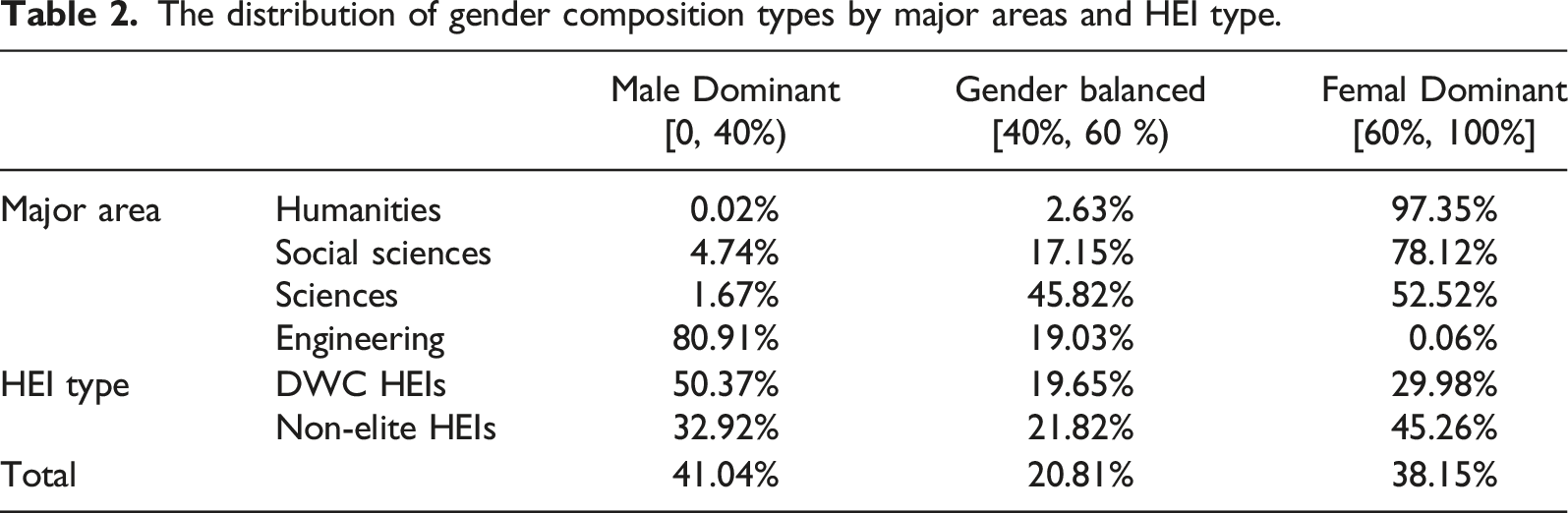
Further, beyond overall resource richness, the overarching cultural tone towards gender in the environment shapes one’s behavior invisibly. We use gender composition in one’s academic surroundings to reflect such tone, assuming that more gender-balanced environment fostering a neutral culture that place less emphasis on gender roles, while female-/male-dominated ones promoting feminist/masculinity that reinforce societal norms (Charlesworth & Banaji, 2019; Freedman et al., 2023). Therefore, we propose that gender gaps in learning are smaller in gender-balanced environments.
The educational impact of academic challenges (Hypothesis 3.1) and campus support (Hypothesis 3.2) varies by gender, with male students benefiting more from such challenges and support.
While the college impact theories suggest that academic challenges and institutional support positively impact student development, students of different genders may respond differently to these factors as inadvertently constrained by their societal gender roles. For instance, as suggested by Fiedler et al. (2024), female students tend to have a lower academic self-concept. Therefore, they may be less confident in facing challenges. Pascarella (1984) also suggested that men might be more inclined to embrace challenges and pressures and adapt to the challenging and collegial environment, while women might exhibit reduced competitiveness and be less engaged in such environments. In addition, supportive resources provided in HEIs are socially designed, where men remain at the center of power (Rosa & Clavero, 2021). Such resources may ignore the specific needs of female students or create invisible barriers to access that prevent female students from using these resources effectively (Borello, 2020; Morley, 2013). Therefore, we hypothesize that the educational impact of these two factors varies by gender, with men benefiting more. Female students may unconsciously face structural difficulties in HEIs if this is the case. Verifying these hypotheses can help us confirm whether the design of college environments is consistent with SDG 4, providing practical implications for HEIs.
Method
Data & Sample
This study uses data from 2021 China College Student Survey which focused on student engagement in college and learning outcomes. The sample consists of undergraduate students from 32 universities and colleges who volunteered to participate in CCSS, including 15 DWC HEIs and 17 non-elite ones. Stratified random sampling was used in each institution to draw participants. The valid returned sample contains 118,685 students with an average response rate of 75.92%. 1 Post-stratification sampling weights are applied to adjust for the uneven probability of being sampled in each grade.
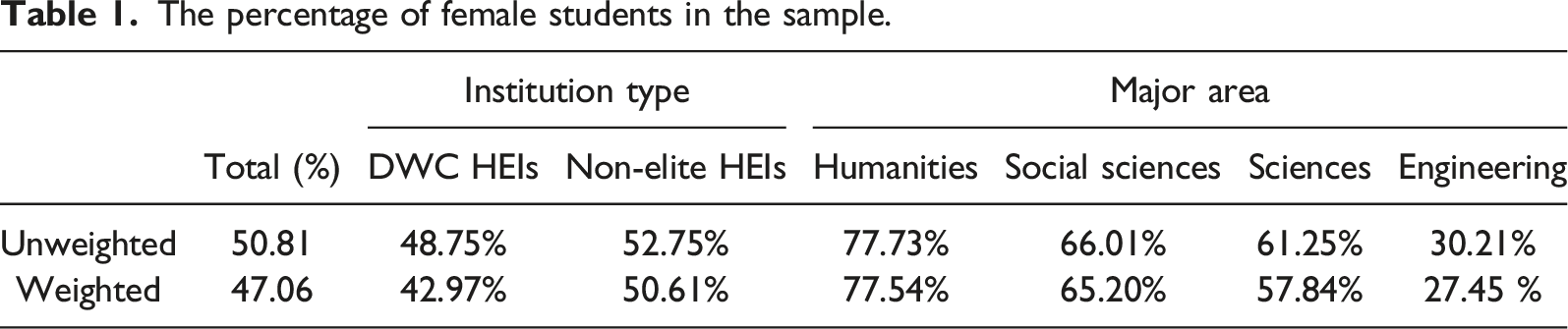
The percentage of female students in the sample.
Variables
CCSS 2021 focuses on student engagement and growth during college. To address our research questions, we selected four key indicators of student engagement according to existing literature (e.g. Kuh, 2001; Shi et al., 2020; etc.). The first two indicators are active learning (ATL) and high-order learning (HOL) that examine students’ behavioral and cognitive engagement in course learning respectively. In addition, we include student-faculty interaction (SFI) measured by students’ multiple interaction frequencies with their teachers as a part of learning engagement. We also consider students’ participation in high-impact educational practices (HIP) outside classroom, including resource-intensive activities (RI-HIP) such as doing research and overseas learning, and non-resource-intensive (NRI-HIP) ones, like public service and volunteering. These HIPs have been widely shown to benefit undergraduate students with distinctive features of high interaction, high autonomy, and high engagement (AAC&U, 2007; Zhang, Bian, & Xu, 2008).
CCSS 2021 also provides indicators on academic challenge and supportive campus environment. The Academic Challenge (AC) is a dimension consisting of three indicators: challenging curricula & courses indicating whether the curricula and courses set up higher-order cognitive objectives and requirements and whether the content is advanced, practically relevant and tailored to student prior background; effective teaching practices reflecting students’ perception of the clarity of lecture, responsiveness to student feedback, and encouragement of exploratory learning; and effective assessment practices indicating to what extent course assessment emphasizes on learning process, the overall level of difficulty, and the quality of feedback provided by professors. In this study, we construct a single index by taking the arithmetic average of the three indicators. Therefore the index not only reflects the level of perceived difficulty, but also perceived supports from professors. As for supportive campus environment, we directly take the CCSS indicator Student Services and Support (SSS) which reflects students’ perception of the support and services provided by the HEI for students’ academic, economic, physical and mental health, employment, as well as the extent of the channels for students to put forward opinions and suggestions to the institution.
As for learning outcomes, the CCSS provides two types of measures. First, students were asked to evaluate their gains in knowledge, skills, and self-awareness during college. The student self-reported learning outcomes (SSLO) reflect students' subjective or constructive educational gains. Second, the survey asked students to report their Grade Point Average (GPA) and the ranking in their class. This reflects students’ academic performance within an HEI’s given grading scheme. We use both measures in this study. For the GPA, we used student self-reported ranking instead of the real GPA score because of the incomparability of GPA across HEIs and the high missing rate in CCSS 2021 on that item (49.6%). The definition, measurement, and descriptive statistics of all variables are presented in Table A1.
The distribution of gender composition types by major areas and HEI type.
Models
Before testing our four hypotheses, we first examine the gender differences in the key aspects of student engagement and learning outcomes with Model 1, where the dependent variable Learning
i
is a set of learning engagement and outcome indicators as discussed above.
Among the independent variables: Female
i
is a dummy variable with 1 indicating being a female and zero being a male. DWC
i
is a dummy variable indicating whether the HEI is in the DWC project. Grade
i
presents categorical variables of year in college. Majorarea
i
is a categorical variable with 1 indicating Humanities, 2 indicating Social Sciences, 3 indicating Sciences and 4 indicating Engineering. SD
i
represents the social desirability of the respondent to control for self-reported bias. The estimates of 


To examine our hypotheses about the impact of college educational factors on gender gaps, we construct Model 3 with Edu
i
referring to educational environmental factors including HEI type (DWC
i
), Gender Composition Group (GC_groupi), and the levels of Academic Challenge (AC
i
) and Student Support & Services (SSS
i
) perceived by the student. These variables are added simultaneously into the model. Then an interaction term between Female
i
and each of the four educational environmental factors is added separately.
3
Therefore the estimated 
The covariates in the above models include student's personal and family background, pre-college experience and level of social desirability. We also include a scale on emotional engagement in learning, as learning is not only a series of observable behaviors but also influenced by individual psycho-social process (Kahu, 2013; Yin, 2020). When the independent variable is learning outcomes, behavioral engagement indicators are also included as covariates.
The definition and descriptive statistics of all variables included in the models are presented in Appendix Table 1, along with the Cronbach’s alpha for reliability of the constructed scales. 4 Ordinary Least Square (OLS) regression is used to estimate the model and sampling weights are applied in regressions.
Results
Apparent gender difference on learning engagement and outcomes
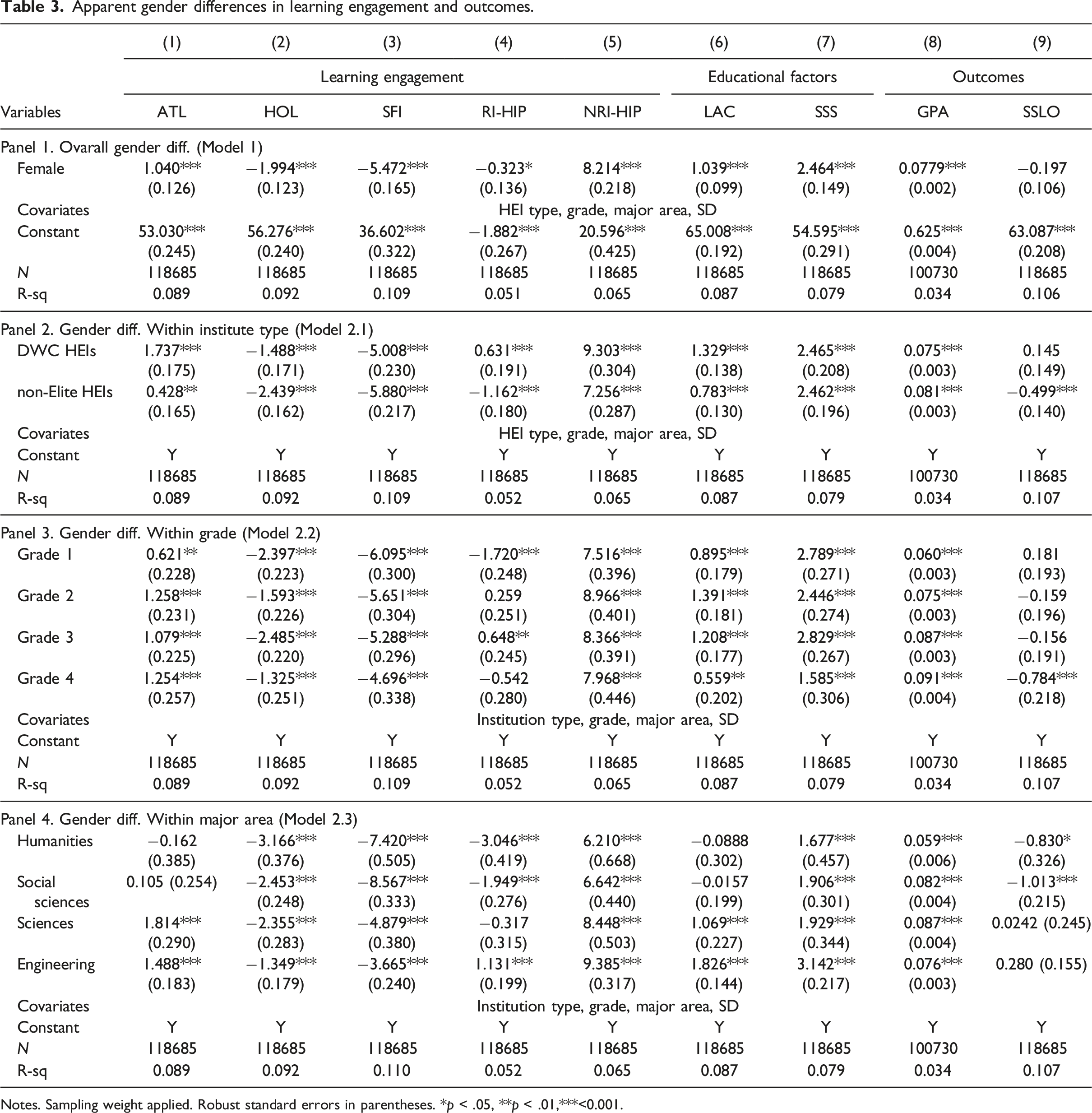
Apparent gender differences in learning engagement and outcomes.
Notes. Sampling weight applied. Robust standard errors in parentheses. *p < .05, **p < .01,***<0.001.
Looking into more detail, Panels 2–4 in Table 3 show that the extent of gender differences in different variables varies in different institutional settings. First, as shown in Panel 2, while the sign of the apparent gender gaps are consistent in both types except for resource-intensive HIP and self-reported learning outcomes, female students tend to have larger advantages and slightly smaller disadvantages in DWC HEIs. For resource-intensive HIPs, female students participated significantly more than male students in DWC HEIs, but significantly less in non-elite HEIs. Female students also reported significantly lower learning gains than male students in non-elite HEIs. These findings provide preliminary support to our first hypothesis.
Regarding grade, as shown in Panel 3, most of the gender differences found in Panel 1 are maintained through the four years in college. But in Grade 3, female students participated significantly more than males in resource-intensive HIPs. In Grade 4, female students reported significantly lower educational gains. However, as this study only uses one-year data, we cannot distinguish whether these differences are due to the grade effect or cohort effect.
The gender comparison in different academic majors manifest large differences according to Panel 4. Female students in sciences and engineering majors perform much better than those in humanities and social sciences. While the former group reported higher relative academic challenges as compared to males, they not only extend their advantages in active learning and non-resource-intensive HIPs, but also narrow down they disadvantages in HOL and SFI to a large extent. Female students in engineering majors also have significantly more participation in resource-intensive HIPs than male students. By contrast, female students in humanities and social sciences majors, perceiving a similar level of academic challenge as male students, are less active than males in almost all aspects except for non-resource related HIPs. While still maintaining significantly higher GPA, they reported significantly fewer gains than male students. These findings suggest that students in the traditionally male-dominant sciences and engineering majors appear to be more active, contradicting to our Hypothesis 2. A possible explanation might be the self-selection of female students that those who are “brave” enough to select such majors have more proactive personalities. Therefore, it requires further analysis to examine the Hypothesis 2.
The influence of college educational factors on gender gaps
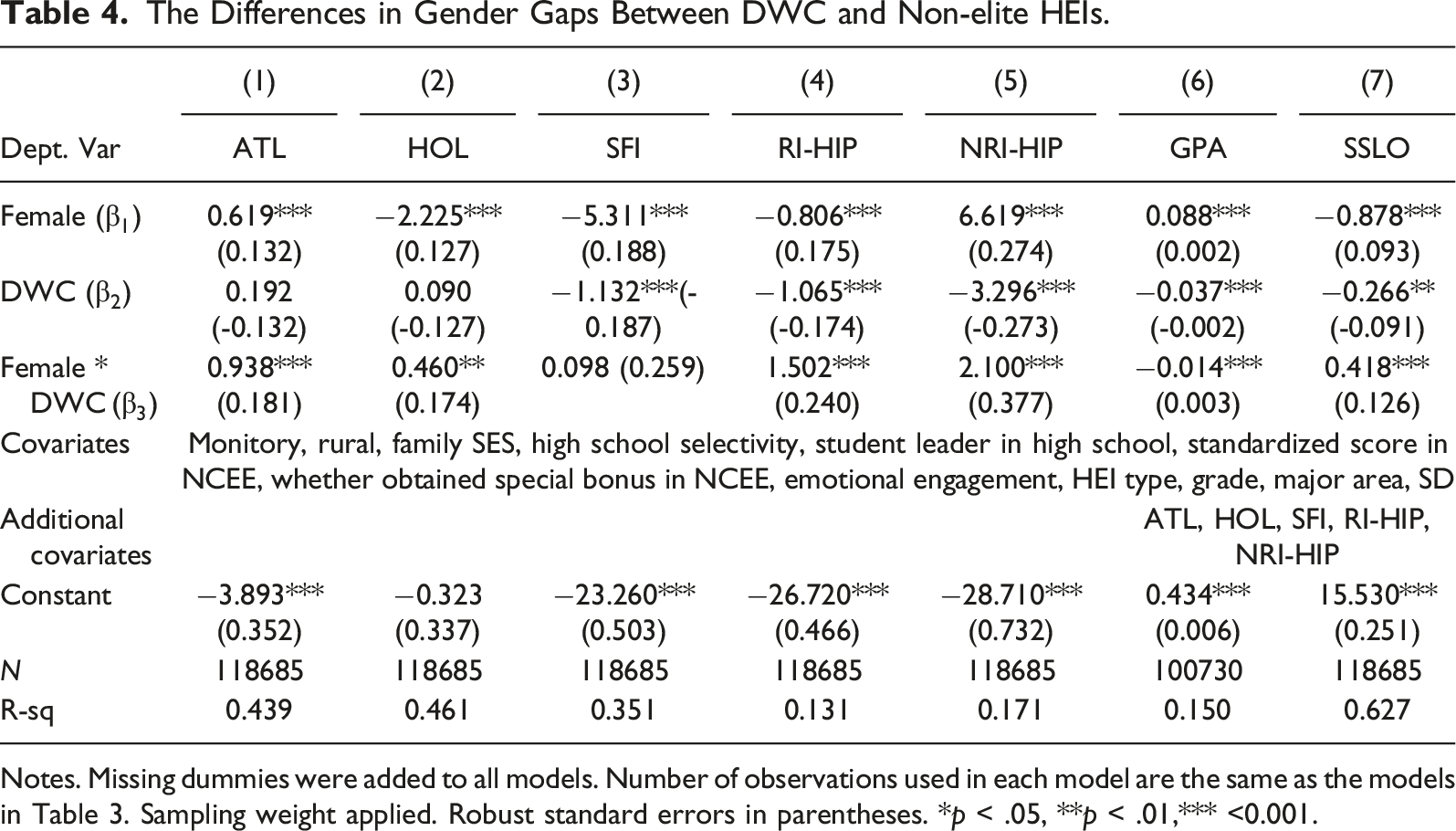
The Differences in Gender Gaps Between DWC and Non-elite HEIs.
Notes. Missing dummies were added to all models. Number of observations used in each model are the same as the models in Table 3. Sampling weight applied. Robust standard errors in parentheses. *p < .05, **p < .01,*** <0.001.
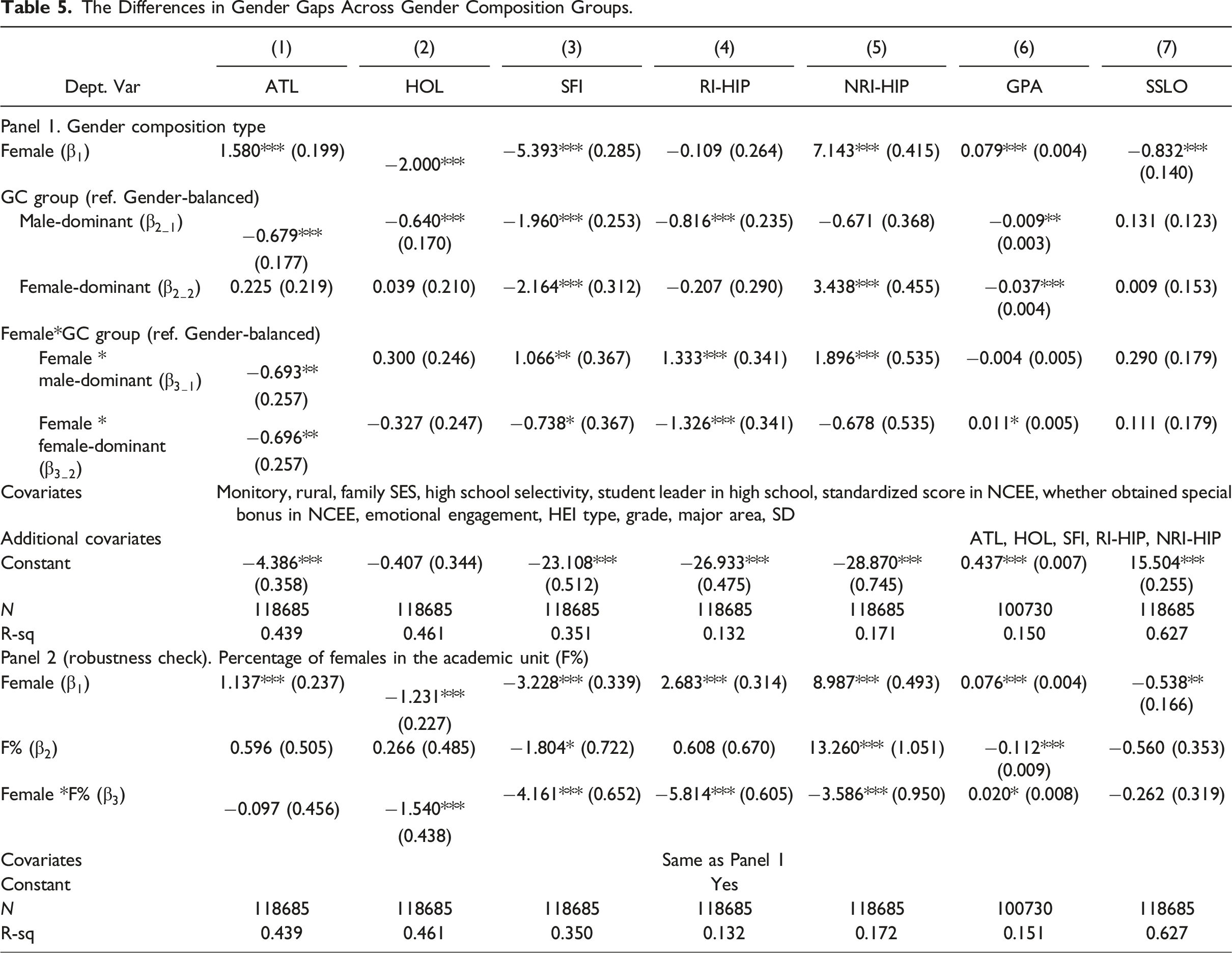
The Differences in Gender Gaps Across Gender Composition Groups.
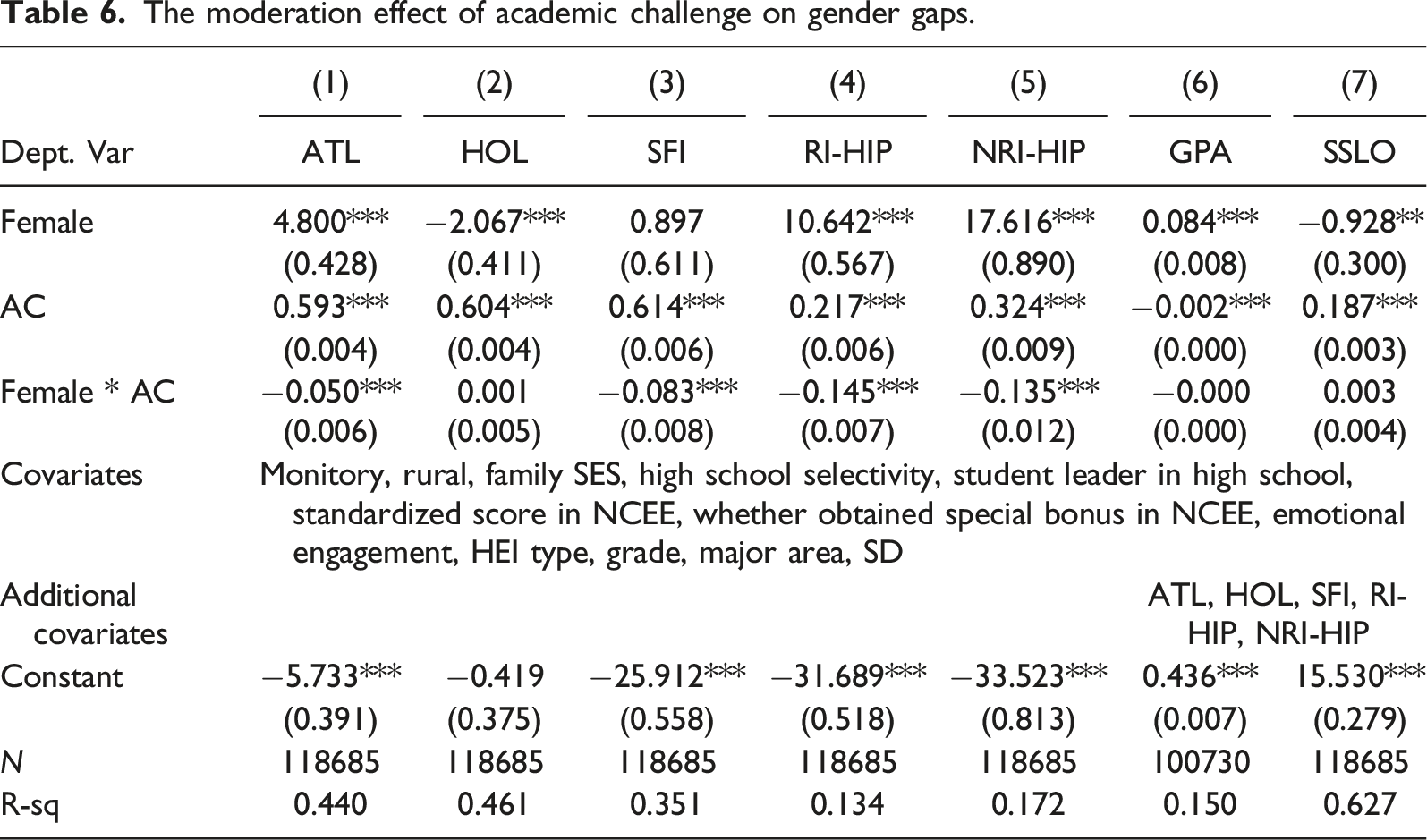
The moderation effect of academic challenge on gender gaps.
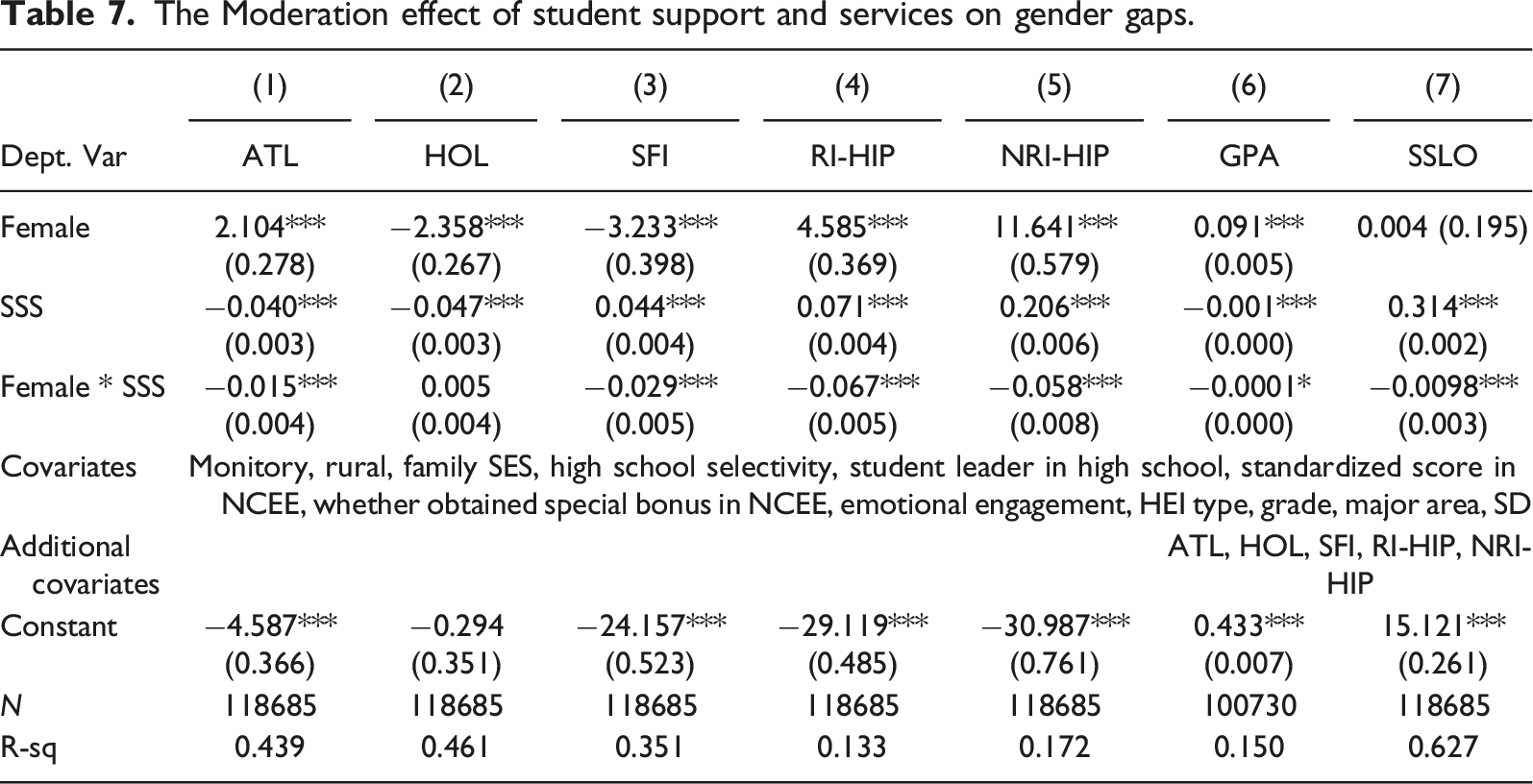
The Moderation effect of student support and services on gender gaps.
HEI Type
The results in Table 4 show the gender gaps in different types of HEIs after controlling for student pre-college experience. As female and DWC are binary variables, the estimates on The differences in gender gaps between DWC and non-elite HEIs (predictive margins with 95% CIs).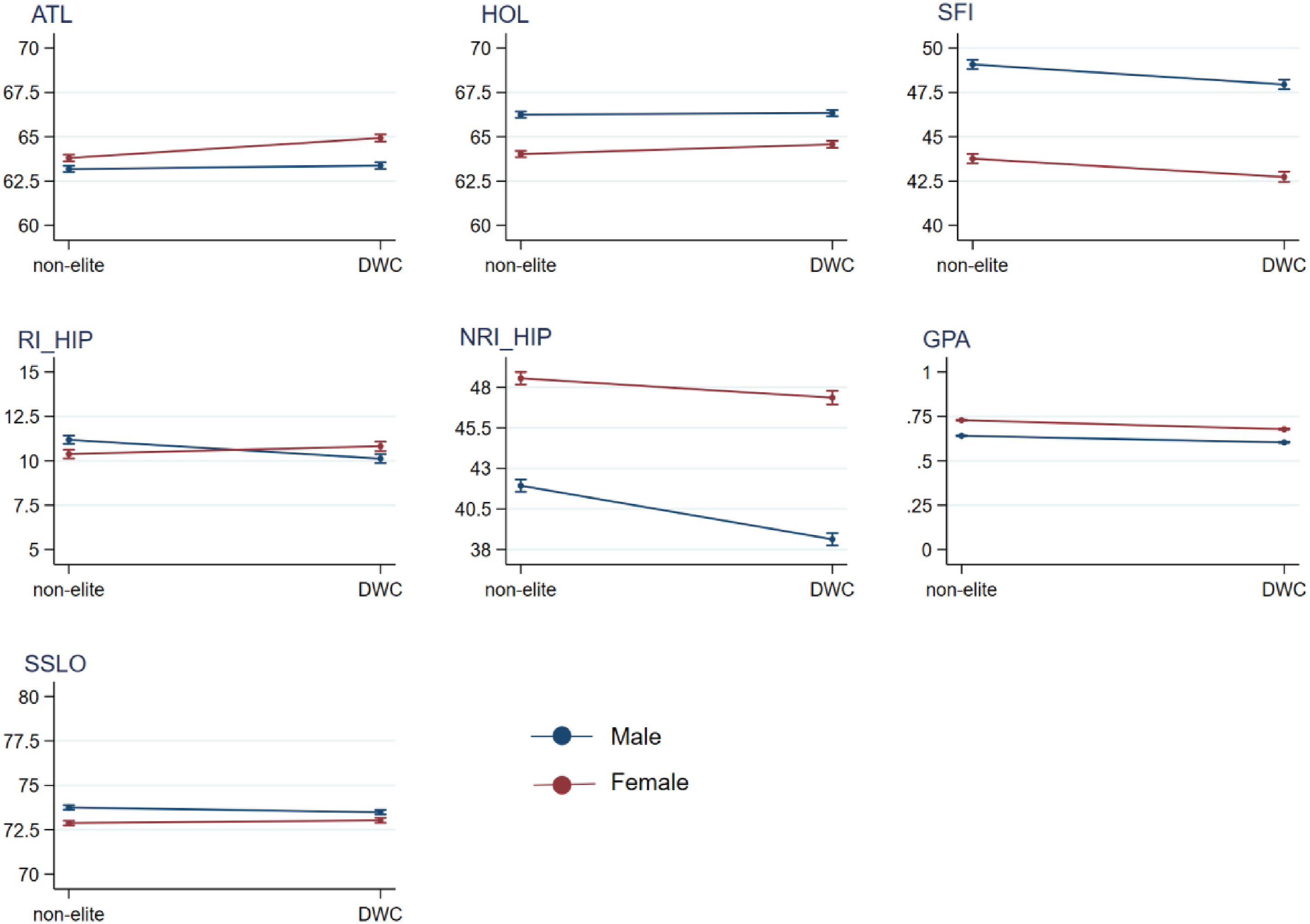
The results show that the gender gaps in favor of male students in higher-order learning, student-faculty interaction, and self-reported learning gains existed in both DWC and non-elite institutions. The magnitude is significantly smaller in DWC institutions for HOL and SSLO. For resource-intensive HIPs, while male students outperform in non-elite institutions, female students chase up and surpass in DWC institutions. In addition, females’ advantages in active learning and participation in non-resource intensive HIPs are enlarged in DWC institutions, though their lead in GPA ranking is whittled away a little. All together, these results suggest that in DWC institutions where resources are abundant, female students are able to make up for deficiencies and expand advantages. This finding supports our first hypothesis that the DWC institutions provide a more friendly learning environment for women.
Gender Composition
Table 5 shows the estimated gender gaps in different gender composition types. The estimates on The differences in gender gaps across gender composition groups (predictive margins with 95% CIs).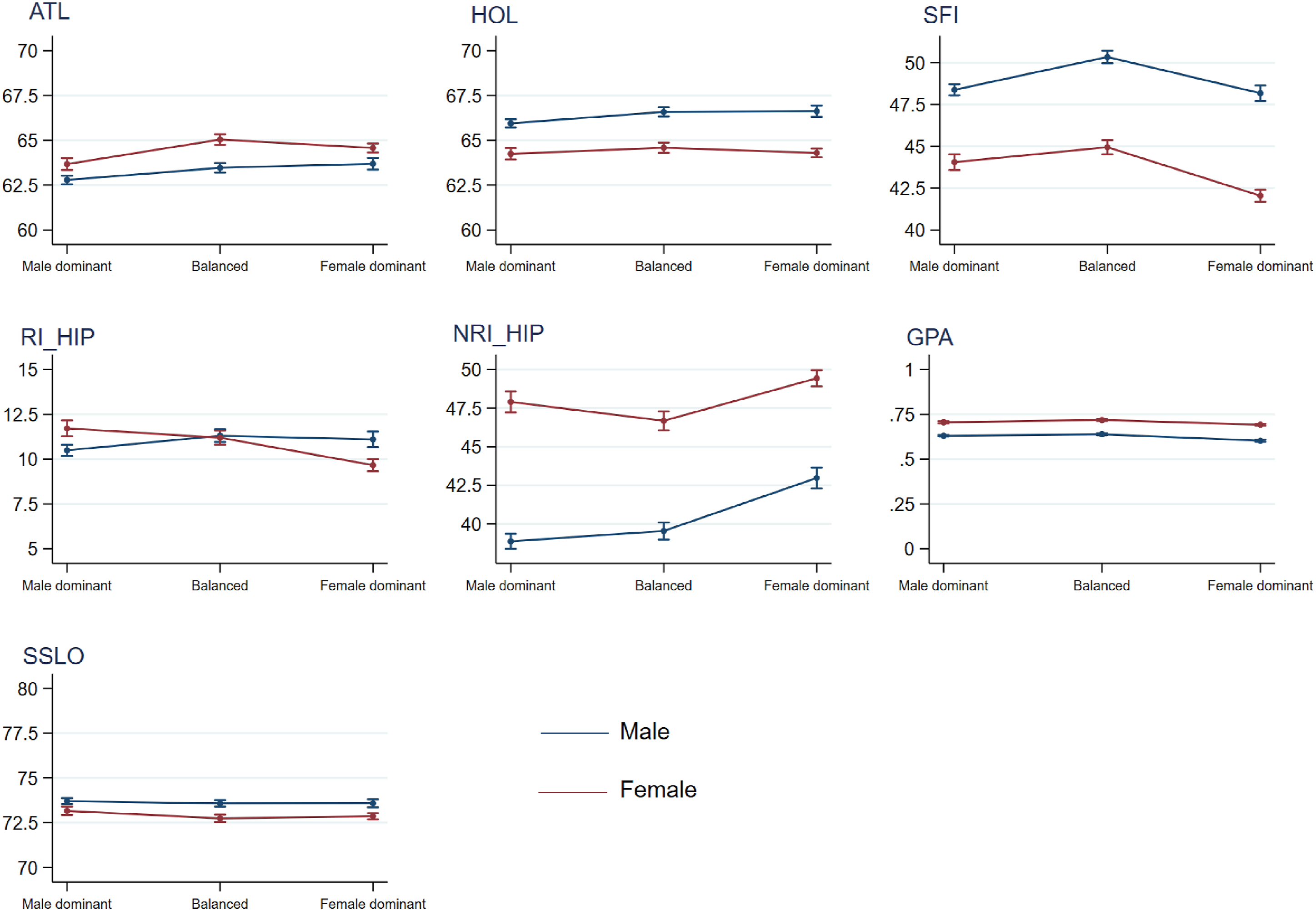
As the results show, female students maintained their advantages in active learning behaviors, non-resource-intensive HIPs, and GPA in all three types of academic units. In the gender-balanced academic units, female students have a much larger advantage in active learning behaviors than in the others. In male-dominant units, females have a much larger advantage in participation in non-resource intensive HIPs, reduced gap in student-faculty interaction and even surpass their male counterparts in resource-intensive HIPs. By contrast, females’ disadvantages in these aspects are widened in female-dominant units. As the models have ruled out the potential bias caused by self-selection into majors to some extent by controlling for pre-college experience, emotional engagement in learning, and academic majors, the findings suggest that while female students are more active in learning in surroundings with balanced gender distribution, they make greater progress in aspects where they are traditionally weak when studying in a more male-dominated environment. By contrast, those who study in a female-dominant surrounding fall further behind and even lose their traditional strengths except for GPA.
As a robustness check, we use a continuous variable, the percentage of females in the academic unit, to replace the gender composition type. The estimation results are presented in Table 5 Panel 2. The coefficient of the interaction term (
It is also worth noting that male students have better learning engagement and outcomes in gender-balanced units and perform worse in male-dominant surroundings. In Female-dominant surroundings, they tend to have fewer interactions with faculty members but more participation in non-resource-intensive HIPs than in the other two types of surroundings. Overall, gender composition tends to have an influence on both genders, controlling for other covariates. While male students in general perform better in gender-balanced academic units, female students benefit more from studying in male-dominant surroundings. This finding is not fully consistent with our Hypothesis 2 but extends our understanding on the influence of gender composition on college students.
Academic challenge and student support
To test Hypothesis 3.1, we compare the differences in the effect of academic challenge for both genders. Table 6 and Figure 3 present the estimated interactive effects between perceived academic challenge and gender on learning engagement and outcomes. As it shows, the effects of academic challenge on active learning, student-faculty interaction, and two types of HIPs are statistically significantly different across genders. Overall, academic challenge has a larger positive influence on males. Female students are therefore losing their original advantages in active learning, HIP participation, and student-faculty interaction as they perceive more academic challenges. These findings support our hypothesis 3.1 that males are more adapted to challenging environments and benefit more from academic challenges provided by HEIs. The moderation effect of Academic Challenge on gender gaps (predictive margins with 95% CIs).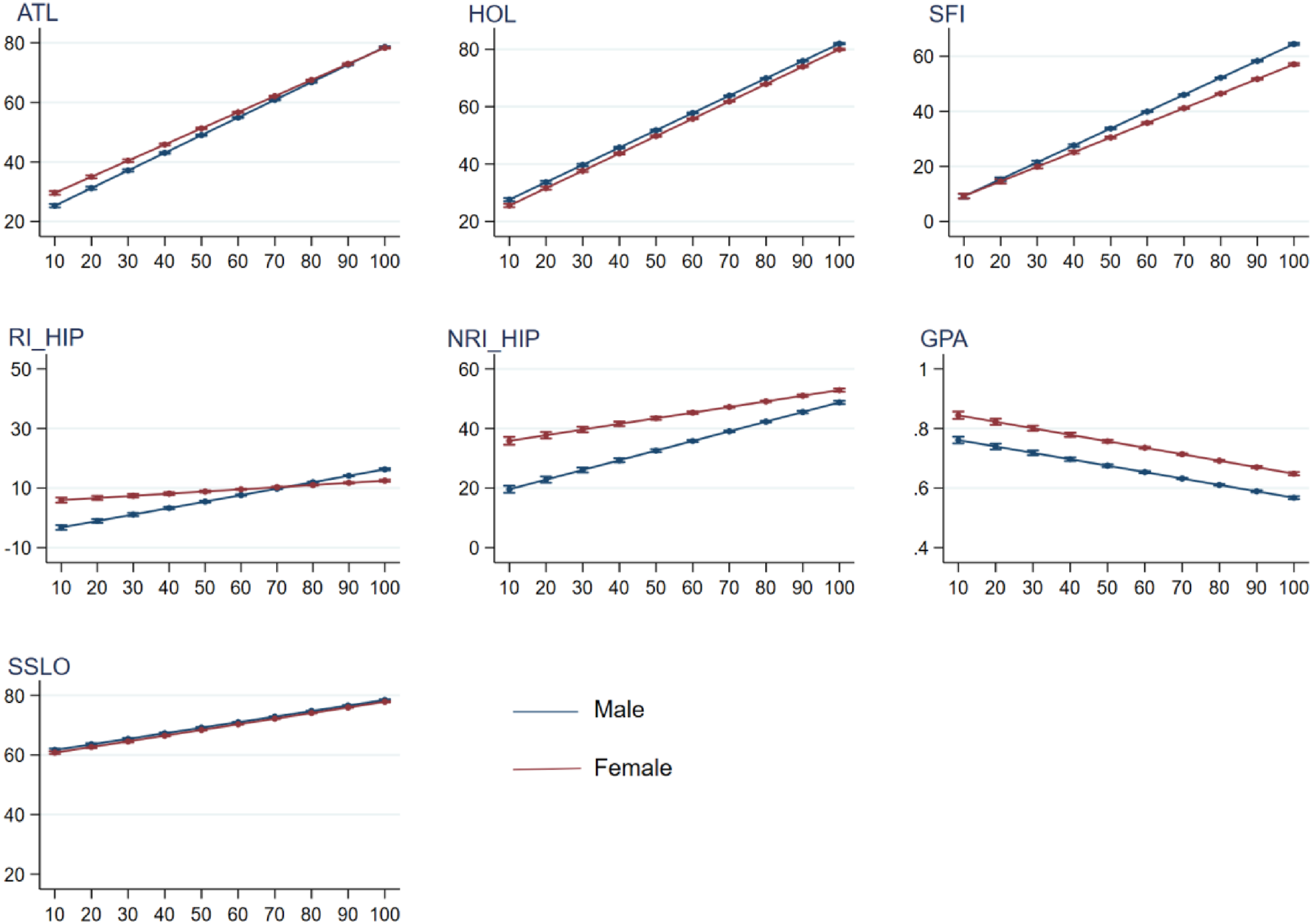
Table 7 and Figure 4 present the estimated interaction effect between perceived student support and services and gender on learning engagement and outcomes to test Hypothesis 3.2. The interaction terms are statistically significant on all engagement and outcome variables except high-order learning. The interaction terms on two outcome variables are statistically significant but the coefficients are only −0.0001 and −0.0098 separately. Overall, male students benefit more from improved supportive campus environment than females. The gender gaps in favor of female students are reduced as the level of student support increases. These findings support our Hypothesis 3.2 that males are able to make better use of supportive resources on campus, though female students perceive more support from the environment. The moderation effect of student support and services on gender gaps (predictive margins with 95% CIs).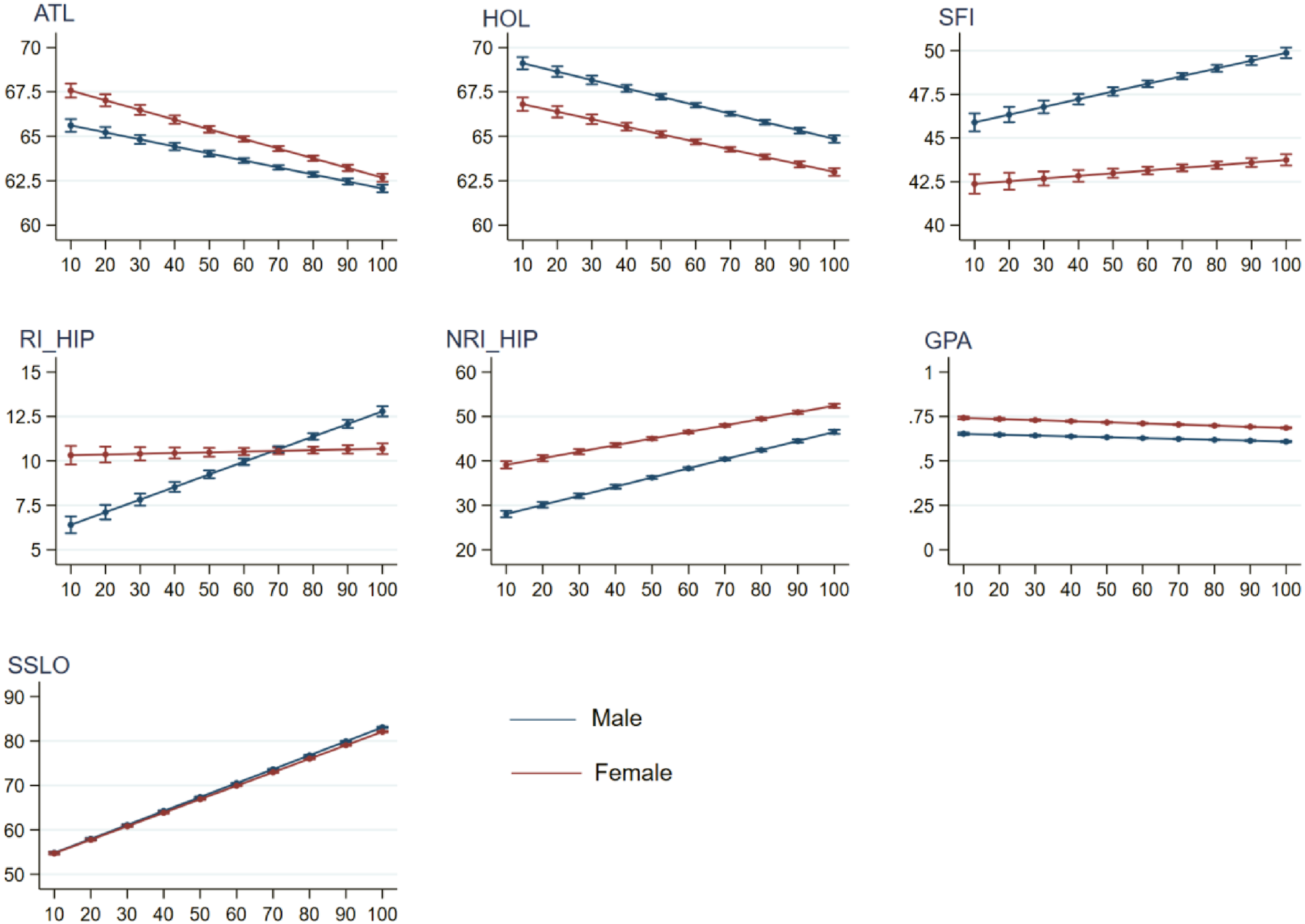
Conclusions and Discussion
Using data from the China College Student Survey 2021, this study examines the gender differences in learning engagement and outcomes in different educational environments, contributing to the College Impact Theories from gender-sensitive perspectives.
First, we find that female college students in general are more diligent in learning in and outside the class but are less engaged in interactive and resource-intensive activities. They outperform males on objective learning outcomes as measured by GPA ranking yet report a similar (and even slightly lower) level of perceived educational gains with male students. These findings are consistent with Luo et al. (2021) who used data from the CCSS 2012 survey, and Zhou et al. (2022) who used the CCSS and NSSE data to compare Chinese and US students.
Second, we find that female students in DWC HEIs have greater strengths and reduced weaknesses than those in non-DWC HEIs, except for student-faculty interaction which is lower in DWC HEIs for all students. As being a DWC HEIs implies more academic and fiscal resources, this finding suggests that resource abundance plays a role in reducing unfavorable gender gaps and confirms the call on a solid material foundation for female development of Marxist Feminism (Gimenez, 2000). However, it is also worth noting that there were fewer female students in DWC HEIs in our sample, suggesting that research on the inequality of education opportunities should scrutinize gender inequality in different types of institutions as mentioned in the study of Liu, Green, and Pensiero (2016).
Third, we find that gender composition in one’s academic unit influences students of both genders. Female students in general perform better in male-dominant surroundings with larger advantages and smaller disadvantages compared to their male counterparts, while male students perform better in gender-balanced ones. In addition, we find that the percentage of female students in one’s academic unit has negative impacts on females in most aspects. These findings are different from Mastekaasa and Smeby (2008) who found that women showed higher persistence in female-dominated programs in Norway. Combining with the comparative analysis that shows that female students in science and engineering fields perform better than those in humanities and social sciences, the overall finding is similar to a previous Chinese study in an engineering-concentrated HEI which found that female students in engineering undergraduate programs are more diligent and motivated and have better academic performance and satisfaction than male students (Jin & Hu, 2018).
These observations are intriguing and can be explained by the gender stereotype theory and the expectancy-value theory. Stereotype threat refers to the risk of confirming a negative stereotype about one’s group (Lewis, 1999). Female students in male-dominated environments may experience less stereotype threat because they are challenging traditional gender roles, which can be both empowering and motivating. The heightened motivation of female students in these environments also stems from their perceived need to prove themselves. From the angle of the expectancy-value theory, women may expect a higher value of success due to the rarity and prestige associated with achievement in male-dominated fields, thereby enhancing their performance (Eccles et al., 1983). This finding highlights the significance of encouraging more women to enter male-dominated fields, despite facing numerous challenges (Almukhambetova et al., 2023; Catalyst, 2020; Eddy & Brownell, 2016). In addition, the performance of female students in female-dominated fields suggests that representation is not equal to more positive surroundings. Women’s higher numerical representation in some fields does not negate a masculine normative standard—to the contrary, it may reinforce behaviors in accordance with the societal conventions on gender roles and stereotype threat. This finding is similar to recent studies in other countries showing that female academics face more career challenges in social and behavioral fields than in the natural sciences and economics (van Veelen & Derks, 2022). Gender issues are at stake in all the fields.
Finally, our study shows that male students are more responsive to academic challenge and student support provided by college, which help making up their weaknesses and strengthening their advantages. Although female students, especially those in sciences and engineering majors, perceive higher academic challenge and support, they do not benefit as much as their male counterparts from such “soft” resources. This on one hand suggests that female students rely more on their own effort in studying, echoing the finding that they are more diligent and self-disciplined but less engaged in student-faculty interactions (Xu et al., 2020). On the other hand, it also implies that the academic challenge and support in its current form may not be adapted to female students’ learning habits and needs, and therefore fail to play the equal effect. Though the gender distribution of the faculty body is missing from our analysis, we may refer to previous literature on the gender disparity in decision-making in HEIs (Hearn, 2020; Rosa et al., 2020) to understand this finding. Male faculty, who typically have the advantage of higher status in HEIs, are better situated than underrepresented female faculty to design masculine academic challenge and supportive resources (Allen & Eby, 2004). The under-representative female faculty in core positions such as senior professionals and decision-makers makes it more difficult for female students to find same-gender role models who provide an example of the kind of success that one may make full use of academic challenge and support in the college (Lockwood, 2006; Pat, 2020). Beyond existing research confirming the educational role of challenge and support in college (Longerbeam, 2016; Xu & Jiang, 2020), our findings argue for more gender-tailored educational practices and resources provided for students.
In summary, the above findings based on the most recent data show that Chinese female college students demand more attention. Though they have equal access to college (Ilie & Rose, 2016; Luo et al., 2021), they need more opportunities to learn in colleges with prestige and more abundance of resources, majors that are traditionally male-dominated, and environments with a more balanced gender structure. Though they maintain good learning habits and grade points in college as also found in other studies (Edwards, 2008; Wang, 2002), they are less engaged in more important aspects, that is high-order learning, student-faculty interaction, resource-intensive high-impact educational activities. Though they perceive higher challenges and support, they are not fully stimulated by these factors. The empirical findings are overall consistent with the feminist and societal gender role theories (Armstrong, 2020; Eagly & Wood, 2012), implying that most female college students behave under the gender expectations of society. Their learning behavior patterns may have been acclimated and fixed in the many years of study before college. While women who venture into traditionally male-dominated fields are actively trying to shed gender labels and break stereotype threat, and those at colleges with more resources can close the gap with men while maintaining their inherent advantages, the larger group of female students, who are studying in traditionally “feminine” majors in local colleges and universities, requires more attention. It is crucial for the HEIs to provide more targeted guidance to motivate, encourage, and promote their learning and development during college. We need to construct a more inclusive institutional environment and culture to break the invisible gender barriers in college.
Nevertheless, the present paper has certain limitations. Above all, self-reported learning engagement and learning outcomes used in this study interweave into the complex learning process and it is hard to conduct solid causal inferences. The analysis of the relationship of gender with them is subject to some threats caused by omitted variable bias, although we include a set of covariates like other personal background and precollege educational experience in the models. Due to data availability, some variables like the gender ratio among faculty members are not included. Besides, due to the length limitation of the paper, we do not discuss the underlying socio-cultural reasons for gender difference in learning performance. Although gender gaps influenced by the structure and environment of college are important findings, we need to dig into the social and cultural origins fully in a new paper.
Footnotes
Declaration of conflicting interests
The author(s) declared no potential conflicts of interest with respect to the research, authorship, and/or publication of this article.
Funding
The author(s) disclosed receipt of the following financial support for the research, authorship, and/or publication of this article: This work was supported by the National Natural Science Foundation of China (Grant No. 72104120) and Tsinghua University Initiative Scientific Research (Grant Number, 2021THZWJC22).

Notes
Appendix
Table A1.
Definition, measurement, and descriptive statistics of variables (N = 118685, sampling weights applied)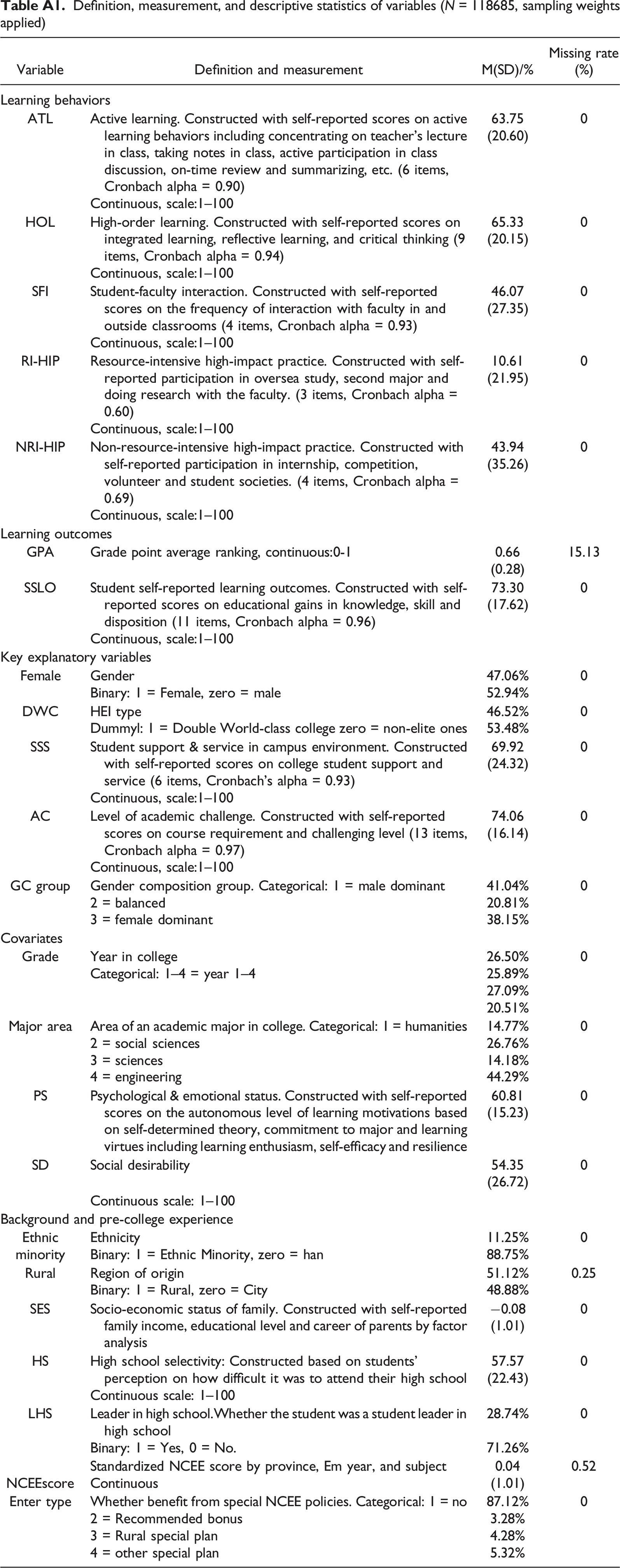
Variable
Definition and measurement
M(SD)/%
Missing rate (%)
Learning behaviors
ATL
Active learning. Constructed with self-reported scores on active learning behaviors including concentrating on teacher’s lecture in class, taking notes in class, active participation in class discussion, on-time review and summarizing, etc. (6 items, Cronbach alpha = 0.90)
63.75 (20.60)
0
Continuous, scale:1–100
HOL
High-order learning. Constructed with self-reported scores on integrated learning, reflective learning, and critical thinking (9 items, Cronbach alpha = 0.94)
65.33 (20.15)
0
Continuous, scale:1–100
SFI
Student-faculty interaction. Constructed with self-reported scores on the frequency of interaction with faculty in and outside classrooms (4 items, Cronbach alpha = 0.93)
46.07 (27.35)
0
Continuous, scale:1–100
RI-HIP
Resource-intensive high-impact practice. Constructed with self-reported participation in oversea study, second major and doing research with the faculty. (3 items, Cronbach alpha = 0.60)
10.61 (21.95)
0
Continuous, scale:1–100
NRI-HIP
Non-resource-intensive high-impact practice. Constructed with self-reported participation in internship, competition, volunteer and student societies. (4 items, Cronbach alpha = 0.69)
43.94 (35.26)
0
Continuous, scale:1–100
Learning outcomes
GPA
Grade point average ranking, continuous:0-1
0.66 (0.28)
15.13
SSLO
Student self-reported learning outcomes. Constructed with self-reported scores on educational gains in knowledge, skill and disposition (11 items, Cronbach alpha = 0.96)
73.30 (17.62)
0
Continuous, scale:1–100
Key explanatory variables
Female
Gender
47.06%
0
Binary: 1 = Female, zero = male
52.94%
DWC
HEI type
46.52%
0
Dummyl: 1 = Double World-class college zero = non-elite ones
53.48%
SSS
Student support & service in campus environment. Constructed with self-reported scores on college student support and service (6 items, Cronbach’s alpha = 0.93)
69.92 (24.32)
0
Continuous, scale:1–100
AC
Level of academic challenge. Constructed with self-reported scores on course requirement and challenging level (13 items, Cronbach alpha = 0.97)
74.06 (16.14)
0
Continuous, scale:1–100
GC group
Gender composition group. Categorical: 1 = male dominant
41.04%
0
2 = balanced
20.81%
3 = female dominant
38.15%
Covariates
Grade
Year in college
26.50%
0
Categorical: 1–4 = year 1–4
25.89%
27.09%
20.51%
Major area
Area of an academic major in college. Categorical: 1 = humanities
14.77%
0
2 = social sciences
26.76%
3 = sciences
14.18%
4 = engineering
44.29%
PS
Psychological & emotional status. Constructed with self-reported scores on the autonomous level of learning motivations based on self-determined theory, commitment to major and learning virtues including learning enthusiasm, self-efficacy and resilience
60.81 (15.23)
0
SD
Social desirability
54.35 (26.72)
0
Continuous scale: 1–100
Background and pre-college experience
Ethnic minority
Ethnicity
11.25%
0
Binary: 1 = Ethnic Minority, zero = han
88.75%
Rural
Region of origin
51.12%
0.25
Binary: 1 = Rural, zero = City
48.88%
SES
Socio-economic status of family. Constructed with self-reported family income, educational level and career of parents by factor analysis
−0.08 (1.01)
0
HS
High school selectivity: Constructed based on students’ perception on how difficult it was to attend their high school
57.57 (22.43)
0
Continuous scale: 1–100
LHS
Leader in high school.Whether the student was a student leader in high school
28.74%
0
Binary: 1 = Yes, 0 = No.
71.26%
NCEEscore
Standardized NCEE score by province, Em year, and subject
0.04 (1.01)
0.52
Continuous
Enter type
Whether benefit from special NCEE policies. Categorical: 1 = no
87.12%
0
2 = Recommended bonus
3.28%
3 = Rural special plan
4.28%
4 = other special plan
5.32%