




Abstract
In an increasingly dynamic and technology-driven labour market, the development and assessment of soft skills have gained significant relevance. While higher education institutions (HEIs) play a pivotal role in preparing students for professional challenges, concerns persist regarding the alignment between the skills students develop and those expected by employers. This study investigates whether students’ perceptions of employers’ expectations are aligned with their self-assessments of soft skills, and if those perceptions vary according to gender and level of professional experience. Data were collected through a structured questionnaire administered to 384 students from a Portuguese HEI. Results reveal a statistically significant gap between what students believe employers expect and how well they feel they meet those expectations. Gender-based differences emerged, with male students emphasising strategic and instrumental skills, while female students reporting higher confidence in relational competencies. The study also finds that students with higher self-perceived skills are more willing to invest financially in further development. These findings reinforce the need for HEIs to adopt more targeted and inclusive strategies for soft skills development, in close collaboration with employers. The study contributes to the growing discourse on graduate employability and offers practical implications for curriculum design and career readiness initiatives.
Keywords
Introduction
The rapid transformation of the global labour market, driven by the Covid-19 pandemic, the advancement of Industry 4.0, and the integration of Artificial Intelligence, has intensified the demand for new and more complex skill sets. In this evolving context, soft skills - such as communication, adaptability, teamwork, and problem-solving - have gained increasing prominence alongside traditional technical competencies. Various international organisations, including the OECD (2020) and the World Economic Forum (WEF, 2025), emphasize the importance of these skills not only for employability but also for lifelong learning and adaptability in a knowledge-based economy.
Despite their growing relevance, soft skills remain insufficiently addressed within many higher education curricula. While employers consistently stress the importance of these competencies, students often report a lack of confidence in their own soft skill development, perceiving a disconnect between academic preparation and workplace demands (Otermans et al., 2023; Succi and Canovi, 2019; Tang, 2020). Several empirical studies have also highlighted the existence of perceptual gaps between students and employers regarding the value, prioritisation, and mastery of soft skills, as well as disparities influenced by gender, academic background, and professional experience.
Against this backdrop, the present study seeks to examine whether students’ perceptions of employers’ expectations are aligned with their self-assessed soft skills. It also aims to explore whether such perceptions differ based on gender and level of professional experience.
The paper is structured as follows: the next section presents a review of the relevant literature. The third section details the methodological approach adopted for data collection and analysis. This is followed by two sections with the presentation and discussion of results. Finally, the paper concludes with key findings, implications for higher education institutions, and suggestions for future research.
Literature review
In a constantly evolving global landscape, the labour market is witnessing the emergence of new skill demands. The Covid-19 pandemic, the advent of Industry 4.0, and the widespread integration of Artificial Intelligence are reshaping business models and workforce requirements, thereby highlighting the increasing need for novel competencies (Green, 2024; Pedota et al., 2023; Pezer, 2021; Singh et al., 2024; Succi and Canovi, 2019).
According to the OECD (2020, p. 2), “Skills are the ability and capacity to carry out processes and be able to use one’s knowledge in a responsible way to achieve a goal. Skills are part of a holistic concept of competency, involving the mobilisation of knowledge, skills, attitudes and values to meet complex demands.” Similarly, the World Economic Forum (WEF, 2025: p. 5) defines skills as “the capabilities needed to complete a task, and therefore a job.” Golegou et al. (2025) further argue that 21st-century skills encompass not only the abilities necessary for effective performance in the workplace but also the competences required to navigate the complexities of a global, knowledge-based economy, with a particular emphasis on interpersonal and social dimensions.
The Global Skills Taxonomy developed by the WEF is structured hierarchically, beginning with two overarching domains - Skills, Knowledge and Abilities, and Attitudes - and subdivided into three progressive levels, culminating in 93 specific skills. This structured framework facilitates the identification and assessment of essential competencies, thereby supporting alignment between training initiatives, recruitment practices, and labour market demands (WEF, 2025).
Succi and Canovi (2019) note the absence of a universally accepted definition of soft skills, observing that their interpretation varies across theoretical and contextual lenses. These skills are frequently referred to by different terms, such as life skills, interpersonal skills, social competences, leadership abilities, transversal skills, or meta-competences. Regardless of terminology, they all underscore the emotional and relational aspects of human behaviour, as distinct from the technical and cognitive features typically associated with hard skills. In this regard, Lamri and Lubart (2023) point out that while hard skills refer to technical or job-specific capabilities, soft skills are largely interpersonal, emotional, and social in nature.
The growing disconnect between higher education systems and increasingly digitalised and knowledge-intensive industries has intensified concerns about skill misalignment, particularly in relation to soft skills that are difficult to codify, teach, and assess (Rahman et al., 2024). This challenge can be framed through two dominant theoretical lenses that explain the economic role of higher education: human capital theory and signalling theory. Human capital theory conceptualises education as an investment that directly enhances individuals’ productive capacities, implying that graduates’ wages and employability reflect acquired competencies, including transferable skills such as communication, problem-solving, and teamwork (Becker, 1962; Schultz, 1961). From this perspective, persistent soft-skill gaps signal inefficiencies in curriculum design or pedagogical approaches that fail to translate educational inputs into labour-market-relevant capabilities.
By contrast, signalling theory views education primarily as a market-mediated sorting mechanism rather than a productivity-enhancing process. According to Spence (1973), educational credentials function as signals that allow employers to infer individuals’ underlying abilities in contexts of imperfect information. While labour markets transmit signals regarding desired skill profiles, education systems often struggle to interpret and operationalise these signals, particularly when skill demands are complex, context-specific, and rapidly evolving (Chen et al., 2021; Tijdens et al., 2018). As a result, employers increasingly rely on observable educational signals when recruiting, even when graduates’ soft-skill endowments only partially align with job requirements (Celani and Singh, 2011; Connelly et al., 2011). Recent contributions suggest that signalling theory may also serve as a diagnostic tool for improving skills mapping and guiding curriculum reform (Alam et al., 2025; Garcia-Mainar and Montuenga, 2019). Nevertheless, even in systems where education is explicitly redesigned to reflect labour market signals (Wickramasinghe, 2018), perfect alignment remains elusive due to the dynamic, relational, and context-dependent nature of soft skills. Consequently, the longstanding debate between human capital and signalling explanations remains unresolved (Rospigliosi et al., 2014), reinforcing the theoretical relevance of examining soft-skill misalignment as a structural rather than transitory phenomenon at the interface between industry and higher education.
Within this theoretical framework, soft-skill misalignment emerges as a critical mechanism linking higher education to labour market outcomes (Jackson and Wilton, 2017; Rahman et al., 2024). Recent evidence reinforces this view, showing that soft skills are increasingly central to employability across sectors, yet remain unevenly defined, developed, and assessed within higher education systems (Villegas, 2024). From a human capital perspective, persistent gaps in graduates’ soft skills indicate limitations in how higher education institutions translate learning processes into transferable and work-relevant competencies (Bridgstock, 2009; Yorke and Knight, 2004). In contrast, signalling theory suggests that employers often rely on educational credentials as imperfect proxies for soft-skill endowments in contexts of information asymmetry, rather than as direct indicators of job-ready capabilities (Bills, 2003; Brown et al., 2003). In both perspectives, the divergence between educational provision, labour market signalling, and employer expectations is particularly pronounced for soft skills, helping to explain why employability concerns persist despite expanding access to higher education and sustained policy attention to graduate outcomes.
The issue of graduate employability has been a growing concern among researchers, educators, employers, and other stakeholders involved in higher education (Grant-Smith and McDonald, 2018; Shivoro et al., 2017; Tran et al., 2022). To thrive in the job market, university graduates must possess both technical and soft skills. However, empirical evidence suggests that graduates often lack soft skills to a greater extent than technical competencies (Succi, 2019). One contributing factor is that higher education institutions (HEIs) tend to inadequately incorporate soft skills into their curricula (Tang, 2020). Since soft skills are generally better developed in informal or experiential contexts than in traditional classroom settings, this gap persists (Fakhretdinova et al., 2021; Succi and Wieandt, 2019).
In an effort to highlight the increasing importance of soft skills, Succi and Canovi (2019) conducted a mixed-methods study comparing the perceptions of students/recent graduates and employers. Data were collected from 169 students and recent graduates (with a maximum of 2 years of work experience) and 131 employers, including HR managers and senior executives, across Italy and Germany. The findings revealed a growing emphasis on soft skills by both groups - 86% of respondents noted a significant rise in their importance over the past 5 to 10 years. Nevertheless, marked differences were observed in the prioritisation of specific skills: employers emphasised ethical behaviour, adaptability, and teamwork, whereas students valued networking and conflict management. These discrepancies underscore a persistent misalignment between higher education outcomes and labour market expectations, reinforcing the need for enhanced collaboration between universities and employers. The study also advocates for more proactive student engagement in the development of employability-related competencies.
Otermans et al. (2023) examined students’ and graduates’ perceptions of skill development in UK HEIs through a survey of 420 participants. Their results identified a misalignment between students’ perceptions of the soft skills acquired during their studies and the actual demands of the job market. Although students recognised the importance of soft skills, they reported low confidence in applying them, indicating a substantial skills gap and the necessity for targeted development efforts within HEIs.
More recently, Ngo (2024) investigated how undergraduate students in Vietnam perceive the role of soft skills in academic and professional contexts. Based on survey data from 968 students across eight universities, the findings revealed that while students recognised the importance of soft skills for career development, they perceived a limited impact on academic performance. Communication, teamwork, collaboration, and time management were deemed essential for academic success, while leadership, teamwork, and problem-solving were viewed as critical for career advancement. Despite this awareness, many students rated their own skill levels as inadequate.
In a comparative study of Hungary and Serbia, Slavić et al. (2024) explored student perceptions of soft skills using a questionnaire-based survey. Results indicated that students believed employers valued competencies such as communication, teamwork, planning, problem-solving, flexibility, and creativity. Although the importance of soft skills for employability was widely acknowledged, statistically significant differences emerged between countries in perceived importance and skill development. These findings were linked to differences in labour market structures, occupational profiles, and higher education curricula.
Hanafi and Ouahidi (2024) focused on the perceptions of teachers and students regarding soft skills in English language classes at the pre-tertiary level in Morocco. Surveying 160 high school participants, the study found that while teachers considered transversal skills essential for both academic and professional success, these skills were not adequately integrated into classroom instruction. Notably, many students reported unfamiliarity with transversal skills and indicated limited opportunities for their development in the classroom setting.
Almeida and Fontana (2025) examined the perceptions of graduates and managers regarding skills acquired in engineering programs in Brazil. Their study, conducted at the Federal University of Pernambuco, revealed a notable gap between the skills developed through academic programs and those valued in the labour market, as perceived by both students and employers.
In the Portuguese context, existing studies have explored these issues in limited or localised settings. For instance, a study by Pereira and Costa (2017), based on responses from 424 Portuguese bachelor’s degree students, revealed a strong awareness of transversal skills among students. However, variations were noted across academic disciplines and gender. The study highlighted the importance of autonomy and socio-emotional skills, reinforcing the value of transversal competencies in alignment with current labour market demands. Barbosa and Freire (2019) investigated the views of 41 business managers in the northern region of Portugal, while Suleman and Laranjeiro (2018) and Vasconcelos et al. (2020) worked with small and specific business samples. Suleman and Laranjeiro (2018) implemented an explorative study with a very small sample of firms (10 firms) and examine the relationship between the perception of graduates’ skills and the employers’ anticipative and remedial strategies. Aiming at analysing the perception of employers about graduate’s skills on labour market and the strategies implemented by employers to cope with soft skills problems, Vasconcelos et al. (2020) developed an empirical analysis based on qualitative data collected in 2019 from interviews with human resource managers of 20 firms located in the North of Portugal. Meanwhile, Pereira and Costa (2017), using a larger sample of 424 undergraduate students, found that participants placed high value on autonomy and socio-emotional skills.
According to Tsirkas et al. (2020) and Succi and Canovi (2019), a consistent gap exists between students’ self-assessment of their interpersonal and transversal skills and the expectations held by employers. Students tend to rate their own soft skills more positively, which may lead to a false sense of preparedness. In contrast, employers continue to identify substantial deficits in these areas. This misalignment can significantly hinder graduate employability.
Yong and Ling (2023) further argue that students often only begin to appreciate the value of soft skills after entering the labour market. Consequently, they may underestimate the importance of these competencies during their studies, reinforcing a cycle of misperception. This highlights the urgent need for interventions during the higher education phase rather than post-graduation. Proponents of signalling theory argue that the job market communicates the skills that are truly in demand to the education system. Accordingly, it is essential for educational institutions to respond to these signals by preparing graduates with the competencies required to obtain employment in specific sectors (Alam, 2021).
The studies reviewed above consistently point to a misalignment between the skills students acquire during their academic journeys and those demanded by the labour market, particularly in the domain of soft skills. While the growing importance of soft skills is widely recognised, students’ confidence in their own abilities remains limited. Additionally, contextual variables such as gender, academic background, and professional experience appear to influence perceptions of skill acquisition and relevance. From a human capital perspective, this potential misalignment suggests gaps in the development of productive competencies during higher education, whereas from a signalling perspective, it may reflect differences between the skills students believe they possess and the signals they believe employers value when assessing graduate employability (Becker, 1962; Spence, 1973).
Building on this body of work, and the theoretical considerations, the present study aims to explore whether students’ perceptions of employers’ expectations align with their self-assessments of soft skills. Accordingly, the following research hypotheses are proposed:
There is an alignment between students’ perceptions of employers’ expectations and their self-perceptions regarding soft skills.
Students’ perceptions of soft skills differ significantly by gender.
Students’ perceptions of soft skills vary according to their level of professional experience.
Research methodology and data
List of soft skills used in the questionnaire.
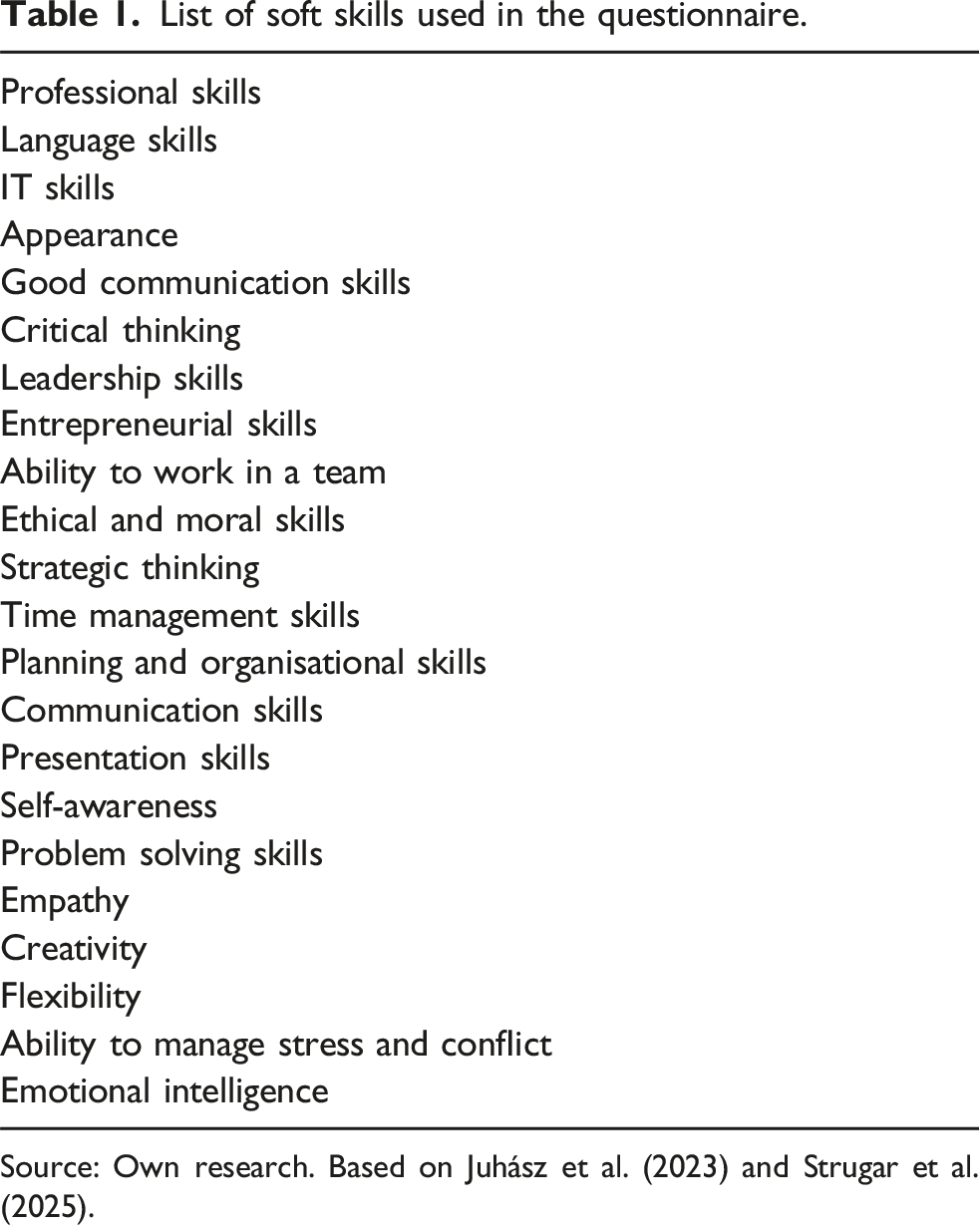
Source: Own research. Based on Juhász et al. (2023) and Strugar et al. (2025).
Data were collected via a structured questionnaire administered in person by the authors to 384 students enrolled in Economics and Management programmes at a private Portuguese higher education institution. The sample comprised bachelor’s, master’s, and PhD students, with data gathered between October 2023 and January 2024. The instrument was completed in person during scheduled class sessions using paper-based questionnaires. Participation was voluntary and anonymous, and no identifying information was collected. Prior approval for the study was obtained from the University’s Ethics Committee, and informed consent was secured from all participants. To reduce potential bias and ensure data quality, standardized instructions were provided, students were informed that participation had no academic consequences, and the authors remained available to clarify procedural questions without influencing responses. Questionnaires were checked for completeness upon collection, and only fully completed instruments were retained for analysis.
The survey collected information related to demographic characteristics, career and work experience and the degree of development and confidence in soft skills as well as the respondent´s valuation about the importance of soft skills in labour market.
From the total of 19 questions, 8 of them were Likert-type scale questions. For each of these questions, participants were asked to complete and rate 22 items using a five-point Likert scale from 1 to 5 (1 – completely disagree/not important at all; 5 – completely agree/the most important).
The internal consistency of the soft skills scales was assessed using Cronbach’s alpha. The scale measuring students’ self-assessed soft skills demonstrated high reliability (α = 0.887), while the scale capturing students’ perceptions of employer expectations showed excellent internal consistency (α = 0.918). All items exhibited positive item–rest correlations, supporting the retention of the full set of 22 soft skill indicators.
The analysis proceeded in four stages. First, descriptive statistics were used to characterise perceptions across the three dimensions. Second, paired-sample t-tests were conducted to assess significant gaps between perceived expectations and self-assessed skills, as well as between self-assessed skills and the perceived match with employer demands. Third, independent samples t-tests were used to examine differences in perceptions according to gender and professional experience. In addition to statistical significance, effect sizes were calculated using Cohen’s d to assess the magnitude of the observed differences. Normality was assessed using Shapiro–Wilk tests and visual inspection of score distributions. Although the Shapiro–Wilk tests indicated statistically significant departures from normality (p < 0.001), visual inspection revealed approximately symmetric, unimodal distributions without severe skewness or extreme outliers. Given the sample size and the robustness of t-tests to moderate violations of normality, parametric tests were considered appropriate. Finally, a composite soft skills index was computed for each respondent to explore its relationship with willingness to invest in soft skills development.
This analytical framework facilitates the identification of soft skill gaps, demographic and experiential differences, and broader patterns in students’ attitudes towards the role of soft skills in graduate employability.
In presenting our results, we depart from the methodological frameworks adopted by Otermans et al. (2023) and Slavić et al. (2024), both of which rely on survey-based instruments to assess students’ perceptions of soft skills development in higher education. Otermans et al. (2023) employed a structured questionnaire involving 420 UK students and graduates, using structured questionnaires and statistical analysis - including Kruskal-Wallis and t-tests - to identify perceived skill gaps. Similarly, Slavić et al. (2024) conducted a comparative analysis based on survey data collected from students in Hungary and Serbia, primarily from economics and business-related programmes. Using descriptive statistics and independent samples t-tests, their research investigated students’ perceptions of the importance of various soft skills and development of soft skills across different national contexts. While our study also draws on a structured questionnaire, it differs by focusing specifically on the perceived alignment between students’ self-assessed soft skill profiles and their understanding of employer expectations within a Portuguese higher education context. Furthermore, our analysis extends to exploring how these perceptions vary according to gender and professional experience, thus introducing a multidimensional perspective on student perceptions that accounts for gender and professional experience absent from the aforementioned studies.
Results
From the sample of 384 university students, 182 (47.40%) were female and 202 (52.60%) were male. The majority of respondents were under 20 years old (65.89%), whereas participants with age between 21 and 30 years old were around 30% and less than 5% were over 31 years old.
In terms of education, the great majority (almost 82%) of respondents have secondary school education while nearly 18% are master students, with college or university education, or PhD students. Concerning work experience almost half of the respondents does not have work experience (47.40%), with 19.53% presenting half a year or less of work experience, 11.46% with more than half of a year, but less than a year, and 19.79% presenting more than 1 year of work experience.
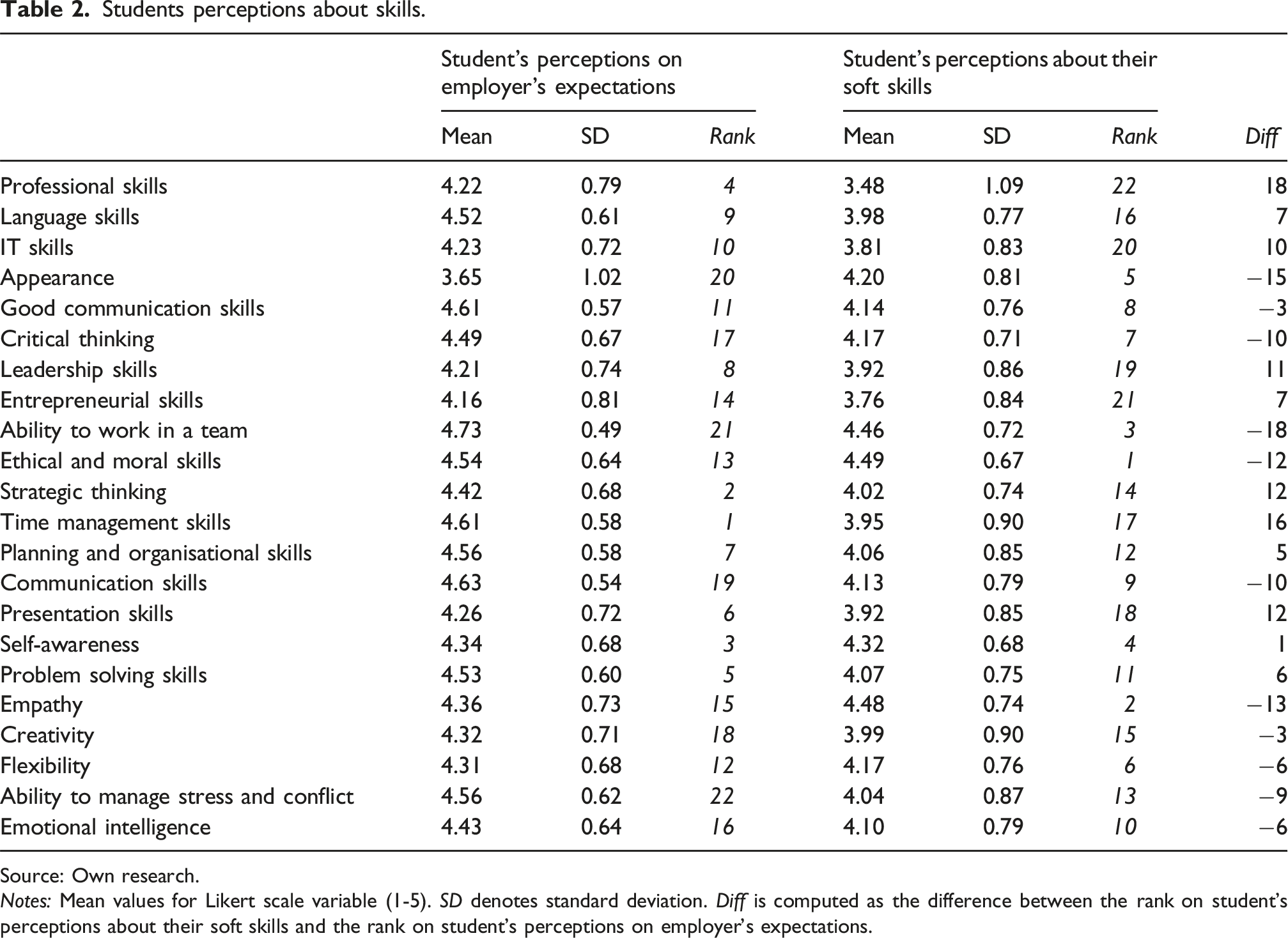
Students perceptions about skills.
Source: Own research.
Notes: Mean values for Likert scale variable (1-5). SD denotes standard deviation. Diff is computed as the difference between the rank on student’s perceptions about their soft skills and the rank on student’s perceptions on employer’s expectations.
The greatest discrepancies were observed for time management skills and professional skills, with the largest positive rank differences (+16 and +18, respectively). This suggests students perceive these as highly valued by employers but feel less confident in their own abilities. Strategic thinking and presentation skills also present a notable gap between expectations and self-assessed proficiency (+12 each). Conversely, students rated themselves higher than they believe employers expect in certain interpersonal and emotional competencies. For appearance (−15), ability to work in a team (−18), and empathy (−13), students believe they perform strongly in these areas, potentially overestimating their importance in the job market. Finally, it is observed that skills such as leadership, problem solving, and IT skills show moderate rank differences (between +6 and +11), which may indicate areas where students recognize employer demand but feel moderately underprepared.
Figure 1 compares the differences in students’ perceptions, that is, confronts their perceptions on employer’s expectations with perceptions about their own skills. As can be seen, several soft skills clearly appear away from the main diagonal. Soft skills associated with more personal traits (e.g., those that are difficult to teach), such as empathy, ethics, appearance, and emotional intelligence, are clustered in the lower right corner. This suggests that students perceive themselves as possessing these qualities but do not believe that employers assign them as much importance. Conversely, the more “tangible” soft skills such as strategic thinking, planning, organisation, and problem-solving, are positioned in the opposite corner. Students believe that employers value these skills, but do not perceive themselves as having them. These results do not validate our first hypothesis (H1). Differences in student’s perceptions. Source: Own research.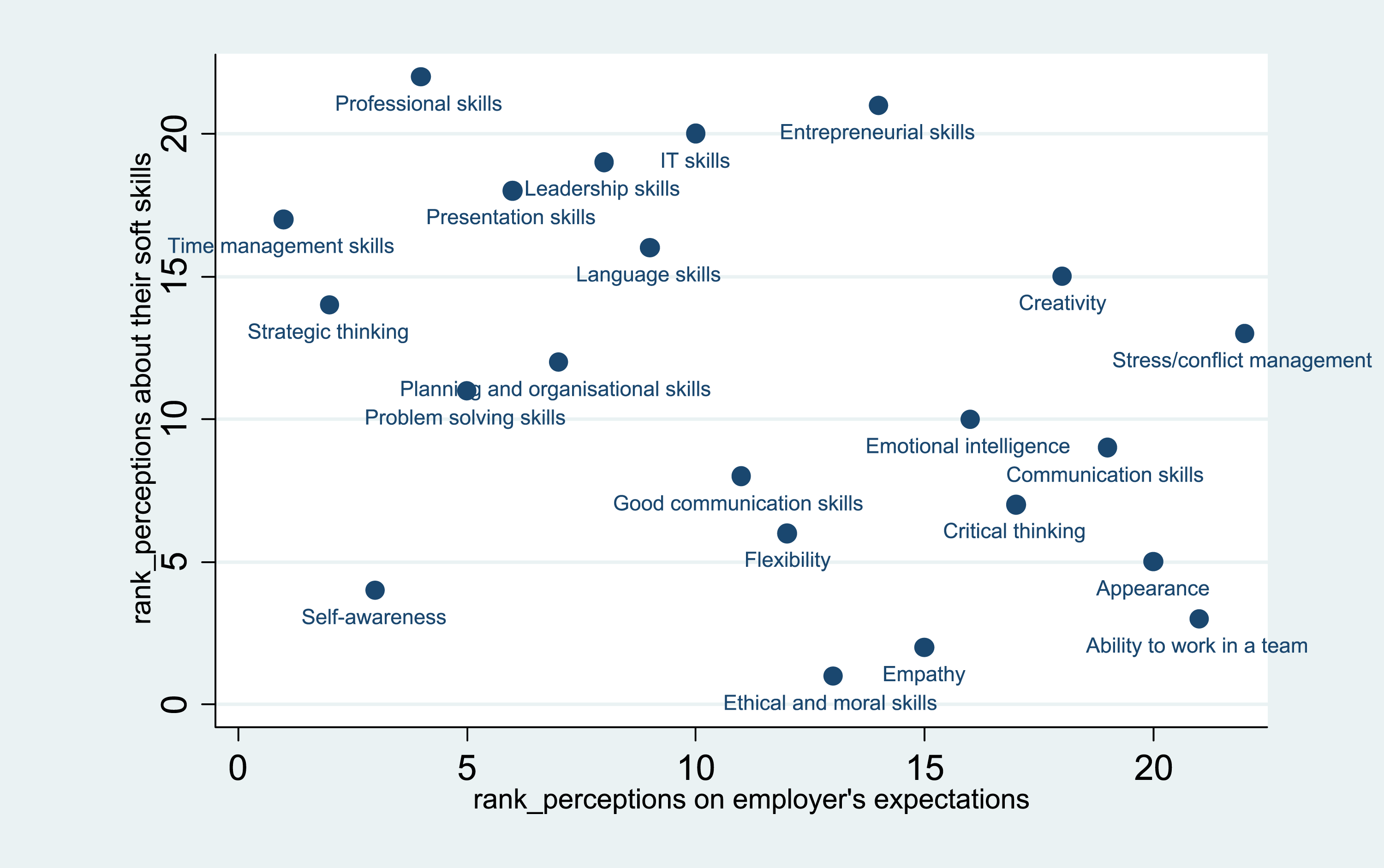
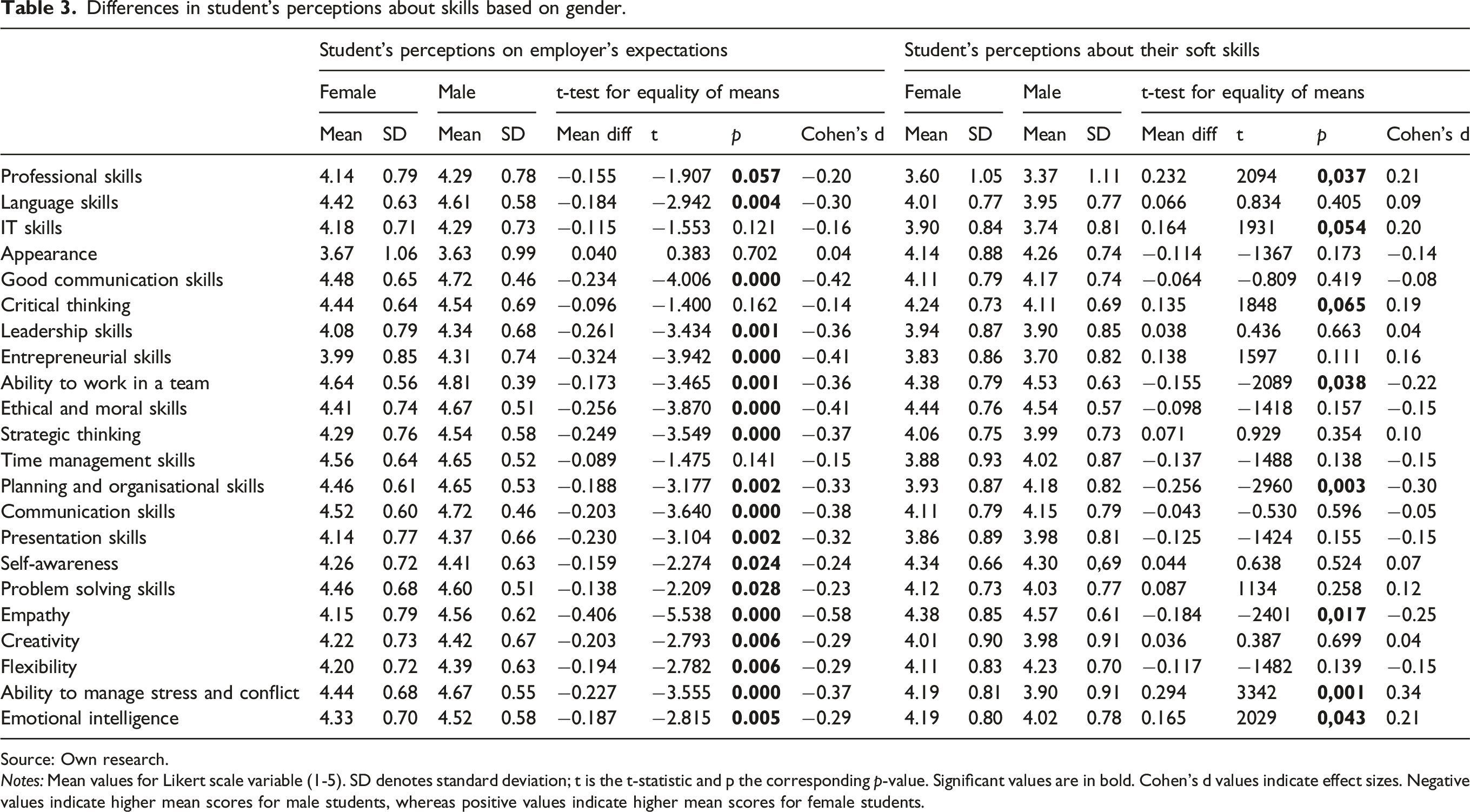
We compare the perceived perceptions according to gender and level of experience in labour market. For this analysis, a t-test has been used in order to investigate if there are significant differences in perceptions on each soft skill. In addition to statistical significance, Cohen’s d was calculated to assess the magnitude of the observed differences.
Differences in student’s perceptions about skills based on gender.
Source: Own research.
Notes: Mean values for Likert scale variable (1-5). SD denotes standard deviation; t is the t-statistic and p the corresponding p-value. Significant values are in bold. Cohen’s d values indicate effect sizes. Negative values indicate higher mean scores for male students, whereas positive values indicate higher mean scores for female students.
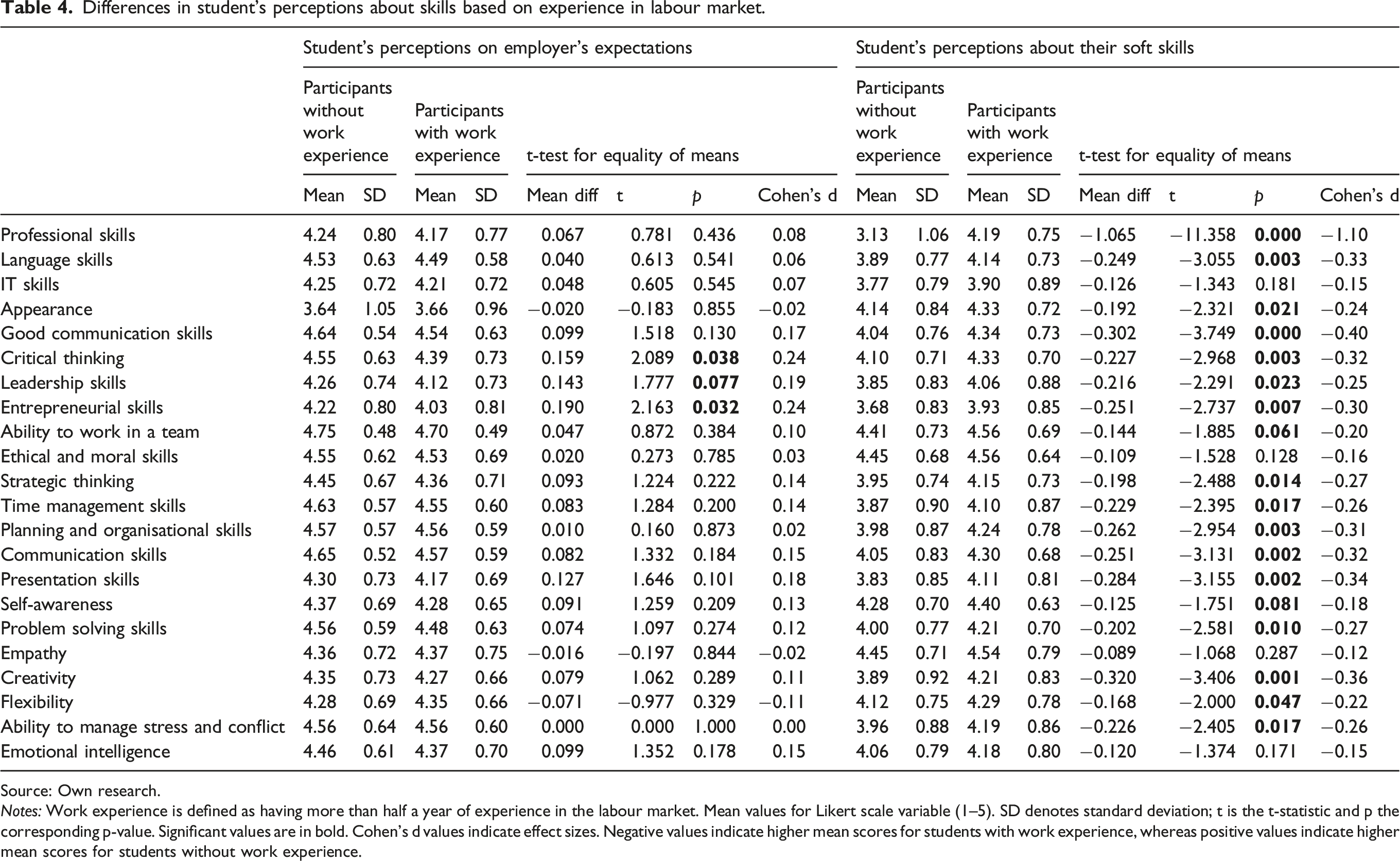
Differences in student’s perceptions about skills based on experience in labour market.
Source: Own research.
Notes: Work experience is defined as having more than half a year of experience in the labour market. Mean values for Likert scale variable (1–5). SD denotes standard deviation; t is the t-statistic and p the corresponding p-value. Significant values are in bold. Cohen’s d values indicate effect sizes. Negative values indicate higher mean scores for students with work experience, whereas positive values indicate higher mean scores for students without work experience.
In terms of self-assessed soft skills, gender differences are generally small. Female students report higher confidence in professional skills (d = 0.21), whereas male students rate themselves higher in teamwork (d = −0.22) and emotional intelligence (d = 0.21). A notable exception concerns the ability to manage stress and conflict, for which male students report substantially higher self-assessments, reflected in a moderate effect size (d = 0.34).
Regarding differences based on labour market experience (Table 4), perceptions of employer expectations show few statistically significant differences, and effect sizes are generally small, indicating a high degree of similarity between students with and without work experience in how they perceive employer demands. Small but significant differences emerge for critical thinking and entrepreneurial skills, where students without experience attribute slightly greater importance to these competencies (d ≈ 0.24). In contrast, self-assessed soft skills differ more markedly by experience status. Students with work experience consistently report higher levels of perceived competence across a wide range of skills, including professional skills, communication, critical and strategic thinking, planning and organisational skills, presentation skills, and creativity. These differences are associated with small to moderate effect sizes, with the largest effects observed for professional skills (d = −1.10), good communication skills (d = −0.40), creativity (d = −0.36), and presentation skills (d = −0.34).
According to the data obtained and based on the student’s perceptions on soft skills it was also possible to compare (1) what student’s think employers expect with how well they meet those expectations and (2) what skills students have with how well they meet employer’s expectations.
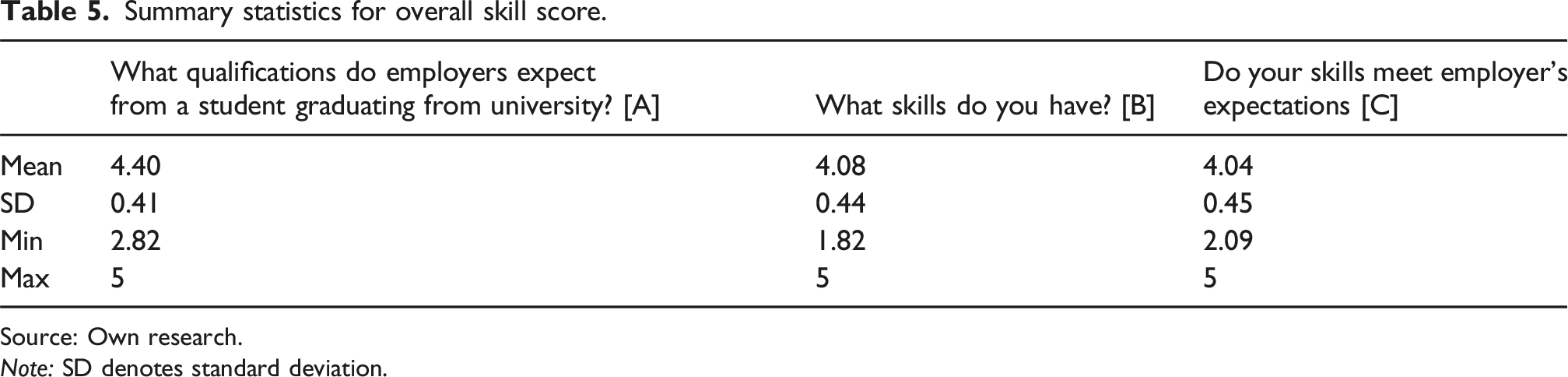
In order to do that we estimate an overall skill score. This overall skill score is computed as the average across several skills and it permits us to aggregate responses to multiple Likert-scale items that measure soft skills. Thus, for each one of the three dimensions we create an overall skill score.
Summary statistics for overall skill score.
Source: Own research.
Note: SD denotes standard deviation.
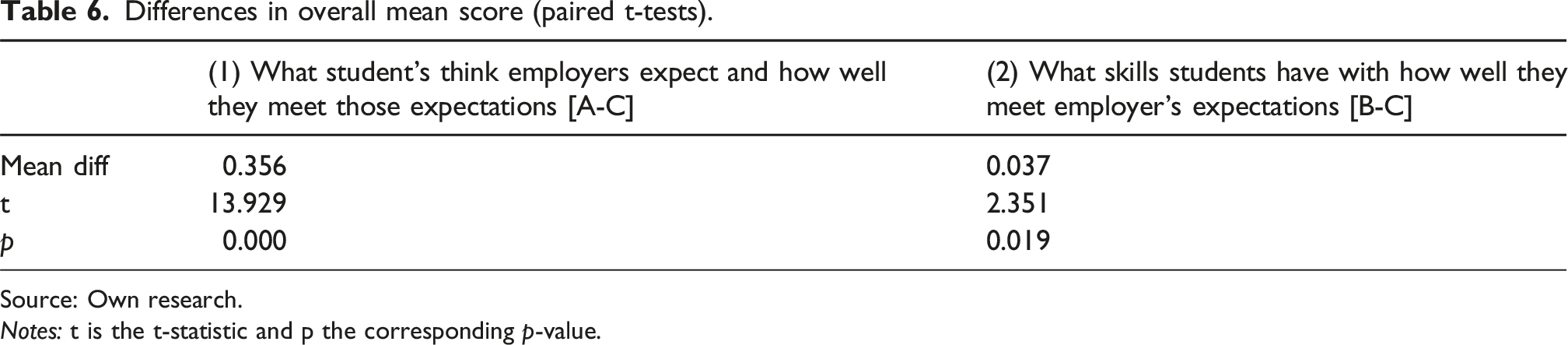
The implementation of a dependent t-test permits us to investigate and compare about differences in soft skills perceptions as we compare the student’s perceptions on different dimensions. First, it is compared the overall mean score for what student’s think employers expect with the overall mean score on how well they meet those expectations. Second, it is compared the overall mean score on what skills students have with the overall mean score on how well they meet employer’s expectations.
Differences in overall mean score (paired t-tests).
Source: Own research.
Notes: t is the t-statistic and p the corresponding p-value.
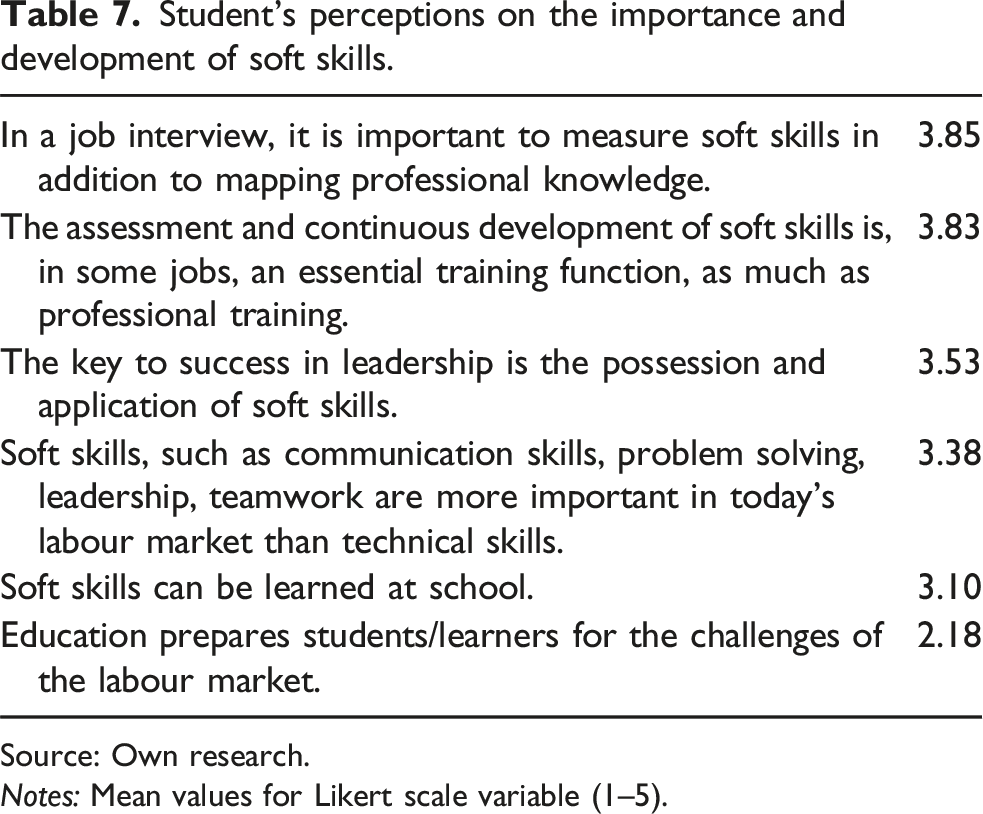
Student’s perceptions on the importance and development of soft skills.
Source: Own research.
Notes: Mean values for Likert scale variable (1–5).
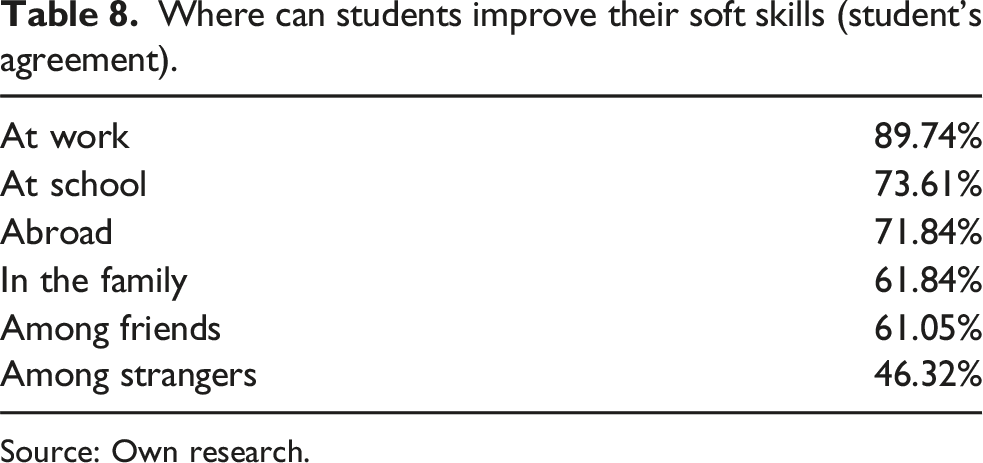
Where can students improve their soft skills (student’s agreement).
Source: Own research.
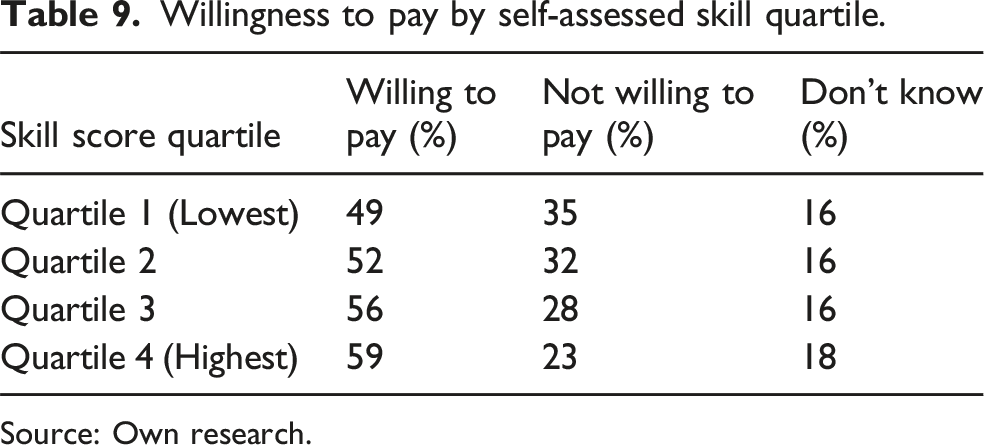
We extend the analysis exploring the relationship between students’ self-assessed soft skill levels and their willingness to invest financially in developing these competencies. Students were grouped into quartiles based on their overall self-assessment scores and their responses to the question “Would you be willing to pay to improve your soft skills?” were analysed accordingly.
Willingness to pay by self-assessed skill quartile.
Source: Own research.
Discussion
The findings of this study reveal a consistent and significant misalignment between university students’ self-perceptions of soft skills and their understanding of employer expectations. This pattern reflects and extends prior research on employability gaps (Otermans et al., 2023; Succi and Canovi, 2019). Our results reveal considerable gaps in some key areas: students tend to undervalue skills such as time management and strategic thinking while overestimating the importance or their proficiency in traits like appearance and empathy. This asymmetry suggests students may overvalue relational strengths relative to labour market signals, which reflect a misunderstanding of employer priorities, particularly in structured, performance-driven environments (Lamri and Lubart, 2023). This suggests a need for recalibrating student expectations, supporting Yong and Ling’s (2023) assertion that students often come to understand the true value of soft skills only after entering the workforce.
These misalignments can inform targeted interventions in career readiness and soft skills training and point to a need for better alignment and awareness of workplace requirements in higher education curricula. In response to these issues, several scholars (e.g.; Suleman and Laranjeiro, 2018; Suleman and Suleman, 2024; Succi and Canovi, 2019; Vasconcelos et al., 2020) had already emphasised the importance of enhanced collaboration between HEIs and employers. Such partnerships are seen as crucial for aligning educational outcomes with sector-specific demands and for fostering the continuous development of soft skills throughout the student lifecycle.
Demographic analyses reveal distinct patterns in students’ perceptions. Male students tend to emphasize instrumental and strategic competencies such as leadership, entrepreneurial ability, and strategic thinking, whereas female students report greater confidence in relational competencies, particularly empathy and some professional skill domains. This aligns with evidence from the Portuguese context (Pereira and Costa, 2017) and supports broader calls for gender-sensitive employability programming that challenges stereotyping and promotes balanced and inclusive development pathways (Shivoro et al., 2017; Slavić et al., 2024). Importantly, while these gender-based differences are statistically significant, their effect sizes are predominantly small to moderate, suggesting systematic but modest differences rather than pronounced differences.
Work experience matters as well. Students with previous exposure to labour market rate themselves more highly across a wide range of soft skills, such as professional skills, communication, critical and strategic thinking, presentation, and planning capacities, supporting the view that experiential or practice-based learning environments enhance soft skill development (Fakhretdinova et al., 2021; Succi and Wieandt, 2019). However, perceptions of what employers expect did not differ markedly by experience status, suggesting that experience primarily boosts confidence and perceived readiness rather than fundamentally reshaping students’ understanding of employer expectations, a pattern reinforced by the larger effect sizes observed for self-assessed skills.
The study carries important pedagogical and policy implications: (i) Experiential Learning: The clear benefits of prior work experience in shaping students’ confidence and perceived proficiency underscore the need to embed work-based or project-based learning into higher education curricula; (ii) Gender-Sensitive Approaches: The observed gender gaps in soft skill self-assessment and employer expectations call for inclusive, gender-aware employability programmes that challenge stereotypes and support balanced skill development; (iii) HEI–Employer Collaboration: Since perceptions of employer expectations remain relatively stable across subgroups, higher education institutions should work more closely with employers to clarify expectations and integrate them meaningfully into training models and, finally, (iv) Equity in Soft Skill Development: These results suggest that both gender and labour market experience influence how students perceive their preparedness. Institutions should therefore prioritise targeted support for students who may undervalue their own competencies or face barriers to accessing development opportunities.
Furthermore, these results allow us to retain the following ideas, also relevant for HEIs and their relation with the labour market: (1) Perceived Skills Gap: Despite relatively high self-assessments, students acknowledge a shortfall in meeting employer expectations, reinforcing the notion of a perceived employability gap. (2) Importance of Transparency and Feedback: The data highlight a potential disconnect between students’ understanding of labour market expectations and their educational experience. Universities could address this by fostering stronger feedback loops with employers, helping students to calibrate their perceptions and development efforts more effectively. (3) Need for Targeted Interventions: The statistically significant (albeit small) gap between self-perceived skills and alignment suggests a need for practical, employer-informed training initiatives—particularly in bridging the final step between having a skill and applying it in a way that meets professional standards. (4) Student Confidence versus Market Realism: The results may reflect overconfidence in self-assessed skills or a lack of real-world context, underlining the value of work-integrated learning opportunities such as internships or simulations to help students contextualise and apply soft skills meaningfully.
Our findings suggest that students with higher perceived soft skill levels are more likely to invest in further development. This pattern may reflect not only a deeper awareness of the strategic importance of these competencies but also a greater sense of self-efficacy and motivation. This reinforces the notion that perceived skill levels influence students’ decision-making and engagement with personal and professional growth. This relationship provides an important insight into the motivational determinants of soft skill acquisition. It implies that perceptions of competence not only influence confidence but also shape behavioural intentions regarding skill development. For higher education institutions, this suggests the need to target students with lower self-perceptions more directly, perhaps by integrating self-awareness tools, personalised feedback, and early-stage interventions that build both competence and commitment to personal development.
Although there is broad recognition of the value of soft skills, many students remain sceptical about the extent to which current educational provision adequately prepares them for the labour market realities. This aligns with critiques suggesting that higher education institutions often lack systematic approaches to integrating transferable skill development (Tang, 2020; Vasconcelos et al., 2020).
These findings can be interpreted through the lenses of Human Capital Theory and Signalling Theory. From a Human Capital perspective (Becker, 1962), students’ investment in soft skill development constitutes an accumulation of productive capabilities that enhance their employability and potential labour market returns. However, the observed misalignment suggests that students may not always prioritize the skills that generate the greatest economic or professional returns, highlighting a need for more strategic guidance in human capital development. Simultaneously, Signalling Theory (Spence, 1973) provides insight into the role of education and self-presentation as signals to employers. While students may overestimate the value of relational traits such as empathy or appearance, employers rely on observable indicators of performance-related skills, such as time management or strategic thinking. This discrepancy underscores the importance of aligning educational experiences and self-assessments with labour market signals to ensure that students’ skill investments effectively convey their employability potential to future employers.
The generally small-to-moderate magnitude of the observed effect sizes reinforces the view that soft-skill misalignment reflects structural and informational frictions rather than severe deficits in students’ capabilities.
Conclusion
This paper research whether students’ perceptions of employers’ expectations are aligned with their self-assessments of soft skills. A structured questionnaire was administered to 384 students from a HEI. Our findings point to a pressing need for improved alignment between higher education curricula and the evolving demands of the labour market. Specifically, they suggest several practical and strategic implications: (i) Curricular interventions are essential to bridge the gap in key soft skill areas identified as both highly valued by employers and underdeveloped among students — namely time management, strategic thinking, and professional conduct. Integrating these competencies into academic programmes through experiential learning, project-based activities, and interdisciplinary modules may enhance students’ preparedness for the workplace; (ii) Enhanced career services and guidance initiatives should be implemented to support students in better interpreting labour market expectations. Working closely with employers, HEIs promotion of career coaching, mentoring, and the use of diagnostic tools to assess soft skills can help students align their self-perceptions with external expectations and take a more proactive role in their own employability development.
Together, these implications reinforce the need for systemic collaboration between higher education institutions and employers to ensure that graduates are not only technically competent but also equipped with the transversal skills required to succeed in an increasingly complex and dynamic professional environment.
The study is subject to several limitations. Firstly, only students enrolled in management and administrative programs at one private HEI provided data for the study. This institutional context is significant, as the findings may align with the “economy of experience” framework discussed by Brown et al. (2003), where social and cultural capital often play a disproportionate role in shaping employability. Consequently, the results may have limited generalizability to other settings, such as public universities or institutions with different socioeconomic profiles, where student experiences and labour market barriers may differ substantially. The ability for generalization is thus constrained. Secondly, to find out the long-term effects of implementing the suggestions while students are learning, future research could carry out a longitudinal study. Thirdly, to learn more about the perspectives of students in other countries, similar research could be carried out in several nations. Lastly, the data gathering process was limited to students; instructors and other stakeholders associated with HEIs, including employers, were excluded. Consequently, the analysis reflects students’ perceptions of employer expectations rather than direct employer reports, which should be considered when interpreting the degree of alignment between perceived and actual labour market demands. Beyond investigating employers’ perceptions and potential discrepancies relative to higher education students, it may also be valuable to adopt an upstream approach by examining the perspectives of secondary school students. Regarding further research, it is necessary to examine whether the identified mismatches in perception have tangible consequences for labour market outcomes, such as job placement rates, career satisfaction, and early career performance. Longitudinal studies and employer feedback could provide valuable insights into the long-term impact of these perception gaps.
Footnotes

Funding
The authors received no financial support for the research, authorship, and/or publication of this article.
Declaration of conflicting interests
The authors declared no potential conflicts of interest with respect to the research, authorship, and/or publication of this article.