



Abstract
Reforming the means and approaches to teaching the specialty of preschool education leads to gaps that require prompt resolution. Accordingly, the dilemma remains relevant, which consists in the lagging behind the content of education from the real conditions of kindergarten activities and the distribution of resources, which is reflected in the competence of teachers. The purpose of the work was to study the problems in the implementation of teaching practice in the specialty “Preschool Education” in the context of standardisation and ways to solve these problems. The article used the methods of analysis, comparison, deduction, and generalisation. As part of the competition for the quality development of the “Preschool Education” specialty, the accreditation of the “Preschool Education” specialty was launched based on the concepts of “student-centred”, “outcome-based education” and “continuous quality improvement”. Accreditation standards, along with three program documents, Curriculum Standards and Professional Standards, guide the practice of early childhood education in colleges and universities. In view of the dilemma of insufficient integration of the goals of practical training in preschool education, the content lags behind the real situation in kindergartens, the distribution of resources cannot meet the needs of practical training, and the mechanism of collaborative education is incomplete, it is necessary to take the “Standards” as coordinates, deepen the reform of practical training, and build a scientifically advanced system of practical training, starting with the concepts, goals, content and protection system of practical training, which is the basis of “Standards”. The obtained results should be used during the improvement of the means and principles on the basis of which the practical training of student teachers in preschool education institutions is carried out.
Introduction
Practical training in China underwent a significant breakthrough in connection with the reform of pedagogical activity in 2017. In particular, in October of that year, the Ministry of Education of China issued “Measures to promote the development of world-class universities and disciplines (intermediate)”, which were aimed at improving the process of training specialists for the specialties of pedagogical education (MOE, 2017b). The essence of the main innovations envisaged by this document was the accreditation of pedagogical specialties within colleges and universities in China. Accordingly, since that moment, the foundations on which students implemented their educational activities and acquired professional competence have been reformed (Lokhvytska & Martovytska, 2022). In this case, the “study-centric” concepts, which were aimed at the achievement of high results by the students of education, namely qualitatively developed practical skills, became fundamental (Suo & Li, 2021).
The open approach is still relevant in the context of the implementation of higher education in China. On its basis, the “Standards for the Accreditation of Preschool Education Programs” were also adopted, which established the ideas of a practical system of education (MOE, 2017a). Taking this into account, the issue related to the study of the peculiarities of the organisation of educational and professional training for future teachers in such a way as to organically combine professional practice with educational practice is relevant. It is important to analyse reflective practical abilities, which are a component of the professional competence of preschool teachers in China. Accordingly, the implementation and expansion of practical training require the formation of special teaching mechanisms, on the basis of which the simultaneous and high-quality development of both theoretical and practical skills can be ensured (Kong & Hao, 2022). In connection with this, a dilemma arose regarding the process of practical teaching of the preschool education specialty at Chinese universities. It lies in the gap that exists between the current level of compliance with the “practice-oriented” approach to education in colleges and universities and the “Standards” that were named above (MOE, 2017a). This testifies to the urgency of improving the mechanism of development and integration of practical training tasks used in the context of ensuring the training of specialists in the specialty of preschool education.
In scientific doctrine, this issue is also actively investigated, which determines the expression of the specifics of the implementation of practical training. In particular, Ryspaeva and Makarycheva (2021) concluded that practical training should be a mandatory component of any type of educational and professional training. They established that a modern specialist in any field should use tools for practical training so that his level of competence meets modern education standards and the requirements of the labour market. Kenzheshev et al. (2021) drew attention to the purpose of practical training, which, in his opinion, consists in mastering innovative methods and tools of work organisation in the context of their future profession. They concluded that this approach plays a special role for teachers, as they must be able to interpret theoretical knowledge into practical activities for interaction with students.
According to Nyshanbaeva (2021), practical training affects the level of competitiveness of specialists. In connection with this, she came to the conclusion that the success of students’ employment and realisation of their competence depends on the level of provision of this type of education in the institution of higher education. Izhu and Xiaoxia (2022) believe that the organisation of practice during the training of future specialists allows them to increase their independence as well as their responsibility for the organisation of their own activities. In the conclusion, they noted that it is in the course of practical training that a student can perform self-analysis and identify deficiencies in his competence. Akilova et al. (2020) indicated the priority of organising a qualitative relationship between higher education institutions and practice bases. She established in the conclusion that the level of its effectiveness in the context of the development of professional competence among students depends on the conditions of practice.
In Chinese colleges and universities, there is still a big discrepancy between policy aims and actual implementation methods, even if the value of practical training in preschool teacher education programmes is becoming more widely acknowledged. Previous studies have brought to light issues including the mismatch between the theoretical curriculum and practical kindergarten activities, the unequal distribution of practicum resources, and the absence of organised cooperation between preschool partners and higher education institutions. Nevertheless, there is a dearth of research that thoroughly analyses the challenges encountered in implementing practice-oriented preschool teacher education in China and suggests workable solutions to close this gap between the aspirations of policy and on-the-ground realities. The potential contributions of this study may help address this gap. First, identifying particular problems, like misaligned curriculum, scarce resources, and insufficient platforms for collaboration, provides insightful information that helps policymakers and school administrators focus on areas that need to be improved. Second, there is a potentially useful model for improving the practical relevance of teacher training curriculum in the suggested “Four-in-one” method for combining various kinds of practical experiences. Furthermore, new evaluation techniques may be influenced by the study’s emphasis on comprehensive, student-centred approaches to practical assessment. All things considered, the proposals and results of the study have the potential to direct significant changes in preschool teacher preparation programmes.
However, there are still several limitations to the study that need to be acknowledged. The research is focused specifically on the practical teaching of the preschool education major in Chinese colleges and universities. This can restrict how broadly the results can be applied to different majors or educational situations. Furthermore, despite the fact that the study offers a thorough theoretical examination of practical teaching in Chinese preschool education programmes, one significant drawback is the lack of empirical data or firsthand field observations. The study mostly makes use of existing literature, accreditation requirements, and policy papers. As a result, the study is devoid of first-hand information from stakeholders, including administrators, student teachers, cooperating kindergarten teachers, and preschool teacher educators who are involved in the actual implementation of training. The study might not adequately reflect the complex experiences in the real delivery of practice-based training without this empirical foundation.
The purpose of the work was to study the peculiarities of providing practical teaching of the specialty of preschool education in colleges and universities in China. Several tasks were defined in the work: • to assess how well preschool education students at various Chinese universities and colleges are acquiring reflective practical abilities and professional competences as a result of the suggested “Four-in-one” practical teaching system; • to investigate the viewpoints, experiences, and difficulties that cooperating kindergarten teachers, faculty members, and students have when putting the “Four-in-one” model’s numerous components (curriculum practice, activity practice, educational practice, and social practice) into effect; • to identify best practices, success factors, and areas for improvement in operationalising collaborative partnerships between higher education institutions and preschool settings for facilitating seamless practical training under the “Four-in-one” framework.
Materials and Methods
The method of analysis in the work was used during the study of the essence of the practical training category. On its basis, the work characterised its structural elements as well as characteristic features. Thus, the analysis ensured the disclosure of a complete system of pedagogical activity, which is implemented in the form of practical training. Also, this method was used in the work during the expression of the principles underlying practical training as a constituent element of the process of educational and professional training of students. The work analysed the provisions of various regulatory legal acts in China, namely: Measures to promote the development of world-class universities and disciplines (intermediate) (MOE, 2017b), Standards for accreditation of preschool education programs (MOE, 2017a). Through analysing these policies, the researchers identified the need for a practice-oriented approach that integrates different types of practical experiences. This led to the proposal of the “Four-in-one” system as a comprehensive framework for practical teaching.
The comparison method in the article was used to determine the advantages of practical training in the context of training future pedagogical specialists. Based on it, the work revealed the levels of the “Four-in-one” educational program. Also, this method involved the study of common and distinctive features in the context of teacher training for work in preschool education institutions and schools. The comparison was also used in the process of comparing dilemmas and breakthroughs in practical teaching of the specialty of preschool education in universities and colleges in China (Liu et al., 2022).
The deduction approach was important in the study as it allowed the researchers to draw particular conclusions and consequences from the policy standards and larger theoretical frameworks that were examined. It was possible for the researchers to determine the fundamental ideas, objectives, and specifications that ought to direct hands-on instruction in preschool education programmes. Using a deductive method, important components were found, including the necessity of a practice-oriented approach, the incorporation of theoretical knowledge with practical experiences, and the focus on the development of student teachers’ reflective practical abilities. By comparing the ideal standards indicated in the policies with the documented obstacles and constraints detailed in the literature, the deduction approach also made it possible to deduce probable gaps and dilemmas in existing practices (Serdiuk, 2023).
The researchers were able to draw larger conclusions and implications from the particular findings and cases mentioned thanks to the generalisation method. It was possible to draw broad conclusions about similar themes, patterns, and principles that cut across different institutional contexts by examining the actual teaching models used in Chinese colleges and universities. The study, for example, expanded on the idea of a “Four-in-one” system for combining several kinds of real-world experiences, which might be used in preschool education programmes. In a similar vein, problems like inadequate collaborative methods, misaligned content, and resource limits were identified through a process of generalisation that reduced them to common issues experienced by several institutions. By using the generalisation method, the researchers were able to go from case studies to more broadly applicable frameworks and suggestions, which improved the study’s relevance and applicability to a wider range of preschool teacher education contexts in China (Goncharenko et al., 2022).
Results
Standards in China and the “Four-In-One” practical teaching system
The introduction of Standards in China led to changes in the field of practical abilities of students who are subjects of preschool education. A significant innovation was the selection of a practice-oriented vector as one of the fundamental vectors of educational reform, namely the improvement of preschool education programs in colleges and universities. Accordingly, starting in 2011, the Ministry of Education of China began to develop Standards for teacher education programs, with the aim of reorienting students’ activities to practice. The essence of such approaches was the formation of a system of professional skills in future teachers, which will strengthen their sense of practice as well as develop their ability to interactively organise the educational process. The following ideas continued their development since 2012, when the Ministry of Education issued Professional Standards for Kindergarten Teachers. This document regulates provisions related to the organisation and provision of educational and pedagogical practice for kindergarten teachers. It should be noted that it was based on the principle of cooperation of theoretical knowledge about preschool education together with pedagogical practice, namely, highlighting the practical skills of students (Li, 2021; Tian, 2022).
The formed model of practical training, which is the basis of the professional training of preschool education specialists in colleges and universities in China, provides for the improvement of preschool education as a whole. This approach was enshrined in the Accreditation Standards, which provide for the expediency of the primary formulation of practical goals and their implementation during students’ study of theoretical material (MOE, 2017a). Thus, the development of vectors of practical training tasks should be aimed at high performance, namely, improving the quality of competence of kindergarten teachers. The approach to the implementation of the principles of the educational process has also been changed, namely, “teachers teach” has been changed to “students learn”. At the same time, teaching activities do not lose their importance and priority in the educational environment and accordingly include the four important categories presented in Figure 1. “Four-in-one” practical teaching content system. Note: compiled by the authors.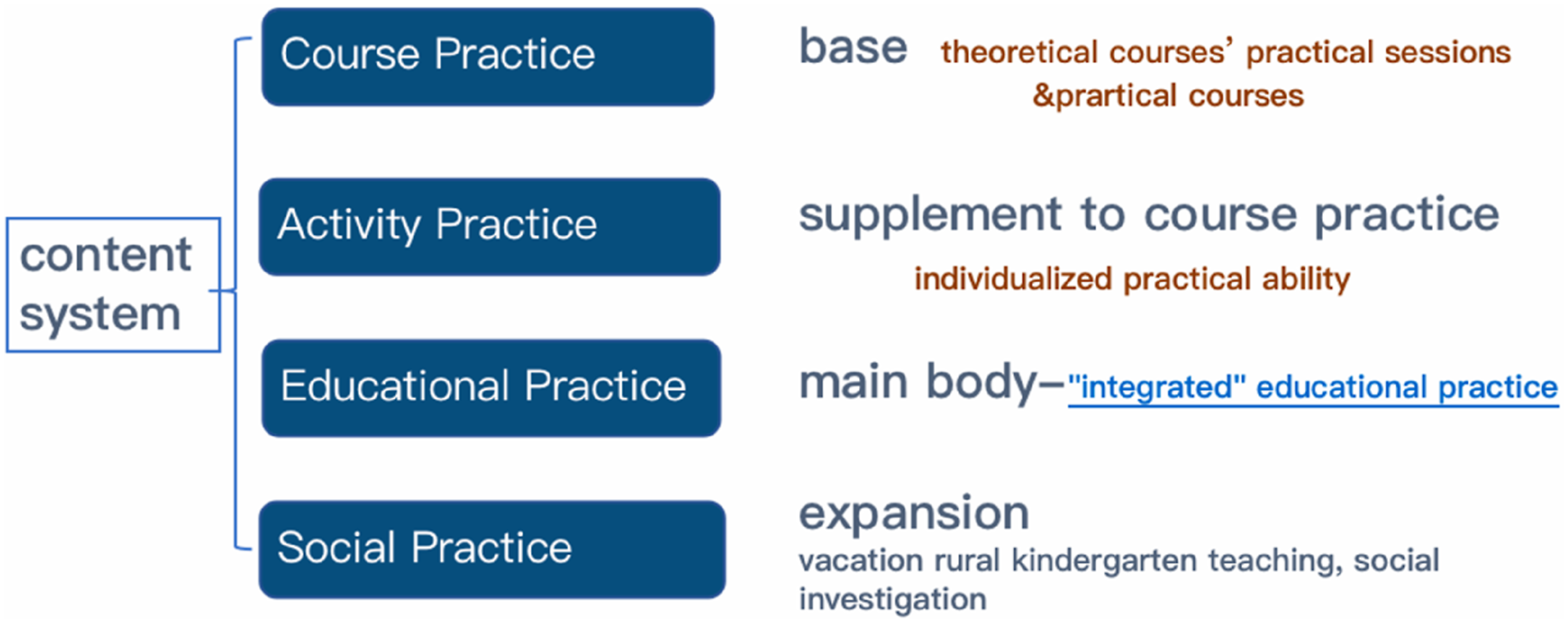
Analysing the above components, it should be noted that the practice of the curriculum plays the highest role, as it includes practical aspects of the implementation of theoretical courses. At that time, the practice of activity combines the cooperation of not only practical courses but also additional activities (e.g., art courses) that are closely related to the activity of the teacher. The practice of education involves the achievement of educational goals by students in the course of realising their professional competence. As for social practice, it obliges the teacher to focus on each student’s education while ensuring the formation of favourable conditions for the realisation of the interests of the entire team. In addition, they are revealed in the teacher’s volunteer activities as well as his participation in social practical events. The hierarchical system described in this way enables the achievement of practical learning goals, which is a key task in the training of preschool education specialists in colleges and universities in China.
Based on the revealed structure of practical training, it is necessary to emphasise the gap between it and the reality of kindergarten. This problem was also emphasised in the Standards of Accreditation, namely, that the improvement of the specialty of preschool education in colleges and universities should take place with mandatory consideration of the needs of this field (Wang, 2023). Based on this, a need-oriented approach to pedagogical activity acquires special priority. At the same time, in today’s conditions, such a system of practical training in preschool education in colleges and universities is not developed and widespread. That is why different types of learning, such as educational practice, activity practice, educational practice, and social practice mentioned above, can develop at different rates (Fu & Zhang, 2022; Raxmatova & Sodiqjon qizi, 2022). In addition, another problem in the context of the implementation of practical training is the inadequate allocation of resources. In this case, one should understand not only the limited amount of theoretical knowledge but also the practical skills. In this regard, strict requirements are put forward to the practical abilities of future kindergarten teachers, requiring the development of “dual qualifications”. The essence of the latter lies in the acquisition by teachers of preschool education not only of pedagogical knowledge but also the skills of their implementation in the course of work in kindergarten.
Also, in the process of researching the practical teaching of the specialty of preschool education in Chinese colleges, attention should be focused on its hardware and technical support. According to the provisions of the Accreditation Standards, the ratio of the number of interns to the number of educational practice bases cannot exceed 20:1 (MOE, 2017a). In this regard, when implementing this requirement, colleges and universities select basic kindergartens of various qualifications and quality without establishing strict criteria and classification. Accordingly, the conditions in which students undergo practice are not always appropriate, as they do not provide future specialists with instructors and tools. This has a negative impact on the professional identification of a kindergarten teacher.
Development of the practical teaching sessions in preschool education
The mechanism of collaborative learning plays an important role in the preparation of future specialists for work in preschool education institutions. The latter consists of combining the activities of enterprises, colleges, and universities, as well as kindergarten-school cooperation in the conditions of preschool education. Accordingly, the collaboration of the academic environment with schools can improve the mechanism of practical training. In this way, it is possible to provide preschool educators with conditions for the qualitative development of their practical skills and abilities. At the moment, elements of joint practical training in colleges and universities, as well as their cooperation with kindergartens, can be traced in China. However, it should be pointed out that there is still no targeted synergistic system within which different educational institutions could smoothly and efficiently interact with each other (Naida, 2022; Huimin, 2021).
Practical Teaching Sessions in Preschool Education.
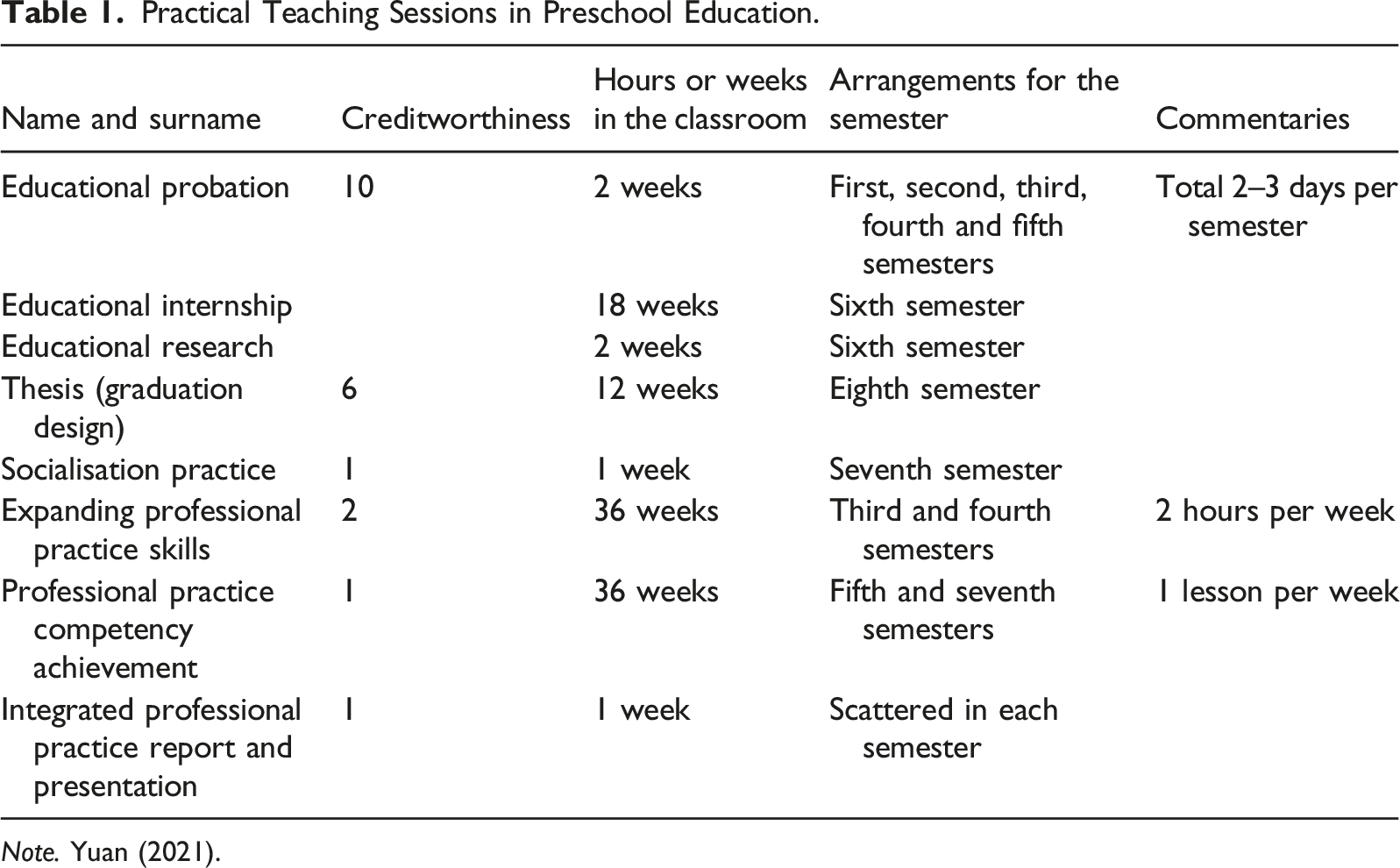
Note. Yuan (2021).
Educational practice in the “Four-In-One” system
The next important aspect is to fill practical training with quality content, for example, according to the “Four-in-one” system shown in Figure 2. It involves reforming the process of practical teaching as well as changing its design and educational resources. First of all, it is based on course practice. The latter provides students with the opportunity to implement their theoretical knowledge in practice and, accordingly, consolidate the acquired professional skills and concepts. It also includes the practice of activity. In this case, practical activity is expressed as employment, which is provided in the context of the second classroom lesson. For example, the collective work of professional practice or interest groups. Such practice is effectively combined with course practice, as it contributes to the improvement of students’ personal abilities. Educational practice of the specialty preschool education according to the “Four-in-one” system. Note: compiled by the authors.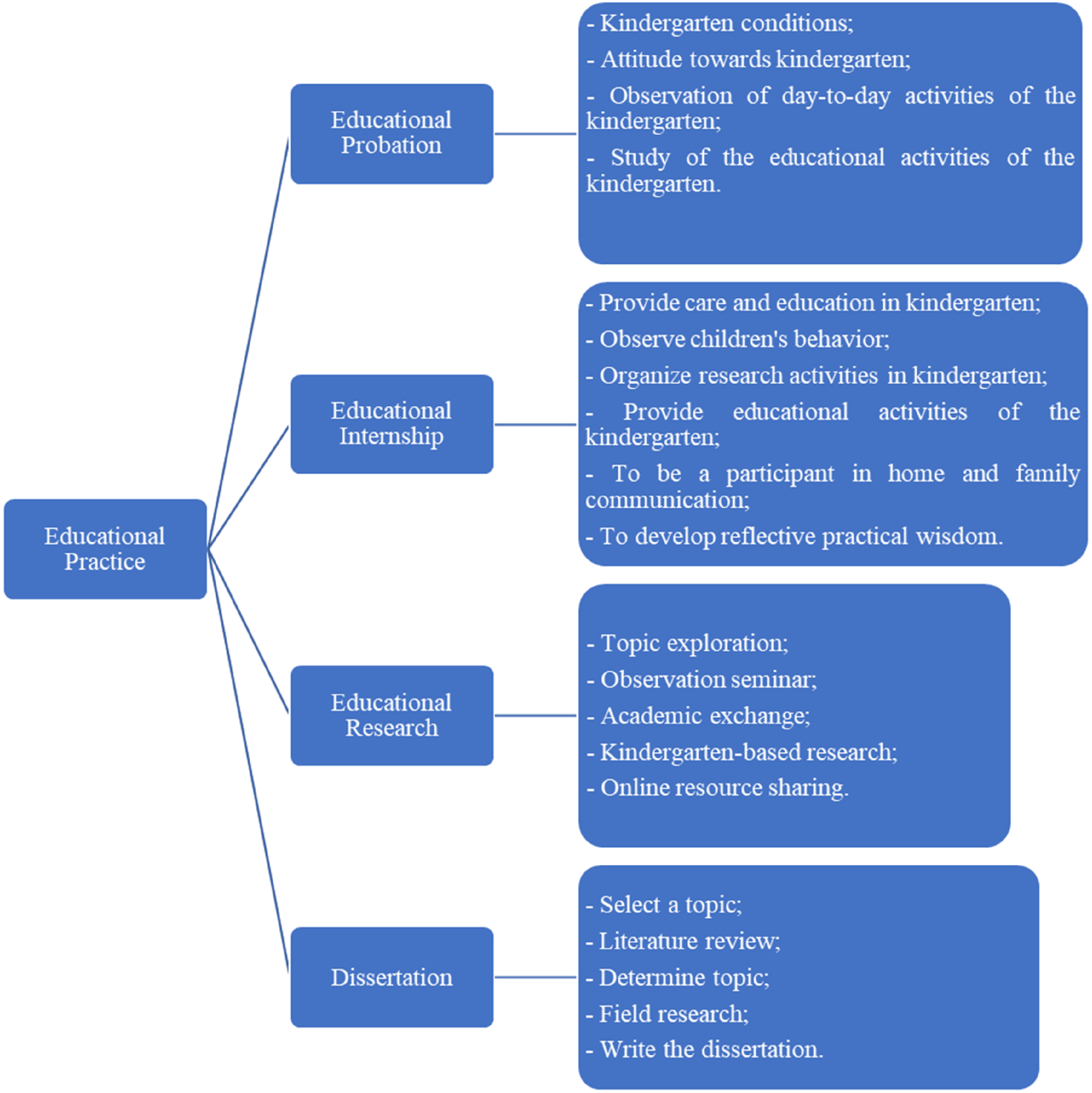
Another element of the “Four-in-one” system is educational practice. The latter expresses “integrated” educational technology, which includes internships, studies, and the preparation of diploma theses. In this way, the implementation of educational and professional training for specialists is ensured from the stage of observation to the acquisition of practical experience and direct participation in the performance of professional tasks. The “Four-in-one” system provides for the implementation of educational internships for students, for example, as trainee teachers, which affects the development of their real professional experience. This stage also includes the identification of current problems related to the professional activity of specialists in the field of preschool education. The final stage is the dissertation, which consists of conducting scientific research by students and solving issues that exist in the pedagogical doctrine.
Assessment and continued challenges
Separate attention should be paid to the assessment of practical teaching. Teachers evaluate training based on the results of students’ static coursework. In this process, it is worth taking into account the level of professional thinking, as well as the practical abilities of students during educational activities. At the same time, the use of static indicators can negatively affect the objectivity and comprehensiveness of the assessment of such practices. In this regard, it is advisable to change approaches to checking “homework”, namely to provide students with the opportunity to use various forms to display their results. In this way, it is also possible to ensure multidirectional communication between educational subjects, namely teachers and future specialists in preschool education. It is worth emphasising the priority of the implementation of formative assessment, which consists in the analysis of the specific productivity of the student of education as well as his desire to acquire abilities. In addition, the teacher must take into account the quality of the student’s learning at various stages of his professional development, for example, by means of reports on changes in simulation activities as well as observation. This will ensure that students receive objective assessment results, as well as encourage them to further study and improve their skills (Hu et al., 2022).
Based on the above, the current stage of practical teaching of preschool education in Chinese colleges and universities has both advantages and disadvantages. At the same time, in order to overcome the latter, it is recommended to develop a diversified assessment subject, increase the role of students in educational activities, and create appropriate conditions for revealing their enthusiasm and creativity. The completion of practical activities should be reflected through the prism of self-assessment of education seekers and their self-awareness.
Discussion
Practical training in higher education
In the scientific doctrine, there are different positions and approaches to the implementation of practical teaching in the conditions of educational and professional training of students. This allows you to examine this issue from different angles and characterise not only its advantages but also its disadvantages. For example, Ismael et al. (2021), in their work, revealed the peculiarities of providing practical training in colleges and universities. This issue was also revealed in this article. He analysed the risks that can complicate this process, as well as the level of its practical significance. In particular, the researchers emphasised that a large part of practical courses is organised on the basis of a clearly defined volume of practical hours. At the same time, specific goals for each of the classes are not developed in advance, which affects the lack of systematic design and the vagueness of the educational process. This was also emphasised in their work. They cite the example of such a generalised goal as “acquiring a degree of practical training”, while this does not characterise the specific kind of abilities that students should develop. In this case, they recommend clearly defining the vector of educational activity and its tasks, for example, “to develop professional competence in the field of correctional activities with children”. Therefore, the authors share the opinion that it is necessary to distinguish between educational courses as well as across classes in order to effectively outline the practical learning objectives. This strategy will guarantee the development of a framework that will allow for the provision of a logical link between different kinds of educational activities and the professional knowledge of students. Regarding the requirement for the integrated creation of academic assignments, which will enable the qualitative fusion of the theoretical and practical components of education, there is also a consensus.
It is worth emphasising that the practical content of the school programme is more stable and unified, as it includes a clearly defined content of the subject and the algorithm for its mastery by students. This position is taken by Gholami et al. (2021), who emphasise that school education has significant differences from the organisation of children in kindergarten. This was also emphasised in this article. In particular, it is common that such differences between school and kindergarten should be taken into account in the process of training teachers and their differentiation in different directions. Thus, the training of future preschool teachers should focus on the development of practical skills. The researchers pointed out that such competence can be developed with the help of club activities as well as competitions for pedagogical skills. Also, within the scope of this article, it was emphasised the expediency of holding competitions for innovation and artistic skills among students. It is important in this process to attract a large number of education seekers in order to improve the effectiveness of the academic environment and ensure the development of practical abilities in all specialists. It was also underlined in this paper that this kind of approach can yield social practice. However, the researchers also saw this in relation to summer or winter vacations, when volunteer support was put into place. Therefore, closing the competency gap and fostering educators’ multifunctionality are the shared objectives of the two works.
Particular attention should be paid to cooperative practical training, which is an important element in the educational and professional training of students. Abramczyk and Jurkowski (2020) emphasised that its successful implementation requires the development of an appropriate system that will involve all educational subjects. This feature was emphasised in the process of conducting this study. Thus, colleges and universities are tasked with forming special provisions and acts that will regulate the specifics of the implementation of educational activities. The researchers pointed out that their structure should include a curriculum for students, which consists not only of a block of theoretical questions but also of practical activities, for example, student internships in kindergartens. As stated in this work, these documents should include a system of education as well as clearly regulate the target guidance for students. In this way, it is possible to ensure a dynamic and effective implementation of cooperative practical teaching, within which the students of education will improve their practical abilities. The fundamental structure required to guarantee the continuity of a cooperative learning system is what unites the two studies. They approach the process of creating and putting into effect policies that will enable the execution of quality guarantees of contact between various educational centres, such as between kindergartens and universities, in the same way.
Development of the targeted training system
An important role in the learning process is played by the construction of an algorithm for the presentation of educational material. In particular, in the context of practical teaching, the development of a multidimensional system that includes its goals and objectives is effective. Accordingly, Itow (2020) pointed out that the organisation of the target system allows organising the teaching process in accordance with current educational standards. This was also indicated within the scope of this article, namely that the teacher should, at the beginning of the educational process, investigate and determine the level of results that students should achieve during their studies. The researcher emphasised that in this case, his professional beliefs should be taken into account, as should the knowledge he plans to implement on the basis of practical pedagogical activity. In turn, the latter is a fundamental vector for providing a system of practical training. This position is shared with the results of this article. In addition, the approach that determines the implementation of practical learning goals in the context of achieving the final graduation requirements of students is the same. They are based on three vectors, namely the professional beliefs and behaviour of the specialist, his knowledge and skills, as well as emotions and experience. Common in the conclusions of both works is a change in the approach to the educational behaviour of students and their acquisition of practical skills necessary for working with children within preschool educational institutions.
According to Moreno-Guerrero et al. (2020), the system of practical knowledge is quite extensive, as it involves not only subject abilities but also the ability to care for children, educate them, and promote comprehensive development. The researchers took into account the peculiarities of the development of the psychological and emotional state of children and established that effective tools for their education are interactive approaches, such as games, as well as other activities that promote reflection. In this regard, they came to a similar conclusion to this work, as the authors noted the priority of developing a comprehensive target system of practical training for future specialists in the development of pupils in preschool educational institutions. The idea of revamping methods for varying the amount of time allotted to studying particular subjects is also shared by both publications. Specifically, it would be beneficial to extend the time spent on hands-on training while still completing theory classes. The necessity to increase subject knowledge while preserving the system’s completeness is used by the researchers to defend their position. With this in mind, the common point between the conclusions of these works is the approach to the orientation of practical learning as a student-centred way of acquiring knowledge and skills.
Update on the practical training content and methods
Practical courses are developed on the basis of theories and various methods of classical education. According to Yoto et al. (2020), such an approach is ineffective since practical training acquires an exclusively formal character and is not properly implemented. This was also mentioned in this work. In particular, such a type of practical training as an internship, according to the curriculum, involves a number of barriers, both objective and subjective in nature. What is common between the studies is that objective factors include the conditions of the internship as well as its management. As for the subjective factors, they consist in the underdevelopment of internship programmes, which must necessarily include such topics as readiness for school, interaction of different ages, and others. What is common in the conclusions obtained is that the basis for practical training must be constantly updated so that students can develop the skills necessary for a teacher in modern conditions.
Based on the above, it is worth noting that practical training is an important component of the process of educational and professional training of specialists in preschool education. All scientists adhere to this position, which indicates the need to improve the system of measures aimed at developing students’ skills in implementing acquired theoretical knowledge in real professional conditions.
Conclusions
Based on the results obtained in the study, it should be established that practical training is one of the fundamental vectors for the professional training of preschool education specialists in colleges and universities in China. The article revealed the peculiarities of the creation and consolidation of the institute of “practical training” in normative legal acts. Thus, it was determined in the work that this approach is an integral element in the process of training teachers and obtaining higher education in accordance with industry educational standards in China. As for the essence of practical training, it is revealed in the context of the consolidation and deepening of theoretical knowledge through the formation and improvement of practical skills and abilities in future specialists. It has been established that this way in China ensures the training of competent, flexible, and competitive teachers for the purpose of their further employment in preschool education institutions.
At the same time, the work revealed the dilemma of practical training, which consists of the absence of a single integrated system of pedagogical measures aimed at the development of the specified type of training in the context of practical concepts of training, its content, and its guarantees. To solve this problem, the structure of teaching methods for the preschool education major in Chinese colleges and universities was revealed, which consists of four elements. On the basis of her analysis, shortcomings were found, contributing to the formation of a gap between the training of specialists for work in preschool institutions and their professional activities. Among them, inadequate distribution of resources, a low level of hardware and technical support, as well as peculiarities of the implementation of the collaborative learning mechanism, are emphasised. With the help of the identified negative aspects, a scheme for the implementation of educational practice was formed based on the “Four-in-one” approach. It contributes to the provision of high-quality practical training, within which students will be able to comprehensively develop their professional competence.
Accordingly, the study highlighted not only the dilemmas but also the breakthroughs in practical learning as an effective way of teaching early childhood education majors in colleges and universities in China. In particular, changes in approaches to ensuring the educational process, as well as reforming the goals and objectives of the educational and professional training of future teachers, were highlighted. With this in mind, future articles should focus on ways to use virtual reality tools to improve students’ practical skills during college and university education.
Footnotes
Declaration of conflicting interests
The author(s) declared no potential conflicts of interest with respect to the research, authorship, and/or publication of this article.
Funding
The author(s) received no financial support for the research, authorship, and/or publication of this article.