




Abstract
Engaging in reflective practice not only nurtures pre-service teachers’ critical thinking and propels professional growth but also instils an enduring drive for self-directed professional enhancement and development. This study aimed to investigate how teaching reflection can help pre-service teachers become novice in-service teachers and examine the effectiveness of reflective practice in enhancing pedagogical skills and fostering professional growth. The study was conducted at a prominent university in the UK, and data were collected through multiple sources such as students’ feedback, peer observation, and reflective journals, which provided a rich dataset for this self-narrative research. The findings reveal that reflective practice contributes significantly to the development of critical pedagogical skills. It fosters a deeper understanding of teaching methodologies and enhances pre-service teachers’ abilities to apply these strategies to diverse educational contexts. Notably, it also shows a more proactive approach to professional growth, underscoring reflective practices as catalysts for ongoing personal and professional development. This study suggests that the effective implementation of reflective practices needs to be aligned with broader trends in higher education, such as the integration of educational technology into teaching practice.
Plain Language Summary
Teaching is a challenging job, and learning how to do it well takes time and reflection. This study explored how new teachers, who are still in training, improve their teaching skills by looking back on their classroom experiences. This study examines how reflecting on teaching practice helps a trainee teacher improve and prepare for real classrooms. This study followed one pre-service teacher (the researcher) teaching a university class and collected feedback from students, an observing colleague, and a faculty panel, alongside the teacher’s own reflection journal. By adopting self-narrative approach and thematic analysis, the study found that structured reflection, using student and peer feedback and self-review, helped the teacher improve teaching skills, gain confidence, and learn to adapt to different classroom situations. These results suggest that encouraging trainee teachers to reflect on their teaching experiences and feedback can support their professional growth.
Keywords
Introduction
Reflection is instrumental in developing practitioners’ self-knowledge, understanding situational contexts, and making principled informed decisions. Reflective practitioners go beyond mere practice to embody professionalism through self-critique, consciously avoiding the trap of self-victimization (Ghaye, 2010). In teacher education, reflective practice catalyzes pedagogical innovation. It works by demystifying assumptions, enriching the nuances of meaning, and broadening educational intents (Susan, 1991). For pre-service teachers, engaging in reflective practice not only nurtures critical thinking and promotes professional growth (Griffiths, 2000), but also instils an enduring drive for self-directed professional enhancement and development (Cornish & Jenkins, 2012).
Teachers must possess a deep and adaptable understanding of their subject matter, including concepts of discipline and their interconnections (Anderson, 1989; Ball, 1990). A critical component of professional programmes is assisting teachers in focusing on the subject matter and understanding these connections (Borko, 2004). To achieve a comprehensive understanding of subject knowledge and disciplinary concepts, rich teaching experience and well-developed professional development plans are crucial. This foundation enables teachers to advance to the next level of teaching development. Research indicates that high-quality professional development provides opportunities for teachers to enhance their teaching techniques, deepen their understanding of students, improve student achievements, and even participate in leadership roles (Garet et al., 2001; Hiebert, 1999).
The theoretical foundation of reflective practice is rooted in the literature of Schön (1983) and Dewey (1933). Schön’s conceptualization of reflection-in-action and reflection-on-practice highlights the critical thinking that practitioners have within their actions and after their teaching tasks. In particular, Dewey emphasized continuity and interaction, which allow teachers to connect past experiences with current actions and future goals. Collectively, these theories highlight reflective practice as an active process that promotes adaptation and professional development.
Although reflective practice is recognized for its many benefits, there is still a research gap about the role reflective practices play in the transition period from pre-service to novice in-service teachers. Current studies tend to investigate general professional development outcomes or certain stages of teaching and do not closely analyse the critical transition from pre-service to novice teacher status. This research intends to add value to the theoretical-practical understanding of reflective practice in teacher education. This study aims to contribute to both the theoretical and practical understanding of reflective practice in teacher education. The findings are expected to offer new insights into the mechanisms that enable pre-service teachers to develop pedagogical skills and transition effectively into novice in-service roles. This study addresses the above gap by investigating how structured reflective practice during the pre-service to in-service transition enables skill development and readiness. The contributions of this research are threefold: first, it provides empirical evidence of reflective practice’s specific role in developing pre-service teachers’ pedagogical skills and professional competence; second, it demonstrates a holistic approach by integrating multiple feedback sources (students, peers, and self-reflection) into one reflective framework for teacher development; and third, it proposes a new conceptual model of reflective practice that links classical theories to practical outcomes in teacher education. To guide this exploration, the following research questions were formulated:
(1) How does reflective practice influence the development of pedagogical skills and professional competence as a pre-service teacher?
(2) How does reflective practice affect readiness as a pre-service teacher to handle diverse educational environments?
In this study, the research firstly reviews the existing literature on reflective practice, its role in teacher education, and the importance of pre-service teacher professional development, highlighting the gaps that this study seeks to address. Next, the research methodology is discussed, with an emphasis on the self-narrative approach used to explore the experiences of a pre-service teacher. The main findings focused on how reflective practice influences pedagogical skill development and professional growth. The discussion places these findings within the broader literature, extracting practical implications for teacher education. Finally, this research summarizes the study’s contributions, addresses limitations, and suggests directions for future research.
Literature Review
Reflective Practice
Reflective practice is a continuous and participatory activity that promotes teacher education experience (Machost & Stains, 2023; Mann et al., 2009; Mohamed et al., 2022). The concept of reflective practice is rooted in the works of scholars such as Schön (1983) and Dewey (1933), who believed that critical reflection is essential to improving their professional practice. Reflective practices typically involves a cycle of reflecting, planning for future action, acting and evaluating outcomes which incorporates problem solving, action orientation and criticality (Mohamed et al., 2022). Reflective practice has the potential to improve critical thinking and decision making (Baporikar, 2021; Wilson et al., 2022) based on experience. It also highlights its importance in promoting learning, growth, and professional practices (Friedland, 2015; Harvey & Vlachopoulos, 2020; Zwozdiak-Myers, 2018).
Schön (1983) developed the concepts of reflection-in-action and reflection-on-practice, by addressing technical rationality, knowledge-in-action, and the importance of reframing practice. Reflection-in-action, or “rapid reflection” as described by Eraut (1995), involves reflecting within a specific context or contemplating in the heat of the moment. This process can be unconscious, unaware, or rapid. It revolves around improvisation, making responsive tweaks, adaptations, or adjustments during practice or action. Reflection-on-practice entails reflecting after a teaching session—looking back and focusing on what was significant—with an emphasis on the timing and selectivity of reflection. Schön’s work challenges the purely technical view of teaching, noting that knowing-in-action (tacit knowledge in teaching) is often undervalued, and that practitioners generate knowledge through action by reframing problems from different perspectives.
Dewey (1933) posited that reflection is inseparable from experience, highlighting two essential elements: continuity and interaction. Continuity refers to the capacity to link new experiences with prior knowledge, whereas interaction involves the active application and adjustment of knowledge through engaging with one’s environment. Dewey outlined the reflective process in five steps: (1) experiencing “perplexity, confusion, doubt,” (2) engaging in “conjectural anticipation and tentative interpretation,” (3) undertaking an “analysis of all attainable considerations,” (4) elaborating a tentative hypothesis, and (5) formulating a plan of action. Dewey’s perspective encourages viewing problematic situations as opportunities for inquiry—scenarios that spark interest or uncertainty and demand deeper exploration (Loughran, 2006). This perspective advocates a perceptible shift in the role of the reflective practitioner towards a more positive and encouraging approach.
Pre-Service Teacher Professional Development
Teacher professional development encompasses continuous learning processes that enhance teaching competencies, improve student outcomes, and foster professional growth. Effective professional development programmes emphasize reflective practices as a key component, enabling teachers to critically evaluate their instructional strategies and align them with student needs (Borko, 2004). The integration of reflective practice within professional development frameworks has been shown to deepen teachers’ subject knowledge and strengthen their ability to manage diverse classroom dynamics (Garet et al., 2001). Recent trends on teacher professional development highlights more technology and collaborative learning, which are well connected to reflective practice where teachers initiate thoughtful conversations regarding their pedagogical practices and question their choice of pedagogy for classroom management. Few studies have focused on how the reflective practices serve to develop the professional outcomes of pre-service teachers as they prepare for a full-time transition into professional teaching roles.
Pre-service teacher professional development focuses on preparing future aspiring educators with the skills, knowledge, and dispositions required for effective teaching. Structured training programmes, mentorship opportunities, and reflective activities bridge theoretical learning and practical teaching practice (A. Edwards & Protheroe, 2003). This is where reflective practice becomes particularly important as it prompts pre-service teachers to reflect upon their teaching experiences, pinpoint what needs to be changed in their teaching actions, and gradually shape their professional identity. This stage, where one moves from pre-service to in-service teacher, is frequently characterized by a range of challenges that include classroom management, lesson planning, and responding to student differences. As pre-service teachers undergo this transitional period in their development, it is suggested that reflective practices during this time need to be targeted and purposeful, given the complexities of a beginning teacher’s context of practice (Heryatun, 2021). Previous research has focused on general outcomes, with a gap on how structured reflective practices specifically address the unique challenges faced by pre-service teachers. This study adds to the literature by examining how reflective practices can be intentionally designed that support pre-service teachers at this pivotal time of transition.
The Role of Reflective Practice in Teacher Professional Development
Reflective practice plays a crucial role in the professional development of pre-service teachers by helping them develop teaching skills and professional awareness. It involves recollection of experiences, reflection-in-action, reflection-on-action, and often mentoring or peer discussion processes that help pre-service teachers analyse their practice and build personal theories of teaching (Heryatun, 2021). A self-guided, non-prescriptive approach to reflection highlights pre-service teachers’ agency and often includes dialogue, peer interaction, and collaboration—features that can foster deeper reflective thinking (Tiainen et al., 2024). Engaging in reflective practice helps pre-service teachers shape their teacher identity and agency early in their careers (Hendriwanto, 2021), and allows them to continuously respond to and reflect on experiences, review their practice, and enhance their instructional skills (J. A. Edwards & Huntley, 2013), serving as a foundation for ongoing professional growth.
Entailing journaling, feedback sessions, and integration with coursework, reflective practice also nurtures self-awareness and professional development in pre-service teachers (Harford & MacRuairc, 2008; Leonielyn, 2023), which enables pre-service teachers to critically scrutinize the values, beliefs, and attitudes that are nurtured (Jay & Elizabeth, 2023), thereby, bridging the gap between theory and praxis. Enhancing teaching skills, particularly classroom management, instructional strategies, and student engagement allows teachers to apply theoretical knowledge in real classroom settings, improving their understanding of teaching in real-world contexts (Jay & Elizabeth, 2023; Leonielyn, 2023). Reflective practice promotes a culture of observation and critical dialogue, fosters collaborative learning and reduces professional isolation, and involves collaborative communicative actions in which reflection is constructed and expanded through interactions between student teachers and mentors (Joan, 2005). Therefore, reflective practice plays a multifaceted role in teacher education, contributing to pedagogical improvement and professional growth.
Furthermore, reflective practice leads to the renovation of teaching methodologies, adaptation of teaching practices, and continuous resilience to overcome difficulties in professional practice (Velasquez et al., 2023). Research reveals a need for a more detailed framework in context, better resources for teacher educators (Karim et al., 2024) and a more structured and supportive approach to reflective practice for pre-service teachers. Nonetheless, a flexible and goal-free, self-directed method for reflection has proven useful for cultivating pre-service teachers’ reflective thinking (Tiainen et al., 2024). Encouraging reflective disposition in pre-service teachers could stimulate their professional development and mitigate their unprofessionalism (Tlali, 2019).
Reflective activities encourage pre-service teachers to connect theory with practice. By systematically examining their teaching experiences—what worked, what didn’t, and why—they learn to adapt and refine their methods. For example, reflecting on a challenging classroom situation can lead a teacher to seek new strategies or consult educational theory, thereby turning a practical issue into a learning opportunity. Over time, this cycle of experience and reflection contributes to the development of a more confident and competent teacher who is equipped for the demands of diverse educational settings. Thus, the literature indicates that while reflective practice is widely regarded as beneficial for teacher development, more research is needed to clarify how and when it is most effective, especially during critical transition periods for teachers. This study builds on the above theoretical foundations and addresses a specific gap concerning pre-service teachers transitioning to in-service roles.
Methodology
Research Design
A self-narrative study is a qualitative research design, focused on the examination of personal experiences and self-reflections (Cole et al., 2022)—relying on the subjective experience of the participant as a means of gaining insight into various phenomena being explored and providing a powerful lens on the personal and professional development (Luo et al., 2020). This can be applied in educational research to investigate the experiences and reflections of teachers especially in teaching and learning context (Brandenburga & Davidson, 2011; Karlsson & Nilsson, 2019; Kennedy-Lewis, 2012; Kitchen, 2020). The study evaluates how pre-service teachers approach their transition to novice in-service teachers through structured reflective practices. The study took place within a UK university’s postgraduate-taught module in which students received tutorials on educational research methodologies. The module provided a rich context for pre-service teachers to explore reflective practices, as it required students to integrate theoretical concepts with practical application in the tutor sessions. The researcher himself was both the module tutor and a doctoral student participating in a higher education teacher training programme when the research was conducted. To minimize bias and reduce subjectivity in data interpretation in this self-narrative study, this research was involved four different sources of data for triangulation. There were no power dynamics involved in this research since student feedback was collected anonymously, the tutorial was not graded, and the final module assignment was marked by the module convenor instead of the tutor. These measures enhanced the trustworthiness and transparency of the findings despite the inherent subjectivity of the self-narrative approach.
Research Questions
As the study primarily focuses on examining the role of reflective practice in facilitating the transition of a pre-service teacher into a novice in-service teacher, as well as the impact of reflective practice on the pedagogical competency and professional development, multiple data sources were collected and analysed to develop perspectives on the relationships and patterns in pre-service teachers’ reflective practice, with the goal of obtaining a more comprehensive and nuanced understanding of the research data (Creswell & Creswell, 2017; Tashakkori et al., 2020) . This research provides a practical aspect, which focuses on determining “what works” (Morgan, 2007) and guiding further actions (Hartas, 2015). The general objective of the study was to investigate the multifaceted role of reflective practice in a teacher’s professional growth; therefore, two research questions were formulated:
Research Question 1: How does reflective practice influence the development of pedagogical skills and professional competence as a pre-service teacher?
Research Question 2: How does reflective practice affect readiness as a pre-service teacher to handle diverse educational environments?
Data Collection and Analysis
The study was conducted over a single academic term at the UK university. Thirty-one postgraduate students, one peer observer, and two faculty panel members contributed data to the study. All invited individuals agreed to participate; no additional inclusion or exclusion criteria were applied beyond being part of the module’s teaching and feedback processes. This convenience sample, while specific to one institutional context, provides in-depth insight into reflective practice within a typical UK higher education setting. Before data collection, all participants received a detailed explanation of the research purpose and signed a consent form. Participants were informed that their involvement was voluntary and that they could withdraw at any time without consequence. Emphasis was placed on the researcher’s duty to maintain confidentiality and protect participants’ anonymity (Denscombe, 2017; Singer, 2008). Measures were taken to anonymize identities; data were stored securely on a password-protected device used solely for the research.
To evaluate the teaching and plan for future steps, four different sources of evidence were gathered: students’ feedback, peer observation feedback, oral presentation feedback, and the teaching portfolio. The teaching portfolio consisted of the researcher’s reflective teaching journal, compiled as part of the teacher training programme requirements. These triangulated teaching evidence sources were mainly qualitative, assembled to develop “a more complex, context-respecting set of explanations” (Miles & Huberman, 1994, p. 267). Specifically, the student and peer feedback data consisted of open-ended written comments, and the oral presentation feedback included qualitative remarks from the assessors (in addition to a pass/fail result and rubric ratings). The teaching portfolio provided narrative reflections. Thus, all four data sources yielded qualitative material for analysis. Any quantitative elements (e.g., the presentation’s pass/fail outcome or rubric scores) were noted for context but were not statistically analysed.
At the end of the tutorial session, feedback from students was collected in three categories: the best aspects of the session, the worst aspects, and suggestions for improvement. All students present filled out this feedback form, providing short written responses in each category. Peer observation involved inviting a colleague to attend and observe one of the teaching sessions. This colleague was chosen based on expertise and experience in teaching similar subjects. In this study, one peer observation session was carried out. The observer used a structured observation form focusing on various aspects of teaching, including instructional clarity, engagement techniques, and classroom management, and provided written comments on each aspect. The oral presentation was a 10-min teaching presentation assessed according to criteria related to the Areas of Activity, Core Knowledge, and Professional Values of the UK Professional Standards Framework, as required for an Associate Fellow of the Higher Education Academy (AFHEA) application. The presentation was evaluated by a panel of two faculty members who provided feedback during a Q&A session. After the presentation, the panel engaged in 5 min of discussion and questioning on matters needing clarification. Their evaluation included an overall result (pass or fail) and ratings of the presentation as “effective” or “needs work” under five headings: delivery, content, structure, use of visual aids, and responses to questions.
Self-reflection was documented through a reflective review of the researcher’s own teaching practices (the teaching journal). This included reflections on what went well, what could be improved, and how students responded to different teaching strategies. Each reflective entry concluded with consideration of how the session’s outcomes aligned with educational goals and student learning outcomes. This ongoing reflective journaling helped the researcher identify patterns in teaching and engage in a continuous self-improvement cycle in preparation for becoming a novice in-service teacher.
All qualitative data from these sources were analysed and coded using thematic analysis (Braun & Clarke, 2006). The first step in analysis was familiarization with the data (re-reading feedback forms, observation notes, journal entries, and presentation comments). Next, initial codes were generated to break down the data into meaningful units. After coding, similar codes were grouped to form broader themes. In the final stage, themes with clear connections to the research questions were defined and named. Table 1 presents the coding dimensions, corresponding themes, and illustrative examples, demonstrating the thematic analysis process and linking the findings to the research questions.
Coding Dimensions, Themes, and Examples.
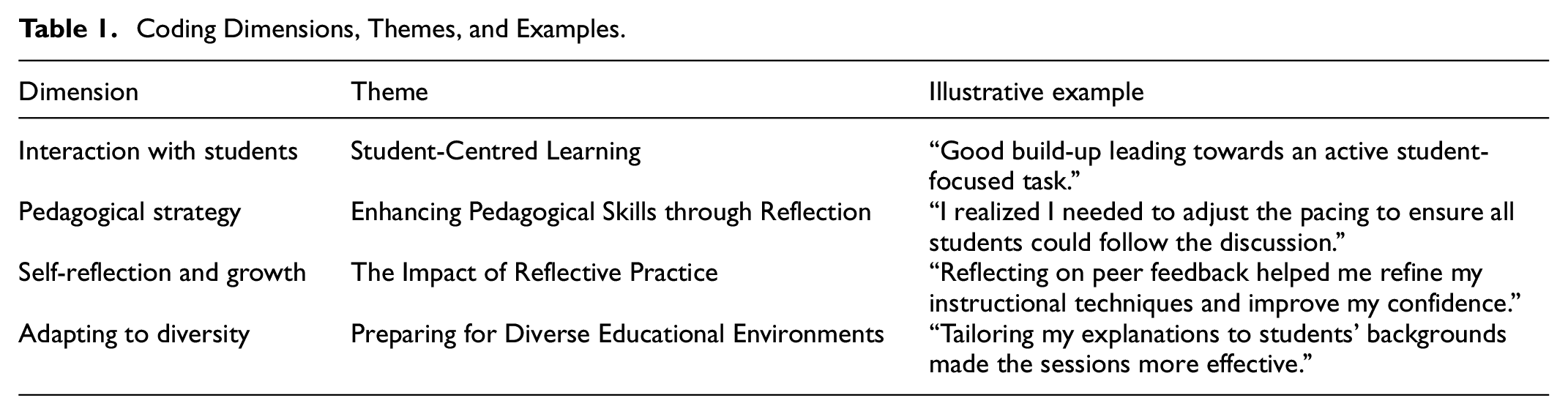
Table 1 presents the coding dimensions, corresponding themes, and illustrative examples to show the thematic analysis process and links findings to research questions.
Results
Overview
The analysis of the collected data highlighted several themes and illustrated how reflective practice contributes to the development of teaching competencies for pre-service teachers. The data yielded themes from four different sources: the teaching journal (self-reflection), students’ feedback, peer observation feedback, and oral presentation feedback. Results indicated that engaging in reflective practice plays a significant role in enhancing pedagogical skills, increasing teacher confidence, and preparing the teacher for diverse classroom environments. Each source of feedback provided a unique perspective on the teaching practice, deepening the overall understanding of the learning and teaching experience.
Feedback from students identified strengths such as the engaging and interactive nature of the tutorials, but also pointed out areas for improvement, including the need for clearer explanations and more in-depth discussions on certain topics. Feedback from the peer observer highlighted that the lesson was well-structured and praised certain teaching techniques, while suggesting improvements in pacing and the inclusion of clearer examples to illustrate complex concepts. Feedback from the oral presentation noted the clarity of the delivery and the organization of content, but mentioned that the overall flow and integration of educational literature in the presentation could be improved. Additionally, the teaching portfolio provided evidence of the researcher’s commitment to self-improvement through reflective practices, documenting how feedback and reflection were used to refine teaching approaches over time. This initial analysis helped identify key aspects of teaching performance that consistently emerged across all data sources.
Codes that were identified in the data analysis including “interaction with students,”“pacing of teaching,”“clarity of content,”“self-reflection,” and “professional growth.” These codes were the building blocks for the broader themes that emerged later in the analysis. For example, one code that showed up multiple times was “interaction with students,” in which students comment on the lessons being engaging and interactive. Likewise, “clarity of content” emerged as a frequent concern in student feedback and peer observation, indicating that once again, improvements in the explanation of key concepts have potential to elevate the learning experience. The thematic analysis of the data indicates that reflective practice may be a catalytic process for enhancing pedagogical skills, adapting to diverse teaching environments, and fostering professional growth. Therefore, by reflecting on personal teaching experiences, and feedback from students as well as from peers, pre-service teachers can significantly improve their teaching effectiveness and readiness for future educational challenges.
Research Question 1
Pre-service teachers are challenged through the practice of reflection to be adaptable in their teaching approaches to cater to different learners. One prominent theme was Student-Centred Learning, which emphasizes the need to tailor teaching to students’ needs. This theme emerged from student feedback, which requested more tailored and interactive lessons, as well as peer observation feedback, noting a successful reconciliation between content delivery and student engagement. Codes from student feedback underpinning this theme included tailored explanations and interactive learning. The students stressed the benefit of activities that actually engaged them. The result indicates that the interactive activity helped students understand the research design concepts better. Likewise, the reflective journal shared, “Adjusting explanations to align with students’ prior knowledge improved engagement and participation.”
The theme Enhancing Pedagogical Skills through Reflection indicates that reflective practice promotes refinement of instructional practice, lesson pacing, and content clarity. This theme was based on multiple recurring codes, including “content clarity,”“teaching adjustments,” and “engagement strategies.” Feedback from students emphasized the nature of the sessions as interactive and engaging, as well as areas for improvement. It is indicated that the use of group discussion during the tutorial helped students clarify the research design concepts. Similarly, peer observation feedback emphasized the effectiveness of well-structured lesson plans but suggested the need for improved pacing. One observer noted that the session was well-structured, but it would have been useful to see examples of research questions which do not work well and get students to consider why they don’t work.
Research Question 2
One of the most prominent findings was the impact of reflective practices on pedagogical development. Another theme was defined and named The Impact of Reflective Practice, which demonstrates how self-reflection leads to improvements in teaching. Across all data sources, there was evidence that reflective practices enable teachers to refine their instructional methods. For example, students’ feedback underscored the importance of interactive and engaging lessons but also identified the need for clearer explanations and deeper discussion on complex topics. Peer observation feedback affirmed the strengths in lesson structure and also suggested refining the pacing and including more examples. Similar themes arose in the oral presentation feedback: while delivery and structure were praised, the feedback indicated that better integration of literature and smoother flow would strengthen the presentation. These insights were directly taken up in the reflective journal and teaching portfolio. Incorporating feedback from peers helped the teacher identify specific areas for improvement, such as “simplifying complex explanations” (as one reflective journal entry noted). Feedback on the oral presentation also reflected professional growth, as the teacher showed enhanced communication skills and alignment with professional standards; panel members commented that “the presenter covered all expected areas” and noted that “the structure was organic and revealed over time.” Collectively, these findings show that reflective practice played an important role in improving pedagogy and teaching effectiveness. The teacher became more self-aware, utilized peer feedback constructively, and built confidence in teaching—traits that are crucial for a successful transition to an in-service role. Through the reflective cycle documented in the portfolio, we see the teacher evolving into a more confident educator capable of critically evaluating and refining both instructional techniques and professional demeanour.
Preparing for Diverse Educational Environments. Another key theme was the development of adaptability and readiness to handle diverse classroom settings through reflective practice. This theme was supported by codes such as “flexibility,”“online teaching,” and “context-specific strategies.” The data suggest that the collaborative exploration of pedagogical experiences and incorporation of feedback enabled the pre-service teacher to adjust teaching approaches for different needs. For instance, one peer observer comment noted the teacher’s “good understanding of the needs of master’s students” and how the teacher “anticipated problems well, e.g. made provision for students who could not access Wi-Fi during the session itself.” Likewise, reflective journal entries emphasized the need for adaptive approaches: “Tailoring my explanations to students’ backgrounds made the sessions more effective,” one entry stated, showing an awareness of student diversity (e.g., varying prior knowledge and learning preferences). Student feedback also indicated that interactive, engagement-based learning approaches were beneficial, but that some students needed more tailored support or clearer direction at times. This feedback prompted the teacher to consider differentiation strategies for future sessions. The peer observer’s feedback and the teacher’s reflections together demonstrated adjustments for context—for example, planning backup activities for students with limited internet access in an online component of the module. By taking these insights into account and seeing them reflected in subsequent teaching adjustments, the pre-service teacher became more prepared to manage diverse classroom dynamics. The need for continuous reflection was underscored, highlighting the importance of flexibility and responsiveness in teaching. In essence, reflective practice helped the teacher develop strategies to be effective across different scenarios (in-person vs. online, varied student backgrounds, etc.), which is a critical aspect of professional readiness.
Therefore, the engagement in reflective practice equipped the pre-service teacher with greater adaptability and preparedness for various educational environments. This was evidenced by proactive problem-solving (e.g., anticipating technical issues), modifications to teaching methods for different student groups, and a general increase in confidence to face the complexities of modern classrooms.
Discussion
Professional Development Through Reflective Practice
The teaching and learning processes in this study were closely interconnected, particularly through the planning and reflection on learning activities. A core principle in the design of the tutorial sessions was to satisfy students’ learning needs (Dagger et al., 2005). The teaching was intended to be learner-centred, transparent, and aimed at encouraging deep learning. Designing learning activities to achieve specific learning outcomes involved using appropriate tools and methods (such as problem-solving tasks, comparative discussions, and evaluative arguments). In planning the tutorials, a wide range of skills was considered, including facilitating student discussions, providing relevant feedback, and responding to different learner needs (Beetham, 2007). The tutorial sessions were structured with Bloom’s taxonomy in mind (Krathwohl & Anderson, 2009) especially focusing on the “application” level—students were asked to apply prior knowledge by developing their own research questions and research designs based on understanding existing research design concepts. This design aimed to help learners connect theory to practice by actively creating research questions and choosing appropriate designs, thus reinforcing higher-order thinking.
The results showed that reflective practice enhanced the pre-service teacher’s readiness to navigate and respond effectively to diverse educational settings. Insights from the reflection journal revealed that reflective practices equipped the teacher with tools and adaptability skills necessary to address dynamic challenges in modern classrooms. For instance, through reflection, the teacher improved confidence and problem-solving capabilities across different teaching contexts. The benefits of reflecting during the postgraduate module carried over into later teaching experiences: the teacher noted that reflecting on the tutorial sessions positively influenced practices in subsequent teaching assistant roles for undergraduate research methods classes (in both the Business School and School of Education). Engaging in reflective practice also helped the teacher demonstrate professional competence by the end of the study; notably, the teacher’s development was recognized through the attainment of AFHEA status (Associate Fellow of the Higher Education Academy), indicating that the teacher met the UK Professional Standards Framework criteria for teaching and learning support in higher education. This achievement underscores how reflective practice contributed to concrete professional development outcomes.
Benefits and Challenges of Reflective Practice
This study demonstrates the effectiveness of reflective practice for the professional growth of a pre-service teacher. It highlights the value of reflective practice in teacher education and affirms the complexity and dynamism of reflection as a tool for learning. One common pathway for a doctoral student in a university teacher education programme to transition from pre-service to novice teacher is serving as a teaching assistant or tutor. Through tutoring experiences, doctoral students (as pre-service teachers) can build teaching competence (Lin et al., 2015), take on teaching responsibilities (Liu et al., 2024), and develop teacher identities (Chong et al., 2011; Izadinia, 2013) in relation to their students and colleagues. This relational aspect of teaching—investing in learners’ progress and working alongside fellow teachers—can in turn strengthen the teachers’ own professional identity (Reeves, 2009). Tutoring sessions, like those in this study, offer opportunities for novice instructors to enhance their understanding of pedagogical practices (Massey & Lewis, 2011), and to encounter innovative concepts in teaching and learning (Trent, 2010; Walkington, 2005). These experiences help equip future educators with essential skills for their teaching careers (DeFeo & Caparas, 2014; Ragonis & Hazzan, 2009). It is important to note that teacher identity is not static or predetermined (Beauchamp & Thomas, 2009; Beijaard et al., 2004; Maclean & White, 2007); instead, it evolves through experiences and reflective learning (Findlay, 2006; Gee, 2000; Smagorinsky et al., 2004; Trent, 2010; Walkington, 2005).
By personally engaging in teaching (leading tutorial sessions, for instance), the researcher highlighted the emotional and subjective aspects of learning to teach—elements that are in constant flux and influenced by diverse experiences (Mayer, 1999). As the pre-service teacher aligned personal beliefs about teaching with professional standards and expectations, these elements collectively contributed to the development of a professional identity (Pillen et al., 2013). Serving as a teaching assistant and leading discussions, as well as giving feedback on student work, positioned the researcher in a role very close to that of a novice teacher operating in real educational contexts. Through these responsibilities, the researcher began to encounter the practical challenges of the teaching profession and started to navigate the complexities of teaching. By reflecting on these experiences, learning from mistakes and successes, and continuously refining instructional methods, the researcher moved along the spectrum from being a pre-service teacher towards becoming a confident novice teacher (Zhang & Dong, 2024).
The findings of this study are in line with several prior studies. For instance, a study of English pre-service teachers found that all participants had a favourable attitude towards reflective practice after gaining teaching experience and knowledge of pedagogical reflection methods (Yeşilbursa, 2013). Similarly, a study at a UK university college reported that faculty members who engaged in reflective practice showed improvements in teaching competence (Winchester & Winchester, 2014). However, it is important to acknowledge that not all literature unequivocally supports reflective practice; there are critiques of its effectiveness. In the context of teacher education in Turkey, for example, some have argued that the impact of reflective practice can be limited or inconsistent (Suphasri & Chinokul, 2021). These critiques highlight the need for teacher educators to reconsider assumptions about how individuals learn to teach and to clarify what we mean by “reflection” in teacher education (Russell, 2022). It should also be noted that the present study’s positive outcomes occurred in a UK higher education context that actively encourages reflective teaching practices (e.g., via the UKPSF and formal teacher training programmes). This supportive institutional culture may have enhanced the effectiveness of the reflective activities observed. Reflective practice outcomes can vary by context; indeed, as noted above, implementation in different cultural or institutional settings may yield different challenges and results
Implications for Teacher Professional Development
This study contributes to the theoretical understanding of reflective practice by bridging Schön’s and Dewey’s frameworks with empirical evidence from pre-service teacher development. The findings demonstrate how reflection-in-action and reflection-on-practice, as conceptualized by Schön, interact with Dewey’s principles of continuity and interaction to support teacher growth. The study integrates these theories to develop a more holistic conceptual model for thinking about transformational experiences within teacher education through reflective practice. Figure 1 illustrates this conceptual model, bridging these theoretical constructs with the observed outcomes of the study.

Conceptual model of reflective practice in pre-service teacher development.
Reflective practices play a prominent role within teacher education to ensure that teachers develop a capacity to engage in reflective practice on their own. It is learnt through experience with structured reflective activities such as writing reflective teaching journal and gathering feedback from students or peers which should be incorporated into training programmes to support pre-service teachers in developing critical teaching competencies. Teacher educators also should provide explicit guidance in the conduct of reflective practice, making sure that the activities undertaken have relevance to the goals of professional development. The study also emphasizes the need for mentorship and peer feedback as integral components of reflective practice. Collaborative reflection sessions, if possible, can further enhance the effectiveness of reflective practices by fostering a culture of shared learning and professional development community.
This reflective teaching practice has profound implications, not only for practitioners’ personal and professional development, but also for aligning with broader trends in higher education. There has been an accelerating trend towards technology to be used in the classroom, and the use of innovative teaching methodologies, all of which are becoming increasingly recognized as effective ways to prepare students for a fast-paced, ever-evolving digital world. The need for hybrid or online learning has driven educators to integrate educational technology into their teaching practice. Learning management systems, interactive polling, and digital collaboration tools are now staples in creating interactive and student-centred learning environments. AI tools to be considered in future teaching and can also be used as tools for professional development. These tools enable a more customized learning process, addressing individual learning styles and requirements and promoting engagement with the content. Additionally, the shift in higher education towards competency-based education and a focus on skills over memorization of content emphasizes the importance of reflective practice. Educators can shape learning experiences that are meaningful and engaging by reflecting on teaching methods and incorporating educational technologies; such practices are also preparing students for the critical thinking, problem-solving, and digital literacy skills necessary in the modern workforce.
Conclusion
This research investigates how reflective practice in pre-service teacher education affects the transition from the pre-service to novice in-service teachers. It includes self-assessment, introspection, and refining teaching practices based on experiences and feedback. According to Outi et al. (2018), reflective practice allows pre-service teachers to perceive and re-perceive what is occurring in the teaching process, which facilitates improvements in teaching for the subsequent lessons and deeper understanding of pedagogical practice (Sindy Kam Fong & Loughran, 2000). Additionally, pre-service teachers who engage in reflective activities identify what is effective and ineffective about their teaching practices and how their teaching practices impact their future teaching and professional practices (Cadiz, 2022; Dollar & Mede, 2016). Reflective practice helps with technical skills growth of individual teachers and the practice itself, but growth is also holistic in nature. It aids in identifying one’s strengths and weaknesses and in embracing the core values and passions of teaching, which are essential for long-term success in the classroom. By focusing specifically on the critical pre-service to in-service transition and triangulating multiple sources of feedback within a single case, this study offers a novel contribution to the reflective practice literature. It demonstrates the value of integrating diverse perspectives (students, peers, self-reflection) into a reflective practice framework to enhance teaching competencies and readiness for real-world teaching.
Although this study offers valuable insights, the results are limited to the context in which the research was conducted—a postgraduate module at a top UK university. Interpretations and conclusions may differ in other contexts. Due to the limited number of participants and the specific demographics involved, it is unclear how broadly these findings can be generalized. Moreover, the research took place in a particular learning environment at a leading UK institution, where unique cultural and institutional characteristics (such as a strong emphasis on reflective teaching and readily available technological resources) may not be present in all educational settings. These contextual factors could affect the relevance and applicability of the outcomes elsewhere. For instance, this study’s implementation relied on resources like access to digital tools and learning platforms; such resources might not be available in every setting, potentially limiting the generalization of the findings. The limitations discussed imply that further research should evaluate how well these findings transfer to other contexts and make adjustments as needed. Future studies might examine the generalizability of these results in different cultural and institutional settings, and longitudinal research could explore the long-term effects of reflective practice on teacher development.
Supplemental Material
sj-docx-1-sgo-10.1177_21582440251363136 – Supplemental material for Reflective Practice for Pre-Service Teachers’ Professional Development
Supplemental material, sj-docx-1-sgo-10.1177_21582440251363136 for Reflective Practice for Pre-Service Teachers’ Professional Development by Honghuan Li in SAGE Open
Footnotes

Ethical Considerations
The study was approved by Durham University Ethics Committee.
Funding
The author received no financial support for the research, authorship, and/or publication of this article.
Declaration of Conflicting Interests
The author declared no potential conflicts of interest with respect to the research, authorship, and/or publication of this article.
Data Availability Statement
The datasets generated during the current study are available from the corresponding author on reasonable request.
Supplemental Material
Supplemental material for this article is available online.
References
Supplementary Material
Please find the following supplemental material available below.
For Open Access articles published under a Creative Commons License, all supplemental material carries the same license as the article it is associated with.
For non-Open Access articles published, all supplemental material carries a non-exclusive license, and permission requests for re-use of supplemental material or any part of supplemental material shall be sent directly to the copyright owner as specified in the copyright notice associated with the article.
