



Abstract
The innovative competence of university teaching staff is a fundamental component in improving the quality of academic provision in higher education. The originality of the study lies in the contribution of a valid and reliable tool for the assessment of the innovative competence of university teaching staff. As a result, higher education institutions in different countries will be able to determine the training needs of their teachers in order to improve their innovative performance and, ultimately, student learning. The aim of the study is to identify, analyse and differentiate the innovative profile of a sample of university teachers working in Bolivia, Spain and Mexico. The research methodology (non-experimental and ‘ex-post-facto’) consists of applying a questionnaire to 1404 teachers from various universities in the countries involved. The results obtained suggest the need to structure specific teacher training strategies to remedy the deficiencies found in innovative competence in the three participating countries.
Keywords
Introduction
Innovation has become one of the fundamental points in the development of societies. This includes important key social dimensions such as education, and specifically university education (ANECA, 2015). The importance of this quality may be explained by the demands arising from the labour market (Chekmarev et al., 2021; Portuguez and Gomez, 2020; Ter-Beek et al., 2022; Villalón, 2017), the growing emergence and use of digital devices and social networks, (Berei and Pusztai, 2022; Calderón-Gómez, 2021; Mariño-Fernández and Rial-Sánchez, 2017) changes in social interactions among the young in our society (Castillo de Mesa et al., 2020; Castro et al., 2006; Gioia and Boursier, 2021; Teichler, 2009), and, in the case of Europe, the new directives from the European Higher Education Area (EHEA) to structure lines of work aimed at improving teaching innovation (Elken and Stensaker, 2022; Lepori, 2022; Tena, 2010). UNESCO is quite clear on this in its categorical statement, when, on insisting the need to promote educational innovation, it underlined the need to take into account current social changes, to adapt education to technologies, new languages, communication and advances in scientific knowledge, which means that innovation must be at the heart of the new educational scenario. (UNESCO, 2016: 11).
However, the development of innovative competence among university professors can face a series of challenges and issues. These obstacles may vary depending on the institution, academic culture and individual experience of the professor, which are aspects intended to be analysed in the present study. Some of these challenges that need to be addressed in higher education include: 1. Attachment to traditional teaching methodologies, leading faculty to resist adopting new innovative practices. Institutional inertia and comfort with the familiar can hinder the adoption of innovative approaches (Córica, 2020; Gratz and Looney, 2020). 2. Lack of training and professional development, where the majority of university professors have not received pedagogical and technological education. The lack of professional development opportunities can limit their ability to innovate in teaching (Kärkkäinen et al., 2023). 3. Innovation often requires time, money, and human, material, and technological resources. Lack of access to these resources can be a significant obstacle for professors wishing to innovate in their classes (Nuno-Vicente et al., 2020). 4. Academic assessment and promotion systems often place more value on research than innovative teaching, discouraging professors from investing time and effort in developing new pedagogical practices (Mula-Falcón et al., 2021). 5. University professors often have significant workloads, including teaching, research, administration and community service, which can limit their ability to dedicate time to educational innovation (Walker, 2020). 6. Educational institutions often do not provide the necessary support to foster innovation, which can include a lack of incentives, clear policies or support structures (Arundel et al., 2019). 7. Older professors may feel less comfortable with technology and new methodologies (generational gap), which can hinder their adoption of innovative practices (Rodríguez-Abitia et al., 2020). 8. Innovation often benefits from collaboration across different disciplines, but university academic structures sometimes hinder such collaboration (Lindvig et al., 2019). 9. The lack of clear institutional incentives for innovation in university teaching can make professors reluctant to invest time and effort in developing new pedagogical strategies (Veiga-Ávila et al., 2019). 10. The limited development of valid and reliable tools for diagnosing the training needs of faculty in improving their innovative competence (Fernández-Cruz and Rodríguez-Legendre, 2021, 2023).
Overcoming these challenges and promoting innovative competence among university professors requires a comprehensive approach that includes professional development, institutional support, appropriate incentives and an educational culture that values innovation in teaching. In this regard, the present research aims to record, dissect and examine the innovative profile of the university professor (based on a sample of 1404 teachers in Bolivia, Mexico and Spain) in order to identify their needs and design proposals for improving the mentioned competence. The aim is to provide analytical and practical tools to universities wishing to improve the innovative competence of their teaching staff as a fundamental strategy for the development of educational quality in the classroom.
The innovative competence of university teachers: Literature review
The manner in which teachers work is key to ensuring an improvement in teaching practise and therefore an examination of the elements related to the teacher’s innovative competence is vital, as this competence is as necessary as those of creativity and classroom management (Civis et al., 2019). In universities, the development of this competence must undoubtedly be one of the essential variables (Schleicher, 2012) for the improvement and development of the quality of the academic courses offered. Furthermore, other studies propose a possible increase in the university’s competitiveness by means of implementing innovative methods and human resource management strategies (Badruddin et al., 2019), aimed at the fomenting and development of teacher innovation (Akhmetshin et al., 2017; Morawska-Jancelewicz, 2022).
However, before addressing this competence, it is important to review the different approaches to innovation and its treatment in the educational area. In this sense, in the case of different universities in Latin America, definitions are observed such as that indicated by Figueroa (2014) who, depending on the needs of university teaching, establishes that innovation in education takes place with modification or new practises in teaching methodology, academic services and products related to specific areas of the institution. Similarly, García-Fallas et al. (2014) point out that innovation refers to the different influences received in all areas and spaces of the academy by means of the transformation of the processes and products generated in the university space itself. Guzmán Droguett et al. (2015) offer a similar vision, assuring that educational innovation involves a specific intent to transform reality for the achievement of goals, through shaping a more effective environment. Meanwhile, Abreu-Hernández and de La Cruz Flores (2015: 174), in their analysis of postgraduate university studies, highlight the dimensions of innovation and creativity – the latter being understood as the ability to generate new ideas, beyond the norm – as being able to change or restructure our vision and interpretations of processes, by identifying new relationships and possibilities that establish links between what a priori appear to be unrelated, and that can be transferable to the context of practice.
In a more comprehensive vision, one of the most recent approaches associates educational innovation with methodological and pedagogical changes, improvements in school identity, the education of students and the provision of resources, to which a radical change in the behaviour of teachers should also be added (Rodríguez-Mantilla et al., 2020). From this idea, the following factors are taken into account in any innovation process: Contextualisation, which implies that innovation must be adapted to organisational and sociocultural specificity; the creation by the management bodies of an appropriate culture and climate that encourages an open attitude to change by the staff; the design of innovative policies affecting the whole organisation aimed at the various areas of education, but in particular the learning process; and finally, the assessment of the needs and specific situations that allow the organisation to plan effectively, avoiding possible undesired improvisations (2020: 56–57).
There are numerous processes and activities that form a part of the educational arena in which innovation has been incorporated and where it has been possible to define or evaluate diverse ways of understanding innovation in educational or social institutions and the different ways of managing it. In this sense, one of the strategies most employed in Latin America is that of curriculum innovation, through which it is sought that the student, in addition to thoroughly understanding the knowledge of their area of study, is also trained in skills for the interdisciplinary activity, problem solving and critical thinking. The joint reflection of the teachers involved is equally as important, including the perspectives of the philosopher and the educator, thereby ensuring the inclusion of core disciplines that provide the necessary theoretical and epistemological foundations. According to this proposal, the present purpose of education must adopt a more holistic, useful and relevant approach, fomenting and developing competences for reflection and rational, effective, autonomous and meaningful action (García-Fallas et al., 2014: 71).
On the basis of this first information, the term innovative competence has recently been incorporated, as a result of the work carried out at university level in the European Higher Education Area. This organisation gives much importance to the profile of teachers required to meet the educational and social challenges of the 21st century. In this sense, the aim of the innovative competence of teachers is to seek the improvement of the teaching and learning process through the creation of resources, methodologies, new knowledge and perspectives, and their subsequent application (Torra et al., 2012).
Taking into account all the contributions of the studies and authors mentioned above, for the development of this study, a systemic and complex concept must be consolidated that addresses a new definition of the innovative competence of the university lecturer. This study proposes to define this competence as the set of capacities that allow the teacher to design, apply and evaluate a coherent body of creative, motivating and varied activities, through the introduction of new knowledge, methodologies, resources and/or evaluation, with the main objective of improving the students’ learning process. To this end, it must take into account the didactic and technological tools available to each specific educational environment, the social needs of the environment in which the teaching process is incorporated and the possible contributions for the development of moral and democratic competences in the student, understood as a potential multidimensional social subject.
This operational definition of the innovation competence of university lecturers aims to respond to two levels of demands and expectations raised in the following instances. The first, which is global, is associated with projects such as the ‘Sustainable Development Goals’ (SDGs), proposed by the United Nations, within the framework of the Global Agenda 2030, which includes ‘Quality Education’ as the fourth objective. According to the documentation analysed, these SDGs envisage teaching aimed at the development of both cognitive and non-cognitive aspects of learning, referring to knowledge, skills, values and attitudes so that the student may function to “solve planetary problems,” be able to make fundamental decisions and play an active role. This involves the design and implementation of education for sustainable development and global citizenship (Boto-Álvarez and García-Fernández, 2020). The second instance corresponds to a level of requirement restricted to the university environment, where the teacher begins to consider the formation of a moral competence in the student, understood as the ability to resolve conflicts on the basis of (shared) moral principles through thought and discussion rather than violence, deception or the use of power (Meza-Pardo and Guerrero-Chinga, 2016: 41).
Based on these considerations, it is estimated that the concept of innovation presented in this work may prove useful, as it is not only directed at the strictly pedagogical level, but also includes a wider dimension that affords it, in addition to an educational dimension, a social and global one. This protects the activity of educational innovation from other technocratic and bureaucratic processes.
To be able to put the evaluation of the innovative competence of teachers in university institutions into operation (taking into account the basic definition previously expounded), it is first necessary to define what components innovative competence comprises, by establishing a set of dimensions and indicators that permit the identification of the desired profile of an innovative teacher. To this end, the dimensional construct and its indicators that reflect the competence figure of a university lecturer in relation to their innovative character are hereby presented below (Figure 1): Dimensions and indicators of the innovative competence of university teachers (CIDU).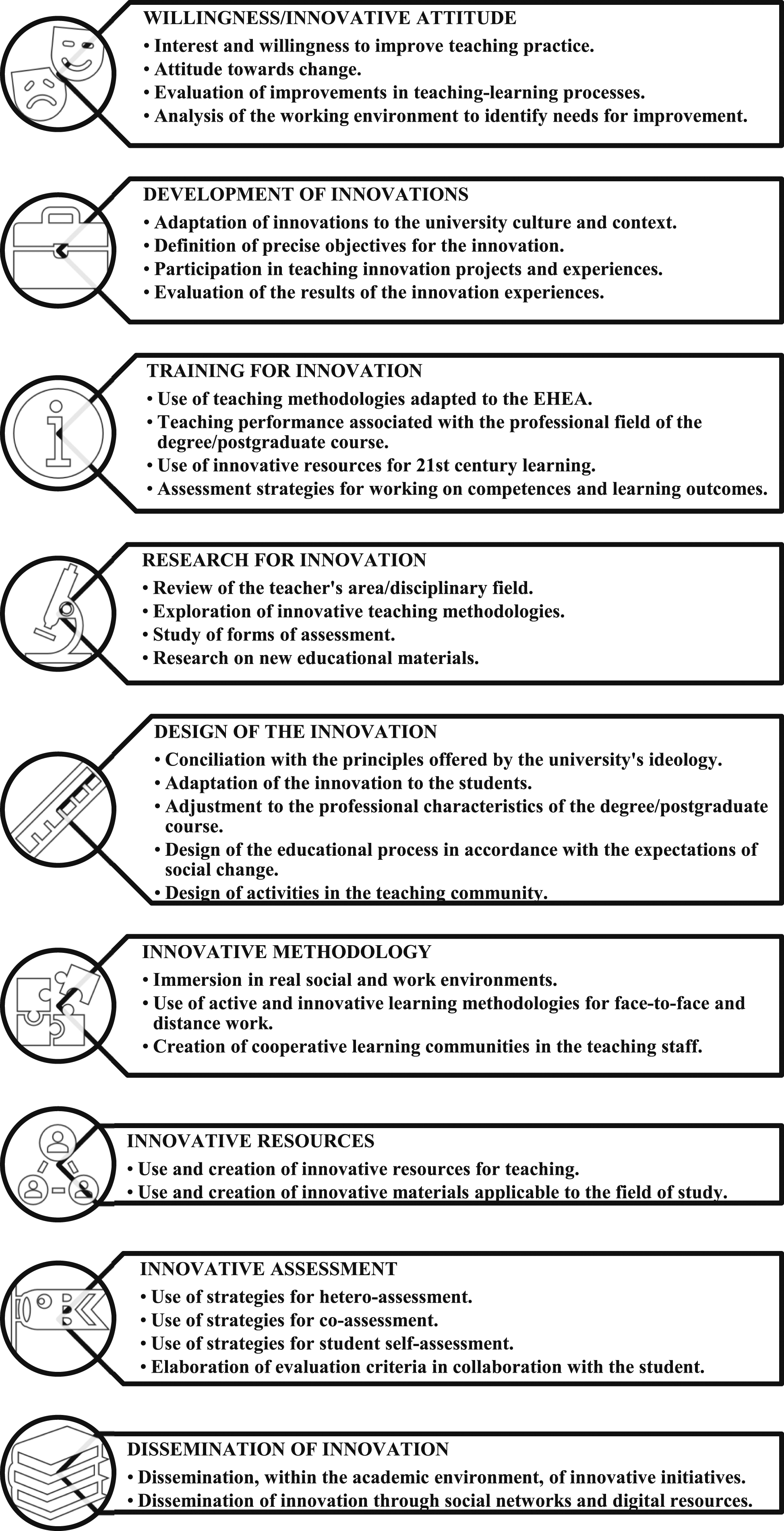
In order to identify the educational needs of the university professor in relation to the level of their competencies for the innovation process (this being the fundamental objective of this present study), it is vital to detect the differences in the innovative profile of the mentioned educators, by means of the tool whose indicator system has been previously mentioned. In this way, by means of said construct, our study aims to identify, analyse and differentiate the characteristic configuration of the innovative profile from the sample of university professors from Bolivia, Spain and Mexico.
Method
The research design was considered non-experimental and ‘ex-post-facto’ (Kerlinger and Lee, 2002), as there existed no form of intervention to any members of the sample, as well as no established manner of treatment or manipulation of variables. So that the innovative competence of the university lecturer could be studied as a phenomenon, after having occurred naturally in the participants who were the object of the investigation, non-probabilistic and incidental sampling was carried out (Bisquerra, 2014).
Sample
Comparative summary of the sample distribution of the study.
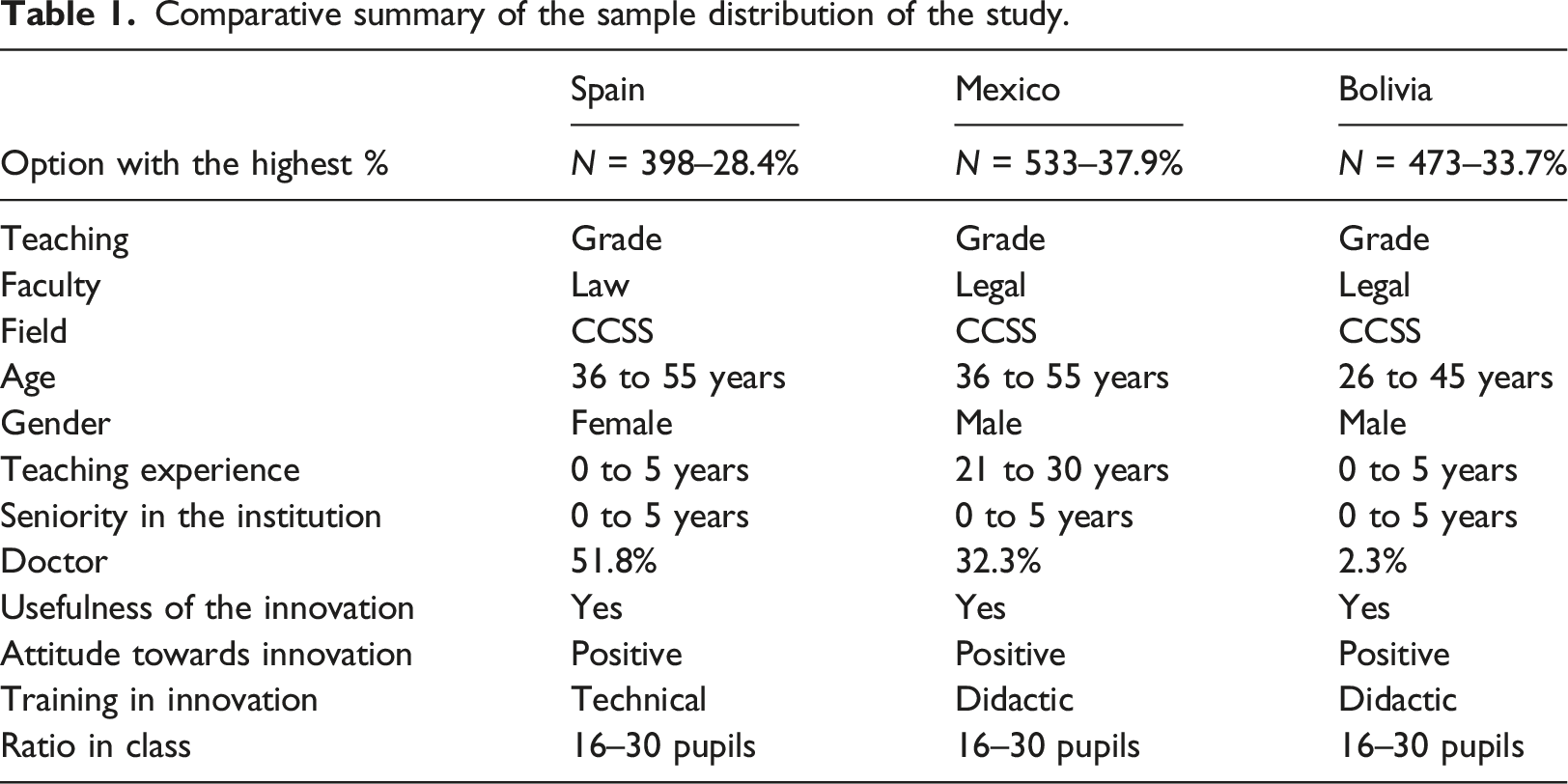
Other indicators specific to the sample refer to age, with a predominant percentage in the range from 36 to 45 years of age, which shows that the variation of ages resembles a normal curve. This corresponds to the actual age distribution situation of university lecturers in the three countries.
To the previous data regarding age, the variable sex was added. In the case of the Spanish universities whose lecturers took part in the study, there were a greater number of women (57%) than men (43%).
With regard to the years of experience of lecturers in Spain and Bolivia, the predominant time band is between 0 and 5 years, which indicates that they are newly incorporated faculty members in their university institutions, while in Mexico, the highest age percentage is that of lecturers between 21 and 30 years old (22.9%). The largest group of lecturers in terms of actual university teaching work experience is that of between 0 and 5 years (Spain 55.3%, Mexico 46.0% and Bolivia 80.1%).
Regarding innovation projects in the field of university teaching, a high percentage of lecturers give much importance to these projects in terms of their usefulness (approx. 95% in all countries) and express a positive attitude towards them (approx. 96% in all countries). When asked to indicate the level of innovative competence they enjoyed, in Spain and Mexico they avowed to a ‘moderate’ level (approx. 35%), while in Bolivia they indicated that they had mostly a ‘beginner’ level (approx. 40%).
Also of importance is the use of technological resources. In this respect, the data returned revealed that lecturers in Spain use mobile phone technology least (37.2%) in comparison with Mexico (55.9%) and Bolivia (45.5%), This is also the case with the use of tablets and interactive digital whiteboards (in Spain, 11.1% and 12.1%, respectively).
Of the most relevant data that came to light in the study, of interest is the information that the lecturer has available on the existence of support structures provided by the university institutions to promote teaching innovation. In this sense, within the Spanish sample, a greater percentage of lecturers understand that their institution has the necessary administrative structures for innovation management (vice-rectorate of innovation, department and director of innovation, innovation days, development aids, training courses, faculty support regarding innovation and encouragement and support of the degree directors). Of note within the Spanish sample was the existence of innovation days as an activity much appreciated by the teaching staff (86.2%), while the greatest value was placed on innovation courses (86.9%), in addition to the innovation department (84.7%). In contrast, lecturers in both Mexico and Bolivia are unaware of the existence of these innovation support structures in their university institution, in some cases simply because this support does not exist, except in the areas related to innovation courses (Mexico 69.0%; Bolivia 56.7%), faculty support for innovation (Mexico 56.7%; Bolivia 58.6%), and the support of degree directors (Mexico 60.0%; Bolivia 66.0%). Although to a lesser degree, it is worth noting that the holding of innovation days in the university is also valued, with 56.0% in Bolivia and 43.7% in Mexico.
Another aspect of importance that is reflected in the data is the perception of the level or quality of the innovation help and support structures. Although it is felt in all three countries that this institutional support is ‘sufficient’ (Spain – 39.9%; Mexico – 33.4%; Bolivia – 33.2%), it is worth noting that the vast majority ‘do not know’ whether there is support for innovation from their own university or from any government institution (Spain – 39.4%; Mexico – 42.8%; Bolivia – 32.8%).
Furthermore, when the members of the sample are asked about the benefits that innovation affords university teaching, they mainly refer to the ‘access and publication of information’ (Spain – 83.4%; Mexico – 82.0%; Bolivia – 79.9%). In addition to access to information, the Spanish sample emphasises ‘flexibilization of the use of time’ (78.9%), the Mexican sample emphasises ‘teamwork and teacher coordination’ (79.2%), while the Bolivian sample appreciates ‘improved student accompaniment’ (83.7%). On the contrary, when asked to identify the main limitations for the development of innovation in university teaching, all countries highlight the ‘time limitation’ for innovation and the ‘slowness’ in implementing innovative activities within the classroom (approx. 95% in all countries).
Instrument construction
In order to detect the relationships between the variables that allow a study of the innovative competence of university lecturers, a questionnaire (CIDU) was designed with five response values on a Likert scale (1 being the lowest assessment and 5 the highest). In order to identify their attitudes, knowledge and abilities with respect to each of the items referred to in the questionnaire, the members who formed part of the sample were able to self-evaluate the different dimensions and indicators that make up the innovative competence of the university lecturer.
To obtain as much information as possible, part of the questionnaire was dedicated to collecting data on independent variables aimed at assessing innovation in the specific context of the university, as well as sociodemographic information related to the lecturer. The relevant part of the tool deals with the lecturer’s innovative competence (conceived as a dependent variable), structured in 67 items based on the following dimensions and indicators (Figure 1): Disposition/Attitude, Development, Training, Research, Design/Planning, Methodology, Resources, Evaluation and Dissemination of Innovation. Finally, with the data collected, it was possible to establish the innovative competency profile of the university lecturer. Differential analyses of hypotheses contrasts were carried out, taking into account the difference in averages between the groups formed by the different categorical variables (lecturer characteristics, those of their university and of the different countries that participated in the study).
Instrument reliability
Reliability analysis of the instrument: Cronbach’s α.
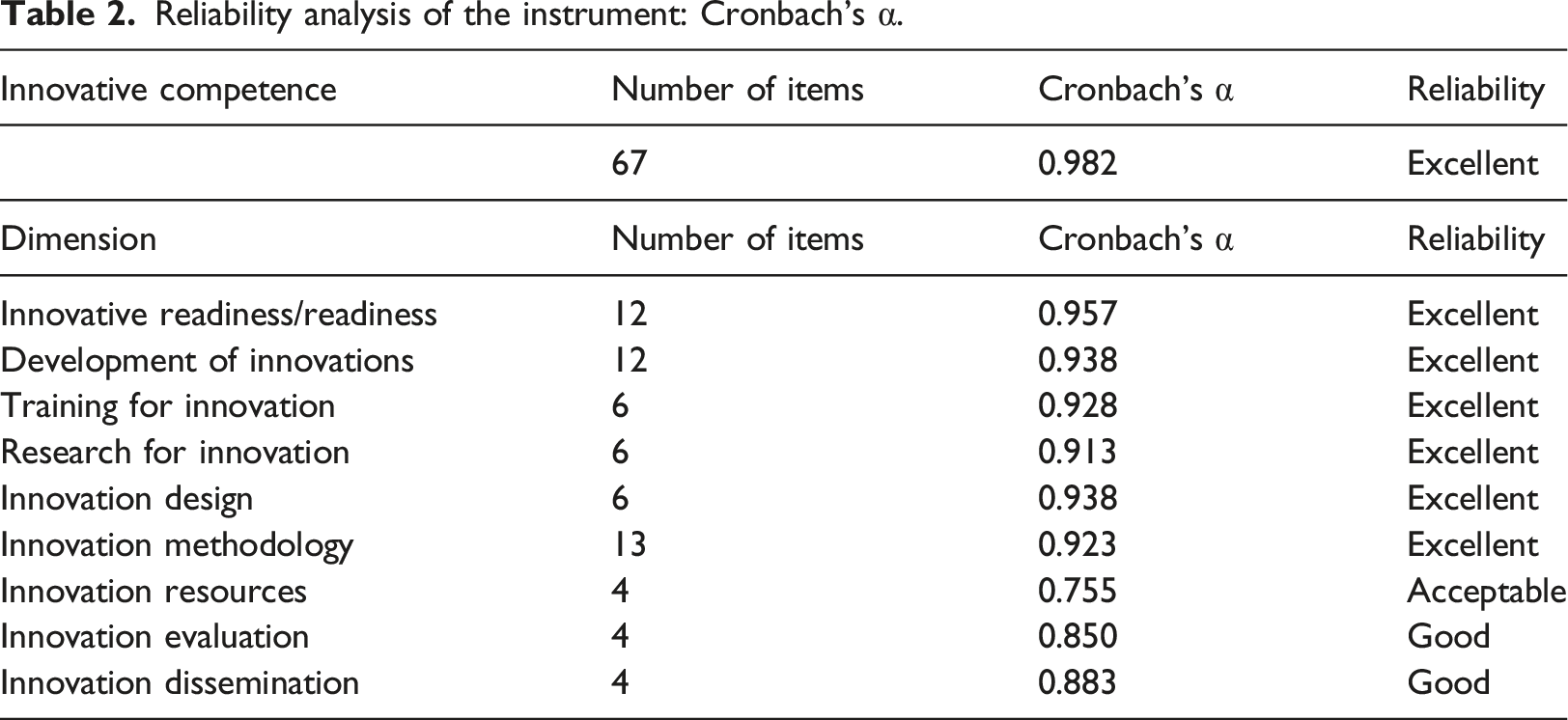
Homogeneity indices (element-total correlation corrected) are within optimal values, all being above 0.3. In conclusion, it can be said that the instrument enjoys excellent reliability, allowing for a consistent measurement of the innovative competence of the university lecturers, with 0.982 in the α de Cronbach (George and Mallery, 2019).
Results
Descriptive and differential analysis
Based on the sample data in the questionnaire as a whole and taking into account the overall results obtained for analysis, a total evaluation score of 2.45 is recorded on a Likert scale of 1 to 5. In fact, 65.5% of lecturers have a ‘very low’ or ‘low’ profile, while only 9.6% have an ideal profile (‘High’ or ‘very high’) to apply innovation in their teaching, as can be seen in Figure 2. It should be clarified that the percentile distribution was used to obtain the 5 profiles indicated in the chart: ‘Very Low’ (values between 1 and 1.6), ‘Low’ (1.7 to 2.5), ‘Medium (2.6 to 3.4), ‘High’ (3.5 to 4.3), and “Very High” (4.4 to 5), to obtain the previous ratings. Profiles of the innovative competence of university teachers.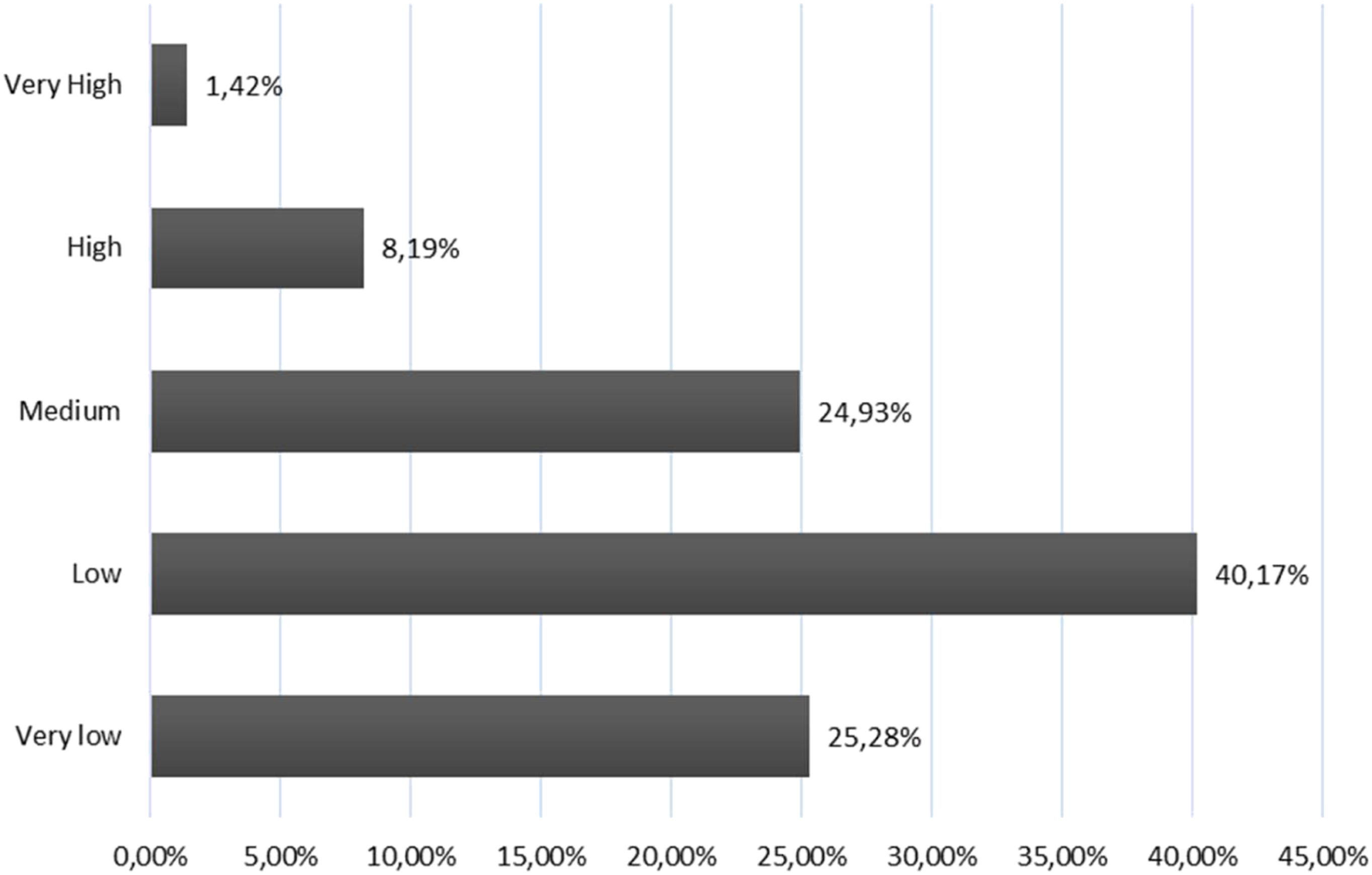
With regard to the scores obtained in each of the dimensions that make up the innovative competence of university lecturers by country (Figure 3), it is revealed that the only value that is above the average score in the whole sample is the teacher’s preparation and attitude toward innovation ( Values obtained in the questionnaire and each of its dimensions by country.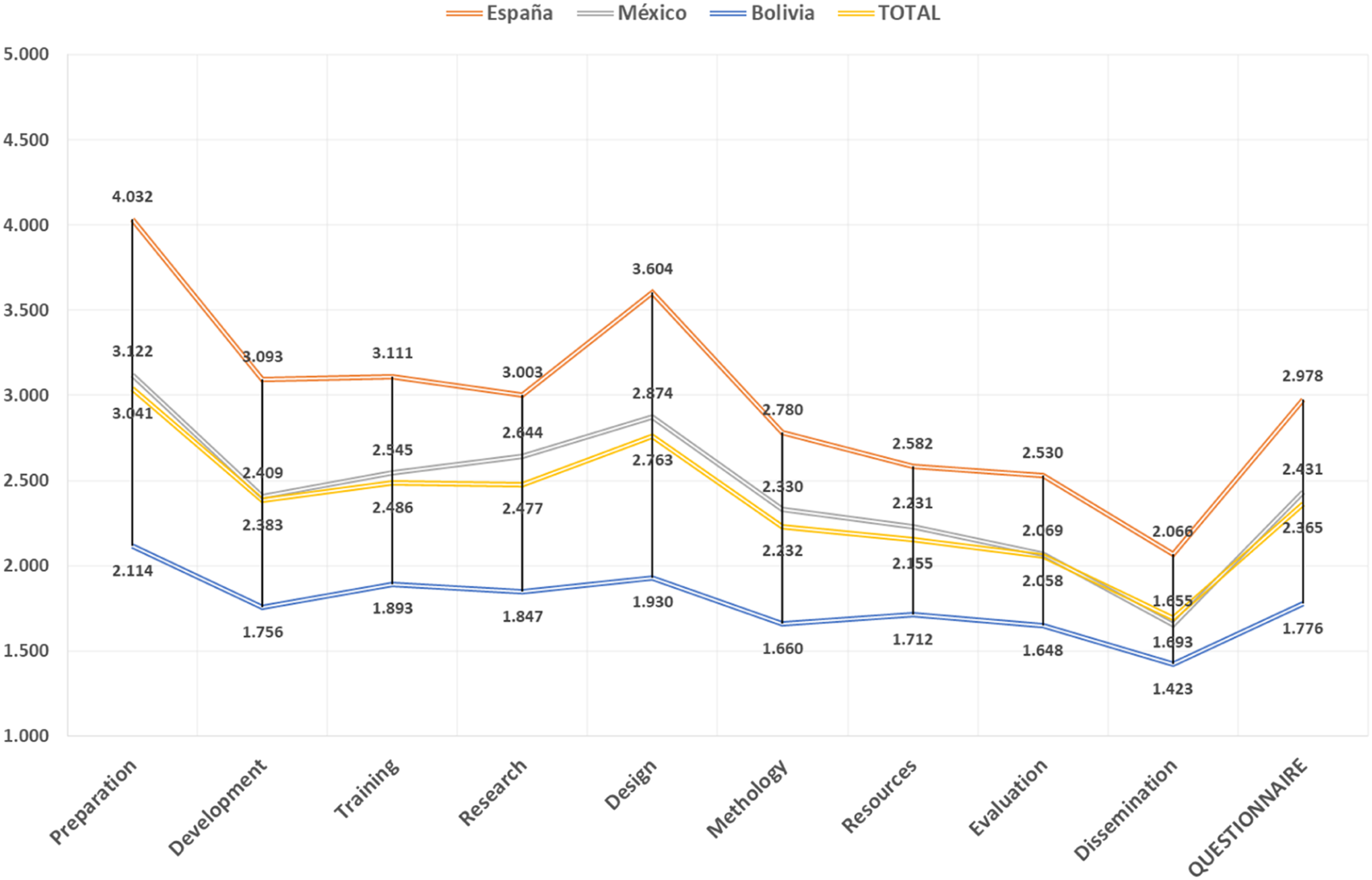
Descriptive analyses: comparative study of the results obtained by country.
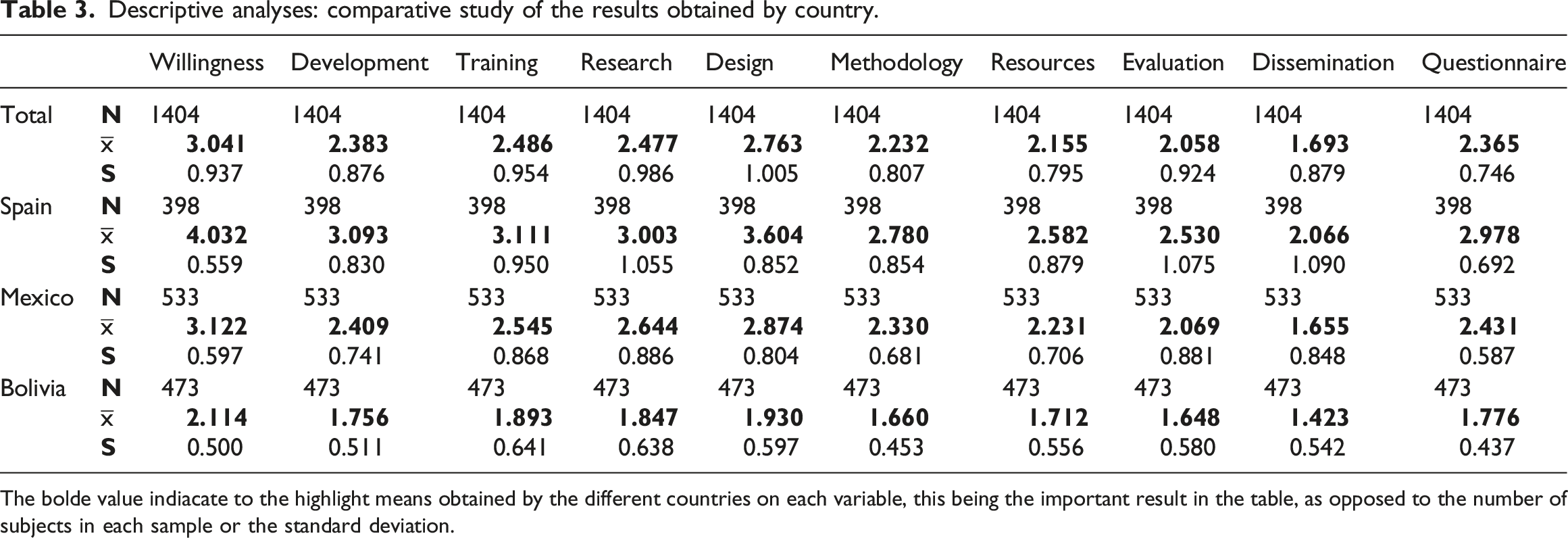
The bolde value indiacate to the highlight means obtained by the different countries on each variable, this being the important result in the table, as opposed to the number of subjects in each sample or the standard deviation.
Given that the average value of the scale is 3, none of the countries can be considered to score particularly high on teaching innovation and its different dimensions. Similarly, it should be noted that the data returned regarding each of the aspects that make up innovative competence evolve in the same way for the different samples of each country; the preparation and attitude toward teaching innovation and the design of innovation projects and activities are the most outstanding competence dimensions in all three countries. On the other hand, the development of innovative resources for university teaching, the evaluation and the dissemination of innovation are the aspects that obtain the lowest scores in all the samples.
Descriptive analysis: study of the frequencies obtained.

In the case of Mexico, it is observed that the competence of innovation tends to be relatively lower than that of Spain, with the competence values ‘always’, ‘often’ and ‘sometimes’ of 2.8%, 25.3% and 26.8%, respectively, totalling 54.9%. Finally, lecturers in Bolivia return teaching innovation values thus: ‘always’ (2.7%), ‘often’ (5.4%) and ‘sometimes’ (21.4%), with a cumulative percentage of 29.5% – considerably below the values of Mexico and Spain.
It should also be noted that the lowest reported competency values observed for the three countries are to be found in the dimensions ‘Methodology’, ‘Resources’, ‘Assessment’ and ‘Dissemination’. Although the Dissemination dimension corresponds to aspects more related to publication in the field of projects carried out by the university lecturer in relation to innovation, it should be noted that the other three dimensions correspond directly to the lecturer’s ability to foster and promote student learning within the classroom. This is an interesting finding by the study, as it suggests that higher education is still today based on traditional instructional procedures, with the same resources within the classroom, the same teaching methodologies and the same evaluative strategies to identify student learning outcomes.
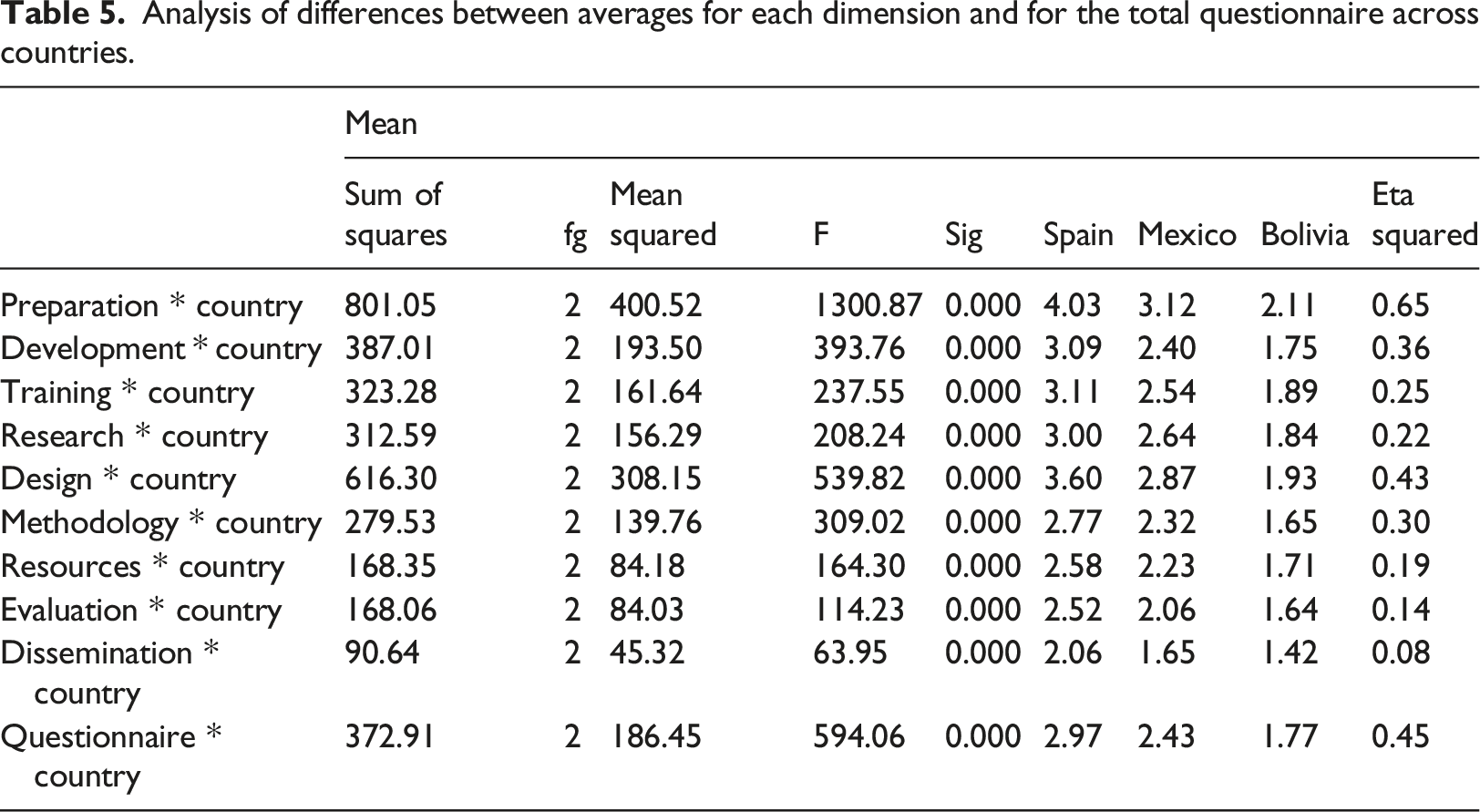
Analysis of differences between averages for each dimension and for the total questionnaire across countries.
Conclusions
The present study has shown that the competency profile on innovation that university lecturers possess and develop in the classroom still does not satisfy the demands and requirements for an improvement in teaching. This is the case for both public and private institutions. Consequently, this clearly means that the requirement levels for effective student learning are also not being met.
Based on the above considerations, the competency profile of the lecturers of the universities of Spain, Bolivia and Mexico who participated in this study corresponds to a ‘low’ or ‘very low’ level. It should be noted that this perception was recorded by 65.45% of the 1404 teachers surveyed, nearly two thirds of the sample.
In view of the above general considerations and entering into a more concrete analysis of the results, the highest value above the average was found in ‘innovative disposition/preparation’ (
A second component that must be considered, as it returns results below the average (
Another indicator that has a low result (
Therefore, and according to the data presented, it can be observed that university lecturers simply are not aware of the importance of innovation transfer and dissemination. In this present study, generally speaking, a medium to low innovative profile has been observed among the teaching staff of the universities that participated. However, based on the findings of this comparative study, teachers in Spain are more competent in innovation than members of the samples from Mexico and Bolivia.
As a final conclusion, it is important to point out that this research offers a reliable and valid tool to evaluate the competence in question, in order to diagnose innovation as a competence skill, in the professional body of the different university institutions.
Discussion
The results obtained in this research show that university teaching staff are poorly prepared for the development of innovative learning activities in the classroom. This fact bears important similarities with other works carried out in the last 10 years on both a national and international level (Olmos-Migueláñez and Rodríguez-Conde, 2010; Pagés et al., 2016; Torra et al., 2012; Triado et al., 2014). It can be observed that, regardless of the country or whether a university is public or private, certain deficiencies are constantly found in the innovative competence of its lecturers.
As in this study, previous research by other authors has identified that communicative (26%), interpersonal (24%) and methodological (24%) competences are rated higher than innovation (7%) (Torra et al., 2012; Triadó et al., 2014). As can be seen, the coincidence between the data regarding the low assessment of innovative competence is significant, both in the studies of Triado et al. (2014) and Torra et al. (2012) as well as in the data collected in this present research of 1404 lecturers. It is also important to note the difference in the positive assessment of specific teaching skills (methodological, interpersonal and communicative), compared with the low result regarding innovation. This result may be due to the fact that innovation is a type of competence that requires more preparation time and individual planning before interaction with the student is established, while the competencies of methodology and interaction are linked to skills used directly by the teacher in the classroom. Thus, as innovation requires the employment of other competences such as creativity, dissemination and research, in addition to concrete teaching skills in the classroom, this competence becomes a complex construct both for its implementation by the teacher and for its study.
Another problem identified is the low value of teaching competence in ‘Innovative Assessment’, a problem that seems to be chronic in university teaching, if we take into account previous studies such as the one carried out by the researchers Olmos-Migueláñez and Rodríguez-Conde (2010). In this study, the authors observed the repeated use of hetero-evaluation as the fundamental modality, without taking into account other alternatives such as self-evaluation and/or peer evaluation. Clearly, the persistence (thirteen years later) of traditional evaluation procedures in universities – not only Spanish, but also Latin American, (without aiming to establish generalisations) – suggests the need to develop more innovative practices that include the specification of skills and learnings to be assimilated by students in the area of evaluation.
Another indicator that shows a low result is ‘Dissemination of innovative initiatives’: which is also verified by previous research, such as that carried out in 2014 by Triado et al. (2014: 71), whose data indicated very low values for innovation transfer.
In view of the above considerations, the importance of dissemination and transfer, as essential elements of innovation from a more general point of view, is fundamental if one takes into account the remarks of Deutschmann (Köhler and González, 2014: 77), who underlined the main value of diffusion, as well as introducing changes in new procedures in accordance with his proposal on the ‘Four innovation cycles’.
Although there exist very few papers whose aim is the study of the competence of university lecturers from a comparative perspective (Díaz et al., 2015; Gómez and Valdés, 2019; Manzanal et al., 2022; Montoya et al., 2016; Murillo et al., 2007; Rueda, 2018), they are even less common when it comes to accurately and comprehensively assessing the innovative and creative activity of teachers in higher education (Fernández-Cruz and Rodríguez-Legendre, 2021; Torra et al., 2012; Triado et al., 2014). However, there is agreement that the innovative competences of Spanish university teachers are somewhat better than those developed by teachers in Mexico and Bolivia. This has also been found in other more generic studies, with a smaller sample size and with another type of methodology (Diaz et al., 2015; Gomez and Valdés, 2019). Although these are by no means remarkable values, this result may be explained by the introduction of Spain to European Higher Education Area change protocols, bringing about significant changes in teacher evaluation and in the improvement of the quality of academic courses.
It is important to analyse, tentatively, the differences found between the countries studied, understanding that they may respond to structural difficulties, specific sociocultural processes or different educational conceptions in Latin American institutions, and that, consequently, they do not emphasise the development and quality criteria that operate in European universities (EHEA). In this sense, the differences recognised in this study may derive from certain limitations for the development of innovation in the field of higher education in Latin America, in contrast to the European context (Martínez-Iñiguez, 2018; Ríos-Cabrera and Ruiz-Bolivar, 2020). Some of the difficulties are: • Lack of formulation of specific public policies to develop innovation in university institutions. • Lack of financial resources for the development of innovative initiatives aimed at the acquisition of equipment, teaching materials, teacher training, technical/pedagogical advice, equipment maintenance, etc. • No promotion of leadership and motivation of the leadership and management of HEIs vis-à-vis the entire educational community to get involved in the innovation process. • Limited updating of the curriculum of university degrees to the current socio-economic contextual requirements. • Lack of training of competent and innovative teachers who allow student autonomy and responsibility in their learning, the use of active methodologies in the classroom and the incorporation of technological resources.
On the other hand, mention should be made of the attempts and difficulties faced by Latin American university institutions when trying to join the structure developed by the European Higher Education Area (EHEA), through the Tuning Latin America Project in 2003. Its initial objective was aimed at the development of student competences rather than the acquisition of academic content. However, according to research carried out (Aboites, 2010; Martínez-Iñiguez, 2018; Mendoza et al., 2021), this process apparently did not consider regional specificities (cultural, social and political diversity), being an imitation or copy of a European model without applying changes in Latin American higher education institutions. Furthermore, studies analyse some negative repercussions of such implementation, such as the fragmentation of university student education and the negative impact on teachers and students as central elements of change in university institutions (Aboites, 2010).
In this context, in the specific case of Bolivian universities, there is a complex process in which, from efforts to introduce changes associated with efficiency and quality in terms of the private and business sector, there is a shift towards a conception associated with interculturality, decolonisation, own and subaltern knowledge, among others (Weise, 2010: 45).
Implications
The results obtained suggest the need to structure specific teacher training strategies in order to remedy the deficiencies found in innovative competence in all three of the participating countries, especially in those sub-dimensions with low or unsatisfactory results. In this regard, the following considerations should be taken into account: • Evaluate the proposals of the different governmental bodies, as well as the specific strategies of the universities themselves, aimed both at teacher training and academic planning. • Analyse the underlying organisational structure in the designs of the different universities, in order to detect whether this circumstance can help explain the possible lack of innovative competence. • In this vein, institutions of higher education have the need to promote changes that afford the teaching staff the necessary support to implement innovative and creative activity, through the development of activities aimed at the fostering and development of this competence and consequently improve the learning of the university student (Pagés et al., 2016: 41). • Regarding the previous points mentioned, it is also sought that the lecturer, when trying to apply innovation strategies, does not incur in the use of inappropriate procedures or outdated methodologies that, far from improving the learning process of the student, make it more difficult. • The research of indicators linked to innovative competence such as innovation Dissemination to the university educational community, the application and development of creative resources, the development of an active methodology and training in participatory evaluation, are without doubt indispensable to overcoming the deficiencies found in this competence.
Limitations and future directions
The limitations that the study may be due to the following factors: • The possible bias due to the type of sampling used (non-probabilistic and incidental) may lead to only those teachers with a higher attitude towards innovation in higher education participating in the study. • There is also the possibility of some margin of error due to the measurement of innovative competence based on a self-perception of the teacher. This implies an act of adjustment to reality and sincerity on the part of the respondent. • Likewise, the assessment of a competence through a self-perception questionnaire could bias the results, unless it is complemented by concrete competence tests that allow for an assessment of the actual performance of the teacher. • Finally, the teacher’s own perception of innovative competence may limit the real vision if other assessments are not taken into account, such as those of the students themselves, as well as those of the managers, coordinators and directors of the university institution itself.
The lines of work to be developed based on the current study should try to resolve the limitations indicated above: broadening the study sample, using probability sampling; extending the study to the perception of the innovative competence of the teacher by the student or other educational agents; using qualitative research techniques that have an impact on the analysis of the innovative performance of university teachers.
Footnotes
Declaration of conflicting interests
The author(s) declared no potential conflicts of interest with respect to the research, authorship, and/or publication of this article.
Funding
The author(s) received no financial support for the research, authorship, and/or publication of this article.
