



Abstract
Rural teachers are fundamental to rural education. Currently, the high turnover rate of rural teachers is a bottleneck that restricts the improvement of rural education quality. However, most existing studies focus on why rural teachers cannot stay but do not pay enough attention to the reasons for them to stay. Therefore, from the perspective of retention, this study breaks through the limitations of teacher stability represented by teacher turnover in the past and further enriches the theoretical understanding of rural teacher retention. This study adopts a questionnaire survey of 588 rural teachers in Yulin City, Shaanxi province, China. It found that the overall retention intention (emotional retention and interest retention) of rural teachers was not very strong, and it shows statistically significant differences in terms of age, address on their ID card, marital status, educational level, years of teaching in rural areas, and the type of house they currently live in. The following three strategies are proposed in the hope of stabilizing the rural teacher team: (i) Focus on key groups and accurately meet the real needs of rural teachers, (ii) Strengthen professional identity to improve benefit retention intention, and (iii) Promote occupational happiness to further enhance the emotional retention intention of rural school teachers.
Keywords
Introduction
In 2021, China’s 14th Five-Year Plan puts forward the requirement of ‘building a high-quality education system’ (The Central Committee and The State Council, 2018). While, rural education is the weakest segment. To achieve high-quality development of education, rural education must be attached importance. However, Wang et al. (2018) pointed out that rural teachers have poor stability, low willingness to stay in their jobs and strong willingness to leave. Zhang (2021) found that the outflow of rural teachers was greater than the inflow, leading to a continuous loss of rural teachers, especially outstanding teachers. In the China Rural Statistical Yearbook 2020, the turnover rate of rural teachers in China from 2010 to 2020 was as high as 55.2%. As the saying goes, retention is the first step to gradually achieve high quality teaching. Therefore, it is an important academic proposition to explore the influencing factors that affect rural teachers' willingness to stay and then build a stable rural teaching force (Liu et al., 2019).
Currently, the government relies on two strategies to keep rural teachers. One is to implement the strategy of stabilization by replacement, but on the one hand, the need to employ replacement teachers inevitably places a burden on the school or local authority in terms of financial as well as human costs, such as ongoing recruitment, hiring and training costs (Sorensen & Ladd, 2020). On the other hand, the frequent turnover and replacement of teachers making it difficult to establish a lasting and good relationship between teachers and students. The second is ‘political stability’, relying on administrative or moral force to restrain teacher attrition. For example, rural teachers are required to sign a contract with the school board promising to serve in rural schools for a specified number of years, relying on the law to restrain teacher attrition (The Ministry of Education, 2020). However, rural teachers who are forced to stay due to contractual or policy constraints are not genuinely willing to stay and do not identify with the role of a rural teacher from the inside, and the potential risk of attrition is high. Even if they stay, teachers who lack enthusiasm for teaching and a sense of professional identity will find it difficult to teach well, thus affecting the quality of teaching (Cheng et al., 2023).
More important than retaining people is retaining hearts. Wang et al. (2017) pointed out that the problem in the construction of rural teachers is that only pay attention to the improvement of salary and ignore the essence of shaping teachers' professional identity. Li et al. (2022) believe that compared with policy retention, it is a more effective way to explore the impact of rural teachers' occupational psychological state on their retention intention and enhance the stability of rural teachers' team by enhancing professional identity. In addition, happiness is the endogenous driving force for stabilizing rural teachers (Tang et al., 2021). Therefore, it is necessary to further study whether and how teachers' professional identity and happiness affect their retention intention.
It can be seen that the occupational happiness of rural teachers is an important factor affecting their retention intention. Therefore, starting from the perspective of teachers' retention intention, which has received less attention from the academic circle, this study finally decided to explore the factors affecting rural teachers' retention intention, as well as the influence mechanism of professional identity and professional happiness on teachers' retention intention from the perspective of teachers' psychological characteristics. Finally, this paper tries to provide effective measures for improving the stability of rural teachers.
Literature review
The concept of teacher retention first appeared in Billingsley’s (1991) study on the reasons for leaving special school teachers, and later, Tett and Meyer (1993) pointed out intention to stay is the behavior of teachers who are satisfied with their identity and willing to maintain it and decide to remain in the organization through careful consideration. This study defines rural teachers' retention intention as their willingness to continue to engage in rural education under the influence of various influencing factors.
Over the past few decades, scholars have found that teacher turnover exists in different countries and regions and has become a worldwide problem. For example, teacher turnover in the United States averages about 15% per year, and teachers in rural areas face chronic shortages due to a shortage of financial capital (Williams et al., 2021). In Finland, although the teaching profession has always had a high social status, 40–50% of teachers still tend to leave (Räsänen et al., 2020). In some developing countries, such as Rwanda, 20% of teachers are reluctant to join the teaching profession (Zeitlin, 2021). Similarly, Rana et al. (2022) found through interviews with rural teachers in Pakistan that fewer will choose to serve in rural schools in the future, or will be filled by teachers who do not have the necessary qualifications or are hired on a temporary basis. This is due to the fact that more qualified and experienced teachers prefer to teach in the cities rather than the rural areas.
As in other countries, Chinese statistics show that teacher turnover has been high (Chen, 2022). As a result, China is becoming increasingly concerned about teacher turnover, particularly in rural areas. Prior research has indicated that 71.56% of Chinese rural teachers would prefer to transfer to urban schools, indicating a low willingness to stay in their current positions (Wang & Wu, 2019). The overall teacher turnover in China is characterized by an imbalance between urban and rural areas. In addition, Cheng et al.'s (2023) follow-up survey of elementary school teachers in Northwest China showed that the teacher mobility rate was 12.06%. Overall, the mobility of rural teachers in China is disorganized and unidirectional, which is manifested in the flow from inland cities in the central and western parts of the country to coastal cities in the east, and from county towns to cities.
In the field of education, professional identity is often described as people’s attitudes and perceptions of themselves as educators, which reflects the extent to which a person perceives the impact and significance of his or her work on the society and provides a spiritual basis for individuals to be active in their work and to make organizational dedication (Zhang & Wang, 2018). Through interviews with 58 teachers, Ampadu et al. (2021) stated that the success of any educational system depends on the acceptance of its stakeholders (especially teachers) to their profession. Teachers who are committed to their profession are more likely to maintain their intrinsic motivation and stay in the field (Weiß et al., 2023).
According to a recent study, surveys have shown that professional identity is closely related to intention to stay in the profession. Teachers who have a strong sense of professional identity are more enthusiastic about teaching and have higher retention intention than teachers who have a weak professional identity (Ma, 2022). That means, teachers who have a strong sense of professional identity are more likely to remain in their jobs for a longer period of time. It is believed that professional identity is an endogenous factor that drives teachers to stay in education for a long time (Derakhshan et al., 2020).
In addition, through a questionnaire survey of 300 teachers, Wang et al. (2018) found that teachers with a high sense of professional identity were able to remain motivated and proactive despite a poor learning environment. In contrast, teachers with a weak sense of professional identity have a high degree of worry about the future and thus have professional instability. Education is a sacred and difficult profession, which requires practitioners to be filled with faith and dedication to the profession. Teacher professional identity, as the core of education, is an important factor in ensuring motivation of educators, maintaining their passion for the profession and enhancing their philosophy of education (Derakhshan, 2022). Therefore, especially in rural schools with poor infrastructure and teaching environment, it is of great importance to enhance the professional identity of rural teachers to improve their retention intentions.
Happiness is people's perception of their own well-being, their understanding of the extent to which their needs are satisfied, and their judgment of what kind of life state they are in. When it comes to teachers' happiness, scholars mostly view teachers' happiness as a state of well-being brought about by the realization of teachers' professional aspirations in teaching activities (Viac & Fraser, 2020). Scholars believe that teacher professional happiness is a positive psychological state, not only a means of making a living, but also a heartfelt love for it (Rahm & Heise, 2019). It is found that improving the professional quality of teachers has a significant effect on improving the stability of teachers. Li (2018) found that factors such as fondness, development prospects, satisfaction, and happiness could significantly affect rural kindergarten teachers' willingness to continue teaching, and rural kindergarten teachers with strong occupational well-being had significantly different willingness to continue Teaching from those with weak occupational well-being. Zhang (2021) pointed out that countermeasures to address rural teacher attrition could be found from the perspective of enhancing professional well-being.
Well-being plays a crucial role in the quality of life of educators and the stability of educational organizations (Wang et al., 2021). Similarly, based on the Employment Needs-Resources Model, Liang et al. (2022) reported that increased psychological well-being helps teachers to reduce psychological stress and thus be more positive about their professional development. In addition, teachers' professional well-being not only contributes to the stabilization of the teaching force, but a growing body of research has found that professional well-being is associated with teachers' teaching performance and affects students' learning initiative (Zhao, 2022) and personal competence development (Pei et al., 2022). While, the relatively poor living and working conditions compared with those in the cities seriously increase the work pressure of rural teachers and are not conducive to their group stability. Therefore, it is necessary to explore rural teachers' retention intention from the perspective of teachers' professional well-being, with a view to providing theoretical basis and intervention methods to improve rural teachers' tendency to leave the profession.
At present, academic research on teachers' leaving and staying has mostly focused on leaving, which is the tendency to leave and the direction of turnover, and there is a lack of research on the willingness to stay. The reasons why teachers choose to leave and stay are different, so it is necessary to further research on teachers' willingness to stay. Therefore, this study takes rural teachers as the research object, and through empirical analysis, analyzes the impact of professional identity and occupational well-being on the retention intention of rural teachers, so as to provide a new perspective and theoretical support for the education authorities to better manage rural teachers.
Totally, analyzing rural teachers' willingness to stay from multiple perspectives, such as demographic characteristics, job characteristics and career psychology, and tries to explore the potential factors of teacher attrition from within the teacher group. Finally, this study proposes to provide more operable effective measures to promote rural teachers' retention and stabilize the rural teaching force.
Method
Research context & study sample
In 2020, the Ministry of Education pointed out that high-quality and stable rural teachers are the key to education construction (Ministry of The Ministry of Education, 2020). However, with the process of urbanization, the career attraction of rural teachers is declining, and teachers prefer to stay in city rather than rural schools. The instability of teachers will cause many consequences in education, society and economy. Therefore, from the perspective of retention, this study breaks through the previous limitations of using teacher turnover or loss representing teacher stability, and enriches the theoretical connotation of rural teacher retention.
The study sample totally included possibly 588 teachers from several rural schools of Shaanxi province in China. Convenience sampling is used in this research, which is usually low-cost and easy to conduct. This method is also recommended when conducting exploratory research, it could be helpful to gather a large simple size and generate research questions (Stratton, 2021). Moreover, according to Comrey and Lee (1992), the simple size more than 500 is adequate in factor analysis. Therefore, a sample size of 588 seems to be enough to conduct the factor analysis.
Although Shaanxi ranks second in GDP among China’s 12 western provinces, its urban and rural economic development is extremely unbalanced. However, as the Yulin Municipal government focus more on education these years, the salary of rural teachers has increased, and benefiting from the preferential policy, their intention to stay on has significantly increased (General Office of the Provincial Government, June 2022). Based on this conclusion, the transform of rural school teachers in Yulin City of Shaanxi Province is representative to some extent. Therefore, it is more appropriate to study the rural school teachers in Yulin City as research object if we want to study what factors determine the future of rural school teachers.
Study instrument
To test the rationality of the questionnaire design and whether the language expression of the questionnaire is easy for the respondents to understand, five rural teachers first filled in the questionnaire and made comments, then the questionnaire was revised to get the final version. Besides, content validity also increased through getting related expert and professor’s opinions and judgments.
The survey mainly includes four parts: (1) Eighteen demographic questions about rural teachers' self-evaluation, such as gender, education background, teaching years in rural schools, monthly income and other potential reasons affecting rural teachers’ retention intention. (2) Twelve 5-point Likert scale (from strongly agree (5) to strongly disagree (1)) items are generally held about rural teachers' retention intention. (3) Fifteen 5-point Likert scales (from strongly agree (5) to strongly disagree (1)) items are common views on the professional well-being of rural teachers. (4) Sixteen 5-point Likert scales (from strongly agree (5) to strongly disagree (1)) items on the general views of rural teachers' professional identity.
Data collection strategy
The formal questionnaire was completed using the web link. With the help of the platform, questionnaire posters containing two-dimensional code are generated, and respondents can easily identify it and fill in the questionnaire through their mobile phones. The generated questionnaire posters were mainly sent to the WeChat groups gathered by rural teachers in Jia County and Suide County, Yulin City, Shaanxi Province, such as the rural school teacher education training groups, education work groups and other WeChat groups, covering about 1500 rural teachers. The questionnaire data was collected for 15 days, and then the data was downloaded and analyzed by SPSS.
Results and findings
Demographics
The final sample was toward female respondents (70.6% vs. 29.4%), this is also in line with the reality that there are more female teachers than male teachers in rural schools. In terms of age, the sample was considerably young, 70.9% of respondents were between 25 to 44 years old, followed by 45–55 years old (16.3%), which means young and middle-aged teachers are the backbone of rural schools.
In the highest level of education of the participants, most of rural teachers have an undergraduate degree or above (79.5% of female vs. 74.6% of male). It indicated that the rural teachers as a whole have a higher level of education and the highest qualifications of female teachers are slightly higher than those of male teachers.
From the teaching years in rural areas, 79.8% of teachers have taught less than 20 years, and 20.2% have taught for 21 years or more. In terms of the attending hours per week, teachers with 13 or more class hours per week accounted for 41.7%. It can be seen that a considerable part of rural teachers' weekly workload is very heavy. Teachers have to spend a lot of time in preparing lessons, correcting homework, organizing examinations and managing students.
Analysis of the survey scales
This study analyzes the scale of rural teachers' retention intention, professional identity and occupational well-being. Zhao (2012) pointed out that when using Likert’s 5-point scoring method, critical points such as 3, 3.75 and 4.25 are generally used to judge the score of subjects. Generally, the score of less than 3 points is low, the score of 3–3.75 points is average, the score of 3.75–4.25 points is high, and the score of more than 4.25 points is very high.
Overall level of rural teachers' retention intention
Rural teachers' Retention Intention (n = 588).
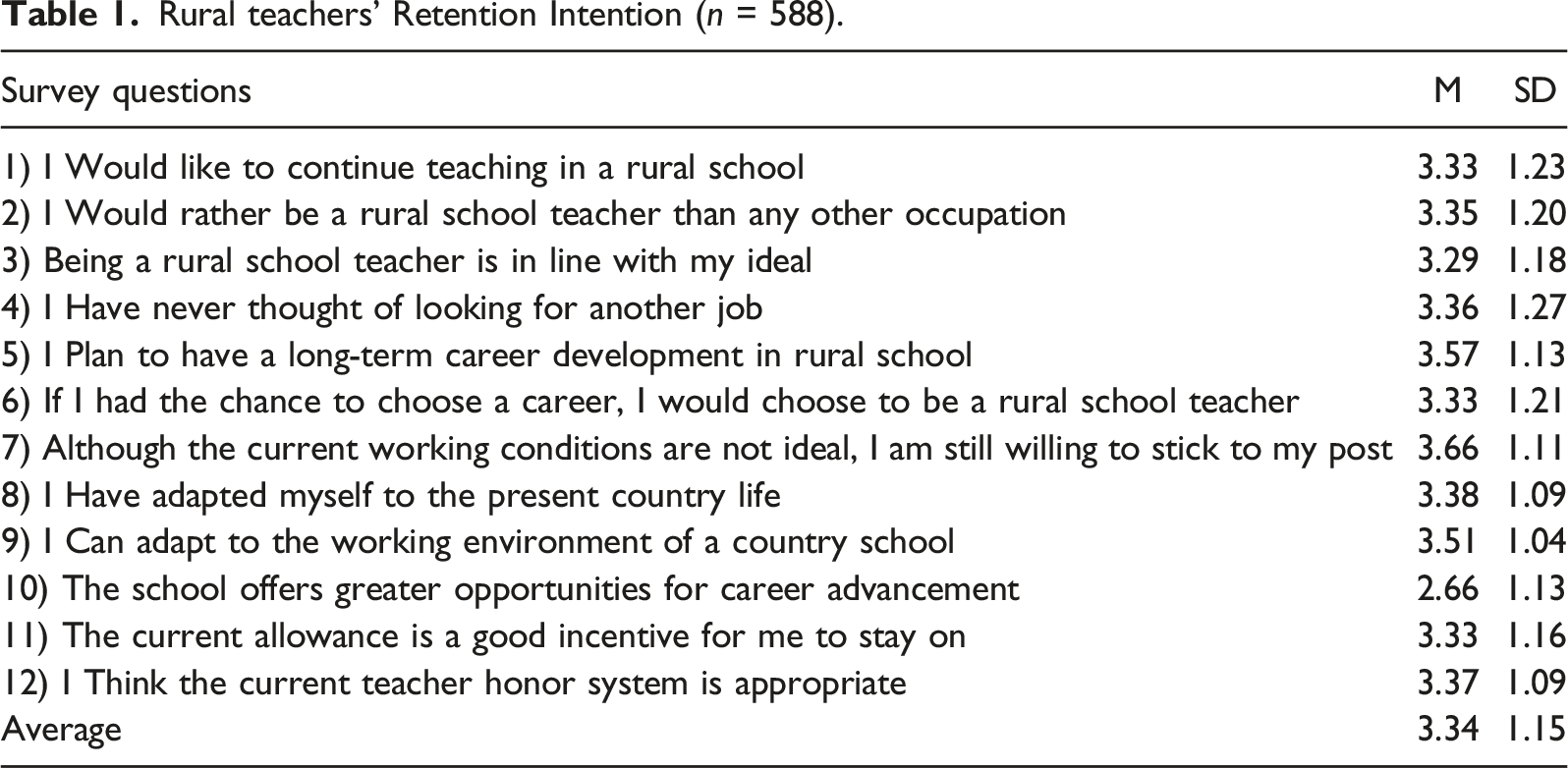
For questions such as question 10 (M = 2.66, SD = 1.13), question 3 (M = 3.29, SD = 1.18), question 11 (M = 3.33, SD = 1.16), these three questions scored the lowest, indicating rural teachers believe that personal development is not good, and the current allowance do not play a role in motivating them to stay. If there are better choices, they may leave, leading to their turnover.
Overall level of rural teachers’ professional well-being
Survey of Occupational Well-being (n = 588).
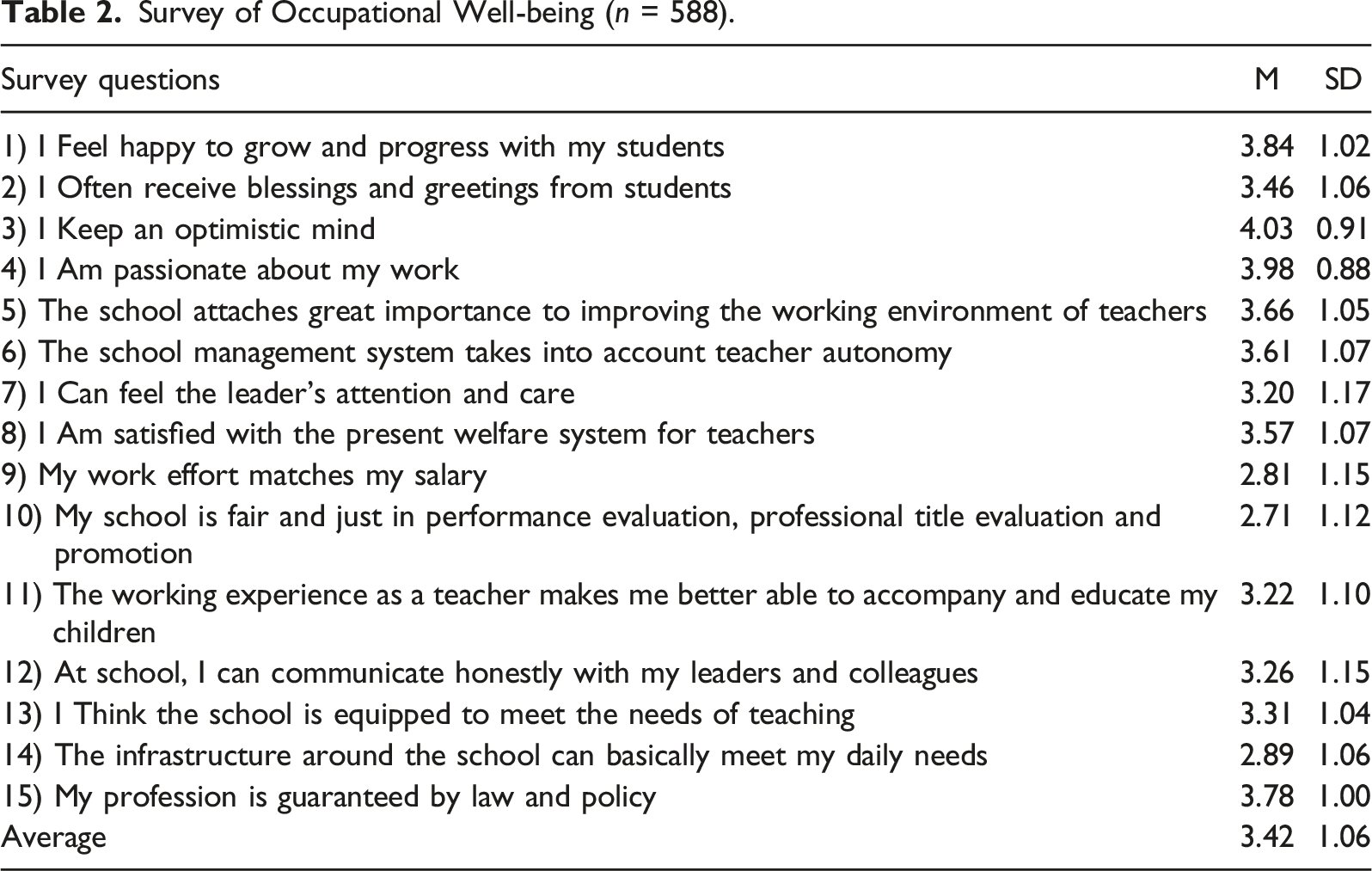
Three questions with the lowest scores were question 9 (M = 2.81, SD = 1.15), question 10 (M = 2.71, SD = 1.11), question 14 (M = 2.89, SD = 1.06). It indicates that the rural teachers are dissatisfied with the current reward and think that the effort and gain are not equal. The school is not fair and just in performance evaluation, title evaluation and promotion, which affects personal career development and personal value realization. The results also showed that the infrastructure around the school could not meet the daily needs.
Overall level of rural teachers' professional identity
Survey of Professional Identity (n = 588).
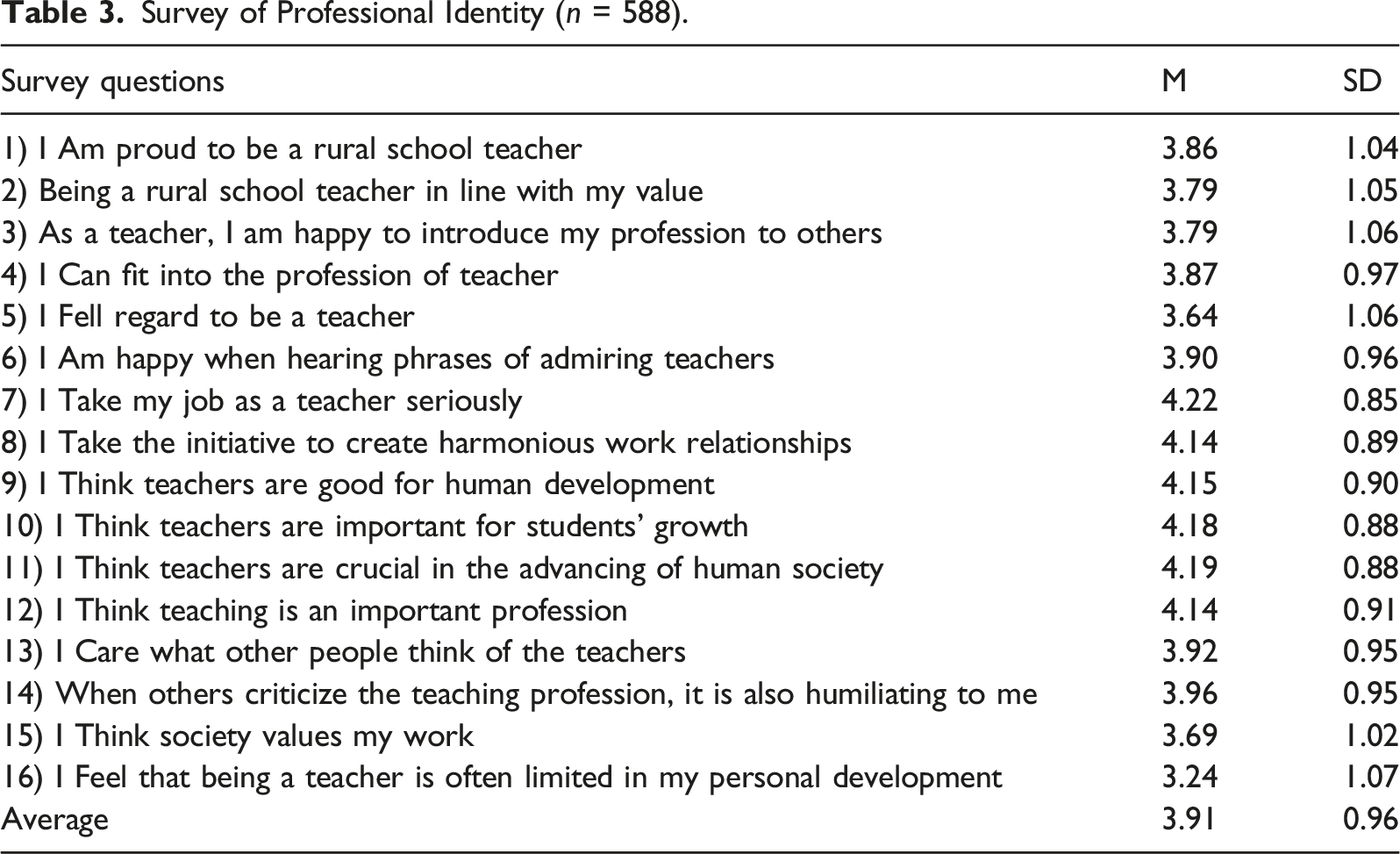
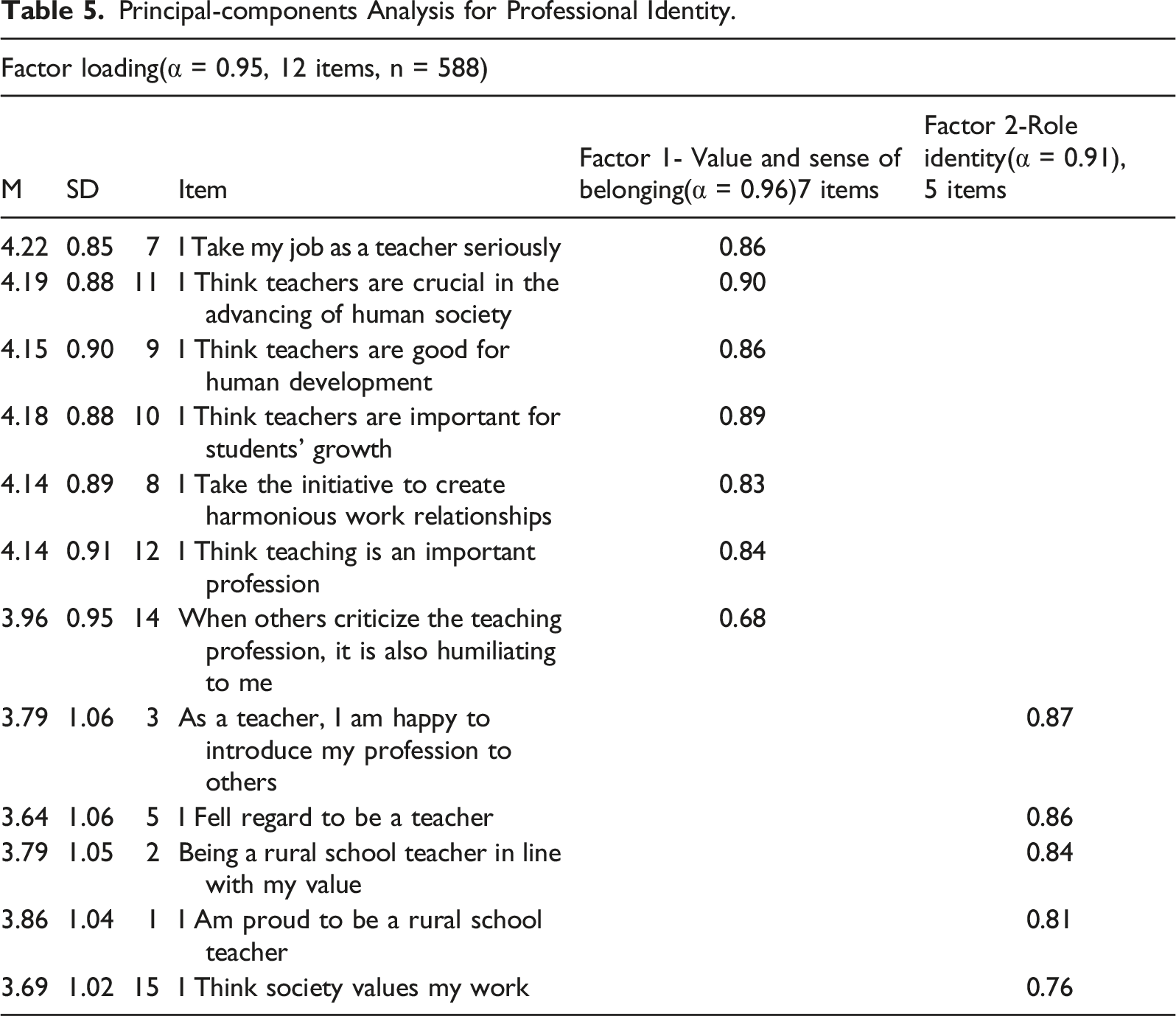
Question 15. (M = 3.69, SD = 1.02), question 5 (M = 3.64, SD = 1.06) and question 16 (M = 3.24, SD = 1.07) have the lowest scores, indicating that rural teachers have a strong sense of role identification. They believe that being a teacher can help realizing self-worth. At the same time, they hope to gain more social attention and respect.
Factor analysis
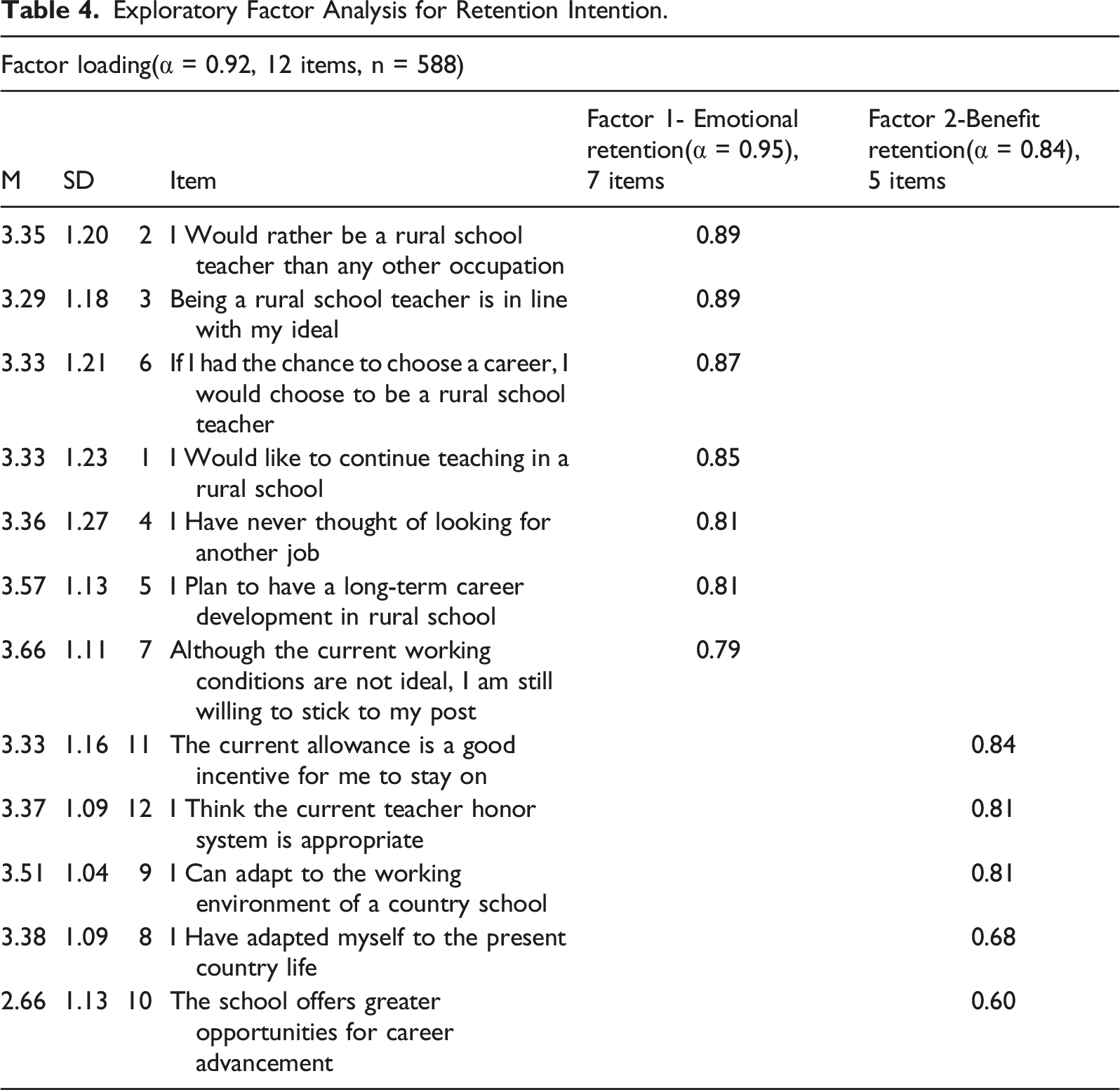
Before factor analysis, Kaiser-Meyer-Olkin (KMO) and Bartlett’s test were used to investigate the validity of the scale, and the result show that the KMO values of three scales are all above 0.8, therefore the three surveys are all suitable for factor analysis.
Exploratory factor analysis for retention intention survey
Exploratory Factor Analysis for Retention Intention.
Exploratory factor analysis for professional identity survey
Principal-components Analysis for Professional Identity.
Exploratory factor analysis for occupational well-being survey
Principal-components Analysis for Occupational Well-being.
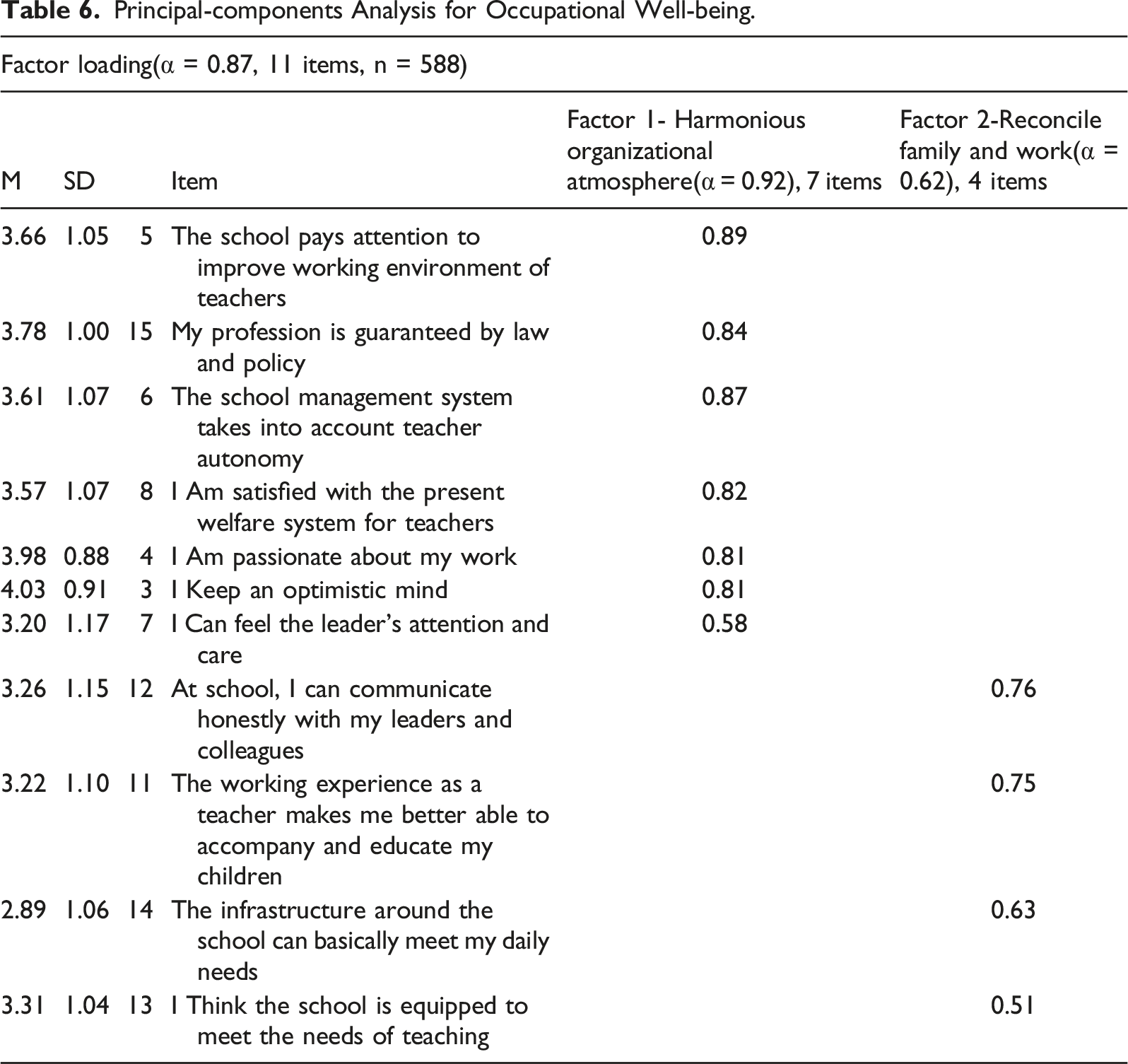
To end, the reliability of the overall scale without deleted questions and the two extracted factors was tested. The Cronbach’s alpha values were 0.87,0.92, 0.62, all greater than 0.70. This result suggests that the total scale and two factors are all in good reliability.
Comparative tests
Gender and retention intention
An independent t-test was conducted to evaluate whether there was significant difference between males and females in rural school teachers’ retention intention. The results indicated that male teachers (M = 3.64, SD = 1.07) had significantly strongly emotional retention than female teachers (M = 3.32, SD = 1.01), t (588) = −3.324, p = .001.
Teaching years in rural school
The result of one-way ANOVA test showed that there was a statistically significant differences among teaching years in rural school in terms of retention intention and professional identity.
In specifically, the teachers who had been teaching in rural schools for 21–30 years (M = 3.72, SD = 1.02) had significantly higher emotional retention intention than those who had been teaching for less than 5 years (M = 3.26, SD = 0.96), and those who had been teaching for 5–10 years (M = 3.26, SD = 1.08). The basic trend is that the longer the teaching years in rural areas, the higher the intention to stay.
Similarly, in terms of professional identity, those teachers who have taught in rural schools for 21–30 years (M = 4.29, SD = 0.74) have stronger sense of professional identity than those who have taught for less than 5 years (M = 4.01, SD = 0.83), and those who have taught for 11–20 years (M = 4.26, SD = 0.74) are significantly higher than those who have taught for 5–10 years (M = 4.01, SD = 0.83). That means, teachers with more than 10 years of teaching experience were significantly more likely to identify with their profession.
Gender and educational level with rural teacher ‘s emotional retention intention
A two-way ANOVA was conducted to assess the main effects of gender and educational level as well as their potential interaction on rural teacher ‘s emotional retention intention, and found that there is a statistically difference in educational level and retention intention (p = .004). At the same time, there is also an interaction effect between educational level and gender (p = .027).
In addition, further information from the Post-hoc test, is that rural teachers in undergraduate degree have lower retention intention than technical secondary school degree. Moreover, the teachers in graduate level also have a lower retention intention than those in junior college level. Totally, the rural teachers in graduate and undergraduate level have lower retention intention than those in junior college level and technical secondary school level. That implies a negative relationship between educational level, and intention of teachers to stay in rural schools.
Marital status
A one-way MANOVA was conducted to test the effect of marital status on dependent variable (retention intention, professional identity and occupational happiness).
The results showed that marital status had statistical differences in emotional retention (p < .001), professional identity (p < .001, p < .001), and in the first factor of occupational well-being (that is harmonious organizational atmosphere).
In addition, compared with the unmarried groups, the married rural teachers had significantly higher retention intention, strongly professional identity and occupational well-being.
Discussions
There is a statistically significant difference in the rural teachers’ retention intention in age. From the above analysis, thirty-five years old is the dividing line. Teachers under the age of thirty-five have worse stability. According to Nguyen et al. (2020), turnover rate of the middle-aged teachers is 30% less than younger groups. Shuls and Flores (2020) found the same problem in Missouri, USA, where young teachers under the age of thirty were 171% more likely to leave than middle-aged teachers. Thus, more attention should be paid to teachers under the age of thirty-five, and appropriately provide necessary support from all aspects to enhance their willingness to stay.
While the loss of young teachers is already a pressing issue, scholars have identified a more serious problem. According to Jung (2023), it was found that approximately 40–50% of teachers leave within the first five years of their tenure in Rural North Dakota. Similarly, in Missouri, 63.7% of new teachers on the job leave within five years (Shuls & Flores, 2020). However, it often takes 3–7 years for a new teacher to develop a mature teaching system, and frequent teacher turnover can result in students not being able to benefit from experienced teachers, which ultimately hinders the quality of teaching. Xiong (2023) explains this phenomenon. Due to the remote location and backward living conditions in rural areas, young teachers with 1–3 years of service often do not have the confidence to stay on for a long period of time in the face of difficult circumstances, and thus have a more potential tendency to turnover. On the contrary, rural teachers with more than 10 years of teaching experience have developed solid working skills and recognition of the rural environment during their long working life, and have a more peaceful mindset, finally becoming a stable force in the rural teaching force.
From another perspective, in view of the relatively strong stability of middle-aged and elderly teachers in rural schools, the retention of young teachers basically determines the relative stability of the entire rural teacher team. Rural young teachers, as the future successors of rural education, are not only responsible for the overall development of students, but also have the important mission of cultivating students' life emotions (Liu et al., 2022). Therefore, focusing on the career attitudes as well as the retention intentions of rural young teachers is a stepping stone to our comprehensive understanding of the career development of rural teachers, as well as a key to exploring the persistent teacher shortage in rural education. Therefore, the government should prioritize rural young teachers, and clarify real reasons affecting the retention of rural young teachers, and then give classified measures to improve the overall stability of rural teachers.
Besides, married teachers have stronger career stability and are more willing to stay, which agrees with the research of Zhao and Qin (2016). It may be based on the following reasons. Firstly, married teachers have a lot of family ties, and stable work has become their first need. For married rural teachers, a stable job is very important in the face of the social reality of taking care of both the elderly and the children. Secondly, after becoming parents, married teachers’ attach more importance to children's education, hoping to have more time to accompany children's growth. One of the outstanding advantages of rural teachers is that they have summer and winter vacations, which can meet the needs of married teachers to accompany their children. Tang and Wang (2021) found in their interviews with teachers on special post in Guizhou Province, China, that although the schools had constructed dormitory buildings for teachers, the infrastructure was in poor condition due to limited resources in the countryside. For young teachers who were ready to get married, the rural school dormitory environment could not meet their needs after marriage. In addition, the imbalance between the male and female ratio of the rural teaching force is also one of the reasons that discourage teachers from staying. Therefore, effectively solving the marriage and love problems of unmarried teachers, at the same time increasing the financial support to solve the problem of the lack of supplies and facilities in the countryside, are also the effective measure to improve the retention willingness of rural teachers.
Based on ANOVA and post-hoc results, the professional identity and retention intention of teachers with less than 10 years of teaching experience in rural areas are significantly lower than those with more than 10 years of teaching experience in rural areas. In other words, the longer the teaching years in rural areas, the more conducive it is for teachers to build a strong professional identity, and thus enhance the willingness to stay. Zhu et al. (2019) and Nguyen et al. (2020) also found that teachers who had taught for only three years were 54% more likely to leave than those had taught for more than three years. From this paper, it can be seen that the 10 years of teaching of rural teachers is a watershed, which indicates that in order to retain rural teachers, the key is to pay attention to their first 10 years of teaching, which is the stage where their professional identity and occupational well-being are relatively lowest, and also the stage where they are most unstable.
From the perspective of professional identity, teachers who identify with rural identity are better able to understand and adapt to the rural teaching environment, have stronger willingness to stay on, and thus carry out high-quality teaching (Corbett, 2010). Li and Shao (2018) believe that improving the level of professional identity can enhance work involvement, thereby improving work efficiency and obtaining higher occupational happiness. Teachers with a high sense of professional identity do more than just use their profession as a means to earn a living. They often have a strong sense of mission, so they are more able to overcome various difficulties encountered in the work, and after overcoming difficulties, there will be a sense of accomplishment and pleasure from the inside out. For example, in the scale of professional identity and occupational well-being, questions such as ‘I am happy to grow and progress with students’ (M = 3.84) and ‘I often receive blessings and greetings from students’ (M = 3.46) are high scores, indicating that teachers think rural teaching is still happy and proud. They believe that as a rural teacher, is not only a job, but also an important force to help rural students out of the countryside, teaching is very meaningful.
Regan et al. (2019) explain the underlying logic. The author believes that rural teachers with a high sense of professional identity often position themselves as part of rural society. In the long-term residence, through the careful observation of the rural environment, they can more deeply realize the uniqueness of rural education, and gradually develop emotional attachment to the villagers and students they contact. The rural complex gradually produced in this process makes them more willing to devote themselves to rural education and actively seek ways to improve rural education. Therefore, the promotion of professional identity brings about voluntary physical and mental investment, which not only improves the retention rate of rural teachers, but also contributes to the construction of high-quality rural teaching.
The main reason why rural teachers are difficult to retain is that rural schools cannot give them a good development platform and professional growth opportunities. In the retention intention scale, questions such as ‘the school provides more career development opportunities’ (M = 2.66), ‘My work effort matches my salary’ (M = 2.81), and ‘My school is fair and equitable in terms of performance evaluation, title evaluation and promotion’ (M = 2.71) scored low. From the perspective of subjective support, the title is one of the signs of teachers' self-efficacy. Compared with urban teachers, rural teachers are less competitive in the evaluation of professional titles (Xin & Liu, 2018). Therefore, it is suggested to relax rural teachers’ professional title evaluation conditions. The government should provide policy guarantee for the career development of rural teachers, and provide development opportunities and platforms for rural teachers in terms of professional title promotion, teacher training, self-realization, etc., so that they can teach at ease and are willing to stay in rural schools.
Conclusions
The research finds that there are mainly two factor which make influence on rural teacher’ retention intention, named like emotional retention and benefit retention. Further, through the difference analysis, demographic characteristics of rural teachers have significant differences in the intention retention. Firstly, it is found that 35 years old is a dividing line, and teachers under 35 years old are less stable. Thus, in the process of building rural teachers, more attention should be paid to teachers under 35 years old. Secondly, the married teachers have a higher intention to stay on than unmarried ones, the reason about that is married teachers are affected by family ties and economic pressure, and they urgently need a stable workplace and work income. Thirdly, the longer the years of teaching in rural areas, the stronger the willingness to stay. The reasons could be that with the extension of teaching time in rural areas, teachers gradually have a clear career plan, become proficient in all kinds of work, and gradually become skilled teachers, so the tendency to stay is gradually increased.
However, the overall score of rural teachers' retention intention was 3.48, lower than 3.75 (a slightly higher level), indicating that rural teachers' retention intention was still at the average level. Thus, there is still a problem of turnover of teachers in rural schools. While, their professional identity score was high (3.91). This opposite situation could indicate rural teachers are ambivalent in their willingness to stay. Although rural teachers have a high degree of identification and believe that the profession of rural teachers is in line with their ideals, the degree of compatibility with their professional philosophy is not high. From the perspective of re-choosing a career, teachers are less willing to choose to become village teachers again. It shows that there is a difference between the ideal and the reality, and there is a contradiction about going or staying inside, and if there is a better choice, they may leave and cause loss.
The overall score of career happiness was 3.42, which was on the low side. The main reason is that rural teachers think performance evaluation, professional title evaluation and promotion of the school is not fair and appropriate. The low occupational happiness and various occupational psychology further lead to the wavering of rural teachers’ retention intention.
It still is a complicated and unstudied problem to translate intention into the behavior. Limited by energy and ability, researchers do not explore the relationship between rural teachers’ retention intention and retention behavior. The conclusions and suggestions of this study have certain guiding significance for improving the retention intention of rural teachers, and how to convert it into retention behavior needs further research.
Implications for practice
This study finds that group differences have an impact on rural teachers' retention intention. Tan and Zou (2021) point out that current policy support is not aligned with the intrinsic needs of teachers, and many policies are based on the overall situation of rural teachers. Therefore, the real needs of different rural teacher groups cannot be fully considered. It weakens the effectiveness of the policy, and also reduce the promotion of teachers’ professional identity and the formation of professional happiness, and further affects willingness to stay. Therefore, policy makers should focus on the differences between different groups, seize the key groups, and take precise measures to steadily improve the professional identity of rural school teachers.
Previous studies have found that the improvement of external factors such as salary, welfare and working conditions can only eliminate teachers' dissatisfaction with their work, and only the increase of internal factors such as teachers' recognition and attention can increase their job satisfaction, which is the specific manifestation of teachers' career happiness. Therefore, school leaders should fully respect the autonomy of teachers in education and teaching in the management process, and give spiritual encouragement and human, material and financial support to teachers in student management mode and teaching reform, so that teachers can combine teaching and research to achieve professional development.
Implications for further research
The results of the research are derived from the analysis of questionnaire data, which is suitable for solving problems to a certain extent. Interview method is to conduct in-depth communication with interviewees on a certain topic, and find out more implicit and detailed cognition and subjective evaluation of the interviewees on the topic, which can make up for the shortcomings of questionnaire. Further understanding the current situation of teachers' retention intention in rural schools, interviews can be added on the basis of the questionnaire survey in the future, and try to explore the hidden real thoughts of teachers in rural schools from their perspective. To make up for the deficiency of qualitative analysis of questionnaire survey, more real and reliable conclusions can be obtained.
Study limitations and delimitations
This study selects influencing factors through the literature method and questionnaires, takes occupational identity and occupational well-being as variables, and explores and studies the influence of rural teachers' willingness to stay. There are many factors that affect rural teachers' willingness to stay, and this study only selects a part of them. Future research should incorporate deeper, implicit influencing factors into the model to improve its explanatory power.
Because the subject of this study is rural teachers, not urban teachers. Therefore, the research conclusions and suggestions have certain guiding significance for improving the retention intention of rural school teachers and enhancing the stability of rural school teachers, but they are not applicable for strengthening the stability of urban teachers.
Footnotes
Declaration of conflicting interests
The author(s) declared no potential conflicts of interest with respect to the research, authorship, and/or publication of this article.
Funding
The author(s) disclosed receipt of the following financial support for the research, authorship, and/or publication of this article: This work was supported by the University Academic Research in 2023 and Woosong University.
