



Abstract
The importance of teachers’ wellbeing and the complexities of teaching are becoming more widely understood through the lens of positive psychology. For example, teachers’ wellbeing and optimal functioning have an impact on their ability to teach effectively, teacher retention and their job satisfaction. However, there is a shortage of global research investigating teachers’ wellbeing, especially in rural China. The current study contributes to this shortage through an appreciative inquiry to examine rural teachers’ wellbeing in Jilin Province in rural China. Unlike earlier research, this study focused on the positive elements of rurality that strengthen teachers’ wellbeing. A two-phase exploratory, sequential, mixed-methods design was adopted. This paper reports on quantitative findings of Stage 2 of the study, a latent profile analysis of 1,198 participants’ experiences of wellbeing. The results suggest there are five unique profiles that enable rural Chinese teachers’ wellbeing: thriving, personally driven, surviving, career-driven and languishing. This study undertakes a novel approach of latent profile analysis of teachers’ wellbeing in rural China. These findings have implications for policymakers, initial teacher education programs, and teacher wellbeing interventions.
Keywords
Introduction
Over the past decade, there have been significant advances in understanding the role wellbeing plays in education. The exploration of teacher wellbeing has become a priority area of positive psychology (Brunzell, Waters et al., 2021). However, many of these studies have investigated wellbeing from the perspective of Western students, such as Kern et al.’s (2014) study of whole-school approaches to wellbeing measurement for students, and similar work by Zeng and Kern (2019) tested the reliability of the Chinese version of the EPOCH Measure of Adolescent Wellbeing.
Often, as schools and systems hope to understand student wellbeing better, they overlook the wellbeing of teachers. This is certainly true when we survey the research on teachers’ wellbeing in rural China. Our understanding of student wellbeing and its relationship to school belonging have been progressed by Slaten et al. (2016) and Allen et al. (2016) and meaning and purpose by Mac Intosh et al. (2020). However, only a handful of studies have considered teacher wellbeing systematically (Liu et al., 2018; McCallum & Price, 2016; Spilt et al., 2011). As shown in a comprehensive literature review of the state of teacher wellbeing by McCallum et al. (2017), the topic continues to be under-researched. Recent studies on teachers and teaching in Australia by Heffernan et al. (2019) assert ‘recurring more frequently in the qualitative responses to safety concerns were respondents’ concerns about the health and safety impacts of ongoing stress, the emotional toll of teaching, and work/life balance and subsequent wellbeing concerns’ (p. 12).
Yet, there is a dearth of literature investigating rural teachers’ wellbeing and only a handful considering teachers’ wellbeing from rural China. Although Li and Craig (2019) and L. Zhang et al. (2019) explored rural Chinese teachers’ wellbeing and their profiles from a qualitative perspective, there is no quantitative research on profiling teacher wellbeing in rural China through the lens of Positive Psychology. This article investigates rural teachers’ wellbeing in a province of China using quantitative analyses of latent profile analysis.
In this paper, we consider the phenomena of rural teachers’ wellbeing and the factors that may predict teachers’ best levels of functioning for a more precise understanding of teachers’ wellbeing in rural China. First, we review the literature on rurality and teachers’ wellbeing. Next, we present the quantitative findings of a two-stage mixed-methods wellbeing study of 1198 teachers from Jilin Province in rural China. The first two stages of Cooperrider and Sekerka’s (2003) Appreciative Inquiry 4-D Cycle, ‘discover’ and ‘dream’, were adopted to create an anonymous online survey, which participants volunteered to complete. We then present the analysis of participants’ responses and argue that rural Chinese teacher’s wellbeing is unique. Finally, we investigate the implications for teacher wellbeing more broadly.
Conceptual Framework
Chinese rurality
There is disagreement on the definition of rurality in the literature. Humphreys (1998), Roberts (2019) and Roberts and Hannum (2018) contend that rurality is challenging to define because of diverse geographical, environmental, sociodemographic and rural characteristics, which also make it difficult to operationalise (Edwards & Matarrita-Cascante, 2011). Rurality appears from researchers’ understanding of space; for example, Harrington and O'Donoghue (1998) define rurality as the distance between the nearest urban node. The main purpose of these definitions of rurality is to contrast the rural with the urban (Beynon et al., 2016). Thus, inconsistent definitions of rurality have resulted. These inconsistencies raise the concern that research on rurality tends to overlook the agency of rural communities. Roberts and Green (2013) suggest that rurality needs to focus on rural social space. Further, Reid, Green et al. (2010) constructed the rural social space concept that combines both geographic and cultural dimensions.
The Western concept of rurality was introduced into Chinese research over 20 years ago by X. Zhang (1998). Studies on rural China tend to focus on the geographic distance between rural and metropolitan developments (X. Wu et al., 2019). For example, Roberts and Hannum (2018) use demographics and economic activity to set the criteria for distinguishing between urban and rural sites. In China, rurality is also the identity of rural residency (Hukou), which is regulated by a household registration system. This system restricts the free movement between the rural and urban regions (Roberts & Hannum, 2018). In comparison to metropolitan areas, rural areas in China are commonly described as deficient and socially undesirable (Kim, 2019; Liu et al., 2018; Zhao & Fu, 2018).
Thus, being a rural teacher in China is not always seen in a positive light. Rurality is viewed negatively in China, and the gap between rural and urban areas is growing (Xue & Li, 2015). According to Roberts and Green (2013), there is a need to tackle rural educational disadvantage positively. Further, Edwards and Matarrita-Cascante (2011) purport that future research needs to focus on ‘building capacity of rural communities’ (p. 465). Reid, Green et al. (2010) define rurality as the rural social space concept, combining both geographic and cultural dimensions. Therefore, rurality can be defined as a set of relationships, behaviours and meanings generated by people living in a particular rural place.
Teacher wellbeing
Like rurality, wellbeing is a term that is hard to define (McCallum et al., 2017; Schrank et al., 2013; Viac & Fraser, 2020). Joshanloo (2016) recognises that wellbeing is conceptualised and based on the presence or absence of qualities. Moreover, wellbeing cannot be simply understood as a continuum, as positive and negative qualities are not polar opposite but negatively associated factors (Keyes, 2007).
Tse (2017) suggests that the definition of wellbeing should be inclusive of subjective self-assessment as well as ascribed objective components. Wellbeing is broadly defined as an overarching concept of quality of life, as a positive developmental concept integrating physical, cognitive and social-emotional dimensions across stages of a lifetime; or with a focus on policy formulation to promote the mental and emotional health of citizens (Carlisle et al., 2009; Pollard & Davidson, 2001; Rees et al., 2010). According to Bezruczko et al. (2016), wellbeing and quality of life are not the same. They argue that quality of life refers to the social aspect of life, while wellbeing accentuates people’s feeling of life satisfaction with regards to domains of living. McCallum and Price (2016) further acknowledge that wellbeing is diverse and fluid, underpinned by positive emotions. The current study adopts McCallum and Price’s (2016) definition of teacher wellbeing as:
“Diverse and fluid respecting individual, family and community beliefs, values, experiences, culture, opportunities and contexts across time and change. It is something we all aim for, underpinned by positive notions, yet is unique to each of us and provides us with a sense of who we are which needs to be respected”. (McCallum & Price, 2016, p. 17, p.17)
Teacher wellbeing in rural China
In an analysis of 21 Chinese education policy documents, Ye et al. (2019) highlight that one of five themes related to teachers and teaching is the government’s objective to improve the supply of teachers for rural schools. A recent qualitative study (which is the first stage of the mixed-methods study) by Cui et al. (2022) reveals teachers’ wellbeing by highlighting positive and negative experiences of rural Chinese teachers, and pointing out student outcomes are crucial for teachers’ wellbeing in rural China. In another study of 22 teacher educators and 11 pre-service teachers’ perceptions of teaching in rural areas in China, Qiao and Lai (2019) claim that many pre-service teachers had negative attitudes towards teaching in rural areas. Qiao and Lai (2019) recommend that teacher education programs have a greater emphasis on the obstacles faced by rural teachers and offer financial incentives to motivate pre-service teachers to work in isolated areas.
L. Zhang et al. (2019) explore teachers’ motivation to teach after investigating the perceptions of 12 early career, early childhood teachers in mainland China, arguing there were four types of teachers: 1) committed passionate, 2) committed compromiser, 3) undecided, and 4) uncommitted. In another 3-year, mixed-methods study investigating the issue of teacher retention, Song et al. (2020) examine teachers’ wellbeing in China. In a study of 472 secondary school teachers from 10 secondary schools in central China, Zeng et al. (2019) examine the growth mindset, work engagement, levels of perseverance of effort and wellbeing. Zeng et al. (2019) discover that growth mindset, wellbeing and perseverance predicted work engagement. In an analysis of the perspectives of rural teachers in the Sichuan Province of China, Li et al. (2020) utilise the responses of 20 interviewees from nine counties of deep rural areas in Sichuan Province to investigate the challenges faced by rural teachers face. J. Li et al. (2020) note that the obstacles encountered by principals and schools include limited opportunities for professional development and teacher education in rural China.
As Flores (2019) demonstrates, quality rural teachers are not only a precious asset to schools; they are an asset to the rural education system and the communities they serve (Zhao & Fu, 2018). When reviewing education in contemporary China, Wu (2018) notes that the ‘roles of teachers in rural China are complex’ and under-researched (p. 12). Zhao and Fu (2018) and X. Wu et al. (2019) argue that traditional rural values are changing in China. As a result, human relations are gradually transforming to be more utilitarian-oriented, as rural teachers juggle the ‘organic relationship between transformation and continuing with the traditions’ (Zhao & Fu, 2018, p. 101). The widespread socioeconomic changes are leading to conflict between diverse cultures and values, rapid change of information technology and mass media, higher expectations on teachers and competition in teaching. Zhao and Fu (2018) argue that being a teacher in rural China is no longer regarded as a high-status profession. Traditional attitudes of reverence towards rural teachers and their former high social status is starting to vanish.
There is a significant gap in conditions between rural and urban teachers; for example, rural teachers do not have a pension like urban teachers, and rural teachers work much longer hours than urban teachers (Q. Li, 2012). Further, the teacher recruitment policy has shifted from a system of a guaranteed placement of teaching graduates (‘Tongyi Fenpei’) to free employment under contract (‘Jiaoshi Pinren Zhi’). According to Liu and Onwuegbuzie’s (2012) study, around 40% of teachers intend to leave the teaching profession in China. Xiao and J. Wu (2018) conduct a meta-analysis of Chinese teachers’ mental health data from 1991 to 2014. It reveals that the level of mental wellbeing is on a downward trend for rural teachers, and there are more serious mental health concerns for rural teachers than urban teachers (Xiao & J. Wu, 2018).
The patterns of rural Chinese teachers’ wellbeing are unclear in the literature. For instance, Tang (2018) indicates that rural teaching in China is stressful, while Klassen et al. (2009) found that rural school teachers reported less stress than their urban counterparts. There are unique phenomena affecting teachers’ wellbeing in rural China. For example, the Special Post Teacher Plan is a Chinese government initiative to close the gap between rural and urban school education. From 2007 to 2009, around 104,621 teachers were recruited to teach in central and western rural China (State Council, 2010). However, this initiative faced a number of challenges: first, the majority of the special post teachers used rural school teaching as a springboard for a better job (Yi and Liu 2010), and they did not want to stay in rural schools after the completion of the 3-year post; second, for those special post teachers who want to stay because their families are there, there is a paucity of permanent teaching positions available; and third, some of the special post teachers do not know how to adapt their teaching to rural students’ particular needs (Wang & Liu, 2013). Thus, the current study aims to find patterns of rural Chinese teachers’ wellbeing.
The Current Study
The current study presents the results from Stage 2 of an investigation of rural Chinese teachers’ wellbeing, which was developed by adopting the first two steps of Cooperrider and Sekerka’s (2003) Appreciative Inquiry 4-D Cycle based on positive psychology. According to Kern, Waters et al. (2015) and Marsh, Huppert et al. (2019), multidimensional wellbeing measures can offer a better understanding of teacher wellbeing and further promote wellness for all stakeholders in the education system. Therefore, this study adopted a novel quantitative latent profile analysis approach to investigate rural Chinese teachers’ wellbeing. The study hypothesised that there were sociological and psychological patterns of teachers’ wellbeing in rural China. In line with the discussion on teachers’ wellbeing in rural China above, we posited the study’s overall research question as:
Method
Procedure
The research design and ethics was approved by the University’s Human Research Ethics Committee (H-2018-20). The data for the present study investigated the wellbeing of 1198 participants from Jilin Province in rural China. A network sampling approach was adopted, which utilised ‘social links between networked individuals to locate and add additional units to the sample … with proper selection of seeds and controls’ (Callegaro et al., 2015, p. 50). The survey participants were recruited via a smartphone message posted by a liaison teacher on a closed social media page on the Chinese social media application WeChat. The study’s participant information sheet was attached, and a link to the Qualtrics survey provided. The survey was developed in Qualtrics to preserve the anonymity of any names and personal information of participants. Consent was implied by completion of the survey. All participants (N = 1198) volunteered for the study, and there were no financial rewards.
Measures
Teachers’ professional wellbeing
Previous studies of teacher wellbeing by (Gomba, 2015; Mansfield & Beltman, 2019; Sharif, Upadhyay et al., 2016) argue that teaching is a unique profession because it is both physically and emotionally challenging. Survey items related to teacher professional wellbeing dimensions were based on Yildirim’s (2015) study, which confirmed the scale’s validity and reliability measuring teaching self-efficacy, job satisfaction and perceived recognition.
Teacher Subjective Wellbeing Questionnaire
The Teacher Subjective Wellbeing Questionnaire (TSWQ) was adopted to measure teacher’s subjective wellbeing, which was operationalised based on dimensions of teaching efficacy and school connectedness. This data was collected by self-report (Renshaw, Long et al., 2015). The TSWQ is based on Van Horn et al.’s (2004) theory and explains three positive indicators of teacher wellbeing: 1) self-efficacy, 2) positive affect, and 3) prosocial relationship. Specifically, the TSWQ measures two aspects of teachers’ subjective wellbeing in terms of teaching efficacy and school connectedness (Renshaw, Long et al., 2015). The present study adopted all eight items in the TSWQ.
Psychological Wellbeing at Work Scale
The study used Dagenais-Desmarais and Savoie (2012) Psychological Wellbeing at Work scale, which was conceptualised on thriving at work. Both the TSWQ and Psychological Wellbeing at Work instruments both have efficacy and interpersonal relations as related dimensions. TSWQ’s school connectedness and teaching efficacy were included in the present study’s questionnaire because TSWQ specifically targets the teaching profession. Therefore, the three sub-scales of the Psychological Wellbeing at Work scale that focused on workplace thriving, including thriving at work, perceived recognition, and desired involvement. However, the scales’ constructs on interpersonal fit and feeling of competency were omitted because they overlapped with TSWQ items.
Latent Profile Data Analyses and Results
The present study used latent profile analysis which is a mixture modelling method to explore the phenomena of teacher wellbeing because as Huppert and So (2013) note, wellbeing science is at a ‘relative early stage, and we know almost nothing about the upper end of the wellbeing spectrum’ (p. 854). The traditional approach of comparing average scoring provided little information on people who have extremely high (or exceptionally low) levels of wellbeing (Huppert & So, 2013). The study used latent profile analysis to identify latent structures based on the relations of multiple variables and classify the sampled rural teachers into significant profiles (H. W. Marsh et al., 2009). R (R Core Team, 2020) was used to perform the Latent profile analysis. The analysis adopted the Maximum likelihood estimation method and was evaluated based on Bayesian information criterion (BIC) fit indices.
Results
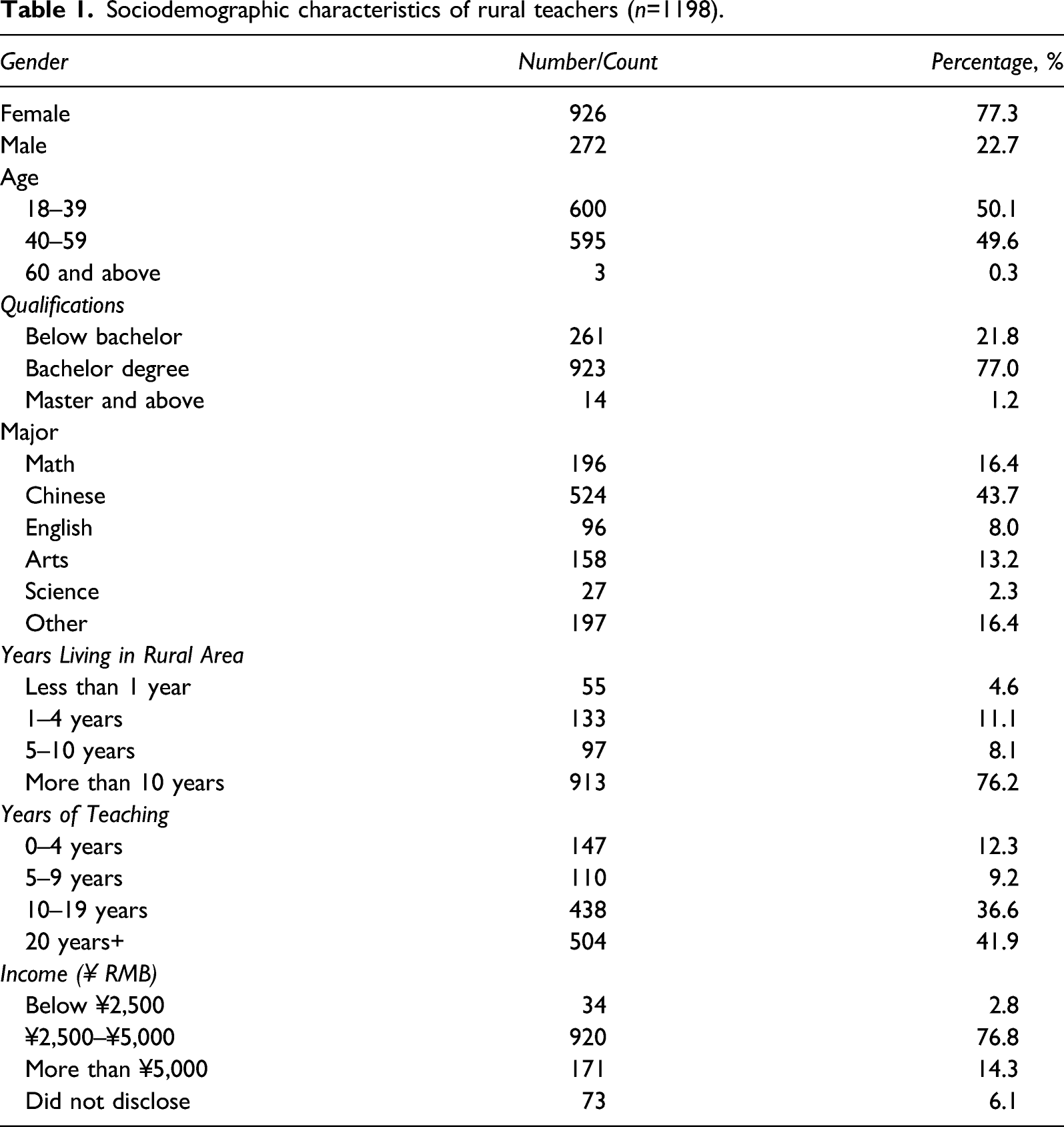
Sociodemographic characteristics of rural teachers (n=1198).
After the latent profile analysis was performed, the sampled rural teachers were classified into five significant profiles (see Figure 1). The profile 2 (languishing) and profile 4 (thriving) were labelled as ‘languishing’ and ‘thriving’ rural teachers, respectively. Languishing was negatively associated with psychosocial functioning and emotional health, whereas flourishing and moderate mental health were positively associated with wellbeing (Keyes 2002). Thriving teachers had higher positive scores across all general teacher wellbeing and professional wellbeing dimensions, while the profile of languishing teachers had high negative scores on all eight constructs of teacher wellbeing. This latter group were most at risk of attrition; that is, they were more likely to leave rural schools or even leave the teaching profession completely. This suggested that this profile of teachers needed more consideration for improving all aspects of their wellbeing. Latent profile analysis results on teacher wellbeing.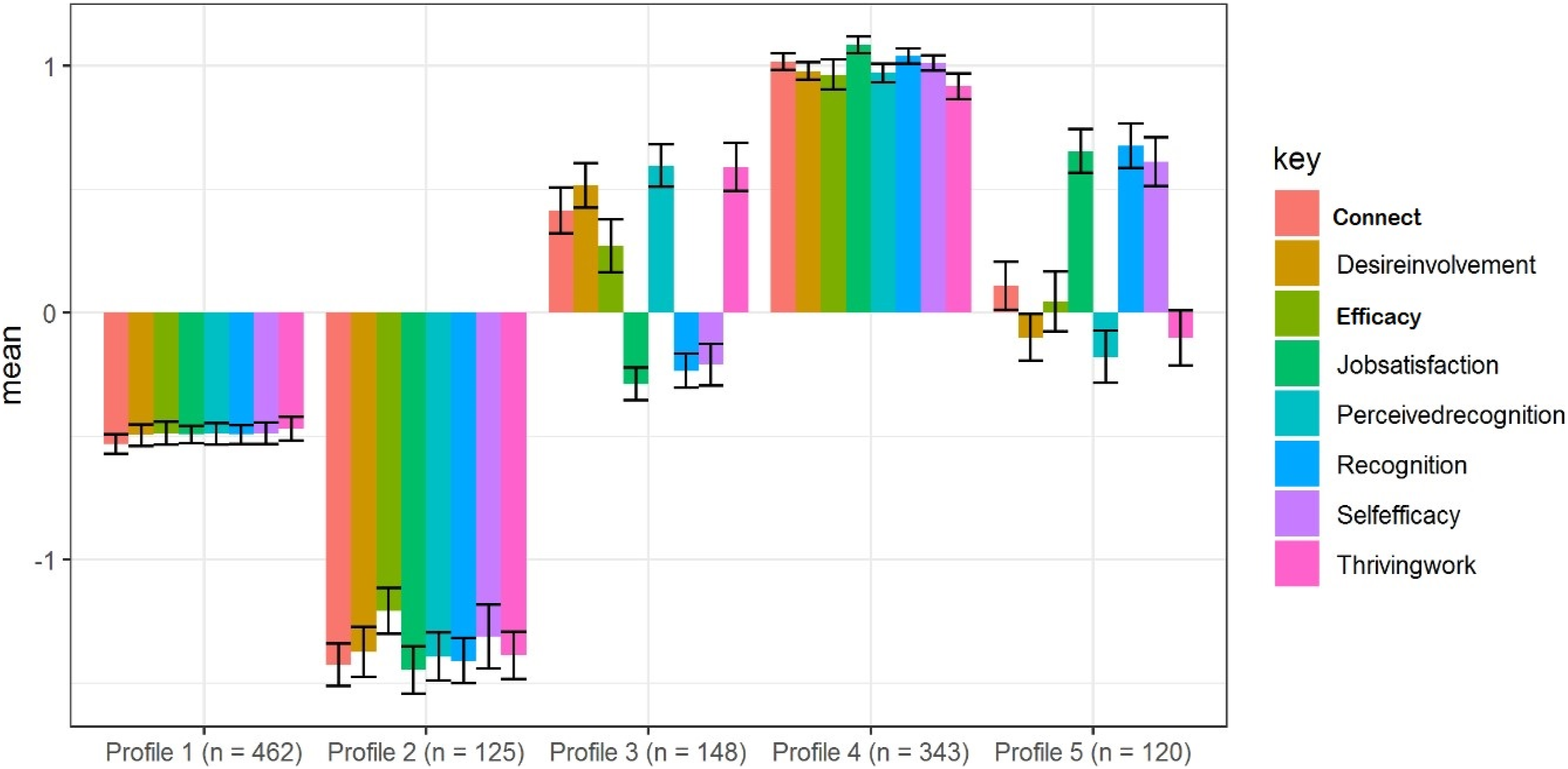
The profile 3 (personal wellbeing driven teachers) scored higher or positively on general personal wellbeing constructs (connectedness, desiring of involvement, efficacy, thriving at work, perceived recognition). These formed the dimensions of teachers’ subjective and psychological wellbeing, but had negative scores on the constructs of teaching efficacy. Recognition (recognised as a highly skilled teacher) and teaching job satisfaction belonged to the dimension of teachers’ professional wellbeing. This profile of rural teachers suggested they were more likely to stay in rural schools for many years or even decades. This was because these teachers had shown a good rapport with colleagues, students and parents. Moreover, they were respected as quality teachers; they were content with the standard of their professional practice; and they had little interest to improve their professional learning. For example, some teachers felt that information technology, multimedia education technology or modern teaching pedagogies and curriculum were too overwhelming for them. They preferred traditional teaching methods and had little motivation for teacher professional excellence. However, these teachers acclimatised to and enjoyed rural life, which motivated them to stay and teach in rural areas, despite the challenges.
The profile 1 (surviving teachers) remained in rural areas and had slightly negative scores across all dimensions of teacher wellbeing. It was possible to conclude that these teachers may be considered as mediocre teachers; however, after years of teaching in rural schools, they tended to lose their passion. Yet, with solid rural teaching experience, they were considered very professional and effective teachers. This profile calls for further investigation as these teachers may slide into the lower wellbeing group; but, if appropriately managed, they could thrive, especially with added years of teaching experience.
The profile 5 (career-driven teachers) scored highly on the three constructs of teachers’ professional wellbeing, with much lower efficacy and connectedness as part of their subjective wellbeing dimension. This group reported even lower scores (negative) on the three psychological wellbeing dimensions: 1) desiring involvement, 2) thriving at work, and 3) perceived recognition. They had slightly higher scores on subjective wellbeing. One interpretation for this was that these participants became highly skilled professional teachers, and in the process they may have felt good about themselves; yet, they were struggling to find meaningfulness in their teaching careers in rural schools. This may be explained by the number of years they had taught, as they may have gradually lost their passion for teaching. However, when compared to teachers who remained in the rural areas and scored negative for all personal wellbeing and professional wellbeing dimensions (surviving teachers), career-driven teachers were still pursuing teaching excellence.
Profile five were special post teachers who had just graduated from university, they had little teaching experience and had chosen to start their teaching careers in rural schools. Further, there was evidence to suggest that they were not happy to stay in the rural areas to teach. Thus, this group of teachers were eager to improve their teaching skills and effectiveness, were goal-focused, but planned to leave rural schools for better conditions at more urban schools after they obtained teaching experience.
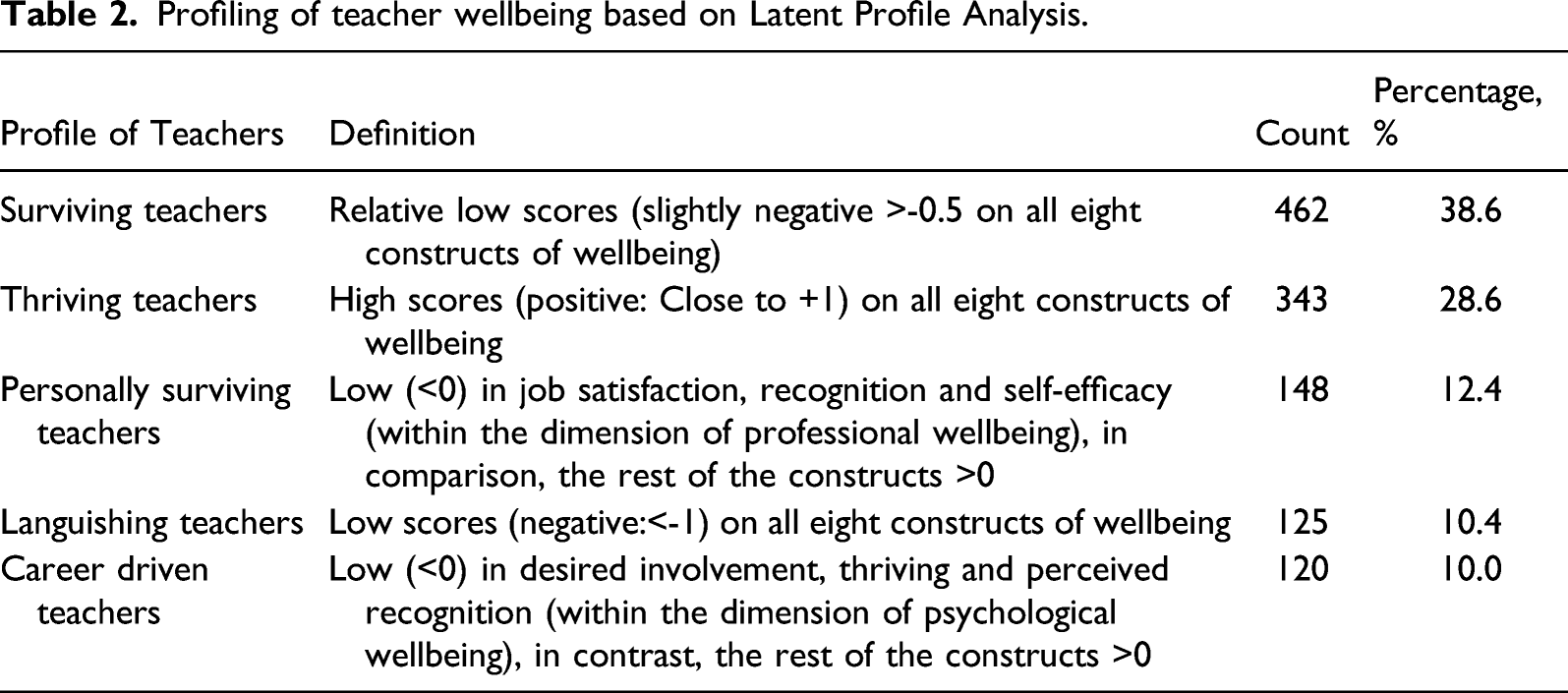
Profiling of teacher wellbeing based on Latent Profile Analysis.
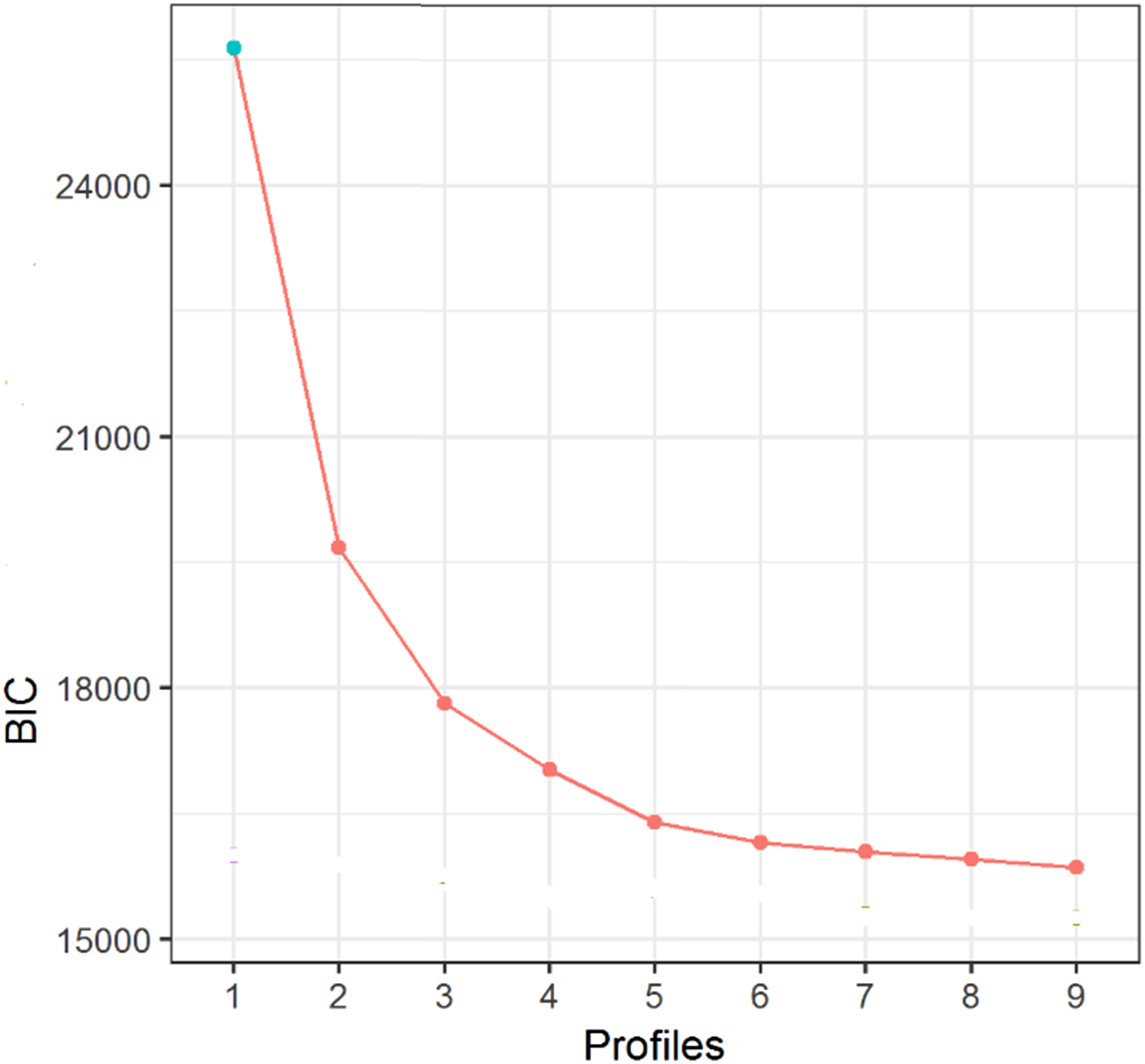
BIC model fit.
Discussion and conclusions
In this study, we employ a quantitative latent profile analysis to explore the profiles of teachers’ wellbeing in rural China. On a macro level, this study elucidates the sociological and psychological patterns with five profiles of rural Chinese teachers’ wellbeing. This echoes the qualitative study of Cui et al. (2022) which reveals the combinations of positive and negative experiences of rural Chinese teachers. One of the most concerning results from the study highlights the ever-increasing risk of rural teachers leaving teaching. The results show that 10% of the rural teachers who took part in the survey are languishing, and a further 39% are surviving. This reflects almost half the rural teachers surveyed in this study. These findings imply that many rural teachers may leave the profession which would adversely disadvantage students. The findings of this study may be particularly beneficial to policymakers looking to develop evidence-based rural teacher retention strategies and consider non-material methods to enhance teacher wellbeing.
As the authors show, the daily complexity of teacher wellbeing is a significant global issue. As policymakers develop strategies to recruit, retain and progress teachers, the plight of the rural teacher demands attention. China’s research on teachers’ wellbeing is at its infancy. Studies have focused on student wellbeing, but few have investigated teacher wellbeing. Many studies adopted a deficit lens to teachers’ wellbeing (e.g. Reid et al., 2010; Zhao & Fu, 2018). Policymakers, school leaders, researchers and the broader community are becoming more aware of the importance of teacher wellbeing and how it relates to workforce issues like teacher retention; positive school climate, culture and student engagement; and sustainability of teachers in the profession. We argue that there needs to be increased attention on measuring teacher wellbeing in rural communities. This will enable policymakers to develop effective workforce planning strategies and recruit, retain and progress the most talented teachers to be of the highest quality in promoting positive learning outcomes for all children. The present study supports the assertion that rural Chinese teachers’ wellbeing is a unique phenomenon.
Limitations
This study has inevitable limitations. The sample is not randomised, teachers took part on a voluntary basis, and the survey data collected was self-reported. Therefore, the data may involve personal bias and subjectivity. As the study was undertaken in one province, it does not represent rural teacher wellbeing for the whole of China. Further, the sample does not include teachers who are teaching in rural schools with a high degree of poverty.
Footnotes
Declaration of Conflicting Interests
The author(s) declared no potential conflicts of interest with respect to the research, authorship, and/or publication of this article.
Funding
The author(s) received no financial support for the research, authorship, and/or publication of this article.
