



Abstract
The marketisation and internationalisation of higher education (HE) in several national contexts has led to the development of thinking about HE access as ‘buying a service’. This has led to increased prioritisation among universities regarding how to promote their reputation among their targeted audiences. However, recent literature regarding reputation management (RM) in Chinese HE is mainly conducted from an international perspective; this means the analysis is usually focused on international students in Chinese universities, and thus the other aspects such as the rationale and strategies of RM in Chinese HE remains relatively underdeveloped. In this article, we conduct a systematic literature review using the PRISMA convention to illustrate the meaning(s) of RM in Chinese HE and particularly how it is understood and developed. The review comprises branding and RM in HE. Moreover, we contribute to the theory of marketing for HE by proposing a new framework arising from the review: RM as an active-reactive continuum in which we provide a new perspective to characterise and better understand RM, particularly in the Chinese context. Active RM refers to how universities promote themselves; reactive RM refers to how universities cope with crises or other forms of negative events. This contribution helps the field understand Chinese universities’ RM practices and strategies nationally and internationally.
Introduction
The marketisation and consumerism in HE has been acknowledged worldwide, which renders the competition among universities is greatly intensified (Naidoo & Whitty, 2014). However, developing countries tend to be labelled as ‘catching up’ because of the prevalence of ‘global standards’ facing global competition (Tan & Goh, 2014); the way they react depends on their ‘strengths and weaknesses’, especially in the HE field. The manifestation of this tendency in Chinese HE has been highlighted, with its policies around building ‘world-class universities’ and promoting the ranking positions of Chinese universities to boost the reputation (Tan & Goh, 2014). On this note, Han and Zhong (2015) suggested that for Chinese universities, it is necessary to possess deep understandings of other leading universities in the globe to achieve long-term development and expand their influence.
Global competition could also lead to the increased expectations among audiences. Miotto et al. (2020) suggested that this leads to universities shouldering greater challenges: how to stand out and be representative of national competence at the same time. They further argued that ‘legitimated and well-reputed institutions have easier access to resources since stakeholders trust them more than their competitors’ (ibid.). Hence, how to benchmark the quality of universities’ education performance and brand universities domestically and globally has become a key issue in this competition for all stakeholders (Christensen et al., 2019). However, education is regarded as ‘intangible’, thus its evaluation in HE is largely reflected by reputation and branding effects (Jevons, 2006). Therefore, to better attract stakeholders’ support and resources, including potential growing student numbers, public and private funding, RM has grown in importance in HE. Furthermore, M. Allen (2021) denoted that given the various circumstances of universities, such as national and institutional contexts, how they respond to the benchmark criterion is even more complex. Also, the studies in non-western contexts are rarely conducted compared with studies in western backgrounds (Allen, 2021). Consequently, it not only implies the importance of studying the influence of RM, but also how it manifests in non-western countries, in this case, China.
In the Chinese context, the attempts of the central government and universities to attain global competitiveness to various audiences have drawn a growing attention of scholars and policymakers, including funding and governance strategies, recruiting policies (faculty and students) and reforms in teaching (Larbi & Fu, 2017; Schrum, 2019; Yousaf et al., 2020). Chinese universities have adopted a series of approaches to promote themselves, including encouraging faculty to publish on international journals and collaborate with scholars/universities worldwide, recruiting foreign students and academics, establishing branches of overseas universities in China and Confucius Institute in other countries (Feng, 2013; Hammond, 2016; Larsen, 2016; Lo & Pan, 2021; McDougall, 2020; Postiglione, 2015). Chinese universities think that their efforts can be well demonstrated with the improvements in the global ranking positions (Wang& Chen, 2014; Li, 2021) and the pursuit of higher rankings can facilitate the development of universities from certain degrees including reputation (Kauppi, 2018).
However, there continues to be a scarcity of systematic studies of RM in HE (Plewa et al., 2016); moreover, recent literature mainly discusses the benefits of a positive reputation of universities to justify increasing tuition fees, recruitment of students and building better networks, etc. (Civera et al., 2020; Kaushal & Ali, 2019; MacLeod & Urquiola Soux, 2015; Suomi et al., 2014). These studies are done largely in western contexts; the general understanding of how reputation is managed in Chinese HE has been neglected, with little to no treatment of their rationales about how they promote reputation. Moreover, the existing China-specific studies are concentrating on the significance of internationalisation for Chinese universities instead of revealing the comprehensive outlook of RM in Chinese HE. For example, the strategies for recruiting and governing international students in Chinese HE is highlighted by Pan (2013), Hong and Hardy (2022), which is nation-directed financial support and reform of curriculum for international students. Yousaf et al. (2020) illustrated the connection between the nation branding and recruiting international students to China. Wen et al. (2022) pointed out that to appeal to more foreign students, Chinese universities differentiate the living condition and scholarship policies between foreign and domestic students, hence foreign students are perceived as ‘better’ regarded. Nevertheless, they did not explicitly connect these efforts to RM. Yao et al. (2019) explored the connection between university branding and students’ identities. In other words, ‘students’ are centred in the current studies on RM, and the gap arises regarding how other stakeholders may impact Chinese universities RM.
This article addresses this gap by answering the following research questions: 1. What are the common understandings of RM in the field of HE, particularly in the Chinese context? 2. How do Chinese universities perceive the concept of RM and how do they implement this?
It addresses these questions through a systematic literature review on the topic of RM with a specific attention on the Chinese HE sectors. The overall result is a proposal of a new framework to mobilise RM which highlights two aspects on a conceptual continuum - active/reactive management.
Method
A systematic literature review is employed in this study, and it follows the framework proposed by Moher et al. (2009), which is named Preferred Reporting Items for Systematic Reviews and Meta-Analyses (PRISMA), this checklist illustrates specific steps and elements that should be included in a systematic literature review. Regarding to this research, PRISMA generally requires the researcher to illustrate the protocol, eligibility criteria, information source, study selection and data collection process in a flowchart.
JSTOR and the China National Knowledge Infrastructure (CNKI) are selected as the databases for this study, with a supplementary search using Google Scholar. The rationale for this choice is twofold: JSTOR is comprehensive, and it provides access to multiple journals and books from various fields and regions; CNKI is the most commonly utilised academic research database based on the Chinese context (Luo et al., 2021; Tong et al., 2018; Zhuang et al., 2021). In addition, initially we considered Web of Science and Scopus as the database choices, but JSTOR generated a larger search result using the key words we employed and thus we decided to use it. Moreover, Gümüş and Esen (2020) pointed out that in order to optimise the advantages of having access to different databases, adopting a keyword searching strategy instead of merely researching among some core journals can enable the researcher ‘to obtain a large set of publications’.
We then identified the key terms used in searching to further locate the related studies, the initial selected words are ‘reputation management’ and ‘Chinese university reputation management’ in the English database, ‘声誉管理’ (RM) and ‘中国大学声誉管理’ (Chinese university RM) in the Chinese database. However, because the term ‘university’ is not the universal usage in the literature, we expanded the searching scope by using terms ‘higher education’ or ‘tertiary education’ in the English database. Given this term does not have other Chinese alternatives, we did not go through the same procedure with Chinese database. Additionally, during the searching process, ‘branding’ is frequently mentioned in English literature, hence we included this in the relevant search results as well. This trend was not found in Chinese literature, and we did not search for ‘branding’ in CNKI. After validating the key words, the preliminary search yielded 1290 documents, with 1234 pieces of literature from JSTOR and 56 pieces of literature from CNKI. We further refined the scope by setting the exclusion criteria, excluding studies published before 1990 as well as content the researchers could not digitally access. The rationale for beginning the search in 1990 is that in China, the Ministry of Education of People’s Republic of China (MOE) started to further HE reform, which enables the HEIs to expand influence and develop reputation as part of the national agenda (Chen, 2003).
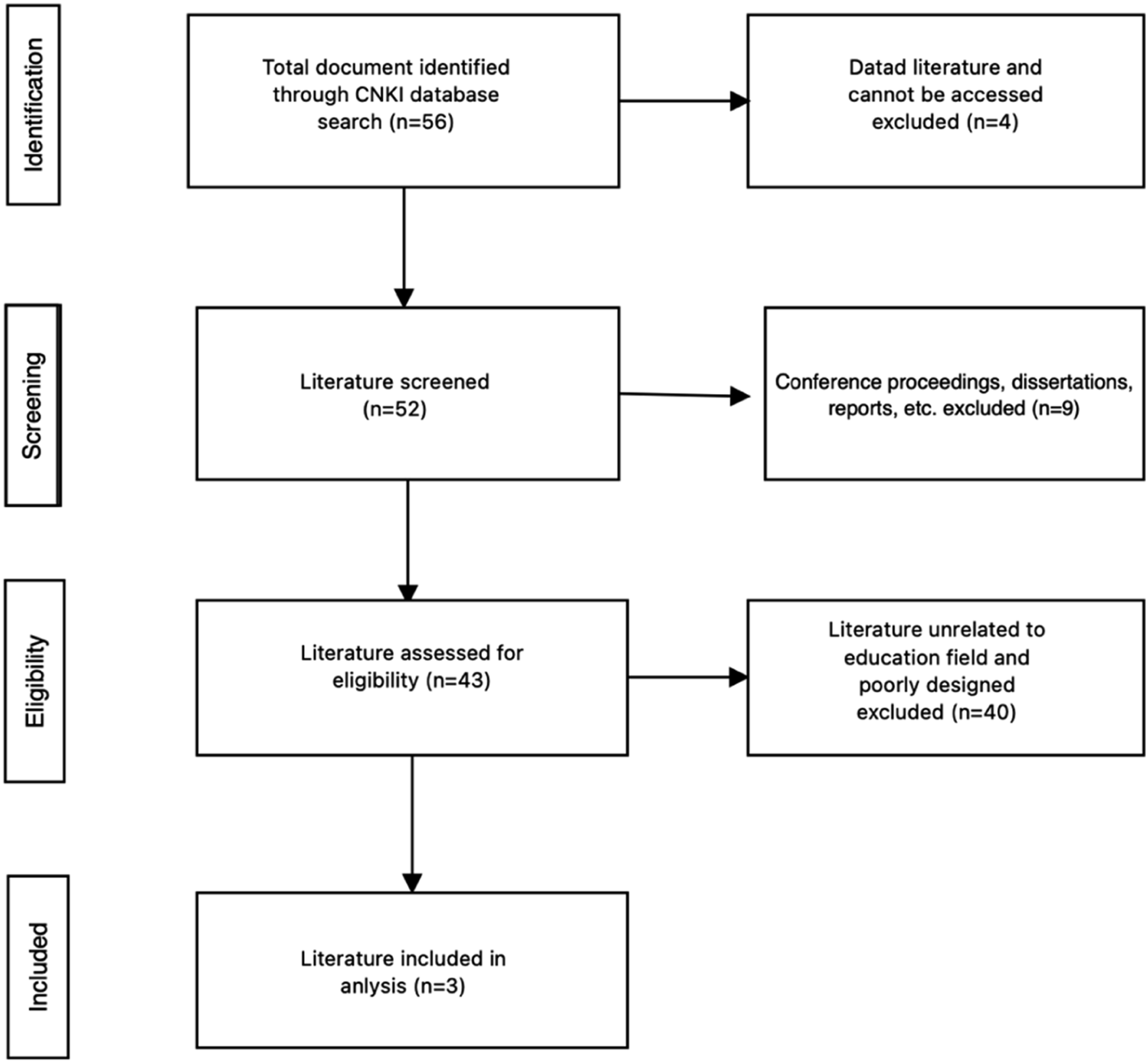
Our approach resulted in 1170 retained sources. Only journal articles and book chapters are included to procced. Furthermore, we include studies that are relevant to education field. Finally, we excluded poorly designed research (Byrne, 2001; Williams, 2015), such as studies that do not rigorously illustrate their methodologies or theoretical backgrounds (Hammarberg et al., 2016). Thus, it results 53 pieces of literature were then further identified in the analysis procedure. In addition, all the studies included in the analysis are journal articles and book chapters. Figure 1 illustrates the screening process of English and Chinese databases. Additionally, Figure 2 Shows the screening process of the within the CNKI database results, which indicates that most of the RM studies started after 1990 and that poorly designed literature is common on this topic. The particulars of the reviewed literature are presented in an Appendix. PRISMA flow chart for screening documents of English and Chinese databases. PRISMA flow chart for screening documents of CNKI database only.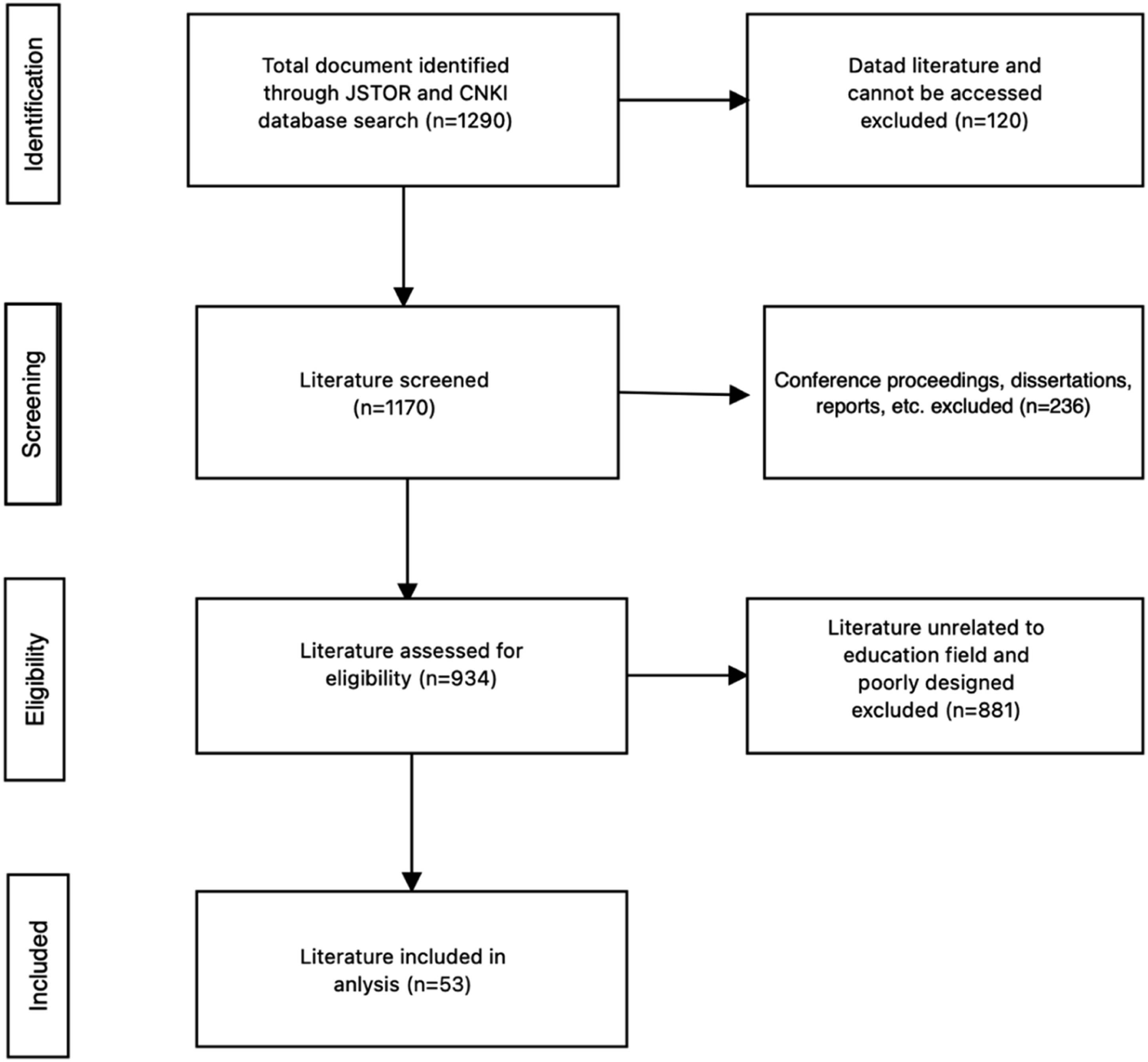
Supplemented Framework of Johnston et al. (2022).
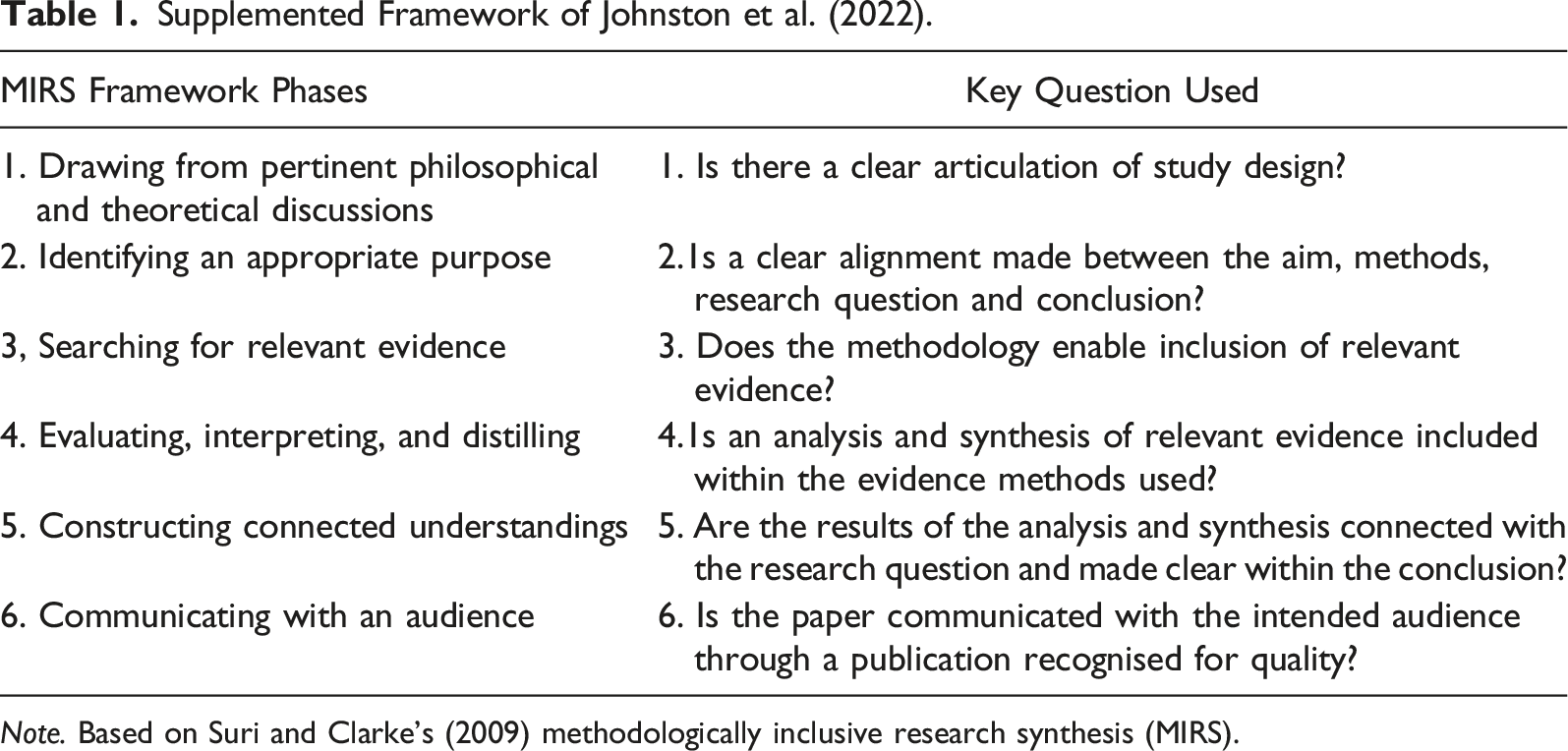
Note. Based on Suri and Clarke’s (2009) methodologically inclusive research synthesis (MIRS).
Summary of the included literature in this study.

Research Method
The 53 articles include six quantitative, 46 qualitative and one mixed method studies, and most of the qualitative studies are literature-based. Moreover, there are only three Chinese studies that are included in the analysis, which indicates the context of most studies is based on the ‘western’ milieu and little attention has been paid in Chinese academia regarding RM. Hence, this manuscript is designed to fill the gap between how Chinese universities manage their reputations and the rationale behind this phenomenon after identifying this gap.
We then extracted the results of the collected literature, then the findings and discussion sections were coded for thematic synthesis. After the inductive coding process, themes are identified to organise the findings of this study with respect to (1) how to define RM in a higher education context, (2) the link between branding and RM, (3) the current situation of Chinese universities’ RM and these themes are illustrated in detail in the next section.
Results
Results related to the research topic are demonstrated and summarised in this section, Figure 3 provides a thematic overview of the analysed literature and all Chinese language sources are marked with a ‘C’ after the coding number. ■■■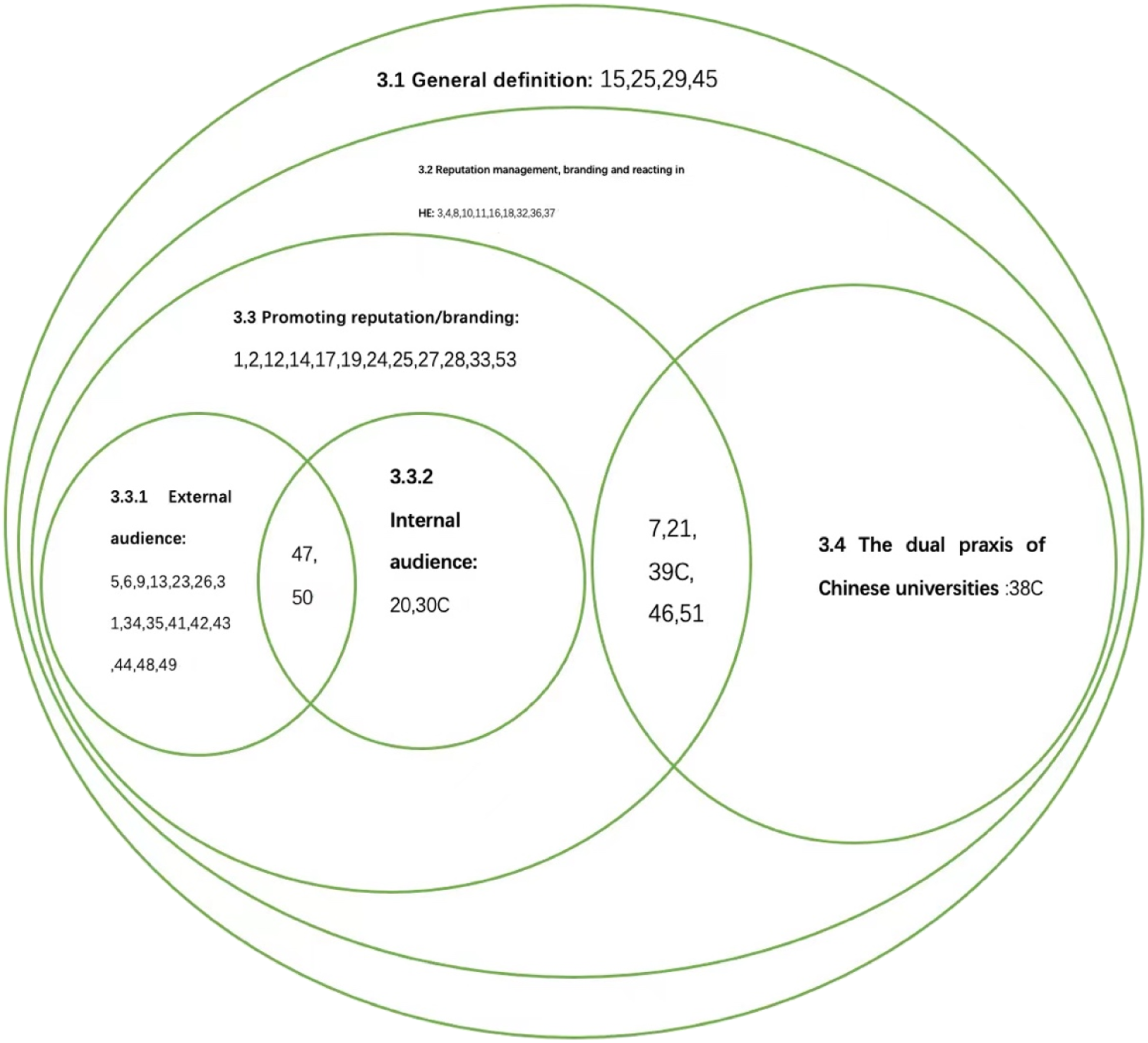
General Definition
Carpenter (2010) defined organisational reputation when he discussed its influences on governmental actions; without specifying the field, he stated, ‘Reputations are composed of symbolic beliefs about an organization—its capacities, intentions, history, and mission—and these images are embedded in a network of multiple audiences.’ (p. 33). Kelley and Thams (2019) also suggested that corporate reputation is important: ‘the value of reputation is determined by the ability to meet the expectations of stakeholders with respect to what they as an audience perceive as important.’ Hence, Carpenter (2010) and Kelley and Thams (2019) both emphasised the element of ‘audience’, highly valuing the role of customers in the western context and focusing on external image. However, this varies in the Chinese context. Doorley and Garcia (2015) further simplify corporate reputation as ‘sum of images’, and the key elements composing reputation are ‘performance, behaviour, and communication’ (p. 4), which implies it is important for institutions to present themselves to the audience effectively. All definitions above are not exclusive to the field of education: given that commercialised education worldwide has gradually changed the university governance landscape (Fielden, 2001; Hazelkorn, 2011a; Hazelkorn, 2011b; Mittelaman, 2018; Nielsen, 2012; Knight, 2013; Spring, 2008), similarities between university and corporate operations exist. These definitions provide an initial point of reference in this study, which means the reputation of a university depends on how it presents itself to the relevant stakeholders based on its achievements, goals, and actions.
Bleiklie (2014) suggested that HE policy, including how to advertise university is connected to the national agenda; heterogeneities exist, even within European countries, which further suggests that the reference values of the aforementioned literature are limited, and there is a need to study HE policy in Chinese context. Bok (2013) further pointed out that universities possess the capacity to attract ‘nontraditional students’, such as senior citizens or employees who desire to improve their skills, implying the audience of a university’s reputation is diverse. In this respect, Davies et al. (2003) distinguished between the different audiences that the university’s brand should appeal to, with it being viewed by various employees and customers, domestically and internationally. Additionally, the definition offered by Doorley and Garcia (2015) stresses that there are different aspects of an institution that can be presented, each offering a specific perspective of the university. At the same time, the reputation of a university can be easily affected by negative events compared with the efforts that are attempted to promote it (Fortunato, 2008).
To summarise, the concept of RM takes its origins from organisational studies. The literature discussing the RM in HE is limited, but it seems the element of ‘audience’ is the key to building reputation. The current literature is mainly focused on non-Chinese contexts, which means more diverse research contexts need to be included in this field.
RM, Branding and Reacting in HE
During the screening of the literature, we noticed that branding and RM tend to appear at the same time under the search of ‘university RM’ or ‘HE RM’, indicating they are not usually discussed separately. For example, Newman and Jahdi (2009) examined the key aspects of improving competitiveness under the premise of marketisation of HE, although they did not specify the differences between promoting reputation and branding. Moreover, Kowalczyk and Pawlish (2002) suggested that reputation can be regarded as a tool for measuring the quality of an institution’s brand, which means the concepts of branding images and RM are intertwined and, generally, the same. Fill and Roper (2012) further suggested that ‘the brand is a repository of the organisation’s reputation’, which means that whether the reputation of an organisation is benign or malignant, it is viewed as a part of its brand. In a nutshell, branding and RM tend to be associated, regardless of the field of research.
Christensen et al. (2019) expanded RM and branding into the HE realm, suggesting that university’s central aim is the projection of its history, capacity, throughput, and outcome. Waeraas and Solbaak (2009) also suggested that the initial and fundamental step of branding a university is to locate and publicise its identity, i.e., ‘its essential and unique characteristics’, because branding means presenting the distinguishable attributes, and elucidating its identity means clarifying these attributes, which also implies universities need to take initiatives to brand themselves. To elaborate, their study explored how branding process worked within a specific university; they acknowledged that the significance of identity for the university is more than the core of branding, it also presents the essence, which means discovering the identity is the necessity of branding but not vice versa. Hence, to brand a university, strategic and active steps should be taken, and discovering what a university ‘stands for’ is the center and first step (Waeraas and Solbakk, 2009). There are other studies that acknowledge that locating the identity of an organisation possesses inner significance, such as enhancing employees’ recognition (Davies et al., 2003), yet making known its identity is not contractionary with realising and increasing its internal value. In doing so, the core value of an institution and the audience it attracts can be demonstrated. They also point out that this identity is significantly linked with the institution’s history and that it can evolve with time, which means the university’s identity may be complicated to locate, and that analysing it requires consideration of the past and current milieu.
Diamond et al. (2009) agree with the statement that the identity of a brand is connected with societal economy, policy, and culture. While their study is not exclusively conducted within HE field, the findings have reference points: they analysed how the company utilised culture to appeal to customers, including advocating gender equality to attract female customers, and creating different characters with various economic and political backgrounds to adjust to a variety of customer groups. Diamond et al. (2009) conclude that by adopting different branding strategies and accommodating identities that adhere to the social condition, their branding was undeniable. Additionally, they suggest that, in modern society, the identity of a corporation is more complicated than ever because it is influenced by a series of factors such as the economy, culture, and political environment, making it difficult to fully capture the identity; such complicity renders the identity the power source of the brand.
Regarding the connection between branding and RM, Steiner et al. (2013) proposed a multidimensional model of university branding named the identity, image, and reputation model (IIR model), which denotes a university that has a clear organisational and symbolic identity; the former refers to the cultural and structural level of a university’s essence, the latter means the layout of the campus also reflects a university’s identity. Furthermore, Steiner et al. (2013) distinguished between the image and reputation of a university, with its image being a short-term perception compared with its reputation. To summarise, a considerable number of overlapping studies in branding and RM; when considered together, there is a clear distinction, such that branding is seen to represent an active approach in promoting universities’ visibility, and locating identity is the key to branding success; RM refers to a broader range of activities.
Promoting reputation/Branding
External Audience
Because the identity of a university is multi-dimensional, the dimensions could be utilised to attract and address various audiences separately (Lowrie, 2007). For example, Chapleo (2011) stated that UK universities have operated as corporations because they attract international students with their high global rankings, increasing their revenue and maintaining their functions; their ranking position can be used to appeal to the international student audience.
Under the premise of consumerism, the shaping of universities’ brands is directed by the HE service competition, which means the better service universities can provide, the more stakeholders they can satisfy, which means they can build better reputation and brand (Aspara et al., 2014; Donoghue, 2018). Concerning the services universities can offer, Aspara et al. (2014) suggested that this includes quality education and high-profile faculty. However, their study is designed in a European context, which reiterates the trend that most current literature is mainly conducted in the US or UK context (Breault & Pérez, 2012; Dholakia & Acciardo, 2014; Delgado-Marquez et al., 2013; Wedlin, 2008; Furvey, Springer & Parsons, 2014; Sá & Sabzalieva, 2018), yet their conclusions appear to be generalised. Namely that all universities are presumed to appeal to more international students to increase their revenue; despite different policy contexts that reflect various governing approaches.
RM in HE continues to be an emerging field and requires further development. However, the current studies are currently organized around international students as the main audience (Borden et al., 2019; Chapleo, 2010; Gümüş and Esen, 2020; Hazelkorn, 2014; Idris, 2014; Joseph and Spake, 2012; Tas and Ergin, 2012), because the majority of these studies are conducted in a western context, where they significantly rely on international students to provide financial resources (Chapleo, 2011; Feng, 2013). Hemsley-Brown and Oplatka (2006) pointed out that the intensified central-governing of the HE system globally, marketisation in English-speaking countries’ tertiary education is most evident in the US, the UK, Canada, and Australia, and those countries are highly motivated to attract international students.
Current research has involved Chinese international students, but studies regarding RM in Chinese universities are very rare. Chinese international students are involved in the discussion of RM in western universities as their audience, whereas the lack of studies specifically investigating how Chinese universities manage their reputations needs further attention. Therefore, the analysis regarding the brand identities of Chinese and western universities should be explored, given that various social conditions and marketing strategies are likely to be different because their student audience is not international. Thus, there is a necessity to conduct context-specified research on RM of universities
Unlike ‘western’ universities, internal non-international audiences are particularly important to Chinese universities, and that is related to practices of Chinese governance. To elaborate, since the implementation of ‘Open Door’ policy in the late 1990s, China has greatly promoted access to mass education because it requires more educated people in various areas, at the same time, this phenomenon leads to the participation of global competition regarding education (Chou, 2016; Hammond, 2016; Huang, 2015). Consequently, how Chinese universities develop their international reputation has been given more attention in the last two decades (Chou, 2016). Deng (2016) pointed out that the efforts of Chinese HE in coping with, and competing in, this globalised era are a ‘collective effort’ instead of a simple combination of ‘Confucian values and western paradigms’. That means the ideology and governance model of Chinese universities are different from those of western universities, being rooted in ideological totalitarianism that shapes every aspect of Chinese HE, including how they manage their reputation (Hong, 2022).
Internal Audience
Schwaag Serger, Benner and Liu (2015) analysed the aspects of Chinese universities’ governance, including macro-governance from the central and local government and Communist Party, micro-governance from the human resource system and evaluation mechanism, external impacts including industrial relations, and a few descriptions of Sino-foreign collaborations. Also, there is a dual alignment in Chinese universities: control from the Communist Party and institution administration (ibid). Despite their study denoting the importance of leading research and attracting talents, they did not expand their analysis to explore dimensions of reputation and marketization. This is in line with Amsler and Bolsmann (2012), who suggested the pursuit of higher rankings for Chinese universities is rooted in the national goal, because the ranking system is flawed, and the global ranking in HE is deeply linked with national competence.
Ma and Christensen (2019) examined the differences and similarities in RM in Chinese universities from three perspectives: the instrumental perspective, the cultural perspective, and the myth/neo-institutional environmental perspective. The instrumental perspective refers to ‘RM being dominated by the top leadership, either in a hierarchical way or through negotiations’; cultural perspective focuses on the history of an institution and its archival connections; myth or neo-institutional environmental perspective refers to the external condition an institution operates in. From their analysis, They concluded that the RM of Chinese universities is driven by national agendas and international trends: universities shoulder the responsibility of ideology and political education, which further implies they need to cater to the internal audience, but, because those universities surveyed were listed in Project 211, they also had a focus on international reputations. They also found that Chinese universities tend not to emphasise their cultural heritage advantages because, in China, the governance is relatively more centralised compared with ‘western’ universities, which means they are regulated under a similar set of guidelines. The RM of Chinese universities demonstrates homogeneous traits; in other words, there are few differences in their strategies for promoting themselves. However, their study is from a holistic position, without specific explorations regarding the ideology of education or internationalisation in Chinese universities’ RM, which is another reason to conduct further research in the area. Also, the implementation of RM strategies was not explored by Ma and Christensen (2019), indicating another area of future research.
Crisis Management of Chinese Universities
Regarding the praxis of Chinese universities, the term ‘crisis management’ came up during the search. On the one hand, He (2007) proposed the following principles to which they needed to adhere without pointing out the specific RM activities: (1) independent, (2) concentrate, (3) consistent, (4) truthful and (5) transparent principles. To elaborate, firstly, Chinese universities are expected to brand themselves according to their own distinctive historical backgrounds, present resources, and geopolitical conditions, hence they can present their characteristics in the education market. Secondly, the concentrate principle requires Chinese universities to focus on limited goals with their resources instead of attempting to impress the public as a ‘perfect’ institution. Thirdly, the consistent principle refers to the governance aspect, which means the practice of marketing should be aligned with the goals of the leadership. The truthful and transparent principle means the process of decision-making and the delivery of the marketing strategies should be open to public supervision, which could decrease the possibility of false branding.
On the other hand, she specifically pointed out that, except for promoting activities, universities must set up a warning mechanism for crises, i.e., how to react to the damaging event should be emphasised in general RM. For example, the usual crisis signals could be: staff disregard for university activities, frequent staff turnover, reduced student enrolment, reduced positive social and media attention, and poor communication with the government and media. Once a crisis has occurred, it should be resolved in a timely and effective manner in order to maintain the reputation of the university. To summarise, she firstly suggests there should be a dual praxis of RM in HE, namely developing reputation and controlling the damage of protracted negative events at the university, and this is the foundation of the new framework we propose in the following section. However, her study failed to link national governance and actual RM activities, which implies her conclusions are limited and subject to further debate.
However, there is further literature discussing how to enhance the reputation of Chinese universities instead of further investigateing the value of crisis management. For example, Duan (2008) listed the aspects of evaluating Chinese universities’ reputations: education service, financial condition, marketing performance, creation in governance, working environment, and social responsibility. However, Duan (2008) merely listed the dimensions that can be used to benchmark the reputation of Chinese universities, she did not conduct further empirical studies on this, which means the investigation into Chinses universities’ RM requires further evidence. In addition, the studies of He (2007) and Duan (2008) are conducted from a general perspective and merely position the ideal status of RM in Chinese HE, the specific actions are not categorised, which is also the foundation of the framework we propose in the following section. Wang (2017) also introduced the evolution of Chinese HE in recent years since the ‘Open Door’ policy, however, in spite of his brief description of reversing brain drain via recruiting talents worldwide, he merely focused on scholars instead of a holistic version of international students and academics. Also, the number of research articles regarding RM in Chinese universities in Chinese publications are rare (based on the searches on CNKI), which implies limited attention has been attached to this topic in Chinese academia. Furthermore, it indicates the research gap in crisis management in terms of Chinese universities’ RM.
Furthermore, Figure 4 shows the difference in the outcome of the review had we not included the Chinese literature. Under this circumstance, with the absence of three pieces of Chinese literature, crisis management would not be a separate section, but instead, would be a small part of the praxis of Chinese universities regarding RM because it would not be given the same importance as the element of promotion. In other words, based on our screening criteria for the literature, the element of crisis management was briefly mentioned as a part of developing reputation if the Chinese literature was not reviewed. Therefore, although the differences between an external and internal audience could be identified, which differentiate western universities and Chinese universities with respect to RM activities, the duality of RM would remain unseen. Our review integrates the perspective of Chinese crises management as part of RM. This underpins our proposal for the field to understand RM in terms of an active/reactive framework. Our review broadens the discussion of RM beyond promotional activities which are prevalent in the literature. Our review shows that the balance between promoting reputation and maintaining reputation when a crisis occurs cannot be achieved. Both active and reactive forms of RM are required in such a case. Outlook without Chinese literature.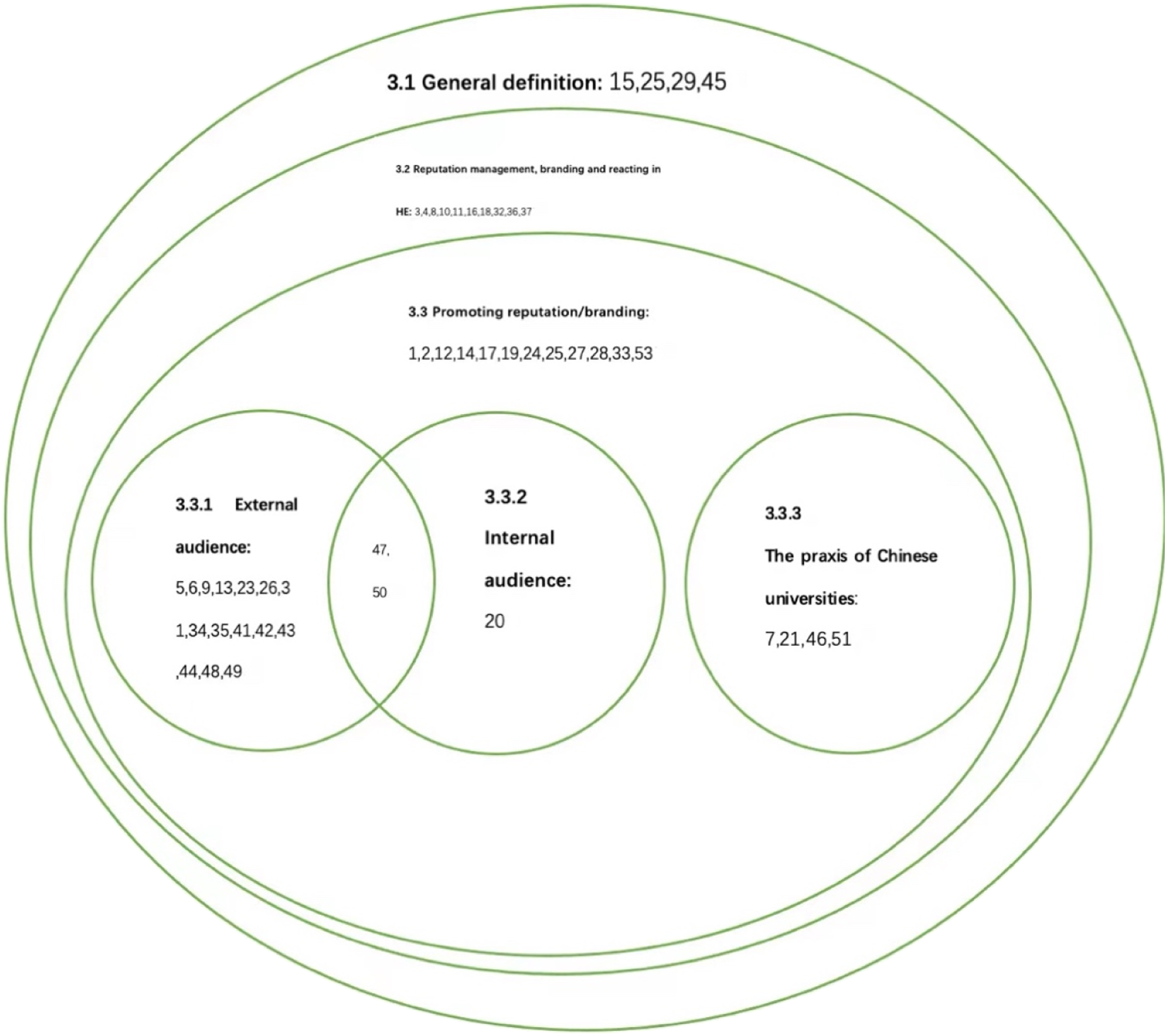
Discussion
From the reviewed literature, the general definitions of RM in HE is an extension of business studies. Also, there is a certain level of ambiguity regarding RM studies in the Chinese context. For example, despite RM, branding, and the identities of universities are frequently discussed together, these terms are seldom at the same time involved in Chinese literature. In addition, the dichotomy between developing reputation and crisis management exists, which indicates that in the discussion of RM, it tends to merely imply the positive aspect of it, i.e., developing reputation. This leads to a fragmented view regarding RM, which implies the proposal of this new framework can unite these two aspects, and hence a more comprehensive lens can be provided. Furthermore, there are more studies on this topic in English than in Chinese, and in the three pieces of Chinese literature that we reviewed, the definitions of RM/branding are referenced from western studies, not from the Chinese context. In addition, there is no in-depth case study on this topic in both Chinese and English literature, which implies a lack of comprehensive perspectives (Hamilton & Corbett-Whittier, 2013). Furthermore, in the limited reviewed Chinese studies, we discovered that the model of RM in Chinese HE is different from that of institutions with higher international rankings, which rely on international students significantly for revenue at the same time. Chinese universities need to cater to the external audience, i.e., governments, instead of the internal audience, such as students. Namely, given the distinctions of the audience, RM of Chinese institutions has its own traits, and it lacks a comprehensive framework to further the understanding of this phenomenon.
Hence, we propose a new framework for Chinese universities’ RM to contribute to the field: active/reactive RM. Figure 5 demonstrates the flow of generating this framework. In which the developing reputation and branding activities correspond to the active RM; the dual praxis of RM in Chinese universities includes the active part and crisis management, which we describe as reactive RM. The flow of generating the framework.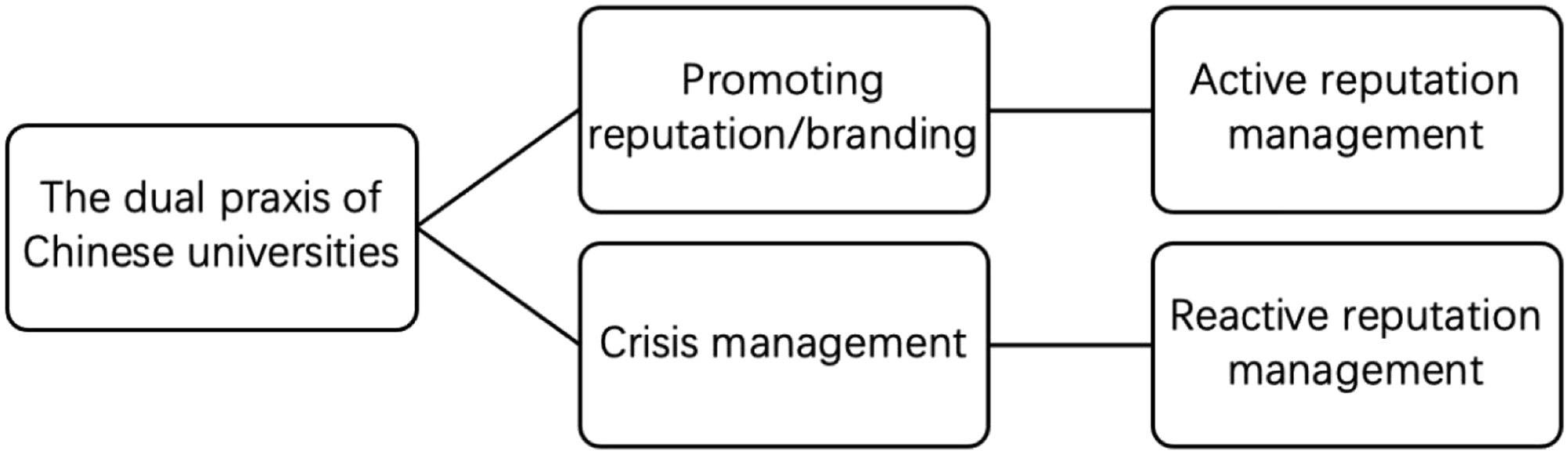
To elaborate, an active RM is linked with the efforts that universities invest in branding themselves, including locating and advertising their identities. Because in doing so, universities are enthusiastically making them known to the public, regardless of the audience. Reactive RM can be seen as a reaction to things that have negative impacts on universities, in other words, their reactions are meant to mitigate the pessimistic opinions of their targeted audience or even uphold their previous reputation, and they are undertaken involuntarily. Namely, reactive RM refers to activities implemented by universities to maintain their previous reputation when certain crises happen; active RM refers to actions designed and enacted to promote the reputation of universities globally and nationally to attract the audience they value, in this context, mainly the Chinese government. Respecting the distinction between active/reactive RM, we distinguish them based on the branding/RM actions’ outcomes. Given that the prevailing studies on Chinese HE’s RM are generally focused on elucidating the theoretical principals, with the aim of building a higher reputation, whereas the practical effects they can achieve or have achieved are rarely discussed. Moreover, the link between the actions Chinese universities adopted and the audience they desire to reach has not been clarified. Therefore, declaring the management results and linking them with their targeted audience can contribute to clarity and coherence in this field.
Furthermore, the rationale for this dichotomy is rooted in the power structure and the main audience of Chinese universities. The majority of Chinese universities are publicly governed, and private universities have been notably less regarded, both from the official and public aspects (Ma & Chirstensen, 2019; Ying et al., 2017; Qian, 2015), and this phenomenon can be manifested in the following dimensions. Firstly, compared with Anglo-Saxon and European universities, from the perspective of autonomy, Chinese universities have less freedom over administrative decisions, including enrolment numbers and quotas, program setting, tuition fee setting, disciplinary evaluations, degree approval, and marketing strategies, etc. This is because most Chinese universities are affiliated with the MOE or provincial ministries, along with a few of them affiliated with other central ministries, which means the HE system in China is deeply centralised (Ma & Christensen, 2019; Qian, 2015; Yang et al., 2007). This also means that Chinese universities strongly rely on financial support from the central and local governments because the private sector is marginalised under highly concentrated regulation (Yang et al., 2007). Hence, Chinese universities need to address the demands of the government, which means their RM is mainly intended to attract governmental attention, and convert it into funding resources. Secondly, the existence of dual leadership in Chinese universities reflects the embedded political structure in Chinese society, i.e., the principal’s responsibility system under the leadership of the Chinese Party Committee, especially, university Party Committee exercises overall leadership regarding major decisions (Yan & Guan, 2020). In addition, from the perspective of academic governance, the faculty senate, academic council, and Degree Grant Supervision Council are employed as ‘subsystems’ to supervise scholastic affairs (Shi & Wu, 2018). Whereas, given that the focus of this module is administrative power over Chinese universities instead of academic power, this academic governance is excluded from discussion. They also pointed out ‘the administrative power dominates the academic power, which runs against the inner logic of university governance’. Hence, Chinese universities not only need to educate and cultivate higher quality human resources, but also direct students along the default ideological and political pathway that adheres to the Chinese Communist Party (Ma & Christensen, 2019). In addition, they proposed that Chinese universities are deeply subjected to the central government and their agencies are constrained within its political control.
Regarding the RM of Chinese universities, their main audience is the central government and the Chinese Party Committee, because of their reliance on financial resources and the necessity of catering to political needs. This implies that the competition among Chinese universities is for more governmental and public funding, and tuition fees from international students are slightly regarded, which is different from the Anglo-Saxon universities in spite of the trend of marketing HE globally (Hong, 2018). Moreover, Chinese universities are in the process of decentralising in terms of governance since the beginning of the 21st century, namely, the central government is releasing executive power to the provincial government, and universities have been provided with more accountability. Shi and Wu (2018) also stated ‘…some HEIs previously administered by the central ministries have been transferred to the sole administration of MOE, while other HEIs previously administered by the central ministries have been transferred to the administration of provincial departments of education’. Nevertheless, Chinese universities are tightly regulated compared with Anglo-Saxon universities in terms of governing, raising, and allocating funding resources (Li & Yang, 2014). Alongside this decentralisation, the allocated funding from the central government to universities has been gradually reduced, which means universities are driven to attract other funding sources to various degrees, such as alumni donations, funding from private cooperation, revenue from students, etc., yet governmental funding remains the major source financially (Hong, 2018).
Chinese universities’ actions regarding active RM are greatly connected with governmental needs. This is similar to the efforts western universities invest in branding/reputation building for international students (their main audience) (Borden et al., 2019; Chapleo, 2011). To elaborate, Li and Kuerma (2001) pointed out that maintaining a benign reputation possesses decisive meaning in obtaining government funding. However, they failed to elaborate further on the rationale for this conclusion, such as the governance in Chinese HE. Moreover, regarding setting the university agenda, such as internationalisation, this is required by the Chinese government to enhance national competitiveness and promote social mobility (Duan, 2008; Fang & Cheng, 2020; MOE, 2001; MOE, 2015). In which, internationalising curriculum and faculty, pursuing higher global rankings are the major practical approaches that Chinese universities have taken to achieve this governmental goal (Huang, 2015; Li, 2017; Lin, 2020; Lo & Pan, 2021; Cheng, Liu &Wang, 2011; Chou, 2016; Deng, 2016), in this module, they are categorised as active RM. Duan (2013) also pointed out as one of the indicators of the university’s competitiveness, the amount of public funding, which indicates that in order to obtain a better reputation, HE institutions ought to make efforts in attracting more funding opportunities. Nevertheless, further analysis and the hidden causes of this phenomenon are not involved in her study, which denotes that the importance of the audience lacks recognition.
Regarding the implementation of reactive RM, crisis public relations and crisis management are the chief manifestations at Chinese universities. In the competition to gain governmental funding, Chinese universities need to build up their reputations to appeal to the central and local governments, especially for universities that are not regarded as ‘elite’ (Li & Kuerma, 2001; Shi, 2014). However, the literature on crisis management is similar to that on RM; the majority of studies are conducted in Anglo-Saxon contexts. In addition, they focus on the approaches implemented rather than the connection between crisis coping and RM.
Pearson and Clair (1998) defined an organisational crisis as ‘a low-probability, high-impact event that threatens the viability of the organisation… characterised by ambiguity of cause, effect, and means of resolution, as well as by a belief that decisions must be made swiftly.’ The presence of crises can undermine the reputation of HE institutions, for which certain people or organisations should be held accountable (Benoit, 1997; Works et al., 2021). We identified previous studies that concentrated on how universities can cope with crises, instead of building a connection between crises and RM. Fortunato (2008) analysed the strategies that Duke University (USA) adopted during a sexual scandal in 2008 (where a considerable number of female students had been harassed after they enrolled) and identified the importance of utilising media in public relations for rebuilding reputation. Fortunato’s study initially implied a link between crisis management and RM, yet a theoretical framework was not provided. Given the different major audiences of Chinese and American universities, which are government and international students respectively, what can Chinese universities do in crises, i.e., how HEIs conduct reactive RM to uphold their reputation, remains relatively less studied.
Prywes and Sobel (2015) generalised a seven-step coping mechanism in crises, with a focus on social media and training in leadership, yet it was based on American university circumstances. Regarding Chinese studies in the field of crisis management, they mainly discussed the types of crises that can happen without supporting empirical data, such as Shi (2014) and He (2015). However, He (2015) generalised the crises into three categories: firstly, crises caused by organisational misconduct, which means crises caused by policy failures or mismanagement, usually due to misconducting guiding principles, working methods, and operational mechanisms; secondly, crises caused by personal misconduct, such as phycological issues of students or teachers’ corruption; thirdly, crisis caused by unexpected evident, such as political or societal incidents. In addition, this is not evidence-based research, which denotes the necessity of conducting empirical studies in the Chinese context.
To summarise, we pointed out the existing theories regarding HE branding (Doorley & Garcia, 2015; Christensen et al., 2019; Steiner et al., 2013), the impacts of various audiences (Chapleo, 2011; Hemsley-Brown & Oplatka, 2006; Ma & Christensen, 2019), crisis management in Chinese HE (He, 2007; Duan, 2008)), on top of this, we offer an additional perspective drawn from our systematic review of the English and Chinese language literature on the issue of RM. Our proposal of an active/reactive RM framework integrates two aspects of how universities promote reputation/control damage to it, which means the dichotomy of the approach is avoided, and it further enables observers to review the RM activities of a university through a more united lens. Moreover, this framework considers the Chinese universities’ context, which fills an important gap.
Concluding Remarks
We acknowledge certain limitations of the study. Firstly, as a systematic literature review, it does not of itself fill the lack by empirical studies in this field, especially in Chinese universities. Second, the literature screening process involves a certain subjectivity, which is reflected in the chosen literature (Earnest, 2020). In addition, due to the limited databases that are employed, it is possible that related literature was inadvertently excluded. However, in spite of these limitations, we contribute to the general insights of RM in HE, especially in China, including international and national aspects. Furthermore, by proposing this new framework, it offers an integrated lens to review universities’ RM activities.
The proposed active/reactive RM framework aims to deepen the understanding of Chinese universities’ rationale for managing reputation, which is distinctive from that of western universities based on their main audience and governance structure. Our findings suggest the RM in Chinese HE is an emerging and topical field that requires further empirical work.
Given that this is the first systematic literature review on RM in Chinese HE, the findings and the newly proposed framework contribute to furthering our understanding and improving RM and highlight the role of the audience. We propose that it can be applied to analyse the general pattern of RM activities in HE, as the framework is relevant to multiple contexts.
Supplemental Material
Supplemental Material - A Systematic Literature Review of Higher Education Reputation Management: Active/Reactive Framework
Supplemental Material for A Systematic Literature Review of Higher Education Reputation Management: Active/Reactive Framework by Zhuo Sun, and Miguel Antonio Lim in International Journal of Chinese Education
Footnotes
Declaration of Conflicting Interests
The author(s) declared no potential conflicts of interest with respect to the research, authorship, and/or publication of this article.
Funding
The author(s) received no financial support for the research, authorship, and/or publication of this article.
Supplemental Material
Supplemental material for this article is available online.
References
Supplementary Material
Please find the following supplemental material available below.
For Open Access articles published under a Creative Commons License, all supplemental material carries the same license as the article it is associated with.
For non-Open Access articles published, all supplemental material carries a non-exclusive license, and permission requests for re-use of supplemental material or any part of supplemental material shall be sent directly to the copyright owner as specified in the copyright notice associated with the article.
