



Abstract
Shenzhen City in Southeast China has developed from a small fishing village into a modern metropolis since China adopted an open-door policy in 1978. In accordance with its national plan and strategy, China has been striving to develop its international Guangdong–Hong Kong–Macau Greater Bay Area (GBA). Owing to its rapidly developing economy, industries and innovative technologies, Shenzhen is an important city in the GBA. Shenzhen’s higher education (HE) is supposedly crucial for its advancement as an innovation hub. However, the HE in Shenzhen is reportedly not adept with the city’s economic development. Although some Chinese studies have focused on Shenzhen’s HE-related issues, such as integration of and co-operation with the GBA’s policies, not many international studies have assessed how universities can help to ensure overall regional development. Thus, in this study, using Shenzhen’s case in the GBA, we explore the roles of universities in regional development. We review several policy documents and literature based on the glonacal framework to collect relevant data in text and generated themes. The study findings address the critical roles of Shenzhen universities in regional development such as promoting research capacity, fostering international collaboration and upgrading the GBA’s HE sector.
Introduction
Shenzhen was drastically transformed from a fishing town into a modern city in 1979 and became China’s first special economic zone in 1980. It is an immigrant city that has served as a window for China’s reform and opening-up policies (Du, 2020). The city grew at a phenomenal rate, a rate that is world-renowned as ‘Shenzhen speed’, 1 and it is known as the ‘Silicon Valley of China’. 2 In recent years, the Chinese central government started to develop Shenzhen into a ‘Pilot Demonstration Zone of Socialism with Chinese Characteristics’, and it expects the city to play a core role in the development of the Guangdong–Hong Kong–Macao Greater Bay Area (GBA; State Council, 2019b). The Chinese government pays particular attention to global technological revolution and industrial transformation, including data and artificial intelligence, in shaping the city’s development strategies. The government acknowledges the evolving technologies and lifestyles and expects Shenzhen to lead the development of the GBA’s economic, social and educational sectors.
The development of a city’s higher education (HE) sector is related to the its abilities for scientific research, innovation and economic development (Shin et al., 2015). However, compared with some other domestic cities such as Shanghai and Guangzhou, in Shenzhen, the foundation of HE development is not competitive enough (Li & Wu, 2021; Zhang & Cai, 2021). Shenzhen’s education system, particularly the HE sector, started late with relatively small-scale development (Li, 2021). Thus, with the changing economic environment in recent years, the development of the HE sector has become one of the city’s priorities. In Shenzhen, continuous support is extended to establish well-known colleges and universities not only to improve its HE sector but also its innovation ability; this provides strong talent and scientific and technological support to Shenzhen, thereby promoting regional economic and social development (Shenzhen Municipal Government, 2021). Meanwhile, GBA-related policies have accelerated the development of Shenzhen’s HE sector. However, the distribution of education resources in GBA’s colleges and universities is uneven, and the level of development varies greatly (Zhang & Cai, 2021). Hong Kong universities have apparent advantages in terms of internationalisation, research capability and teaching quality; however, the insufficient industrial support limits the scope of their research applications and graduate employment. To their advantage, Shenzhen and other cities in the GBA have manufacturing bases and industrial support; however, these cities still face considerable challenges in cultivating international talent. Owing to these complementary advantages, the development of the GBA’s HE sector is expected to promote more active university–industry collaborations and transform the GBA into a southern education highland, thereby promoting the GBA’s economic development and increasing China’s soft power.
As the GBA’s development strategy is relatively new, there is limited data on HE and GBA development in China. Although some Chinese studies have focused on the GBA’s HE-related issues, the varied roles of Shenzhen universities have not been discussed. In addition, policy documents on the government’s views are available, but the critical scholarly works are still scant. Therefore, in this study, we explore the varied roles of Shenzhen universities in the development of the GBA’s HE sector. We also elaborate on how Shenzhen universities can contribute to the development of the GBA’s HE sector. Accordingly, we aim to answer the following two questions: • RQ1: What are the global-national-and local roles of Shenzhen’s HE sector in the GBA’s development? • RQ2: What global-national-and local effects do Shenzhen’s universities expect to have on the GBA’s development?
This study’s importance lies in two main contributions. First, it fills the gap in the literature with regard to the role of Shenzhen’s HE sector in the GBA’s regional development. Second, this study is of practical significance to GBA stakeholders, policymakers and Shenzhen universities, as the findings can help connect HE strategies with regional development and innovation. The remainder of this paper proceeds as follows. First, we present a review of the literature and policy documents related to HE regionalisation and we construct a conceptual framework. Next, we explain how Shenzhen’s HE sector has developed, followed by the research methodology used to probe into the findings. We then discuss various phenomena and conditions of Shenzhen’s HE based on our findings. Finally, we summarise the strategical heuristics and provide insights for HE institutions and policymakers.
Literature review
To explore and interpret the roles of Shenzhen universities in the GBA’s regional development, the literature is presented in two parts: HE regionalisation and HE development in Shenzhen.
Higher education regionalisation
The concept of regionalisation serves as a relevant framework through which to understand Shenzhen’s HE sector in the context of the GBA’s regional development. It advances the portrayal of the multiple roles and expected effects of universities in Shenzhen municipality on the development of the GBA region. Regionalisation of HE is defined as the ‘process of building closer collaborations and alignment among HE actors and systems within a defined area or framework called a region’ (Knight, 2012, p. 19). One notable development in the internationalisation of HE has been increasing emphasis on co-operation and reform initiatives at the regional level (Knight, 2008). Although a comprehensively drawn roadmap in the Asian HE context is unavailable, the academic, social, cultural, humanistic and political benefits of the regionalisation of HE are manifold (Knight, 2013). Knight (2013) stated that the regionalisation of Asian HE is complicated and subject to constant changes. The sustainability of any regional HE system relies on ‘sustained political will, consensus building, regional capacity and institutionalisation and the existence and effectiveness of regional dispute mechanisms’ (Chao, 2014, p. 573).
Some existing theoretical regionalisation models for the HE sector are available. In addition to the classical triple-helix relation of academics–industry–government as a scientific decision-making model for developing regionalisation (Etzkowitz & Leydesdorff, 1997), Chao (2014) presented a three-step practical pathway for developing East Asian HE regionalisation. The first step is to create a regional framework for HE, such as by promoting structure and quality assurance to the guild for the sub-regional processes being implemented. The second step is to establish regional institutions to improve regional capacity-building. In the third step, the regional policies and dispute settlement mechanisms are formatted and consolidated in negotiation, co-operation and many more domains. Knight (2013) introduced a conceptual mapping of HE regionalisation, as illustrated in Figure 1. This figure shows the schematic flow processes using practical terms, such as ‘partnership’, ‘co-ordination’, ‘harmonisation’ and ‘integration’. This scheme practically applies to several bilateral and multilateral co-operative activities of universities and other HE components (Knight, 2013). Mapping of higher education regionalisation terms. Note: Developed from Knight (2013, p. 115).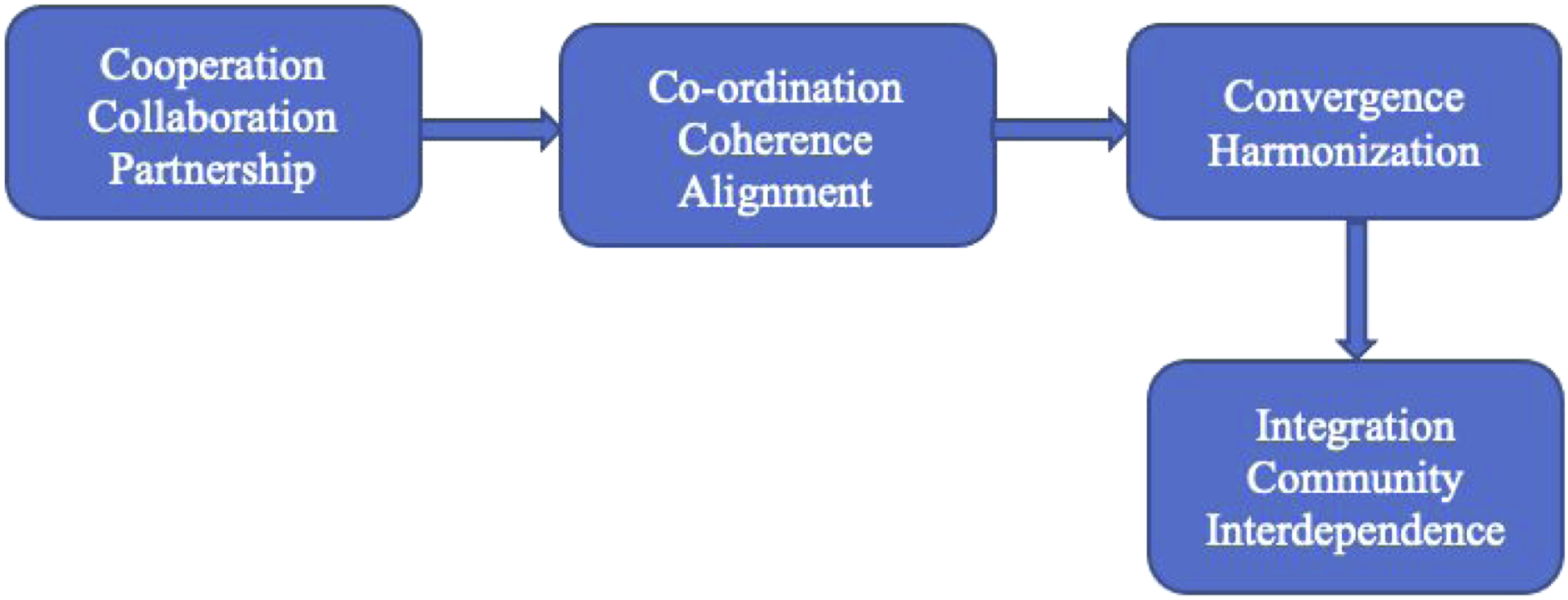
The GBA scheme is a national strategy adopted by the Chinese central government. It covers two special administrative regions (Hong Kong and Macao) and the nine cities of Guangdong Province (Guangzhou, Shenzhen, Zhuhai, Foshan, Huizhou, Dongguan, Zhongshan, Jiangmen and Zhaoqing). The gross domestic product (GDP) of the GBA in 2020 reached approximately USD1.67 trillion. Greater Bay Are-related policies focus primarily on the development of HE in several directions. For example, the Outline Development Plan for the GBA (State Council, 2019b) highlights policies related to regional co-operation and internationalisation. These policies address co-operation among universities in Guangdong, Hong Kong and Macao in running schools, encouraging these institutions to further educational co-operation. Greater Bay Are policies also emphasise the transformation of scientific and technological achievements and support the GBA in building an international education demonstration zone by introducing world-renowned universities and colleges.
In fact, the GBA follows a new type of regionalisation that does not refer to the collaboration between nations. This regionalisation shows the attributes of ‘one country, two systems’, ‘three customs territories’ and ‘three legal systems’ resulting from geographic, historical and cultural factors (Xu and Huang 2019). Mainland China adheres to the socialist system; in contrast, Hong Kong and Macau adhere to their capitalist system, which is a straightforward application of the one country, two systems policy in China (State Council Information Office of China, 2014). In addition, Guangdong, Hong Kong and Macau have three different customs territories with three different currencies and legal systems as well. According to a regionalisation theory by Chen and Zhang (2004), Shenzhen’s regional growth was first aimed at only some sectors, yielding a growth capacity and leading from point to area, and was ultimately directed at the development of the entire region. Thus, it is crucial to research the roles and effects of Shenzhen’s HE as a centre point for the GBA’s development.
Higher education development in Shenzhen
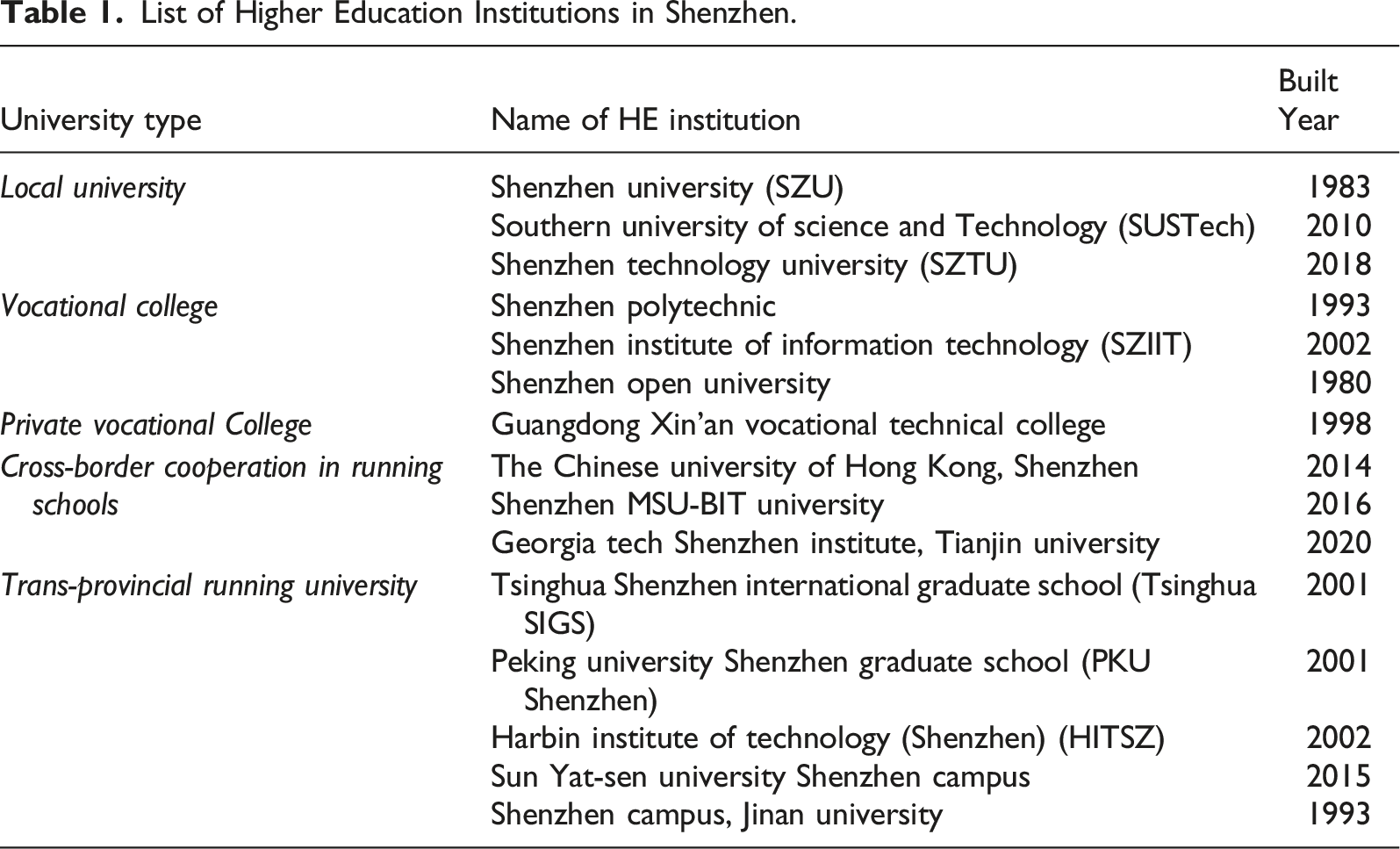
Since Shenzhen was established as a special economic zone in 1980, its HE has undergone three different historical phases: pioneering, exploration and take-off (Li & Wu, 2021). Pioneering occurred from 1980 to 1991; during this period, Shenzhen seized the opportunities of a special economic zone and launched its HE system. It took only 8 months for Shenzhen University to be established in 1983, and its main mission was to support the upgrading of labour-intensive industries (Chen & Kenney, 2007). Since then, Shenzhen University has been a pioneer in actively promoting the reforms of Shenzhen’s HE system. However, except for Shenzhen University, Shenzhen contained only three other universities until 1993; these four universities could hardly meet the urgent needs of the emerging economy or accomplish training for the regional talents. In contrast, Hong Kong built eight universities in just 10 years (1989–1999) to avoid brain drain and thus contribute to the region’s economic development (Wong, 2004).
During the exploration period (1992–2009), Deng Xiaoping’s reform and opening-up policies steered a new historical phase for modernisation and entrepreneurship in the Chinese HE system (Vogel, 2011). During this period, an updated technical application-oriented educational model was introduced throughout China. Shenzhen Polytechnic, a high-level vocational college, was established in 1993. Moreover, a new pathway was set up for national universities to co-operate with running schools. To expand university spaces and attract more students, remote campuses were administratively unified with the main campuses running in Shenzhen.
The period after 2010 is regarded as the take-off period for Shenzhen’s HE. This was the first time the strategic goal of building first-class universities and creating high-quality urban HE was put forward. Running schools help cities to be more diversified and obtain triumphs in Sino-foreign, government-enterprise and school-enterprise co-operation. More importantly, the quality of these universities has significantly improved, and the HE developmental pattern is beginning to take shape. In short, reform and the development of Shenzhen’s HE sector could be of great importance to the government, which dares to be the first to be open and inclusive (Xu, 2022).
List of Higher Education Institutions in Shenzhen.
Analytical framework
After reviewing the literature, a global–national–local framework developed by Marginson and Rhoades (2002) was applied in this study as an analytical framework. This framework is widely known as the glonacal (glo-na-cal) heuristic (Marginson & Rhoades, 2002, pp. 288–289). Marginson and Rhoades (2002) emphasised that every dimension of the glonacal framework consititutes the elements and impacts of other dimensions and that the three levels are mutually beneficial. Specifically, not one scale in the interactive activities is necessarily dominant during the simultaneous flow through of ideas, policies and technologies.
Shenzhen’s case can be analysed in three different stages to examine the roles of its regional HE sector in the GBA’s development. This development involves adherence to a national policy framework for building the HE sector; it extends the scope of coverage to the region to satisfy the local needs of Shenzhen’s development and paves the way for the global establishment of world-class universities and enterprises (Figure 2). This plan may be well-recognised in terms of the dramatic economic and mercantile growth in Shenzhen; however, only little attention has been paid to the development of Shenzhen’s HE sector, especially considering the roles it plays in GBA’s development. The reciprocity among the three levels of Shenzhen’s HE is presented in the Discussion section. Analytical framework for the study.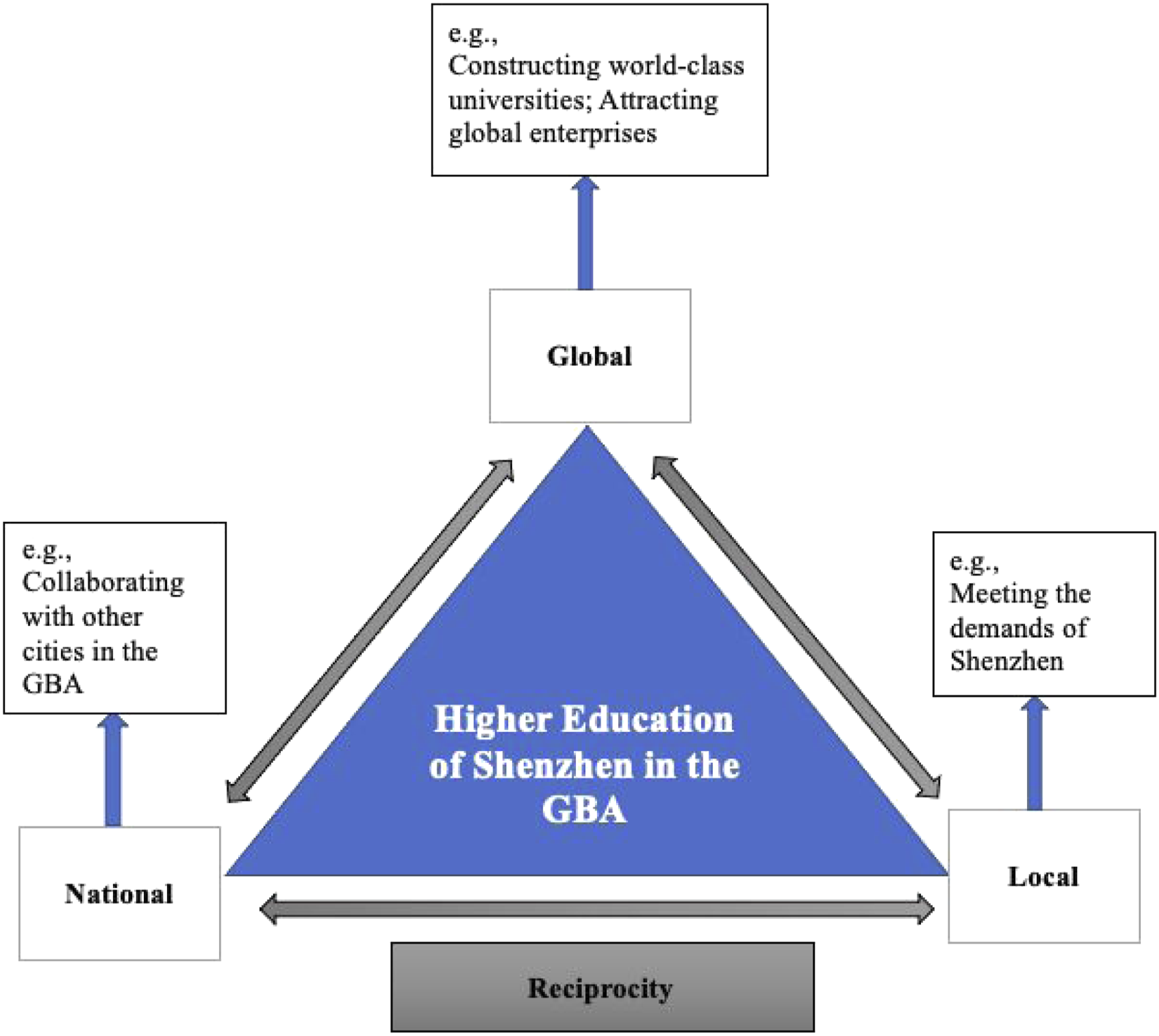
Methodology
Research design
Document analysis was applied as a qualitative research method in this study, and the contents of existing documents were examined (Bowen, 2009). A systematic review of documents, including various texts, such as books, newspapers, journal articles, government reports and Web site postings, was performed (Merriam & Tisdell, 2016; Patton, 2015). Document analysis provides background knowledge and descriptions for case studies (Yin, 1994); it also provides researchers with the data they are unable to obtain due to time and space constraints (Bowen, 2009).
Data collection
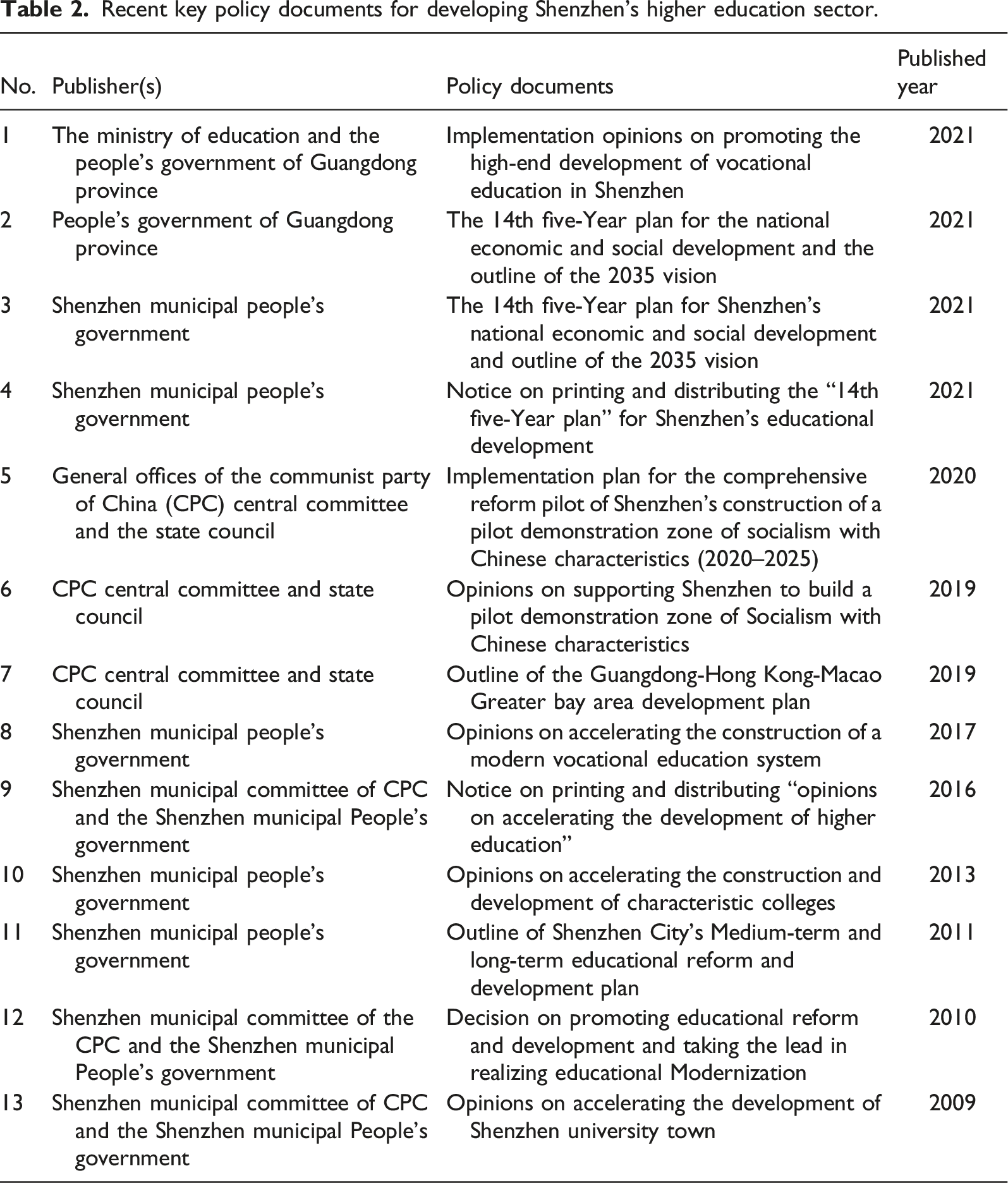
To analyse the written documents on Shenzhen’s HE sector, between January 2022 and April 2022, we collected all policy documents dated from 2009 to 2021. Such documents are helpful in providing contextual particulars on research topics (Cardno, 2018). We selected policy documents as the primary data source because Shenzhen’s HE has developed owing to the strong government support and long-term state- and regional-level policy plans. We collected the policy documents from different policy actors – the State Council, the Ministry of Education and regional governments. Most of the documents included detailed policy plans, the expected results and challenges. These data were documented using different formats, such as policy reports, statistics, outlines, etc. Some documents had bilingual versions, but some were written only in Chinese. For the Chinese documents, the key part of the policies was translated into English. The selected documents were all publicly accessible from the internet.
Recent key policy documents for developing Shenzhen’s higher education sector.
Data analysis
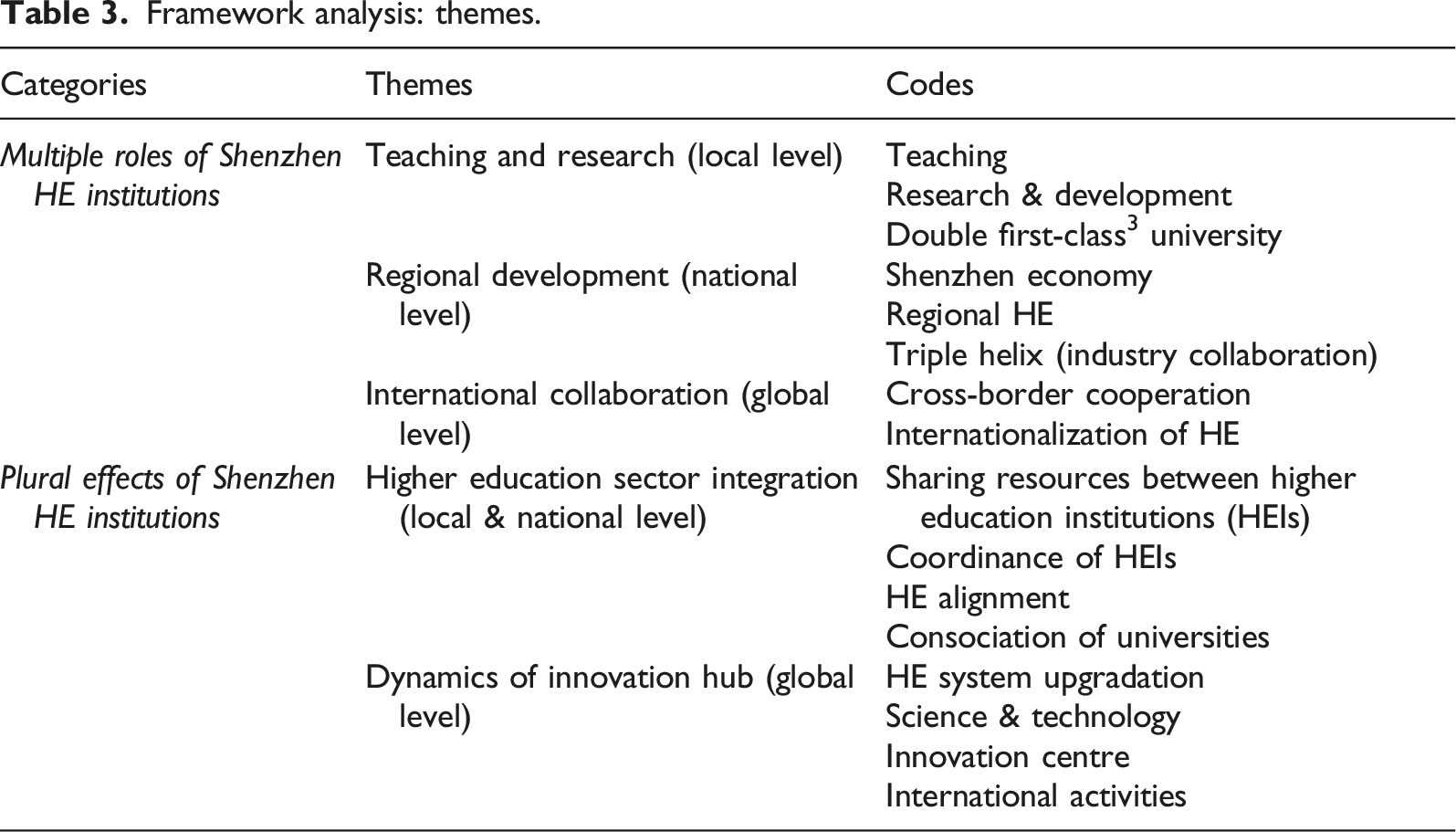
Framework analysis: themes.
Findings
Teaching and research
The first theme identified was that a certain level of developmental gap pre-existed in the HE sectors of the different GBA cities. Accordingly, the GBA’s HE policies focused on improving the teaching and research quality in less developed cities and enhancing the overall quality based on collaboration strategies. For example, Hong Kong’s HE system is research-oriented and recognised internationally, followed by the education systems of Guangzhou, Macau, Shenzhen and Zhuhai; however, other urban cities such as Zhaoqing, Jiangmen, Zhongshan and Huizhou paid less attention to HE (Zeng, 2019). With the establishment of plans for the GBA’s development, the teaching and research quality became a priority in this region. The central government has allocated a significant number of resources in this region to HE development, and several policy schemes were followed to enhance the teaching and research quality (Li & Yuan, 2019). One of the policy initiatives was to introduce trans-provincial campuses at the domestic level, such as Harbin Institute of Technology (Shenzhen) and Peking University Shenzhen Graduate School. The Shenzhen Municipal Government has supported these joint-venue campuses, which are an indispensable part of Shenzhen’s HE and an essential force in realising the great leap towards contribution to research and development (Shenzhen Municipal People’s Government, 2009).
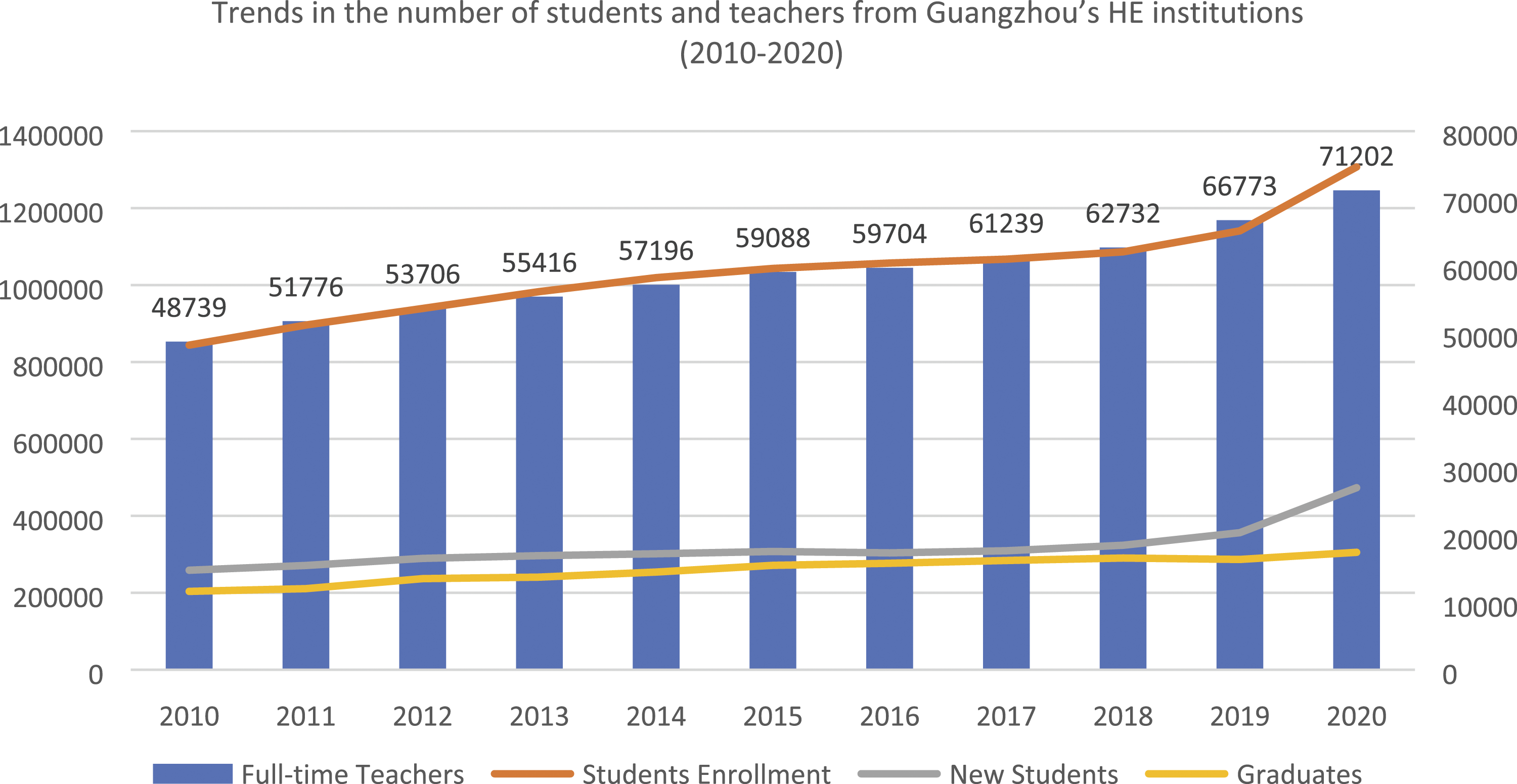
Driven by strong policy support, the number of enrolled students in Shenzhen has fluctuated, showing a considerable increase compared with the past decade (Figure 3). This increase indicates the potential of having more well-educated people in the regional labour market. Accordingly, universities should ensure good-quality teaching and research to accommodate the increasing number of full-time teachers and students. Moreover, compared with Guangzhou, another core city in the GBA’s Guangdong Province, in Shenzhen, the number of enrolled students, graduates and full-time teachers can be further increased to make progress (Figure 4). For example, the number of graduates and full-time teachers in Guangzhou was approximately 11× and 9× that of Shenzhen, respectively, in 2020 (Figures 3 and 4), despite Shenzhen’s GDP being higher than Guangzhou’s. Thus, policy documents, such as those issued by the Shenzhen Municipal People’s Government (2016), mandate Shenzhen to gather more competent teachers and produce outstanding students to better contribute to local economic and social development. By 2025, the city is expected to have approximately 20 colleges and universities where 200,000 full-time students are enrolled (Shenzhen Municipal People’s Government, 2016). Trends in the number of students and teachers from Shenzhen’s HE institutions between 2010 and 2020. Note: Compiled from the official statistics of the Shenzhen Statistics Bureau (2021). Trends in the number of students and teachers from Guangzhou’s HE institutions between 2010 and 2020. Note: Compiled from the official statistics of Guangzhou Statistics Bureau (2021).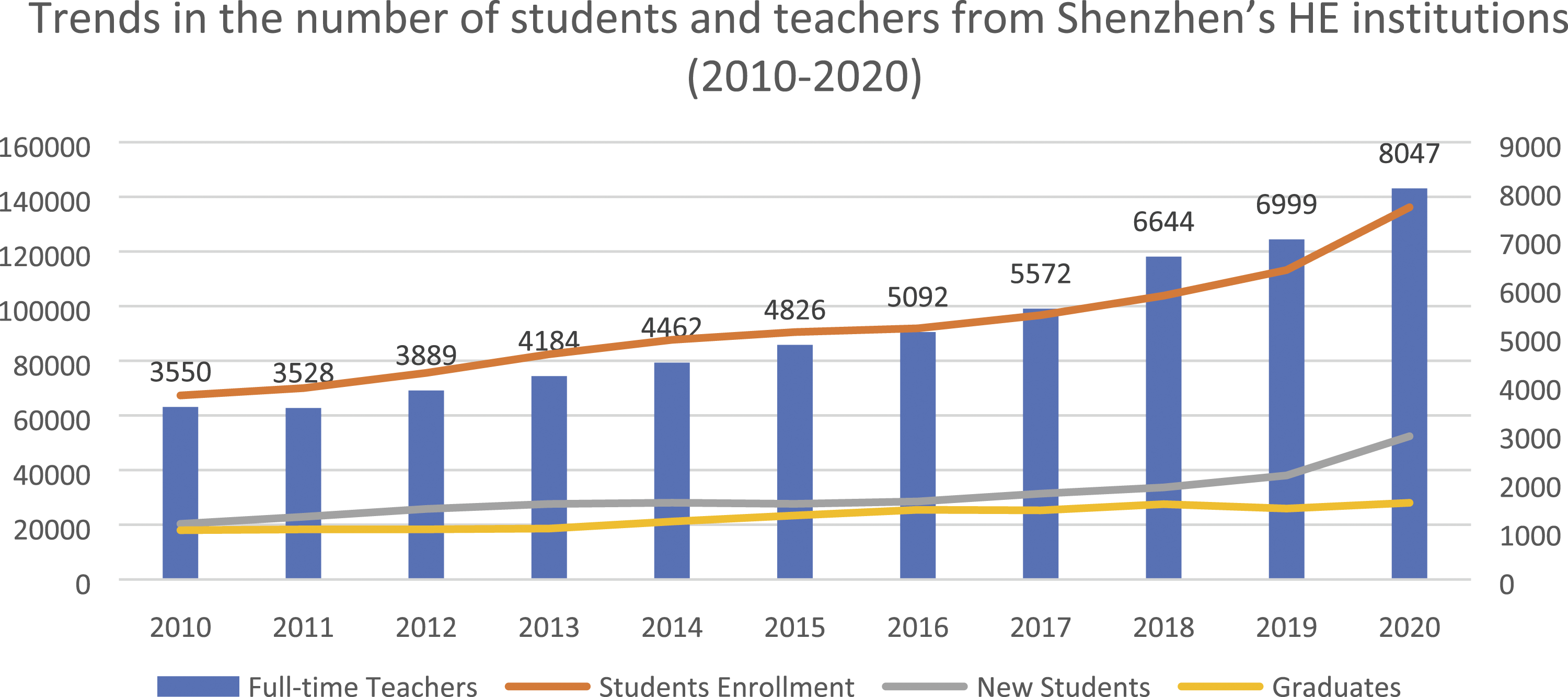
On the basis of policy efforts, SUSTech became a double first-class university in Shenzhen in 2022 (Ministry of Education, 2022). This was a major accomplishment for Shenzhen’s HE sector, simultaneously motivating other institutions to enhance the quality of their teaching and research. This motivation stems from SUSTech’s status as an experimental university under the national comprehensive reform of HE, aimed at building the institution into a high-level research-oriented university with Chinese characteristics within a short period (Shenzhen Municipal People’s Government, 2010, 2021). Some public institutions, such as Shenzhen University and SUSTech, are under the eminent University Construction Plan of Guangdong Province receiving special funding of up to CNY one billion for teaching and research development during the construction period (Shenzhen Municipal People’s Government, 2016). As part of new policies, some research-oriented institutions in Shenzhen have employed many experts and high-level talents with overseas working experience as principal investigators for cutting-edge research. These policies have contributed to strengthening Shenzhen universities’ confidence in the GBA’s development.
Regional development
The development of the GBA’s HE sector not only benefits education but also the overall regional development. The crucial social role of HE institutions in regional development has been discussed in previous studies. For example, universities are expected to play various roles, including rendering public services, improving national competitiveness and helping to reduce social inequality, beyond the traditional roles of teaching and research (Chen & Kenney, 2007). In particular, the social contribution of the HE sector is significant for the less developed regions (Lane, 1984). The ‘bringing in’ and ‘going out’ policies in Shenzhen, which actively utilise both international and domestic markets and resources, have attracted global investment. The overall foreign trade imports and exports jumped from USD18 million in 1980 to USD442.1 billion in 2020, realising a historic leap from import and export trade to all-round, high-level opening up (Shenzhen Municipal People’s Government, 2021). This economic growth was further accelerated after China joined the World Trade Organization in 2001. Shenzhen’s export-oriented industry is well aligned with the open free economy of the global market (Mok et al., 2020). However, Shenzhen should consider other social developments that extend beyond economic progress and encompass the domains of education, culture, health care and social welfare (Shenzhen Municipal Government, 2021). In particular, HE and regional development in Shenzhen do not always correspond. The synergistic advancement of the industrial, talent and HE chain of the GBA has yet to be completely formed. The supply of basic research and technology sources seems insufficient, and the education level, the strength of scientific research and talent reserves in Shenzhen cannot fully support industrial transformation and upgrading. These problems indicate the need to reinforce the regional integration of industry and HE (Yan, 2019).
A new collaborative innovation between ‘university–government–enterprise’ has been explored. The policy aims to deepen the reform of ‘introducing enterprises into HE’ and to strengthen the ‘dual’ education of schools and enterprises (State Council, 2019a). As a result, university teachers have taken charge of enterprises and enterprise talents and taught part-time courses in universities. This exchange of human resources may stimulate the enthusiasm of skilled workers and create a high-quality labour force. The State Council (2020) also stated that Shenzhen has the independent authority to establish and cancel the sub-stations of enterprise-related postdoctoral research stations. By 2025, more than 100 pilot enterprises that integrate industries and universities will be cultivated and will play an exemplary role in the regional economic and educational development throughout China (Shenzhen Municipal People’s Government, 2021). Shenzhen has many high-tech enterprises, human resources from universities and venture capital institutions; therefore, they can establish alliances between enterprises, universities and research institutions to shorten the process of transforming new technologies from research to application and to eventually serve the integration of HE in the GBA (Li & Liu, 2018).
International collaboration
Chinese university rankings are constantly rising (Marginson, 2018). Moreover, Chinese HE has played a significant role in international collaboration throughout the world. For example, the world-class Chinese universities have been recognised globally for their academic publications (Marginson, 2018). Approximately 18.2% of all research on cross-border co-operation in 2018 was performed in China (National Science Foundation, 2018). As international collaboration is a key success factor for Chinese HE, multiple types of partnerships have been highly encouraged in the GBA. All of the GBA’s HE institutions have been suggested to improve their international exchange and co-operation with overseas colleges and universities, which requires different types of institutions to rationally play their roles in the internationalisation of HE (Wang, 2019). Owing to economic and demographic demand, cross-border HE is crucial for the transformation of HE (Neubauer, 2012). For instance, the establishment of the Chinese University of Hong Kong (Shenzhen) in 2014 revealed the legal implications of cross-border co-operative education in Shenzhen. Shenzhen’s collaboration with Hong Kong aimed to expand its research network and reputation for global co-operation.
According to the 14th Five-Years Plan for Shenzhen’s National Economic and Social Development and Outline of the 2035 Vision, there is a tendency for elite universities, such as the University of Hong Kong, to establish branches in Shenzhen to improve collaboration, achieved by strengthening the talent pool and optimising the structure of HE (Shenzhen Municipal People’s Government, 2021). To establish the GBA as a global HE hub, internal and external barriers should be avoided to attract excellent foreign talent (Zhuo, 2019). Internationally, Sino-foreign co-operation in running schools, such as Shenzhen MSU-BIT University and Georgia Tech Shenzhen Institute, Tianjin University, has attracted more international students and scholars in Shenzhen. Shenzhen has a good foundation and experience for promoting Sino-foreign co-operation in running schools and attracting cross-boundary universities to run campuses locally (Cai & Geng, 2019). For example, Tsinghua-Berkeley Shenzhen Institute began to recruit postgraduate students in 2015 conducting transnational research and teaching (TBSI, 2014). Nevertheless, the COVID-19 pandemic and variational diplomatic policies towards China led to Sino-foreign co-operation and schools facing some challenges, such as restricted international student flows.
Higher education sector integration
Our analysis showed that Shenzhen universities are likely to address co-operation more than the competition with other sectors. For example, research labs and teaching hospitals in Hong Kong universities were introduced as an integrated model in Shenzhen. The University of Hong Kong-Shenzhen Hospital was introduced as a domestic public hospital in Shenzhen in 2012. Based on Lau’s (2021) piece of news in Times Education, Shenzhen University plans to play a leading role in increasing interactions between Hong Kong and Shenzhen and form a knowledge network with Hong Kong.
As Knight (2016) proposed, there are three processing steps (partnership, co-ordination and harmonisation) that need to be taken before HE can be integrated. For instance, Shenzhen’s universities have actively participated in some HE alignments, research collaborations and academic conferences to share its educational resources with other GBA cities, such as Guangzhou, Zhuhai and Foshan. Shenzhen’s HE institutions have increased positive communication with other cities, and they may eventually promote local and consociational development. Moreover, since the reform and opening up policy, especially after the return of Hong Kong and Macau to the motherland, co-operation between Guangdong, Hong Kong and Macao has consistently deepened and materialised, and the economic strength and regional competitiveness of each city in the GBA has considerably improved. This is a basic requirement for building a world-class urban agglomeration (State Council, 2019b).
However, integration has several flaws. One major challenge is the lack of public interest and support for GBA development. Fewer Hong Kong permanent residents agree with the value of the GBA’s overall development. Among scholars, there has been a lack of internal motivation, enthusiasm and sense of identity (Li & Yuan, 2019). Macau has also faced difficulties in sharing HE resources with other GBA cities owing to shortcomings in its integrated legal system and the imbalance between the quality and quantity of HE (Ma et al., 2019). To minimise the dilemma, although it is too early to assess the policy effects, the top-down policies strongly encourage Shenzhen, Hong Kong and Macau to jointly organise various forms of cross-border HE activities and enhance the identity and consociation of Hong Kong and Macau compatriots (State Council, 2019a). Another challenge is differences in the education systems and cultural backgrounds of cities such as Hong Kong, Macau and Shenzhen. However, these differences may be a positive opportunity for Shenzhen because Shenzhen bridges the gap between different cities in the region by introducing joint-programmes across cities.
Dynamics of the innovation hub
HE maintains the capacity for innovation in any process of regional development (Knight, 2013). Shenzhen has been designated as a central engine for co-ordinated development in the GBA, which will help accelerate the creation and construction of innovative industries (Liao, 2020). Not surprisingly, economic success has spurred the development of Shenzhen’s HE infrastructure. The establishment of universities has made Shenzhen more attractive as a study destination, increasing the immigration of educated Chinese people (Chen & Kenney, 2007). The essential effect of universities on innovation development is especially recognised (Carayannis et al., 2018). For example, the Shenzhen ‘virtual campus’ was built in 2000 to increase co-operation between the universities. In addition, the national-level Shenzhen High-Tech Industry Park for the value-added labour market and leading innovative firms such as Huawei Technologies and DJ-Innovations have driven the growth of this innovative hub (Shenzhen Municipal People’s Government, 2017). Shenzhen is advancing the GBA’s development by playing the role of an international innovation centre for creating and developing 5G and AI research labs to constantly enhance itself as an opening-up window to Hong Kong and Macau (State Council, 2019a).
The Shenzhen government has, in this innovation process, changed its role to a service provider rather than partner for supporting financing technology enterprises since 2014 (Mok et al., 2020). Moreover, the State Council (2019a) realised the importance of Shenzhen in piloting innovation-centred entrepreneurship. The National Development and Reform Commission (2013) agreed to support the development and opening-up of Shenzhen Qianhai with Hong Kong’s modern service industry co-operation zone. The firms that could not deal with issues usually turned to Shenzhen universities for advice and help, such that research teams in HE institutions could transfer knowledge by offering collaborative research and services (Mok et al., 2020). One challenge underlying this technology transfer was that it relied heavily on governmental and enterprise support and lacked self-circulation to produce international benefits. However, our analysis reveals that innovating Shenzhen’s HE system can help it become a global innovation and creativity hub. Shenzhen can strengthen the HE reforms in China not only by developing research-type universities for upgrading science and technology formations but also by developing vocational and technical education programmes to adapt to foster industrial structure and urban development and high-skilled applied talents (Shenzhen Municipal People’s Government, 2010). The sustainable development of Shenzhen into an innovation hub includes activities such as international publication, patenting, and knowledge transfer (State Council, 2019a, 2020; Shenzhen Municipal People’s Government, 2009). The effects of these initiatives exceed the regional level and are, instead, global in scale.
Discussion
In this study, we aimed to examine the current roles and effects of Shenzhen’s HE sector and to explore how sustainable regional development can be constructed based on collaborations with the HE sector. Shenzhen was selected by the state government for strategic reasons to be a regional hub and a critical player in scientific and technological innovation (State Council, 2019b). The State Council built a pilot demonstration area of Shenzhen in 2019 with plans to develop the GBA, setting the city as a strategic location for the high-quality development of the economy, as an example of law-based governance, as a model of urban civilisation and as an excellent example of people’s livelihood and happiness (State Council, 2019a).
Considering the analysis framework proposed by Marginson and Rhoades (2002), at the global level, preferential policies can attract more foreign talent to work and stay longer in Shenzhen. The State Council (2020) has allowed qualified high-level foreign talents to apply for permanent residence, international talent training and mutual recognition for professional qualifications. Thus, Shenzhen intends to enhance international collaborations and enterprises and hopefully involve the GBA in global co-operation. Moreover, Shenzhen can be used as a case study to demonstrate China’s plans to construct world-class universities through successful investment by the government. At the national level, Shenzhen universities have benefited from HE integration with Macau and Hong Kong for better regional development. Although various GBA cities compete for educational resources to some extent, the policies support Shenzhen’s collaboration with other cities in the development of HE and the creation of a smart urban agglomeration (State Council, 2019b). At the local level, Shenzhen may be a pilot zone for innovation in and the development of HE. For example, given the need for economic and social development, launching a pilot programme to recruit graduate students independently, approving Sino-foreign co-operative education projects and granting degrees through local universities cannot be disregarded (Shenzhen Municipal People’s Government, 2016).
However, there exist some issues in developing Shenzhen’s HE sector. These flaws can be organised at the global, national and local levels as well. First, locally, Shenzhen has many immigrants from other Chinese provinces, leading to expenses for settlement; thus, strengthening a sense of cultural identity and belonging is important to attract human capital and foster talent. Moreover, regional development is overly dependent on economic aspects and not as much on public services and social inequality. Shenzhen’s HE institutions may want to develop STEM-related disciplines to satisfy the economic and social purposes of the development of science and technology enterprises. This, to some extent, causes gaps and limitations in the disciplines of social sciences and humanities (Yang, 2014). Interdisciplinary and international academic exchange is influenced by decreased or lopsided development in certain subjects. Thus, developing double-first class universities at the national level would not only ensure industry–university–research co-operation in STEM areas but also strengthen the comprehensive, harmonious and sustainable aspects, including the dissemination of Chinese thoughts from cultural heritage. Globally, some Sino-foreign co-operative universities, such as Georgia Tech Shenzhen Institute, Tianjin University, have just been established, and there is still a long way to go in terms of adjustable policies and measures to promote transnational co-operation. In addition, how to improve international collaborations, such as cross-border student mobility, during and after the COVID-19 pandemic seems challenging for universities.
More importantly, echoing the glonacal heuristic, different forces may interact, with the resulting reciprocity potentially generating positive effects (Yang et al., 2021). Our study illustrated two principal interaction pathways with three levels. The first is interaction occurring from the global to the national and local levels. For example, Hazelkorn (2015) indicated that university rankings might reshape HE institutions into more competitive entities in the world arena. In the similar context of mainland China, global university rankings, to a certain extent, have compelled the national agency to construct first-class universities and disciplines. Locally, HE institutions have exerted efforts to evolve into double first-class institutions to enhance their academic reputations and recruit more talented students. The second pathway is the interference of local forces in national and international HE development. The development of Shenzhen’s HE may influence the GBA’s comprehensive strength, thereby elevating China’s international status.
As for the policy domains, local and national policies are also supposed to be mutually beneficial to the development of HE in the Shenzhen case, even if, at present, they cannot be proved helpful with respect to international policies. For example, from the local level, it covers more varied strategies for developing HE institutions, including quality and industry collaboration (Shenzhen Municipal Government, 2021). At the national level, the government has pushed more macro-agendas such as making the city a national strategic point for technology and innovation (State Council, 2019a, 2020).
Some explorations for Shenzhen were revealed, which might be useful for HE policies and governance. Marginson (2018) reported that China’s unique governance model of HE (regulations related to autonomous disciplinary science in internationalisation) is authorised by dual universities and a focused state. Besides the policy support from the central government, the Shenzhen Municipal Government has supported the development of universities based on different evaluated forms, such as public and private, Sino-foreign cooperation in running schools, local and trans-provincial running universities and vocational and research universities. The Shenzhen government’s HE investment and reform consciousness cannot be neglected. For instance, SUSTech is a new research university with considerable investments by the Shenzhen government. It undertakes the president’s council system and tenure-track promotion system followed by university autonomy in accordance with university ordinances (Southern University of Science and Technology (SUSTech), 2022). In addition to the traditional hierarchical system of most public universities in China, some of Shenzhen’s university patterns, such as SUSTech, Sino-foreign co-operation in running Schools and joint-venture universities, are suggested to seek further autonomy in running universities in the neo-liberal epoch.
Conclusion
We synthetically reviewed and analysed the multiple roles and effects of Shenzhen’s HE institutions in the GBA’s development. Arguably, Shenzhen universities play an active role in teaching and research, regional development and international collaborations for promoting the GBA’s HE sector. The development of Shenzhen’s HE sector is also beneficial for university partnerships. Furthermore, Shenzhen aims to be an international innovative hub forcing the GBA to contribute to global innovation and creativity (State Council, 2019b). Undoubtedly, the GBA comprises different cities, and each city needs to contribute to this goal through a sense of co-operation rather than competition. In this way, the GBA would have long-term potential in the development of not only the economy, science and technology but also the development of China as a soft power.
To achieve the GBA’s goal of being an international cluster, Shenzhen has furnished a meaningful pattern through policies with short-term and long-term goals that were positively published in the region. Shenzhen is the ‘window’ to China opening-up to the world and an ‘experimental field’ for the GBA and the whole country because it comprehensively promotes the scientific development of HE, creating a novel experience and making new contributions to educational reform. Our findings offer insightful perspectives from vital policies and literature into HE institutions and the government to formulate and reflect on the practices for developing Shenzhen’s HE by expanding the significance and application of the glonacal heuristic.
However, the challenges associated with developing Shenzhen’s HE in the region remind us of what should be done academically and policy-wise. First, from the academic point, for instance, the quality of HE and the development speed of universities are currently not in sync with Shenzhen’s economic development. The number of research and world-class universities is limited, which may restrict technology transfer. This could affect government endorsements. Moreover, there is an imbalance of disciplines between the social sciences and sciences in some STEM-focused universities, resulting in a lack of liberal arts education. Consequently, scholars should pay more attention to how to transform Shenzhen’s HE from leapfrog development to high-quality development, reform the governance model of HE, intensify the construction of world-class universities and optimise the regional layout and discipline structure (Li & Wu, 2021). Second, for policy dimensions, favourable policies should be considered to solve intractable problems, such as the connection of HE with different cultural contexts in Hong Kong and Macau and how to retain non-local talent. For example, Mok et al. (2020) suggested that Shenzhen should upgrade its governance strategies to adjust to the changing socio-economic and political-economic surroundings, which is important to be implemented by the Chinese central government and the local governments.
The study findings contribute to the literature on Shenzhen’s contribution to the GBA’s development. Moreover, it has practical implications for GBA policymakers and Shenzhen universities adopting HE strategies and upgrading the HE system. Although we critically expounded the relevant policy texts and studies on Shenzhen’s HE in the context of the GBA’s development, follow-up empirical research is needed. Future studies should explore reactions to policies on regional HE from experiential and investigative perspectives.
Footnotes
Declaration of conflicting interests
The author(s) declared no potential conflicts of interest with respect to the research, authorship, and/or publication of this article.
Funding
The author(s) received no financial support for the research, authorship, and/or publication of this article.
