




Abstract
The dramatic developments in DNA analysis during the last decade have placed genomics at the forefront of life science research. This is demonstrated by the number of disease-related genes discovered through positional cloning. That number, merely a handful in 1990 when the Human Genome Project began, grew to nearly 100 in 1997 1 .
The value of genomics is apparent in the fields of pharmaceutical drug discovery, genetics, and medical diagnostics, which have seen a number of recent advances. Further progress will come as genomic researchers supply even greater amounts of DNA information. Demand for DNA information generated by genomic researchers, such as that from the ongoing sequencing of human, microbial and eukaryotic genomes, is continually increasing. The demand for DNA information is similar to that of computing power: The more there is, the more that is demanded.
For example, genomic data is rapidly becoming an essential component of medical diagnosis, drug target identification and genotype profiling in clinical trials of new drugs, human identification and other health and information industries. All of these advancements require that DNA analysis be made a staple of life science research and development.
The cost of developing and staffing the infrastructure required for DNA analysis has become the rate-limiting factor in genomics, forcing the reallocation of human and financial resources away from biological research and toward the technical art of DNA analysis. The advent of efficient production-scale analysis will accelerate the pace of discovery while decreasing operational costs and labor for the producers of DNA information.
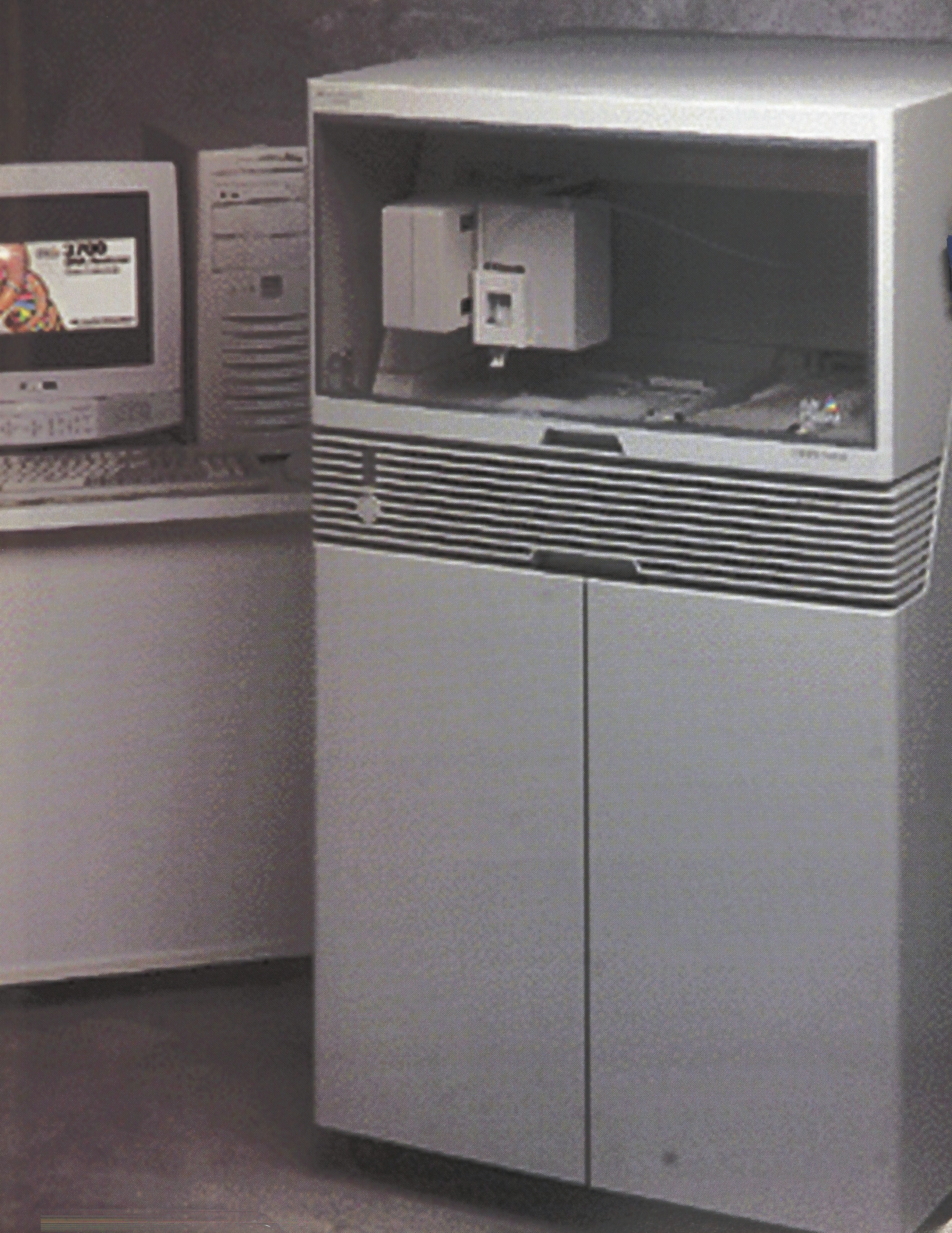
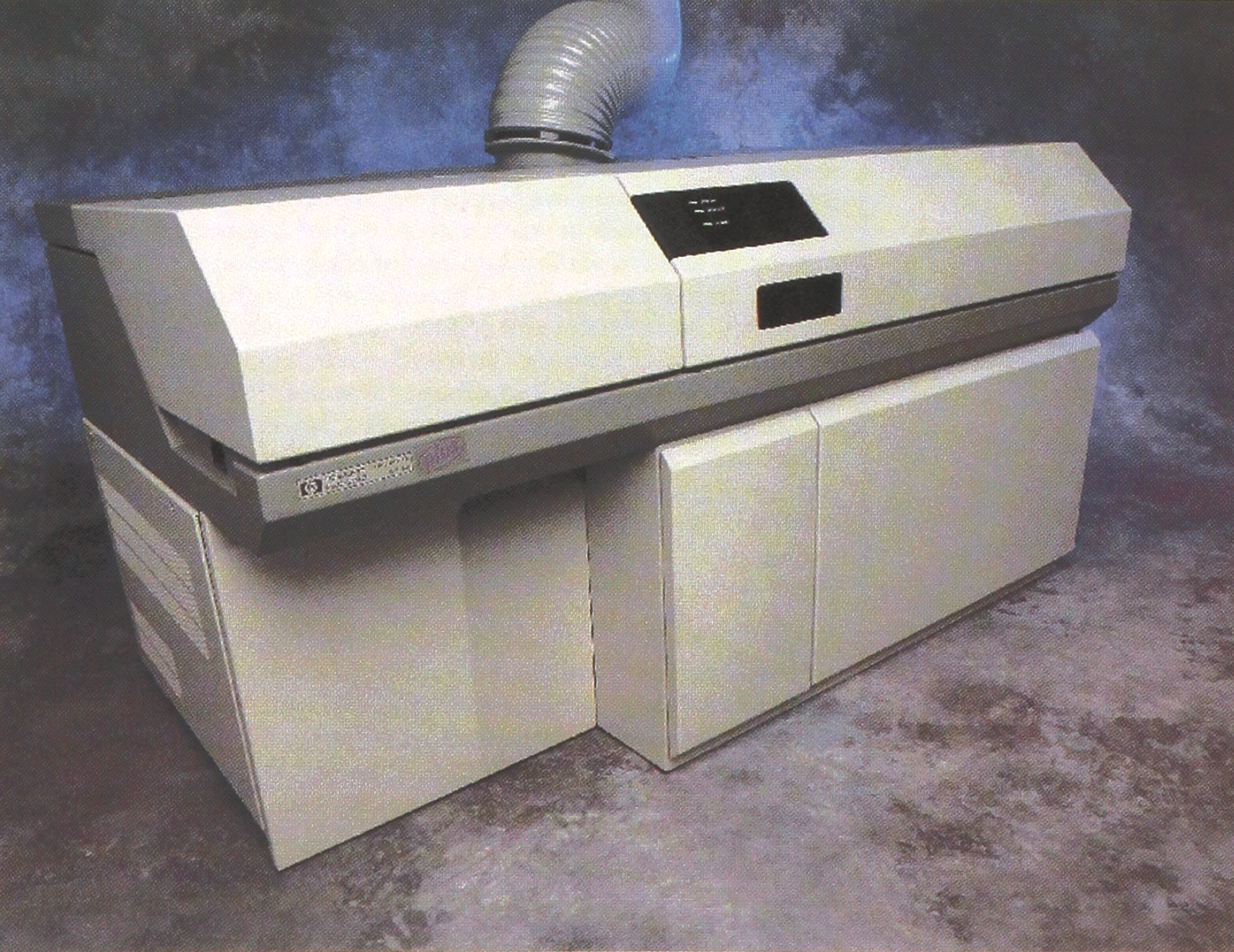
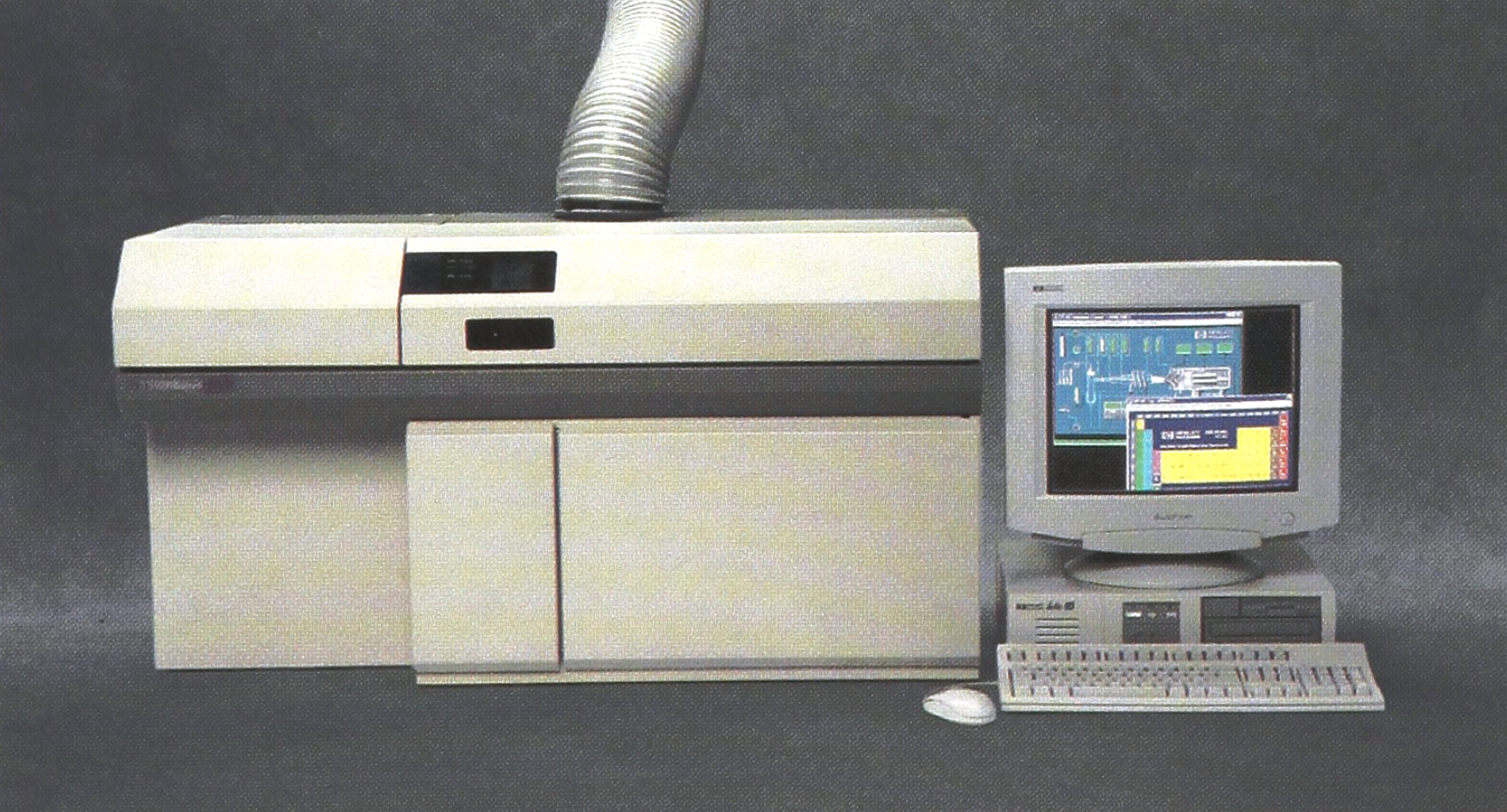
For these reasons, PE Biosystems has developed the ABI PRISM® 3700 DNA Analyzer. It joins the ABI PRISM® suite of systems, which are regarded as the standard for DNA analysis. Each use the same chemistry kits for fluorescent-dye labeling of DNA and the same software file format for DNA sequence or genotype results. Now, the 3700 DNA Analyzer becomes the ABI PRISM® family's production tool for life science researchers.
Designed for production-scale operations, the 3700 DNA Analyzer is a rapid and cost-effective tool for such applications as genome sequencing, genotyping studies, microbial identification, testing services for disease, agriculture and forensics, and pharmaceutical drug discovery.
3700 System Features
To meet the requirements of a production-scale instrument, four elements were deemed essential:
High sample throughput
Low operating costs
ABI PRISM® reliability (see side bar)
Walkaway Automation
High Sample Throughput
A parallel-capillary configuration gives the 3700 system the capacity to analyze simultaneously 96 samples as often as 16 times per day (16 × 96 = 1,536).
Low Operating Costs
The combination of higher throughput and automation will reduce labor by approximately 80% over current technology. The 3700 system will provide the lowest cost-per-base or genotype of any instrument commercially available.
ABI PRISM® Reliability
PE Biosystems has pioneered automated DNA analysis, successfully integrating disciplines such as molecular biology, biochemistry, fluorescent, imaging, data processing algorithms and electrophoretic science with superior engineering and scientific expertise.
Engineered by the same technical team that created the 310 and 377 DNA analyzers, the 3700 DNA Analyzer joins the ABI PRISM® family of DNA systems more than a decade after the company rolled out the first automated DNA sequencer in 1986. While the 3700 analyzer's ample throughput, automation and cost-efficiency defines it as a production tool for DNA analysis, PE Biosystems also offers the mid-range ABI PRISM® 377 DNA Sequencer, whose slab-gel electrophoresis provides long read lengths and the highest tolerance of sample variety. The ABI PRISM® 310 Genetic Analyzer is the smaller scale solution for DNA analysis. Ideal for the lower throughput needs of individuals laboratories, the 310 analyzer is convenient and easy to operate, combining the same capillary electrophoresis and walkaway automation of the 3700 analyzer.
ABI PRISM® instrument owners benefit from PE Biosystems' years of trouble-shooting experience, industry presence, and customer network. The PE Biosystems technical support staff solves problems ranging from simple operations to complex, differential chemistries. This is why virtually every human genome lab, genomics company, major pharmaceutical company and more than 90% of academic research institutions in the United States and in more than 100 countries use PE Biosystems' instruments,
Walkaway Automation
Following electrophoresis, the instrument will automatically flush and replenish the capillaries and sheath flow cuvette with fresh polymer (Shealth flow detection prevents signal loss and backgrund noise caused by light scattering from capillary walls, maximizing the signal-per-sample. This makes shealth flow the most cost-effective multiple capillary detection design available.)
In addition, the loading bar is rinsed thoroughly to remove all remnants of the previous run. The next set of samples is then automatically transferred into the loading bar from the sample plates and run.
The 3700 DNA Analyzer provides continuous, unattended operation by automating flowable gel loading, sample injection, separation and detection, data analysis, and between-run setup and maintenance tasks.
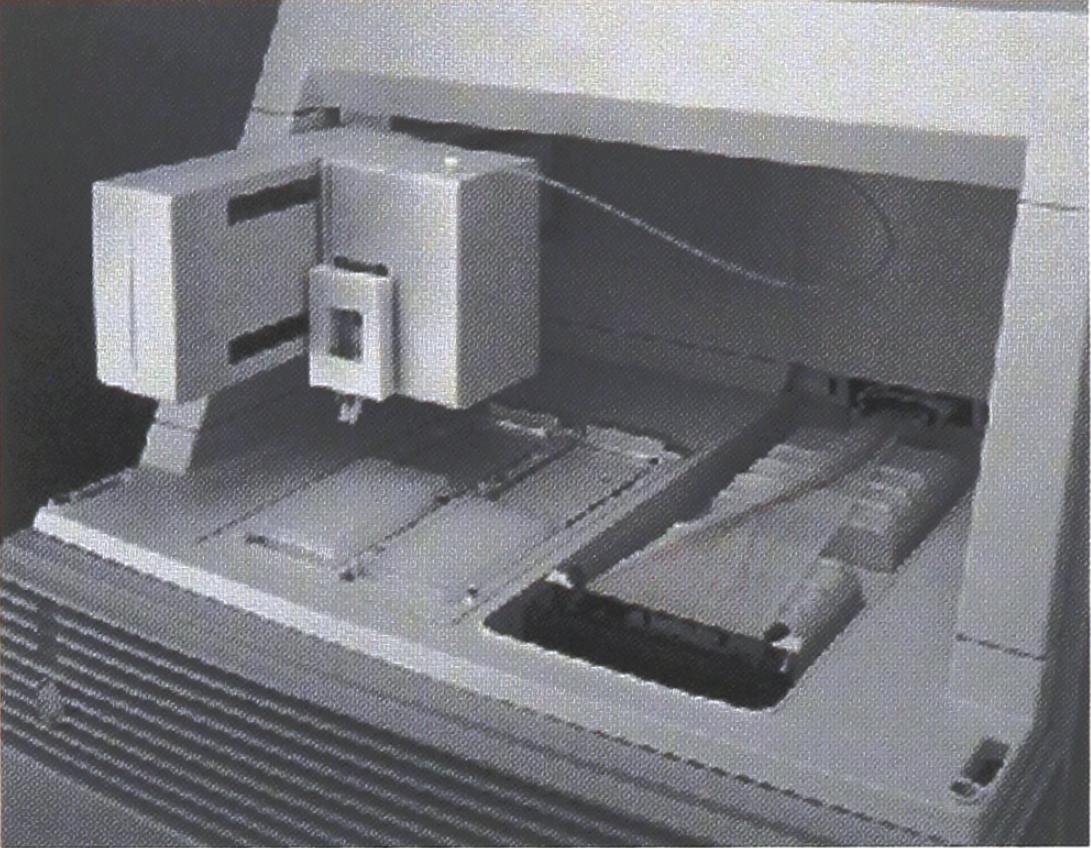
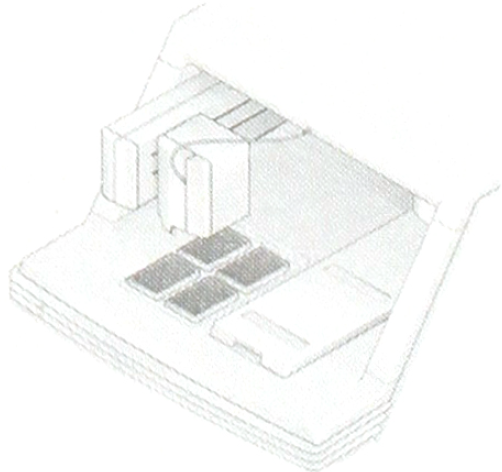
After placing plates on the work surface and importing electronic sample information, the researcher needs only to select the “start run” command.
Technological Advantages
Two technological advantages of the 3700 analyzer include walkaway automation and the instrument's flexible autoloading capability.
Flexible Autoloading Scheme
An additional advantage of the 3700 instrument is its flexible autoloading capability. Flexible autoloading begins when fluorescently labeled DNA sequencing or fragment analysis samples, prepared by standard methods (cycle sequencing or PCR), are placed on the instrument in industry-standard microtiter plates. Aliquots of 2.5 μL are transferred from the sample plates by the autoloader into the 4-μL injection wells of the load bar. The load bar is specifically designed to allow simultaneous parallel electro-injection and subsequent electrophoretic separation of dye-labeled nucleic acid fragments.
The autoloader's design offers multiple advantages. First, it enables the system to accept samples from different plate configurations, 96-or 384-well formats initially. Second, analysis can be programmed from 1 to 96 samples per run without wasting wells in a plate.
Third, the autoloader can randomly access samples from throughput the four plates on the work surface. Fourth, it can route samples to avoid specific capillary positions, if a capillary has been designated as unusable. Finally, this versatile sample autoloading scheme is adaptable to future innovations (e.g., higher density plates or microfabricated devices as replacements for the capillaries).
By offering full automation and greater throughput at significantly lower costs, the ABI PRISM® 3700 DNA Analyzer will have a significant impact on genomic research, drug discovery, and target isolation using DNA-based information. To learn more about the ABI PRISM® 3700 DNA Analyzer, visit the PE Biosystems' website at: http://www.perkin-elmer.com/ab.
PE and PE Biosystems are trademarks; and ABI PRISM and Perkin-Elmer are registered trademarks of the Perkin-Elmer Corporation.
The ABI PRISM® 3700 DNA Analyzer includes patented technology licensed from Hitachi, Ltd. as part of a strategic partnership between Perkin-Elmer and Hitachi, Ltd., as well as patented technology of Perkin-Elmer.