Abstract

Introduction
ARUP Laboratories is a commercial esoteric reference laboratory performing more than 1800 different procedures with a daily volume of more than 10,000 accessions. The clinical reference volume (excluding cytopathology, veterinary pathology, and employee drug testing) exceeds 8000 accessions per day. As a reference lab ARUP serves hospital clinical labs and other reference labs in all 50 states across all six time zones and as well as serving large clients in Brazil and Japan. Our rapid growth rate (25% per year for the past three years) and the competitive cost pressures inherent in the laboratory environment have made automation of our processes a key strategy. However, automating in an environment that specifically has no routine clinical laboratory testing (our clients do those tests themselves) and in which 85% of all incoming specimens are either refrigerated or frozen presented a major challenge. In the summer of 1998, ARUP Laboratories expects to implement our automation plan, some 3 ½ years after initiating the first feasibility evaluations.
As an esoteric laboratory, only 3–4 tests individually exceed 1% of the laboratory's volume. As shown in Table 1, the number of different tests in our menu required to reach 20%, 40%, 60%, 70%, and 80% of our volume is substantially greater than in a typical clinical laboratory doing routine testing. The latter is illustrated by data from the University of Utah Health Sciences Center, but the data would be nearly identical in most hospital clinical labs and commercial reference labs doing testing for physician's offices, with 50–55 different tests comprising 80% of the lab's total volume. IT requires more than 1000 different orderable tests from our menu at ARUP to reach 80% of our daily volume. However, tests at this level in our menu are ordered, on average, only twice per week. We have over 2000 tests in our User's Guide and about 95 employees in Specimen Receiving, These data thus illustrate that the typical employee in Specimen Receiving will only see the lower volume 1000 tests in our system only once or twice per year, and yet is expected to know exactly what to do. It is typical of most labs including ARUP that Specimen Receivers must memorize a lot of information in order to do their jobs. An unemployment rate in Utah of 2.6% (2% below the U.S. average) has made recruitment and retention of employees a major challenge. Finding better processes for Specimen Receiving is essential to addressing the challenge of a long training period and the quality and efficiency of the order-entry process.
An initial evaluation of the impact of temperature relative to automation options enabled us to achieve two objectives. First, we were able to cut by one-half the number of different tests in our User's Guide that were listed as Critical Frozen. We found that laboratory supervisors, being concerned about transport of specimens across the country, in some instances used the term “critical” to provide extra assurance against accidental thawing of specimens. We chose to apply the term “critical”
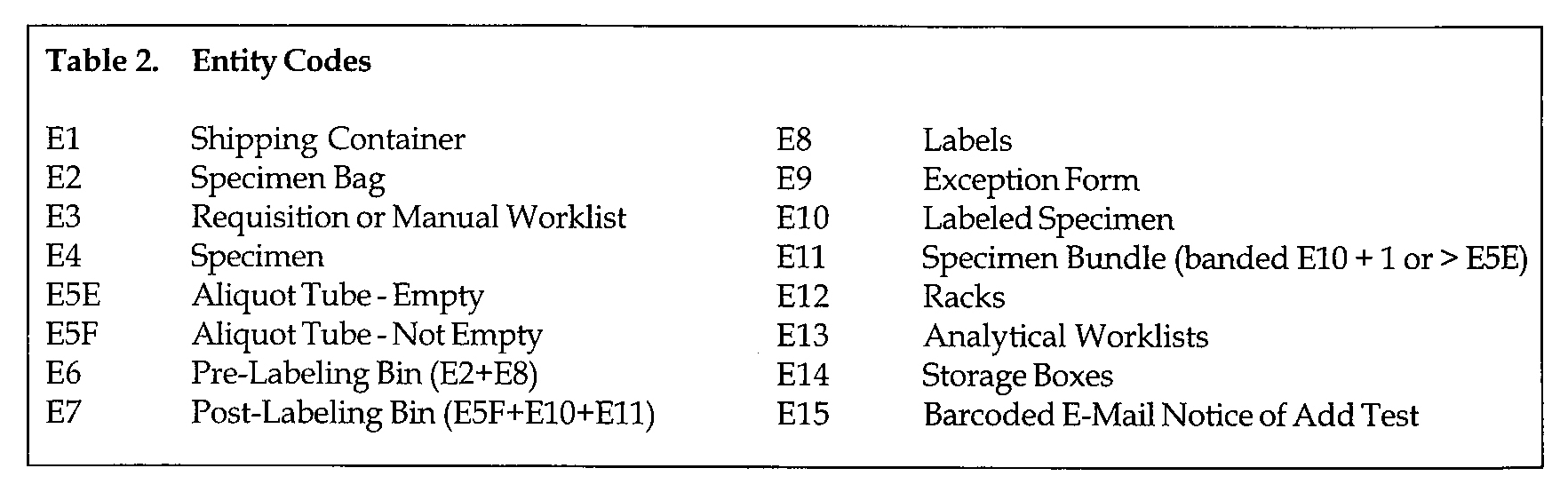
Entity Codes
Related to the decision to adjust temperature requirements for some tests in our User's Guide was a decision to implement a new standardized specimen transfer tube. We generally receive secondary specimens and have always provided such tubes to our clients. The new tube, manufactured by Sarstedt, is a five mL capacity, false bottom, polypropylene tube with a non-leaking threaded screw cap. This tube was evaluated in our analyzers and found to fit in most. Thus, it eliminated the need for our Specimen Processing or lab personnel to pour special aliquot tubes or cups that were analyzer-specific, a key part of our process re-engineering. The temperature changes and tube changes were entered into our User's Guide more than a year ago long before the actual time of automation. An amber version of the same tube used for 50 different tests that must be protected from light, which previously required foil wrapping and could not go on the track.
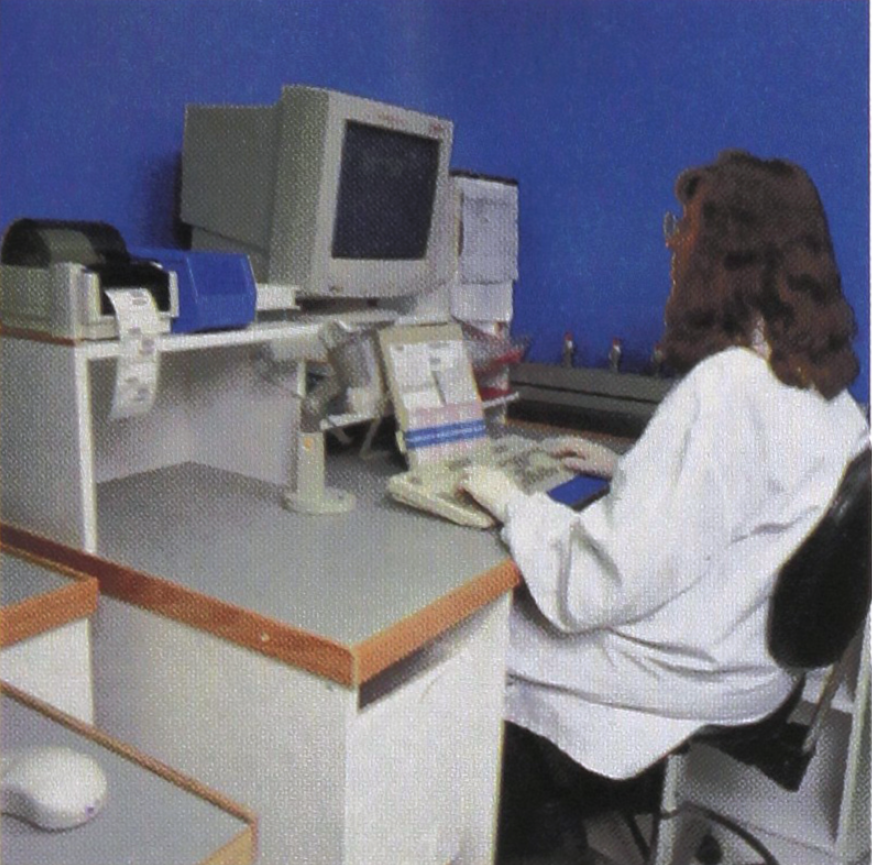
This workstation is one of 30 that are positioned next to tracks feeding into the main track system. Designed by the Specimen Processors and a University of Utah professor of ergonomics, the workstation has all of the necessary tools needed by processors to use the new ESP software to manually order tests or receive electronically pre-ordered tests, label specimen tubes, and place the tubes in carriers on the track.
An Automation Task Force, consisting of representatives from technical areas, information systems, specimen receiving, pathologists, etc., began meeting three years ago to guide the entire process of feasibility evaluation, consideration of alternatives, selection of a leading option, and development of a plan. We considered many options including automated guided vehicles, two dimensional camera systems, and robotic systems, before settling on a track system with automated sorting as probably being the most effective solution. However, this preliminary narrowing of options was dependent on much more detailed evaluations as described below.
A detailed analysis of work flow was performed, followed by a timing study in which we determined the elapsed time for different steps in our processes. The study revealed where significant delays occurred and offered several opportunities for immediate improvement even without the overall plan for process re-engineering and automation that was being developed. However, the plan's main function was to guide us in an effective evaluation of our automation needs and in developing a design with the best likelihood for success in meeting our objectives of improving turn-around time, reducing labor, and improving quality. Perhaps the greatest revelation of the work flow study (and it should not have been surprising) was the number of times specimens were handled (sorted) prior to actual testing. After entering orders and labeling tubes with bar code labels, Specimen Receiving sorts the tubes into about 35 different groups, generally based on temperature and lab section. After the labs pick up their specimens from a central freezer and refrigerator, they use hand held bar code readers to change the computer status from “Central Collect” to “In Lab” (signifying that the tube is in their possession) and simultaneously sort by work center/test site. At the work center/test site level, lab employees again perform another sort down to the test level so that they can build work lists. Only 25–35% of our testing is on interfaced analyzers that obviate the need for work lists. As an esoteric reference lab, the vast majority of our testing is manual batch testing that requires a work list. Some of these work lists are being built dynamically in random order as bar codes are read, but many are built the “old fashioned” way, by arranging tubes in the accession number order dictated by the Laboratory Information System (LIS). These various manual sorts, status changes, and work list builds can collectively require ½ to four hours of labor after order-entry and labeling until testing can be performed depending on the tests and their volumes.
The overall ARUP plan for re-engineering of our processes and automation has the following elements:
Implementation of the standardized specimen transfer tube.
Formation of an Automated Core Laboratory, with random access analyzers that are bi-directionally interfaced to the LIS, and including tests previously performed in Immunology, Chemistry, Radioimmunoassay, and Special Chemistry.
Development of a new front end computer system — Expert Specimen Processing (ESP).
Installation of an MDS AutoLab track system with five high speed sorting machines.
Re-engineering of processes as appropriate to the above elements.
Facility renovations as required to implement the track and the process re-engineering.
The standardized transfer tube has been in use since the beginning of 1997, While there have been some issues related to proper use by clients, in general we expect to have a high rate of usage of these tubes in place prior to implementing the track system. The Automated Core Laboratory has been in existence for two years and has grown to include about 18% of the clinical reference volume. More tests will be added as newer analyzers are purchased and more FDA-approved tests are available from vendors. Our core lab may handle only 30% of the volume. However, as a percentage, this volume may not grow beyond that, because these higher volume esoteric tests tend to be performed by our larger clients who can purchase similar analyzers.
Expert Specimen Processing originally was created to fulfill the need for unique container identification bar codes for each tube, which was not a satisfactory option within our LIS (Cerner Pathnet version 3.06). However, emerging from the original need was the desire to re-engineer the front end, thus addressing the six month training period for new specimen receivers and the complications of order-entry of esoteric tests sometimes ordered in complex panels or groupings chosen by clients. ESP is a rules-based software utilizing a Windows NT environment in a two-tiered client/server system. A massive data base was built that defines every acceptable container type and temperature for each test and whether that tube can go on the track. The data base includes many other parameters as well, so that as a Specimen Receiver is entering an order in ESP, he or she is guided by the system and cannot order a serum test on a urine specimen. After the tube has been labeled, ESP tells the processor whether to put the tube on the track or into a bin for manual delivery. Numerous other features in ESP provide a new level of quality to our order-entry processes.
The MDS AutoLab track system can transport up to 2000 tubes per hour. Our design consists of a 120′ long (end to end) double track that is actually a continuous loop. Incoming specimens are fed to the loop from 30 ESP workstations along three 30′ input lines in Specimen Receiving. At each end of the 120′ main line there is an AutoSort high speed sorter to sort specimens for the lab sections near that location. An 11′ branch lane serves a central AutoSort for the lab sections in that area. A fourth AutoSort is located in Specimen Receiving next to a centralized walk-in refrigerator and freezer for archival storage of finished specimens. Total travel time on the track (either one continuous loop, or from the farthest Specimen Receiver workstation to the farthest lab AutoSort) is only 4.5 minutes. A fifth AutoSort will not be connected to the track, but will be used by the labs to further sort medium and low volume tests into work list order at high speed.
Each sorter can sort up to 1000 tubes per hour into 30 user-definable lanes. Thus, the total of 90 lanes on the three track-connected sorters for the labs far exceeds the 35 sort groups currently used by Specimen Receiving. Some lanes will be reserved for very high volume tests that are run in batches. They will sort directly into work list order. Other lanes are reserved for each specific analyzer in the Automated Core Lab. Specimens can go directly from the sorter onto the analyzers without further handling. The majority of the sorter lanes will be work center/test site groups into which the labs are presently sorting manually. At lab option, the tubes from these lanes can be resorted into work lists. All of the status changes from ‘Central Collect’ to “In Lab” as well as all of the work list sequences will be automatically performed through the communications from the MDS AutoLab computer (APX) through ESP into Pathnet. After only ten minutes of resorting, a lab assistant could leave a sorter which will separate 165 specimens representing up to 30 work lists in exact sequence. Then Pathnet could print the work list for each one, an activity that could have taken 2–3 hours in our present process. Late arriving specimens are quickly added to work lists as they are sorted, so that runs can be performed with virtually every available specimen.
After completion of testing, labs manually sort specimens for archival storage into one of eight categories such as 14 day frozen, 30 day frozen, 60 day frozen, etc. This sorting will be accomplished by the fifth AutoSort located adjacent to the storage freezer and refrigerator. The sequence of tubes will be their sequence in the storage boxes and will be automatically entered into the computerized storage record by box number, row number, and column number. The bar codes will not have to be read with a hand held bar code reader by the person doing the storage as now occurs. Moreover, the long time delays now occurring in getting tubes stored will be eliminated. This should induce the laboratories to release their tubes to the system promptly after testing rather than keeping everything for repeat or reflexive testing.
When the entire work flow plan was finalized a careful cost analysis was performed. The cost of the AutoLab system was estimated to be about half of our total investment which included was performed. Development of the ESP software purchases of software licenses, and new hardware, substantial facility renovations, purchase of 30 Specimen Receiving workstations with new computers, bar code readers, thermal bar code label printers, and other costs. The projected labor savings coupled with savings on analyzer specific tubes or cups not being purchased showed a payback in only 3.6 years based on a 20% annual growth rate. Whether this payback estimate is correct remains to be seen, but it is clear that our growth rate could not be sustained with our present processes. We added 130 new positions at ARUP in the past year alone and, with our tight labor market other means of addressing our growth had to be found. Automation by itself, while extremely important, is not the entire answer. Re-engineering of processes is essential to any good plan and we believe our plan has all of the elements of success.
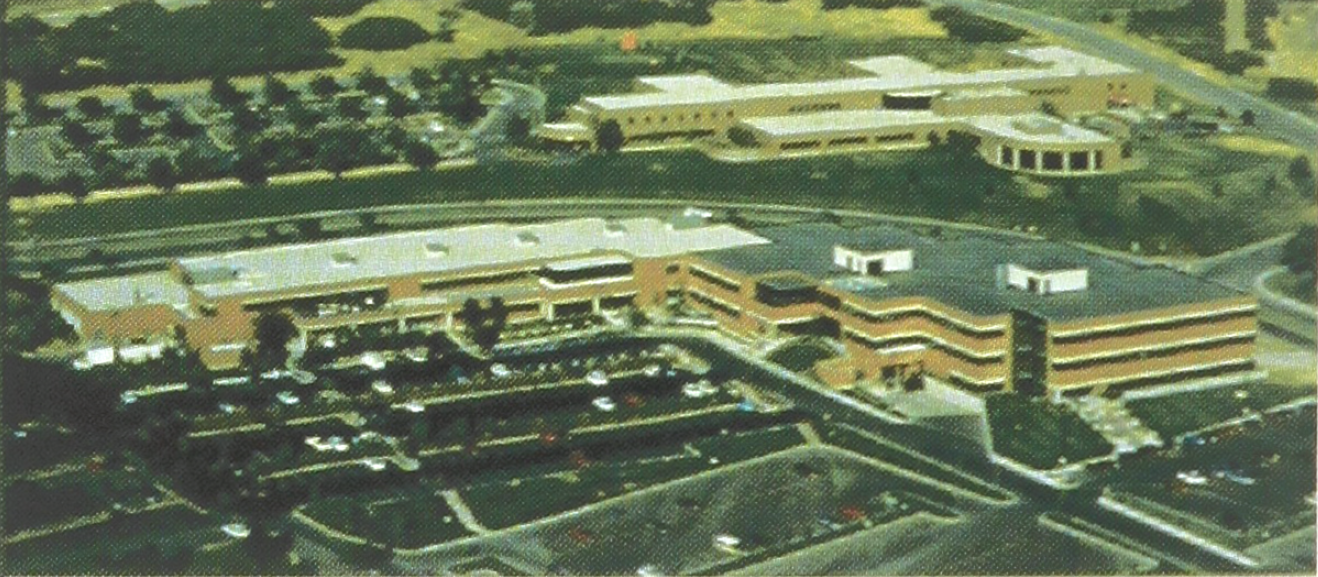
Occupying this 200,000 square foot building in the University of Utah's Research Park, ARUP Laboratories is a wholly owned subsidiary of the University. It is a for-profit commercial laboratory performing only esoteric reference testing for hospitals and other reference labs in addition to anatomic pathology, veterinary pathology, clinical trials testing, and substance abuse testing services.