




Abstract
The Need
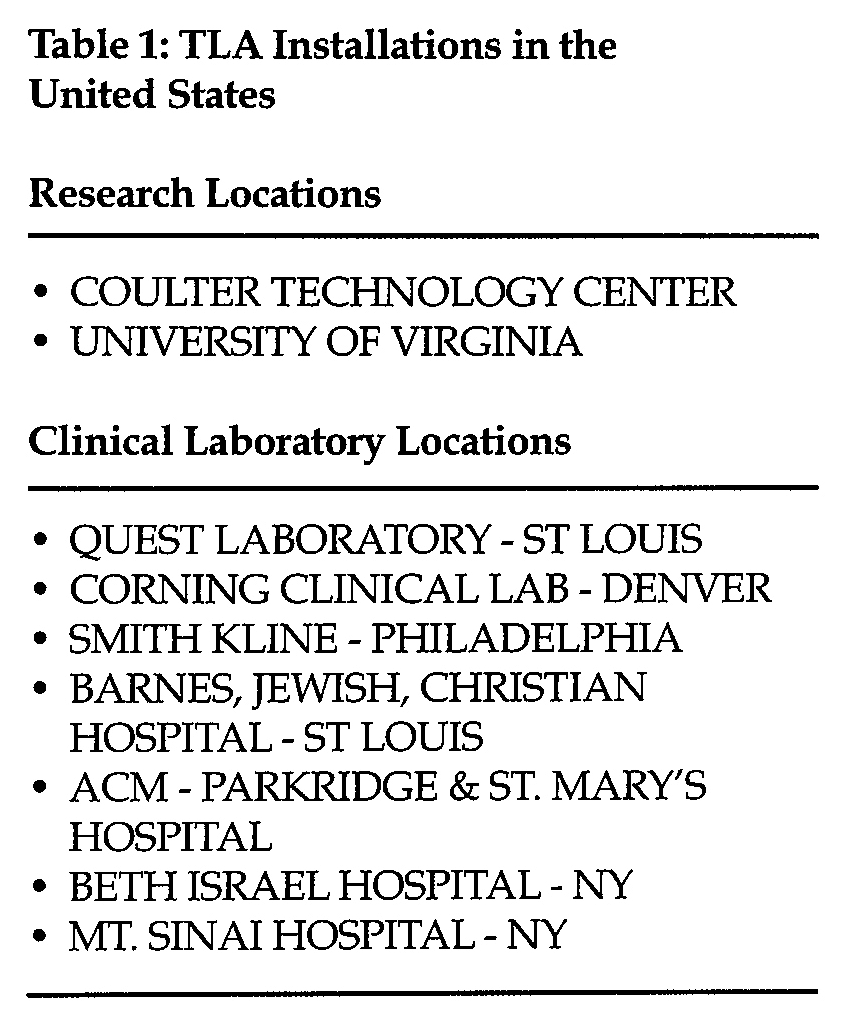
The need for clinical laboratory automation is becoming ever more acute with the progress of 1997. Total laboratory automation (TLA) systems that have been in use for some time in many Japanese laboratories can now be seen in operation in a number of laboratories throughout North America (Table 1).
TLA Installations in the United States
At least 10 additional sites have made the decision to purchase TLA systems and are in the midst of renovating their facilities and reorganizing their workforces to accommodate this new technology.
The Challenge
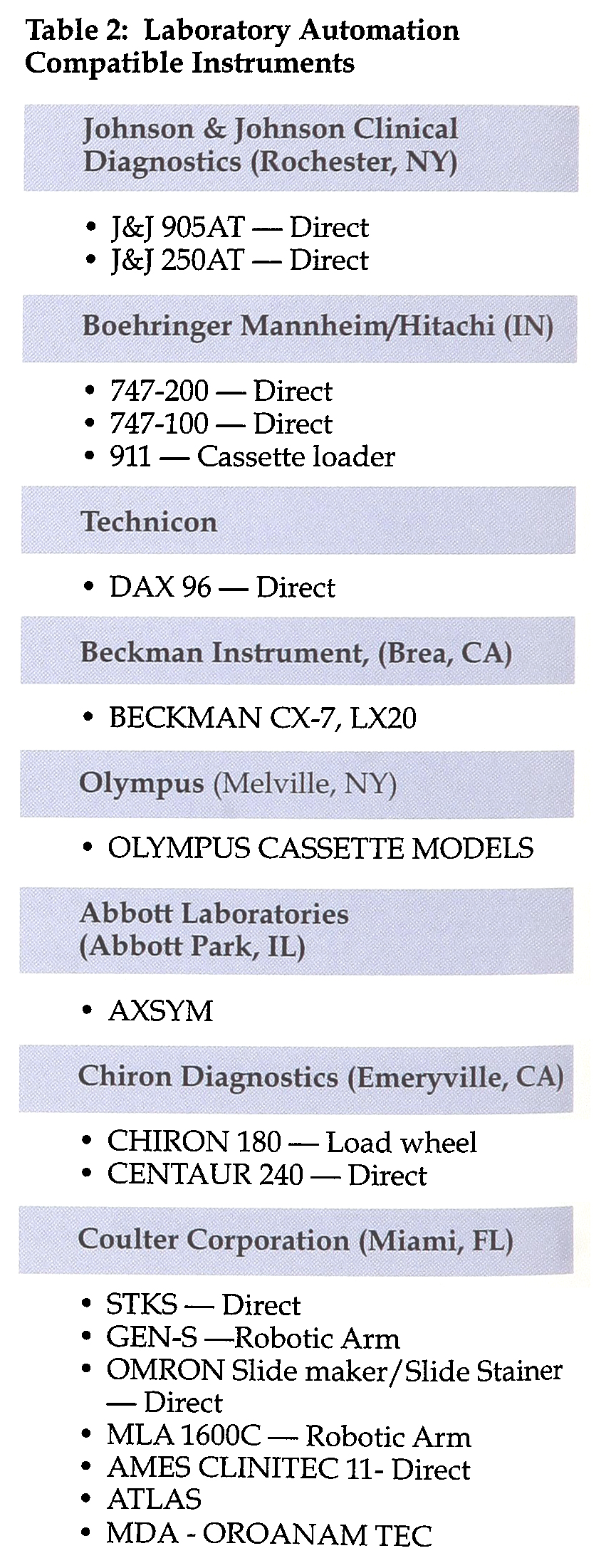
However, laboratory automation is faced with the challenge of adapting to existing laboratory facilities which are organized by discipline (hematology, immunology, chemistry, etc) and equipped with instruments that are designed to be operated by humans. There is a growing list of instruments which have been modified or specifically designed to be automation friendly (Table 2).
Laboratory Automation Compatible Instruments
Adapting the existing installed base of instruments to specimen conveyor belts is the subject of an article from the Medical Automation Research Center at the University of Virginia. This project is described as a generic example of many such interfaces which will have to be developed throughout the diagnostics industry. Clearly, TLA has arrived and is an essential technology for many clinical laboratories.
Currently available TLA systems are compared in Table 3. Existing TLA systems are already proving that they meet the needs of clinical laboratories which must improve efficiency and maintain quality.
Laboratory Automation Comparison Chart
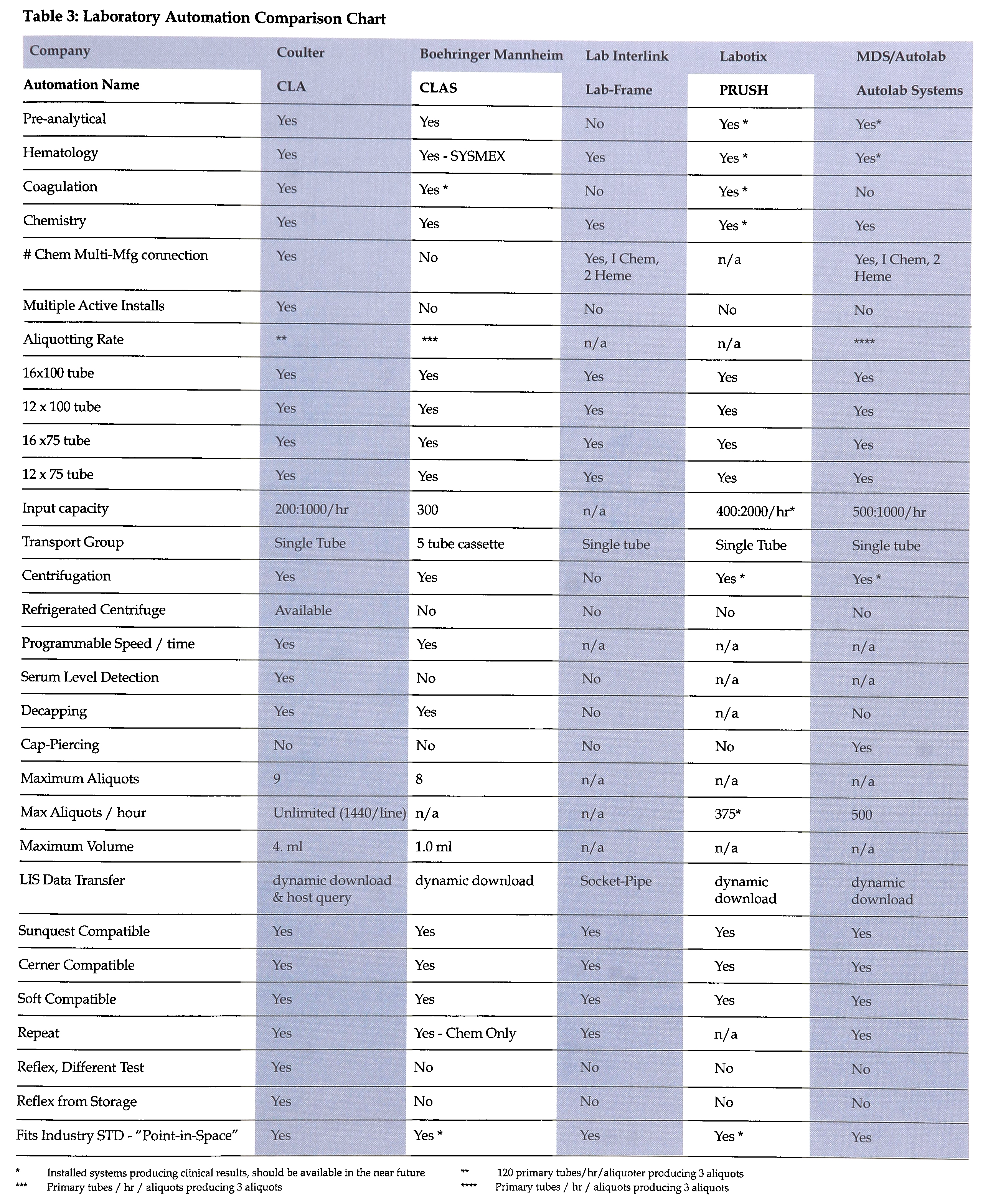
Installed systems producing clinical results, should be available in the near future
120 primary tubes/hr/aliquoter producing 3 aliquots
Primary tubes / hr / aliquots producing 3 aliquots
Primary tubes / hr/ aliquots producing 3 aliquots