




Abstract
The conceptual approach to a system of network resident-training tools for use in a clinical pathology laboratory is described and specific modules developed for use in an integrated health care delivery system. The modules have been developed to be accessible throughout an organization, are amenable to customization, are designed for use by personnel with varied knowledge of laboratory techniques, and can be updated readily. The modules designed are for dry slide clinical chemistry analyses, white blood cell maturation sequence, and flow cytometry. The concept can be applied to other laboratory functions including point-of-care testing service. The modules incorporate flexibility of integrating text with digital images, sound and animation. The core of the system is based on readily available software for Internet. Therefore, the system of laboratory tools can provide the means for rapidly accessible, current data resources for a variety of purposes for a laboratory to operate in an integrated delivery system.
Introduction
Several factors have altered the operations of clinical pathology laboratories in the past few years. Technical staffing at all levels of expertise in the hospital laboratories has been reduced. Introduction over the years of increasingly automated high throughput selective analyzers coupled with the more recent availability of robotics has resulted in consolidation of work areas and has eliminated or significantly altered compartmentalization based upon clinical laboratory subspecialties (1). The traditional single site focused health care or specialized care delivery model is being replaced with a cohesive model for heath care delivery that encompasses all aspects of health-care structure. This model is often referred to as integrated delivery service or simply as IDS (2). This change has been accompanied by a rapid growth in participation of non-technical personnel in near patient or bedside performance of laboratory tests previously available only from the main laboratory in a hospital (3). The challenges for clinical laboratories in dealing with these transformations in health-care are in maintaining a high degree of proficiency and consistency in performance of the entire spectrum of analytical work. At the same time there is a need for ensuring an effective coordination of all laboratory functions, whether these are performed within a central laboratory, at a satellite site or at the patient's bedside.
The introduction of automation and robotics has resulted in consolidation of work with centralization of laboratories, and a marked reduction in staffing. However, the structuring of health-care into IDS has created a dispersal of testing. The dispersal of testing in any such institution requires supervision of services by the central laboratory at several community hospitals, intermediate care facilities, specialty clinics, and walk-in care centers, together with the referral hospital and its related ambulatory clinics (figure 1). In many instances, the responsibility for oversight is also likely to extend to a community outreach program where the referral hospital laboratory provides specialized analytical testing with interpretation and consultation for the tests performed.
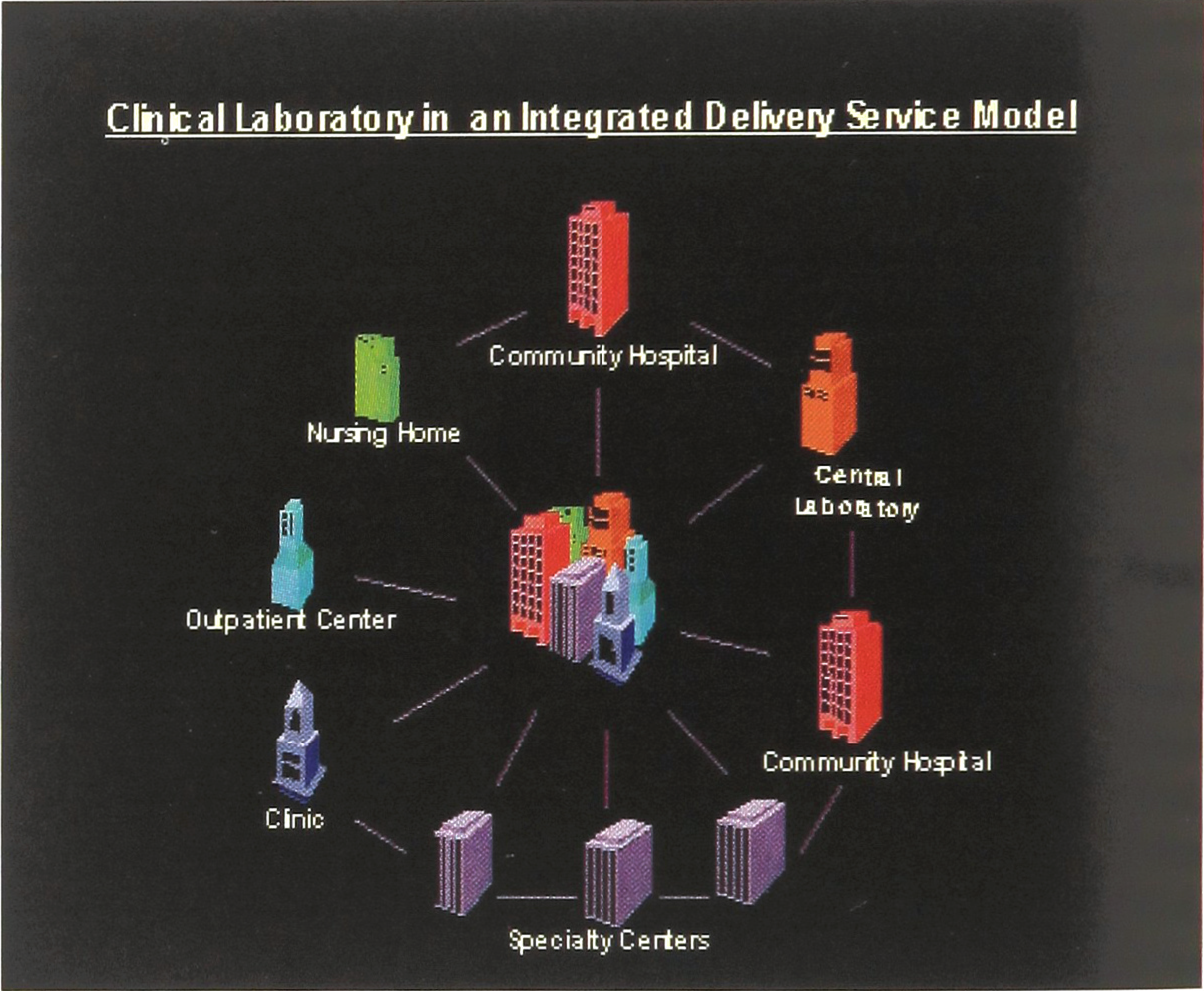
Central laboratory in an integrated delivery service model
We have identified the need to provide and maintain an effective mechanism for making available consistent information in this rapidly evolving environment of IDS and clinical laboratory automation. An effective mechanism should enable laboratory staff to have access to information about the scientific basis for laboratory assays, understand approved laboratory practices, update skills, refresh knowledge of tests performed less frequently, and fulfill regulatory requirements for technical competency. We have devised a model for network-based tools which are readily accessible, self-guided, amenable to customization to fit an institution's goals and can be updated as needed to keep the information current. The conceptual approach to the model and the initial development of network accessible tools has been communicated recently (4). We describe here the development of the concept and demonstrate its use through modules that provide the basis for implementation of the concept in a clinical laboratory. The model satisfies the need for an effective mechanism for laboratory tools in an integrated delivery service environment.
Concept and Design
The design requirements for the network-resident laboratory tools are based on the assessed need that the technical staff in a clinical laboratory would benefit from a readily accessible, current base of information. The information should pertain to the scientific, technical basis for laboratory analyses, and the information should be available at any location within a system such that it could also be used for technical updates, maintaining proficiency and assessment of technical skills. The system should also be accessible via an Internet browser and, if desired, could be integrated into the laboratory or the hospital information systems.
Therefore, the design incorporates features that lend versatility to the network-based tools to allow access for users at multiple sites, but ensure that the modules are robust and could be modified rapidly without the need for complete revision. We utilized templates that become readily recognized by users when traversing a module or when going between modules. This allows for a rapid familiarization with the design such that the user quickly acquires skill navigating the modules. The format incorporates the capability for a full range of digital images, sound, animation, and text.
The tools used in design of the modules were selected on the basis of the format outlined. The “Office Suite 97” (Microsoft Corporation, Redmond, Washington) was used for all text, graphs, databases, and spreadsheets. Images were sized and manipulated with “Adobe PhotoShop” (Adobe Systems, Inc., Mountain View, California). Graphics and illustrations were constructed using “Simply 3-D” (Micrografx, Inc., Richardson, Texas), and “Canvas 5” (Deneba Software, Miami, Florida). The integration of text, images, animation and sound was achieved through the use of “Liquid Motion Pro” (Dimension X, San Francisco, California). The format design was then made accessible through an Internet browser, either “Netscape Navigator” (Netscape Corporation, Mountain View, California), or “MS Explorer” (Microsoft Corporation). The modules can be made accessible either on an internal network or through the Internet.
Description of Modules
The technical subjects for the modules designed for demonstration of the concept of network accessible laboratory training tools were based upon selection of a core concept for each of the laboratory areas in a central laboratory that provides services for clinical care in an IDS. The modules were developed for: 1) providing the technical basis for dry slide chemistry in wide use in automated laboratories; 2) white blood cell (WBC) morphology for the cellular maturation sequence; and 3) illustration of the scientific principles of flow cytometry analysis.
The concepts for these techniques are important to a technologist's performance in a clinical laboratory. However, the conceptual basis for each of these techniques may not be available for ready reference to refresh an experienced technologist's understanding or for readily illustrating a point to a trainee or a new employee in the laboratory.
The layout of the opening screen for the modules is shown in figure 2. It illustrates the screen capture frame from the network accessible module. The opening screen is similar for all modules to maintain consistency for the tools and establish a sense of familiarity for the user. The design incorporates the outline of a microscope, the commonly recognized representation for a clinical laboratory. We have named the tools “V-Scope”. The four buttons at the corners of the opening screen are keyed for a specific module. Dragging the pointing device over a button activates the buttons. The button then changes from a smooth, shiny reflective appearance to a simulation of a pressed button with depressed center. This is accompanied by appearance on the screen of the name of the module. Pressing the button via the pointing device activates that module, presenting the first screen for the module accessed. Thus each of the buttons is associated with a specific module.
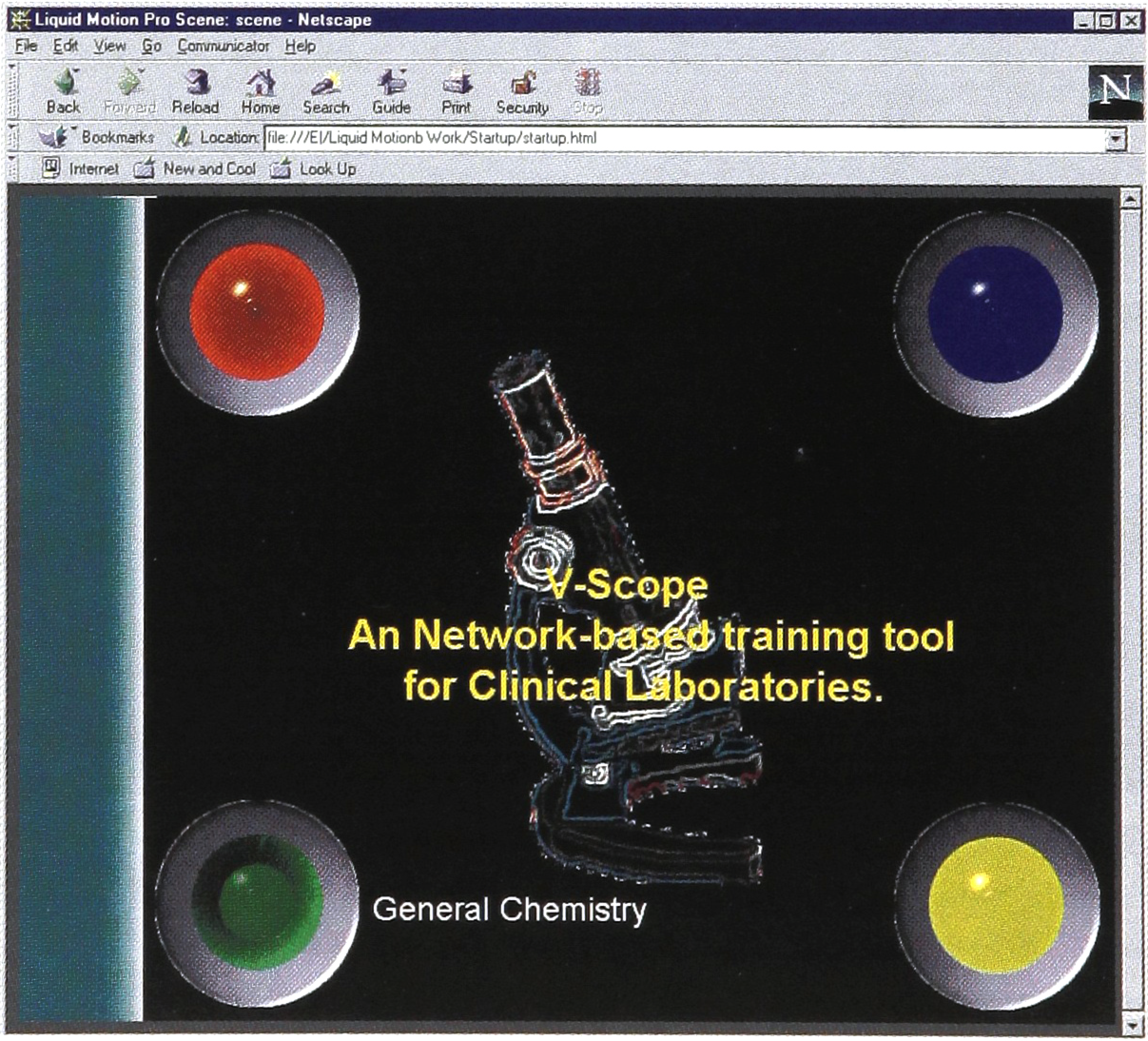
Layout of the opening screen for “V-Scope” for the modules. Note the solid color buttons for different modules. The indented appearance of the lower left button indicates that it allows entry to the general chemistry module. The other buttons are programmed for separate categories and activated similarly by dragging the pointing device over each button to show the category and clicking it to gain entry into the module.
The opening screen for the dry slide analytical chemistry module allows the user the option to go directly to the section of interest, for example, measurement of the end-point reaction on the dry slide, and navigate back to the starting point by using the back button on the illustration. The user can navigate back to the starting point rapidly by pointing and clicking the back button on the browser screen. The dry slide end-point reaction is designed to illustrate the dynamics of sample metering onto the slide, the multi-layered nature of the slide with functional boundaries, the principle of reaction, and the basis for quantitative measurement through reflectance spectro-photometry (figure 3).
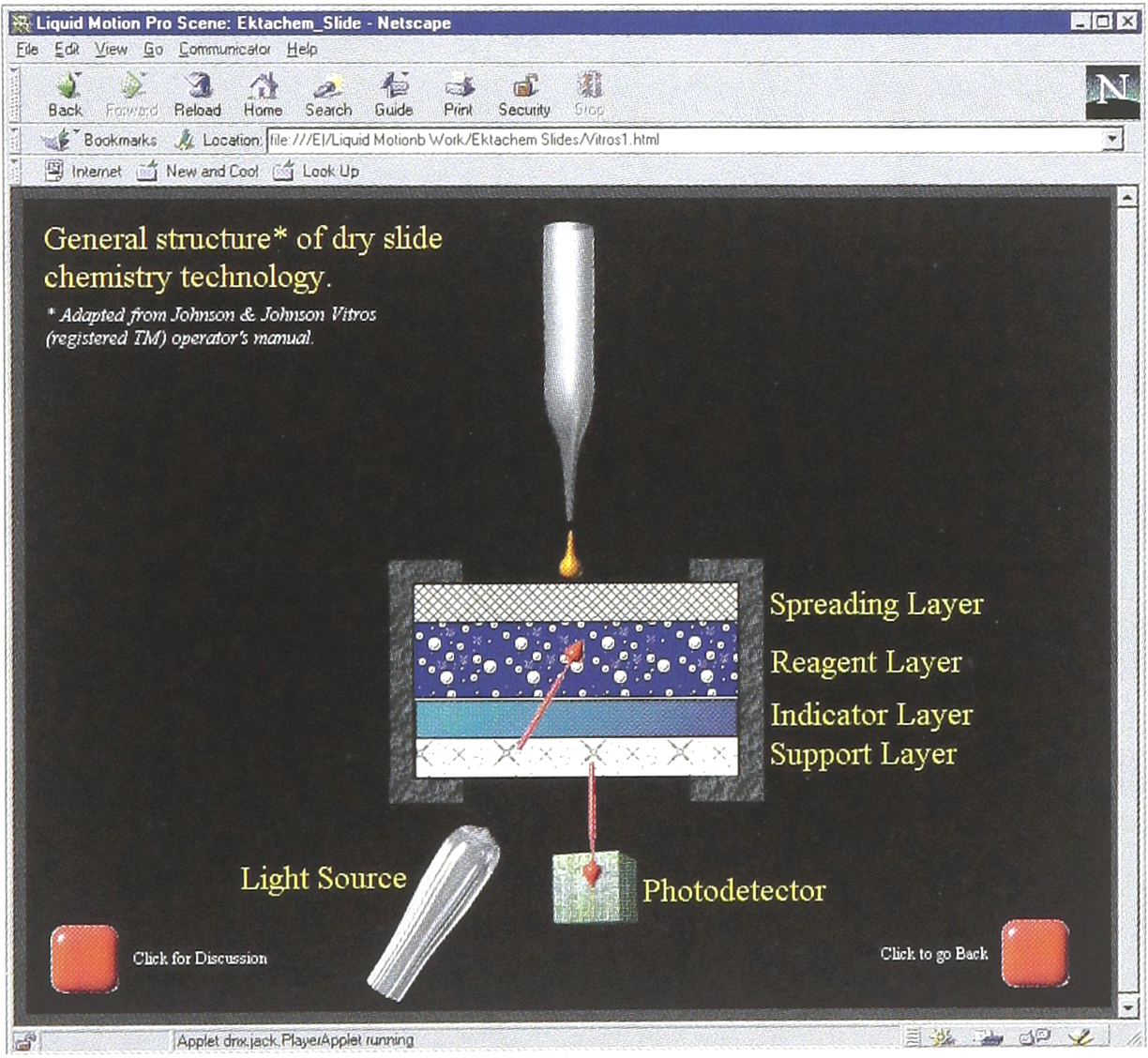
A screen in the dry slide analytical chemistry module showing the structure of a slide and the start of the animation sequence. The drop from the pipette starts spreading upon contact, the reaction is initiated in the reagent layer, the indicator layer changes color, and the light source is activated to illustrate the reflectance detection of the signal. The color buttons at the lower corners allow the user to navigate through the module.
The user can navigate through the use of buttons built into each of the screens to the next layer in the sequence or jump to any other point of interest by gaining access to an index for the module. Thus, the concepts of immuno-chemistry, enzymatic rate reactions, and ion-specific electrode based measurements can be accessed in a sequence or however convenient for the user. Selections on instrument calibration, quality control, and commonly required verification procedures are readily incorporated as indexed features for users familiar with the dry slide technology for clinical chemistry. The understanding of the user can be tested by a self-assessment quiz resident within the module. The skill level can be determined through appropriately structured questions that are selected randomly for each user as identified by the user group. The scoring for the quiz is maintained for users through password access, if so desired. The records for performance on the quiz are accessible to the laboratory manager in support of technical competency for the designated area.
This concept represented in the dry slide chemistry module is replicated for WBC maturation sequence morphology. The module is based on image capture from a microscope with a charge coupled device to gather illustrations representative of the peripheral blood cells likely to be observed during performance of a differential count in the clinical laboratory. The fidelity of the image color is maintained through the process of digital image capture and display on screen for a user of the module. As a result features in the images are seen as they would appear to a technologist at the laboratory bench. Two representative displays for the module are shown in figures 4 and 5. The cells of interest during use of the module are designated through different, solid color dots or arrowheads, which can be animated to encompass a feature of interest within the cell, for example, nucleoli, chromatin pattern, or granules.
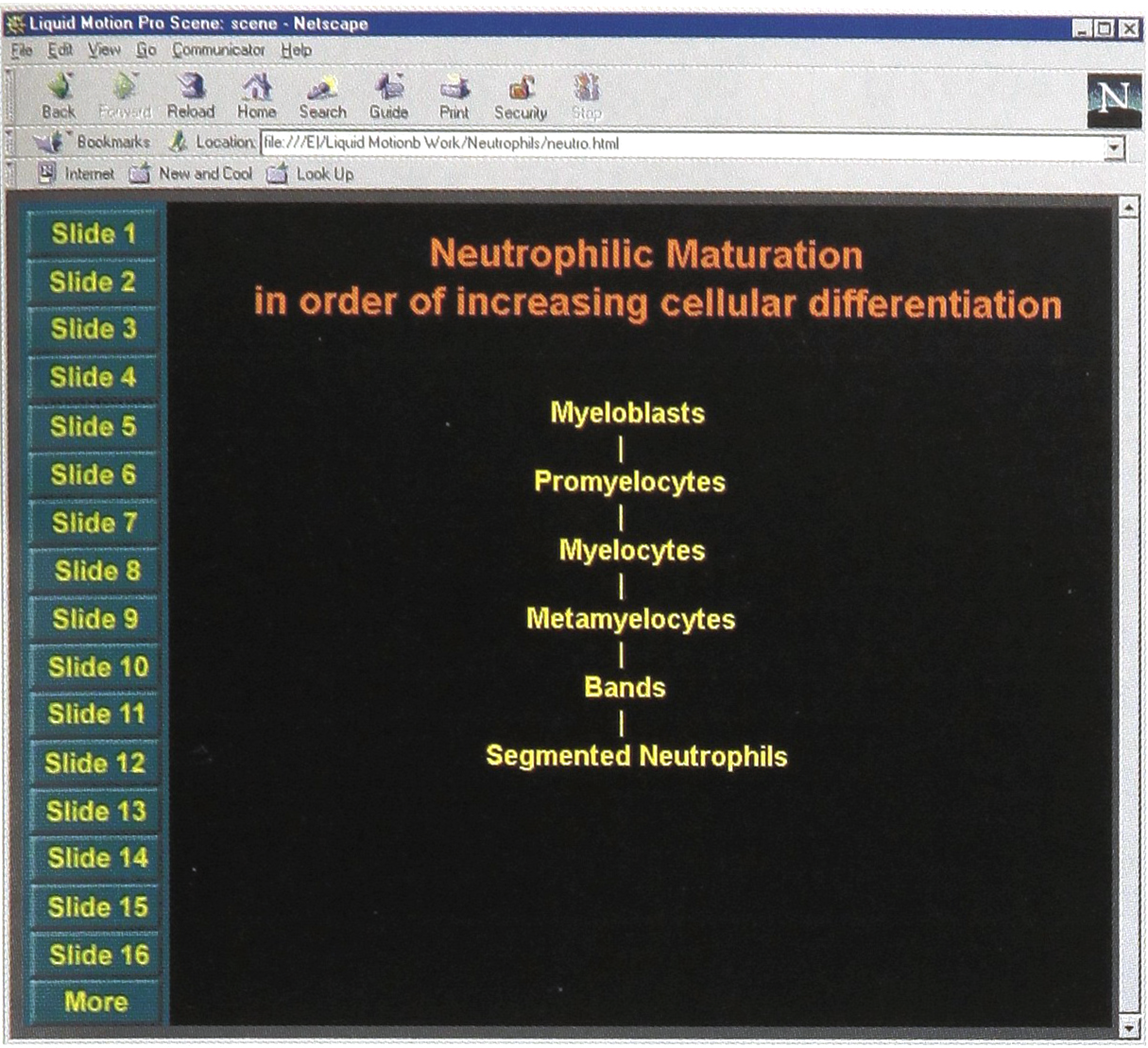
A screen image from the module for neutrophilic maturation. The set of buttons at the left is activated as the pointing device is dragged over each button to show the content of that slide. A click of the device opens that screen and provides a description of the image if the pointer is kept depressed.
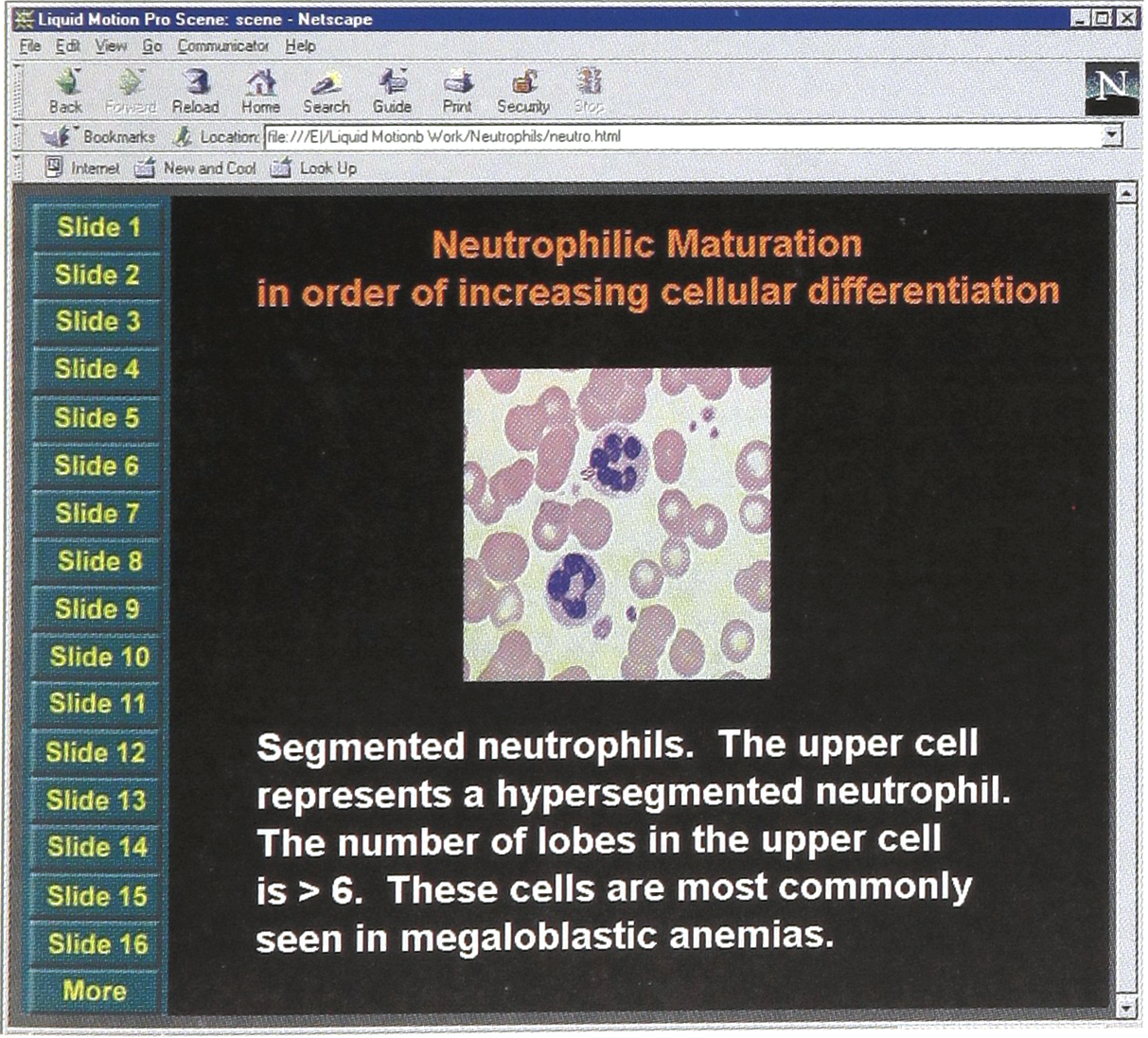
A slide in the neutrophilic maturation sequence. The microscopy image is accompanied by a brief description. An animated arrowhead points out the hypersegmented nucleus and indicates the cell referred to in the text for the slide.
The module for illustrating the principles of flow cytometry focuses on the interaction of a laser light source of a specific wavelength with an appropriate photoflour on the cell surface for cellular identification and also for cell sorting (figure 6). This module is designed to reacquaint a laboratory user with the basics of flow cytometry. It can also be used for self-guided instructions by students and with modifications, for technical updates with the introduction of a new technique for identification of sub-population of cells in peripheral blood or other body fluids.
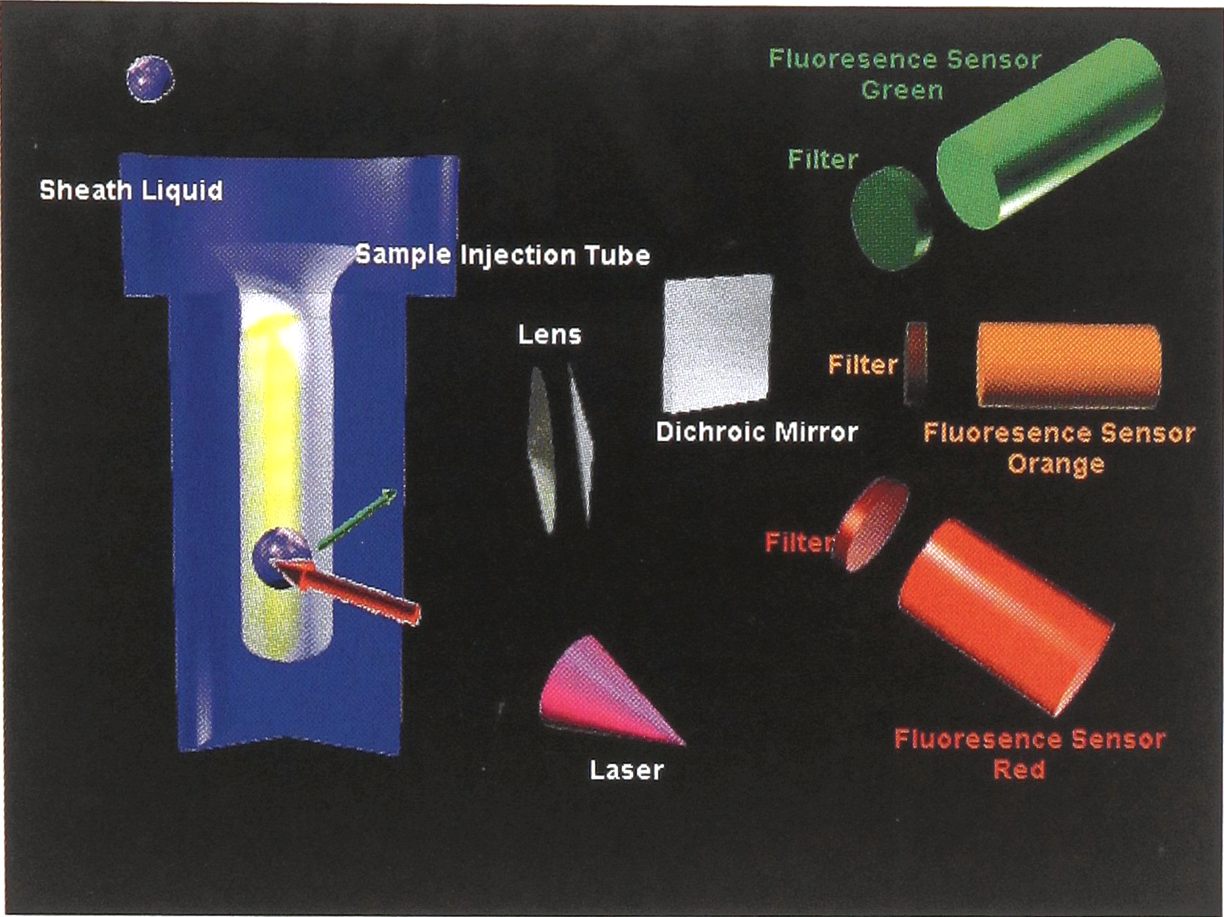
An image in the sequence for the module for flow cytometry illustrates the principal components of laser light induced fluorescence for cellular identification. The laser light beam (represented by the large arrow) induces fluorescence (indicated by the small arrow), which is detected by the sensors. This is shown in the module as an animated sequence with the cells flowing into the injection tube and being activated to emit appropriate color for detection.
The level of complexity and the amount of information in each of the modules illustrated can be incorporated into the contents to fulfill specific needs in an organization. Therefore, all the modules can be used for students, newly trained or experienced technologists and other laboratory personnel.
The modules accommodate structured and randomly selected self-evaluation tests that are amenable for record maintenance to fulfill regulatory requirements of the laboratory or for other perceived needs of the users.
Discussion
The design and implementation of a set of laboratory training tools accessible through an electronic network is presented for use in the environment in hospital laboratories in the evolving integrated health care delivery services. The clinical laboratories in these situations are challenged to utilize an ever-shrinking pool of individuals with technical expertise available to provide proficient, reliable services in a dispersed setting. The laboratory personnel in such institutions have responsibilities for maintaining individual technical competency and also for helping with the management of testing performed at bedside or at non-traditional sites by personnel not trained specifically in the performance of laboratory tests.
The network based tools are easily accessible through a hospital's electronic system, and can be customized for specific administrative and technical needs so that they can be used conveniently by personnel with different levels of laboratory experience. The modules illustrated present the conceptual approach to development of these tools and show familiar aspects of laboratory analyses in order to convey the features of flexibility that these tools offer. The modules can be kept current for the entire system; the contents can be structured for a variety of users in an organization. The information is accessible easily with minimal demand on the user for any knowledge of the design except gaining familiarity with the concept and being able to use a network browser.
The flexibility of design extends the potential for use of specific modules constructed in a similar way for non-laboratory personnel who participate in point-of-care testing (POCT). The basic approach to the POCT can be provided in a module, with specifics of usage of a technique. For example, finger stick technique to obtain a sample and the determination of blood glucose can be demonstrated through the use of a sequence of animated images that are linked dynamically to simulate the entire process of bedside whole blood glucose monitoring.
The development of this approach to a system of network-resident laboratory tools for use in clinical pathology may make it possible to ensure standardization of dispersed testing in a managed care IDS structure. The challenge for the clinical laboratories to provide consistency of service with a markedly reduced level of technical staffing can be made less onerous and more manageable.