




Abstract
Blood tests are some of the core clinical laboratory tests for diagnosing patients. In hospitals, an automated process called total laboratory automation, which relies on a set of sophisticated equipment, is normally adopted for blood tests. Noting that the total laboratory automation system typically requires a large footprint and significant amount of power, slim and easy-to-move blood test equipment is necessary for specific demands such as emergency departments or small-size local clinics. In this article, we present a point-of-care test system that can provide flexibility and portability with low cost. First, the system components, including a reagent tray, dispensing module, microfluidic disk rotor, and photometry scanner, and their functions are explained. Then, a scheduler algorithm to provide a point-of-care test platform with an efficient test schedule to reduce test time is introduced. Finally, the results of diagnostic tests are presented to evaluate the system.
Introduction
Today, fully automated laboratory analyzers are some of the most critical elements of the health care industry. Many laboratories in hospitals currently have either modular preanalysis with analytical systems or total laboratory automation (TLA) systems for clinical chemistry immunology tests.1–3
Typical TLA systems have adopted conveyor belts to optimize the rapid testing of a large number of samples at large-sized hospitals. However, it is difficult to set up TLA systems in small- or medium-sized hospitals because the conveyor belt systems are huge and require a great deal of investment in related facilities. Therefore, in small- or medium-sized hospitals, clinical tests are performed manually or performed by institutions with dedicated facilities by sending the samples. In addition, because existing TLA systems carry out the tests sequentially, it takes a long time to complete ordered tests. For these reasons, an innovative clinical laboratory system that can provide high flexibility and personalization is needed to support medical diagnosis even in small- or medium-sized hospitals.4–8
To overcome this situation, various approaches to analytical techniques have been attempted with innovative analytical devices.1–17 Some laboratories developed robotic platforms that could provide flexibility to the system and were small enough for set up in a small- or medium-sized hospital.9,10 On the other hand, medical-related companies developed portable clinical chemistry systems suitable for small-sized laboratories or hospitals such as Piccolo Xpress 15 and Gyros immunoassay platform. 16
An alternative to the TLA system that is seen as the most attractive among these new systems is a portable clinical test system with modular robotic automation. 17 Robotic automation can be defined as a dedicated robotic system capable of performing selective laboratory tasks. In general, robotic automation is more flexible, smaller, and lower cost than the TLA system. Although it might have smaller throughput than the TLA system, its shortcoming can be compensated for by operational flexibility under minimum overhead. Moreover, robotic automation systems designed for portable clinical tests and selective analytical tasks may better fulfill the needs of small- or medium-sized hospitals, laboratories, mobile clinics, ambulances, field clinics for military use, and pediatric patients for whom it is difficult to obtain an adequate volume of blood samples.
In this article, point-of-care test (POCT) equipment for a flexible laboratory automation system is proposed for various blood tests. The POCT platform consists of a reagent module, dispensing module, disk tray module, photometry scanner, and control module. A centrifugal disk is used to contain, transfer, and mix the blood samples and reagents. In this work, the POCT platform for the blood test is introduced. The platform can carry out diverse and heterogeneous tests simultaneously via the centrifugal disk.
The rest of the article is organized as follows. The next section describes the architecture and components of the system, which includes the reagent tray, dispensing module, disk tray module, photometry scanner, and so forth. Next, a scheduler algorithm for reducing the test time is explained. The fourth section presents the test results for use in evaluating the system’s performance. Finally, the article concludes with a summary.
System Components of the POCT Platform
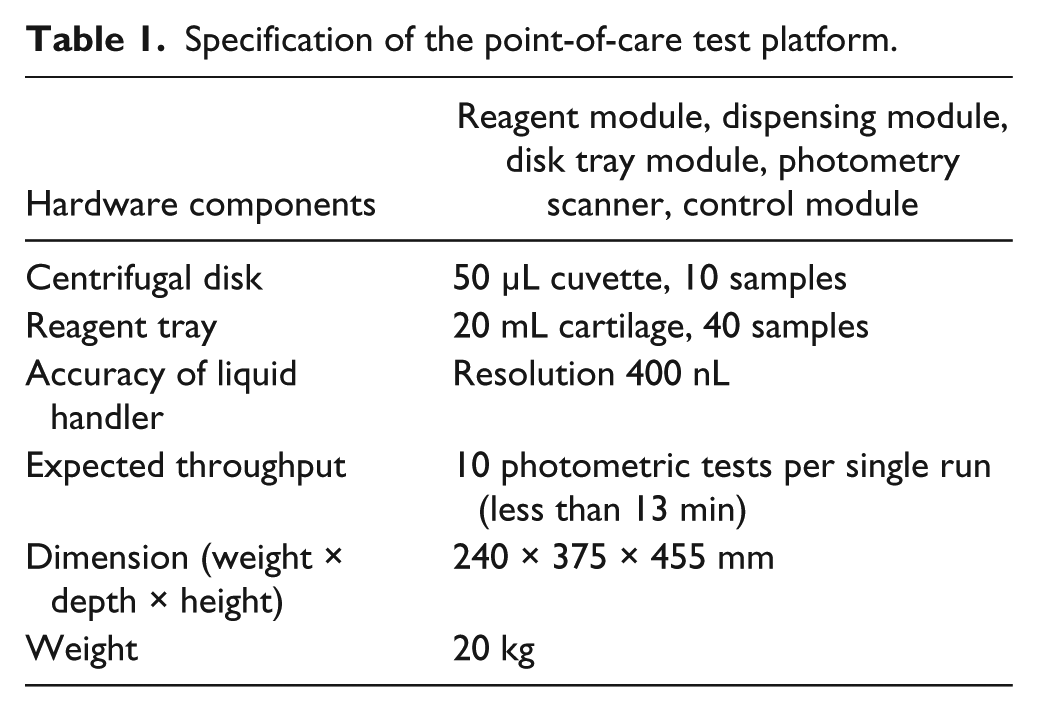
As depicted in Figure 1 , the new POCT system for clinical tests provides sufficient functions prerequisite in clinical diagnosis such as analytical methods of clinical tests. The system is composed of a reagent tray, dispensing module for handling reagents, disk tray module (10 test cuvettes in a single disk), control module (schedules a test sequence with a selected test list and operates the platform), and photometry scanner. The size and the weight of the POCT platform are 240 × 375 × 455 mm and 20 kg, respectively, as shown in Table 1 . It is much smaller than that of typical TLA systems and portable systems. Detailed information of each component is described in this section.
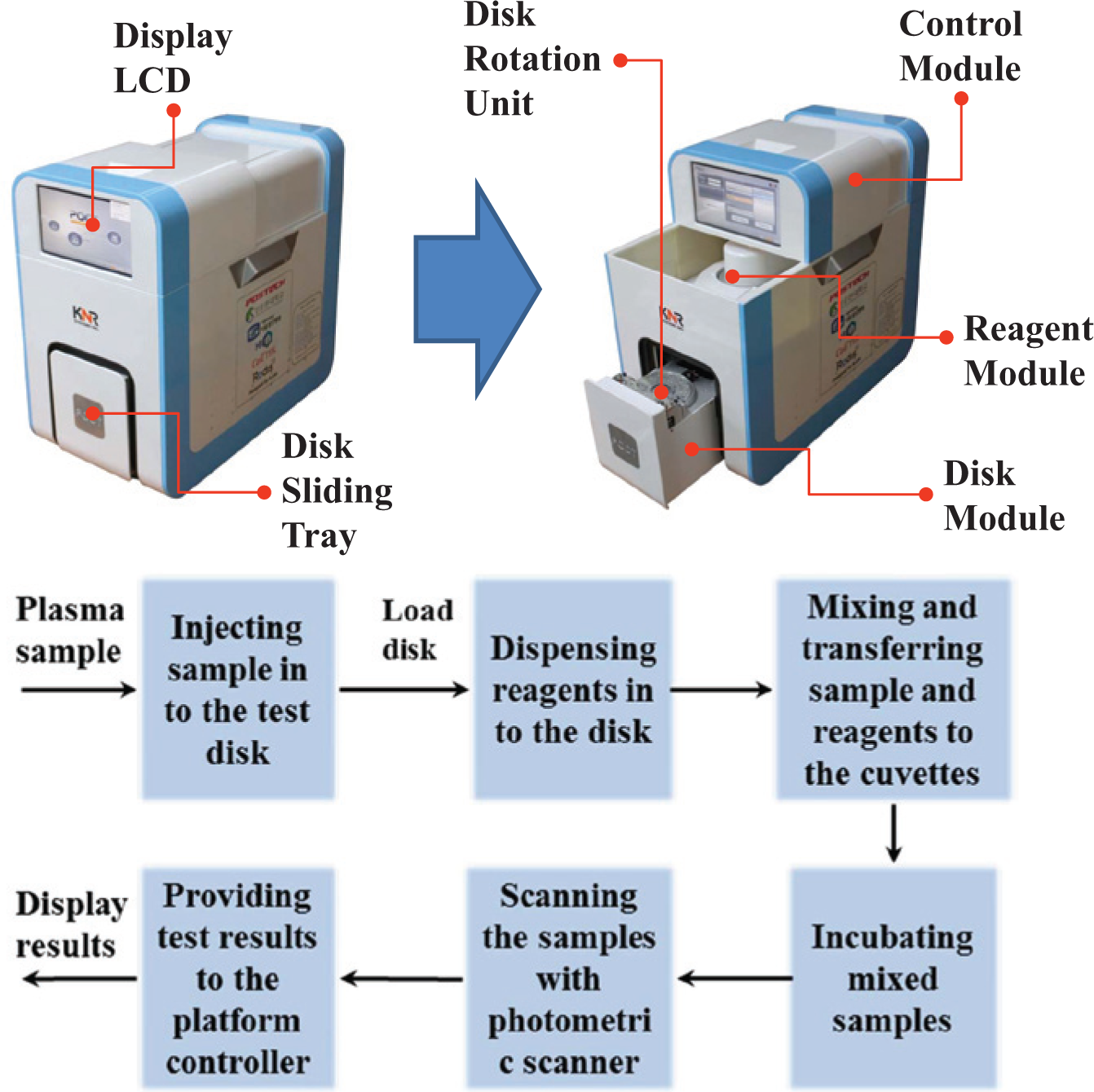
Description of the whole system and operating procedures of the point-of-care test equipment.
Specification of the point-of-care test platform.
Operating Procedures
The basic functions of the POCT platform include the receipt of the test list selected by the user, test sequence scheduling, dispensing of reagents, planning and control of the disk rotor, incubation, and detection. In the first, the test disk containing the sample is loaded into the disk tray. Then, the user selects the test to be carried out using the graphical user interface, as shown in Figure 2 . Now, the POCT platform automatically operates following the job schedule. The dispenser module dispenses the reagents into the test disk. The sample and reagent are simultaneously mixed and transferred to the cuvettes of the disk using the centrifugal force generated by the rotor of the disk tray module. Then, the mixed samples are incubated. After the scheduled incubation time, the spectrophotometer scans the sample and provides the test results to the platform controller. Finally, the test results are displayed on the screen of the POCT platform.
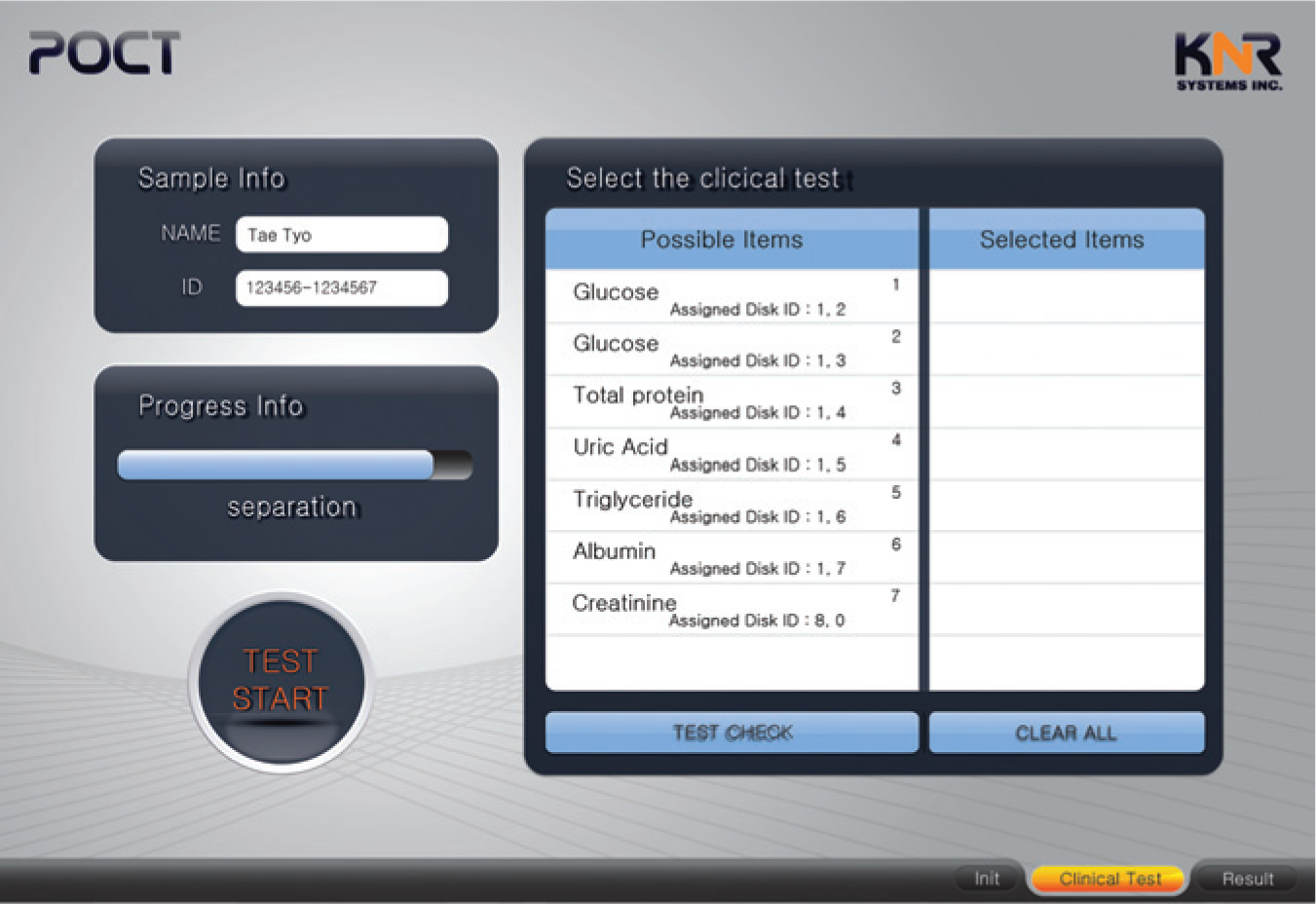
Illustration of graphical user interface of the point-of-care test equipment.
Clinical Test Disk
The POCT platform uses a clinical test disk for mixing and transferring the sample and reagent simultaneously. For the disk, a centrifugal force–based serpentine micromixer was developed and applied by La et al. 18 As shown in Figure 3 , a sample chamber is built into the inner side of the disk, which is the inlet of blood samples. The samples are delivered to the metering chamber through the distribution channel and metered before being mixed with reagents by centrifugal force. The dispensing hole is the inlet of reagents, which is located on top of the reagent chamber. The blood sample and reagents are mixed and delivered to cuvettes while passing through mixing channels by centrifugal force. Overloaded blood sample at metering chambers is transported to a sample wasting chamber. Likewise, overloaded mixed sample at cuvettes is contained in a wasting chamber. A total of 12 cuvettes are located on the outline of the disk. Among them, 10 cuvettes are used to carry out clinical tests and 2 cuvettes contain deionized water to be used for the calibration of the photometry scanner.
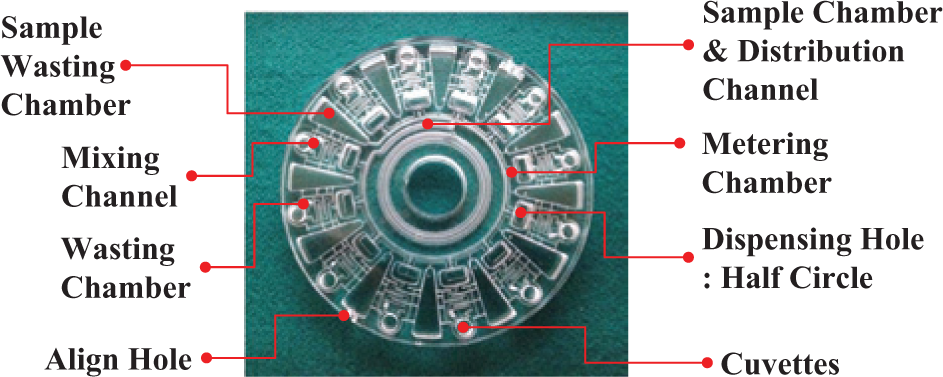
Clinical test disk.
Reagent Tray and Dispensing Module
The reagent tray is installed for containing reagent cartridges. In the reagent tray, a total of 20 reagent cartridges can be loaded at once, as shown in
Figures 4
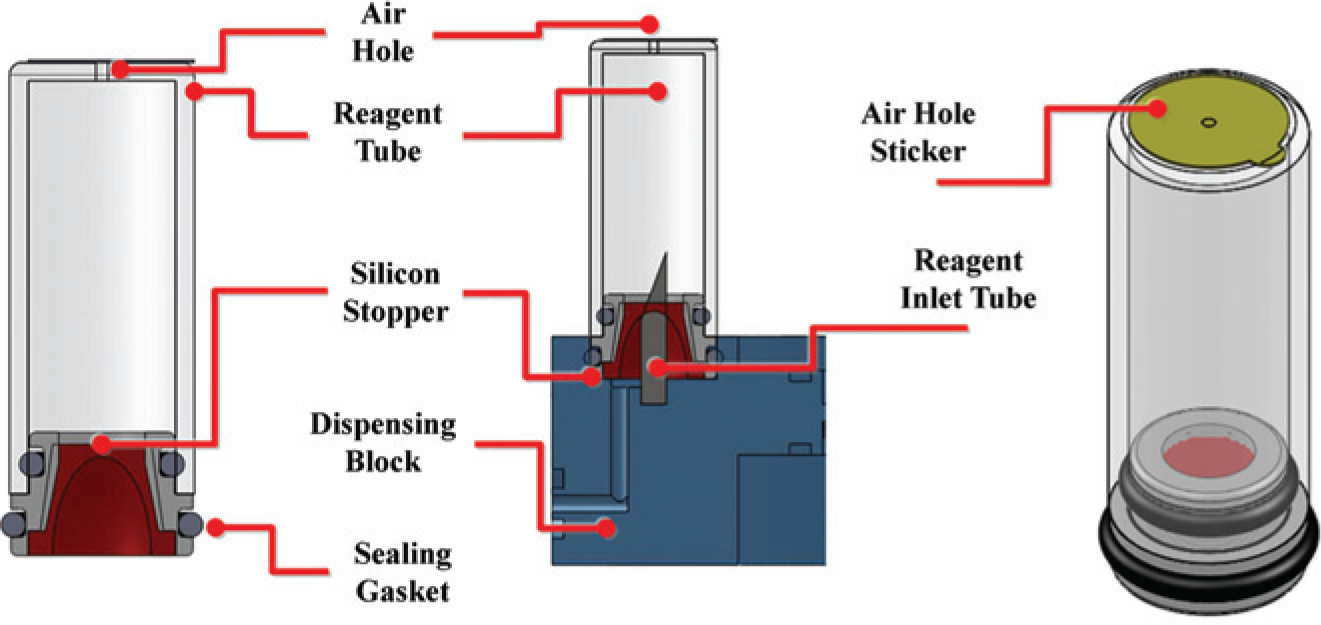
Reagent cartridge.
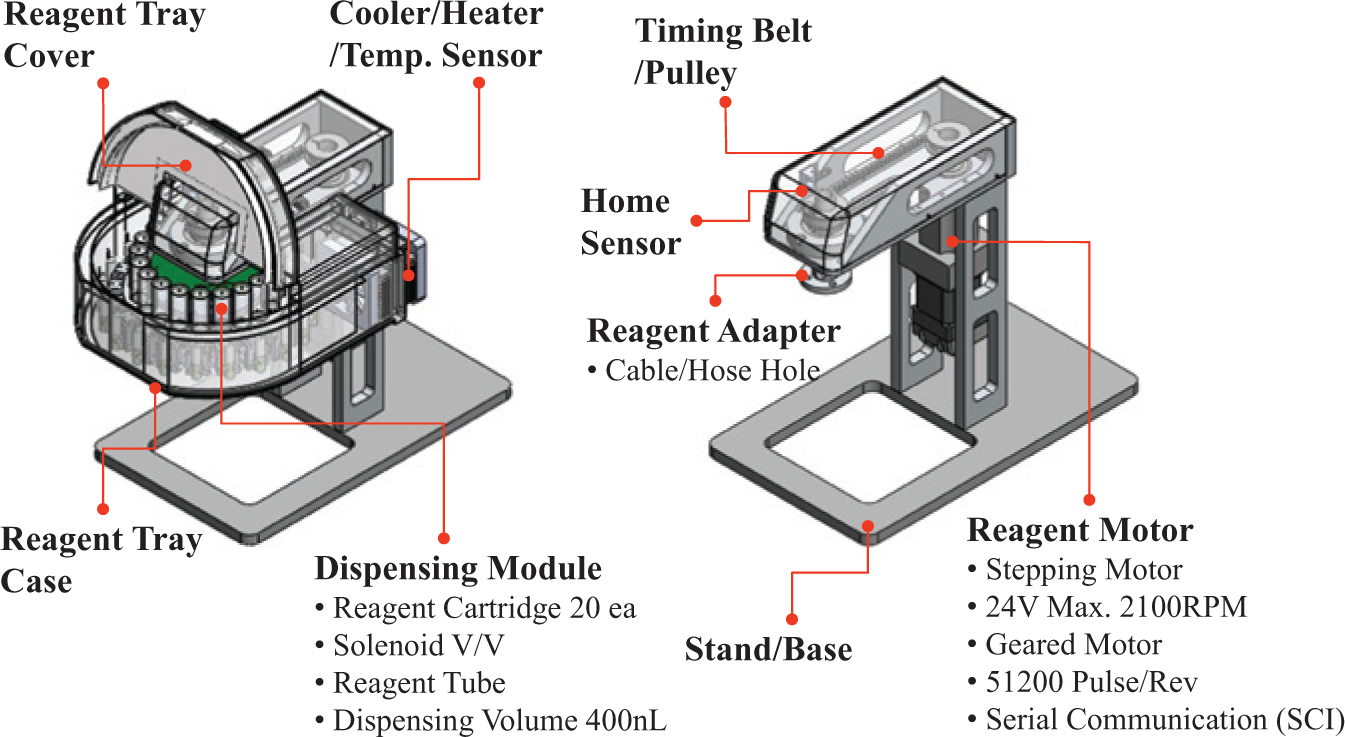
Reagent tray and dispensing module.
Then, the dispensing module injects the aligned reagent into the hole with a diaphragm pump. The diaphragm pump, which is composed of a diaphragm and solenoid valve, prevents the contamination of reagents and dispenses the reagents with 400 nL of volumetric resolution. The dispensing module can rotate a total of 360° (180° each in clockwise and counterclockwise directions).
Disk Tray Module
The disk tray module is the module into which the disk is docked into the POCT platform. As shown in Figure 6 , the disk tray includes a disk motor, tray sliding motor, and temperature control unit. The disk motor aligns the dispensing hole of the disk to the reagent cartridge on standby to shoot the reagent into the hole and provides centrifugal force to the disk by rotating it. The temperature control unit maintains the temperature of the disk tray at 37 °C for incubation of the samples in the chambers of the disk after the dispensing and mixing procedure. Opening and closing of the disk tray is driven by the set of linear guide and sliding motor. In addition, the photometry scanners are located in the disk tray module.
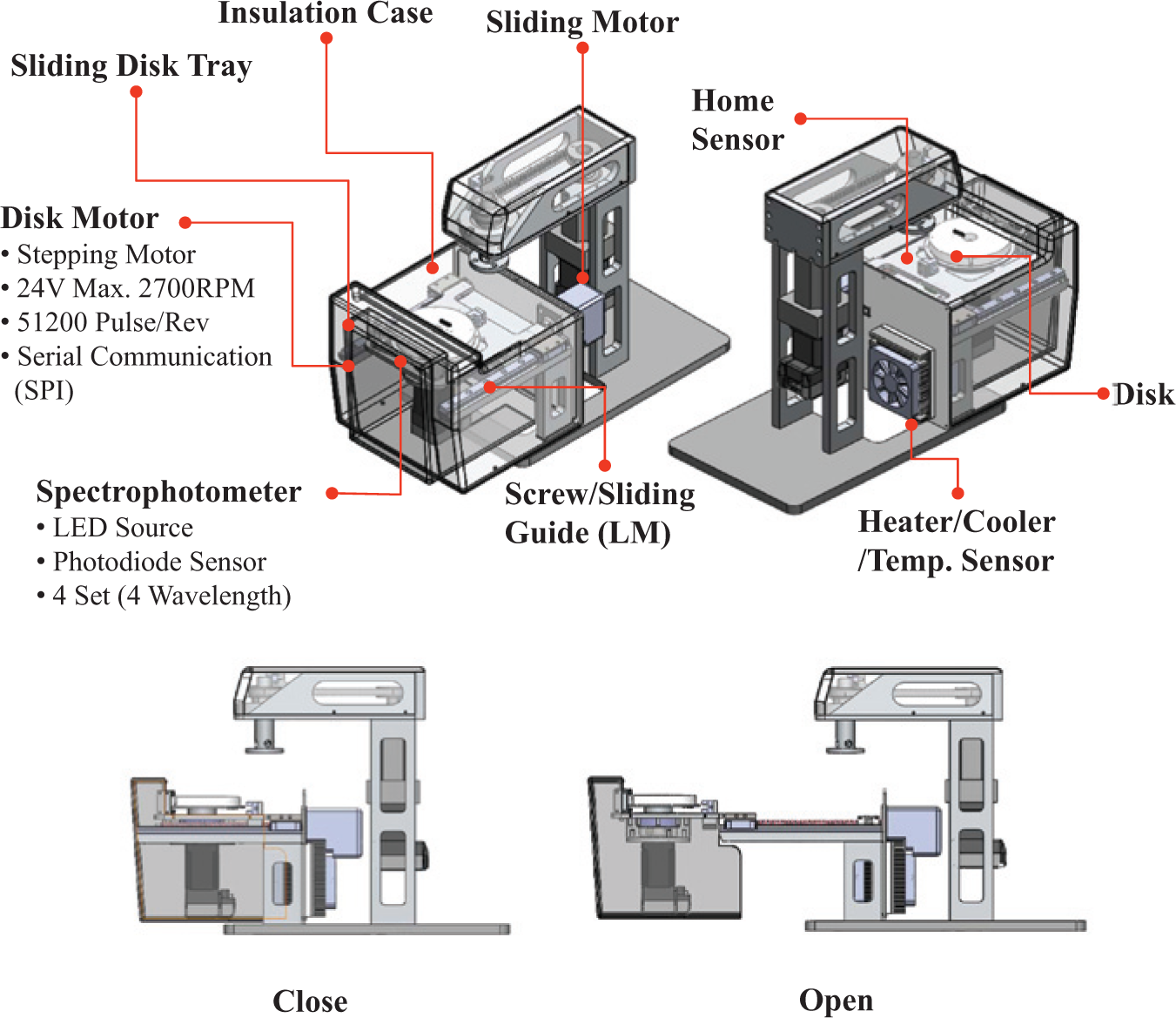
Disk tray module.
Photometry Scanner
The POCT platform uses a photometry scanner for diagnostic tests. A total of four photometry scanners are embedded in the system. The light-emitting diodes (LEDs) of the photometry scanners produce lights of different wavelengths: 365 nm, 500 nm, 540 nm, and 640 nm. As shown in Figure 7 , two focusing lenses are applied on both the light-transmitting part and the light-receiving part to focus the LED light on the disk chamber and the receiving part of the sensor, respectively.
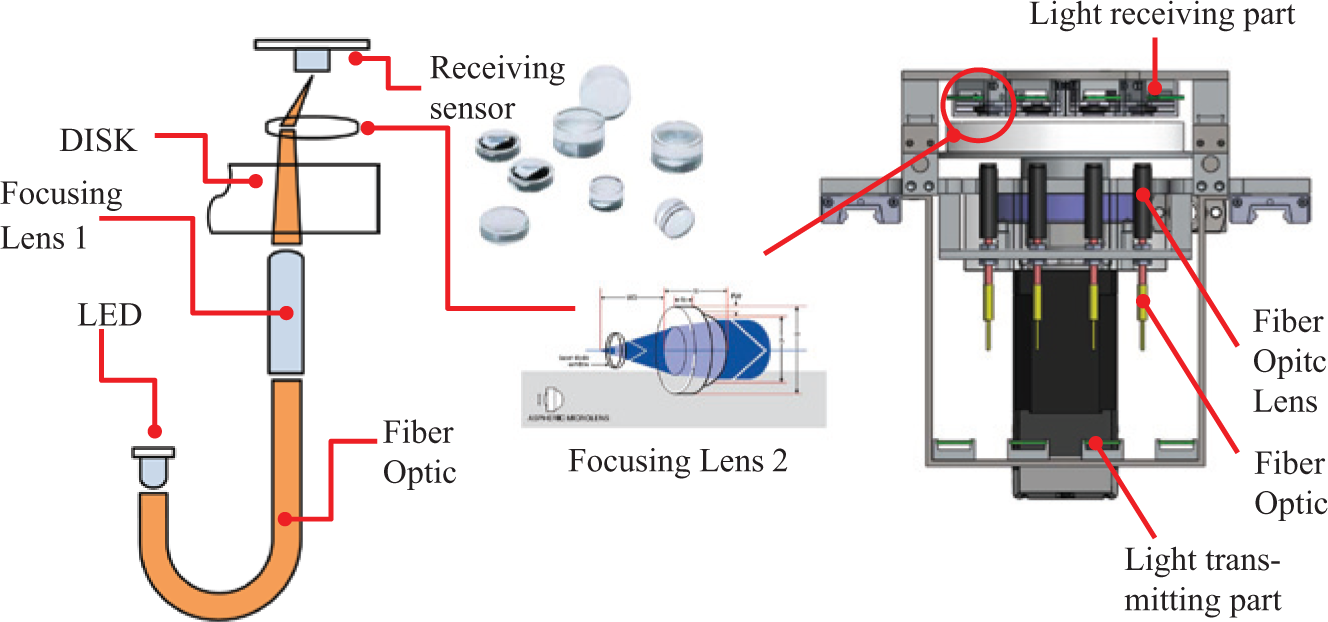
Composition of the photometry scanner.
After receiving emitted LED light, the photometry scanner measures the optical density (OD) value and passes this information to the main controller. Then, the main controller evaluates the test result with OD values. It is possible that each sample mixed with a different reagent has a unique OD value.
Control System
Because the proposed system is composed of multiple inspection modules for clinical tests, a fast and powerful controller is required. To achieve this requirement, the single-board computer (SBC) and the digital signal processor (DSP) controller are used to realize the motion controllers of the platform. As shown in Figure 8 , the POCT platform is operated by motion controllers that consist of SBC and DSP controllers. In particular, the DSP controller provides real-time, low-level control of individual hardware devices such as motors, solenoid valves, various sensors, and so on. Meanwhile, the SBC provides instant test sequence schedules, system stability, management capability, a wide range of operating systems, user-interface tools, data management options, and communication to the POCT platform.
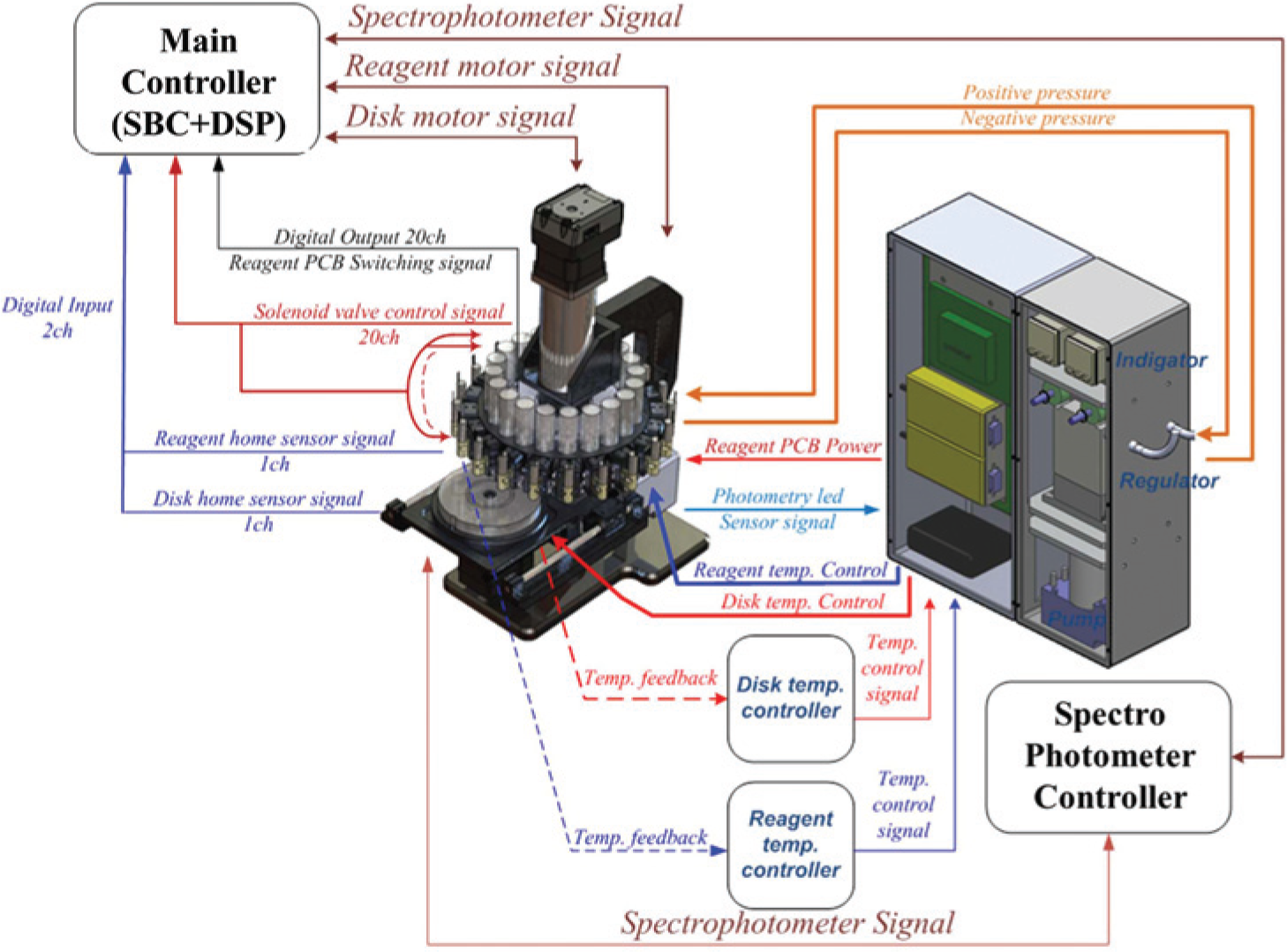
Schematic of the control system.
In addition to these controller components, scheduler software is embedded in the SBC. The software performs scheduling, which can ensure that the time of the clinical tests is less than 13 min. A detailed explanation of the scheduling algorithm is described in the next section.
Scheduling Algorithm for Instant Tests
The algorithm is designed for efficient job management of multiple modules and the test instrument during clinical tests, whatever the selected tests are. Also, important factors in the design of the scheduler algorithm and control logic, namely, the positions of the photometry scanners, the location of the cuvettes on the clinical test disk, the number and types of tests, and the specification of the disk rotor, are considered. The clinical disk has 12 cuvettes and 10 cuvettes for clinical tests and 2 cuvettes for sensor calibration. As shown in Figure 9 , the cuvettes are arranged on the outline of the disk and the photometry scanners are attached on the disk tray, both at 30° intervals. Each photometry scanner can measure the OD value at wavelengths of 365 nm, 500 nm, 540 nm, and 600 nm. In addition, the POCT platform uses two methods (1 point-end-point assay, rate assay) to carry out clinical tests, as shown in Table 2 .
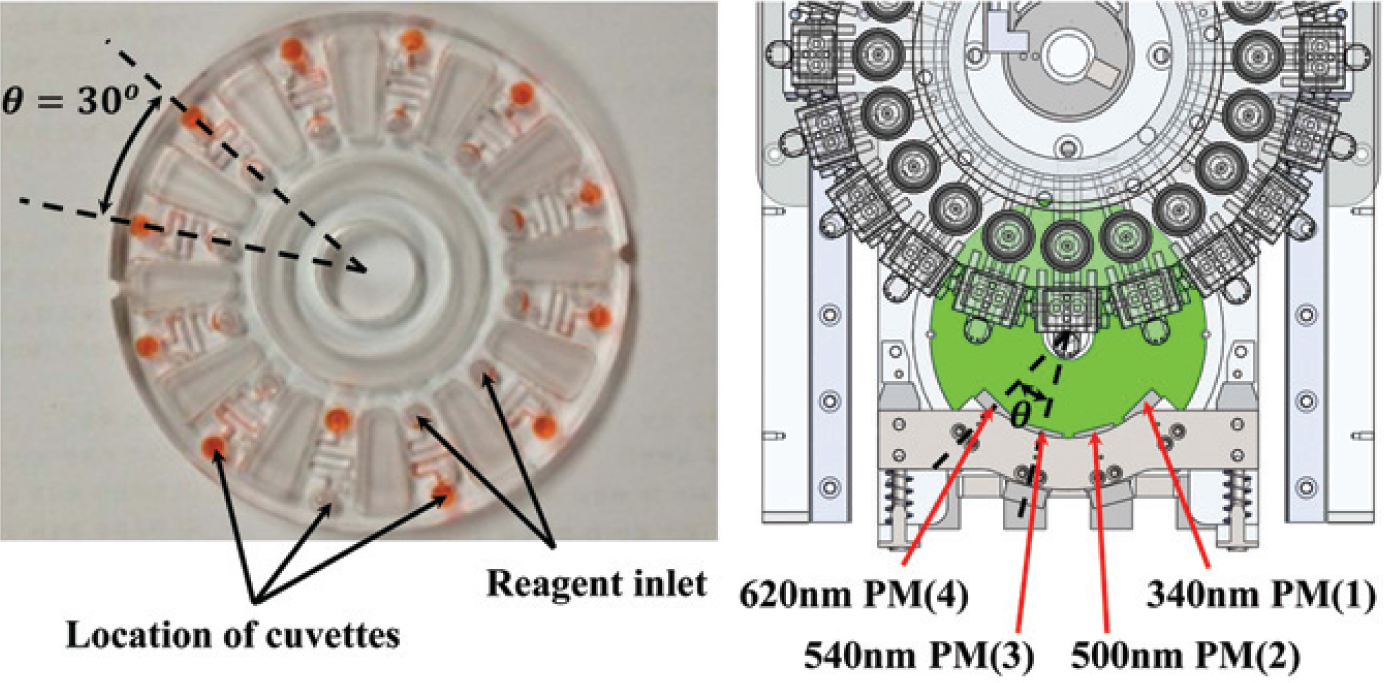
Arrangement of cuvettes on the disk and photometry scanners in the point-of-care test platform.
List of clinical tests for evaluating the point-of-care test platform.
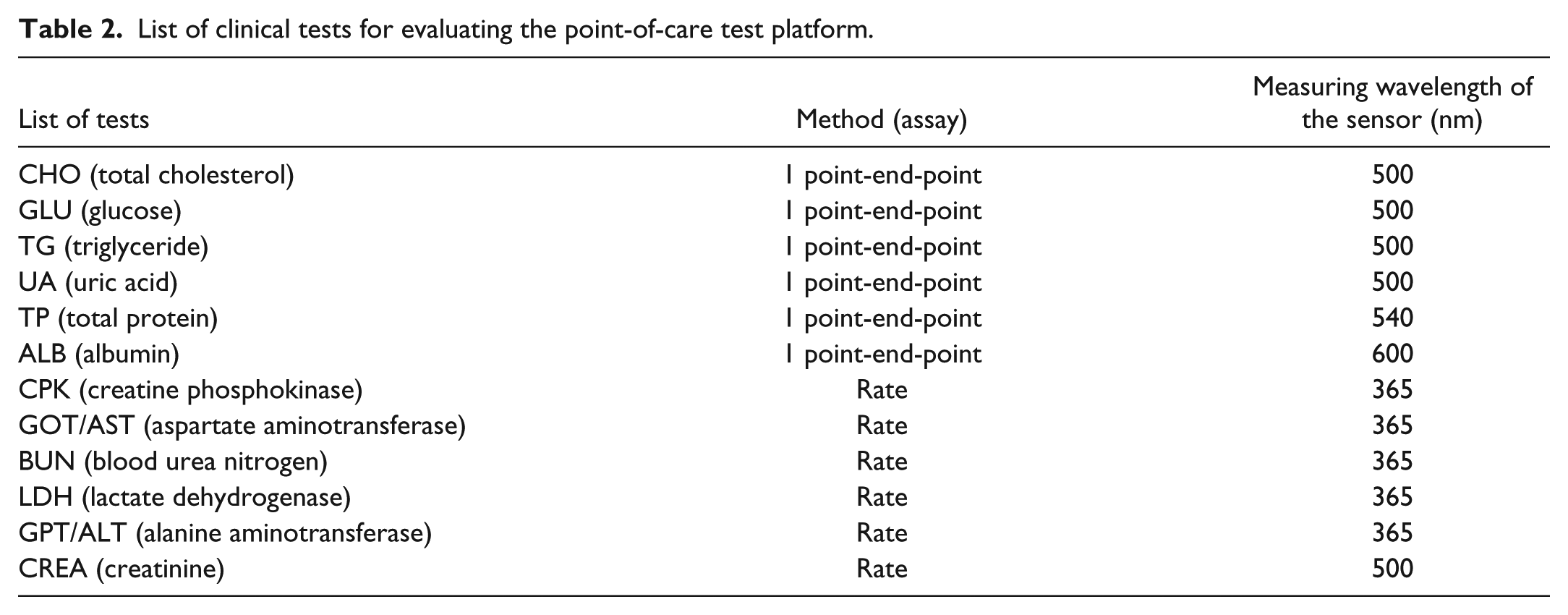
To finish the clinical tests in a maximum of 13 min, the scheduler algorithm changes the order of the selected test list so that the sensors can measure the cuvettes’ OD value, as many as possible, at once. For example, when a user selects four tests that should be measured with the 365nm wavelength photometric scanner, one test with the 500 nm wavelength photometric scanner, three tests with the 540 nm wavelength photometric scanner, and two tests with the 600 nm wavelength photometric scanner in random order, the scheduler rearranges the order of the tests to [{(1), (2), (3), (4)}, {(1), (3), (4)}, {(1), (3)}, {(1)}]. Here, (1) ~ (4) denote tests to be measured with 365 nm, 500 nm, 540 nm, and 600 nm wavelength photometric scanners, respectively.
In addition, because a user will choose tests in random order and each type (1 point-end-point assay and rate assay) of assay requires 5 to 7 min to be carried out (as shown in Figure 10a , b ), the scheduler is required to distinguish the types of the selected tests and gather the same types. Therefore, the POCT platform can run a clinical test with the rate assay first and then the one point-end-point assay to reduce test time, as shown in Figure 10c . The whole scheduler algorithm is represented with a pseudo-code, as shown in Figure 11 .
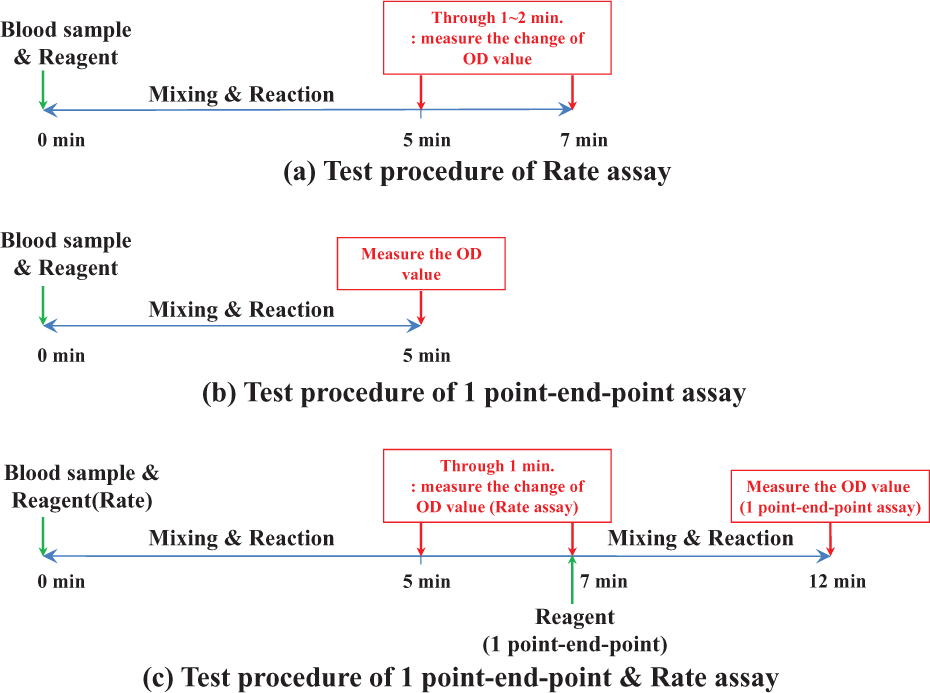
Test procedure of each type of measuring method.

Pseudo-code of scheduler algorithm.
Results of Diagnostic Tests
To evaluate the trend of the measured results and the reliability of the POCT platform, two cases of tests were performed. In both tests, a test disk containing blood plasma samples separated from whole blood was used. Details of the experiments are explained as follows.
The first experiment was carried out to verify the reliability of the photometry scanner. Three tests (Control 1, Bio-Cal, Control 2) were performed 100 times, respectively, on the same chamber of the test disk. The OD and coefficient of variation were calculated from the test results and are provided in Figure 12a . A certain tendency is shown in all of the solutions used for the diagnostic tests. All of the coefficients of variation are less than 1%. This indicates that the test results of the photometry scanners were reliable.
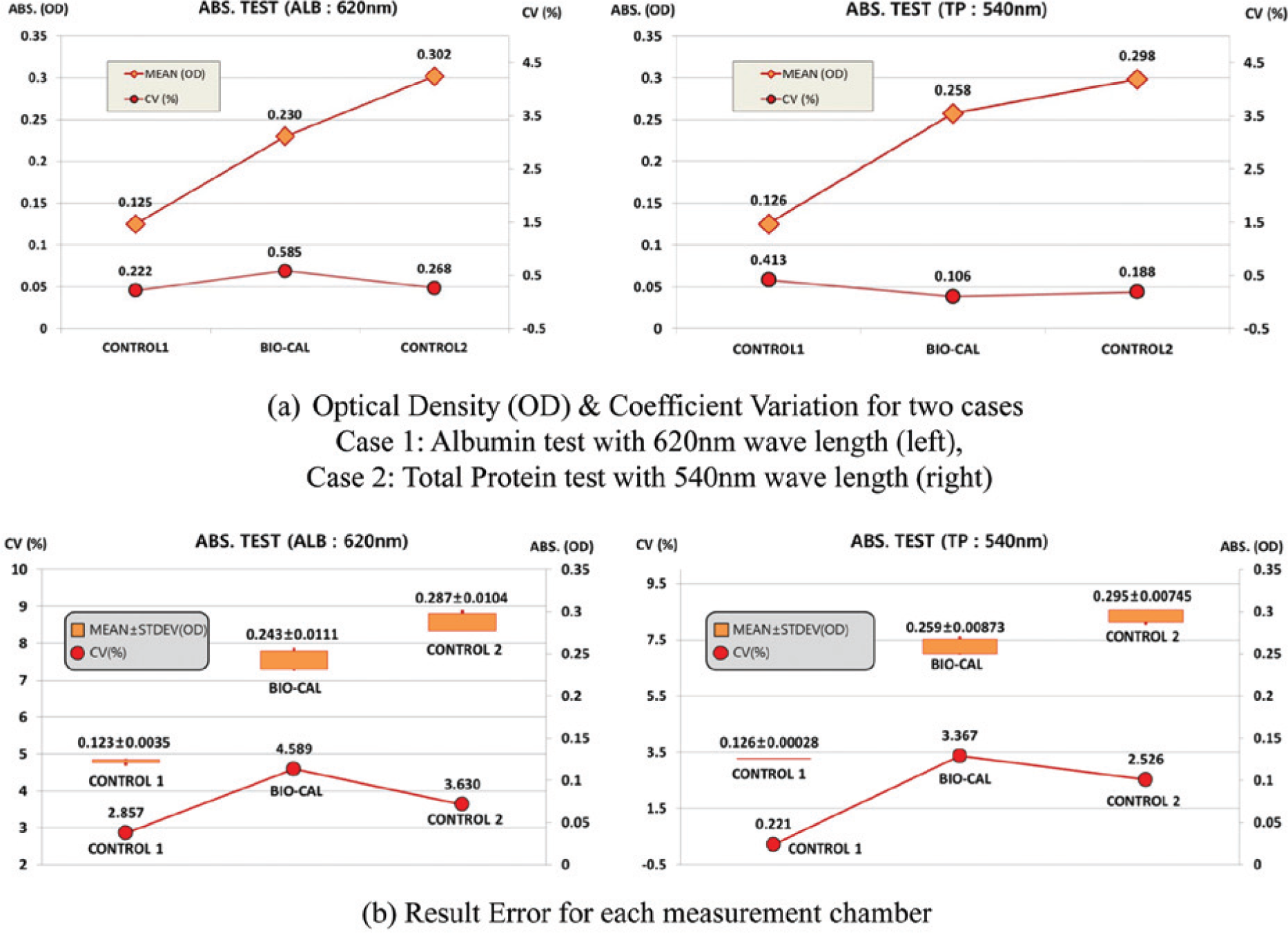
Experiment results for evaluation of point-of-care test platform.
The other experiment was performed to evaluate the reliability of the test disk, which has a total of 12 chambers. Ten chambers were used to carry out the same test, which is one of the three tests mentioned above, and two chambers were filled with pure water as a reference solution. As shown in Figure 12b , the maximum value of the coefficient of variation is less than 5%, and the tendency of the test is the same as that of the first experiment. The error of this experiment is higher than that of the first experiment because of the variation of each chamber’s surface condition and the fine air particles inside of the chamber. Yet this error can hardly affect distinguishing whether the result of the diagnostic test is positive or negative. And the tendency of the experiment result shows reproducibility. Therefore, we expect that the coefficient of variation can be lowered to less than 1% if the causes of the error mentioned above are solved.
Conclusions
In this article, POCT equipment that can provide flexibility and portability with low cost was presented. The components of the system, such as the reagent tray, dispensing module, disk tray, photometry scanner, and system architecture, were introduced. Then, the scheduler algorithm embedded in the controller of the POCT platform, which provides the platform with an efficient test schedule for reducing test time, was explained. Finally, some diagnostic test results were presented to evaluate the performance of the point-of-care test equipment.
Footnotes
Acknowledgements
This research was supported by the MKE (The Ministry of Knowledge Economy), Korea, under the Next Generation Robot Actuator/Sensor Research Center support program supervised by the NIPA (National IT Industry Promotion Agency) (H1502-13-1001).
Declaration of Conflicting Interests
The authors declared no potential conflicts of interest with respect to the research, authorship, and/or publication of this article.