




Abstract
Study Design
Basic Science Study.
Objectives
To determine the impact of rod composition and bending method on metal debris production during fatigue testing of posterolateral lumbar fusion constructs.
Methods
Posterolateral lumbar fusion constructs were embedded into Ultra-High Molecular Weight Polyethylene (UHMW-PE) blocks and subject to fatigue testing, following a modified ASTM F1717-21 protocol including cycles of compression with novel axial rotation. Variations in constructs included rod bending methods of pre-bent (PB) and surgeon-bent (SB) and rod compositions of titanium alloy (Ti) or cobalt chromium alloy (CC). Constructs were wrapped in lactated ringer solution-soaked cotton, which was dissolved and analyzed for metal particulate using inductively coupled mass spectrometry (ICP-MS).
Results
Metal debris produced by surgeon-bent cobalt chromium and pre-bent cobalt chromium constructs did not have significant differences in quantity or quality. Pre-bent cobalt chromium alloy rods produced a larger amount of chromium and cobalt metal debris than pre-bent titanium alloy rods.
Conclusions
We find that cobalt chromium alloy rods produce more metal debris than titanium alloy rods. We find no evidence that rod bending method affects metal debris quality or quantity. In considering factors that impact susceptibility to corrosion and metallosis, our data supports that rod composition, but not bending method, contributes significantly to metal debris production.
Keywords
Introduction
Instrumented lumbar spinal fusions are a common intervention to address degenerative spine diseases or to correct curvature.1,2 The basic posterolateral lumbar spinal fusion implant stabilizes the intervertebral joint utilizing bilateral rods and screws. To ensure the longevity of the implant amid a harsh biological environment, the qualities of the implant are important: it must have high fatigue strength, a Young’s elastic modulus similar to the bone, and a high corrosion resistance. 3
Between 9% and 36% of patients who undergo lumbar spinal fusion later require revision.4–9 These revisions may be necessary due to a failure of bony fusion, complications surrounding the surgical implant, further degeneration of the spine, and persistent pain. 10 Among the potential complications is corrosion of the implant itself. This corrosion may slowly break down the implant, resulting in weakness or failure as well as metal debris. The local buildup of metal debris is termed metallosis, which can trigger inflammatory events and lead to neural compression of the nearby spinal cord, loosening of the implant, or aseptic failure. 11 This is especially impactful for those who have a hypersensitivity to metals, further increasing the chances that the implant will trigger inflammatory events.
During manufacturing of a metal spinal implant, the surface of the implant is passivated, making it less reactive to its environment and therefore less likely to corrode. Micromotion between different parts of an implant can cause a corrosive process called fretting, which can break down this relatively unreactive surface metal. 12 The exposed subsurface metal is more susceptible to other corrosive processes, facilitating the breakdown of the implant and causing metallosis in the surrounding tissue.11,12
Different metals have unique properties that are important to consider for their use as implants. Stainless steel, titanium, titanium alloys, and cobalt chromium are common implant materials. Pure titanium implants display the least susceptibility to corrosion among implant metals.13,14 Titanium alloys and implants with dissimilar metals including titanium seem to have a slightly increased susceptibility to fretting in comparison to cobalt chromium. 13 This has been demonstrated in several studies using biomechanical models of spines using blocks following ASTM guidelines and adapted protocols.13,15,16
Besides the type of metal of the implant, the implementation procedure is a relevant factor in determining fretting risk. In spinal fusions, rods span across the vertebrae to stabilize the joint and need to have some curvature to match the native curvature of the spine. Surgeons can either use rods that are pre-bent or manually bend rods to match the exact curvature needed. Manually bending rods produces artifacts called notches that change the properties of the rods. A 2001 study established that straight rods-particularly those constructed of titanium-have diminished fatigue strength with the presence of any notching artifacts. 17 There are also several studies comparing the fatigue strengths of pre-bent and surgeon-bent rods.18,19 To date, no studies compare the corrosive properties of pre-bent and manually bent rods or the implications for metallosis.
Methods
Rod Groups
Two different rod metal types were used to represent the most common modern rod materials: titanium alloy and cobalt chromium alloy. Two different rod bending methods were used to represent the currently acceptable contouring methods: pre-bent rods, manufactured with a smooth contour in a single plane to match the physiologic curvature of the spine and surgeon-bent rods, which are straight rods that were cut and bent with French benders to approximate the contour of pre-bent rods. Based on these 2 variables for rod metal type and 2 variables for bending method, 4 groups were created: pre-bent titanium rods (PBTi), surgeon-bent titanium rods (SBTi), pre-bent cobalt chromium rods (PBCC), and surgeon-bent cobalt chromium rods (SBCC), with n = 5 bilateral setups for each group.
Fixation of Implants
Ultra-high molecular weight polyethylene (UHMW-PE) spine blocks were manufactured according to ASTM F1717-21 protocol for use in single level bilateral posterior lumbar fusion fatigue testing. Pilot holes and an external guide device were developed for consistent pedicle screw placement. Pedicle screws were consistent in all groups, made of a titanium alloy body with a cobalt chromium alloy tulip head. Set screws were consistent in all groups, made of titanium alloy. Matching rods from the same group were secured into polyaxial tulip heads with set screws. All tested implants were wrapped with cotton soaked in lactated ringer solution (LRS) prior to testing. Cotton was secured with polyethylene foil to retain moisture during testing.
Fatigue Testing
A hydraulic testing machine (MTS 858 Bionix II, MTS Corp) was used to test the different rod groups following ASTM F1717-21. Testing was conducted in force control with a constant load ratio of R = 31. This force was applied sinusoidally for 3 million cycles at 5 Hz. Novel axial rotation of +/− 1.50° (displacement control) was conducted simultaneously at 3 Hz for 1.8 million cycles. Failed trials, as defined by gross fractures in any part of the instrumentation, were excluded from debris analysis.
Debris Analysis
After 3 million cycles of compression were completed, cotton was removed from the constructs and dissolved chemically to collect metal debris on the external surface of implants. Implants were disassembled and rinsed in LRS for internal implant samples. The bilateral constructs were divided into separate left and right samples. Metal particles were chemically dissolved in all samples, which underwent metal particulate analysis using inductively coupled plasma mass spectrometry (ICP-MS). All rods were composed of multiple metallic elements; however, only the 3 predominant types—Titanium, Cobalt, and Chromium—were quantified in debris analysis.
Passive Corrosion Controls
For each testing group, one control trial was conducted. Each control trial was subject to the complete procedure for fixation of implants and debris analysis without fatigue testing. Trials were passively subjected to LRS for the same amount of time as the samples that underwent fatigue testing. The purpose of these trials was to control for metal debris produced from passive, static corrosion as well as implant setup and implant take down.
Statistical Analysis
Data are presented as median (Q1 – Q3) for continuous variables due to skewed and/or non-normal distributions.
To assess differences in metal debris by bending method and rod type, the Wilcoxon rank-sum test was applied to compare SBCC and PBCC, as well as PBCC and PBTi. If a significant overall difference was observed, pairwise comparisons among metal types were conducted using Wilcoxon rank-sum tests with Bonferroni correction. An additional analysis was conducted by summing matched internal and external debris per sample to compare total metal debris across rod types. In addition, to compare external and internal debris within each rod type, Wilcoxon signed-rank tests were performed separately for SBCC, PBCC, and PBTi.
Kaplan-Meier survival analysis was performed to compare failure rates between PBTi and SBTi rods under cyclic mechanical bending. Each group included the first 5 trials that attempted fatigue testing. The number of cycles to failure was recorded for each sample. Differences between groups were assessed using the log-rank test.
All statistical analyses were performed using R version 4.5.0. P-values less than 0.05 were considered statistically significant.
Results
Descriptive Statistics
After 3 million fatigue cycles, insufficient SBTi trials remained intact, making it inappropriate to directly compare metal debris collected from this group.
Thus, for each rod type (SBCC, PBCC, and PBTi), 10 rods were assessed at both the external and internal surfaces, yielding 20 samples per rod type. Each sample was analyzed for 3 metal types (Titanium, Cobalt, and Chromium), resulting in 3 data points per sample and 180 total observations. Two internal measurements—one from PBCC and one from PBTi—were unavailable, resulting in 178 total observations.
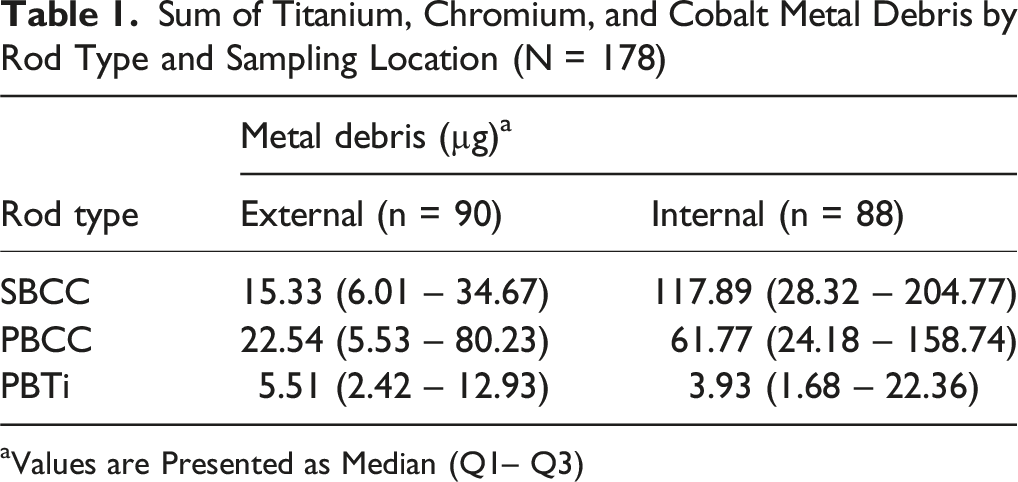
Sum of Titanium, Chromium, and Cobalt Metal Debris by Rod Type and Sampling Location (N = 178)
aValues are Presented as Median (Q1– Q3)
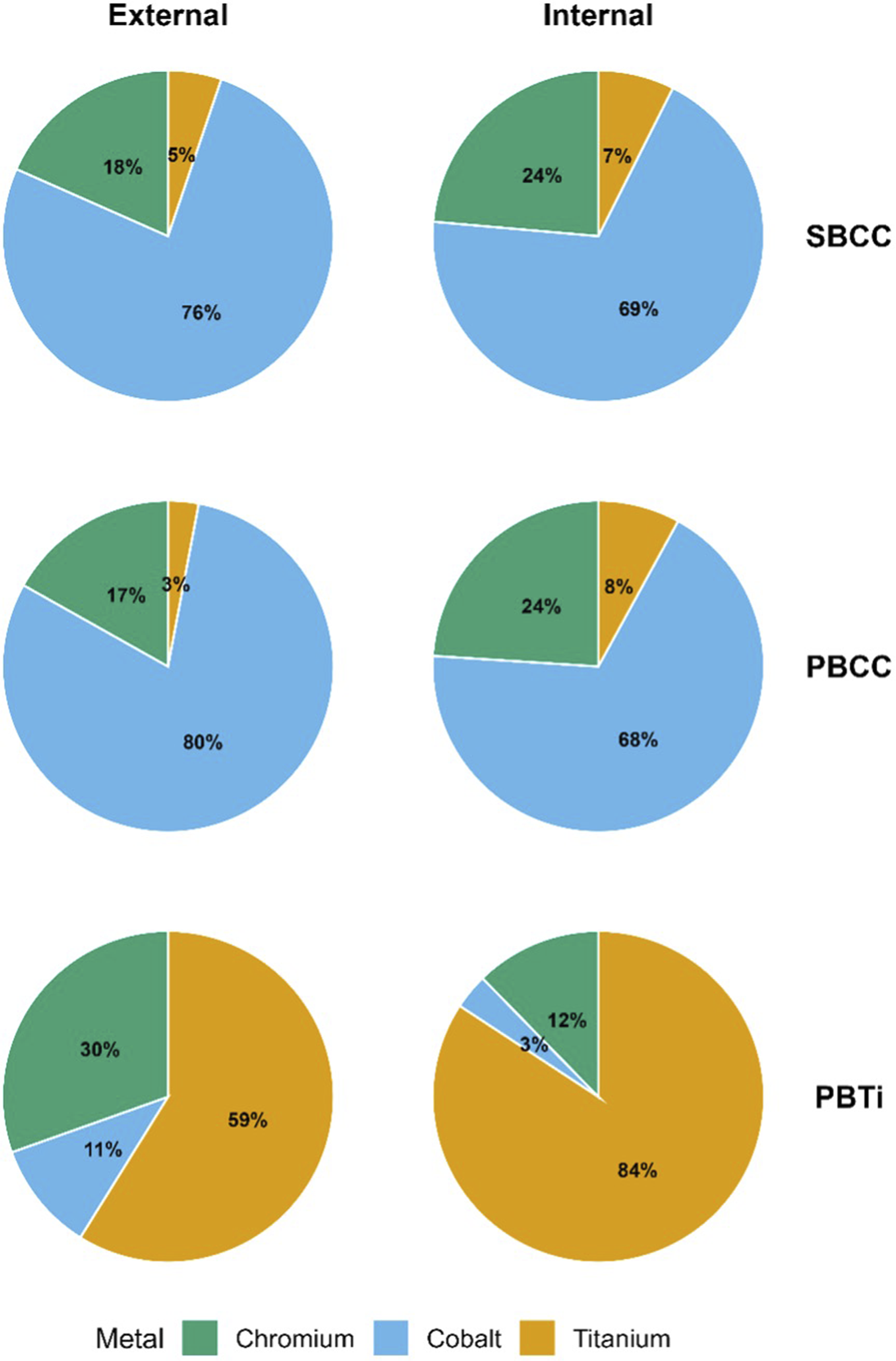
Composition of metal debris by rod type and sampling location. Bilateral posterolateral lumbar fusion constructs were embedded into UHMW-PE blocks using three different rod types: Surgeon-bent Cobalt Chromium Alloy Rods (SBCC), pre-bent cobalt chromium alloy rods (PBCC), or pre-bent titanium alloy rods (PBTi). 5 constructs for each group were made to undergo a modified ASTM F1717-21 fatigue testing protocol. Samples were taken from two different sites around the construct: external sites are sampled by dissolving cotton surrounding each implant and internal sites are sampled by rinsing deconstructed implants and analyzing the rinse solution. Samples were assessed with inductively coupled mass spectrometry to quantify the presence of elemental cobalt (blue), chromium (green), and titanium (orange), depicted here in a pie chart to show the proportion of each element found at each sample site for each group
Passive Corrosion Control
Each trial assessing metal debris with passive corrosion and full implant setup and takedown yielded no measurable wear with debris analysis.
Comparison of Total Metal Debris
When combining internal and external measurements for each matched sample, SBCC had the highest total metal debris (median = 124.43 µg), followed by PBCC (85.12 µg), and PBTi had the lowest (9.87 µg) (Figure 2). Pairwise comparisons showed that PBCC and PBTi, as well as SBCC and PBTi, differed significantly (both adjusted P < 0.001), while no significant difference was observed between SBCC and PBCC (P = 1.00). Comparison of total metal debris mass among surgeon-bent cobalt chromium alloy rods (SBCC, green), pre-bent cobalt chromium alloy rods (PBCC, orange), and pre-bent titanium alloy rods (PBTi, purple). Total metal debris mass was calculated as the sum total mass of elemental cobalt, chromium, and titanium collected from both external and internal sample sites following fatigue testing protocol. Statistically significant differences (adjusted P < 0.05) are marked with an asterisk (*)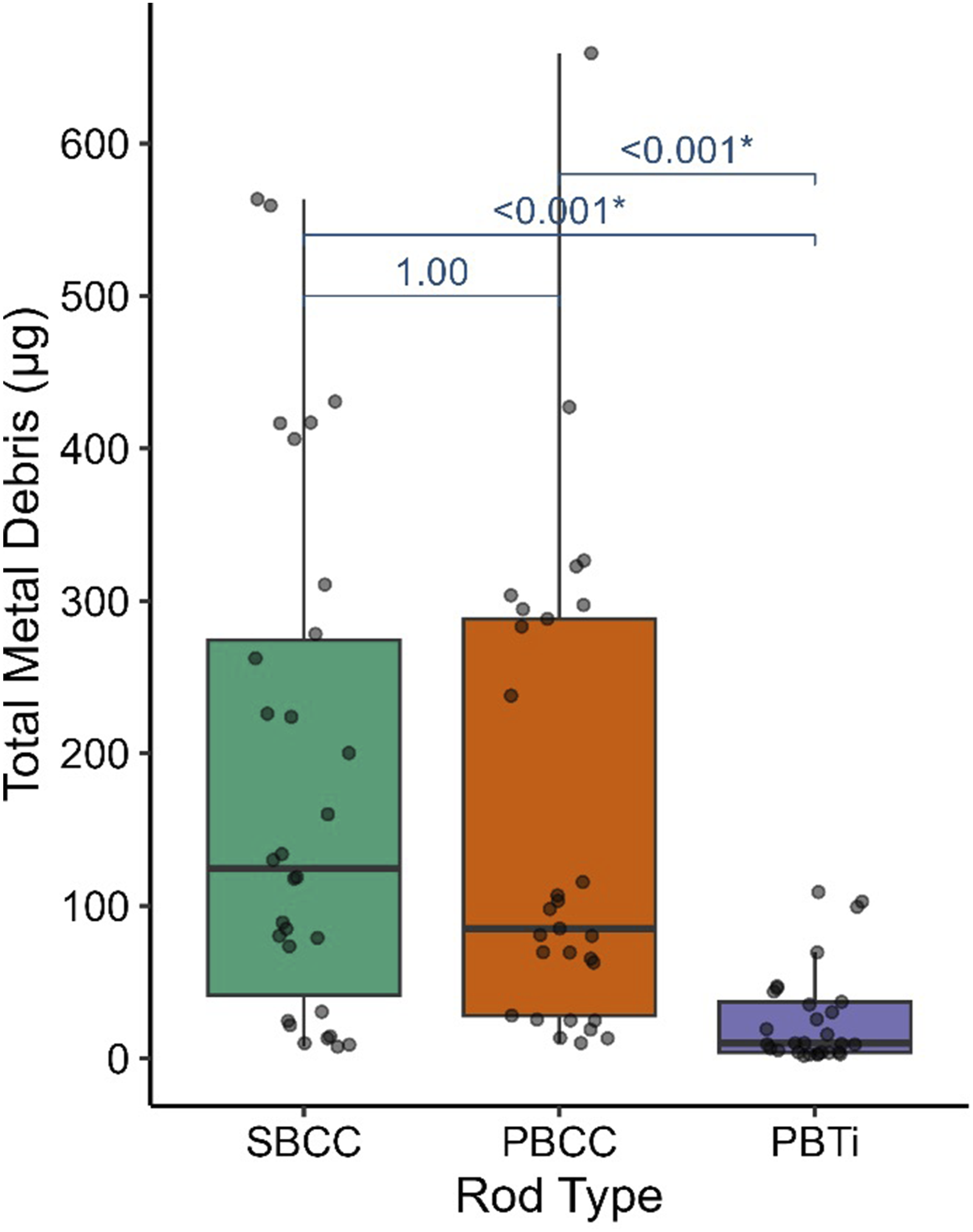
Comparison of SBCC and PBCC Rods: Debris Based on Bending Method
No significant differences in metal debris were observed between SBCC and PBCC in either external samples (P = 0.56) or internal samples (P = 0.36) (Figure 3, supplemental Figure 1). There was a trend of increased chromium and cobalt debris in external samples for SBCC setups compared to PBCC, but this trend was not significant. Comparison of metal debris between surgeon-bent cobalt chromium alloy rods (SBCC, red) and pre-bent cobalt chromium alloy rods (PBCC, blue) across three metals in internal samples.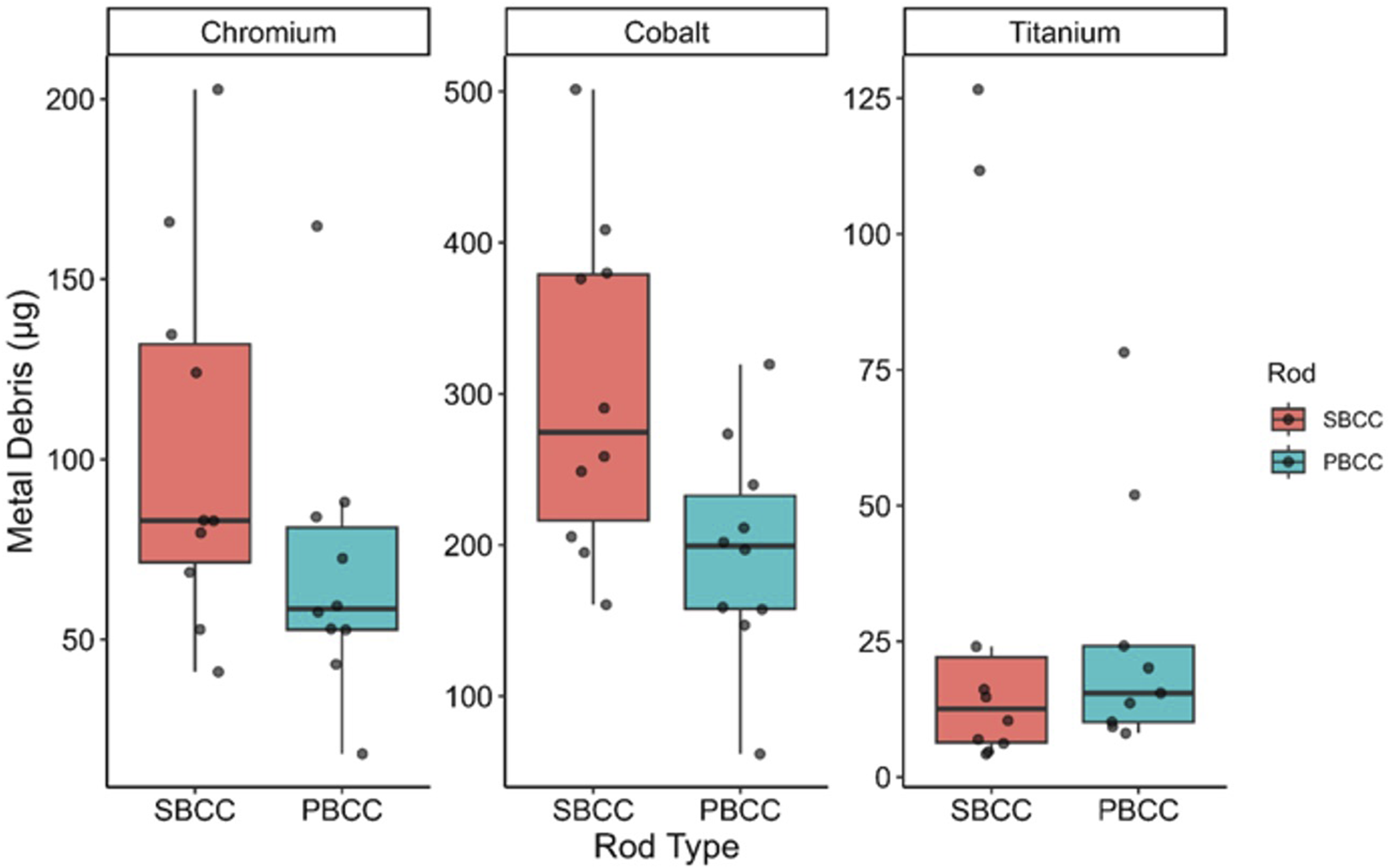
Comparison of PBCC and PBTi Rods: Debris Based on Metal Type
The Wilcoxon rank-sum test showed that both external and internal samples had significantly different total metal debris between PBCC and PBTi (P < 0.001 for both comparisons), with PBCC having higher overall medians than PBTi in both locations (external: 22.54 µg vs 5.51 µg; internal: 61.77 µg vs 3.93 µg) (Table 1, Figure 2).
In external samples (Figure 4), PBCC released significantly more debris than PBTi for both chromium (median: 22.54 µg vs 4.86 µg, P = 0.003) and cobalt (118.10 µg vs 1.87 µg, P < 0.001). Conversely, titanium debris was significantly higher in PBTi than PBCC (12.41 µg vs 3.93 µg, P < 0.001). A similar trend was seen in the internal samples (supplemental Figure 2). Comparison of metal debris between pre-bent cobalt chromium alloy rods (PBCC, red) and pre-bent titanium alloy rods (PBTi, blue) across three metals in external samples. This chart depicts samples of metal debris following a fatigue testing protocol from external sites, which were collected by analyzing cotton that surrounded each implant. Mass of elemental chromium, cobalt, and titanium observed for each group is demonstrated on the Y-axis. Y-axis truncated at 200 µg to improve readability. Statistically significant differences (adjusted P < 0.05) are marked with an asterisk (*)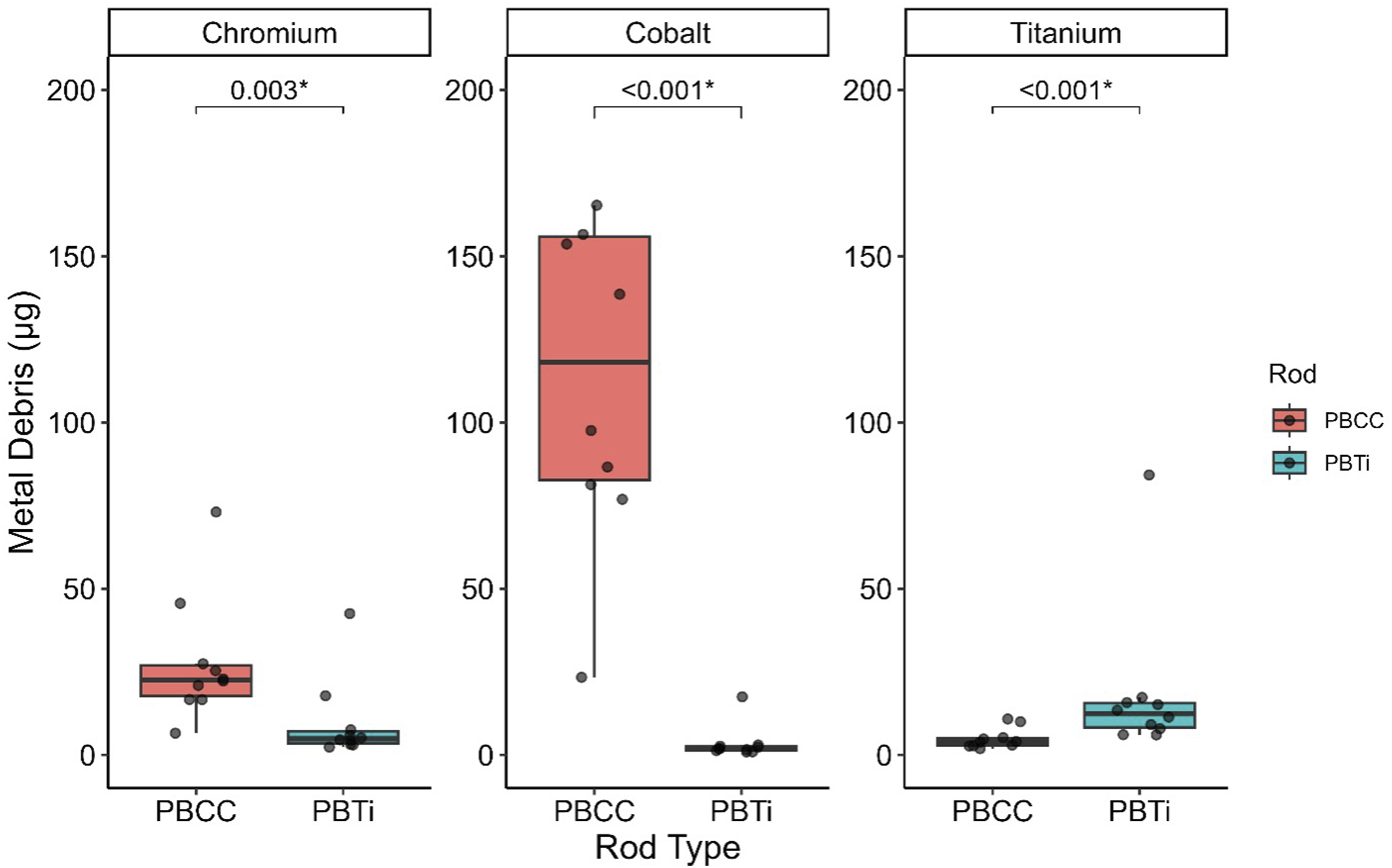
Survival Based on Bending Method
Of the SBTi group, only 20% of n = 5 trials survived the entirety of fatigue testing, including 3 million cycles of cyclic compression. In contrast, 80.0% of n = 5 PBTi trials survived under the same conditions (Figure 5). Kaplan-Meier survival curves and risk tables for pre-bent titanium alloy rods (PBTi, red) and surgeon-bent titanium alloy rods (SBTi, blue). Bilateral posterolateral lumbar fusion constructs were embedded into UHMW-PE blocks using two different rod types PBTi and SBTi. 5 constructs for each group were made to undergo a modified ASTM F1717-21 fatigue testing. This protocol ran for 3 million cycles of compression. MTS 858 Bionix II, MTS Corp hydraulic testing machine automatically shut off if compression displacement acutely changed, allowing for sensitivity to failure of implant. Failure of one side of the bilateral implant was counted as failure of the full construct. Failures over time are denoted for each group, with statistically significant differences set at P < 0.05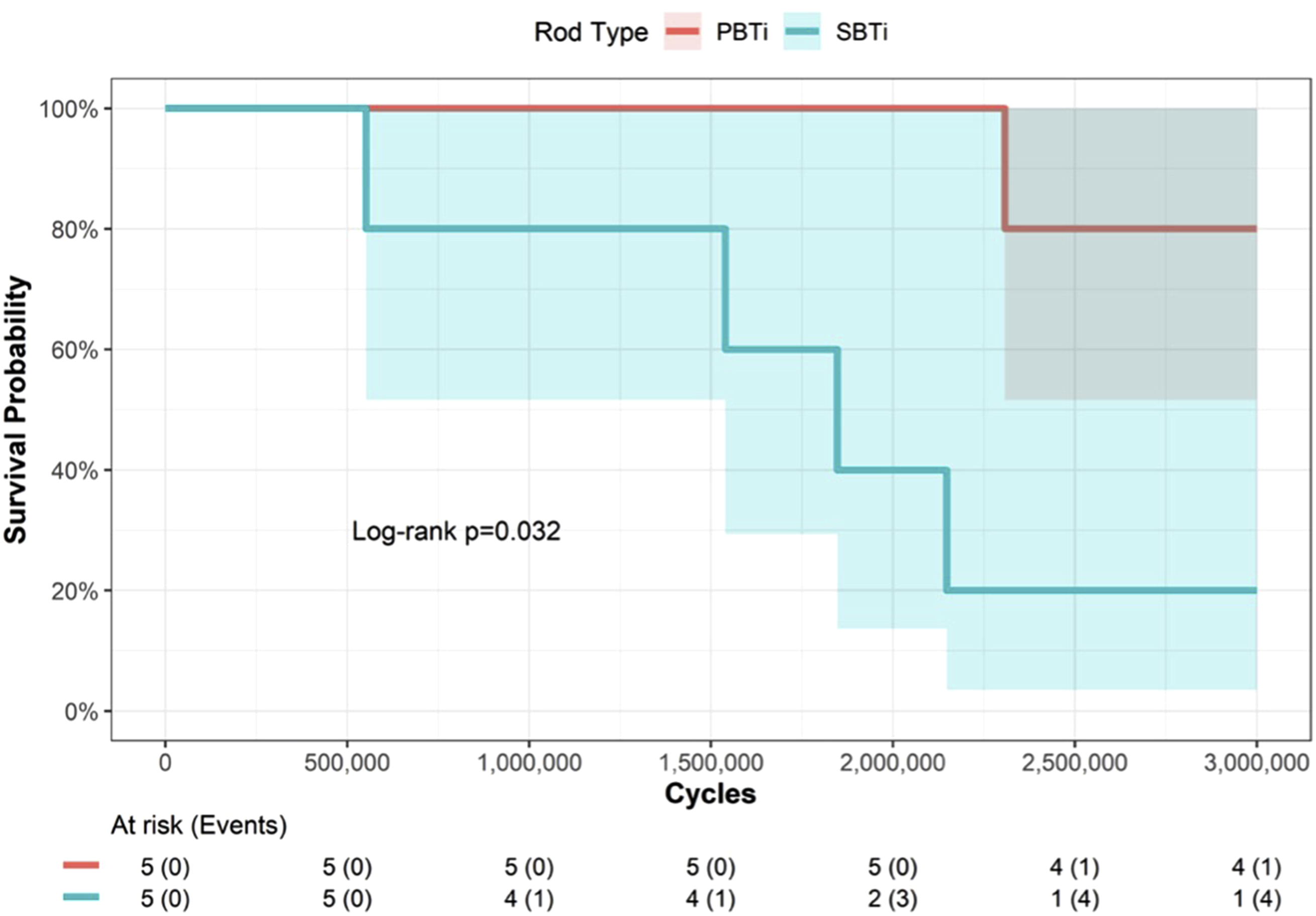
SBTi rods exhibited earlier, and more frequent failures compared to PBTi rods. The cumulative survival probability for SBTi declined to 20% by 2.1 million cycles, whereas PBTi rods maintained 100% survival until 2.3 million cycles. The difference in survival between the 2 groups was statistically significant (P = 0.032).
In qualitative analysis of fracture location, all implants failed by fracture of one or both rods. Regardless of rod bending method, these rod fractures consistently occurred between the superior and inferior fixation points, just central to tulip heads. These fractures sites were not directly in contact with either the set screw or the tulip head. For the SBTi group that inherently had notches, these fractures consistently occurred at the nearest notch to the tulip head.
Discussion
The primary aim of this study was to quantify how implant selection affects metal debris shed from implants during wear, relevant to fretting and the clinical outcome of metallosis. The novel fatigue testing protocol was modified from ASTM F1717 protocol with the addition of axial rotation. The purpose of this novel testing protocol was two-fold: to facilitate enough metal debris to have meaningful comparison between groups and to reflect physiological stresses on implants.
The passive control trials yielded no measurable debris, validating that the metal debris collection and analysis is capturing metal that was shed specifically during fatigue testing. This increases confidence that metal collected in all trials is reflective of fretting corrosion rather than from implant setup, implant take-down, and passive/static corrosion.
By comparing SBCC and PBCC groups, we isolate the effects of bending method and notching on metal debris production. SBCC trials had no statistically significant difference in metal debris production when compared to PBCC trials. This supports that for cobalt chromium rods, notching with French benders does not increase quantitative or qualitative metal debris. However, in analyzing general trends, SBCC trended toward a larger amount of metal wear, specifically more cobalt wear, than PBCC trials (Figure 3). Since cobalt is understood to be the primary culprit of metallosis in clinical scenarios, this trend, although not significant is worthy of future study. This group also had a wider distribution of metal debris results, also suggesting that there is a less predictable range of corrosion outcomes with surgeon-bent rods. This group comparison would benefit from future evaluation to determine if the trends seen would be statistically significant in a higher powered study.
In comparing PBCC and PBTi trials, we isolate the effects of rod metal type on debris production. Not only is rod metal type relevant to fretting corrosion, but it also relates to galvanic corrosion, which occurs when dissimilar metals are in contact with one another. In this group, the tulip head material was constant in each trial, made of cobalt chromium alloy. The articulating rod metal type changed between groups, such that the theoretical effect of galvanic corrosion was not constant. While our project design could not isolate the effects of galvanic corrosion from fretting corrosion, the articulation of dissimilar metals remains a theoretical risk for implant breakdown and metal debris accumulation.
Differences in wear quality were expected with the different materials used in each group. In addition to these expected differences in composition of metal debris, the total metal debris measured was significantly higher in the cobalt chromium rod group. Most clinically important is that there was a much larger amount of cobalt found in this cobalt chromium group. Cobalt is understood to be associated with a stronger immune response than other metals, and metallosis is most associated with this ion.
While fatigue strength was not the primary aim of the study, the recurrent failures seen in the SBTi group as compared to the PBTi group offered an opportunity to add to existing literature examining fatigue strength as affected by notching. Based on the more frequent and earlier failures in the surgeon-bent group, it is reasonable to conclude that the notching in the SBTi group was associated with decreased fatigue strength. This finding is in line with previous literature that tested the same phenomenon with different protocols.
This project was limited in its direct clinical application as the fatigue testing protocol does not account for clinical factors including lived, varied force on implant, bony stabilization, and immune reaction to metal prostheses. Another limitation of this study is that with the addition of the novel axial rotation, these results are not directly comparable to standard ASTM F1717 protocols. This is particularly relevant for the fatigue strength finding in the SBTi group. However, our finding of decreased fatigue strength for this group was consistent with those found in other models, further supporting our model as a reasonable means of fatigue testing.
Conclusion
This study offers unique insight in how the utilization of standard implants may impact susceptibility to device corrosion and risk of metallosis. We did not find evidence that bending method affects the quantity or quality of metal debris shed off of implants. We did find that cobalt chromium alloy setups, in comparison to titanium alloy setups, produce more periprosthetic cobalt and chromium debris. These cobalt and chromium ions are most associated with metallosis and exaggerated immune responses. This suggests that patients with a history of metal hypersensitivity may be better candidates for titanium rod constructs to reduce risk of metallosis complications.
Our project also aligns with previous literature showing that notching decreases fatigue strength of titanium rods, suggesting that pre-bent rods should be prioritized in patients at high risk of fracture.
Supplemental Material
Supplemental material - The Effects of Rod Bending Method and Metal Type on Fatigue Strength and Corrosion in Posterolateral Lumbar Fusion
Supplemental material for The Effects of Rod Bending Method and Metal Type on Fatigue Strength and Corrosion in Posterolateral Lumbar Fusion by Samantha Corman, BS, Yumeng Gao, MS, Nicole DeVries Watson, PhD, Doug Fredericks, BS and Catherine Olinger, MD in Global Spine Journal
Footnotes

Consent to Participate
This article does not contain any studies with human or animal participants.
Funding
The authors received no financial support for the research, authorship, and/or publication of this article.
Declaration of Conflicting Interests
This research was supported by Globus Medical and Medtronic. The companies did not provide any financial support for the research, nor were they involved in data collection, analysis, or manuscript preparation. Dr Catherine Olinger is a paid consultant for Globus Medical. The other authors have no other disclosures to report.
Data Availability Statement
The data that support the findings of this study are available from the corresponding author, SC, upon reasonable request.
Supplemental Material
Supplemental material is available online.
References
Supplementary Material
Please find the following supplemental material available below.
For Open Access articles published under a Creative Commons License, all supplemental material carries the same license as the article it is associated with.
For non-Open Access articles published, all supplemental material carries a non-exclusive license, and permission requests for re-use of supplemental material or any part of supplemental material shall be sent directly to the copyright owner as specified in the copyright notice associated with the article.
