




Abstract
Study Design:
Systematic review.
Objectives:
C5 palsy (C5P) is a not uncommon and disabling postoperative complication with a reported incidence varying between 0% and 30%. Among others, one explanation for its occurrence includes foraminal nerve root tethering. Although different risk factors have been reported, controversy about its causation and prevention persists. Inconsistent study findings contribute to the persistent ambiguity leading to an assumption of a multifactorial nature of the underlying C5P pathophysiology. Here, we report the results of a systematic review on C5P with narrow inclusion criteria in the hope of elucidating risk factors for C5P due to a common pathophysiological mechanism.
Methods:
Electronic databases from inception to March 9, 2019 and references of articles were searched. Narrow inclusion criteria were applied to identify studies investigating demographic, clinical, surgical, and radiographic factors associated with postoperative C5P.
Results:
Sixteen studies were included after initial screening of 122 studies. Eighty-four risk factors were analyzed; 27 in ≥2 studies and 57 in single studies. The pooled prevalence of C5P was 6.0% (range: 4.2%-24.1%) with no consistent evidence that C5P was associated with demographic, clinical, or specific surgical factors. Of the radiographic factors assessed, specifically decreased foraminal diameter and preoperative cord rotation were identified as risk factors for C5P.
Conclusion:
Although risk factors for C5P have been reported, ambiguity remains due to potentially multifactorial pathophysiology and study heterogeneity. We found foraminal diameter and cord rotation to be associated with postoperative C5P occurrence in our meta-analysis. These findings support the notion that factors contributing to, and acting synergistically with foraminal stenosis increase the risk of postoperative C5P.
Introduction
Cervical decompression, with or without instrumented fusion, is a well-recognized and effective treatment for patients with myelopathy, radiculopathy, or both. 1 -5 Although this treatment strategy may be accomplished via anterior, posterior, or combined approaches with each having distinct complication profiles, 6 -12 one common complication is a postoperative C5 neve root palsy (C5P). Initially described by Keegan et al 13 as a “dissociated motor loss” due to compression of the nerve root, it has since been repeatedly investigated with numerous differing pathophysiological mechanisms proposed. These include direct nerve root injury (mechanical, electrical, or thermal trauma at the time of surgery), nerve root ischemia, reperfusion injury post-decompression, preoperative and subsequent postoperative spinal cord (SC) rotation, post-decompression nerve root tethering, and traction injury on dorsal spinal cord migration. 14 -20 Although none of the aforementioned theories have been proven as the definitive etiology, scientific investigations and clinical studies alike suggest that nerve root traction/tension post-decompression may be a leading cause. 15,21 -24
As one of the most common and burdensome complications following cervical decompression (incidence varying from 0% to 30%), 16,17,25 -27 it is not surprising that the entity of C5P has been investigated repeatedly. Many studies have explored C5P mechanisms, and even more have examined its potential risk factors. 14 -17,28 -43 However, few of these factors have stood up to repeat scrutiny of being independent predictors for C5P occurrence. For example, although initially described in the setting of patients receiving surgery for ossification of the posterior longitudinal ligament (OPLL), 44 this disease has not been found to be causatively associated after further scrutiny. 31,39,40 Other purported risk factors have included demographic factors (age, sex, smoking, diabetes), clinical factors (preoperative myelopathy, diagnosis and duration of disease, surgical approach), as well as a host of radiological factors (foraminal stenosis, SC magnetic resonance imaging [MRI] signal change, postoperative SC migration, SC rotation, canal stenosis, among others). 14 -16,28 -31,33 -43 Although we are not the first group to suggest such a notion, 44 we propose that C5P is not one distinct clinical entity with one distinct mechanism, but instead a final common clinical pathway that manifests in a similar fashion from different insults to the C5 nerve root.
We elaborate on this idea and further propose that C5P not only has different risk factors depending on the surgical approach but may also exist as a spectrum with different characteristics evolving from different etiologies and mechanisms. The resultant nerve root insult stemming from these different etiologies then has various manifestations such as early versus delayed onset, painful versus painless presentation, single versus multiple root involvement, minor versus severe weakness, good versus poor recovery, and various comorbidities. To this end, we performed a formal systematic review and meta-analysis with stringent inclusion and exclusion criteria, and aimed to identify common demographic, clinical, surgical, radiographic risk factors associated with C5P, and explore patient symptomatologies that could be related to a common pathophysiology, which may be different than that of other patients experiencing similar, albeit different symptoms.
Materials and Methods
Search Strategies and Selection Criteria
We searched PubMed, Cochrane Central Register of Controlled Trials (CENTRAL), and Google Scholar databases from inception to March 9, 2019 for clinical articles in English related to postoperative C5P. Bibliographies of the studies we had identified were also searched for missing articles to be included. Eligible studies included adult patients (≥18 years old) with cervical myelopathy, radiculopathy, or myeloradiculopathy secondary to degenerative disease treated with cervical decompression surgery with or without the use of intraoperative neuromonitoring, published between 2000 and 2019, in which postoperative deltoid weakness with or without biceps strength impairment was detected (decrease in strength of ≥1 grade on manual muscle testing [MMT]); prospective or retrospective studies were included that assessed a number of different risk factors using multivariate analyses to control for confounding with at least one factor from 1 of the 4 categories: demographic, clinical, surgical, radiographic risk factors. Studies excluded were those in which patients were reported to have preoperative C5 weakness, studies reporting intraoperative injury, studies published prior to 2000, studies reporting only univariate analysis or assessing a single risk factor, studies including tumor, trauma, infection, or inflammatory disease patients, as well as cross-sectional studies, reviews, or case reports. Further details, including search terms and the inclusion/exclusion table, can be found in the Supplemental Material (available in the online version of the article).
Data Collection Items and Process
Data were extracted into a standard data abstraction form by a single individual and independently checked by a second investigator. This included author, year, design, patient population, inclusion and exclusion criteria, procedures, C5P definition and incidence, conflicts and funding sources reported, as well as risk factors assessed in univariate and multivariate analyses. Disagreements were resolved through discussion between the 2 above authors with the final decision for any unresolved disagreements being settled by a third author.
Bias Assessment, Analysis, and Strength of Evidence
Studies were assessed for risk of bias using an approach accounting for factors appropriate for prognostic factor review questions to include study design, source population, attrition, follow-up time, confounding, and outcome measurement (Supplemental Material in the online version of the article). We sought to record the effect size of factors associated with C5P. However, these were reported sparingly by the source authors and inconsistently reported in the studies included in this review. As such, we dichotomized risk factors as either statistically associated or not associated with C5P from the multivariate model, and subsequently synthesized them qualitatively. We summarized only those risk factors that were assessed in 2 or more studies and considered any risk factor identified as consistently associated with C5P only if it was found to be so in 80% or more of the studies evaluating that factor included in our review. Finally, the overall strength of evidence across studies was based on precepts outlined by the Grades of Recommendation Assessment, Development and Evaluation (GRADE) Working Group for therapeutic studies 45 -47 and as adapted for prognostic studies. 48
Results
Study Selection and C5P Prevalence
A total of 122 studies were identified after initial screening (as shown in Figure 1). Eighty-seven studies were excluded on the basis of title and abstract. Thirty studies underwent full text review with another 19 being excluded based on the aforementioned criteria. Sixteen studies met inclusion criteria for our systematic review. Three studies included patients receiving surgery through the anterior approach, 20,29,38 9 through a posterior approach, 15,30,31,33,39 -43 3 through either the anterior or posterior approach analyzed together, 14,28,32 and 1 through the anterior or posterior approach analyzed separately, 44 (Table 1). Eighty-four different risk factors were analyzed, 27 of which were assessed in ≥2 studies and 57 in single studies. One study was judged good quality with low risk of bias (class of evidence [CoE] I), 41 6 fair quality with moderate risk of bias (CoE II), 20,29,31,32,39,42 and 9 studies were judged to be poor quality with moderately high risk of bias (CoE III). 14,15,28,30,33,38,40,43,44 The CoE rating, all risk factors abstracted, and a list of excluded articles can be found in the Supplemental Material (available in the online version of the article). The prevalence of C5P among studies in this review ranged from 1.6% to 24.1% (1.6% to 6.8% with the anterior approach, 4.2% to 24.1% with the posterior approach). In total, 275 cases of C5P were identified out of 4554 patients for an average prevalence of 6.0% (4.3% for an anterior approach, 8.5% for a posterior approach).
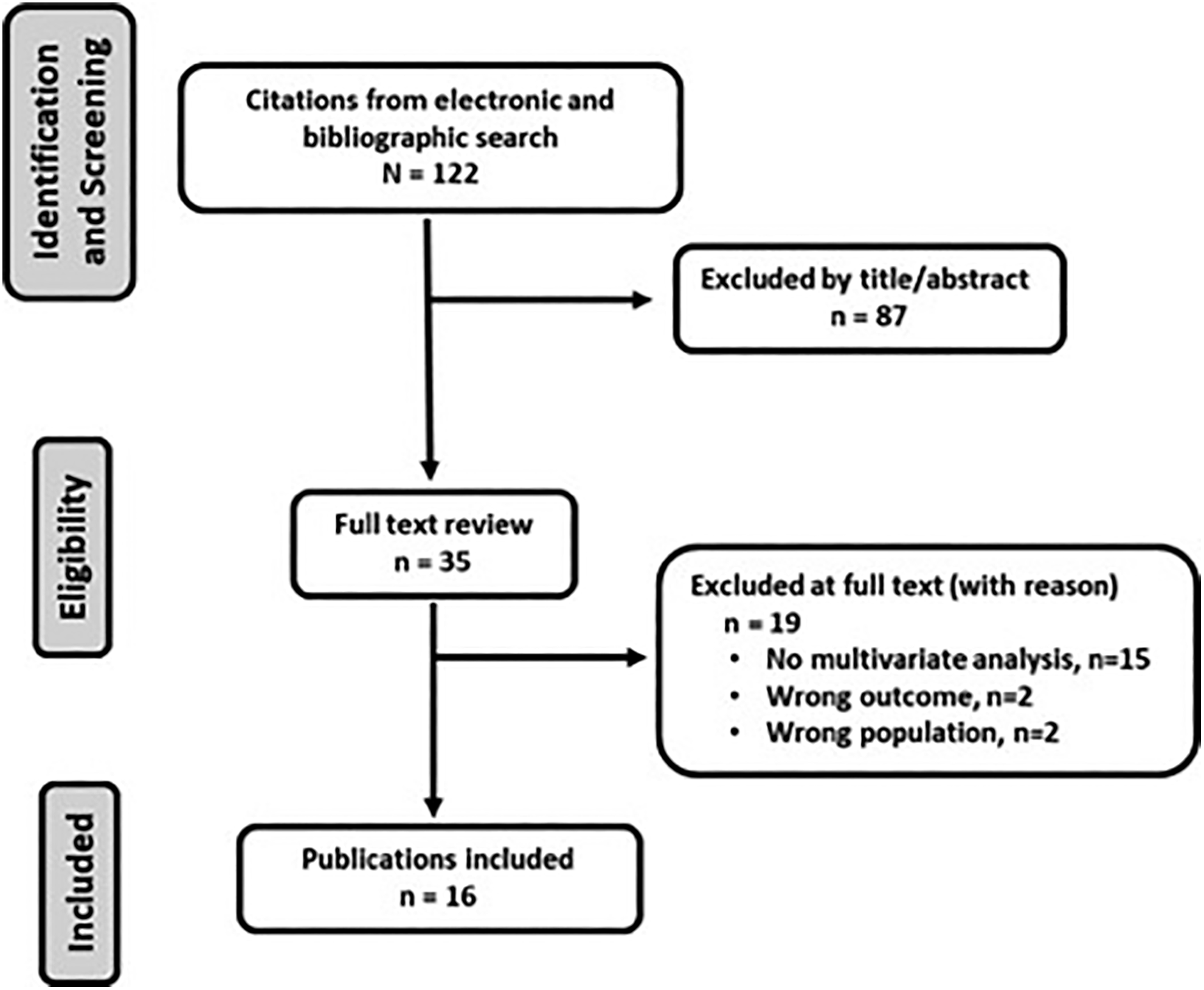
Flow diagram of results from literature and study selection.
Study Characteristics.
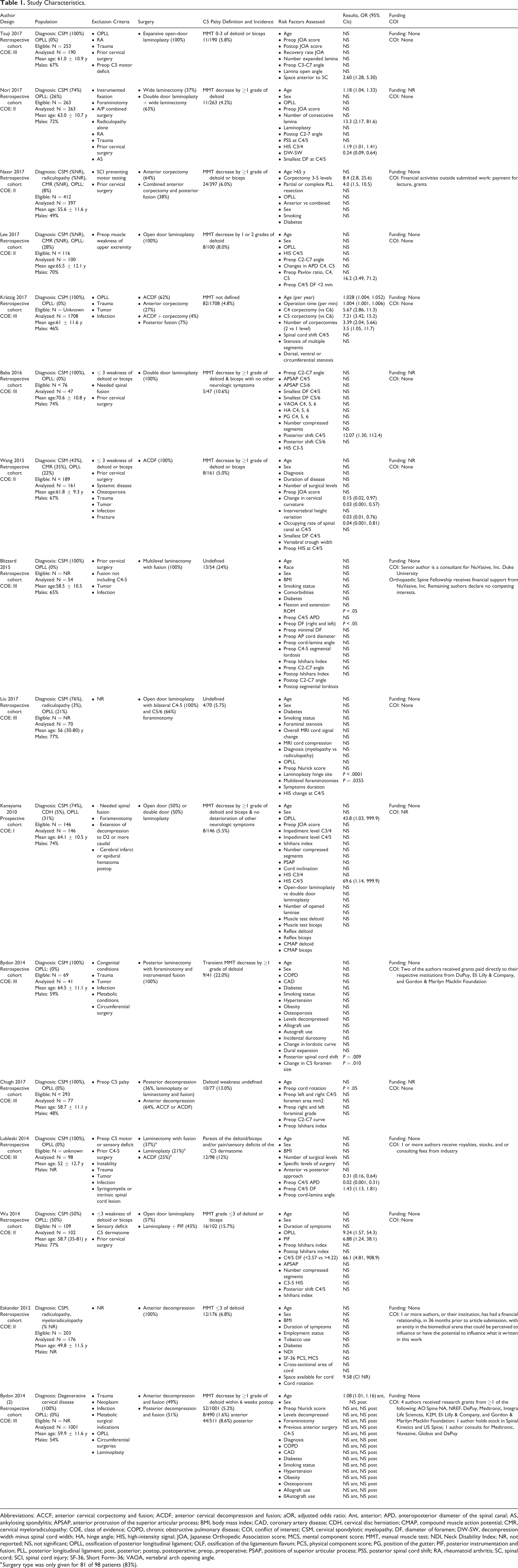
Abbreviations: ACCF, anterior cervical corpectomy and fusion; ACDF, anterior cervical decompression and fusion; aOR, adjusted odds ratio; Ant, anterior; APD, anteroposterior diameter of the spinal canal; AS, ankylosing spondylitis; APSAP, anterior protrusion of the superior articular process; BMI, body mass index; CAD, coronary artery disease; CDH, cervical disc herniation; CMAP, compound muscle action potential; CMR, cervical myeloradiculopathy; COE, class of evidence; COPD, chronic obstructive pulmonary disease; COI, conflict of interest; CSM, cervical spondylotic myelopathy; DF, diameter of foramen; DW-SW, decompression width minus spinal cord width; HA, hinge angle; HIS, high-intensity signal; JOA, Japanese Orthopedic Association score; MCS, mental component score; MMT, manual muscle test; NDI, Neck Disability Index; NR, not reported; NS, not significant; OPLL, ossification of posterior longitudinal ligament; OLF, ossification of the ligamentum flavum; PCS, physical component score; PG, position of the gutter; PIF, posterior instrumentation and fusion; PLL, posterior longitudinal ligament; post, posterior; postop, postoperative; preop, preoperative; PSAP, positions of superior articular process; PSS, posterior spinal cord shift; RA, rheumatoid arthritis; SC, spinal cord; SCI, spinal cord injury; SF-36, Short Form–36; VAOA, vertebral arch opening angle.
a Surgery type was only given for 81 of 98 patients (83%).
Demographic Risk Factors for C5P
There was no association between C5P and sex, smoking, diabetes, body mass index, or other comorbidities across several studies. Age as a risk factor yielded mixed results, with 3 studies reporting an association with increased age: 1 fair-quality study with a posterior approach, 31 1 poor-quality study using an anterior approach, 38 and 1 poor-quality study that reported an association among patients receiving an anterior, but not posterior approach. 44
Clinical Risk Factors for C5P
Two studies, one of good quality 41 and the other of fair quality 42 reported an association of C5P with the presence of OPLL, while 4 fair-quality studies 29,31,32,39 and 1 poor-quality study 40 did not find such an association. Three fair-quality studies 20,29,42 reported no association between C5P and longer disease duration, while 1 poor-quality study reported that longer disease duration was associated with C5P. 40 Seven studies of various quality failed to find an association between C5P and preoperative symptom severity as measured by the Nurick scale, Japanese Orthopaedic Association (JOA) score, or Neck Disability Index (NDI). 20,29,31,40,41,43,44 Similarly, no association was found between C5P and diagnosis in 3 studies. 29,40,44
Surgical Risk Factors for C5P
Association was found neither between C5P and the number of surgical levels (1 good-quality study, 41 2 fair-quality studies, 29,31 and 4 poor-quality studies 28,33,43,44 ) nor between the use of allograft and autograft (2 poor-quality studies 33,44 ).
Radiological Risk Factors for C5P
No studies found an association between C5P and preoperative C2-C7 sagittal angle (1 fair-quality study 39 and 3 poor-quality studies 15,30,43 ), anterior protrusion of the superior articular process (APSAP) at C4/5 (1 good-quality study, 41 1 fair-quality study, 42 and 1 poor-quality study 15 ), high-intensity MRI SC signal (1 good-quality study, 41 3 fair-quality studies, 31,39,42 and 2 poor-quality studies 15,40 ), preoperative Ishihara Index (1 good-quality study, 41 1 fair-quality study, 42 and 2 poor-quality studies 14,30 ), postoperative Ishihara Index (1 fair-quality study 42 and 1 poor-quality study 30 ), number of compressed segments (1 fair-quality study 42 and 1 poor-quality study 15 ), postoperative C2-C7 sagittal angle (1 fair-quality study 31 and 1 poor-quality study 30 ), or hinge angle at C4,5,6 (2 poor-quality studies 15,40 ).
Mixed results were reported for 4 radiological factors. Posterior SC shift at C4/5 was found to be associated with C5P in 3 poor-quality studies, 15,33,38 but not in 2 fair-quality studies. 31,42 One fair-quality study 29 found an association between a change in C2-C7 sagittal angle and C5P while 3 poor-quality studies did not. 14,30,33 The lamina opening angle was evaluated in 4 poor-quality studies: 1 reported an association 28 and 3 reported no association. 15,30,43 Preoperative anteroposterior diameter (APD) of the spinal canal at C4/5 was associated with C5P in 2 poor-quality studies, 28,30 but not in 1 fair-quality study. 20
Nine studies evaluated preoperative foraminal stenosis at C4/5, 7 by measuring the foraminal diameter, 15,28 -31,39,42 1 measuring foraminal area and grade, 14 and 1 did not specify its method of assessment. 40 Among those studies measuring foraminal diameter (FD), all 4 of the fair-quality studies 29,31,39,42 and 2 of the 3 poor-quality studies 28,30 found a strong association between a decreased preoperative FD and C5P. Two studies reported an association between preoperative SC rotation and C5P, 1 fair-quality study 20 and 1 poor-quality study. 14
Strength of Evidence Summary (Supplemental Material Table S2)
Demographic Factors
It is unclear whether age is associated with C5P due to mixed results across studies (strength of evidence, very low). There is low evidence that sex, smoking, diabetes, body mass index, and other comorbidities are not associated with C5P.
Clinical Factors
It is unclear whether OPLL and duration of symptoms are associated with C5P due to mixed results across studies (strength of evidence, low). There is high strength of evidence to suggest severity of symptoms as measured by preoperative Nurick grade, JOA, and NDI scores is not associated with C5P.
Surgical Factors
There is low evidence that the number of surgical levels and the use of allograft versus autograft is not associated with C5P.
Radiographic Factors
There is high strength of evidence that decreased preoperative FD is associated with C5P. Preoperative cord rotation, a phenomenon where the cord is subjected to an axial de-rotation after successful decompression, may be associated. However, the strength of evidence for this potential association is moderate. There is moderate strength of evidence that pre- and postoperative C2-7 sagittal angle, APSAP at C4/5, pre- and postoperative Ishihara Index, number of compressed segments, high-intensity MRI signal at C3-5 and hinge angle at C4-6 are not associated with C5P. It is unclear whether posterior SC shift at C4/5, change in C2-7 sagittal angle, lamina open angle, or preoperative APD at C4/5 were associated with C5P (strength of evidence, very low).
Illustrative Case
A 53-year-old man presented as an outpatient with a 1.5-year-long history of progressive bilateral upper extremity numbness, tingling, and hand clumsiness. On examination, he was found to have decreased sensation to light touch and pinprick diffusely to his bilateral upper extremities, decreased strength to his elbow extensors (MMT 4/5), was hyperreflexic throughout his lower extremities bilaterally, and have impaired and slow rapid alternating movements on testing (right slightly worse than left). Clinically, he was rated as an mJOA 11, Nurick 3. The cervical MRI revealed multilevel central SC stenosis with advanced bilateral neural foraminal stenosis at C4/5 and C6/7 (highlighted in Figure 2a and b with significant SC rotation). A 2-stage anteroposterior cervical decompression and fusion was completed (4-level anterior cervical discectomy and fusion followed by posterior C2-T2 instrumented decompression and fusion with bilateral foraminotomies at C4/5 and C6/7 as shown in Figure 2c). Despite the surgical procedure being carried out uneventfully with no signal changes detected on any intraoperative neuromonitoring modality (including EMG monitoring of his deltoid and biceps), the patient was noted on postoperative day 1 to have developed significant left-sided, painless, weakness to his deltoid and biceps (2/5 and 3/5 MMT, respectively) after initially having good strength. After ruling out other diagnoses. a computed tomography scan showed the cervical instrumentation to be in good position with complete central and foraminal decompression confirmed, the patient was diagnosed with a postoperative C5P. At last follow-up (6 months postoperative), the patient was seen to have regained some, but not all of his strength (4/5 with MMT to deltoid and biceps).
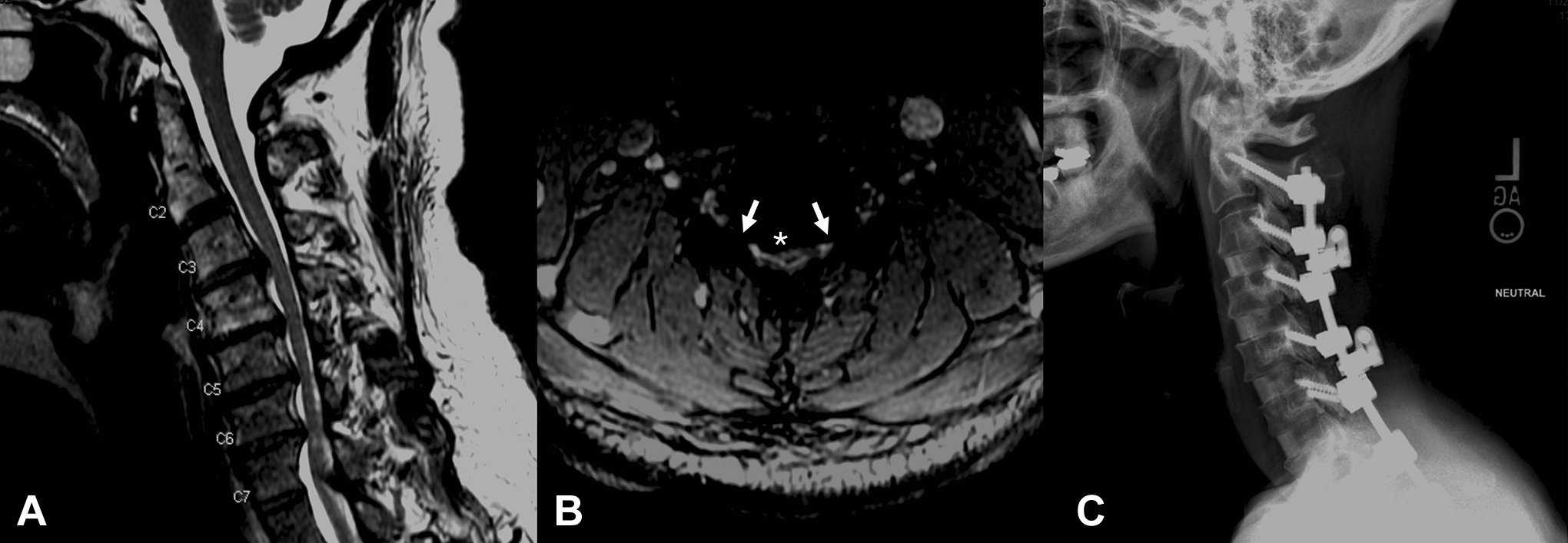
Panel A: Sagittal magnetic resonance imaging (MRI) of a clinical case of C5 palsy (C5P) demonstrating multilevel cervical spondylosis causing stenosis and loss of normal lordotic curvature. Panel B: Axial C4/5 MRI of the same patient demonstrating central stenosis with spinal cord compression, bilateral foraminal stenosis (arrows) and cord rotation (asterisk).
Discussion
Cervical decompression for the treatment of radiculopathy and/or myelopathy has been a well-established safe and effective surgical practice for over 50 years. 49 Alongside the benefits of such surgery, unfortunately, C5P as a complication of cervical decompression has also been recognized for over 50 years. 13 Despite the lengthy time in which this complication has been known, relatively little progress has been made in elucidating a concrete pathophysiological mechanism to explain its occurrence. Several theories have been detailed, including direct nerve root injury (mechanical, electrical, or thermal trauma at the time of surgery), nerve root ischemia, reperfusion injury post-decompression, segmental spinal cord injury or dysfunction, preoperative and subsequent postoperative axial spinal cord rotation, nerve root tethering with subsequent post-decompression traction injury, which, for example, can occur with dorsal spinal cord migration following a posterior decompression. 14 -17,50 One of the more recent and accepted theories explaining C5P occurrence includes the latter phenomenon—nerve root tethering and traction injury. 21 Although it is possible that one mechanism alone may be responsible for and able to explain how and why C5P occurs, it seems more plausible that a C5P is simply a clinical manifestation of any process or insult affecting the C5 nerve root. This would indeed imply that the diagnosis and etiology of C5P will continue to be multifactorial in nature. This concept would explain the diversity of clinical symptomatology that patients report: C5P has been characterized as both sensory sparing or not, involving various other nerve roots. It has also been described as painful or painless, with immediate onset or delayed for up to 2 weeks, as well as with variable rates of recovery. 50 If different underlying etiologies and mechanisms lead to different types of injury to the C5 nerve root, then it is plausible that patients would present in a similar, albeit different manner. This would also explain why so few independent risk factors have been identified for predicting C5P despite the myriad of studies on the subject: Patients with similar clinical symptoms, but caused by different etiologies and mechanisms, are likely to have different contributing risk factors.
Previous meta-analyses have been completed investigating the incidence and prevalence of postoperative C5P 17,50,51 ; however, few have attempted to correlate this in a mechanistic manner. Furthermore, with the aim of honing the inclusion of patients to those with a similar C5P mechanism, few systematic reviews have been completed with such stringent inclusion and exclusion criteria in order to decrease the heterogeneity of the patient population and study. As a result, we report a systematic review that includes 16 studies, and found that patient radiographic features (specifically those in keeping with the nerve root traction theory) were associated with postoperative C5P. Furthermore, we discuss the demographic, clinical, surgical and radiological factors analyzed, including their respective strength of evidence.
Demographic Factors
Although age has been found in some studies to be associated with C5P, 31,38,44 on our formal review, it is unclear whether age is in fact related to C5 palsy or not. This is mainly due to the mixed results across the included studies (strength of evidence: very low). It would make sense that age may be associated with C5P when considering that, in general, as patients age, the incidence and severity of spondylosis increases. 9 Intuitively, as spondylosis worsens, the severity of foraminal stenosis would increase as well, thus raising the potential for nerve root tethering post-decompression. Some studies have not found age to be a risk factor for C5P which could be due to several different explanations. 14,20,29,30,39,42,43 For example, patient study heterogeneity or the inclusion/exclusion of other covariates on multivariate analysis could result in age no longer remaining statistically significant. 14,28,32
Clinical Factors
Similar to age as a risk factor for C5P, it is unclear whether OPLL and duration of symptoms are associated with C5 palsy due to mixed results across studies (strength of evidence: low). It is possible that OPLL is indeed a risk factor for C5P and was simply not found to be so in this review. Several reasons may explain this finding. For example, the inclusion of underpowered studies with respect to this variable may have resulted in this factor to not be found as a true risk factor. Furthermore, despite best efforts to select patients and studies that increase the likelihood of finding a significant result, patient and study heterogeneity may be the reason for this finding. That being said, it is also feasible that in attempting to include studies examining C5P due to the same pathophysiological mechanism (nerve root tethering for example) that this selection bias also resulted in OPLL not being found to be a risk factor in this setting. If OPLL contributes to the occurrence of C5P through a different pathophysiological mechanism such as nerve root ischemia or reperfusion injury or segmental SC dysfunction, then it stands to reason that OPLL may be a risk factor for C5P in a different subset of patients and/or studies.
Surgical Factors
There is low evidence that the number of surgical levels, and the use of allograft or autograft is likely not associated with C5 palsy. Although the use of allograft versus autograft would likely not contribute to the occurrence of C5P due to neve root tethering, interestingly the number of surgical levels was also not found to be a risk factor. No studies in this review found the number of surgical levels to be a risk factor on multivariate analysis, nor did any find the number of radiologically compressed levels to be either (discussed below). However, given the methodological study limitations and the limited number of studies evaluating surgical types and levels, this finding was judged to have low strength of evidence. Considering that more levels of decompression would presumably result in increased posterior migration of the spinal cord, we found this result surprising. However, the explanation for this finding may also be one of the reasons that the C5 nerve root is believed to be at risk for palsy postoperatively. The C5 rootlets and root are shorter than other segments and the greatest amount of posterior shift occurs at this level. 50,52 If decompression of this level allows the SC to posteriorly displace 4 to 5 mm (average amount of posterior translation postoperatively) 19,50,52 then it would not matter if other levels are included in the decompression as the SC would not be able to displace more posteriorly due to tethering by the C5 nerve root (resulting in a ceiling effect for the number of levels compressed and decompressed and these not being found to be C5P risk factors).
Imaging Factors
There is moderate strength of evidence that pre- and postoperative C2-7 sagittal angle, anterior protrusion of the superior articular process (APSAP) at C4/5, pre- and postoperative Ishihara Index (ratio of the sum distance between the posteroinferior endplate of C3, C4, C5, C6 to a sagittal line going from the posteroinferior endplates of C2-C7: length of the sagittal C2-C7 posteroinferior endplate line), 30 number of compressed segments, high intensity signal at C3-5 and hinge angle at C4-6 are not associated with C5 palsy. It is unclear whether posterior shift C4/5, change in C2-7 angle, laminar opening angle, and preoperative APD at C4/5 are associated with C5 palsy (strength of evidence: very low). Moreover, there is high strength of evidence that a smaller preoperative FD is associated with C5P, with preoperative cord malrotation being a causative factor post-decompression, however the strength of evidence for this potential association is moderate. Our finding of the latter 2 factors (FD and preoperative cord rotation) were associated with C5P is in keeping with the nerve root tethering hypothesis. Increased preoperative SC rotation and foraminal stenosis would intuitively increase the likelihood of postoperative nerve root tethering in the neural foramen and will be discussed below.
Nerve Root Tethering as a Pathophysiological Mechanism for C5P
Many previous researchers have presumed that tethering at the uncovertebral joint and/or superior facet may be the cause of postoperative C5P. 50 Moreover, several findings have been used to explain why the C5 nerve root is particularly vulnerable to this injury, including shorter rootlets than other nerve roots, 53 a more horizontal course to the vertebral foramen, 54 C5 being the smallest nerve root in cross-sectional, 55 the C4-5 being the most anteriorly protruding zygophyseal joints and frequently being located at the apex of decompression, 50 more numerous and more robust foraminal ligaments (FL) located within the C4-5 intervertebral foramen. 55 -57 In addition to its unique anatomical course, the extensive ligamentous support at the foraminal level predisposes C5 to traction injury post-decompression through tethering of the lateral root within the non-decompressed foramen. Recently, this theory that the cervical foraminal ligaments may play a role in tethering the C5 nerve root after SC decompression was studied by some of the authors in cadaveric experiments (unpublished data). We found that not only do the cervical foraminal ligaments (Figure 3) tether the nerve roots within their respective foramen, but that untethering them resulted in free translation of the nerve root with posterior displacement of the SC. In addition, untethering decreased tension affecting the C5 nerve root, and that performing an “extended foraminotomy” allowed for nerve root untethering via foraminal ligament release, as opposed to a standard foraminotomy (Figure 3). Although the clinical extrapolation and application of these anatomical findings requires further clinical validation, this discovery helps create a foundation for a better understanding of the C5 nerve root tethering pathophysiological mechanism. This human specimen based finding is consistent with prior results from animal models recreating nerve root stretch injuries. 22 -24 At 6% nerve strain, a 70% decreased in amplitude of electrical conduction is seen with subsequent slow recovery, and at 12% strain complete conduction block occurs with minimal recovery. 22 Moreover, blood flow impairment can be seen to occur in stepwise fashion with increasing nerve strain (impaired intraneural blood flow is seen at 8% strain resulting with venous stagnation, followed by arrest of intraneural circulation at 15%). 23,24 Together, these stretch injury results created in an in-vivo animal setting combined with our foundational anatomic studies do support the theory that tethering of the C5 nerve root may lead to a neuropraxic-like injury with impaired nerve action potential conduction. Tethering of the nerve root in question may be caused by cervical foraminal ligaments holding it in place, or alternatively foraminal stenosis in combination with factors that may potentiate such tethering. As shown in this review, FD and SC malrotation (from unilateral spondylosis, for example) were found to be risk factors for C5P. Preoperative SC rotation is a relatively newer risk factor identified as contributing to C5P. Spondylosis and its resultant cord rotation progress gradually. As a result, it is hypothesized that the slow progression allows the nerve and SC to adapt and compensate for this new position without necessarily resulting in clinical symptoms (in a similar manner to basic science experiments showing action potential amplitude stability at 6% strain for a period before delayed decreased signals are observed). However, sudden decompression would then result in a rapid increase in nerve root strain and traction injury due to SC “de-rotation” with a relatively fixed foraminal nerve root causing C5P. Furthermore, depending on the severity of the traction injury, in a worst-case scenario, nerve root ischemia and actual infarction may occur in this area as well and could illustrate the overlapping nature and multifactorial spectrum of neuropathologic mechanisms with which this complication presents. The wide range of C5P incidence, patient characteristics, risk factors, and permutations thereof previously reported likely stems from separate pathophysiological mechanisms. This would result in similar, albeit different clinical symptomatology. Our systematic review findings, in this context, support the notion that foraminal nerve root tethering may explain the occurrence of C5P in a subset of patients.
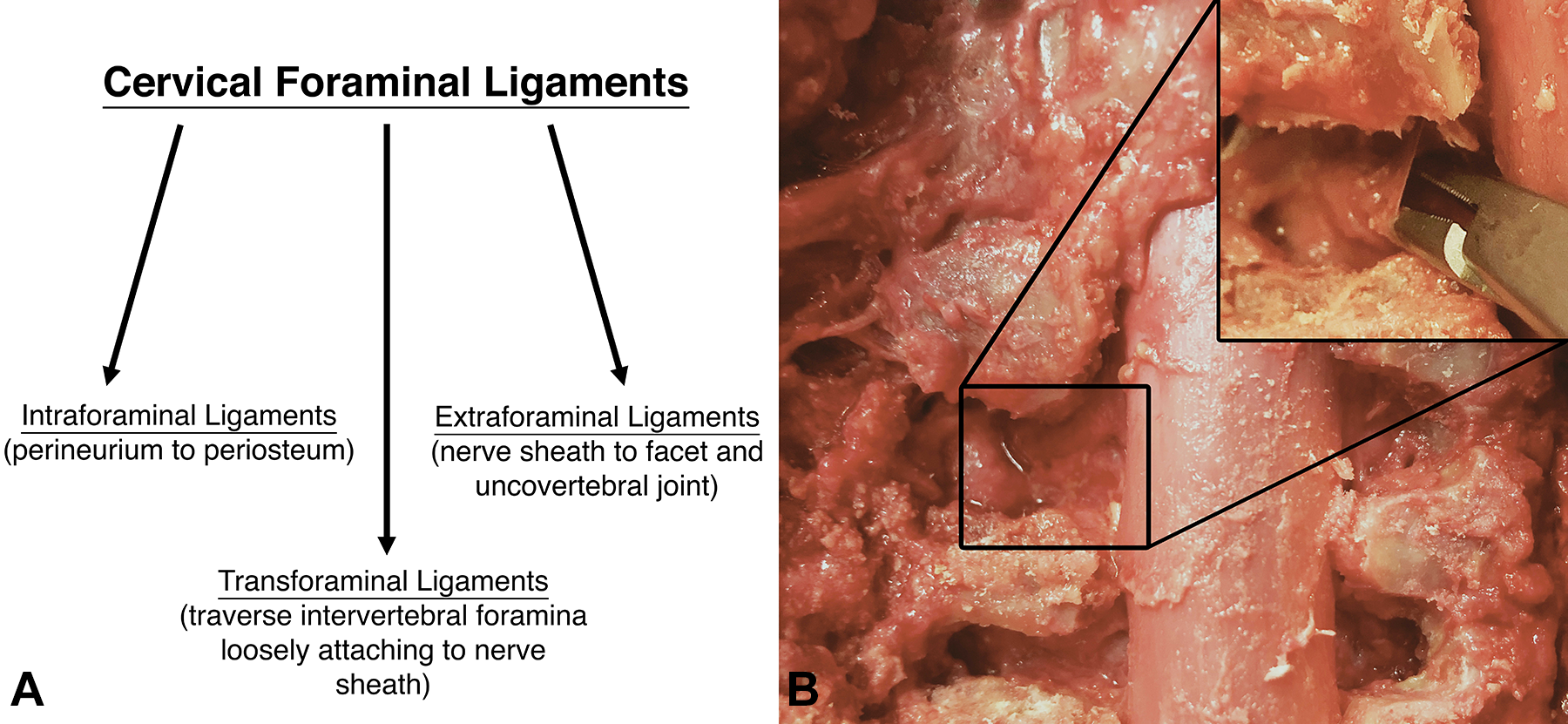
Panel A: Classification of cervical foraminal ligaments with anatomical location. Panel B: Cadaveric dissection comparing an extended foraminotomy on the left and standard foraminotomy on the right with inset highlighting the lysis of cervical foraminal ligaments.
Limitations
Despite our attempts to limit heterogeneity commonly seen in meta-analyses, 17,58 -60 studies included in this review remained somewhat heterogeneous in their surgical approach and in the range of possible clinical variables reported. Together, these limitations made data synthesis difficult. Furthermore, inconsistent reporting of effect sizes from the included studies prevented more extensive pooling of data, sensitivity analyses, or publication bias testing. Many of the studies included also suffered from small sample sizes for an outcome that occurred relatively infrequently. As a result, this limited the number of potential risk factors that could be assessed. Finally, in attempting to limit the heterogeneity of the studies included in this review, a resultant selection bias may have occurred. This could have potentially led some to some variables not having consistently strong enough evidence to be considered a true risk factor.
Conclusion
C5P is a common complication following cervical decompressive surgery with a pooled prevalence found here to be 6.0%. Although many risk factors have been previously reported, study and patient heterogeneity has likely prevented reliable and consistent independent risk factors from being identified. Furthermore, the diversity of clinically observed symptomatology is likely the result of a final common pathway of the proposed multifactorial nature of the pathophysiology underlying C5P. Here, by adopting stringent inclusion criteria in the hope of increasing patient and mechanistic homogeneity, both foraminal stenosis and preoperative SC rotation were found to be associated with C5P occurrence. These risk factors support the theory that foraminal nerve root tethering (potentially in concert with perfusion-related etiologies), for example, due to FL or foraminal stenosis, and factors potentiating it may lead to an increased incidence of postoperative C5P. Further study of this subset of patients and the role of foraminal nerve root untethering either prophylactically or as treatment for C5P is required.
Supplemental Material
Supplemental Material, GSJ874771_suppl_mat - Factors Associated With C5 Palsy Following Cervical Spine Surgery: A Systematic Review
Supplemental Material, GSJ874771_suppl_mat for Factors Associated With C5 Palsy Following Cervical Spine Surgery: A Systematic Review by Andrew Jack, Wyatt L. Ramey, Joseph R. Dettori, Zane A. Tymchak, Rod J. Oskouian, Robert A. Hart, Jens R. Chapman and Dan Riew in Global Spine Journal
Footnotes
Declaration of Conflicting Interests
The author(s) declared no potential conflicts of interest with respect to the research, authorship, and/or publication of this article.
Funding
The author(s) disclosed receipt of the following financial support for the research, authorship, and/or publication of this article: Spectrum Research, Inc, received funding in exchange for assistance in providing methodological and statistical assistance.

Supplemental Material
The supplemental material is available in the online version of the article.
References
Supplementary Material
Please find the following supplemental material available below.
For Open Access articles published under a Creative Commons License, all supplemental material carries the same license as the article it is associated with.
For non-Open Access articles published, all supplemental material carries a non-exclusive license, and permission requests for re-use of supplemental material or any part of supplemental material shall be sent directly to the copyright owner as specified in the copyright notice associated with the article.
