




Abstract
Faced with increasing waste production, authorities are seeking to encourage better household waste management and need to identify levers for change. We propose a model integrating the major determinants of pro-environmental behaviour assumed in prominent theoretical models. Based on meta-analytical evidence, we incorporated situational, normative, attitudinal and self-processes and tested this integrative model to predict intentions to perform two overlooked behaviours: food waste separation and deposit at waste disposal centres. To go beyond intention we also investigated habits to sort food waste. An online survey was administered to two samples (Ntotal = 2,814) and data were analysed using structural equation modelling. The results showed a good fit of an integrative model (CFIs > .917; TLIs > .910; RMSEAs < .043; SRMRs < .071). Waste management intentions and habits are directly predicted mainly by personal norms and perceived behavioural control. The latter is predicted by facilitating conditions and pro-environmental identity. Personal norms are predicted by social norms, pro-environmental identity and perceived behavioural control. Our results confirm the relevance of a model integrating situational, normative, attitudinal and self-processes to explain waste management intentions and provide a basis for the development of waste management interventions.
Since the beginning of this century, the serious and growing international issue of waste management has led to many studies of recycling behaviour, which have been widely reported in the behavioural science literature (littering, Chaudhary et al., 2021; household waste separation, Rousta et al., 2020; recycling of packaging materials, Miafodzyeva & Brandt, 2013). Research has highlighted several determinants of waste management behaviours, all articulated in four robust models: the theory of planned behaviour (Strydom, 2018), the norm activation model (Wang et al., 2019), the value-belief-norm model (Dursun et al., 2017) and the comprehensive action determination model (Ofstad et al., 2017). A recent meta-analysis of 91 studies on household waste management identified numerous predictors of recycling behaviour in general, helping policymakers design effective strategies for waste prevention actions (Geiger et al., 2019).
The purpose of the present study is to advance the understanding of household waste management by integrating the contributions of historical models of behavioural change and more recent research into a unified model, to predict intention and habits related to two understudied types of waste management behaviours. The first is the source separation of food waste, which makes up around 30% of the contents of a household’s waste bin. The European Union foresees the obligation to treat it separately from January 2024, implying the individual adoption of this new sorting behaviour. The second behaviour is the deposit at waste recycling and disposal centres of various household waste types, such as bulky, toxic, electrical or electronic waste. Collected properly, the largest part of this waste volume can be recovered through the resale of materials or through reuse. Some waste, however, contains hazardous materials, such as toxic liquids and electronic waste, which can generate environmental pollution. Therefore, it is essential to treat each waste type accordingly after it has been deposited in appropriate facilities, such as a community’s waste recycling and disposal centre. In this study, we propose a model incorporating the main determinants of recycling behaviours (identified from the meta-analysis by Geiger et al., 2019) and we test its ability to account for intention towards two specific behaviours: separation of food waste and deposits at waste disposal centres.
Models of pro-environmental behaviour
Research in environmental psychology has fruitfully developed and tested models to explain pro-environmental behaviour. However, the parallel development of multiple models has revealed a large diversity of potential determinants of pro-environmental behaviour. The present study is in line with recent attempts to integrate models and the most important determinants of pro-environmental behaviour (see, e.g., Gkargkavouzi et al., 2019; Klöckner & Blöbaum, 2010). Our approach is to integrate prominent theoretical models by relying on empirical meta-analytical evidence. In what follows, we provide an overview of four prominent theoretical models.
Theory of planned behaviour
In 1991, Ajzen proposed a theory of planned behaviour to explain any deliberate behaviour, including deliberate pro-environmental behaviour (e.g., choice of travel mode, Bamberg et al., 2003; food consumption, Ajzen, 2016; implication in pro-environmental education, de Leeuw et al., 2015). As shown in Figure 1a, this rational choice model assumes that behavioural intention is the main predictor of deliberate behaviours. Intention reflects the will to exert effort to perform a behaviour and is guided by three types of beliefs. First, an individual’s intention is guided by attitudes in terms of a favourable or unfavourable evaluation of the behaviour, derived from beliefs about the possible consequences of the behaviour and the rational evaluation of those consequences. Second, intention is guided by subjective norms — perceived social pressure resulting from beliefs about what relevant others approve or disapprove (injunctive norm) or do (descriptive norm) — and the motivation to fulfill those social expectations. Third, intention is guided by perceived behavioural control (Ajzen, 1991), which results from beliefs about one’s ability to perform the target behaviour (i.e., self-efficacy) and about control over that behaviour (Kraft et al., 2005). According to this model, individuals form a rational intention to act, weighing the three types of behavioural beliefs. The determinants modelled in the theory of planned behaviour have been associated with a wide range of recycling behaviours (Aguilar-Luzón et al., 2012; Tonglet et al., 2004).
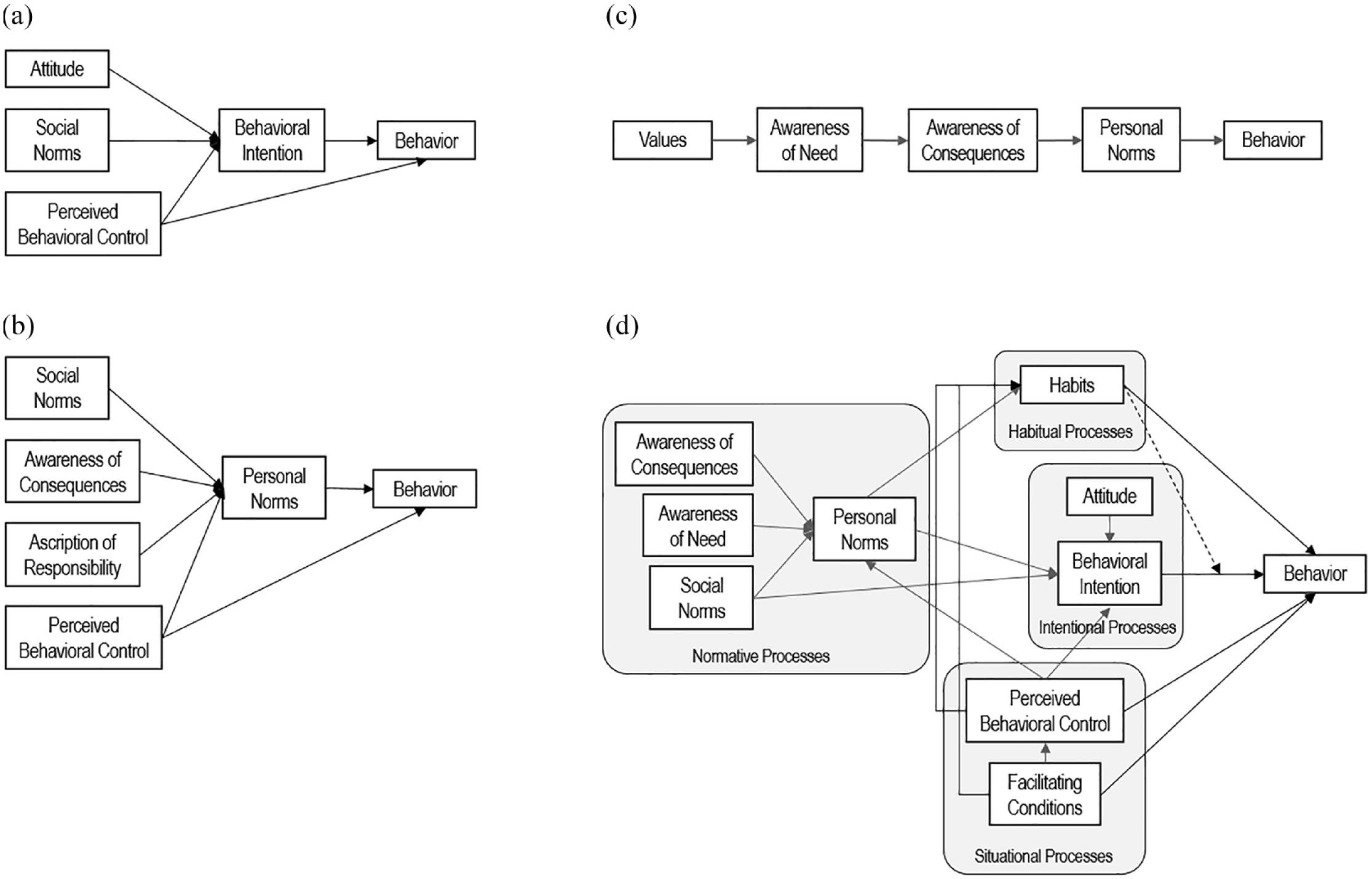
Four prominent models in environmental psychology: (a) the theory of planned behaviour (Ajzen, 1991); (b) the norm activation theory (1977); (c) the value-belief-norm model (Stern et al., 1999); and (d) the comprehensive action determination model (Klöckner & Blöbaum, 2010).
The norm activation model
The norm activation model developed by Schwartz (1973, 1977), shown in Figure 1b, proposes that individuals act in a pro-social and pro-environmental way because they feel morally obligated to do so (Bamberg et al., 2003; Steg & Groot, 2010). The sense of moral obligation, also referred to as personal norms, arises from the internalization of social expectations. Indeed, social learning about what is and what is not valued by significant others forms a solid basis for the moral principles that individuals embrace (Thøgersen, 2006). However, the influence of personal norms on behaviour differs from the influence arising from social norms, as it primarily results from implications for the self. First, sanctions following personal norm violations differ from those that follow the violation of social norms — violating personal norms calls into question one’s self-concept, whereas violating social norms has consequences for social interactions (Bamberg et al., 2007). Second, the feeling of moral obligation to comply exerts a stronger influence than social norms on individual decisions. Behaviours consistent with personal norms protect the self, whereas inconsistent behaviours lead to self-criticism. Personal norms play a role in behavioural decisions because individuals anticipate and compare the cost of their behaviour (in effort or time, for example) with the cost of the violation for the self. People do not enact the behaviour if doing so is more costly than violating personal norms.
The norm activation model further suggests that personal norms are not always active. Their activation depends on awareness of the need to act and of the consequences, for the environment, of performing or not performing the action and of the individual’s ascription of responsibility in the situation. Thus, the higher the awareness of the need for action and of the impact of the solution, and the higher the self-ascribed responsibility, the stronger the personal norms. In the domain of pro-environmental behaviour, the norm activation model has proven useful in explaining energy conservation (van der Werff & Steg, 2015), food waste reduction (Kim et al., 2022) and recycling (Wang et al., 2019). Numerous other studies have shown that the impact of personal norms on behaviour is mediated by behavioural intention (for meta-analyses, see Bamberg & Möser, 2007; Onwezen et al., 2013).
The value-belief-norm model
Stern (2000) proposed an extended version of the norm activation model by integrating the new environmental paradigm (Stern, Dietz, & Guagnano, 1995) and the values-based theory (Stern, Kalof, et al., 1995). According to Schwartz (1992), values are the most stable beliefs transcending any situation to guide decisions and behaviours, such that they match what is important to individuals. The different types of values classified by Schwartz (1994) constitute a priority system for the individual. If an individual’s value system prioritizes self-transcendent values, such as biospheric values (concerns about nature) and altruistic values (concerns about other humans), at the expense of self-enhancement values (egoistic values, concerns about self-interest), then that person will be more inclined to adopt environmentally friendly behaviours (Steg et al., 2005).
The value-belief-norm model, presented in Figure 1c, postulates a causal chain in which self-transcendent values predict the new environmental paradigm — a general ecological worldview measured through individuals’ beliefs about human–nature interactions. This belief, in turn, affects awareness of adverse and beneficial consequences. Awareness of consequences influences beliefs about one’s personal responsibility in those consequences, which then activates personal norms. Activated personal environmental norms act as a general predisposition to pro-environmental actions. The value-belief-norm model has shown a good predictive validity for pro-environmental behaviours (Jakovcevic & Reyna, 2016) and specifically for recycling behaviours (Dursun et al., 2017).
The comprehensive action determination model
Klöckner and Blöbaum (2010) proposed a comprehensive model, presented in Figure 1d, that integrates the main determinants from both the theory of planned behaviour and the norm activation model and adds constructs from the ipsative theory of behaviour (Tanner, 1999; Tanner et al., 2004). The comprehensive action determination model aims to explain a wide range of pro-environmental behaviours by modelling three direct sources of influence on pro-environmental behaviours: intentional processes, habitual processes and situational processes. A fourth indirect source of influence is also proposed — the normative processes.
Intentional processes designate reflexive processes leading to the formation of a will to make an effort to produce the behaviour. They comprise attitudes and behavioural intentions. In the case of uncommon or new practices, intentional processes are the proximal antecedent of the behaviour.
Habitual processes are the results of the automation of a gesture or practice through its frequent repetition over time. Habits can be in line with or in conflict with the expected behaviour. They will therefore moderate — positively or negatively — the link between intentional processes and behaviour, and the strength of the moderation increases with the degree of automaticity (Triandis, 1980).
Situational processes involve the context and how it facilitates the correct implementation of the behaviour. These include subjective constraints, namely perceived behavioural control and objective constraints. The objective constraints are the physical, material and informational characteristics of the situation in which the behaviour occurs (e.g., access to a recycling bin, knowledge of the deposit centre location). These conditions can hinder or facilitate the behaviour depending on the situation. Therefore, objective constraints influence the perceived control that the individual has over the expected behaviour.
Normative processes refer to the influence of standards related to the behaviour. These norms can be conveyed by others — social norms — or internalized — personal norms. Their influence on behaviour is mediated by intentional and habitual processes. The personal norms hold the strongest normative influence on behavioural intention and habits, and this influence must be activated by beliefs about the behaviour (Schwartz, 1977; Thøgersen, 2006). Therefore, the normative processes include awareness of a need to fix an issue and awareness of consequences of the targeted behaviour.
Lastly, although situational processes directly influence behaviour, they also do so indirectly via intentional, habitual and normative processes. Indeed, the situation must provide individuals with a subjective sense of ability to produce the behaviour in order for their personal norms to be activated, the intention to act to be evaluated and the habit pattern to be triggered. Furthermore, the objective conditions in the environment must allow the habit to take place.
The comprehensive action determination model has been used to explain pro-environmental behaviour such as clothing consumption (Joanes et al., 2020), sustainable purchase (Jovarauskaitė et al., 2020) and recycling (Klöckner & Oppedal, 2011; Ofstad et al., 2017).
Identifying the main determinants
Recently, a meta-analysis classified the most important factors predicting waste management across different contexts (e.g., households, employees) and types of waste (e.g., plastic, general recycling, Geiger et al., 2019). The authors conducted their analyses on the effect sizes from 91 studies that tested the link between the determinants of a large variety of models and behavioural intention, self-reported behaviour or observed behaviour.
The results showed the predictive importance of most of the determinants included in the comprehensive action determination model. The meta-analysis confirmed the influence of normative processes, including social norms (r = .33), personal norms (r = .42) and awareness of consequences (r ≈ .19 1 ). The results also supported the importance of attitudes (r = .34) and of situational processes (i.e., perceived behavioural control, r = .39; contextual factors, −.17 ⩽ rs ⩾ .26).
In line with the value-belief-norm model, and a broader version of the comprehensive action determination model (Klöckner, 2013), the meta-analysis also showed that values are related to recycling (r = .24). Furthermore, Geiger et al. (2019)’s meta-analysis highlights the importance of another factor that we have not mentioned so far: environmental self-identity (r = .30), defined as the degree to which individuals see themselves as eco-friendly (van der Werff & Steg, 2016). Environmental self-identity and values refer to self-processes — general beliefs linking the self to the domain in which behaviour takes place (e.g., the environment). Many studies have shown a link between pro-environmental behaviour and general beliefs related to the self (De Groot & Steg, 2007), such as biospheric values and environmental self-identity (Carmona-Moya et al., 2017).
The results of this meta-analytical work reveal the main determinants of recycling behaviour that are only partially included in the current models. To move away from the multiplication of separate models, we propose to integrate these determinants in a unified framework. Hence, we offer a model that includes the normative, attitudinal and situational processes from Klöckner and Blöbaum’s (2010) comprehensive model. Importantly, we add a fourth source of influence: the self-processes (from the meta-analysis by Geiger et al., 2019). The first objective of the present research is to test the new integrative model and document the relative predictive strength of the main determinants of recycling behaviour and how they relate to each other. This should contribute to scientific knowledge by providing cumulative evidence about previously observed relations between psychological determinants and pro-environmental intentions or habits. An integrative model, however, provides a stricter test of those relations, as the effect of each determinant on the outcome (i.e., intention or habit) is estimated beyond the influence of the other determinants, and while the relations between the determinants are also simultaneously estimated. The proposed integrative model should further widen our understanding of pro-environmental intentions and habits by considering the upstream influence values and identity. The second contribution of the present research is to use this integrative model to foster our understanding of two waste management behaviours that are overlooked, although they are at high stake considering the prospect of regulation changes: sorting food waste and dropping off waste at a disposal centre. This should bring knowledge about whether the influence of determinants widely documented in the literature transfers to those specific behaviours. This is also important, in the prospect of policy-making, as it could inform about the most relevant levers for behavioural change.
Integrative model
Our model first integrates the attitudinal, situational and normative processes identified in the comprehensive action determination model (Figure 2). Given that we could not measure behaviour, the main outcome predicted in our study was intention to act. We assume that behavioural intention is directly predicted by four determinants: attitudes (
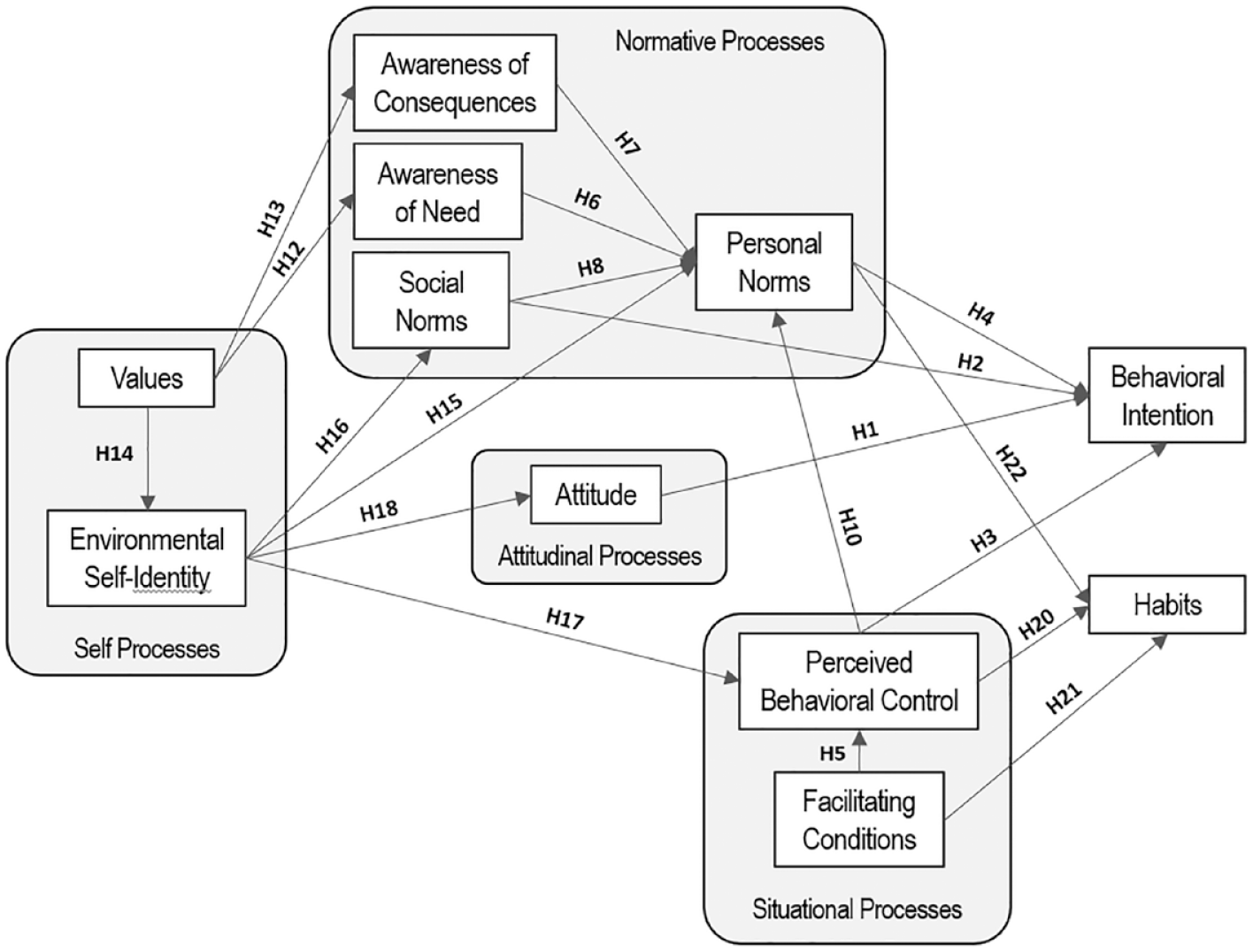
Integrative model.
As for situational processes, perceived behavioural control should be influenced by facilitating conditions (
The main innovation of our model is the integration of self-processes as a new source of influence. These processes refer to self-identity and values. Self-processes provide an overall framework of conduct for individuals; thus, we propose that they act at the early stages of the behavioural performance decision. This idea is supported by the value identity personal norm model, which indicates that values predict identity, which in turn predicts personal norms (Van der Werff & Steg, 2016). Support for this view also comes from the value-belief-norm model, which shows that values are the antecedents of beliefs (Stern, 1999). Recent work has further shown that biospheric values and self-identity are antecedents of social norms, perceived behavioural control and attitudes (Ateş, 2020; Carfora et al., 2017; Gkargkavouzi et al., 2019). Therefore, we hypothesize that self-processes have an upstream influence on the set of previously mentioned proximal determinants of behavioural intention. Values should impact the level of awareness individuals have regarding the need to act (
Lastly, besides intention, we measured habits as an outcome for food waste separation. Habits refer to past behaviours that, through repetition over time, have become automatic, frequent and non-conscious (Ouellette & Wood, 1998). Habits are a strong proximal predictor when the behaviour is frequent (Klöckner, 2013). With respect to the two behaviours investigated here, habits do not apply to dropping off waste at a disposal centre as this behaviour is not frequent. It can apply to food waste separation, although this specific behaviour is not yet required from the population and is therefore not widely enforced. In the prospect of enforcement planned in 2024 in the present country, it is important to know what is related to the development of this habit. We hypothesize that habits will be directly predicted by perceived behavioural control (
Methods
Sample size
According to Kline (2023), structural equation models need to have at least a 5-to-1 ratio of observations to estimated parameters. We estimated 169 parameters in the model addressing food waste sorting and 164 parameters in the model for deposit at waste disposal centres, leading to minimal sample sizes of 845 and 820 observations, respectively.
Participants
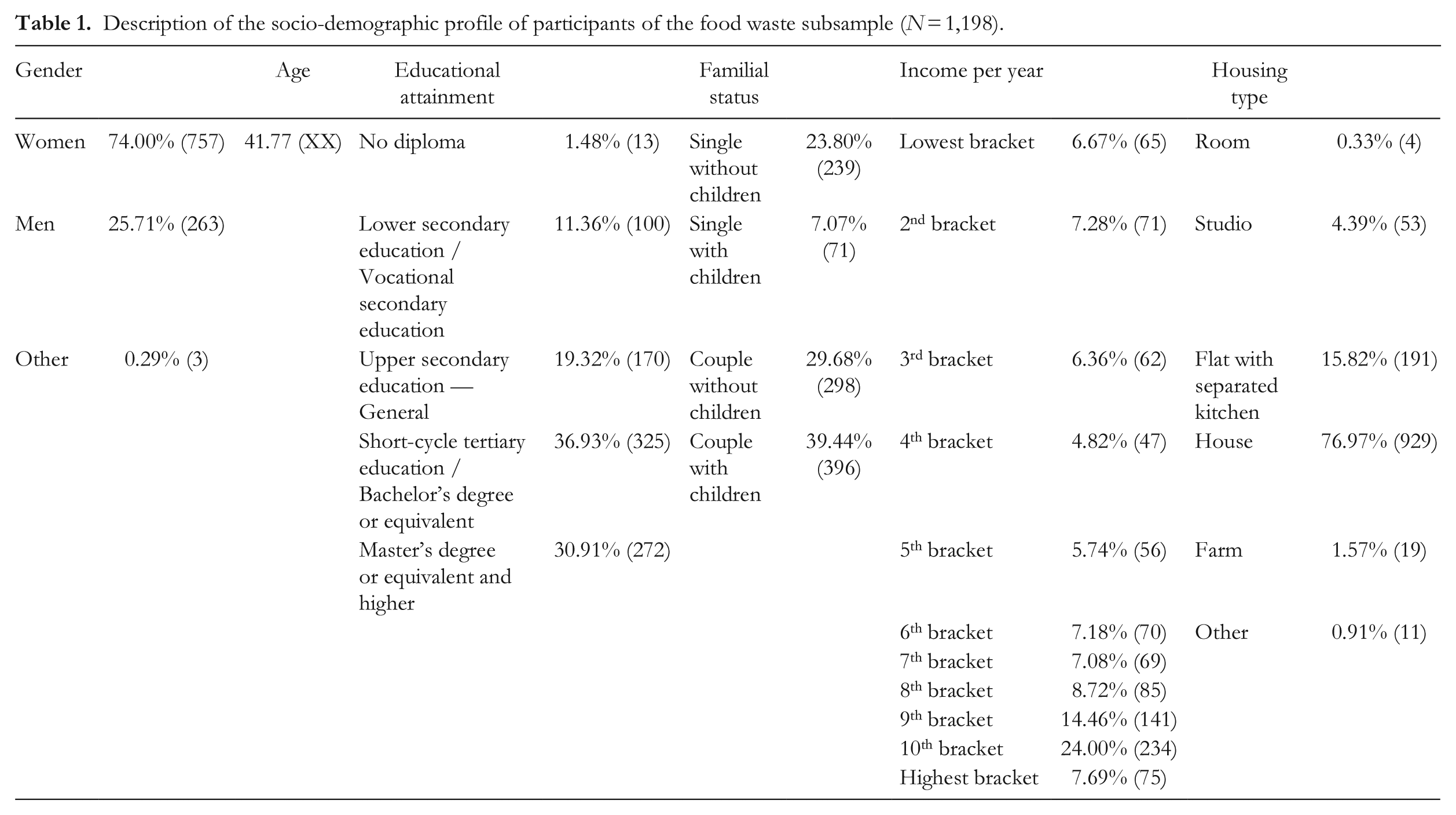
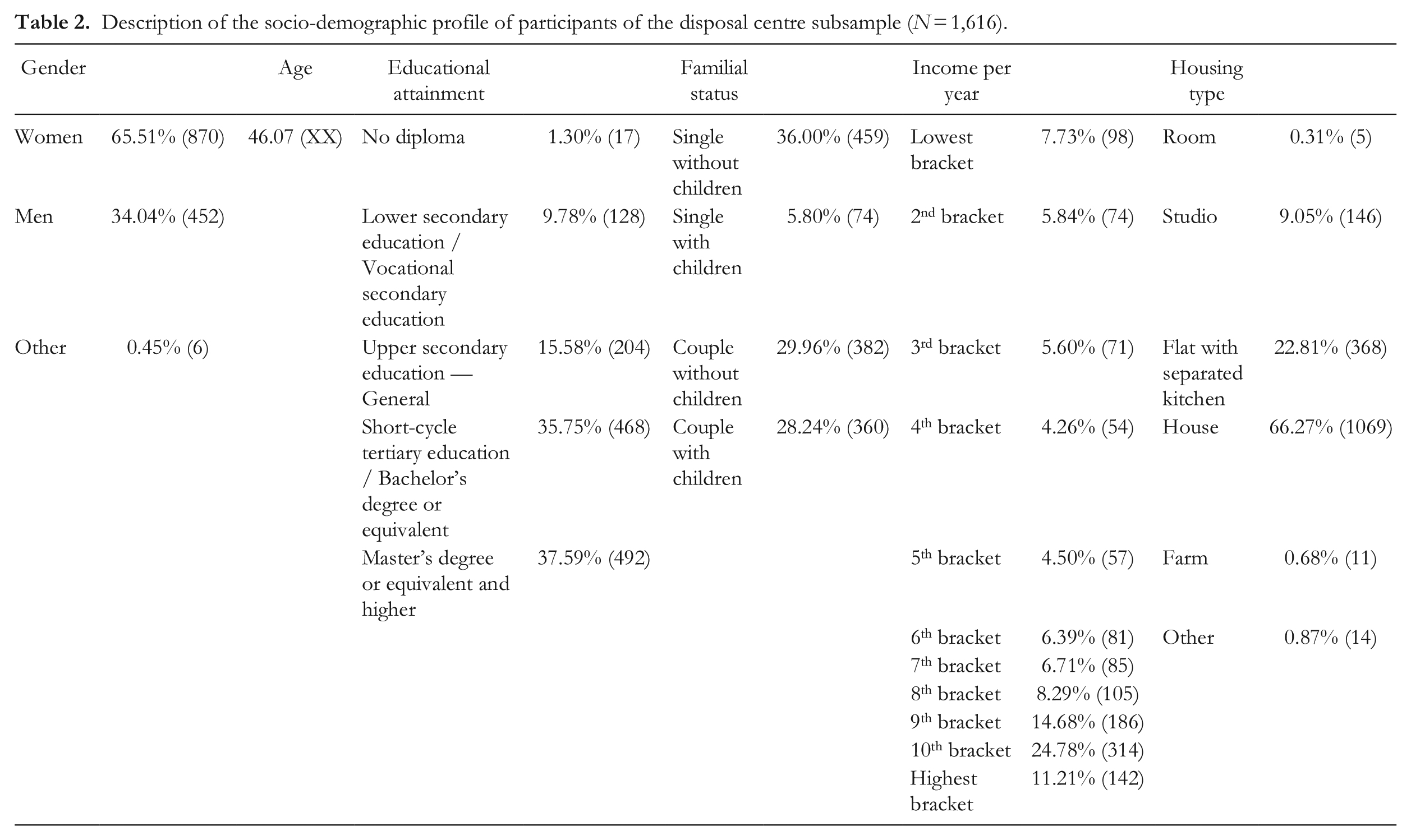
Participants voluntarily filled in an online questionnaire that took approximately 30 minutes to complete and asked about one of the two targeted behaviours. The final samples consisted of 1,198 usable observations for the food waste sorting questionnaire and 1,616 observations for the (deposit at) waste disposal centres questionnaire. Tables 1 and 2 provide an overview of the socio-demographic characteristics of the participants included in the data analyses for both samples. Participants mostly identified as women, and the distribution of their level of education and income was skewed to the right. Moreover, half of the respondents lived in peri-urban areas (49% and 52% for food waste and waste disposal centre questionnaires, respectively) and about a quarter in rural areas (28% and 19%, respectively) or urban areas (23% and 26%, respectively).
Description of the socio-demographic profile of participants of the food waste subsample (N = 1,198).
Description of the socio-demographic profile of participants of the disposal centre subsample (N = 1,616).
Measures
All variables in the study were latent variables with multiple indicators. All items were adapted from previous studies and translated into French. Unless otherwise specified, respondents rated each item on a seven-point scale, ranging from 1 (‘totally disagree’) to 7 (‘totally agree’). Negatively worded items were reverse-scored. Analyses were conducted on the basis of all items related to the construct mean score.
A first block of items measured general beliefs about waste:
Awareness of need about waste in general was measured with four items (e.g., ‘Our society produces too much waste’).
Awareness of consequences about general waste management on the environment was measured with four items (e.g., ‘If I manage my waste properly, my local quality of life will improve’).
In the second block, participants answered questions about one of the two specific behaviours.
Social norms about the specific waste management were measured on both injunctive and descriptive sides. Social injunctive norms were measured with three items (e.g., ‘Dropping off waste at disposal centres is encouraged by people whose opinion I value’). Social descriptive norms were measured with three items (e.g., ‘Everyone in my neighbourhood deposits waste at disposal centres’). A mean score of the six items has been calculated.
Participants’ personal norms about specific waste management were measured with three items, for example, ‘I feel morally obliged to sort my food waste’, translated from van der Werff et al. (2013) and Klöckner and Blöbaum (2010).
Participants’ perceived behavioural control about specific waste management was assessed with four items, for example, ‘It is up to me to deposit my waste at disposal centres,’ adapted from Kraft et al. (2005).
Participants’ attitudes about specific waste management were assessed by asking them to respond to the statement, ‘Dropping off my waste at the disposal centre/Sorting my food waste is. . .’ on six pairs of bidimensional components of instrumental attitude, for example, ‘pointless–useful’, adapted from Graham-Rowe et al. (2019).
Facilitating conditions related to specific waste management were measured with 10 items for food waste, for example, ‘I know where to find information to sort my food waste’, and 15 items for bulky waste, for example, ‘I know where to find the closest disposal centre’, adapted from Klöckner and Oppedal (2011).
Participants’ habits were only assessed for food waste separation, with four items (e.g., ‘Sorting my food waste is something I do without thinking’ from the self-report habits index, Verplanken & Orbell, 2003).
Behavioural intention to manage the specific waste was assessed with four items, for example, ‘Over the next 12 months, I intend to sort, or to continue to sort, my food waste.’
In the last block, participants were asked about their values, environmental self-identity and socio-demographic variables. Biospheric values were measured with four items, for example, ‘Being close to nature is important to me,’ translated into French from Steg et al. (2014). Environmental self-identity was measured with three items, for example, ‘I consider myself to be a waste management sensitive person’, adapted from Nigbur et al., (2010).
We collected six socio-demographic variables: age, gender, highest diploma, annual income, familial status and type of habitation (Tables 1 and 2).
Procedure
An online survey was distributed via social networks and mailing lists of local associations. Participants over 18 years old were invited to fill in a questionnaire about 30 minutes long. After consenting to participate, they answered the first block of questions on general beliefs about waste management: awareness of need and consequences. Participants were then pseudo-randomly assigned to two out of three behaviours (60% for waste disposal centres and 40% for food waste separation). Indeed, data collection was performed in the context of collaboration with local authorities initially interested in fostering their understanding of three specific behaviours: food waste separation, deposit at waste disposal centres and green waste reuse in situ. The last behaviour was not included in the present paper because we did not reach an acceptable sample size. The second block of questions randomly assessed determinants specifically referring to the targeted behaviour, namely, social norms, personal norms, perceived behavioural control, facilitating conditions, attitudes and habits. Participants then filled in the intention measure at the end of the block. The last block measured pro-environmental values and identity, and participants filled in socio-demographic information on an optional basis. Within each block, the items measuring each determinant were counterbalanced.
Analysis strategy
Two correlation matrices, reported in Tables 3 and 4, present the zero-order correlations between each determinant and behavioural intention (i) to sort food waste and (ii) to deposit waste at disposal centres.
Correlation matrix and descriptive statistics of latent variables: food waste separation.
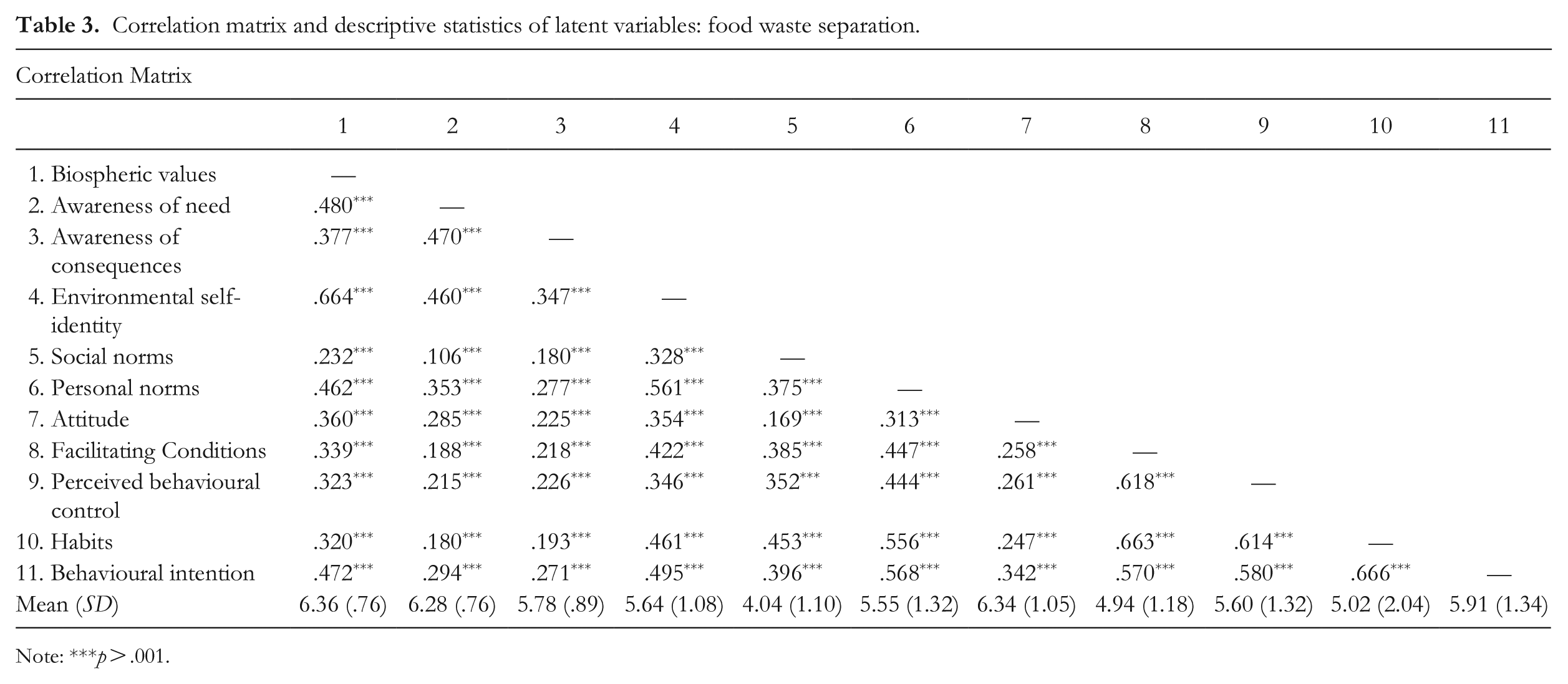
Note: ***p > .001.
Factor loadings and Cronbach’s alphas: food waste separation.
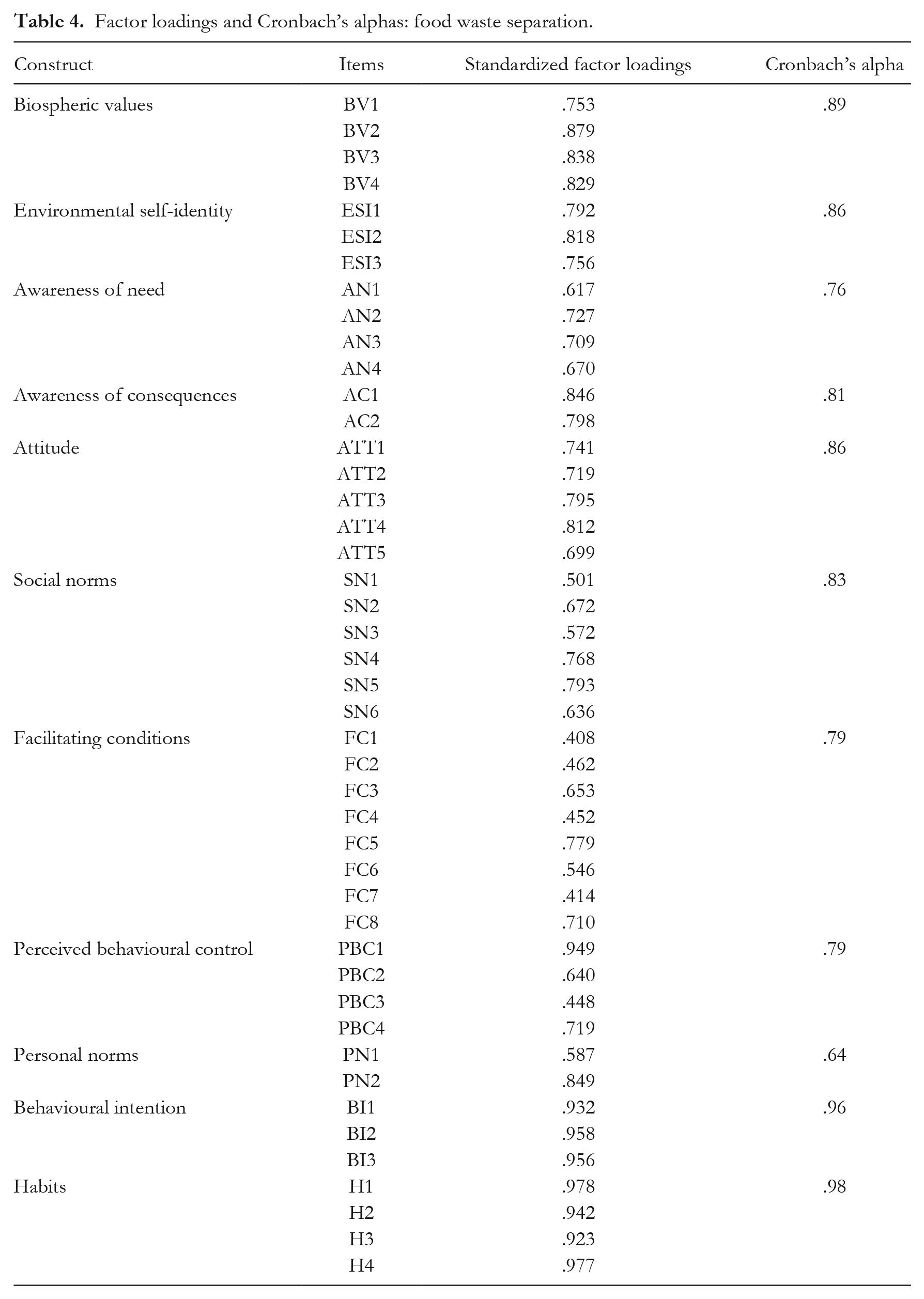
To test each model, analyses were run using the R package lavaan (Rosseel, 2012). Structural equation modelling (SEM) with robust maximum likelihood estimation was applied with a two-stage procedure to test the fitness of the proposed model with the gathered data. In the first step, the reliability and validity of the measurement instruments were determined by confirmatory factor analyses. In the second step, the fitness of the proposed model and the relationships between variables were evaluated by structural equation modelling tests. The model fit was examined based on the following indices: items saturation with related construct (std. str) greater than .40 (Stevens, 2012), robust comparative fit index (Robust CFI), robust Tucker-Lewis index (Robust TLI) equal or greater than .92, robust root mean square error of approximation (Robust RMSEA) lower than .08 and robust standardized root mean squared error (Robust SRMR) lower than .08 (Hair, 2019).
Results
Food waste separation
Descriptive results
Measurement model analysis
The initial CFA results indicated that several items should be deleted due to poor standardized factor loadings (< .40). We deleted one item from the personal norms scale and two items measuring facilitating conditions. The modification indices suggested correlating nine error terms within the same latent constructs to improve the model fit. The final CFA results revealed an acceptable fit for the proposed model: Robust χ2 = 2,172.742; df = 972; p = .000; df/χ2 = 1.141; Robust CFI = .961; Robust TLI = .957; Robust RMSEA = .034; 90% CI [.032; .036]; SRMR = .045. All standardized factor loadings were significant at p < .001. Factor loadings and Cronbach’s alphas are presented in Table 4.
Structural equation modelling
The results from the SEM analysis showed that the proposed model yielded a good fit to the data: χ2 = 2,666.302; df = 1,006; p < .001; df/χ2 = 1.144; Robust CFI = .946, Robust TLI = .942, Robust RMSEA = .039 90% CI [.038; .041]; SRMR = .075. The model accounted for 54.7% of the variance in intention to sort food waste and 65.5% of variance in habits to sort food waste.
We observed three out of the four hypothesized direct influences on intention. Intention to sort food waste had a strong relationship with both personal norms, β = .35, p < .001, and perceived behavioural control, β = .43, p < .001, suggesting that the stronger the moral obligation and ability individuals feel, the higher their intention to sort food waste. Attitudes were significantly but more weakly linked with intention, β = .08, p = .005. Contrary to expectations, social norms were not significantly related to intention, β = .06, p = .072.
Regarding the antecedents of those four proximal determinants of intention, the model accounted for 67% of the variance in perceived behavioural control, 75% in personal norms, 17% in social norms and 23% in attitude. Among the situational processes, the more facilitating the conditions of implementing the food waste sorting, the higher the perceived behavioural control, β = .77, p < .001. Regarding normative processes, personal norms are predicted by social norms, β = .12, p = .007, and awareness of need, β = .15, p = .001, but the results showed no significant relationship with awareness of consequences, β = −.046, p = .226. A sense of moral obligation to sort food waste seemed activated by the perception that others value and produce that behaviour and the awareness of a need to address waste management issues. The expected relationship between situational and normative processes was observed, as personal norms are predicted by perceived behavioural control, β = .30, p < .001. As for self-processes, biospheric values predicted the level of awareness of need, β = .64, p < .001, awareness of consequences, β = .52, p < .001, and environmental self-identity, β = .82, p < .001. In turn, environmental self-identity predicted personal norms, β = .58, p < .001, social norms, β = .41, p < .001, attitude, β = .48, p < .001, and to a lesser extent, perceived behavioural control, β = .13, p < .001.
Lastly, for the second outcome — habits — the results supported the hypothesized direct influences such that stronger habits were reported by participants who had a higher sense of moral obligation, β = .25, p < .001, felt more capable of sorting food waste β = .36, p < .001, and reported more facilitating conditions, β = .32, p < .001. The relationship between perceived control and habits is partially mediated by personal norms, β = .07, p < .001. The influence of facilitating conditions on habits is partially mediated by perceived behavioural control, β = .28, p < .001. Table 5 and Figure 3 present the results.
Evidence support for the hypothesized relations: food waste separation.
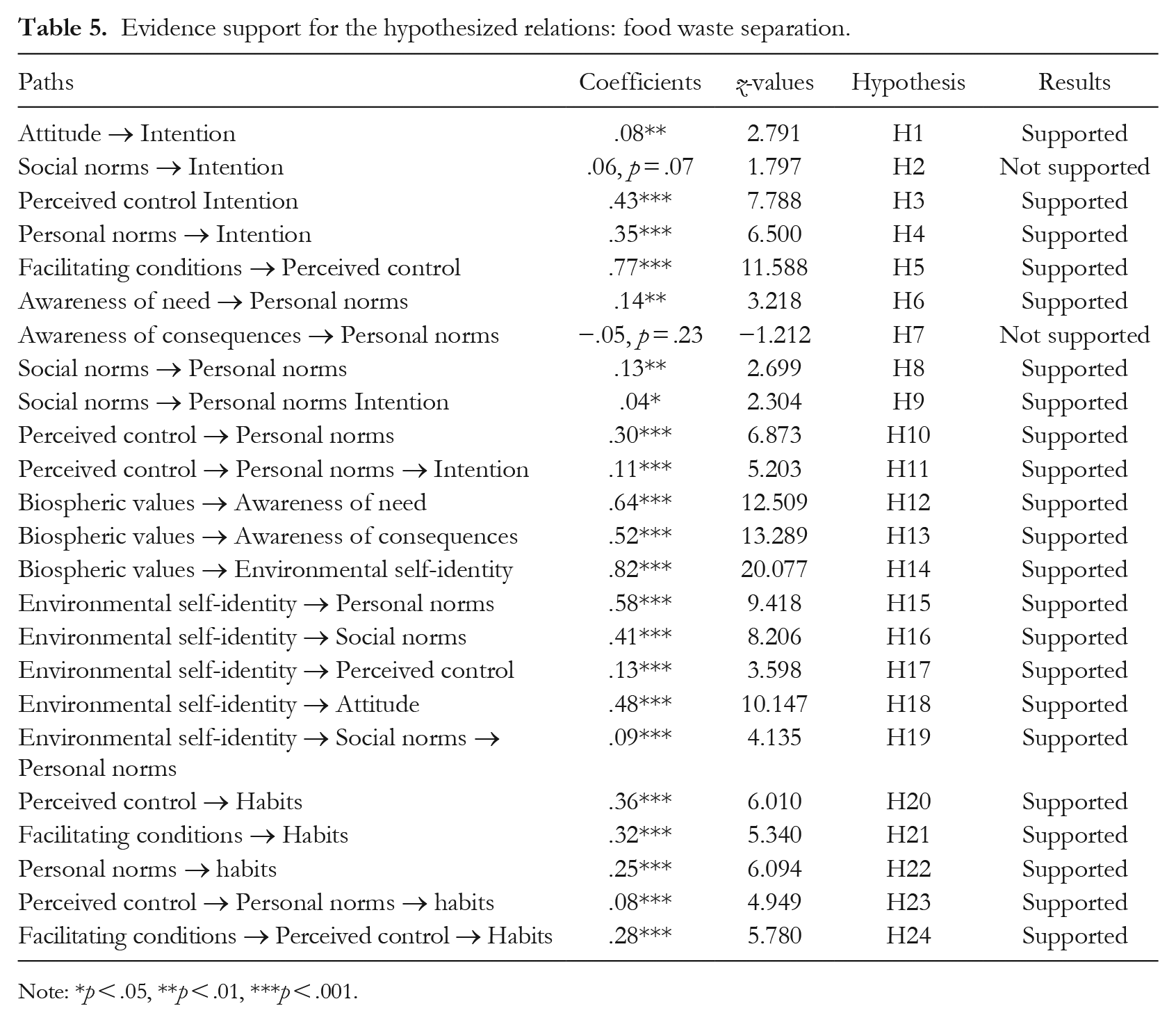
Note: *p < .05, **p < .01, ***p < .001.
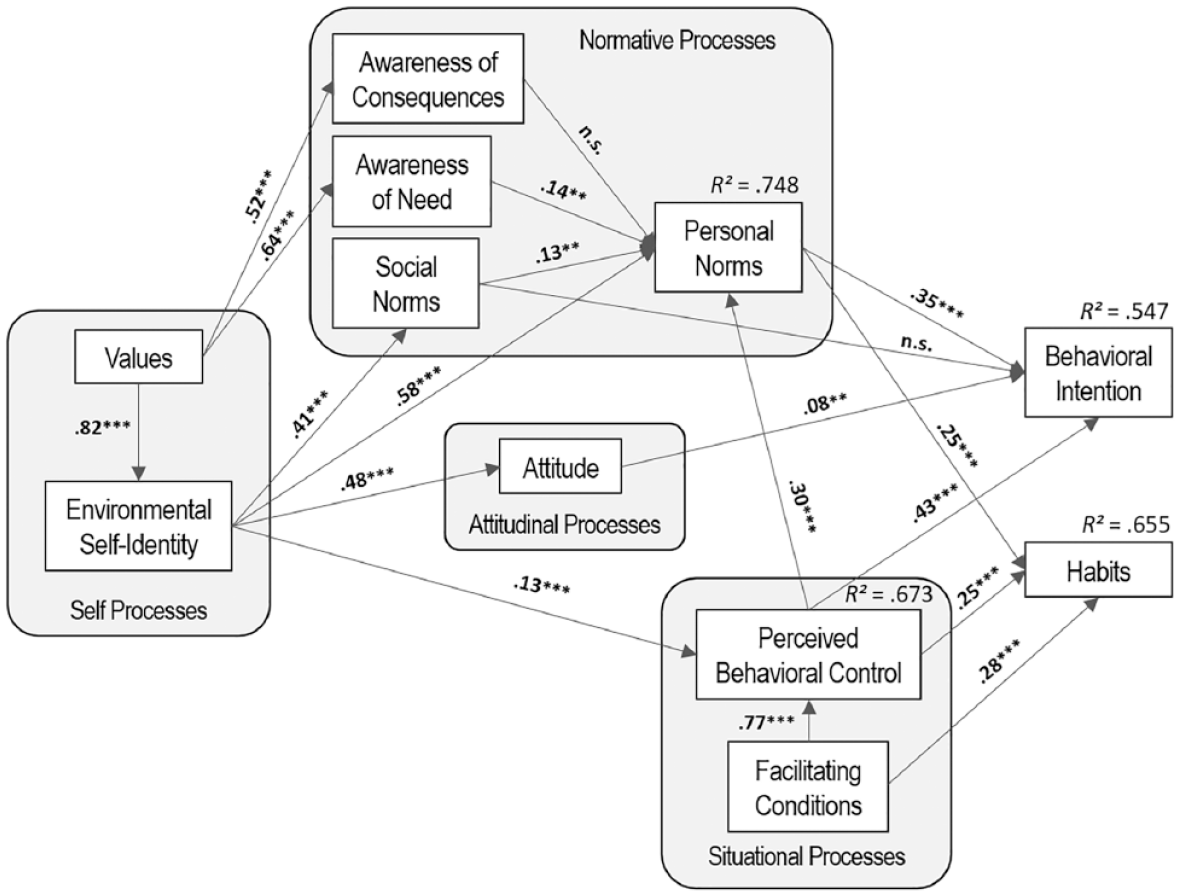
Results of the structural equation modelling: food waste separation.
Deposit at a disposal centre
Descriptive results
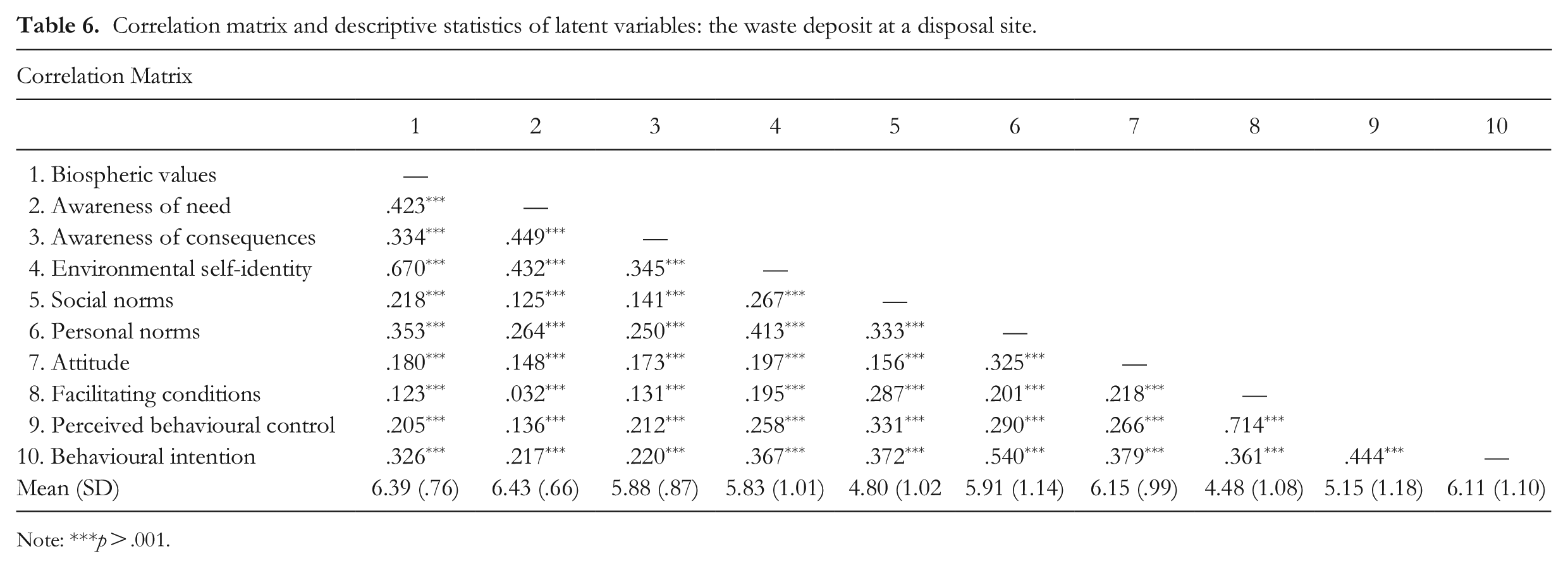
The correlation matrix is presented Table 6.
Correlation matrix and descriptive statistics of latent variables: the waste deposit at a disposal site.
Note: ***p > .001.
Measurement model analysis
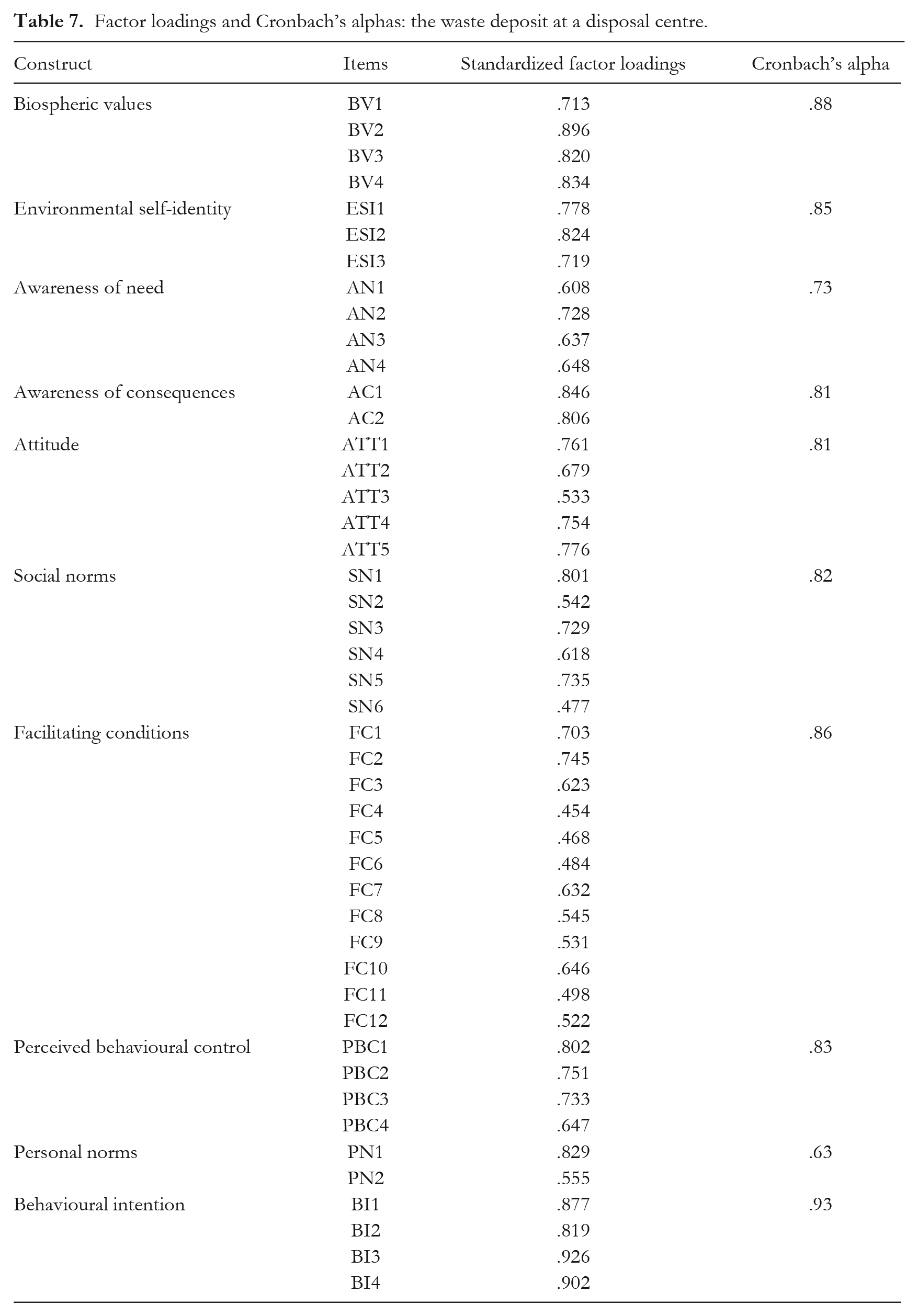
Due to poor standardized factor loadings, we deleted two items referring to the facilitating conditions. The modification indices suggested correlating ten error terms within the same latent constructs to improve the model fit. The final CFA results revealed an acceptable fit for the proposed model, Robust χ2 = 3,042.374; df = 978; p < .001; df/χ2 = 3.111; Robust CFI = .937, Robust TLI = .931, Robust RMSEA = .038 90% CI [.037; .040]; SRMR = .044. All standardized factor loadings are significant at p < .001 (factor loadings and Cronbach’s alphas are presented in Table 7).
Factor loadings and Cronbach’s alphas: the waste deposit at a disposal centre.
Structural equation modelling
The results from the SEM analysis showed that the proposed model had an acceptable fit to the data: Robust χ2 = 3,557.990; df = 963; p < .001; df/χ2 = 3.695; Robust CFI = .917, Robust TLI = .910, Robust RMSEA = .043 90% CI [.042; .045]; SRMR = .071. The model accounted for 52.8% of the variance in intention to deposit waste at a disposal centre.
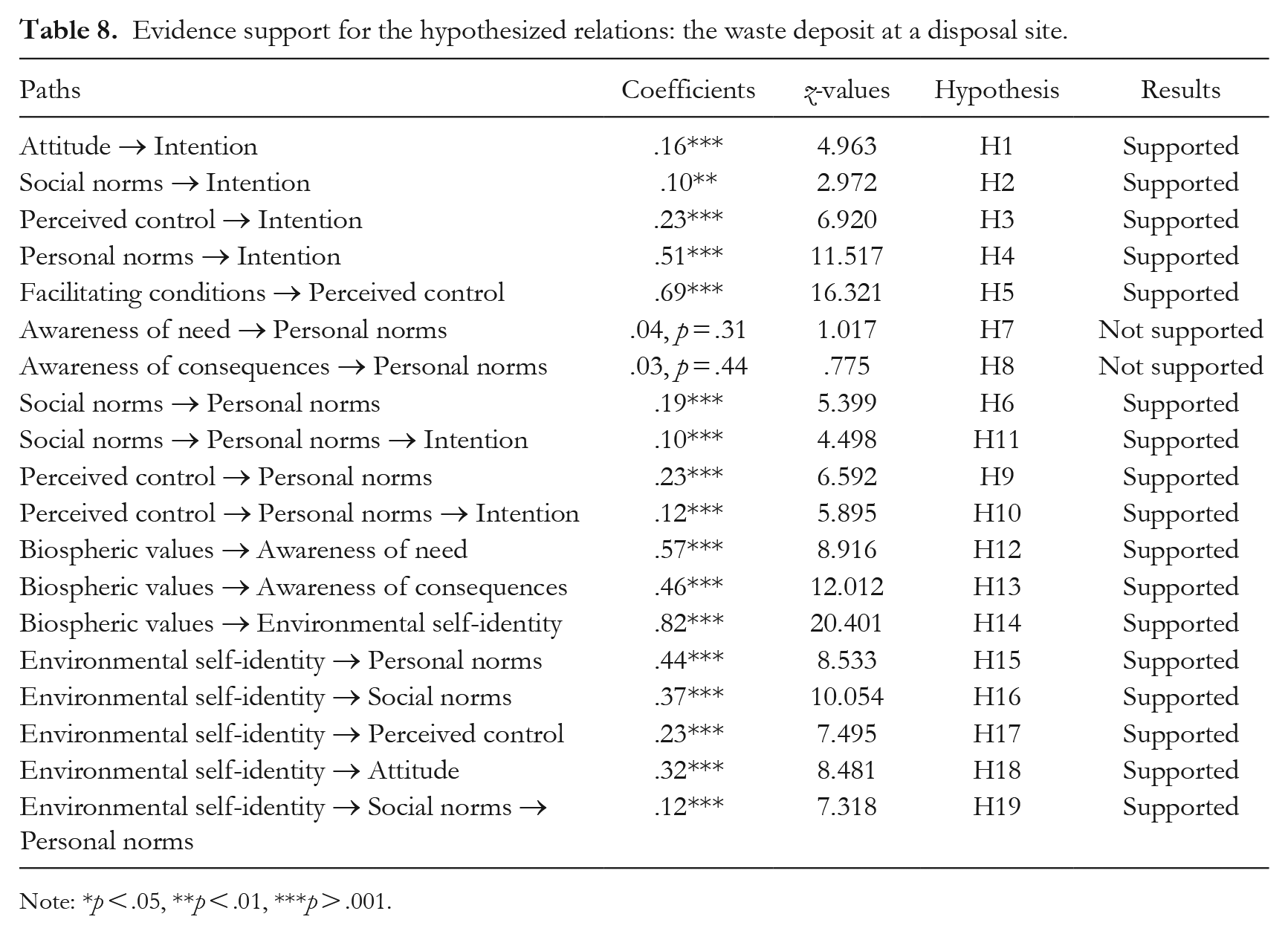
The four hypothesized direct influences on intention were observed. The intention to deposit waste at disposal centres was predicted by personal norms, β = .51, p < .001, indicating that the more participants feel morally obliged to drop off their waste at a disposal centre, the more they intend to do so. Perceived behavioural control, social norms and attitude were also significantly linked with intention, β = .23, p < .001, β = .10, p = .003 and β = .16, p < .001, respectively. The stronger the ability individuals felt, the more they perceived others to adopt or value the behaviour and the more positive their attitude toward the behaviour, the higher their intention to drop off their waste at a disposal centre.
Regarding the four proximal determinants of intention, the model accounted for 56% of the variance in perceived behavioural control, 46% in personal norms, 14% in social norms and 10% in attitude. Perceived behavioural control was significantly predicted by facilitating conditions, β = .69, p < .001. Regarding normative processes, personal norms is linked to social norms, β = .19, p < .001, whereas results showed no significant relationship with awareness of need, β = .04, p = .309 and awareness of consequences, β = .03, p = .439. Personal norms had a significant relationship with perceived behavioural control, β = .23, p < .001. On the self-processes side, biospheric values predicted the level of awareness of need, β = .57, p < .001, awareness of consequences, β = .46, p < .001 and environmental self-identity, β = .82, p < .001. In turn, environmental self-identity predicts personal norms, β = .44, p < .001 and had significant relationships with social norms, β = .37, p < .001, attitude, β = .32, p < .001 and perceived behavioural control, β = .23, p < .001. Table 8 and Figure 4 show the hypotheses testing results.
Evidence support for the hypothesized relations: the waste deposit at a disposal site.
Note: *p < .05, **p < .01, ***p > .001.
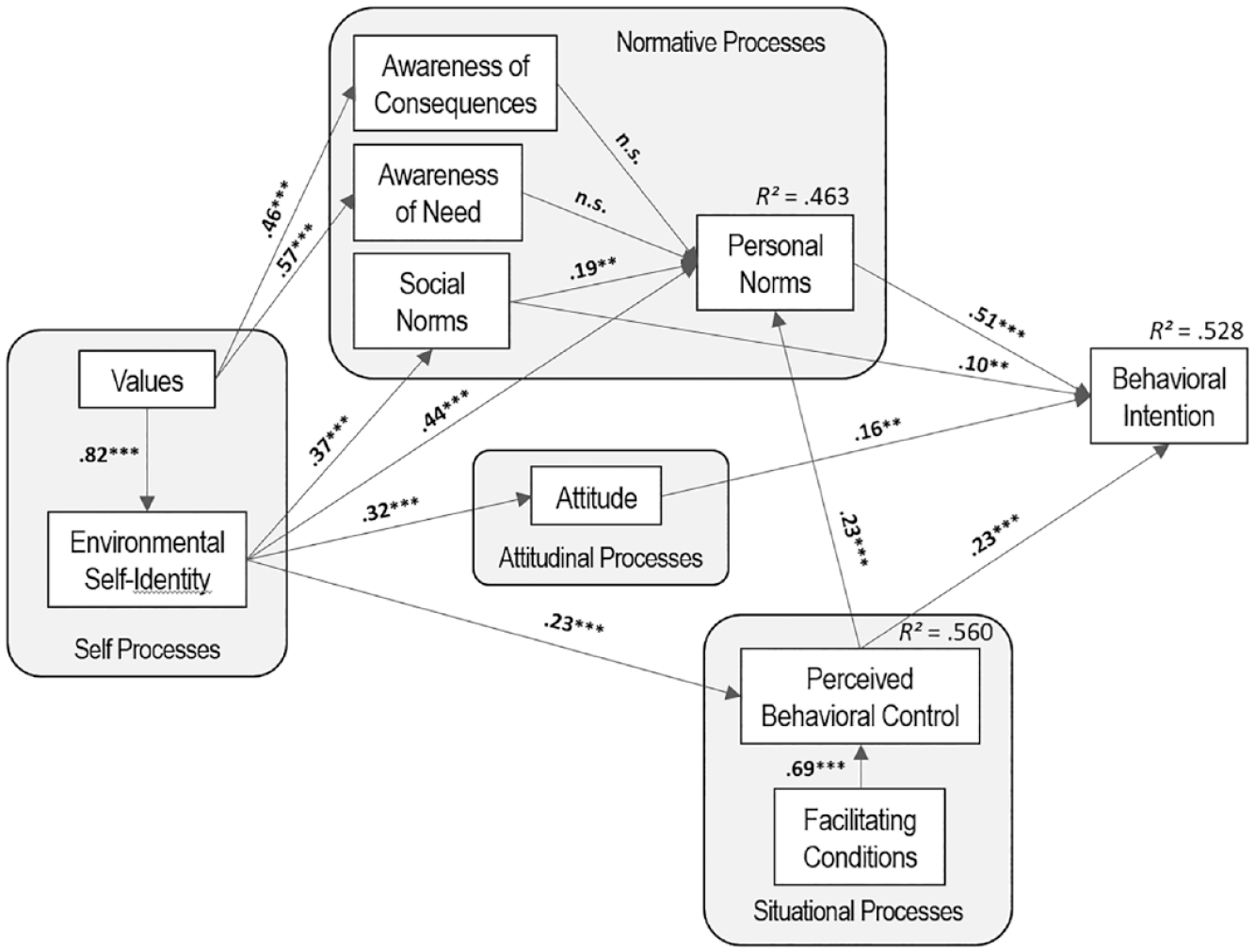
Results of the structural equation modelling: the waste deposit at a disposal site.
Testing alternative models
In line with our theoretical framework, we evaluated several existing models, including the theory of planned behaviour, the norm activation model, 2 the value-belief-norm model and the comprehensive action determination model. The goodness-of-fit indices for the intention to sort food waste are presented in Table 9, while Table 10 displays the indices for the intention to deposit waste at a disposal centre. All five models demonstrated an acceptable fit based on the goodness-of-fit indices. While the two integrative models did not perform as well as the more parsimonious models, our model showed comparable performance to the previous integrative model (i.e., comprehensive action determination model) for both behaviours. The value-belief-norm model had the best comparative fit indices (AIC and BIC). Nevertheless, our model explained more variance in intention and personal norms and therefore provides a more comprehensive explanation of the data.
Model comparison for food waste sorting intention.
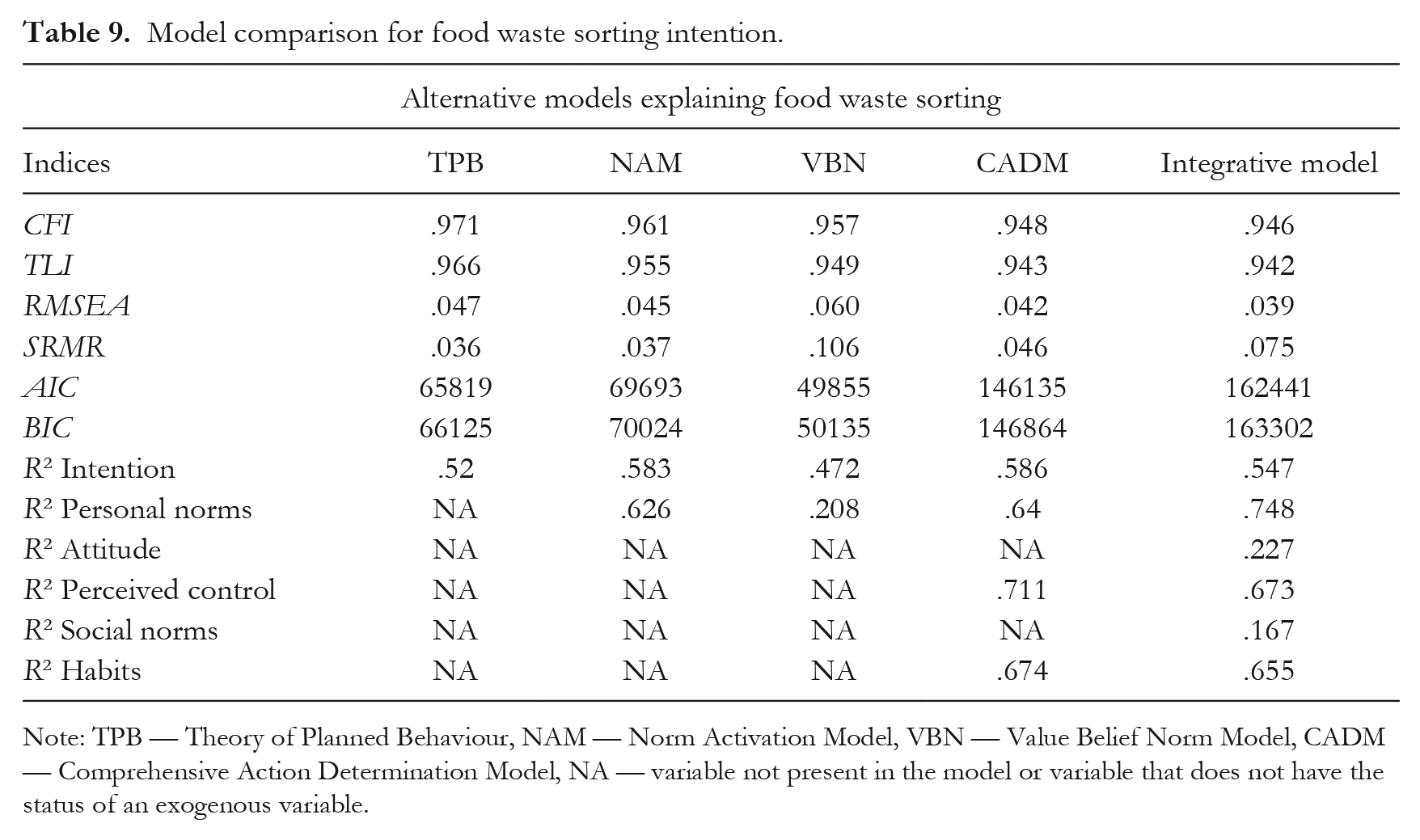
Note: TPB — Theory of Planned Behaviour, NAM — Norm Activation Model, VBN — Value Belief Norm Model, CADM — Comprehensive Action Determination Model, NA — variable not present in the model or variable that does not have the status of an exogenous variable.
Model comparison for the intention to deposit waste at a disposal centre.
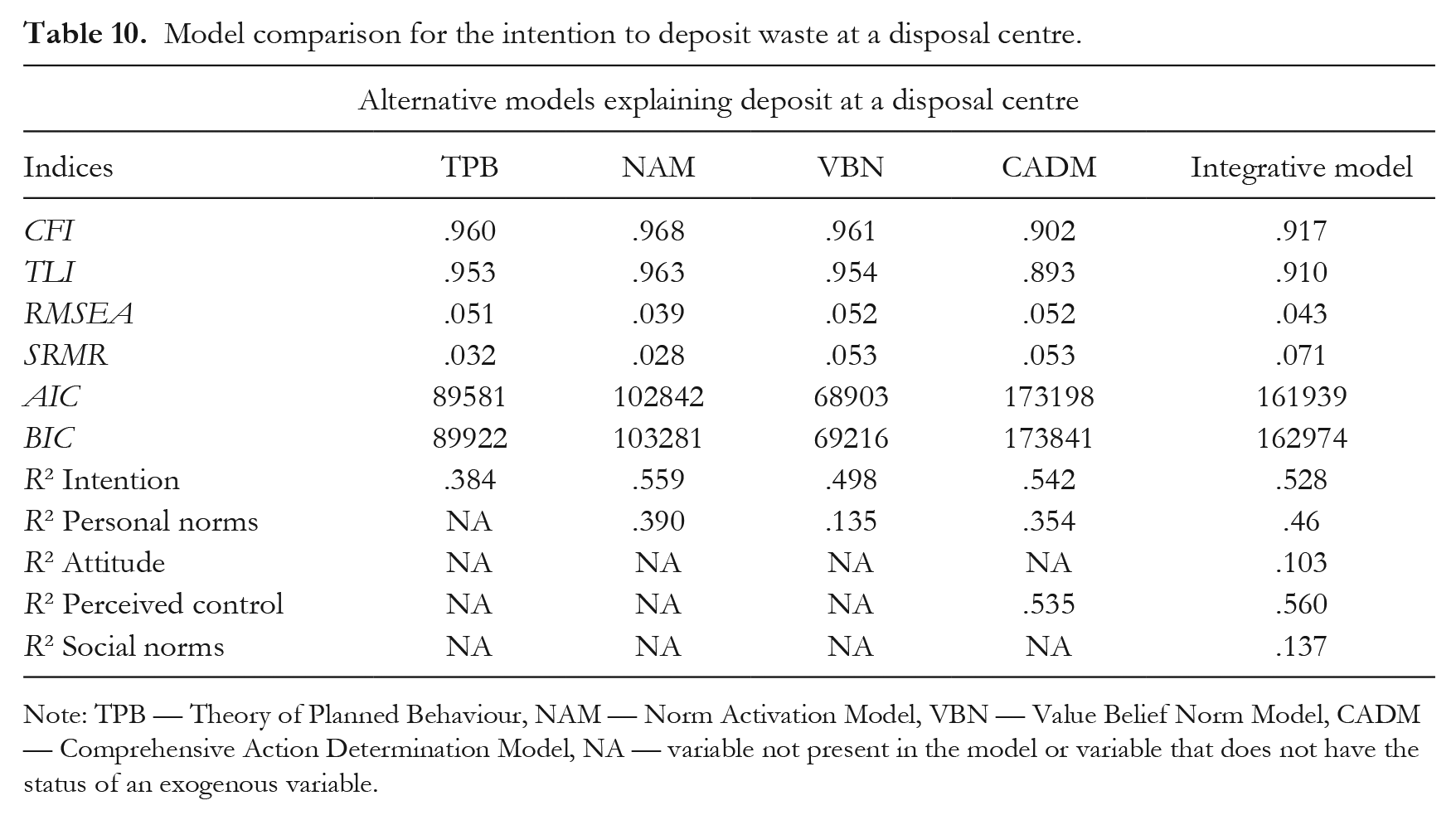
Note: TPB — Theory of Planned Behaviour, NAM — Norm Activation Model, VBN — Value Belief Norm Model, CADM — Comprehensive Action Determination Model, NA — variable not present in the model or variable that does not have the status of an exogenous variable.
Discussion
The first objective of this study was to test an integrative model that relies on the three — normative, attitudinal and situational — processes of the comprehensive action determination model (Klöckner & Blöbaum, 2010) and includes an additional process based on a recent meta-analysis (Geiger et al., 2019): self-processes. Our model is supported by the results of structural equation modelling which are consistent with 21 out of the 24 hypotheses. The indices showed a good fit of the model, accounting for 52.8% and 54.7% of the variance in intentions and 65.5% of the variance in habits. As expected, each of the four processes included in the model had a significant direct or indirect impact on the outcomes studied here. This finding shows the value of including all identified sources of influence to achieve a more complete and detailed understanding of the intention (or habit) to produce the target behaviours.
Analyses confirmed our proposal that self-processes have an upstream influence on all other processes (Gkargkavouzi et al., 2019; Steg et al., 2014). By proposing both values and pro-environmental identity as early antecedents, the present integrative model showed that attitudes and social norms — only treated as antecedents in the other models — are predicted by self-processes (.10 < R2 < .23). The comparison with more classical models showed that adding these early antecedents increased the explanation of personal norms, reaching 46% and 75% of explained variance. This suggests that self-processes are a promising venue for better understanding how a personal sense of moral obligation emerges and is activated. These findings are consistent with recent work showing that self-processes (i.e., values) predict attitudes, social norms, personal norms and perceived behavioural control (Ateş, 2020). Overall, the observed influence of self-processes on the attitudinal, normative and situational processes is consistent with previous claims that values and self-identity indirectly affect behavioural intentions by providing a general orientation for the perception and evaluation of any specific situation (Bamberg et al., 2003; Udall et al., 2021).
This study focused on two specific waste management behaviours: food waste separation and deposit at disposal centres. The results revealed a common basis of understanding for both behaviours. The main common finding is that the intention and habit to manage one’s waste are related to two proximal determinants: personal norms and perceived behavioural control. This suggests that, across two types of waste, individuals who feel a strong moral obligation to manage their waste in an environmentally friendly manner and who are highly confident in their ability to do so are more likely to have a positive intention to engage in proper waste management. Another result observed for both behaviours in our integrative model is that attitudes and social norms are weakly linked to intention. This finding is consistent with a recent study on residential households’ waste behaviour that similarly showed the influence of perceived behavioural control and personal norms on waste separation, while attitudes and social norms had no significant relationship with the behaviour (Goh et al., 2022). The weaker or absence of influence of attitudes has been observed in other studies when normative influences are included in the models (Oehman et al., 2022; Wu et al., 2022). This may indicate that the presence of personal norms in the model absorbs much of the predictive power of attitudes. The weak and even non-significant effect of social norms in the case of food waste separation may be due to the private nature of the behaviours. Managing food waste, bulky, toxic or electronic waste mostly takes place in private contexts (e.g., one’s own home), which may explain the lower importance of the influence of others’ behaviour (Aguilar-Luzón et al., 2012).
Regarding the path of influence of the proposed model, the results show that the first proximal determinant of intention — personal norms — is predicted by the perception of high levels of social norms and environmental self-identity, but also by a strong sense of control over the behaviour. For both behaviours, the more people perceive that those around them value (injunctive norms) or practice (descriptive norms) good waste management, the more people perceive themselves as pro-environmental persons, the more they feel able to perform the waste behaviour and the more they develop a sense of moral obligation to do so. However, contrary to our prediction, the results did not show a significant relationship between personal norms and awareness of consequences. A possible explanation for this null result, which contradicts many studies (Klöckner, 2013), is that the measure we used referred to the consequences of waste management in general and not of the target behaviour.
As for the second stable and proximal determinant of waste management intention — perceived behavioural control — it is strongly predicted by facilitating conditions. The more supportive the material and informational conditions are in individuals’ performance environment, the stronger their sense of performance ability. Our findings, along with others (e.g., Cheng et al., 2022; Concari et al., 2022b; Vijayan et al., 2023; Zaikova et al., 2022; Zhang et al., 2022), outline the importance of access to information and material conditions that facilitate the production of waste management behaviours. Such facilitating conditions enrich psychological models with contextual factors that contribute to alleviating constraints.
Although the results revealed a common core for understanding both targeted behaviours, they also highlighted specificities in the determinants of food waste sorting and deposit at waste disposal centres. In the case of food waste separation, situational processes appear to be the most influential of the four sources of influence. In fact, the key predictor of the intention to sort food waste is perceived behavioural control, directly and indirectly through personal norms. That is, when individuals feel control over their behaviour, their sense of moral obligation is likely to be activated, which in turn changes their intention to behave accordingly. The results concerning habits also support the predominance of situational processes, as facilitating conditions are strongly related to the presence of sorting habits, both directly and indirectly via perceived behavioural control. The more favourable the material and informational conditions for the act of sorting, the easier the behaviour is perceived to be and the higher the habits are. The model predicting intention towards waste disposal emphasizes normative processes over situational and attitudinal processes. Personal norms showed the strongest association with intention. The stronger the principle of depositing toxic or bulky waste at the disposal centre, the higher the intention to do so. However, it is interesting to note that the variance of personal norms explained by the antecedents included in the model is lower when the target behaviour is depositing at waste disposal centres (R2 = .46) than when it is food waste separation (R2 = .74). Moreover, in the waste disposal model, the awareness that waste generation is a problem that needs to be addressed does not have a significant effect on personal norms. This suggests that the sense of moral obligation to deposit waste at disposal centres is influenced by factors other than those we identified in the pro-environmental literature. This raises the question of the perception of this behaviour as being strictly pro-environmental. It is possible that people are not fully aware of how waste is treated and reused in these infrastructures, which have long been perceived as mere landfills.
Our second objective was to use our integrative model to promote an understanding of two overlooked waste management behaviours: food waste separation and waste deposit at disposal centres. The behaviours studied in this paper are of practical relevance, with food waste responding to regulatory developments in Europe and the deposit of waste in a disposal centre enabling the reuse of materials (e.g., metal, wood, electronic components), in a context of accelerating resource depletion. This study also contributes to the advancement of the research field on the identification of factors related to waste sorting behaviour. Recent bibliometric research suggests that the study of waste sorting behaviour is generating a growing literature (Concari et al., 2022a). Research on waste management focuses on different types of waste, sometimes grouped under the umbrella term ‘recycling’. Our study addresses the need to differentiate and clarify the waste management behaviours studied by identifying both common factors and differentiating elements for understanding two specific behaviours.
Limitations
The main limitation of our study is the absence of measurement of actual behaviour. As in many other studies, we measured intention, as a key determinant of behaviour (Sheeran & Webb, 2016. Meta-analytic findings on pro-environmental behaviour have shown a moderate to strong relationship between intention and behavioural enactment (Morren & Grinstein, 2016). In a longitudinal study, Passafaro et al. (2019) showed that intentions predicted self-reported waste sorting behaviour one month later. Despite these strong associations, people do not always do what they intend to do, and thus there is a gap between stated intention and action (Hassan, 2016; Rhodes & Dickau, 2012). Indeed, meta-analyses of the impact of interventions aimed at changing health-related behaviours have shown greater intervention-induced changes in intentions than in measured behaviours (Rhodes & Dickau, 2012; Webb & Sheeran, 2006). However, the gap between intentions and behaviour depends on the context, particularly whether the behaviour is habitual or not. Specifically, the link between change in intention and change in behaviour is stronger for nonhabitual behaviours (d = .74) than for habitual behaviours (d = .22, Webb & Sheeran, 2006). It is worth noting that the behaviours examined in the present study were unlikely to be habitual. The behaviour of dropping off waste at a waste disposal centre does not meet the criteria of regularity and frequency that constitute a habit and is therefore a nonhabitual behaviour. As for the sorting of food waste, this is a new behaviour that is not yet required in the study area. Therefore, the habitual nature of food waste sorting can vary from zero, or very low, to strong. In addition to intentions, we also studied the habit of sorting food waste. This allowed us to establish the relevance of our integrative model to understand what is associated with the emergence of this behavioural variable. Indeed, it appears that regular sorting performance is related to performance conditions, perceived control and sense of moral obligation, and that these processes, both situational and normative, are not independent since perceived control predicts personal norms. However, habits remain a measure of self-reported behaviour that was realized at the same time as the measures of determinants tested in the model. In future work, it would be critical to test the influence of the determinants proposed here in a longitudinal study that would include measures of self-reported or observed waste management behaviour (e.g., trash can weighing). We recognize that the explanatory power of the model for actual behaviour will certainly be less than that reported here for intention (see, e.g., Yuriev et al., 2020). Nevertheless, from an intervention perspective, our study provides a broader understanding of the articulation of the determinants of sorting intentions, which may help in the design of research or interventions targeting the actual realization of these behaviours. Considering the intention–behaviour gap, interventions must include complementary elements that strengthen the transformation of intentions into actual actions, such as planning of the action, monitoring progress or information and conditions that facilitate the production of the behaviour (e.g., Rosenthal, 2018; Schwarzer, 2008; Sheeran & Webb, 2016).
A second limitation of this study pertains to the representativeness of the samples. Women, highly educated and high-income individuals are overrepresented in both samples. This may be due first to the recruitment strategy, which relied in part on the social network of the researchers. In addition, a self-selection of respondents is highly likely, as participants completed the questionnaire without retribution, and studies consistently show that women and highly educated people are more concerned about the environment (e.g., Diamantopoulos et al., 2003; Franzen & Meyer, 2010). It is important to replicate this study with a more diverse sample to improve the generalizability of the findings.
From an intervention perspective, proposing a comprehensive model may have practical implications. A model that allows for the testing of a wide range of determinants can enable stakeholders and public policymakers to conduct comprehensive diagnostic studies to identify the most important determinants of target behaviours in the population and then develop fine-tuned interventions. For example, in this study, we found that environmental self-identity is a common and early source of influence. Thus, to encourage better waste management, it may be relevant to design general incentive strategies based on the identity lever. However, the model also highlights specificities related to each behaviour that suggest more specific strategies. For example, if the goal of a public policy is to specifically encourage the sorting of food waste, the strategy should focus on increasing the sense of control, the key predictor, in particular by providing the conditions that facilitate the practices.
In conclusion, this research supports a model that integrates the main determinants of behaviour identified in the recycling literature into four sources of influence: normative, attitudinal, situational and self-processes. It adds to our knowledge of the main determining factors of two overlooked behaviours of greatest concern to local authorities: food waste separation and deposits at waste disposal centres. It appears that normative and situational processes are consistently directly related to intentions and habits, while attitudinal processes show weak links. The study also supports the idea that self-processes — values and identity — should be integrated, since they have an upstream influence on the other processes. We believe that the present research contributes to the efforts to move from multiplicity of specific models to a more integrative approach applicable to a wide range of pro-environmental behaviours.