



Abstract
Research demonstrates that wellbeing can benefit from contact with natural environments. How nature benefits emerging adults isn’t well understood. This review sought to systematically synthesise and analyse emerging adults’ experiences in nature for wellbeing. We aimed to achieve greater conceptual understanding of nature as a tool for wellbeing, and the barriers inhibiting engagement. A systematic search and inclusion criteria meant 11 studies were included for quality assessment and data analysis. Four analytical themes were generated following Thomas and Harden’s thematic synthesis framework. Findings revealed that nature provides a safe and calming space for self-reflection, social bonding, and emotional regulation through connection to the present moment. Barriers, including time constraints and unappealing green space, highlight interpersonal and intrapersonal reasons for not engaging with nature. Implications for behaviour change approaches, green space provision, and public health initiatives are given. This review highlights the potential nature has in supporting this stage of life.
Keywords
Introduction
Engaging with nature for wellbeing has been of growing interest to healthcare professionals, policy writers, and researchers (Capaldi et al., 2015). Nature supports eudaimonic and hedonic wellbeing through positive influences on restoration of cognitive processes (Berman et al., 2008), stress reduction (Kaplan & Kaplan, 1989), and physical and psychological health (Hartig et al., 2014). There appears to be a universality in this as studies demonstrate health benefits across different cultures and geographical contexts (such as China (Zhu et al., 2021), Japan (Wen et al., 2019) and Canada (Mathias et al., 2020)) and at different stages of life from childhood to older adulthood (Collins et al., 2023; Houlden et al., 2018; Roberts et al., 2019).
In this qualitative synthesis, nature refers to nonhuman processes and features that people ordinarily can perceive, including both animate - ‘living nature’ of flora and fauna, and inanimate things, including water, air, geological processes, and landscapes (Sofija et al., 2022).
Darcy and colleagues (2022) operationalise nature engagement as nature exposure (i.e., looking at or being in nature passively, rather than doing an activity), quasi-passive exposure (i.e., exploration like when smelling flowers or touching leaves), and active engagement. Engagement has direct and indirect influences on wellbeing. For example, walks through urban parks can foster social connectedness for elderly people (Darcy et al., 2022), and time spent walking and being mindful in forests can reduce inflammation and blood pressure in healthy adults (Oh et al., 2017). Several theoretical frameworks and models have been conceptualised to explain the mechanisms of change, most notably Attention Restoration Theory (Kaplan & Kaplan, 1989), and Stress Reduction Theory (Ulrich, 1984).
Studies investigating wellbeing and nature engagement utilise different methodologies and measures or indicators of wellbeing because of the different ways of understanding the construct. In this qualitative synthesis, wellbeing is operationalised by the New Economics Foundation (NEF) model (Michaelson & Mahony, 2012). This model was chosen as the NEF model provides a clear breakdown of the construct with published guidance on how to apply it to healthcare research and implementation and has effectively guided the work of other research (Ander et al., 2013; Edwards & Imrie, 2008; Zemtsov & Osipova, 2016).
NEF define wellbeing as “how people feel and how they function, both on a personal and a social level, and how they evaluate their lives as a whole” (Michaelson & Mahony, 2012, p. 6). Components of wellbeing are illustrated in Figure 1. Indicators of Personal and Social Wellbeing. Note. This Figure Represents Indicators of Personal and Social Wellbeing. Adapted From Michaelson & Mahony’s National Accounts of Well-Being Framework (2012 p. 22)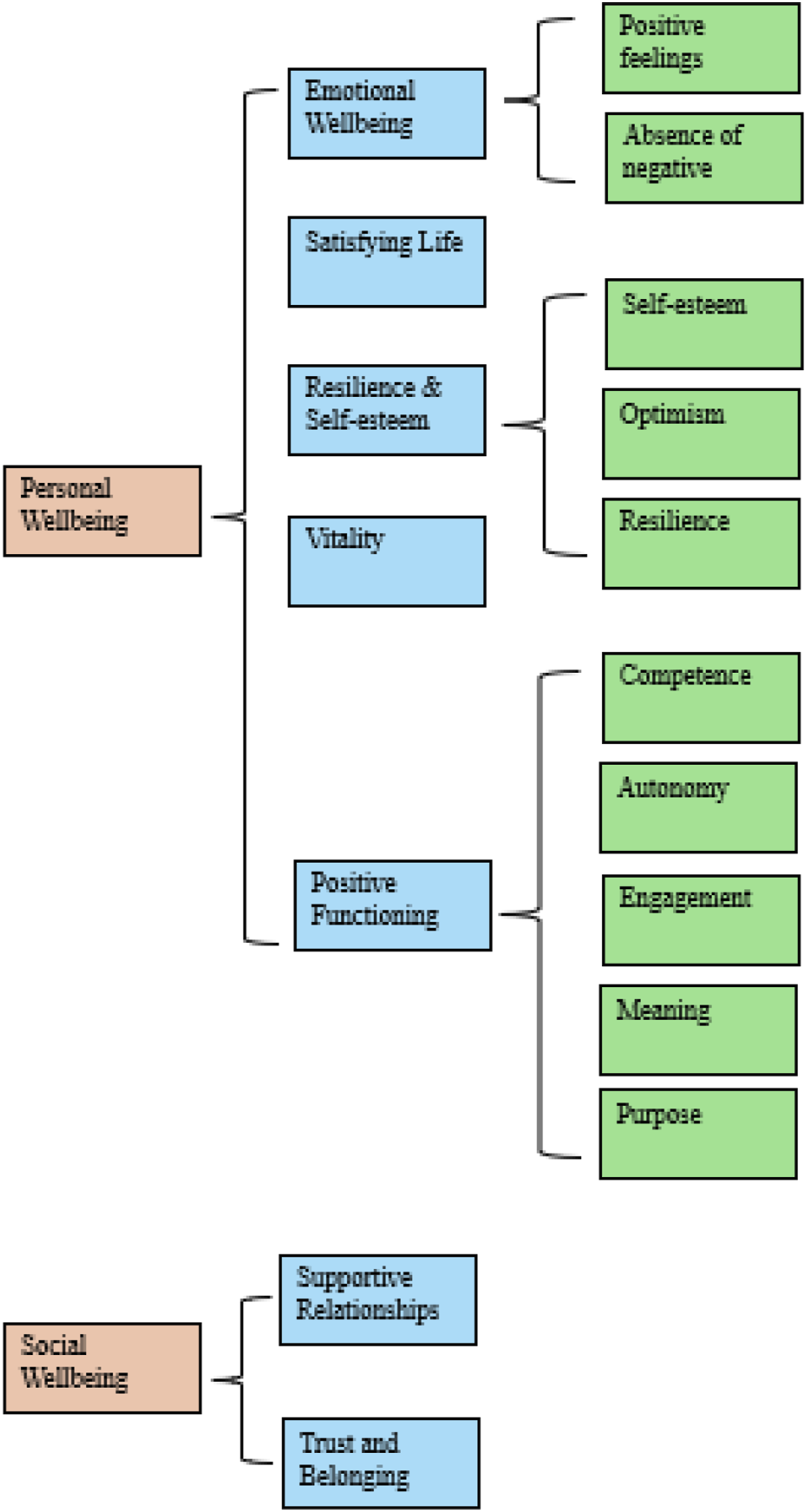
In response to the empirical knowledge base, the necessity of nature in wellbeing initiatives has been acknowledged. Implementation of findings includes system-level schemes such as the Green Social Prescribing Program in the National Health Service (NHS). This scheme provides a framework for the prescription of green and blue nature-based interventions like community gardening, local walking schemes, open water swimming, cultural events held outdoors, and conservation volunteering, to primary-care patients (National Health Service, 2019). Other implementation strategies focus on the equitable provision of natural environments. For example, through systematic review, it has been demonstrated that access to green space can reduce health disparities associated with wealth inequality for low-income populations (Rigolon et al., 2021).
Within existing research Emerging Adults (EA) remain an understudied population. To our knowledge, no prior systematic reviews focus on EAs despite their developmental vulnerabilities, while reviews on children and adolescent populations have been conducted (Roberts et al., 2019). This is important because the life stage of emerging adulthood between 18 and 25 years of age, in many cultures, is associated with developmental challenges such as lifestyle and identity instability and increased independence in managing responsibilities (Scales et al., 2015). Rates of mental and physical health problems are increasing for this population (Jurewicz, 2015), including smartphone addiction (Ratan et al., 2022) and loneliness (Fardghassemi & Joffe, 2022). Additionally, meta-analysis of 192 global epidemiological studies demonstrates that mental health conditions (e.g., stress, addiction, phobias, and eating-related disorders) typically develop before the age of 25 (Solmi et al., 2022). Seeking psychological and physical support through public systems for these problems is becoming increasingly less accessible as waiting times grow in response to underfunding (Punton et al., 2022; Reichert & Jacobs, 2018). Nature engagement, a wellbeing resource supported through empirical research for children (Gill, 2014) and adults (Houlden et al., 2018), is typically at its lowest across the lifespan during the later years of adolescence and early young adulthood (Birch et al., 2020). Nature engagement may be useful in supporting the navigation of emerging adulthood, preventing the developing of mental health conditions, and protecting from the negative sequelae posed by developmentally specific challenges (e.g., moving away from home).
Rationale
Despite the growing evidence base for the wellbeing benefits associated with experiences in nature for children, adolescents, and adults, EA comparatively remains understudied. A gap exists in understanding how EAs perceive nature to support their wellbeing. Another gap that exists in our understanding is the facilitators and barriers to their decision to engage with nature for wellbeing. This systematic review sought to fill these gaps. Thematic synthesis was chosen for its rigour in summarising and analysing qualitative data (Thomas & Harden, 2008). Analyses from a small number of studies exist (DeLauer et al., 2022; Freeman et al., 2016; Milligan & Bingley, 2007; Petersen & Martin, 2021; Shrestha et al., 2021; Smith & Thomas, 2023; Windhorst & Williams, 2015a, 2015b; Young et al., 2018) and suggest there are many commonalities in how EA perceive and use nature for wellbeing and several factors unique to their decision and ability to engage in this process. A qualitative synthesis of these studies has the potential to achieve a greater conceptual understanding of nature as a tool for healing and staying well from their perspective. The research question guiding this review was informed by the SPIDER (sample, phenomenon of interest, design, evaluation, and research type) framework (Brennan, 2024): • What does the evidence tell us about how EAs perceive experiences in nature to benefit wellbeing and the facilitators and barriers to their decision to engage?
Methods
The review follows The Preferred Reporting Items for Systematic reviews and Meta-Analyses (PRISMA) checklist to ensure transparent reporting detailing the study’s purpose and findings (see Appendix A). A thematic synthesis was carried out, adhering to the guidelines put forward by Thomas and Harden (2008).
Data Sources and Searches
Search Strategies and Terms
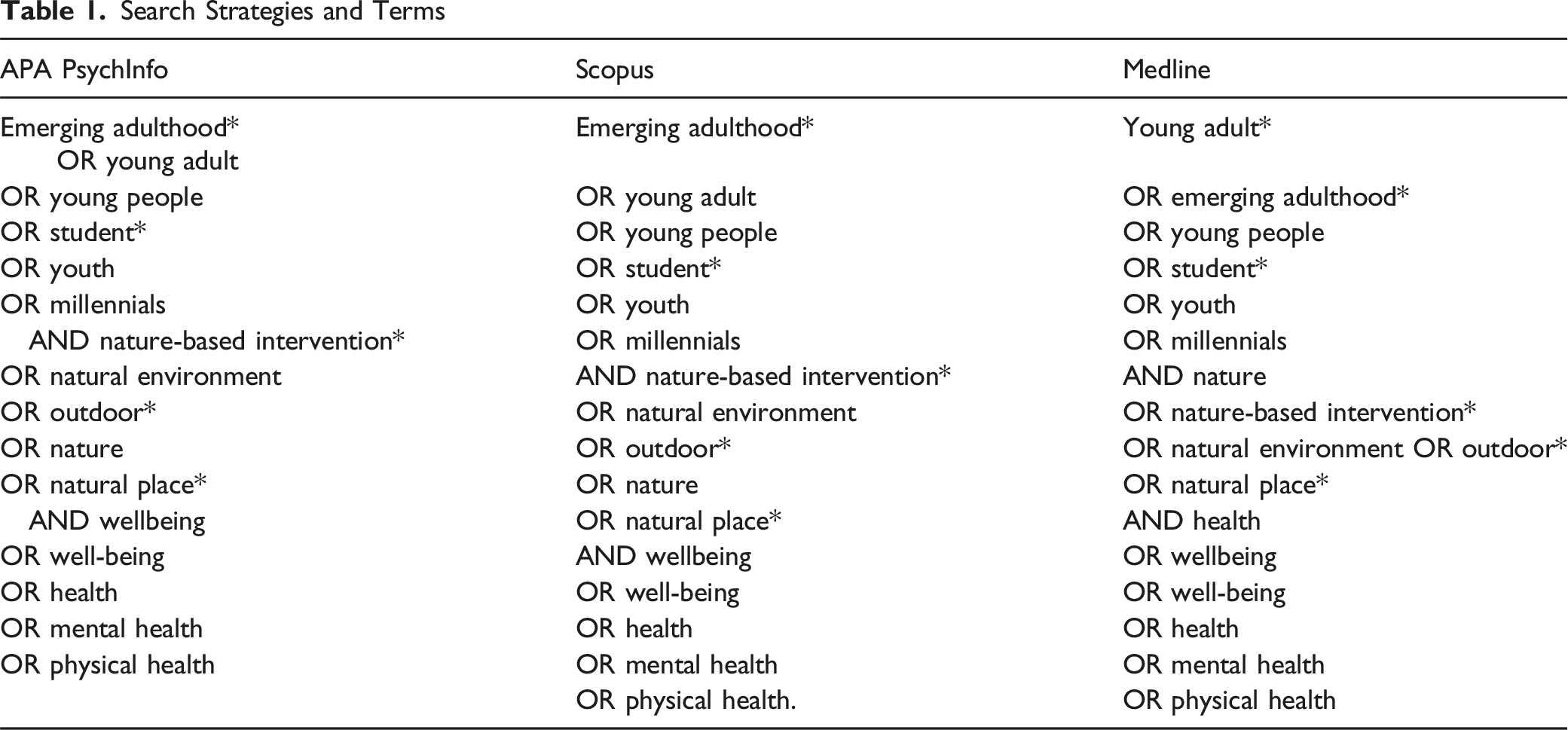
Articles were searched from the earliest publication date of each database, which were 1969, 1879, and 2005, respectively. Searches were limited to English-language articles.
Study Selection
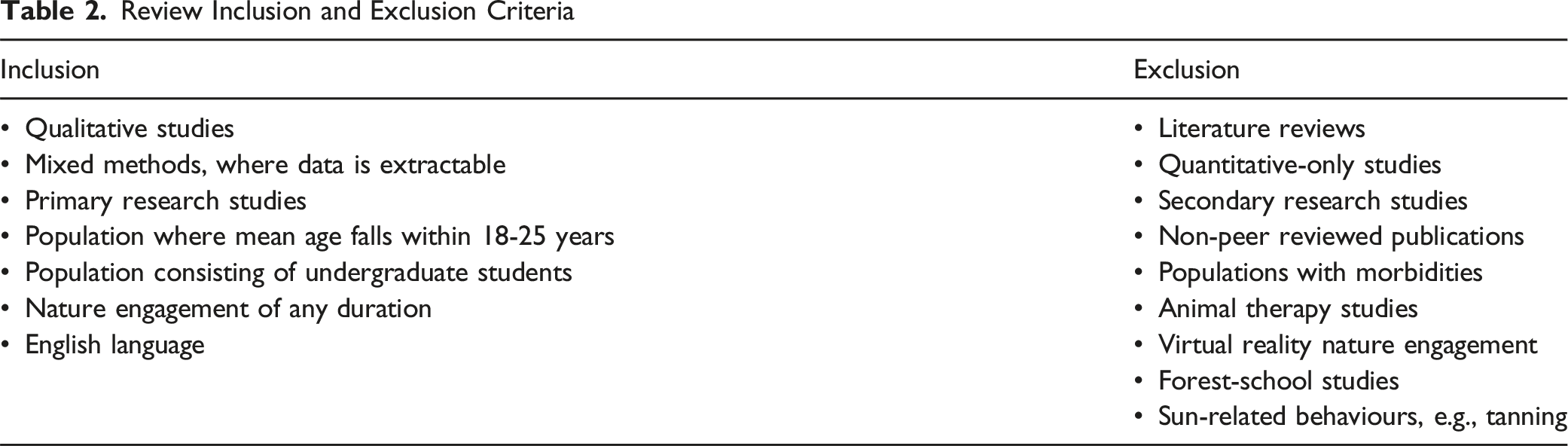
Review Inclusion and Exclusion Criteria
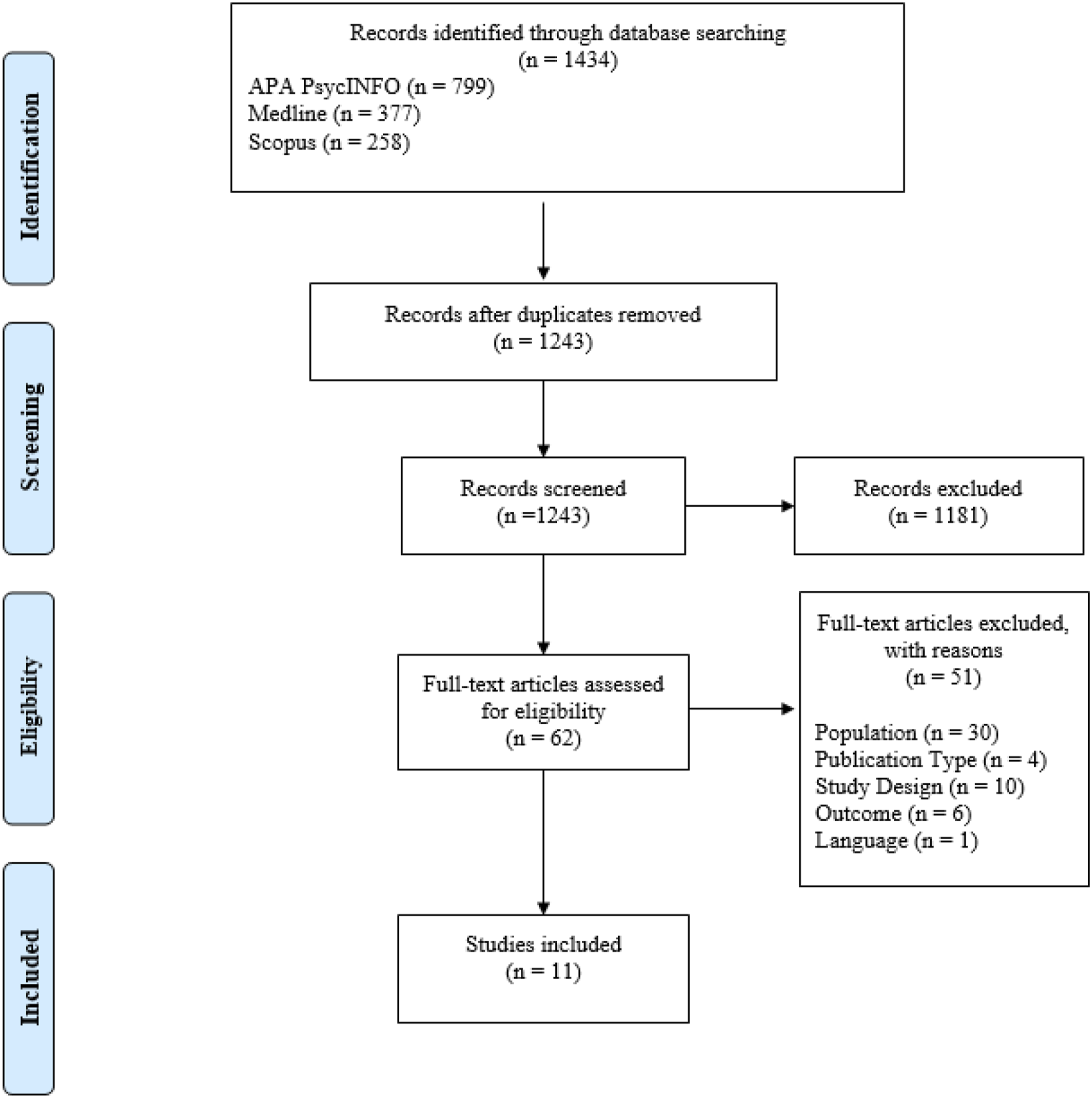
PRISMA-Flow Diagram. Note. PRISMA Flow Diagram Illustrating the Outcomes Associated With the Systematic Search and Screening of Literature
Data Extraction and Quality Appraisal
Study Characteristics

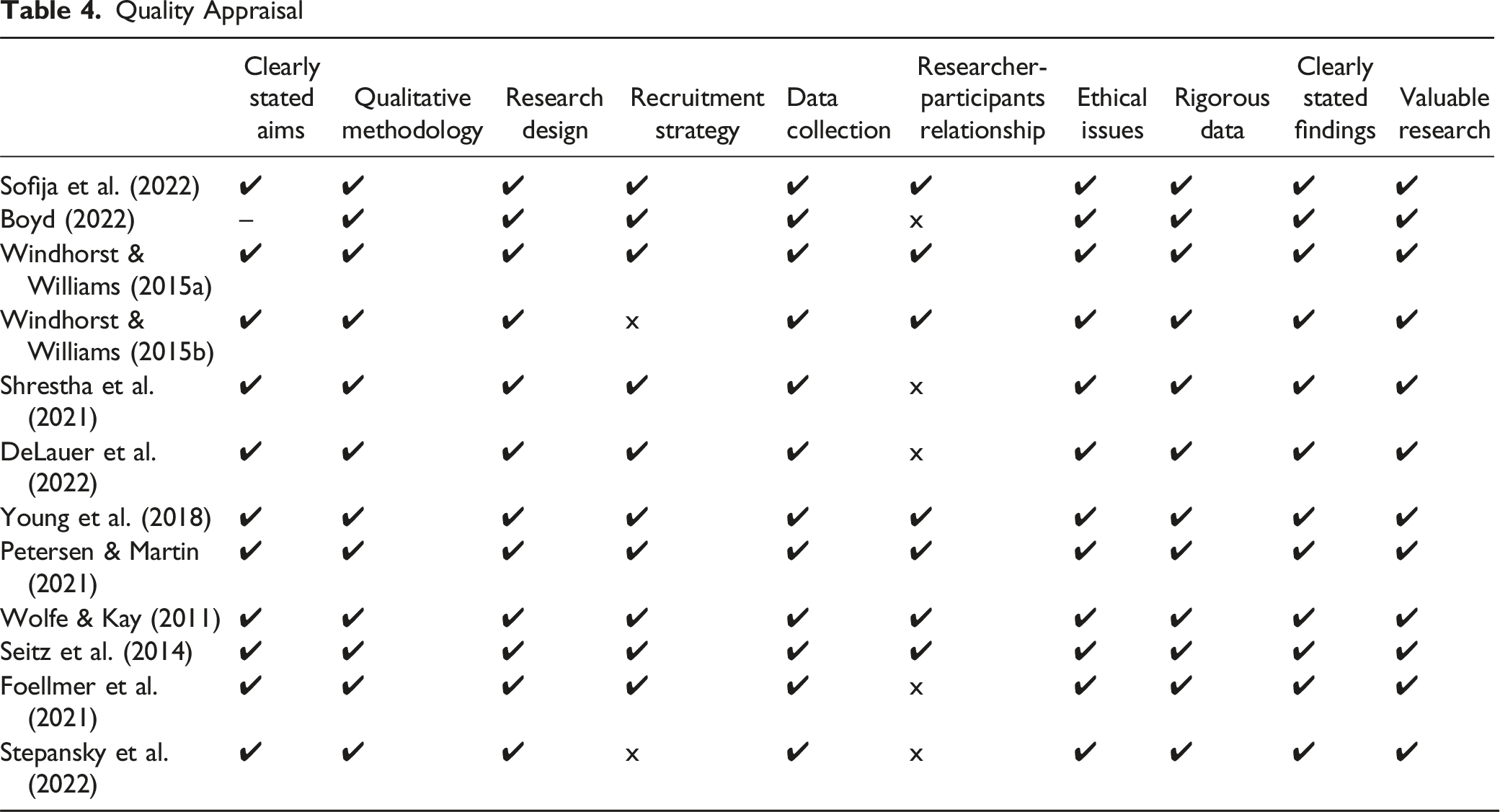
Quality Appraisal
Analysis and Synthesis
Booth and colleagues (2008) criteria-based review was used to identify the most suitable approach to this synthesis. The seven areas for consideration were Research Question, Epistemology, Time, Resources, Expertise, Audience, and Purpose type of data (RETREAT) (Booth et al., 2018). Thomas and Harden’s (2008) thematic synthesis approach was chosen based on these criteria. First, data was coded line by line. Codes were generated inductively. The first author looked for similarities and differences between the codes to start grouping them into a hierarchical structure. Descriptive themes were generated to capture the meaning and content of initial groups of codes. The lead author did not consider the specific research questions until the initial descriptive themes were devised. This is because some of the included studies directly answered the research questions. Using the descriptive themes generated, reviewers went beyond the original research by inferring benefits to wellbeing, barriers and facilitators to nature engagement from the view’s EAs expressed as captured by the descriptive themes. These inferences generated analytical themes. At this point, the NEF model of wellbeing was applied to interpret the analytic themes to infer predictors of wellbeing attained through nature engagement.
Findings
Thematic Analysis
The research question guiding this review was: What does the evidence tell us about how EAs perceive experiences in nature to benefit wellbeing and the facilitators and barriers to their decision to engage? Four analytic themes emerged from the analysis, each containing analytic subthemes. These were “Nature accepts me without judgment,” “Nature connects me to others,” “Nature restores me,” and “Facilitators and barriers for nature engagement.” These are discussed below, accompanied by extracts from the primary studies. The indicators of wellbeing, as classified by the NEF model, are identified to clarify some aspects of wellbeing that are influenced by nature engagement (Michaelson & Mahony, 2012).
Nature Accepts Me Without Judgement
This theme reveals that retreating into nature is a process EAs use to connect and understand with themselves through self-reflection. The first subtheme identifies some factors EAs report as pressuring and stressful influences on forming their sense of self. The next subtheme describes how EAs self-reflect on these influences using natural spaces. Elements of nature perceived by EAs to create a physical space conducive to self-reflection are identified. The last subtheme describes their experience of self-acceptance when they are in nature, by themselves, or with others.
Social Pressure in Everyday Life
In eight of the 11 studies, EAs described the social pressure they experienced in everyday life. EAs identified pressure to follow a predetermined social trajectory. Doing well at school, qualifying, and getting a job were factors they felt were expected of them (Sofija et al., 2022; Young et al., 2018). When you’re outdoors and, you’re not worrying about all this... society crap. You don’t have to worry about having a job or how you’re doing at school or anything (Sofija et al., 2022, p. 377)
A further social pressure identified was pressure to assimilate to fast-paced hustle culture, which included feeling pressure to be busy and walk quickly (Seitz et al., 2014). Social pressure was a challenge to identity formation. Social pressure meant to EAs a sense of obligation to do what was expected, and for some EAs this conflicted with their values and desires “We humans tend to let things like opinion and ridicule rule what we do. If I have any wish for the friends I have made here, it is for them to find who and what they are and not let matters of opinion and ridicule steer them into something they have not chosen for themselves.” (Wolfe & Kay, 2011, p. 28). EAs reported worrying about what other people thought about them (Windhorst & Williams, 2015b; DeLauer et al., 2022). Worrying about negative appraisal made some feel vulnerable: “I know a lot of people can see me…I feel vulnerable a lot of the time…[on campus] people are thinking about me or judging me” (Windhorst & Williams, 2015a, p. 245). Behaving in ways to conform to social norms was a strategy EAs utilised as a protective measure from negative appraisal; however, the experience of doing felt inauthentic to themselves (Wolfe & Kay, 2011). Furthermore, EAs reported feeling down, confused, or anxious in deciphering what was important to them compared to what was expected of them (DeLauer et al., 2022; Sofija et al., 2022).
Authors of two studies (DeLauer et al., 2022; Foellmer et al., 2021) hypothesised that female EAs appeared to be more sensitive to social pressure than their male participant counterparts. Analyses of secondary quotes of the other nine included studies did not reveal similar hypotheses regarding differences in the experience of social pressure between female and male EAs. When synthesised together, this suggests male and female EAs are susceptible to feeling social pressure.
Natural Environments Facilitate Reflective Practice
In natural settings, six of the included studies described how EAs utilise the spaces for self-reflection. Self-reflection to the EAs meant sitting or walking alone with one’s thoughts, or for some EAs, journaling outdoors (Seitz et al., 2014). Self-reflection prompted EAs to think about the influence of social pressure on their sense of self. Understanding how their actions were influenced by social pressures meant that some EAs experienced a “paradigm shift”, where they discovered “an entirely new spectrum of colour that [they] didn’t even know about, you didn’t even know that there was a different way to be” (Sofija et al., 2022, p. 377). EA described reflecting on “what makes me truly happy” and “what am I really here for?” (Windhorst & Williams, 2015a, p. 246). The use of the words ‘truly’ and ‘really’ highlights potential internal conflict in understanding the experience of their sense of self.
Self-reflection on their sense of self was not limited to reflecting on current social pressure. EAs described reflecting on how their childhoods influenced who they felt themselves to be as adults (Petersen & Martin, 2021; Sofija et al., 2022; Windhorst & Williams, 2015a), a process described as “a moving moment…I was sitting there on my own and began connecting to my inner child” (Petersen & Martin, 2021, p. 17). EAs described the feeling of reflection as that of “taking the weight off the shoulders”, implying a cathartic or restorative effect of the process (Stepansky et al., 2022, p. 4). Elements of the natural environment identified as facilitators of self-reflection included the lack of association with everyday life (Petersen & Martin, 2021; Sofija et al., 2022), solitude, quietness and seclusion (Windhorst & Williams, 2015a) feeling safe psychologically and physically (Shrestha et al., 2021), and being with non-threatening animals like chipmunks and squirrels (Seitz et al., 2014; Sofija et al., 2022; Stepansky et al., 2022).
In Nature I Can be Myself
Across eight of the 11 selected studies, EAs described moments in nature when they experienced self-acceptance. This experience was described as contrasting to everyday life in which one “puts up walls” in the protection of judgements of others (Sofija et al., 2022; Windhorst & Williams, 2015a, p. 245). Self-acceptance was experienced when EAs were engaged in a personally meaningful outdoor activity, which fostered feelings of freedom and self-expression. For example, scuba diving for one EA was an opportunity to go to their “happy place” where they could “just be [myself] completely and just not care” (Sofijia et al., 2022 p. 377). Self-acceptance was experienced relationally. EAs reported that their sense of self was reinforced when they felt they were being themselves with peers, family or friends, through shared experiences and intimate dialogue (DeLauer et al., 2022; Wolfe & Kay, 2011; Young et al., 2018) “In addition to overcoming my physical fears, I had to overcome social ones. I am usually so worried about everyone liking me that I forget to just be myself and “become real”… This trip has taught me that it is more important to have a few people love the real me than to have everyone love the “stuffed” me” (Wolfe & Kay, 2011 p. 26). In one study, self-acceptance took the form of self-congruency as the EA’s choice to engage in nature was aligned with their values, and their idealised self-image (Stepansky et al., 2022). Similarly, EAs self-identifying with an ecological self-concept reported feeling more themselves in nature in contrast to urban settings “I do feel like more of myself there [in nature]. I don't really know why, maybe because it is so ingrained, because of where I've lived and my experiences in the past. Maybe it’s just, um, being in natural spaces is what kind of shaped my personality to begin with, so whenever I feel like I'm losing that, it's nice to go back [into nature]” (Windhorst & Williams, 2015b, p. 19).
These varied experiences of self-acceptance influenced emotional wellbeing through positive feelings, the absence of negative feelings, in addition to life satisfaction, resilience, and self-esteem. A further indicator of wellbeing was positive functioning and social wellbeing, as autonomy, meaning and purpose, engagement and competence are reported, in addition to supportive relationships, trust and belonging.
Nature Connects Me with Others
This theme reveals that engaging with nature contributes to emotional and social wellbeing through the experience of connection. The first subtheme describes EAs relationship to wild and domesticated animals and the stress-relief they perceive to derive from these interactions. The second subtheme describes how EA use natural spaces to strengthen social bonds with their social networks.
Animals
Across six studies, it was reported that connecting with domestic animals and wildlife enhances positive feelings, vitality, life satisfaction, and optimism, and buffers negative feelings. Two studies reported that having pets (most commonly cats and dogs) provided companionship, co-regulation through cuddling, and buffered feelings of loneliness (Sofija et al., 2022; Young et al., 2018). Furthermore, these studies reported that engaging in an outdoor activity, e.g., running, was enhanced by the presence of one’s pet dog because of the happiness the animal derived from the shared activity “Taking my dog for a run in the park…makes my dog incredibly happy which makes me happy…enjoying nature with a sweet natured, congenial companion who loves to run even more than I do” (Young et al., 2018, p. 336).
Across the six studies, EAs reported that sharing natural spaces with wildlife relieved stress (Boyd, 2022; Petersen & Martin, 2021; Shrestha et al., 2021; Sofija et al., 2022; Young et al., 2018; Seitz, 2014). The animals in which these stress-relieving interactions occurred varied depending on location, such as pigeons in urban green space in England (Boyd, 2022), kangaroos and koalas in one’s garden in Australia (Sofija et al., 2022)and birds in a nature reserve in Norway (Petersen & Martin, 2021). A commonality in these interactions with wildlife was the meaning derived by the EA. Observing the natural actions of wildlife for example, feeding, hunting, or making nests, was indicative that the world was functioning as it should. For example, hearing the birds sing in the morning of a week-long nature expedition was described by a EA as “the world being ready for a new day” (Petersen & Martin, 2021, p. 15). This symbolism of functionality was associated with feelings of peace and calmness.
People
Across all 11 studies, it was reported that connecting with other people by spending time together outside strengthened social bonds and contributed to social wellbeing by establishing trust and belonging and supportive relationships. The social systems reported on included friendship (Boyd, 2022; DeLauer et al., 2022; Seitz et al., 2014; Sofija et al., 2022), family (Young et al., 2018; Windhorst & Williams, 2015a; Windhorst & Williams, 2015b) and peers (Foellmer et al., 2021; Petersen & Martin, 2021; Shrestha et al., 2021; Wolfe & Kay, 2011; Stepanksy et al., 2022). When connecting with other people outside, EAs reported a variety of ways they choose to do this, with the most common preference being sitting and/or walking while talking, followed by doing a shared activity, for example, swimming (Sofija et al., 2022) or observing wildlife (DeLauer et al., 2022). Favouring social bonding through talking versus doing a shared activity has been associated with female preference (David-Barrett et al., 2015). Across 11 studies, the samples were generally over-represented with females, so the identification of talking as the primary modality for social connection may not be an accurate reflection of the EA population as a whole. EAs reported that when outdoors, “people are more amenable and present to connect” (Shrestha et al., 2021, p. 9).
Included studies reported that being in natural spaces is conducive to social connection for the following reasons: they are calming and quiet, and allow for intimate dialogue that deepens relationships (DeLauer et al., 2022; Petersen & Martin, 2021; Young et al., 2018), they are places in which people form core memories together (Sofija et al., 2022; Windhorst & Williams, 2015a; Wolfe & Kay, 2011), when situated urbanely, natural spaces are places that people congregate to which allows for impromptu social gathering (Foellmer et al., 2021) and when located on campus, natural spaces can facilitate a variety of every-day social activities important to EAs in university like eating lunch between lectures and studying together (Boyd, 2022; Seitz et al., 2014). One study reported that social connection to fellow students and the university was experienced while spending time at a community garden alone (Stepansky et al., 2022). This may be because participants were reflecting on their social systems, or because the community garden was ‘owned’ by the university, so the social networks associated with it came more easily to mind.
Nature Restores Me
This theme reveals that EAs perceive retreating into nature as restorative and stress-relieving. The first subtheme describes the experience of retreating from the physical urban environment and factors like noise pollution that EAs report as stress-inducing. Retreating into nature promoted stress-relief through the process of mindfulness, and this is described in the second subtheme.
Retreating from Urban Environments
Of the 11 included studies, eight report that EAs perceive the wellbeing benefit of nature engagement, as partly derived from retreating from urban environments. One EAs’ sentiment that the outdoors is “like a different world” captures the qualitative difference (Windhorst & Williams, 2015a, p. 245). Despite cities and university campuses being advantageous to wellbeing for numerous reasons, like meeting educational, social, and health needs, EAs conceptualised these spaces as too busy and associated them with work, responsibility, and feeling hyperaware of their surroundings, suggesting a state of stress (Windhorst & Williams, 2015a; Stepanksy et al., 2022; DeLauer et al., 2022; Boyd, 2022; Shrestha et al., 2021; Foellmer et al., 2021; Young et al., 2018; Seitz et al., 2014). In one study, EAs expressed a desire to “use trees to shield from the city” (Boyd, 2022, p. 8). The term shield implies a necessary defense from a potentially harmful source. Comparatively, the language used to describe natural environments included freedom, break, and escape across the eight papers. The language used by EAs, for example, escape and break, highlights that time outdoors is not embedded into the main structures of everyday life but rather comes in short stress-relieving bursts, offering respite. The retreat from urban settings implies that emotional wellbeing is increased in natural settings through enhanced positive feelings and the absence of negative feelings, which urban environments can be associated with, due to EA reports of socially constructed norms, which can be experienced as restrictive (Sofija et al., 2022), access to technology (Sofija et al., 2022), competition (Seitz et al., 2014), and too much sensory stimulation like hearing car horns and ambulances (Shrestha et al., 2021). EAs assigned to the urban walk compared to nature walk in one study, described feeling “distracted by the noises of the traffic and construction. I found myself more hyper aware of my surroundings when having to pass by moving cars” (Shrestha et al., 2021, p. 8). While studies reported that natural settings offer an escape from responsibility, two studies (Boyd, 2022; Foellmer et al., 2021) reported that EAs can study and feel relaxed outdoors simultaneously, suggesting that the same task is perceived as less stressful in an outdoor environment.
Mindfulness and Stress Relief
In all 11 included studies, EAs reported mindful experiences in nature and reductions in stress levels. EAs described mindful states as being anchored to the restorative present moment, having an awareness of their surroundings and a connection to their senses (Boyd, 2022; Petersen & Martin, 2021; DeLauer et al., 2022; Foellmer et al., 2021; Windhorst & Williams, 2015a; Seitz et al., 2014; Shrestha et al., 2021; Sofija et al., 2022; Stepansky et al., 2022; Wolfe & Kay, 2011; Young et al., 2018). Auditory, visual, and proprioceptive experiences were reported most by EAs; however, in one study, vestibular and olfactory input was also experienced as stress-reducing (Stepansky et al., 2022). The included studies spanned different geographical areas and natural settings, from urban green space (Foellmer et al., 2021) to expansive nature reserves (Petersen & Martin, 2021), yet the factors that contributed to mindful states were largely universal, such as the sensation of fresh air and sunshine on the skin (Young et al., 2018), the sound of birds chirping and water flowing (Seitz et al., 2014), and the colours of the flowers (Boyd, 2022) “I was fully aware of all the sounds surrounding me, particularly the sound of the river and birds singing” (Shrestha et al., 2021, p. 8).
Being mindful was perceived by EAs to contribute to helpful changes in their mental health. EA reported a reduction in worry (DeLauer et al., 2022; Foellmer et al., 2021; Windhorst & Williams, 2015a; Seitz et al., 2014; Shrestha et al., 2021; Sofija et al., 2022; Stepansky et al., 2022), the feeling of being grounded, an increase in positive feelings
Stress relief was largely described as related to changes in mental health following mindfulness experiences. “A stay in the Hofgarten makes me forget the word stress and enables me to focus completely on this restorative moment” (Foellmer et al., 2021). There were some descriptions that stress relief was a helpful outcome of physical activity. Some EA valued natural spaces for the opportunity to exercise, and build fitness (DeLauer et al., 2022; Sofija et al., 2022) “a run in the park…great exercise, builds fitness, stress relief, time in the sun and fresh air, enjoying nature” (Young et al., 2018, p. 336). Walking was the most popular physical activity described by EA in nature and was valued to relax (Young et al., 2018), to become attuned to the body (Windhorst & Williams, 2015a), and to facilitate socialising (Boyd, 2022). In one study, walking outdoors was perceived to reduce back pain (Windhorst & Williams, 2015a).
Facilitators and Barriers
This theme reveals factors that facilitate and hinder nature engagement. The first subtheme describes a range of facilitators, including happy childhood associations and accessibility. Barriers reported on in the second subtheme include a range of factors, including individual (e.g., lack of interest) and systemic-level barriers (e.g., time constraints).
Facilitators to Using Nature for Wellbeing
Across 10 studies, three factors were identified that suggest using nature for wellbeing is facilitated by experiential learning, positive place association and accessibility (Boyd, 2022; DeLauer et al., 2022; Foellmer et al., 2021; Petersen & Martin, 2021; Seitz et al., 2014; Sofija et al., 2022; Stepansky et al., 2022; Windhorst & Williams, 2015a, 2015b; Young et al., 2018). Across the 10 studies, EAs reported they chose to go outdoors because it made them feel better. While this was framed as a health-promoting resource by undergraduate nursing students (Young et al., 2018), in the remaining nine studies in which participants did not have specific health literacy, it was evident that through experiential learning, EAs intuitively understood the wellbeing benefits derived from nature engagement. This suggests that, unlike other health resources, nature engagement does not necessarily need to be prescribed or explained by a professional to be utilised for wellbeing.
Three studies reported that EAs chose to go outdoors for wellbeing because it feels like home, implying positive associations with home such as a sense of security, familiarity, and safety (Petersen & Martin, 2021; Sofija et al., 2022; Windhorst & Williams, 2015a, 2015b). Factors that have contributed to this sense of home, from the perspective of EAs, are repeated positive experiences throughout childhood in natural settings and playing unsupervised in nature as a child. Engaging with nature as an adult led to reliving happy memories with their families when in natural settings and feeling a strong sense of connection to them in places associated with them, e.g., the coast (Sofija et al., 2022; Windhorst & Williams, 2015a, 2015b). These experiences contributed to place attachment, where natural spaces both physically and symbolically represented home. They also contributed to the development of the ecological self (Windhorst & Williams, 2015b). EAs reported that when their sense of self felt confused, being in nature made them feel themselves because their personalities and who they were as people were formed in nature (Windhorst & Williams, 2015b).
Four studies reported that having nature close-by and easily accessibility facilitates use for wellbeing. When embedded into biophilic design, large windows offering natural light and views of the mountains contributed to feeling calm and happy (DeLauer et al., 2022), and having indoor plants or pets facilitated the need EAs identified with wanting to nurture (Sofija et al., 2022). When embedded into the university campus, natural spaces were accessible between classes for short periods of stress relief (DeLauer et al., 2022; Foellmer et al., 2021; Seitz et al., 2014).
Barriers for Using Nature for Wellbeing
Across seven studies, barriers were identified that impacted EAs decision to use nature for wellbeing. In two studies, growing up in the city or in families that did not value nature led to the self-concepts of “not outdoorsy” (Windhorst & Williams, 2015b, p. 14) and “not in tune with nature… more of an urban person” (Boyd, 2022, p. 9). These EAs elaborated that in natural settings, they did not understand the appeal of flora or fauna, find them particularly interesting, and felt confused at people's motivation to go outside “people who are from here, they do like walking dates… honestly I don’t know what the aim of this is… I can’t just be walkin” (Boyd, 2022, p. 9). EAs decision to use nature for wellbeing was reported in two studies to be inhibited by not having enough time to get to natural spaces and feeling pressured to prioritise more important responsibilities like studying (Foellmer et al., 2021; Stepansky et al., 2022). Other barriers identified were largely caused by human influence making the natural space unappealing or unsafe. Urban green space that was too manicured e.g., a Victorian planting style, was considered unappealing and too man-made (Foellmer et al., 2021). Natural spaces that were unkept e.g., with dilapidated buildings, cigarette butts and rubbish were felt to be reminders of disrespectful behaviours by students and the university (Seitz et al., 2014). Unclear demarcation of ‘land ownership’ demoted use because EAs felt it was not permissible (Boyd, 2022), and green spaces too close to urban areas were felt to increase stress because of sensory overwhelm and hyperawareness of one's surroundings (Shrestha et al., 2021). Female EAs reported feeling guilty outside relaxing instead of studying and working, whereas male participants did not (Foellmer et al., 2021).
EAs from two studies spoke of concerns for their safety. Male and female participants reported not using natural spaces if they perceived them as unsafe (Boyd, 2022; DeLauer et al., 2022). Risk was perceived when it was night-time, dark, or when police cars were sighted near natural spaces (Boyd, 2022). Female EAs reported that due to safety concerns, an important determinant in using natural environments for wellbeing was having friends who would accompany them (DeLauer et al., 2022). While safety concerns have been widely documented in the literature, particularly concerns for women’s safety (Milligan & Bingley, 2007), there was relatively little documented in the included studies. This may be explained by the included studies’ aims and objectives focusing more narrowly on the benefits of nature to wellbeing, rather than the factors that may hinder that benefit too.
Discussion
Summary of Key Findings
The first theme captured EAs’ experiences of making sense of who they are and their experiences and perceptions of themselves in natural versus urban spaces. EAs perceived natural spaces as conducive to self-reflection, making sense of new ways of being themselves, and having the opportunity to embody this alone or in the presence of others. These experiences indicated several personal and social wellbeing indictors are met through this process (Michaelson & Mahony, 2012). EAs perceived social pressure in urban environments associated with meeting the expectations of others and social norms. This pressure has been found in research to be associated with the transition and establishment of adulthood, which is marked not only by physical maturation (e.g., frontal lobe development, growing to maximum height and attaining sexual maturity), but also the “choices and social development patterns often attributed to adulthood” (Schneider et al., 2016, p. 106).
While pathways to adulthood vary by environmental (e.g., social and economic resources, historical and cultural context) and biological context, the developmental period demands systemic support, such as from the family, workplace, or school (Schneider et al., 2016). In the first theme, it was evident that nature is a support system in the developmental stage as insight and self-compassionate experiences attained in natural spaces were perceived as helpful to wellbeing. Placed in context with the wider literature, this theme is consistent with other systematic reviews of the literature that have shown engagement with nature to be supportive of development (see Dankiw et al., 2020; Gill, 2014; Johnstone et al., 2020); it expands on current literature in its application to the EA developmental stage.
The second theme captured the opportunity within natural spaces for connection between EAs, the social systems in their lives (mainly family and peers), and animals (wild and domesticated). It is widely agreed that feeling connected to others is an innate human need (Cacioppo & Patrick, 2008); lack of connection or loneliness is a risk factor for several physical and mental health problems and has a harmful effect on all-cause mortality (Fardghassemi & Joffe, 2022). The COVID-19 pandemic highlighted the significance of in-person social connection and poor outcomes when this need is not met (White & Boor, 2020). While a small minority of EAs reported connection to domesticated animals in their homes, most reported connecting to animals and people (e.g., by walking and talking, doing a shared activity, or making life-long memories together) through the provision of natural spaces; Several indicators of personal and social wellbeing were identified in this theme (Michaelson & Mahony, 2012). This finding is consistent with other reviews of the literature that show a meaningful improvement in quality of life through the interaction between green spaces, loneliness, and social connection ( see Astell-Burt et al., 2022). This theme supports the discourse on natural spaces as ‘Third Places’ (public or commercial sites that are neither work nor home (Oldenburg, 1989) and their positive associations with collective wellbeing through service provision (Finlay et al., 2019). Furthermore, it highlights the systemic responsibility in maintaining ‘Third Places’, which have experienced a consistent and gradual eradication (Finlay et al., 2019) or reshaping to online formats (Bogue & Ouillon, 2023), often in a commercial pursuit. Natural spaces, therefore, need protection for public health purposes.
The third theme captured the perceived restoration effects of nature on EA wellbeing through retreat from urban environments and its associations, and stress reduction through mindfulness in natural spaces. This theme identified stressors to the EA population in urban environments and found that stress was largely reported in symbolic rather than practical complaints. It is evident in this theme that natural spaces provide opportunities for retreat both literally and figuratively, with EAs reporting adaptive responses (e.g., relaxation and repair). The concept of mindfulness, defined by Kabat-Zinn (2015) as characterised by non-judgemental awareness of the present moment and one’s surroundings is helpful in interpreting EAs’ descriptions of restoration into natural spaces. The mindful process and wellbeing benefit attained by the EAs was consistent with the wider literature that shows mindful practice through nature engagement supports psychological wellbeing (Huynh & Torquati, 2019) and psychological restoration (Macaulay et al., 2022). This theme provides support for the provision of mindfulness to the EA population and general population through the provision of accessible natural spaces. Furthermore, this strategy of mindfulness provision is cultural sensitivity as it promotes mindful opportunity for public health through individual meaning-making and experience rather than current convention for example, private companies or technological applications, which have been subject to criticism for practices of appropriation and commodification of Buddhist culture (Miyakawa, 2024). It also complements the public service provision of mindfulness-based interventions for clinical populations through cost-effective, accessible health promotion.
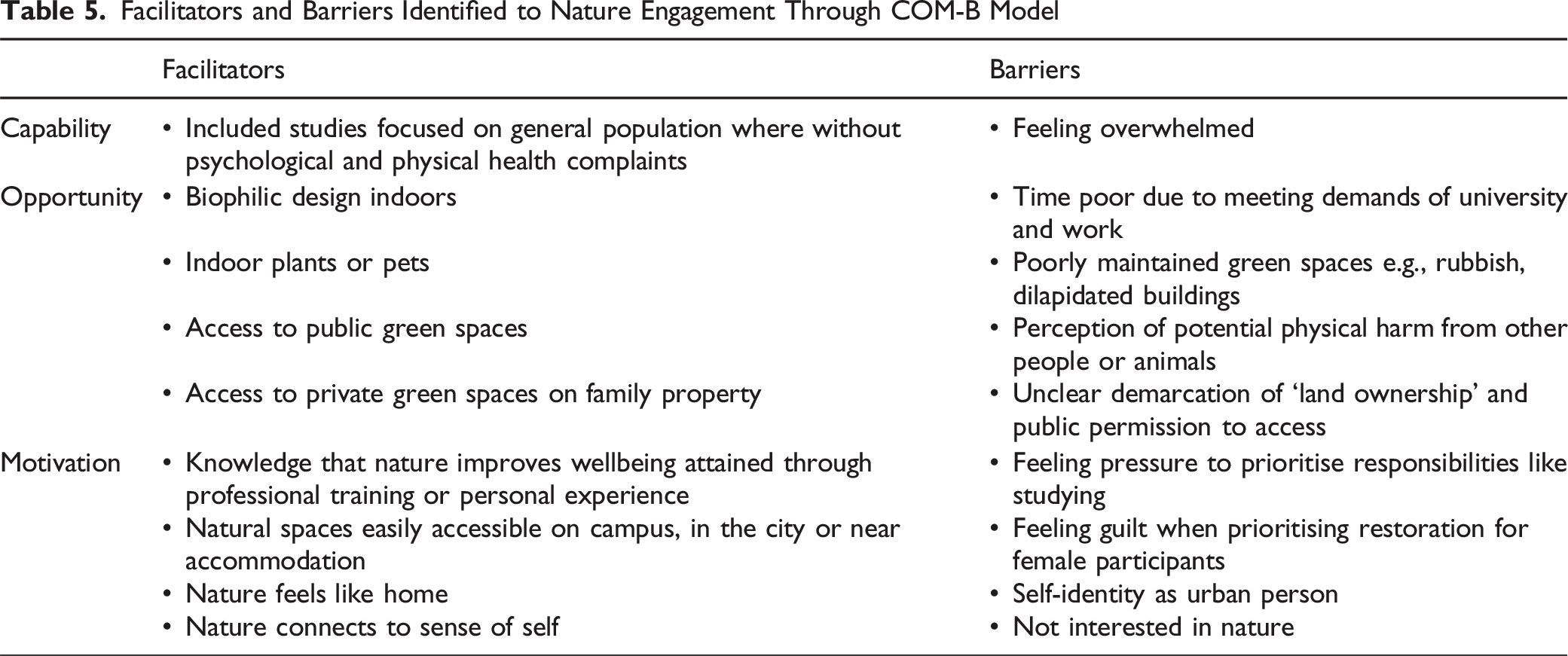
The fourth theme captures influences on EAs’ decision to engage with nature for wellbeing. The factors identified that promoted engagement and prohibited engagement were multifaceted. Ecological systems theory (Bronfenbrenner, 1992) investigates human development through the interactions (Ander et al., 2013) between the social and physical environments and the individual across time and is helpful in interpreting the influence of childhood on the decision to engage with nature as a EA. Repeated positive interactions between the individual in childhood, their family system and local environment appeared to develop a sense of connection to nature, place attachment and positive place associations (Scannell & Gifford, 2010). When having not experienced these repeated positive interactions, some EAs were inhibited from wanting to engage in nature. This is consistent with the wider literature on family-based nature activities that explain early childhood experiences of nature engagement with the family influences outdoor participation and preference in early adulthood (Izenstark & Middaugh, 2022). This theme supports the extension of the conceptualization of ecological systems theory to include the natural system in the formulation of child development into adulthood.
Facilitators and Barriers Identified to Nature Engagement Through COM-B Model
Key Contributions of the Review to the Literature
The findings of this review extend the current body of literature on experiences in nature and their impact on wellbeing. Through thematic synthesis and analysis of 11 included studies, the review identified different experiences EAs had in nature, including self-acceptance, self-reflection, connection to others, restoration, and stress relief. This review provides support for utilising the NEF model in nature and wellbeing research. To clarify the conceptualisation of wellbeing used in this review and to situate the findings of the review in current practice, a validated model used in clinical and public health research was used to interpret the findings (Michaelson & Mahony, 2012). In doing so, the NEF model was helpful in identifying the personal and social wellbeing indicators met through natural experiences. This bolsters the argument for the use of nature for health and suggests nature has a broad impact on wellbeing. Also identified in this review were the facilitators and barriers to nature engagement, highlighting the complex interplay of systems around the EA and their decision to engage with nature for wellbeing. This review addressed a need for a comprehensive and systematic review of the literature on EA experiences with nature, a population whose voices are noted to be missing from the literature in this area (Puhakka, 2021).
Strengths and Limitations of Included Studies
Some methodological limitations were found in the included studies. Most widespread was a lack of reporting on the researcher-participant relationship. However, despite this, included studies provided rich data regarding EAs’ experiences. A unique strength of the included studies was the use of photo-voice (Windhorst & Williams, 2015a) and photo-elicitation (Petersen & Martin, 2021; Sofija et al., 2022). The use of photo-voice and elicitation methods enriched restoration insights by capturing the sensory experience of being in the natural context discussed by the EA. The incorporation of visual aids (photographs or annotated maps or routes) in three studies (Boyd, 2022; Foellmer et al., 2021; Stepanksy et al., 2022). The incorporation of visual aids in published ecopsychology research has been highlighted as a significant element of rigor as their contribution assists readers in understanding the geographical context where data was gathered, thus enhancing the possibility of identifying specific natural elements for wellbeing (Sofija et al., 2022). Two subthemes, ‘Barriers’ and ‘Animals’, were rated with moderate confidence due to the data’s adequacy and relevance. Thus, some caution is recommended when interpreting these findings. Further assessment of confidence in generated themes is available in Appendix B. The included studies covered wide-spread geographic areas and incorporated varied experiences in nature, with good coherence of similar and related themes reported among them. These factors add to the review’s rigor and enhance the generalisability of findings. The included studies’ focus on university students reflects a broader research bias toward this subgroup, limiting the evidence base for non-student EAs, such as those in employment.
Strengths and Limitations of This Review
Strengths of the review include the rigorous and transparent approach to searching, appraising and analysing of qualitative evidence relating to EAs experiences of nature engagement. Utilisation of GRADE-CERQual bolstered the review as confidence in identified findings was also thoroughly and transparently assessed and reported. Studies were identified through a systematic and comprehensive search. Thematic synthesis methodology allowed the review to extend beyond summarising the data and facilitated analytical synthesis of the existing data. NVivo software supported a transparent record of the review process, adding traceability and credibility to the decisions made. Reflective practice through journaling and discussions in supervision further enhanced the rigor. Additionally, having a second independent reviewer who screened 20% of abstracts and 100% of full-text screening bolstered the thoroughness of the review. Risk of bias was minimised as data extraction and quality appraisal were completed by two independent reviewers with few discrepancies occurring. 555 participants contributed to this review, this significant over-all sample size resulted from data collection methods included in included studies for example, surveys and focus groups, and permitted a comprehensive analysis of data and bolstered generalisability of this reviews findings.
Using the Ecological Systems Theory and COM-B model of behaviour change to interpret the facilitators and barriers to engagement highlighted the responsibilities systems surrounding EAs have in supporting outdoor participation. Implementation strategies for nature engagement therefore could include provision of safe, clearly marked green spaces on campus and in urban green space, and public health campaigns and interventions to support families to engage in family-based nature activities. This review gives support to the inclusion of EAs in the strategic management of green spaces should natural spaces be sensitively tailored to meet the specific needs for this population for example, making spaces accessible, having picnic benches for socialising and studying and biodiversity for mindfulness benefit, for this population. This is a wider need within green space planning, which through systemic review of the literature, showed social inclusion to be largely absent from current planning practises (Fors et al., 2021). Finally, this review supported current research efforts in identifying pathways between nature and wellbeing and highlighted the different ways wellbeing indicators were attained for example, self-reflection, social engagement and mindfulness. The findings support implementation of policies aimed at protecting, conserving and establishing natural spaces for public health promotion for example, policies mandating campus tree planting or green space maintenance.
Footnotes

Author Contributions
FW contributed to planning and scoping (defining research question, set inclusion exclusion criteria and study protocol), literature search (search strategy, screening), study selection (review and documentation), quality assessment, data extraction (extraction and organisation), synthesis and analysis (themes and contextual interpretation), presentation of findings and final review for approval. BC contributed to planning and scoping (defining research question, set inclusion exclusion criteria and study protocol), literature search (screening), study selection (review and documentation), quality assessment, synthesis and analysis (contextual interpretation), review of presentation of findings and final review for approval. EB contributed to planning and scoping (defining research question, set inclusion exclusion criteria and study protocol), study selection (review and documentation), synthesis and analysis (contextual interpretation), review of presentation of findings and final review for approval. TV contributed to planning and scoping (defining research question, set inclusion exclusion criteria and study protocol), quality assessment, synthesis and analysis (themes and contextual interpretation), review of presentation of findings and final review for approval. KL contributed to planning and scoping (defining research question, set inclusion exclusion criteria and study protocol), literature search (search strategy), study selection (review and documentation), quality assessment, data extraction (organisation), synthesis and analysis (themes and contextual interpretation), and presentation of findings.
Funding
The author(s) received no financial support for the research, authorship, and/or publication of this article.
Declaration of Conflicting Interests
The authors declared no potential conflicts of interest with respect to the research, authorship, and/or publication of this article.
Transparency and Openness Statement
The raw data, analysis code, and materials used in this study are not openly available but are available upon request to the corresponding author.
Author Biographies
Appendix A
Prisma Flow Diagram
Appendix B
GRADE-CERQual assessment of confidence.
Summarised review finding
GRADE-CERQual assessment of confidence
Explanation of GRADE-CERQual assessment
References
Nature accepts me without judgement
Urban Environments and social pressure
High confidence
This finding was graded as high confidence as there were no/very minor concerns across the four aspects of the GRADE-CERQual assessment.
DeLauer et al., 2022; Foellmer et al., 2021; Seitz et al., 2014; Sofija et al., 2022; Windhorst & Williams, 2015a, 2015b; Wolfe & Kay, 2011; Young et al., 2018);
No/very minor concerns in all four aspects
Reflective practice
Moderate confidence
This finding was graded as moderate confidence as there were minor concerns regarding the data’s adequacy.
Seitz et al. (2014); Shrestha et al. (2021); Sofija et al. (2022); Stepansky et al. (2022); Petersen & Martin (2021); Windhorst & Williams (2015a)
I Can be myself
High confidence
This finding was graded as high confidence as there were no/very minor concerns across the four aspects of the GRADE-CERQual assessment.
Boyd (2022); DeLauer et al. (2022); Sofija et al. (2022); Stepansky et al., 2022; Windhorst & Williams, 2015a, 2015b; Wolfe & Kay (2011); Young et al. (2018)
Nature connects me with others
Animals
Moderate confidence
This finding was graded as moderate confidence as there were minor concerns regarding the data’s adequacy and relevance
Boyd (2022); Petersen & Martin (2021); Seitz et al., 2014; Shrestha et al. (2021); Sofija et al. (2022); Young et al. (2018);
People
High confidence
This finding was graded as high confidence as there were no/very minor concerns across the four aspects of the GRADE-CERQual assessment.
Boyd (2022); DeLauer et al. (2022); Foellmer et al. (2021); Petersen & Martin (2021); Seitz et al., 2014; Shrestha et al. (2021); Sofija et al. (2022); Stepansky et al., 2022; Windhorst & Williams, 2015a, 2015b; Wolfe & Kay (2011); Young et al. (2018);
Nature restores Me
Escape
High confidence
This finding was graded as high confidence as there were no/very minor concerns across the four aspects of the GRADE-CERQual assessment.
Boyd (2022); DeLauer et al. (2022); Foellmer et al. (2021); Seitz et al., 2014; Shrestha et al. (2021); Sofija et al. (2022); Stepansky et al., 2022; Windhorst & Williams, 2015a; Young et al. (2018);
Mindfulness
High confidence
This finding was graded as high confidence as there were no/very minor concerns across the four aspects of the GRADE-CERQual assessment.
Boyd (2022); DeLauer et al. (2022); Foellmer et al. (2021); Petersen & Martin (2021); Seitz et al., 2014; Shrestha et al. (2021); Sofija et al. (2022); Stepansky et al., 2022; Windhorst & Williams, 2015a, 2015b; Wolfe & Kay (2011); Young et al. (2018);
Facilitators and barriers
Facilitators
High confidence
This finding was graded as high confidence as there were no/very minor concerns across the four aspects of the GRADE-CERQual assessment.
Boyd (2022); DeLauer et al. (2022); Foellmer et al. (2021); Petersen & Martin (2021); Shrestha et al. (2021); Seitz et al., 2014; Sofija et al. (2022); Stepansky et al., 2022; Windhorst & Williams, 2015a, 2015b; Wolfe & Kay (2011); Young et al. (2018);
Barriers
Moderate confidence
This finding was graded as moderate confidence as there were minor concerns regarding the adequacy of the data.
Boyd (2022); DeLauer et al. (2022); Foellmer et al. (2021); Seitz et al. (2014); Shrestha et al. (2021); Stepansky et al. (2022); Windhorst & Williams, 2015b.