




Abstract
Autistic ‘social camouflaging’ research is proliferating. However, the term is multi-definitional. Our integrative systematic review (CRD42022324957) pursued a single-framework, qualitative meta-synthesis of camouflaging in autistic adults. We report specifically on different types of camouflaging strategies and the contextual factors that moderate them. A total of 2346 articles were extracted from online databases, ‘Connected Papers’ and citation searching – reflecting qualitative data from diagnostically confirmed, or self-identifying, autistic individuals. The results of 28 studies were coded and thematically synthesised, and included 2669 men, women and non-binary individuals above the age of 16. We noted six types of strategies and four contextual factors that modulate them. ‘Imitation’ played a notable role in facilitating further learning and development of camouflaging strategies, thus shifting one from behavioural suppression to sophisticated compensations. The results encourage researchers to place camouflaging data within this (or other) frameworks. Limitations include data reflecting only a subset of the autistic community, skewed towards women and the United Kingdom, raising questions about the impact that gender and UK culture has on our current understanding of camouflaging.
Lay abstract
Research into autistic ‘social camouflaging’ is gaining momentum. However, with so many different definitions, the term needs better clarification. We thus reviewed existing articles that discuss camouflaging, in order to bring all of the different understandings of adult autistic camouflaging together into a single framework. This article focuses on findings related to different types of camouflaging strategies, and the types of situations that help or hinder individuals when they use such strategies. After screening 2346 articles (which were listed on online research databases) – we arrived at 28 articles that were included in this study. Data were based on the personal reports of 2669 adults (over the age of 16 years) with confirmed, or self-identified, autism. These reports were in English, qualitative, published papers. We noted six types of camouflaging strategies, and four situational factors that influence them. ‘Imitation’ was noted as a key means by which strategies develop. The results encourage researchers to build on frameworks such as ours. We also found that much of the sample consisted of women from the United Kingdom, and thus, there is a question of how much influence UK culture has on our current picture of camouflaging.
Autism is a neurodevelopmental status which reflects diverse social needs, sensory processing and systemising habits (e.g. a need for structure and predictability) – when compared to societal majority norms (American Psychological Association (APA), 2022; Baron-Cohen, 2009). Autistic individuals are thus a neurominority population, as their needs may place them at odds with dominant (neurotypical) social patterns. While autism is a categorical status (i.e. a shared profile meeting all criteria), some people may be sub-clinical. Thus, they do not present outwardly the degree of difficulty that warrants formal diagnosis, and so may go unnoticed (Chown & Leatherland, 2020; Pearson & Rose, 2021). Yet, their inner experiences and challenges may be similar. Thus, we use ‘autism’ instead of Autism Spectrum Disorder (ASD; APA, 2022).
Autistic camouflaging means that one obscures their autism-linked social difficulties and neuro-minority status, with the goal of social integration and avoiding adversity (e.g. Libsack et al., 2021; Pearson & Rose, 2021). Autistic individuals experience exclusion, discrimination, infantilisation and abuse (Botha et al., 2020; Hull et al., 2017; Livingston, Shah, & Happé, 2019), due to society’s negative perceptions of difference (Pearson & Rose, 2021). Hiding difference is thus self-protective against the above (e.g. Libsack et al., 2021). This includes suppressing organic responses like stims, performing ‘typical’ behaviours like eye contact and using cognitive heuristics (Hull et al., 2020; Livingston, Shah, & Happé, 2019; Pearson & Rose, 2021). The Diagnostic and Statistical Manual of Mental Disorders (5th ed., text rev.; DSM-5-TR) likewise notes that learned strategies may mask autistic symptoms (APA, 2022, p. 58).
The impact of camouflaging can be concerning. There is a well-established high rate of depression, burnout and suicidality among autistic individuals (e.g. Cassidy et al., 2022; Cook, Hull, et al., 2021; Hull et al., 2020; Libsack et al., 2021). This may be exacerbated by fallout from camouflaging itself (Cook, Hull, et al., 2021; Hull et al., 2020; Pearson & Rose, 2021). While such links are inconsistently reported, a meta-analysis by Khudiakova et al. (2024) found a significant moderate correlation between camouflaging and negative mental health outcomes. Possible attributions included exhaustion and anxiety from constant behavioural monitoring, related autistic burnout as a consequence of navigating neurotypical spaces, the strain attached to specific forms of camouflaging or a sense of inauthenticity that has a deleterious effect on self-esteem. Yet, camouflaging severity may merely be a marker of the level of stigma and discrimination an individual experiences, which itself could directly account for poorer mental health outcomes (Khudiakova et al., 2024). All the while, difficulties remain undetected, without support.
There is thus a clear need to conceptually clarify camouflaging, as it is a multi-dimensional construct, with varied operationalisations (e.g. internal intent to camouflage vs externally evident attempts) (e.g. Fombonne, 2020; Lai et al., 2021; Libsack et al., 2021; Williams, 2022). Bolstering of screening, and awareness of experiential facets of camouflaging, would enable clinicians to improve support of autistic patients. Of the existing autism reviews to date, several focus on female-specific camouflaging (Allely, 2019; Hull et al., 2020; Tubío-Fungueiriño et al., 2021), on how camouflaging is researched and reported on (Cook, Hull, et al., 2021; Hull et al., 2020; Libsack et al., 2021), on the sex-mediated differences between autistic men and women (Lai et al., 2015) and on the link between camouflaging experiences, motives and mental health outcomes (Field et al., 2024; Zhuang et al., 2023). Many have outlined different camouflaging categories. Yet, to our knowledge, this review is the first to systematically consolidate and delineate all strategy types.
We interpreted results through a Bayesian lens of social cognition. Bayesian learning describes how we experiment with the environment and gather data, which is iteratively used to build predictions of the world (e.g. Amoruso et al., 2019). For example, a child may socially learn by trying new behaviours or testing new boundaries and seeing the consequences. Such data develops into social templates that guide behaviour in a specific situation or context (Ai et al., 2022). One facet of social cognition built in this way is Theory of Mind (ToM) (Gopnik & Wellman, 2012), or learning to consciously predict others’ mental states. This may reflect the most complex outcome of Bayesian learning in camouflaging.
To be clear, autism does not by definition reflect defective ToM (Gernsbacher & Yergeau, 2019). What is rather suggested is that when a neurotypical and neurodiverse person interact, both must work to understand the other through inference. This is comparable to a cultural divide – but owing to the social power of the neurotypical individual, the neurodiverse individual is forced to bridge the entire gap (Ai et al., 2022). Some may navigate such interactions fluidly, some may experience such efforts as deliberate and taxing (e.g. Gould, 2017) and some may only be able to engage in a ‘superficial’ performance of neurotypicality, with issues in generalising templates (Hull et al., 2020; Senju, 2012). As shown below, camouflaging reflects a repertoire of many kinds of strategies, with varying complexities. The benefit of a Bayesian lens is that it describes how social data is stored and consciously used in a top-down manner in increasingly complex, contextualised ways.
We aimed to synthesise qualitative conceptions of camouflaging among autistic adults into a single framework and to discern the breadth and agreement of camouflaging strategy types across the literature. In this article, we report on camouflaging (1) strategy types and (2) related contextual factors, within a social cognitive framework. While a third domain (motivations) was investigated in our broader study, the results are not reported here. Our questions were:
• What are the types of strategies seen in adult autistic camouflaging?
• What are the contextual moderators of strategy effectiveness in autistic adults?
Method
Following Preferred Reporting Items for Systematic Reviews and Meta-Analyses (PRISMA; 2022) guidelines, we conducted an ‘integrative’/critical literature review (De Klerk & Pretorius, 2019; Grant & Booth, 2009). This is a form of systematic review that goes beyond narrative summation, towards the meta-synthesis or meta-analysis of data, and thus the creation of unified frameworks (Torraco, 2005). We opted for the meta-synthesis of qualitative data in the form of an adapted thematic analysis (De Klerk & Pretorius, 2019) with data coded into themes (Torraco, 2005; Whittemore & Knafl, 2005).
Eligibility
We used the
Data sourcing
We utilised (a) database searching (EBSCOhost (Academic Search Premier, CINAHL, APA PsychInfo, APA PsychArticles), PubMed, Web of Science and Scopus (including Embase)), (b) the ‘Connected Papers’ (2022) platform and (c) citation searching reviews/editorials. A combination of free-text and controlled terms was used (Evidence for Policy and Practice Information and Co-Ordinating Centre, 2010) (see Supplementaries). Database articles (26 April 2022) were exported to Rayyan.AI (Ouzzani et al., 2016) for blind co-screening. This occurred in stages, by title, abstract and full-text levels (De Klerk & Pretorius, 2019). The first author screened all articles. The second and third authors screened 510 articles without overlap (>20%; Schlosser et al., 2007), at title and abstract levels. This achieved an acceptable Cohen’s kappa of 0.77 (McHugh, 2012), and through discussion, we reached full consensus. ‘Connected Papers’ was searched 17–19 May 2022 using qualitative articles centred on camouflaging (i.e. Beck et al., 2020; Bernadin et al., 2021; Cage & Troxell-Whitman, 2019; Cook, Crane, et al., 2021; Cook et al., 2018, 2022; Hull et al., 2017; Livingston, Shah, & Happé, 2019; Miller et al., 2021; Schneid & Raz, 2020). The article selection process described above is represented in Figure 1.
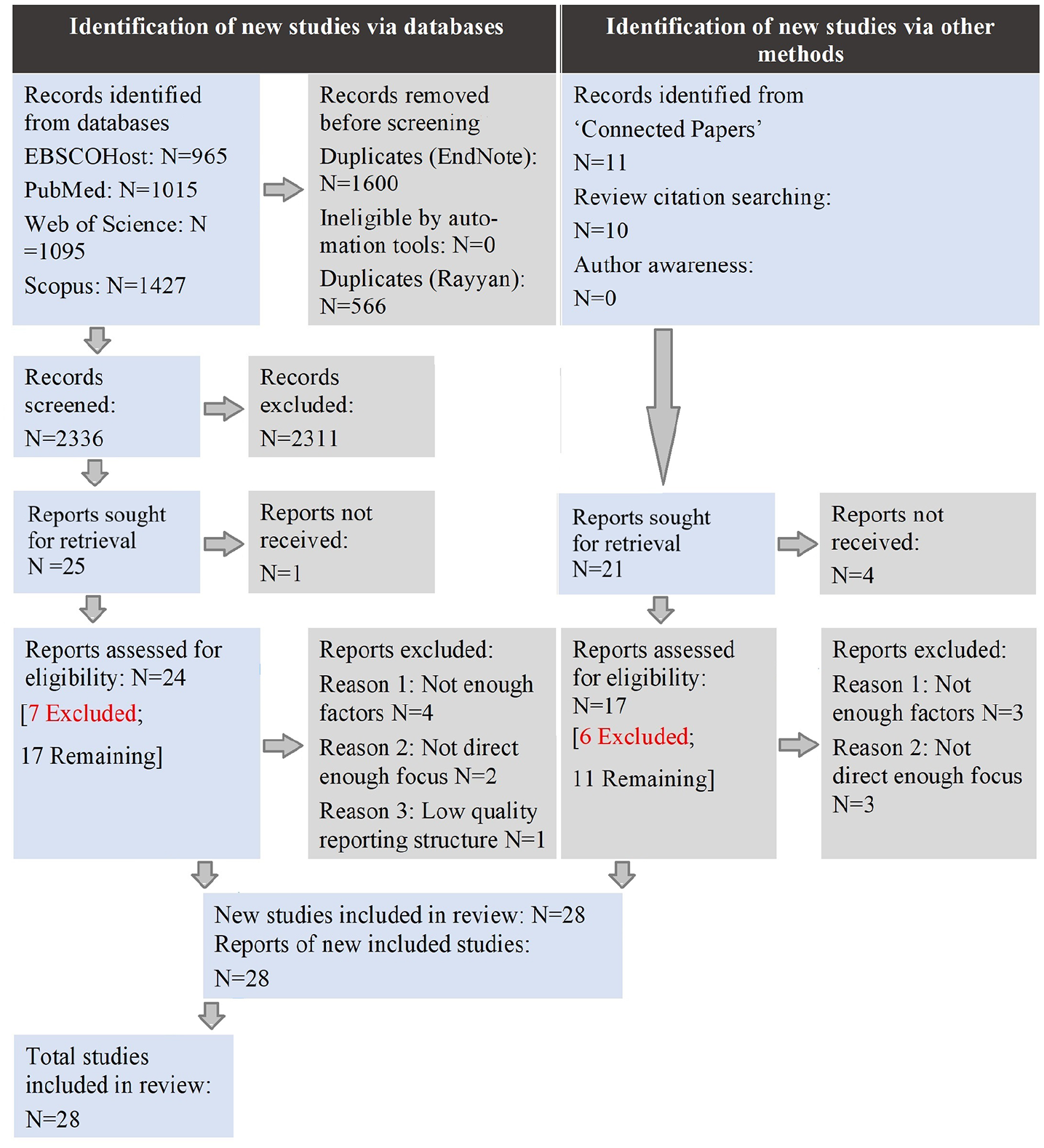
Article selection process, reported per PRISMA (2022) standards.
Quality assessment
While using peer-reviewed articles assisted in quality assurance, we further assessed reporting quality using the Lorenc-adjusted Hawker et al. (2002, as cited in Lorenc et al., 2014; see Supplementaries) framework. We applied a weighting approach towards a best-evidence synthesis (Schlosser et al., 2007). High-quality (
Data analysis
Data were extracted into a pre-designed spreadsheet. The second and third authors reviewed the initial codes and extractable factors (including sample size, age, gender, nationality, study-, method-, respondent- and diagnostic-type) in a group discussion. Thomas and Harden (2008), and Lachal et al. (2017) suggest a qualitative meta-synthesis that line-codes article ‘results sections’ as transcripts. Thus, we conducted a semi-inductive thematic analysis (De Klerk & Pretorius, 2019) in QDA Miner Lite using the Braun and Clarke framework (Terry et al., 2017). The study was semi-inductive in that certain established concepts were drawn on when creating a provisional set of codes (e.g. imitation, scripting, hiding stimming) – following initial familiarisation. However, these codes were revised, expanded or nested iteratively so as to provide flexibility. Codes were clustered into group-reviewed themes and hierarchies and then cross-checked with each original article to ensure no significant contradictions. Themes were then interpreted per a social cognitive (Bayesian) framework.
Quality assurance
To ensure
Results
We included 28 studies, with a total of 2450 participants contributing to the analysis. We narrowed the sample to focus on participants who provided qualitative data. However, two articles only reported demographics for their entire sample, not specifically the subset contributing to the qualitative data. As a result, the final demographic data had to be based on a maximum of 2669 participants to account for this limitation.
All demographic factors were reported inconsistently across studies. Thus, we provide the total and reported total of a given factor. Totals are based on the maximum 2699 participants, while reported totals are based on only the number of participants for which a factor was reported. For example, if X people identified as male, but gender was only reported for 2000 participants, this reflects a total of X/2699, and a reported total of X/2000.
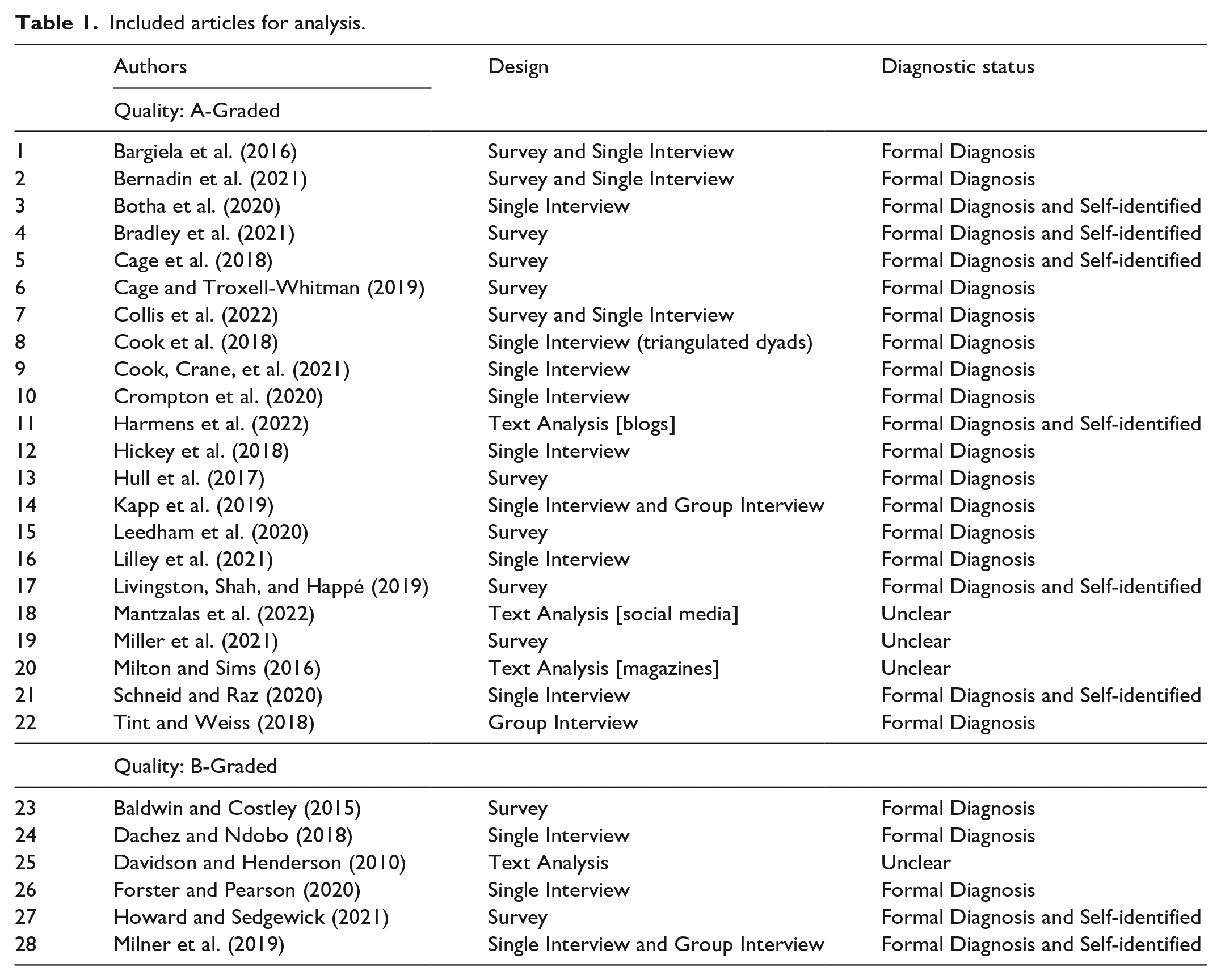
Data were analysed for camouflaging strategies and their contextual moderators. We reference articles per their number# in Table 1. For detailed examples, see Supplementaries. While a given theme may not be unique to autism, the results integrate the existing autism-based literature.
Included articles for analysis.
Research question 1: camouflaging strategy-types
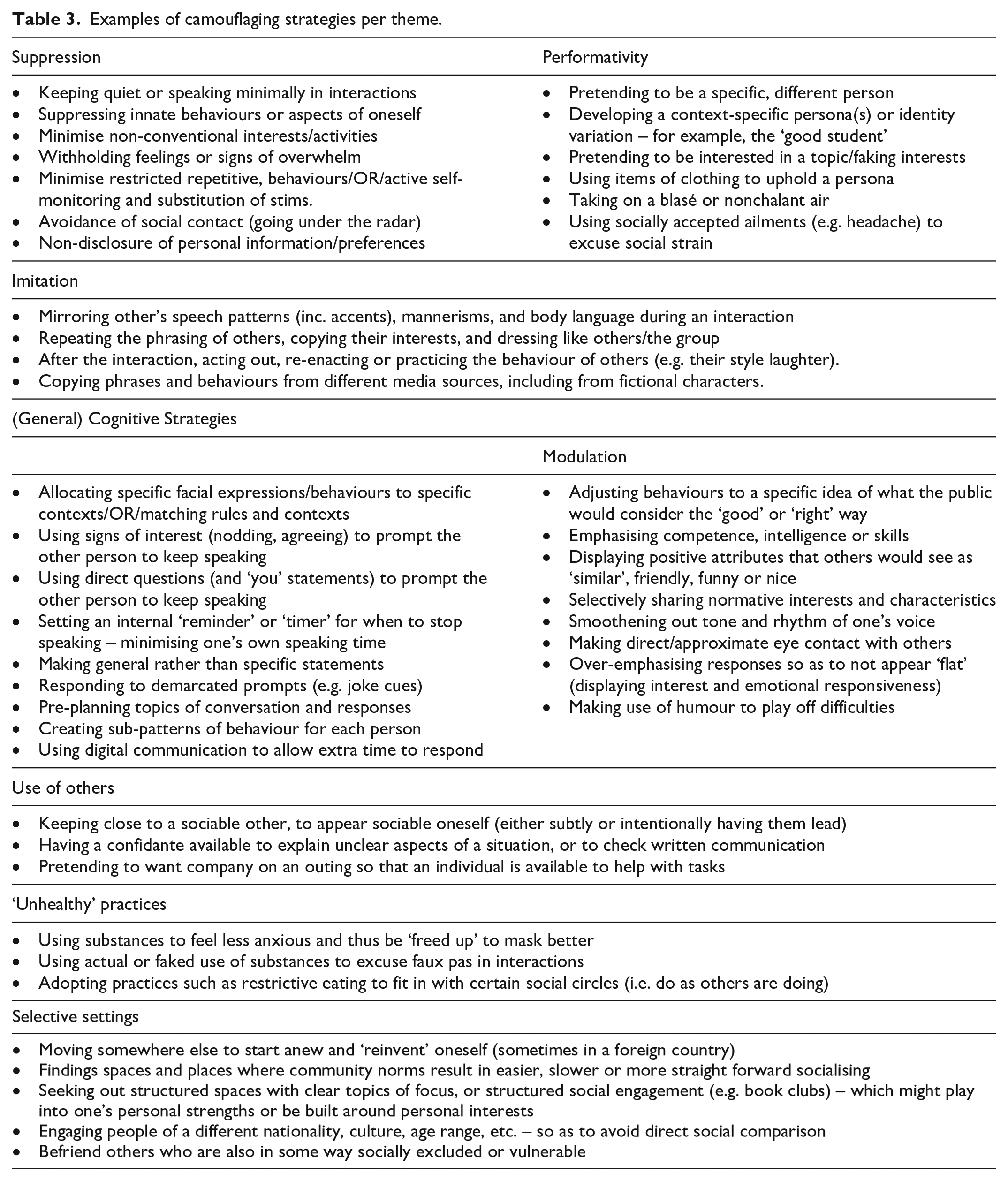
See Table 3 for behavioural examples of each type of strategy.
Theme 1: masking
The mask reflected (a) something behind which a ‘true self’12 is intentionally hidden16 through suppression, while (b) something was displayed outwardly to the world,13 like a persona. It thus encompassed hiding signs of difference and being other than oneself when socialising.13 Often as a response to stigma and shaming, this helped avoid pathologisation or abuse from others.3,6,17,20,25
Subtheme 1.1: suppression
Another facet was
Subtheme 1. 2: performativity
Sometimes, personas were ‘pretending to be someone else’ specific1 or a ‘borrowed personality’,24 linking to ‘Imitation’ (below). At the extreme, performing made individuals feel like they were stripped of a sense of identity,1,11,17 with their presentation being ‘something contrived’,21 a ‘patchwork of acts’4 or ‘bits and pieces of disconnected things’.16 They felt alienated from their ‘true’ self behind the mask. Distress was highlighted in terms of personas helping one ‘to accomplish much that is considered normal, successful, desirable. But this is a shell, and within it I’m bombarded and puzzled’.25 Likewise, it feels ‘like the weight of a black cloud is hanging on me having to be this fake version of me’.13 However, a more moderate version of a persona sometimes included being an edited version of oneself.13 Such variations might relate to situational roles, as people might edit behaviour according to the setting (e.g. the model pupil,1 a ‘professional mode’,25 ‘the mediator’21).
Theme 2: tools for a growing repertoire
This section outlines how autistic individuals may develop their strategies. Instead of just implicit tracking of social signals, socialising is a conscious skillset that is developed.26
Subtheme 2.1: imitation
However, (b) as a tool of observation and mimicry,22 one could either strategically copy those in front of them13 or observe the way others engaged with each other.9 They then developed a repertoire of behaviours picked up from others.1 It is important to spotlight here how the performance of imitative strategies itself, more than any other form of camouflaging, created a context for further, increasing, or more nuanced camouflaging. Individuals might delay emulation, and later trial9 and refine strategies17/repertoires through an iterative process.9 This linked with ‘Performativity’, as one could adopt the fashion or interests of others. Yet, such observational efforts may feel frustrating and alienating, and one person commented that neurotypical individuals ‘never had to study autistic people in the same way I study them’.10 This speaks to the ‘double empathy’ discourse (Milton, 2012), in which neurotypicals’ lack of understanding of autistic communication equally contributes to communicative breakdown.
Individuals might pick role-models (e.g. perceived socially successful/valued people9,13) in their proximity or through media. In
Subtheme 2.2: active social training
Coaching boosted social strategies. This included self-study materials, such as ‘books on body language’ or ‘a guide to being assertive’.1 There was utility in contextualised social training (e.g. ‘especially around bullying’20), reflecting a benefit to learning to draw on such repertoires. While such coaching could be helpful in building strategies, the darker side reflected skills being forced on individuals or prescribed by those around them, ‘promoting rigid concealment’25 to a coercive and insulting21 degree.
Theme 3: cognitive strategies
These strategies are geared towards helping bridge social communication gaps13 when faced with neurotypical social standards. This was achieved by way of intellectually17 conceived rules,4 heuristics and templates. In tracking social patterns, individuals adopted guidelines or structured techniques to reduce situational uncertainty,13 as every social situation required decoding and interpretation.25 This included laughing at joke cues,17 over-emphasising interest,13 ‘nodding, agreeing’ or making ‘generic comments’.13 One specific rule was to ask questions of people13 about themselves,17 flipping conversation back with an: ‘And you?’.9
Subtheme 3.1: scripting
Subtheme 3.2: modulation
Subtheme 3.3: mental equations
The next set of supplementary strategies overlapped, and interplayed, with contextual moderators, as they would shift the nature or context of an interaction in some form.
Theme 4: use of others
Camouflaging included using others as confidantes, for supported communication,27 whereby they checked writing or provided live support.27 Neurotypical people might support by explaining what was unfolding in a situation,10 or ‘tak[ing] the lead in situations’ where the autistic individual was uncomfortable.15 This was echoed in the comment that ‘if it’s a really good friend she would explain [the situation] to me. It’s the difference of asking for help in a focused and fully aware manner, versus being lost without even knowing why you’re lost’.21 However, it did not always include the other’s awareness. Some described attaching to someone more social ‘to give the illusion of being sociable’4 or enlisting an unwitting other by pretending to want their company.25 Although Schneid and Raz (2020) viewed assistance as an alternative to camouflaging, it also neatly reflected a supplement to camouflaging in the dataset.
Theme 5: ‘unhealthy’ practices
People might adopt unhealthy practices to bolster their social image or as a social lubricant. For the former, one person’s attempts to fit in included restrictive eating and struggling with resultant anorexia nervosa.19 For the latter, alcohol functioned as a crutch to ‘free up’1 the individual to get through events and ‘feel less anxious and self-aware’.4 Thus, substances might bolster camouflaging, as without them ‘masking [might] become more difficult’.19 ‘Substance use’ also linked to ‘Performativity’, as one person explained how ‘although they’d not been drinking[,..they] let [the others] think that’10 to excuse possible awkwardness.
Theme 6: selective settings
This denotes accommodation (Livingston et al., 2020). Some pursued environments that supported strategy effectiveness,17 including through community norms such as the ‘reserve [and] reticence’ of the United Kingdom,17 slow and deliberate country-lifestyles,20 or ‘straightforward’ male interactions.1 Individuals found structured settings such as journal clubs12 where there were clearer, topical frameworks that guided interaction, or else environments that played to one’s skills, such as less social workplaces.17 Also, other people of a different age, socio-professional class or nationality24 were often different enough from the autistic person that, in befriending them, ‘there could be no [direct] social comparison’.24
Research question 2: contextual moderators of camouflaging
Note that when investigating whether camouflaging was implicated in specific settings, the overall data suggested any given environment could elicit camouflaging.
Theme 1: unclear and unexpected cues
Given the inflexibility of some strategies, predictability supported sustained ‘passing’ in neurotypically dominated settings. Strategies might falter during confusing interaction,15 thus individuals might not ‘like interacting with people [they] can’t “read”’,23 implicating Cognitive Strategies. As one participant noted: ‘I am stuck when I meet people who have no interests and extreme extroverts’.17 Less complex cognitive strategies might not transfer well into novel situations17 (e.g. scripts not being useful to handle unexpected conversational pivots17). In unstructured settings like parties, cognitive strategies could also be too slow, straining and/or inflexible for the quick-paced interactions.17 This leads to the next point.
Theme 2: number of people
Socialising in large groups1 further contributed to such unstructured pressures, making it ‘difficult to talk to people’12 unless a confidante was available to serve as a social foil, and thus as one person put: ‘Social grouping brings out my autism’.21 This has been understood by the fact that groups were very demanding on cognitive resources due to the sheer number of social cues one had to track.17 Interestingly, ‘Performativity’ in terms of adopting a persona was helpful in such a setting.1 Furthermore, ‘Suppression of Stims’ occurred even in one single person’s presence, with individuals preferring to stim ‘out of sight’7 due to being made to feel belittled, awkward and reprimanded when doing so in front of neurotypical others.
Theme 3: distress and overwhelm
In high-demand settings,17 increased stress might lead to breakdowns. This included challenging sensory environments17 where, for example, auditory insults made masking tougher.19 Flare-ups in anxiety22 deteriorated one’s capacity to ‘cope’, putting individuals at risk of a meltdown,4 and thus they could not continue to mask the strain any longer.22 In a longitudinal sense, as life demands and stressors escalated into adulthood, strategies sometimes became insufficient17 due to exhaustion and burnout. This especially impacted on ‘Cognitive Strategies’ once again, as overwhelm meant that one ‘[does not] have the energy to really try (to interpret meanings)’.26 Distress also degraded ‘Suppression of Stims’, as stimming was one means for people to comfort/regulate themselves.25 Camouflaging in and of itself could be straining, and one participant noted: ‘When I have had to do a lot of camouflaging in a high stress environment, I feel as though I’ve lost track of who I really am, and that my actual self is floating somewhere above me like a balloon’.13 This leads to the next point.
Theme 4: duration of camouflaging
There was wide variation in the extent of camouflaging.13 Some individuals camouflaged (in an amorphous sense) ‘all the time’,4 by ‘constantly’ monitoring themselves.9 In terms of ‘Performativity’, one person described ‘act[ing] every single waking moment’.3 In this regard, some individuals never experienced a space in which they felt safe to drop their camouflaging, even with family or friends – and constant camouflaging also signified the constant felt need to. For others, owing to the amount of stress and strain they experienced, lengthy spans of camouflaging were hard to maintain.13 Cognitive strategies could be especially difficult to sustain,17 with people having to push through the evening24 or the half hour appointment.22
Discussion
Our integrative review consolidated conceptions of camouflaging strategies and related contextual moderators, to serve as a tentative framework (Gheondea-Eladi, 2015; Grant & Booth, 2009). The demographics of the sample on which this framework was built are reflected in Table 2. As with Cook, Hull, et al.’s (2021) review, roughly two-thirds of the reported sample was female, suggesting gendered self-selection. This aligns with studies reflecting more late-diagnosed women with (above-)average intelligence (Cook, Hull, et al., 2021; Libsack et al., 2021; Zhuang et al., 2023). Similar to Libsack et al.’s (2021) review, only around 20% of ethnic or racial data is reported, with roughly 90% of reported samples being White (Cook, Hull, et al., 2021).
Demographic details.
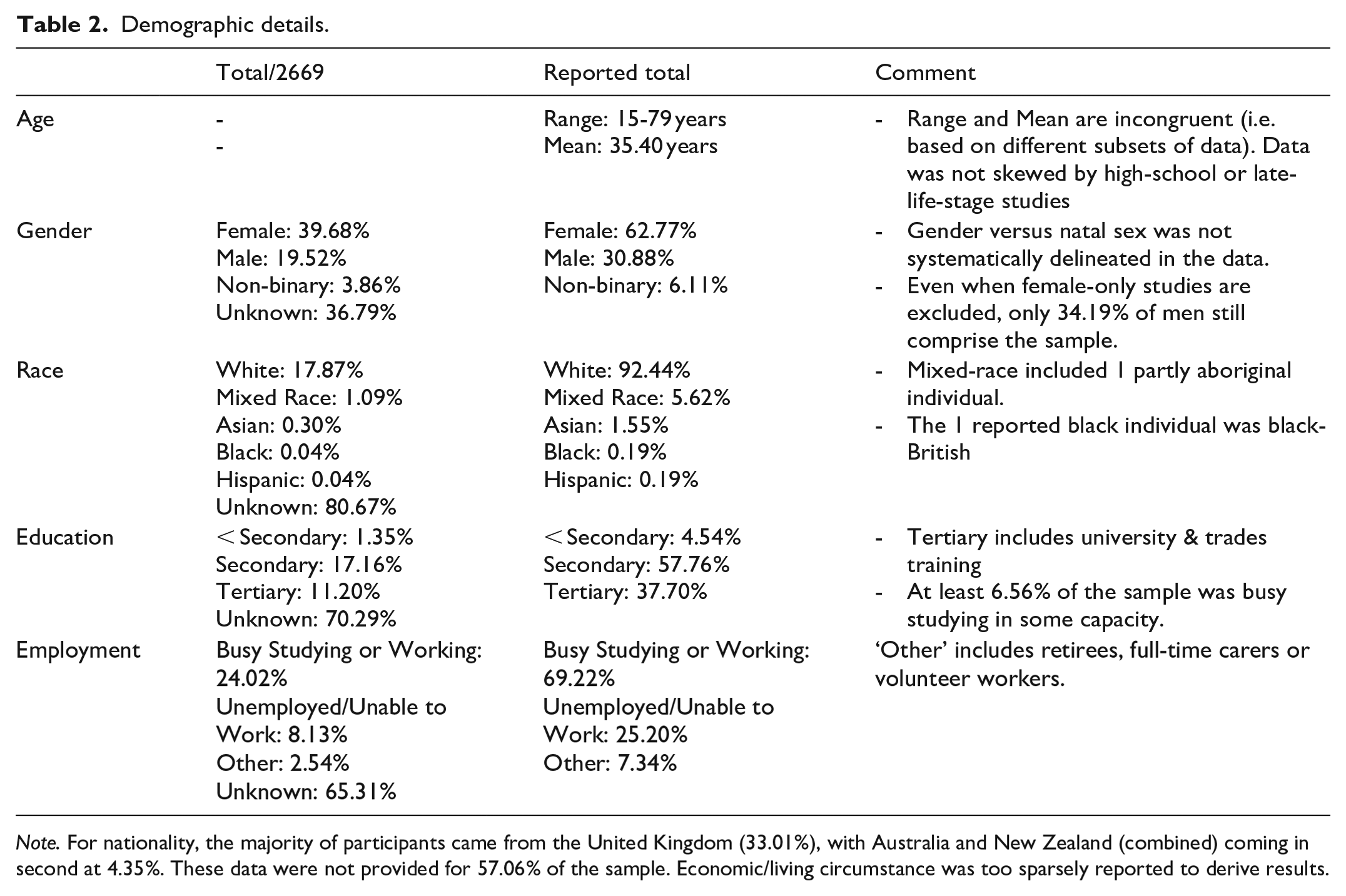
Note. For nationality, the majority of participants came from the United Kingdom (33.01%), with Australia and New Zealand (combined) coming in second at 4.35%. These data were not provided for 57.06% of the sample. Economic/living circumstance was too sparsely reported to derive results.
Strategies
Study Question 1 queried the types of camouflaging strategies that exist, with six inter-related themes found.
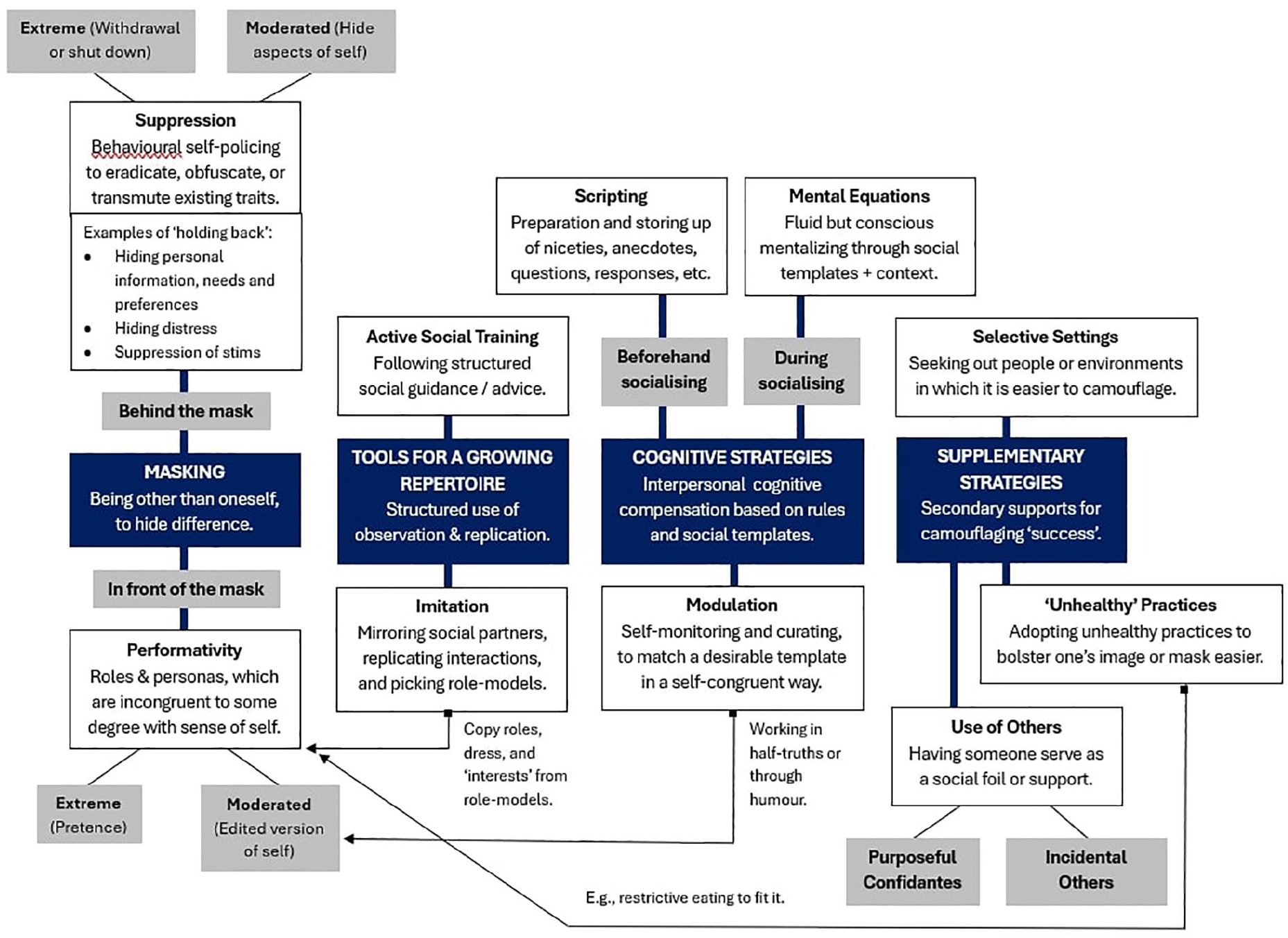
Summary of camouflaging strategies per the Results section.
Templating
One significant insight was the role that mimicry or delayed imitation played in scaffolding camouflaging strategies. This is because they iteratively helped develop social templates through a process of ‘doing’, assessing and refining. This thus afforded people more than just basic behavioural suppression. Per a Bayesian learning model, an individual infers cause-and-effect phenomena in an interaction. They then abstract these experiences into an increasingly flexible, generalist framework or top-down prediction (Amoruso et al., 2019; Gopnik & Wellman, 2012). In the context of social camouflaging, observational learning and instruction replace or supplement behaviours (e.g. transmuting stims) (Hickey et al., 2018; Kapp et al., 2019). Delayed replication of ‘successful’ social interactions, trialling different facets and repetition all help consolidate conceived social patterns into learned templates and heuristics (Leedham et al., 2020).
If we postulate a progression through the strategies,
Contextual moderators
Study Question 2 queried the contextual factors that moderate camouflaging strategies, with four related themes found:
Strategy complexity
The deleterious impact of contextual factors would also depend on the level of complexity the individual can manage, as context impacts on the predictive use of cognitive templates (Crompton et al., 2020). There is variability in how complex one’s strategies develop based on personal capacities, motivation, self-insight (Hull & Mandy, 2021), executive functioning (Ai et al., 2022) or maturation (Livingston & Happé, 2017). To start with; predictions developed through Bayesian learning are impacted by the use of ‘priors’ (i.e. prior data that is drawn/built-on) (e.g. Ai et al., 2022; Amoruso et al., 2019). We distinguish structural-priors (broader, default expectations of a situation) and contextual-priors (fluid, short-term cues that shift predictions; Amoruso et al., 2019). Contextual priors may especially hamper predictability in autistic socialising. Thus, situations that place greater emphasis on the use of contextual priors may deteriorate camouflaging efforts more quickly.
For example, basic templating (e.g.
The implication of the above is that, in contexts that make high interpretive demands, the most flexibility is offered by the development of a nuanced ToM. The use of
Limitations
Community involvement
The study was not developed with or reviewed with any autistic community collaboration, and as such, represents a weakness in terms of providing an external lens to describe experiences internal and deeply personal to those that mask.
Conscious camouflaging
Qualitative studies tend towards a self-reflection approach (Pearson & Rose, 2021). This means unconscious behaviours may not be well reflected in the results. It also means the sample is skewed, as studies exclude those who cannot self-reflect.
(In)formal diagnosis
Not all participants reflected confirmed diagnoses, and thus, their autistic-status is debatable. Yet, if camouflaging promotes neurotypical behaviour, those most adept at it may fall below diagnostic thresholds (Livingston, Colvert, et al., 2019).
Demographics
The reported sample was mostly White, British, female, and relatively educated. However, different (sub-)cultural groups may hold different expectations of what is socially acceptable and report variable degrees of autism detection (Matson et al., 2017). This is compounded by limited inclusion of people of colour in research, and overlapped experiences of ethnic discrimination (Jones et al., 2020). The number of UK participants raises questions of culturally modulated camouflaging, and so extension to other autistic groups remains theoretical.
Scope
We focused only on studies explicitly discussing camouflaging, or at least hiding aspects of oneself, with some depth. As such, we did not included studies that merely alluded to, or only briefly referenced, camouflaging (e.g. before the concept became mainstream).
Implications
We have synthesised conceptions of autistic adult camouflaging into an amalgamated framework for the strategies used. Our contribution was thus to step beyond presumed agreement or narrative summation of the existing literature. By way of thematic meta-synthesis, we were able to confirm the breadth, consistency and agreement of themes across articles. Any inconsistencies between studies were reconcilable once contextual factors were considered.
For research and screening
One study goal was the need for conceptual clarity. The current framework provides one congruent conception of camouflaging to further research and delineates clear variables and testable assertions (such as the process of imitating, replicating and generalising social templates for context-specific use). Our recommendations include the following:
• We have posited six umbrella strategy types, and further subtypes, which we recommend be used to expand screening tool domains or exemplars (e.g. per Table 3), towards improving detection. Given a lack of demographic diversity in existing studies, it is recommended that items be further adapted for their relevant cultural milieus.
• Likewise, it is suggested that further investigation be directed towards understanding intentional imitative processes, and how these form a key, reportable experiential component of camouflaging in autism.
• Furthermore, historically quantitative camouflaging research has (partly) operationalised ‘true’ degree of autism by the level of ToM deficit present (Cook, Hull, et al., 2021; Hull et al., 2020). The implications of sophisticated cognitive templating and compensatory strategies is that some autistic individuals will not reliably be defined by such ToM measures, and as such, alternative means of establishing ‘baselines’ for such studies will need to be explored.
Examples of camouflaging strategies per theme.
For practice and policy
Given the mental health risks connected to camouflaging, improved detection of autistic individuals by healthcare workers is necessary, for which we provide a list of examples (see Table 3). Clinicians are advised to make use of the framework to improve screening, think through therapeutic pathways and provide crucial psychoeducation to clients. Clinicians are also advised to step beyond mere observation of the presence or absence of autism-associated symptoms, towards also spotting performance of neurotypicality. One aspect of this raised in our discussion is the fact that ToM cannot be used as a definitive marker for autism. Instead, subjective reports of effort, strain or distress should be considered when deciding whether outwardly ‘passable’ (neurotypical-seeming) behaviour is actually a reflection of camouflaging and thus social integrative difficulties. Clinicians would likewise take into account the manner and reasoning for how the individual engages in different spaces, spotting variation across contexts, and not overly stereotyping how autism will present.
Conclusion
We conducted an integrative systematic review towards consolidating camouflaging strategies in autistic adults and thereby achieved our goals of attaining conceptual clarity, confirming agreement across the literature and providing a listing of such strategies. We found six inter-related themes of camouflaging, with a spotlight on the role of imitation as not just a strategy, but also an entire learning structure within which the individual grows their repertoire of social templates. Furthermore, four strategy-moderating contextual factors were found. However, most study participants come from the United Kingdom, raising a question of the degree to which the current conceptions of camouflaging are culturally modulated. As such, further research into contextual and cultural influences is recommended. The results further encourage future quantitative research to concretely place measures of camouflaging within this (or other) frameworks, for consistency in tracking camouflaging behaviours.
Supplemental Material
sj-docx-1-aut-10.1177_13623613251335472 – Supplemental material for Consolidating a framework of autistic camouflaging strategies: An integrative systematic review
Supplemental material, sj-docx-1-aut-10.1177_13623613251335472 for Consolidating a framework of autistic camouflaging strategies: An integrative systematic review by Jacques Nel, Maxine Spedding and Susan Malcolm-Smith in Autism
Footnotes
Acknowledgements
We would like to thank Tamzyn Suliaman of the UCT Library Services for her invaluable assistance in software coaching, and refining databases and search strings for the study.
Author contributions
Data availability statement
The current article is accompanied by the relevant raw data analysed during the study. These files are available as Supplemental Materials.pdf via the Sage Journals platform.
Declaration of conflicting interests
The author(s) declared no potential conflicts of interest with respect to the research, authorship and/or publication of this article.
Funding
The author(s) received no financial support for the research, authorship and/or publication of this article.
Ethics approval and registration
The study was cleared by the Psychology Department Research Ethics Committee of the University of Cape Town (PSY2022-049). The study was also registered on the Prospero Registry (CRD42022324957).
Community participation statement
Reflexively, all the authors have experience working with autistic individuals in the mental healthcare field. However, no one involved in the study has a formal diagnosis, and no additional community involvement or input was pursued.

Supplemental material
Supplemental material for this article is available online.
References
Supplementary Material
Please find the following supplemental material available below.
For Open Access articles published under a Creative Commons License, all supplemental material carries the same license as the article it is associated with.
For non-Open Access articles published, all supplemental material carries a non-exclusive license, and permission requests for re-use of supplemental material or any part of supplemental material shall be sent directly to the copyright owner as specified in the copyright notice associated with the article.
