




Abstract
Art-based research methods can enable young people to generate data that provide insights into their lives. We assessed the feasibility, value, and limitations of collages as a participatory research method to understand the experiences of young women living with HIV. Individual collages were created in participatory workshops, firstly in 2015 and secondly in 2017, by a cohort of young women living with HIV in Lusaka, Zambia. Collages were analyzed visually and thematically and compared to other qualitative methods. Participants engaged readily with making collages and expressed how the collages represented themselves. The collages conveyed aspirations, resilience, optimism, and identities beyond HIV. Other data generation methods focused more on challenges associated with HIV. The second collages demonstrated more complex portrayals of participants’ life and developmental transitions. Collages provided a feasible, effective, and therapeutic method of empowering young women living with HIV to tell their own stories and express their full selves.
Over the past decade, heightened global attention on the health and well-being of adolescents and young people (Patton et al., 2016; World Health Organization, 2017) has yielded a burgeoning number of research studies employing a range of methods. Young people (aged 10–24 years) are increasingly being viewed as participants in the research process, rather than merely research subjects (Bernays et al., 2015; Kirk, 2007; MacDonald et al., 2011). This reflects the move from the outdated conceptualization of children and young people as passive and unfinished persons to active contributors to social life (James & Prout, 2015; Prout, 2000). However, authentic involvement of young people in the data production process is often challenging. This can be due to young people feeling inadequately skilled or knowledgeable to contribute, the researchers’ need to scaffold the research process (i.e., providing instructions, support, and direction), and a lack of sensitivity to young people’s emotional reactions (Mayaba & Wood, 2015). Traditional research methodologies (e.g., structured and semistructured interviews) may not adequately facilitate meaningful participation and self-expression in young people, due to the researchers holding more control over the direction of investigation (Leavy, 2015). Participatory and arts-based research can offer alternative methods, which address some of these limitations, either alone or in conjunction with traditional research methodologies. This study presents the use of collage methods, alongside in-depth interviews (IDIs) and participatory workshops, and, through critique of the collage method, demonstrates its value as a data generation tool.
Innovative, participatory, and arts-based research methods give young people a means to express themselves and their concerns, aspirations, and needs (Campbell et al., 2015; MacDonald et al., 2011). As Ansell and colleagues (2012) describe, “participatory research is concerned with producing knowledge with, rather than about, those who are the subjects of the research” ( p. 169). Visual arts-based methods, including drawings (Tay-Lim & Lim, 2013), body mapping (Lys et al., 2018), photo voice (Velez-Grau, 2018), and collages (Khanare & De Lange, 2017), have been shown to be appropriate, empowering, and therapeutic data generation tools for conducting research with children, adolescents, and young people across a range of disciplines and topic areas (Chiiya et al., 2010; Mayaba & Wood, 2015; Rodriguez Vega, 2018; Tay-Lim & Lim, 2013; Theron et al., 2011; Thomson, 2008). Campbell et al. describe using “draw-and-write” exercises with school children to understand their representations of HIV-affected peers in Zimbabwe (2015). They demonstrate how these arts-based methods encouraged independent reflection and self-representation by children, despite limited agency due to the constraints and lack of power in their lives (Campbell et al., 2015). Taking a social constructionist viewpoint, the meaning from such arts-based data is understood, not as authentic representations of experience but rather as acknowledging the coproduction and socially embedded nature of the data in the context of research (Blumer, 1969; Kitzinger, 1994; Seale et al., 2008).
Collages are one art-based method that can be used effectively with young people who can be marginalized by more traditional research methods. Marginalized populations, such as young women, can be disempowered in interview settings or group workshops due to power dynamics between researcher and participant (Leavy, 2015). Collages can achieve the balance of being fun for young people and, simultaneously, being accessible for those who may be daunted by drawing. Khanare and De Lange (2017) have shown how, in the production of group collages in South Africa, school children can show an intense sense of engagement in the process of selecting how to represent their experiences. They show how, through group collages, school children could present their ideas of what they need in terms of care and support at school in the context of HIV (Khanare & De Lange, 2017). As such, children could be included as knowledge producers to contribute to school decision-making processes (Khanare & De Lange, 2017). Despite a few studies detailing the findings from the use of collages with young people and other marginalized populations, there has been relatively little critical reflection on the method, including the potential challenges and the lessons learnt.
As they grow up, and transition to adulthood, young people living with HIV face a host of complex challenges. These include challenges relating to adherence to antiretroviral therapy (Bernays et al., 2017; Denison et al., 2015; Fields et al., 2017), disclosure of their HIV status (Kidia et al., 2014; Mburu et al., 2014), mental health (Menon et al., 2007), anxiety around body image (Ezekiel et al., 2009), concerns around sexual relationships (Busza et al., 2013; Fernet et al., 2011; FHI360, 2013; Vujovic et al., 2014), anticipated or experienced stigma (Winskell et al., 2011), and restrictions on their behaviors (Mackworth-Young et al., 2017). Although less prominently discussed, young people living with HIV often display resilience in the face of these and other challenges (Adegoke & Steyn, 2017; Adegoke & Steyn, 2018; Skovdal & Daniel, 2012). However, in part because of limited disclosure, in part because of limited enabling support options, and in part because, when discussed, HIV is often constructed through a language of sickness, young people living with HIV are rarely given the space to express these concerns and their resilience (Bernays et al., 2015). Applying arts-based research methods with young women living with HIV has the potential to support expression of feelings that may be difficult to put into words, including around experiences living with HIV, such as stigma, loss and trauma, and resilience.
In this article, we critically assess the utility of individual collages as a method, including (i) the feasibility, (ii) value for data collection, (iii) comparison to other methods, (iv) advantage of repeating the method, and (v) limitations to understand the experiences of young women living with HIV. We draw on research with young women living with HIV (aged 15–19 years) in Lusaka, Zambia, who participated in creating individual collages at two time points.
Method
Study Overview
In the context of two linked and consecutive qualitative studies investigating the experiences of young women living with HIV, individual collages were created by young women living with HIV at two time points. The first time point was in January 2015, with 24 young women living with HIV (then aged 15–18 years), recruited from two health facilities in Lusaka, who each created an individual collage. The second time point was in September 2017, with seven of the same participants (then aged 17–19 years), who were asked to participate in a follow-up study, who each created a second individual collage. In the two linked studies, the collage was one research activity embedded in other qualitative methods, namely participatory workshops and IDIs, to investigate young women’s experiences of living with HIV. The rationale for including a variety of methods follows Langevang’s (2007) suggestion that combining data generation approaches enables researchers to capture “the diversity and complexity of youth experiences in the present as well as longitudinal processes of transition” (p. 267).
These studies spanned a key period of the young women’s lives, as they transitioned into adulthood, including leaving school. All the young women were black Zambian, from mixed Zambian ethnic groups. The seven young women who created collages in September 2017 were all middle income. The young women in this study were marginalized in some ways (e.g., age, gender and health status), but not in others (e.g., for some, economically).
Participatory Workshops and Collages
The individual collages were created in two introductory participatory workshops, which were held at the beginning of each of the two studies, with the first study introductory workshop in January 2015 and the second study introductory workshop in September 2017. These workshops were held in a private space that was accessible for participants, run by facilitators trained in adolescent counseling and participatory methods. The workshop in January 2015 was cofacilitated by a young woman living with HIV. Collages were introduced by the facilitators primarily as an icebreaker tool at the beginning of the first workshop. The facilitators chose to use the collage method as they felt that producing collages would encourage participants to start telling stories about their broad lives and to interact in a safe way with the other participants and the facilitators who they were meeting for the first time. This method was selected again for the second workshop during the follow-up study with a subset of participants (n = 7), as it had worked well previously both as an icebreaker and as a data collection activity. Additionally, the researchers felt that comparisons with the earlier collages might help understand participants’ transitions over time. The workshops were recorded through note-taking by two researchers. Notes included researchers’ reflections on the use of individual collages as a method for understanding the experiences of the participants and how collage making compared to the other forms of data collection used.
Individual Collage Activity
Prior to creating the first collage, facilitators explained to the participants that a collage is a piece of artwork that is made up of images, drawings, and words used to represent oneself. To illustrate this, the young woman living with HIV cofacilitator prepared a collage and showed it to participants as an example. Participants were then given relatively open-ended instructions to each create a collage that they felt represented themselves, what they liked, what they had experienced in the past, and what they wanted in the future. They were provided with scissors, glue, colorful pens, an array of different magazines and newspapers, and a sheet of A3 card each and given around 1½ hr to create an individual collage (Figure 1). Magazines provided included those on fashion, travel, food, and home, with most magazines purposively chosen and produced in South Africa, to represent appropriate ethnicities. For the second collage, the researcher verbally reminded participants about the collage that they had previously made. They were given the same materials as before and given similar instructions to create a collage. Participants were not shown their first collages before creating their second collages but were asked to reflect on the period between their two collages when making their second collage.
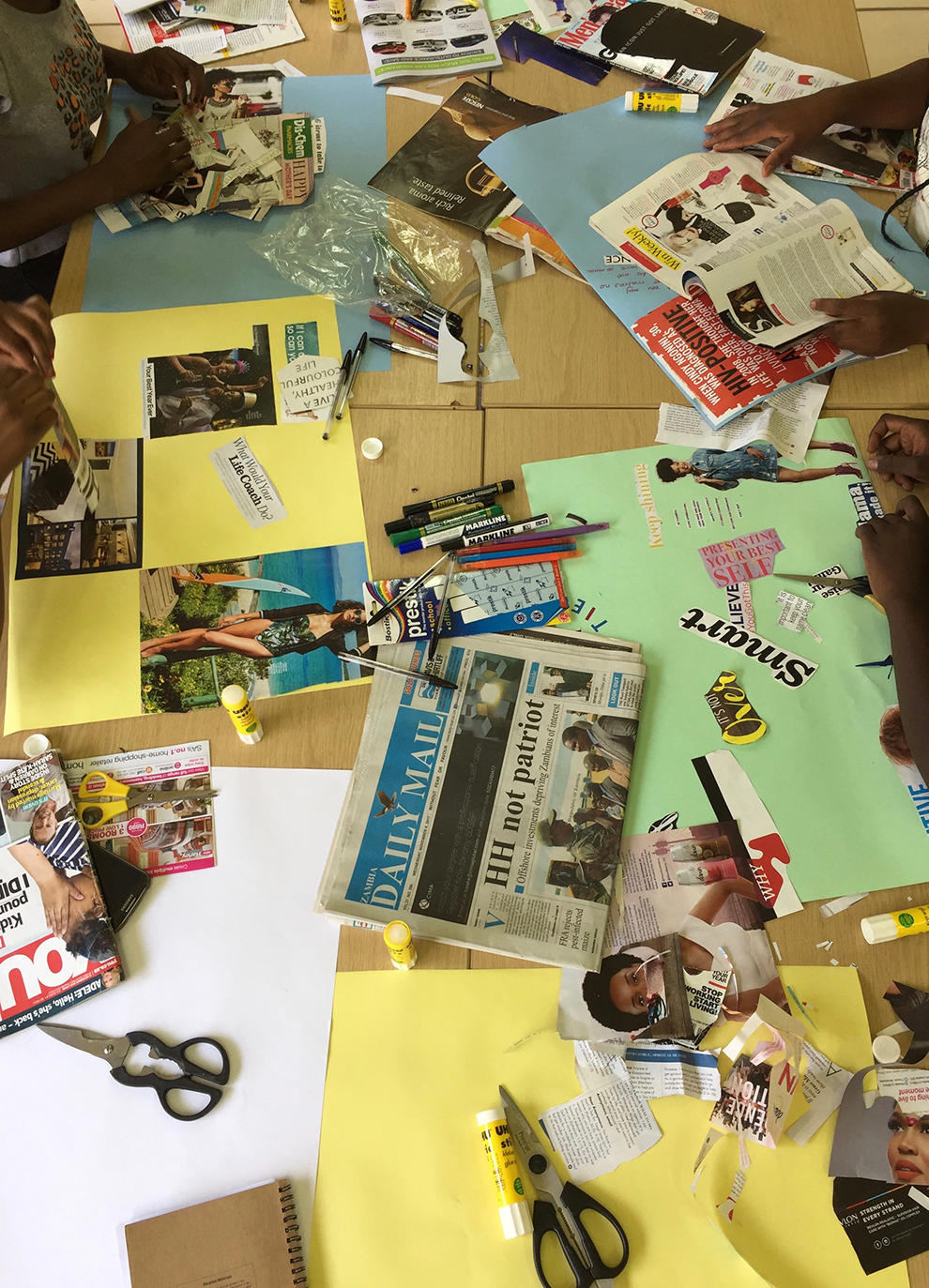
Participants making collages (participatory workshop, September 2017).
After each of the collages were made, the participants were asked to explain them to the wider workshop group and were probed to describe why they had included certain words, pictures, and visuals. Participants were encouraged to use the collages as an aid to tell their experiences as young women living with HIV. The workshop facilitators probed participants to describe their stories in more detail and to discuss why they had included parts of their collage that they did not mention when presenting their collage. They were also asked if the time and materials at hand had limited them in any way. After creation and discussion about the individual collages in each study, the collages were scanned.
IDIs and Collages
After the workshops in which the collages were created, participants took part in individual IDIs. The IDIs covered a range of topics, including disclosure, support they received, their relationships, and experiences at the clinic and with treatment. The interview guide included open-ended questions, with the focus on understanding participants’ experiences of HIV. One component of the IDIs offered participants the opportunity to give extra detail about their collages. Participants were shown their collages again and were asked in more detail to describe what the collages represented about themselves, their experiences, and their aspirations for the future. The IDIs after the first set of collages were semistructured, took place in a private room in the clinic or Zambart’s head office in Lusaka, and were recorded, transcribed, and translated. The IDIs after the second set of collages were unstructured, took place in participants’ homes, and were recorded through note-taking.
The participants were offered the option of keeping their individual collages after the IDIs. It was emphasized that participants should only take collages home after data collection if they felt comfortable doing so, if they had a safe place to keep them at home, and if it was felt by researchers that this would not harm participants. About half of participants chose to take the collages home, with the others preferring for the researchers to keep the collages safely.
Analysis
The overall analysis aimed to answer the following two questions. Firstly, what is the feasibility, value, and limitations of the collage method, used at two time points, to understand the experiences of young women living with HIV? And secondly, how does this compare to other methods of data collection? Data used for this analysis included a total of 31 individual collages (24 collages created by 24 participants in 2015, plus 7 collages created by 7 of the same participants in 2017). The participants’ verbal descriptions of the collages in the workshops and IDIs and the researchers’ reflective notes on the different methods (including the process of the collage method) were also incorporated. Firstly, analysis was conducted on notes and memos detailing the process of the collage method to understand the feasibility and limitations of the collage method. Secondly, analysis was conducted on the collages themselves by two researchers to understand the data that the collages generated in order to assess the value of the method for data collection. The researchers physically laid the collages out, arranged them into groups with shared themes, and then analyzed the themes that emerged to understand the data that were produced by the collage method. These themes included wide-ranging identities, high aspirations and optimism, resilience including thorough support from family and friends, and a focus on beauty and fashion. Thirdly, data collected from the collage method were compared with data generated from activities in the workshops and the IDIs. Inductive analysis was conducted on the transcripts from the workshops and IDIs, and the topics that emerged were grouped into themes, including finding out about their HIV status, disclosure, treatment, and impact of HIV on relationships. These were compared to the themes from the collage analysis in order to understand the value of the collage method in eliciting an understanding of the participants’ lives that differed from that gleaned through the other methods.
Ethics
Pseudonyms were used in data collection, analysis, and in writing up results (including this article), to protect the anonymity of participants. After being provided with information about the studies, and a chance to ask questions, participants and their parents and guardians were asked to provide informed consent. Participants under 18 years gave written informed assent, while those over 18 years gave written informed consent. Ethical clearance was obtained from the review boards of the University of Zambia Humanities Research Ethics Committee, the London School of Hygiene and Tropical Medicine, and the International Center for Research on Women. A discussion of some of the ethical issues that emerged has been published separately (Mackworth-Young et al., 2019).
Findings
Feasibility of the Collage Method
The individual collages were successful first activities in each of the workshops, thereby acting as an icebreaker. Participants were quickly able to understand the method and engaged enthusiastically in the activity. In the first workshop, which was the first time the participants met, the researchers observed that the process of making the collages acted as a way for participants to get to know each other and develop friendships. As they shared scissors, glue, magazines, and cutout pictures, they spoke to each other and shared stories while exchanging collage materials. Participants enjoyed making the collages, with many reticent to finish when told in the workshops that the activity was drawing to a close, with one protesting, “I want mine to be just perfect!” (Mavis, second workshop, second collage).
Value of Collages for Data Collection
Participants said that they were able to express themselves through the collages. They felt that the individual collages “held meaning” as a form of self-representation. When reflecting about her collage later during the IDI, one participant expressed how much her collage captured herself and her life: “That’s exactly Sophie, through and through” (Sophie, IDI, second collage). Sophie explained that she could express herself and her experiences living with HIV through the collage in a way she found it difficult to do verbally: “I want to show it (the collage) to my friend. I just disclosed to her, and I want her to understand what I’ve been going through” (Sophie, IDI, second collage).
The collages enabled self-expression of a wide range of identities and life experiences, including and beyond experiences of living with HIV. The collage method therefore provided an opportunity to give a holistic view of their lives, including showing the importance of faith, family, friends, school, and college, as well as their experiences with HIV: “I’m positive, but my family is still with me and I can go to them for support” (Mavis, IDI, first collage).
The collages overwhelmingly gave an impression of optimism, not being held back by living with HIV, and having high ambitions, despite challenges which participants may have faced (Figure 2). Words such as “Happy and free,” “Be successful,” “Positively,” “Stay Confident,” “Always believe you got this,” and “I believe in myself” were written throughout the collages. This optimism was also linked to their HIV status: when describing her collage, one participant said, “I have HIV but I’m still crazy, cool, and confident” (Mavis, first workshop, first collage). When probed during the IDIs about how HIV fitted into their collages, the participants often expressed how they never wanted HIV to hold them back. “Even though I’m HIV positive…I will become whatever I want” (Chanda, IDI, first collage).
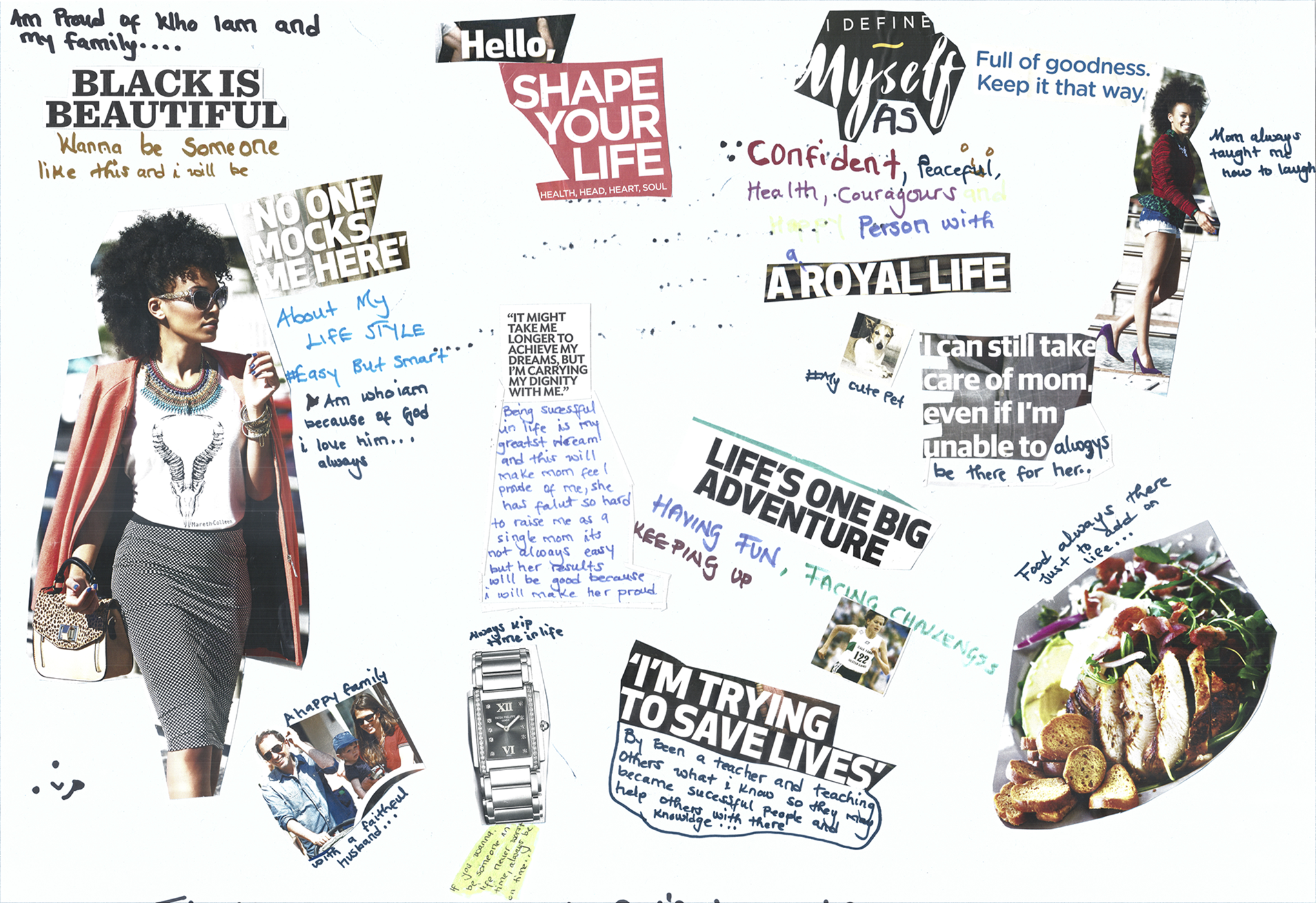
Second collage by Natasha, demonstrating optimism and resilience.
Usefulness of Repeated Collages at Two Time Points
Using the collage method with the same participants at two time points, firstly in January 2015 and secondly in September 2017, gave the opportunity to make comparisons over time and for participants themselves to reflect on the transitions occurring across a key period of development in their lives (Figures 2 and 3). When making the second set of collages, participants were almost 3 years older than when they had made the first set of collages; they were more mature and also then familiar with the collage method. More complex thoughts and ideas were expressed in the second set of collages compared to the first set. The first set of collages relied more on images and conveyed more simplified desires and self-perceptions: “enjoy singing,” “love cooking,” and “all thanks to every support given to me” (Thandi, written on first collage); “be successful in the future through education and prayer” (Natasha, written on first college). In contrast, the second collages were more textually rich and offered more intricate and self-reflective messages:
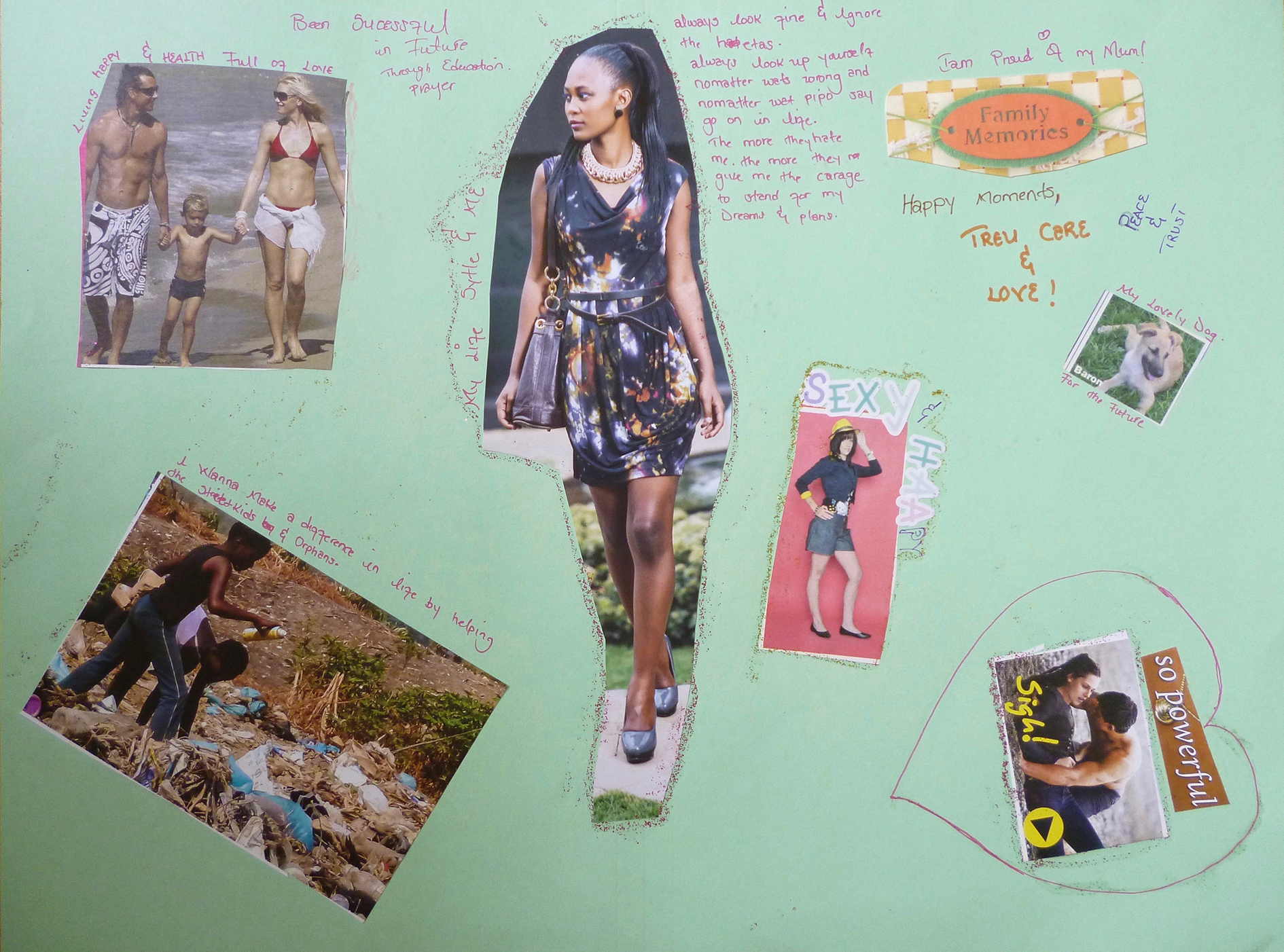
First collage by Natasha showing more simplified self-perceptions, compared to her second collage (Figure 2).
“Being successful in life is my greatest dream, and this will make mum feel proud of me. She has fought so hard to raise me as a single mum. It’s not always easy, but her results will be good because I will make her proud” (Natasha, written on second collage; Figure 2).
This demonstrates participants’ development and maturation between the two time points as they grew older. It also suggests that using the collage method with the same participants a second time allows them to delve deeper and raise more complex or challenging issues than they did when they created their first collage, as several participants said they were already aware and comfortable with this as a medium of expression.
One participant made a direct before and after comparison in her second collage, showing the importance of confidence that she felt she had gained over the years (Figure 4). She included a photo of a chewed pencil to represent herself “before,” with the words “a person without confidence is just like this pencil. Such people captivate themselves because they don’t open up and they just hate their life.” Then, she included a photo representing herself “after,” of a beautiful, happy-looking woman, with the words saying: “Believe in yourself at all times. Confidence is the most important thing in someone’s life.” She linked this transformation to accepting her HIV status: how she has “come to terms with her diagnosis,” and how this has allowed her transition into a confidant young woman without self-stigma (Sophie, written on second collage; Figure 4).
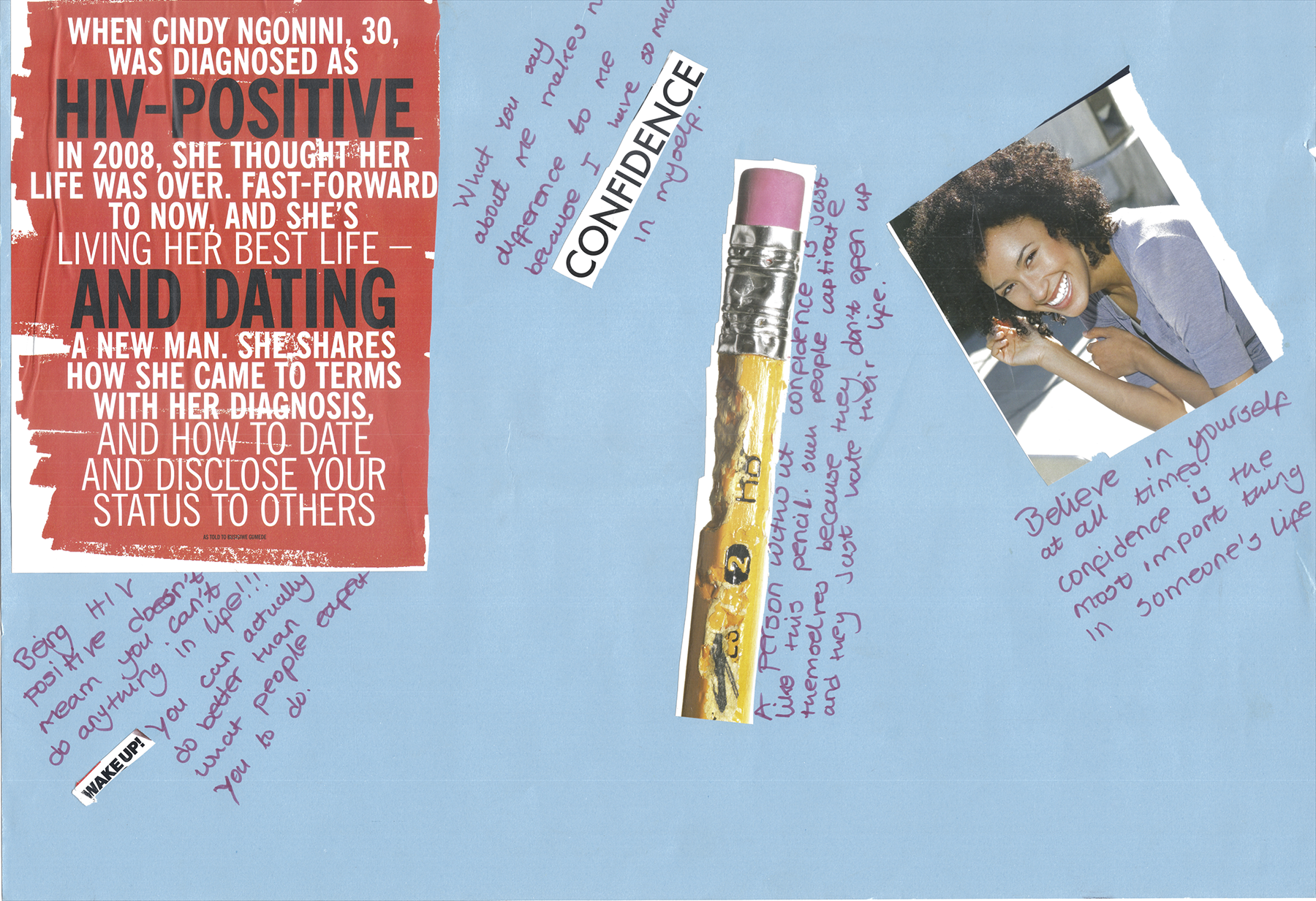
Second college by Sophie showing before and after comparison, relating to growth in confidence.
Comparison to Other Methods
Data from other methods of data collection focused more on HIV and the challenges they faced. For example, in the workshops and IDIs, participants frequently expressed challenges around (i) finding out their HIV status: “I felt that my life had come to an end, it wasn’t worth living” (Thandi, first workshop), (ii) disclosing their HIV status: “I feel scared (to disclose): these people could tell other people” (Rose, IDI), (iii) taking their treatment: “that is the biggest difficulty I have” (Mary, IDI), and (iv) in their relationships: “I want to go out with my friends, but in my situation, it’s difficult” (Rhoda, first workshop). Comparably, only a handful of the collages referenced the challenges that participants had faced living with HIV, and even in these situations, the emphasis was rather on their resilience in coping with challenges: I “never want to be this sad because of my status” (Mary, written on first collage; Figure 5). The collage method, therefore, provided an opportunity to present optimistic and resilient aspects of their identity around HIV but also broader identities beyond their serostatus. Differences in the content of the data generated by each method can partly be attributed to the differences in the questions and topics that were asked of the participants. Nevertheless, by providing sufficient time, open instructions, and unconstrained space, the collage method enabled the young women to present representations of themselves that were often suppressed through other methods, such as the IDIs, where narratives around HIV-related challenges were more common.
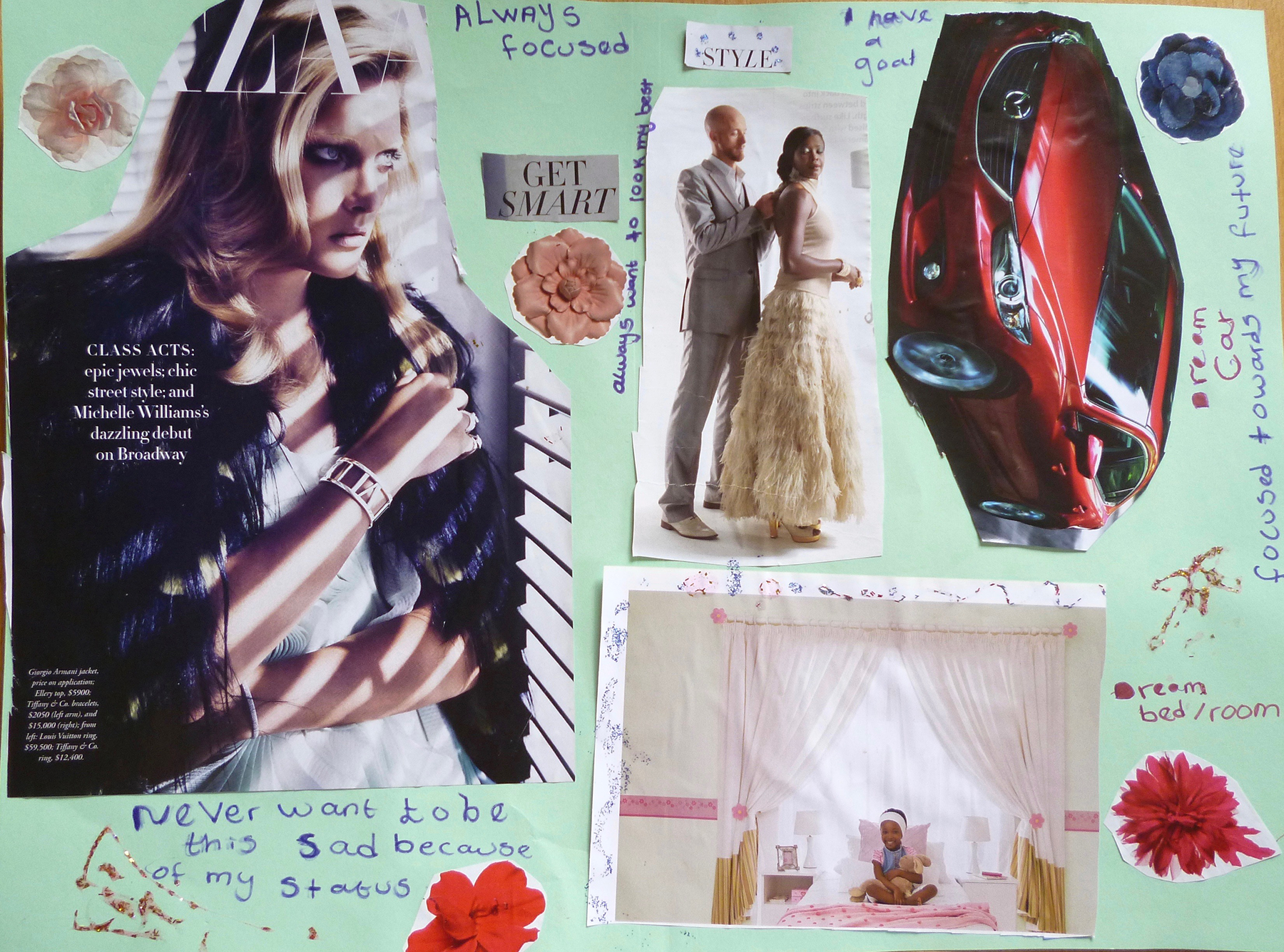
First collage by Mary, showing resilience in coping with challenges related to HIV.
Limitations of Collage Method
The individual collages were limited by the materials and especially by the images in the magazines provided. Since magazines can portray idealized versions of reality, they arguably encouraged the presentation of idealized versions of participants’ lives in the collages. While researchers attempted to provide a range of magazines (including on fashion, home, food, and travel), the emphasis on fashion and beauty in the magazines was reflected in the collages (e.g., in Figure 5). Almost all the collages in both rounds featured at least one main striking image of a beautiful-looking woman, and many of the participants spoke about how they wanted to look or be like these women.
Some participants expressed how the magazines provided them with plenty of inspiration and materials for their collages: “I think I am finding too many inspiring things; I will end up using the whole magazine” (Mavis, second workshop, second collage). However, others expressed that they found it difficult to find what they were looking for, as some felt “all the magazines are about fashion” (Thandi, second workshop, second collage). When the researcher asked participants what they would have liked to include that they didn’t, as they were presenting their second collages to the other participants in the workshop, around half of the participants mentioned that: “more (material) on aspirations for career and for the future” would have enabled them to better express their aspirations.
Discussion
Using individual collages with young women living with HIV in this study proved feasible, enjoyable for participants, and elicited valuable data that both the participants and the researchers felt “held meaning” as a form of self-representation. Making the collages facilitated the active participation of young people in the creation of data, empowering them to tell their own stories. Compared to the traditional research methods used alongside them, the collages gave the young women the space and the power to create, show, and describe their own representations of themselves. Further, although this wasn’t the primary aim from the outset, the collage method provided reciprocal benefit (Trainor & Bouchard, 2013) and therapeutic value (Kelly, 2014) for participants. This was through positive self-reflection, advancing identity development, and expression of their diverse, varied, and complex identities that overlay their HIV status. The collage method not only gathered valuable data but also went beyond traditional research methods by providing a space for the young women’s personal processing and self-expression.
Participants were able to quickly engage in the collage method, without the need for extended instructions and despite having never previously produced them. This contrasts with some of the challenges described with other participatory arts-based methods with young people. For instance, with drawing methods, children can be hesitant to draw (Mayaba & Wood, 2015), whereas in the collage method, using the magazines as materials provided a starting point for the participants to create the collages. In this study, the second set of collages, which were created when the young women were older (aged 17–19 years), were more complex and self-reflexive. This suggests that when the method is used with older young people, it can elicit more detailed and multifaceted self-expression. Skilled facilitation was necessary to ensure participants engaged with the method successfully. This facilitation provided clear and simple instructions, an appropriate example of a collage that supported participants’ understanding of the process, ensured the collages were created within the allocated time, and effectively used probing techniques when participants were describing their collage to others in the workshop. The method requires some resources including a space to create the collages, skilled facilitation, and materials including, scissors, glue, pens, card, and magazines. Thus, material, staff, and spatial resources are necessary to carry it out.
The magazines provided undoubtedly set the parameters of the self-representations that participants were able to create. We attempted to address this limitation by providing participants with pens and markers to draw and write their own representations, as well as using clippings from magazines. In addition, we directly asked participants what they would have liked to include. Further, we looked at the magazines after the workshops to understand what the participants chose not to include in their individual collages. Being cognizant of the co-constructive nature of any qualitative data helps us understand the impact that the materials have on the collage creation. Through a social constructionist lens, we understand the collage data, like other qualitative data, not to be authentic representations of experience but rather socially cocreated through the interaction between the participant, the researcher, the materials available, and interaction with other participants (Blumer, 1969; Kitzinger, 1994; Seale et al., 2008). For future use of this method, providing additional forms of media, including printing images that go beyond those available in popular print media, could be incorporated. Additionally, encouraging more drawings and writing their own words in the collages could be ways to adapt the method to allow more freedom of expression, as demonstrated in the “draw and write” exercises by Campbell et al. (2015).
For young women living with HIV, individual collages are an effective method to enable representations of optimism and resilience and identities that overlay their “HIV identity.” This compares to other methods, which focused more on HIV-related challenges. This aligns with Bond’s finding of the importance for many people living with HIV to retain wider identities beyond one linked to HIV (2010). This is in a context where representations of young people living with HIV are often negative, with positive representations lacking and often not captured by traditional methods (Skovdal & Daniel, 2012). Here, the collage method gave young women the tools to reveal optimistic and resilient identities that were less likely to emerge through the other data generation approaches. This was through placing power in the hands of the participants to craft their own representations of themselves. This goes beyond more traditional methods, which can miss complex and layered identities, and more optimistic self-perceptions, as they are frequently driven by the research objectives, often with a focus on an HIV identity. Adegoke and Steyn have demonstrated how other participatory methods, such as photo voice, are effective at capturing resilience among young people living with HIV, including how they frame positive goals, use social competence, use coping skills, and express personal challenges (2017). The individual collages captured both of Wiegers’s two forms of resilience: firstly to see beyond HIV, with optimistic messages and wider identities displayed, and secondly to manage the illness, through identifying the strategies and support they had adopted and received (for instance, developing self-confidence and relying on family and faith) to manage their HIV status (2008). Future use of the collage method may be particularly valuable for answering research questions investigating optimism and resilience, particularly among young people.
As others have noted with other longitudinal qualitative data collection methods (Bernays et al., 2014; Seeley, 2015; Wouters & De Wet, 2016), we saw several benefits of using repeated collages with the same participants. Considering a developmental perspective, such repeated engagement can offer meaningful insights into the contextual effect of the substantive biological, psychological, and social change that takes place during adolescence and emergence into adulthood (Cicchetti & Rogosch, 2002; Holmbeck, 2002). Further, when creating their second collages, participants were familiar with the method, were older, and thus able to express more complex thoughts as well as to be self-reflexive of the trajectories of their lives, offering richer data as a result.
We demonstrate that collage methods are a feasible, effective, and enjoyable method to use with young women and one that went beyond traditional research methods in actively involving them in the creation of their representations and the production of knowledge. Collages and other arts-based methods can empower young people to tell their stories in a less directed way than other research methods and enable them to express their full selves. This, in turn, can be used to inform programs and interventions as well as research. While needing to be being mindful of how the collages are coproduced through the involvement of the researcher, the choice of materials, and the interaction with other participants, collages are a valuable arts-based method in a growing tool kit for use in research and program development with young women living with HIV, and beyond, that enable the cocreation of the representations of their stories.
Footnotes
Acknowledgments
Our biggest thanks go to the young women who participated in the study, contributing their time, energy, and stories to the research. We also thank the clinic staff and volunteers who assisted with the initial recruitment of participants. Lastly, we thank the two anonymous reviews who provided exceptionally constructive feedback on the manuscript.
Author Contributions
Constance R. S. Mackworth-Young has contributed to conception, design, acquisition, analysis, and interpretation; drafted the manuscript; critically revised the manuscript; gave the final approval; and agreed to be accountable for all aspects of work ensuring integrity and accuracy. Alison Wringe has contributed to interpretation; critically revised the manuscript; gave the final approval; and agreed to be accountable for all aspects of work ensuring integrity and accuracy. Sue Clay has contributed to conception, design, acquisition, analysis, and interpretation; critically revised the manuscript; gave the final approval; and agreed to be accountable for all aspects of work ensuring integrity and accuracy. Mutale Chonta has contributed to conception, design, acquisition, and interpretation; critically revised the manuscript; gave the final approval; and agreed to be accountable for all aspects of work ensuring integrity and accuracy. Chipo Chiiya has contributed to conception, design, acquisition, and interpretation; critically revised the manuscript; gave the final approval; and agreed to be accountable for all aspects of work ensuring integrity and accuracy. Katongo Konayuma has contributed to conception, design, acquisition, and interpretation; critically revised the manuscript; gave the final approval; and agreed to be accountable for all aspects of work ensuring integrity and accuracy. Kirsty Sievwright has contributed to analysis and interpretation; critically revised the manuscript; gave the final approval; and agreed to be accountable for all aspects of work ensuring integrity and accuracy. Madalitso Mbewe has contributed to design and acquisition; critically revised the manuscript; gave the final approval; and agreed to be accountable for all aspects of work ensuring integrity and accuracy. Mwangala Mwale has contributed to acquisition; critically revised the manuscript; gave the final approval; and agreed to be accountable for all aspects of work ensuring integrity and accuracy. Anne L. Stangl has contributed to conception and interpretation; critically revised the manuscript; gave the final approval; and agreed to be accountable for all aspects of work ensuring integrity and accuracy. Virginia Bond has contributed to conception, design, acquisition, analysis, and interpretation; critically revised the manuscript; gave the final approval; and agreed to be accountable for all aspects of work ensuring integrity and accuracy.
Declaration of Conflicting Interests
The author(s) declared no potential conflicts of interest with respect to the research, authorship, and/or publication of this article.
Funding
The author(s) disclosed receipt of the following financial support for the research, authorship, and/or publication of this article: This research was funded by the Economic and Social Research Council. The MAC AIDS Fund funded the qualitative study in 2014–2015, from which data were drawn from in this article.

Open Practices
Data and materials for this study have not been made publicly available. The design and analysis plans were not preregistered.