




Abstract
A main goal of secondary transition is to prepare and empower all students to pursue their goals after completing high school. Mixed methods research, which integrates qualitative and quantitative approaches, can provide insights into secondary transition experiences and outcomes for secondary youth with disabilities. Although mixed methods research may inform transition planning, practice, and services, little is known about the application of mixed methods research in the field of secondary transition. This systematic literature review examined the application of mixed methods approaches across 39 peer-reviewed articles focused on secondary transition research. Emphasis was placed on the recent scope of mixed methods research in secondary transition and the quality assessment of methods used in included studies. The results indicated mixed methods research focuses on a range of transition predictors and outcomes. However, quality assessment of included articles revealed that quality indicators were inconsistently applied, with few articles meeting items that were unique to mixed methods approaches. Recommendations for the application of mixed methods within the field of secondary transition are discussed along with suggestions and implications for future research, policy, and practice.
Keywords
A main goal of secondary transition is to prepare and empower all youth with disabilities to pursue their goals after high school. However, the transition to life after high school is multidimensional and complex (Trainor et al., 2020). Historically, research has shown that not all students are equitably prepared for postsecondary life, with students with disabilities being less prepared than their typically developing peers (Newman et al., 2011). While much research in the field of secondary special education and transition (“secondary transition”) has applied either quantitative or qualitative research methods to investigate outcomes for youth with disabilities (Mazzotti et al., 2021; Trainor et al., 2020), little is known about how these combined methodologies can provide evidence and information related to the complex intricacies of secondary transition research and practice. Mixed methods research, which integrates strengths of qualitative and quantitative methodological approaches, may provide insights into these complex problems of research and practice (Love et al., 2022; McDaniel & Mazzotti, 2022; Mertens, 2007), but is less commonly applied within the fields of special education and secondary transition (Corr et al., 2020; Onwuegbuzie & Corrigan, 2018; Snodgrass et al., 2023; Trainor et al., 2020). This systematic literature review examines the application of mixed methods approaches within secondary transition. The focus of this review is on mixed methods research that examines the transition from high school to adulthood to better understand the prevalence and quality of such approaches and the implications for promoting equitable outcomes for youth and young adults with disabilities.
Why Mixed Methods in Secondary Transition?
The field of secondary transition has a strong history of leveraging multiple approaches to understand and promote positive outcomes for youth with disabilities (Klingner & Boardman, 2011; McDaniel & Mazzotti, 2022). Educators and secondary transition professionals often rely on a combination of quantitative measures (e.g., standardized assessments) and qualitative understandings (e.g., interviews) to identify students’ strengths, interests, and needs to determine appropriate transition programming and to promote growth in secondary skill development (Rowe, Mazzotti et al., 2015). Likewise, transition researchers have used a range of quantitative (e.g., national surveys, longitudinal studies) and qualitative (e.g., focus groups) approaches to conduct investigations of the experiences of youth, families, and secondary transition partners as students move through the transition planning process (Trainor et al., 2020).
Mixed methods, which intentionally combine quantitative and qualitative approaches, may promote an improved understanding of effective practices in the field of secondary transition for three reasons. First, by combining qualitative data, such as the perspectives of youth with disabilities or other secondary transition partners (e.g., families, service providers, educators), with quantitative measures, researchers may gain contextualized insights into complex issues, including experiences as youth transition to life after high school. Findings can support a more comprehensive understanding of the transition practices that are most effective for various students within this diverse population (Love et al., 2022; Trainor et al., 2020).
Second, transition professionals play a critical role in the research process, not only as implementers of evidence-based practices but also as active contributors to research. Transition professionals are often gatekeepers to potential research settings, offering essential knowledge about the classroom, school, and community culture. Thoughtfully designed mixed methods approaches recognize the value of secondary transition partners’ perspectives (Bumble et al., 2018), offering opportunities for collaboration and amplifying partners’ voices across settings. Third, mixed methods research has the potential to contribute to social justice because of its strong connection with paradigms such as pragmatism or transformative frameworks (Mertens, 2007; Morgan, 2014), addressing social equity and challenges facing culturally, linguistically, and socioeconomically diverse populations (Mazzotti et al., 2013; Trainor et al., 2020). Moreover, mixed methods research can expand researchers’ understanding of “what works with whom, by whom, in what contexts, under what circumstances, and for what purposes” (Klingner & Boardman, 2011, p. 209).
The Quality of Mixed Methods Research
The issue of quality has been of growing interest within the field of mixed methods research (Fàbregues & Molina-Azorín, 2017; Guetterman et al., 2023). Although the field has yet to agree on a single set of quality criteria (Guetterman et al., 2023), there is some consensus regarding core characteristics of high-quality mixed methods research (Hirose & Creswell, 2023; Onwuegbuzie & Corrigan, 2014; Onwuegbuzie & Poth, 2016). For example, a review of 35 publications on mixed methods quality identified 19 criteria commonly cited across the publications (Fàbregues & Molina-Azorín, 2017). Hong and Pluye (2019) further differentiated among types of quality, including reporting quality (i.e., accuracy, completeness, transparency), methodological quality (i.e., trustworthiness), and conceptual quality (i.e., insightfulness). While some mixed methods researchers advocate strongly for common criteria, others assert that the varied contexts in which mixed methods are applied require a more nuanced approach that is field-specific (Guetterman et al., 2023). Other fields have developed quality criteria for mixed methods research applicable within their fields (Levitt et al., 2018; O’Cathain et al., 2008).
Research Quality in Secondary Transition
Federal policy recognizes the importance of peer-reviewed research and evidence-based practices in promoting student learning and achievement across grade levels (Every Student Succeeds Act, 2015; Individuals with Disabilities Education Improvement Act [IDEIA], 2004). To support the design and dissemination of high-quality, rigorous research, the field of special education developed quality indicators for quantitative (i.e., group experimental research [Gersten et al., 2005; Toste et al., 2023]); correlational (Thompson et al., 2005); qualitative (Banks et al., 2023; Trainor & Graue, 2014); and single-case (Kratochwill et al., 2013; Ledford et al., 2023) research designs. However, not all published, peer-reviewed studies reflect high levels of quality, due to design flaws, contextual constraints, and/or reporting limitations.
Recently, Leko et al. (2023) developed mixed methods quality indicator recommendations for the field of special education. The four indicators reflect foundational work on mixed methods quality in the broader special education field and include (a) meaningful and purposeful integration; (b) combining research designs (i.e., qualitative and quantitative) to maximize design strengths and minimize weaknesses; (c) using high-quality research designs; and (d) addressing mixed methods “legitimation” (i.e., validity or trustworthiness). These four indicators provide special education researchers with guidance in applying mixed methods approaches. While these quality indicators reflect necessary recommendations for mixed methods research in special education, the framework is broad without providing specificity related to items that should be included when assessing quality. Furthermore, the field of secondary transition has not yet developed quality indicators specific to this context nor applied indicators to published mixed methods research in secondary transition (McDaniel & Mazzotti, 2022).
Aligned with the four-part framework of quality (Leko et al., 2023) and vetted by mixed methods researchers in education (e.g., Onwuegbuzie), the National Technical Assistance Center on Transition: the Collaborative (NTACT:C) has developed a checklist of 28 quality indicators for mixed methods research in secondary transition (see Supplemental Figure S1 at https://osf.io/ew3p8/). Building on NTACT:C’s knowledge translation work, this review allowed us to (a) test the mixed methods Quality Indicators Checklist and (b) evaluate the quality of mixed methods studies in the field based on specific quality items. Evaluating the quality of mixed methods research designs may provide the field with information about how to improve mixed methods research to ensure studies are conducted with rigor. Rigorous mixed methods research, in which both qualitative and quantitative data are collected, analyzed, and integrated, may offer insights into the complex phenomena often encountered in the field of secondary transition (Onwuegbuzie & Corrigan, 2018; Trainor et al., 2020).
Theoretical Framework
This systematic literature review was guided by the recently developed Framework for Research in Transition (Trainor et al., 2020). The multidimensional framework “identifies key areas in need of further examination, as well as interactions across these areas” (p. 6) within the field of secondary transition (Trainor et al., 2020). Individuals with disabilities are at the core of the framework. The framework posits that four layers representing culture, services and supports, levers, and quality of life interact and affect individuals throughout their lifespan. Within the framework, each layer is characterized by focal elements that have been identified as affecting an individual’s transition to adult life. The layer of culture includes the focal elements of family, groups, community, and social capital. The layer of services and supports includes six focal elements: (a) assessment, (b) planning, (c) instruction, (d) supports, (e) activities, and (f) relationships. These focal elements are further recognized as related to general and special education and can be disability-specific or generally available. The layer of levers includes the focal elements of funding, laws, policies, and resources with the final layer—quality of life—more broadly encompassing an individual’s experiences and outcomes.
The Framework for Research in Transition was developed to (a) guide transition researchers to consider areas of study that have been under-examined within the field of secondary transition and (b) encourage the design of research investigating connections and interactions across the identified layers and focal elements. As Trainor et al. (2020) state, the field of secondary transition should “be examined from multiple vantage points to be fully understood” (p. 10). In the current review, we used the framework as a guide in the development of our inclusion criteria and data extraction tool (see section “Method” for additional details). Furthermore, the framework guided our data analysis and interpretation as we examined how mixed methods approaches may inform our understanding of connections across all layers of the Framework for Research in Transition, with a specific focus on services and supports and their impact on youth and young adults with disabilities’ quality of life.
Purpose
The purpose of this systematic literature review was two-fold. First, we investigated the application of mixed methods research in secondary transition. Second, we applied the quality indicators to each identified study that met our inclusion criteria. We investigated the following research questions:
Method
Selection Procedures
We used the AMSTAR 2 guidelines for systematic reviews to support the quality and rigor of the review (Shea et al., 2017). The AMSTAR 2 guidelines helped us ensure we were following recommended procedures for conducting a high-quality systematic literature review. We focused specifically on reporting of the review; conducting a comprehensive search strategy; explaining selection of studies; performing study selection and data extraction in duplicate (i.e., interrater agreement); and describing inclusion/exclusion criteria in adequate detail. Our search spanned from January of 2000 through December of 2020. Working with a university research librarian, our research team developed a list of appropriate search terms to find literature that included mixed methods research methodologies with a focus on secondary transition. Search terms included mixed methods research, students with disabilities, secondary transition, and postschool outcomes. Special education students and special needs students were some of the terms used to target the special education student population. Full texts were searched for reference to disability (e.g., disability), secondary or high school education (e.g., high school), predictors of positive postschool outcomes (e.g., postsecondary education), secondary transition (e.g., postschool), and the use of mixed methods approaches (e.g., mixed method). Quotation marks and wildcards were used with the key words search. Databases searched included Web of Science (Clarivate), CINAHL (EBSCO), ERIC, EBSCO, Education Research Complete (EBSCO), Educational Administration Abstracts (EBSCO), Health Source: Nursing Academic Edition (EBSCO), and PsycInfo (EBSCO). In addition to the database search, 12 additional articles were identified through previous NTACT:C systematic literature reviews.
Inclusion/Exclusion Criteria
The inclusion criteria for this review were developed in alignment with previous NTACT:C systematic literature reviews and was guided by the Framework for Research in Transition. Specifically, included articles focused on, or include disaggregated data for, youth with disabilities between the ages of 11 and 22 years served under IDEIA (2004) in secondary settings (i.e., middle school, high school). In alignment with the framework, which emphasizes the role of family and community in transition, participants could also include transition partners such as families or professionals who were involved in supporting the transition of the identified student population. Studies investigating adults with disabilities who were reflecting back on their high school experiences were also included, consistent with the framework’s reflection of transition as evolving across the lifespan. Furthermore, studies were not limited to those taking place in the United States. In addition, recognizing that much of previous transition research has focused on identifying discreetly measured experiences associated with postschool outcomes (e.g., participation in career development activities, social skills instruction, inclusion in general education), we applied a broad understanding of previously identified predictors of postschool success (Mazzotti et al., 2021). In other words, studies describing programs or experiences both within and outside of school-based settings that were consistent with the operational definitions of the predictors (Rowe, Alverson et al., 2015) were eligible for inclusion, even if those predictors were not independently measured or disaggregated. Thus, in this study, the term “predictor” is used to describe a set of variables that have been previously identified and defined by research (Mazzotti et al., 2016, 2021; Test et al., 2009), but included studies did not necessarily measure these variables as predictors. Studies investigating transition-related programs or services that served students with and without disabilities were included if data for students with disabilities were disaggregated. Therefore, in contrast with quantitatively driven reviews that understandably limit their focus to student participants and specifically defined measures of predictors and outcomes, our framework-informed, mixed methods review intentionally included articles that incorporated a range of transition partner perspectives and a broader understanding of how studies might investigate previously identified predictors of postschool success.
To summarize, articles that met our final inclusion criteria: (a) were available in English; (b) were peer-reviewed; (c) were an empirical research study that used both qualitative and quantitative approaches; (d) included youth with disabilities between the ages of 11 and 22 years served under IDEIA (2004) in the United States; youth with disabilities between the ages of 11 and 22 years receiving a secondary school education in an international setting; or family members of, or professionals working with, secondary youth with disabilities; and (e) focused on secondary special education programs, services, or supports for youth with disabilities who are transitioning from secondary education to postsecondary life. In alignment with our first research question, we specified that studies needed to use qualitative and quantitative approaches rather than using the term “mixed methods” because prior research has shown that studies applying both approaches do not always identify as mixed methods (Onwuegbuzie & Corrigan, 2018); given that we were interested in identifying potential areas for improvement, studies did not need to report mixing the two approaches to be included in their review. In summary, texts were excluded if the article: (a) was not available in English; (b) was not peer-reviewed (i.e., gray literature [dissertations, reports, conference proceedings]); (c) was a theoretical paper or literature review/meta-analysis; (d) included participants who were college students with disabilities, vocational rehabilitation (VR) counselors working with adults (age not specified), and/or were students with mental health conditions not receiving services under Individuals with Disabilities Education Act (IDEA); and (e) only included a single type of data or analysis (e.g., quantitative only, qualitative only, or single-case only).
Screening
Covidence, an online systematic review management platform, allowed us to import articles for screening, complete abstract and full-text screening, and complete quality assessment and data extraction based on the final studies included in the review. The initial search by our librarian yielded 1,868 citations, of which 486 were identified as duplicates; therefore, 1,382 studies were imported into Covidence for screening, in addition to the 12 articles identified through the NTACT:C searches. Covidence identified and removed an additional 34 duplicates, and 105 were identified as dissertations, leaving 1,255 studies to undergo title and abstract screening. To ensure reliability among our research team, 30.2% (n = 379) of the titles and abstracts were screened by two researchers. Interrater agreement was 91.3% (agreements/total screened × 100). After this level of agreement was reached and discrepancies were resolved, screening continued with each of the remaining entries screened by one researcher. Studies moved to full-text screening if they met inclusion criteria or if more information was needed to determine whether they met inclusion criteria. Studies not meeting inclusion criteria were excluded.
Title and abstract screening resulted in 93 studies identified for full-text review. Prior to completing full-text review of all articles, two researchers screened 33.3% (n = 31) of the studies to ensure reliability with 91.2% agreement. Once this level of agreement was reached and discrepancies were resolved, full-text review continued with single reviewers for the remaining articles. Of the 93 studies, 54 were excluded, resulting in 39 studies identified for quality assessment and data extraction (see Supplemental Table S1 at https://osf.io/ew3p8/). Although our review was guided by the AMSTAR 2 tool, we provide a PRISMA diagram in Figure 1 as an illustration of our selection process. (All Supplemental materials, including tables, figures, data extraction, and quality assessment data are available at: https://osf.io/ew3p8/.)
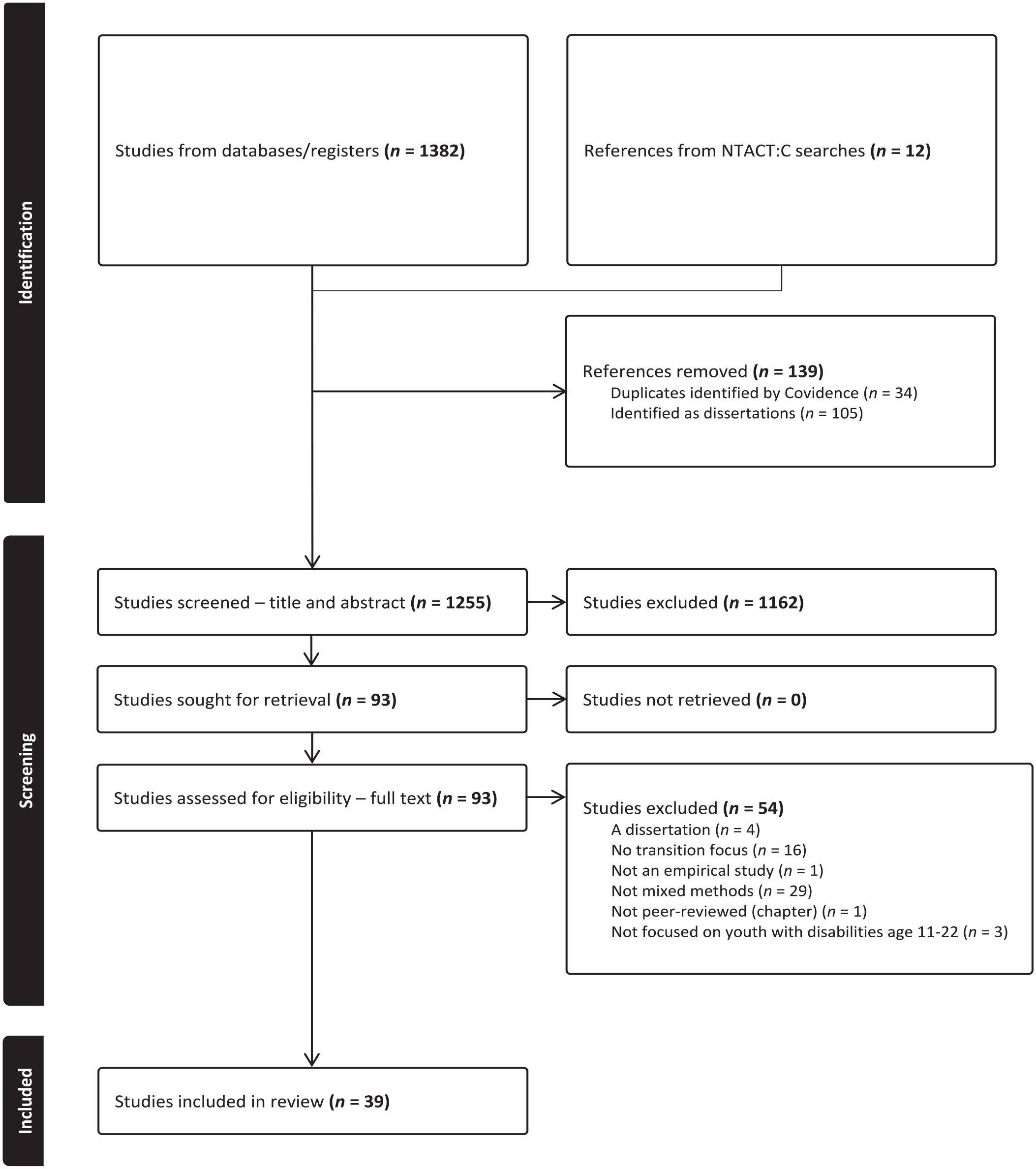
PRISMA Diagram.
Quality Indicators for Mixed Methods Research
The quality indicators for mixed methods research were developed through an iterative process involving a collaborative workgroup of researchers with expertise in the fields of secondary transition and/or mixed methods. One member of the workgroup was also involved in the earlier development of quality indicators for experimental, correlational, and qualitative research designs in the field of secondary transition. The workgroup drew from existing indicators of high-quality research within special education and identified characteristics of high-quality mixed methods research to develop a preliminary checklist of seven broad quality indicators (i.e., rationale, research questions, sampling, mixed-methods research design, data collection and analysis, evidence that mixed methods were necessary, results were clearly presented). The preliminary development was also guided by review of previously identified mixed-methods articles that included recommendations for quality indicators in mixed-methods research (Onwuegbuzie & Corrigan, 2014; Onwuegbuzie & Poth, 2016). Once the preliminary checklist was developed, the checklist was sent to experts in mixed methods research in education to gain feedback and input on each item. Based on feedback from experts, the checklist underwent several iterative revisions during which the quality indicators were operationalized and refined for more consistent application. Based on publication of Leko et al.’s (2023) framework of quality indicators for mixed methods in special education, our research team conducted a crosswalk between our Quality Indicator Checklist items and the four pillars identified by Leko and colleagues. Results of the crosswalk indicated strong overall alignment between the checklist items and Leko et al.’s (2023) four foundational pillars of quality, with the Quality Indicator Checklist items providing additional specificity regarding the characteristics of high-quality reporting of mixed methods research in the field.
The most current version of the Quality Indicator Checklist (see Supplemental Figure S1 at https://osf.io/ew3p8/ for mixed methods quality indicator checklist) used for this study includes 28 quality indicators across four main sections: (a) defining goal/purpose of the study, (b) sampling procedures, (c) research design, and (d) results and discussion. Table 1 includes each item on the Quality Indicator Checklist for Mixed Methods Research and the frequency by which each of the quality indicators was met across the 39 articles included in this review.
Frequency of Mixed Methods Quality Indicators Met.
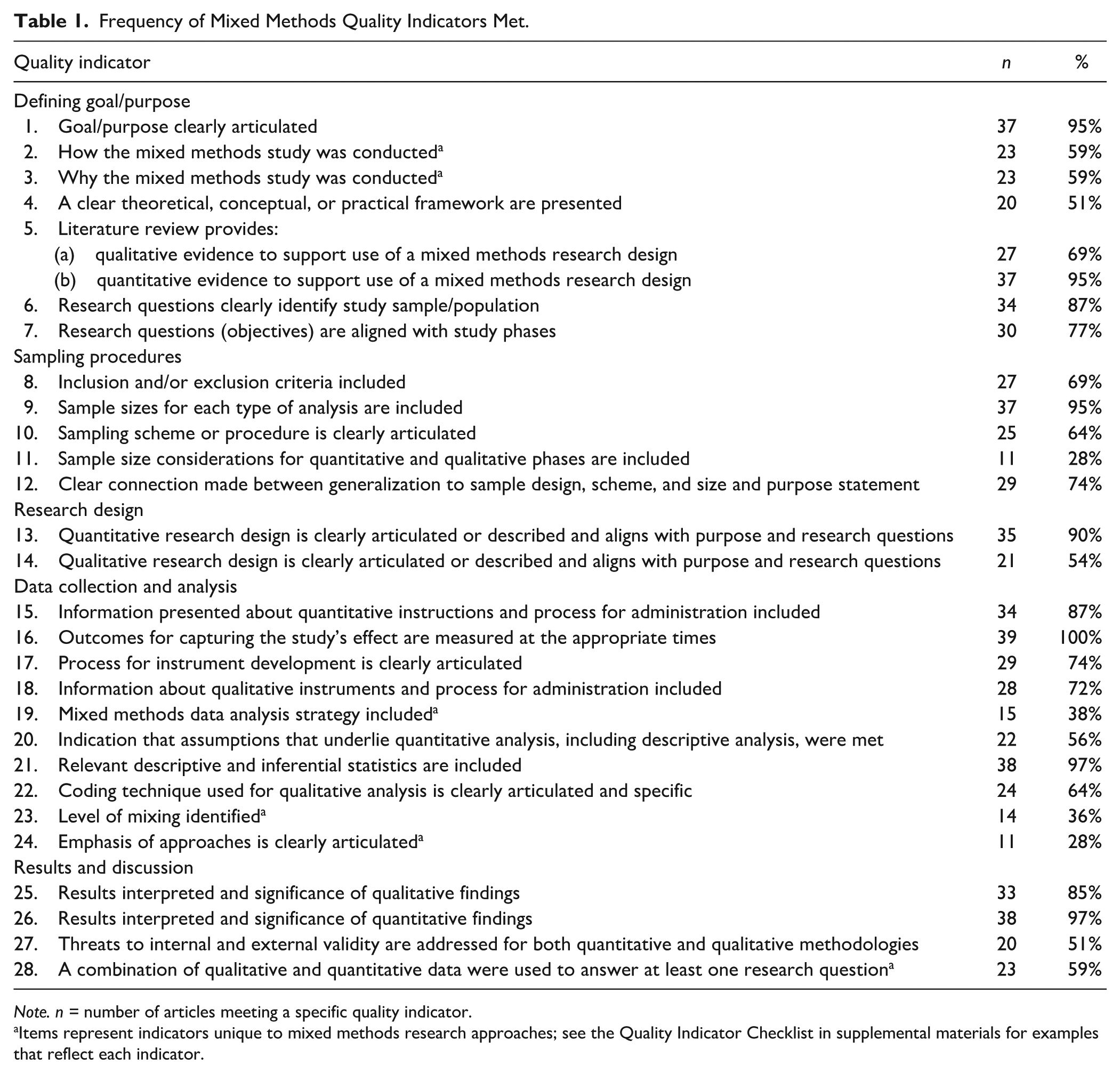
Note. n = number of articles meeting a specific quality indicator.
Items represent indicators unique to mixed methods research approaches; see the Quality Indicator Checklist in supplemental materials for examples that reflect each indicator.
Quality Assessment
All included articles were assessed for quality using the Quality Indicator Checklist for Mixed Methods Research. Prior to beginning quality assessment in Covidence, researchers developed consensus by independently applying the checklist to four articles and then meeting to discuss and resolve discrepancies. Quality assessment proceeded within Covidence, with each article assessed by two researchers. Any discrepancies were resolved through consensus with a minimum of three research team members. Given that (a) the purpose of this specific review was to understand the application of mixed methods in the field of secondary transition as a whole, (b) this was the first application of the checklist, and (c) all reviewed articles were published prior to the availability of this checklist, overall determinations of quality for individual articles (i.e., High Quality, Acceptable Quality, and Did not Meet Quality) were not made during this review.
Data Extraction
Following quality assessment, the articles were reviewed for data extraction and coded based on the following 13 items: (a) study purpose; (b) research questions; (c) use of the term “mixed methods”; (d) type of mixed methods design (if it was explicitly stated); (e) rationale (type, explicitly stated, where described); (f) country; (g) sample (qualitative and quantitative); (h) number of in-school predictors of postschool success addressed across four broad predictor categories that were aligned with the Framework for Research in Transition (i.e., student skills, career development, collaborative systems, and policies; Trainor et al., 2020); (i) postschool outcomes addressed (i.e., as aligned with the Framework, including employment, education, independent living, and/or quality of life); (j) in-school/transition outcomes; (k) type of data collection (qualitative and quantitative); (l) type of data analysis (qualitative and quantitative); and (m) method of integration (i.e., reflected as an explicit statement, description of how integration occurred, or evidence of new insights). Two members of the research team completed data extraction for each article. Our research team met biweekly to discuss and resolve any conflicts related to data extraction items. Discrepancies, including any discrepancies regarding the categorization of predictors and outcomes, were resolved through consensus with a minimum of three research team members who examined the text of the article in question and supporting documents (e.g., operational definitions of predictors [Rowe, Mazzotti, Hirano et al., 2015]) to support their decision-making (see Supplemental Figure S2 at https://osf.io/ew3p8/ for Data Extraction Form Details).
Quality assessment and data extraction began immediately upon completion of the search (January 2021) and screening process (complete in Fall 2021). Given the research team’s commitment to rigorously applying quality assessment criteria and consistently and comprehensively extracting data with rigor, we met biweekly to achieve alignment in applying quality assessment and data extraction tools and to develop consensus. Quality assessment and data extraction were complete in April of 2023.
Data Analysis
After coding the 39 studies for adherence to the quality indicators (i.e., quality assessment), we coded each study for content (i.e., data extraction or “scope”), allowing us to analyze the data across both quality and content. Specifically, we identified the scope of mixed-methods research approaches used from 2000 to 2020 to investigate transition-related skills, services, supports, or outcomes for youth with disabilities ages 11–22 years (i.e., NTACT:C processes and in alignment with the Framework for Research in Transition; Trainor et al., 2020); determined the quality of the mixed methods research in secondary transition; and determined the existing topics and findings in mixed methods research in secondary transition.
Statistical analyses have been applied in previous reviews of mixed methods research (e.g., Parey & Kutscher, 2024) and can be useful for determining if observed differences among specific indictors are statistically significant. Comparisons were conducted using SPSS version 29.0 on the following: (a) number of quality indicators met for articles using term “mixed methods” versus not using the term (independent t-test) and (b) proportion of articles meeting qualitative- versus quantitative-specific indicators (paired-samples mid-p adjusted binomial test). Comparisons of the qualitative- and quantitative-specific indicators used a Bonferroni-adjusted p-value of .01 to account for the multiple comparisons.
Results
RQ1: Scope of Recent Mixed Methods Research in Secondary Transition
In terms of content, the review of the 39 included articles revealed that recent mixed methods research in transition addressed a range of postschool outcomes including employment (74.36%), postsecondary education (53.85%), independent living (41.03%), and quality of life (28.21%). Articles frequently addressed predictors related to student skills (e.g., self-determination, independent living skills, social skills; 82.05%), followed by predictors related to collaborative systems (76.92%), career development (69.23%), and policy (30.77%). Among individual predictors, career awareness and paid employment/work experiences were most frequently addressed (58.97%), while technology skills and travel skills were among the least frequently addressed (7.69% and 15.38%, respectively; see Table 2). Included articles also made use of a variety of sampling, data collection, and data analysis approaches. Studies included participants representing a range of stakeholder perspectives. In both quantitative and qualitative strands, youth with disabilities were participants in the majority of studies (58.97% and 64.10%, respectively). Caregivers (41.03%, 38.46%) and special education teachers (30.77%, 43.59%) were also frequent participants. The VR counselors (12.82%, 15.38%), Career and Technical Education (CTE) teachers (7.69%, 7.69%), employers (7.69%, 2.56%), and outside agencies (5.13%, 7.69%) were rarely included in the identified mixed methods studies (see Supplemental Table S2 at https://osf.io/ew3p8/).
Predictors of Postschool Success and Outcomes Addressed in Included Studies.
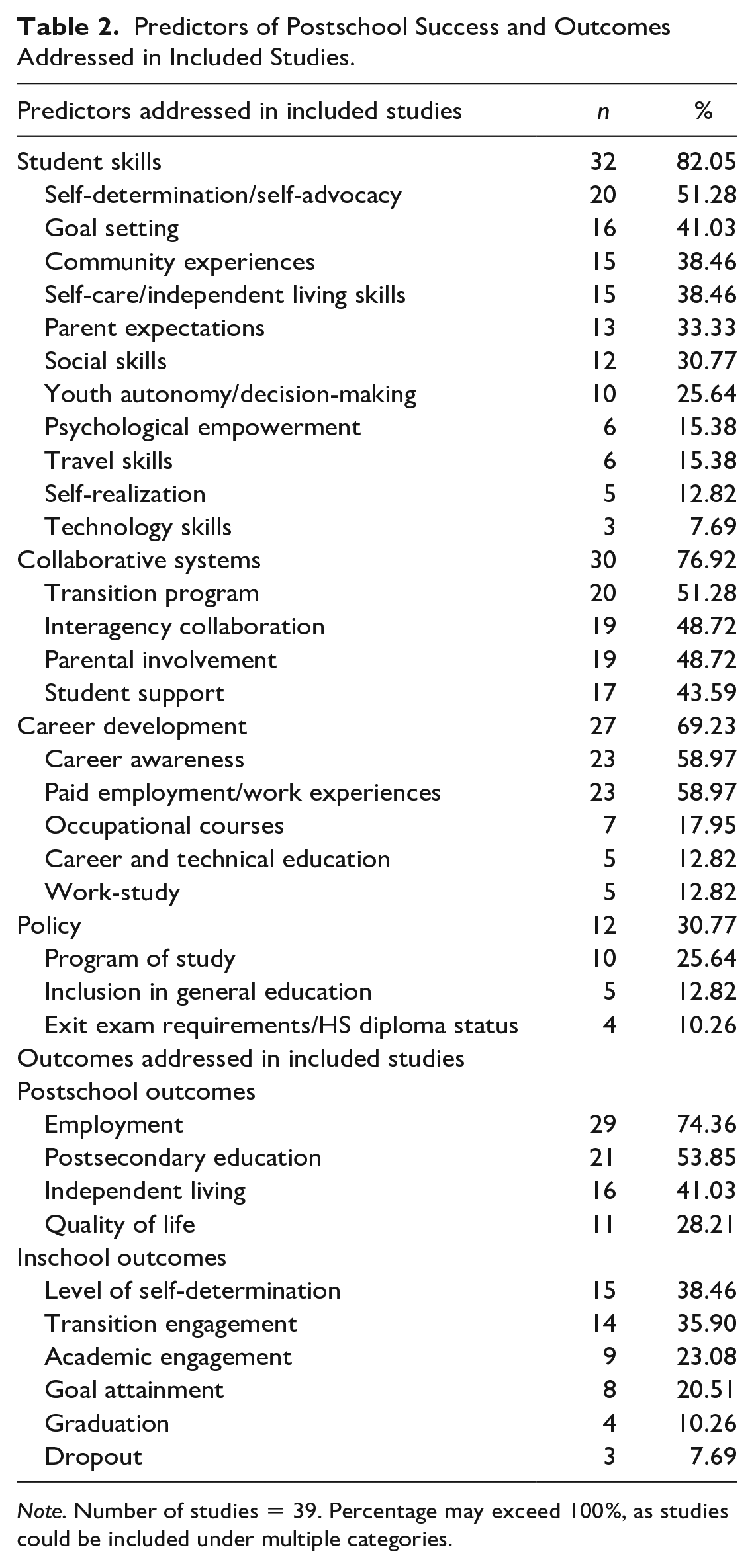
Note. Number of studies = 39. Percentage may exceed 100%, as studies could be included under multiple categories.
Although all articles used qualitative and quantitative approaches in their studies, only about half (51%) used mixed-methods terminology (e.g., mixed method study) to label their study. In addition, the type of mixed methods design was not explicitly articulated in the majority of studies (79.48%) based on the typology identified by Creswell and Creswell (2018), although it was possible to infer a design based on the description of data collection and data analysis in 64% of articles. Of the 28 articles with an explicitly stated or inferred research design, 65% used a convergent design (i.e., qualitative and quantitative data analyzed simultaneously) and 36% used an explanatory sequential (i.e., quantitative phase followed by a qualitative phase to explain quantitative results); none of the articles reported using an exploratory sequential design (i.e., qualitative phase used to develop a quantitative tool or phase; see Supplemental Table S3 at https://osf.io/ew3p8/). In terms of quantitative data collection and analysis, most studies used descriptive statistics to analyze data collected from researcher-created surveys. Few studies employed validated metrics (25.64%) or made use of advanced analyses such regression (5.13%) or factor analysis (7.69%). Qualitative data were mostly collected through interview (53.85%) or open-ended survey question (41.03%). Common analysis approaches included inductive or emergent coding (33.33%) and thematic analysis (23.08%); 17.95% of articles did not state their qualitative data analysis approach (see Supplemental Table S4 at https://osf.io/ew3p8/). Of the 53.85% of studies that integrated their qualitative and quantitative strands, most used narrative integration (i.e., quantitative and qualitative results were woven together in the narrative of the text; 48.72%), followed by development (i.e., one strand supported the design the following strand; 10.26%), joint display (i.e., integrated results visually displayed in a figure or table; 2.56%), or transformation (i.e., qualitative codes/themes were transformed into quantitative counts or vice versa; 2.56%).
RQ2: Quality of Mixed Methods Research in Transition
Results of the quality assessment showed that the frequency with which various indicators were met varied widely (see Table 1). Across all included articles, the percentage of indicators met ranged from 28% to 95%. The most frequently met indicator was “outcomes for capturing the study’s effect are measured at the appropriate times” (100% of articles met), while the two least frequently met indicators were “sample size considerations . . . are included” and “emphasis of approaches is clearly articulated” (28.21% each). Relatively few articles met quality indicators that were unique to mixed methods approaches (i.e., items identified with an “a” in Table 1), ranging from “emphasis of approaches is clearly articulated” (28.21%) to “how the mixed methods study was conducted” (58.97%), “why . . . [it] was conducted” (58.97%), and “a combination of qualitative and quantitative data were used to answer at least one research question” (58.97%). For examples of articles meeting the six indicators unique to mixed methods, see Awsumb et al. (2020), Kutscher and Tuckwiller (2020), or Persch et al. (2015). Of note, articles that used the term “mixed method” met significantly more quality indicators (M = 22.90, SD = 4.08) than those not using the term mixed methods (M = 15.89, SD = 4.89, p < .001).
A rationale or purpose for conducting a mixed-methods study provides the researcher with important guidance regarding the design and implementation of each strand (Green et al., 1989). Complementarity, in which qualitative and quantitative strands provide elaboration, was the most frequently identified rationale (58.97%, e.g., see Cavendish & Connor [2018]), followed by triangulation, in which one strand is used to corroborate findings from the second strand (30.77%, e.g., see Francis et al. [2015]). Few studies described their rationale as expansion (17.95%; i.e., extending the investigation using different approaches for different components of the study) or development (7.69%; i.e., using findings from one strand to develop the second strand), and none of the reviewed studies considered initiation (i.e., seeking divergence or areas of paradox) as their rationale. In 28.21% of the articles, it was not possible to determine rationale for using mixed methods.
Integration is considered a hallmark of mixed methods research (Fàbregues & Molina-Azorín, 2017; Love et al., 2023), but few studies provided an explicit description of design or analytic approaches used to link qualitative and quantitative strands (10.26%, for an example of explicit integration, see Persch et al. [2015]). Of the remaining studies, about half included integrated approaches but did not label them as such (43.59%), while the others did not show evidence of integration (46.15%). When comparing indicators that were specific to the research process for quantitative versus qualitative strands, quantitative indicators were met more frequently than qualitative indicators. Specifically, statistically significant differences were noted among indicators focused on literature review support (95% quantitative vs. 69% qualitative, p = .003), research design (90% vs. 54%, p < .001), and data analysis (97% vs. 64%, p < .001). Differences favoring quantitative indicators were also noted for data collection (87% vs. 72%, p = .016) and interpretation of results (97% vs. 85%, p = .031), although these differences were not statistically significant.
Discussion
The purpose of this systematic review was to investigate the scope and quality of mixed methods research in the field of secondary transition as a whole. High-quality, mixed methods research has the potential to provide insights into multifaceted and long-standing challenges within the field (McDaniel & Mazzotti, 2022; Trainor et al., 2020). This systematic review investigated how mixed methods have been recently applied in the field of secondary transition, revealing several areas of promise. First, included studies investigated a range of outcomes and associated predictors, with 82.05% addressing predictors related to student skills and 76.92% addressing the complex, collaborative systems involved in the transition process. Furthermore, studies included varied perspectives, with over half of the studies including youth as participants in their qualitative or quantitative strands and about two in five including caregiver participants. Special education teachers, transition specialists, and related service providers were also well represented. Most authors also described their rationale for using both quantitative and qualitative approaches, with 20.51% explicitly using mixed methods terminology (e.g., triangulation, complementarity) to state their rationale for mixing and another 51.28% providing a reason for using both approaches without explicitly naming the rationale. Finally, nearly half (48.72%) of the articles used narrative integration to interpret the combined qualitative and quantitative results. Notably, reviewed studies reflected these areas of strength despite the fact that they were published prior to the development of mixed-methods quality indicators specific to the field of special education (e.g., Leko et al., 2023). Together, these findings suggest that many secondary transition researchers using mixed methods are intentionally combining quantitative and qualitative approaches to investigate complex phenomena that are of critical importance to the field.
At the same time, findings reveal several gaps and missed opportunities. First, the recent scope and focus of mixed methods studies may overlook several areas of importance within the field of secondary transition. While mixed-methods studies are targeting a range of participant perspectives, few studies included the perspectives of VR and adult agencies. Given the importance and complexity of these services for many young adults with disabilities (Shogren & Wittenburg, 2020), there is a need for more mixed methods research that includes perspectives and experiences within those systems beyond VR and adult agencies (e.g., health care, foster care, and recreation and community organizations). In addition, only 30.77% of included studies investigated policy-related predictors, such as exit exam requirements/high school diploma status, inclusion in general education, and program of study. It will be important for future research to investigate other aspects related to the predictors of postschool success, paying particular attention to collaborative systems (e.g., Interagency Collaboration, Parental Involvement, Student Support), as building collaborative partnerships and supporting inclusive opportunities and partnerships for students with disabilities are critical to our field (Mazzotti et al., 2021; Trainor et al., 2020). Given disability policy is rife with challenges, lack of diverse input, and discoordination (Shogren & Wittenburg, 2020; Trainor et al., 2020), such areas could benefit from multidimensional, mixed methods designs that include not only quantitative data but also qualitative data that iterates the perspectives of school and community partners.
Second, findings reveal that many studies are not meeting quality indicators that are specific to mixed methods research. Although about half (51.28%) of studies used the term “mixed methods,” only six studies (15.38%) explicitly stated their mixed methods research design and eight studies (20.51%) used mixed methods terminology to state a rationale for combining qualitative and quantitative approaches. Explicit integration, considered a defining characteristic of mixed methods research (Fàbregues & Molina-Azorín, 2017; Hirose & Creswell, 2023), occurred in only four studies (10.26%). Mixed methods research in the field could also benefit from more varied approaches to integration, enhancing narrative approaches that describe connections between quantitative and qualitative strands by making use of joint displays, data transformation, or using one strand to develop the second strand. Furthermore, findings revealed that articles using the term “mixed methods” to describe their study met, on average, seven more quality indicators than those that did not use the term. Because the use of the term mixed methods was specific to only three quality indicators, this finding suggests that researchers who use this terminology to describe their studies may be more familiar with the methodological literature and therefore prioritize reporting on study characteristics that they know are valued in the mixed methods field. It is also possible that researchers, who did not use the term, did not consider their study to be a mixed methods study, despite applying both qualitative and quantitative approaches. Future research could investigate any patterns in the indicators met by studies using the term mixed methods to further investigate the impact of this finding on mixed methods research in the field.
Third, findings indicate that recent applications of mixed methods tend to make use of similar approaches. Mixed methods designs tended to be convergent (46.15%), with fewer researchers making use of explanatory sequential designs (25.64%) and none of the studies using exploratory sequential designs. Sequential designs often require time and resources beyond those required for convergent or single-method designs (Creswell & Plano Clark, 2018). However, such designs can contribute to deepened understanding or explanation of quantitative results (i.e., explanatory sequential) or offer opportunities for stakeholder involvement in the development of curricula or quantitative tools (i.e., exploratory sequential). Similarly, mixed methods research in the field of secondary transition would benefit from a more varied approach to data collection and analysis. Most studies (82.05%) used a researcher-created survey to collect quantitative data, while interviews (53.85%) and open-ended survey questions (41.03%) were the most common qualitative data collection approaches. Few studies employed more advanced quantitative analyses. Such findings indicate an opportunity for researchers conducting mixed methods research to consider alternative data collection and analysis approaches that might offer new insights to the field.
Finally, despite calls from the field of secondary transition regarding the importance of high-quality, qualitative research (Trainor et al., 2020; Trainor & Graue, 2014), findings show that researchers provide more complete reports on their use of quantitative approaches. Specifically, studies consistently met a greater number of quantitatively focused indicators, when compared with qualitatively focused indicators. While all studies provided some description of their quantitative data analysis approach, 17.97% of included studies did not state their qualitative analysis strategy. Such findings reveal a continued need for researchers and journal editors to emphasize quality indicators for qualitative research at the same level as is demanded for quantitative research.
Although this review used systematic approaches to identify articles for review, relevant articles were also identified through previous NTACT:C literature reviews, and it is possible that additional mixed methods articles focused on secondary transition were overlooked. Furthermore, a number of transition-focused, mixed methods articles have been published since 2020 (e.g., Morningstar et al., 2024; Schutz et al., 2024; Whittenburg et al., 2023; Yeager et al., 2021). Future research is warranted to update knowledge of trends and applications of mixed methods within the field, as well as to investigate how well the use of mixed methods is achieving its promise of addressing persistent challenges within the field. In addition, consistent application of the Quality Indicator Checklist required ongoing consensus among the research team; future research may seek to revise and further operationalize the checklist to improve utilization. Specifically, future work to align the Quality Indicator Checklist with other frameworks for mixed methods quality in the field of special education (e.g., Leko et al., 2023) could further strengthen the application and utility of this tool. Given that included articles were published prior to the availability of quality indicators in the field, data extraction occurred for all articles, regardless of the number of quality indicators met. The purpose of the current review was to understand the application of mixed methods in the field as a whole; future studies may focus on how individual studies are addressing the quality indicators identified in this checklist. As more studies within the field of secondary transition make use of mixed methods approaches, it may be useful to identify benchmarks of quality, as done with NTACT:C’s previously developed methodological checklists (e.g., NTACT:C, n.d.).
Findings of this review suggest several recommendations for practice. Transition planning involves a team of stakeholders from different parts of a student’s life, such as family, teachers, and community and agency personnel. However, our findings showed that few mixed-methods studies included the voices or perspectives of VR counselors, employers, and agencies representatives. Practitioners such as VR counselors and agency personnel typically provide services and opportunities that directly support employment, independent living, and community engagement, as well as facilitate access to financial support. Therefore, partnerships between researchers and such professionals may provide essential insights into the impact of VR and other agencies, as well as employers, on the transition experiences of youth and young adults with disabilities. For example, interviewed VR professionals in Awsumb et al.’s (2020) explanatory sequential mixed-methods study provided meaningful insights into quantitative differences in employment levels among specific youth demographic groups. Moreover, this review examined the outcomes and predictors of secondary transition. Few researchers explored the outcomes of independent living and quality of life, nor predictors related to technology skills and travel skills. Considering mixed methods designs provide researchers opportunities for addressing research problems with a “social justice intent” using a variety of sources (Mertens, 2007; Morgan, 2014), researchers, practitioners, and community members should work together to identify solutions and strategies to promote quality life experiences in addition to the achievement of outcomes. In particular, mixed-methods research may highlight a gap between outcomes and quality of life, as in Francis et al.’s (2015) convergent mixed methods study that found the majority of families who experienced employment success for a family member with an intellectual disability were at the same time dissatisfied with the individual’s position. Informed by such insights, researchers can partner with community leaders and supporters (e.g., employers and legislators) to advocate for policies that reduce barriers and enhance the quality of life of youth and young adults with disabilities.
Conclusion
Mixed methods research holds promise for addressing multidimensional challenges experienced by youth with disabilities and their families as they transition from school to adulthood (Trainor et al., 2020). Complementing the framework for mixed methods quality in special education (Leko et al., 2023), a checklist of quality indicators can support researchers in designing rigorous studies and readers in identifying studies reporting rigorous mixed methods. Mixed methods research in secondary transition applies integrated approaches to support school and community partnerships to help ensure youth and young adults with disabilities experience positive outcomes as they transition into adult life (McDaniel & Mazzotti, 2022).
Supplemental Material
sj-docx-1-cde-10.1177_21651434241268003 – Supplemental material for Mixed Methods Research in Secondary Transition: A Systematic Literature Review
Supplemental material, sj-docx-1-cde-10.1177_21651434241268003 for Mixed Methods Research in Secondary Transition: A Systematic Literature Review by Elisabeth L. Kutscher, Valerie L. Mazzotti, Sara L. McDaniel, Wen Zeng, Kyle Reardon, Jennifer L. Bumble, Ashley Voggt and Ryan Harris in Career Development and Transition for Exceptional Individuals
Supplemental Material
sj-docx-2-cde-10.1177_21651434241268003 – Supplemental material for Mixed Methods Research in Secondary Transition: A Systematic Literature Review
Supplemental material, sj-docx-2-cde-10.1177_21651434241268003 for Mixed Methods Research in Secondary Transition: A Systematic Literature Review by Elisabeth L. Kutscher, Valerie L. Mazzotti, Sara L. McDaniel, Wen Zeng, Kyle Reardon, Jennifer L. Bumble, Ashley Voggt and Ryan Harris in Career Development and Transition for Exceptional Individuals
Supplemental Material
sj-docx-3-cde-10.1177_21651434241268003 – Supplemental material for Mixed Methods Research in Secondary Transition: A Systematic Literature Review
Supplemental material, sj-docx-3-cde-10.1177_21651434241268003 for Mixed Methods Research in Secondary Transition: A Systematic Literature Review by Elisabeth L. Kutscher, Valerie L. Mazzotti, Sara L. McDaniel, Wen Zeng, Kyle Reardon, Jennifer L. Bumble, Ashley Voggt and Ryan Harris in Career Development and Transition for Exceptional Individuals
Supplemental Material
sj-docx-4-cde-10.1177_21651434241268003 – Supplemental material for Mixed Methods Research in Secondary Transition: A Systematic Literature Review
Supplemental material, sj-docx-4-cde-10.1177_21651434241268003 for Mixed Methods Research in Secondary Transition: A Systematic Literature Review by Elisabeth L. Kutscher, Valerie L. Mazzotti, Sara L. McDaniel, Wen Zeng, Kyle Reardon, Jennifer L. Bumble, Ashley Voggt and Ryan Harris in Career Development and Transition for Exceptional Individuals
Supplemental Material
sj-docx-5-cde-10.1177_21651434241268003 – Supplemental material for Mixed Methods Research in Secondary Transition: A Systematic Literature Review
Supplemental material, sj-docx-5-cde-10.1177_21651434241268003 for Mixed Methods Research in Secondary Transition: A Systematic Literature Review by Elisabeth L. Kutscher, Valerie L. Mazzotti, Sara L. McDaniel, Wen Zeng, Kyle Reardon, Jennifer L. Bumble, Ashley Voggt and Ryan Harris in Career Development and Transition for Exceptional Individuals
Supplemental Material
sj-docx-6-cde-10.1177_21651434241268003 – Supplemental material for Mixed Methods Research in Secondary Transition: A Systematic Literature Review
Supplemental material, sj-docx-6-cde-10.1177_21651434241268003 for Mixed Methods Research in Secondary Transition: A Systematic Literature Review by Elisabeth L. Kutscher, Valerie L. Mazzotti, Sara L. McDaniel, Wen Zeng, Kyle Reardon, Jennifer L. Bumble, Ashley Voggt and Ryan Harris in Career Development and Transition for Exceptional Individuals
Footnotes
Declaration of Conflicting Interests
The author(s) declared no potential conflicts of interest with respect to the research, authorship, and/or publication of this article.
Funding
This mixed methods systematic literature review was developed in collaboration with the Council for Exceptional Children’s Division on Career Development and Transition and the National Technical Assistance Center on Transition (NTACT), now the National Technical Assistance Center on Transition: The Collaborative (NTACT:C). The NTACT, Charlotte, NC, was funded by Cooperative Agreement Number H326E140004 with the U.S. Department of Education, Office of Special Education Programs, and the Rehabilitation Services Administration. The NTACT:C is funded by Cooperative Agreement Number H326E200003 with the U.S. Department of Education, Office of Special Education Programs, and the Rehabilitation Services Administration. Opinions expressed herein do not necessarily reflect the position or policy of the U.S. Department of Education nor does mention of trade names, commercial products, or organizations imply endorsement by the U.S. Department of Education.

Open Practices
References
Supplementary Material
Please find the following supplemental material available below.
For Open Access articles published under a Creative Commons License, all supplemental material carries the same license as the article it is associated with.
For non-Open Access articles published, all supplemental material carries a non-exclusive license, and permission requests for re-use of supplemental material or any part of supplemental material shall be sent directly to the copyright owner as specified in the copyright notice associated with the article.
