




Abstract
Students with Individualized Education Programs (IEPs) or Section 504 Plans may earn a diploma or a certificate of completion when leaving secondary education. This study examined differences in career- and work-based learning services and work experiences of students who earned a high school diploma or a certificate of completion upon exiting high school. Case service data of 969 students with disabilities were analyzed. Results suggested groups differed in the number and types of career- and work-based services, work experiences, post-high school expectations, and work-related concerns expressed by parents. Differences between groups were observed by types of career and work experiences. Significantly greater proportions of diploma-earners expressed expectations to work and attend college. Parents of both groups expressed concerns about their youth losing Supplemental Security Income (SSI) benefits and about their youths’ safety and ability to work independently. Limitations and implications for research, policy, and practice are provided.
The 1975 landmark legislation, Education for All Handicapped Children Act (EHA, P.L. 94-142), reauthorized as the Individuals with Disabilities Education Improvement Act of 2004 (IDEIA, P.L. 108-446), was a historic milestone, guaranteeing access to public education for school-age children with disabilities. From its inception, the two most important principles of IDEIA are a free and appropriate public education (FAPE) and least restrictive environment (LRE). These principles are implemented for students with disabilities through the Individualized Education Program (IEP) developed by the IEP team. FAPE and LRE requirements also apply to transitions services, which are mandated by IDEIA to be included in the IEP by age 16. The transition services, including courses of study, are determined by the IEP team based on the student’s needs, strengths, preferences, and interests. The courses of study, exiting options, and programs available to students will differ based on the state, region, and local education agency (LEA) with examples ranging from a high school diploma or certificate of educational achievement to an alternate high school diploma, General Educational Development (GED), or certificate of completion. For the purposes of this study, the term diploma refers to the traditional high school diploma awarded when a student fulfills the academic achievement standards for graduation set by the state. The term certificate or certificate of completion encompasses all forms of certificates, including certificates of credit, promotion, achievement, or proficiency.
The literature describes both the strengths and weaknesses of the different paths to high school exit with regard to post-high school preparation and outcomes (Bouck, 2017; Clark et al., 2019; LoBianco & Kleinert, 2013). The research addresses the discrepancy in outcomes between students with disabilities and their peers without disabilities in high school, postsecondary education attainment, employment outcomes, and earning potential (Gaumer Erickson et al., 2007; National Center for Education Statistics [NCES], U.S. Department of Education, 2017; Sanford et al., 2011). Post-school expectations and concerns and reliance on public benefits are additional areas examined in the literature focused on secondary and postsecondary outcomes for students with disabilities (Erickson et al., 2020; Gilson et al., 2018; McDonnall & O’Mally, 2012). According to the NCES, among students ages 14 to 21 served under the IDEIA who exited high school during the 2016–2017 school year, 71% graduated with a high school diploma, 10% received a certificate, and 17% dropped out (McFarland et al., 2019). Research findings have documented that more students with disabilities exit high school with a certificate compared to their peers without disabilities (Gaumer Erickson et al., 2007).
After high school, youth with disabilities are entering higher education at lower rates than youth without disabilities (NCES, U.S. Department of Education, 2018; Sanford et al., 2011). Research suggests that enrollment in more rigorous, academically intense programs . . . in high school prepare students, including those with low achievement levels, to enroll in postsecondary education at higher rates than similar students who pursue less challenging courses of study (U.S. Department of Education, 2017, p. 2). The importance of educational attainment through successful high school completion and continuation to postsecondary education is underscored by its positive association with employment outcomes.
Educational achievement has been linked to higher employment rates for individuals with disabilities. The Bureau of Labor Statistics (2019) reported the employment rate for persons with disabilities with less than a high school diploma was 9.1% in comparison with their peers with a Bachelor’s degree or higher at a 28.2% employment rate. Similar findings were reported by the NCES, U.S. Department of Education (2017). Persons with disabilities who had less than high school completion had the lowest employment rate at 15%, but their employment rate steadily improved with higher levels of education attainment. Persons with disabilities who completed high school (e.g., through equivalency programs, such as a GED) had a 22% employment rate, and this rate was 31% for some college, 35% for an Associate’s degree, and 45% for a Bachelor’s degree or higher degree (NCES, U. S. Department of Education, 2017). These findings highlight not only the importance of high school completion but also the added advantage of postsecondary education for realizing employment outcomes by youth with disabilities.
Employment-related transition services provided in high school have also been linked to successful employment outcomes. In a study of transition-aged Supplemental Security Income (SSI) recipients, Hoffman et al. (2018) found that vocational training and rehabilitation services provided to youth aged 14 to 17 years old were associated with an increased likelihood of earnings above Substantial Gainful Activity (SGA) at age 27 to 30 years old. Employment, especially paid employment, while in high school is positively correlated with competitive employment outcomes after high school (Southward & Kyzar, 2017; Test et al., 2015). As students approach transition age, employment preparation and job skill development become increasingly important and should be emphasized in their secondary educational program, regardless of whether students are on the diploma or certificate track.
The involvement of parents throughout the transition process is also important given the significant role they play in program planning and decisions for students with disabilities. As key members of the IEP team, parents’ expectations and concerns can affect the programs and services accessed by their youth with disabilities. Parents’ expectations and concerns have been correlated with students’ educational achievements and employment outcomes (Blustein et al., 2016; Doren et al., 2012, 2014). Parents’ expectations and concerns may differ for students pursuing a diploma or a certificate. For example, Cavendish and Connor (2018) found the greatest concern for parents of students pursuing a diploma was passing the state-mandated test for a standard diploma, a concern that may not necessarily exist for parents of students on a certificate track. Research comparing the parental concerns for youth in diploma and certificate courses of study is scarce. More research has been conducted on parents’ employment-related concerns overall or in relation to other demographics such as youth’s disability. For example, the top three employment-related concerns reported by family members of youth below 22 years old were social and community skills, ability to be hired by employers, and ability to apply and find a job (Blustein et al., 2016). Concerns regarding on-the-job support and an individual’s ability to find a job were also reported in a study by Cawthon and Caemmerer (2014) involving parents of children who were Deaf or hard of hearing. Another area of concern for parents was the potential loss of SSI benefits caused by youth going to work (Lipscomb et al., 2017; McDonnall & O’Mally, 2012). These studies, however, did not differentiate between concerns related to youth pursuing a high school diploma or a certificate of completion.
Increased understanding of the various high school exit options available to the IEP team and how these options relate to the transition services provided in high school, parental concerns, and the expectations and outcomes after high school is merited. The purpose of this study was to compare students enrolled in California’s Promoting the Readiness of Minors in Supplemental Security Income program (CaPROMISE) who exited high school with a certificate of completion to those who exited with a high school diploma. The type of exit in relation to four areas were investigated, including service delivery efforts reported by school staff, high school work experiences, students’ post-school expectations, and parents’ concerns. Specifically, the following research questions were addressed:
Method
Participants
The participants in this study were 969 SSI recipients who were 14 to 16 years of age at the time they enrolled in CaPROMISE. All participants were or had been recipients of SSI benefits. The objectives of the program were to reduce reliance on SSI and other benefits and to increase the self-sufficiency of youth with disabilities and their families. These objectives were supported through education and employment for youth with disabilities and their families. Program enrollment began during August of 2014 and continued through April of 2016. Participation in the program was voluntary, and the research was reviewed and approved by an institutional review board associated with the state of California. Individuals who consented to participate were randomly assigned to treatment and control conditions.
This study focused entirely on 969 SSI youth recipients who were assigned to the treatment group, as education data were not available for those in the control group. A total of 1,646 SSI youth recipients were assigned to the treatment group over the duration of the project; however, 677 individuals in the treatment group were excluded from this study because information about type of high school exit was not available for these individuals. The primary reasons this information was not available were (a) the participants had not yet exited high school (183 participants), (b) service providers were not able to locate individuals to obtain information about type of high school exit (420 participants), (c) individuals dropped out of high school (four participants), and (d) one individual passed away while enrolled in the program. In addition, individuals were excluded from this study if they exited high school with a GED (five participants) or exited high school and attended an adult transition program (64 participants).
Setting
Dedicated staff with 20 California-based Local Education Agencies (LEAs) served as the primary points of contact for CaPROMISE participants. In addition to the LEAs, other CaPROMISE collaborators involved in service provision included 16 Family Resource Centers, four universities that supplied graduate and undergraduate interns, four independent living centers, and a dedicated team of 10 rehabilitation counselors and two supervisors provided by the California Department of Rehabilitation. Staff associated with the Interwork Institute at San Diego State University provided training, technical assistance, research, evaluation, and information technology support. Program services were provided to participants by program staff and were delivered primarily at the educational institution where the youth attended high school. Once a participant completed high school, services were often provided at the educational institution that the participant attended previously.
Data Collection
Study data were collected primarily by direct service staff (career service coordinators) who recorded data pertaining to participant characteristics, service coordination, service delivery, and participant outcomes in a case management system that was created for the CaPROMISE program. Career service coordinators recorded the independent variable—type of high school exit (diploma or certificate of completion)—in the case management system. In addition, career service coordinators recorded the dependent variables—career- and work-based learning service efforts and each paid and unpaid work experience—in the case management system.
Career- and work-based learning service efforts were recorded under six different categories: employment preparation activities, career-related training and education, volunteer work, unpaid work experience, paid work experience, and employment. Employment preparation activities were defined as the development of pre-employment, job readiness, and job seeking skills (i.e., time management, resume development, interviewing). Career-related training and education was defined as career exploration, postsecondary education, and training exposure. Volunteer services were defined as developing and supporting youth in volunteer work through religious, charitable, or similar non-profit organizations. Work experiences were defined as on-the-job training through unpaid and paid opportunities in integrated settings. Employment services were defined as developing and supporting youth in competitive, integrated employment in which they were paid directly by the employer.
Self-reported youth expectations and parental concerns were also collected as dependent variables. Participants self-reported their work and career expectations to get a job, stay employed, and/or go to college after completing high school as part of their CaPROMISE exit interview. Parental concerns were recorded during the intake process. At the time of CaPROMISE enrollment, parents and guardians were given the opportunity to express concerns by stating “yes” or “no” in reference to three subjects, including their youth’s safety, ability to work independently, and losing SSI benefits.
Analyses
To examine the provision of career- and work-based learning services, the first analysis sought to determine whether there were differences in the ways career service coordinators focused their efforts when working with participants based upon their educational paths (i.e., exited high school with a diploma or certificate of completion). Type of high school exit, a categorical variable with two levels (certificate or diploma), was the independent variable utilized in this analysis. Six continuous variables representing measurements of career service coordinators efforts were the dependent variables in the analysis. To ascertain whether there were significant differences in career service coordinators efforts across the six career- and work-based learning categories by type of high school exit, a one-way multivariate analysis of variance (MANOVA) was conducted. A one-way MANOVA was chosen for analysis because a one-way MANOVA can identify differences between two or more independent groups on two or more dependent variables that are continuous in nature (Mertler & Vannatta, 2005).
A second set of analyses were conducted to understand a different, but related, aspect of the program: whether there were differences in the number of work experiences and the types of work experiences based upon the participants’ educational paths. To determine whether there was a statistically significant difference in the average number of work experiences completed between high school diploma-earners and certificate-earners, a t test for independent samples was conducted. Type of high school exit, a dichotomous categorical variable (certificate or diploma), was the independent variable in this analysis. The dependent variable was the number of work experiences completed by each participant. T tests for independent samples are used to determine whether there are statistically significant differences between group means when the groups are independent of one another (Johnson & Christensen, 2020).
To determine whether there were significant differences in the types of work experiences by type of high school exit, a 2 × 2 chi-square test of independence was conducted to determine whether the two groups (diploma or certificate of completion) differed with respect to the proportions of paid and unpaid work experiences (Johnson & Christensen, 2020). Type of high school exit (certificate or diploma) and type of work experience (paid or unpaid) were dichotomous categorical variables. A chi-square test of independence was identified as suitable for this research question, as this type of analysis is utilized to determine whether there is an association between two or more categorical variables.
A third set of analyses addressed work and college expectations. These analyses were conducted to ascertain whether those who exited high school with a certificate had different expectations regarding work and college than those who exited high school with a diploma. Both variables of interest, type of high school exit and work expectation, were dichotomous categorical variables. Thus, a 2 × 2 chi-square test of independence was conducted to determine whether there were significant differences in work expectation at exit between those who exited with a diploma and those who exited with a certificate of completion. A 2 × 2 chi-square test of independence was also used to determine whether there were significant differences in college expectation at exit (a dichotomous categorical variable) between those who exited with a diploma and those who exited with a certificate of completion.
A fourth set of analyses were conducted to understand whether there were differences in parental concerns expressed by youths’ type of high school exit. To determine whether differences between groups existed by these two categorical variables, a series of three 2 × 2 chi-square tests of independence were conducted, with one test addressing each concern (safety, working independently, and losing SSI benefits).
Results
Participant Characteristics
There was a total of 969 participants in the study: 659 (68.0%) earned diplomas and 310 (32.0%) earned certificates. Of the participants, 654 (67.5%) were male and 315 (32.5%) were female. Of certificate-earners, 67.7% (n = 210) were male and 32.3% (n = 100) were female. The proportions of diploma-earners were comparable: 67.4% (n = 444) were male and 32.6% (n = 215) were female. With respect to age, those who earned certificates and those who earned diplomas were similar. At program intake, the average age of those who would go on to earn certificates was 15.10 (SD = 0.82) years, whereas the average age of those who would eventually earn diplomas was 15.04 (SD = 0.84) years. At the time participants exited the CaPROMISE program, the average age of certificate-earners was 18.83 (SD = 1.08) years, and the average age of diploma-earners was 18.67 (SD = 0.98) years.
Individuals were presented with nine different race and ethnicity categories and were asked to identify which applied to them. Of the 969 participants, 622 (64.2%) identified as more than one race or ethnicity, 20 (2.1%) were Asian, three (0.3%) were American Indian, 229 (23.6%) were Black or African American, seven (0.7%) were Pacific Islander, 71 (7.3%) were White, and 17 (1.8%) selected Other. Of the 310 individuals who earned certificates, 221 (71.3%) identified as more than one race or ethnicity, nine (2.9%) were Asian, one (0.3%) was American Indian, 48 (15.5%) were Black or African American, five (1.6%) were Pacific Islander, 16 (5.2%) were White, and 10 (3.2%) selected Other. Of the 659 individuals who earned diplomas, 401 (60.8%) identified as more than one race, 11 (1.7%) were Asian, two (0.3%) were American Indian, 181 (27.5%) were Black or African American, two (0.3%) were Pacific Islander, 55 (8.3%) were White, and seven (1.1%) selected Other.
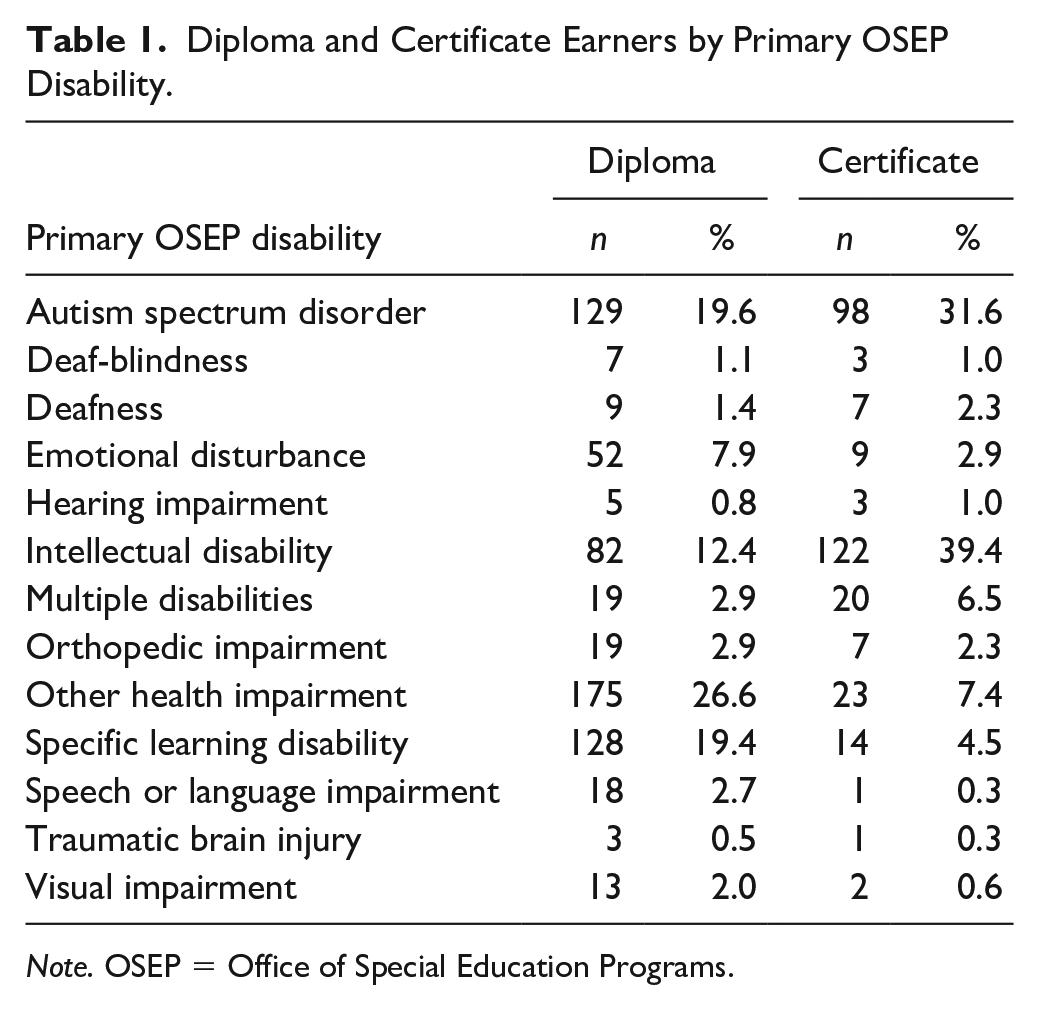
With respect to primary disabilities, 7.0% had sensory disabilities (deafness, hearing impairment, visual impairment, deaf-blindness, or speech-language impairment), 59.5% had a cognitive/intellectual disability (intellectual disability, specific learning disability, traumatic brain injury, or autism spectrum disorder), 6.3% had affective disabilities (emotional disturbance), 23.1% had mobility/health disabilities (orthopedic impairments or other health impairments), and 4.0% had multiple disabilities. Table 1 indicates the primary disabilities of participants by high school exit type (certificate or diploma) based on the Office of Special Education Programs (OSEP) disability categories. It should be noted that these disability categories differ in some respects from the disability categories used by the Social Security Administration.
Diploma and Certificate Earners by Primary OSEP Disability.
Note. OSEP = Office of Special Education Programs.
As Table 1 illustrates, there were notable discrepancies between the proportions of primary OSEP disabilities by type of high school exit. For example, the proportions of individuals with autism spectrum disorder and intellectual disability were higher in the certificate group when compared with the diploma group. The proportions of individuals with emotional disturbance, other health impairment, and specific learning disability were higher in the diploma group when compared with the certificate group.
Provision of Career- and Work-Based Learning Services
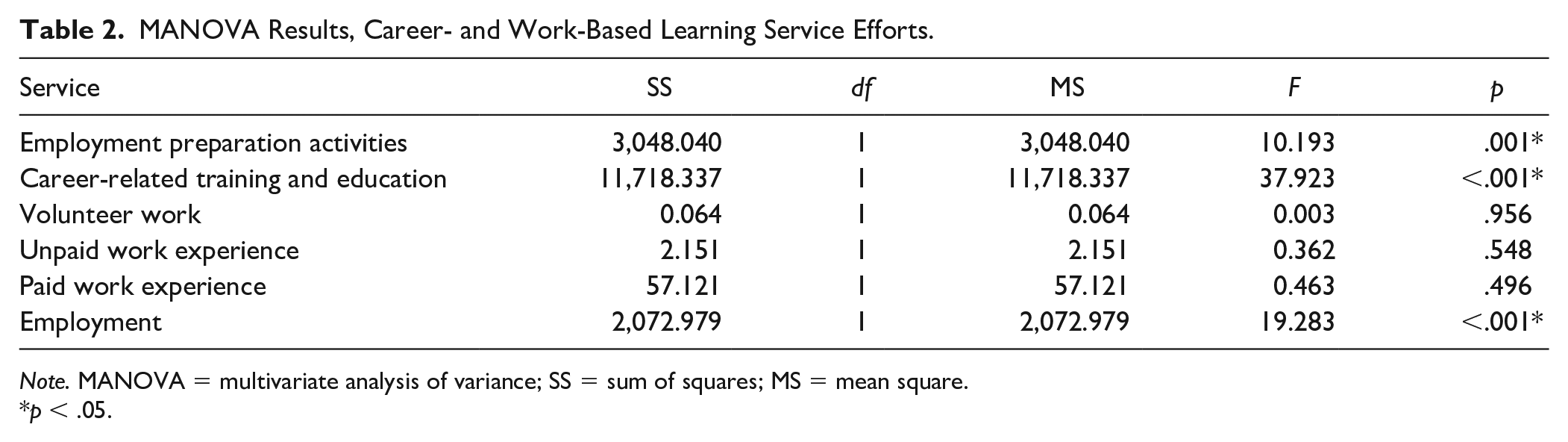
The MANOVA results presented in Table 2 indicate there was a considerable difference in the array of service provider efforts delivered to both groups during their matriculation. The considerable difference between the two exited student groups is accounted for entirely by three of the six interventions: employment preparation activities, career-related training and education, and employment. In each of these three instances, participants who exited high school with a diploma were recipients of a significantly greater average number of career services coordinator efforts than participants who exited with a certificate of completion. Those who exited with a diploma received an average of 25.89 employment preparation service efforts compared with an average of 22.08 for those who exited with a certificate. Those who exited with a diploma received an average of 21.50 career-related training and education service efforts compared with an average of 14.05 for those who exited with a certificate. Those who exited with a diploma received an average of 9.41 service efforts focused on employment compared with an average of 6.27 for those who exited with a certificate. No significant differences between the two groups were evident with respect to the other three career- and work-based learning services, which included volunteer work, unpaid work experience, and paid work experience. Figure 1 illustrates the pattern of similarities and differences in service provider efforts focused upon career- and work-based learning.
MANOVA Results, Career- and Work-Based Learning Service Efforts.
Note. MANOVA = multivariate analysis of variance; SS = sum of squares; MS = mean square.
p < .05.
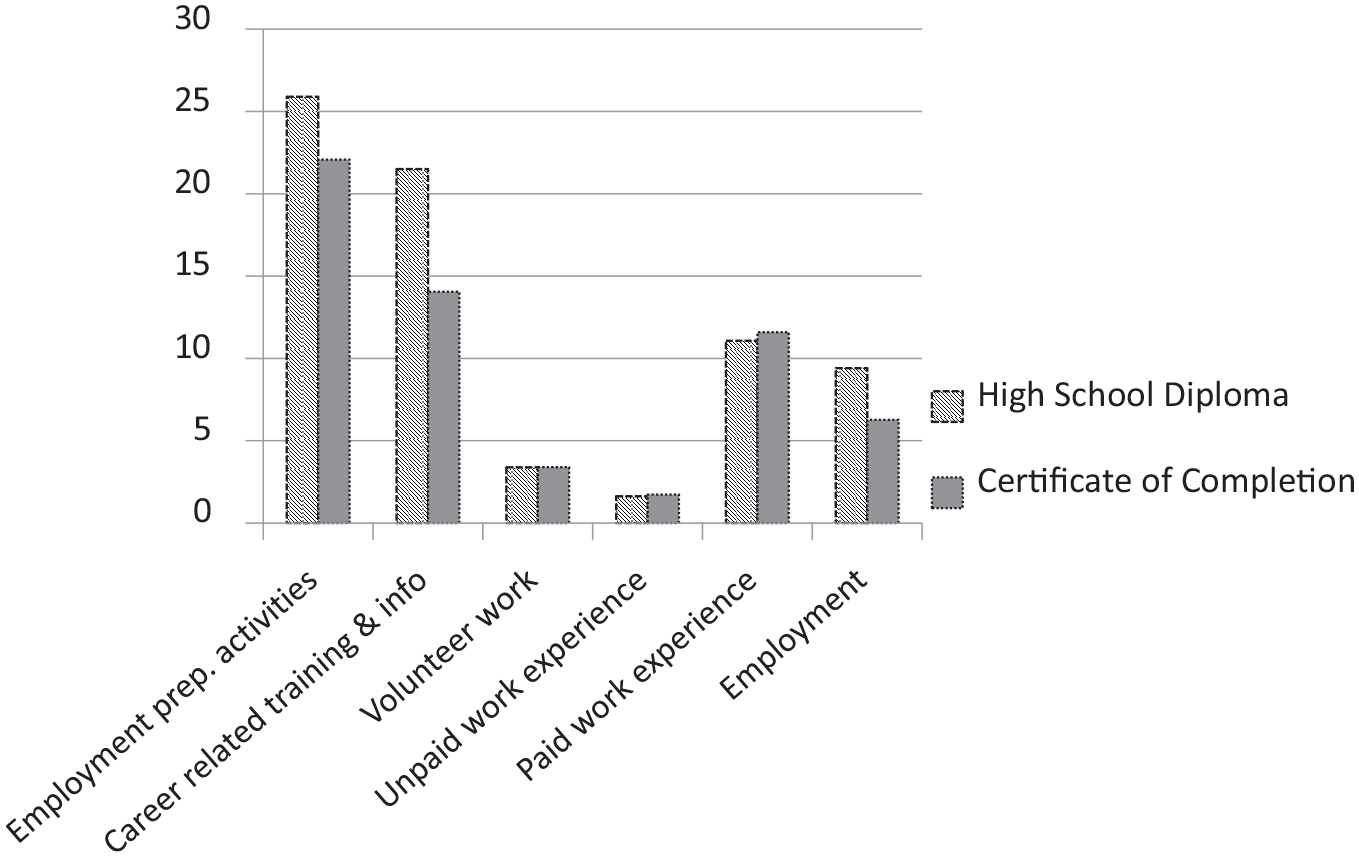
Average number of service provision efforts.
Participation in Work Experiences
With respect to participation in work experiences, the results of the t test for independent samples indicated that those who exited high school with a diploma had an average of 2.98 work experiences during their participation in the program. Those who exited high school with a certificate of completion had an average of 3.03 work experiences. The difference between the means of the two groups was not statistically significant (p = .740).
The results of the chi-square test conducted to determine whether there were significant differences between the types of work experiences by the type of high school exit indicated that there were statistically significant differences between the two groups, χ2(N = 2,903, df =1) = 13.917, p < .001. The strength of the association was small (Cramer’s V = .069). Of work experiences completed by those who earned diplomas, 64.0% were paid. A significantly smaller proportion of work experiences completed by those who earned certificates of completion (56.8%) were paid.
Employment and College Expectations
The results of the chi-square test conducted to determine whether those who exited high school with a certificate had different expectations regarding work than those who exited school with a diploma indicated a statistically significant difference between the two groups, χ2(N = 896, df = 1) = 18.307, p < .001. The strength of the association was small (Cramer’s V = .143). Of those who earned diplomas, 87.5% indicated that they expected to work. Of those who earned certificates of completion, a significantly smaller proportion (76.2%) expected to work.
The results of the chi-square test conducted to determine whether there were significant differences in college expectations at exit between those who exited with a diploma and those who exited with a certificate of completion revealed a statistically significant difference between the groups, χ2(N = 896, df = 1) = 221.590, p < .001. The strength of the association was between medium and large (Cramer’s V = .497). Of those who earned diplomas, 85.0% indicated that they expected to go to college. Of those who earned certificates of completion, a much smaller proportion (35.9%) expected to go to college.
Parental Concerns About Safety
With respect to parents’ concerns about their students’ safety, 162 (52.3%) of the 310 parents or guardians of certificate students affirmed concerns about safety while a smaller proportion (186 or 28.2%) of the parents or guardians of diploma students affirmed the same concern. This difference in the percentage of parental affirmed concerns was significant, χ2(N = 969, df = 1) = 52.909, p < .001.
Parental Concerns About Working Independently
With respect to parental concerns about their youths’ ability to work independently, 135 (43.5%) of 310 parents or guardians of certificate students affirmed a concern about youth working independently while a smaller proportion (106 or 16.1%) of the 659 parents or guardians of diploma students affirmed the same concern. This difference in the proportions of parents or guardians expressing concern was significant, χ2(N = 969, df = 1) = 85.100, p < .001.
Parental Concerns About Losing SSI Benefits
With respect to concerns about the potential loss of SSI benefits, 72 (23.2%) of the 310 parents or guardians of certificate students affirmed this concern, whereas a marginally smaller proportion (122 or 18.5%) of the 659 parents or guardians of diploma students affirmed the same concern. This difference in proportions was not statistically significant, χ2(N = 969, df = 1) = 2.924, p = .053.
Discussion
This study explored the career- and work-related services and experiences, college and employment expectations, and parents’ work-related concerns of 969 students with disabilities who exited high school with a diploma or a certificate. The results of the analyses indicated that CaPROMISE students who earned certificates of completion and those who earned high school diplomas differed on several measures.
Career- and Work-Based Learning Service Efforts
First, it was surprising that the diploma-earners received significantly more employment preparation and employment services than certificate-earners given the emphasis of vocational development and experiences in most programs leading to a certificate of completion. One plausible explanation may be that the program for certificate-earners in some school districts concentrated more on social skills development than vocational skills. On the contrary, it was not surprising that diploma-earners received more career-related training and education than certificate-earners. These services are directly linked to career development and exploration and exposure to postsecondary education. On-the-job training and employment are not the sole focus of career-related training and education; rather, it is a long-term focus on postsecondary education leading to a career and thereby requiring a high school diploma.
Participation in Work Experiences
Second, the lack of difference in the average number of work experiences completed between diploma-earners and certificate-earners may be a reflection of the CaPROMISE program model. Work experience for all students, regardless of demographics or circumstances, was integral to the CaPROMISE model. This expectation was communicated to service providers repeatedly throughout the program and reinforced through ongoing guidance, training, and technical assistance. Work experiences are beneficial to youth with any disability, as they help students acquire critical work skills (Lindstrom et al., 2011). Therefore, work experience participation should be emphasized for all SSI transition youth.
Participant Expectations About Employment and College
Third, the large discrepancy between diploma-earners and certificate-earners with respect to expectations for attending college is supported by prior research linking a high school diploma to postsecondary education enrollment (LoBianco & Kleinert, 2013; Prince et al., 2018). The difference in expectations between the two groups, especially with respect to postsecondary education, possibly underscores a larger issue in education regarding when, how, and why students are placed in or choose courses of study that lead to an outcome other than a high school diploma. For example, are students tracked into different courses of study based on the expectation that they may or may not achieve academically, socially, or by some other measurement of achievement?
Parental Concerns About Employment and Earnings
Finally, the greater proportion of parents of certificate-earners who expressed concerns about their youth’s safety and ability to work independently compared with parents of diploma-earners could be explained in part by the youths’ disabilities (Blustein et al., 2016). The concern may be elevated for parents who have never considered employment as a realistic outcome for their child. It is noteworthy that parents’ concerns did not seem to present a barrier to their youth engaging in work experiences. Also noteworthy is the low rate of parents’ concern regarding SSI benefits for both groups. Based on a person-driven and family-centered approach, the service coordinators helped the parents work through their concerns regarding safety and ability through information about on-the-job services and supports. As certified benefits planners, the service coordinators were able to educate parents about work incentives and how employment could be a more lucrative source of income in combination with or in place of SSI benefits.
Limitations
A potentially significant limitation that pertains to this study is human error that may have been introduced when study data were recorded by program staff. Data entered into the case management system by program staff might have been misrepresented through random or systematic human errors in record-keeping. A variety of efforts were made in the interest of limiting human error in record-keeping through intentional design, modification of the case management system, and providing training and technical support to the program staff responsible for recording data. In future research, extensive training on data entry for service providers should be considered to ensure greater consistency across staff. Periodic internal audits and reviews of the data entry could also potentially enhance the accuracy of the data. Another limitation of the study is that participants did not represent a random sample drawn from a larger population, which limits the extent to which the findings may be generalized to other young SSI recipients. Study participants volunteered to participate in the CaPROMISE program.
Findings derived from the analyses undertaken in this study served to document several distinct features that define differences between the two exited groups of CaPROMISE students. However, a limitation of the findings is they do not document a quantifiable degree of causality between the exit status (certificate or diploma) and the data elements included in this study. Instead, they raise a number of questions that suggest the need for further inquiry. In regard to type of high school exit, are there additional factors nested within the students’ exit status that would further demonstrate group differences? The data analyses utilized in this study can be replicated to incorporate additional available data elements to determine what other factors, such as student and family demographics and programmatic services, further define differences between these two groups.
Implications for Policy, Practice, and Future Research
The results of this study highlighted increased services and expectations for students earning a diploma compared with students receiving a certificate of completion. The diploma-earners in this study received more employment transition services and participated in more paid work experiences than the certificate-earners. The benefits of career- and work-based learning services and work experiences while in high school have been shown to correlate with successful post-school outcomes (Prince et al., 2018; Sanford et al., 2011). Given the results of the current study combined with findings of prior research, it is imperative that all courses of study and programs available to students with disabilities include transition employment services and opportunities. Transition services that focus on the development of work-related skills (e.g., social skills, organizational skills, self-determination) and provide work-based learning opportunities have important benefits for students with disabilities. Likewise, supporting students in their academic achievements paves the way to greater employment and education opportunities and outcomes after high school. The research supports the importance of an academic curriculum and a high school diploma to postsecondary success for students with disabilities as it relates to competitive employment, college enrollment, and earning potential (Kang et al., 2019; LoBianco & Kleinert, 2013).
Students on certificate tracks should receive the same amount of employment preparation activities as students who will earn a high school diploma. Employment preparation activities may include social skills development as well as soft and hard skills training. These activities can better prepare students for jobs that pay a living wage. Career-related training and education should also be emphasized for students on the certificate track, so they can be better prepared to pursue career paths in lieu of jobs with little growth potential. Training and education can begin with interest inventories to establish which careers the student is interested in pursuing. Training and education beyond this point can include job site visits, which can prepare students for internship or volunteer opportunities. Additional career- and work-related services for certificate track students can have positive implications, including enhanced employment outcomes. Equally important, these services may provide students with the self-confidence needed to pursue other opportunities beyond high school or, in other words, raise expectations for postsecondary employment to levels comparable to their peers with disabilities who are pursuing high school diplomas.
Further inquiry might be helpful in determining whether personnel preparation and staff development may have been a factor contributing to the observed differences in services provided to diploma-earners and certificate-earners in this study. Does personnel preparation define, in the most meaningful way, the value of a certificate of completion as a laudable goal based on individual student attributes, interest, and potential? Conducting a content or document analysis of all CaPROMISE staff training and monitoring materials and protocols would be helpful to determine how service provision and efforts with students and families incorporated person-driven and family-centered strategies. Future research should further explore how person-driven and family-centered strategies influence students’ and families’ expectations and the services provided in support of students’ educational and vocational goals.
Students’ expectations were dramatically different between the two groups (i.e., diploma and certificate), especially regarding college attendance. Further exploration could determine how students’ expectations are related to teacher and parent expectations. Research suggests that teachers and parents are more likely to have lower educational expectations for youth with disabilities than for similarly achieving and behaving youth without disabilities (Cameron & Cook, 2013; Hill et al., 2018; Shifrer, 2013). These expectations are communicated to the student in a variety of ways, including through teaching methodologies, curriculum, and support. In a study by Harr-Robins et al. (2015), school accountability helped raise implementation and expectations of school practices and improved student outcomes. These practices used tiered instructional interventions and merged students with disabilities in general education classrooms co-taught by general and special education teachers.
Further exploration of students’ post-high school expectations may provide more insight into the extent that CaPROMISE student aspirations, expectations, and potential for future academic and career success were governed by factors prior to and during the course of their CaPROMISE program participation. Are there other areas of concern that would further define differences between these two parent groups? Furthermore, what factors contribute to the concerns that parents expressed? The relationship between educators’ and parents’ expectations to students’ course of study also warrants inquiry. Do preconceived notions held by former educators and service providers who had early influence on these students’ lives result in unrealistic academic placements that impose an upper limit on future success? Have parents and guardians been guided by preconceived notions that serve to thwart optimal levels of academic achievement and career aspirations among their children? Interviews with CaPROMISE service providers, program managers, and affiliated educators and service providers would increase our understanding of the processes whereby a student and his or her IEP Team chooses a certificate or diploma track and identify strategies that realistically assess and raise expectations of parents and students.
Conclusion
There are many paths to high school completion (e.g., traditional and alternate diplomas, certificates of completion, GED). The curriculum, services, supports, and opportunities provided to students with disabilities are essential components of their secondary education experiences. Collectively, the results of this study point to the critical differences in work-based learning transition services and experiences for youth who earned a high school diploma compared with youth who earned a certificate of completion. These differences correlate with the expectations of students and their families, as well as the post-high school outcomes for the youth. All students, regardless of disability or course of study, should be provided with the curriculum, services, and supports that prepare them academically and vocationally for postsecondary educational attainment, career opportunities, and employment outcomes.
Footnotes
Declaration of Conflicting Interests
The author(s) declared no potential conflicts of interest with respect to the research, authorship, and/or publication of this article.
Funding
The author(s) disclosed receipt of the following financial support for the research, authorship, and/or publication of this article: CaPROMISE was funded through a cooperative agreement with the U.S. Department of Education, Office of Special Education Programs (OSEP) Grant #H418P130003. Opinions expressed herein do not necessarily represent the policy of the U.S. Department of Education, and you should not assume endorsement by the Federal Government.