




Abstract
Background:
Although previous studies suggest a link between workplace bullying and presenteeism, uncertainties persist regarding the direction, strength, and influencing factors. Understanding the potential mediators and moderators is crucial to addressing these issues in workplace settings.
Objective:
This study aims to clarify the bidirectional relationship between workplace bullying and presenteeism, assess the strength and direction of this association, and identify individual and work-related factors that mediate or moderate these interactions.
Methods:
A systematic search of nine databases (PubMed, EMBASE, Cochrane Library, Web of Science, CINAHL, PsycINFO, CNKI, WANFANG, and Chinese Biomedical) was conducted from inception through March 30, 2023, with an update on September 8, 2024. Independent reviewers screened the literature, extracted data, and evaluated methodological quality using the Risk Of Bias In Non-randomized Studies of Exposure tool. Odds ratios, relative risks, and 95% confidence intervals were calculated to assess effect sizes.
Results:
After adjusting for confounders, workers exposed to workplace bullying had 1.74 times higher odds of reporting presenteeism compared to non-exposed individuals (95% CI [1.02, 2.46]). Workers reporting presenteeism also had increased odds of later workplace bullying exposure (OR = 2.29, 95% CI [1.23, 3.36]). Various individual and work-related factors were identified as potential mediators and moderators influencing these associations.
Conclusion:
This study establishes a bidirectional relationship between workplace bullying and presenteeism. Both individual and work-related factors play a critical role as mediators and moderators, potentially mitigating or amplifying the workplace bullying-presenteeism cycle. Future interventions should target these factors to disrupt this harmful dynamic and improve employee well-being.
Introduction
Workplace bullying (WPB) is a widespread issue with serious consequences for employees and organizations globally (León-Pérez et al., 2021). Characterized by persistent negative behaviors, such as verbal abuse, humiliation, exclusion, and aggression (Einarsen, 2000), WPB affects an estimated 15.0% to 33.4% of employees during their careers (Al Muharraq et al., 2022; Goh et al., 2022; Nielsen & Einarsen, 2018). These behaviors, also referred to as horizontal violence, lateral violence, or incivility, can originate from colleagues, subordinates, or superiors (Bartlett & Bartlett, 2011; Shorey & Wong, 2021).
Exposure to WPB has been linked to a range of physical and mental health problems, including cardiovascular disease, type 2 diabetes, symptoms of post-traumatic stress, burnout, and decreased job satisfaction (Mikkelsen et al., 2020; Xu et al., 2018, 2019). Beyond individual health, WPB can significantly impact organizational outcomes, leading to increased presenteeism, sickness absence, higher employee turnover, reduced job performance, and greater incidence of workplace accidents (Liao et al., 2023; Nielsen & Einarsen, 2012; Samsudin et al., 2018).
Presenteeism—attending work despite illness or personal challenges—affects between 23% and 50% of the workforce and poses a significant occupational health challenge (Johns, 2010; Kinman, 2019; Lohaus & Habermann, 2019; Min et al., 2022; Rojas-Roque & López-Bonilla, 2022; Siqueira et al., 2023). It is associated with reduced productivity, compromised health, and negative consequences for both individuals and organizations (Allen et al., 2018; Miraglia & Johns, 2016; Nagata et al., 2022; Yi & Kim, 2020).
Despite evidence suggesting an association between WPB and presenteeism (Conway et al., 2016; Janssens et al., 2016), uncertainties remain regarding the direction and strength of this relationship. No comprehensive systematic review or meta-analysis has yet been conducted to clarify these associations. Therefore, this study aims to fill this gap by systematically reviewing and analyzing existing research to explore the bidirectional relationship between WPB and presenteeism. Additionally, the study will examine individual and work-related factors that may mediate or moderate this relationship, providing deeper insights into the mechanisms involved. Ultimately, this research seeks to inform targeted interventions to disrupt the WPB-presenteeism cycle and promote healthier, more productive workplaces.
Methods
This systematic review and meta-analysis adhered to the Preferred Reporting Items for Systematic Reviews and Meta-Analyses (PRISMA) statement (Moher et al., 2015) and had its protocol registered in PROSPERO.
Search Strategy
Our search strategy employed a combination of index terms and keywords such as “workplace,” “bullying,” and “presenteeism.” Nine databases, including PubMed, EMBASE, Cochrane Library, Web of Science, CINAHL, PsycINFO, China National Knowledge Infrastructure, WANFANG, and Chinese Biomedical, were systematically searched from inception until March 30, 2023, with an update conducted on September 8, 2024. Additionally, Google Scholar was used to identify relevant studies, and reference lists of included studies were manually screened. Comprehensive search strategies for all databases are provided in Supplemental Table 1.
Eligibility Criteria
We included studies that met the following criteria:
Population: Studies involving workers, with both the exposed group (those experiencing WPB) and the non-exposed group (those not experiencing WPB) drawn from the same study population.
Exposure: Studies examining WPB as a predictor of presenteeism, or vice versa, or studies assessing the relationship between WPB and presenteeism.
Outcome: The primary outcomes included presenteeism or WPB exposure, with results reported as odds ratio (OR), relative risk (RR).
Language: Studies published in English or Chinese.
We excluded studies based on the following criteria:
Repeat published studies.
Qualitative studies, reviews, conference abstracts, and letters.
Studies with incomplete data.
Full texts not available.
Study Selection and Data Extraction
We used EndNote 20 to remove duplicates and then imported the remaining articles into Rayyan (Ouzzani et al., 2016), a web application, for further screening. Two independent researchers conducted screening based on title, abstract, and full text, with discrepancies resolved by a third reviewer. Data extraction covered author, publication year, country, study design, sample size, age, occupational classification, WPB assessment periods, assessment methods for bullying and presenteeism, and details on mediators and moderators. Statistical measures, including both crude and adjusted ORs, RRs, and 95% confidence intervals (CIs), were extracted.
Quality Assessment
The Risk of Bias Tool in Non-randomized Studies-of Exposure (ROBINS-E) was used to assess the quality of the included articles (Group, Launch version, 20 June 2023). This tool, designed for observational studies, evaluates bias across seven domains. Ratings for each domain and overall risk of bias were categorized as low, moderate, serious, or critical based on the tool’s guidelines (Ervin et al., 2022).
Data Synthesis
Relative risks were converted to ORs using Viera’s formula (Viera, 2008). Meta-analyses were conducted using Stata MP (version 17.0) to calculate ORs for each study. Heterogeneity was assessed using the Q-statistic and the I² statistic, with heterogeneity levels categorized as follows: 0%–25% (none), 25%–50% (low), 50%–75% (moderate), and 75%–100% (high) (Higgins et al., 2003).
A fixed-effects model was applied when I² < 50% and p > .1 in the Q test. Conversely, in cases where moderate to high heterogeneity was detected (I² ≥ 50% or p ≤ .1 in the Q test), a random-effects model was used. Given the levels of heterogeneity observed in this analysis, random-effects models were predominantly employed.
Results
Search Results and Selection
A total of 1,950 articles were identified through database searches, with an additional five studies obtained from manual searches. After screening 1,277 titles and abstracts, 211 full-text articles were assessed. From this, 19 studies were included in the systematic review, of which six were selected for meta-analysis. The PRISMA flow chart (Figure 1) outlines the detailed literature selection process.
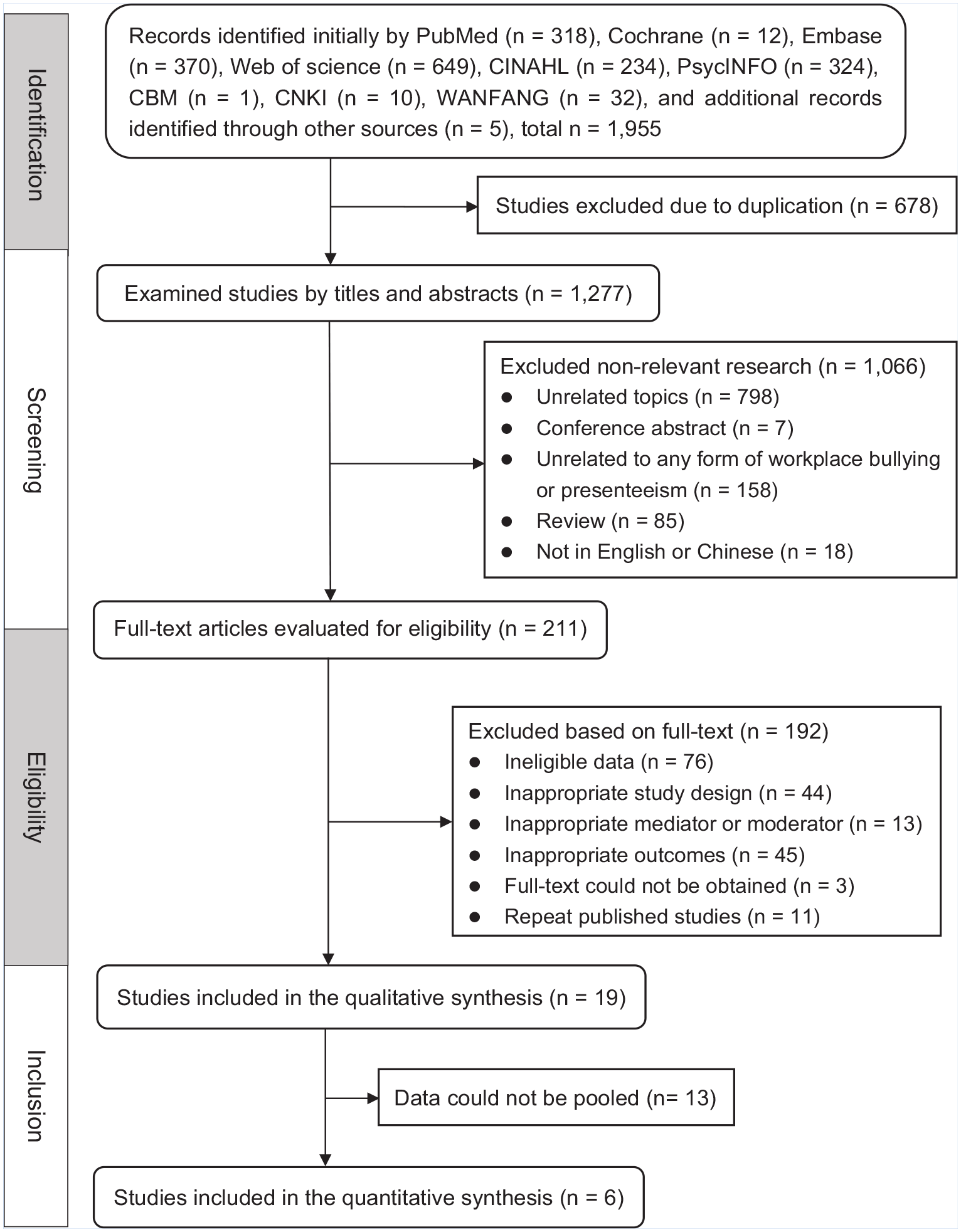
The process of literature search based on the PRISMA statement
Characteristics of the Included Studies
The 19 included studies were published between 2013 and 2024, involving a total of 88,450 participants from 41 countries. The study designs consisted of 14 cross-sectional studies and five prospective cohort studies. Of the participants, 48.6% (n = 42,604) were female, with ages ranging from 15 to 65 years. These studies covered various industries, and the WPB assessment periods ranged from 6 to 12 months.
Several tools were employed to assess WPB, including the Negative Acts Questionnaire (K = 6, where K refers to the number of studies), single-item measures (K = 5), the Workplace Incivility Scale (K = 4), the Scale of Quine (K = 1), the Burgen Bullying Index (K = 1), the Questionnaire for Abusive Leadership (K = 1), and the Workplace Bullying Questionnaire (K = 1).
Presenteeism was measured using various instruments, such as a single-item measure with a definition (K = 11), the Stanford Presenteeism Scale (K = 2), the Non-work-related Presenteeism Scale (K = 1), the WHO Health and Work Performance Questionnaire (K = 1), and the Nurse Presenteeism Behavior Scale (K = 1). Six studies reported ORs or RRs with 95% CI and included adjustments for confounding variables. Detailed study information is available in Table 1.
Characteristics of Included Studies
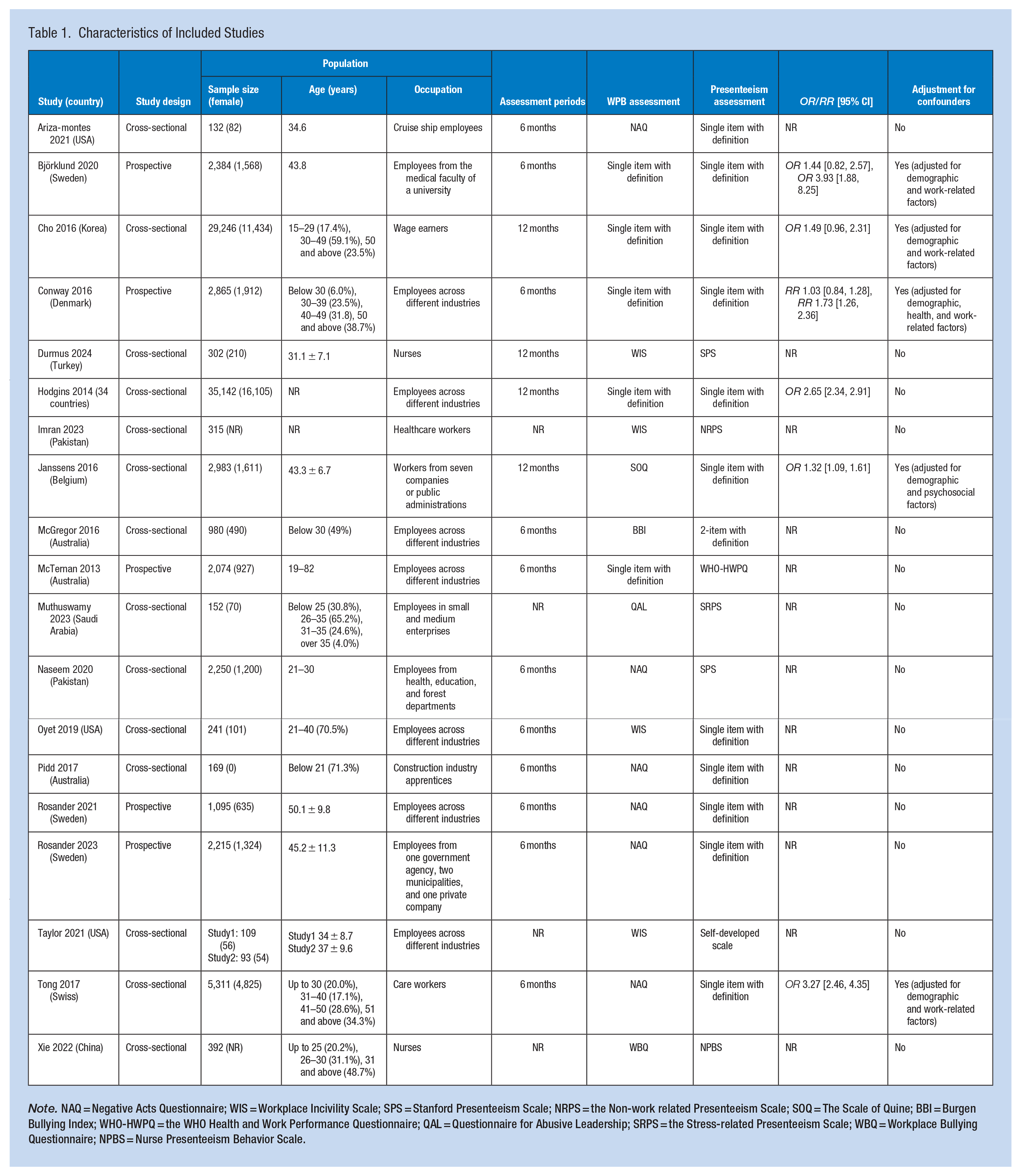
Note. NAQ = Negative Acts Questionnaire; WIS = Workplace Incivility Scale; SPS = Stanford Presenteeism Scale; NRPS = the Non-work related Presenteeism Scale; SOQ = The Scale of Quine; BBI = Burgen Bullying Index; WHO-HWPQ = the WHO Health and Work Performance Questionnaire; QAL = Questionnaire for Abusive Leadership; SRPS = the Stress-related Presenteeism Scale; WBQ = Workplace Bullying Questionnaire; NPBS = Nurse Presenteeism Behavior Scale.
Quality Assessment of Studies
Using the ROBINS-E tool, 63.2% (K = 11) of the included studies were rated as having a moderate risk of bias, while eight studies (Ariza-Montes et al., 2021; Conway et al., 2016; Durmus et al., 2024; Hodgins, 2014; Imran et al., 2023; Janssens et al., 2016; Muthuswamy & Li, 2023; Rosander & Nielsen, 2023) had a serious risk of bias. Key differences were observed across confounding, exposure measurement, outcome measurement, and missing data domains.
In the confounding domain, 13 studies had a moderate risk of bias due to adjustments for demographic and work-related factors. However, six studies did not adjust for confounders, contributing to a higher risk of bias. All studies used self-reported WPB measures, which introduced a moderate risk of bias in both exposure and outcome measurement domains. Additionally, seven studies were affected by low response rates and high attrition, resulting in a moderate to serious risk of bias related to missing data. Other domains generally exhibited low risk of bias (see Supplemental Table 2).
Association Between WPB and Presenteeism
Fourteen studies investigated the relationship between WPB and presenteeism. Nine cross-sectional studies (Durmus et al., 2024; Imran et al., 2023; Janssens et al., 2016; McGregor et al., 2016; Muthuswamy & Li, 2023; Naseem & Ahmed, 2020; Pidd et al., 2017; Tong et al., 2017; Xie, 2022) and two longitudinal studies (Rosander, 2021; Rosander & Nielsen, 2023) found a significant positive association between WPB and presenteeism. One study (Ariza-Montes et al., 2021) that categorized WPB into three types reported that work-related bullying was positively associated with presenteeism, person-related bullying was negatively associated, and physical/threatening bullying showed no statistically significant association with presenteeism. Conversely, one cross-sectional study (Cho et al., 2016) and one longitudinal study (Conway et al., 2016) found no association between WPB and presenteeism.
Figure 2 presents the pooled OR estimates for the association between WPB and presenteeism based on data from four studies involving 40,405 employees. The meta-analysis revealed that, after adjusting for demographic, health, and work-related factors, workers exposed to WPB had a significantly higher risk of presenteeism compared to those not exposed, with a pooled OR of 1.74 (95% CI [1.02, 2.46], I² = 91.6%).
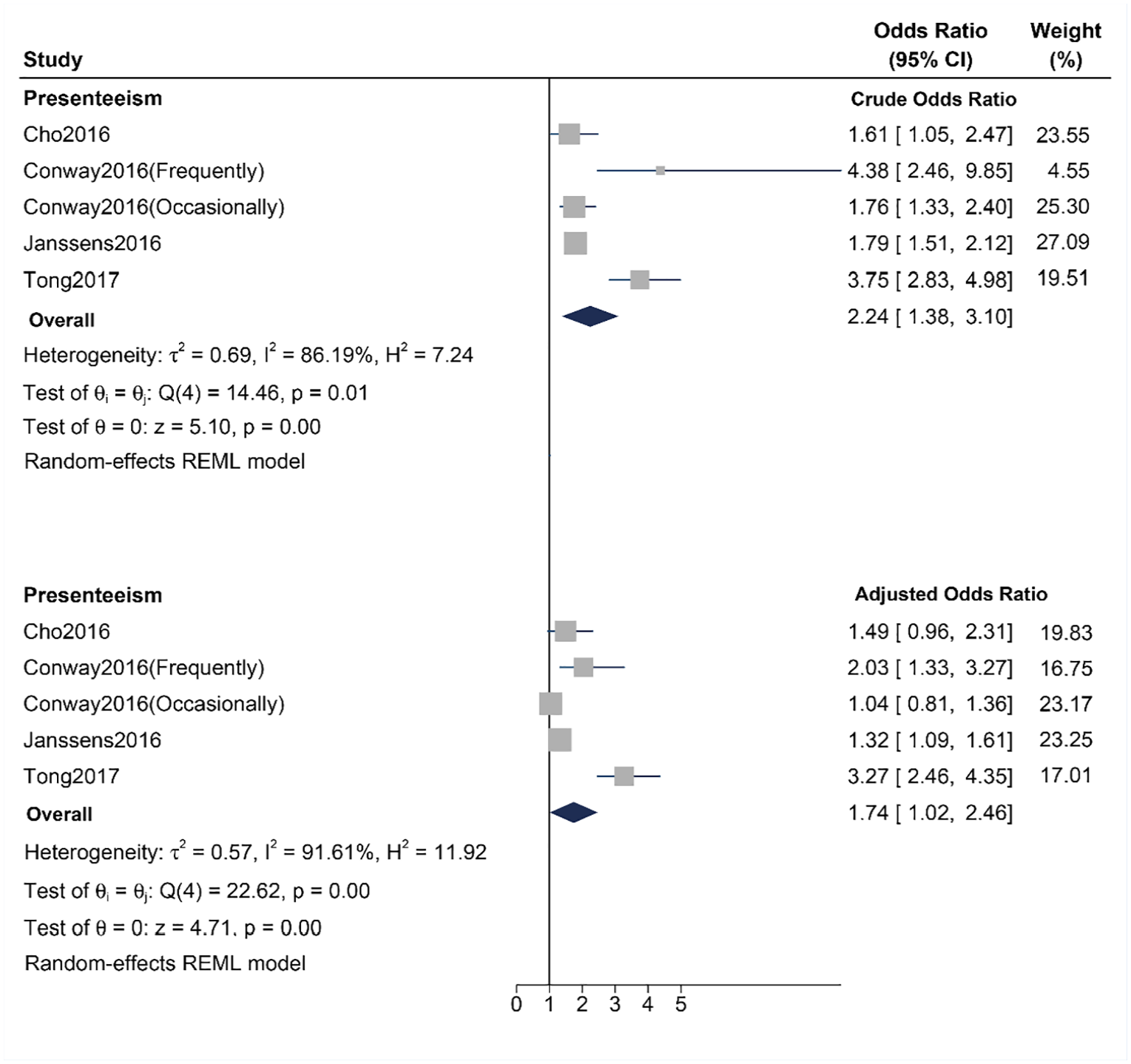
Pooled OR estimate of the association between workplace bullying and presenteeism
Three studies, involving a total of 37,767 participants, examined the reverse relationship between presenteeism and WPB (Björklund et al., 2020; Hodgins, 2014; Oyet, 2019). The results, presented in Figure 3, show that workers who reported presenteeism were more likely to also report later exposure to WPB, with a pooled OR of 2.29 (95% CI [1.23, 3.36], I² = 72.9%).
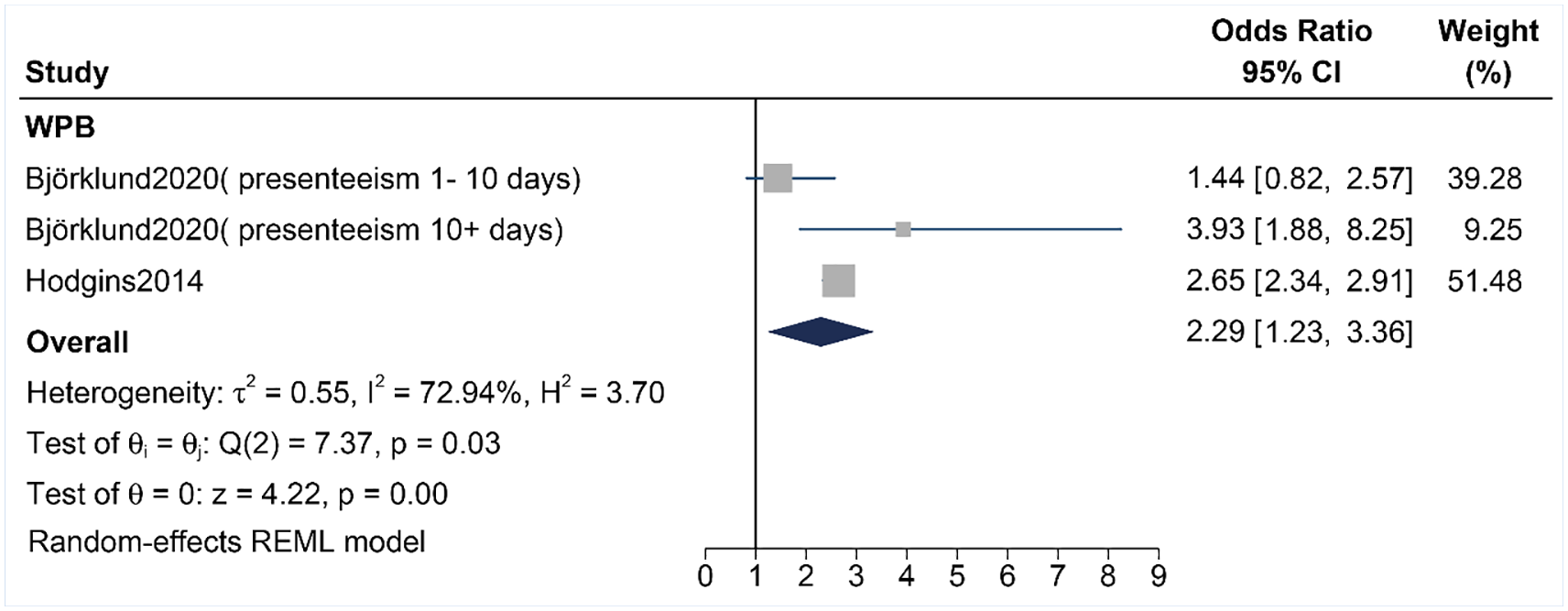
Pooled OR estimate of the reverse association between workplace bullying and presenteeism
Mediators and Moderators Between WPB and Presenteeism
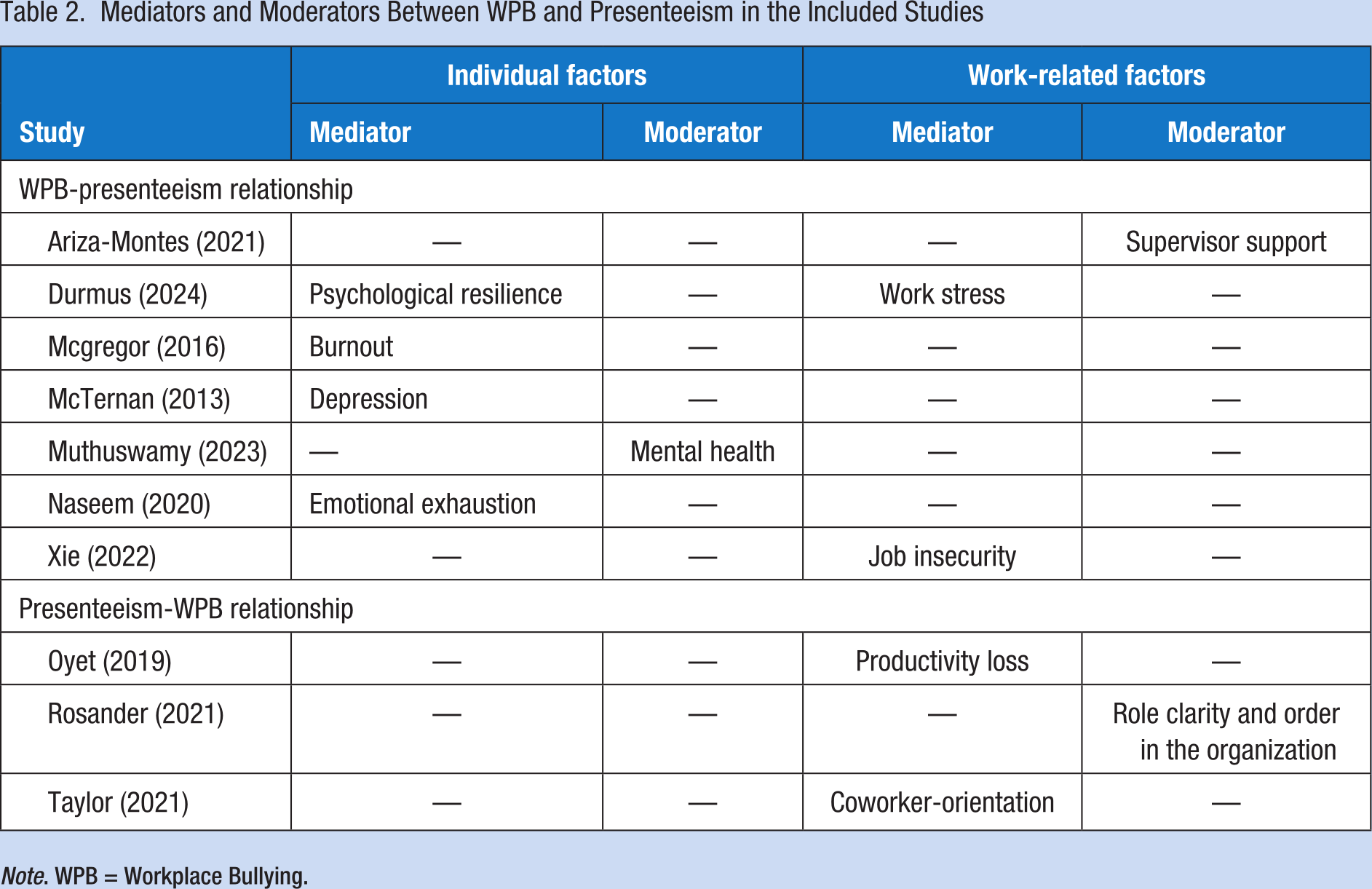
Ten of the 19 studies explored potential mediators and moderators in the relationship between WPB and presenteeism. Drawing from the Conservation of Resources (COR) theory and the Job Demands-Resources (JD-R) model (Demerouti et al., 2001; Hobfoll, 1989), we categorized these factors into two main areas: individual factors and work-related factors (Table 2).
Mediators and Moderators Between WPB and Presenteeism in the Included Studies
Note. WPB = Workplace Bullying
Individual Factors: Several studies identified psychological and emotional factors as mediators in the WPB-presenteeism relationship. Durmus et al. (2024) found that psychological resilience acted as a mediator, while McGregor et al. (2016) and Naseem and Ahmed (2020) showed that burnout and emotional exhaustion also mediated the relationship. McTernan et al. (2013) pointed to depression as a mediating factor, while Muthuswamy and Li (2023) identified mental health as a moderator. These findings highlight the critical role of workers’ psychological and emotional states in the link between WPB and presenteeism.
Work-Related Factors: On the organizational side, Durmus et al. (2024) identified work stress as a mediator, and Xie (2022) found job insecurity to serve a similar role. Ariza-Montes et al. (2021) highlighted the importance of supervisor support as a moderator, indicating that managerial involvement can mitigate the impact of WPB on presenteeism.
Reverse Relationship: Interestingly, Oyet (2019) identified productivity loss as a mediator in the reverse relationship, where presenteeism contributed to WPB. Rosander (2021) and Taylor et al. (2021) found that role clarity, organizational order, and coworker orientation moderated the reverse relationship, where presenteeism led to WPB. This finding underscores the complex and bidirectional nature of the WPB-presenteeism relationship.
Discussion
This systematic review and meta-analysis investigated the bidirectional relationship between WPB and presenteeism among employees, identifying key mediators and moderators that shape this dynamic. Our findings highlight how WPB and presenteeism are closely interlinked, emphasizing both individual and organizational factors that may exacerbate or alleviate their effects.
The Association Between WPB and Presenteeism
Consistent with previous literature, our results reveal a strong, positive association between WPB and presenteeism (Lohaus & Habermann, 2019; Yi & Kim, 2020). Employees who experience WPB are significantly more likely to engage in presenteeism, largely due to the psychological, emotional, and physical toll of bullying (Boudrias et al., 2021; McGregor et al., 2016; Naseem & Ahmed, 2020). The pooled odds ratio (OR = 1.74, 95% CI [1.02, 2.46]) highlights the increased likelihood of presenteeism among bullied employees, even after adjusting for demographic, health-related, and work-related factors.
This association can be explained by the stress and anxiety caused by WPB (Durmus et al., 2024; Rodríguez-Muñoz et al., 2015), which often compels employees to continue working despite illness or emotional exhaustion (McGregor & Caputi, 2022; Naseem & Ahmed, 2020; Neto et al., 2017), fearing repercussions or further bullying if they take time off (Conway et al., 2016). Moreover, presenteeism may serve as a coping strategy to maintain professional image or avoid being perceived as weak or disengaged (Peter et al., 2023; Webster et al., 2019).
According to the COR theory and the JD-R model, WPB as a persistent high-level job demand places significant pressure on employees (Anasori et al., 2019). This strain triggers feelings of job insecurity (Glambek et al., 2014), depletes emotional energy (Miraglia & Johns, 2016), and leads to burnout (McGregor et al., 2016). Over time, persistent presenteeism may diminish job resources, negatively affecting job performance and productivity, further exacerbating individual and organizational outcomes (Shan et al., 2021).
Our review also found evidence of a reverse relationship: employees who engage in presenteeism are at heightened risk of experiencing WPB (pooled OR = 2.29, 95% CI [1.23, 3.36]). This reverse association highlights a cyclical dynamic where presenteeism can lead to decreased job performance, which in turn may provoke negative reactions from supervisors or coworkers, escalating bullying behaviors (Björklund et al., 2020).
Mediators and Moderators Between WPB and Presenteeism
This review identified several mediators and moderators that influence the WPB-presenteeism relationship, providing a nuanced understanding of how these two phenomena are interconnected.
Psychological resilience, burnout, depression, emotional exhaustion, and work stress were found to mediate the relationship between WPB and presenteeism. These mediators suggest that the impact of WPB on presenteeism is closely linked to an individual’s emotional and psychological state (Durmus et al., 2024; McGregor et al., 2016; McTernan et al., 2013; Muthuswamy & Li, 2023; Naseem & Ahmed, 2020). Productivity loss also emerged as a mediator in the reverse relationship, where presenteeism leads to WPB (Oyet, 2019). This suggests that attending work while unwell can reduce productivity (Li et al., 2019), inadvertently provoking bullying from others and perpetuating a harmful feedback loop (Oyet, 2019).
Several work-related factors, such as supervisor support, job insecurity, role clarity, and coworker orientation, were identified as moderators. Supervisor support mitigates the effects of WPB on presenteeism, suggesting that management practices can buffer the negative impact of WPB (Ariza-Montes et al., 2021; Rossiter & Sochos, 2018). Job insecurity, on the other hand, exacerbated presenteeism (Xie, 2022), as employees feared taking time off might jeopardize their employment (Kim et al., 2020). A supportive work environment and role clarity were shown to reduce the likelihood of presenteeism leading to WPB (Rosander, 2021; Taylor et al., 2021).
These findings emphasize the importance of addressing both individual and organizational factors to break the cycle of WPB and presenteeism. Interventions that target emotional resilience, stress management, and workplace support systems are critical to reducing both WPB and its negative consequences on employee well-being.
Strengths and Limitations
This review offers several strengths. First, it is the first meta-analysis to thoroughly examine the bidirectional relationship between WPB and presenteeism. By including both cross-sectional and longitudinal studies, we provide a comprehensive overview of the evidence. Additionally, our exploration of mediators and moderators highlights the complex mechanisms underlying this relationship, offering valuable insights for future research and workplace interventions.
However, several limitations should be noted. First, the reliance on self-reported data introduces the potential for reporting bias, particularly in the measurement of WPB and presenteeism. Second, substantial heterogeneity across studies in terms of their measurement tools and definitions of WPB and presenteeism may have influenced the pooled effect sizes. Additionally, the relatively small number of studies included in the meta-analysis limits the generalizability of the findings. Furthermore, the use of Viera’s formula (Viera, 2008) to convert RRs to ORs for the meta-analysis may have introduced bias, reducing the precision and robustness of the conclusions. Finally, 8 of the 19 studies showed a high risk of bias, primarily due to inadequate control of confounding factors.
Despite these limitations, our review provides important insights into the bidirectional relationship between WPB and presenteeism. Future research should focus on longitudinal designs, larger sample sizes, and objective measurements of both phenomena to build a more comprehensive understanding of this complex relationship. Additionally, exploring the role of organizational policies and interventions in preventing WPB and reducing presenteeism will be crucial.
Conclusion
This review highlights a complex bidirectional relationship between WPB and presenteeism, influenced by both individual and organizational factors. While the findings suggest that WPB may be associated with an increased likelihood of presenteeism, and presenteeism may, in turn, heighten the risk of experiencing WPB, these relationships should be interpreted with caution given the inclusion of both cross-sectional and prospective cohort studies.
Key mediators, such as emotional exhaustion and psychological resilience, underscore the need for interventions focused on enhancing employee mental well-being. Likewise, work-related factors like supervisor support and role clarity and order in the organization emerged as important moderators that can either mitigate or exacerbate the WPB-presenteeism dynamic.
Future research should prioritize exploring these relationships in more depth, using rigorous study designs to better understand potential causal mechanisms. Identifying targeted interventions that address both personal and organizational factors is essential to disrupt the cycle of WPB and presenteeism, thereby improving employee well-being and workplace productivity.
Implications for Occupational Health Practice
• This study provides evidence for the need for targeted interventions that address both personal and organizational factors to break the cycle between workplace bullying and presenteeism.
• The findings offer valuable insights for organizations to develop more comprehensive strategies aimed at improving employee well-being and reducing presenteeism through workplace bullying prevention programs.
In Summary
Workplace bullying is increasingly recognized as a significant stressor that negatively impacts individuals’ mental and physical health, as well as organizational outcomes.
Previous research has indicated a potential link between workplace bullying and presenteeism, but the strength and direction of this relationship have been unclear.
This study confirms a bidirectional relationship between workplace bullying and presenteeism.
The strength of this association is influenced by individual and work-related factors, which serve as mediators and moderators. These factors can either alleviate or intensify the cycle of workplace bullying and presenteeism.
Supplemental Material
sj-docx-1-whs-10.1177_21650799241302824 – Supplemental material for The Bidirectional Relationship Between Workplace Bullying and Presenteeism: A Systematic Review and Meta-Analysis
Supplemental material, sj-docx-1-whs-10.1177_21650799241302824 for The Bidirectional Relationship Between Workplace Bullying and Presenteeism: A Systematic Review and Meta-Analysis by Minyan Liu, Linan Cheng, Yuqiang Wang, Qinglin Zeng and Yanli Zeng in Workplace Health & Safety
Footnotes
Acknowledgements
We gratefully acknowledge all workers who participated in the studies included in the systematic review and meta-analysis, and the authors who provided the original data for their help in this study.
Author Contributions
Minyan Liu: Conceptualization; Methodology; Software; Formal analysis; Writing—original draft. Linan Cheng: Methodology; Formal analysis; Resources; Writing—original draft. Yuqiang Wang: Data Curation; Visualization. Qinglin Zeng: Writing—Review & Editing; Software. Yanli Zeng: Writing—Review & Editing; Project administration; Funding acquisition; Supervision.
Conflict of Interest
The author(s) declared no potential conflicts of interest with respect to the research, authorship, and/or publication of this article.
Funding
The author(s) disclosed receipt of the following financial support for the research, authorship, and/or publication of this article: This work was supported by the program of Sichuan Hospital Management and Development Research Center [grant number SCYG2024-3].

Prospero Id
The review was registered on PROSPERO (registration number: CRD42023393667).
Supplemental Material
Supplemental material for this article is available online.
References
Supplementary Material
Please find the following supplemental material available below.
For Open Access articles published under a Creative Commons License, all supplemental material carries the same license as the article it is associated with.
For non-Open Access articles published, all supplemental material carries a non-exclusive license, and permission requests for re-use of supplemental material or any part of supplemental material shall be sent directly to the copyright owner as specified in the copyright notice associated with the article.
