






Abstract
Background:
Most agree that occupational stress is caused by workplace strains, tensions, and demands that originate from characteristics of the work. The accumulation of multiple types of stress has been found to have calamitous effects on health and well-being. One such occupation, emergency telecommunicators, experiences a multitude of stressors within their day-to-day work environment. Structural stressors are the sources of stress that are embedded in the way the work is designed and reinforced through workplace policies, practices, and procedures. This scoping review aimed to analyze occupational stressors directly promulgated by the structure and work design that impact emergency telecommunicators and to identify recommended organizational interventions.
Methods:
This scoping review utilized the methodological framework of Arksey and O’Malley which examined research literature, identified gaps in the literature, and mapped key concepts. Electronic databases of CINAHL, MEDLINE, PsychINFO, PychNET, PubMed, Social Index, and Academic Search Complete were used to identify relevant literature on occupational stress of emergency telecommunicators.
Results:
Across 17 included articles, four key themes related to workplace stressors of emergency telecommunicators were identified: (a) staffing problems, (b) poor physical work environment, (c) career development issues, and (d) inequity. The four themes were derived from literature to extract stressors related to workplace policies, procedures, and practices. Implications for stakeholders to reduce stress were interwoven in the themes. This review aimed to expand on existing literature pertaining to structural stressors that have an impact on emergency telecommunicators.
Introduction
According to the National Institute for Occupational Safety and Health (NIOSH, n.d.), occupational stress is defined as work-imposed environmental strains or occupational stressors that negatively affect employee’s well-being. Occupational stressors can include the nature of work (i.e., type of work), the work environment (i.e., the physical space where one’s work is conducted), or the policies and practices that are enforced by the organization (Landsbergis et al., 2017). Research on occupational stress has demonstrated correlations to poor physical and mental health outcomes (Quick & Henderson, 2016). Occupational stress has been linked to cardiovascular-related diseases, mental health disorders (NIOSH, n.d.), and work–family conflict (Mennino et al., 2005). It is estimated that work stress can cost U.S. companies over a quarter billion dollars per year in a “combination of health cost, absenteeism, and poor performance” (Centers for Promotion of Health in the New England Workplace, n.d., as cited in Gerding et al., 2023, p. 119). Occupational stress not only has negative consequences on the workers, but may also significantly affect organizations, their constituents, and the community they serve. Given the profound implications, it is crucial to develop strategies to mitigate occupational stress and enhance employee well-being.
Occupational stress arises from workplace strains, tensions, and demands originating from characteristics of the work (Fingret, 2000). Leka et al. (2003) cautioned that poor work organization including “poor work design, poor management, and unsatisfactory work conditions” contributes to occupational stress (p. 5). These structural elements—workplace policies, practices, and procedures—undergird the organization’s structure. Structural stressors may result from political, societal, economic, and social structures that impede a group’s likelihood of success (DeWilde et al., 2019). These types of stressors often manifest from the way the work is designed, for example, how work is organized (e.g., work hours, physical environment, operational policies and procedures), the nature of the work (e.g., trauma), and interpersonal conflicts (e.g., work role, interpersonal relationships, lack of support, power imbalances, and balance between work and family) (Kenny, 2000). Poor work design can have a detrimental effect on workers leading to compounding effects of occupational stress which may negatively affect worker health and well-being (Leka et al., 2003), increasing absenteeism and job turnover. While studies have identified various sources of occupational stress for emergency telecommunicators, this review summarized sources of stress associated with policies, practice norms, or procedures. Therefore, understanding and addressing these structural stressors is essential for promoting a healthier and more productive workforce.
Occupational Stress of Emergency Telecommunicators
Emergency telecommunicators are the emergency police, medical, and/or fire 9-1-1 call-takers and/or dispatchers who work in public safety. The National Emergency Number Association (2023) estimates that there are more than 240 million emergency calls placed each year. There are approximately 95,000 emergency telecommunicators (Bureau of Labor and Statistics, 2023) who are employed in more than 6,000 emergency telecommunication centers across the country (Taylor et al., 2005). Emergency telecommunicators are trained to provide rapid assessment and intervention for every call (Pivetta, 2003) and the nature of their work exposes them to trauma. For example, emergency telecommunicators provide direct intervention via telecommunications on calls related to crime and community violence, house fires, suicide and drug overdoses, and child and elder maltreatment (Pivetta, 2003). In addition to chronic exposure to trauma, emergency telecommunicators are also responsible for coordinating the emergency response while ensuring the safety of the responding officers (Pivetta, 2003).
Emergency telecommunicators are experiencing high rates of occupational stress despite not being physically present at the scene of an emergency (Lewis, 2022; Lilly et al., 2016; McAleavy et al., 2021; Meischke et al., 2018; Perez et al., 2021; Ramey et al., 2017). Research has shown that emergency telecommunicators experience symptoms such as post-traumatic stress disorder (PTSD), depression, and anxiety (Kindermann, et al., 2020; Klimley et al., 2018) comparable to police officers, firefighters, and paramedics (Pierce & Lilly, 2013). In addition to psychological strains, stress in this workforce has also been associated with high levels of obesity and a higher risk of metabolic syndrome (Lilly et al., 2016).
Nerstad et al. (2023) explicitly stated that while occupational stressors are not exhaustive, they suggest exploring diverse categories of stressors to gain a comprehensive understanding of the occupational stress experienced by a workgroup. Structural stressors are external or macrolevel stressors explicitly or implicitly embedded in the structure of the work (e.g., hierarchy), the culture and climate of the work (i.e., shared values, attitudes, and beliefs), and management style, which may facilitate occupational stress (Landsbergis et al., 2017; Nerstad et al., 2023). For example, pay and promotion can also be influenced by the culture, structure, and policy. Likewise, factors intrinsic to the job can be influenced by the policies, procedures, organizational culture, climate, and structure.
While it is important to explore diverse categories of work-related stressors, the influence of stressors from policies, practice norms, or procedures is underexplored among emergency telecommunicators. For example, emergency telecommunicators are a female-dominated workforce (Anderson, 2017; Anshel et al., 2013; Dillard, 2019; Kelley, 2020; Lilly et al., 2016; Miller et al., 2017; Ramey et al., 2017; Steinkopf et al., 2018; Turner, 2014) that work in a hierarchical organizational structure of public safety. Public safety is characterized as a para-military and hierarchical structure (Worden & Ernest, n.d.) with work roles of supervisor/captain, commander, deputy commissioner/lieutenant, commissioner, and chiefs (Pivetta, 2003). To add context, the original emergency telecommunicators were police officers who were on light duty (Pivetta, 2003). To return the police officers to their regular duties and/or be promoted to higher positions (Turner, 2014), public safety organizations civilianized emergency telecommunications centers (Pivetta, 2003); thus, the occupation of emergency telecommunicators was created. Although public safety has an established hierarchical structure, emergency telecommunicators remained outside of the structure and deemed civilians (Dillard, 2019) serving as a supportive function (Baseman et al., 2018) to the male-dominated police and fire department (Norman & Ricciardelli, 2023; Sinden et al., 2013).
Despite the growing body of knowledge related to the well-being of emergency telecommunicators, little to no research has been conducted to examine the extent to which stressors from policies and procedures affect the stress levels of this work population. More research is needed to explore the impact of workplace stressors, promulgated by the way work is designed. Stressors entrenched in the design of work through policies, practices, and procedures have yet to be solely examined as sources of stress that may better explain the deteriorating conditions of emergency telecommunicators. To our knowledge, no review has succinctly mapped the policy, practices, and procedural stressors of this workforce. The purpose of this scoping review is to examine the occupational stress literature on emergency telecommunicators and to identify and synthesize structural stressors embedded in this body of literature.
Methods
This scoping review was guided by the methodological framework of Arksey and O’Malley (2005), which aims to examine research literature, identify gaps in the literature, map key concepts related to the research question without focusing directly on interventions or outcomes, and summarize and disseminate research findings. Key themes were charted, and results were collated to reveal structural themes related to the design of work for emergency telecommunicators.
Search Strategy
Electronic databases of CINAHL, MEDLINE, PsychINFO, PychNET, PubMed, Social Index, and Academic Search Complete were used to identify relevant literature on occupational stress of emergency telecommunicators. The following key strings were used: (“911 dispatcher” OR “911 emergency call taker” OR “emergency dispatcher” OR “emergency medical dispatcher” OR “police dispatcher” OR “emergency telecommunicator” OR emergency telecommunication center” OR “emergency call center”) AND “stress.”
Inclusion and Exclusion Criteria
The inclusion criteria were as follows: (a) studies conducted in the United States; (b) written in English; (c) focused exclusively on emergency telecommunicators; (d) articles addressing psychological, biological, or occupational stress and/or organizational stressors; (e) journal articles, dissertation, or theses were included; and (f) available in full text. Articles were excluded if they were: (a) books and book chapters and (b) review articles that were harvest referenced.
Screening and Extracting the Data
Two researchers independently coded the literature using a screening form where titles and abstracts were first reviewed. When necessary, full texts were examined, and conflicting inclusion and exclusion decisions were reconciled by a third researcher. Any literature that was identified as review articles was harvested for references. The extraction method was an iterative process that involved the identification of key items related to policies, practices norms, and procedures embedded in the literature. Key items were arranged based on similarities, and the first and second coders examined these items and condensed them into themes.
Results
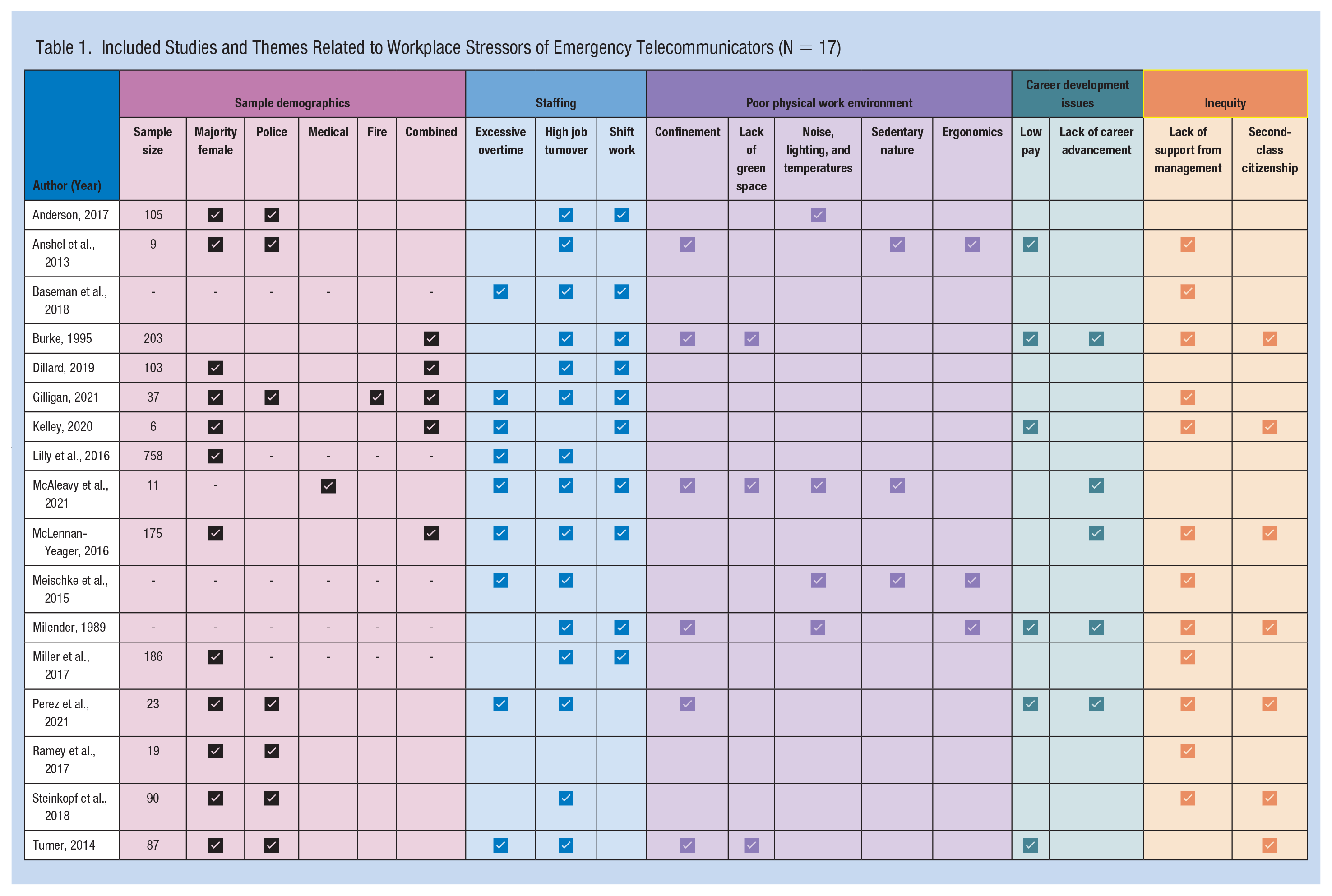
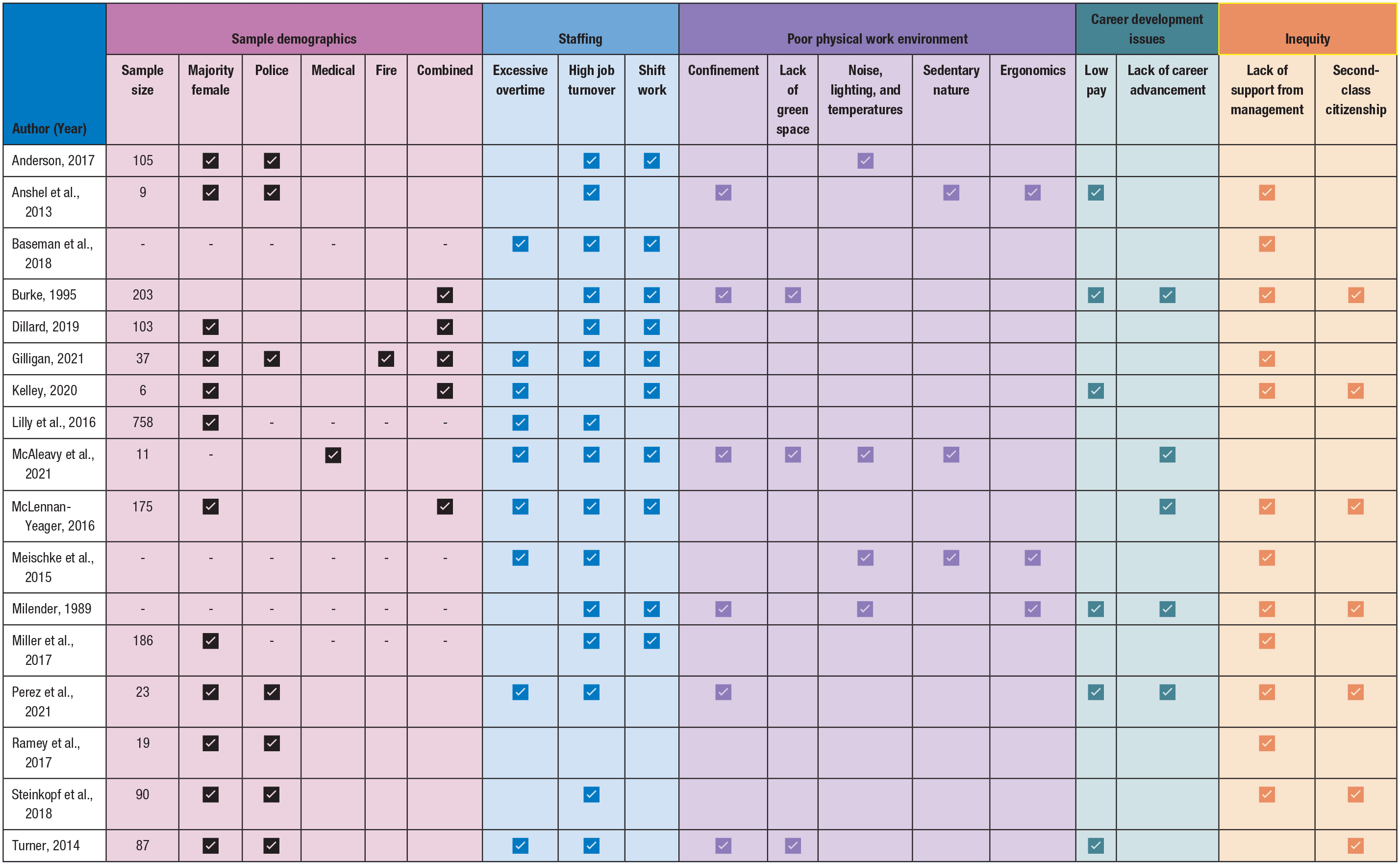
The systematic search yielded a total of 538 articles, and after duplicates were removed, a total of 429 remained. During the initial screening process, the title and abstract were reviewed to determine whether the articles met the inclusion/exclusion criteria. Consequently, 331 articles were excluded, seven articles were reconciled by the third coder, and three review articles were harvested for references. Book chapters, studies not within the United States, and articles that did not include full text or access to the full text, and 26 articles were further excluded. An additional 45 articles that did not solely reference emergency telecommunicators were excluded. Ultimately, 17 articles were included in this scoping review (see Figure 1 for PRISMA [Preferred Reporting Items for Systematic Reviews and Meta-Analyses] flowchart). A total of 25 categories were identified and condensed into four key themes (see Table 1). The four key themes were defined as (a) Staffing Problems: This theme includes issues related to inadequate staffing, mandatory and voluntary overtime, high job turnover, and the effects of shift work, all of which may contribute significantly to occupational stress. (b) Poor Physical Work Environment: This theme encompasses environmental stressors such as confined workspaces, lack of green space, noise, sedentary job nature, and poor ergonomics, which may negatively affect telecommunicators’ well-being. (c) Career Development Issues: This theme addresses the lack of career advancement opportunities, low pay, and the non-existence of a career ladder, which may lead to job dissatisfaction and high turnover rates. (d) Inequity: This theme highlights disparities between emergency telecommunicators and their field counterparts, including lack of support from management, feelings of being undervalued, and the perception of second-class citizenship within the organization. These four themes along with the implications for stakeholders to reduce stress are presented below.
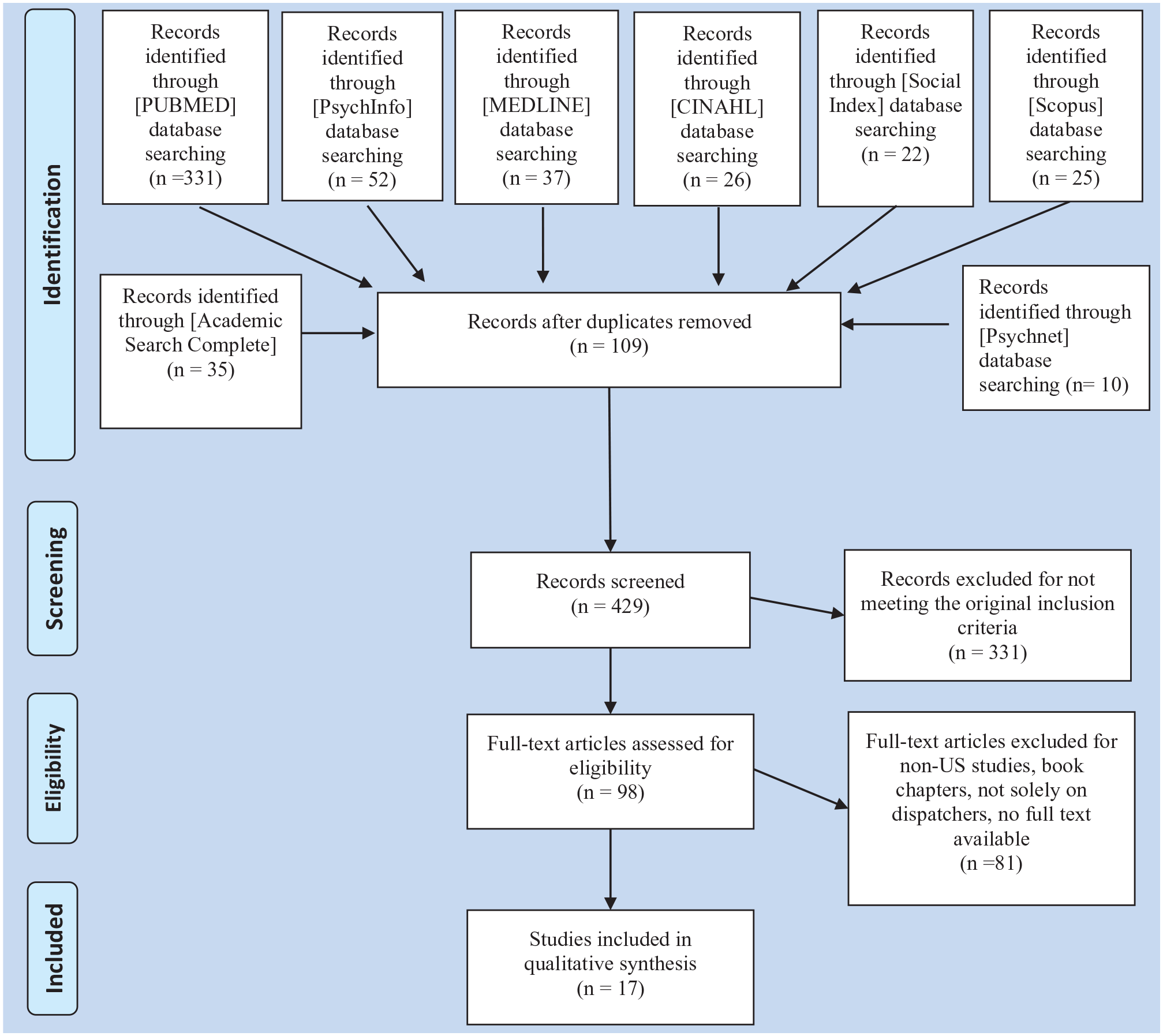
Identification of Studies via Databases and Registers (N = 17)
Included Studies and Themes Related to Workplace Stressors of Emergency Telecommunicators (N = 17)
Staffing Problems
Nearly all of the articles in this review (94.1%, n = 16) cited staffing-related stressors as a significant contributor to occupational stress. Staffing problems encompassed high job turnover (88.2%, n = 15), excessive overtime, that is, both voluntary and mandatory (52.9%, n = 9), and negative effects of shiftwork (52.9%, n = 9) were reported. Inadequate staffing was reported most frequently across this body of literature and high job turnover is characteristic of this work group (Burke, 1995; Dillard, 2019; Meischke et al., 2015; Milender, 1989). Staffing shortages of emergency telecommunicators may be attributed to high turnover and work overload. Anderson (2017) found working back-to-back shifts not only diminishes performance but may also contribute to job frustration and absenteeism. Similarly, Gilligan (2021) and Perez et al. (2021) highlighted the challenges of staffing shortages and attrition, noting that double shifts, minimal time off, and insufficient rest breaks are significant stressors affecting both workers and the citizens they serve. For example, Perez et al. (2021) contextualized how high job turnover among emergency telecommunicators results from deficiencies in staffing, noting that understaffing in emergency telecommunication centers was a constant stressor, which may negatively affect health through poor eating habits due to inadequate breaks. McAleavy et al. (2021) and Perez et al. (2021) reported challenges in retaining emergency telecommunicators and highlighted the importance of retention strategies to reduce overtime working hours. Baseman et al. (2018) in their study’s protocol hypothesize that new technology may also affect stress, well-being, and attrition.
Furthermore, shift work, defined as a work schedule outside of what is considered normal working hours, for example, working more than 8 hours or working night shifts or split shifts (Landsbergis et al., 2017), may be a source of stress. 9-1-1 emergency services is a 24-hour service that depends on emergency telecommunicators to process emergency calls around the clock. Shift work was found to be a major contributor to sleep problems and health complaints (Lilly et al., 2016). However, working abnormal schedules may also increase fatigue and lead to burnout for these professionals (Anderson, 2017).
Poor Physical Work Environment
Nearly half (47.1%, n = 8) of the literature cited the actual physical workspace or environment as a source of stress. Subthemes identified were confinement or isolation, poor aesthetics, that is, noise lighting, and vacillating temperature, lack of access to or visible green space, the actual sedentary nature of the job, and poor ergonomics. The confined work environment for emergency telecommunicators was the most cited source of stress identified in this theme.
Just over a third of the articles for this review (35.3%, n = 6) reported that emergency telecommunicators work in confined or isolated physical work environments. Confined and/or isolated work environments of emergency telecommunicators were described as them working in basements (Turner, 2014), tight work areas (Anshel et al., 2013), or little access to the public beyond speaking with callers during an emergency (McAleavy et al., 2021). Furthermore, emergency telecommunicators have limited access to lunchrooms, kitchen areas, and even exercise facilities, if available (Perez et al., 2021).
In addition to confined spaces, poor aesthetics included poor lighting, noise, and vacillating temperatures (23.5%, n = 4), and poor ergonomics (23.5%, n = 4), lack of green visible green space (17.6%, n = 3), and the sedentary nature of the job (17.6%, n = 3) were reported as potential sources of stress. While Milender (1989) and Burke (1995) emphasized that the work environment for emergency telecommunicators should seek to improve the windowless spaces, security issues, poor lighting, pragmatics of workstations, lack of comfortable seating, and increased noise levels, despite these recommendations, current research continues to highlight the poor working conditions for emergency telecommunicators. For example, issues such as a sedentary nature, with little to no opportunity for physical activities (Anshel et al., 2013; Lilly et al., 2016), poor lighting and air circulation, fluctuating temperatures (Anderson, 2017; McAleavy et al., 2021; Turner, 2014), and poorly designed workstations (Anshel et al., 2013; Dillard, 2019) such as their close proximity (McAleavy et al., 2021) are still reported as being problematic.
Career Development Issues
Just under half (47.1%, n = 8) of the literature cited career development issues as a source of stress. Career development issues encompassed poor pay (41.2%, n = 6) and lack of career advancement (29.4%, n = 5). Again, nearly three decades ago, Burke (1995) and Milender (1989) recommended increasing pay and creating career ladders as viable ways to reduce stress to support emergency telecommunicators, yet current research found that insufficient salary was a significant stressor which resulted in working more hours to supplement their income or leaving the job altogether for higher pay (Kelley, 2020; Perez et al., 2021). In a content analysis, McAleavy et al. (2021) noted that emergency telecommunicators expressed dissatisfaction with the non-existence of a career ladder. Similarly, Perez et al. (2021) associated job turnover with low pay and suggested that providing opportunities for career advancement could help address this issue while Gilligan (2021) reported that emergency telecommunicators were often disallowed from promotions. In addition, Kelley (2020) and McLennan-Yeager (2016) highlighted the pay disparity between field officers and emergency telecommunicators.
Inequity
Disparity-related stressors (82.4%, n = 14) were cited in the reviewed literature. The first type of stressor included feelings of being undervalued (41.2%, n = 7), synonymous with the perceived second-class citizenship (i.e., partiality between the field and the emergency telecommunicators). Burke (1995) was among the first to identify second-class citizenship as a unique stressor for emergency telecommunicators. He described how the divide between the non-sworn status of emergency telecommunicators and the sworn status of field officers, which fosters separation and may negatively affect camaraderie, could affect stress. Subsequently, 20 years later, McLennan-Yeager (2016) also supported this divide noting how field officers and or management often criticize, blame, or exclude emergency telecommunicators from congregate activities. Likewise, Anderson (2017) noted the disparity between emergency telecommunicators and field officers in terms of work duties, suggesting that field officers’ stress may be more recognized because they are visibly present at the scene. Steinkopf et al. (2018) found that emergency telecommunicators received fewer resources compared with field officers, which can further increase the risk of work-related stress. In addition, Kelley (2020) discussed how exclusionary practices, for example, public and organizational recognition and even critical stress debriefings, may further facilitate the disparity between emergency telecommunicators and sworn officers fostering strained work relationships.
A second major disparity-related stressors identified in 12 studies (70.1%) was the feeling of being unsupported by supervisors and/or management. Anshel et al. (2013) found that emergency telecommunicators reported feeling unsupported by their immediate supervisors or received inadequate supervision. Similarly, McLennan-Yeager (2016) observed that emergency telecommunicators expressed frustration with organizational and managerial support, in their reluctance to improve the work conditions. Miller et al. (2017) linked feelings of being unsupported by management to lower quality of life for Florida dispatchers. Burke (1995) and Milender (1989) again urged leadership to create a more supportive work environment for emergency dispatchers, suggesting that improving this perception should be a high priority for emergency telecommunication centers.
Discussion
The purpose of this review was to identify and synthesize the research literature on stressors for emergency telecommunicators. Although other studies have reviewed the occupational stress of emergency telecommunicators, this review summarized sources of stress associated with policies, practice norms, or procedures. This review contributes to the gap in knowledge in the existing body of literature by identifying the structural stressors that are both implicitly and explicitly embedded in the structure of emergency telecommunication through normal policies and practice procedures. Nerstad et al. (2023) explicitly stated that while occupational stressors are not exhaustive, they suggest exploring all categories of stressors to gain a comprehensive understanding of the occupational stress experienced by a workgroup. In this review, we identified four key themes: staffing problems, poor physical work environment, career development issues, and inequity.
Staffing Problems
Staffing problems include issues related to inadequate staffing, mandatory and voluntary overtime, high job turnover, and the effects of shift work, all of which may contribute significantly to occupational stress. At present, there is a national shortage of emergency telecommunicators (Kindermann et al., 2020; Klimley et al., 2018), and the results of this review have implications for the emergency telecommunicators, stakeholders, policymakers, and users of this vital service. Staffing and high job turnover are problematic for this workforce, and staffing levels should be increased to keep up with the increasing call volume. Kelley (2020) recommended appraising the cost and benefits of the work itself to “meet the needs of the ever-evolving society” (p. 38). Stakeholders and agencies should seek to have staffing levels that correspond to the demand of the callers using the system per area.
Poor Physical Work Environment
This theme encompasses environmental stressors such as confined workspaces, lack of green space, noise, sedentary job nature, and poor ergonomics, which negatively affect telecommunicators’ well-being. Ergonomics, the actual workspace of emergency telecommunication centers, adds additional layers of stress to this workforce. Workspaces, such as the actual positioning of the workstations, seating, lighting, noise levels, temperature, lack of green space, and proximity to radio stations and other workers, may be sources of stress from the design of the physical workspace (Ma et al., 2021). Similarly, not having meaningful time away from the workspace (i.e., adequate breaks and spaces) may induce stress (Nerstad et al., 2023). For example, in a study on predictors of obesity among emergency telecommunicators, Lilly et al. (2016) revealed that nearly half of the study participants’ body mass indexes were in the obesity range associated with not only duty-related stressors but possibly the sedentary nature of the job. Having a desk that could rise and provide viable access to spaces to move around or exercise, even during work, may mitigate occupational stress and improve worker well-being (Ma et al., 2021).
Career Development Issues
This theme addresses the lack of career advancement opportunities, low pay, and the non-existence of a career ladder, which lead to job dissatisfaction and high turnover rates. Opportunities for promotions have been a known concern for emergency telecommunicators. Stagnation in the workplace impedes professional growth and development which may also affect stress. In a study on the occupation of nurses, Ahn and Choi (2023) found an association between the negative perception of a career ladder and turnover intention. Their study revealed that those with a positive perception of a career ladder system had lower job turnover intentions. Low pay is another source of stress for emergency telecommunicators. Low pay and overtime have a paradoxical relationship, when workers are experiencing lower pay, they may be more apt to work overtime. More importantly, this workgroup is comprised mostly of women, and the gender pay gap may be a structural stressor that explains this reality. For example, in 2024, women working full time in the United States earned approximately 84 cents for every dollar earned by men (Schaeffer, 2024). Increasing the pay for these workers may attract new workers, which may reduce the stress experienced by staffing-related challenges. In addition, promotions are synonymous with an increase in pay as well as an increase in work identity (i.e., self-esteem). However, a lack of career advancement can result in burnout and thus work abandonment.
Inequity
This theme highlights disparities between emergency telecommunicators and their field counterparts, including lack of support from management, feelings of being undervalued, and the perception of second-class citizenship within the organization. While research on emergency telecommunicators primarily focuses on environmental stressors that negatively affect their health and well-being, occupational stressors that are formed externally from the work environment are generally underdeveloped (Schaufeli & Taris, 2014). For example, emergency telecommunicators are structured under public safety which utilizes a hierarchical and para-military structure (Pivetta, 2003). Hierarchical structures are known to restrict power and autonomy at the top and prioritize work and resources that benefit those higher in the structure (Nair & Guerrero, 2013). Research has indicated that emergency telecommunicators may perceive themselves as not being valued within the organizational structure (Dillard, 2019), often feeling segregated within public safety (Adams et al., 2015), and encounter a detached leadership style (Anderson, 2017). Gilligan (2021) recommends that policies should be aimed at reducing stress and how these types of stressors are characteristics of a much larger problem for emergency telecommunicators. This review revealed that the occupational stress of emergency telecommunicators may be directly related to how the organization structures the work, which can also be detrimental to workers’ physical, mental, and general well-being.
Disparity between the field officers and the emergency telecommunicators creates undue tension in public safety. Being a sworn officer has benefits directly tied to retirement. For example, most emergency telecommunicators are classified as civilians, which corresponds with entry-level positions such as clerical workers. On the other hand, field officers, who have been originally deemed the only first responders, may have protections within their contractual language that provide them with earlier retirement and resources such as PTSD support. This discrepancy of emergency telecommunicators, who are often designated as clerical workers and not first responders, may have detrimental effects, if not higher than their field counterparts. In addition, 71% of the literature in this review cited that the majority of this workforce are women, yet there are little to no references made to address needs specifically related to women at work, for example, those of child-bearing ages or other caregiving statuses. While a significant portion of this workforce is noted as female, it is essential to recognize that caregiving responsibilities and the need for leave are not exclusive to women. Policies should be inclusive and supportive of all employees, regardless of gender, to address the diverse needs of the workforce.
Limitations and Future Research
Limitations of this review include its exploratory nature. Utilizing an exploratory framework did not allow for a more focused review. For example, literature was examined from peer-reviewed articles, theses, study protocols, and dissertations. A systematic review may have provided a structured analysis of this body of literature. Another limitation is that this review did not succinctly map viable methods for interventions for stakeholders to review to aid in this growing shortage of emergency telecommunicators. A future systematic review should examine methods for interventions. More research is also needed on interventions at both the macro and micro levels.
Implications for Occupational Health Research and Practice
Occupational health professionals may benefit from the findings of this review as it highlights indirect and exogenous sources of stress that may have a negative impact on the state of emergency telecommunicators. Research with emergency telecommunicators has focused on individual outcomes of stress on the mental health and physical health of emergency telecommunicators with microlevel interventions to cope with macrolevel problems. Furthermore, research has relied heavily upon quantitative methods to understand this workforce. Voices of those directly impacted remain absent. In addition to known sources of stress such as the traumatic nature of the work and the actual work environment, structural stressors should be investigated and evaluated by occupational health professionals to address potential safety concerns and more importantly to address the staffing shortages of emergency telecommunicators (National Emergency Number Association & Carbyne, 2023). Future research is needed at the macrolevel to promote interventions to eradicate stressors of this vulnerable population. More qualitative studies are indicated to better understand how this work group experiences stress. While further research is needed, leadership among vulnerable work populations should consider the indirect stressors embedded in workplace policies and procedures that may be affecting their workers. For emergency telecommunicators, these include increasing hiring practices with an advantageous salary, creating an innovative career ladder, increasing breaks during working hours, staffing that corresponds to the demand of coverage area, improvements in the actual work environment such as access to greenspace, sit-to-stand work desk, wireless headphones, and more importantly policies that constitute emergency telecommunicators as a protected workforce with similar benefits of police officers, firefighters, and emergency medical technicians/paramedics.
Conclusion
Emergency telecommunicators are essential to the operations of public safety and they are at risk of harm. The work of public safety begins at the intersection between the public and their activation of the emergency system. On the other side of the phone are trained women and men who are the first to respond. This review was conducted to examine extant literature on the vulnerable population of emergency telecommunicators and to contribute to occupational stress literature by identifying structural stressors that are implicitly and explicitly embedded in work. Occupational stress among emergency telecommunicators has routinely been researched from medical and psychological perspectives with an emphasis on individual interventions. However, more adequate and meaningful ways of understanding work stress and interventions are needed to address the needs of this vulnerable work population.
Applying Research to Occupational Health Practice
Across 17 included articles, the following four key themes emerged from the data on workplace stressors of emergency telecommunicators: (a) staffing problems, (b) confinement and isolation, (c) little to no career path, and (d) inequity. This article contributes to current occupational health research of emergency telecommunicators by examining structural stressors that may contribute to their stress and well-being. Furthermore, research has revealed that emergency telecommunicators are majority female and the inequity between field officers and emergency telecommunicators may render them a vulnerable workforce and occupational health research should examine stressors that may disproportionately affect one group over another. While further research is needed, leadership among vulnerable work populations should consider the indirect stressors embedded in workplace policies and procedures that may be affecting their workers. These include increasing hiring practices with an advantageous salary, creating an innovative career ladder, increasing breaks during working hours, staffing that correspond to the demand of coverage area, improvements in actual work environment such as access to greenspace, sit-to-stand work desk, wireless headphones, and more importantly policies that constitute emergency telecommunicators as a protected workforce with similar benefits of police officers, fire women and men, and paramedics/emergency medical technicians.
Footnotes
Authors’ Note
Tomeika S. Oliver contributed to the conception, design, and as first coder during analysis of this scoping review. Chelsea Flanigan contributed to the analysis as a second coder as well as reviewing manuscript for clarity, and Megan R. Holmes contributed to the analysis as the third coder, reviewing manuscript for clarity and final approval of the version to be published.
Conflict of Interest
The author(s) declared no potential conflicts of interest with respect to the research, authorship, and/or publication of this article.
Funding
The author(s) received no financial support for the research, authorship, and/or publication of this article.
Ethical Approval
Approval from the Institutional Review Board to conduct the study was not required as no human subjects are used in scoping reviews.
