



Abstract
Background:
Hotel housekeepers’ major responsibility is to perform cleaning tasks. In the course of performing their duties, hotel housekeepers are disproportionately exposed to multiple workplace hazards (i.e., physical, chemical, biological, and psychosocial hazards) that put them at risk of adverse health consequences. This study aims to discover the occupational and health challenges encountered by immigrant hotel housekeepers in Orlando, Florida, and help hotel management to develop strategies to improve their occupational health.
Methods:
This study adopted an interviewer-administered survey method for data collection. Data were collected from members of the United Here Union, Local 7373 in Orlando, Florida. Trained Spanish–English bilingual associates of the Union administered the surveys through interviews with participants. Descriptive statistics and stepwise multiple regression were employed to analyze data (n = 140) using SPSS 22.
Findings:
This study shows that Florida hotel housekeepers participating in this study worked under great time pressures, endured excessive workloads, did not have enough time to rest and recover, and often skipped or shortened lunch breaks. Participants believed that their employers valued work productivity more than their safety and health. More than half of the respondents experienced racial discrimination at their workplaces.
Conclusion/Application to Practice:
The article brings an important contribution to the awareness of housekeepers’ feelings toward their work and the need for effective safety and health policies and programs.
Background
The major responsibility of hotel housekeepers is to perform cleaning tasks, which require repetitive movements and are physically demanding. As a result, hotel housekeepers often suffer repetitive motion injuries (Canadian Center for Occupational Health and Safety, n.d.). Hotel housekeepers have an annual injury rate of 7.9%, which is the highest among hotel employees (5.2% overall) (Noll, 2018). In the course of performing their duties, hotel housekeepers are also disproportionately exposed to multiple workplace hazards (i.e., physical, chemical, biological, and psychosocial hazards) that can put them at risk for numerous adverse health consequences (Hsieh et al., 2013). In addition, hotel housekeepers are subject to violence and bullying, including sexual harassment, verbal abuse, and physical assault by guests or co-workers (Guerrier & Adib, 2000; Hsieh et al., 2017; Hsu et al., 2019). They earn an average annual wage of $26,810, which is approximately half the average U.S. national wage of $54,010 (U.S. Bureau of Labor Statistics, 2020a).
Studies found that hotel housekeepers were not satisfied with their jobs and many reported high levels of work stress or not being respected by other hotel workers (e.g., Andrade et al., 2021; Rosemberg et al., 2019). Considering all of these factors, it is not surprising that hotel housekeeping departments have a high employee turnover (Mogelonsky, 2018; Pizam & Thornburg, 2000). Studies have shown that employee high turnover rates are associated with increased cost of human resource management (Kim et al., 2015), decreased job satisfaction (Sangaran & Jeetesh, 2015), increased workload and stress, lower morale, lower productivity, and poor customer service (Chen & Wu, 2017). Hotel housekeeping employees comprise the largest group of workers in the hospitality industry (U.S. Bureau of Labor Statistics, 2021). However, studies focusing on this low-paid and high-risk population are scant. There is a need to have a more complete understanding of the challenges experienced by this group.
This study seeks to discover work and occupational health challenges encountered by hotel housekeepers in Orlando, Florida. Specifically, the study aims to answer the following questions:
Do housekeepers report high-stress work conditions and any type of managerial neglect?
How do housekeepers perceive management care, or the lack thereof, for health and safety in the workplace?
What would housekeepers like to see management do to improve their work conditions?
Methods
This study employed a cross-section survey on hotel housekeepers in Orlando. We collaborated with the local United Union to recruit participants. Hotel housekeepers who were members of the Unite Here Union, Local 7373 in Orlando, Florida, were recruited to participate in this study.
Survey Instrument
This study reports further analyses of the “Occupational Health and Safety of Immigrant Hotel Housekeepers” (Shapoval et al., 2022). This study (Part 2) specifically focused on questions regarding the frequency of specific work experiences and challenges, relationships with their supervisor, health and safety at the workplace, and changes that their employers could make to improve the work conditions. This study was reviewed and approved by the University of Central Florida Institutional Review Board.
Data Collection
Considering that hotel housekeepers are not used to participating in surveys and some immigrant housekeepers have limited English language skills, this study employed an interviewer-administered survey method to overcome these barriers. Trained Spanish–English bilingual associates from the union administered the survey. The advantage of this method is that participants’ English literacy was not required, and questions and responses could be clarified with the assistance of the interviewers, so there were fewer missing responses, and also an increased participation rate. Study participants were informed of their rights when participating in this study and the confidentiality of their survey responses. An informed consent form was obtained before administering the survey. Surveys were verbally administered at the participants’ homes where they felt comfortable and free to answer survey questions. Each survey lasted about 60 minutes.
Data Analysis
Descriptive statistics and stepwise multiple regression were employed to analyze the collected data using SPSS 22. Assumptions regarding normality, collinearity, outliers, and autocorrelation were checked to ensure the appropriateness of applying multiple linear regression (Peck et al., 2019).
Findings
Participant Profile
A total of 140 responses were used for data analysis. The study sample was primarily female n = 129 (92%). The majority of participants (69.8%) were between 40 and 69 years old. Hispanic respondents accounted for 48.3%, followed by African Americans (23.1%) and Caribbeans (22.4%). Approximately 44% of the respondents had been working as a hotel housekeeper for 10 or more years; 33% had been working for 4 or fewer years; and 23% had been working between 5 and 9 years. Their average hourly salary ranged between $8.65 and $11, and their average weekly tips totaled $8.
Housekeepers’ Work Experiences and Challenges
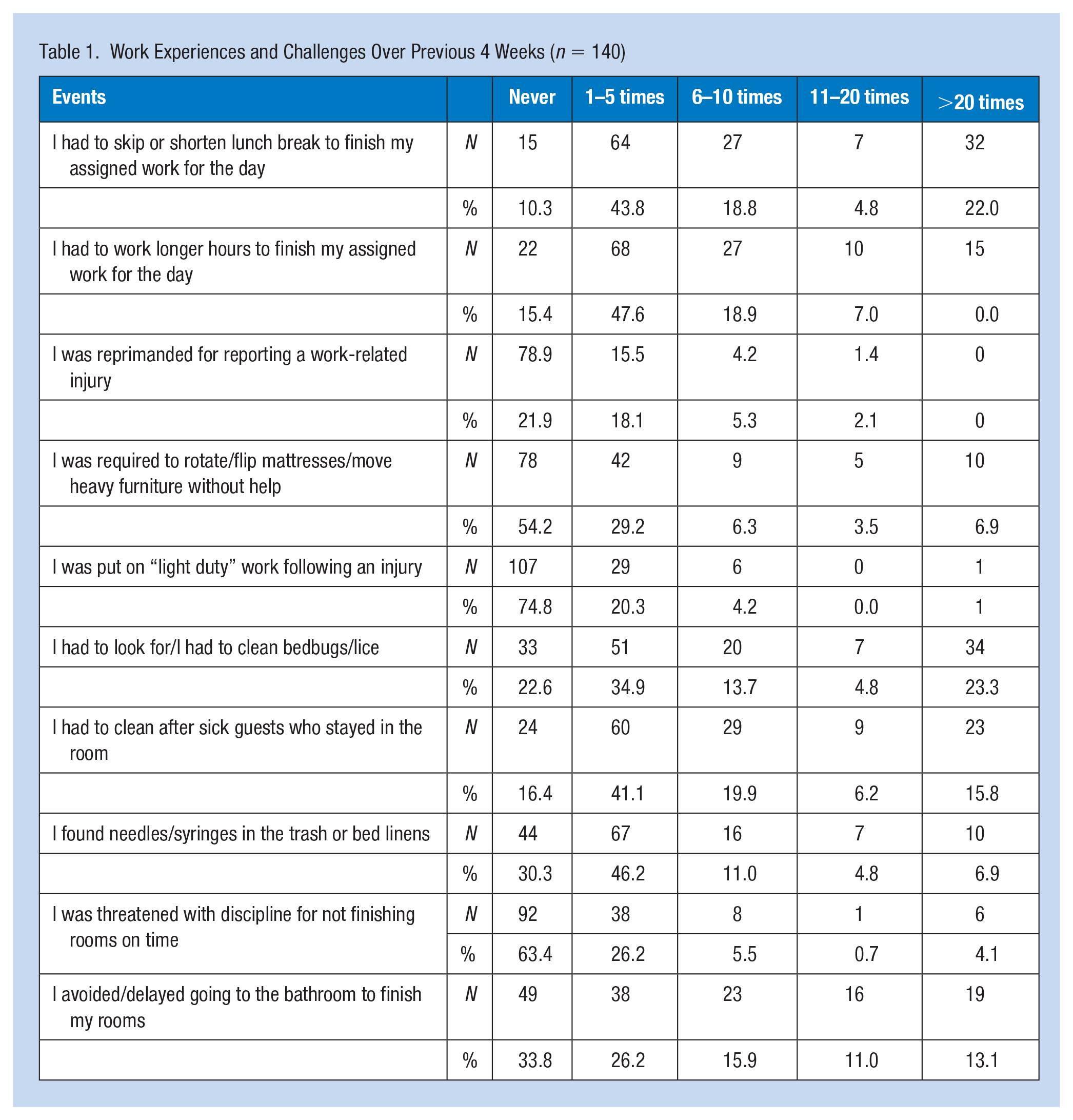
When asked to rank their work challenges during the past 4 weeks, 22% reported skipping or shortening their lunch break more than 20 times during that period, while only 10.3% reported never skipping or shortening their lunch break. Over a quarter of the respondents (25.5%) reported being reprimanded when they reported getting injured on the job. This was a problem because multiple reprimands could lead to being fired; for this reason, housekeeping staff avoided reporting injuries that occurred during work hours. Other difficulties in their work environment included the cleaning of bedbugs or lice from rooms (41.8%), finding needles or syringes in rooms during cleaning (68.9%), or cleaning up after sick guests (83%), all tasks that exposed housekeepers to potential sharps, body fluids and other biological hazards. The study participants also reported delaying or avoiding going to the restroom to finish their assigned work (40%) and working longer hours (73.5%) more than once. Finally, while none of the study participants were pregnant at the time of the study, 74.8% reported that during their overall work experience, they were never given light duty during pregnancy or following an injury, as noted in Table 1.
Work Experiences and Challenges Over Previous 4 Weeks (n = 140)
Feelings Toward Work and the Supervisor/Co-worker Relationship
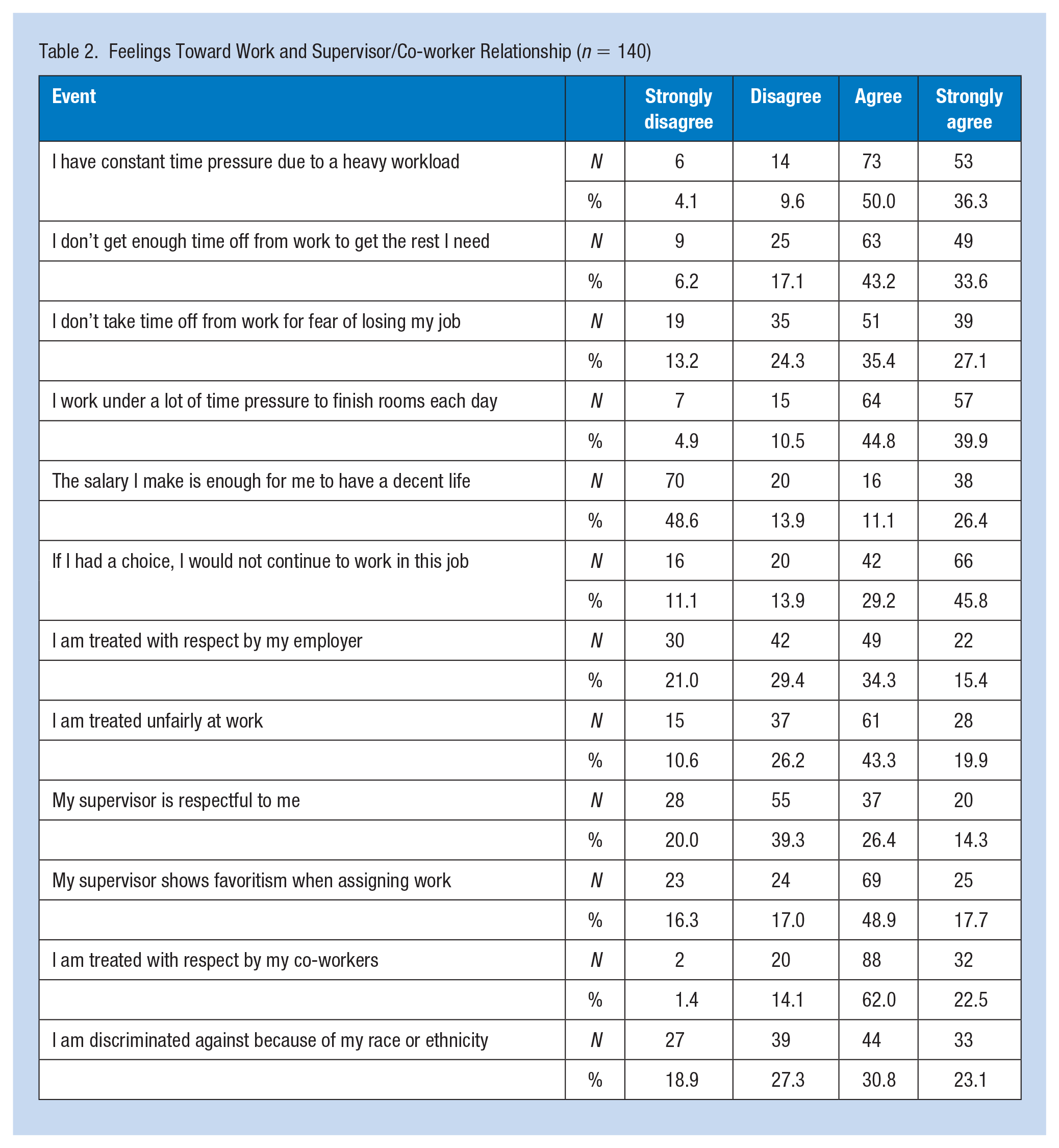
When participants were asked to rank the level of agreement or disagreement with a list of statements regarding work experiences, supervisors, and co-workers, 63.2% of the respondents either strongly agreed or agreed that they did not receive fair treatment, and 66.6% of respondents strongly agreed or agreed that their supervisors exhibited favoritism when issuing work assignments. They gave examples, such as assigning VIP or checkout rooms that took longer to clean than regular or stayover rooms to those housekeepers they liked less. Fewer than half (40.7%) of the study respondents agreed that their supervisor respected them, while many more (84.5%) agreed that their co-workers showed them respect. Over half (53.9%) agreed to have experienced discrimination based on their race or their ethnicity. A large proportion of study participants (86.3%) agreed to have experienced constant time pressure at work due to their heavy workload, and 84.6% agreed specifically to have experienced working under time pressures to finish their assigned rooms. The majority (75%) of respondents agreed that they would not do this job if they had a choice, and only 37.5% agreed that they earned enough money to have a decent life, as noted in Table 2.
Feelings Toward Work and Supervisor/Co-worker Relationship (n = 140)
Perceived Managerial Care of Health and Safety
The regression analysis revealed that factors such as management expectations, employee injury reporting habits, sense of racial discrimination, and consequences of reporting an injury can contribute to housekeepers’ perceived managerial care about health and safety. The regression model explained 50% of the variance (R2 = .5) and the overall model was significant (F-test = 27.9, p-value <.001). Study participants reported that they believed management expected workers to break health and safety rules to expedite tasks (β = 0.6, p-value = .001). Furthermore, they believed that if multiple injuries were reported that they would get fired (β = 0.22, p-value = .01), housekeepers would be coached if an injury was reported (β = 0.19, p-value = .04), and that racial discrimination existed in the workplace (β = 0.26, p-value = .001). Table 3 shows the result of that analysis.
Perceived Managerial Care About Health and Safety
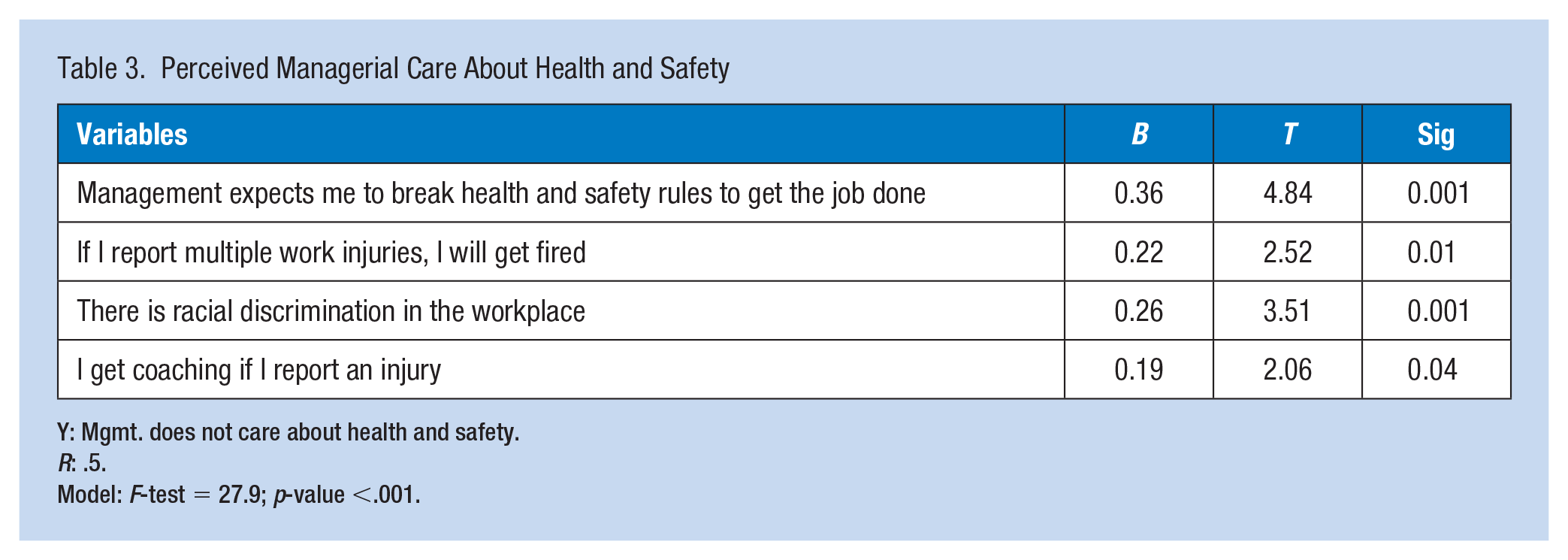
Y: Mgmt. does not care about health and safety.
R: .5.
Model: F-test = 27.9; p-value <.001.
Things Managers Can Do to Improve Housekeepers’ Work Conditions
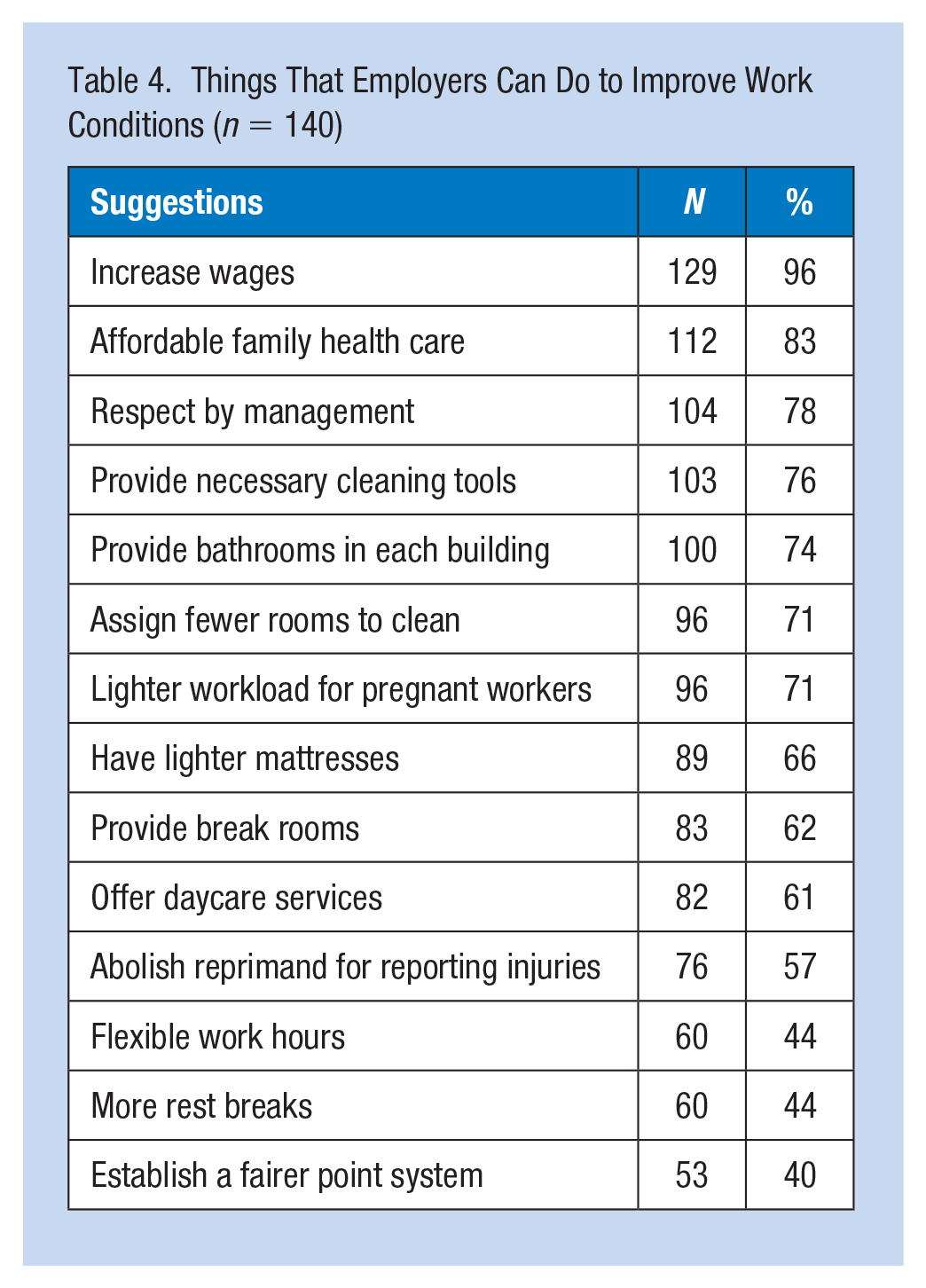
The respondents were asked to choose a list of things (see Table 4) that they believe their managers can do to improve work conditions. The top five things chosen by the participating housekeepers included increasing salaries to a living wage (96%), providing affordable family health care (83%), showing respect (78%), providing necessary cleaning tools (76%), and designating employee bathrooms in each building to avoid having to go to a different building to use the restroom (74%).
Things That Employers Can Do to Improve Work Conditions (n = 140)
Discussion
This study advances our understanding of housekeepers’ actual work experiences and challenges and how they perceive their employers’ attitudes regarding workplace health and safety. This study shows that the Florida hotel housekeepers participating in this study frequently worked under time pressure, did not have enough time to rest and recover, often skipped or shortened their lunch breaks, and even avoided or delayed bathroom breaks. The accumulation of these issues can lead to negative health consequences over time. It was not uncommon that these housekeepers cleaned bedbugs/lice and handled needles/syringes left in rooms, which put them at risk of biological or chemical exposures. They were often asked to work longer hours to finish cleaning all their assigned rooms. The majority of respondents (74.8%) reported that they were never granted lighter duty even if they were injured. This view reflected management’s lack of flexibility regarding job assignments and a lack of concern for their housekeepers’ health. The work challenges reported by these Florida hotel housekeepers are consistent with previous hotel housekeeper studies both domestically and internationally (e.g., Hsieh et al., 2016; Liladrie, 2010; Lundberg & Karlsson, 2011). This study further reinforces the fact that the difficulties and challenges encountered by hotel housekeepers are common, regardless of geographical boundaries.
Housekeepers’ feelings toward work and their supervisors supported the hotel housekeepers’ claims of unfairness, disrespect, and discrimination. The majority of the respondents felt respected by their co-workers, but not by their supervisors. They also reported concerns over supervisors’ ethnically based favoritism for certain workers, and more than half of the respondents agreed that there was racial discrimination at their workplaces. The mix of housekeepers from diverse backgrounds may create tension based on cultural in-groups or out-groups that sometimes resulted in favoritism and unequal work assignments. Moreover, evidence has indicated that managerial tolerance for incivility and discrimination has negative effects not only on the employees but also on the overall organizational performance (Sarwar & Muhammad, 2020). Hotel management should address this issue by promoting greater fairness and equality at work and by being proactive to end unfair discrimination.
In addition, over 60% of the respondents disagreed that their salary was a living wage required for them to have decent lives. According to the U.S. Bureau of Labor Statistics (2020b), the average hourly wage of maids and housekeeping cleaners is $12.89. The average annual wage is thus $26,810, approximately half the national average wage of $56,310 (U.S. Bureau of Labor Statistics, 2020b). Looking over these foregoing details, it is not surprising that approximately 75% of the respondents agreed that, if given a choice, they would not continue to work in their jobs. This finding is in line with Pizam and Thornburg’s (2000) study of 62 hotels in Central Florida, indicating that housekeepers had the highest absenteeism per employee per year (6.6 days) and the highest turnover rate (70.8%) compared to hotel employees in other departments. The literature has sufficiently documented the negative impacts of employee turnover rates for an organization, including increased workload, higher levels of stress, burnout, low morale, low job performance, lack of worker commitment, less profitability, and poor service quality (Park & Min, 2020). Hotel managers should review the salary structure regularly to ensure the compensation programs are competitive externally and equitable internally.
This study also investigated housekeepers’ perceptions of their employers’ attitudes toward workplace health and safety. The housekeepers reported that their employers valued work productivity more than their safety and health. This view was reflected in the managers’ reprimands of those housekeepers who reported injuries and in their failure to reduce the workload of their injured housekeepers.
The top three things that hotel housekeepers believed their managers can do to improve their working conditions revealed hotel housekeepers’ concerns about the pay, family health care, and respect given to them by management. These findings offer clear and practical recommendations for management to take to improve housekeepers’ job quality and satisfaction with their profession overall.
Conclusion and Implications
Although the hospitality and tourism workforce contributes heavily to the U.S. and global economies (Adams et al., 2020), there is a disconnect between the work conditions and managerial treatment of hotel housekeepers in safeguarding their occupational health. Hotel housekeepers occupy one of the lowest ranks on hotel organizational charts, yet their jobs are essential in providing clean guestrooms. Without the efforts of hotel housekeepers, hotels would lose a main source of their revenue stream. It is critical for management to understand the challenges and difficulties housekeepers encounter while performing their job and develop strategies to reduce these job challenges.
The results of this study showed that hotel housekeepers in Florida want a better salary, which ranked first on their list of desires. To respond to this suggestion, hotel companies should adjust the salary scale according to current living expenses to ensure that hotel housekeepers make enough money to make ends meet. This study also demonstrated that hotel housekeepers want affordable family healthcare, which ranked second on their list. Previous studies have indicated that workers—especially immigrant housekeepers who are new to the country—tend to have limited information related to health resources (Dembe et al., 2013). Hotel companies can take an active approach to include health insurance coverage in their employee benefits package, which would show their employees that they care and, in turn, increase employees’ organizational commitment and retention rate.
Florida hotel housekeepers ranked respect from their managers third on their list of desires. The study found that hotel housekeepers reported unfair treatment from their supervisors. It is common for hotel housekeeping supervisors to be promoted directly from housekeeping staff, without receiving extensive supervisory skill training. Consequently, they may lack the skills required to manage subordinates. Executive housekeepers need to monitor the supervisory skills of their floor supervisors and provide the necessary supervision training to help them better manage their housekeepers and avoid unfair treatment.
Management should also understand that being treated fairly and respectfully is a fundamental right for any worker. Managers should not discriminate against their employees due to race, skin color, religion, sex, national origin, disability, age, or genetic information. Hotel companies should enforce a zero-tolerance policy for workplace bullying, bias, and racism. They should also educate employees about discrimination and develop a culture to foster a respectful and healthy work environment.
Hotel housekeeping is a physically demanding job. To safeguard hotel housekeepers’ work safety and health, managers should ensure that workload assignments do not exceed hotel housekeepers’ physical capabilities. Managers should purchase equipment and tools to make housekeeping work easier. For example, housekeeping staff should have access to bed-making assistive devices to reduce the need to lift mattresses, and lightweight vacuum cleaners that consume less effort to move and lift. Most of all, managers should train hotel housekeepers on how to apply ergonomics to improve the efficiency of housekeeping work and reduce discomfort or pain induced by any repetitive movement.
Continuing research is needed to better understand the complexity of structural issues as well as corporate policies and practices that affect the occupational health and safety of this workforce. This study did not ask about access to human resource and occupational health services, but the findings suggest that these services were not available. Labor leaders can utilize these survey data to bargain for evidence based safety and health programs for hotel housekeepers. More research is needed to evaluate interventions that can enhance hotel housekeepers’ physical and mental well-being.
Limitations of the Study
The population sample of this study consists of hotel housekeepers in Florida who are union members, which limits the generalization of the study’s results. Future studies should expand the sample to include both union members and non-members as well as both immigrants and non-immigrants to increase the generalization value of results. Although all interviewers who administered the survey were trained and could relate to respondents through their union affiliation, it is possible that respondents may not have felt comfortable providing honest answers, especially if those answers might present the speakers in an unfavorable manner. This situation may lead to potential response bias. Future studies can employ a self-administered survey method with simple wordings and provide translated versions for housekeepers to complete the survey on their own. For those who are illiterate, researchers can provide interpreters to assist with the survey. The combination of self-administered and interviewer-administered surveys can decrease the chance of response bias.
Several of the questionnaire items asked participants to rank statements describing their feelings toward work and relationships with their supervisors and co-workers; these items were presented in negative terms. Such negative wording may lead to framing effects on respondents’ judgment. Future research exploring housekeepers’ feelings toward their work could incorporate both positive and negative terms or use open-ended questions, allowing respondents to share their opinions on both negative and positive aspects.
Applying Research to Occupational Health Practice
This study examined the work challenges and health of hotel housekeepers. Housekeepers’ health and organizational treatment in the hospitality industry are understudied areas. This article provides valuable insights into workplace health and safety concerns from actual housekeepers’ perspectives. The study found that hotel housekeepers are regularly exposed to physical, chemical, biological, and psychosocial hazards in the workplace, which may result in work-related injuries. Many employees surveyed believed that they were treated unfairly, perceived that their physical injuries were not being addressed, and had concerns about retribution if injuries were reported. The article makes an important contribution to the awareness of housekeepers’ feelings toward their work and the need for effective safety and health policies and programs.
Footnotes
Acknowledgements
The authors thank Jeremy Haicken, President of UNITE HERE Local 737, and his associates, who were instrumental in collecting this data. We also thank all the hotel housekeepers who shared their experiences with us as part of this research study.
Author Contributions
Yu-Chin (Jerrie) Hsieh: design of the work, survey instrument development, article revision.
Valeriya Shapoval: conceptualization and design of the work, data analysis, writing, article revision.
Sevil Sönmez: conceptualization and design of the work, data collection, article revision.
Yorghos Apostolopoulos: design of the work, article revision.
Conflict of Interest
The author(s) declared no potential conflicts of interest with respect to the research, authorship, and/or publication of this article.
Funding
The author(s) received no financial support for the research, authorship, and/or publication of this article.
Ethics approval
Approved by IRB at UCF
Approval date: March 22, 2017
IRB number: SBE-16-12266
Research ID: ra-168082
Review type: exempt determination
Approved as: human participant research that is exempt from regulation.
