




Abstract
Background: Gender parity in the workplace—and increased representation of women at work—may reduce workplace sexual harassment, but research on this is unclear. This study assessed the associations between gender parity at work and workplace sexual harassment. Methods: We analyzed data from an online sexual harassment survey conducted with a nationally representative sample of U.S. adults in 2018 (N = 2,009; response rate 29%); current analyses were restricted to employed participants (women n = 610, men n = 690). Data on occupation and industry were each categorized as female-dominant (61%–100% female), male-dominant (0%–39% female), or at parity (40%–60% female). We used sex-stratified logistic regression models to assess associations between gender parity in industry and occupation and workplace sexual harassment. Findings: Our study of employed adults in the U.S. found that 42% women and 15% men had experienced workplace sexual harassment. Logistic regression analyses indicated that women employed in female-dominated industries (adjusted odds ratio [AOR] = 0.52; 95% confidence interval [CI] = [0.33, 0.81]) and men employed in male-dominated occupations (AOR = 0.55; 95% CI = [0.33, 0.91]) were less likely to have experienced workplace sexual harassment. Women in male-dominated occupations were more likely to report harassment or assault by a supervisor (AOR = 2.41, 95% CI = [1.00, 5.80]), and men in male-dominated occupations were less likely to report harassment or assault by a supervisor (AOR = 0.26, 95% CI = [0.08, 0.89]). Conclusion/Application to Practice: Women in female-dominated industries and men in male-dominated occupations, relative to those with workplace gender parity, are at lower risk for harassment. Women in male-dominated occupations are at greater risk for harassment from supervisors. Gender parity at work is not sufficient on its own to address workplace sexual harassment; normative changes are needed.
Background
The #MeToo movement has brought broader public attention to the scope and impact of workplace harassment across occupations and industries. Recent national polls and studies on workplace harassment in the U.S. suggest that 21% to 35% of women (Funk & Kim, 2018; Lee, 2017; Marist-Poll, 2017; Meyn & Larson, 2018; Park & Funk, 2017; Stop Street Harassment, 2018; Washington Post & ABC News, 2017) and 7% to 14% of men (Funk & Kim, 2018; Lee, 2017; Marist-Poll, 2017; Meyn & Larson, 2018; Morral et al., 2015; Stander & Thomsen, 2016; Stop Street Harassment, 2018) have experienced sexual harassment in the workplace. There is evidence of variability by occupation and industry. For example, a study with female firefighters found that 22% had experienced workplace sexual harassment (Hom et al., 2017), a study with academic clinicians found that 30% had experienced workplace harassment (Jagsi et al., 2016), and up to 36% of women veterans report having experienced sexual harassment in the military (Stander & Thomsen, 2016). Variations in measures and assessment and sampling approaches may account for some of these differences (Ilies et al., 2003), but studies also show that industries and occupations affected by power hierarchies and gender imbalances in the workforce may be more vulnerable to these abuses occurring unchecked (Hay et al., 2019; Ilies et al., 2003). This study examines gender parity in the workplace and its association with sexual harassment among U.S. working adults.
As with sexual harassment broadly, workplace sexual harassment is composed of three distinct but interrelated constructs: unwanted sexual attention, gender harassment, and sexual coercion (Fitzgerald et al., 1995). Unwanted sexual attention is typically described as ongoing romantic attention or requests, in person or via technology, despite requests to cease the attention. More aggressive aspects of this behavior include stalking as well as retaliation when “spurned” (Fitzgerald et al., 1995; Stop Street Harassment, 2014, 2018). Gender harassment as a form of sexual harassment involves verbal and nonverbal behaviors that denigrate individuals or groups based on their sex/gender or via their sexualization or sexual objectification, which can create a hostile work environment even for those who are not direct targets (Fitzgerald et al., 1995). Sexual coercion involves forced sexual or sexualized contact interactions typically viewed as more aggressive in nature, such as frotteurism (rubbing against someone sexually without consent) and exhibitionism (displaying oneself sexually without consent, a form of abuse that increasingly involves use of technology or cyber sexual harassment). This can include quid pro quo sexual coercion, where opportunity for advancement or positioning is provided based on agreement to sexual contact (National Academies of Sciences, Engineering, and Medicine, 2018).
These experiences of sexual harassment and their effects can vary by type, frequency, intensity, duration, relationship to perpetrator, and ability to escape contact with the perpetrator, as well as by the nature, needs, or past experiences of the victim (Fitzgerald et al., 1995; Lim & Cortina, 2005; National Academies of Sciences, Engineering, and Medicine, 2018; Stop Street Harassment, 2018). The context of the workplace can also be connected to inherent power dynamics between supervisors and employees that affect sexual and romantic relations and choice (Lim & Cortina, 2005). The negative impact of workplace sexual harassment is well-documented and includes loss of productivity due to victims’ compromised work performance and advancement (Bostock & Daley, 2007; Jagsi et al., 2016), physical health concerns (Harnois & Bastos, 2018; Shipherd et al., 2009), substance misuse (Rospenda et al., 2009), depression, other forms of psychological distress (Buchanan et al., 2008; Street et al., 2007), and even suicidal ideation (Hom et al., 2017). These effects tend to be more pronounced when the perpetrator is a supervisor or someone with authority over the victim, relative to a coworker or client (Bostock & Daley, 2007; Friborg et al., 2017). Those most vulnerable to sexual harassment are female, younger, in low or subordinate positions, and migrants or temporary workers (Hersch, 2015); in other words, those contending with social vulnerabilities are most vulnerable to harassment at work, a pattern consistent with other forms of gender-based violence (Smith et al., 2017). There are also severe financial costs both to victims of harassment, who often leave or lose employment, and for companies, which bear the cost of employee loss, retraining, and, increasingly, resultant lawsuits and replacement of employees as accountability for perpetration improves (Hersch, 2015).
Research on sexual harassment in the workplace demonstrates that sexual harassment is more common in contexts of hierarchy and general incivility or bullying (Hersch, 2015; Ilies et al., 2003; Morral et al., 2018), and it is more commonly perpetrated by men, against both female and male victims. These are contexts where aggression and patterns of victimization, sexual and nonsexual, occur in tandem and are unchecked (Lim & Cortina, 2005), often reinforced by traditional norms of masculinity and masculine dominance (de Haas & Timmerman, 2010; Gruber & Morgan, 2004; Morgan & Gruber, 2011), and victims fear retaliation or loss of employment if they report, even when policies of protection are in place (Hersch, 2015; Ilies et al., 2003). Research from the military reinforces this point; despite consistent polices against harassment across all bases, bases characterized by higher rates of sexual harassment see both female and male victims and more bullying generally (Morral et al., 2018), though the forms of these harassments tend to be for purposes of sexualization in cases of female victims and for purposes of hazing and humiliation in cases of male victims (Morral et al., 2015). These findings point to the role of culture and climate in facilitating workplace sexual harassment in ways that are harmful to both women and men.
Corresponding with the above described findings on workplace climates of hierarchy and dominance, norms related to masculinity, and tolerance of men’s bullying or hazing behaviors as potentially supportive of sexual harassment, one might anticipate higher rates of sexual harassment for both women and men working in male-dominated environments. Correspondingly, numeric gender parity in a profession, defined as 50-50 female to male representation but more typically measured as 40% to 60% representation of either sex, is presumed to reduce sexual harassment in the workplace (Dhatt et al., 2017; Global Health 50/50, 2018; Gruber & Morgan, 2008). However, prior research has hypothesized that gender parity in industry rather than occupation may be more meaningful, because women in female-dominated occupations who are supervised by men in a male-dominated industry may remain at risk (Berdahl, 2007). This research found lower risk for sexual harassment of women working in female-dominated organizations, relative to those working in male-dominated organizations (23% vs. 57%) (Berdahl, 2007). In contrast, no difference in risk for sexual harassment was seen for men in female-dominated compared with male-dominated organizations (25% vs. 26%) (Berdahl, 2007). Overall, these findings correspond with expectations of increased risk for sexual harassment in male-dominated work environments for women but not men.
Such findings are consistent with other studies documenting associations of underrepresentation of women in the workplace being associated with poorer mental health outcomes (Milner et al., 2018) and lesser use of sick leave when needed (Laaksonen et al., 2012; Mastekaasa, 2005). However, these data are more than a decade old and lack consideration of both occupation and industry, at a time when even more women are in the workforce and laws and protections have improved. Furthermore, they provide little insight into experiences of sexual harassment of men, which we know to differ from women in terms of motivations behind and intent of the harassment, which is more often designed to sexually humiliate as a means of establishing dominance (Berdahl et al., 1996; Morral et al., 2015). This study assesses whether gender parity relative to male dominance in the workplace is associated with lower risk for workplace sexual harassment or assault for working women and men in the United States, with consideration of gender parity in both industry and occupation.
Methods
We analyzed data from the Stop Street Harassment 2018 survey, conducted with an online probability panel (the GfK KnowledgePanel®) of adults in the United States in January 2018. The KnowledgePanel® uses an address-based sampling method and includes households with landlines and/or mobile phones. For identified households without Internet, Internet access and a laptop were provided for survey completion. Participants in the online probability panel agree to provide demographic and contact information to the survey company and agree to receive surveys about a range of topics, through consent to taking each survey individually and can opt out of any survey if they wish. The sampling approach is comparable to that seen in the Centers for Disease Control and Prevention’s National Intimate Partner and Sexual Violence Survey (Smith et al., 2017) and for online panel surveys generally, which hover around 20% to 25% for recruitment (Callegaro & DiSogra, 2008). Post-stratification survey weights were generated by the survey firm based on the following variables: age, sex, education, race, household income, metropolitan/nonmetropolitan residence, Internet availability in the household, and geographic region, to yield a nationally representative sample. Each participant was assigned a single weight to match the respondent distribution of the above characteristics to the adult U.S. population based on Census Current Population Survey (CPS) estimates (United States Census Bureau, 2018). This weighting allowed us to make population representative inferences from these findings.
The study focused on sexual harassment in the workplace; therefore, primary analyses were restricted to those reporting current employment, and unemployed individuals were analyzed secondarily to assess rates and results of workplace harassment among currently unemployed individuals. We did not have data on past or ever employment and therefore could not presume past employment for any participants. We limited the study to working adults to ensure the full sample had ever worked and to allow for industry and occupation categorization. As our analyses used deidentified secondary data, this study was deemed exempt by the University of California, San Diego Human Research Protections Program.
Workplace sexual harassment or assault ever was assessed via survey items on 15 forms of sexual harassment and assault across 16 distinct locations, one of which was workplace, defined as “Your workplace, including temporary jobs and internships.” Participants were asked to: “Please check off each type of sexually harassing or abusive experience/s you have ever had and where they took place. Note that this is focused on interactions you did not willingly agree to or did not want to have.” Items on sexual harassment included forms of unwanted sexual attention, gender discrimination, and sexual coercion and assault delivered verbally, electronically (i.e., cyber harassment), or physically. The full survey can be found in the study report (Stop Street Harassment, 2018). If the respondent indicated any of these forms of sexual harassment or assault in the workplace ever, they were categorized as having experienced workplace sexual harassment or assault. The Cronbach alpha for our 15-item sexual harassment and assault measure was .90, indicating very high internal consistency. Criterion validity of the measure is also indicated, as the prevalence of workplace sexual harassment in this study is within the range of that seen in prior national research with U.S. women on this topic (Funk & Kim, 2018; Lee, 2017; Marist-Poll, 2017; Meyn & Larson, 2018; Park & Funk, 2017; Washington Post & ABC News, 2017).
Employment was assessed by asking whether the participant was currently employed, and then providing a list of 35 occupation options and 27 industry options that are standard measures designed and implemented by the U.S. Bureau of Statistics (Bureau of Labor Statistics [BLS], 2018). Based on 2017 national employment data collected by the BLS, occupations and industries were redefined as being female dominant (61%–100% female), male dominant (0%–39% female), or at gender parity (40%–60% female), creating our two variables of interest, gender parity in occupation and gender parity in industry.
Participant demographics were also collected before the survey rather than during the survey. Information regarding race/ethnicity was collected only as White, Black, Hispanic, Other, and Mixed Race. Information about income, urban or rural residence, and U.S. region (i.e., Northeast, Midwest, South, West) were collected categorically and defined using definitions from the U.S. Census CPS (United States Census Bureau, 2018). Disability was defined as having one of the following: blindness or severe visual impairment; deafness or hard of hearing, a long-lasting condition that substantially limits one or more basic physical activities, and a long-lasting physical, mental, or emotional condition that increases the difficulty of learning, remembering, or concentrating. Disability was dichotomized for analyses as having any of these forms of disability or not.
Data Analysis
Summary statistics for demographic characteristics and lifetime workplace harassment among the currently employed population are presented, as are prevalence data for each form of sexual harassment and assault reported. Unadjusted associations between gender parity in workplace and demographic characteristics with our outcome of workplace sexual harassment were first assessed using chi-square analyses and bivariate logistic regression models. We constructed simple adjusted models including only industry and occupation gender parity as predictors of workplace harassment to see their relative contribution. Finally, we used logistic regression models fully adjusted for demographic covariates to assess associations between gender parity at work and workplace sexual harassment. Significance was set at p < .05 for all comparisons, and 95% confidence intervals (CIs) are reported throughout. Unweighted numbers of participants are presented, and all other analyses were weighted for the online probability panel sampling design with provided survey weights, utilizing an unconditional subpopulation approach, stratified by sex, and conducted using STATA 15.1, allowing for findings that are nationally representative, as described earlier in methods and provided in detail in the original study report (Stop Street Harassment, 2018).
Results
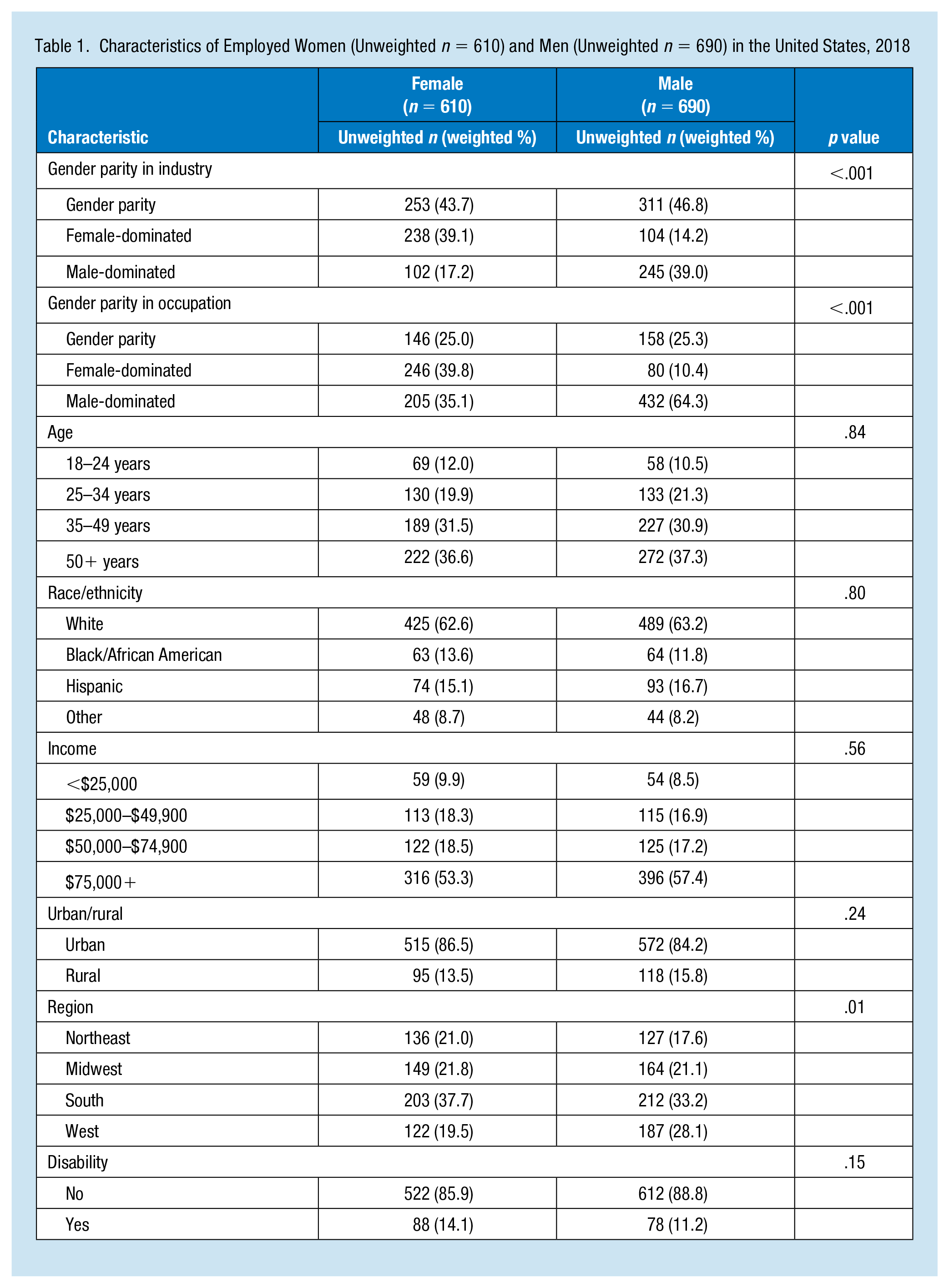
During the period of recruitment for the Stop Street Harassment survey, a total of 6,910 panel members aged 18 years and older were contacted, and 2,009 individuals (n = 996 women and n = 1,013 men) were reached and completed the KnowledgePanel® survey (response rate 29%). The subsample of working participants included in analyses was n = 690 men and n = 610 women. We found significant differences between men and women in terms of employment in industries and occupations characterized as male-dominated versus female-dominated versus gender parity (see Table 1). Almost half of men and women work in industries with gender parity—43.7% of women (n = 253) and 46.8% of men (n = 311). However, among women, 39.1% (n = 238) worked in female-dominated industries and 17.2% (n = 102) in male-dominated industries, where among men, 14.2% (n = 104) worked in female-dominated industries and 39.0% (n = 245) in male-dominated industries. These differences were more pronounced for occupation. Among women, 39.8% (n = 246) worked in female-dominated occupations, 35.1% (n = 205) in male-dominated occupations, and 25.0% (n = 146) in occupations with gender parity. Among men, 10.4% (n = 80) worked in female-dominated occupations, 64.3% (n = 432) in male-dominated occupations, and 25.3% (n = 158) in occupations with gender parity. (See Supplemental Table 1 for list of industries and occupations by gender parity categorization.)
Characteristics of Employed Women (Unweighted n = 610) and Men (Unweighted n = 690) in the United States, 2018
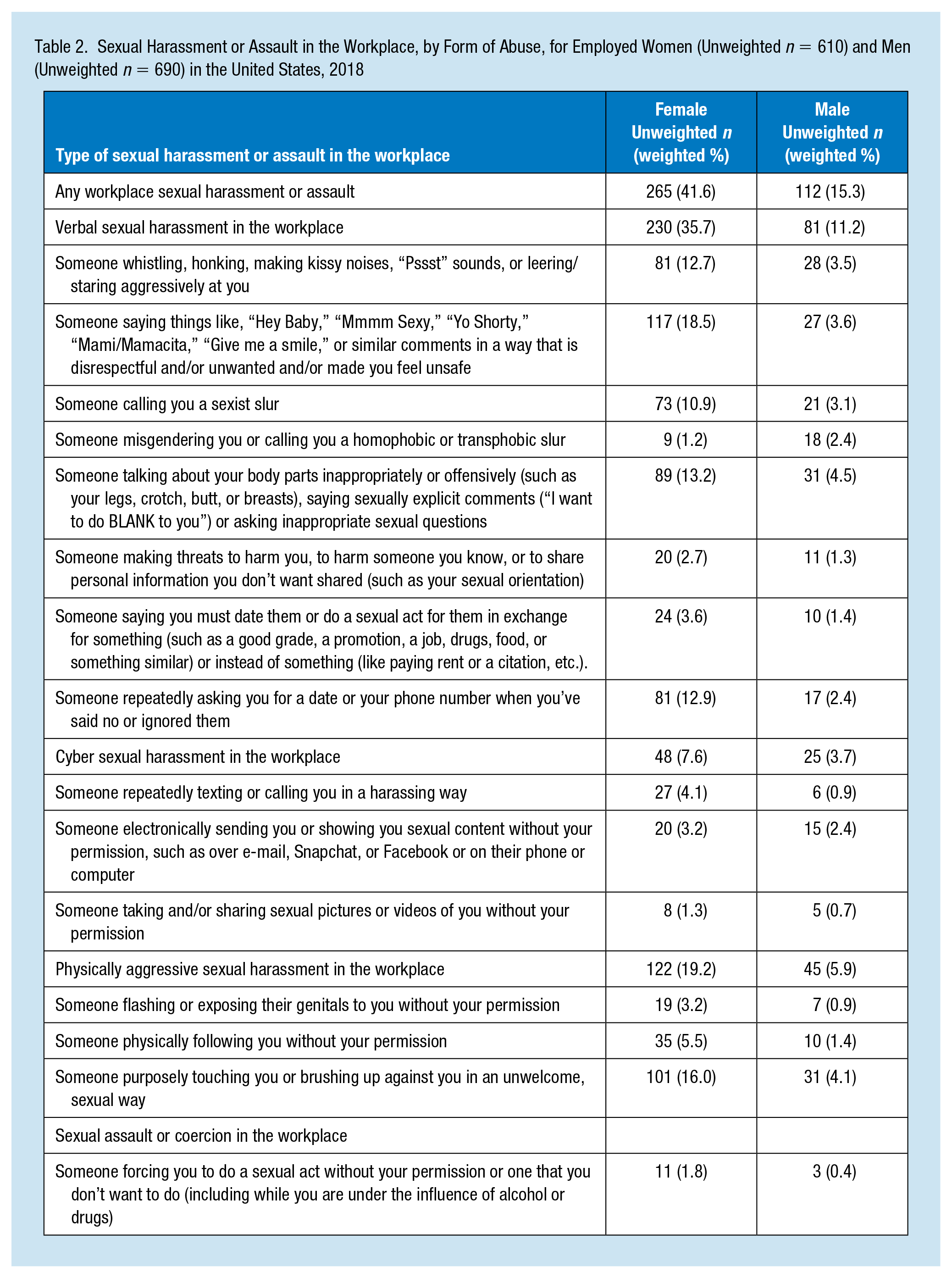
Forty-two percent of women in this sample (41.6%; n = 265) and 15.3% of men in this sample (n = 112) report a history of victimization from sexual harassment or assault in the workplace (see Table 2). This abuse was most often in the form of verbal sexual harassment, for both women and men. However, among employed women, 16.0% (n = 101) reported someone purposely touching them or brushing up against them in an unwelcome, sexual way in the workplace, and 12.9% (n = 81) reported harassment for a date at work.
Sexual Harassment or Assault in the Workplace, by Form of Abuse, for Employed Women (Unweighted n = 610) and Men (Unweighted n = 690) in the United States, 2018
Perpetrators for both women and men were more often coworkers rather than bosses or supervisors (see Figure 1). Among women, 12.3% (n = 81) had been harassed by a coworker, 8.5% (n = 53) were harassed by a boss/supervisor, and 8.0% (n = 51) had been harassed by someone else in the workplace. Among men, 7.1% (n = 52) had been harassed by a coworker, and less than 2% (n = 13) had been harassed by a boss/supervisor or someone else at work. Among those reporting workplace harassment, 13.1% of women (n = 34) and 8.3% of men (n = 9) had changed or quit a job due to sexual harassment or assault.
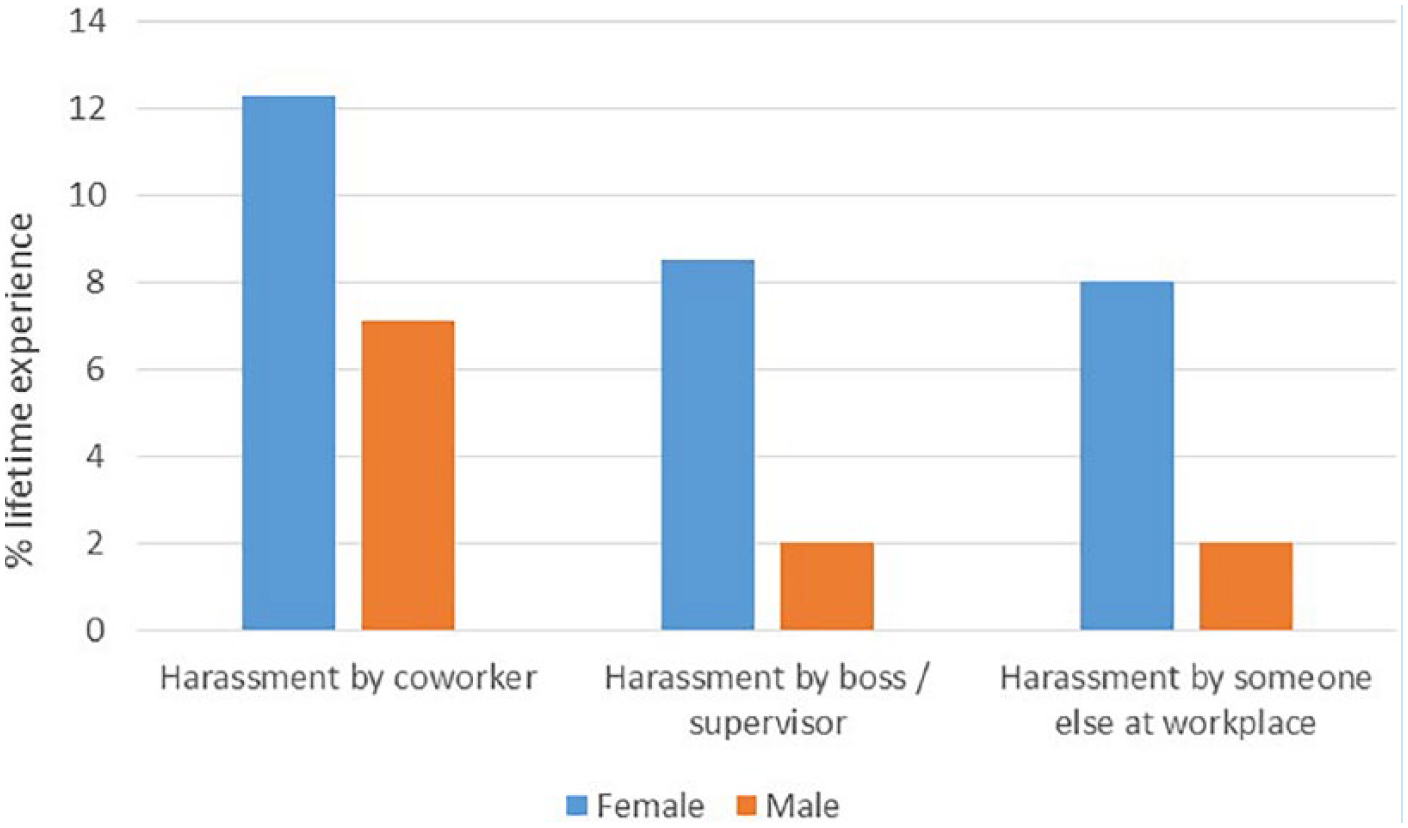
Percent of currently employed individuals reporting harassment by someone in the workplace, 2018
Chi-square analysis indicates a trend association between gender parity in industry and workplace sexual harassment and assault, suggesting that women in female-dominated versus gender parity industries may be at lower risk for these abuses (36.3% vs. 47.1%, p = .07) (see Supplemental Table 2). We also saw a significant association between gender parity in occupation and workplace sexual harassment and assault for men, with men in male-dominated occupations at lower risk than those in gender parity positions (13.0% vs. 21.4%, p = .04). Among men, we also saw a significant association between race/ethnicity and workplace sexual harassment and assault, with Hispanic men more likely than White and Black men to report these workplace abuses (27.0% vs. 14.4% and 11.8%, respectively, p < .001).
Regression analyses confirmed chi-square analysis findings. Among women, being in a female-dominated industry was associated with lower odds of lifetime sexual harassment or assault in the workplace (odds ratio [OR] = 0.64, 95% CI = [0.44, 0.94]), and this finding remained significant even after accounting for gender parity in occupation and demographics (see Table 3). Gender parity in occupation was not significantly associated with workplace sexual harassment or assault. However, a trend toward increased risk was seen for female-dominated professions, once gender parity in industry was accounted for (adjusted odds ratio [AOR] = 1.49, 95% CI = [0.89, 2.49]). To explore these findings further, and assess whether working in female-dominated professions but not female-dominated industries was associated with increased risk for sexual harassment or assault at work for women, we also tested an interaction effect between industry and occupation gender parity. Interaction findings were not significant (results not shown).
Gender Parity in Industry and Occupation and Its Association With Workplace Harassment Among Employed Women in the United States, 2018 (Unweighted n = 610) a
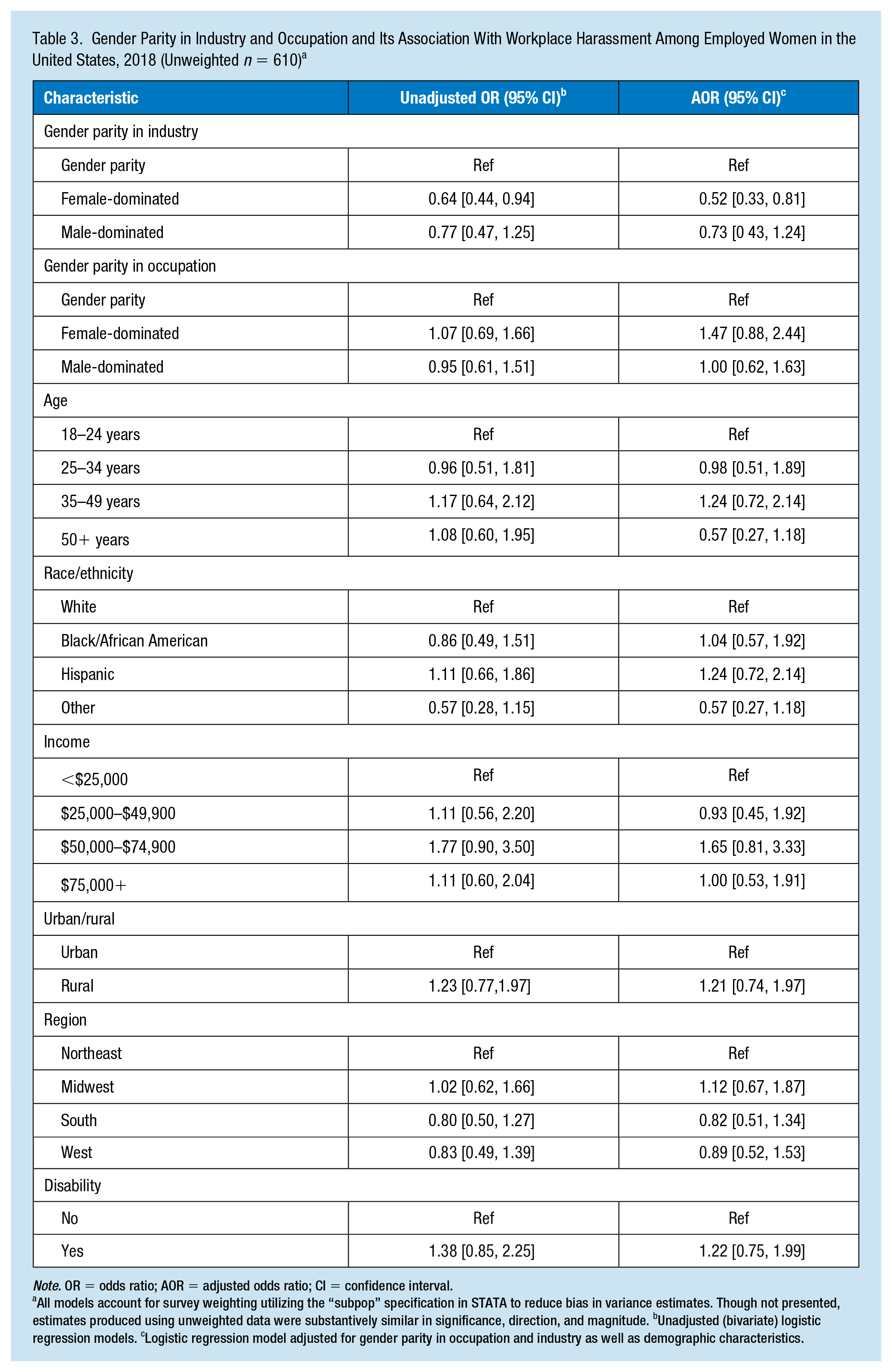
Note. OR = odds ratio; AOR = adjusted odds ratio; CI = confidence interval.
All models account for survey weighting utilizing the “subpop” specification in STATA to reduce bias in variance estimates. Though not presented, estimates produced using unweighted data were substantively similar in significance, direction, and magnitude. bUnadjusted (bivariate) logistic regression models. cLogistic regression model adjusted for gender parity in occupation and industry as well as demographic characteristics.
In logistic regression models, among men, being in a male-dominated occupation was associated with lower risk of lifetime sexual harassment or assault in the workplace (OR = 0.55, 95% CI = [0.34, 0.88]), and this finding remained significant even after accounting for gender parity in industry and demographics (see Table 4). Gender parity in industry was not significantly associated with workplace sexual harassment or assault, nor was its effect size meaningfully affected by adding gender parity in occupation to the model. Notably, Hispanic men and those who identified as “Other” relative to White were more likely to report workplace sexual harassment and assault (Hispanic: AOR = 1.92, 95% CI = [1.06, 3.46]; Other race: AOR = 0.19, 95% CI = [0.05, 0.75]).
Gender Parity in Industry and Occupation and Its Association With Workplace Harassment Among Employed Men in the United States, 2018 (Unweighted n = 690) a
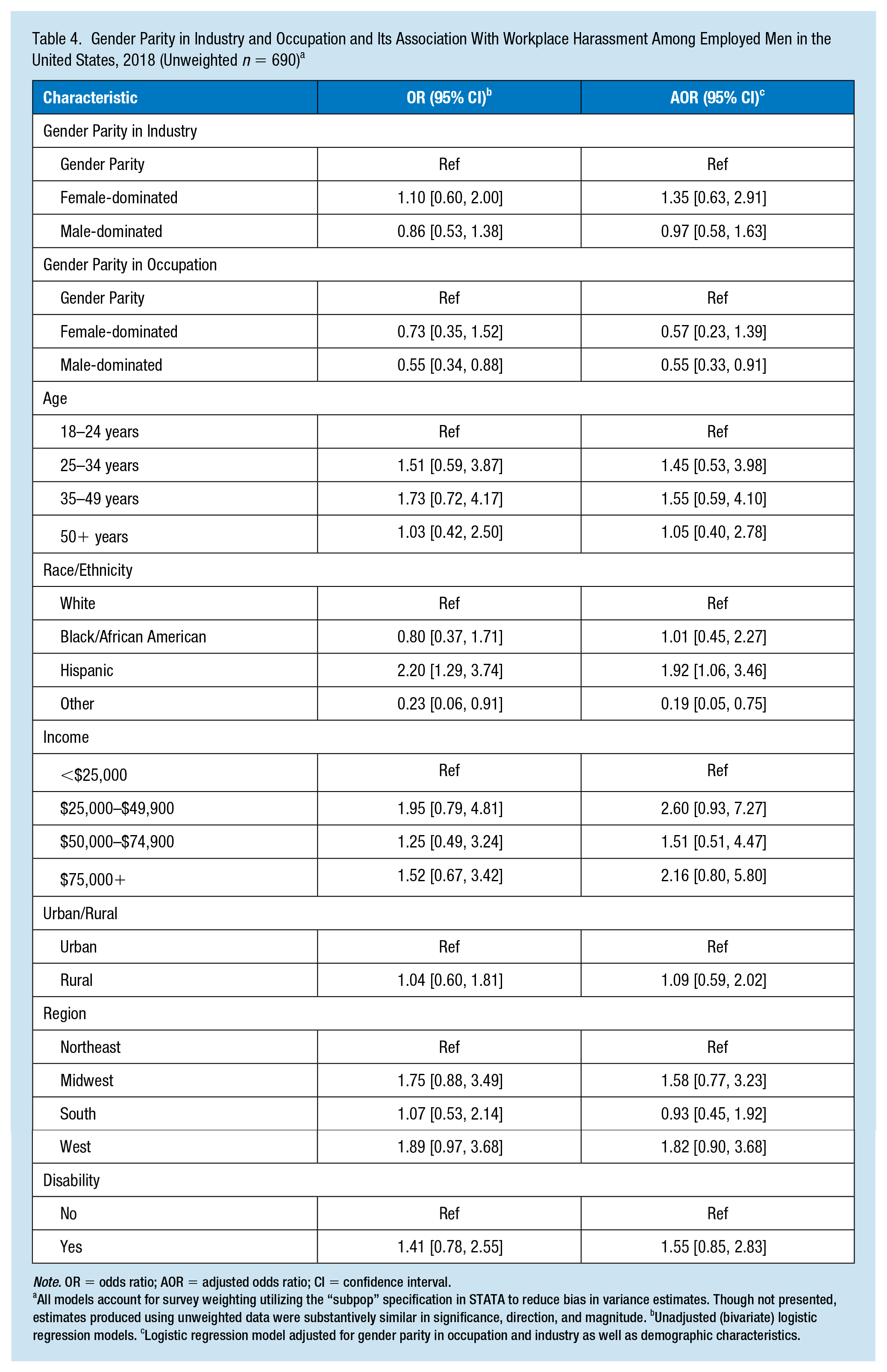
Note. OR = odds ratio; AOR = adjusted odds ratio; CI = confidence interval.
All models account for survey weighting utilizing the “subpop” specification in STATA to reduce bias in variance estimates. Though not presented, estimates produced using unweighted data were substantively similar in significance, direction, and magnitude. bUnadjusted (bivariate) logistic regression models. cLogistic regression model adjusted for gender parity in occupation and industry as well as demographic characteristics.
Two additional post hoc subanalyses were conducted to further explore associations between workplace gender parity and harassment. First, we assessed whether lifetime perpetration of harassment by a boss/supervisor, by a coworker, and by another person at work was associated with industry and occupation gender parity. Second, we assessed whether individual subtypes of harassment (verbal, cyber, and physical) were associated with industry and occupation gender parity. Both of these analyses used logistic regression models stratified by sex and included adjustment for industry gender parity and occupation gender parity only, due to small cell sizes for some of these outcomes. For the first set of analyses, we found that women in male-dominated occupations were marginally more likely to report harassment or assault by a boss (AOR = 2.41, 95% CI = [1.00, 5.80]) and men in male-dominated occupations were less likely to report harassment or assault by a boss (AOR = 0.26, 95% CI = [0.08, 0.89]) than those in gender parity occupations. We observed no significant associations between workplace gender parity and harassment for coworker or other person at work perpetration. Women in female-dominated industries were less likely to report verbal harassment than those in gender-parity industries (AOR = 0.55, 95% CI = [0.36, 0.85]); no significant difference in cyber harassment, physical harassment, or assault by gender parity in industry was observed for women. Men in male-dominated occupations were less likely to report verbal harassment (AOR = 0.50, 95% CI = [0.29, 0.86]), cyber harassment (AOR = 0.40, 95% CI = [0.18, 0.87]), and physical harassment (AOR = 0.49, 95% CI = [0.24, 0.97]) than those in gender parity occupations. We observed no significant difference in assault by gender parity in industry for men.
Discussion
More than two in five employed women and more than one in eight employed men in the United States have experienced sexual harassment or assault in the workplace. These findings are consistent with prevalence estimates from prior U.S. research with women (Funk & Kim, 2018; Lee, 2017; Marist-Poll, 2017; Meyn & Larson, 2018; Park & Funk, 2017; Washington Post & ABC News, 2017) and men (Funk & Kim, 2018; Lee, 2017; Marist-Poll, 2017; Meyn & Larson, 2018; Morral et al., 2015; Stander & Thomsen, 2016; Stop Street Harassment, 2018), but inconsistent with recent research with a convenience sample of working women that suggests that sexual harassment in the workplace has declined since the #MeToo movement (Johnson et al., 2019; Keplinger et al., 2019). Furthermore, and even more disconcerting, is the severity of the harassment women are facing in the workplace. Almost one in six working women report being sexually touched against their will in the workplace; over one in six has faced sexually degrading language about themselves at work, and one in ten has been called a “bitch,” “c**t,” or other misogynist names at work. Sadly, many victims remain in these hostile work environments; among those reporting a history of sexual harassment or assault at work, only 13% of women and 8% of men have left their position due to these abuses. Lack of opportunity or alternatives for current employment, fear of retaliation, and beliefs that a new position would not offer protections against sexual harassment may be reasons for remaining in positions where abuse is occurring (Hebert, 2007; National Academies of Sciences, Engineering, and Medicine, 2018). These findings speak to the need for institutional policies against these practices but also greater clarity and accountability in cases of harassment where institutional policies already exist.
While this study hypothesized that women in male-dominated relative to gender parity–achieving occupations and industries may be at increased risk for sexual harassment and assault based on prior research (Berdahl, 2007), findings from this study document that work in male-dominated industries is associated with no greater risk for women relative to that seen in industries with gender parity. However, working in a female-dominated industry does appear to be protective against workplace sexual harassment, as seen in prior research (Berdahl, 2007); similar findings do not hold true for women working in a female-dominated occupation. One reason this might be true is that in female-dominated industries, women are more likely to hold senior leadership positions and may be more inclined to use their positions to ensure that institutional policy discourages sexual harassment in the workplace and protects female employees. Along with fostering a greater climate of tolerance, female-dominated industries may also engage in more gender neutral hiring and promotion practices, displacing the traditional workplace male–female power dynamics and decreasing opportunities for abuse. This offers little help for women, particularly given that female-dominated industries are a minority and that female-dominated professions are on average lower paid than male-dominated industries and professions in the United States (Hegewisch et al., 2018). Improved clarity on what constitutes sexual harassment versus professionalism and respect in the workplace and normative shifts regarding the acceptability of sexual harassment in the workplace are needed.
Importantly, though findings did not indicate an association between gender parity in occupation and risk for sexual harassment or assault in the workplace, exploratory analyses focused on sexual harassment or assault did reveal that women in male-dominated occupations are at increased risk for this abuse from a supervisor. While we could not identify any recent research exploring this issue, with most studies on workplace sexual harassment and assault focused on specific industries, research from 30 years ago reveal similar findings to that seen in this study (Lafontaine & Tredeau, 1986). Research from a decade ago that found that women exhibiting higher levels of independence, dominance, and assertiveness—traditionally masculine traits likely required in male-dominated occupations—were more likely to have been sexually harassed (Berdahl, 2007). These findings indicate that women who challenge traditional gender roles in the workplace may be more vulnerable to sexual harassment and assault by their boss.
Current findings also examine gender parity at work and workplace sexual harassment of men, and find that working in a male-dominated occupation is associated with lower risk of harassment for men. Prior research indicates that men engaging in activities viewed as “female” are more likely to be sexually harassed, often by the use of emasculating or homophobic slurs, and likely as a form of punishment for deviating from socially ascribed gender roles (Holland et al., 2016; Hsu et al., 2010; McLaughlin et al., 2012). While small cell sizes preclude us from examining each form of workplace sexual harassment in this study, prior findings from these data document that mens’ most commonly reported forms of sexual harassment were sexually emasculating and homophobic remarks (Stop Street Harassment, 2018).
Findings of increased protection for workers matched in gender to a gender-dominated industry or occupation might suggest the value of sex segregation in the workplace. However, doing so would only maintain or enhance gender inequalities in the workplace in terms of employment opportunities, salary, and advancement—aspects that advantage males over females. We must instead seek to understand what aspects of single-sex dominant workplaces are resulting in decreased victimization reporting. For example, is it feelings of camaraderie, a difference in policies regarding harassment/assault, or enhanced safety that is responsible for the protective effect noted for men in male-dominated occupations? Future studies are warranted to better understand the causal pathway. Interestingly, the advantages for men may not be equivalent across racial/ethnic groups, as Hispanic men appear to face greater vulnerability to workplace sexual harassment.
While findings offer important insight into the issues of workplace sexual harassment, they should be considered in light of a number of study limitations. First, the survey was not designed by study authors to address the hypothesis examined here. Rather, the data used were for solely descriptive purposes, and this may have affected sample size considerations for our association analyses in this study. Data rely on self-report and therefore are subject to recall and social desirability biases. Reports of sexual harassment may reflect underreporting, particularly among men and racial/ethnic minority groups (Hernandez, 2001; Reddy & Murdoch, 2016).
Additional limitations relate to the reliance on measures of lifetime workplace harassment and current occupation and industry, which may falsely suggest association between current employment with previous workplace harassment. Unfortunately, this survey did not collect data on occupation history and change over time. However, data regarding tenure in a given job by occupation and industry suggest moderate stability, particularly for older workers, professional workers, and those more advanced in their career (United States Department of Labor, 2018).
In addition, because occupation and industry dominance were determined via national employment statistics rather than workplace-specific gender composition, the assigned occupation and industry gender composition may not match an individuals’ experience. Nonetheless, the nature of the variable of interest allowed for a numeric assessment of male versus female dominance in the workplace, while social norms related to employment, occupation, and industry (as related to pay and advancement) are likely at play in ways that would not be captured by this numeric variable even if measured at the individual level. Further research is needed for such a broader consideration of equity (Gruber & Morgan, 2008).
Implications for Occupational Health Practice
Results of this study with working adults participating in a nationally representative survey on sexual harassment and assault document that 42% of employed women and 15% of employed men have been sexually harassed or assaulted in the workplace. Findings suggest a female-dominated industry climate may confer greater protection against workplace sexual harassment for women, suggesting that industries with male employees, even those with gender parity, may allow for greater opportunity and tolerance for sexualization and harassment of women in the workplace. Furthermore, for women in male-dominated occupations, risk specifically from a supervisor is greater, likely in part due to increased opportunity for quid pro quo harassment. In contrast, male-dominated occupational positioning may confer greater protection against workplace sexual harassment for men, perhaps because even holding a position with gender parity is viewed as lesser or less favorable for men. These findings speak to the social penalty for men not engaging in expected male roles, highlighting that gender role norms and expectations maintain and breed tolerance of these abusive practices in the workplace.
The importance of eliminating workplace sexual harassment and assault is not only a legal and human rights issue, it is also an economic one. A proportion of both women and men subjected to such abuses ultimately leave their jobs over these concerns, or if they remain, are likely hampered in productivity due to stress (McLaughlin et al., 2017). High financial costs to employers contending with cases of sexual harassment and assault in the workplace are also a concern (Hersch, 2015). While current findings indicate that working in industries or occupations dominated by one’s own sex or gender can be protective against such abuses, such an approach can ultimately compromise female equality in the labor force. These findings speak to the need for broader social change to recognize the pervasiveness of sexual harassment and its consequences, and to alter norms and policies allowing its practice across occupations and industries.
Industries and organization are beginning to respond and work to address sexual harassment in the workplace, and improve related policies and standards, as seen in the National Academies of Sciences, Engineering, and Medicine’s 2018 report and recommendations for addressing sexual harassment in workplace and training institutions. However, too often policies focus more on accountability for perpetrators and not on the culture and climate that maintain these abuses and confusion regarding what constitutes acceptable workplace behavior. If the #MeToo movement is going to tackle issues of sexual harassment and assault in the workplace, more effort will be needed to help align this movement with policy changes to create more equitable work environments, as well as policies to create better accountability structures for perpetrators of sexual harassment and assault.
Applying Research Practice
This study examined associations between gender parity in occupation/industry and history of workplace sexual harassment among employed women (n = 610) and men (n = 690) participating in a nationally representative 2018 survey on sexual harassment. Almost half (42%) of women in this study and 15% of men have experienced workplace sexual harassment. Findings also indicated that workers in industries and occupations dominated by their own sex were at lower risk for workplace harassment. Shifts to greater gender parity in the workplace must include prioritization of harassment prevention, particularly for women in male-dominated occupations, as they are at greater risk for harassment from a supervisor.
Supplemental Material
WHS-19-0106-R1-WHS2_SUPPLEMENTAL_TABLES – Supplemental material for Gender Parity at Work and Its Association With Workplace Sexual Harassment
Supplemental material, WHS-19-0106-R1-WHS2_SUPPLEMENTAL_TABLES for Gender Parity at Work and Its Association With Workplace Sexual Harassment by Anita Raj, Nicole E. Johns and Rupa Jose in Workplace Health & Safety
Footnotes
Acknowledgements
We would like to acknowledge Stop Street Sexual Harassment and their executive director, Holly Kearl, as well as partners on this project including Raliance and the National Sexual Violence Resource Center.
Author Contributions
A.R. led study design, oversaw study, and contributed to writing of the manuscript. N.E.J. analyzed all data and contributed to writing of the manuscript. R.J. contributed to study design and writing of the manuscript.
Declaration of Conflicting Interests
The author(s) declared no potential conflicts of interest with respect to the research, authorship, and/or publication of this article.
Funding
The author(s) disclosed receipt of the following financial support for the research, authorship, and/or publication of this article: Survey development and data collection for this study were funded by Stop Street Sexual Harassment. Data analysis and write up of the paper were funded by the Center on Gender Equity and Health, University of California, San Diego.

Supplemental Material
Supplemental Material is available online for this article.
Author Biographies
Anita Raj, PhD, is a Tata Chancellor Professor of society and health, professor of medicine, and professor of education studies at the University of California, San Diego and director of the Center on Gender Equity and Health.
Nicole E. Johns, MPH, is a research data analyst at the University of California, San Diego.
Rupa Jose, PhD, is a postdoctoral fellow with the Center on Gender Equity and Health and the University of California, San Diego.
References
Supplementary Material
Please find the following supplemental material available below.
For Open Access articles published under a Creative Commons License, all supplemental material carries the same license as the article it is associated with.
For non-Open Access articles published, all supplemental material carries a non-exclusive license, and permission requests for re-use of supplemental material or any part of supplemental material shall be sent directly to the copyright owner as specified in the copyright notice associated with the article.
