




Abstract
Farmers are among the most common work groups at risk of skin cancer. The protection motivation theory has been widely accepted as a framework for predicting health related behaviors. This study was conducted to determine the role of factors preventing skin cancer among farmers in Eslamabad-e Gharb district, Iran, using the protection motivation theory. In this descriptive study, 280 farmers living in this district were studied from May to June 2017. Using cluster random sampling methods, health houses where farmers received health care were selected. Each farmer within the selected health house was then enrolled into the study using simple random sampling. Data were collected by interview using an author-developed questionnaire. The questionnaire ascertained demographic information and constructs of the protection motivation theory. Almost half of the farmers had a history of sunburn (56.4%). With regard to prevention, a small proportion reported using sunscreen (8.6%), hats (3.2%), gloves 3.9%, sunglasses 4.6%, and protective clothing 15.4%. The results of regression analyses showed that with one unit of increase in the scores of self-efficacy to adopt prevention behavior and perceived protection motivation resulted in an increase in the mean score of the “protective” behavior by 0.26 and 0.20, respectively. Working conditions among farmers place them at great risk and skin cancer prevention is essential. Intervention and prevention programs should fully identify the determinants of skin cancer prevention in farmers; in addition, the identified effective factors must be taken into account when designing and implementing appropriate interventions.
Introduction
Skin cancer is the most common cancer among men in Iran and the second most common cancer in women, preceded by breast cancer (Razi et al., 2015). Although skin cancer is one of the most common cancers, it is also one of the most preventable (Babazadeh, Nadrian, Banayejeddi, & Rezapour, 2017). The largest number of cases of skin cancer in both sexes occurs on the face, indicating the importance of sun exposure in the emergence of different types of skin cancer (Nahar, Hosain, Sharma, Jacks, & Brodell, 2016). A study in the United States in 2016 showed that 31,860 new cases of skin cancer and 4,320 cases of mortality from this type of cancer occur annually in women (Siegel, Miller, & Jemal, 2016). Studies conducted in Iran have reported a high incidence of skin cancer, which is 16.5% (Babazadeh et al., 2017). A recent student reported the incidence of skin cancer is increasing in Iran and the distribution is higher in men than women (Razi et al., 2015). The International Agency for Research on Cancer in 1992, the World Health Organization in 1996, and the Non-ionizing Radiation Consultation Group in 2002 carried out epidemiological studies to investigate the relationship between skin cancer and exposure to ultraviolet radiation. They reported that the exposure to ultraviolet rays of sunlight is the only significant risk factor for skin malignancy (Wakeford, 2004).
In Iran, especially in the western part of the country, the harvest time is in the summer when the sunlight is intense. If farmers do not use proper protection, such as hats and clothes in the open air when outdoors, a higher incidence of skin cancer is expected (Martin, Nahar, Hutcheson, Boyas, & Sharma, 2017). Therefore, to protect themselves against the sun, farmers should adopt some simple strategies, such as the use of protective clothing, and using sunscreen, since these strategies can significantly prevent the disease (Afshari, Afshari, Bahrami, & Kangavari, 2016).
One of the effective models in health education is the protection motivation theory, which is widely accepted as a framework for intervention and prediction of healthy behaviors. In 2015, a study using the protection motivation theory to identify effective determinants of cancer screening behaviors, findings indicated that behaviors could be predicted using the constructs of fear, self-efficacy, and response efficiency (Rahaei, Ghofranipour, Morowati Sharifabad, & Mohammadi, 2015). Earlier work by Rogers in 1975 involved the development of the protection motivation model. In this model, it is assumed that the acceptance of a recommended health behavior (protective behavior) against a health risk is directly affected by an individual’s motivation to protect themselves. As Rogers argued, fear can affect people’s intention to adopt a protective behavior against a health risk through five constructs, and protection motivation ultimately can encourage healthy behavior (Rogers, 1975). The protection motivation theory constructs include (a) self-efficacy is a person’s belief that he or she can successfully carry out a protective behavior (Schulte, Stephenson, Okun, Palassis, & Biddle, 2005); (b) perceived efficacy of response is a person’s expectancy that giving a proper health protective response against health hazard can eliminate the threat; (c) perceived susceptibility is a person’s belief in being vulnerable to a health hazard; (d) perceived severity is a person’s belief in that the threat is serious; and (e) perceived costs of response is a person’s estimation of any cost such as money, human force, time, and effort incurred by the protective behavior (see Figure 1) (Barati, Amirzargar, Kafami, Mousali, & Moeini, 2016). The present study aimed to determine the role of these constructs in protecting skin cancer in farmers living in villages in Eslamabad-e Gharb, Iran.
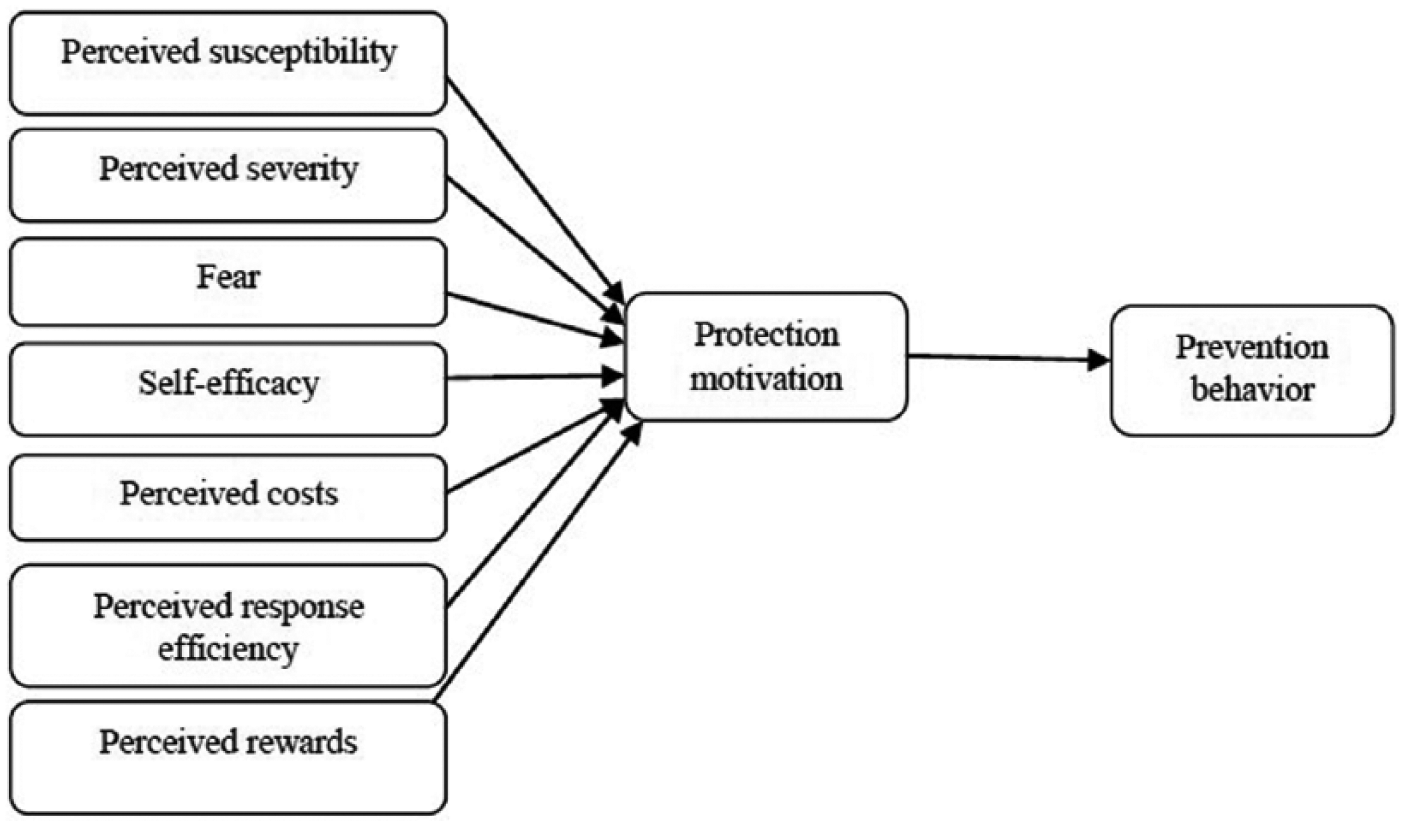
Schematic representation of the protection motivation theory components.
Method
Settings
In this descriptive analytical study, 280 farmers living in villages of Eslamabad-e Gharb district in Kermanshah province in western Iran, who were exposed to sunlight while performing their jobs, were studied from May to June 2017. Kermanshah is one of the key provinces in agricultural production in Iran. Eslamabad-e Gharb County is located 65 km South of Kermanshah, and its economy is based largely on agricultural production, with wheat, barley, peas, corn, vegetables, and especially beet sugar as its core commodities.
Study Sample
Using random cluster sampling approach, farmers were selected from those covered by 58 health houses in Iran. Farmers within the selected health house were then enrolled into the study using simple random sampling. Four or five farmers were selected from each health house. Using the data collected by annual census and forms designed for the farmers’ health program, we identified the people who had an agricultural job from among the population covered. Health houses are the basic unit of rural health care and they are responsible for providing family health and wellness services, census tracking, public health education, disease monitoring and control, environmental health, and the collection and reporting of health data. Taking into consideration the sample size in previous studies (Afshari et al., 2016; Zar, 1999), a maximum standard deviation of knowledge on skin cancer protection equal to 5.4, an acceptable error of 0.9, a confidence interval of 95%, and a power of 80% indicated that the minimum sample size required was 285 people.
Data Collection
Data were collected by face-to-face interview using a questionnaire that consisted of two parts that ascertained: (a) demographic information including age, marital status, educational status, agricultural work experience, working hours per day, history of sunburn, and history of any type of skin cancer in relatives (the exposure of relatives with sunlight); and (b) data pertaining to constructs of the theory of protection motivation (Afshari et al., 2016).
The perceived susceptibility, perceived severity, perceived response, self-efficacy, and perceived reward constructs were measured using a Likert-type scale of totally disagree (1 point), disagree (2 points), no idea (3 points), agree (4 points), and fully agree (5 points). Thus, the range of possible points for the construct of perceived susceptibility was 4 to 20 (e.g., If I have been exposed to sunlight for a long time, my skin will be damaged), the construct of perceived severity was 4 to 20 (e.g., Skin cancer is not too concerning), perceived response was 2 to 10 (e.g., If I use hats and sunglasses, I reduce the risk of skin cancer), self-efficacy was 4 to 20 (e.g., I can prevent of skin cancer), and perceived reward was 3 to 15 (e.g., It’s a pleasure to be under the sunlight).
The perceived costs, fear, and protection motivation constructs were measured using the Likert-type scale of not at all (1 point), a little (2 points), to some extent (3 points), and to a large extent (4 points). Thus, the range of achievable points and sample question for these constructs for perceived costs was 4 to 16 (e.g., It’s time-consuming to wear a hat and sunglasses); the construct of fear was 3 to 12 (e.g., I feel bad about skin cancer), and the construct of protection motivation was 5 to 20 (e.g., I decided to be less exposed to sunlight).
The skin cancer prevention behavior constructs (eight questions), were measured using the Likert-type scale of never (1 point), sometimes (2 points), often (3 points), and always (4 points). The range of possible points for this construct was 8 to 32 (e.g., Wearing clothes that cover most of the body).
Pilot Testing of Questionnaire
The questionnaire was tested for validity and reliability reported by Afshari et al. (2016). In brief, the reliability was tested using Cronbach’s alpha coefficient for each construct with the following results: perceived susceptibility (0.72), perceived severity (0.75), perceived response efficiency (0.74), self-efficacy (0.85), perceived costs (0.82), perceived rewards (0.78), fear (0.76), protection motivation (0.80), and skin cancer prevention behavior (0.90) constructs, respectively. Four health education and health promotion specialists verified the content validity of the questionnaire.
Study Recruitment and Data Collection
After explaining the goals of the study and obtaining the informed consent from the subjects, the data collector/interviewer completed the questionnaire through individual face-to-face interviews with the farmers, which were conducted at their respective health houses, described above. This study was approved by the Ethical Committee of Hamadan University of Medical Sciences.
Data Analysis
Data analysis was performed using IBM© SPSS© Statistics Version 24. To describe the data, we used descriptive statistics including graphs, tables, and numerical indices. In addition, inferential statistics including analysis of variance (ANOVA), Pearson correlation coefficient, independent t tests, and linear regression analysis were employed to determine the relationship between variables. The significance level for the tests was set at 5%.
Results
A total of 280 farmers participated in this study with a response rate of 98.2%. Five farmers were excluded because they did not complete the informed consent. Based on the inclusion criteria, this study was conducted on rural farmers with a minimum reading and writing literacy, who were over 18 years old.
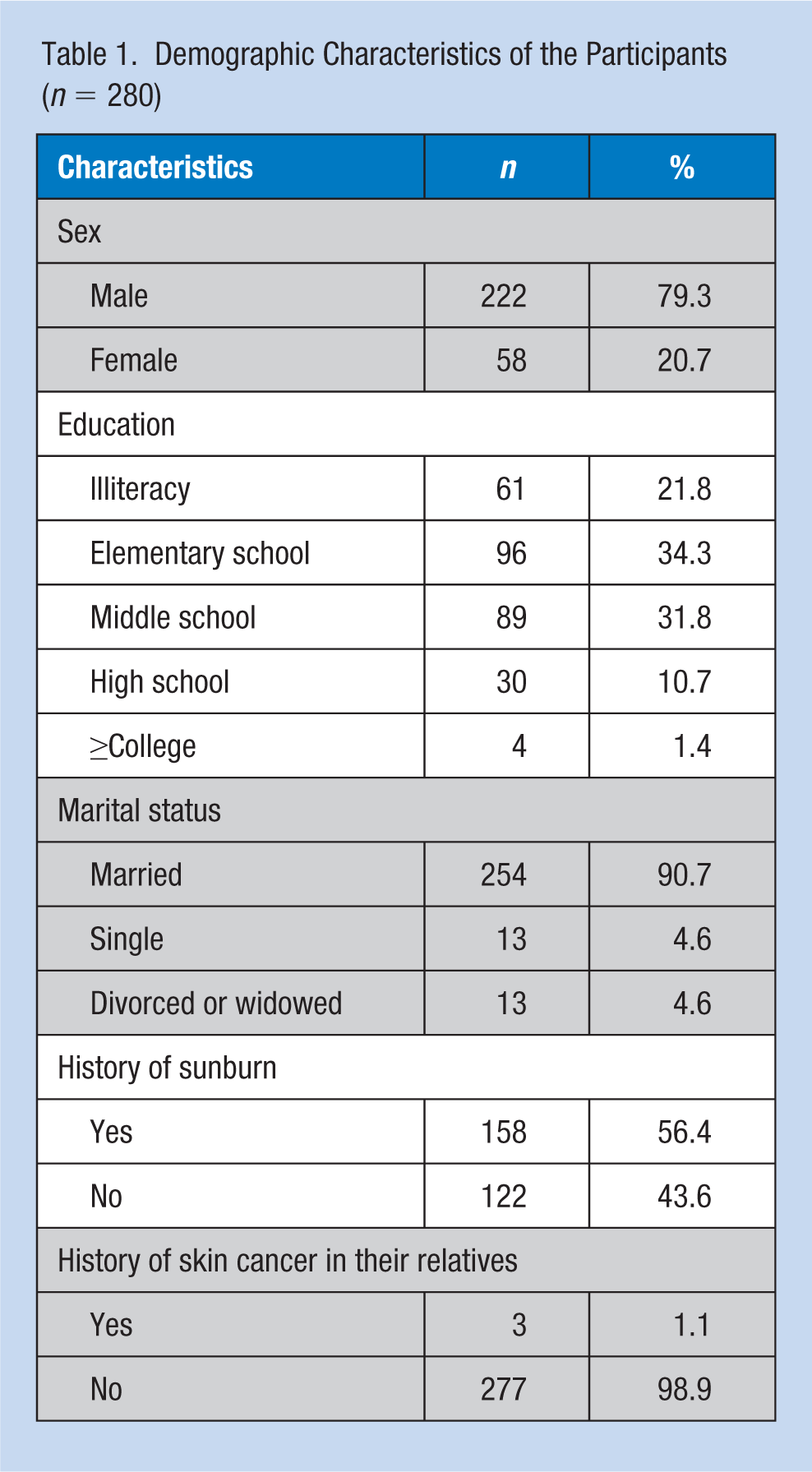
The mean and standard deviation of the age of the farmers participating in the study was 48.80 ± 14.48 years, while the mean years of farming experience was 24.74 ± 13.59 years. The mean number of hours of agricultural work per day was 7.28 ± 2.06. As shown in Table 1, the majority of participants were male (79.3%) and their highest level of education was elementary (34.3%) and middle school (31.8%); and the majority of the participants were married (90.7%). More than half of farmers had a history of sunburn (56.4%). About 98.9% of the participants did not report a history of skin cancer in their relatives. Furthermore, 53.2% of the farmers had received information on the dangers of sunlight and skin cancer, and television programs were the most common source of information about the risks of sun exposure and skin cancer (29.6%).
Demographic Characteristics of the Participants (n = 280)
A positive correlation (r = 0.218, p<.01) between perceived severity and perceived susceptibility of getting skin cancer was observed (Table 2). Moreover, fear of getting skin cancer had a positive correlation with perceived susceptibility (r = .557, p < .01) and perceived costs (r = .127, p < .05) to adopt prevention behavior. Furthermore, the efficacy of perceived response to adopt prevention behavior had a positive correlation (r = .186, p < .01) with perceived susceptibility and fear (r = .202, p < .01). There was a positive correlation between prevention behavior and self-efficacy (r = .278, p < .01) to adopt prevention behavior. In addition, the perceived costs had a negative correlation with perceived rewards (r = −.173, p < .01) to prevent of skin cancer, perceived protection motivation to adopt prevention behavior (r = −.120, p < .05), and prevention behavior of skin cancer (r = −.157, p < .01). Finally, there was a positive correlation between prevention behavior of skin cancer and perceived protection motivation (r = .224, p < .01) to adopt prevention behavior.
The Correlation Coefficient Matrix of Protection Motivation Theory (n = 280)
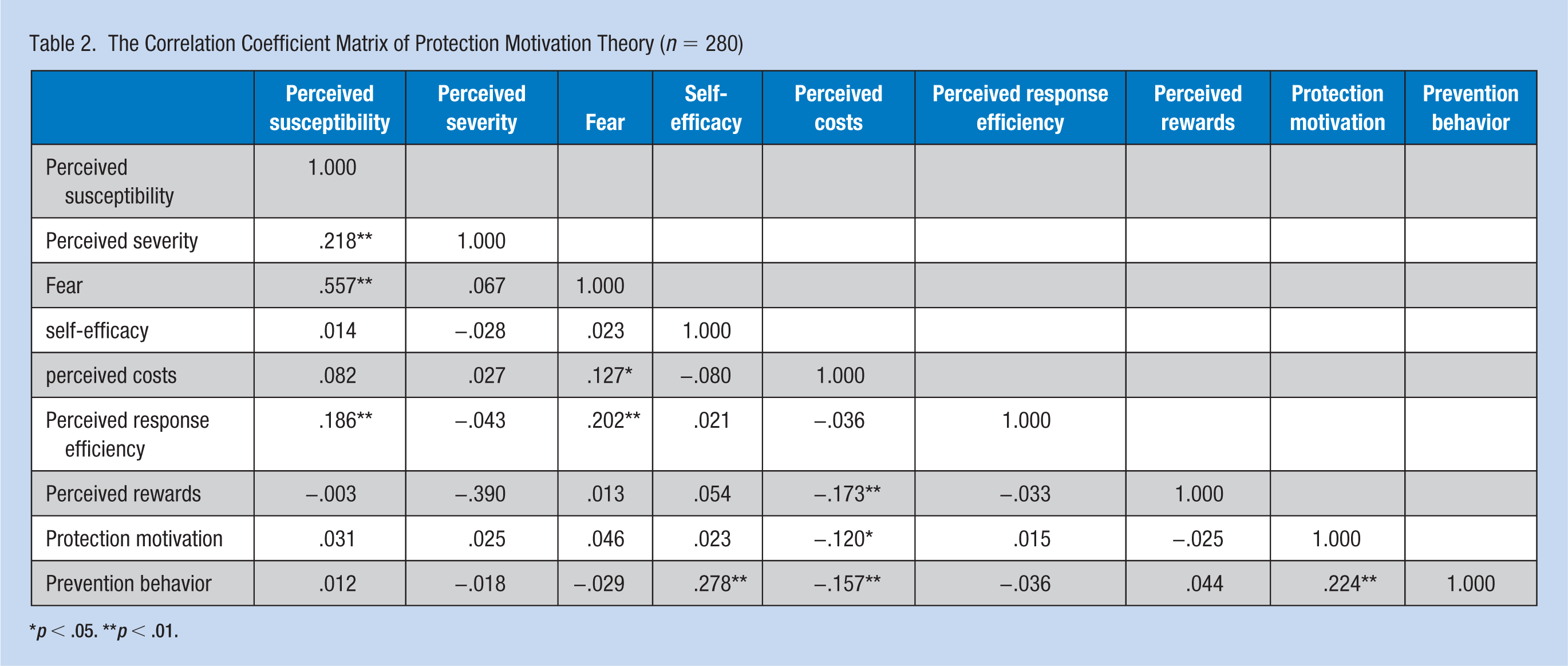
p < .05. **p < .01.
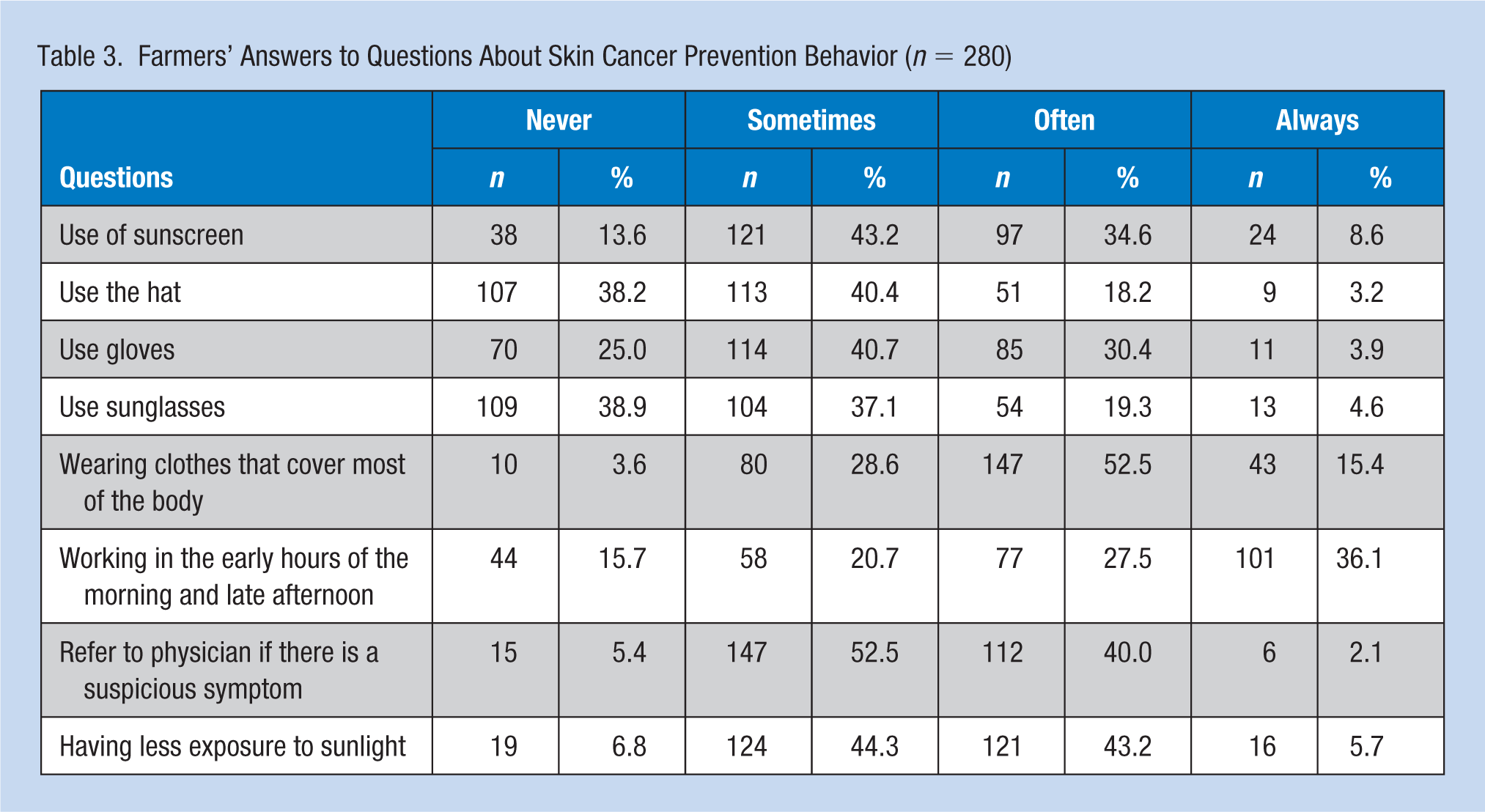
As shown in Table 3, 8.6% reported always using sunscreen, 3.2% always wore a hat, 3.9% always used gloves, 4.6% always used sunglasses, and 15.4% always used protective dresses. Most farmers (63.6%) worked in the early hours of the morning and late afternoon. Moreover, 2.1% of farmers said they would refer to a doctor if they observed any abnormal symptoms. Among all respondents, 5.7% of the farmers reported working in shade to reduce their exposure to sunlight.
Farmers’ Answers to Questions About Skin Cancer Prevention Behavior (n = 280)
As presented in Table 4, self-efficacy (such as ability to prevent skin cancer) had a significant relationship with marital status, age, agricultural work experience, and sunburn (p < .05). There was also a significant relationship between perceived rewards (such as enjoying sunlight) and higher education level (p < .05). Moreover, behavior (such as use of sunscreen) had a significant relationship with marital status, education level, age, agricultural work per day, and agricultural work experience (p < .05). However, the other constructs of the theory of protection motivation had no statistically significant relationship with the demographic and background variables (p > .05).
The Relationship of Protection Motivation Theory With Demographic Characteristics (n = 280)
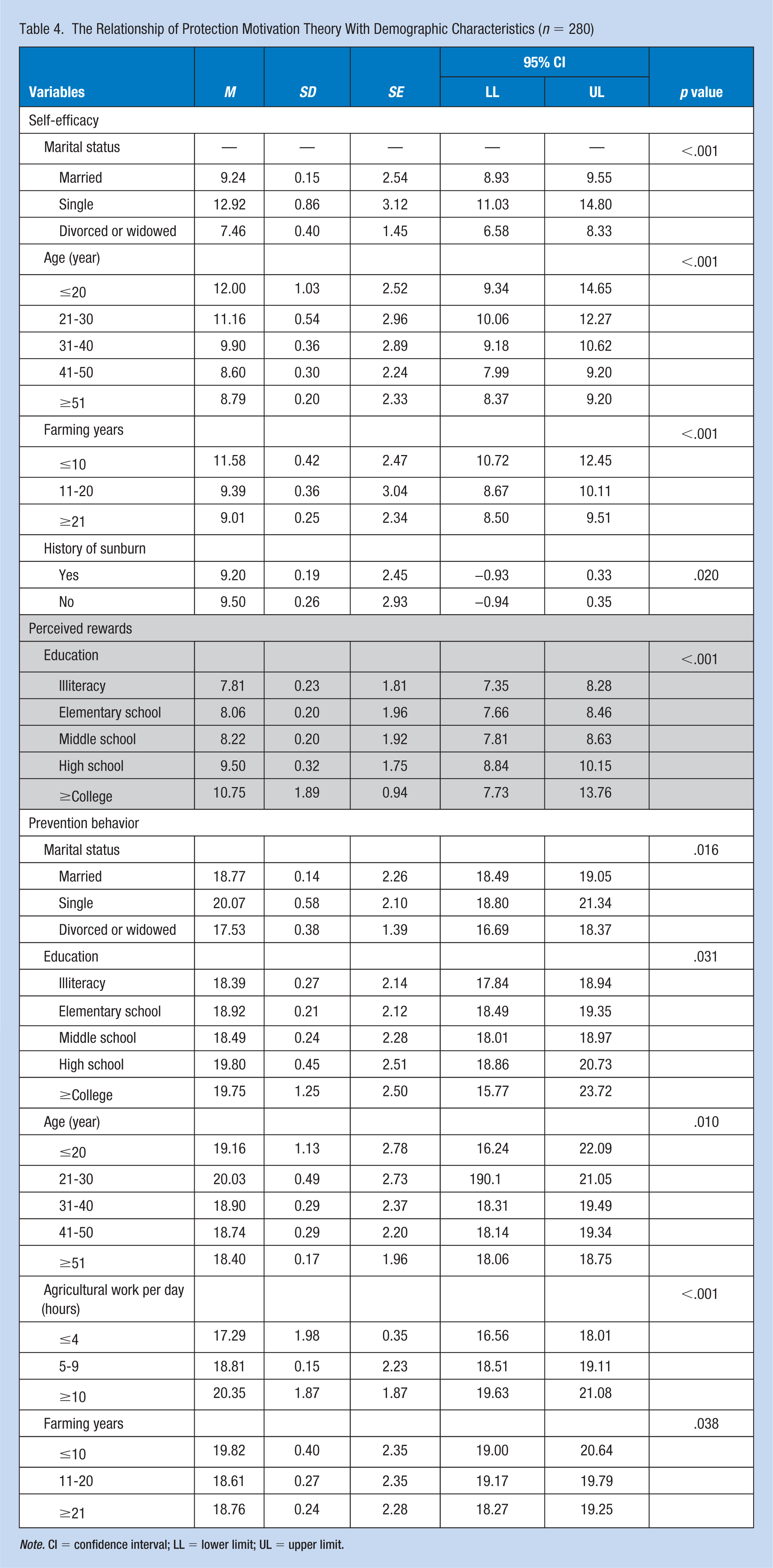
Note. CI = confidence interval; LL = lower limit; UL = upper limit.
As shown in Table 5, a one unit increase in the self-efficacy score to adopt prevention behavior was associated with the mean score prevention behavior increase of 0.26. Furthermore, with a one unit increase in the score of perceived protection motivation, the mean score of behavior increased by 0.20.
Predicting Skin Cancer Prevention Behavior Among Farmers: Linear Regression Analyses (n = 280)
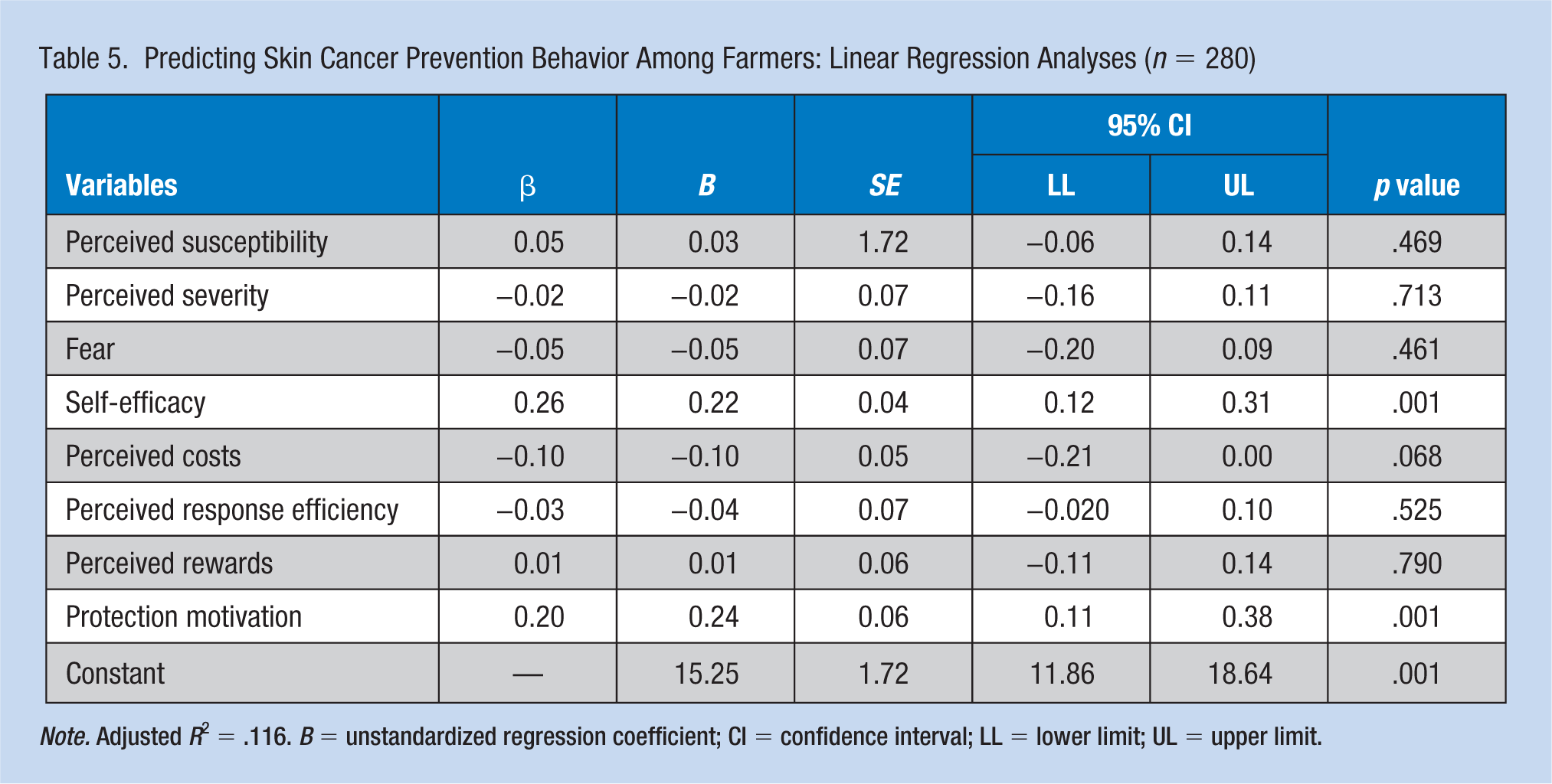
Note. Adjusted R2 = .116. B = unstandardized regression coefficient; CI = confidence interval; LL = lower limit; UL = upper limit.
Discussion
To the best of our knowledge, this study is the first to explore factors associated with skin cancer preventive behaviors in Iranian farmers. In this study, we observed a positive correlation between the constructs of perceived susceptibility and perceived severity of getting skin cancer. These findings are consistent with the results of studies by Afshari et al. (2016) and Kok et al. (2010). These findings suggest that to have a better understanding of the risk of skin cancer, it is necessary to have a higher level of perceived susceptibility, because such a perception has a stronger positive effect on the perceived risk of skin cancer. Our findings, however, are not in line with the results of a study by Park, Cheong, Son, Kim, and Ha (2010) who did not find these associations. The discrepancies in the results may be due to the differences in target groups and the overall purpose of the study in the two communities.
We also observed a positive correlation between the efficacy of perceived response to adopt prevention behavior and perceived susceptibility and fear of getting skin cancer. This finding is consistent with Wurtele and Maddux (1987), which suggests that enhancing an individual’s perception of vulnerability to skin cancer enhances the efficiency of their perceived response and vice versa. There was also a positive correlation between fear of getting skin cancer and the efficacy of perceived response, which was also reported by Plotnikoff, Trinh, Courneya, Karunamuni, and Sigal (2009).
There was a positive correlation between behavior and self-efficacy; this finding is not consistent with the results of Lowe et al.’s (2000) and Moravatisharifabad, Momeni, Barkhordari, and Fallahzadh’s (2012) study. These differences may be due to differences in study populations across studies. The positive correlation indicates that when a person has a strong belief that the health risk can be reduced through adopting healthy behavior, he or she will be less prone to adopt maladaptive behavior and bear its consequences.
The perceived costs had a negative correlation with perceived rewards, perceived protection motivation, and behavior which is same with the results of Greening’s (1997) and Afshari et al.’s (2016) study. However, it is not in line with the results of a study by Kaviani, Roozbahani, and Khorsandi (2016). These differences may be due to our study including all farmers while Kaviani et al.’s study was conducted only on rural women, and the study populations differed in economic, cultural, social, and geographic conditions.
We found a statistically significant relationship between self-efficacy and marital status, age, agricultural work experience, and history of sunburn. These results indicate that with aging, due to increased exposure to sunlight, the side effects of sunlight exposure increases and people learn some lessons about this problem, thus they show a higher level of self-efficacy by demonstrating skin protection behaviors. This finding is consistent with the results of a study by Jirojwong, Maclennan, and Manderson (2001).
There was a statistically significant relationship between perceived reward and level of education, which is consistent with the results of a study by Helmes (2002). This indicates that with an increase in farmers’ level of education, they have a better understanding of the benefits of using personal protective equipment. There was no significant relationship between the other constructs of protection motivation theory and the other demographic variables.
The protective behavior of skin cancer prevention had a statistically significant relationship with marital status and age, indicating that those married had more protective behaviors than of single people; however, older workers reported less protective behaviors than younger workers. These findings are not consistent with the results of a study by Moravatisharifabad et al. (2012) who observed that unsafe behaviors were more common in single people. In addition, in a study by Fernandes, Job, and Hatfield’s (2007), there was an inverse relationship between age and behavior (Fernandes, Job, & Hatfield, 2007). This may be due to older workers not being concerned with their appearance, resulting in less protective behaviors. In a study by Kaviani et al. (2016), there was a significant relationship between the agricultural work experience and behavior that is consistent with the results of this study.
The results showed that prevention behavior of skin cancer was significantly associated with the increase in mean score of perceived protection motivation to adopt prevention behavior. This finding is not consistent with the results of a study by Kaviani et al. (2016). Use of protective clothing was the most common method. Nabizadeh et al. (2010) examined the prevalence of skin cancer prevention behaviors and reported that 30% of the subjects preferred sunscreen. In a study done by Nahar et al. (2014), sunscreen (13.8%) and wide-brimmed hats (6.9%) were the least commonly indicated sun protection equipment used.
Conclusion
Based on the results of this study, it is of great importance and very necessary to prevent skin cancer in farmers as they have special occupational conditions. It seems that intervention and prevention programs should fully identify the determinants of skin cancer prevention in farmers; in addition, the identified effective factors must be taken into account when designing and implementing appropriate interventions to prevent unintended and irreversible consequences for farmers. In addition, occupational health nursing need to receive training in the prevention of skin cancer in farmers.
Applying Research to Practice
Health care providers and community/occupational health nurses in rural areas should promote skin cancer behaviors among farmers through the use of skin prevention educational programs. This study suggest that workers will perceive the rewards of skin cancer prevention when education about the use of personal protective equipment is provided.
Footnotes
Authors’ Note
The Research and Technology Deputy of Hamadan University of Medical Sciences have approved this project.
Declaration of Conflicting Interests
The author(s) declared no potential conflicts of interest with respect to the research, authorship, and/or publication of this article.
Funding
The author(s) disclosed receipt of the following financial support for the research, authorship, and/or publication of this article: Hamadan University of Medical Sciences supported this work (reference number: 960115265).
Author Biographies
Babak Moeini is an associate professor, Social Determinants of Health Research Center, Hamadan University of Medical Sciences, Hamadan, Iran.
Elahe Ezati is a PhD student of Health Education and Health promotion, Student Research Committee, Hamadan University of Medical Sciences, Hamadan, Iran.
Majid Barati is an assistant professor, Research Center for Behavioral Disorders and Substances Abuse and Department of Public Health, Hamadan University of Medical Sciences, Hamadan, Iran.
Forouzan Rezapur-Shahkolai is at the Department of Public Health, School of Public Health, Hamadan University of Medical Sciences, Hamadan, Iran and the Research Center for Health Sciences, Hamadan University of Medical Sciences, Hamadan, Iran.
Naser Mohammad Gholi Mezerji is a PhD student of Biostatistics, Department of Biostatistics, School of Public Health, Hamadan University of Medical Sciences, Hamadan, Iran.
Maryam Afshari is a PhD student of Health Education and Health promotion, Student Research Committee, Hamadan University of Medical Sciences, Hamadan, Iran.