




Abstract
Construction workers are at high risk of heat-related illnesses during summer months in India. The personal cooling garment (PCG) is a microclimate assistive device that provides protection from heat stress. The applicability and efficacy of wearing PCG for the physiological and subjective responses were tested on 29 healthy construction workers at actual field worksites. During the test, the climatic conditions were 103.64 ± 38.3°F dry bulb temperature, 41.2 ± 13.4% relative humidity, and wet bulb globe temperature 91.43 ± 39.92°F. Mean weighted skin temperature was significantly lowered by 38.66 ± 33.98°F when wearing PCG as compared with wearing habitual clothing (HC), 32.36 ± 33.44°F (p < .05). Mean sweat loss was also significantly lower when wearing PCG: 0.365 ± 0.257 kg as compared with wearing HC: 0.658 ± 0.342 kg (p < .05). Heart rate, along with back and chest skin temperatures were significantly reduced with wearing PCG. The present study suggests that PCG provides an affordable way of alleviating the discomfort and physiological strain caused by environmental heat exposure.
Introduction
During the summer months outdoor occupations in agriculture, mining, construction, rickshaw driving, kiln, and stone quarry involves heavy physical work activity causing a rise in body temperature and subsequent heat-related illness (Hyatt, Lemke, & Kjellstrom, 2010). Construction workers are the backbone of economic activity in India, and nearly 22.7 million workers are employed in the construction industry (National Sample Survey Office, 2008). Being a tropical country, India’s summer temperatures can exceed more than 114.8°F in various regions such as Rajasthan, Maharashtra, Gujarat, Andhra Pradesh, and Orissa. The rate of heat storage in the body is increased with exercise intensity, ambient temperature, and humidity. During summer months, construction workers are exposed to sun with heavy physical workload, and therefore, at greater risk of developing heat-related illnesses (Kulkarni, 2007; Morioka, Miyai, & Miyashita, 2006). Construction workers use common methods of body cooling such as drinking water, work–rest schedules, cotton clothing, shelter, and working more slowly. Providing personal cooling garment (PCG) vests to construction workers is one of the effective and affordable measures to alleviate heat stress. Increased usage of commercially developed cooling systems in various industries such as steel, glass works, nuclear and chemical industries have been reported (Cadarette, DeCristofano, Speckman, & Sawka, 1990; Nunneley, Diesel, Byrne, & Chen, 1998). However, very few studies have been carried out regarding the applicability of PCG in construction workers for alleviating heat stress and providing thermal comfort (Chan, Yi, & Wong, 2016; Wu et al., 2014).
In the 1960s, the National Aeronautics and Space Administration (NASA) pioneered the use of cooling garments circulating chilled liquid to protect the astronauts of Gemini and Apollo from extreme temperature (NASA, 1975). A brief review of such garment design and construction systems is documented in earlier publications (Nunneley, 1970). In 1962, the Royal Aircraft Establishment designed a water-cooled garment to protect crewmen in hot environments (Burton & Collier, 1964). In earlier developments, these systems were expensive because the compressor-based refrigeration units needed to chill the circulating liquid coolant. By substituting ordinary ice to chill the water, the cost and complexity of the system is now greatly reduced. Since the early 1980s, companies such as Life Support Systems Inc., ILC Dover Inc., and Enviro-Med started manufacturing and marketing cooling garments for commercial and medical purposes (Space Foundation, 1993). This technology is now being used not only in hot industrial environments, but also in sports, firefighting, military, and desert environments.
The National Institute of Occupational Health (NIOH) in India has developed a battery operated PCG vest to protect workers from heat stress. This approach is of remarkable value to better safeguarding workers’ health and safety from extreme heat stress environments during summer months. The purpose of this study was to examine the efficacy and applicability of PCG with respect to workers’ physiological and subjective responses during hot summer months in actual construction field work site instead of controlled laboratory settings.
Method
Subjects
A total of twenty-nine young male construction workers from a worksite in Ahmedabad city (M ± SD, aged 23 ± 4 years, height 162 ± 7 cm, body weight 51 ± 7 kg, body surface area 1.59 ± 0.1 m2) participated in the study. The Human Ethical Committee of NIOH reviewed and approved the aims and procedures of this study. Prior to experimental participation, each participant was informed of the study purpose and familiarized with the experimental procedure. On indoctrination about the experimental procedure of the study, the volunteers gave their informed consent to participate, as per the Indian Council of Medical Research (ICMR; 2000) ethical guidelines. All the workers were interviewed, and relevant information was collected regarding the health- and work-related conditions on a predesigned questionnaire. Workers included in the present investigation were healthy, acclimatized to heat with no known chronic diseases, and none of them were on any medications. The workers in the stated occupation were engaged in moderate-to-heavy strenuous physical activity in a hot working environment.
PCG
PCG is a microclimate assistive liquid cooling system that comprises a jacketlike enclosure, creating an interior space for the back and chest The system consists of four major parts: (a) a vest covering the chest and back, (b) a heat exchanger polyvinyl silicon tube line, (c) ice-water backpack reservoir, and (d) a small battery-operated motor pump with 7.4 V lithium-ion rechargeable battery pack. The cost of a complete PCG kit is ~ Rs.3000 (<US$50), which is very affordable as compared with the other cooling devices available on the market. A simple garment is attached with silicone rubber tubing on the chest and back area covering approximately 30% of the body. A liquid ice-chilled coolant from the backpack is recirculated through the inner silicon tube lining to obtain the microclimate auxiliary cooling effect and it promotes heat transfer between the wearer’s body and circulating fluid. PCG is capable of extracting body heat and maintaining the temperature gradient between the body core and the cooled skin due to close contact with the skin. The silicone tubing with a 0.3 internal diameter was used for desirable and effective heat absorption capability and efficient flow rate of water. Because it is a battery-operated cooling system, it does not restrict the mobility during work. It is simple, affordable, and easily rechargeable with ice for maintaining longer duration of cooling. Ice and water are easily available making PCG an efficient method of body cooling.
Figure 1 shows the front view of the PCG along with internal interwoven silicone tubing. Two workers are also shown wearing the PCG with a backpack. The total weight of the PCG including the backpack ice reservoir is approximately 2.5 kilograms. The backpack containing ice is a source to cool the device by recirculating ice-chilled water into the PCG. To set up and use the PCG, first it is filled with the ice and 100 ml of water in the backpack reservoir, and then the battery is connected to the motor pump connectors. Thereafter, the worker wears the PCG and connects the inlets and outlets of the backpack with the garment. There are adjustable velcro straps attached to the PCG for body fitting.
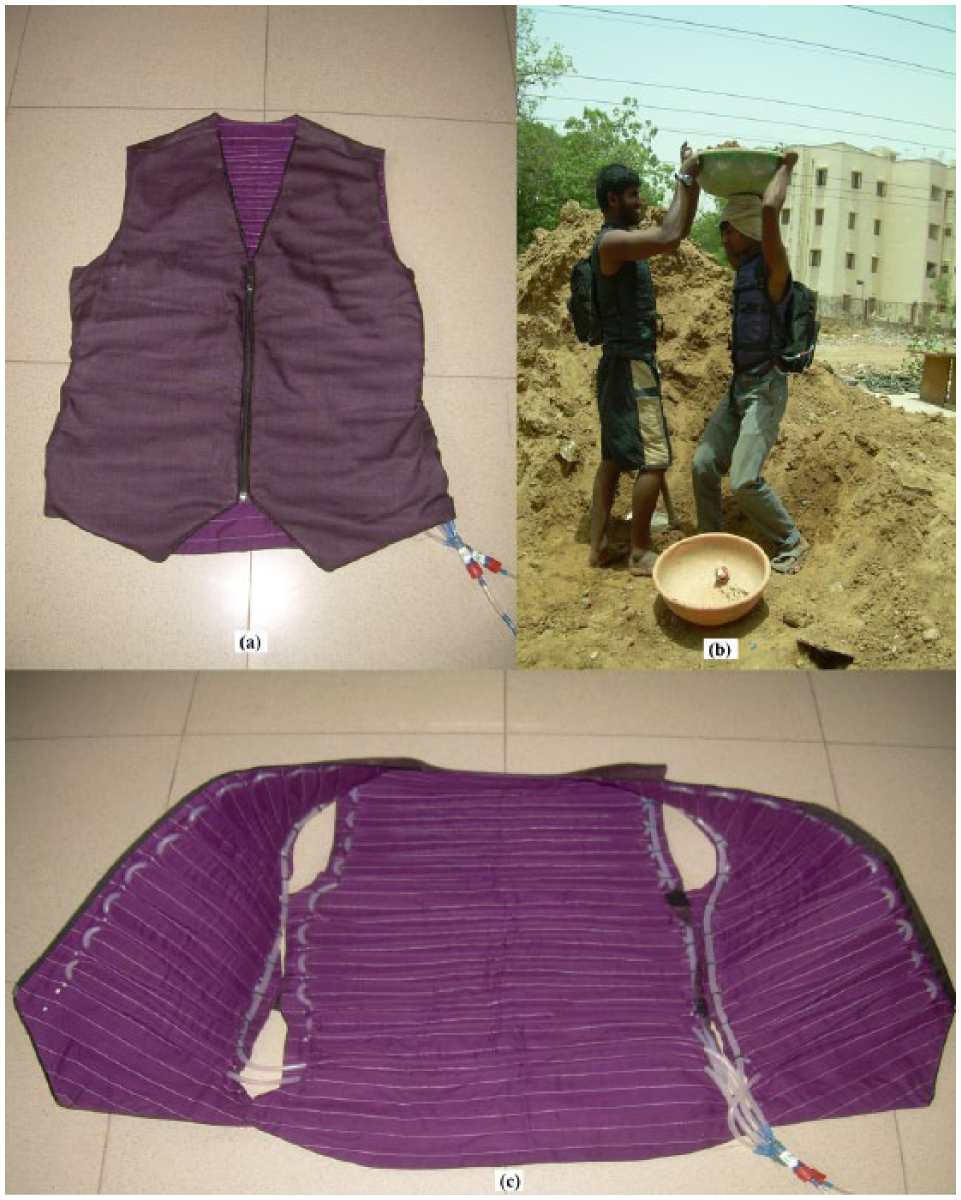
PCG: (a) front view, (b) along with backpack, (c) inside view with silicon tubing.
Procedure and Measurements
A heat stress trial was performed in two conditions. The trials were conducted initially with wearing PCG and later with wearing HC during their usual working conditions. The efficacy and applicability of wearing PCG work was compared with wearing HC. Each test consisted of work performed in the actual worksite for a total of 90 minutes wearing the PCG and 90 minutes with wearing HC. As the initial heat stress trial with wearing PCG cooled down the body skin temperature at the torso area, therefore, a 30-minute rest break period was given in between the PCG and HC heat stress trials for the purpose of normalizing the body skin temperature. Thus, the total duration of experiment time was 210 minutes. The work–rest regimen noted was 75% work and 25% rest each hour. Care was taken that the same type of work was carried out in both trials of wearing PCG and HC. All the subjects successfully fulfilled the 3.5-hour heat exposure trial. The experiment was conducted during the daytime (12 p.m.-5 p.m.).
The environmental thermometric parameters, such as ambient dry bulb temperature (DB), wet bulb temperature (WB), globe temperature (GT) and wet bulb globe temperature (WBGT) were measured by Questemp 10 Area heat stress monitor, temperature sensor accuracy ± 32.9°F (Quest Technologies, Oconomowoc, Wisconsin, USA) at the outdoor construction site. The WBGT heat stress monitor was set in the working zone where the workers performed the routine work during their entire shift. Because the heat stress trial was carried out in direct exposure of sun, the outdoor WBGT values were taken into consideration. The air velocity (V) was measured at every 30-minute intervals using Anemometer (LT Lutron AM 4201, Taiwan; accuracy ±2%).
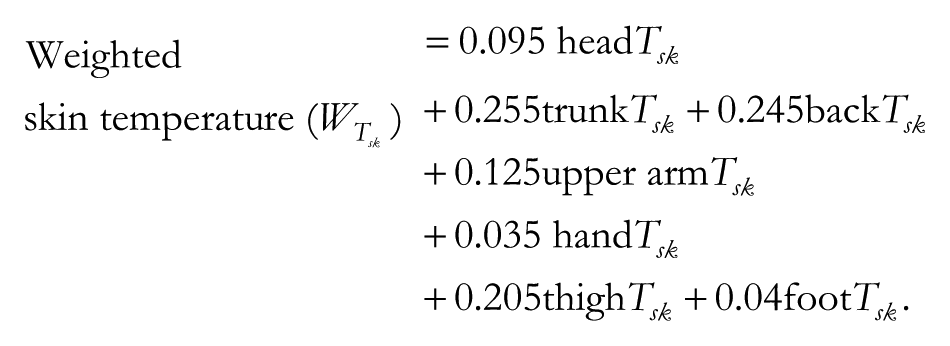
Throughout the heat stress trials, physiological parameters, such as oral temperature (Toral), skin temperature (Tsk), and heart rate (HR), were recorded at 15-minute intervals to assess the efficacy of wearing PCG and HC. Oral temperature was recorded by digital thermometer (Olex VM-101, Vata Medical Healthcare Pvt. Ltd. Japan; accuracy ± 32.18 °F). To obtain reliable oral temperatures, The thermometer was correctly placed under the tongue for 2 to 3 minutes before the reading was made. Mouth breathing was not permitted during this period, and no hot or cold liquids were consumed for at least 15 minutes before the oral temperature was measured. The thermometer was not exposed to an air temperature higher than the oral temperature either before the thermometer was placed under the tongue or until after the thermometer reading was taken. HR was monitored with a polar HR monitor and a chest strap sensor system (Polar Electro, S 810, Finland, accuracy ±1% or ±1 bpm). Skin temperature was measured by capturing the thermal images at the seven body locations with the FLIR B300 infrared thermal imaging camera (Sweden, accuracy ±2%). The temperature data were digitized in the laboratory using the software ThermaCAM Reporter 2000 professional. The five points profiling of an individual’s seven body areas (head, chest, back, upper arm, hand, thigh, and feet) were converted to a mean skin temperature for determining the heat distribution pattern. The weighted average skin temperature (
The adjustable PCG with velcro straps to fit any person was used in all the experimental trials. As the chest and back is covered by the cooling vest, the skin temperature in this area was taken by unzipping the chest for taking the thermal image with a camera. Similarly, the back skin temperature image was taken by removing the velcro strap for a moment to take the thermal image. Mean torso skin temperatures (Ttorso) were calculated using the following equation (Chinevere et al., 2008):

Sweat loss was calculated as the difference between pretrial body weight and posttrial body weight. The pretrial and posttrial weight of each participant was recorded only with lower clothing (such as short pants) for each trial using glass electronic personal scale (accuracy ± 100 g, Equinox, Model No. EB 9300). Before the start of trial, the workers consumed enough water so that they would not feel thirsty during the 90-minute heat stress trial. The workers also did not urinate during the trial.
Subjective Evaluation of Comfort, Thermal Sensation, and Sweating Response
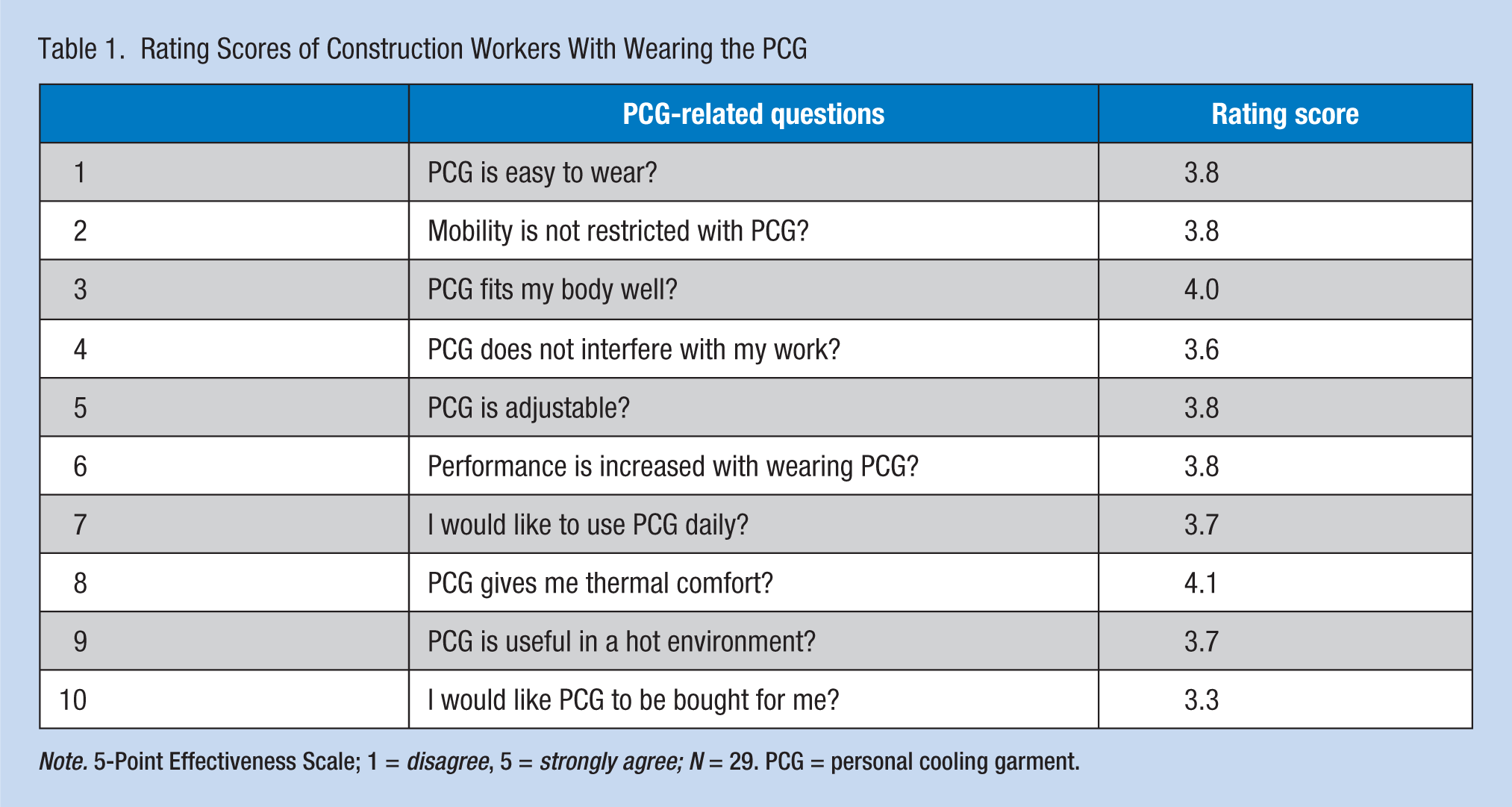
At each 15-minute interval during the PCG and HC heat stress trial, subjects were asked to point to a scale to rate their level of comfort, thermal sensation, and sweating response. A 5-point rating scale was used to measure comfort (0 = comfortable, 1 = slightly uncomfortable, 2 = uncomfortable, 3 = very uncomfortable, 4 = very, very uncomfortable). A 9-point rating scale was used to rate thermal sensation (–4 = very cold, –3 = cold, –2 = cool, –1 = slightly cool, 0 = neutral, 1 = slightly warm, 2 = warm, 3 = hot, and 4 = very hot), and a 8-point rating scale for sweating response (0 = not sweating, 2 = slightly sweating, 4 = sweating, 6 = heavy sweating, and 8 = drenching sweat). Subjects were also asked about the overall performance of the PCG on a 5-point scale (Babski-Reeves, Williams, Tran, & Knoll, 2003) with 1 as disagree and 5 as strongly agree for 10 PCG-related questions listed in Table 1.
Rating Scores of Construction Workers With Wearing the PCG
Note. 5-Point Effectiveness Scale; 1 = disagree, 5 = strongly agree; N = 29. PCG = personal cooling garment.
Statistical Analysis
Continuous variables such as temperature and weight are presented as mean ± SD. To assess the statistical significance, t tests were employed for continuous data. In case of nonnormal distribution of data, nonparametric Mann–Whitney U test was used. All tests were carried out at 5% level of significance. The difference for the various physiological parameters was assessed as change from baseline values, that is, difference from the beginning (0 minute) to the end of the experiment (90 minutes). The SPSS version 16 (SPSS Inc., Chicago) was used for statistical analyses of the data.
Results
The rating scores on PCG-related questions are shown in Table 1. The workers rated high for their thermal comfort (average score = 4.1) in the torso area. The observed environmental parameters during the 90-minute trials with HC and PCG are shown in Table 2. Data show that workers were exposed to the same level of heat stress during the experimental trials with wearing PCG and HC. During summer months, the heat exposure at the construction workplace was very high (91.4°F), and it was above the WBGT values provided in international standards limit values for moderate level of work activities in a hot environment (American Conference of Governmental Industrial Hygienists [ACGIH], 2016). These high environmental temperatures can have a profound effect on the worker’s health and productivity.
Environmental Parameters Measured at Construction Work Site
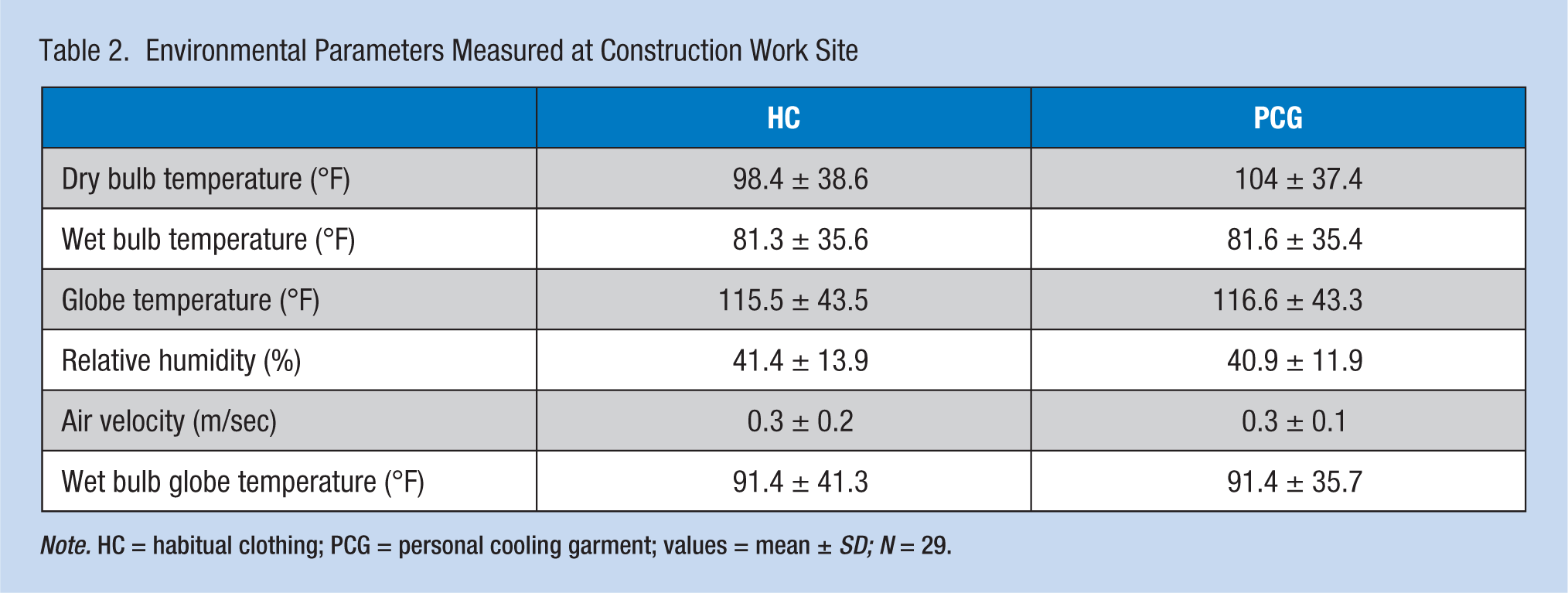
Note. HC = habitual clothing; PCG = personal cooling garment; values = mean ± SD; N = 29.
Physiological parameters such as oral temperature (Toral), HR, weighted skin temperature (
Physiological Responses With Wearing HC and PCG in 90-Minute Heat Stress Trials (N = 29)
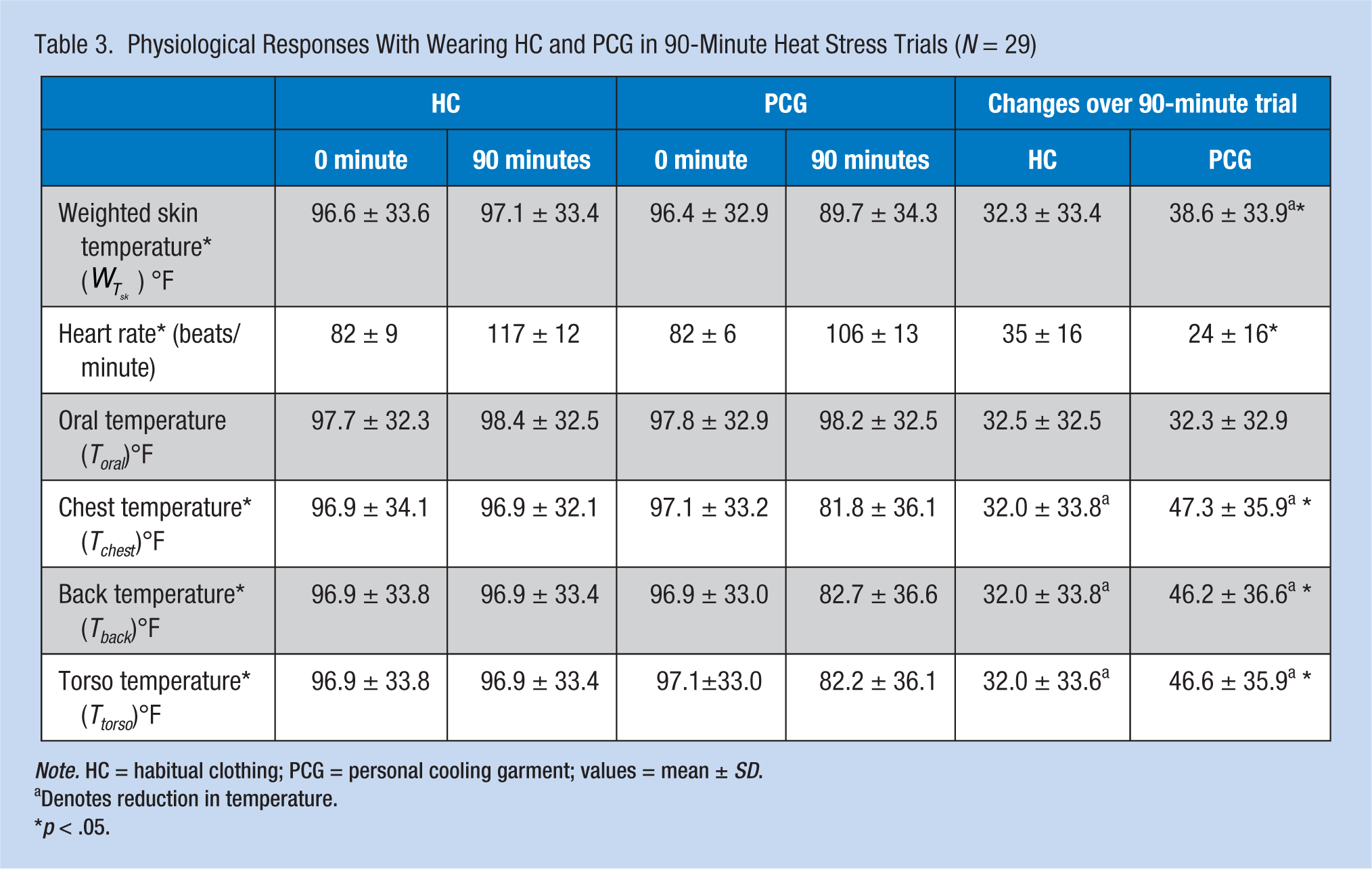
Note. HC = habitual clothing; PCG = personal cooling garment; values = mean ± SD.
Denotes reduction in temperature.
p < .05.
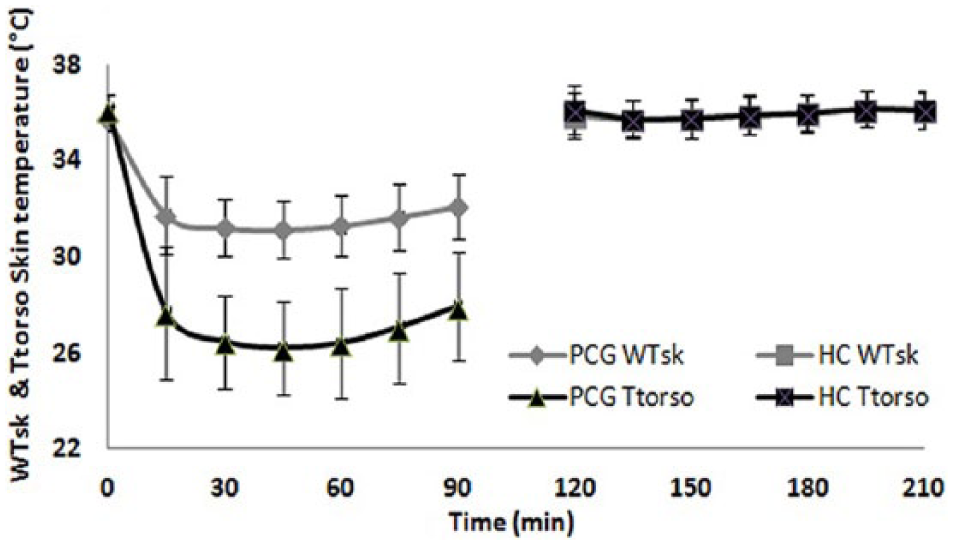
The comparison of torso skin temperature (Ttorso) and weighted skin temperature (
The graphical representation of the subjective evaluation is depicted in Figure 3. The subjective evaluation, which was performed on a quantitative scale for feeling comfortable, thermal sensation, and sweating response indicated that workers felt no discomfort on the torso and they gave a rating of 0 (comfortable), –2 (cool), and 2 (slightly sweating) with the PCG vest trial, respectively, whereas the HC group reported 3.0 (very uncomfortable), 3 rating (hot), and 4 (sweating), respectively. The overall performance of the PCG scored 3.76 rating on a 5-point scale. These evaluation scores suggest that the PCG is a useful device for protecting construction workers from heat stress.
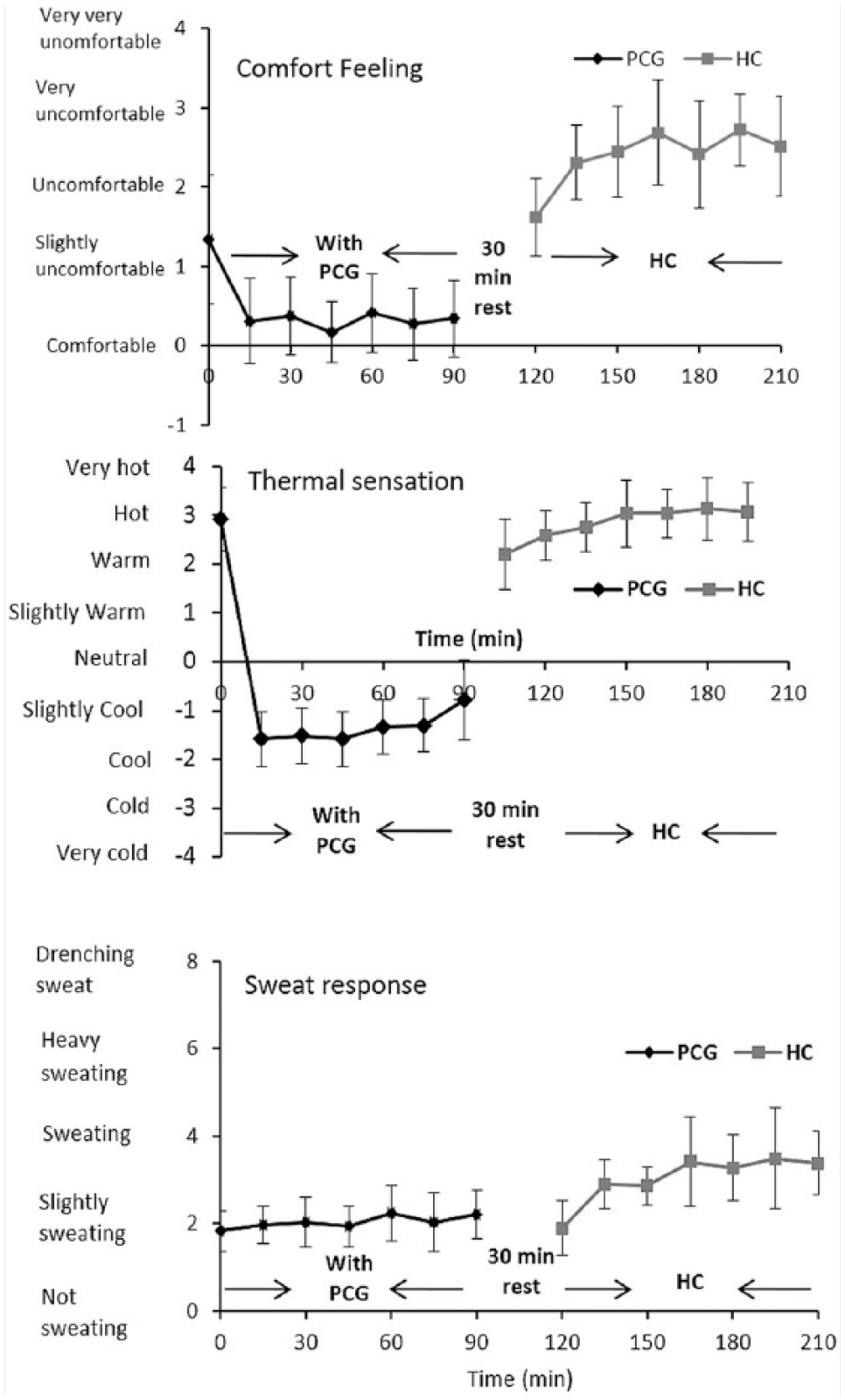
Subjective evaluation by workers for comfort feeling, thermal sensation, and sweating response with HC and PCG.
The infrared thermal image of the worker wearing PCG and displaying the cooling effectiveness is shown in Figure 4. The PCG vest circulated 59°F ice-chilled water through the silicone tube embedded into the PCG vest, which is able to keep the torso area cool. It also displays the front and back side of the body after wearing the PCG for 90-minute heat exposure. Significantly, lower values of skin temperature at the two measuring points in the torso area were observed with wearing PCG as compared with wearing HC. Workers gave their preferences and willingness to wear the PCG in their routine work as they felt comfortable and less thermal strain as compared with wearing HC. Therefore, PCG can be used as a supplemental or supportive device to control for heat-related illnesses as it provides a microclimatic comfortable condition of ~77°F to the wearer. The wearing of PCG improved comfort, lowered thermal strain, and reduced sweating responses in the torso area. The measured values of Tsk at the other five points (head, arm, hand, thigh, and feet) did not differ significantly between the groups.
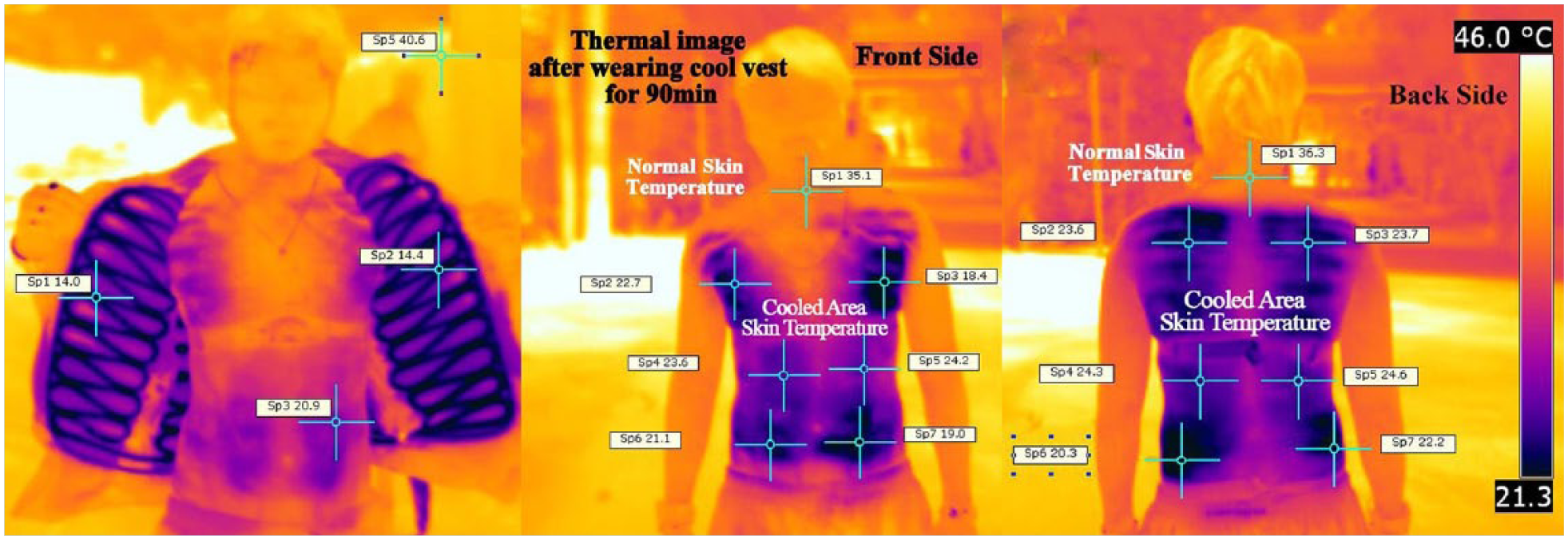
Thermal images of the workers wearing PCG.
The ACGIH (2010) has established the threshold limit value (TLV) for work according to WBGT index, which refers to those heat stress conditions under which nearly all workers may be repeatedly exposed without adverse health effects. With information on WBGT and the type of work being performed, it is determined how long a person can safely work or remain in a particular hot environment. A permissible heat exposure TLV of 86°F was determined (WBGT is prescribed for heavy category of work). Thus, compared to this value the present study found severe heat stress in the construction work of 91.4°F (for WBGT).
Discussion
The human thermoregulatory system maintains reasonably constant with a core body temperature of 98.6°F so that the heat lost to the environment is equal to the heat produced by the body. No significant difference was noticed in mean oral temperature between wearing PCG and HC in the heat stress trials. This might be due to the short duration of 90-minute exposure of heat stress, which was not sufficient time to raise the core body temperature to a critical level. Liquid cooling garments have been reported to maintain the core body temperature within a safe range and reduce heat strain (Kayacan & Kurbak, 2010; D. E. Kim & LaBat, 2010). The workers cited less strain with wearing PCG as compared with wearing HC, which is confirmed by significantly lower values of reduced HR and sweat loss within the safe limit criteria of heat exposure. This is because the torso (back and chest) area was cooled adequately to reduce the activation of sweating. Thus, wearing PCG has a positive effect on the thermoregulatory system and work performance.
With the initial 1.5 kg ice in the backpack container, the weighted skin temperature was reduced within 15 minutes of wearing PCG and stabilized for up to 60 minutes, and thereafter it started increasing gradually. This was due to the absorption of body heat by the circulating liquid and melting of the available ice in the reservoir backpack. Thus, the cooling efficiency of the PCG was maintained for the first 60 minutes of the heat stress trial, and this can be further increased by refreshing the ice in the reservoir container to extend the cooling duration time. Furthermore, the weighted mean skin temperature was reduced significantly (38.66°F) with wearing PCG. Similar results were also observed by a decrease of 36.32°F using a phase change material (PCM) vest in simulated office workers (Gao, Kuklane, Wang, & Holmer, 2012).
Many studies conducted on subjects wearing LCGs show that these garments can significantly improve performance (work duration) and decrease thermal strain. It has been reported that in the occupations involving exposure to high temperatures work was improved by 54% (J.-H. Kim, Coca, Williams, & Roberge, 2011), 58% (Vallerand, Michas, Frim, & Ackles, 1991), and even 80% (McLellan, Frim, & Bell, 1999) with wearing a cooling garment. The water circulating in a liquid-cooled garment should be at a minimum temperature of 50°F depending on the wearer’s comfort. In addition, increasing the amount of body surface in contact with the garment, the cooling efficiency is improved (Speckman et al., 1988). Significant improvement of the thermal sensation of a worker in a hot environment (95°F and 30% relative humidity) can be achieved with a coolant temperature equal to 66.2°F and a flow rate of 0.9 L/minute (Bartkowiak, Dabrowska, & Marszalek, 2014).
PCG shows several advantages over other types of cooling garments by providing greater heat reduction, desirable fit over the torso area, mobility to the wearer, maintaining the wearer’s body temperature at a safe steady level and providing reduced thermal stress and feeling more comfortable (Nag, Pradhan, Nag, Ashtekar, & Desai, 1998). The PCG also has advantages of being affordable, easy availability of ice and water as compared with other expensive, heavy and bulky cooling vests. However, very few systematic physiological studies have been conducted to assess the efficacy of PCG in actual field work situations.
Strengths and Limitations
The affordability due to low cost, long duration cooling, easy operating procedures, movability, the cheap ice cooling mechanism, and maintenance are the strong points of the PCG. The outcome of the study could contribute to the practical application of PCG for construction workers, and similar high heat stress occupations. Findings from this research study indicate that the PCG may be considered as effective, comfortable, convenient, and an acceptable device for alleviating hazards of heat stress. However, the limitations of this PCG system involve the awkwardness of carrying the reservoir container on the back and the need for refrigeration space to freeze the blocks of ice for further recharging the melted ice reservoir. Short 5-minute breaks are also necessary to recharge the ice reservoir. For optimal efficiency, the cooling vest should be worn as close to the skin surface as possible.
Because we conducted this study in the field, it was not possible to obtain more accurate methods of measuring the body core temperature from rectal, esophageal, or oral temperature. Oral temperatures, on the contrary, are easy to obtain. Similarly, measurement of skin temperature was not possible with the thermistor skin temperature sensor attached to the different location of body surface, therefore, an infrared thermal camera was used.
Conclusion
This study has demonstrated that microclimate conditioning by PCG may be used in a hot environment to mitigate environmental heat stress. With wearing the PCG system, workers’ physiological responses were lower as compared with wearing HC with respect to reducing circulatory, thermal, and subjective strain. Workers can perform their routine work with comfort and mobility without compromising the work outcome. Moreover, workers opined that PCG gives them comfort while working in a hot environment, which is a very important aspect of PCG applicability in such types of work environments. PCG system is a low cost, affordable, and comfortable system to use; therefore, PCG vests may be useful to protect workers from hazards of heat stress when environmental control is not possible. However, further investigations on long term use of the PCG system for 6 to 8 hours consecutively for 5 to 6 days in a hot environment and observing its effects on physiological strain is needed.
Implications for Occupational Health Nursing Practice
Early interventions in the form of education and training are key in reducing heat-induced illness and minimization of the health effects of high-temperature work environments (Rogers, Stiehl, Borst, Hess, & Hutchins, 2007). Occupational health nurses play a vital role in the area of heat stress management in industry. They also work together with interdisciplinary teams to educate workers about reducing their health risk from heat exposure. Support from occupational health nurses in promoting the use of this low cost and assistive technology during educational and training sessions may result in reduction of heat-related illness among workers. As the emphasis on management, prevention, and health promotion efforts have been underlined as central in occupational and environmental health nursing practice (Rogers, 2003), the occupational health nurse could promote the use of these types of devices to employees and organizational leaders for pro-active mitigation of heat exposure risk while at workplace.
Applying Research to Practice
Working under heat stress disturbs thermoregulation of the body leading to elevation of physiological responses and ultimately heat-related injuries. With the technological improvements, various types of cooling garments have been developed to combat the adverse impact on the human body in hot work environments. In this scientific investigation, an indigenously developed and cost-effective cooling garment has been found effective in providing thermal comfort to construction industry workers through conducting field trials. Study findings indicate the benefits of wearing a cooling garment for use in hot work environments by manifesting reductions in physiological indicators of heat strain. The developed cooling garment was effective in reducing heat stress, it was easy to use, and affordable. There is a wide applicability of such types of cooling garments in various occupations performed in hot work environments such as iron and steel foundries, construction, agricultural, mining sites, chemical plants, brick-firing and ceramic plants, textile industry, glass product industry, rubber industry, boiler rooms, bakeries, and so on.
Footnotes
Declaration of Conflicting Interests
The author(s) declared no potential conflicts of interest with respect to the research, authorship, and/or publication of this article.
Funding
The author(s) disclosed receipt of the following financial support for the research, authorship, and/or publication of this article: This study was funded by Indian Council of Medical Research (ICMR, IRIS ID-2012-26270), New Delhi.
Author Biographies
Shirish Ashtekar is a technical officer working at Department of Ergonomic, National Institute of Occupational Health (NIOH). His area of research is heat stress and physiology with focus on translational research.
SukhDev Mishra is working as a scientist in division of biostatistics and data management at NIOH. His research focuses on statistical evaluation of traslational technologies in area of occupational health along with providing statistical inputs in design, analysis, and interpretation on research studies.
Vishal Kapadia is a biomedical technologist and worked as a technical assistant in the research project.
Pranab Nag is a researcher and former director at NIOH. He has done extensive research in area of ergonomics and physiology.
Gyanendra Singh is a scientist at NIOH. His area of research focuses on toxicological aspects of heavy metal poisioning/cancer.