




Abstract
Forestry work is generally characterized by a combination of personal and environmental risks in health and safety. Employers need to ensure intensive and continuous safety training to mitigate these risks; however, the efficacy of this training is seldom evaluated. The aim of this study was to assess the effectiveness of health and safety training in reducing injuries and improving knowledge, attitudes, and perceptions toward safety among forestry workers in KwaZulu-Natal (KZN), South Africa. A descriptive cross-sectional study was conducted among 300 harvesting contract workers employed at a forestry company in KZN. A questionnaire to assess the efficiency of health and safety training was administered. In addition, a retrospective review of the injury register and medical records of employees who sustained work-related injuries from 2009 to 2013 was completed. The company injury data for harvesting contractors reported 68 lost-time injuries during postcommencement of training. Slip, trip, and fall injuries were the most reported cause of injuries, particularly among manual harvesters. Respondents who were male, younger in age, and with less experience had an increased risk of occupational injury. Most participants displayed adequate knowledge of safety and were able to translate training into practice. The health and safety training initiative was successful in reducing injuries and increasing workers’ awareness of, and responsibility for, health and safety issues.
Introduction
Forestry work is characterized by a difficult working environment, heavy physical effort, and high risk of work-related injuries (Blombäck, 2002). Harvesting in forestry is particularly hazardous and most work-related injuries are attributed to this activity (Scott, 2004). Harvesting includes the felling of trees, followed by crosscutting the felled trees into sections by a chainsaw operator. This is followed by manual debarking and stacking in preparation for transport. Difficult working conditions include steep terrains, uneven areas covered with forest debris, harsh environmental conditions, and physically demanding work with sharp and heavy tools (Lilley, Feyer, Kirk, & Gander, 2002). Chainsaw operators are at high risk as injuries that commonly result from a lack of saw control or from failing to follow safe work practices. Operator fatalities occur as a result of being struck by rolling logs, falling trees, or dislodged tree limbs. Although improved technology and safety features on chainsaws and the correct use of personal protective equipment (PPE) help to reduce injuries, these offer little protection if the operator is not properly trained or does not follow safe work operating techniques (Kestel & Mclead, 2009). As there are only limited technical means for improving safety in forestry work, it is necessary to focus efforts to encouraging workers to adopt safer work behaviors (Aderaw, Engdaw, & Tadesse, 2011).
There has been limited data worldwide with respect to logging safety. Most studies compiled and summarized logging injury and fatality statistics. Lilley et al. (2002) reported that forestry worker fatalities ranked the fourth highest among occupational groups with 121 deaths per 100,000 workers per year in New Zealand while reports from the United States confirmed a fatality rate of 92 per 100,000 workers which was significantly higher than all other industries combined (Lagerstrom, Magzamen, & Rosecrance, 2017). The most recent data in South Africa reported nine deaths from 31,749 workers in 2003; however, these data may be inaccurate due to underreporting or inaccuracy with respect to the completion of injury forms (Scott, 2004), as well as being out of date. There has been a gap in reporting and published research in this area in the South African context since 2004. Outsourcing of labor in the forestry industry has further exacerbated the lack of consistent incident reporting to a central database. The shift to contractual arrangements via outsourcing meant that large companies transferred labor issues to the contractor, including safety and health matters, workers’ compensation, regulatory requirements, unemployment insurance, fringe benefits and training. However, outsourcing has had catastrophic effects on workers, with the loss of jobs, job security and employment benefits (Papadopoulos, Georgiadou, Papazoglou, & Michaliou, 2010).
To reduce injuries, the company under study adopted the ARS (Accident Reporting System) in which work-related injury reports are sent to a central location where reports are summarized, analyzed, and disseminated (Bentley, Parker, Ashby, Moore, & Tappin, 2002). Problem areas were identified and interventions were targeted toward those areas. A training matrix was developed to meet the requirements of the South African Occupational Health and Safety Act, Act 85 of 1993 (OHS Act), and other relevant regulations. The purpose was to ensure that forestry workers had the knowledge, skills, abilities, work practices, and attitudes that would enable them to function as safe, productive employees. Training was provided by external service providers to all new workers before starting work, when a worker has been assigned to a new task, and when there is a change in work procedure. Training includes hazard identification, prevention and control, use of PPE, chemical handling, signaling and signal equipment, first aid and emergency preparedness, lockout procedures, hazard communication, and the OHS Act (Montorselli, Lombardini, Magagnotti, & Marchi, 2010).
However, such initiatives require compliance to succeed and this intense training initiative has not been evaluated at the user level. Following an increase in workplace-related injuries in 2004, the forestry company under study implemented an occupational health and safety training program in 2005. All contractors providing services to the company were obligated to follow a training matrix which included continuous and refresher training for all existing and new employees. Efficacy of this training has never been formally evaluated by the company. The aim of this study, conducted in 2014, was to evaluate the injury profile among the current cohort of contracted forestry workers over a 10-year period (2003-2013) and to examine knowledge, attitudes, and practices linked to the training implemented since 2005.
Method
This descriptive study was conducted at a forestry company based in the KwaZulu-Natal (KZN) Midlands and KZN South districts in KZN province, South Africa.
Justification for the Training Intervention
A relatively high number of fatalities and injuries in 2003-2004 in the forestry company under study accelerated discussions on appropriate action among management, health and safety officials, and contractors. A review of the primary causes of these injuries determined that a lack of standardized comprehensive training for all employees, particularly fellers, was needed. A standardized harvesting training and certification program was developed in 2005 to ensure that all forestry employees received the same high quality training by approved accredited training providers. A training matrix was developed to meet relevant regulations and the purpose was to ensure that forestry workers with different occupations have the knowledge, skills, abilities, work practices, and attitudes to enable them to function as safe, productive employees. All forestry contractors were required to submit an annual training matrix to the forestry company. The training providers, who are accredited by the South African Department of Labor, offer continuous training as well as refresher training.
Training was provided to all new employees before commencing work, when an existing worker was assigned to a new task and when a change in work procedure occurred. Furthermore, refresher training was offered annually, particularly at the beginning of the year. Training included hazard identification, prevention and control, direction on the use of PPE, and safe felling techniques. Training also included chemical handling, signaling and signal equipment, first aid and emergency preparedness, lockout procedures, hazard communication, and information on relevant sections of the OHS Act. The level of training differed with job categories as workers received training relevant to their tasks. In addition, the forestry organization renewed its focus on management, training and entrenching root cause analyses, ensuring visible senior leadership in the field, improving contractor management and performance, and generally energizing safety behaviors. Other risk mitigation included enforcing a 1 km no-go area for active felling areas, machinery prestart checks, and introducing critical occupation license cards. However, these actions were complicated by the high labor turnover in forestry, particularly among contractors, so it is particularly difficult to ensure that sustained efficacy of training.
Retrospective Evaluation of Intervention
We conducted a retrospective review of company injury registries and medical records of employees who sustained work-related injuries between 2003 and 2013. A dataset was compiled from the records of each fatal and lost-time incident to show the trend in the work-related injury profile over a 10-year period. We assume the reliability of the work-related injury data in the company database was regarded as high because these incidents were reported, captured, and investigated as they occurred.
Assessment of Worker Injury and Knowledge of Safe Work Practices
Separately, a cross-sectional survey was conducted in 2014 to determine self-reported injuries and worker knowledge of safe practices. Six contractors were randomly selected and 50 questionnaires were distributed to each contractor. The criteria for sample selection included contractors with 100 or more employees, with a fixed contract with the study company whose employees were employed for 6 months prior to the study onset. A convenience sample of a total of 300 contract employees comprised of chainsaw operators responsible for felling trees, chainsaw operators responsible for crosscutting and de-branching, manual stackers, pushers/markers, cable yarding operators, de-branchers, manual debarkers, labor carrier drivers, bell logger operators, and tractor drivers. We did not track if any of the employees who had sustained lost-time injuries during the 10 years participated in this survey. As the company under study employed contractors, it was difficult to trace a defined cohort of employees over an extended period of time. However, it was mandatory for all new/contracted employees to undergo OHS training. Contractors were obligated to complete training and submit schedules to the forestry company under study.
Data on self-reported work-related injuries from 2009 to 2013 were collected. In addition, employees’ knowledge, attitudes, and practices regarding health and safety were evaluated by means of a quantitative questionnaire in which workers ranked on a Likert-type scale consisting of five categories: strongly agree (1), agree (2), neutral, disagree (3), and strongly disagree (4). The neutral category was not used in the calculation of the training score. The questionnaire was developed by the researcher based on prior literature and knowledge of company occupational health and safety training and policy. Questionnaires were administered by trained field workers in the local language of choice and piloted among 12 employees prior to the commencement of the study. Feedback from employees with respect to clarity of instructions, difficulty with questions, questionnaire length, layout and preferred method of administration was considered.
Ethical approval was granted from the Institutional Research Ethics Committee at the Durban University of Technology (IREC Ref No 51/13) and informed consent was signed by all employees.
Data Analysis
Data were initially captured into Microsoft Excel Software and statistical analysis was performed using STATA (Version 12, College Station, TX, USA). Frequency distributions of categorical variables, and means, standard deviation, and ranges of continuous variables were calculated. Bivariate associations between categorical variables were performed using the Pearson’s chi-square test (Chernoff & Lehmann, 1954). A summary score of responses on the Likert-type scale was used to determine effectiveness of safety training. Training effectiveness was determined as a raw score from questions based on knowledge of emergency procedures, safety training and hazard information, their ability to work safe, understand the importance of safety training, and the use of PPE. The possible range of the total score was 8 to 19. The lower the score, the more effective the training. A range of 8 to 10 was considered very effective, while 17 to 19 was regarded as very poor. Ordinal regression modeling was used to explore effectiveness of safety training with respect to knowledge, attitude, and practices of workers. Odds ratios (ORs) and 95% confidence intervals (CIs) were calculated for ordinal outcome variables. Logistic regression models included gender, age, and work experience as independent variables in separate models. Participant responses to various injury and health and safety training related variables were used as the dependent variables.
Results
The retrospective review of company-recorded injuries indicated that 606 lost-time injuries were experienced during the period 2003 to 2013 in the forestry company in all its operations, with 43 fatalities reported for the same period (Figure 1). Most injuries were reported in 2004 and involved chainsaw operators felling trees and the transportation of workers within the plantations, as well as the use of three-wheelers while loading timber. The formal safety training of all workers, especially chainsaw operators, was enforced in 2005.
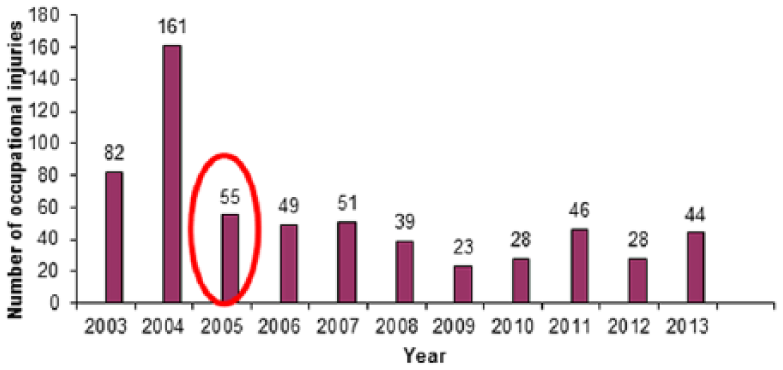
Lost time injuries of a forestry company before and after annual safety training that commenced in 2005 (2003-2013).
Of the 300 respondents in the cross-sectional survey, 63 (21%) had experienced at least one work-related injury while at work between 2009 and 2013 (Table 1). As it was self-reported, this may not correlate with the company injury data represented in Figure 1. Almost 36.5% of the injured respondents were between the ages of 25 and 29 years, with only 16% between 45 and 49 years old. It was evident that employees with less work reported more injuries than more experienced employees. Nearly half (45.7%) of the respondents indicated that the injury occurred on flat ground; only 21.4% of work-related injuries occurred on a steeper slope. Workers have practiced precautions on steep areas compared with flat areas. Almost 51.1% of the work-related injuries occurred while felling trees. Ten percent of injuries occurred while workers were involved in other logging activities such as driving short haul vehicles and transporting labor on the plantation roads and extracting timber using cable yarding. Although 60% of respondents reported no days lost as a result of occupational injury, 25.7% of workers had to stay away from work for 1 to 5 days while 4% workers lost 6 to 10 days due to injuries (Table 1).
Reported Occupational Injuries Stratified by Age, Work Experience, and Terrain in 2009-2013 Among Forestry Workers (N = 300)
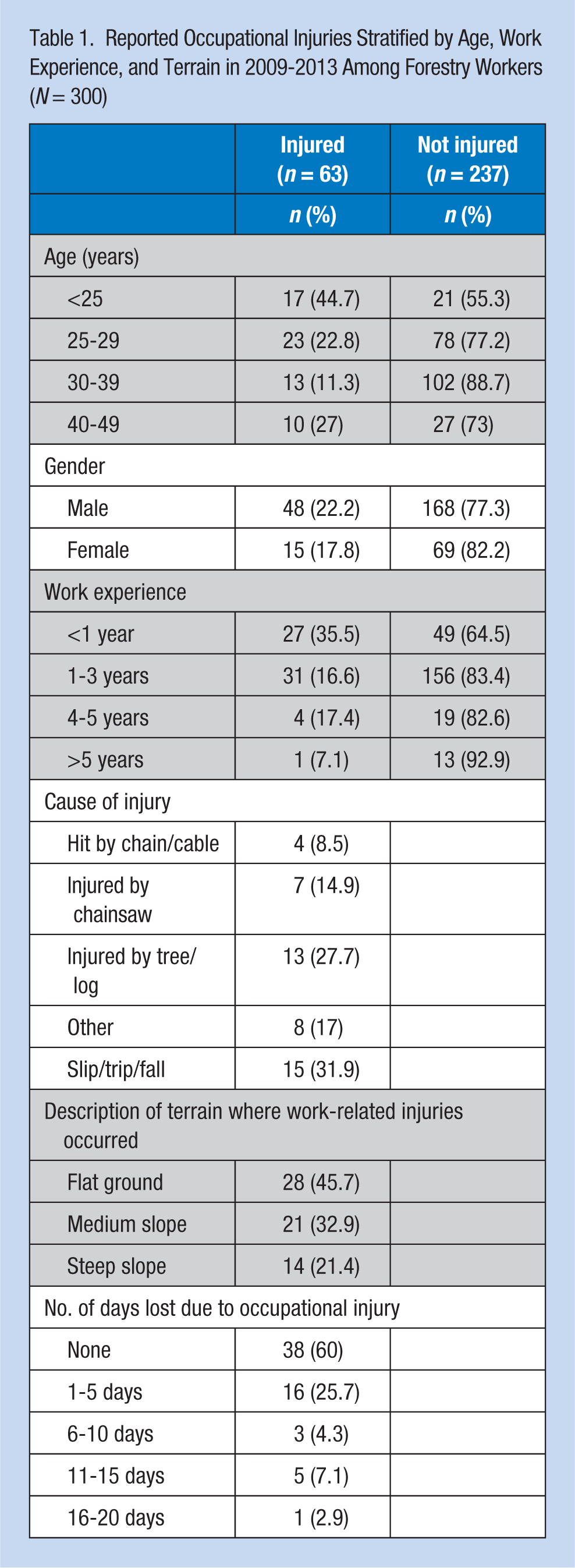
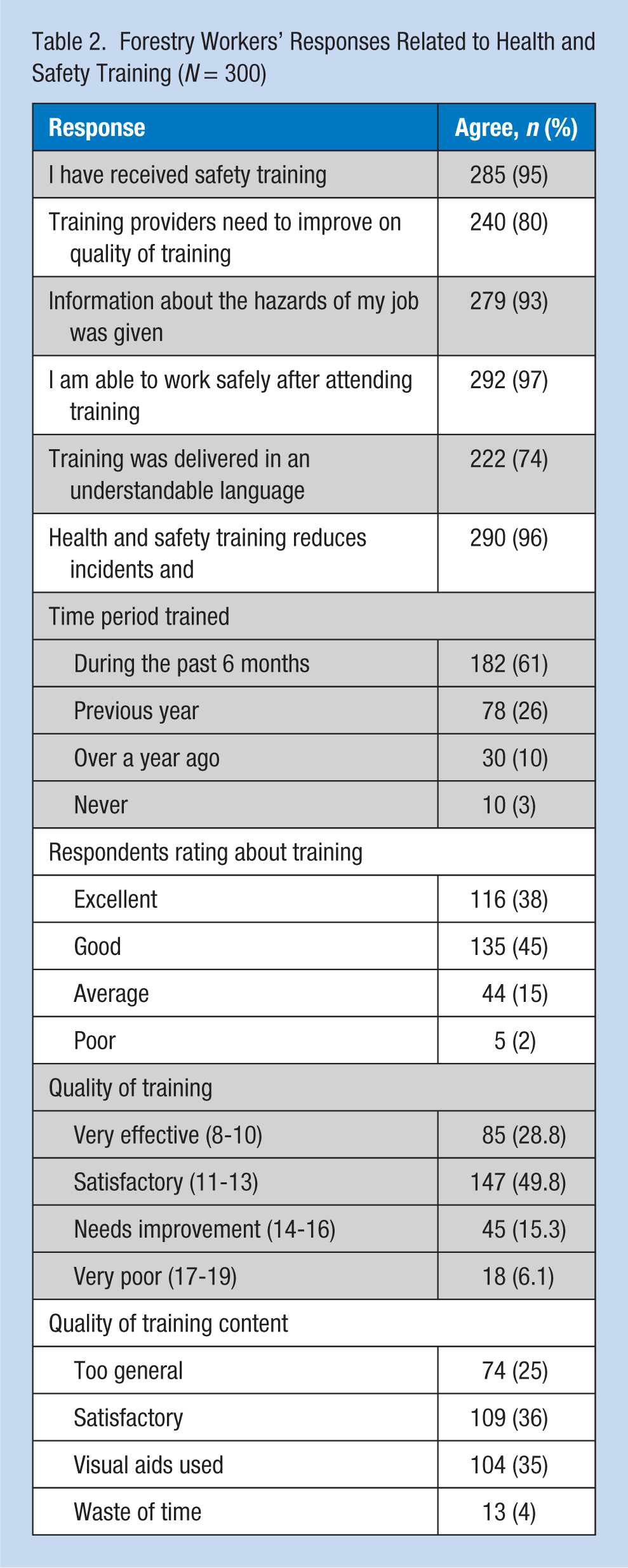
Injuries caused by tree felling had the highest severity of 11 to 15 days away from work (7%). Twelve workers reported hospitalization due to occupational injury. About 50% of the workers who were injured agreed that they were given refresher training pertaining to their jobs before going back to work after an injury. In the survey, we observed that approximately 95% of respondents indicated that they had received health and safety training at work, both when they commenced the job and then annually. Eighty percent of respondents indicated that training providers need to improve the quality of training, with 97.3% stating that they are able to work safely after having attended the training (Table 2). The overall training score reflected in Table 2 was based on respondents’ ability to understand safety training and emergency procedures, to understand hazard information, to work safely and use appropriate PPE, and to acknowledge the importance of safety training. Approximately 29% of all respondents scored 8 to 10, which categorized the training received as “very effective.” However, almost 50% of respondents perceived training to be satisfactory with the potential for improvement. Most workers displayed appropriate knowledge of health and safety within the context of their working environment. All respondents indicated that safe work procedures were explained to them, although it was concerning to note that about 79% did not completely understand the procedures, while 30% did not know the emergency numbers. In addition, only 33% stated that they always wear required PPE (Table 3).
Forestry Workers’ Responses Related to Health and Safety Training (N = 300)
Forestry Workers’ Knowledge, Attitudes, and Practices Regarding Workplace Health and Safety (N = 300)
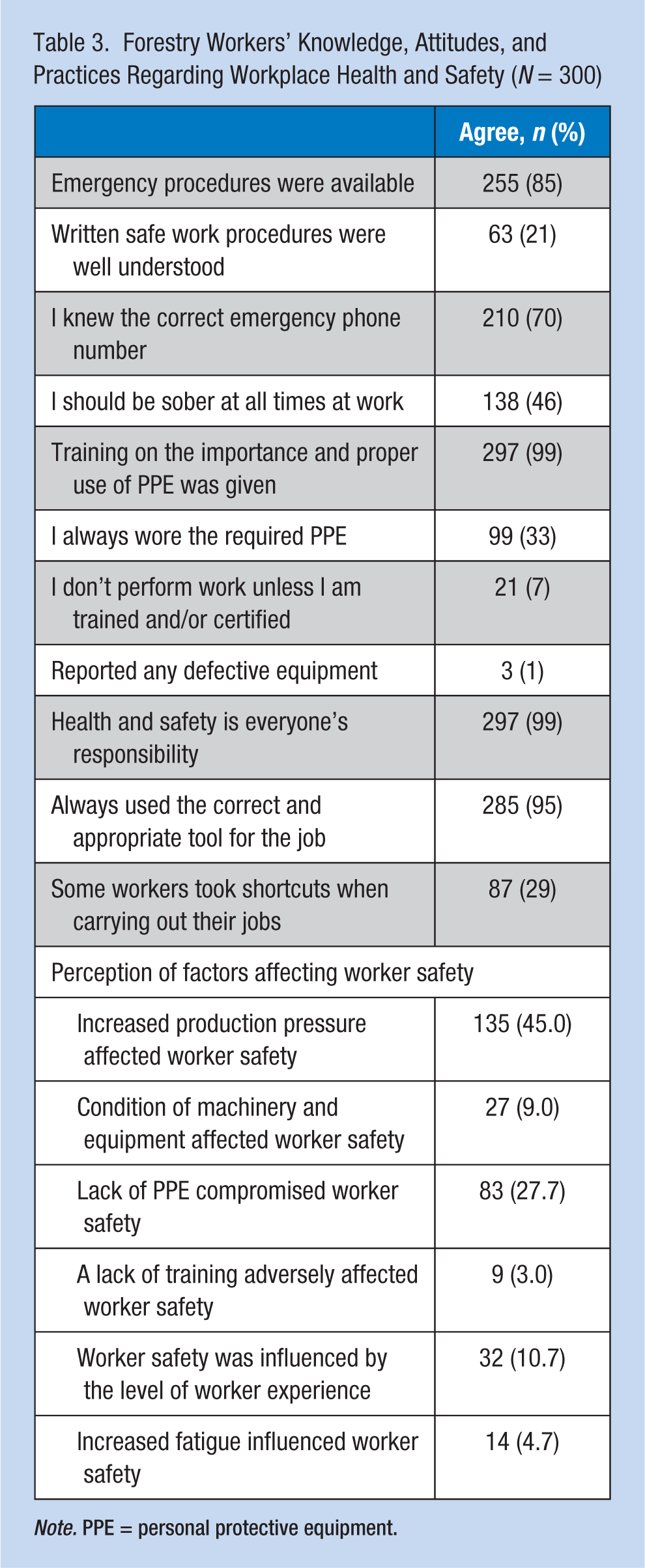
Note. PPE = personal protective equipment.
Significant differences were observed between male and female workers in Likert-type scale responses linked with health and safety training and the use of PPE (Table 4). Females were significantly more likely to acknowledge receipt of health and safety training (OR = 2.45; 95% CI = [1.41, 4.24]; p < .05) and understanding the training given (OR = 3.53; 95% CI = [2.14, 5.79]; p < .05). They were also more likely to use PPE at all times while working compared with men (OR = 4.22; 95% CI = [2.43, 7.33]; p < .05). A significant difference in ranking was observed with age as younger workers (<30 years) were more likely to acknowledge that written safe work procedures relating to their jobs were explained to them compared with older workers (OR = 2.60; 95% CI = [1.34, 5.03]; p < .05). Workers with greater working experience (>2 years) had experienced significantly fewer occupational injuries than those who less than 2 years of work experience (OR = 0.49; 95% CI = [0.23, 1.04]; p < .05). Conversely, more experienced workers tended not to agree when questioned about receiving health and safety training (OR = 0.49; 95% CI = [0.98, 1.34]; p < .05). However, experienced workers tended to understand the training better than their less experienced colleagues and they were more likely to agree that health and safety training reduces injuries and improves worker safety (OR = 2.53; 95% CI = [1.48, 4.33]; p < .05).
Logistic Regression Models of Health and Safety Outcomes by Forestry Worker Demographics of Gender, Age, and Work Experience (N = 300)
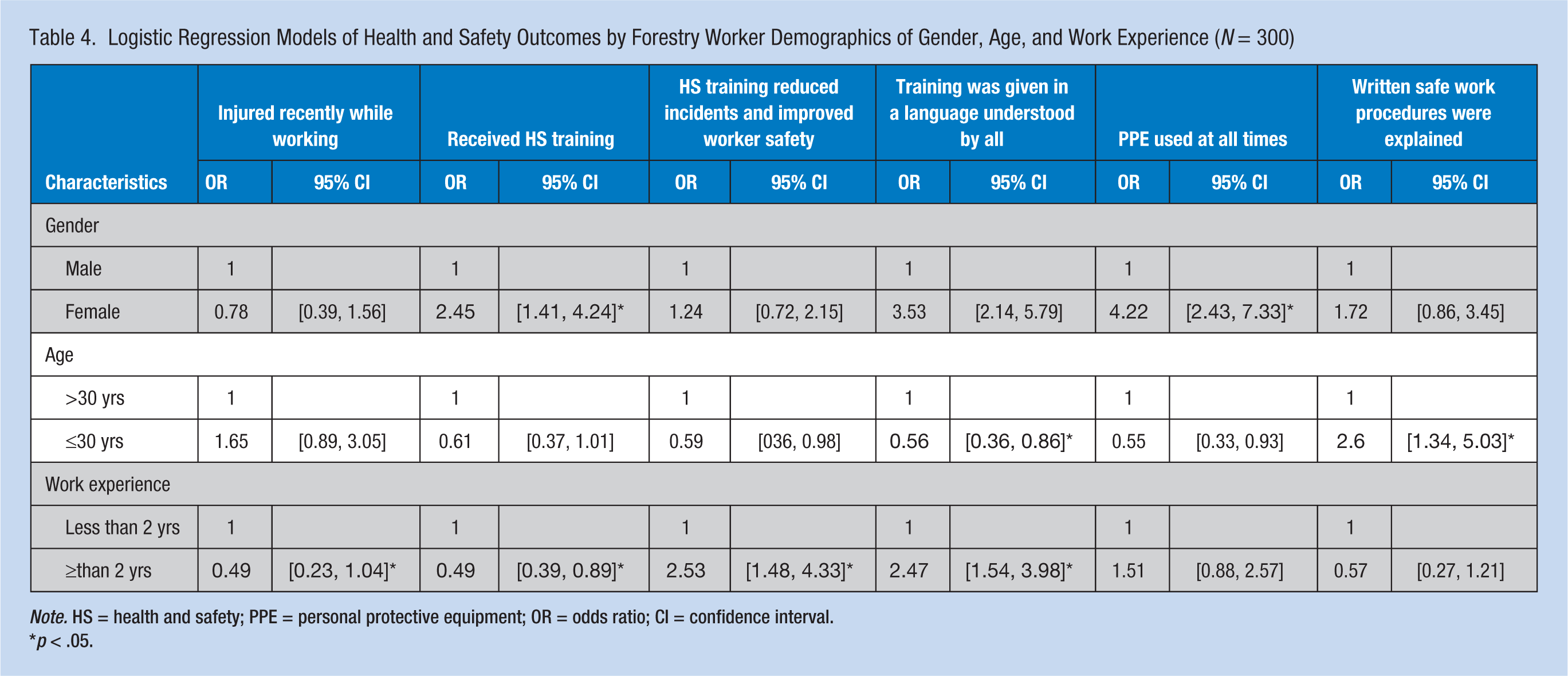
Note. HS = health and safety; PPE = personal protective equipment; OR = odds ratio; CI = confidence interval.
p < .05.
Discussion
This descriptive cross-sectional study assessed the effectiveness of health and safety training in reducing occupational injuries in forestry harvesting in KZN. Forestry is regarded as dangerous work, characterized by difficult terrain that is exacerbated by adverse weather conditions. The company under study initiated training in 2005 to intensify health and safety training after a spate of occupational incidents but this training was never evaluated. Results from the current study confirmed that the aforementioned health and safety training significantly reduced occupational injuries in this forestry company. The review of the injury profile data revealed that the manual debarking activity recorded the highest incidence of injury followed by the manual stackers. In the company under study, being a male worker, being younger in age and with less experience increased the risk of occupational injury. The safety training seemed to have a positive impact on respondents’ knowledge, attitudes, and practices toward safety pertaining to their jobs and work environment. Most respondents understood the goals and content of safety training and emergency procedures, understood hazard information, and were able to work safely and use appropriate PPE.
After a spike with 161 lost-time injuries in 2004, the company initiated intensified health and safety training agreements with contractors and a decline was seen over the next 9 years. In addition, contracting in forestry has had both positive and adverse effects. Although contracting offered an important avenue for the creation of new black enterprises in rural areas, the workers were previously not given adequate safety training and quality PPE. This may have been linked with contractors cutting costs. The forestry company has attempted to address this by mandatory contractual agreements for accredited, ongoing safety training since 2005. The majority of workers in this study were manual debarkers (22.3%) who stripped off the felled timber. Markers and pushers (21.3%) assisted the chainsaw operators during felling and crosscutting of timber. About 20.3% of the survey respondents were supervisors, as it is a requirement that each team has at least one supervisor who checked production as well as safety aspects. Chainsaw operators, who were skilled workers certified to fell trees made up only 13.3% of the study respondents. The majority of the injured participants were males (76.19%, p < .005) which could be due to the fact that males were involved in more dangerous work than females and were also more likely to engage in risky behavior compared with females. Younger workers between 25 and 34 years were more likely to be injured compared with those older than 35 years. Previous studies have corroborated the association between age and injury risk. The reasons for higher work-related injuries among young people included a lack of training, supervision, job experience, and knowledge and skill (Tadesse & Kumie, 2007).
High employee turnover is very common in the forestry industry which makes it difficult to retain workers who are more experienced. This may be due to unattractive and unstable working conditions (Blombäck, 2002). In addition, they are only offered contract work and constantly sought other permanent and more secure employment. Work experience was significantly associated with occupational injuries in this study. The results showed that 87.4% of the respondents had less than 4 years of work experience, with only 12.6% of workers with 4 or more years of work experience. Those who had more than 5 years working experience were less likely to be injured than workers with less than 3 years’ working experience (OR = 0.81; 95% CI = [0.64, 0.99]). This inexperience may be accompanied by a low level of knowledge and skill toward the work, as well as inadequate decision-making skills and assessment of work conditions. Studies done in New Zealand and Ethiopia showed that a lack of experience influences the interaction between the worker and other workers, the knowledge of machines and tools in use and their defects, and awareness of surrounding hazards (Bentley et al., 2002; Tadesse & Kumie, 2007). In the present study, more injuries occurred on a flat surface or ground, which may be due to workers practicing more precautions when working in steep areas, where a detailed risk assessment had been conducted and hazards communicated and mitigated. This contradicted results by Lilley et al. (2002) in British Columbia, where more work-related injuries occurred in steep areas. More injuries occurred with manual debarkers (39.6%) than in any other group. These were unskilled workers who used sharp tools such as hatchets and slashers to debark the logs. These workers did not receive the same formal training that other categories of workers received, and this was an area that needed to be addressed. Slip, trip, and falls in this category accounted for more injuries and this was due to the fact that these workers debarked logs lying on the floor with heavy brushwood and debris, and the bark became slippery after it had been stripped off.
Surprisingly, only 31.3% of injuries were reported during the felling of trees. Injuries caused by felling trees were the most severe and led to the workers being off work from 11 to 15 days. This finding was in contrast to other studies, where felling accounted for the majority of serious injuries in harvesting (Bentley et al., 2002). This may be attributed to the implementation of the code of practice for forestry which includes keeping a specified distance, conducting risk assessment, having escape routes, provision of proper PPE, and removing hung ups and dead trees before felling takes place. There were daily safety talks and daily machine checks accompanied by continuous training for the fellers. Most injured workers received refresher training before returning to work after an injury and many believed that they were adequately trained and that they could work safely after attending health and safety training. In general, health and safety knowledge was adequately demonstrated. Approximately 95% of the study participants indicated that they had received health and safety training at work—both when they started work through an induction process where they were trained on hazards and procedures related to their jobs and annually. However, this training was not evaluated or assessed for its effectiveness. Although examining the incident profiles is one marker, it does not provide a holistic view from the workers’ perspective. Contractors were obligated to train their workers at significant cost, but they did not evaluate the efficacy of the training in terms of what happens on the ground. They often send workers for training merely to fulfill the requirements of the main company which is a “tick-box” exercise. In addition, debarkers and stackers were given informal training which is problematic because most incidents were reported with this at-risk group. As felling has been previously reported as the most hazardous activity in forestry, there was a significant effort to provide training and maintain safety protocols in this group of workers. However, the same intensity of training needs to be provided to manual debarkers to improve injury rates.
Waehrer and Miller (2009) reported that safety training increased the reporting of injuries and had a positive effect on days away from work because of injuries. Decreased lost time had a positive impact on production which has been supported by studies conducted in Egypt and Ethiopia (Tadesse & Kumie, 2007). Training in health and safety changed both attitude and safety behaviors. An overall training score based on respondents’ knowledge of health and safety showed that nearly half of all respondents felt that the training was satisfactory with 80% indicating that training providers needed to improve the quality of training. Although 93% of respondents in this study confirmed that work-related hazards and written safe work procedures were explained, only 27% of participants fully understood the contents of the procedures. Language did not appear to be a barrier to understanding and it may be prudent for trainers to revisit assessment strategies during training sessions to ensure understanding before moving on with the content. Training service providers may need to adopt a more practical approach when explaining policies and procedures. This may require additional training time which is a challenge. Contractors may be reluctant to allow their workers to be away on training for more days than necessary due to production pressure and related cost. However, they have the responsibility of creating time and documenting training schedules that are both cost-effective and comprehensive to ensure competency and effectiveness of such training. Poor knowledge of safe work procedures was noted in areas of general health and safety rules applicable to their workplace, and with regard to knowledge of the OHS Act, despite the fact that some sections of the Act and safety rules were covered when they attended basic safety training and during the inductions. Approximately 95% of participants indicated that emergency procedures were available infield and was explained to them, but many respondents were unable to explain the procedure in case of an emergency and 29% of respondents could not recall the emergency numbers.
About 64.7% perceived that tree felling to be the most dangerous job, followed by crosscutting and manual debarking. Most workers indicated that they needed to be sober at all times when at work; this indicated that they were aware of the alcohol policy and other intoxicating drugs, which was included in the inductions. The majority also indicated that it was essential to wear the correct PPE at all times and most did not use or operate any machine or equipment that they were not trained or certified to operate. It was reported that many workers perceived safety as conflicting with both comfort and productivity and often deliberately chose to take risks, particularly as PPE use was cumbersome (Montorselli et al., 2010). Some workers even reported lack of PPE, as their employers sometimes did not replace defective PPE immediately. About 45% perceived production pressure to affect health and safety, as they had to meet specific targets. Some workers (25%) admitted to taking shortcuts that compromised safety procedures. Often they felt as if they did not have a choice, as it was a compromise between working safely and meeting production targets. Fatigue may also affect safety as workers started very early in the morning, leaving their homes between 3:00 a.m. and 4:00 a.m. so that they could go home earlier. A few workers felt that a lack of experience affected safety, as there was no retention strategy in forestry. To be attracted to an industry and to remain working within it, potential workers need to understand the work, the working conditions, and the career pathways that are available to them. Their pathways should include training and development opportunities.
The majority of respondents (84%) indicated that health and safety training was essential to improve safety of all workers. Literature has indicated that there was a strong relationship between training on health and safety and reduced work-related injury rates among forestry workers. Training motivated workers to be safer and instructed them in correct safety behaviors (Blombäck, 2002). On the contrary, lack of training in health and safety led to lack of know-how and job knowledge. Given the difficult nature of the forestry industry both in terms of the job site and the workforce, it is important that contractors provide relevant and effective training in health and safety. Even though contractors were mandated to provide training for their workers, less time was spent assessing the quality or effectiveness of the training in terms of an actual knowledge or skills gained and reduced risk exposure. Guidelines for effective monitoring programs should be developed to evaluate ongoing effectiveness. In addition, on-site supervisors should maintain their competency on health and safety issues by annually updating their own knowledge with appropriate courses or workshops. Contractors should be committed to safety and retention of experienced workers. When employee turnover is reduced, the worker’s experience and knowledge of each other’s work habits create an environment where they sincerely care and watch-out for each other, which leads to a safer operation. In addition, opportunities to keep strong teamwork but to limit interdependency of tasks should be explored. A review of measures to facilitate and encourage taking at least two breaks per day is required. This will require further education through all levels of harvesting management about the effects of fatigue.
By linking health and safety training to a reduction in injuries and adequate knowledge and proper practices and attitudes to safety, this study provided evidence of the effectiveness of training in reducing the injuries among harvesting forestry workers. From this study, it was concluded that being a male worker, younger in age, working under production pressure and with less experience increased the risk of occupational injury in the forestry company under study. At the forestry company under study, the injury rate was significantly decreased after the introduction of mandatory health and safety training. Information, training and instruction, and supervision should take into account the nature of the work carried out by the worker, the associated risks and measures implemented to control the risks.
Applying Research to Practice
Occupational risks to health and safety are relatively common in forestry. This is exacerbated by the employment of short term contract workers. Employers need to ensure intensive and continuous safety training to mitigate these risks. It is imperative to evaluate this safety training regularly.
Footnotes
Acknowledgements
The authors would like to extend their appreciation to the Study Company (Forestry) and all respondents for their participation in this study.
Declaration of Conflicting Interests
The author(s) declared no potential conflicts of interest with respect to the research, authorship, and/or publication of this article.
Funding
The author(s) disclosed receipt of the following financial support for the research, authorship, and/or publication of this article: The authors disclosed receipt of financial support from the Durban University of Technology.

Author Biographies
Hloni Nkomo is an Msc graduate in environmental health at the Durban University of Technology. Her master’s thesis was focused on occupational health challenges in the forestry industry.
Ivan Niranjan (doctorate in quality management) is a senior lecturer in occupational health and safety in the Environmental Health Programme within the Department of Community Health Studies at the Durban University of Technology.
Poovendhree Reddy (PhD in occupational and environmental health) is associate professor in the Environmental Health Programme within the Department of Community Health Studies at the Durban University of Technology.