




Abstract
This cross-sectional study used quantitative survey data collected from registered nurses (RNs) who worked as staff nurses in medium-sized (300 beds or less) Korean hospitals. Data from 290 RNs were analyzed to examine the nature and prevalence of staff nurses’ work hours, overtime, breaks, and related work conditions. The results showed that staff nurses working in medium-sized Korean hospitals worked 9.6 hours a day on average and had 1.5 breaks daily, including mealtime. The average number of days the nurses skipped a meal due to work during the last month was 6.1. With respect to skipping bathroom breaks due to work, staff nurses reported that they could not visit the bathroom 7.3 times during the last month. Regarding work conditions, staff nurses working in intensive care units reported having longer daily work hours and were more likely to work 10 hours or more per shift. Nurses with less than 3 years of experience reported longer daily work hours and fewer breaks.
Staff nurses in Korean hospitals often work beyond the typical 9:00 a.m. to 5:00 p.m. work hours and Monday through Friday work days to provide patient care in facilities that are open 24 hours a day, 7 days a week. Globally, these staff nurses work during various work shifts including 8-hour and 12-hour shifts. To manage either long- or short-term nurse shortages, nurses often work overtime, which increases nurses’ daily and weekly work hours. In the United States, 54% of nurses work more than 39 hours per week, which means that nurses work 200 hours more a year than most workers (Fleck, 2009; U.S. Department of Health & Human Services, 2010). In Korea, staff nurses in hospitals report working an average of 46.6 hours per week, while 12% worked more than 52 hours a week on average and had 29.7 minutes of breaks including mealtimes per shift (Bogunnodong, 2016). Nurses also reported that they slept an average of 6.4 hours each day, and that it took approximately 60.4 minutes to fall asleep (Bogunnodong, 2016). These findings suggest that hospital staff nurses work long hours and, at the same time, have little time off, which results in less sleep and inadequate rest.
Long work hours and extended overtime are related to workers’ health, well-being, and performance (Nakata, Takahashi, & Irie, 2012). Researchers have found that long work hours and overtime are associated with cardiovascular disease, diabetes, hypertension, all-cause mortality, depression, and psychological symptoms (Kawakami, Araki, Takatsuka, Shimizu, & Ishibashi, 1999; Liu & Tanaka, 2002; Nylen, Voss, & Floderus, 2001; Sekine, Chandola, Martikainen, Marmot, & Kagamimori, 2009; Yang, Schnall, Jauregui, Su, & Baker, 2006).
Long work hours have been shown to have a detrimental impact on nurses’ health and well-being, causing fatigue that can affect sleep, vigilance, alertness, and reaction time (Geiger-Brown, Trinkoff, & Rogers, 2011; Trinkoff et al., 2011). Thus, long work hours per day and per week are associated with work-related musculoskeletal disorders (Lipscomb, Trinkoff, Geiger-Brown, & Brady, 2002; Trinkoff, Le, Geiger-Brown, Lipscomb, & Lang, 2006), needlestick injuries (İlhan, Durukan, Aras, Türkçüoğlu, & Aygun, 2006; Olds & Clarke, 2010; Trinkoff, Le, Geiger-Brown, & Lipscomb, 2007) and burnout (İlhan, Durukan, Taner, Maral, & Bumin, 2008). In terms of patient outcomes, several researchers have found that long work hours were related to adverse patient outcomes, including medication errors, nosocomial infections, catheter-associated urinary tract infection, decubitus ulcers, falls that cause injury, and errors or near misses (Olds & Clarke, 2010; Rogers, Hwang, & Scott, 2004; Stone et al., 2007).
In the United States, several states have implemented work hour policies to ban mandatory overtime and limit shift lengths with minimum resting time between shifts to protect nurses from working long hours (Bae, Brewer, & Kovner, 2012). These policies aim to improve nurses’ working conditions, as well as job satisfaction and retention (New York State Nurses Association, 2002). In Korea, labor policies have been implemented to protect workers from exceptional work hours. According to these policies, workers can work 40 hours per week and must have 60 minutes of breaks daily (Labor policy in Korea, 2014). Worker overtime is capped at a maximum 12 hours per week but only if workers agree to work overtime. However, nurses working in hospitals are exempt from this policy, and thus, are not protected.
In Korea, researchers have studied the relationship between shift work and nurse health outcomes (Kim et al., 2013; Koh et al., 2014). However, few researchers have comprehensively investigated the nature and prevalence of nurse work hours, overtime, break time, and work conditions related to work hours (e.g., unit type, typical work schedule [shift], unit tenure, psychological demands, and physical demands). Given the nurse shortage in medium-sized hospitals in Korea, nurse work hours and overtime in these hospitals must be understood to facilitate strategies to retain nurses in medium-sized Korean hospitals (Lee, 2016).
Method
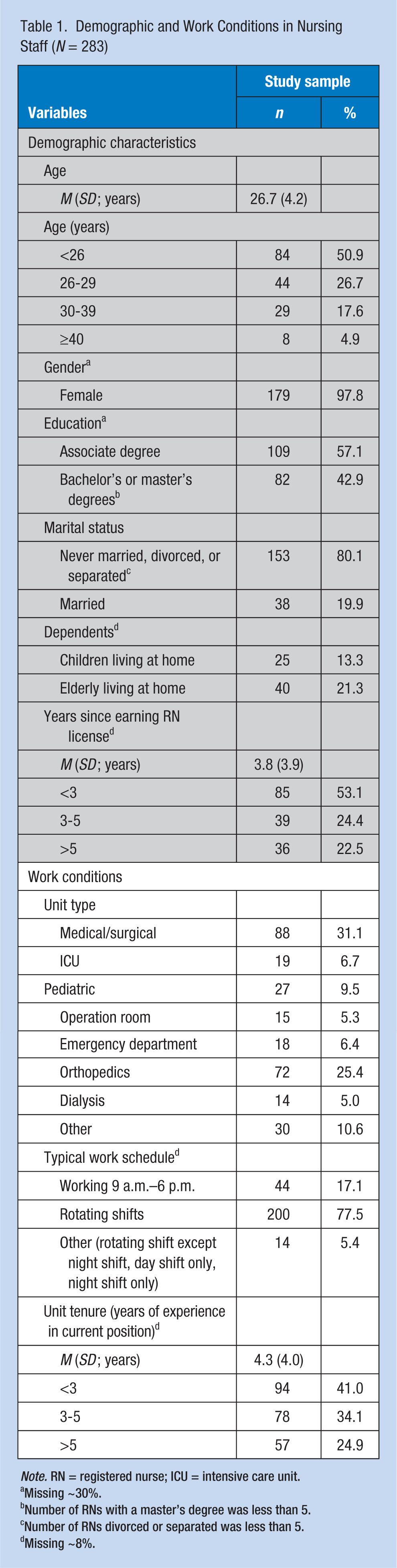
This cross-sectional study used quantitative survey data collected from registered nurses (RNs) who worked as staff nurses in medium-sized (300 beds or less) hospitals (Paek, 2011). Data were collected over 2 weeks in December 2016. Upon receiving ethical approval from the institutional review board of the author’s university, an online survey was sent to all RNs (570) working in two medium-sized hospitals located in Incheon, South Korea. The online survey included a cover page explaining the research purpose and an informed consent form, which was obtained from all participants. Once RNs agreed to participate in the survey, they continued to the online questionnaire and provided no identifying information. To increase the response rate, RNs received a notebook in the staff lounge after completing the survey. With that, the anonymity and confidentiality of all participants were protected. Among the 570 RNs invited to participate in the study, 378 RNs attempted the online survey. At the beginning of the survey, they were asked if they were staff nurses. Based on this screening question, 290 RNs were included in the study. Due to missing data, the total number of respondents varied for each question. Characteristics of participating staff nurses are presented in Table 1. The Ewha Womans University Institutional Review Board granted approval for this study.
Demographic and Work Conditions in Nursing Staff (N = 283)
Note. RN = registered nurse; ICU = intensive care unit.
Missing ~30%.
Number of RNs with a master’s degree was less than 5.
Number of RNs divorced or separated was less than 5.
Missing ~8%.
Measures
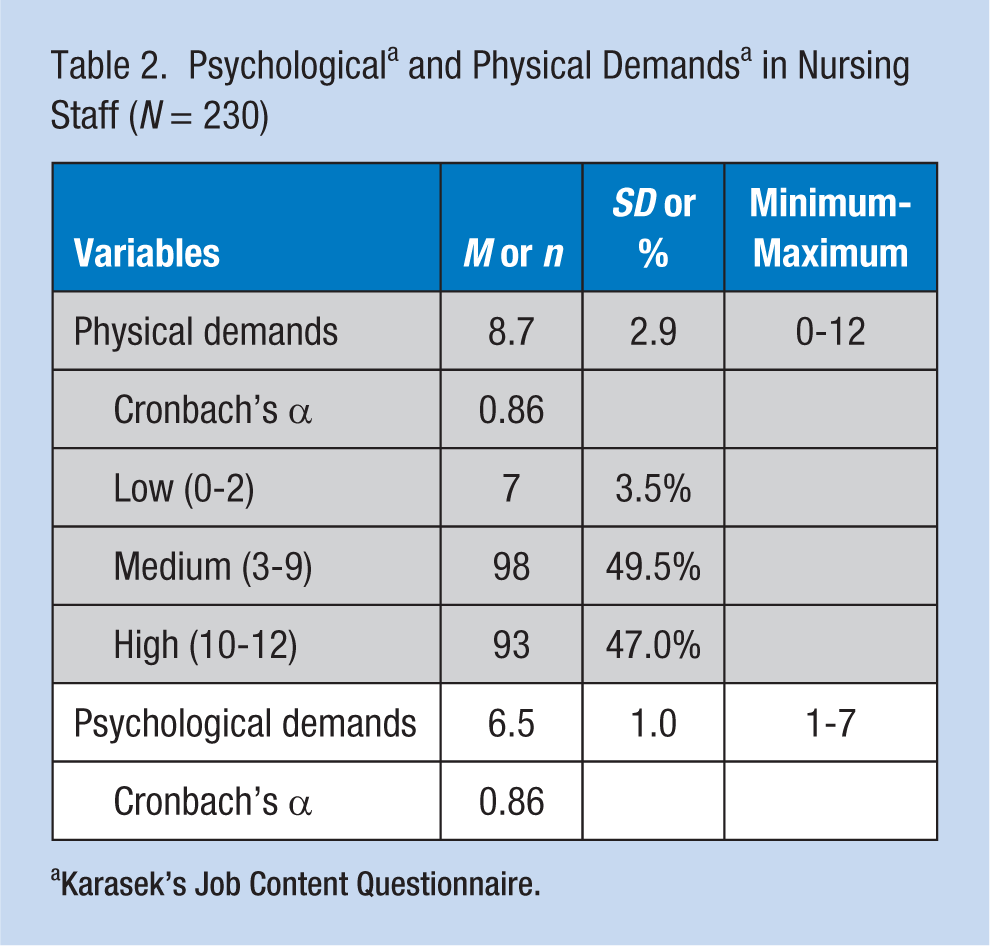
Work hour variables were derived from the standard shift work index (Barton, Spelten, Totterdell, Smith, & Folkard, 1995; Smith et al., 2001; Trinkoff et al., 2007). The authors modified the items of the standard shift work index based on the Korean hospital setting, and the items were verified by 10 clinical nurses before distributing the survey. The standard shift work index consisted of daily work hours, weekly work hours, days worked per week, overtime, breaks, and working when sick or on a day off. The participating staff nurses were asked to assess their typical work schedule during the past month on average. Nurses were asked to report actual work hours, rather than scheduled work hours. Specific items of the standard shift work index are presented in Table 2.
Karasek’s Job Content Questionnaire.
Work conditions included unit type, typical work schedule (shift), unit tenure, psychological demands, and physical demands. Psychological demands were measured using seven items from the Job Content Questionnaire (Karasek, 1985), which includes items such as working very hard, working very fast, excessive work, long periods of intense concentration, enough time to get the job done, tasks often interrupted, and waiting on work from other individuals or departments (Cronbach’s α = .86). Physical demands were measured by 12 items from Job Content Questionnaire (Karasek, 1985) and modified by Trinkoff, Lipscomb, Geiger-Brown, Storr, and Brady (2003) including frequency of awkward postures, heavy lifting, and pushing and pulling heavy loads during the job (Cronbach’s α = .86). Staff nurses’ characteristics included age, gender, education, marital status, dependents, and years since earning an RN license.
Data Analysis
All study variables were analyzed using descriptive statistics (i.e., frequencies, measures of central tendency, measures of variance, and percentages) to assess distributions. Percentages were calculated based on nonmissing total values and the number of nurses who actually answered each question. Univariate descriptive statistical analyses were conducted. Responses to the psychological and physical demand items were treated as continuous variables in the analysis after being dichotomized and summed. Chi-square analysis and ANOVA were used to examine the differences in staff nurses’ work hours in relation to nurse characteristics and working conditions. Correlation coefficients were used to examine the relationship among work hour variables, psychological demands, and physical demands. Researchers used SAS version 9.4 for data analysis.
Results
Demographic characteristics and work conditions of nurses who participated in this study are shown in Table 1. The mean age of all staff nurses was 26.7 years; nurses who were younger than 26 years accounted for approximately 51% of the total participants. Only 5% of nurses were age 40 years or older. As expected, 98% of nurses were female. Fifty-seven percent of nurses held associate degrees. The majority of nurses were never married (80%) and less than five nurses were divorced or separated. Thirteen percent of nurses had children living at home. In terms of nursing experience, 53% of nurses had less than 3 years experience. Approximately 31% of nurses worked on medical/surgical units. With respect to work shift, 77% of nurses worked three rotating shifts (day, evening, and night shifts). Some of the nurses (17%) worked between 9 a.m. and 6 p.m. The mean physical demand score was 8.7 with a Cronbach’s alpha for the scale of .86. The mean psychological demands score was 6.5 with a Cronbach’s alpha for the scale of .86 (Table 2).
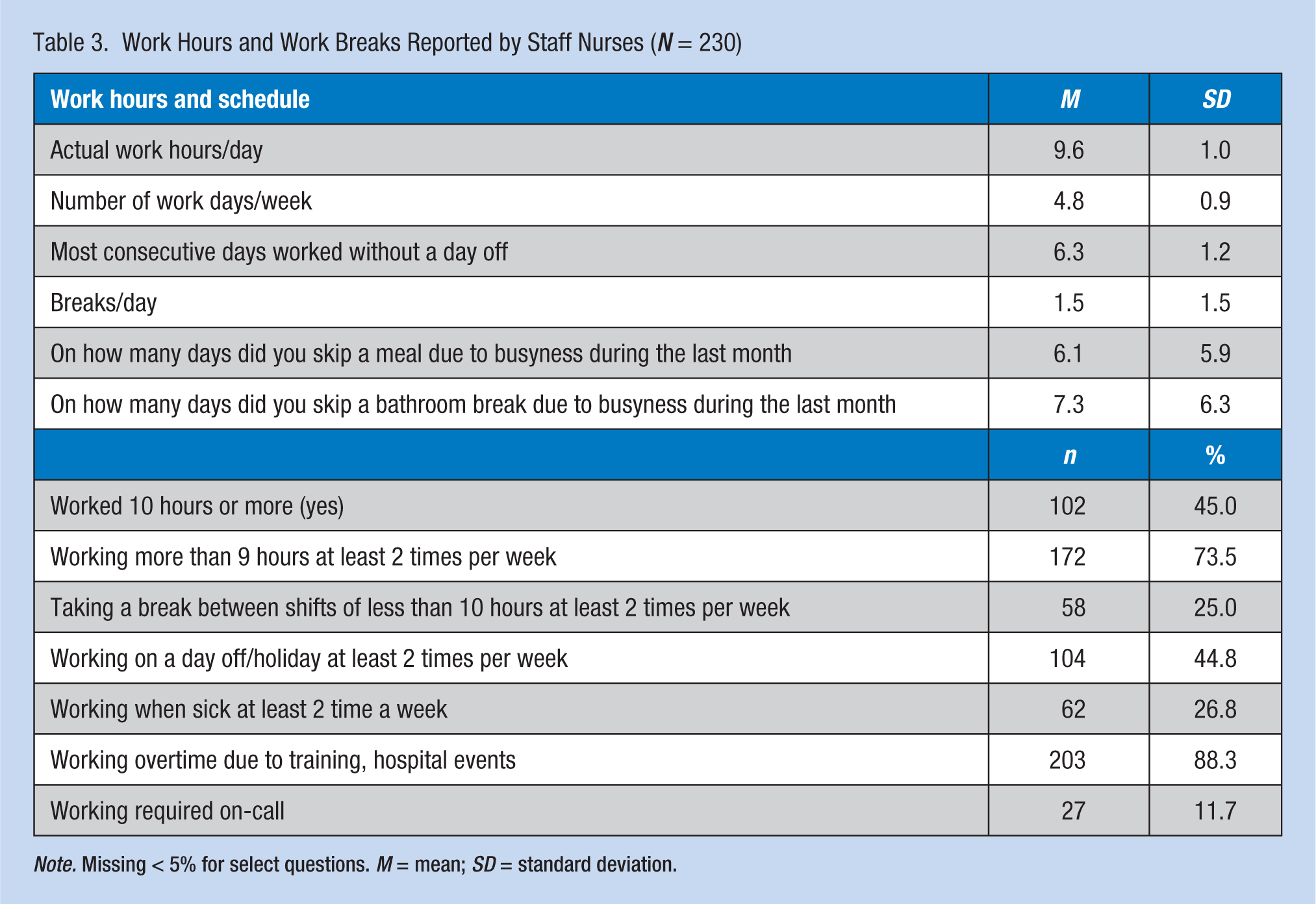
Table 3 presents the work hours and breaks of staff nurses. On average, staff nurses worked 9.6 hours a day. Approximately 45% of the entire sample indicated that they typically worked more than 10 hours per day. The average number of work days per week was 4.8, and the most days worked in a row without a day off was 6.3 days on average. Including mealtimes, staff nurses took 1.5 breaks daily. The number of days that the nurses skipped meals due to work during the last month was 6.1. With respect to skipping bathroom breaks due to work, staff nurses reported that they could not visit the bathroom 7.3 times during the last month. Approximately 73% of staff nurses reported that they worked more than 9 hours at least 2 times per week. Approximately 27% of staff nurses worked overtime while they were sick.
Work Hours and Work Breaks Reported by Staff Nurses (N = 230)
Note. Missing < 5% for select questions. M = mean; SD = standard deviation.
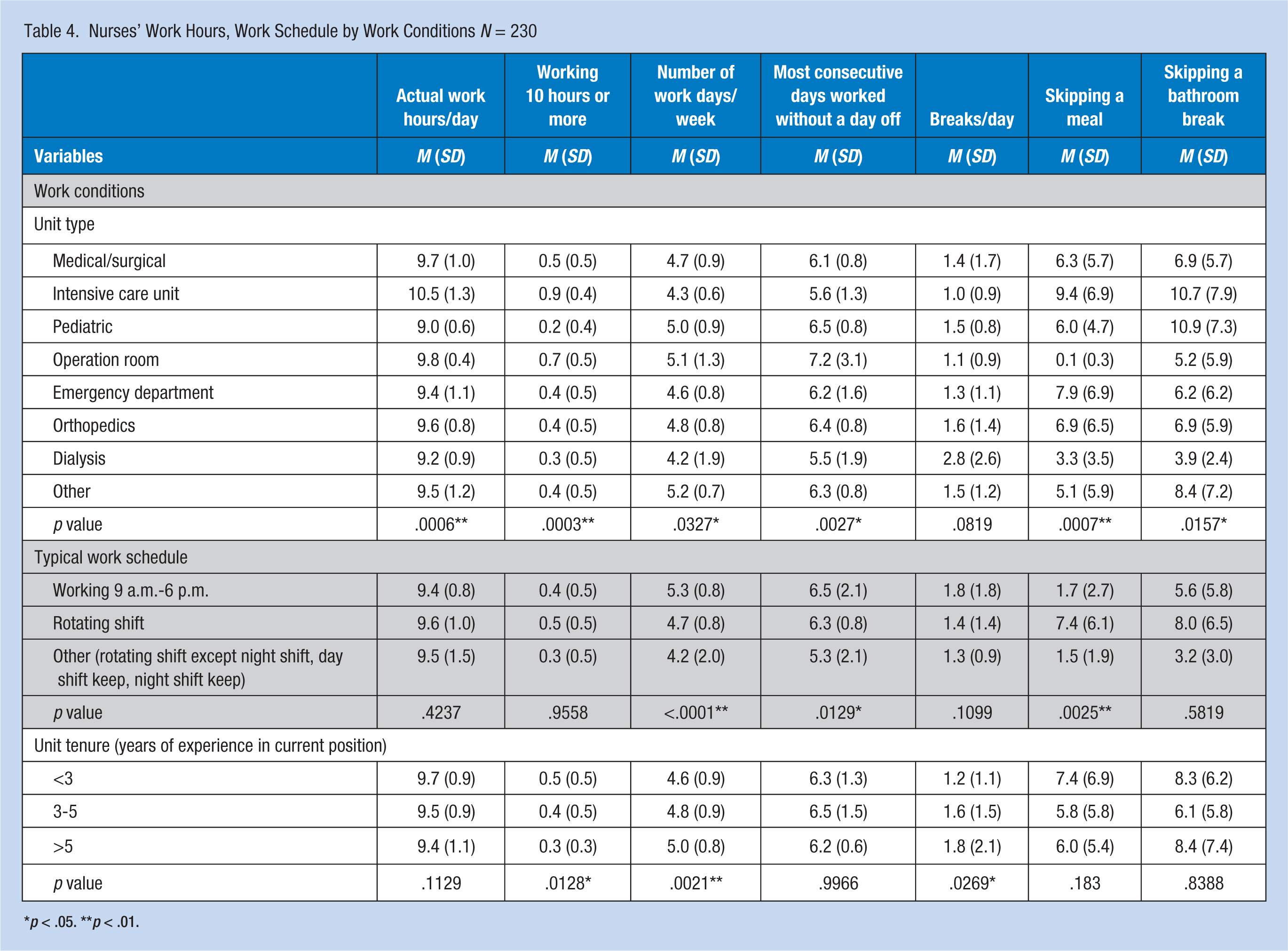
With respect to work conditions, staff nurses working in intensive care units (10.5 hours) and medical/surgical units (9.7 hours) reported that they had longer daily work hours than nurses on other units and were more likely to have worked 10 hours or more per shift (Table 4). Except for the dialysis unit, most staff nurses had less than two breaks per day including mealtimes. Staff nurses working in intensive care units most often skipped meals (more than 9 times per month) and bathroom breaks (more than 10 times per month). Staff nurses working rotating shifts reported a higher frequency of skipping meals and visiting the bathroom (more than 7 times per month). Nurses who had less than 3 years experience often worked more than 10 hours and took fewer breaks.
Nurses’ Work Hours, Work Schedule by Work Conditions N = 230
p < .05. **p < .01.
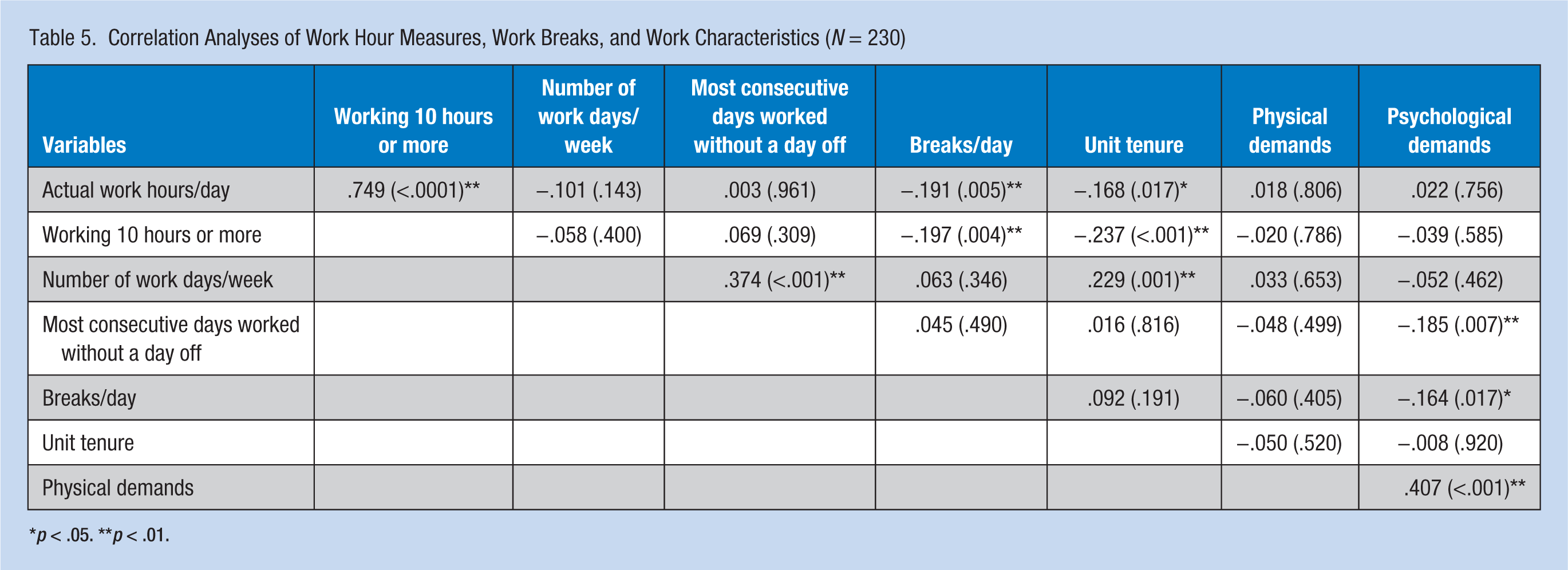
Table 5 presents the correlations among study variables. Staff nurses’ daily work hours were positively correlated with working 10 hours or more (r = .749, p < .0001). Daily work hours were correlated with fewer breaks per day (r = −.191, p = .005). Unit tenure was negatively related to daily actual work hours (r = −.168, p = .017). Working 10 hours or more was negatively correlated with break times and unit tenure (r = −.197, p = .004). Number of work days per week was positively correlated with most number of days worked in a row (r = .374, p < .0001) and unit tenure (r = .229, p = .001). The most days worked in a row without a day off was negatively correlated with psychological demands (r = −.185, p = .007). When the number of breaks increased, psychological demands decreased (r = −.164, p = .017). Psychological demands were positively correlated with physical demands (r = .407, p < .001).
Correlation Analyses of Work Hour Measures, Work Breaks, and Work Characteristics (N = 230)
p < .05. **p < .01.
Discussion
This study presents the current status of work hours and break time among nurses working in medium sized Korean hospitals. According to the recommendations of the Institute of Medicine (Institute of Medicine, 2004), nurses should not work long hours and should have breaks during the work day. This study reported that nurses working in medium-sized Korean hospitals not only work long hours but also have few breaks. Approximately 45% of staff nurses reported that they typically worked more than 10 hours per day, and nurses very often skipped meals or could not visit the bathroom due to work. Considering the number of work days per week, staff nurses might work 19.2 days a month. During approximately one third of the workdays each month, nurses skipped meals due to work. The number of meals skipped by staff nurses in this study was greater than that of meals skipped by nurses in another study (Bogunnodong, 2016).
Compared to staff nurses working on other nursing units, staff nurses working in intensive care units reported the longest daily work hours and highest number of skipped meals. In intensive care units, nurses take care of patients with higher acuity (complexity) and their workload (volume) is greater (Bae, Brewer, Kelly, & Spencer, 2015). Based on these findings, staff nurses working in intensive care units in medium-sized hospitals had heavy workloads and worked long hours to complete their tasks. To reduce the potential adverse impact of long work hours on patient outcomes such as nosocomial infections, pneumonia-related deaths, and errors (Olds & Clarke, 2010; Rogers, Hwang, Scott, Aiken, & Dinges, 2004; Trinkoff et al., 2011), nurse managers and staff nurses should carefully monitor work hours and break times. A systematic approach to reducing long work hours (e.g., internal policy about work hours and break times) for nurses working in intensive care units may be an effective tool.
Another interesting finding is related to work hours of staff nurses having less than 3 years of experience in their current positions. Those nurses who had less than 3 years of experience often work 10 hours or more and had fewer breaks. Newly licensed RNs often leave hospital positions within 1 year (Kovner & Djukic, 2009). The turnover rate of newly licensed RNs in Korea is approximately 33.5% (Korean Hospital Nurse Association, 2015). A previous study found that a significant factor associated with newly licensed RN retention was mandatory overtime (Kovner, Brewer, Greene, & Fairchild, 2009). These young nurses are critical members of the health care workforce because they fill the supply pipeline as RNs leave the hospitals or age and retire (Bae et al., 2012). Based on this study’s findings, strategies and programs must be developed to reduce work hours and increase the number of breaks to retain these young nurses.
This study also identified characteristics of the nursing workforce in medium-sized hospitals in Korea. Staff nurses working in these study hospitals were relatively younger compared with those in a previous study (31 years old; Bogunnodong, 2016). Only 5% of nurses were aged 40 years or above, which may indicate that nurses working in medium-sized hospitals had shorter tenure and a higher turnover rate indicating limited retention of these nurses. Due to the shortage of staff nurses in medium-sized Korean hospitals, nurses are likely to work longer hours and have fewer breaks, which may aggravate nurse retention rates. The problem of retaining the nursing workforce in medium-sized Korean hospitals is multifaceted, including work conditions, increase in hospital beds, too few graduate nurses, patients’ preference for large hospitals, expansion of the private health insurance market, competition among medium-sized hospitals, and the aging Korean population (Lee, 2016). These study findings highlighted adverse work conditions in a medium-sized Korean hospital, including long work hours and fewer breaks. To develop retention strategies for staff nurses in these hospitals, work hours and break times should be considered.
Evidence supports positive relationships between long work hours and adverse nurse outcomes, including occupational injuries, absenteeism, and job dissatisfaction (Bae & Fabry, 2014). According to these study findings, nurses working in medium-sized Korean hospitals are vulnerable to these adverse nurse outcomes. Future studies should investigate adverse outcomes as a consequence of long work hours.
Another practical implication of the study findings is nurses’ nutrition. Due to a lack of available food service, night shift workers tend to consume unhealthy food (Waterhouse, Buckley, Edwards, & Reilly, 2003). Nurses in this study did not have enough time to eat and often skipped meals, affecting diet and nutrition and aggravating health-related conditions. More studies should be conducted about the diets and nutrition of nurses working in medium-sized hospitals. Appropriate health promotion programs should be developed for these nurses.
This study had several limitations. Given that the study sample was employed by two medium-sized hospitals, the convenience sample lacked population representativeness, and thus lacked generalizability to other regions and hospitals. All data were self-reported so errors due to faulty recall and socially desirable biases may have affected data quality. Future studies should address self-reporting bias by using multiple data sources.
Implications for Occupational Health Nurses
Occupational health nurses must advocate for staff nurses working in medium-sized hospitals, especially those nurses working in intensive care units and with less than 3 years experience. To reduce occupational injuries associated with long work hours, staff nurses should learn about the impact of long work hours on their health and well-being. Occupational health nurses should also advocate for staff nurses’ break times so that they can avoid skipping meals and receive adequate rest. Occupational health nurses must work with nurse managers and administration to eliminate excessive work hours and require breaks during the work day.
Conclusion
Staff nurses working in medium-sized Korean hospitals worked long hours and took few breaks. They often skipped meals and could not visit the bathroom due to work. These work conditions were particularly common among staff nurses who worked in intensive care units and had less than 3 years of experience. Based on study findings, developing strategies and programs to reduce work hours and increase the number of breaks for these nurses are essential for patient and nurse safety and retention of young staff nurses in medium-sized Korean hospitals. Future studies should investigate other work conditions of staff nurses in medium-sized Korean hospitals.
Applying Research to Practice
Occupational health nurses in Korea should monitor work hours and breaks among staff nurses working in medium-sized Korean hospitals. They also need to advocate those registered nurses with less than 3 years of experience and working in intensive care units who often worked long work hours and had fewer breaks. To retain staff nurses in medium-sized Korean hospitals and reduce occupational injuries among them, occupational health nurses need to provide education to nurse managers and staff nurses about the effect of long work hours and importance to have enough breaks. Furthermore, it is important to develop strategies and policy to reduce work hours and increase the number of breaks among staff nurses, which is essential for patient and nurse safety in medium-sized Korean hospitals.
Footnotes
Conflict of Interest
The author(s) declared no potential conflicts of interest with respect to the research, authorship, and/or publication of this article.
Funding
The author(s) disclosed receipt of the following financial support for the research, authorship, and/or publication of this article: This work was supported by the Ewha Womans University Research Grant of 2016.
Author Biographies
Sung-Heui Bae is an associate professor in College of Nursing, Ewha Womans University. She is a health services researcher focusing on work conditions, nurses’ work hours, and related occupational injuries and outcomes. She also studies health policy related to occupational health and patient outcomes.
Sung-Woo Hwang is an assistant professor at the Department of Nursing, Doowon Technical University in Korea. She had worked in the Policy Bureau of Korean Nurses Association and her research interests lie in nursing staff policy.
Gunjeong Lee is an assistant professor in College of Nursing, Ewha Womans University. She studies epidemiological sociology, health promotion policy, and nursing workforce issues.