




Abstract
Despite the National Fire Protection Association (NFPA) 1851 Personal Protective Equipment Care and Maintenance guidelines, little is known about the routine cleaning of firefighter bunker gear. In collaboration with a large Florida firefighter union, a mobile phone text survey was administered, which included eight questions in an item logic format. In total, 250 firefighters participated in the survey of which 65% reported cleaning their bunker gear in the past 12 months. Approximately 32% (n = 52) indicated that they had above average confidence in gear cleaning procedures. Arriving at a fire incident response was a significant predictor of gear cleaning in the 12 months preceding survey administration. Using mobile phone–based texting for periodic queries on adherence to NFPA cleaning guidelines and safety message distribution may assist firefighters to increase decontamination procedure frequency.
Firefighting is a high-risk occupation with hazards both in the acute fire incident response setting and in the long term due to unique work environment exposures. Firefighter bunker gear or personal protective equipment (PPE) provides protection during fire incident responses; however, the gear can serve as a potential fomite of contaminants (i.e., biological hazards) and carcinogens. Following fire incident responses, firefighter bunker gear may be contaminated with flammable materials, potentially harmful carcinogens, or toxic substances. Prolonged exposure to carcinogens on firefighter bunker gear may increase the risk for long-term health and safety outcomes.
In addition to the acute risks associated with fire incident response, several studies have documented increased risk of select cancers (Glass, Pircher, Del Monaco, Hoorn, & Sim, 2016; Kang, Davis, Hunt, & Kriebel, 2008; LeMasters et al., 2006). These higher rates of cancer may be attributable to work-related exposures. Although acute chemical and respiratory exposures are common during active firefighting, uncleaned gear or improper decontamination techniques prolong carcinogenic and toxic exposures among firefighters.
The U.S. National Fire Protection Association 1851 (NFPA 1851) provides guidelines for the care and maintenance of firefighter PPE to minimize contamination and gear damage (NFPA, 2014). The guidelines include detailed methods for routine cleaning, advanced/professional cleaning, gear inspection, and drying methods. The NFPA 1851 cleaning guidelines follow suggested protocols for chemical decontamination of chemical protective clothing (Perkins, 1991). Specifically, the standard for routine (not advanced) cleaning recommends a firefighter should initially empty all turnout gear pockets and remove the liner and any drag rescue devices to avoid cross-contamination during the cleaning process. The gear should then be wiped clean of any dry debris with a soft cloth and gently rinsed with water. Only mild liquid detergents with a pH of 6.0 to 10.5 should be used on the textile; the surface should be gently rubbed with a soft cloth or sponge. The gear outer shell should then be rinsed with a cloth or sponge until thoroughly clean. Gear should then be hung in a shaded area with good cross ventilation or alternatively placed near a fan to dry. It should not be hung in direct sunlight, as ultraviolet light will cause exposed materials to degrade. Once dry, the liner and drag rescue devices should be reinstalled. Regular bunker gear cleaning is essential to prevent prolonged dermal and respiratory exposure to carcinogens following fire incident response. Routine cleaning is recommended after fire incident responses, yet little is known about adherence to these guidelines.
In the present study, the authors examined firefighter bunker gear maintenance practices, knowledge, and confidence as well as firefighter showering practices among a nonprobabilistic sample of Florida firefighters. To evaluate these practices, the authors used a novel mobile phone text-based survey methodology to document these self-reported occupational health and safety behaviors among a highly active and nomadic firefighter workforce.
Method
A cross-sectional study design was chosen to administer a one-time eight-item questionnaire via mobile phone text message among union members of a Florida Fire Service.
Survey Logic Tree and Design With Trext.Me
Trext.me is a web-based service designed to survey and engage a population with automated cell phone text message conversations. Once the research team initially created an account at the Trext.me website, a logic tree was developed at the website to enumerate survey questions and order the branching logic of how survey questions would be texted to the firefighter’s mobile phones. Once the survey and logic tree were created, the authors passed the account login credentials to the firefighter union leadership, who changed the login credentials; subsequently uploaded their union membership’s mobile phones; and sent the survey questions via text message to their union manifest. Three days after the initial survey administration via text message, the union leadership sent the research team a de-identified excel file with all survey responses.
Survey Instrument Measures
The researchers developed survey questions to collect information on (a) firefighter gear cleaning practices, (b) knowledge about how to clean their gear, (c) their personal showering practices after responding to a fire, and (d) the number of years they had been employed by their current fire service (Figure 1). Survey measures were drafted by the research team and approved by the team, firefighter union leadership, and active career firefighters. Respondents replying “no” to the first survey question, “Have you personally cleaned your turnout gear in the last 12 months?” were administered only the last three questions of the survey, and skipped the questions about their gear cleaning practices.
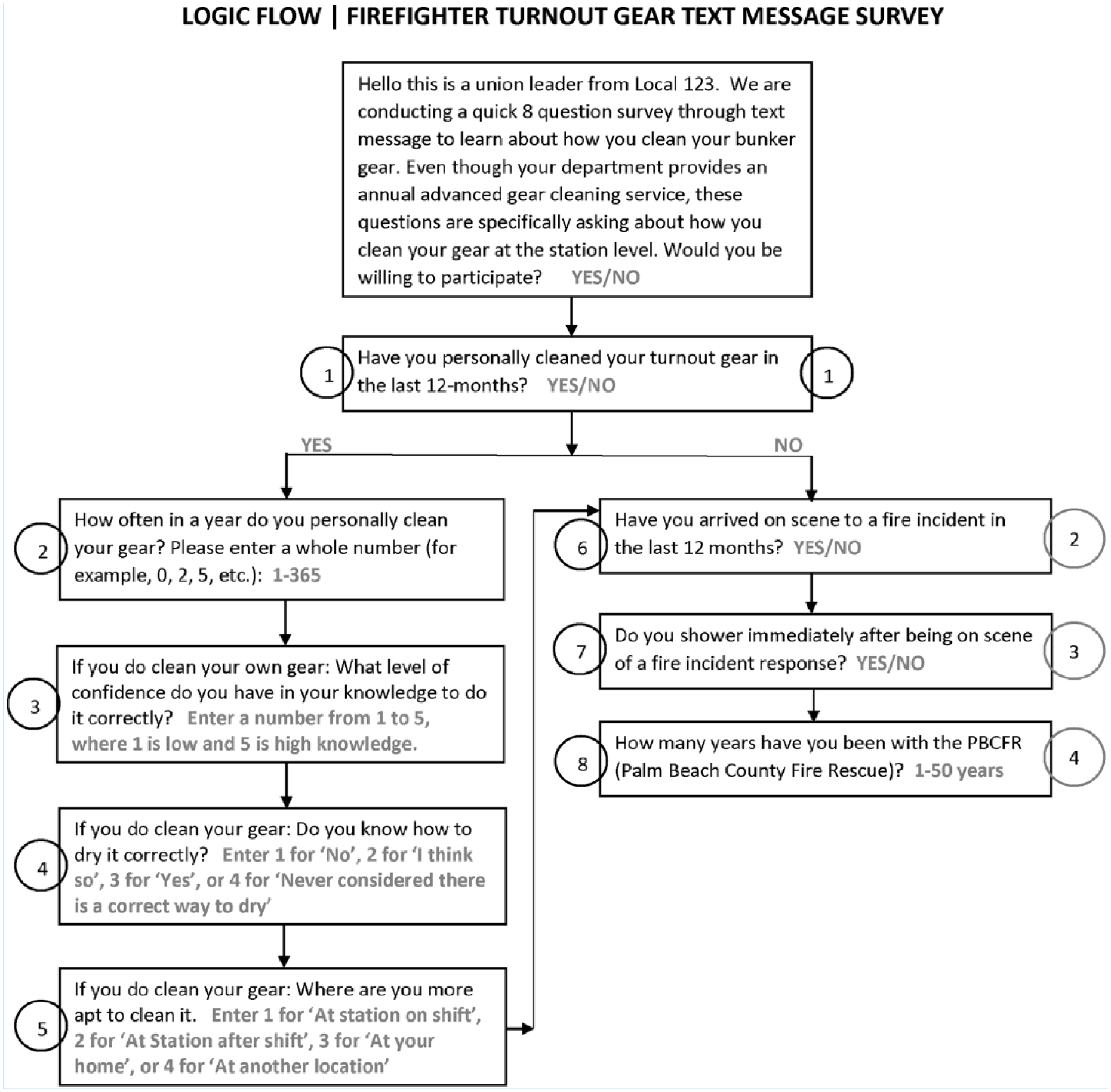
Mobile phone text-based survey logic used in the Trext.me account to survey firefighters about their firefighter bunker gear maintenance practices, knowledge, confidence, and showering practices.
Study Participants and Recruitment
In March 2016, the authors partnered with a local firefighter union in Florida to administer the text-based survey. Figure 2 displays the STROBE diagram of participant flow through the study. Through union leadership, the research team used a Trext.me account as well as the logic tree (i.e., organization of questions, question and response items, and branch logic) to administer the survey instrument to the firefighter union membership. The union had a membership directory of 873 firefighters with listed mobile phone numbers. The union leadership uploaded the membership’s mobile phone numbers into the Trext.me account with the survey logic tree.
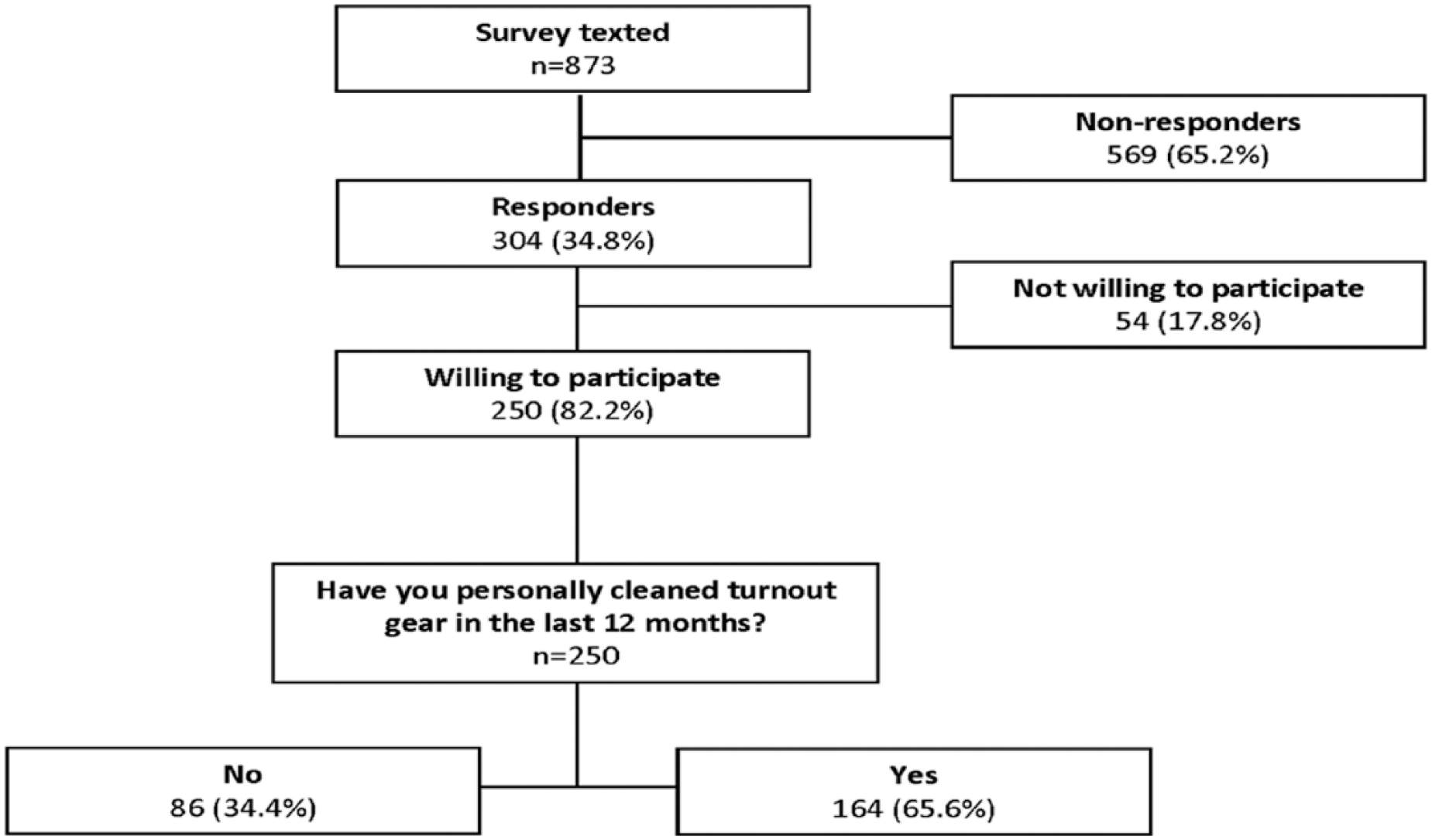
STROBE diagram of participant flow.
The first mobile phone text message seen by the firefighters on their mobile phones stated, Hi this is leadership staff from our local union. We are conducting a quick 8 question survey through text message to learn about how you clean your bunker gear. Even though your department provides an annual advanced gear cleaning service, these questions are specifically asking about how you clean your gear at the station level. Would you be willing to participate?
Respondents had the option to respond “yes” or “no.” Those responding in the affirmative were texted the first survey question; those responding “no” were thanked for their time and received no further text messages.
All 873 firefighter union members were sent the initial invitation text message, of which 304 provided a response (i.e., yes or no) to the invitation. Among those responding to the invitation, 250 answered “yes” they would be willing to answer the text-based survey questions (response rate = 250 / 873 = 28.6%).
Data Analysis
Descriptive statistics were calculated for all study variables. Frequency of cleaning their gear (Question 2), a continuous variable, was expressed as mean ± the standard deviation; categorical variables were expressed as frequency and percent. Characteristics of firefighters who cleaned their gear were compared with those who did not clear their gear using the independent-sample t test or Mann–Whitney U test (continuously measured characteristics) or Pearson’s chi-square test or Fisher’s exact test for two groups (categorical measures). Univariate and multivariable logistic regression models were fitted to identify significant predictors of cleaning gear in the last 12 months. Odds ratios (OR) and 95% confidence intervals (95% CI) were calculated and reported with p values. A p value of less than .05 was considered statistically significant for all tests. All analyses were conducted using SAS v.9.4 (SAS Institute Inc., Cary, NC, USA). The University’s Institutional Review Board approved the research protocol for this study (IRB Protocol #2016-0475).
Results
In total, 250 firefighters participated in the text-based survey. More than 65.6% of firefighters reported that they had cleaned their bunker gear once in the last year. Of those who reported cleaning their gear in the past year, 90.9% (n = 149) also stated that they had arrived on scene at a fire within the last year. Among those who had not cleaned their gear in the last year, only 71.7% (n = 61) reported arriving on the scene of a fire in the past year. No significant difference between those respondents who had cleaned their gear and those who had not cleaned their gear in terms of years served at the fire department was found. Both groups reported 13.1 years as the mean number of years served at the fire department.
Table 1 displays the firefighter responses to cleaning and drying practices and their confidence. The average number of times the gear was cleaned per year was 5 times (SD: 10 times per year). Less than half of the firefighters who had cleaned their gear reported mid-high or high confidence (32.1%) in gear cleaning adequately. More than 13% of respondents stated that they had low confidence in their gear cleaning knowledge. In terms of gear drying confidence, 30.2% of firefighters reported that they knew how to dry their gear correctly.
Bunker Gear Cleaning Knowledge and Practices Among a Sample of South Florida Firefighters Participating in a Mobile Phone Text-Based Survey, March 2016 (n = 164)
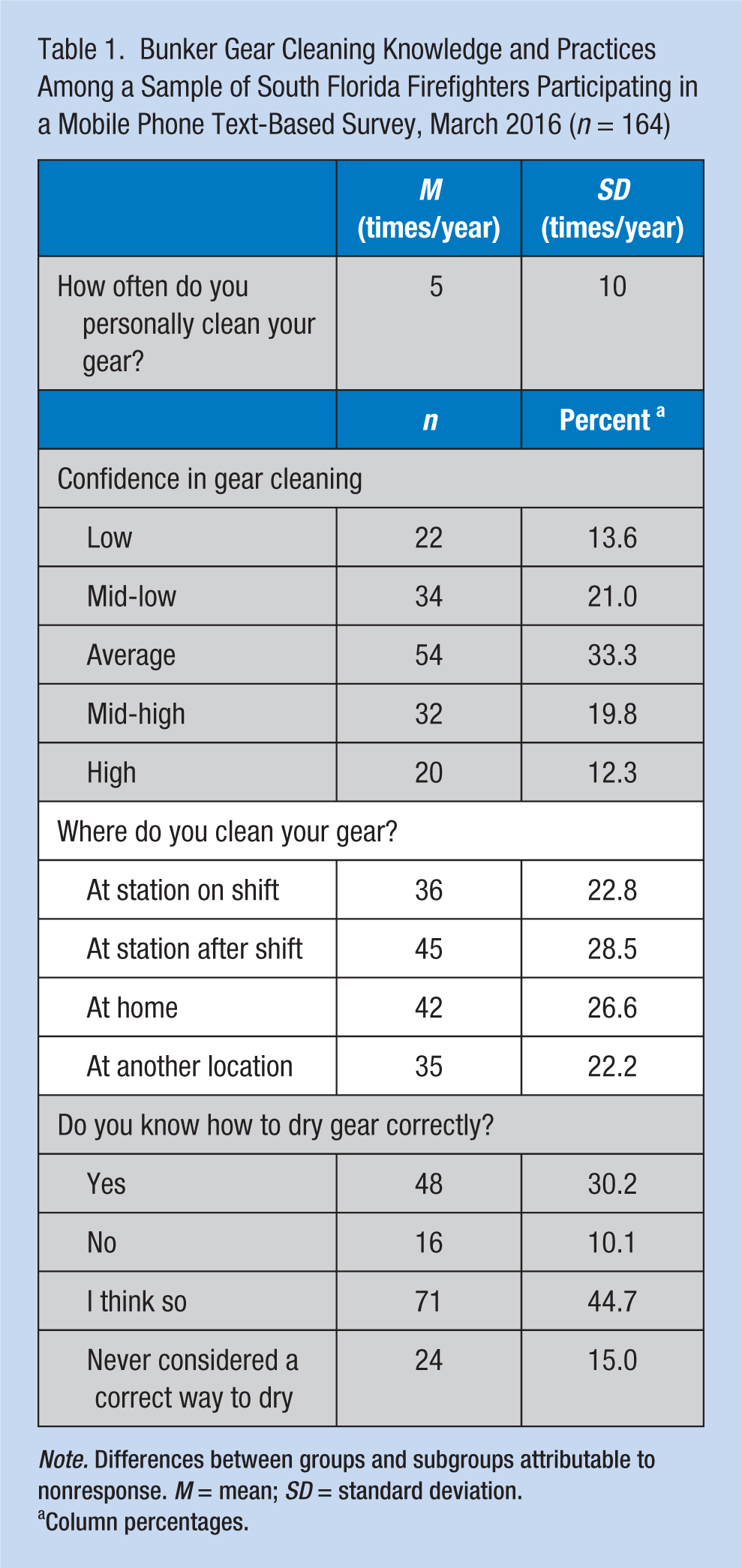
Note. Differences between groups and subgroups attributable to nonresponse. M = mean; SD = standard deviation.
Column percentages.
The most common location for cleaning gear was at the station (51.3%). The second most common location for cleaning gear was at home (26.6%). The least common location for gear cleaning was a location other than their home or the station (22.2%).
Table 2 shows the showering and gear cleaning habits of the survey participants. The majority of respondents reported immediately showering after returning from the scene of a fire (65.1%). Among those who had cleaned their bunker gear in the past year, 66.5% reported showering immediately after a fire incident response; 75.9% of those firefighters who had not cleaned their gear in the past year stated that they showered immediately after a fire incident response.
Occupational Habits and Personal Hygiene Practices Among a Sample of South Florida Firefighters Participating in a Mobile Phone Text-Based Survey, March 2016
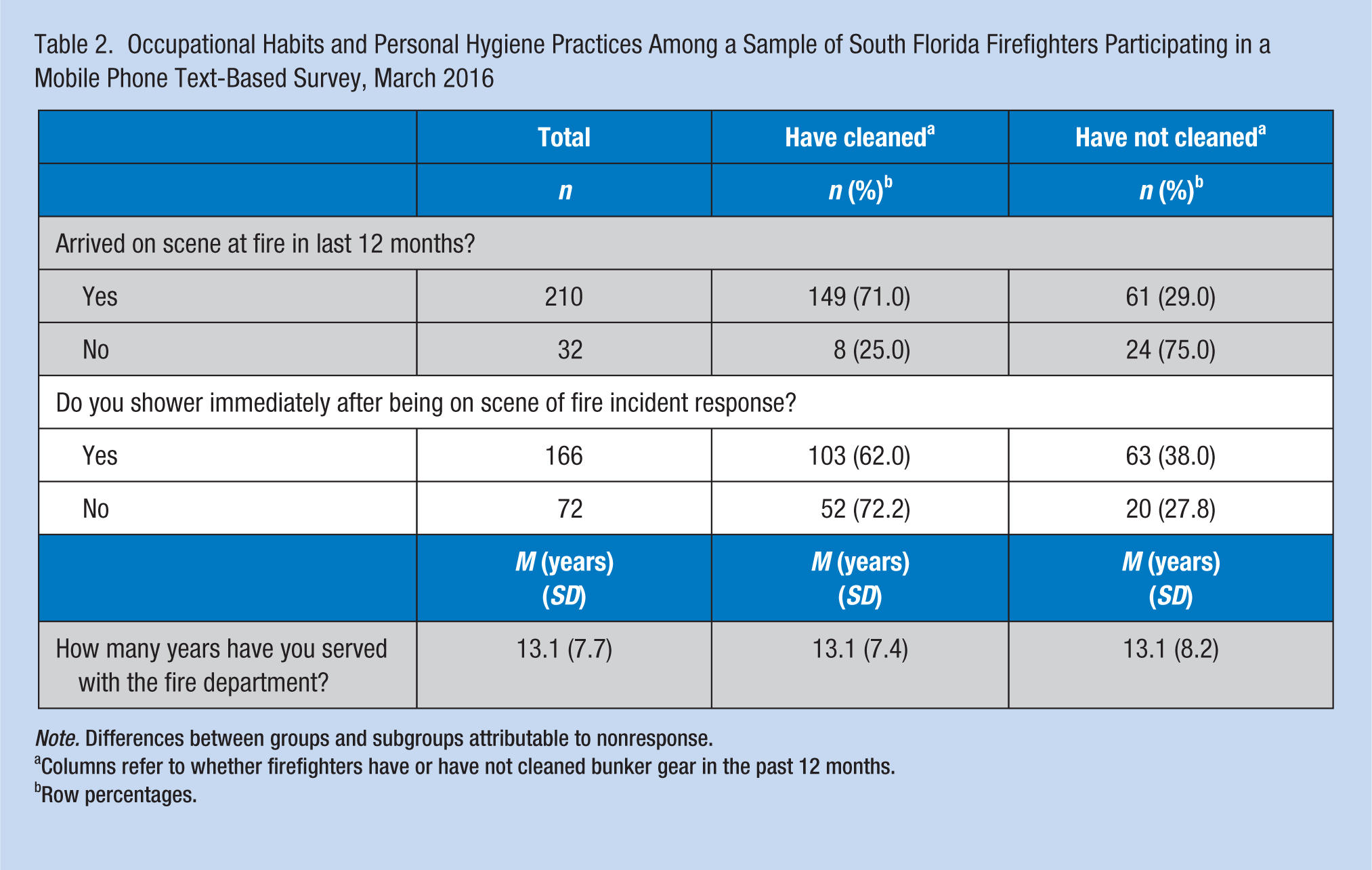
Note. Differences between groups and subgroups attributable to nonresponse.
Columns refer to whether firefighters have or have not cleaned bunker gear in the past 12 months.
Row percentages.
Table 3 includes univariate and multivariable models for predicting bunker gear cleaning within the past 12 months. Arriving at the scene of a fire incident was a significant predictor of gear cleaning within the past 12 months across all models. Years of service in the fire department and showering following fire incident response were not significant predictors of gear cleaning.
Univariate and Multivariable Logistic Regression Models for Predicting Turnout Gear Cleaning in the Last 12 Months
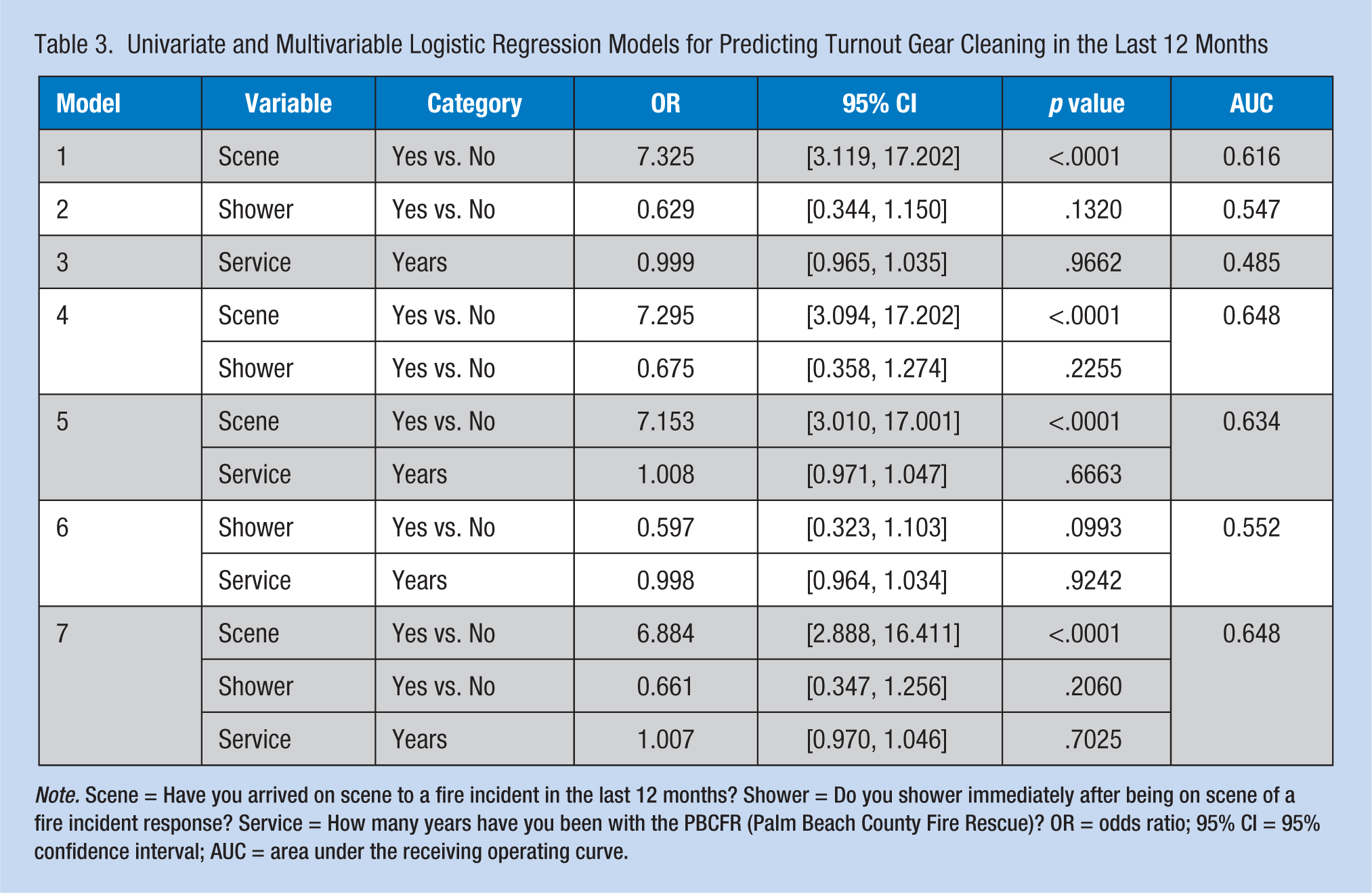
Note. Scene = Have you arrived on scene to a fire incident in the last 12 months? Shower = Do you shower immediately after being on scene of a fire incident response? Service = How many years have you been with the PBCFR (Palm Beach County Fire Rescue)? OR = odds ratio; 95% CI = 95% confidence interval; AUC = area under the receiving operating curve.
Discussion
Although cleaning bunker gear is common among firefighters, only a small proportion of survey respondents indicated high levels of self-reported knowledge and confidence in cleaning and drying bunker gear. The low levels of confidence do not imply that procedures and protocols in use are incorrect, rather low confidence levels may suggest a lack of education on NFPA 1851 guidelines, or local fire service cleaning options and resources.
Confidence in Bunker Gear Cleaning
Although the majority of firefighters reported above average confidence in gear cleaning practices, one third stated that they had low to mid-low confidence in their ability to clean their own bunker gear. The NFPA 1851 guidelines provide a step-by-step protocol for routine cleaning. It is important to note that this survey instrument focused on routine cleaning rather than advanced, professional cleaning. Among the findings, it may be possible that firefighters use professional cleaning more often than nonprofessional, in-station cleaning. Future studies should assess advanced and routine cleaning concurrently to better understand overall cleaning practices. Despite the option for professional gear cleaning offered by the Fire Department, it is important that firefighters have confidence in routine cleaning as well.
Self-reported low confidence in cleaning practices does not necessarily reflect the efficacy of gear cleaning habits. It is possible that firefighters may not report high confidence because they did not learn cleaning techniques from a formal, educational presentation. Cleaning practices are likely to be taught by demonstration at the fire station. Live evaluation of cleaning practices can provide a better understanding of cleaning efficacy in relation to confidence. Furthermore, future studies should assess the efficacy of proper gear cleaning in removing carcinogens and toxic substances from firefighter PPE. Limited cleaning may also be a reflection of firefighter opinions on the efficacy of the routine cleaning (Harrison et al., 2017).
Bunker Gear Cleaning Locations
More than a quarter of firefighter respondents reported that they most commonly washed their gear at home (26.6%). The NFPA 1851 guidelines advise never to bring gear home or wash gear in home or public laundries (NFPA, 2014). Bringing bunker gear home and using home washing equipment raises the risk of cross-contaminating home clothing with carcinogens (Cox, 1994). Washing gear in the home may be attributable to lack of knowledge regarding potential hazardous exposures from gear postfire. Future studies should assess firefighters’ knowledge of potential exposures from washing bunker gear in the home.
The majority of firefighters reported that they cleaned their gear at the station, which aligns with the guidelines from NFPA 1851. Cleaning the gear at the station is most likely the easiest location due to the accessibility of the equipment necessary for proper cleaning and quick turnaround for use during subsequent shifts.
Bunker Gear Drying Confidence and Practices
The NFPA 1851 provides proper guidelines for drying bunker gear following routine cleaning. Interestingly in this study, firefighters who reported that they did not know how to dry gear correctly had the highest number of gear cleans per year (8 times/year), which implies firefighters who dry their gear the most do not believe they are drying it correctly. However, no significant differences in number of gear cleans per year across all levels of confidence in drying gear (p = .22) were found. Similar to the gear cleaning results, even though a minority of firefighters reported that they knew how to dry the gear correctly did not mean that the majority of firefighters were drying their gear incorrectly. Future studies should assess firefighter drying procedures concurrently with confidence in drying methods.
Firefighter Showering Habits Following Fire Exposure
Contrary to expectations, no significant association was found between showering immediately after a fire incident response and cleaning turnout/bunker gear regularly. This lack of association may be due to a lack of best practice guidance as NFPA 1851 does not provide guidelines for showering after fire exposure. According to firefighter handbook recommendations, showering postfire exposure is recommended to reduce contamination (Corbett, 2009); this recommendation is supported by research documenting postfire dermal carcinogen exposure (Fent et al., 2014; Fernando et al., 2016) and by studies documenting that showering immediately after contamination can reduce these exposures (Amlot et al., 2010).
Strengths and Limitations
One strength of this study was the novel, text-based survey methodology. The firefighter population is a highly mobile, transient, and active worker population. The text-based survey provided an asynchronous means of engaging participants who are highly mobile and may not be able to respond immediately to question prompts. Text-based messaging has been shown to be an effective method for continuing contact in longitudinal studies as well (Jespersen et al., 2014; Whittaker, McRobbie, Bullen, Rodgers, & Gu, 2016). The overall response rate was 28.6%, demonstrating that the text-based survey method may be a fair and efficient means of capturing the active firefighter population when properly registered with their union. Of note, the original sample of firefighters were sent a text message to participate in the survey based on 873 members registered with the union; however, only 304 yes/no responses to participate in the survey were received. The union indicated that their membership manifest and contact information could be outdated likely yielding incorrect cell phone numbers. The authors based the study response rate for the firefighters who responded yes/no to the text survey invitation on the definition established by the American Association for Public Opinion Research (AAPOR; 2016).
One concern regarding the use of text-based surveys was limiting responses from older generations. Although the survey did not collect age, the survey did collect years served at the specific fire department. The distribution of responses regarding their tenure within the fire service was relatively evenly distributed across all years of firefighting experience, suggesting that responses from all levels of experience and age were included. The distribution of responses suggests that the text-based method did not hinder specific age groups from participating in the study.
With each sequential survey question, the response number decreased, which suggests an element of response fatigue. One concern for text-based surveys is nonresponse due to skepticism or distrust in the sender; studies have shown that text-based survey nonresponse is linked to an unknown sender (Hoe & Grunwald, 2015). Study methodology attempted to mitigate this issue by using a survey introduction from a union leader. The text-based methodology achieved a response rate and efficiency that is unlikely through other survey mediums.
The cross-sectional nature of the survey limits the potential for causal association. Furthermore, the survey introductory text was sent by a union leader, which may exacerbate reporting bias. All survey participants served the same fire department, which limits the generalizability of the results. The survey was limited to individuals who had a mobile phone with text messaging capabilities. Nevertheless, mobile phones with texting capabilities are relatively ubiquitous throughout the U.S. today, and lack of access to a mobile phone was most likely not a major hindrance to participation (Steeh, Buskirk, & Callegaro, 2007).
Although this study provides preliminary insight into the routine cleaning of safety turnout bunker gear among firefighters, future studies should consider workplace interventions that improve firefighter self-efficacy in routine cleaning of their gear at the station. Studies that improve confidence in safety gear cleaning may increase the number of firefighters engaging in decontamination practices that reduce transmission of carcinogens and other hazards. The findings in this project also prompt critical attention to exposure assessment studies at the home of firefighters. A quarter of the study population wash their clothes and select safety gear items at home, possibly transmitting hazardous substances from a fire incident response or station, all the way back home. Scientists should also replicate the administration of this survey instrument with a national sample of firefighters to capture geographic and regional differences in safety gear cleaning.
Conclusion
This is the first study to examine firefighter knowledge and confidence in bunker gear maintenance in a nonprobabilistic sample of U.S. firefighters. This study also presents a novel, text-based survey method to examine these firefighter habits and practices. The text-based survey methodology was an efficient and effective method to sample a highly active population, and future studies can benefit from the text-based methodology to sample similar populations. Overall, firefighter confidence and knowledge in cleaning and drying bunker gear is evident, yet limited proportions of respondents reported high confidence in their gear cleaning and drying practices. Elevated rates of cancer among firefighters coupled with studies detecting carcinogens on firefighter PPE warrant further inquiry to assess gear maintenance practices and determine the risk PPE contamination may play in firefighter health.
Applying Research to Practice
The firefighter work environment can raise the risk of first responders being exposed to harmful noxious chemical compounds. Their safety turnout gear that serves as front line personal protect equipment during fire incident response has recently been shown to off-gas specific carcinogens. The off-gassing processing of their safety gear could be contributing to their exposures during and after the fire response activities. The U.S. National Fire Protection Association provides guidelines on the care and maintenance of the safety gear, however, little is known how well firefighters adhere to these guidelines or possible barriers to decontaminate their gear following a fire incident. We found low self-efficacy among Florida firefighters in their ability to clean their own safety gear. Worksite-based health promotion and health protection efforts should focus on improving firefighter confidence in cleaning their gear. Using a text-based survey approach can help to monitor and track safety gear decontamination practices.
Footnotes
Acknowledgements
All authors thank the firefighters, unions, and support groups from Miami-Dade, Broward, and Palm Beach Counties. All authors thank Dr. David J. Lee and Shirish Bhattarai for their contributions to the study.
Authors’ Note
This study was approved by the University of Miami Institutional Review Board (IRB ID: 2016-0475).
Author Contributions
A.J.C.M. conceptualized the study research question and study design, and served as senior author for first author K.J.M. K.J.M., A.A., N.S.S. collected field data, entered study data, and assisted in data analysis and interpretation of study results. T.K.S. and K.J.M. performed statistical analysis and assisted with the manuscript draft. T.R.H. and E.N.K. assisted in drafting parts of the manuscript. All authors read, revised, and approved the final manuscript.
Conflict of Interest
The author(s) declared no potential conflicts of interest with respect to the research, authorship, and/or publication of this article.
Funding
The author(s) disclosed receipt of the following financial support for the research, authorship, and/or publication of this article: This work was supported by State of Florida appropriation #2382A (Principal Investigator Kobetz) to the University of Miami (UM) Sylvester Comprehensive Cancer Center, UM Jay Weiss Institute for Health Equity.

Author Biographies
Kevin J. Moore is a research assistant for the Sylvester Firefighter Cancer Initiative, fourth-year MD–MPH student at the University of Miami, Miller School of Medicine, and led aspects of the text-based research project.
Tulay Koru-Sengul is the biostatistician for the Sylvester Firefighter Cancer Initiative and Associate Professor of Public Health Sciences at the University of Miami, Miller School of Medicine where she provides statistical guidance across all firefighter research projects.
Armando Alvarez is a research assistant for the Sylvester Firefighter Cancer Initiative, fourth-year MD–MPH student at the University of Miami, Miller School of Medicine, and assisted with literature search and writing of the manuscript.
Natasha Schaefer-Solle is a Sylvester Firefighter Cancer Initiative co-Investigator, an occupational health nurse, and Research Assistant Professor in the Department of Medicine at the University of Miami, Miller School of Medicine. She co-led the collection, management, and interpretation of text-message data collected as part of this project.
Tyler R. Harrison is a co-investigator of the Firefighter Cancer Initiative and Professor of Communication Studies at the University of Miami, School of Communication where he leads firefighter health communication research projects.
Erin N. Kobetz is the Director and Principal Investigator of the Sylvester Firefighter Cancer Initiative, Professor of Medicine and Associate Dean for Health Disparities at the University of Miami, Miller School of Medicine. She provides overall scientific leadership and direction to the Sylvester Firefighter Cancer Initiative.
Alberto J. Caban-Martinez is Deputy Director of the Sylvester Firefighter Cancer Initiative, Assistant Professor of Public Health Sciences at the University of Miami, Miller School of Medicine. He conceptualized the idea of using mobile text-based survey methodology in the fire service to assess adherence to safety decontamination practices and provided direct supervision to medical/public health student Kevin J. Moore throughout the duration of the project.