




Abstract
Shared commutes to work, such as vanpooling, benefit the environment and provide economic gain for riders in terms of fuel costs, parking fees, and personal vehicle wear and tear. Although ride sharing is commonly believed to promote health through stress reduction, published evidence on this topic is limited, and findings vary. This study explored the perceived health and well-being of vanpoolers using a qualitative, descriptive design. Five focus groups of vanpoolers and two individual interviews with drivers were conducted (N = 40 participants). Stress, change in sleep patterns, and interpersonal relationships emerged as major themes. Employee insights about the impact of vanpooling on work productivity and how employer commitment to the vanpool program influences the vanpool experience also were important findings.
Keywords
Shared commutes to work benefit the environment and provide economic gain for riders (Guo & Gandavarapu, 2010; Riox, Gute, Brugge, Peterson, & Parmenter, 2010; Su & Zhou, 2012; U.S. Environmental Protection Agency Office of Air and Radiation, 2005). Ride sharing is commonly believed to promote health through stress reduction, although limited research publications were found on this topic, and findings varied. Commuting alone by car has been reported to increase stress compared with sharing a commute (Wener & Evans, 2011). Other research has found that some individuals enjoy commuting and find benefit regardless of driving alone (Ory et al., 2004). Individual and system level factors have been found to be important predictors of commute stress. For example, an individual’s ability to relax during the commute home from work has been found to affect recovery from stressful work demands regardless of commute type (van Hooff, 2013). Studies published on drivers of shared commute vehicles (bus and taxi) have identified health risks such as sleep disturbances and increased cortisol levels (Diez et al., 2011), cardiovascular effects (Wu et al., 2010), musculoskeletal injuries (Albert et al., 2014), fatigue-related accidents (Biggs, Dingsdag, & Stenson, 2009), and exposure to pollutants (Bagryantseva et al., 2010). Given both the need for sustaining a healthy environment and employment for approximately 140 million workers in the United States, most of whom commute to work, it is important to determine health effects related to different types of work commutes.
A pilot study was conducted to investigate perceived health and well-being of vanpool passengers and drivers related to their shared commute to work and their insights into the impact of vanpooling on work productivity. The objectives of the study were to explore characteristics of the commuting experience and perceived impact on the bio-psycho-social health and work of the vanpoolers. A long-term goal of this research focus is to identify commutes that support individual and population-level human health and protect the environment.
Method
Design
This was a qualitative, descriptive study using focus groups and one-on-one interviews. Focus groups assist researchers in understanding the meaning that everyday activities, such as vanpooling, hold for people. This method assumes that attitudes and beliefs do not form in a vacuum: people need to listen to others’ opinions and understandings to form their own (Marshall & Rossman, 2011). The questions in a focus-group setting are simple to promote participants’ expression of their views in a supportive environment (Marshall & Rossman, 2011). In accordance with the Declaration of Helsinki, the Institutional Review Board approved all study procedures.
Sample and Setting
Study participants were recruited through a university campus commuter services department that provides oversight for the employer-sponsored vanpool program and makes available a fleet of 160 commuter vans to transport workers residing in 85 southern California communities. Approximately 400 vanpoolers were enrolled in the vanpool program at the time of study recruitment; numbers fluctuate weekly as workers join or withdraw from the vanpool program. The commuter services department notified all participants in their vanpool commuter program about the study by electronic mail. The recruitment email specified that researchers were interested in vanpoolers’ ideas about health and well-being associated with vanpooling and included the eligibility criteria, “full-time vanpooler as determined by fee schedule and employed by the university.” The email instructed vanpoolers to contact the researchers if they were interested in participating and provided assurance that choosing to participate or not would in no way affect their relationship with the vanpool program.
Five focus groups were conducted ranging from 7 to 10 participants each as well as one-on-one interviews with two vanpool drivers for a final sample of 40 vanpoolers. The participants were diverse with respect to job titles and positions held. The focus groups and one-on-one interviews were led by the researchers, lasted 1 hour, and were held during lunch time. The group facilitator used a flexible questioning format allowing exploration of unanticipated issues as they arose in the conversation (Marshall & Rossman, 2011). Participants received a US$20 gift card for participating in the study. To ensure confidentiality, all group sessions were held in a private conference room at a convenient central location on campus. Participants voluntarily signed informed consent forms prior to participating in the focus groups or interviews. To encourage open communication and to maximize heterogeneity of the experiences revealed, volunteers from the same van were not assigned to the same focus group. Initially, focus groups were intended for passengers and interviews planned for drivers. However, during the course of conducting the focus groups, it became evident that many passengers served as backup drivers, part-time drivers, or had a history of driving. Although the focus groups were primarily aimed at understanding the rider experience, this unexpected inclusion of part-time, previous, and backup drivers in the focus groups in addition to the two driver interviews offered an opportunity for a preliminary consideration of the vanpool driver role as well. Reported here are findings from the five focus groups and two in-depth interviews with the information regarding unique aspects of vanpool driving described separately.
Instruments
Focus group and interview guides were developed by the research team based on a review of the literature and discussions with key informants (i.e., transportation specialists). The focus group and interview guides included the same domains. The guides addressed work commute distance and time, perceptions of health and well-being, and workplace implications of vanpooling. The structure of the guides was open enough to allow unanticipated material to emerge during the sessions. Because focus groups and semi-structured interviews are flexible techniques, the research team was able to immediately pursue spontaneous leads from participants to capture rich data (Charmaz, 2006). For example, in both the focus groups and interviews, participants were initially asked to share the distance and time of their ride to and from work. Participants were then asked to comment on whether they felt vanpooling had an impact on health or work and, if so, in what way. Occasionally probing was needed and used to encourage respondents to continue conversation, to go further, or to explain more. Additional questions solicited perceptions of the benefits and limitations of specific health or work issues that were mentioned.
Data Collection and Analysis
All sessions were audio-recorded followed by verbatim transcription. Identifiers were removed to ensure confidentiality. Transcriptions were checked for accuracy by a member of the research team who compared the audio recordings with the transcripts. Transcripts then were coded independently by a nursing student trained in qualitative research methods and a member of the research team. Constant comparison techniques (Charmaz, 2006) were used throughout data collection and analysis to assess similarities and differences in the experiences of the participants during each group meeting and across all focus group sessions. Clusters of data yielded categories that were cross-classified for a rich descriptive analysis. Emerging themes were identified, and a review of the fit with the descriptive data was verified. Data collection was considered completed when the researchers agreed by consensus that the categories had obtained theoretical and content saturation.
Results
Distance Traveled and Time
Focus group and interview participants were representative of the university vanpool program rider/driver population overall in terms of distance traveled and time of commute. Commute distances ranged from 15 to 80 miles one way. Vanpool travel time to work ranged from 20 minutes to 2 hours. In general, this was shorter than the trip home from work, which ranged from 30 minutes to 3 hours. These were usual commute times, but it was noted that unusual weather, accidents, or other traffic conditions had an impact on travel time. These estimates do not include the time vanpoolers spent traveling to their van in the morning from their home or time spent reaching the van at the pick-up point after work. Length of time participating in vanpools for the study population ranged from 7 months to 24 years.
Health and Well-Being
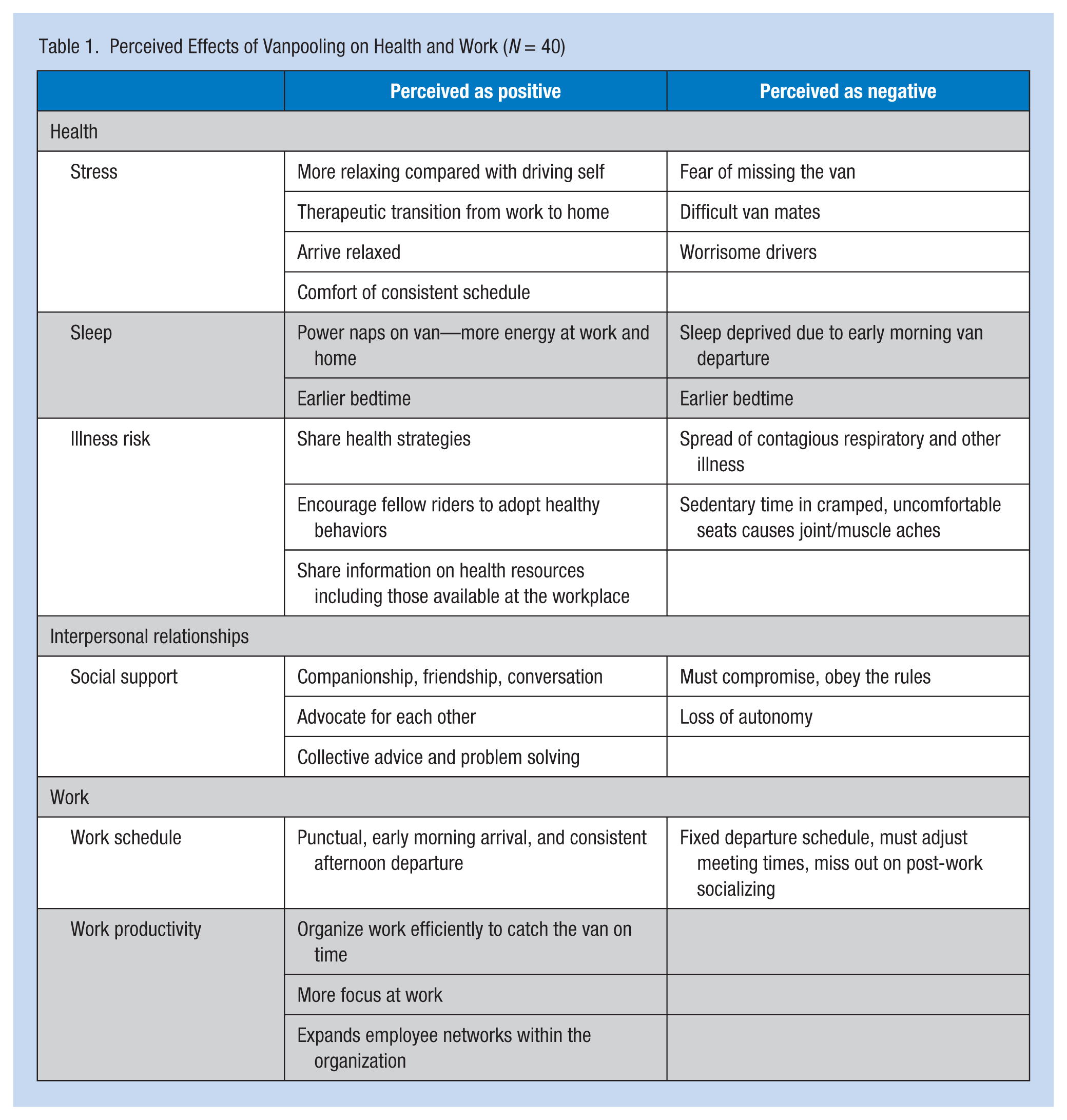
Four major themes emerged with respect to health and well-being: the impact of vanpooling on stress, sleep, interpersonal relationships, and illness risk (Table 1). These themes emerged both in the focus groups and the semi-structured interviews.
Perceived Effects of Vanpooling on Health and Work (N = 40)
Stress
Stress can be physiologic, emotional, and physical (National Institute of Mental Health, National Institutes of Health, Science Writing, Press and Dissemination Branch, 2014). Stress has been associated with numerous adverse health outcomes; cardiovascular disease, respiratory illness, autoimmune conditions, inflammatory diseases, and central nervous system disorders (fatigue, depression, and insomnia) have been associated with stress (Forshee, Clayton, & McCance, 2010).
Stress was raised as a consideration in all focus groups. Some participants described stressful aspects of vanpooling. These related to worries about being late or missing the van, difficulties in adjusting to van mates, concerns about the abilities of drivers, and anxiety about the cost of participation.
But for the most part, riders in every group indicated that participating in the van was a source of “dramatic reduction in stress . . . .” Although other advantages such as monetary savings also were mentioned, many group members echoed the view expressed by one group member that “the reduction in stress level is by far the biggest health benefit” of commuting in a vanpool.
For many participants, this reduction in stress was expressed in comments contrasting their vanpool and individual driving experiences. As one participant explained,
Comparing to when I was driving here to work I would get like very moody because I was fighting with traffic for so long. Now that I ride the van I can see I’m more relaxed. . . . It helps me as far as my emotional well-being. . . . Now I don’t have to feel like I’m overwhelmed.
In describing their experience, riders emphasized that time on the van was restful and “actually kind of therapeutic” in that it provided an opportunity to sleep, for conversation and friendship, for a chance to meditate, relax, listen to music, do nothing, or just be at peace. Group members saw this as resulting in less stress when arriving at work and back home. For some, riding the van served as a transition between work and home. One woman explained, “Well you get a nice decompression time . . . all the stress that I have at work is being left behind.” Another said,
. . . in my van in particular, everyone talks in the afternoons. So everyone complains about their day and so by the time I get home, I’m completely like wound down and ready to like see the babies, see my husband . . . so I just sort of transition . . .
And still another vanpooler observed that
for me it’s really critical to have that separation time between work and home. I really try to create the work/life balance and it kind of is the decompression time. . . . When I get on the van it’s kind of symbolic, “OK, I am leaving the office.”
For some group members, vanpooling offered a welcome sense of comfort in the day-by-day experience, providing an established routine of vanpool time, and “consistency of schedule.”
Sleep
Both positive and negative aspects of vanpooling with respect to sleep were noted in every group session. Vanpool morning departures occur at an early hour, most frequently between 5:15 a.m. and 6:45 a.m., with participants making an even earlier start in the morning to arrive at the van on foot, by car, or carpool. Participants acknowledged the long distances that many of the vans traveled and understood that traffic, already considerable, would be far worse if departure took place later in the morning. But despite recognizing the need for an early start, the impact on sleep seemed to be the most negative feature of vanpooling for many participants. As one vanpooler stated, the “lack of sleep, having to get up so early [is] a real pain” particularly for someone who is “not . . . a morning person.” Another explained,
the van schedule has really had an impact on my sleep schedule. I’m not a morning person so trying to go to sleep at 8:00 or 9:00 in the evening to get up at 4:30 is really a no go for me . . . I’ve run into a couple of physical health problems that are a direct result of lack of sleep because I’m just not able to sleep enough every night consistently throughout the week. And then on the weekend I’ll sleep twelve-thirteen hours straight because I’m worn out. Friday afternoon I’m like a zombie . . . .
Group members described adaptations they had made with respect to their sleep patterns because of vanpooling. Some participants explained that they changed their bedtime to accommodate early departures. Viewing this positively, one rider explained that switching to an earlier bedtime was “one of [his] ultimate motivations for the vanpool because it is a more healthy one.” Another shared that her earlier bedtime “works well” in that she has young children.
For a number of participants, napping was described as the primary adaptation to the early start, with participants describing a variety of sleep patterns on their respective vans. In some instances, napping was reported as occurring “sometimes” or “occasionally, because we’re a ‘talker’ van.” In other vans, napping was more likely to take place in one but not necessarily both of the daily trips. One woman said, “. . . I have two small babies. So I get to nap a little in the mornings . . . [but] in my van in particular, everyone talks in the afternoons . . . .”
One rider noted that her sleep patterns had changed and she actually was staying up later because she knew she could “get the sleep on the bus or the vanpool. So, kind of catch up.” Others described family circumstances that prevented an earlier bedtime: “I’ve got a teenage daughter. . . . So sometimes its midnight before my head hits the pillow. And then I’m up at 5:15.”
For still others, napping was described as an established norm because the van had a “go to sleep culture . . . .” This norm was described both on the morning ride to work when “. . . we all just zone out immediately. We’re just drooling away,” and on the return home when, as one participant explained, “my body is trained to nap from 5:30 to 6:30 every day on the way home. I think it’s extremely beneficial to your health.”
A recurrent theme was that napping or “power napping” helped in preparing for both the workday and the evening routine. With respect to work, one rider reported that “I’m a little more energized when I get out because that’s like ten hours a week you can sleep . . . So that’s beneficial for me.” As for after work, one group member reported that “sometimes when I get off the van I’m able to go to the gym because I’m more rested.” Another woman explained that
. . . I try to get in bed by 9:00 but that never happens. And then I get up at 4:20 in the morning so I can catch my van that leaves at 6:00. So I don’t get enough sleep. So one of the first things I do—I put on my headphones and I get my power nap coming and going. . . . And it doesn’t affect my sleep pattern at night of course. And if there’s anything that I need to do once I get home, I feel like I’ve been a little reenergized so I have that time to do some little extras, whereas when I have to drive myself I am completely out of it. As soon as I get home when I drive myself I say “go to bed, go to bed.”
In recognizing the value of sleeping on the van both going to and coming from work, one woman shared that “when you wake up in the morning, you’re really not fully awake. You know you can get that little hour nap on the way in.”
Interpersonal relationships
Social support has been shown to have a significant impact on a range of health outcomes: living longer, experiencing less cognitive decline with aging, enjoying better prognoses for physical and mental health outcomes, such as heart disease, hypertension, depression, anxiety, and sense of self-worth and well-being (Cohen & Janicki-Deverts, 2009; Holt-Lunstad, Smith, & Layton, 2010; Schaffer, 2013). In each of the focus groups, a significant portion of the discussion addressed elements of social support while vanpooling.
Companionship emerged as a key social support element. Some vanpools collectively engaged in lively conversations during the ride. One rider commented that “they talk about their everyday meal—their kids—their family—the whole deal. So, that’s a healthy environment because we’re all sharing the same thing.” Although the culture of other vans was described as “. . . a quiet go to sleep culture,” riders still generally saw the collective group as companions. Sometimes the companionship extended beyond the commute. Another vanpooler explained that “all the people on my vanpool are friends. We see each other outside . . . come to kids’ birthday parties, baby shower, whatever.” For others, the interpersonal relationships were limited to the shared commute. “We’re not friends outside the van but, once we’re in the van, we’re friendly.”
In all the focus groups, riders expressed a sense of responsibility for fellow vanpoolers and described ways in which vanpoolers advocated for each other. For example, in several of the focus groups, participants expressed concern for the drivers due to the pressures of the driver role and worry that should drivers give up this role, vans in some locations could be discontinued. Vanpoolers explained that “that’s like a chauffeur—it’s a professional job. They should be compensated” and “You know they’re volunteers.”
In addition to a sense of advocacy for others, participants were willing to accommodate others. One person commented that “we make accommodations for people with motion sickness, older people.” Some participants said that riders with knee or back problems were given the middle seat behind the driver so they could stretch out their legs. Consideration extended beyond physical needs with one participant explaining that “there is one rider who is very sweet but can also go off very easily, so he’s the only one that we kind of try and keep calm.”
Riders mentioned the benefit of collective advice and problem solving. “When someone’s having a problem or maybe I’m having a family problem . . . I get eleven people’s opinions on how to handle something. . . . I love that about it.” Another rider commented that “we had a situation where one of the guys didn’t get his promotion. We all talked about what he should do—how he should handle that.”
Collective advice extended to sharing health strategies. One rider shared that “everybody’s always trying to figure out how they’re going to lose weight. We talk about exercise or not having time to exercise, or what class are you taking. So, we share different information about resources on campus or outside.” This willingness to address problems together extended to emergency situations. Focus-group members described such incidents and how by giving support, the group provided a sense of security because all the riders were “in this together.” One rider explained that
when we had the earthquake and the 10 Freeway fell I was on a van. And emotionally, it was great to have all that support. That’s when we had the 15 passengers. Fifteen people on a van and you just felt like you were going to be OK, as opposed to driving yourself and trying to figure out “OK, now how am I going to get home?” It was just really nice.
Interpersonal relationships: challenges as part of a group
Although participants described positive interpersonal aspects of the vanpool experience, they also recognized challenges that resulted from being part of a group.
Compromise
The need to compromise on ambient temperature of the van, seating arrangements, noise, radio station, scented colognes/perfumes, eating, and, most often mentioned, a set schedule based on the group rather than individual preferences were common themes. Likening these compromises to the situation when you marry, one participant explained that
the situation is this. When you are living in a community there are limitations, of course. . . . When you live in a community—in a little village or something—you have to be considerate of other people as they are considerate of you. It has both sides to it. I like living with community. I like having people around me and people taking care of me—I take care of them. . . . Whether you like it or not, they become your family. You can’t really pick them.
Norms
Participants recognized that the adjustments called for in the group setting varied depending on the norms and rules of the group. One rider described their van as
very strict. No one could turn on a light. No one could have a book light. No one could look on their phone. And it was actually really nice. You were kind of like in this little womb. It was all dark and everybody’s snoring.
Another rider described that “there’s an explicit rule. You don’t curse. You don’t talk politics. You don’t talk religion. You don’t get in people’s faces.” However, other vans had a different culture, that is, “there’s people eating, people doing the cologne and the scented lotions, listening to TV shows on their iPod with no headphones at all.”
Loss of autonomy was another recurrent theme. Participants described a loss of control or freedom because of the vanpool’s fixed schedule. They described having to miss meetings at work or social gatherings with colleagues or being unable to leave work for home at will when considered necessary. As one rider explained,
I was always so much being in control of my own environment. I used my time alone in my car as my introvert time. Listened to my own radio station. . . . I had to get used to hanging out with 10 other people.
Conflict
Establishing rules was seen as a key strategy for dealing with interpersonal difficulties that arose. Drivers were generally placed in the role of authority when it came to problem solving such issues, although the collective ridership of the van sometimes weighed in as well. A passenger commented that “our drivers are pretty firm . . . main driver. He’s been doing it for a long time. There are rules. We have rules.” When drivers did not take a leadership role, passengers described switching vans as a problem-solving behavior. Related to an unresolved problem with a fellow rider, one passenger observed that “the driver was a really nice person who didn’t want to complain, didn’t want to confront this person. So she [the rider] became completely out of control. So my only alternative was to go in a different van.” Many of the participants had switched vans at least once, and one participant reported switching vans 5 times.
Illness risk
Although not mentioned as frequently as issues relating to sleep, several focus-group riders expressed concerns with air quality exposures in heavy traffic, and participants in a number of groups acknowledged the risk of infectious disease. These considerations were mentioned primarily at the facilitator’s prompting and were not seen as a reason for non-participation in the vanpool program. Commuters reported dealing with infection risk using individual-level and van-level strategies but that, usually, these had little benefit. As one participant expressed, “yes, flu is a concern but I just try to stay healthy so the bugs won’t affect me,” and as others confirmed, vanpoolers just did the best they could to avoid infection. The eventuality of getting sick with a contagious infection appeared to be seen as a trade-off for the other benefits of vanpooling.
Similarly, where other adverse health experiences were noted, participants seemed willing to see these positively. Some participants mentioned that all the hours of sitting at work and on the van prompted them to join exercise programs. One rider explained that
when we’re finished with our ride . . . us in our 50s . . . I usually have muscle and joint pain, ache . . . and even the younger women are experiencing that. So I’ve started going to the gym and it really helps to relieve some of that aching.
Comments From Drivers
Participants who had experience driving as full-time, part-time, or occasional drivers added particular comments regarding stress, sleep, and aspects of interpersonal experiences. Drivers described stress related to problems with riders or van logistics, sometimes without an available system for dealing with these issues. They spoke of stress related to a lengthy trip, heavy traffic, and difficult road conditions. They also noted the opportunity vanpool driving provided for stress reduction. One driver reported being “much more mellow . . . maybe because I know I’ve got 10 other people watching me drive.” Another shared that when she first started driving the van and could go in the carpool lane, it was “horrifying . . . ,” but that she got over this after “the first couple of times driving” and came to find using the carpool lane “great for stress [reduction].” Part-time drivers contrasted the stress experienced on days when they did and did not have to drive. As one backup driver described, “. . . I’m called upon to drive occasionally. But I dread those days. . . . The opposite is true when I’m a passenger.”
One driver noted the implications of their role on their sleep patterns. She noted that it was a matter of safety that she
go to bed at night so that I’m available to do this [drive the van] . . . Not only is it my safety but it’s also your safety [other riders] that I have to be concerned with. So I can’t be tired . . . .
Interpersonal aspects of vanpooling were central for drivers. Drivers expressed a particularly strong sense of responsibility for their passengers. One driver explained that “I feel obligated to try to find a faster way to get us home at night.” Another driver related how his sense of responsibility for passengers benefitted his stamina and longevity in that
. . . I have to take care of 10 passengers plus myself, and I also have to think about their families that are at home waiting for them. I’ve become a better driver . . . health wise it’s been good for stamina and for longevity because I’m a better driver.
A number of drivers reported that when they started driving the van, their driving improved substantially.
Loss of autonomy was seen as a challenge for some of the drivers. Some explained that they took on the driver role to gain control over their commute, which route to take, how long to wait for persons who were late, and how much interpersonal contact they had with fellow vanpoolers. A number of drivers said they separated themselves from the riders by not engaging in conversations, with one driver describing that she minimized interaction as a matter of safety, telling her passengers, “Your talking to me could distract me. If you distract me, then I can’t drive safely.”
Similar to passengers, drivers shared health strategies with other vanpoolers. When a new rider disclosed that she was gaining weight since joining the van, a seasoned driver shared that he had experienced this same problem. He had dealt with it by eating a large meal during the day at work so that he could downsize his supper meal after arriving home around 7:00 p.m., a strategy that had worked well and that he was happy to share. Another driver explained how she was able to influence a passenger’s poor eating habits by being a role model and how that passenger’s weight improved. As well, she encouraged a rider with high blood pressure by walking with him on campus. One driver described information she gives to her riders on how and where to get free influenza vaccinations on campus and that she provides hand sanitizing wipes for use on the van. Another driver gave an example of their van rules regarding illness, “If you’re sick and you’re coughing up a storm you need to stay home.”
Work and Workplace Implications
The potential for difficulties in the workplace resulting from vanpooling were most frequently linked to the strict vanpool schedule. But the groups also discussed that fellow employees were generally understanding and that difficulties were somewhat mitigated by the employer’s commitment to vanpooling and the increasing number of people taking part. Vanpoolers from departments with other vanpoolers experienced less pressure from co-workers related to their strict vanpool schedules. One rider explained that
my department luckily is majority on a vanpool or has been on a vanpool. But, I can see how that would be a problem when you’re saying, “Hey I’m ditching out of this meeting early. I’m not going to get home if I don’t leave with this one [van] here right now.”
Participants also reported a number of ways in which vanpooling had positive implications for work and the workplace environment. Vanpooling was described as having a positive impact on punctuality and work efficiency, with one vanpooler sharing that “when I was driving myself I found myself arriving [to work] a little later and a little later. . . . No real time. And I found with the van that I’m here at 6:30 a.m. every day.” Others reported becoming more efficient in accomplishing their work, for example, “I prioritize my important work so I don’t have to get on a later van and get home later.” Participants also reported that vanpooling expanded their employee networks and that this was a positive outcome of taking part. “I think an interesting aspect is you get to meet people from a lot of different parts of campus that I probably wouldn’t have contact with any other way.” Getting to know fellow van riders was seen as advantageous. “So I’ve found that it’s been a really great tool to network. So I have some people who work in facilities. So I’ll call them. And it’s a really great tool to network.”
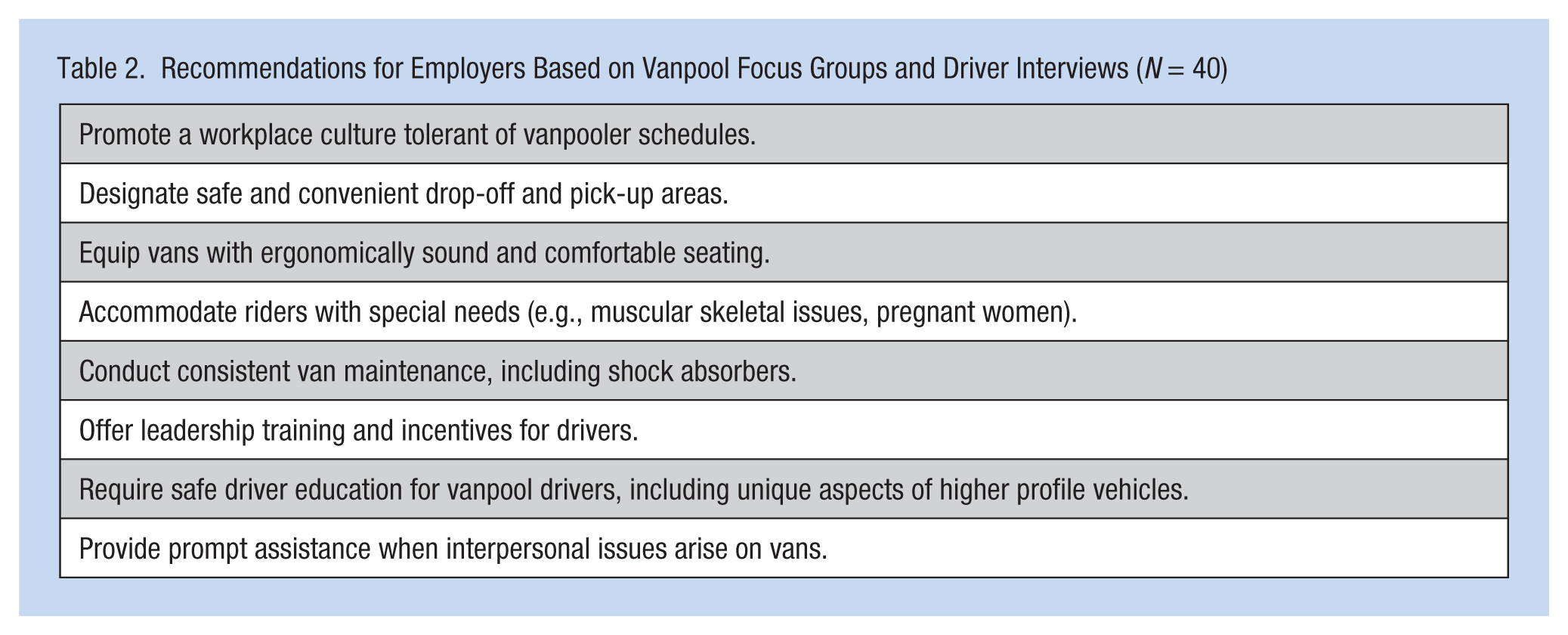
Finally, recommendations were made as to how the employer could increase commitment to the vanpool program and improve the vanpool experience (Table 2). A recurrent theme was that the employer needed to give drivers support, including adequate compensation and prompt assistance when interpersonal and other problems emerged on the van. Several participants discussed the importance of parking permits for days when they were unable to ride the van. All of the vans in this study were designed to transport 11 passengers, including the driver. Group members described the need for spacious and comfortable seating to avoid muscle cramping. A number of riders commented on the need for better shock absorbers. Some comments were, “In the back middle you might as well be a gymnast,” “you feel like you’re leaping into the air because you’re going like 65 or 70 and there’s just these people hitting their heads on the ceiling,” and “it was really bad for me when I was pregnant—heavily pregnant . . . sitting in . . . [back seat].”
Recommendations for Employers Based on Vanpool Focus Groups and Driver Interviews (N = 40)
Participants also expressed the need for consistent maintenance and a newer fleet of vans. As one rider explained,
I’ve been on two different vans and one of them was older and one of them is newer—and there is a marked difference, especially the shocks, between the vans. So, I think maybe a little more consistency in that. If they’re going to update the fleet, update the fleet and not just kind of pick and choose.
Although these comments focused on the vans and the rider experience, strong views also were expressed regarding the campus environment. Considerable concern was expressed about vanpool drop-off and pick-up arrangements. Vanpoolers expressed a need for employers to establish safe, convenient, and dedicated sites for the loading and unloading of passengers. Drivers should not have to “figure this out on their own.” One driver described having to roll by saying “get in get in” as he picked up passengers in congested traffic areas on campus.
Discussion
Although the description of vanpools varied, views of the positive and negative aspects of this shared commuting strategy were largely the same across groups (Table 1). In virtually every group, the emphasis was placed on the ways in which vanpooling resulted in stress reduction and the wide range of ways stress was reduced. For some participants, it involved family experiences, fitness goals, or interpersonal relationships. For others, the focus was on job performance and satisfaction. Closely linked to stress reduction, and consistent with other research on shared commutes to work, aspects of “time” were particularly noted (Besser, Marcus, & Frumkin, 2008; Evans & Wener, 2006; Gatersleben & Uzzell, 2007; Lyons & Chatterjee, 2008; van Hooff, 2013). Although it appeared that commute time did not significantly change for vanpoolers compared with driving individually, aspects of time and the contribution that vanpooling made to time management emerged as an overarching, positive theme. Vanpoolers talked about commute time, family time, and transition time between work and home.
Participants also noted negative time considerations, such as early morning pick-up time, and concerns about getting to the van on time. However, of key importance, when these time concerns and other negative aspects of vanpooling were noted, participants described ways in which they addressed and resolved these issues and maintained their vanpool participation. This problem solving occurred with respect to sleep disruption, unpleasant co-commuters, and risk of communicable disease. What was particularly striking was the extent to which vanpoolers themselves were using coping mechanisms and taking steps to make the system work. Whether choosing to nap on the van, establishing rules to prevent sick passengers from riding, or changing vans to avoid difficult interactions with other riders, it was clear that for these vanpool participants, the priority was to find a way to support and participate in the vanpool program. Clearly, the structure of the van experience addressed diverse quality of life priorities and considerations.
Finally, participants also emphasized the importance of employer support as critical to addressing issues related to time and other concerns (Table 2). Group members noted the considerable support the employer had given to the vanpool service. They also discussed a number of ways in which the employer could improve the vanpool experience, including modifications in the vans and campus environment related to parking and pick-up/drop-off of passengers, leadership training and incentives for drivers, supportive and responsive vanpool offices that provide assistance when interpersonal issues arise on a van, and establishing a workplace culture tolerant of van rider schedules and needs.
This study had a number of limitations. The focus groups and interviews were conducted among a convenience sample of volunteers at a single worksite. Health status information was only self-report.
Implications for Practice
Occupational and environmental health nurses are particularly well positioned to assist employers with planning and evaluating shared commute programs that can maximize healthy rides and promote worker well-being and productivity once at work. In this pilot study, disruption of sleep due to early morning commutes was a common health challenge for vanpoolers. Occupational health nurses can provide evidence-based sleep hygiene strategies to promote sleep quality and daytime alertness. Vanpoolers described dealing with infection risk using individual- and van-level strategies usually with little benefit. Occupational health nurses can assist in primary infection prevention by providing special influenza vaccination opportunities and health education related to contagious illness. In accordance with state and federal laws, some vanpool programs require Department of Transportation (DOT) examinations for drivers. Occupational and environmental health advanced practice nurses can contribute to the success of vanpooling programs in these instances by becoming certified medical examiners (https://nationalregistry.fmcsa.dot.gov/NRPublicUI/home.seam). Offering physicals on-site reduces time off-work and is more convenient for workers. DOT Medical Examiner training sessions are offered online and at the American Association of Occupational Health Nurses (AAOHN) annual meeting. Providing driver examinations in instances where an examination is not required by law raises a fairness issue that should be carefully considered by employers and vanpool drivers. If found not fit for duty, the vanpool driver could face the potential for lost work time.
In the event of an accident involving a van that is provided or arranged by employers, drivers and riders need to understand basic principles of first-aid and universal precautions, as well as reporting procedures. Nurses can provide appropriate forms to complete and information regarding individuals to contact in such circumstances. Occupational health units can be readily equipped with supplies for injuries and can provide anticipatory guidance, in collaboration with the occupational safety team, when natural disasters occur. Health education opportunities are abundant for the captive audience of workers during vanpool commute times. Nurses can provide recorded or written information for distribution and discussion that is targeted to the vanpool population regarding sleep hygiene, infection control, stress and time management techniques, and other issues.
Conclusion
Commuting by the nation’s workforce increasingly requires consideration of shared travel. However, more evidence is needed about the human health implications of these shared commutes (e.g., vanpooling). This pilot study shed light on this phenomenon. The vanpool participants described stress reduction as the major health benefit of their shared commutes, and, important to employers, indicated that shared commutes improved punctuality and increased efficiency at work. Study participants certainly were aware of the challenges posed by van commuting and were forceful in advocating for a number of issues they saw as important to vanpool programs. But, without exception, the vanpoolers expressed strong commitment to this commuting strategy. The advantages of participation clearly outweighed any disadvantages such as infectious hazards or disturbed sleep patterns. Indeed, it is worth noting that a considerable number of participants indicated that if they had not had the option of vanpooling, they would not have taken the job in the first place or, having begun employment at the university, would not have remained on the job.
More research is needed to provide health professionals and workplace transportation departments with information they need to craft effective policies and programs to promote healthy shared rides to work. Survey research is needed to increase understanding of the vanpool experience in diverse settings. Research that includes bio-physiologic measures of health and measures of environmental exposures is also needed. Learning more about the health implications of shared commuter strategies is essential not only in service to current vanpool participants but also to men and women likely to participate in this workplace commuting strategy in the future.
Applying Research to Practice
Shared commutes to work benefit the environment and provide economic gain for riders and employers. However, little is known about the effect of shared commutes on worker health and productivity. The researchers conducted focus groups with vanpool riders and drivers to elicit perceptions about health and work productivity related to their shared work commutes. Stress reduction was identified as a major health benefit. Improved punctuality and increased efficiency were identified as major effects on work. Disturbed sleep patterns due to early morning van schedules and infectious hazards were identified as concerns although participating in vanpools clearly outweighed any disadvantages for this group. Occupational health nurses are well positioned to promote healthy shared commutes through sleep hygiene and infection control interventions and advocating for research that will provide occupational health professionals and employers information needed to craft excellent policies and programs for healthy shared commutes to work.
Footnotes
Conflict of Interest
The author(s) declared no potential conflicts of interest with respect to the research, authorship, and/or publication of this article.
Funding
The author(s) disclosed receipt of the following financial support for the research, authorship, and/or publication of this article: UCLA Foundation/Mary Ann Lewis Enhancement; UCLA Center for Occupational and Environmental Health; National Institute for Occupational Safety and Health, Southern California Education and Research Center.
Author Biographies
Dr. Robbins is a UCLA Professor and Endowed Chair, School of Nursing, Fielding School of Public Health and Center for Occupational and Environmental Health. Her research focuses on workplace, environment and lifestyle exposures related to worker health, predominantly effects on reproductive health. Her research has been funded by NIH/NINR, CDC: NIOSH, EPA, and other intra- and extramural sources. The vanpool study expands her research portfolio by recognizing that commutes are an integral part of a worker’s day and that commute choices may have important effects on worker health and worker productivity.
Dr. Berman is Adjunct Professor Emerita, Center for Cancer Prevention and Control Research, Department of Health Policy and Management, UCLA Fielding School of Public Health, Jonsson Comprehensive Cancer Center (CPCR/SPH/JCCC). Dr. Berman is a veteran of over thirty years of research among diverse low-income and minority youth and adult populations, in work sites, schools and health care settings. Her work has been funded by the NHLBI/NIH, California’s Tobacco Related Diseases Research Program (TRDRP), the California Breast Cancer Research Program (CBCRP), the Susan G. Komen Foundation, and other agencies.
Dawn S. Stone is a PhD candidate at the University of California, Los Angeles School of Nursing, and a NIOSH Education and Research Center trainee in southern California. Her research interests include vulnerable populations in the workplace and total worker health.