



Abstract
The literature on migration documents two primary reasons for youth migration from Maasai communities of Tanzania to urban areas, both related to livelihood diversification: (a) education, as a means to improve the potential for wage employment; and (b) employment itself, often in situations where high levels of educational qualifications are not required. We question the extent to which these drivers capture the full range of youth migration experiences and whether additional social, cultural and environmental factors play a role in shaping migration decisions. This study investigates the patterns of migration and impacts in two geographically diverse study areas: Kilindi district, on the southern edges of the Maasai Steppe, and Enguserosambu ward, in the highlands along the border with Kenya. To better understand migration drivers and pull factors, we conducted a household survey combined with case study interviews of migrants and their parents along with community focus group discussions. Our results reveal a complex motivation for migration that may reflect a shift in terms of culture and societal values. The impacts of these patterns are highly varied, with some households experiencing increased economic stability and expanded social networks, while others facing challenges including labour shortages, weakened traditional support systems and shifts in cultural identity.
Introduction
Human migration affects rural livelihoods in complex and often indirect ways. Migration can be self-motivated, such as seeking opportunities including education or employment, or it can be externally motivated, where people desire more stable environments in response to conflict, political unrest or changing environmental conditions (Cattaneo et al., 2019; Jowell et al., 2018). Generally, it is a combination of both aspiration and necessity. In the context of Africa, migration from rural-to-urban areas has been long studied as a response to livelihood stresses in rural areas and the perceived greater employment opportunities in urban centres (Rigg, 2007). This form of migration has reshaped many demographics in Africa from agrarian societies to predominantly urban populations (de Brauw et al., 2014; Nguyen et al., 2015). Reflecting the broader trends in Sub-Saharan Africa, rural–urban migration in Tanzania is significant, with Dar es Salaam as the primary destination (Wenban-Smith et al., 2016). It is estimated that roughly half of Tanzania’s rural population has migrated to cities since 1991, with the main demographic being young males migrating for job opportunities, although education and acquisition of skills are widely accepted as additional drivers (de Weerdt et al., 2008; de Weerdt & Hirvonen, 2013). As elsewhere, migration in Tanzania is dominated by households with a higher education level (Ocello et al., 2015).
Among the many cultural groups in Tanzania, the Maasai, whose culture is based on pastoralism, face specific factors which contribute to the decision to migrate, including the pressures associated with land privatisation, degradation and climate change, especially resulting from more frequent and prolonged drought (Wafula et al., 2022). Former strategies to address drought conditions, such as keeping large mixed herds and maintaining dry season grazing reserves, have not been sustainable under current environmental and administrative pressures (Galaty, 2021). Migration to urban centres offers an alternative. However, entering the urban environment represents a dramatic shift from nomadic pastoralist culture and lifestyle. Pressure to adapt to non-traditional economic activities to survive in the urban environment with little-or-no formal skills or education results in a limited range of employment activities (Albert & Mosha, 2020). Moving to an urban environment can also greatly affect migrants’ and rural communities’ social networks, which have been shown to be important in improving individual well-being and increasing the resilience of rural communities (Gallego & Mendola, 2011; Isaac et al., 2014; Rindfuss et al., 2012; Scheffran et al., 2012).
As part of the research project Indigenous Knowledge Bridging of Land and Water Governance in Tanzania and Canada (IKG),
1
a wider research effort related to livelihood diversity and change, this study provides a review of the scale, frequency, motivations and impacts of migration from Maasai communities in two study areas within Tanzania. Specifically, our research questions are:
Q1 How prevalent is migration of youth (generally understood in Maasai culture to be under approximately 40 years of age) from Maasai communities? Q2 Who are the most frequent migrants? Q3 What are the main factors motivating people to migrate? Q4 What are the implications, both positive and negative, for the migrant as well as for the family remaining at home?
The research examines two distinct Maasai regions in Tanzania, Elerai and Enguserosambu, whose contrasting landscapes, type and extent of development, and specific obstacles have fundamentally shaped how each community adapts to climate change and other pressures on the land that is traditionally Maasai territory. In choosing disparate regions, it was hoped to illustrate and understand the wide range of factors influencing current migration patterns.
Theoretical Framework
To examine the link between migration and livelihoods, we applied the Sustainable Livelihoods Framework (SLF), which was developed to understand the needs of the rural poor (Scoones, 1998; Department for International Development [DfID], 1999).This specific framework was selected to allow for a deeper understanding of how livelihoods underpin migration decisions in the case study contexts. The model asserts that assets are influenced by a series of factors, such as trends, shocks and seasonality, which either strengthen or weaken the asset, resulting in livelihood resilience or vulnerability. For example, household assets may be stressed by trends towards an increasing cost of living. Similarly, vulnerability may be affected by the sudden shock of health issues for a primary income earner. Shifts in seasonality resulting in a good crop year may improve income and may also increase the need for labourers to harvest the crop, resulting in seasonal employment which, strengthens livelihood security of other households. On the other hand, a bad crop year with low productivity influences both groups in the opposite way.
The SLF attempts to capture how vulnerabilities can then be mediated or aggravated by other influences related to institutional structures or cultural traditions within society. This complexity then forms the basis for how individuals or households respond and what livelihood strategies they deem appropriate to reduce vulnerability and increase well-being or improve food or income security. Households may experience the same stress differently; hence, the strategies adopted will vary among households and may be applied in different times or under different circumstances (Bennett et al., 2014; Marshall et al., 2010; Serrat, 2008; Zou & Wei, 2010). However, those with lesser assets at the outset will consistently be more vulnerable than those that have a strong base of assets, and vulnerability will increase as both the assets and the adaptive capacity diminish. Multiple stress factors also tend to lead to more significant or permanent livelihood changes (Mubaya et al., 2012; Porter, 2012).
We gathered data on household assets within Maasai communities, the vulnerabilities they experienced and what strategies they adopted to address those vulnerabilities. At the same time, we asked specifically about migration and its impact on both social and economic aspects of household well-being. The data were then linked to the SLF to understand more clearly the relationships among the influencing factors and their impact on livelihood sustainability.
Study Areas
We investigate migration as a livelihood strategy in Maasai pastoralist communities in two distinctly different environments in Tanzania (Figure 1). The Maasai Steppe is a large semi-arid grassland of particular significance to the Maasai, who are the dominant residents. The first study area, Enguserosambu, is to the north of the Steppe in the highlands along the border between Tanzania and Kenya. The four villages that make up the Enguserosambu ward—Enguserosambu, Orkiu Juu, Ng’arwa and Naan—are encompassed by this study. A total population of approximately 8,500 Loita Maasai reside here, and their family connections extend extensively across the border between Tanzania and Kenya. The ward area is mixed forest and grassland that has been well-preserved through traditional management practices.
Study Areas and Potential Destination Urban Centres.
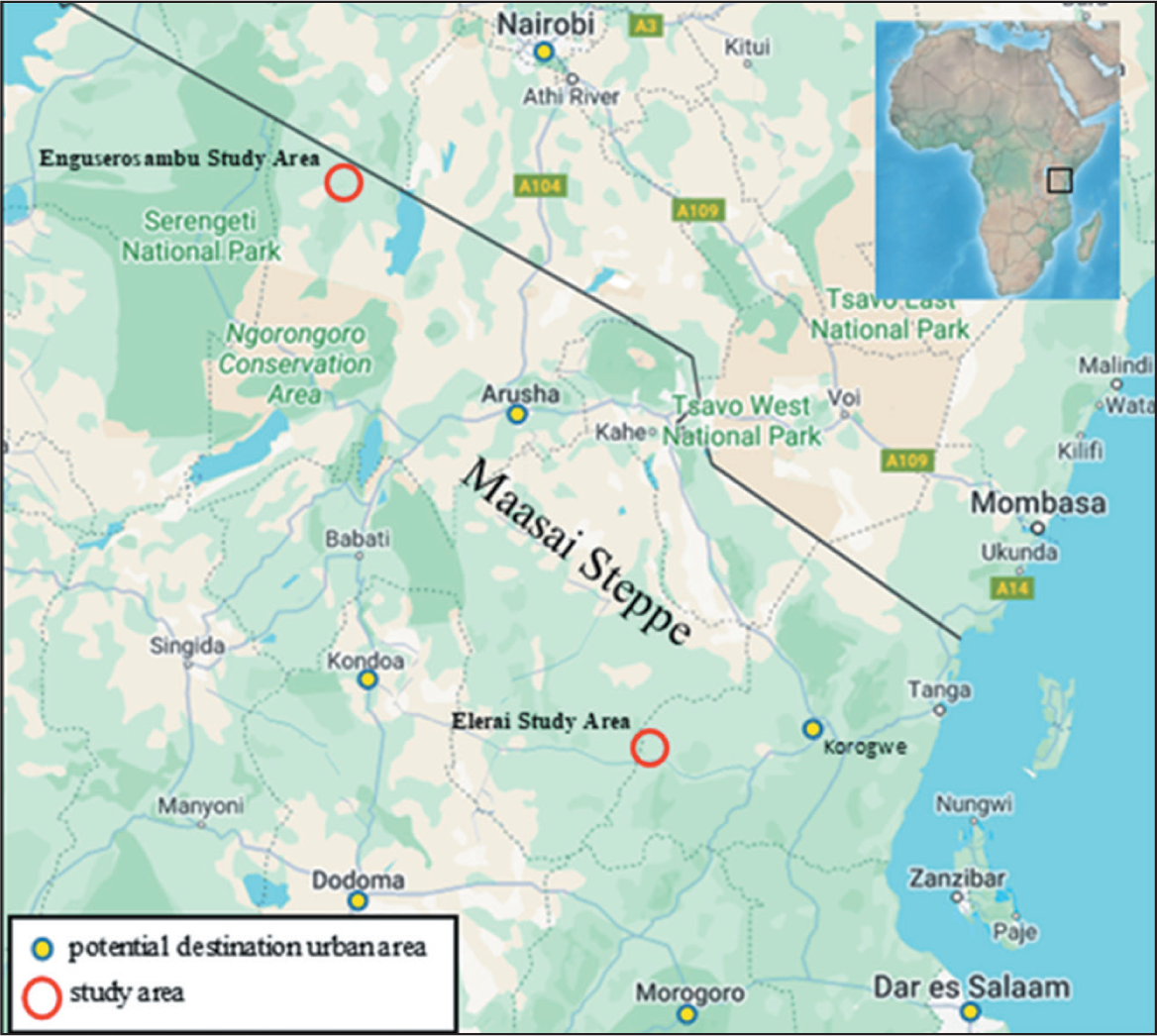
The second study area, Elerai, is on the southern border of the Maasai Steppe in the transition zone between the Steppe and the Usambara Mountains. Four villages from this area are encompassed in this study—Elerai, Ndumaro, Mkondoa and Lolparakwo—which lie within the Kilindi district of Tanga region. Together, these villages have an estimated population of 2,700 Parakuiyo Maasai. This area was formerly part of Kibirashi village to the south, which is home to predominantly agriculturalists of mixed ethnicity.
We identified these study areas as valuable comparisons due to: (a) the degree of conflicting land use pressures, (b) the location and differing landscape characteristics and (c) access to nearby urban areas. Recent community-based mapping in both study areas shows that the traditional territory of the Maasai has been significantly reduced especially over the past two or three decades (Paringo, 2024; Val, 2022). In both study areas, land use pressures from neighbouring agriculturalists are significant, although the recent change is pronounced in Elerai, where violent conflict between pastoralists and agriculturalists has led to the demarcation of land use boundaries. Such legal boundaries have existed for some time in the Enguserosambu study area; although illegal incursions have occurred, they can be addressed through an accepted due process.
The two study areas have different natural characteristics that have shaped the way pastoralism has been practiced. The Enguserosambu study area is a high elevation mixture of rich forests and open grasslands. Elevations reach 3,000 meters, and water sources, providing significant and relatively consistent water supply for livestock, are important assets which with natural flows contribute to the headwaters to Serengeti National Park to the west and southwest. The study area is surrounded on three sides by other Maasai territories, where cooperation and sharing of resources to support pastoralism remain significant. The Elerai area is a drier, lower area of less relief that experiences land use pressure from three sides, less so only on the northwest. Water sources are more restricted, and the Maasai have experienced significantly reduced access to water sources over recent years.
Third, access to nearby urban areas is different between the two study areas (see Figure 1). Enguserosambu is surrounded by extensive Maasai communities, with the exception of Loliondo and Wasso to the southeast. In addition, the Serengeti National Park and Ngorongoro Conservation Area lie to the west and northwest, and the Kenyan border lies to the north and east. The Kenyan border, while not a barrier to local families that live on both sides of the border, is significant in terms of migration since the governments identify citizens and control international movement. Enguserosambu’s one direct urban link is Arusha to the southeast, an eight-hour bus ride. Elerai, on the other hand, is located more centrally within eastern Tanzania and has road access westward to Kondoa and Dodoma, eastward to Korogwe and then north to Arusha or south to Dar es Salaam and Morogoro. All of these centres are within a day’s travel time.
Materials and Methods
Following a community-based approach researchers, we selected community members from both study areas from each of the villages (n = 8 community researchers, 3 women and 5 men, with some post-secondary education and English capacity). Prior to data collection, the community researchers conducted a weeklong training led by lead author BD.
We employed a mixed-methods approach to gather data for the study. A household survey was conducted in 509 households—207 of the estimated 450 households in the Elerai study area and 302 of the estimated 1,411 households in the Enguserosambu study area. The sample was calculated based on a confidence level of 95% with a confidence interval of 5 and estimating an average of 6 persons per household (Nkedianye et al., 2020). A multistage random sampling approach was used due to the scattered nature of the study population in each of the villages (Chauvet, 2015). The participants were any household member (male or female) aged 20 years and older who were able to provide information on the characteristics and patterns of livelihood activities in the household.
To complement the survey, the community researchers conducted key informant interviews of village leaders, traditional leaders and government representatives. In addition, community researchers conducted focus group discussions in each village to gather contextual information on the livelihood, services, environment and development of the communities of the study area. One focus group discussion was held in each study area, drawing together representatives from each of the villages. Focus group participants were equally divided between youth and elders and between men and women. Eight individuals selected through a purposive sampling technique attended each focus group session to support comparison. After the focus group discussions, stories of eight individuals (migrants) drawn equally from each of the villages in both study areas (total 16 migrants) were identified as in-depth individual narratives. Their personal stories were recorded through interviews either in person or by phone if they were still absent from the village. In addition, the community researchers interviewed the parents of these migrants (n = 26 family members interviewed).
Results and Discussion
The household survey provided a preliminary overview of the migration within the study communities, indicating that migration had occurred in 15.0% of households in Elerai and 10.7% of households in Enguserosambu in the past 10 years (Figure 2). A higher percentage of migrants from Elerai provided support to the households and returned regularly. However, of those who did return regularly, the migrants from Enguserosambu returned more frequently.
Migration Responses from Household Survey.
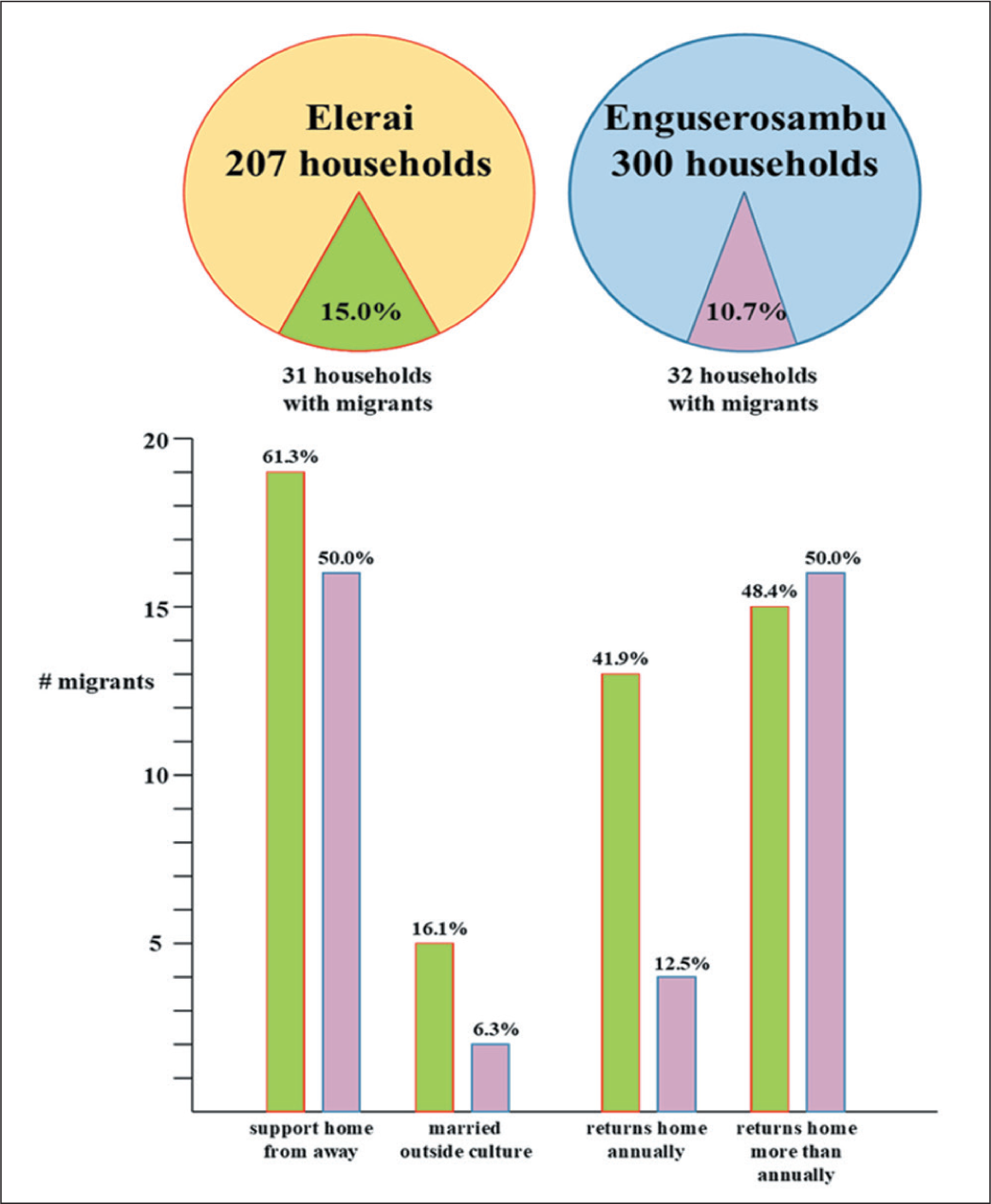
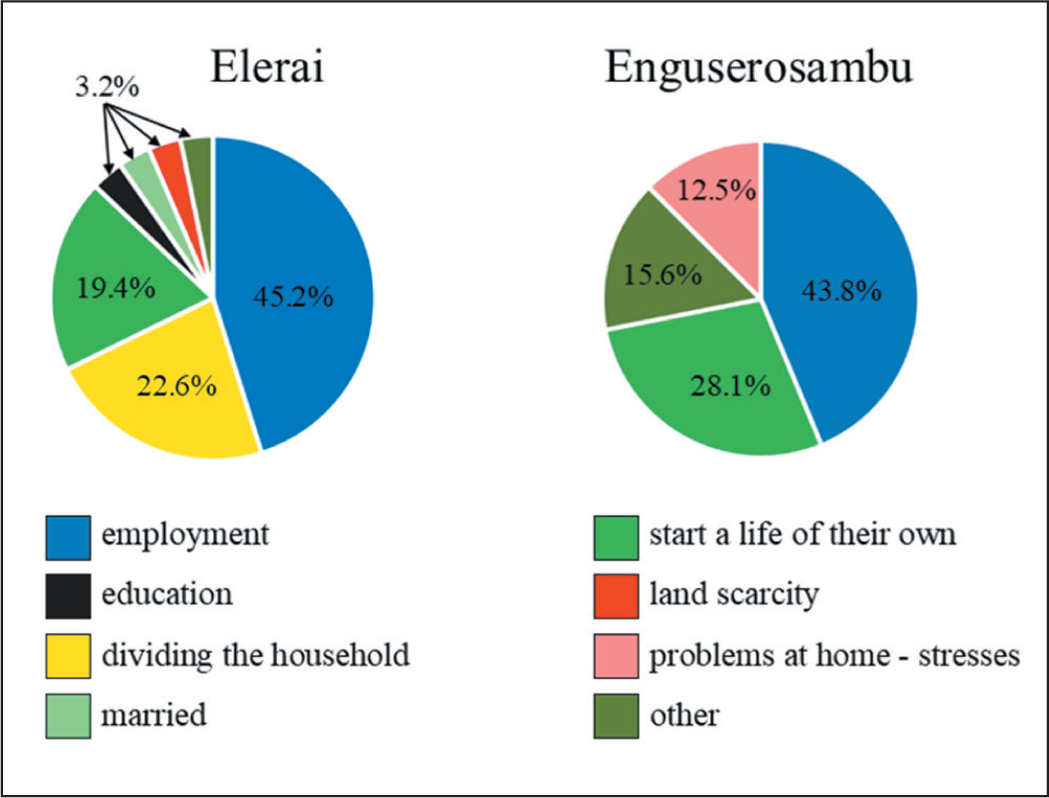
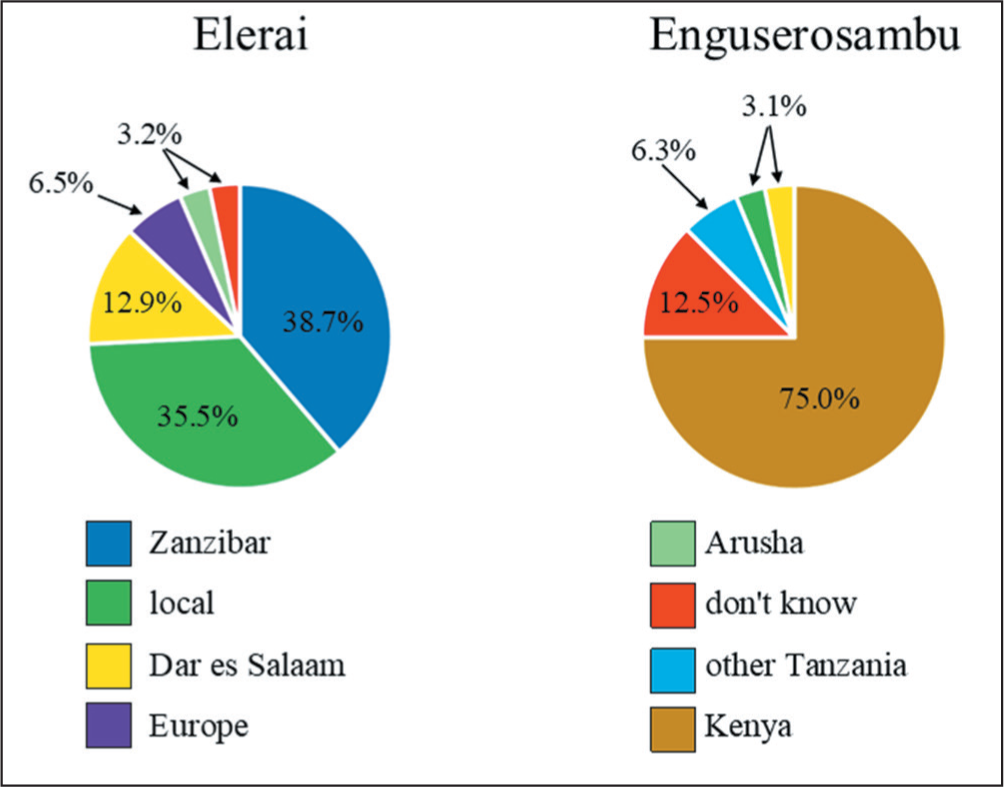
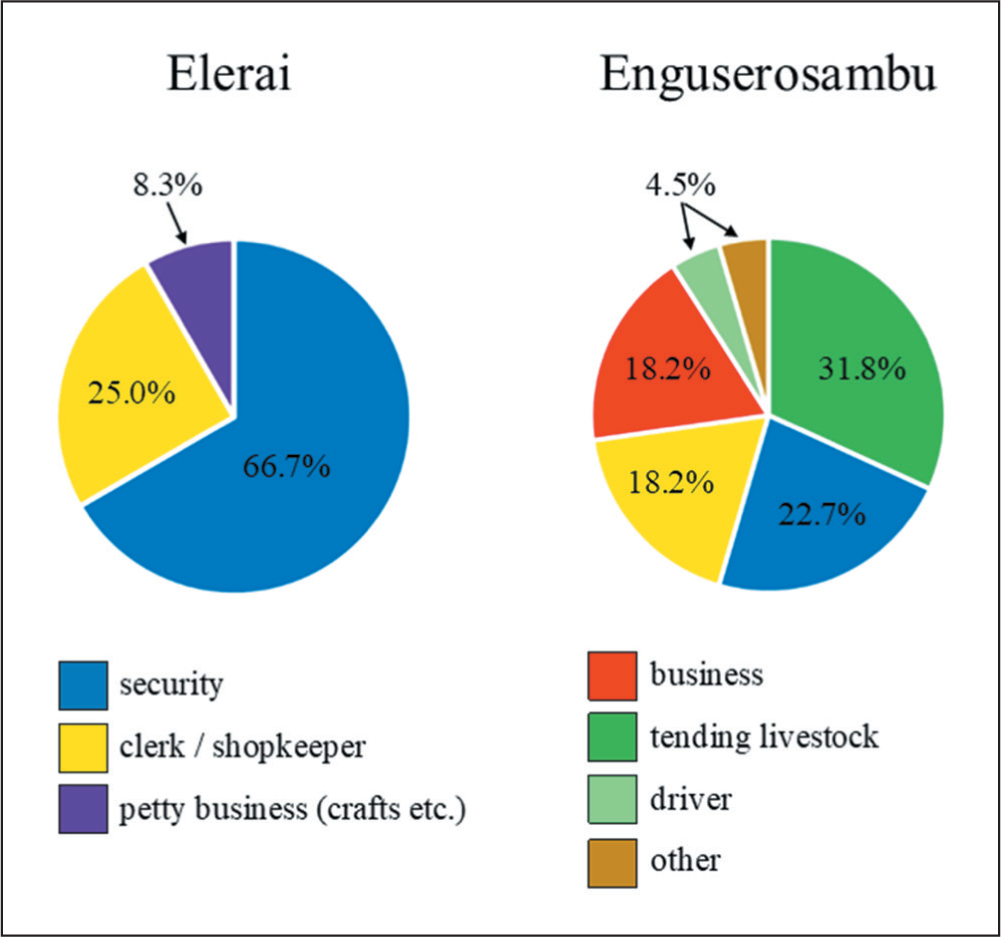
Explanations for these differences are more fully understood through examination of the reasons for migrants leaving, where they went and, if seeking employment, what kind of job they acquired (see Figures 3–5). Employment was the dominant reason in both study areas, but distances of destinations for employment from Elerai were longer (e.g. Dar es Salaam and Zanzibar). Frequently, migrants in the Enguserosambu study area were young and heading just over the border to find work tending livestock or related activities, rather than seeking alternative employment in urban areas. This meant they returned home frequently but also meant that they had little to contribute by way of support to the home household.
Reasons for Migration.
Destinations of Migrants.
Type of Employment Acquired.
The qualitative data allowed for understanding both the stimulus for migration and its outcomes, as explained below.
Prevalence of Migration
In Elerai, study participants identified a trigger event in 1990 as the beginning of migration from the community. They spoke of an outbreak of mad cow disease (Bovine Spongiform Encephalopathy—‘Ormiloo’) that killed many cattle, making life exceptionally difficult and forcing men to look for other forms of income outside the community. The success of some migrants also helped numbers grow in the years that followed, as illustrated by the following story:
The remarkable change of migration pressure started in the 1990s when one man who couldn’t marry a woman he loved because he didn’t have enough cattle for the dowry. He left to town to find a job and came back home rich; he bought a good number of cattles and paid a dowry in full and then got married. … From there others knew that there was a possibility of changing their lives hence the number of migrants started to multiply, the man became an influencer to the Elerai youth migration. (Report of Migration in Elerai—Focus Group Discussion, October 2022)
In the early years, it was only men who migrated in search of employment to support the family at home. Reportedly, as recently as 7 years ago, it was rare to hear that a woman had migrated to town for work. Participants reported that now, however, most male youth, and increasingly female youth as well, above the age of 16, and to some extent junior elders up to around the age of 40, migrate. The situation in Enguserosambu is notably different. No trigger event was reported, and migration generally was not considered significant until relatively recently, occurring mostly in the last few years. Young people and especially males, in the age group of 20–40, dominated those migrating.
Gender
The gender balance in the identification of participants reflects the difference in female participation in migration as experienced by the villages of the two study areas. In Elerai, three females were identified since female participation in migration had a longer history and acceptance, while in Enguserosambu, only one of the eight participants was female.
Reasons for Migrating
The reasons for migrating are complex, multifaceted and place-specific. In Elerai, there is evidence of change in motivations over time. Initially, migration was a means of securing alternative income to replace the lost income from loss of livestock. Poverty in the family encouraged many to migrate, and often, parents encouraged young people to seek jobs in town to alleviate household poverty. This motivation remains a rationale for many migrants, but that intention is now blended with other factors, including a desire for independence and peer pressure to be ‘successful’ in not only personal wealth but also the adoption of lifestyles, clothing and materials from beyond the Maasai community. This exposure to other cultures has often resulted in gaining new languages (European), friends and even marriage partners. Peer models can be strong motivators for young people who perceive themselves in a harsh and difficult life with few options for employment and a comfortable standard of living. These perceptions can be accentuated by increasing access to social media.
Another significant motivation for migration is educational opportunities, which remain limited in the immediate area of the Maasai communities in the study areas. Migration is required for anyone wanting post-secondary education. In addition, once people migrate for education purposes, they often stay for employment, relationship or family reasons.
In the Elerai study area, the primary reasons for migration are as follows:
Seeking employment—employment is strongly linked to the notion of independence identified below and, while stronger for men in Maasai society, it increasingly applies to women as well. Individual freedom—freedom to make their own decisions independent of their parents and earn their own money and gaining respect as individuals. Support for the family—pressure from family to get jobs and provide support. Avoid the burden of responsibility (male migrants)—not happy with the pressure from parents to take care of livestock and to marry young, with the responsibility of supporting their spouse tying them to the village. Peer pressure (also predominantly male due to the significance of the age-set structure of Maasai society)—direct encouragement to join friends in town; indirect appeal, for example, friends visiting back with money, fashions, technology and new languages. Education—to attend programmes at secondary schools, colleges and universities; increasingly important for women due to increasing opportunities and support for educating women and girls. Intermarriage and exposure—to meet new people and interact with other cultures; getting married to foreigners and then moving abroad.
In the Enguserosambu study area, the reasons for migration seem more tightly defined, perhaps due to the recency or lesser prevalence of movement that can be linked to its location, far from city centres. Generating income through alternative employment due to poverty, debt and hardship at home remains a constant theme, as are the lack of business opportunities within the local community. Peer pressure also appeared as a common justification. However, access to better commodity markets in Kenya was not a reason identified in the Elerai study area. Furthermore, education did not feature significantly in the responses in Enguserosambu. More prominent was employment and business to generate capital, largely targeted at expanding traditional livestock herds as a means of improving prospects at home. Complete changes in lifestyle and permanent moves from the community were not a prominent objective.
Migration Destinations
Due to the more central location of Elerai in Tanzania compared with Enguserosambu, the destinations of migrants for various activities varied significantly although Zanzibar, with the greatest economic opportunities remaining the most significant destinations.
The location of Enguserosambu also influenced the destinations of migrants, which in turn influenced the reasons for leaving. Bordering Kenya and being quite disconnected from the major economic centre of Tanzania, Dar es Salaam, means that migrants typically go over the border to Kenya to work or even on to Nairobi. Much more limited access to tourist areas such as Zanzibar, which is readily accessible from Dar es Salaam, meant that connections with foreigners through the tourism industry was also not as significant a driver for migration as for the youth of Elerai. Some still reported moving to other centres in Tanzania, but Kenya was predominant. The locations of the urban destinations for migrants in the case studies from both study areas are shown on Figure 1.
Individual Case Studies
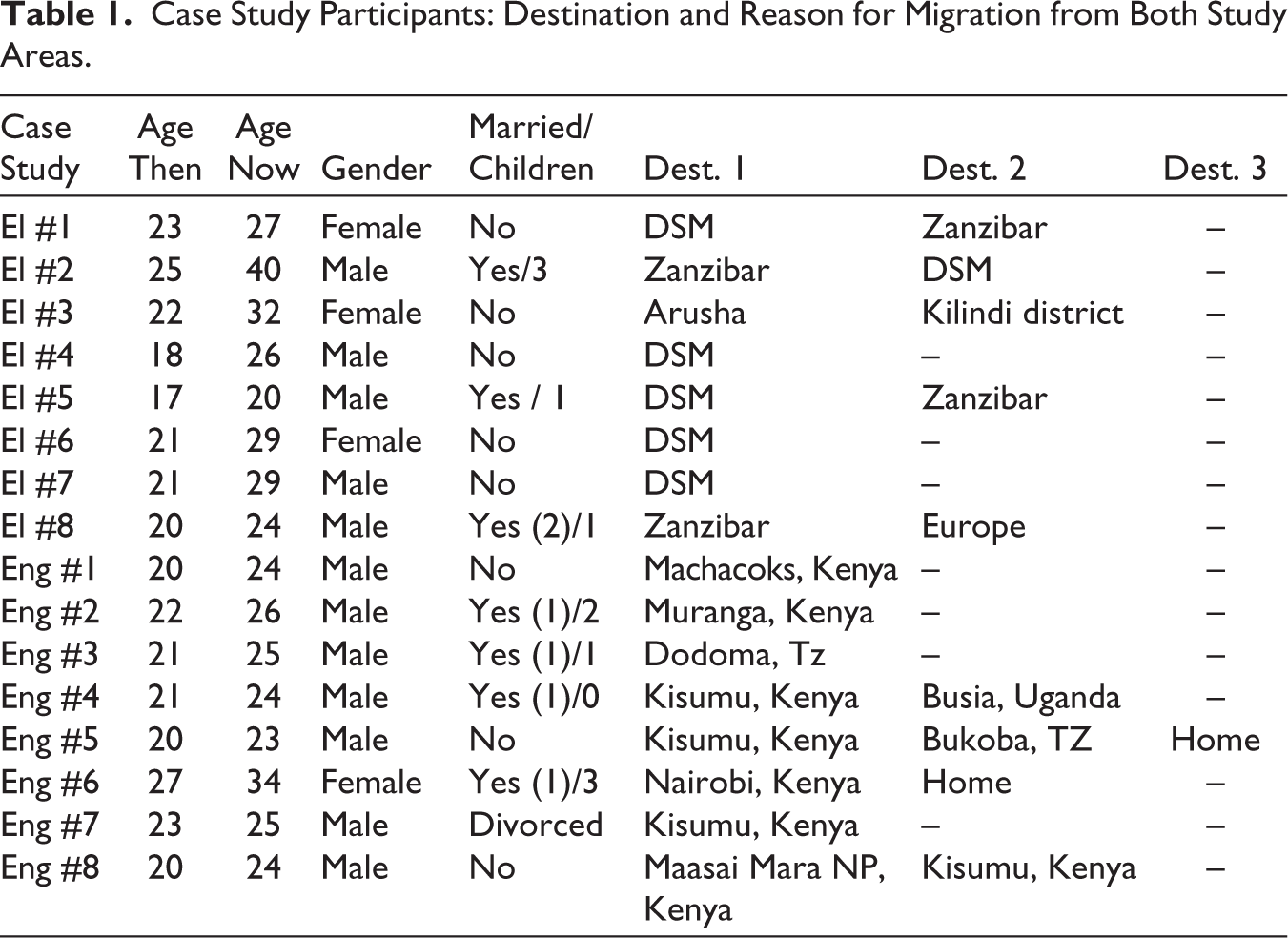
While a general discussion in the focus groups provided a community-wide view of migration, the case studies undertaken through in-depth investigation of personal narratives provided detailed responses from an individual perspective to the research questions. Some key characteristics of each of the case studies is shown in Table 1.
Case Study Participants: Destination and Reason for Migration from Both Study Areas.
Data from the case studies provided a wide range of insights and fundamentally underscored a greater complexity in the decision to migrate than has typically been presented. While some of the driving forces remain consistent, social change, not only within the Maasai community with greater access to education and the changing roles of women but also in society at large, with advances of technology and the influence of social media, was shown to be extremely influential.
There is a pattern of women migrating primarily, at least initially, for reasons of education and secondarily for employment. For men, employment was identified as the primary reason. A number of influences help to understand this pattern: (a) men, more than women, tend to have had secondary education at home prior to migration, although women’s education is becoming more accepted; (b) the role of men in household livelihoods is more focused on income rather than household maintenance; (c) peer pressure between men is more prominent than between women; (d) the roles in family life (i.e., housekeeper vs wage earner) have not yet significantly shifted with changes in education, and the perception remains that women are more family and community bound while freedom and independence is more accepted for men.
However, the reasons for why people migrated were typically more complex than such primary objectives would indicate. Some of the significant push factors identified earlier in Figure 3 include: (a) water shortages—environmental challenges of maintaining cultural livelihood pursuits; (b) diminishing access to traditional pastures created by expanding agricultural land uses; (c) growing population on a fixed and even diminishing land base; (d) poverty; (e) lack of independence; and (f) family conflict.
Related pull factors included: (a) individual freedom; (b) maintaining peer group connections; (c) access to modern lifestyle; (d) freedom to make own decisions—livelihood/social/cultural; (e) new places/new ideas/new people; (f) educational opportunities; (g) wage employment; and (h) business opportunities.
Migration from Elerai tended to be permanent and a distinct departure from community life, while from Enguserosambu, it was less dominantly so. In part, this reflects the reasons for migration and the intention by Enguserosambu migrants to use the benefits of temporary migration to establish a more successful traditional lifestyle at home. Female migrants from Elerai, however, indicated an interest to return home or at least close to home in the future to be closer to family and their home environment. In general, women who migrated tended to demonstrate a greater commitment to supporting the family at home, in the form of both regular remittances and communication, including regular phone contact and yearly if not more frequent visits.
Many participants in this study are still working towards the objectives they held at the outset of their migration. Although stories of success dominated our findings, longer-term research into the eventual outcomes would be needed to determine the success of migration. The case studies indicated that the benefits of migration tend to be more positive for the migrant than for the household back home. Parents interviewed readily acknowledged the successes of the migrant in terms of individual outcomes (education, employment, independence) while simultaneously reporting the infrequence or minimal nature of the contributions to the conditions at home. The majority also highlighted their concern about the migrants’ change in lifestyle and the shift from traditional cultural practices, although others were happy that the migrants had maintained their traditional dress and involvement in traditional practices.
Example Personal Narrative Case Studies
Three illustrative examples below highlight key patterns in migrant experiences and family responses.
Narrative #1: Enguserosambu
A 20-year-old male migrated to Kisumu, Kenya, motivated by peers’ success. His parents consented despite household challenges. In Kisumu, he established a business, attributing success to knowledge and effort. He returned at 23 with money and livestock (5 heifers, 10 sheep), achieving his goals.
His mother cited peer influence and home hardship as motivating factors. Though his absence created difficulties, she ultimately approved of his achievements.
His father viewed migration as an inevitable youth trend. While missing his son’s livestock skills and cultural participation, he was satisfied with the outcome.
Narrative #2: Elerai
A woman migrated at 21 (now 29) as the 7th of 10 children. Previously dependent on parents for education while contributing domestically, she relocated to Dar es Salaam for nursing studies, attracted by family support, educational opportunities and job prospects.
Post her graduation, she worked at an electric company before joining an NGO digging community wells at a higher pay. Migration provided independence and ability to support her family. She maintains connections through regular remittances, biannual visits and frequent calls.
She prioritises independence and career over marriage while preserving her Maasai identity. Her mother, who lacks formal education, recognises her as the family’s most educated member and crucial financial supporter.
Narrative #3: Elerai
A 40-year-old migrant left at 25 after secondary education as the eldest child. He worked in Zanzibar security before attending Teachers College and now teaches in Morogoro, where he lives with his wife and three children.
He maintains phone contact but rarely visits due to work and family commitments. He sends money only for emergencies and siblings’ education while prioritising his immediate family.
His mother, a pastoralist in her 60s, laments his infrequent visits, limited financial support and disregard for cultural obligations, feeling his migration offers little family benefit.
Migration motivation has often been identified purely as sending remittances home to relieve family poverty or stresses (de Haan, 1999; Munishi, 2019). However, evidence from this research consistent with some other studies indicates that such outcomes are now less significant and sometimes unachievable (Duda et al., 2018). Individual outcomes such as independence and lifestyle change may now be more significant than supporting the household at home. Creating their own families and supporting their own independence from the family of their youth seems to be a strong motivator. One of the difficulties this creates is a difference in expectations between migrants and their parents. Some research suggests a common understanding and expectation, while by interviewing migrants currently absent from their home community, our research indicates a significant priority on the individual (Munishi, 2019). We also found that women migrants more consistently actively sought to support the home household, and further research might explore in more detail whether this difference is truly based on gender or whether there are other factors at play.
Beyond Economics: Reconsidering the Sustainable Livelihoods Framework
Migration from Maasai communities, like other forms of rural-to-urban migration, have typically been characterised in an economic context. The SLF emphasises this approach as well, drawing heavily on the concrete assets, whether economic, physical, social or natural. Vulnerabilities are similarly slanted towards these types of assets. The commonly perceived reasons ascribed to migrants from rural areas in general, and the Maasai in particular, focus on economic and educational advancement given that limited opportunities exist in small rural communities (Jowell et al., 2018; Pirani et al., 2019). These aspects of the framework were influential in our findings, such as recognising the importance of education to develop greater income earning potential and employment as an alternative to difficult conditions in the village.
However, our research suggests that social factors play a much greater role than previously acknowledged. This suggests the need for more comprehensive recognition of social capital as an asset within the SLF framework. While some authors reference peer pressure and modern lifestyle influences, they generally treat these as secondary factors (e.g., Munishi, 2019; Muto, 2012). This may reflect the nature of questioning methods, as it is difficult to determine the priority factors in human decision-making when respondents themselves seek concreteness in their answers.
Our research identifies several social factors that warrant further investigation in migration studies. These include: (a) peer influence mechanisms, where migrants and parents frequently cited peer success stories and age-set connections as motivating factors; (b) shifting cultural participation, with some parents concerned about migrants’ reduced engagement with traditional practices, though we did not systematically measure this; (c) independence and lifestyle changes, where some migrants prioritised personal autonomy and exposure to urban lifestyles alongside economic goals; and (d) variable family connectivity—our survey data showed differences in remittance behaviour, return frequency and family support patterns (Table 1), with qualitative interviews revealing more complex obligations than economic frameworks typically capture. While our study did not systematically measure all these dimensions, their prominence in both survey responses and case study narratives suggests they operate alongside economic motivations in shaping migration decisions. Future research should develop more specific indicators to quantify these social dynamics.
Peer group relationships also play an important role not only in migration decisions but also in determining destinations. While employment and educational opportunities dominate discussions of destination choice, the social networks that connect migrants to these locations deserve greater attention (Otieno et al., 2021). Due to the strength of the age-set structure of Maasai society, peer influence in maintaining connection and providing support beyond the home community should not be overlooked (Ahmed et al., 2015). This raises an important question for future research: would migrants seek out centres of economic and educational opportunities if there was no social network of their cultural or community peers connecting them to these locations?
The transforming processes component of the SLF seemed to not fully capture the individualistic nature of social and cultural influences that appeared particularly relevant in our research. Migration in our results not only was characterised by the ability to work and earn money but also promised release from the pressures and constraints of traditional practices at home and a widening of perspectives on modern lifestyles seen on social media. Like youth everywhere, the opportunity to explore new ways of being, to realise greater personal independence and to meet people and develop new friendships provides a strong attraction for change (Hooli, 2018). Future research should give such factors more consistent attention and explore them in more depth.
While the SLF was not originally conceptualised specifically for migration analysis, researchers have increasingly applied it to understand migration as one strategy within broader livelihood portfolios (e.g., De Haas, 2010). Our application of SLF to Maasai migration patterns reveals both the framework’s utility and limitations in this context. Rather than suggesting the framework is inherently flawed, our findings indicate opportunities to expand its application when examining migration decisions, particularly by enhancing consideration of social capital dimensions, which in this case is a prominent finding.
Conclusion
Our research is motivated by dominance of rural-to-urban migration in Sub-Saharan Africa, including for Maasai communities, although the extent depends on environmental and economic conditions within the community. However, regardless of these conditions the level of migration continues to rise in response to new and attractive opportunities outside both the community and the cultural context. Migration served a multitude of purposes, and while education and employment were common, a desire for independence and to break from the traditional cultural constraints of the home community was significant. Generally, migration provided strong positive benefits to the individual, resulting in an independent lifestyle free of the constraints, demands and sometimes the poverty felt at home. It represented the start of a life of their own where they felt able to establish themselves and build or prepare for their own family, although frequently it also resulted in a weakening connection and diminished participation in their cultural practices. For parents this change was often very significant. They recognised the value to the individual in terms of developing their own life apart from the family but regretted the lack of support for the family and the shift from cultural traditions.
These results provide important insights into Maasai migration patterns while highlighting critical research gaps. Further research should examine social capital dynamics and cultural processes in developing new livelihood strategies, especially considering youth migrants’ departure from traditional practices. A key priority is understanding how the Maasai age-set system influences migration patterns and what this means for cultural continuity.
Footnotes
Acknowledgements
We gratefully acknowledge the support and collaboration of our partners—the Kesho Trust (Tanzania), University of Victoria (Canada), the Enguserosambu Forest Conservation & Development Trust (Tanzania), Ereto Maasai Youth (Tanzania) and the Carcross/Tagish First Nation (Yukon). Special thanks to the participating communities of Elerai and Enguserosambu and our community co-researchers whose knowledge and expertise were essential to this research.
Data Availability
The data used in this manuscript are from survey and interview research conducted in 2022 and 2023. According to the UVic Human Ethics agreement, all data are under confidentiality agreement and thus cannot be publicly archived. We comply with the First Nations principles of ownership, control, access and possession, which asserts that ‘First Nations have control over data collection processes, and that they own and control how this information can be used’. These principles apply internationally and extend to our research with participating Maasai communities in Tanzania.
Declaration of Conflicting Interests
The authors declared no potential conflicts of interest with respect to the research, authorship and/or publication of this article.
Ethical Approval
This study was approved by the Tanzania Commission for Science and Technology (COSTECH). Permit # 2021-670-NA-2021/225 issued 2nd December 2021 and the University of Victoria Research Ethics Board (approval no. 21-0345) on 21 January 2022.
Funding
The authors disclosed receipt of the following financial support for the research, authorship and/or publication of this article: This work was supported by the Social Sciences and Humanities Research Council of Canada, Partnership Development Grant number 890-2020-0125.
Informed Consent
All participants provided written informed consent prior to participating.