



Abstract
Customer-dominant logic (CDL) has been proposed as a novel approach for creating value to address the disruptions from the volatile marketing and technological environment. This study is grounded in the demand-side view and resource-based view and adopts a mixed-methods approach that involves the in-depth interview of 45 individuals, such as managers, staff members, and customers, to conceptualize CDL and the survey of Chinese enterprise managers to validate the measurement scale. Findings indicate that CDL encompasses five dimensions: demand opportunity perception, customer empowerment, digital empowerment, win–win cooperation, and experiential value. This study expands the dominant logic literature by conceptualizing CDL and developing a valid scale. In terms of practice, this study can provide firms with guidelines on how to adapt to the market, meet the personalized needs of their customers, and gain a competitive advantage in the digital age by adopting customer-centric strategies and digital technology and creating collaborative ecosystems.
Plain Language Summary
In this manuscript, the present studies had acknowledged the importance of the CDL perspective in business but still needed to make further investigation on how to corporate the CDL perspective at the strategic and operational business level. Thus, this paper attempts to fill this research gap. The purposes of this paper are as follows: (1) discuss the characteristics of CDL from the perspective of organizational strategy, and clarify the conceptual connotation and structural dimensions of CDL; (2) develop and verify the measurement scale for CDL. Given the limited research on CDL, this paper first defines the concept of CDL from the strategic perspective based on the theory of demand-based view and comparison with the CDL of traditional strategy and marketing. Then, it identifies the structural dimensions of CDL through qualitative research. On this basis, it developed the measurement scale in accordance with normative scale development and verified their effects. By establishing a dimensional analysis framework of “cognition-processoutcome,” this paper expands the research boundary of CDL and enriches the development of the dominant logic theory. It also presents and verifies a special measurement scale, thus providing empirical tool support for exploring innovation strategies.
Introduction
In the field of business, the question of “Who creates value?” has yet to be answered. Businesses have mainly adhered to provider-dominant logic (Heinonen et al., 2010), but the business landscape became exceedingly harsh and complex after the COVID-19 pandemic (Donthu & Gustafsson, 2020). After the unprecedented crisis, the future of enterprises became highly uncertain; thus, they focused on customers as a “catchable” group (Grewal et al., 2021). Drucker, P. F (1954, p. 37) observed that “There is only one valid definition of business purpose: to create a customer.” Customer-dominant logic (CDL) was developed as a novel business perspective (Bhatt & Chakraborty, 2022; Fan et al., 2020; Heinonen et al., 2010) to enable enterprises to thrive in the uncertain, unstable, and imbalanced environment and cope during turbulent times (Das et al., 2021). “Customer logic” refers to the reasoning and sense making of customers on how to attain their goals appropriately and accomplish their tasks, and “dominant” signifies the central role played by customers in business. Thus, CDL indicates the prioritization of enterprises of customer-related aspects in their business strategy over other factors, such as their products/services, profit, or growth.
The practice of positioning customers at the center of business operations is not new. According to Levitt (1960), enterprises should prioritize customer satisfaction over their production process. Meanwhile, Kohli and Jaworski (1990) and Narver and Slater (1990) emphasized market/customer orientation and the importance of collecting market information and understanding market demand. The perspective shift was supported by Priem and Butler (2001), who criticized resource-based theory for neglecting heterogeneity in customer needs and proposed the creation of organizational strategies from the demand side. With regard to value creation, the demand-based view (DBV) posits that value is external to enterprises and must be acknowledged by customers. The service- and interaction-focused approaches of service-dominant logic (SDL) garnered considerable attention with the emergence of the service economy (Prahalad, 2004; Vargo & Lusch, 2008), in which customers play a pivotal role in creating value (Vargo & Lusch, 2010). In such a context, by using their knowledge and skills, customers, as operand resources, can participate in product R&D, design, manufacturing, and delivery and thus acquire unique experiences by interacting with companies, which promoted the transition from exchange value to use value (Matarazzo et al., 2021; Prahalad & Ramaswamy, 2004). For instance, BMW allows customers to visit its factory, observe the production process, and participate in the product design at its customer experience center in Munich, Germany. Manufacturing firms such as Dell, IKEA, and Nike offer customers similar customization experiences. Despite scholars’ efforts to understand value creation effectively, current approaches emphasize provider-dominant logic (Vargo & Lusch, 2014a) and assign customers a passive role.
However, an increasing number of firms are embracing CDL, driven by customer heterogeneity and the evolution of emerging technology, to engage in value management and provide diverse customer value solutions to facilitate value creation logic transformation and innovation (Favoretto et al., 2024). Under CDL, customers play a central role in creating value, particularly in the consumption process. For example, with remote guidance from Haier Smart engineers, a customer was able to transform a washing machine into a vegetable sanitizer. In addition, with video guidance from Jeep, a customer was able to paint their car and share their experience on social media. Since its introduction, scholars, such as Heinonen et al. (2010, 2013), have used CDL to explore marketing aspects and relationships, such as consumer activity patterns (Mickelsson, 2013), retail banking (Medberg & Heinonen, 2014), and brand relationships (Martin Strandvik & Heinonen, 2013). However, the CDL literature is largely theoretical and focuses on exploration and practical implications in marketing. Few studies have explored the concept and internal mechanisms of CDL from the perspective of customers, despite the concept being a strategic mindset and behavioral pattern and representing a pivotal factor for firms to gain a competitive advantage (Bettis & Hitt, 1995).
This study focuses on two primary objectives to address the research gap. First, this study elucidates the characteristics of CDL from the perspective of organizational strategy and explores its dimensions by comparing it with competitor-dominant logic to lay the theoretical foundation for the scale development. Second, this study uses a mixed-methods approach to identify the structural dimensions of CDL, then develops a measurement scale by following normative scale development procedures. Moreover, this study enriches the CDL literature and dominant logic theory by developing a multidimensional “cognition–process–outcome” analysis framework. Through its conceptualization of CDL and scale development, this study provides scholars and policymakers with valuable managerial and theoretical insights.
Theoretical Background
Demand-Based View and Resource-Based View
The focus of corporate strategy research has changed from external factors (i.e., industries and competitors) to internal conditions (i.e., resources and capabilities), then to another set of external factors (i.e., customers and markets). Michael E. Porter (1991) proposed theory of competitive strategy in the 1980s, which emphasizes industry and a zero-sum game, in which enterprises compete with rivals to gain a large market share and a stable and advantageous position in the industry. Subsequently, scholars changed their focus to enterprises and how to enhance their internal capabilities and increase their resources (Powell, 1996; Rumelt, 1991). The resource-based view (RBV) is based on the assumption that, under a homogeneous market, differences will exist in the factor market (Ngo, 2023). The RBV recommends firms to pursue valuable, rare, inimitable, and nonsubstitutable resources and capabilities to improve their performance (Barney, 1991; El Nemar et al., 2025). Although the two theories differ in their perception of the factor market, they both consider competition as the foundation of strategic analysis. Firms that adopt competitive strategy logic may encounter a “competitive dilemma” and lose their sensitivity to market structure changes or customer demand, which may ultimately compromise their sustainable development.
As an emerging strategic management perspective, the DBV transcended the traditional assumptions of competitive strategy theory and the RBV as the needs of consumers evolve. The DBV emphasizes the diversification of demand and posits that enterprises are the carrier of solutions, and their competitiveness lies in their continuous creation of Schumpeterian rents to increase customer value (Priem & Butler, 2001). According to Priem and Swink (2012), the DBV “looks downstream from the focal firm, toward product markets and consumers, rather than upstream, toward factor markets and producers, to explain and predict those managerial decisions that increase value creation within a value system.” The DBV (a) recognizes consumer demand heterogeneity (Adner & Snow, 2010) and considers consumer preferences to be dynamic/latent. Ye et al. (2012) argued that interindustry diversification is necessary for firms to gain a value creation advantage. For example, the Chinese construction machinery manufacturer Sany Group expanded its core products to value-added services to pursue interindustry diversification. Moreover, the DBV (b) highlights product markets as the core of a firm’s value creation strategy, which differs from the focus of the RBV on resource markets and value capture. For instance, Intel uses its products (i.e., microchips) to provide tangible value to end users to join the value chain system of computer manufacturers and capture substantial value (Gans & Ryall, 2017). The DBV also (c) explores demand-based strategic innovation. In contrast to the technology-push paradigm, the demand-pull approach highlights collaborative innovation between companies and customers and considers the needs of end users as the main driver of innovation (P. Nambisan & Watt, 2011). The DBV addresses the limitations of the traditional competitive strategy theory; however, Priem and Swink (2012) called for the integration of the RBV and DBV and the expansion of the scope of strategy research from focal firms to entire value systems, which include customers, suppliers, and complementors (Schmidt et al., 2016). On the one hand, the separation of the RBV and DBV can lead to misalignment between firms’ accumulated resources and customer demand, such as Nokia’s inability to adapt to the intelligent ecosystem, and loss of competitive advantages. On the other hand, without the RBV, the DBV cannot enable firms to capture created value effectively owing to the absence of resource barriers (Argyres et al., 2019).
CDL is a novel value creation logic that underscores customer-centric approaches and the importance of understanding and satisfying customers’ needs in enterprises’ operations and strategic decision making (Heinonen et al., 2010, 2013). The integration of the RBV and DBV can offer theoretical support for the examination of CDL from a strategic perspective. In such an integration, the DBV can ensure the grounding of enterprises in the customer-centric focus of CDL by highlighting demand-driven value creation, and the RBV can provide the resource foundation for transforming customer-centric focus into tangible, capturable value. Furthermore, CDL resonates with the call to balance the demand side and resource value for strategic success (Priem et al., 2013).
Customer-Dominant Logic
Although traditional organizational strategy research defined value from the perspective of firms, recent studies defined value from the perspective of consumers. Companies are beginning to adopt CDL to gain a competitive advantage in the evolving business landscape. Specifically, CDL abandons the company-centric mindset and moves away from the traditional focus on internal resources and product-led value creation and positions customer value proposition and cultivation at the center of competition. Moreover, CDL redesigns strategic analysis frameworks based on customers’ value creation. This study compares competitor-dominant logic and CDL across five aspects, namely, industry assumptions, strategic focus, the role of customers, resources and capabilities, and products and services, to conceptualize CDL, as presented in Table 1.
Competitor-Dominant logic and Customer-Dominant Logic.
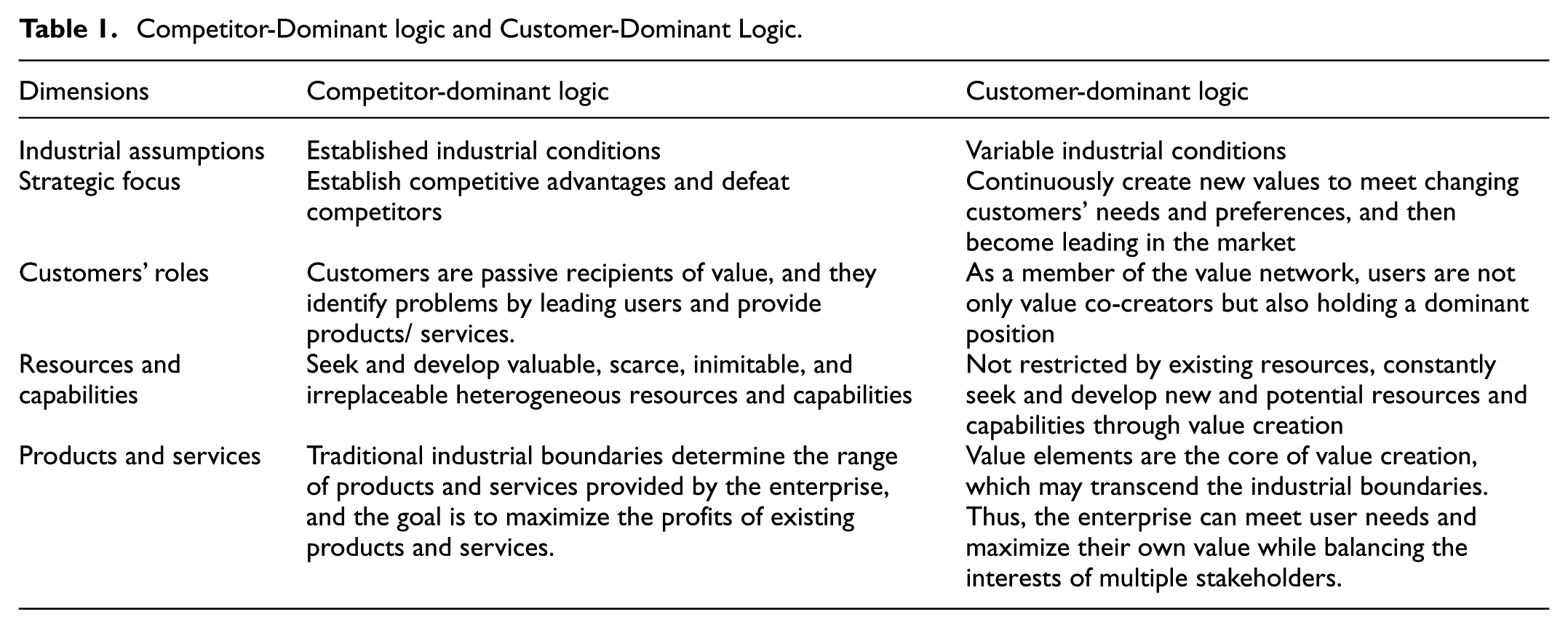
With regard to the first aspect, namely, industry assumptions, competitor-dominant logic assumes that the product market is given and undifferentiated, and all enterprises compete in the same market (Peteraf & Barney, 2003). By contrast, CDL assumes that the market is diversified, and demand is dynamic and prompts enterprises to adapt proactively to external changes and explore unique ways to overcome industry limitations by understanding consumers’ needs and preferences. For instance, Apple created the iOS system and an app ecosystem, instead of focusing on hardware specifications, to not only compete in the phone market but also redefine users’ expectations. The initiative opened a new realm of mobile computing and enabled Apple to achieve a massive value leap and reshape the industry.
The second aspect is strategic focus on consumers as the core of an enterprise. Under CDL, competition is the starting point of an enterprise’s corporate strategy. By improving their resource utilization efficiency and optimizing their resource combinations, enterprises can enhance their competitive advantage to not only become an industry leader but also motivate their competitors to imitate them and compete (Morgan & Hunt, 2010). However, for enterprises and organizations, the challenge is how to address changes in market conditions, consumers’ behavior, and the competition landscape (Heinonen & Strandvik, 2018). Hence, enterprises should focus on the pivotal role of customers in their business operations (Heinonen et al., 2010). Drucker (2006) observed that demand can drive innovation, and businesses should be viewed from the perspective of customers to succeed. Thus, companies have changed their focus from suppliers to customers to identify potential gaps and changes in their requirements as a business opportunity.
In terms of the third aspect, that is, the role of customers, in the five forces model developed by Porter (Grundy, 2006; Porter, 1980), an important factor that can determine the intensity of industry competition and the role of competition strategy is the ability of customers to bargain. Subsequently, instead of focusing on the role of consumers in value creation, enterprises regarded collecting consumers’ information as the most effective strategy for meeting their needs in exchange for value (Nwankwo, 1995). Under CDL, the consumer “orchestrates and dominant value formation” (Heinonen et al., 2013, p. 113) and creates value within the interaction sphere encompassing themselves and service providers (Heinonen et al., 2013) and the customer sphere containing themselves (Fan et al., 2025; Tynan et al., 2014). According to CDL, consumers’ goals and desires, duties and responsibilities, resources, experiences, and reasoning ability will drive their behavior (Heinonen & Strandvik, 2015, p. 475). For instance, consumers can utilize Internet of things (IoT) devices to design personalized smart home environments that fit their lifestyle and home management requirements based on their resources, needs, and experience with appliances and technology. Thus, CDL underscores how customers, as subjects, organize and manage their lives and interact with products.
For the fourth aspect of resources and capabilities, many firms use the principle of “what we have, then what we do” to evaluate market opportunities and make strategic decisions; thus, they may miss important opportunities for value innovation (Priem et al., 2012). CDL reiterates that enterprises should not be limited by their resources and should prioritize value cocreation as the center of their customer ecosystem. A customer ecosystem consists of the participants and specific customer-related service aspects, as well as service suppliers, other customers, other participants, and physical and virtual service-related structures (Voima et al., 2011). For instance, to enhance users’ experience and improve its competitive edge in the market, Xiaomi (XM) designed an integrated customer-centric ecosystem of smartphones, smart home devices, Internet services, and user communities.
With regard to the fifth aspect, which involves products and services and crossing industry boundaries, competitor-dominant logic confines firms to a limited range of products/services within their industry, whereas CDL requires firms to cross industry boundaries and achieve customer synergy to address market and demand diversification (Ye et al., 2012). Previous studies identified three customer synergy mechanisms: the creation of product portfolios that can meet the multilevel and diverse needs of customers, such as Apple’s cross-product compatibility; reduction of customers’ purchase costs or cost of accessing information, such as the different services provided by financial institutions; and the diversification of platforms by using the spillover effects of different customer groups, such as Amazon.
Classification of Customer-Dominant Logic
Customer prioritization is not a novel practice, but customer orientation perspectives have evolved. The customer-oriented view is currently the central guiding principle for corporate management. “Customer orientation” generally refers to providers’ orientation toward the needs of their customers and their integration into their value creation process (Lamberti, 2013). CDL emerged with the concept of customer orientation as a corporate management strategy that emphasizes the need to integrate the provider into the sphere of the customer (Jayashankar et al., 2020). CDL represents a shift in the paradigm from embedding the customer into the provider’s sphere to embedding the provider into the customer’s sphere to acquire valuable organizational management innovation opportunities. That is, while customer orientation reiterates a company-wide or function-related customer focus, CDL emphasizes value generation mechanisms, related tasks, and the participants (Heinonen & Strandvik, 2015).
As a cognitive orientation that emphasizes specific value creation approaches, CDL advances dominant logic theorization and distinguishes itself from goods-dominant logic and service-dominant logic, which have long shaped the field of marketing. Specifically, Table 2 presents a comparative analysis of three types of dominant logics to clarify the conceptualization of CDL. Although CDL and SDL challenge the traditional goods-dominant view of value exchange, they differ in how value is created and the role of customers in value formation. Under SDL, value is cocreated by providers and customers through their interaction, and firms play the role of an integrator, which incorporates customers’ resources into their value proposition (Vargo & Lusch, 2008). By contrast, CDL assumes that, rather than service offerings, the service provider, the exchange process, or the service system, the customer is the primary focus (Heinonen et al., 2010). Furthermore, CDL posits that customers, instead of service providers, control value creation (Heinonen et al., 2013) within their life spheres, rather than dyadic interaction spheres that encompass enterprises and customers. Thus, firms should embed themselves into consumers’ spheres.
Goods-Dominant Logic, Service-Dominant Logic and Customer-Dominant Logic.
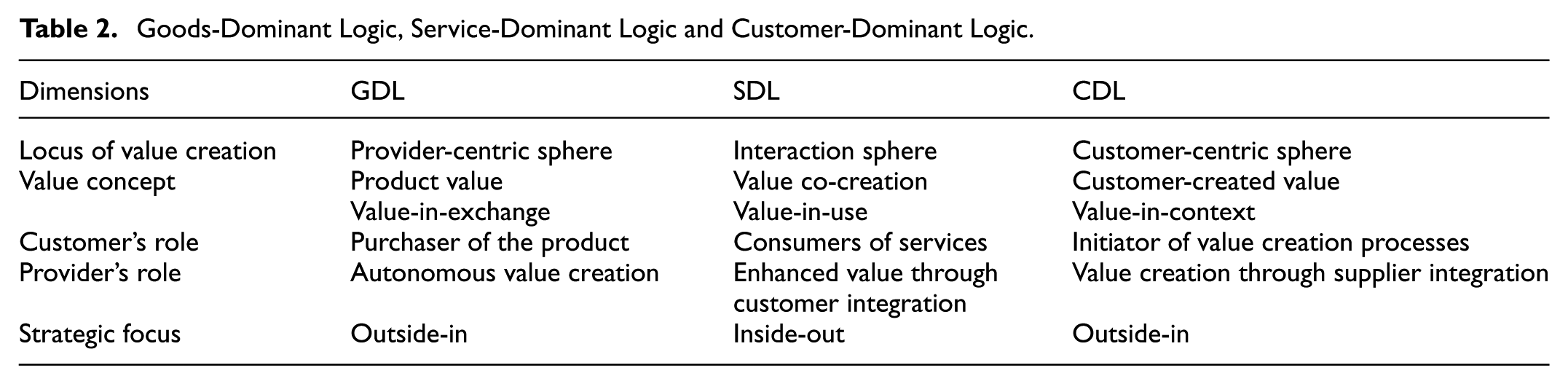
In summary, under market orientation and SDL, firms control value creation; however, under CDL, customers are independent and have the power to create value.
Customer-Dominant Logic in Strategic Management
The examination of CDL in the field of marketing has been extensive. For instance, Heinonen et al. (2010) argued that consumers’ daily practices can facilitate value creation, and consumers play a dominant role in creating value and leverage enterprises’ products or services to attain their goals (Heinonen et al., 2013). Heinonen and Strandvik (2015) claimed that a unique customer logic, which can influence consumers’ decisions as they complete tasks and attain their goals, is the essence of CDL. According to Strandvik et al. (2012) CDL was originally developed to answer the question “What can we offer customers to make them willing to buy and pay? In contrast, how can enterprises sell more of their existing products?” to address complex marketing adjustments. Scholars have emphasized the importance of examining strategic management from the perspective of consumer demand owing to the development of the Internet. Therefore, the differences between strategic and marketing viewpoints should be clarified to examine CDL from the perspective of organizational strategy.
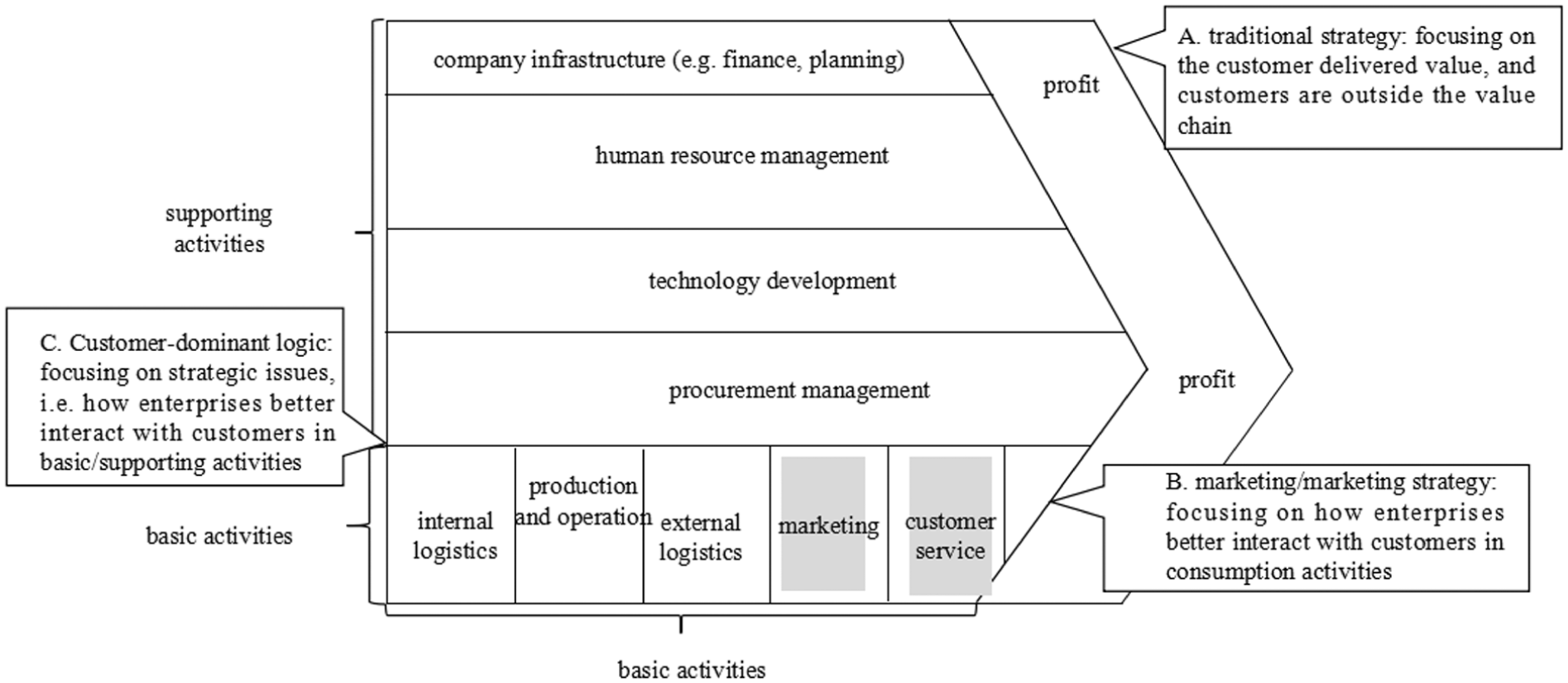
This study uses the value chain as an example to further elucidate the issue, as illustrated in Figure 1. Market/customer orientation, which focuses on consumer information collection and dissemination, is the widely used perspective to address the role of customers in the traditional corporate strategy (Narver & Slater, 1990). Figure 1-A shows that a customer’s role is to purchase the products/services of the enterprise that provides the highest value, which can influence its profit. Figure 1-B illustrates that the marketing strategy focuses on how enterprises can effectively interact with their customers to increase their willingness to pay for products/services. In marketing, CDL emphasizes the dominant role of consumers in business, that is, how enterprises can participate in consumers’ activities, rather than how consumers can participate in enterprises’ business operations (Heinonen et al., 2010). Furthermore, under CDL, enterprises involve themselves in their customers’ lives by interacting with them and planning their production according to their needs. By extending the exchange chain, enterprises can create exchange value, use value, and experiential value for their customers. Meanwhile, Figure 1-C demonstrates that, from a strategic perspective, interactions between enterprises and consumers are not limited to marketing, services, or basic activities but extend to related value chain activities. For example, some enterprises allow customers to participate in their production process, such as product R&D, design, and manufacturing, to achieve innovation. Other enterprises allow customers to influence their infrastructure, such as user data resources, to connect with them effectively. Integration can also be observed in organizational management frameworks and human resources, such as firms’ use of “people-oriented” techniques in corporate management. Specifically, certain enterprises introduce their customers into the links of their value chain, which differs from the traditional corporate strategy and marketing and can transform customers from a recipient of a service into a creator of value. Furthermore, some enterprises extend the participation of their customers in the value chain from basic to supporting activities.
Customer-dominant logic and value chain.
In summary, this study examines CDL and compares it with the traditional corporate competitive strategy and marketing to identify its characteristics. In the next sections, this study conceptualizes CDL and constructs and tests a CDL measurement scale by conducting multiple case study analysis and cross-referencing the findings with the literature.
Methodology
A mixed-methods approach that combines qualitative and quantitative techniques was used in this study to conceptualize CDL and develop a CDL scale (Venkatesh et al., 2016). Qualitative research was conducted to examine the core dimensions of CDL through multiple case study analysis to address the emerging phenomenon and the limitations of existing theories. Multiple case study analysis involves replication and the integration of complementary relationships in different cases to effectively ensure the generality, robustness, and credibility of the findings (Eisenhardt & Graebner, 2007). Multiple case study analysis was conducted in this study to lay the theoretical foundation for the scale development (Eisenhardt & Graebner, 2007; Yin Robert, 1994). According to Harrison (2013), an integrated approach of qualitative and quantitative methods would be effective for scale development. The validity and reliability of the developed scale were assessed systematically by building on the insights from the qualitative research and using SPSS 24.0 and AMOS 24.0. The methodology ensured the theoretical soundness and empirical validity of the measurement instrument to serve as a reliable tool for future research.
Case Study: Conceptualizing the CDL Scale
In this study, three representative Chinese firms were selected as the research objects to explore how enterprises develop CDL strategically and lay the scale development foundation. Specifically, the Haier Group (HG) is a household appliance manufacturer founded in 1984, that positions its customers at the center of its operations. The group has broken industrial tradition in the digital age by reconstructing intelligent full-scenario solutions by using a customer-centric strategy. Kute Smart (KS) is a clothing manufacturer established in 1995, that created a symbiotic win–win business ecosystem centered around customization, supported by digital technology such as the IoT, cloud computing, AI, and big data, to address the rapid changes in demand and e-commerce challenges. XM, which was founded in 2010, initially offered smart hardware and electronic products but changed from using a product-centric model to an experience-centric model in 2021, to embrace a customer-centric strategy in the Internet era. Despite the existence of various customer-centric business models, XM pioneered the practice of accumulating a large number of loyal customers through community operations.
The three enterprises were selected because of their (a) representativeness and content compatibility, (b) data accessibility, and (c) logical replicability. In terms of their representativeness and content compatibility, the three companies have explored customer-centric smart business models proactively by employing digital technology, particularly during the COVID-19 pandemic. With regard to data accessibility, the enterprises have garnered considerable attention from academic and practical communities as influential players in their industry, which can ensure not only the availability of diverse data sources (e.g., industry reports, academic publications, and corporate disclosures) but also the credibility of the collected data for in-depth analysis. Regarding their logical replicability, the enterprises have disrupted traditional business practices from the perspective of providers and become a benchmark for other enterprises and driven transformation and upgrading not only within their industry but also across different sectors and fields. The companies’ replicable characteristics can increase the generalizability of the research findings beyond the selected cases to strengthen the practical and theoretical implications of this study.
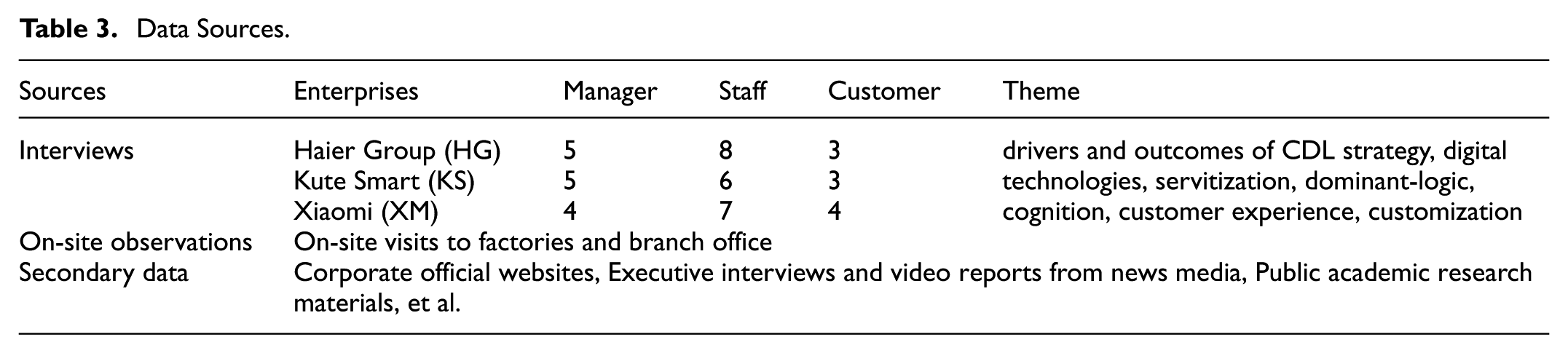
With reference to the case study perspective developed by Aberdeen (2013), three data collection methods were used in this study: semi structured interview, onsite observation, and secondary data (Table 3). First, the managers of the target enterprises were contacted by the research team to obtain permission to conduct a survey, arrange onsite company tours, and schedule interviews with the senior managers. The interviews with the senior managers focused on the main themes, such as their understanding of CDL, the drivers of their adoption of CDL and its outcomes, and their use of digital technology. Second, a structured interview guide was developed, and the interview questions were adjusted flexibly the during the interviews to obtain detailed and rich information from the respondents. Third, offline stores were visited by the researchers to conduct interviews with the staff and customers to obtain data on the companies’ products/services and customized solutions and customers’ experiences and enrich the research data. Fourth, all the interviews were audio recorded, with permission from the respondents, and transcribed within 24 hr after each interview session. Fifth, data privacy was assured, as well as the secure storage of all personal data and their use for only academic purposes. The average duration of the interviews with a diverse group of participants, such as senior managers, staff, and customers, was 54 min, and theoretical saturation was reached after 45 interviews. The interviews were conducted in Mandarin, and the secondary data were collected from archival records, local and international online resources, and publicly available information. This aim of this study is to provide rich and reliable information on CDL by employing a multisource data collection approach to increase the accuracy and credibility of the research findings.
Data Sources.
Finally, the text was analyzed by employing an iterative method of reading the interview transcripts repeatedly, classifying the information under different themes, and discussing and reflecting on the interpretations to deepen our understanding (Rubin & Rubin, 2011). The main themes identified through the analysis were used to structure the presentation and discussion of the findings. Interview excerpts are provided to support the findings to increase the authenticity of this study (Hogg & Maclaran, 2008) and ensure the grounding of the themes in the respondents’ ideas and experiences. Moreover, a bilingual analysis approach was adopted for the interview data to address the diverse cultural backgrounds of the research team and ensure the accuracy of the data interpretation. Specifically, the researchers who were proficient in Mandarin conducted the initial coding and thematic interpretation, and the researchers who were fluent in English reviewed and translated the data. The dual-layered process was effective in minimizing misunderstandings from cultural and linguistic differences.
Data Analysis
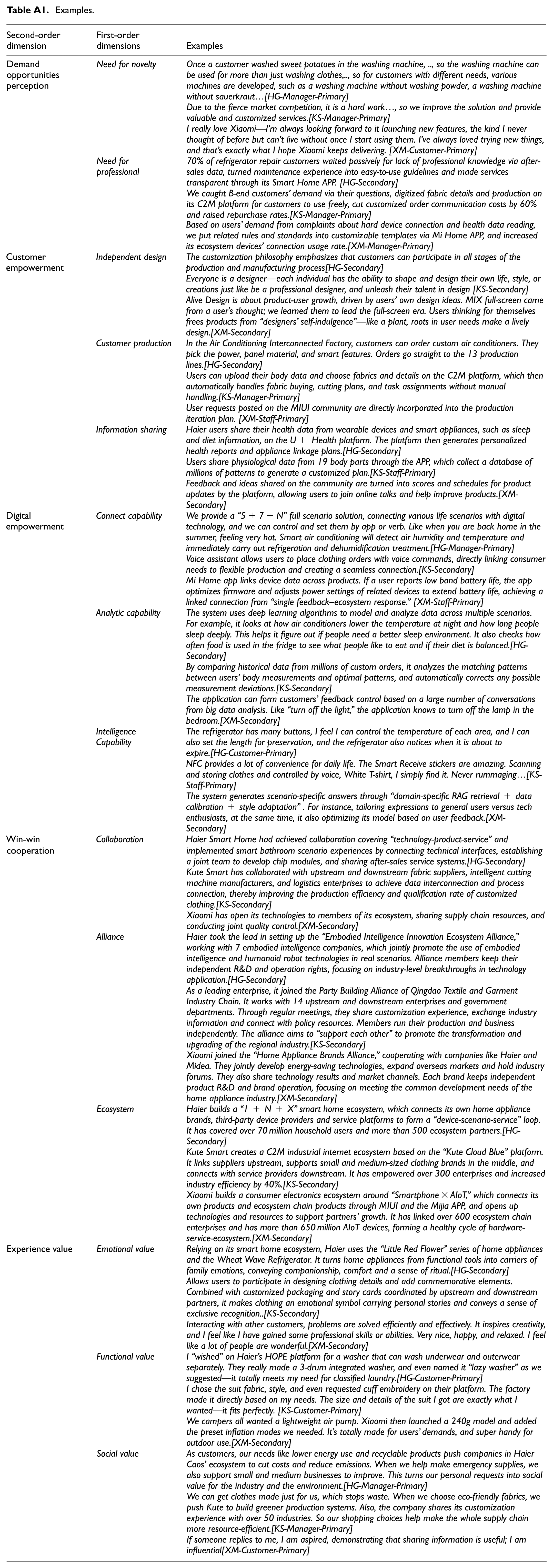
A thematic method was employed in this study to analyze CDL strategically, and the key themes were used to structure the presentation of the findings, which were substantiated by illustrative quotations (Appendix A).
Perception: Demand Opportunities
Enterprises can not only gain opportunities but also “create” them by analyzing environmental cues (Alvarez & Barney, 2007). For example, enterprises can use their customers’ experiences, knowledge, and ideas as opportunities to increase customer value and their competitive advantage (Priem, 2007). Customer demand is central to enterprises’ opportunity identification, which can shape their strategic direction (Priem et al., 2012). CDL can change enterprises’ opportunity identification strategy from conducting reactive market research to proactively sensing the latent heterogeneous needs of consumers, embedded in their daily practices (Hunt & Madhavaram, 2020). Instead of asking consumers “What do you need?” enterprises can determine their customers’ value creation potential by observing their unconventional behavior.
A manifestation of an enterprise’s proactive sensing is its recognition of customers’need for novelty, which emphasizes their preference for novel, distinct, and customized products and services over traditional ones (Da Silveira et al., 2001). The use of the traditional production-driven sales paradigm ended with the advent of the digital era. Over time, homogeneous products and services will not be able to satisfy the varied and individualized needs of consumers, which is evident in the three case study companies. For example, HG’s after-sales system captured a customer’s unconventional use of their washing machine to clean sweet potatoes, and instead of discouraging the “misuse,” HG recognized the latent demand for appliances for washing vegetables and developed a unique solution. Similarly, KS identifies opportunities for customization and transforms standardized products into unique customized services. Meanwhile, XM’s customers actively define their novelty expectations, which have reversed the company’s traditional firm-driven innovation logic, as exemplified by the following quote: “I always look forward to new features I never thought of before but can’t live without once I start using them.”
Besides novelty, customers demonstrate a proactive need for professional support to attain their goals (Heinonen et al., 2013). In contrast to competitor-dominant logic, CDL centers around customers and can enable them to control the type and content of the professional support they will receive, rather than merely passively accept the standardized professional services provided by enterprises. Such expertise democratization can be observed in the three firms. Specifically, HG observed that 70% of its refrigerator repair customers wait passively owing to their lack of professional knowledge. Thus, through its Smart Home app, HG converted its maintenance expertise into accessible guidelines. Meanwhile, to enable customers to navigate the customization process independently, KS digitized fabric details and production processes on its C2M platform. Furthermore, XM substantially increased ecosystem device connection rates by addressing user complaints about “hard device connection and health data reading” by embedding customizable modules into its Mi Home app.
Process: Customer Empowerment
Consumers have evolved from passive users of products and services to active participants in value creation in the intense competitive landscape. Customer empowerment emphasizes consumers’ enhanced control, decision-making awareness, and freedom (S. Nambisan & Baron, 2007). Moreover, customer empowerment can enable consumers to autonomously convert their knowledge and ideas into novel products/services, processes, and systems. By using company-provided platforms and resources, customers can create value through voluntary, autonomous actions. Customer empowerment can be divided into three dimensions: independent design, customer production, and information sharing.
In terms of independent design, customer empowerment can allow customers to combine operational objects and available resources to create their desired products without professional intermediaries, which is exemplified by the KS philosophy: “Everyone is a designer—each individual has the ability to shape and design their own life, style, or creations just like a professional designer.” XM operationalized the principle through its “Alive Design”: “MIX full-screen came from a user’s thoughts; we learned from users to lead the full-screen era.”
By crossing production–consumption boundaries in customer production, customer empowerment can enable customers to convert their design ideas into tangible products through production, processing, or assembly, which is exemplified by HG’s interconnected air conditioning factory. HG allows customers to customize their air conditioner by selecting its power input/output, materials, and smart features, with orders being serviced directly by 13 production lines. KS extends the model through full automation, which involves the platform autonomously handling the fabric procurement, cutting, and task assignment after the customer uploads their body measurement information and preferences on the app. Meanwhile, to ensure continuous cocreation, XM incorporates users’ requests from its MIUI community directly into its production iterations.
Customers can amplify the value creation process by sharing information with relevant stakeholders through digital and physical channels. For instance, HG’s U+ Health platform enables users to share data from their wearable devices and appliances to generate personalized health reports and device linkage plans. Similarly, KS provides customers with a data-sharing feature to “…share physiological data from 19 body parts through the app, collecting millions of patterns to generate customized plans.” XM converts community feedback and ideas into scores and product update schedules and allows users to participate in online discussions.
Process: Digital Empowerment
The previous section shows that customers are increasingly seeking autonomy from enterprises to create their own products and services. People have an intrinsic need to be empowered, that is, to be able to affect and control their surroundings and be self-determined (Alshibly & Chiong, 2015). As operant resources, customers typically have the ability and the necessary knowledge and skills to interact independently with business entities (Vargo & Lush, 2004). Some businesses have recognized such changes and relinquished their control to assume the role of a value facilitator to empower their customers. Digital technology (e.g., IoT, artificial intelligence, and apps) can empower customers by effectively mobilizing their efforts and enabling them to impact their environment, solve problems, and accomplish tasks. Technology can empower customers through three types of digital capabilities, namely, connection capability, analytic capability, and intelligence capability.
First, a technology’s connection capability can facilitate the construction of highly interactive systems that can link digital products through wireless communication networks. Seamless device-to-device communication can serve as the foundation of full-scenario solutions, which is exemplified by the three case study companies. Specifically, HG’s “5 + 7 + N full scenario solution” integrates various life scenarios through digital technology; KS’s voice assistant allows users to place orders by using voice commands, thereby linking consumers’ needs with flexible production; and XM’s Mi Home app demonstrates excellent ecosystem-level responsiveness. According to a company staff, “If a user reports low band battery life, the app optimizes the firmware and adjusts the power settings of the related devices to extend the battery life, achieving a linked connection from single feedback–ecosystem response.”
Second, a technology’s analytic capability can enable the conversion of raw data into actionable operational instructions. Manufacturing firms can use networked data streams to effectively understand their customers and provide them with customized scenarios that are aligned with their habits and preferences. The three research enterprises use such capability effectively. Specifically, HG models and analyzes data across multiple scenarios by using deep learning algorithms, KS analyzes millions of custom orders to match body measurements by using optimal patterns and auto-correcting deviations, and XM forms customer feedback control loops by conducting big data analysis.
Third, a technology’s intelligence capability can enable complex components to perceive and capture information with minimal artificial intervention, such as digital interfaces, embedded sensors, and iterative customer interactions. Beyond automation, intelligence capability extends to the creation of new possibilities through sustained engagement. HG customers described refrigerators in which “I can control the temperature of each area and set the preservation length, and the refrigerator notices when food is about to expire.” KS’s NFC Smart Receive stickers allow voice-controlled scanning and storage, and XM differentiates general users from tech enthusiasts and generates scenario-specific answers through domain-specific Retrieval-Augmented Generations, data calibration, and style adaptation and refines such answers through feedback.
Process: Win–Win Cooperation
Under CDL, value creation relies on the collaborative synergy of all the involved stakeholders, rather than a single unit to drive the isolated process (Eisenmann, 2008). Enterprises can formulate joint responses to complex and diversified customer problems and realize mutual benefits through multiparty cooperation. Moreover, enterprises that engage in win–win cooperation will proactively seek partners with which to share their resources to develop new products/services and solutions (Colm et al., 2017).
First, collaboration involves resource sharing and cooperation to attain set goals. HG engages in ecosystem collaboration to integrate technology, products, and services for smart home delivery; KS partners with different companies across its value chain to enable data-driven process integration to improve its efficiency and quality; and XM gives its ecosystem partners access to its technology to share supply chain resources and engage in joint quality control.
Second, alliance focuses on the integration and complementation of external resources beyond an enterprise’s boundaries. Specifically, HG united seven companies, which retained their R&D and operational independence, to achieve industry-level breakthroughs and lead the Embodied Intelligence Innovation Ecosystem Alliance; KS formed industry alliances and partnerships with other businesses and government agencies to share expertise and policy resources while maintaining its operational independence; and XM partnered with industry leaders to codevelop energy-saving technology, expand overseas, and share R&D outcomes and channels.
Third, an ecosystem is an interconnected network of multiple interdependent actors. With regard to the ecosystem of the three sample enterprises, HG built a “1 + N + X smart home ecosystem” that connects appliance brands, third-party device providers, and service platforms to form a closed loop, and KS created a C2M industrial Internet ecosystem through its digital platform by linking upstream suppliers, midstream clothing brands, and downstream service providers, thereby empowering over 300 enterprises and improving their industry efficiency by 40%. Meanwhile, XM developed an electronics consumer ecosystem by connecting over 600 ecosystem partners and 650 million Artificial Intelligence of Things devices, thereby forming a sustainable hardware–service–ecosystem cycle.
Outcome: Experiential Value
Under CDL, value can be created subjectively from personal experiences and social contexts (Heinonen & Strandvik, 2015) and changes from value-in-use to value-in-context, which involves customers experiencing and perceiving value based on daily life experiences (Tynan et al., 2014).
Emotional value is central to such experiences, which is related to hedonic pursuits connected with feelings and emotions (Jang et al., 2019; Park & Ha, 2016), such as self-actualization, sense of accomplishment, and pride. Customers have become highly concerned about how shared information or products can change their self-identity, which is evident in the three case study companies. Specifically, HG transforms appliances from utility products into symbols of connection that can offer companionship and comfort and evoke a sense of shared ritual. KS enables users to cocreate clothing with sentimental value and transform garments into personal narratives. Interactions in the XM community inspire creativity, with members reporting professional skills improvement and a sense of fulfillment: “I feel capable, happy, and relaxed, surrounded by wonderful people.”
Emotional value is related to identity and experience, whereas functional value is related to rationality and tasks and can serve as an instrumental foundation (Hsiao et al., 2016). When standard products fail to meet customers’ unique expectations, they may constrain customers and prompt them to seek customized solutions. According to an HG customer, “I wished on Haier’s HOPE platform for a washer that handles underwear and outerwear separately. They built a three-drum integrated model and even named it ‘lazy washer,’ as we suggested. It perfectly meets my classified laundry needs.” Similarly, a KS customer shared, “I selected the fabric, style, and requested cuff embroidery on their platform. The factory produced it directly to my specifications; the fit and details are exactly right.” XM also demonstrates such functional precision, with a customer affirming that, “It’s entirely built around user needs.” The excerpts indicate that functional value arises from active cocreation that is tailored to individuals’ needs, rather than passive consumption.
Value creation extends beyond individual experiences and utility to the social realm. Social value can be created through customer engagement and interaction with others to form social relationships or gain a sense of belonging. Social value implies that value creation can exert not only individual but also collective impacts. An HG manager shared, “When we help produce emergency supplies, we also support SMEs to improve. This transforms personal requests into social value for industry and environment.” KS has shown how customers’ choices have influenced systemic changes. Specifically, customers observed that customization can reduce waste, “Selecting eco-friendly fabrics pushes greener production, making our supply chain more efficient.” Meanwhile, XM exhibits relational aspects, that is, customers influence others and gain recognition by interacting with the community: “When others respond to my posts, I feel motivated; my information sharing matters; I have influence.”
This study used the theoretical “perception–process–outcome” logic and interpreted CDL as follows (Figure 2): Enterprises first identify demand opportunities by determining customers’ needs and preferences and observing their behavior, then break interaction barriers between consumers and other stakeholders through digital empowerment to create a mutually beneficial cooperative ecosystem characterized by resource sharing and collaborative integration. In other words, enterprises can elicit customers’ subjective awareness of value creation by empowering them to create holistic value from their daily experiences.
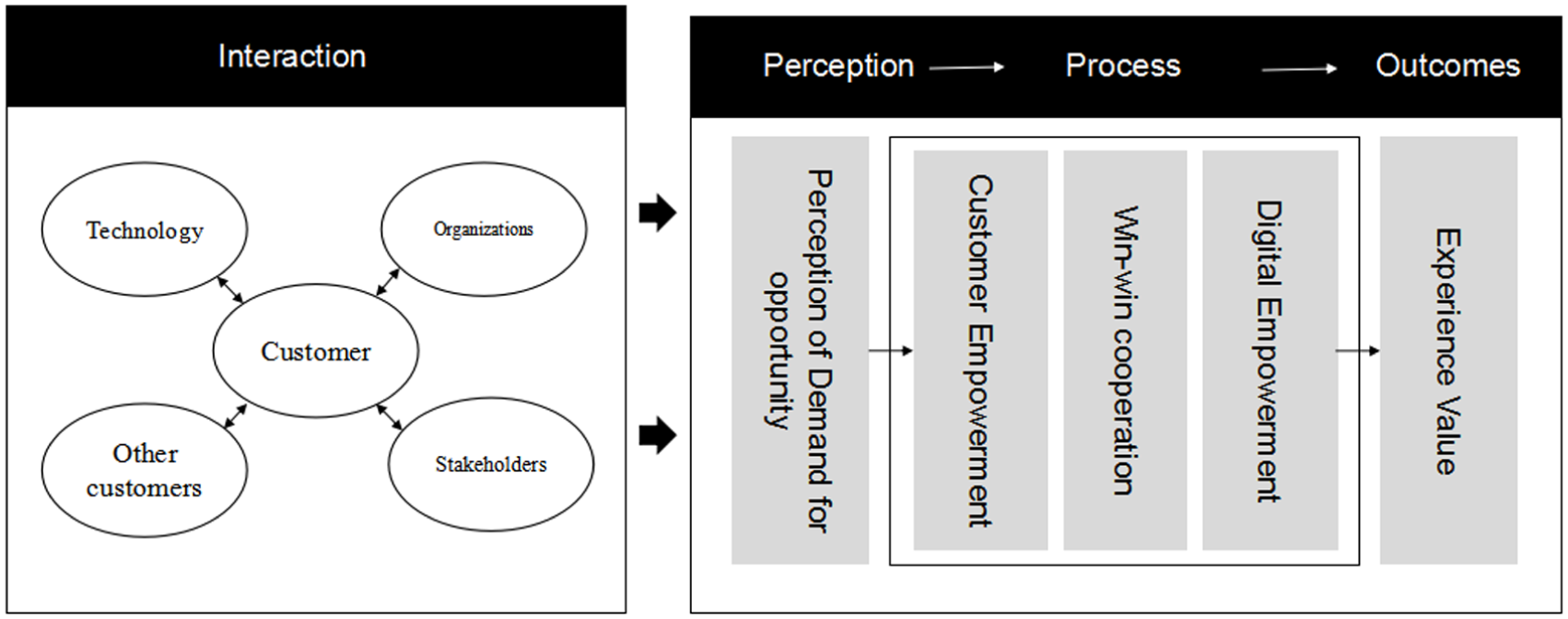
Structural dimensions of customer-dominant logic.
Formal Scale Development
According to Hinkin (1998), measurement indicators having a solid theoretical foundation is the most important condition for scale development. In this study, first, two professors and four doctoral students from related fields were invited to examine the measurement items. Specifically, to ensure the validity of the scale items, the scholars were tasked to determine whether the measurement items conformed to the concept of CDL, the correspondence between the items and the dimensions was reasonable, and the statements were concise. Second, the research team was divided into two groups to further refine the measurement items. The first group was responsible for examining all the items. Specifically, the group retained an item only when at least two of its members consistently classified the item under the same dimension. Accordingly, the group excluded all the items it could not classify under any of the dimensions. The second group was tasked with evaluating the relationships and strength of association between the items and each dimension of CDL. Third, the two groups compared and analyzed their evaluations to identify the most representative items to retain. The two groups discussed, revised, and improved the items with unclear expressions until all objections were addressed to create a revised scale.
Finally, after their evaluation and screening, the 2 groups retained 43 items. In the revised scale, each dimension was measured by at least three items, similar to the initial scale. Velicer and Schinka (2003) recommended the initial number of measurement items for each dimension to be not fewer than twice the number of the final items. Therefore, the initial scale demonstrated excellent content validity and reliability.
Scale Revision
The presurvey data for this study were collected from March to April 2020, with the research objects being Chinese firms that were implementing or had implemented CDL. Middle-to-senior managers, who typically possess adequate knowledge in CDL, were selected to answer the questionnaire to ensure the quality of the survey data. The questionnaires were distributed to the managers through three channels: face to face, e-mail, or online links. A total of 223 questionnaires were distributed. After the invalid questionnaires were excluded, 188 valid questionnaires were retained, for an 84.30% effective recovery rate. The respondents were instructed to select the responses that most accurately reflected their company’s actual operational conditions on a seven-point Likert scale.
Churchill (1979) recommended the purification of the measurement items before factor analysis; otherwise, multidimensional phenomena may arise. With regard to the pretest data, first, the items that may affect the reliability and validity of the scale were excluded. The corrected item–total correlation (CITC) of the revised items, that is, the correlation coefficient between each item and the sum of the other items under the same dimension, was used for the purification. When an item’s CITC value was less than 0.50, the item was deleted. The Cronbach’s α coefficient was recalculated after the item purification.
Second, after the purification of the scale items, exploratory factor analysis (EFA) was conducted on the remaining items, and a KMO test and Bartlett’s test of sphericity were performed to examine the correlations among the variables. If the KMO value is greater than 0.50, and the statistical significance of Bartlett’s test of sphericity is less than 0.05, then the data demonstrate substantial correlation. In addition, a principal component analysis approach was employed to conduct EFA on the remaining items through maximum variance orthogonal rotation. The items with an eigenvalue that was higher than 1 were proposed as the main factors. The items with a factor loading that was lower than 0.50, a cross-loading that was higher than 0.40, and a commonality that was lower than 0.50 were excluded (Hair, 2009; Hair et al., 2019).
Finally, EFA was conducted on the remaining items after the unqualified items were excluded. A total of five factors, with an eigenvalue higher than 1, were obtained, which explained 83.933% of the total variance. The factor loading of each item was above 0.6. All the items were well distributed to the five common factors, which signified that the five common factors could effectively explain the measurement variables. Table 4 shows that the Cronbach’s α coefficients of the five common factors are above .90, which indicate good internal consistency. In summary, the five dimensions of CDL were retained after the reliability analysis and EFA, and the number of the measurement items was reduced from 43 to 21 (Appendix B).
Exploratory Factor Analysis and Reliability Values.

Formal Research and Scale Development
Formal data collection was conducted from November 2021 to January 2022, and the revised questionnaires were distributed to the firm representatives either directly or through industry associations to collect the data and increase the response return rate. Specifically, 700 questionnaires were distributed to middle-to-senior enterprise managers, and the invalid ones were excluded based on three screening criteria: the seriousness of the completion, the consistency of the response to the “trap question,” and the absence of unanswered items, multiple choices for the single-choice questions, or omissions. A total of 486 valid questionnaires were retained, for a recovery rate of 81%. According to Nunnally and Bernstein (1994), the effective sample size should be at least five times the number of the measurement items; hence, the sample size of this study meets the requirement.
With regard to the industry type, among all the industries, the manufacturing industry accounted for 26.5%, the garments and textile industry accounted for 24.7%, the construction industry accounted for 20.6%, the food industry accounted for 14.2%, and other industries accounted for 14%. For the age of the enterprises, among the sample companies, those with an age of 1 to 5 years accounted for 12%, those with an age of 6 to 10 years accounted for 26.1%, those with an age of 11 to 15 years accounted for 39.3%, those with an age of 16 to 20 years accounted for 18.1%, and those with an age of over 20 years accounted for 4.5%. In terms of the company size, among the sample enterprises, the large enterprises accounted for 15%, the medium-sized enterprises accounted for 40.1%, and the small enterprises accounted for 44.9%. The basic demographic information of the sample indicated that most of the enterprises were SMEs from the manufacturing and garments and textile industries. Consistent with the research theme, such enterprises typically exhibit flexible market responsiveness, focus on internal resource reconstruction and external resource utilization to adapt effectively to market changes, and emphasize CDL.
AMOS 24.0 was used in this study to construct the common variance factor, and all the items were loaded on the factor to test for homology (Thakkar, 2020). Table 5 presents the results of the nested model, and among the models, the five-factor model (M1) demonstrated the best fit (χ2/df = 2.872, RMSEA = 0.073, NFI = 0.921, TLI = 0.947, and CFI = 0.955). No significant improvement was observed, which signified the absence of a serious homology variance problem in the measurement (Harrison, 2013). Table 6 lists the results of the overall reliability of the scale and the reliability of the latent variables through the use of Cronbach’s α, AVE, and CR. Specifically, the Cronbach’s α of each subdimension was between 0.928 and 0.951, which exceeds 0.9; hence, the revised measurement scale demonstrated satisfactory measurement reliability. All the standardized factor loadings were higher than 0.7 (p < .001), and all the CR values were between 0.930 and 0.953, which are higher than 0.70. In addition, all the AVE values were above the acceptable value of 0.50, and the square root of the AVE values was higher than the correlation coefficient of the other variables (Table 7). The findings signified the satisfactory convergence limit and the discriminant validity of the developed scale.
Nested Model.

Results for Reliability and Validity.
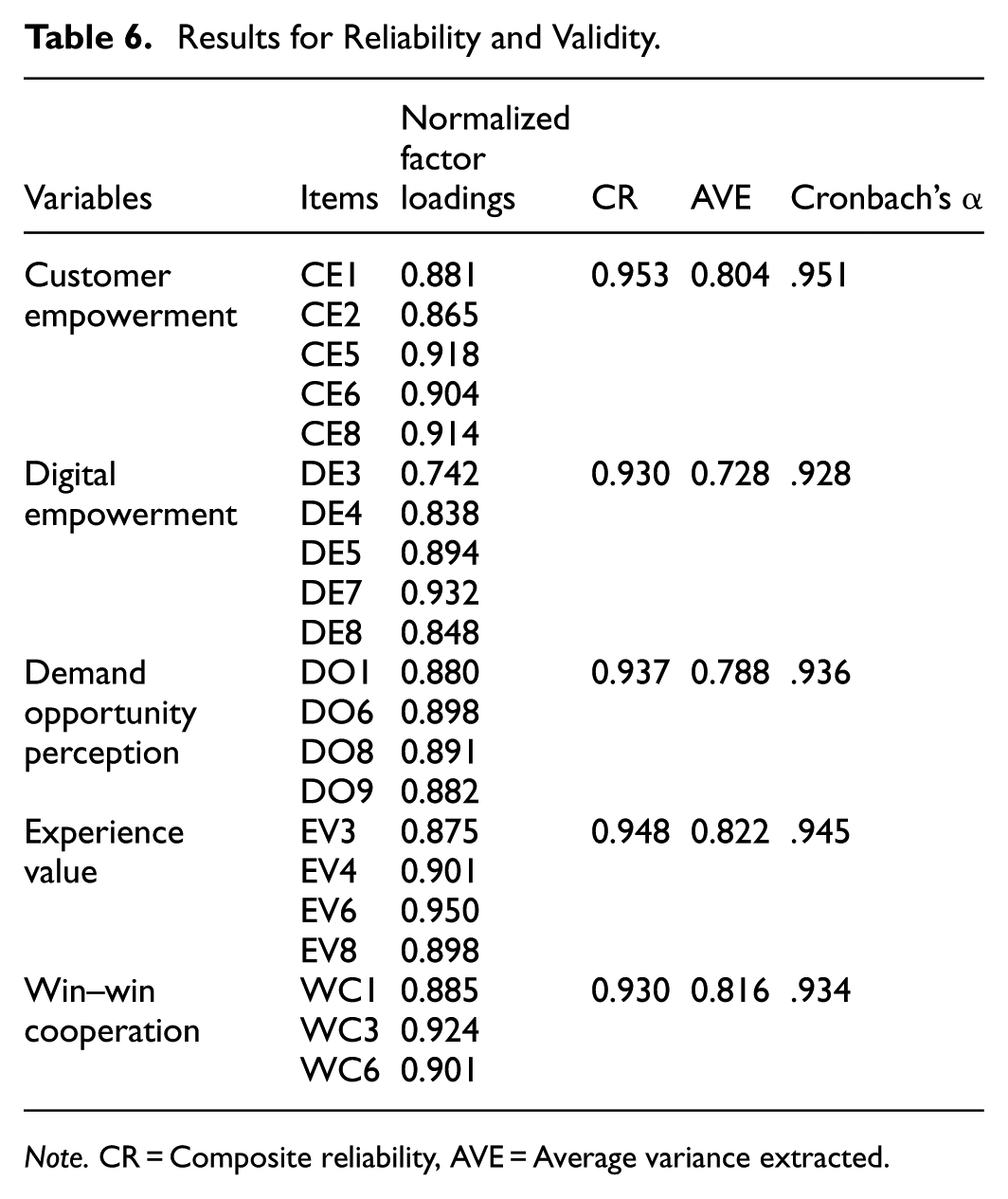
Note. CR = Composite reliability, AVE = Average variance extracted.
Results for Discriminant Validity.

Note. N = 486, *p < .05, **p < .01, ***p < .001, The bold values are the square root of AVE.
Discussion
The multidimensional CDL mainly involves demand opportunity perception, customer empowerment, digital empowerment, experiential value creation, and win–win cooperation. Under the DBV, demand opportunity perception indicates a change in the focus of enterprises from internal to external aspects, which can guide them in exploring the creation of new value in demand markets (Timmons & Spinelli, 2009). Heinonen and Strandvik (2015) observed that companies that adopt CDL employ customer-centric approaches and base their strategic choices and decisions on their interpretation of customers’ needs and identification of business opportunities, which can create value. Combs and Ketchen (1999) defined corporate strategic behavior as the process through which enterprises leverage strategic opportunities to align their actions with market demands. Opportunity identification is typically the starting point of enterprise transformation. Enterprises can develop a novel value logic by gaining in-depth insights into consumers’ (potential) needs, which can ensure the alignment between the proposed value and consumers’ requirements. The continuous evolution of consumers’ needs can drive enterprises’ customer value proposition and adjustment of their business logic to create new value. In the process, demand opportunities can set the direction of the CDL strategy, and experiential value, influenced by the context, can facilitate its transition from ambiguity to clarity. Enterprises can use demand opportunities to anchor themselves in specific contexts to determine customers’ needs and potential demands, which can lay the groundwork for the upgrading of experiential models from standardization to contextualization. Meanwhile, experiential value is a CDL outcome. According to Lusch et al. (2016), value can be created in specific contexts, and firms can accurately match their needs and value only by embedding themselves into customers’ life spheres. Furthermore, experiential value is not subjectively defined by enterprises but created by customers in specific contexts through their perception, which highlights the impact of contextual value on perception of experience.
Moreover, the driver of enterprises’ competitiveness has shifted from the traditional “product technology barrier” to “customer value response capability” because of the complex and volatile market environment. Under the RBV, CDL relies on enterprises’ adequate resource support. That is, enterprises can create new value continuously and maintain their long-term competitive advantage through resource integration and allocation. The process will require enterprises to form deep and intimate relationships with customers and cross traditional supply–demand boundaries through customer empowerment (Kaplan & Haenlein, 2010). Although enterprises can use digital technology to explore multiple business scenarios, they should not rely solely on technological iteration and upgrading to ensure their CDL implementation. Enterprises must improve the demand adaptation capability of digital technology, such as the IoT, human–computer interaction, and intelligent learning, in diverse scenarios to construct an ideal customer value ecosystem (Lipkin & Heinonen, 2022) with “enterprise–customer–partner” links. Such an ecosystem can enable enterprises to change from using firm-dominant logic to employing CDL and shape new value creation and capture in symbiotic contexts with different stakeholders.
Conclusion and Implications
This study conceptualized CDL, which consists of five main dimensions, and developed a measurement scale by conducting case analysis and empirical research. The dimensions can provide enterprises with a novel perspective for understanding and implementing CDL and instructions on how to create and capture value in the digital age. The results demonstrated that CDL can help enterprises effectively adapt to market changes, satisfy customers’ personalized needs, and gain a competitive advantage in the fiercely competitive market. In addition, this study emphasized the need for enterprises to comprehensively understand customers’ needs, utilize digital technology to support customer value creation, create mutually beneficial cooperative relationships, and prioritize customers’ experiences. The results can support enterprises in designing digital strategies for transformation and offer new directions for future research.
In terms of theoretical implications, previous studies typically emphasized the perspective of providers, particularly SDL, which focuses on value-in-use (Hunt & Madhavaram, 2020). For instance, Vargo and Lusch (2014b) argued that CDL is a form of SDL and lacks novel theoretical contributions. However, the rapid development of technology and the dynamism and diversity of customers’ needs advanced CDL as a distinct and novel value creation strategy. Although CDL has garnered considerable attention from marketing scholars (Medberg & Heinonen, 2014; Mickelsson, 2013), it has yet to be explored comprehensively within the strategic domain. This study used marketing and strategic perspectives to discuss CDL and advance its theoretical conceptualization, which can serve as an alternative to competitor-dominant logic. Furthermore, this study answered the call for an empirical exploration of CDL (Heinonen & Strandvik, 2018) and revealed how a CDL strategy can be designed by integrating the DBV and RBV and developing a CDL measurement tool. The impact of customers’ needs and the type of value sought by customers must be clarified to improve enterprises’ value creation. In creating value, many firms over-rely on resource-driven paradigms and neglect the role of consumers in value creation and thus encounter competitive dilemmas. The essence of CDL is the prioritization of consumers and the recognition of their evolving needs and the role they play in guiding corporate strategies. The core proposition of CDL is the creation of multidimensional or high innovative value for customers, which can enable enterprises to overcome competitive dilemmas and sustain their long-term competitive advantage. Moreover, the formation of CDL will require adequate corporate resource support. Under the RBV, digital technology can break information barriers between enterprises, consumers, and other stakeholders and facilitate customer value proposition. Digital technology can also facilitate information sharing between suppliers and distributors through digital platforms for precise resource matching and integration cost reduction. This study systematically determined the internal mechanisms of CDL and thus contributes two key insights to the dominant logic transformation literature. First, this study supplements the theoretical framework of demand–resource synergy and thus addresses the limitations of single-resource perspectives. Second, this study elucidates the role of digital technology in logic transformation (Seppänen et al., 2017) and hence can provide effective guidance for enterprises.
In terms of managerial implications, this study emphasized the need for enterprises to adopt CDL for effective management. Although focusing on customers will enable enterprises to survive and thrive in dynamic environments, applying the practice to actual operations would be challenging, because enterprises typically prioritize shareholders’ goals over those of customers. Therefore, managers should be aware of customers’ contexts, such as their motives and behavior, activities, idiosyncratic configurations, and value creation. In addition, CDL relocates value creation from service providers’ spheres to customers’ life spheres, in which their value formation would not be visible to service organizations (Medberg & Heinonen, 2014). In other words, enterprises typically cannot directly embed themselves into customers’ spheres. This study showed that customers strive to acquire knowledge and hone their skills; thus, managers can help customers achieve such improvements by supporting their learning. Enterprises do not have sole ownership of intellectual property. Customers can also own such property, which can enhance their experience and increase the value of products/services. Consumers’ interaction with smart objects and positive hedonic, cognitive, social, and economic experiences can influence their life goal setting (Roy et al., 2019). For example, Hoffman and Novak (2018) observed that consumers can gain self-extension/expansion experience from smart objects. Hence, managers should recognize the role of digital technology in customers’ value creation, and enterprises can design imaginative product application scenarios to increase their opportunities to embed themselves into customers’ lives. Furthermore, customers vary, from a single unit to a collective entity; therefore, this study examined multiple actors, such as service providers, competitors, customers, friends, and families. Previous studies classified the main actors under categories such as customers and service providers and service-related actors under categories such as distributors, suppliers, other customers, families, and friends (Gonçalves et al., 2020; Lipkin & Heinonen, 2022). Managers can develop a customer ecosystem to explore the characteristics of different actors and determine the role of consumers to understand how value is created in the social environment through their personal perception (Helkkula et al., 2012). In their customer ecosystem, enterprises should focus on their main customers and other customers and consider the relationships between customers and other customers, between customers and objects, between customers and (other) service providers, and between customers and other individuals.
Limitations and Future Research
Despite its contributions, this study has several limitations. First, this study employed a mixed-methods approach to advance the theoretical conceptualization of CDL and develop a measurement scale to address the limitations of previous studies and offer methodological support for the field. However, the use of different samples and statistical methods may have restricted the validation of the reliability and validity of the scale. Specifically, the data used in this study were the respondents’ subjective perceptions and cross-sectional data from a specific Chinese context, which may have limited the generalizability and dynamism of the results and introduced response bias. Hence, future studies should observe the evolution of CDL in practice, examine new cases, and employ different disciplinary perspectives to increase the accuracy and applicability of the findings. Second, industry-specific differences may give rise to distinct CDL cognition. For example, manufacturing and service industry customers may exhibit different characteristics, and new formation pathways may emerge as practices evolve, which will warrant further investigation. Therefore, future studies should use multiple case studies across industries to explore the emerging formation pathways. Third, the relationships among CDL-related variables, CDL, and its outcomes should be explored comprehensively to expand the theoretical framework. Finally, future studies can further deepen the research by contributing to the growing CDL literature.
Footnotes
Appendix A
Examples.
| Second-order dimension | First-order dimensions | Examples |
|---|---|---|
| Demand opportunities perception | Need for novelty | Once a customer washed sweet potatoes in the washing machine, .., so the washing machine can be used for more than just washing clothes,.., so for customers with different needs, various machines are developed, such as a washing machine without washing powder, a washing machine without sauerkraut…[HG-Manager-Primary] |
| Due to the fierce market competition, it is a hard work…, so we improve the solution and provide valuable and customized services.[KS-Manager-Primary] | ||
| I really love Xiaomi—I’m always looking forward to it launching new features, the kind I never thought of before but can’t live without once I start using them. I’ve always loved trying new things, and that’s exactly what I hope Xiaomi keeps delivering. [XM-Customer-Primary] | ||
| Need for professional | 70% of refrigerator repair customers waited passively for lack of professional knowledge via after-sales data, turned maintenance experience into easy-to-use guidelines and made services transparent through its Smart Home APP. [HG-Secondary] | |
| We caught B-end customers’ demand via their questions, digitized fabric details and production on its C2M platform for customers to use freely, cut customized order communication costs by 60% and raised repurchase rates.[KS-Manager-Primary] | ||
| Based on users’ demand from complaints about hard device connection and health data reading, we put related rules and standards into customizable templates via Mi Home APP, and increased its ecosystem devices’ connection usage rate.[XM-Manager-Primary] | ||
| Customer empowerment | Independent design | The customization philosophy emphasizes that customers can participate in all stages of the production and manufacturing process[HG-Secondary] |
| Everyone is a designer—each individual has the ability to shape and design their own life, style, or creations just like be a professional designer, and unleash their talent in design [KS-Secondary] | ||
| Alive Design is about product-user growth, driven by users’ own design ideas. MIX full-screen came from a user’s thought; we learned them to lead the full-screen era. Users thinking for themselves frees products from “designers’ self-indulgence”—like a plant, roots in user needs make a lively design.[XM-Secondary] | ||
| Customer production | In the Air Conditioning Interconnected Factory, customers can order custom air conditioners. They pick the power, panel material, and smart features. Orders go straight to the 13 production lines.[HG-Secondary] | |
| Users can upload their body data and choose fabrics and details on the C2M platform, which then automatically handles fabric buying, cutting plans, and task assignments without manual handling.[KS-Manager-Primary] | ||
| User requests posted on the MIUI community are directly incorporated into the production iteration plan. [XM-Staff-Primary] | ||
| Information sharing | Haier users share their health data from wearable devices and smart appliances, such as sleep and diet information, on the U+ Health platform. The platform then generates personalized health reports and appliance linkage plans.[HG-Secondary] | |
| Users share physiological data from 19 body parts through the APP, which collect a database of millions of patterns to generate a customized plan.[KS-Staff-Primary] | ||
| Feedback and ideas shared on the community are turned into scores and schedules for product updates by the platform, allowing users to join online talks and help improve products.[XM-Secondary] | ||
| Digital empowerment | Connect capability | We provide a “5+7+N” full scenario solution, connecting various life scenarios with digital technology, and we can control and set them by app or verb. Like when you are back home in the summer, feeling very hot. Smart air conditioning will detect air humidity and temperature and immediately carry out refrigeration and dehumidification treatment.[HG-Manager-Primary] |
| Voice assistant allows users to place clothing orders with voice commands, directly linking consumer needs to flexible production and creating a seamless connection.[KS-Secondary] | ||
| Mi Home app links device data across products. If a user reports low band battery life, the app optimizes firmware and adjusts power settings of related devices to extend battery life, achieving a linked connection from “single feedback–ecosystem response.” [XM-Staff-Primary] | ||
| Analytic capability | The system uses deep learning algorithms to model and analyze data across multiple scenarios. For example, it looks at how air conditioners lower the temperature at night and how long people sleep deeply. This helps it figure out if people need a better sleep environment. It also checks how often food is used in the fridge to see what people like to eat and if their diet is balanced.[HG-Secondary] | |
| By comparing historical data from millions of custom orders, it analyzes the matching patterns between users’ body measurements and optimal patterns, and automatically corrects any possible measurement deviations.[KS-Secondary] | ||
| The application can form customers’ feedback control based on a large number of conversations from big data analysis. Like “turn off the light,” the application knows to turn off the lamp in the bedroom.[XM-Secondary] | ||
| Intelligence Capability | The refrigerator has many buttons, I feel I can control the temperature of each area, and I can also set the length for preservation, and the refrigerator also notices when it is about to expire.[HG-Customer-Primary] | |
| NFC provides a lot of convenience for daily life. The Smart Receive stickers are amazing. Scanning and storing clothes and controlled by voice, White T-shirt, I simply find it. Never rummaging…[KS-Staff-Primary] | ||
| The system generates scenario-specific answers through “domain-specific RAG retrieval + data calibration + style adaptation” . For instance, tailoring expressions to general users versus tech enthusiasts, at the same time, it also optimizing its model based on user feedback.[XM-Secondary] | ||
| Win-win cooperation | Collaboration | Haier Smart Home had achieved collaboration covering “technology-product-service” and implemented smart bathroom scenario experiences by connecting technical interfaces, establishing a joint team to develop chip modules, and sharing after-sales service systems.[HG-Secondary] |
| Kute Smart has collaborated with upstream and downstream fabric suppliers, intelligent cutting machine manufacturers, and logistics enterprises to achieve data interconnection and process connection, thereby improving the production efficiency and qualification rate of customized clothing.[KS-Secondary] | ||
| Xiaomi has open its technologies to members of its ecosystem, sharing supply chain resources, and conducting joint quality control.[XM-Secondary] | ||
| Alliance | Haier took the lead in setting up the “Embodied Intelligence Innovation Ecosystem Alliance,” working with 7 embodied intelligence companies, which jointly promote the use of embodied intelligence and humanoid robot technologies in real scenarios. Alliance members keep their independent R&D and operation rights, focusing on industry-level breakthroughs in technology application.[HG-Secondary] | |
| As a leading enterprise, it joined the Party Building Alliance of Qingdao Textile and Garment Industry Chain. It works with 14 upstream and downstream enterprises and government departments. Through regular meetings, they share customization experience, exchange industry information and connect with policy resources. Members run their production and business independently. The alliance aims to “support each other” to promote the transformation and upgrading of the regional industry.[KS-Secondary] | ||
| Xiaomi joined the “Home Appliance Brands Alliance,” cooperating with companies like Haier and Midea. They jointly develop energy-saving technologies, expand overseas markets and hold industry forums. They also share technology results and market channels. Each brand keeps independent product R&D and brand operation, focusing on meeting the common development needs of the home appliance industry.[XM-Secondary] | ||
| Ecosystem | Haier builds a “1 + N + X” smart home ecosystem, which connects its own home appliance brands, third-party device providers and service platforms to form a “device-scenario-service” loop. It has covered over 70 million household users and more than 500 ecosystem partners.[HG-Secondary] | |
| Kute Smart creates a C2M industrial internet ecosystem based on the “Kute Cloud Blue” platform. It links suppliers upstream, supports small and medium-sized clothing brands in the middle, and connects with service providers downstream. It has empowered over 300 enterprises and increased industry efficiency by 40%.[KS-Secondary] | ||
| Xiaomi builds a consumer electronics ecosystem around “Smartphone × AIoT,” which connects its own products and ecosystem chain products through MIUI and the Mijia APP, and opens up technologies and resources to support partners’ growth. It has linked over 600 ecosystem chain enterprises and has more than 650 million AIoT devices, forming a healthy cycle of hardware-service-ecosystem.[XM-Secondary] | ||
| Experience value | Emotional value | Relying on its smart home ecosystem, Haier uses the “Little Red Flower” series of home appliances and the Wheat Wave Refrigerator. It turns home appliances from functional tools into carriers of family emotions, conveying companionship, comfort and a sense of ritual.[HG-Secondary] |
| Allows users to participate in designing clothing details and add commemorative elements. Combined with customized packaging and story cards coordinated by upstream and downstream partners, it makes clothing an emotional symbol carrying personal stories and conveys a sense of exclusive recognition..[KS-Secondary] | ||
| Interacting with other customers, problems are solved efficiently and effectively. It inspires creativity, and I feel like I have gained some professional skills or abilities. Very nice, happy, and relaxed. I feel like a lot of people are wonderful.[XM-Secondary] | ||
| Functional value | I “wished” on Haier’s HOPE platform for a washer that can wash underwear and outerwear separately. They really made a 3-drum integrated washer, and even named it “lazy washer” as we suggested—it totally meets my need for classified laundry.[HG-Customer-Primary] | |
| I chose the suit fabric, style, and even requested cuff embroidery on their platform. The factory made it directly based on my needs. The size and details of the suit I got are exactly what I wanted—it fits perfectly. [KS-Customer-Primary] | ||
| We campers all wanted a lightweight air pump. Xiaomi then launched a 240g model and added the preset inflation modes we needed. It’s totally made for users’ demands, and super handy for outdoor use.[XM-Secondary] | ||
| Social value | As customers, our needs like lower energy use and recyclable products push companies in Haier Caos’ ecosystem to cut costs and reduce emissions. When we help make emergency supplies, we also support small and medium businesses to improve. This turns our personal requests into social value for the industry and the environment.[HG-Manager-Primary] | |
| We can get clothes made just for us, which stops waste. When we choose eco-friendly fabrics, we push Kute to build greener production systems. Also, the company shares its customization experience with over 50 industries. So our shopping choices help make the whole supply chain more resource-efficient.[KS-Manager-Primary] | ||
| If someone replies to me, I am aspired, demonstrating that sharing information is useful; I am influential[XM-Customer-Primary] |
Appendix B

Ethical Considerations
The author has performed an online self-assessment called Self-assessment for Governance and Ethics (SAGE). This study did not involve any animal as a participant, as guided by the self-assessment. Self-assessment did not bring up any issues for survey research that might affect human participants. The constructs used in the research were adapted from the previous research literature. There was no reason for concern about harm to humans or animals by taking part in this study.The involvement in the research is completely voluntary.
Consent to Participate
The participant has the choice to withdraw from the study at any given moment. All data gathered in this investigation will be maintained with absolute secrecy. Obtaining informed permission is an essential ethical obligation when doing investigation that involves individuals. Obtaining informed authorization is a way for investigators to show their dedication to maintaining the highest standards of ethics in their study methods.
Funding
The authors disclosed receipt of the following financial support for the research, authorship, and/or publication of this article: This project was supported by National Natural Science Foundation of China: “Research on the Formation Mechanism of Sharing Economy Organizations from the Perspective of Peer Production” (72072026).
Declaration of Conflicting Interests
The authors declared no potential conflicts of interest with respect to the research, authorship, and/or publication of this article.
Data Availability Statement
This manuscript data will be made available on reasonable request from the corresponding author.