




Abstract
As higher education continues to expand its reach, it is crucial to recognize students as important stakeholders in the labor market. Their opinions on career choice are significant to serve as references for both employers and education providers. Music students recognize the challenges associated with securing employment and display a strong eagerness to bolster their readiness for future careers. There is a limited amount of empirical research that examines Chinese music students’ perception of career choice in Western China, using demographic information and professional option purpose as variables for variance analysis. This study investigated career decisions among music major students within higher education. Engaging a cohort of 356 music major students representing five universities in Western China, this investigation employed an online survey to uncover students’ perspectives on career choices. The results indicated that income and job security were paramount determinants shaping students’ career choices. In addition, individual factors related to the variables of socioeconomic, societal, geographical, institutional affiliations added another layer of complexity in decision making. The findings could serve as reference for policy makers and institutions in career preparation for music major students.
Plain Language Summary
As more young people go to university, it’s important to remember that students—especially those studying music—are key players in today’s job market. We wanted to learn what matters most to music students in Western China when they choose their future careers. Music graduates face special challenges finding stable, well-paying work. Yet employers and universities need to know what students value so they can tailor training and job opportunities. Until now, very few studies have looked at how Chinese music students in Western China think about their career options—and none have used both background information (like education background or hometown) and professional aims together. We invited 356 music students from five different universities in Western China to take an online questionnaire. We discovered that having a good income and stable employment were the factors that students rated as most important when thinking about their careers. Students also weighed personal and external factors. These factors added extra layers to each student’s decision process. By knowing exactly what drives music students’ career decisions, universities can build better guidance programs, and policymakers can design initiatives (like internships or scholarships) that truly meet students’ needs. In turn, employers can offer roles that attract talented graduates who are well prepared and motivated. Music students in Western China are eager to enter the workforce, but their choices are shaped by both the promise of pay and security and by personal, social, and institutional factors. Tailoring career support to these priorities can help graduates transition more smoothly into fulfilling, sustainable careers in the arts.
Introduction
Although students may enroll in higher education for various purposes, career readiness is becoming increasingly crucial in the constantly evolving academic landscape (Slaughter & Springer, 2015). Music students acknowledge the difficulties of acquiring employment and are keen to enhance their career preparedness (Munnelly, 2020). Graduate employment rates have become a widely recognized metric for assessing the quality of higher education (Tomlinson, 2017). Despite such attention and innovative reforms, scholars have observed an enduring disconnect between higher music education and the practical demands of professional musicianship (Bennett & Bridgstock, 2015; López-Íñiguez & Bennett, 2020).
Employment Situation in the Music Industry
The music industry has experienced an over saturation of job seekers, resulting in a highly competitive job market for aspiring musicians (Ondracek-Peterson, 2020). In addition, the music industry exhibits a higher informal employment and underemployment rates compared to other sectors of the labor market (da Silva Henrique et al., 2022). In the United States, the annual number of students earning music degrees has shown a consistent upward trend, whereas the availability of orchestral job opportunities has experienced a steady decline (Munnelly, 2020). A 2018 survey conducted by the Music Industry Research Association, the Princeton University Survey Research Center, and MusiCares, involving 1,227 musicians, revealed that 61% of respondents considered their income inadequate to meet their living expenses (Zhen, 2022). The employment landscape for the arts sector in the United Kingdom is facing a similar situation. For the majority of people employed in the UK music industry, there is a different reality from the glamour and wealth seen among internationally successful and famous British musicians, a reality characterized by precariousness (Bain, 2024). The job prospects for graduates are relatively uncertain, with the job market characterized by intense competition (Brown, 2007). Recent research has revealed that a significant proportion of musicians in the UK are encountering financial difficulties. Specifically, the study found that 66% of “professional” musicians, who rely solely on their music for income, earn less than £15,600 annually from live music performances (Webster et al., 2018). Fuhr (2015) mentioned that the music industry in the Netherlands faces a similar employment situation. The financial situation of Dutch musicians remains a concern, as indicated by recent data showing that their average gross income is €17,500, and over 50% of musicians earn less than €9,000 per year (Fuhr, 2015).
The attainment of a secure job for musicians is already a topic of debate and challenge (Burland et al., 2023). In the current economy, it is uncommon for most musicians to secure full-time positions in music performance (López-Íñiguez & Bennett, 2020). In Australia, the United States, Europe, and the UK, full-time positions make up only a small percentage of employment opportunities for performing artists (Beeching, 2010; Bennett & Richardson, 2016; Perkins, 2012). For example, data from the Australian Bureau of Statistics (ABS) indicate that the percentage of performing arts workers in Australia who were employed full-time was 22% in 2006 (Cunningham et al., 2010).
Scholars have defined the term “portfolio careers” to characterize the prevailing employment model among graduates of music study programs (Bartlett & Tolmie, 2018), which involves working multiple part-time jobs simultaneously rather than holding a full-time position. According to the Cambridge Dictionary, “portfolio career” refers to the practice of engaging in multiple part-time jobs concurrently, as opposed to pursuing a single full-time occupation (Portfolio Career, 2016). In Europe, according to various statistics, approximately half of musicians who are employed work part-time, and nearly half of them are self-employed (Myers, 2007). In Australia, the employment pathways for performing arts graduates include both wage-earning and freelance positions, which encompass both temporary and full-time employment (Bennett, 2016).
The employment landscape for music graduates in China is characterized by both opportunities and challenges. On one hand, the rapid development of the cultural and creative industries, including music education, performance, production, and digital media, has expanded the job market (H. R. Wang, 2025; Zhang, 2025). An increasing demand for music professionals is evident across diverse sectors, including general education, media production, entertainment industries, and cultural management. (Du & Xu, 2025; Xing & Tian, 2021; Xu, 2019; Zhou, 2020). Nevertheless, the overall quality of employment remains inconsistent. A considerable proportion of graduates encounter challenges such as underemployment, reliance on flexible or freelance arrangements, and a persistent mismatch between curricular preparation and labor market expectations (Xing & Tian, 2021). Employment opportunities are disproportionately concentrated in economically advanced regions, including Beijing, Shanghai, and Guangdong, thereby reinforcing regional disparities and intensifying competition among graduates (H. R. Wang, 2025; Xing & Tian, 2021). The disruptions caused by the COVID-19 pandemic have further accentuated these vulnerabilities, particularly within performance-oriented sectors, resulting in heightened instability, reduced employment rates, and diminished job security (Xing & Tian, 2021).
This regional concentration and uneven employment quality do not occur in isolation; it reflects broader structural imbalances in China’s labor market. It is important to note that the career opportunities available to higher education graduates in China are influenced by the current state of the country’s economy (Chen, 2017; L. G. Wang, 2018). A notable feature of China’s present employment situation is the structural contradiction (F. Wang, 2018). The employment structural contradiction contains “regional structure” contradiction and “competence structure” contradiction (Zeng & Li, 2013). This contradiction is particularly evident in the western regions of China. Since the initiation of the Western Development Strategy, the level of economic development in western China has steadily advanced. However, the issue of unbalanced and insufficient development in the region remains prominent (Zheng & Zhou, 2022). In the “regional structure” contradiction, music graduates prefer to work in economically developed regions or their hometown (Dong, 2020; Y. Wang, 2020). According to Y. Wang’s (2020) survey, the regional employment choices of music graduates reveal that 42% choose to return to their hometowns, 21% choose to work in the region where their university is located, 31% choose to work in economically developed regions, while only 2% and 4% choose to work in western China and other regions, respectively. A study conducted by the Dalian Branch of Shenyang Conservatory of Music found that over 70% of graduates preferred to seek employment in provincial capital cities and coastal cities (Dong, 2020).
Higher Music Education and Employability in China
Higher music education in China is undergoing significant reform to better align with market needs and enhance graduate employability. Traditional curricula often overemphasize theory and performance skills of (Western) classical music while neglecting practical, industry-relevant competencies such as digital music production, marketing, and arts management (H. R. Wang, 2025; Xing & Tian, 2021). There is a recognized need to integrate more experiential learning, industry collaboration, and innovation-oriented training into music programs (H. R. Wang, 2025; Zhang, 2025). Strategies such as increasing practical training, strengthening school-enterprise cooperation, embedding entrepreneurship education, and providing personalized career guidance are proposed to bridge the gap between education and employment (H. R. Wang, 2025; Zhang, 2025). Additionally, institutions are encouraged to adopt a more holistic approach that includes mental readiness, career planning, and lifelong learning skills to prepare students for diverse career paths within and beyond the music industry (H. R. Wang, 2025; Xing & Tian, 2021).
A significant imbalance between labor supply and demand characterizes China’s current employment landscape (F. Wang, 2018). This phenomenon is also prevalent within the music industry and can be attributed to a range of interrelated structural, institutional, and educational factors. The expansion of higher music education driven by educational reforms has significantly increased the number of music institutions, with more than 700 universities now offering music performance programs (Hao & Zhang, 2020). This surge has resulted in a higher number of music graduates each year. However, the growth in supply has outpaced the demand for music professionals in the job market, leading to a mismatch of skills and a lack of employment opportunities for graduates (Dai, 2021; F. Wang, 2018). Moreover, the music training provided by schools lacks opportunities for students to engage with the community and industry (Y. G. Wang & Wang, 2024). This would affect students’ understanding of the market supply and demand in the music industry, as well as their ability to acquire timely and relevant professional skills for employment. Additionally, the “competence structure” contradiction (Zeng & Li, 2013) further reflects the misalignment between educational outcomes and labor market needs.
Systems Theory Framework
The formulation of the Systems Theory Framework (STF) originated from practical and research-driven endeavors (M. McMahon & Patton, 1995; Patton & McMahon, 2006, 2014). Initially, the STF materialized as a context-specific model aimed at comprehending career decision-making processes among adolescents (M. L. McMahon, 1992). Subsequent investigations affirmed the applicability of the systems theory framework to both childhood and adolescent developmental stages, thereby establishing its relevance across varying age groups (M. McMahon et al., 2004). To refine the framework prior to its inaugural publication in 1995, collaborative endeavors involving students and practitioners were undertaken (Patton & McMahon, 2021). Consequently, in 1997, the framework’s introductory exploration of practical applications materialized, as a group of authors scrutinized the implementation of the STF within diverse client groups and contextual settings (Patton & McMahon, 1997).
The STF encompasses a complex interconnection of systems, including the individual system that focuses on intrapersonal factors comprising personality traits, gender, age, abilities, disability, interests, health, belief systems, world-of-work knowledge, sexual orientation, values, ethnicity, and self-concept (M. McMahon & Patton, 1995). The individual system is directly connected to variables such as gender, professional option purpose, and individual factors, which include aspects like abilities, interests, and self-concept. On the other hand, the social system delves into the impact of social interactions, relationships, and societal elements, encompassing family, mentors, media, cultural norms, community groups, workplace environments, peers, and educational institutions (M. McMahon & Patton, 2018). Social system is aligned with variables like social factors, school, and education background, as these are shaped by social networks and institutional contexts. Furthermore, the environmental-societal system encompasses broader contextual impacts including socioeconomic status, political decisions, employment market dynamics, globalization trends, historical developments, and geographic locations (M. McMahon & Patton, 1995). The environmental-societal system is relevant to variables like socioeconomic factors and location, highlighting how external environmental and societal influences affect career decisions.
These systems operate in synergy within the temporal context (M. McMahon & Patton, 1995). The temporal dimension assumes significance as it acknowledges the dynamic nature of career trajectories, considering transitions, developmental stages, and the influence of historical and cultural shifts (Patton & McMahon, 2006). In summary, the STF offers an integrated framework that elucidates the intricate interplay among the individual, social, and environmental-societal systems, providing valuable insights into individuals’ career choices and development within the temporal context (Patton & McMahon, 2021). The present study utilized a partial application of the STF. Specifically, the study focuses on the relevance of three systems within the framework, namely the intrapersonal system, social system, and environmental-societal system. However, the temporal context does not constitute a primary focus in the current investigation.
Within this framework, the independent variables selected in this study (gender, location, school, education background, and professional option purpose) can be conceptually located in different systems. Gender and professional option purpose are embedded in the individual system, as they represent individual attributes and career-related self-concepts. School and education background align with the social system, reflecting the institutional and social contexts that shape students’ career perceptions. Location corresponds to the environmental–societal system, as it captures regional disparities in economic development and employment opportunities (M. McMahon & Patton, 1995). By situating each independent variable within the STF, this study establishes a coherent theoretical rationale for the hypotheses, highlighting how multi-systemic influences collectively shape music students’ career perceptions.
Influential Factors on Students’ Career Choice
Vilhjálmsdóttir and Arnkelsson (2013) and Bubnys and Zydziunaite (2008) have emphasized the importance of career choice and individual career path planning as a conscientious process that significantly affects an individual’s quality of life, future aspirations, and professional self-awareness. Given the competitive and globalized nature of today’s labor market, newly graduated students face challenges of managing their career readiness and ensuring their sustainable career pathways (Donald et al., 2019). However, there is a lack of research on students’ perspectives, which poses challenges in effectively addressing their priorities and expectations (Donald et al., 2019; Jackson, 2015; Tymon, 2013).
Numerous studies have explored the elements shaping students’ career decisions, including financial concerns (Motabari, 1999), pursuit of higher job opportunities and social status, prestige, income (Enayati Novinfar et al., 2013; Portnoi, 2009), personal and indirect interests, expenses related to training, and demographic shifts (Farhadi Rad et al., 2017). Demographic factors include gender, location, education background or school (Abd Majid et al., 2020; Raja’a et al., 2019). In an investigation of influencing factors of career choice, gender exerts a substantial impact on students’ views regarding career choice (Kazi & Akhlaq, 2017; Tong & Gao, 2022). Furthermore, educational background, location, school, and various other demographic factors also shape individual’s perception of choose a career (Ogunyewo et al., 2015; Thephavanh et al., 2023). The previous study investigating the impact of demographic factors on perceptions of entrepreneurship as a career path indicated that location influenced perceived behavioral control (Thephavanh et al., 2023). In a survey of students career choice in different disciplines, education background had significant influence on the students’ career choices (Kazi & Akhlaq, 2017).
Through analyzing the distinctive career decision-making process of undergraduate students in the arts, career development professionals can enhance the quality of services they offer to this particular demographic (Cooley, 2007; Luftig et al., 2003). In addition, students have different motives for selecting a career in music, including their passion for music, belief in their ability to teach music, finding the teaching profession rewarding, and considering education as an integral part of their work (Parkes & Jones, 2012). Factors that influence students’ decisions to embark on a career in music also include influence from parents and teachers, self-satisfaction, confidence in skills, passion, reputation, previous experience, and economic concerns (Jones, 1964). In a multiple regression analysis, scholars found that factors such as self-efficacy, social support, and autonomous motivation have a positive impact on individuals’ career intentions (Z. Wang & Wong, 2022). Moreover, an exploratory study identified commitment to the music profession, perceived self-worth, and confidence in musical performance abilities as intrinsic factors influencing music graduates’ career trajectories toward professional musical pursuits (X. Wang et al., 2024). Besides, Sheriff and Chang (2022) examined various factors influencing students’ considerations in pursuing a professional trajectory in music, which included individual characteristics, socioeconomic conditions, societal influences, and factors related to multicultural and religious contexts.
This study seeks to examine the factors influencing music students’ career choices, focusing on individual, socioeconomic, and societal factors. Individual factors encompass one’s self-concept, abilities, interests, values, and the desire to succeed (Middleton, 2015). Societal factors are associated with learning experiences, peer influence, and public perceptions. In addition, socioeconomic factors, such as social class, job availability, and financial considerations, have a direct impact on one’s career choice (O’Neil et al., 1978). Extant research has widely explored the preference of career choice in music discipline using frequency analysis in China. There are studies discussing the career intentions of Chinese music performance students through the framework of integrated cognitive motivation theory by using multiple regression analysis (Wang & Wong, 2022). However, limited empirical research discussed the Chinese music students’ perceptions of career choice in the western regions of China through the application of variance analysis. The current study aimed to examine how music students perceive their career choice. To achieve the study’s objective, the following research question was formulated: To what extent do demographic and background characteristics influence music students’ perceptions of career choice? (Figure 1).
Aligned with the research objectives and questions, the following hypotheses are proposed:
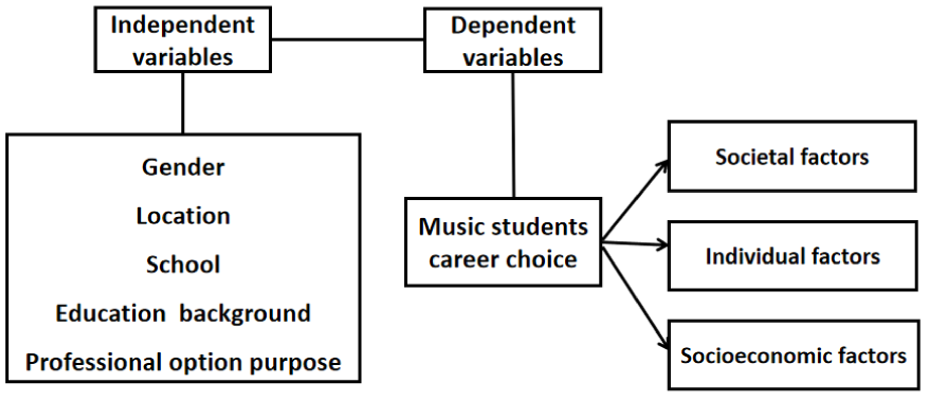
Conceptual framework.
Methodology
This study adopted a quantitative, cross-sectional survey design to investigate the influence of demographic and background characteristics on music students’ career choice perceptions in Western China. A quantitative approach allows the measurement of variables across a relatively large sample and supports statistical comparisons of group differences (Creswell & Creswell, 2017).
Participants
This study aimed to examine the career choices of music students enrolled in higher education institutions specializing in music in Western China. The study sampled institutions from both Normal and Comprehensive Universities. Specifically, the Normal Universities included the School of Music at Shaanxi Normal University (SMSNU) and the Conservatory of Music at Weinan Normal University (CMWNU). The Comprehensive Universities comprised the School of Music at Xi’an University (SMXU), the School of Music at Baoji University (SMBU), and the Music Department at Xi’an Shiyou University (XSUMD). Music students were selected to participate in the study using convenience sampling due to the unavailability of comprehensive and accessible population lists across China (Z. Wang & Wong, 2022). While the practical benefits of convenience sampling enabled prompt data collection (Creswell & Creswell, 2017), it is important to acknowledge its potential limitations. Specifically, convenience sampling may introduce selection bias, as it tends to favor easily accessible participants, which could undermine the representativeness of the sample (Etikan et al., 2016). This limitation raises concerns regarding the generalizability of the findings to the wider population of music students in China, as certain groups or regions may be overrepresented while others are underrepresented, thus affecting the validity of the conclusions drawn from the study. Although the use of convenience sampling entails the risk of selection bias and constrains the generalizability of the results, this study attempted to mitigate such concerns through the strategic selection of five higher education institutions with music programs that are broadly representative of the diverse music curricula offered in Western China. This sampling strategy ensured coverage of normal universities, conservatories, and comprehensive universities, thereby capturing different institutional missions and curricular emphases (Creswell & Creswell, 2017). Although convenience sampling does not fully address concerns related to external validity (Etikan et al., 2016), the inclusion of institutions selected for their representativeness strengthens the contextual relevance of the findings and offers a defensible basis for cautious generalization within the context of higher music education in Western China. The study’s sample size was guided by established sampling tables (Israel, 1992). With reference to a population size of 3,000, a target sample of 353 participants was established. The demographic profile of the sample is summarized in Table 1, with 356 music students ultimately responding to the questionnaire.
Demographic Characteristics of Participants (n = 356).

Source. Authors’ own.
Prior to survey participation, respondents were provided with an online informed consent form describing the study’s purpose, voluntary nature of participation, confidentiality assurances, and data usage. Written consent was obtained electronically before participants could access the questionnaire. All responses were anonymized and accessible only to the research team, thereby ensuring compliance with ethical standards for online survey research. The study design minimized potential risks by avoiding the collection of personally identifiable information, ensuring that participation involved no more than minimal risk. The potential benefits of the research—contributing to support music students’ career preparation—were considered to outweigh the minimal risks involved.
Research Tools Used
An online survey was administered to examine the determinants shaping the career decisions of 356 music students. Existing literature on career choice provides a foundation for crafting the questionnaire items. The questionnaire items were measured on a 5-point Likert scale. The questionnaire involves demographics (gender, location, schools, and education background), professional option purpose, and three instruments (societal factors, individual factors, and socioeconomic factors).
Demographic Factors
Demographic variables (Items Q1–Q4) were incorporated as they have been consistently shown to shape career choice. Gender, location, school type, and educational background are important predictors of students’ career perceptions. Prior studies demonstrate that gender exerts a substantial influence on students’ career views (Kazi & Akhlaq, 2017; Tong & Gao, 2022). Similarly, educational background, institutional type, and regional location affect how students perceive career opportunities and constraints (Ogunyewo et al., 2015; Thephavanh et al., 2023).
Professional Option Purpose
Professional option purpose (Item Q5) was included as an independent variable as students’ underlying motivations for choosing music as a major are closely related to their subsequent career perceptions. Research indicates that intrinsic interest (e.g., “Love for music”) fosters stronger professional identity and persistence, while extrinsic motives (e.g., “To pursue higher education”) may be associated with different career expectations and employability outcomes (Eccles, 2009; X. Wang et al., 2024). Given the unique features of music education in China, examining these diverse option purposes is essential to understanding students’ career orientations.
Societal Factors
Societal factors (Items Q6–Q9, Q12) were measured through items capturing students’ learning experiences, peer influences, and perceptions of public attitudes. Previous research has demonstrated that peers, mentors, and broader social discourses exert significant influence on students’ educational trajectories and career decision-making processes (O’Neil et al., 1978). For instance, one survey item stated, “My peers will affect my career choice.” Within the Systems Theory Framework (STF), these items are situated within the social system, underscoring the centrality of interpersonal relationships and societal expectations in shaping career development (Patton & McMahon, 2014).
Individual Factors
Individual factors (Items Q10, Q11, Q13, and Q14) were constructed to assess students’ self-concept, abilities, interests, values, and aspirations. Such attributes have been consistently identified as central to career decision-making, as they embody personal agency and self-determination (Middleton, 2015). A sample item is: “My career choice is mainly based on my professional interests.” Within the Systems Theory Framework (STF), these items correspond to the individual subsystem, capturing the personal attributes and intrapersonal resources that influence career choices (Patton & McMahon, 2014).
Socioeconomic Factors
Socioeconomic factors (Items Q15–Q19) were measured through items addressing social class, employment opportunities, and financial considerations, all of which exert a direct influence on students’ career intentions (O’Neil et al., 1978). A representative item is: “I base my career choice on income and job security.” Within the Systems Theory Framework (STF), these items align with the environmental-societal system, which encompasses broader economic conditions, labor market dynamics, and contextual forces shaping career trajectories (Patton & McMahon, 2014).
To strengthen the theoretical integration, all measurement were explicitly mapped onto the STF, as shown in Figure 2.

Theoretical framework.
The research involved selecting 36 participants to complete the pilot test of the survey. The pilot study was conducted with participants from a higher music education institution in Hunan Province, whose curriculum was broadly comparable to those of the five target institutions. The sample size exceeded the conventional threshold of 30, which is often regarded as sufficient for pilot testing (Rea & Parker, 2014). The curriculum experienced by the participants reflect the diverse range of music curriculum offered in China, thereby ensuring the appropriateness of the sample for evaluating item clarity and coverage. The pilot study served several purposes: (a) assessing content clarity and comprehensibility to establish content validity, (b) evaluating preliminary reliability through internal consistency estimates, and (c) examining temporal stability using a 1-week test-retest procedure (Deyo et al., 1991). Based on participant feedback, minor wording revisions were made to several items to enhance clarity. Notably, the pilot study did not include demographic information such as gender, educational background, and geographic location. However, previous studies in the literature have incorporated demographic data for statistical analysis (Leath, 2019). In light of this, the current study included a demographic component in the survey to align with established practices in similar research.
Validity and reliability are fundamental constructs in research, serving as key indicators of the extent to which a study’s findings can be deemed credible and dependable by its target audience (Creswell & Clark, 2017). Concerning the survey instrument, content validity was ensured by conducting a review among five experts with dual expertise in music education and survey design. Adhering to standardized content validity assessment frameworks (Yusoff, 2019), experts independently evaluated item relevance using a 4-point Likert-type scale (1 = not relevant, 4 = highly relevant). All scale items attained unanimous expert endorsement (ratings ≥ 3 across all raters), yielding optimal item-level content validity indices (I-CVI = 1.00 per item). This outcome exceeds the conservative threshold of 0.80 recommended for studies employing ≤ 5 raters (Lynn, 1986; Polit et al., 2007). At the instrument level, the scale-content validity index calculated through both universal agreement (S-CVI/UA = 1.00) and the averaging method (S-CVI/Ave = 1.00) confirms the robustness of the instrument, demonstrating full compliance with the stringent threshold of 0.90 mandated for high-stakes educational assessments (Polit & Beck, 2006). This outcome is consistent with the degree of consensus among the five experts, all of whom shared substantial expertise in music education, music performance, and musicology. To enhance methodological transparency, we provide the following Supplemental Materials: (i) anonymized information on expert backgrounds, including academic qualifications, years of professional experience, and research specializations (Supplemental Appendix 1); (ii) the review criteria and content validity scoring framework (Supplemental Appendix 2); and (iii) a detailed summary mapping each expert’s evaluation of the items to their respective I-CVI ratings (Supplemental Appendix 3).
The instrument’s reliability was examined through the test-retest reliability, assessing its consistency across repeated measurements. Test-retest reliability estimates ranging from 0.70 to 0.90 are typically obtained from well-designed standardized achievement exams given at intervals that are not too far apart (Popham, 2000). The intraclass correlation coefficient (ICC) was calculated using a two-way random-effects model with absolute agreement definition [ICC(A,1)]. The analysis demonstrated excellent test-retest reliability for the scale, ICC = 0.88, 95% CI [0.77, 0.94], F(35, 35) = 14.91, p < .001. This indicates a high degree of stability in the scores across the two testing sessions (Koo & Li, 2016). In addition, the pilot study yielded a Cronbach’s alpha value of 0.933, indicating strong internal consistency. Each survey data set was analyzed independently using Statistical Package for the Social Sciences (SPSS) software.
The online questionnaire was distributed via the Wenjuanxing platform in December 2023, with data collection spanning a 1-month period (Baidu Baike, n.d.). To safeguard data quality, the survey incorporated Wenjuanxing’s built-in IP and time restrictions, which are widely adopted measures to reduce the likelihood of duplicate responses in web-based surveys.
Data Analysis
The quantitative data obtained from the survey was analyzed using statistical analysis. Normality was assessed using the Shapiro–Wilk test (p < .001) and skewness/kurtosis indices, which indicated deviations from a normal distribution. Such results are common in large-sample Likert-type data due to test sensitivity (Ghasemi & Zahediasl, 2012). Given the relatively large sample (N = 356), the Central Limit Theorem supports the robustness of parametric tests (Lumley et al., 2002). Initially, one-way ANOVA was applied to examine group differences. When the assumption of homogeneity of variances was violated, Welch’s ANOVA was employed as a robust alternative (Ruxton, 2006). Moreover, Welch’s ANOVA was applied, which is recognized as robust to violations of normality and variance assumptions (Ruxton, 2006). Welch’s ANOVA was applied to analyze the item data, providing a robust approach for comparing group means under unequal variances (Charlin et al., 1998). In contrast to traditional ANOVA, which relies on the assumption of homogeneity of variances across groups (Field, 2013), Welch’s ANOVA accounts for unequal variances, thus yielding more precise and dependable results (Charlin et al., 1998). For comparisons involving binary variables (e.g., gender), independent samples t-tests were conducted. When equality of variances was violated, Welch’s t-test was applied as a robust alternative (Ruxton, 2006). Although Likert-type responses are strictly ordinal, they were treated as approximately interval-scaled for the purpose of group comparison analyses, consistent with conventions in educational and psychological research (Norman, 2010). To verify robustness, supplementary nonparametric Kruskal-Wallis tests were conducted, which yielded results consistent with the Welch’s ANOVAs, thereby reinforcing the reliability of the findings. The significance threshold for all statistical analyses was set at p ≤ .05. Cronbach’s alpha coefficient was utilized to evaluate the internal consistency of the survey responses. In addition, Spearman’s rank-order correlation (ρ) correlation analysis was conducted to explore the interrelationships among ordinal data (Khamis, 2008). It is important to note, however, that correlation analysis alone cannot establish causality. Hence, it is imperative to meticulously contemplate the factors being correlated, ascertain any extraneous variables that may have impacted the correlations, and rely on empirical findings to infer causation rather than solely relying on the correlation coefficients (Schober et al., 2018).
The survey data were processed and analyzed using version 26 of the Statistical Package for the Social Sciences (SPSS) Standard Grad Pack. This software is commonly used in educational research for quantitative data analysis (Muijs, 2010). The analysis specifically centered on music students’ perspectives regarding their career choices.
Results
Perceptions on Career Choice
Table 2 illustrates the findings of the survey examining music students’ perceptions of their career selection. The data revealed that the participants’ mean ratings for income and job security (Q19) were the highest among all 14 survey items (M = 3.89, SD = 0.969) on a 5-point scale. On the other hand, the mean scores for social media (Q9) were the lowest among all 14 survey items (M = 3.19, SD = 1.144) for the 356 participants.
Descriptive Statistics for 14 Survey Items.

Source. Authors’ own.
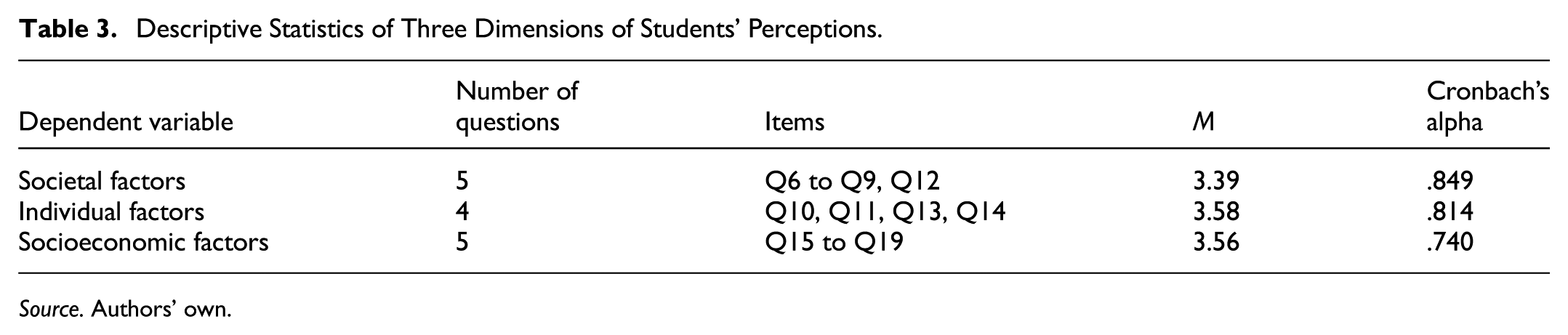
Table 3 presents the findings of the survey examining music students’ perception on career choices. The study aimed to examine the self-evaluations of the participants concerning their career choices across three key aspects. The results reveal that individual factors received the highest mean score (M = 3.58) on a 5-point scale. In contrast, societal factors exhibited the lowest mean score (M = 3.39) among the three evaluated aspects.
Descriptive Statistics of Three Dimensions of Students’ Perceptions.
Source. Authors’ own.
Gender, Education Background, and Professional Option Purpose Difference
Using independent samples t-test, the statistical analysis revealed no significant differences among the 14 items (p > .05) in relation to gender’s impact on the music students’ career choice. As such, the hypothesis was not supported for any of the 14 items.
ANOVA findings indicated that educational background had no statistically significant effect on music students’ career choices across all 14 items (p > .05). The hypothesis was thus not retained for each item. Similarly, the impact of professional optional purpose on music students’ career choice did not differ significantly among the 14 items (p > .05) as per the ANOVA analyses. The hypothesis was rejected for all 14 items.
Location Difference
The analysis of location analysis through Welch’s ANOVA revealed that there were significant differences in location with respect to the item related to developed area (Q16). Specifically, a small effect size was observed between location and Q16 [F(3, 173.891) = 3.870, p < .01, η2 = .032, 1 − β = .826] where homogeneity of variance Levene’s test was significant (p = .030). According to Lakens’ (2013) guidelines (η2 = .01 = small, .06 = medium, .14 = large), this indicates a small practical effect, suggesting that although location differences exist, the actual impact on students’ preferences for developed areas is limited. Table 4 presents the mean score of first-tier cities which was found to be the highest with respect to developed area (Q16). The music students’ career choice related to developed area (Q16) retained the hypothesis. Games-Howell post-hoc analysis for unequal variances indicated that internal differences were only significant between first-tier and fourth-tier (and below) cities, whereby students from first-tier cities significantly preferred to work in developed areas compared to students from fourth-tier cities and below (M = 0.461, p = .006, 95% CI = [0.10, 0.82]). Finally, a robustness check was conducted for Q16 ratings among different locations using Kruskal–Wallis test, which was found to be significant (H(3) = 10.764, p = .013).
Descriptive Analysis of Location.

Source. Authors’ own.
School Difference
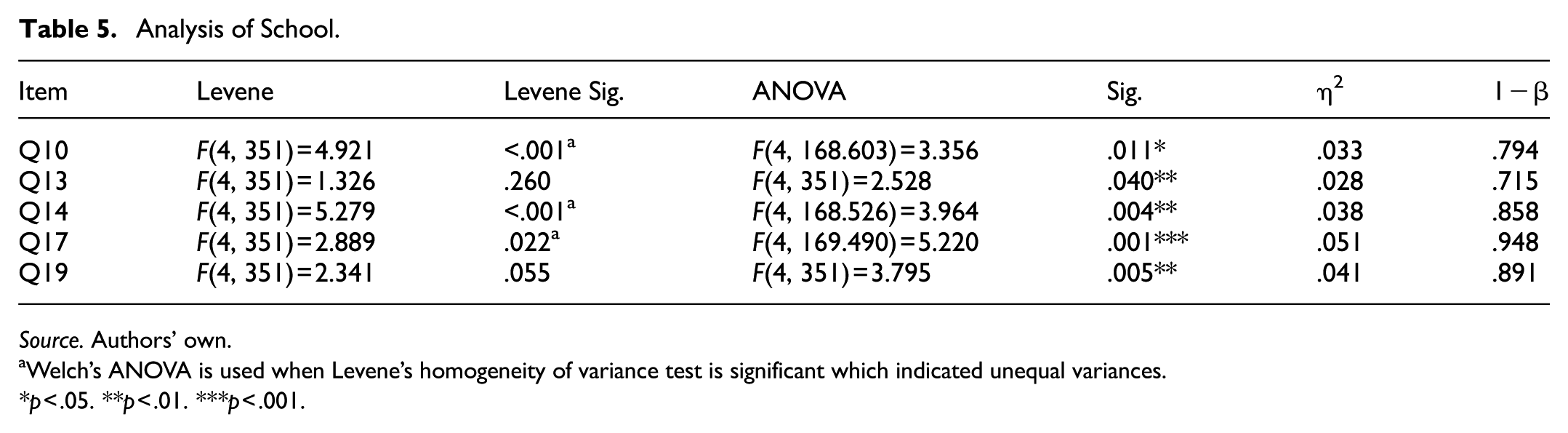
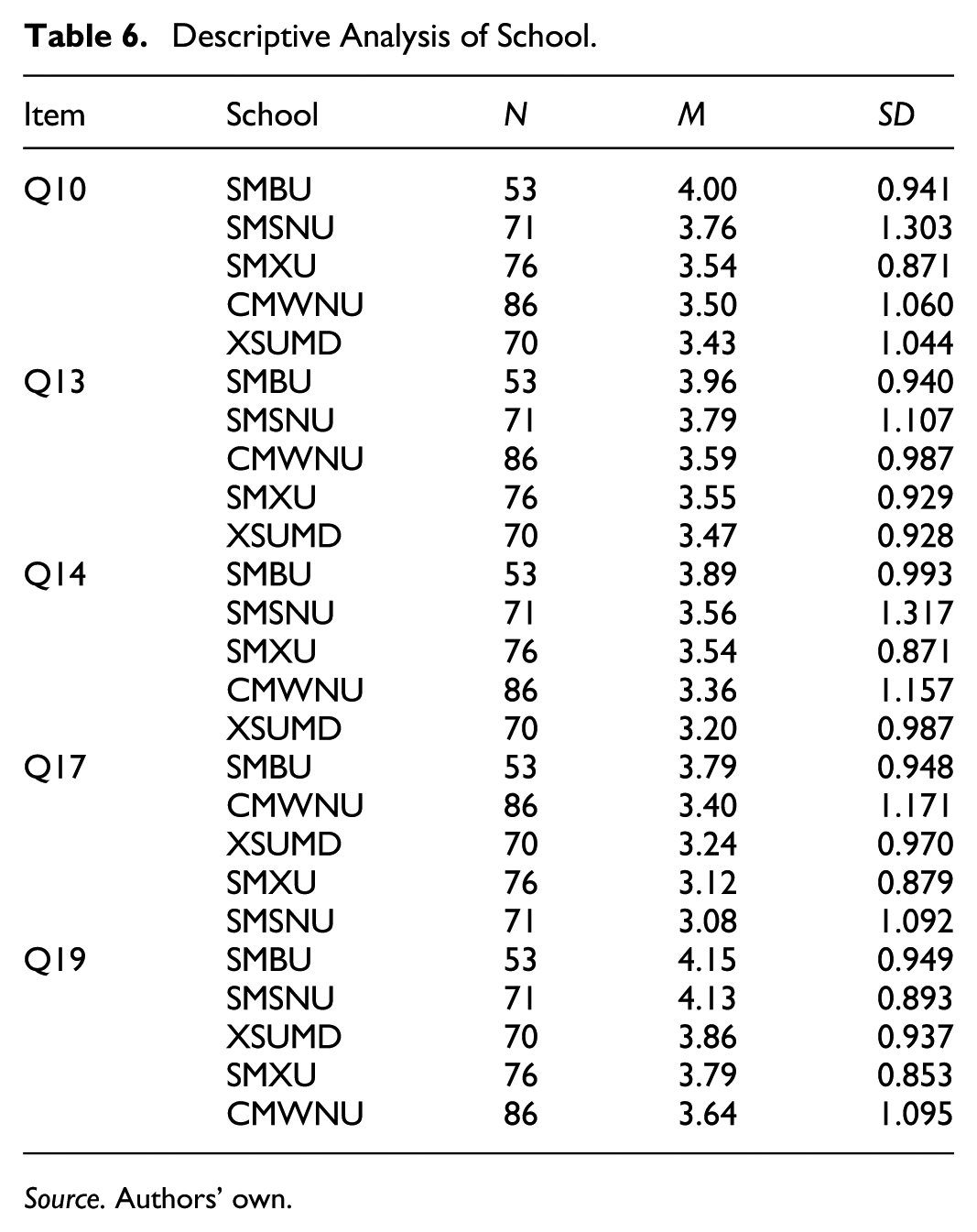
Table 5 presents the findings of the school analysis conducted using ANOVA, highlighting significant differences across five items: Q10, Q13, Q14, Q17, and Q19. Levene’s homogeneity of variance test was significant for Q10 (p < .001), Q14 (<.001), and Q17 (.022) which indicated unequal variances and suggests analysis via Welch’s ANOVA, whereas homogeneity of variance test was insignificant for Q13 and Q19 where one-way ANOVA was used. For Q10 (The up-skill training in schools), η2 = .033 (small effect). For Q13 (professional interests), η2 = .028 (small effect). For Q14 (I feel the career choice should match with my major in school), η2 = .038 (small-to-medium effect). For Q17 (in developing area), η2 = .051 (approaching to medium effect). For Q19 (income and job security), η2 = .041 (small-to-medium effect). These results indicate that while school differences significantly influence all five items, the strongest and most practically meaningful effect emerged for Q17. A highly-significant difference was identified in developing area (Q17), characterized by a close to medium effect size and robust observed power (p = .001, η2 = .051, 1 − β = .948). All five items, including up-skill training in school, professional interests, match with major, developing area, and income and job security, retained the hypothesis. As indicated in Table 6, SMBU recorded the highest mean score across all items. Moreover, Table 7 presents the post-hoc analysis of all five items with significant differences across schools, using Tukey’s HSD for equal-variance one-way ANOVA and Games-Howell for unequal-variance Welch’s ANOVA. The post-hoc findings suggested that the ratings of students from SMBU were mainly significantly higher than students from other schools. Finally, robustness checks were conducted for the five significant item ratings among different schools using Kruskal–Wallis test. All items yielded significant differences when tested using this non-parametric analysis [Q10: H(4) = 18.221, p = .001; Q13: H(4) = 14.236, p = .007; Q14: H(4) = 17.388, p = .002; Q17: H(4) = 19.531, p < .001; Q19: H(4) = 16.324, p = .003].
Analysis of School.
Source. Authors’ own.
Welch’s ANOVA is used when Levene’s homogeneity of variance test is significant which indicated unequal variances.
p < .05. **p < .01. ***p < .001.
Descriptive Analysis of School.
Source. Authors’ own.
Post Hoc Analysis of Items With Significant Differences Among Schools.

Source. Authors’ own.
p < .05.
Correlation Analysis
Table 8 provides the findings of the correlation analysis exploring music students’ career choices. The data revealed that all variables exhibited a positive correlation (.195 < ρ < .649, p < .001). Spearman’s rho rank-order correlation (ρ) analysis was conducted to explore the interrelationships among the ordinal survey items. Given the exploratory nature of this analysis, no statistical adjustment for multiple comparisons (e.g., Bonferroni) was applied, as the goal was to identify all potential relationships for future research (Schober et al., 2018).
Spearman’s (ρ) Inter-Item Correlation Analysis of Music Students’ Career Choice.

Source. Authors’ own.
Note. The analysis was based on a total sample size of N = 356. No adjustment for multiple comparisons was made. Significance levels are based on two-tailed tests.
Correlation is significant at the 0.01 level (two-tailed).
To assess the practical significance of these associations, correlation coefficients were interpreted as effect sizes following Cohen’s (2013) conventions, where values of .10, .30, and .50 indicate small, medium, and large effects, respectively. The majority of correlations fell within the small to medium range (ρ = .195–.50). However, several strong correlations were observed among items within the same theoretical domains, such as between Q6 (family members) and Q7 (teachers/lecturers/professors) in the societal factors domain (ρ = .649) and between Q13 (professional interests) and Q14 (major–career match) in the individual factors domain (ρ = .608). These results indicate that items within the same STF subsystem cluster together empirically, supporting their interpretive validity in capturing cohesive aspects of career decision-making.
Notably, several cross-domain associations also emerged. Q6 (societal factors) and Q10 (individual factors) showed a correlation of ρ = .435, which exceeded the correlation between Q6 and Q12 (both societal factors, ρ = .405). Similarly, Q10 (individual) and Q12 (societal) demonstrated a moderate correlation (.521), suggesting that while the factor structure broadly aligns with the STF subsystems, overlaps across domains reflect the systemic and interactive nature of career influences, consistent with the STF’s emphasis on the dynamic interconnection among individual, social, and environmental systems (McMahon & Patton, 2018).
Discussion
The present study aimed to explore the factors that have an impact on the career choices of music students. The investigation aimed to shed light on the potential differences in career choice perceptions among music students based on gender, educational background, schools, and professional option purposes. The findings of this research are expected to contribute to the understanding of the music students’ decision-making processes regarding their future careers and provide insights into the factors that may influence their choices.
The results from this survey of undergraduate music students showed that they were most influenced by income and job security. The data was in line with O’Neil et al.’s (1978) opinion that socioeconomic factors including social class, job availability, or financial constraints are known to exert a direct influence on an individual’s career decision-making. A multitude of scholarly inquiries have investigated the determinants affecting the career decisions of students, encompassing financial worries (Motabari, 1999), the pursuit of enhanced employment prospects, social status, prestige, and income (Enayati Novinfar et al., 2013; Portnoi, 2009). However, the issue of income and job stability within the music industry persists. Zhen (2022) highlights that a notable 61% of musicians express their income as inadequate to meet their living expenses. And there is a different reality between the perceived glamour and affluence associated with internationally renowned British musicians and the prevalent reality marked by precariousness (Bain, 2024). Recent scholarly investigations underscore the substantial financial challenges confronting musicians in the UK. Specifically, Webster et al. (2018) reveal that a significant 66% of “professional” musicians, reliant solely on their musical endeavors for sustenance, earn annual incomes of less than £15,600 from live performances. Similarly, the financial predicament of Dutch musicians remains alarming, with over 50% earning less than €9,000 annually (Fuhr, 2015).
The data further corroborate Motabari’s (1999), Enayati Novinfar et al.’s (2013), and Portnoi’s (2009) assertion that financial considerations and income significantly impact students’ decisions regarding their career paths. However, in the rank of mean score from three aspects, individual factors (professional interests, up-skill training, practice and working experiences, etc.) ranked the first, followed by socioeconomic factors (working in developed area or developing area, etc.), and lastly societal factors (employment information, employment policy, family members, etc.). Students are motivated to pursue a career in music for various reasons, such as a deep passion for music, confidence in their ability to teach music, and a desire to find fulfillment in the teaching profession (Jones, 1964; Parkes & Jones, 2012). Additionally, a preliminary investigation discovered that a commitment to the music profession, a strong sense of self-worth, and confidence in music-playing abilities were internal factors that influenced music graduates’ choices to pursue a professional music career (X. Wang et al., 2024). Furthermore, Sheriff and Chang (2022) examined several factors contributing to students’ decisions to pursue music careers, including individual traits, socioeconomic circumstances, and societal influences.
No gender differences were found in socioeconomic factors and societal factors, which is in line with the point proposed by Tong and Gao (2022). Gender has no differences among all the 14 items related to music students career choice. This finding contradicts existing research by Wei (1994), which identified gender differences in individual factors. Also, there was no significant difference among education background, professional optional purpose and music students’ career choice. This finding contrasts with the views of Ogunyewo et al. (2015), Thephavanh et al. (2023), and Middleton (2015), who argue that one’s educational background and professional optional purpose significantly influence their career choices. In accordance with Thephavanh et al. (2023), location has been identified as a crucial factor that affects individuals’ career choice perceptions. Notably, a significant difference was observed in relation to the developed area item, which is consistent with previous research conducted by Y. Wang (2020) and Dong (2020). The mean score of first-tier cities was the highest on developed area. It can be assumed from the data that students from first-tier cities prefer to work in developed regions. According to Dong (2020), more than 70% of graduates expressed a preference for pursuing employment opportunities in provincial capital cities and coastal areas.
Significant perception differences on school were observed among the five items related to up-skill training in school, individual professional interests, career alignment with current major, working in developing areas, and income and job security. The finding is in line with the point proposed by Tong and Gao (2022) who found perception differences in career choice were observed across school on individual factors (up-skill training in school, professional interests, career match with current major). Moreover, the research finding implied that students who pursue music education in second-tier institutions may not prioritize securing employment opportunities in economically developed regions. This finding was inconsistent with previous research indicating that music graduates tend to seek employment in provincial capital cities and coastal open cities (Dong, 2020). Combined with the finding that music students from first-tier cities tend to seek employment opportunities in developed regions, a contradiction in the “regional structure” of the Chinese music industry has been identified (L. G. Wang, 2018). This finding suggests the need for attention to be paid to the imbalance in manpower distribution in the industry, as well as the importance of exploring interventions that can transform students’ employment perceptions.
The interpretation of effect sizes further contextualizes the findings. Although location differences for developed areas were statistically significant, the effect size was small, indicating that students’ preferences for developed areas vary by location but the magnitude of this variation is modest. In contrast, school differences showed broader influence: five items were significantly affected by institutional context. Among them, working in a developing area yielded an approaching medium effect size, suggesting that school environment substantially shapes students’ willingness to work in developing areas compared to other factors. The other items—up-skill training, professional interests, major-career match, and income and job security—showed small to small-to-medium effects, implying that school-related influences are present but less pronounced.
Overall, these findings underscore that while some significant differences (e.g., location) may have limited practical implications, the approaching medium-sized effect of school on working in a developing area highlights the pivotal role of institutional context in shaping students’ career perceptions. This suggests that schools can play a meaningful role in encouraging students to consider employment opportunities in developing areas, thereby addressing regional labor-market imbalances.
Conclusion
This study sought to investigate music students’ perceptions regarding their career choices within the context of Western China. The results indicated that differences in perceptions regarding career choices were observed across location and school, with students in developed areas preferring to work in developed areas, while students enrolled in second-tier educational institutions exhibit a tendency to prioritize job opportunities in developing regions. Furthermore, income and job security were found to be the most significant considerations in career choices, although a portfolio career is prevalent among many musicians nowadays. Therefore, the school should adopt measures to transform students’ employment attitudes and develop their sustainable employability skills.
Practical Implications
The findings of this study offer a significant contribution to understanding of music students’ career perception and the influence of regional and institutional factors within Western China. These implications provide valuable insights for policy and curriculum reform in the region, although they should be regarded as indicative rather than definitive, given the study’s sampling approach. Previous studies have extensively examined career preferences in the field of music in China using frequency analysis. Some studies have examined the career intentions of Chinese music performance students through the application of an integrated cognitive motivation theoretical framework, utilizing multiple regression analysis. However, limited empirical research has focused on Chinese music students’ perceptions of career choice in Western regions of China using variance analysis.
Based on the research findings, it is evident that students in economically developed regions exhibit a pronounced preference for pursuing careers within similar developed locales, while students enrolled in second-tier educational institutions tend to gravitate toward employment opportunities in developing areas. This observed trend underscores the significant role played by what can be characterized as a “regional structure” in influencing students’ career choices. Consequently, the findings of this study may provide reference value for governmental authorities when considering pilot initiatives or exploratory programs aimed at encouraging students from economically advanced regions to explore employment opportunities in developing areas, with the broader aim of addressing imbalances in workforce distribution. Possible measures for such pilot efforts might include scholarships, internships, and job placement support. However, given the study’s reliance on a convenience sample of five universities, these suggestions should be regarded as preliminary and require further validation through larger-scale or longitudinal research before informing formal policy implementation.
Moreover, the educational institution should offer individualized career counseling sessions specifically designed for students pursuing music studies. These sessions should be thoughtfully customized to accommodate the varied preferences and objectives of students originating from regions with varying degrees of economic development. These sessions could concentrate on offering students practical advice and guidance for navigating the music industry. This could include strategies for networking, developing portfolios, and identifying entrepreneurship opportunities. By providing these personalized career counseling sessions, educational institutions can more effectively assist students in making informed decisions about their future careers and support them in achieving their professional aspirations. The primary objective of these counseling sessions is to facilitate a comprehensive exploration of the complete spectrum of career prospects available in both economically developed and developing regions.
In addition, the investigation has unveiled that income and job security stand out as paramount considerations guiding individuals’ career decisions. Nonetheless, it is worth noting that the contemporary landscape of the music industry necessitates the cultivation of a portfolio career, a paradigm embraced by a multitude of musicians. To equip students with the skills and versatility required for a portfolio career in music, it is recommended that educational institutions, particularly music schools, diversify their curricula. This diversification should encompass a broad spectrum of knowledge and competencies relevant to various facets of the music industry, including but not limited to performance, education, and entrepreneurship.
An advisable approach is to introduce courses that delve into the business aspects of the music industry, such as music marketing, copyright law, and music business management. These courses can equip students with the essential skills to manage the business aspects of a music career and potentially pave the way for them to create their own opportunities within the industry. Moreover, institutions could provide courses or workshops on digital media and technology, given their growing significance in the music sector. Familiarity with recording software, social media marketing, and online distribution platforms can provide students with a competitive advantage in the field. Such curricular enhancements will enable students to adapt effectively to the dynamic career landscape and enhance their capacity for multifaceted employment prospects.
Limitation and Recommendation for Future Research
The current study has a notable methodological limitation due to its cross-sectional design. The use of a cross-sectional approach limits the ability to make causal inferences and determine the long-term effects of external and internal factors on music students’ career choice perceptions. Therefore, to address this limitation, it is advisable for future research to employ a longitudinal design. This approach should investigate antecedents and assess the factors shaping the employability of Chinese music students. Furthermore, the design should incorporate in-depth longitudinal interviews with music students, employers, and graduates to provide nuanced insights into the factors influencing career choices within the music profession.
Furthermore, the generalizability of the study results is restricted to music students enrolled in higher music institutions located in Western China. As such, further research is required to incorporate music students from other regions of China, thereby improving the study’s external validity.
In addition, the present study only examines music students’ perceptions of career choice. To further the understanding of the factors influencing music students’ career choices, it is suggested that future research employs a combined analysis of the perceptions of career choice from professionals, organizational leaders, and music graduates. Such an approach may provide valuable insights into the factors affecting music students’ career choices and enhance the practical applicability of the study findings.
While the selection of five institutions was designed to reflect the diversity of higher music education in Western China, the use of convenience sampling still limits the external validity of the findings. As such, the findings should be viewed as representative of the sampled institutions and indicative of broader regional patterns, rather than as definitive conclusions about all music students in Western China. Future research employing probability-based sampling, pilot evaluations, or longitudinal designs across a broader range of institutions would be essential to provide stronger evidence and to confirm and extend the generalizability of these findings (Creswell & Creswell, 2017; Etikan et al., 2016). This would not only enhance the robustness of findings but also contribute deeper insights to the evolving landscape of music education in Western China.
Supplemental Material
sj-docx-1-sgo-10.1177_21582440261425423 – Supplemental material for Music Major Students’ Perception of Career Choice in Western China
Supplemental material, sj-docx-1-sgo-10.1177_21582440261425423 for Music Major Students’ Perception of Career Choice in Western China by Yu Guo Wang, I Ta Wang and Hao Yi Ho in SAGE Open
Supplemental Material
sj-docx-2-sgo-10.1177_21582440261425423 – Supplemental material for Music Major Students’ Perception of Career Choice in Western China
Supplemental material, sj-docx-2-sgo-10.1177_21582440261425423 for Music Major Students’ Perception of Career Choice in Western China by Yu Guo Wang, I Ta Wang and Hao Yi Ho in SAGE Open
Footnotes
Acknowledgements
The support of this study was given by the Department of Music, Faculty of Creative Arts, Universiti Malaya, Malaysia.

Ethical Considerations
This study was approved by the University of Malaya Research Ethics Committee (approval no. UM.TNC2/UMREC_2310) on January 9, 2023.
Consent to Participate
Participation in this study was entirely voluntary. Before beginning the survey, all participants received an information sheet describing the study’s purpose, procedures, potential risks, and benefits. They were also informed of their right to decline participation or to withdraw from the study at any time without penalty. Responses were collected anonymously and treated with strict confidentiality. Respondents gave written consent for review and signature before starting survey.
Author Contributions
Yu Guo Wang: Conceptualization, Methodology, Data analysis, Investigation, Writing—original draft, Writing—review & editing. I Ta Wang: Conceptualization, Supervision, Writing—review & editing.
Hao Yi Ho: Data analysis, Writing—review & editing.
Funding
The authors received no financial support for the research, authorship, and/or publication of this article.
Declaration of Conflicting Interests
The authors declared no potential conflicts of interest with respect to the research, authorship, and/or publication of this article.
Data Availability Statement
The datasets generated and analyzed during this study are not publicly available due to ethical restrictions and participant confidentiality. However, data may be made available from the corresponding author* on reasonable request and with approval from the University of Malaya Research Ethics Committee.
Supplemental Material
Supplemental material for this article is available online.
References
Supplementary Material
Please find the following supplemental material available below.
For Open Access articles published under a Creative Commons License, all supplemental material carries the same license as the article it is associated with.
For non-Open Access articles published, all supplemental material carries a non-exclusive license, and permission requests for re-use of supplemental material or any part of supplemental material shall be sent directly to the copyright owner as specified in the copyright notice associated with the article.
