



Abstract
Driven by the continuous development of digital technology, social media has impacted people’s social interactions, personal behavior, and daily life. There are numerous prominent social media sites globally. Among them, TikTok is widely used. However, researchers have not systematically and in detail summarized the media characteristics of TikTok. This article adopts a systematic literature review method to find, summarize, and analyze. This article selects Science Direct and Scopus databases and screens papers with a time limit of 2015 to 2024. This article takes the adolescent group. It selects the frequently used UGT and TAM as theoretical support. Studies indicate a year-on-year escalation in academics’ examination of TikTok. Users demonstrate a robust inclination and favorable disposition towards utilizing TikTok. TikTok’s distinctive media attributes and advanced digital technology cater to varied consumer requirements. Digital technology is integral to TikTok; it can enhance social media evolution, influence future communication paradigms, and fortify user connections. UGT and TAM are appropriate frameworks for examining user’ intrinsic motivations and technology acceptance. This study assists researchers in deriving practical findings from the analysis of media features and user behavior, while offering guidance for digital technology research, so facilitating broader access to the digital benefits of the contemporary day.
Plain Language Summary
It selects the frequently used UGT and TAM as theoretical support. The study found that TikTok’s unique media characteristics and rich digital technology meet the different needs of users. Users have a strong willingness and positive attitude. This paper can help researchers deliver practical conclusions to analyzing media characteristics and user behaviors and provide directions for digital technology research.
Keywords
Introduction
Ongoing advancement of digital technology renders it indispensable in people’s daily lives. It influences individuals’ social interactions, personal conduct, and everyday existence (Limone & Toto, 2021). Digital technology is widely used in social media in the fast-paced new media era. Users can communicate with people online through social media. In particular, instant voice and video calls break the restrictions of the space. Users can also learn online, obtain information, entertain, and leisurely on social media. With the blessing of advanced digital technology, social media has dramatically enriched people’s work, study, and daily lives. Social media has become an essential component of individuals’ lives.
Researchers have been committed to analyzing social media and striving to analyze the reasons why users use social media. TikTok, Facebook, Instagram, WhatsApp, Kuai Shou, and WeChat are the most useful social media worldwide, especially since TikTok enjoys global popularity (Olvera et al., 2021). However, researchers have not conducted a systematic and detailed analysis or summarized the media characteristics of TikTok. Researchers did not summarize the digital technologies in TikTok or the significance of in future research. According to the literature review, widely used crowd using TikTok are Adolescents (Ages 13–24) and Millennials (Ages 25–40; Chao et al., 2023). Among them, the Adolescents group prefers to use TikTok. However, few researchers distinguish between users in detail. Few researches elucidate the particular motivations behind adolescents preference for TikTok.
While studying social media, researchers have adopted many communication theories for analysis. Katz established UGT, while Davis founded TAM (Chiu et al., 2024). Social Exchange Theory (SET) was established by Homans, Diffusion of Innovations Theory was formulated by Rogers, and Impression Management Theory was proposed by Goffman (Enayat et al., 2022; Pernelet & Brennan, 2023; Yu, 2022). Among them, Uses and Gratifications Theory and Technology Acceptance Model are theories researchers like to use very much (Attié & Meyer-Waarden, 2022).
Based on the literature review, this article adopts a systematic literature review method to find, summarize, and analyze suitable papers. The Science Direct and Scopus databases are chosen for this study, and papers with a 2015 to 2024 period are evaluated. This article examines, from a longitudinal perspective, scholars’ research on TikTok and the digital technology used. This article takes the adolescent group, which often uses TikTok as the research object, to fill the gap in the research group. The researcher chooses the frequently used Uses and Gratifications Theory and Technology Acceptance Model as theoretical support. Therefore, this study posed six questions.
The first question mainly studies the trend of papers published related to TikTok. This article is limited to a 10-year period, which can help researchers show the popularity of TikTok and the future development trend of social media research. Analyzing TikTok’s media features is the second question. The researchers mainly explore the essential reasons why teenagers continue to use TikTok. The third question mostly shows the digital technology present in TikTok. In-depth understanding of the operation of digital technology integrated into TikTok and the specific reasons for attracting users. The fourth question clarifies the significance of the implantation of digital technology for the future development of social media. The researchers discuss the critical role of digital technology in improving platform functions and user-centeredness. This can also help researchers predict the direction of development of social media and emerging digital technologies. The fifth and sixth questions analyze the important conclusions drawn by the Uses and Gratifications Theory (UGT) and Technology Acceptance Model (TAM) in studying TikTok. And analyze whether TikTok meets the specific needs of teenagers. The researchers also summarize the research subjects pertaining to TikTok and recent research.
In summary, this study can also help researchers understand the critical role of digital technology in social media in analyzing TikTok’s research situation. In analyzing the characteristics of TikTok. In addition to helping social media firms enhance digital technology and features, we can also learn why youngsters enjoy using the software. Summarizing the conclusions obtained using UGT and TAM can provide detailed data records for future communication research. It can also offer research directions for future analysis of social media and user behavior. From the perspective of enterprises, improvements to social media that cater to user needs can attract many users to continue using social media. This can increase the time and frequency of users using the software, helping enterprises increase profits and expand their scale.
Method
In terms of research techniques, the researchers screened the database’s papers using a systematic literature review (SLR). This work uses the Preferred Reporting Items for Systematic Reviews and Meta-Analyses (PRISMA) procedure approach to screen literature to address the research problem and guarantee that the review has reference value. PRISMA is a method for screening articles that researchers generally recognize. PRISMA can standardize papers’ identification, screening, eligibility, and inclusion criteria (Takkouche & Norman, 2011). TikTok is a swiftly expanding social media platform, and the research findings derived from its examination are marked by interdisciplinary, fragmented, and rapidly changing characteristics. This study selected SLR because to its explicit search and exclusion criteria, which enhance the transparency of research findings and mitigate subjective bias (Paul & Barari, 2022). SLR enables academics to identify prevalent themes across disciplines and deduce appropriate theoretical and topical evolution trajectories through the analysis of various theoretical applications. This establishes a robust academic basis for a comprehensive knowledge of TikTok’s socio-cultural dimensions, dissemination traits, and study outcomes. This can improve the validity of the evaluation content, obtain more accurate data, and ensure the rigor of scientific research.
This article retrieved the literature according to title and keywords in the Science Direct and Scopus databases and then used Endnote to screen and collect the literature. This study created a PRISMA flowchart using Adobe Illustrator software to guarantee the precision and clarity of the screening procedure. After completing the retrieval and collection of literature, the researchers used Excel to draw a trend chart of the publications of papers on TikTok research and analyzed the screened literature in detail.
Databases
In the literature review process, the researcher chose Science Direct and Scopus databases for the papers. Science Direct Database is a scientific database operated by Elsevier. Elsevier is one of the largest academic publishers in the world. Science Direct Database has rich literature content, with over 16 million publications. It offers numerous book chapters and peer-reviewed academic papers. This includes research content in multiple disciplines. For example, social sciences, humanities, technology, medicine, engineering, and science. The advanced search function of the Science Direct Database can also help researchers filter by article type, date, subject, and other fields. Scopus Database is also a comprehensive and multidisciplinary database. It is widely used to track research directions, paper publishing trends, and academic evaluation. Scopus Database has over 25,000 peer-reviewed journals covering various subject areas and research content. It also has advanced search and filtering functions to help researchers save time collecting data.
This study also examined databases like Web of Science, ProQuest, and Google Scholar. Nevertheless, these datasets were insufficient to fulfil the requirements of this research. This is due to certain databases overlapping with the content of this study, exhibiting inadequate result control, lacking professional export and filtering tools, and not aligning with the subject matter of communication studies and social media analysis, thereby escalating the cost of manual screening. In summary, these two databases have reliable and high-quality research publications that can be used for research.
Research Strategy
In this article, the Science Direct and Scopus databases were selected to perform a Boolean operator. The screening condition was (TikTok) as a keyword in the literature screening process. For the literature search, the period of literature publication was limited to 2015 to 2024. The researchers analyzed the trend chart of papers published on TikTok. The Science Direct database has 3,308 publications pertaining to TikTok (ScienceDirect website, 2024.10). Researchers published 2,910 articles about TikTok (Scopus website, 2024.10).
Then, based on the research questions and research purposes of this article, the keywords for screening were determined. The screening of literature strictly followed Title (“TikTok” OR “Digital Technology”), AND Keywords (“Popular characteristics”) OR (“Youth Group” OR “adolescent”) OR (“Uses and Gratifications Theory” OR “Technology Acceptance Model”) for search.
Include Criteria and Exclude Criteria
The researchers developed the Include Criteria and Exclude Criteria in Table 1 to guarantee the precision and dependability of the findings of the literature study.
Include Criteria and Exclude Criteria.
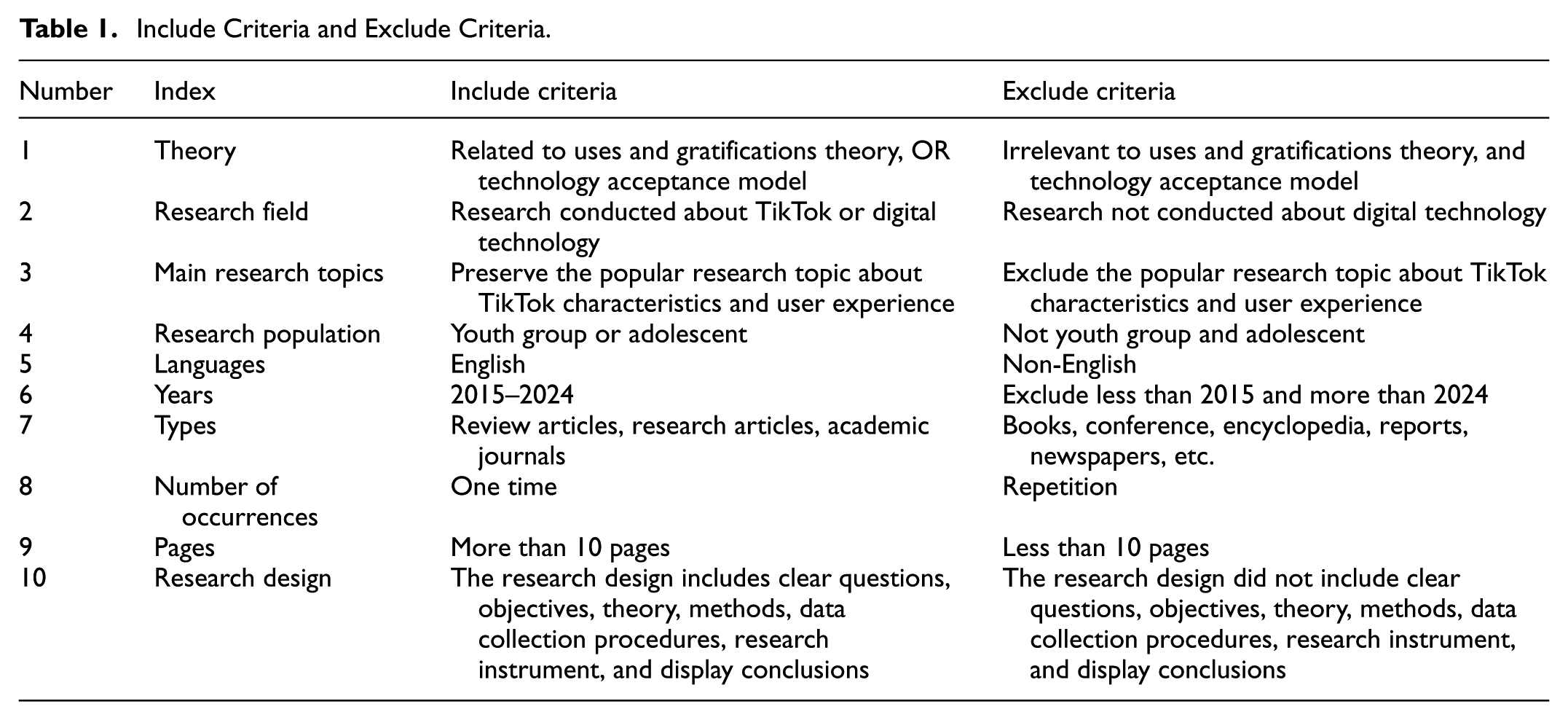
This article selected English journal articles from 2015 to 2024. First, English is a universal language globally, and high-quality academic journals all use English as the primary language. Selecting English papers can ensure higher accuracy and consistency. At the same time, to ensure the literature’s timeliness, the researchers only chose literature from the past 10 years. This can ensure that the selected papers are the latest trends in current research and avoid outdated literature. Second, in theory, the researchers selected papers that analyze the Uses and Gratifications Theory and the Technology Acceptance Model. Third, in the research field, the researchers only selected papers related to TikTok OR Digital Technology. Ensure that the research topic of this paper is Digital and social media. Fourth, in research topics, the researchers only analyzed TikTok characteristics and User experience, exploring the impact of TikTok’s digital technology on user needs and satisfaction. Fifth, in the Research population, the researchers only selected Youth Groups or adolescents. This can precisely identify those who often utilize TikTok and examine the motivations behind their preference for the platform. Sixth, only articles and journals were selected in the selection of literature, and duplicate literature in the two databases was deleted. Research articles and journals are essential carriers for the dissemination of academic knowledge. The contents of the papers have been peer-reviewed, which is more authoritative, scientific, and standardized. Seventh, the number of pages of the paper should be more than ten. A high-quality paper needs a lot of data and content to support it. The literature selected in this paper is more representative. Eighth, the research includes straightforward questions, objectives, theory, methods, data collection procedures, research instruments, and display conclusions. Therefore, the content of this article is more accurate and precise, summarizing reliable findings and more meaningful insights. This can provide references and experience for future researchers who want to analyze social media.
Screen Procedure
The screening process of this article strictly follows the designed screening criteria. The screening process of the article is shown in Figure 1.
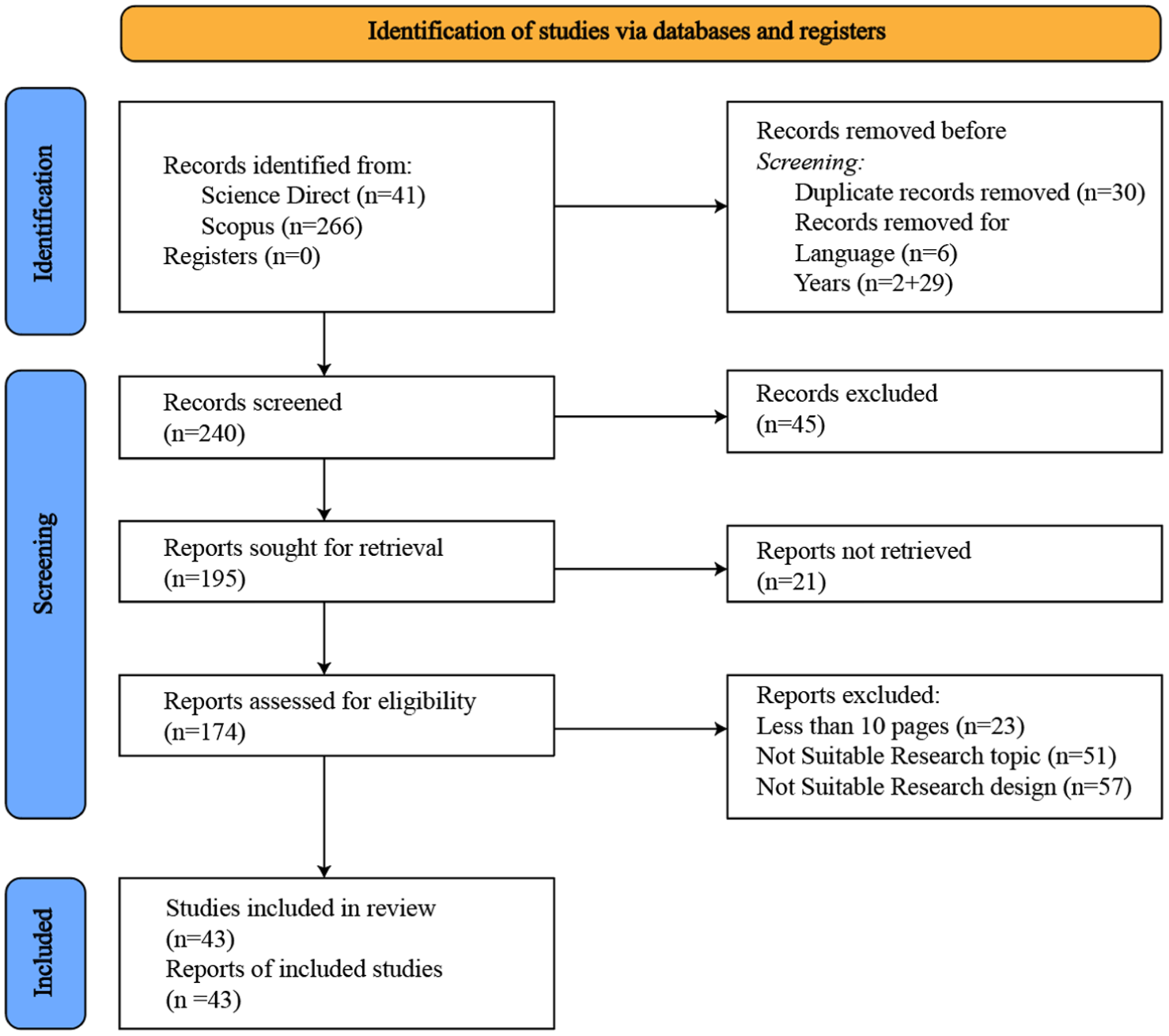
PRISMA flow diagram for the systematic review.
Initially, the researchers retrieved 307 publications from the Science Direct and Scopus databases based on the title and keywords created by the study question. Second, the researchers eliminated 67 documents from this article using Endnote’s database tools and filtering criteria. Third, 45 papers that did not fit the population and study topic of this article were removed from the record screening. Fourth, 21 documents that weren’t articles or journals were removed from the report that was requested to be retrieved. Fifth, the researchers eliminated 131 inappropriate materials based on the screening criteria of the paper page, study topic, and research design. Lastly, the researchers thoroughly reviewed and examined the remaining 43 papers.
Data Analysis
This study used Endnote and Excel software to collect and analyze literature. The researchers downloaded the final 43 papers and read the main content of each article in detail. This covers each paper’s study questions, goals, theory, methods, data gathering techniques, research tool, and conclusion presentation. First, based on the paper data from 2015 to 2024, the researchers analyzed the publication trend chart of papers related to TikTok and found study patterns. Secondly, in the 43 selected literature, the media characteristics of TikTok were summarized, and the main reasons why teenagers like to use TikTok very much were analyzed. Thirdly, the researchers examined the connection between digital technology and TikTok, especially the digital technology in TikTok. And the significance of digital technology to future social media research. Finally, the researchers analyzed the critical views and conclusions found in the study of TikTok by Uses and Gratifications Theory (UGT) and Technology Acceptance Model (TAM). Appendix A lists all the numbers, authors, years, and titles under review.
Result
Literature Publication Trends in 2019 to 2024
Complete RQ1, examine the publishing trends of papers on TikTok between 2015 and 2024. During a literature review, the researchers discovered that the inaugural paper regarding TikTok was published in 2019. Therefore, only the literature from 2019 to 2024 was selected for analysis. In the Science Direct database, there are 3,308 documents related to TikTok (ScienceDirect website, 2024.10). At the same time, the researchers used the same screening method to screen journal articles in the Scopus database. This article found that researchers published 2,910 papers on TikTok (Scopus website, 2024.10). Therefore, the researchers drew corresponding bar charts based on the publication of each year’s papers to analyze the research situation of scholars on TikTok in Figures 2 and 3.
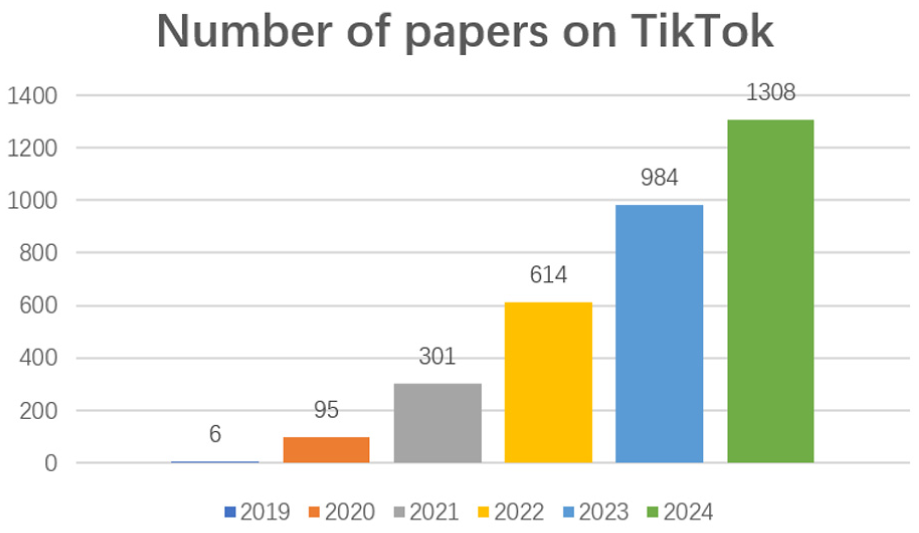
Research timeline (Science Direct Database).

Research timeline (Scopus Database).
In Figure 2, researchers’ research on TikTok shows an upward trend year by year. In particular 2020, the number of journals published increased by 15 times compared to 2019. This may be because 2020 was the year of the outbreak of the new crown epidemic. Due to measures such as travel restrictions and home isolation, users increased the time and frequency of using TikTok. Researchers have investigated this specific circumstance. In Figure 3, researchers’ research on TikTok also shows an upward trend year by year. However, it shows a relatively low exponential growth. As can be seen from these two figures, in 2024, the number of journals on TikTok is the largest. This proves that researchers are paying extremely high attention to TikTok. Researchers predict that research on TikTok will continue to increase in future research developments, and researchers may conduct research from multiple angles and fields.
TikTok’s Media Characteristics
Complete RQ2, examine the media characteristics of TikTok. TikTok is a social media platform that helps users share short videos. The duration of short videos is usually between 15 and 60 s. TikTok was launched by ByteDance in China in 2016. It developed overseas markets in 2017 and merged with Musical.ly in 2018 (Montag et al., 2021). In just a few years, TikTok has become popular worldwide, especially among young people. TikTok’s Media Characteristics increase users’ access frequency and usage time.
The researcher conducted an assessment, evaluation, and analysis of the literature review. This article substantiates the assertion that TikTok is a widely popular social media network worldwide (Olvera et al., 2021). TikTok’s superior video editing capabilities and diverse material motivate users to share video content. The video production tools in TikTok are straightforward to operate. Even users who have no video production foundation can make beautiful videos in a very short time (Al-Khasawneh et al., 2022). The creative materials in TikTok can help users make videos. For example, users can use the text, music, and special effects that come with the software to make their favorite videos (Vizcaíno-Verdú & Abidin, 2022). Specifically, TikTok’s music library has been of great help to users. TikTok includes much popular music. Utilizing famous music enhances the likelihood of video material garnering greater attention and boosting user engagement.
TikTok’s videos are short and have a unique algorithm push technology. TikTok algorithm generally promotes material that corresponds with users’ preferences, determined by viewing duration and engagement patterns. TikTok specifically formulates a user interest profile by integrating video completion rates, dwell duration, skipping behavior (Liao et al., 2024), and explicit engagement metrics, including likes, comments, and shares. This establishes a robust alignment between the attributes of video content and user requirements. TikTok algorithm functions swiftly and adaptively, enabling users to quickly access content of interest, significantly enhancing user engagement (Karizat et al., 2021). This algorithm has prompted critical discourse over information cocoons, specifically that ongoing personalized recommendations may restrict users’ cognitive breadth (Sun et al., 2024). Consequently, research on TikTok algorithm enhances comprehension of user behavior and offers novel analytical frameworks for examining the factors contributing to users’ reliance on TikTok and the formation of digital environments.
TikTok’s short videos are easy to browse and watch. Because TikTok videos are so brief, consumers can peruse the content during their sporadic free time (Basch, Donelle, et al., 2022). Moreover, short video content will continue to stimulate users’ dopamine, and they are in a state of continuous excitement, and ceasing is not a simple endeavor. Software engineers use artificial intelligence to record and analyze the content users watch and determine each user’s preferences and behavioral habits from specific rules (Karizat et al., 2021). The content delivered is captivating and compelling, according to each user’s viewing preferences. They will find themselves incapable of refraining from using TikTok.
The youthful video culture in TikTok attracts teenagers to use the software (Langlais et al., 2024). TikTok has a variety of trendy cultural videos. Teenagers like to keep up with the trend and appreciate popular music and buzzwords. Sharing daily life and funny and humorous video content makes it very easy to resonate with teenagers’ lives. Watching funny and entertaining videos is an effective way for teenagers to relieve stress.
TikTok has rich interactive and social functions. Users can like, comment on, and forward videos on TikTok. Users can also interact with others through the comment area to promote discussions and feedback loops (Gupta et al., 2021). Users can also follow video creators and become fans. Users can send messages to video creators and build a connected online community with familiar people. Furthermore, TikTok also has a live broadcast function. Live broadcast users can interact with the audience in real-time through TikTok (Wang et al., 2023). Viewers can communicate with the video creator by leaving comments or sending virtual gifts. The video creator answers questions by watching the text sent by the audience.
TikTok can help video creators get rewards and income. Popular videos will get likes, comments, and reposts (Falgoust et al., 2022). TikTok will compensate creators with a creator fund determined by the volume of user engagements. Some users will also follow the video creator and become his fans. When the number of fans of the video creator is large enough, he will become famous and become an Internet celebrity. Researchers have found that short videos about companies in TikTok can increase teenagers’ cognition and understanding of commercial and persuasive intentions (Van Der Bend et al., 2023). Therefore, advertisers and some companies will cooperate with video creators for brand sponsorship and network influence. Video creators earn income by posting advertisements. During his live broadcast, users can buy coins and virtual gifts to reward video creators and earn income.
TikTok encourages users to generate viral trends and challenges (Vizcaíno-Verdú & Abidin, 2022). When a user’s video becomes popular in the software, other users will imitate it and generate a particular tag. This tag will continue to increase user engagement, and the video challenge will spread rapidly and virally.
TikTok also has global and local adaptability characteristics. In the promotion process, TikTok cooperated with Internet celebrities and stars in different countries (Zhu et al., 2022). This successfully found channels suitable for local services and development. As TikTok developed, many celebrities, artists, and companies also participated, further enhancing TikTok’s credibility and appeal.
The Connection Between Digital Technology and TikTok
Complete RQ3, examine the connection between digital technology and TikTok. Digital technology is a tool that generates, processes, and stores data in digital form (Gong & Ribiere, 2021). In today’s era, digital technology is widely used in social media. Digital technology is inseparable from social media. Digital technology plays a vital role in shaping TikTok. In addition to its own digital technology, TikTok influences the navigation of the digital landscape as a social networking platform. Navigating Digital Space pertains to the way users traverse, engage, and derive meaning inside online settings, including websites, applications, and social media (Hackl et al., 2022). This domain is predominantly centered on social media. TikTok’s algorithm, community, and cultural norms influence user content consumption and their digital experience. Consequently, navigating digital space and social media are mutually dependent. This enables faster, more interactive, and more efficient global communication.
Widely used measures the intensity of user interaction with a platform from dimensions such as frequency, duration, and engagement (Xiao et al., 2024). This article assesses the extent of usage in terms of frequency and duration. While TikTok may not possess the largest number of monthly active users worldwide among social media platforms, it exhibits very high engagement and usage rates for frequency and duration of use. Users are deemed widely engaged if they allocate over 1 hr daily to social media (Hunt et al., 2021). TikTok users’ daily or weekly engagement significantly exceeds 1 hr, surpassing that of other social media platforms (Scherr & Wang, 2021), indicating its widely use.
First, global links and real-time communication technology. In TikTok, users can connect with people anywhere globally. In TikTok, users’ messages or comments on videos with others are instant (Basch, Hillyer, et al., 2022).
Second, digital technology helps users post videos. With smartphones and other digital devices, users may make, share, and post videos on TikTok (Basch, Yalamanchili, et al., 2022). TikTok provides advanced video editing tools to help users make videos quickly. TikTok also provides users with voice and audio processing. This can help users increase the content of expression through sound.
Third, TikTok’s unique algorithm pushes technology to attract users to the software. TikTok uses digital technology to analyze user behavior. For example, users’ viewing time and frequency, likes, comments, and video sharing. Through digital technology, TikTok always shows users content that matches their interests and hobbies, increasing engagement and retention (Falgoust et al., 2022). The greater the user engagement with TikTok, the more precise the algorithm becomes. TikTok’s unique algorithm push technology creates a highly personalized and user-interactive experience. This is the main reason why TikTok has become a universal social media and has generated addictive virality (Khan et al., 2025).
Fourth, digital technology labels and classifies TikTok videos. Computer vision and natural language processing (NLP) are used to analyze videos user upload. According to the style and content of the video, it is effectively classified and labeled (Aschbrenner et al., 2019). This can help users find their favorite content using TikTok’s search function.
Fifth, TikTok’s geolocation technology prioritizes local videos. TikTok can prioritize local, personalized videos and news messages based on the user’s location (Zhu et al., 2022). Users can see more content related to local events or festivals.
Sixth, TikTok’s Augmented Reality (AR) technology provides creative functions. The built-in editing tools in TikTok allow users to create 3D special effects, making content creation more intuitive (Meloni et al., 2023). For example, users can enhance the effect of video creation through face recognition filters, interactive animations, and background changes. TikTok’s AR tools can also help users participate in trends and challenges. In videos, TikTok uses visual technology to recognize gestures, facial expressions, and movements. This can achieve interactive effects and challenges; users can trigger visual effects through body movements. For example, the face puzzle challenge in TikTok. Users scan their faces through TikTok, blink their eyes, and freeze their facial features, and finally, a fascinating close-up of the face will appear. This interesting digital technology attracts young people to continue to challenge themselves.
Seventh, TikTok’s network security and data encryption technology protects user privacy. TikTok uses encryption technology to protect user privacy and unique authentication methods to protect user accounts (Attié & Meyer-Waarden, 2022). Except for users, other users cannot access without authorization.
Although tailored recommendation systems can fulfill users’ specific preferences, they may also induce addiction to the digital realm, resulting in adverse effects such as disconnection from reality. Moreover, overly uniform information content can generate information cocoons (Sun et al., 2024), hindering users’ discernment. TikTok’s brief videos and infinite scrolling interface diminish users’ attention spans, perhaps resulting in sleep deprivation and a decline in academic performance among adolescents.
Admittedly, most of the literature evaluations examined predominantly used an instrumentalist stance, neglecting user agency. Researchers examining TikTok usage have highlighted user agency, underlining the role of the user (Southwick et al., 2023). Nonetheless, TikTok’s algorithmic digital technology may have diminished consumers’ subjective agency. This discovery offers a novel study perspective for examining user engagement and happiness. Researchers must endeavor to develop a more equitable analytical framework that synthesizes platform-centric and user-centric explanations to get more rigorous scientific outcomes.
The Significance and Contribution of Digital Technology Research
Researchers analyzing digital technology in TikTok can significantly impact the future development of digital technology, society, and individuals. Complete RQ4, anticipate the significance of forthcoming studies in digital technology. Researchers conducted a thorough analysis and synthesis of a literature review, determining that digital technology significantly influences individuals’ social relationships, behavior, and daily living (Limone & Toto, 2021).
On TikTok, Navigating Digital Spaces, and Personalization refers to a behavioral pattern in which users explore material on the platform and obtain a tailored experience via algorithmic suggestions (Lee et al., 2022; Schellewald, 2023). This confirms that users can choose appropriate content from the extensive array of short videos on TikTok and highlights the individualized experience provided by TikTok’s personalization capabilities. This establishes a cycle of user content exploration, interactive feedback, and algorithmic suggestions, enhancing the alignment of TikTok’s video content with user preferences.
With the help of digital technology, social media can develop better. This helps to explore the interaction between users and social media and guide future social media design and development. In digital media technology, efficient algorithm push is the focus of researchers’ research. This can provide users with videos that align with their interests and create a more personalized user experience (Liao et al., 2024). The algorithm push’s digital drive can also assist media companies in growing their user base and frequency of use, expanding their business scale, and boosting operating profits.
Digital technology helps to shape future communication models and strengthen connections between users. The study of digital technology helps researchers develop new communication theories. For example, Diffusion of Innovations Theory (Pernelet & Brennan, 2023). Understanding digital technology can also help technicians improve and enhance social media functions so that users can get more convenient services. Digital technology also deepens the connection between various regions (Kaur et al, 2020). Digital technology can promote social connectivity and inclusion. People around the world can connect with others through social media. It breaks the limitations of time and space and enhances global communication. However, as the number of social media users continues to increase, platform operators need to increase their efforts to review false information content.
On TikTok, the method of customizing digital content or recommendations for users based on their data and tastes is referred to as personalization (Chu et al., 2024). Personalization is accomplished via digital technology, employing algorithms to deliver tailored content to users. In theory, personalization is associated with UGT to investigate how consumers derive enjoyment from tailored material. Digital technology is associated with TAM to examine users’ behavioral intention and attitudes towards technology. This, consequently, establishes circumstances for consumers to derive joy from the real utilization of TikTok. This further demonstrates that UGT and TAM are very appropriate for integration in the examination of user demands and satisfaction.
In the fast-paced digital age, short videos will continue to occupy users’ lives for a long time. People are increasingly inclined to short and sharp content than traditional TV and lengthy videos (Bossen & Kottasz, 2020). Users’ preference for short videos will last for a long time. This can guide social media, advertising, film, and television practitioners in changing their content creation mode. For example, short dramas can be suitable for users to watch vertically on mobile phones.
Admittedly, fast-paced living habits can also harm culture. Viral challenges, emoticons, and short joke-style videos will make users forget to think and even cause cultural degradation (Deng et al., 2023). For example, some popular online jokes distort the original meaning of idioms or sentences. This requires platforms and government-related personnel to guide users in preventing the degradation of human culture.
Digital technology can also help individual workers start a business again. TikTok’s content creators can monetize their traffic and increase their income. In the future, TikTok will further combine entertainment with shopping. The rewards given by users to creators are the primary source of income, and live streaming and making soft advertising videos have also become their way of making money.
Uses and Gratifications Theory (UGT) in TikTok
Complete RQ5, summarize the findings derived from UGT’s examination of TikTok. According to the literature review, researchers employed both quantitative and qualitative methodologies in their analysis of UGT. Quantitative approaches were utilized more extensively (Chu et al., 2024). Teenagers spend most of their time on social media (Van Der Bend et al., 2023). Therefore, the researchers took teenagers as the research subjects and TikTok as the research media and mainly found the reasons for their continued use of social media. The researchers analyzed the psychological motivations, personal needs, and satisfaction obtained from TikTok among teenagers. The researchers summarized six needs of teenagers. They are information needs, social needs, personal integration, social integration, entertainment needs, and convenience motivation.
Information needs are the deliberate pursuit of knowledge and the resolution of associated issues in day-to-day living. Teenagers utilize social media to find information, develop new skills, and get the most recent information about families, social circles, and happenings in general. On TikTok, teenagers emphasize the quality, credibility, relevancy, and utility of information. Specifically, when obtaining essential health education material, teenagers can satisfy their cognitive, learning, and problem-solving requirements (Fraticelli et al., 2021). Despite TikTok’s primary emphasis on amusement and brief videos, its extensive video content has emerged as a crucial medium for teenagers to acquire knowledge.
Maintaining friendships, gaining affection and trust, wanting to fit in, and joining a group are all considered social needs. Emotional requirements, a sense of belonging, and interpersonal interactions are all considered social needs. Additionally, according to Mittmann et al. (2022), TikTok gives teens a place to make and keep friends. Similar to other social media platforms, TikTok transcends the constraints of time and geography. Teenagers can engage with friends and cultivate new relationships on TikTok (Bossen & Kottasz, 2020). TikTok provides numerous avenues for teenagers to engage and interact, particularly via video challenges, trending hashtags, and activities within interest-based communities.
The user’s self, continuous self-improvement, and confidence-boosting are the primary aspects of personal integration. Self-expression, self-improvement, and self-disclosure are all manifestations of users’ personal integration. Personal Integration is a need that adolescents value particularly (Hernández-Serrano et al., 2022). Moreover, on TikTok, adolescents can enhance their comprehension and identification with their identity by engaging with information that closely corresponds to their hobbies, careers, lifestyles, and cultural values. Users modify their self-positioning and assimilate their personal identities through cross-cultural comparisons and TikTok videos (Deng et al., 2023). Consequently, under the UGT framework, personal integration serves as a substantial motive for adolescents to utilize TikTok.
The idea that users will build a reputation on social media and attract attention from others is known as social integration. This also refers to raising one’s social standing as a result of one’s participation in the online community. One’s reputation and regard from others can be enhanced by this social integration. Among adolescents, the proportion of girls using TikTok is more significant than that of boys (Bossen & Kottasz, 2020). They are eager to pursue fame, wealth, and social recognition. Moreover, through feedback mechanisms such as likes, follows, and shares during content creation, adolescents acquire social recognition and influence (Chu et al., 2024). This experience enables people to acknowledge their status and worth inside online social communities, so attaining social integration.
The qualities of a certain item that make people joyful might be referred to as entertainment needs (Kaur et al., 2020). According to some academics, curiosity, delight, amusement, and even addiction are among the needs of users for entertainment on social media. Some researchers also acknowledge that entertainment, passing time, and relieving stress are why teenagers use TikTok. Teenagers will also reward and consume their favorite bloggers. A plethora of inventive videos showcasing humor, parodies, and imitations generated by producers has enhanced user satisfaction (Falgoust et al., 2024). This enables adolescents to relax, momentarily evade study pressures, and manage their emotions.
The term “convenience motivation” describes how consumers may easily accomplish their goals and find it easy to utilize or act. Social media allows users to simply, effectively, and efficiently accomplish their goals and finish chores as rapidly as feasible. During the COVID-19 period, teenagers’ scale of TikTok use has grown exponentially. The number and frequency of TikTok use by teenagers are increasing (Zaeske et al., 2022). They can swiftly access brief video content at any time and place by utilizing fragmented intervals (Zhu et al., 2022). TikTok’s effective video content distribution method enables adolescents to swiftly attain gratification.
Indeed, during the analysis, researchers also found that TikTok can seriously impact teenagers’ health. Rozendaal and Buijzen (2023) found that when teenagers watched much information about being persuaded, they would be overwhelmed and unable to think. For example, teenagers have a misunderstanding of e-cigarettes and marijuana. Teenagers think that smoking e-cigarettes and marijuana is a social trend. Researchers suggest that public health agencies upload more videos about protecting teenagers and guide them correctly. The TikTok platform should also introduce more effective age restrictions and regulations.
During the COVID-19 pandemic, teenagers also experience physical convulsions due to stress, and girls are more likely to suffer from the disease (Frey et al., 2022). When teenagers use TikTok, they also cause damage to their eyes. In China, 73.4% of teenagers have myopia problems. Furthermore, teenagers also have severe addictive behaviors. These addictions are reflected in their special love for watching entertainment videos. Researchers suggest that parents intervene in teenagers. Teenagers are not mentally mature and do not have high self-control. The study of Lee and Ogbolu (2018) proved that parental intervention has a positive effect on reducing the occurrence of addictive behaviors among teenagers.
Other researchers believe that teenagers’ use needs are related to their country’s cultural values (Deng et al., 2023). The cultural content shared on TikTok varies markedly from that of its nations of origin. Examining TikTok’s content, namely the videos submitted and seen by users, yields significant insights about the cultural values and influences of many countries in content creation. For example, in Chile and Spain, collectivist users use TikTok as a socialization tool, mainly for social communication and interaction. However, in the individualistic United States, the primary need of users is to seek entertainment. The United States is characterized by strong individualism, prioritizing self-expression, comedy, and a penchant for rebellion. It places a high premium on liberty, authenticity, and democratic principles. TikTok in the United States is replete with narratives of liberty, user-generated viewpoints, and manifestations of identity (Werczberger, 2023). Conversely, China is characterized by collectivism, prioritizing the group or family over individual traits and demonstrating a propensity for self-sacrifice. Chinese individuals exhibit humility and friendliness. Nonetheless, they are predominantly focused on outcomes, often disregarding the process. Numerous TikTok videos exemplify community involvement, collaboration, or charity endeavors (Montag et al., 2021).
In general, the summary and research findings on teenagers’ needs provide valuable inspiration for future research on social media. In particular, Software developers are significant in understanding user needs and improving platform design. Although UGT’s research analysis adequately elucidates six factors influencing consumers’ selection of TikTok, it is still deficient. UGT neglects the deceptive design and socio-cultural factors of TikTok, especially its dependence on algorithms and the creation of performative identities, which compromise user autonomy. This reveals how the stimulation of brief movies cultivates user satisfaction and dependency, establishing a habit of quick gratification.
Technology Acceptance Model (TAM) in TikTok
Complete RQ6, summarize the findings derived from TAM’s examination of TikTok. According to the literature review, in the analysis of TAM, researchers predominantly employed quantitative methods, succeeded by qualitative methods (Attié & Meyer-Waarden, 2022). Researchers used the Technology Acceptance Model (TAM) to study TikTok and discovered that users’ behavioral intention and attitude, measured by Perceived Ease of Use (PEOU) and Perceived Usefulness (PU), have a significant influence on how they actually use the app.
In the study of Perceived Ease of Use (PEOU), researchers found that TikTok’s simple design and intuitive interface are convenient for teenagers to use (Wang et al., 2024). TikTok’s built-in special effects and video editing technology can help teenagers quickly make videos. In the Perceived Usefulness (PU) study, researchers found that TikTok’s practicality is highly correlated with teenagers’ entertainment and social interaction. TikTok’s practicality also includes obtaining educational content. Teenagers acquire knowledge by watching TikTok’s short videos.
Researchers also found that TikTok’s online promotion attracted teenagers to this social media software. They have behavioral intentions and curious attitudes to download and use it (Chu et al., 2024). After using TikTok, teenagers will be attracted by its popular game experience and have a positive attitude towards TikTok. Therefore, they will continue to use TikTok, increasing the frequency and time of TikTok use.
Although TAM analysis elucidated user commitment to TikTok, researchers did not adequately address the platform’s socio-cultural dynamics. Users’ behavioral intentions and attitudes may indicate the algorithm’s influence over individuals and obscure emotional reliance. This theory disregards peer impact and cultural identification.
Discussion
Principal Findings
According to the trend of TikTok’s paper publication, the researchers found that the research on TikTok by scholars shows an increasing trend year by year. In future development, the research on TikTok will continue to rise, and researchers may analyze from multiple fields and perspectives.
After analyzing the literature, the researchers found many of TikTok’s Media Characteristics. The researchers summarized them into seven aspects. It possesses superior video editing capabilities and abundant content development resources. The film is brief and employs distinctive algorithmic push technology. The emerging video culture entices youth to utilize software. It possesses many interactive and social features. It can assist video creators in obtaining prizes and generating income. It motivates users to create viral trends and challenges. It possesses attributes of both global and local flexibility.
Research Field Findings
Digital technology is inseparable from TikTok. From video production, algorithm push, data analysis, location positioning, and AR to network security, digital technology plays an important role. Digital technology makes TikTok more attractive and innovative, and it is a fast-growing social media platform.
The research on digital technology has vital significance and contribution. Digital technology can promote the development of social media, shape future communication patterns, strengthen connections between users, and assist individual workers in reestablishing enterprises. In this process, short videos will continue to occupy users’ lives for a long time, but human culture must also be prevented from degenerating.
Researchers compiled the demands of teenagers using the Uses and Gratifications Theory (UGT), focusing on information needs, social needs, entertainment needs, personal integration, social integration and convenience motivation. Adolescents’ use demands are also influenced by their nations’ cultural values. Teenagers’ health will be negatively impacted by TikTok as well, particularly during the COVID-19 pandemic.
According to a study that employed the Technology Acceptance Model (TAM), users’ behavioral intentions and attitudes regarding TikTok’s Perceived Ease of Use (PEOU) and Perceived Usefulness (PU) significantly influence how users actually utilize the app.
Future Direction
Studying digital technology and TikTok can also help future research and development.
First, the social media algorithm technology has been updated. Taking the popular TikTok as an example, this study can help software developers design more personalized and friendly social media by analyzing user interaction and media interactions. The addition of new technologies can develop new tools to stimulate user needs and create more attractive experiences. For example, software developers can continue to delve into sentiment analysis and artificial intelligence. Enhance the use of AI models in social media, especially for user sentiment analysis and language processing. Software developers can also integrate digital technologies such as VR and AR into social media to provide a more immersive and attractive user experience.
Second, it can understand user behavior and preferences. Developers can improve the content preference system based on user preferences and improve the accuracy of pushed content. At the same time, AI technology participates in the platform’s monitoring and deleting harmful content, allowing users to surf the Internet healthily and sustainably. Marketers and advertisers can create more effective and personalized influence strategies based on user preferences. This helps optimize advertising and increase sales. Furthermore, advertisers can also interact with Internet celebrities on social media to increase user trust in their products. This will help content creators grow their income and promote innovation in digital advertising and content creation.
Third, further improve communication theory. This can enrich research users and social media theory, as represented by the Uses and Gratifications Theory, allowing researchers to keep abreast of social media in emerging digital technologies. This can help researchers conduct interdisciplinary research and connect social media with other disciplines, such as business management, law, politics, biology, engineering. It will help form new research topics.
Fourth, educational innovation and mental health. This can also study students’ views on e-learning and integrate academic content into social media. Continuously develop new tutorials and online learning communities to help students learn happily. Researchers’ research on user psychology can guide software makers to create online mental health communities, conduct psychological counseling for users online, and make the platform more conducive to positive interaction.
Fifth, automatically generate content and videos through artificial intelligence technology. The technical developers of software continue to improve artificial intelligence technology to enable it to create harmless content and videos automatically. This technology can reduce the operating costs of social media and reduce the workload of manual reviewers to identify inappropriate content.
Limitations
Admittedly, this article’s analysis of digital technology and TikTok also has shortcomings. First, in the 10 years, excellent papers may be missed. This article selects literature from the Science Direct and Scopus databases between 2015 and 2024. It is possible that many excellent papers are not in this time range and database. Second, in screening with the title TikTok and the determined keywords, there may be omissions in the exclusion and inclusion criteria. Some papers may not have the word TikTok in the title, and these papers may be missed. Third, the researchers only analyzed TikTok and did not compare other excellent social media with TikTok to explore the advantages and disadvantages of each media. Fourth, there is no age limit for the adolescent group as the research object. The age distribution covered by the adolescent group ranges from 13 to 24 years old. Among them, 18-year-olds are adults, which is the watershed for whether adolescents are mature. They may have different ideas about using TikTok. If we can use 18 as the dividing interval, perhaps we can get a more accurate conclusion. Fifth, there are many communication theories that researchers use to analyze TikTok. This article only selects two popular theories, which may ignore other excellent theories. Researchers can summarize and analyze other theories in the future to obtain important conclusions on digital technology and TikTok.
Conclusion
In summary, this article can help future researchers provide practical conclusions in analyzing social media characteristics and user behavior and provide directions for digital technology research so that more users can enjoy the digital dividends of today’s era. The study found that TikTok’s unique media characteristics and rich digital technology meet the different needs of users. Users have a strong willingness and positive attitude to use TikTok. This favorable experience increases their contentment, consequently affecting users’ behaviors and prompting them to utilize the service consistently and often. Investigations on TikTok’s digital environment have uncovered adolescents’ pronounced inclination to pursue information, amusement, and social engagement via media. This also illustrates teenagers’ capacity to adapt to and influence their environment, which is advantageous in fostering their media literacy and digital well-being.
This study employed the UGT and TAM to examine TikTok’s digital environment using a user-focused, technology-centered literature review methodology. Most of the systematic literature analysis resources pertaining to these two theories consist of quantitative studies. UGT examines the motivations behind users’ media consumption, emphasizing the factors that drive individuals to utilize TikTok. Meanwhile, the TAM elucidates users’ acceptance and utilization of technology by examining their PU and PEOU of TikTok. This thus affects their behavioral intention and attitude towards TikTok. The two theories collectively form a research technique that highlights users’ subjective psychological motives and technical acceptance, facilitating a thorough comprehension of user engagement and the factors influencing their sustained presence in TikTok’s digital environment. This will assist future researchers in performing a thorough investigation of the emotional and functional aspects of TikTok usage, rendering the findings both interpretable and relevant to a wider audience.
Researchers analyze the contribution and significance of digital technology, which can provide software developers with suggestions and directions for improving software and creating more personalized and friendly digital media. This article can help researchers, companies, and policymakers quickly adapt to technological changes and develop responsible future strategies. This research can assist users in use digital technologies judiciously, thereby enhancing their enjoyment of the entertainment and convenience these technologies offer. This can assist future academics in deriving practical findings on social media characteristics and user behavior, guiding digital technology development and ultimately enhancing user pleasure.
Footnotes
Appendix
All Articles for Screening Review.

| No. | Author and year | Title |
|---|---|---|
| 1 | Ades et al. (2019) | The child, the adolescent, the family and the screens: Call for reasoned vigilance on digital technologies |
| 2 | Al-Khasawneh et al. (2022) | The adoption of TikTok application using TAM model |
| 3 | Andrei (2019) | Adolescent English learners’ use of digital technology in the classroom |
| 4 | Aschbrenner et al. (2019) | Adolescents’ use of digital technologies and preferences for mobile health coaching in public mental health settings |
| 5 | Ayalde et al. (2023) | Awake and alert: Examining the portrayal of energy drinks on TikTok |
| 6 | Basch, Donelle, et al. (2022) | Deconstructing TikTok videos on mental health: Cross-sectional, descriptive content analysis |
| 7 | Basch, Hillyer, et al. (2022) | COVID-19 on TikTok: Harnessing an emerging social media platform to convey important public health messages |
| 8 | Basch, et al. (2021) | Community mitigation of COVID-19 and portrayal of testing on TikTok: Descriptive study |
| 9 | Basch, Yalamanchili, et al. (2022) | Climate change on TikTok: A content analysis of videos |
| 10 | Busse et al. (2021) | Acceptability and feasibility of using digital technology to train community practitioners to deliver a family-based intervention for adolescents with drug use disorders during the COVID-19 pandemic |
| 11 | Capon et al. (2023) | Characterizing variability in youth mental health service populations: A detailed and scalable approach using digital technology |
| 12 | Doh et al. (2024) | Burn injuries from TikTok challenges: A brief report |
| 13 | Dondzilo et al. (2024) | Association between engagement with appearance and eating related TikTok content and eating disorder symptoms via recommended content and appearance comparisons |
| 14 | Döring et al. (2023) | Contraception on YouTube, Instagram, and TikTok: A content and quality analysis |
| 15 | Falgoust et al. (2022) | Applying the uses and gratifications theory to identify motivational factors behind young adult’s participation in viral social media challenges on TikTok |
| 16 | Fraticelli et al. (2021) | Characterizing the content related to oral health education on TikTok |
| 17 | Galamgam and Jia (2021) | “Accutane Check”: Insights into youth sentiment toward isotretinoin from a TikTok trend |
| 18 | Gupta et al. (2021) | Adolescent-parent conflict in the era of “TikTok”: Case reports from Nepal |
| 19 | Hernández-Serrano et al. (2022) | Analysis of digital self-presentation practices and profiles of Spanish adolescents on Instagram and TikTok |
| 20 | Jones et al. (2023) | Digital technologies to support adolescents with depression and anxiety |
| 21 | Kardefelt-Winther et al. (2020) | Contextualizing the link between adolescents’ use of digital technology and their mental health: A multi-country study of time spent online and life satisfaction |
| 22 | Kaur et al. (2020) | Associations between digital technology and substance use among U.S. adolescents: Results from the 2018 Monitoring the Future survey |
| 23 | Lehembre-Shiah et al. (2024) | Understanding TikTok as a source of medical information about endometriosis |
| 24 | Lupton (2020) | Better understanding about what’s going on’: young Australians’ use of digital technologies for health and fitness |
| 25 | Maes and Vandenbosch (2022) | Adolescent girls’ Instagram and TikTok use: Examining relations with body image-related constructs over time using random intercept cross-lagged panel models |
| 26 | Milne-Ives et al. (2021) | Digital technologies for monitoring and improving treatment adherence in children and adolescents with asthma: Scoping review of randomized controlled trials |
| 27 | Moreno, Binger, Minich, et al. (2022) | Adolescent digital technology interactions and importance: Associations with depression and well-being |
| 28 | Moreno et al. (2021) | Adolescents’ digital technology interactions and importance: Associations with demographics and social media frequency |
| 29 | Moreno, Binger, Zhao, et al. (2022) | Digital technology and media use by adolescents: Latent class analysis |
| 30 | Munro et al. (2024) | Diet culture on TikTok: A descriptive content analysis |
| 31 | Orben (2022) | Digital diet: A 21st century approach to understanding digital technologies and development |
| 32 | Patel et al. (2023) | Bringing to light the TikTok Benadryl challenge: A case of seizure from Benadryl overdose |
| 33 | Purnama et al. (2023) | Attitude towards dengue control efforts with the potential of digital technology during COVID-19: Partial least squares-structural equation modeling |
| 34 | Purushothaman et al. (2022) | Content analysis of nicotine poisoning (nic sick) videos on TikTok: Retrospective observational infodemiology study |
| 35 | Raffoul et al. (2024) | Diet pills and deception: A content analysis of weight-loss, muscle-building, and cleanse and detox supplements videos on TikTok |
| 36 | Rutherford et al. (2022) | Changes in viewer engagement and accessibility of popular vaping videos on TikTok: A 12-month prospective study |
| 37 | Scott et al. (2024) | Daily use of digital technologies to feel better: Adolescents’ digital emotion regulation, emotions, loneliness, and recovery, considering prior emotional problems |
| 38 | Shackleford et al. (2024) | An analysis of oral contraceptive related videos on TikTok |
| 39 | Shen et al. (2024) | Depression and anxiety in adolescents during the COVID-19 pandemic in relation to the use of digital technologies: Longitudinal cohort study |
| 40 | Siegal et al. (2023) | The assessment of TikTok as a source of quality health information on varicoceles |
| 41 | Southwick et al. (2023) | Characterizing responses to COVID-19 vaccine promotion on TikTok |
| 42 | Van Der Bend et al. (2023) | Can I@ handle it? The effects of sponsorship disclosure in TikTok influencer marketing videos with different product integration levels on adolescents’ persuasion knowledge and brand outcomes |
| 43 | Zheng et al. (2021) | Acne and social media: A cross-sectional study of content quality on TikTok |
Author Note
Shengwei Du, PhD: Research Focus: Primarily engaged in the study of social media, new media, and short video direction. Chaoyue Liu: Research Focus: Chinese Literature and Cultural Communication Research. Norliana Hashim: Research Focus: Organizational Communication and Public Relations/Corporate Communication. Syafila Kamarudin: Research Focus: Communication Technology; ICT and Society; New Media; Rural Development; E-Government Quality.

Ethical Considerations
This study was reviewed and approved by the Ethics Committee of Universiti Putra Malaysia on August 7, 2024 (Ref. No.: JKEUPM-2024-463). The study design mitigated possible hazards by guaranteeing total anonymity, voluntary involvement, and the secrecy of individually identifiable information. All research methods complied with relevant guidelines and regulations.
Consent to Participate
This study is a systematic literature review. All data in this article were obtained from previous research articles and search databases. This article does not contain any studies with human or animal participants. There are no human participants in this article and informed consent is not required.
Consent for Publication
Consent for publication was obtained from all participants involved in the research.
Author Contributions
Shengwei Du conceived and proposed the idea, designed the article, and wrote the manuscript. Shengwei Du and Chaoyue Liu developed the main conceptual ideas and proof outline. Shengwei Du analyzed the literature review, integrated the data using software, and wrote the entire article. Norliana Hashim reviewed and edited the article. Norliana Hashim and Syafila Kamarudin guided the research and contributed to the final manuscript. Shengwei Du and Chaoyue Liu performed final language proofreading.
Funding
The authors received no financial support for the research, authorship, and/or publication of this article.
Declaration of Conflicting Interests
The authors declared no potential conflicts of interest with respect to the research, authorship, and/or publication of this article.
Disclaimer/Publisher’s Note
The statements, opinions and data contained in all publications are solely those of the individual author(s) and contributor(s) and not of the editor(s). The editor(s) disclaim responsibility for any injury to people or property resulting from any ideas, methods, instructions or products referred to in the content.
Data Availability Statement
Data sharing is not applicable to this article, as no datasets were generated or analyzed during the current study.